 plumi
Simple molecular lattices and properties: OCR A‑Level Chemistry A questions
OCR A-Level Chemistry A past-paper questions on 2.2.2.6 Simple molecular lattices and properties, 2016–2025, with mark schemes and examiner’s reports where available.
Paper
All papers
Exam
All years
Calculations
Q1(c)
The whole paper ↗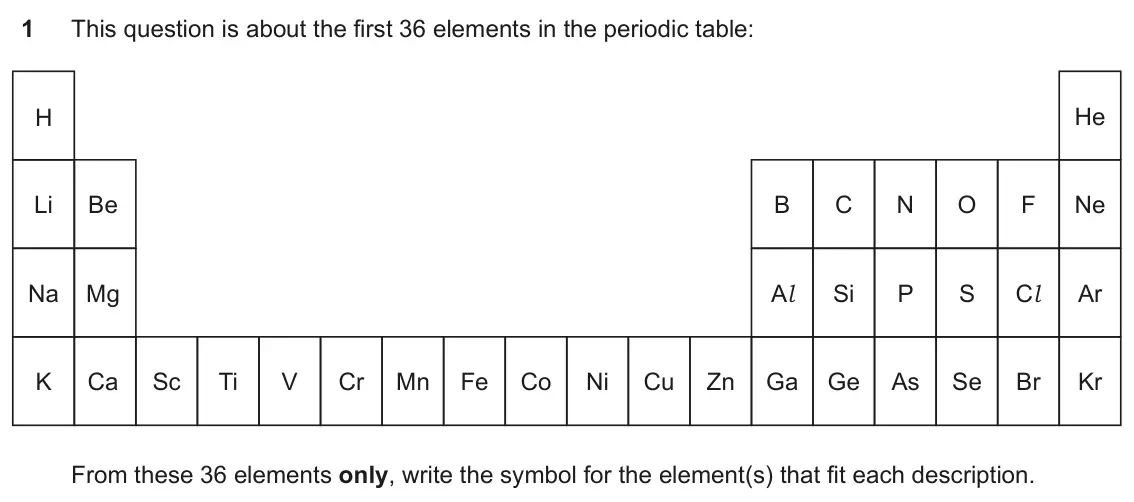
Q2(c)(i)
The whole paper ↗
Q2(c)(ii)
The whole paper ↗Q1(c)
The whole paper ↗
Q16(c)
The whole paper ↗
Q3(a)
The whole paper ↗
- Your answer
Q3(b)
The whole paper ↗
Q1(b)
The whole paper ↗
- Your answer
Q2(b)
The whole paper ↗
Q2(a)
The whole paper ↗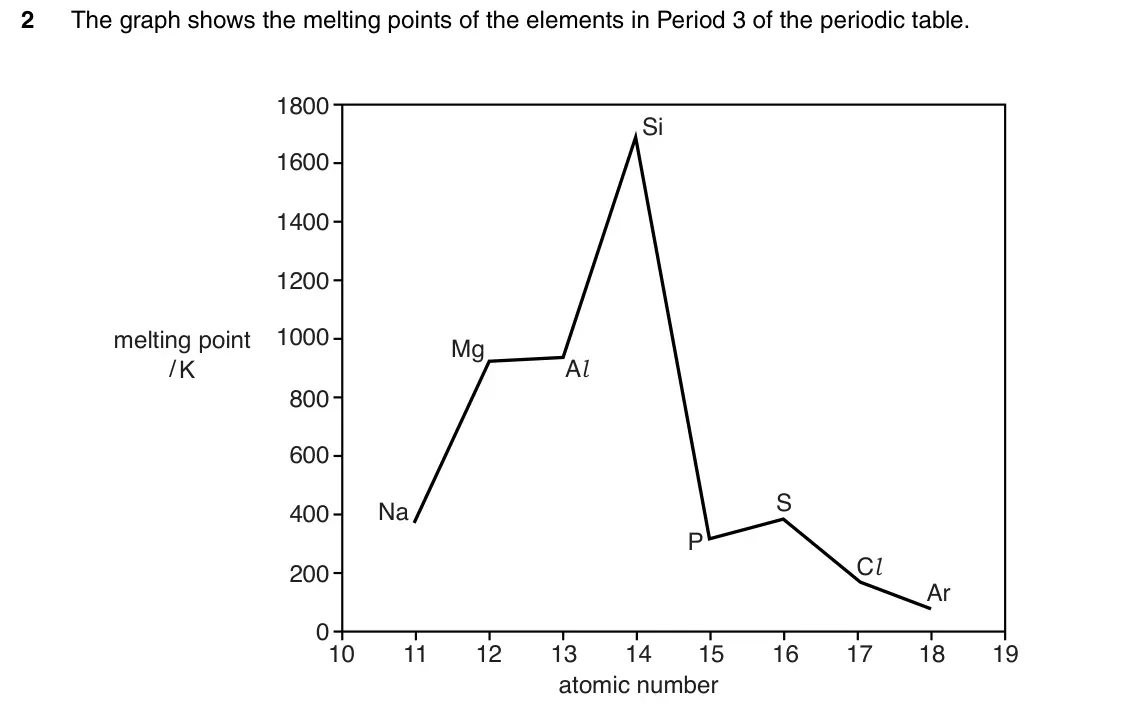
All 12 questions on Simple molecular lattices and properties, as a list
- June 2023, Paper 3, Q1(c) (1 mark): An element that is a solid at RTP with a simple molecular lattice structure. [1]
- June 2023, AS Paper 2, Q2(c)(i) (4 marks): Complete the table above to show the type of lattice structure of each substance. [4]
- June 2023, AS Paper 2, Q2(c)(ii) (4 marks): Explain the following: • MgS has a higher melting point than PCl 3. • Al has a greater electrical conductivity than Si. Melting points Conductivities [4]
- November 2021, AS Paper 2, Q1(c) (3 marks): At room temperature, K2S is a solid, but SF2 is a gas. Use ideas about structure and bonding to explain this difference. [3]
- November 2020, Paper 1, Q16(c) (6 marks): This question is about magnesium, bromine and magnesium bromide. (c)* Table 16.1 shows some physical properties of magnesium, bromine and magnesium bromide. Ele
- November 2020, AS Paper 2, Q3(a) (5 marks): The table shows the melting point and electrical conductivity of two elements in Period 4. Element Melting Point / °C Electrical conductivity Calcium 842 Good B
- June 2019, Paper 1, Q7 (1 mark): Which set of elements in the solid state contain a simple molecular lattice, a giant covalent lattice and a giant metallic lattice? A S, Si, Al B P, Si, C C S,
- June 2019, Paper 3, Q3(b) (4 marks): SiO2 and CO2 are oxides of other Group 14 (Group 4) elements. Solid SiO2 melts at 2156 °C. Solid CO2 melts at −56 °C. Suggest the type of lattice structure in s
- June 2018, Paper 3, Q1(b) (5 marks): Table 1.1 shows some properties of Period 3 chlorides. Group 1 2 14 (4) 15 (5) 16 (6) Chloride NaCl MgCl2 SiCl4 PCl3 SCl2 Solid poor poor poor poor poor Electri
- June 2018, AS Paper 1, Q10 (1 mark): Which element has induced dipole–dipole interactions (London forces) in its solid lattice? A boron B magnesium C silicon D sulfur Your answer [1]
- June 2018, AS Paper 2, Q2(b) (3 marks): The table below compares the properties of sodium sulfide, sodium and sulfur. Complete the table. Sodium sulfide Sodium Sulfur Melting point / °C 1180 98 113 Ty
- June 2016, AS Paper 2, Q2(a) (3 marks): Phosphorus and chlorine have simple molecular structures. More information about phosphorus and chlorine is given in the table below. Molecular Element formula
Questions, mark schemes and examiner’s reports are © OCR, from their published past papers. Plumi isn’t affiliated with any exam board. Want whole papers? OCR A-Level Chemistry A past papers, or our free OCR-style practice pack.
The Plumi iPad app also offers exam-style questions with AI feedback on your handwritten working.