 plumi
Transition metals, corrosion and alloys: Edexcel GCSE Chemistry questions
Every Edexcel GCSE Chemistry exam question on Transition metals, corrosion and alloys (specification points 5.1–5.7), 2018–2025, with its mark scheme and examiner’s report.
Find questions1,880
Exam
All years
Calculations
Q7(a)
The whole paper ↗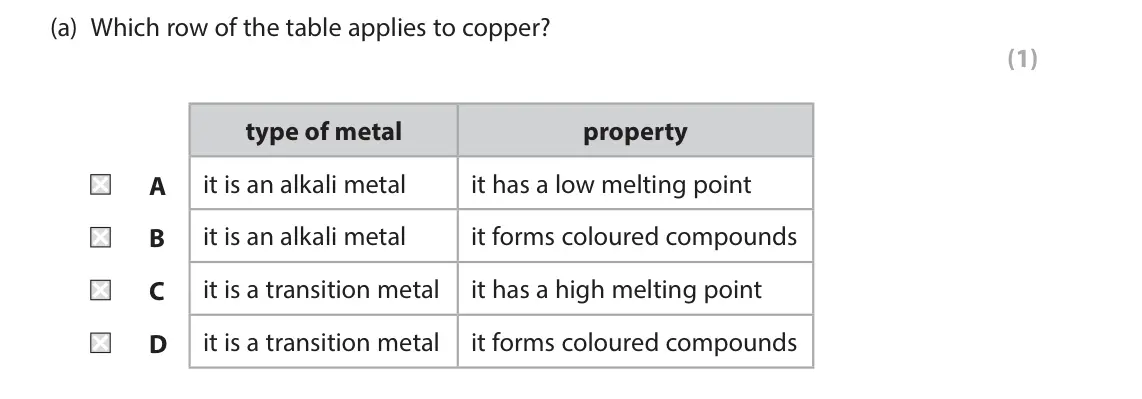
Q7(b)
The whole paper ↗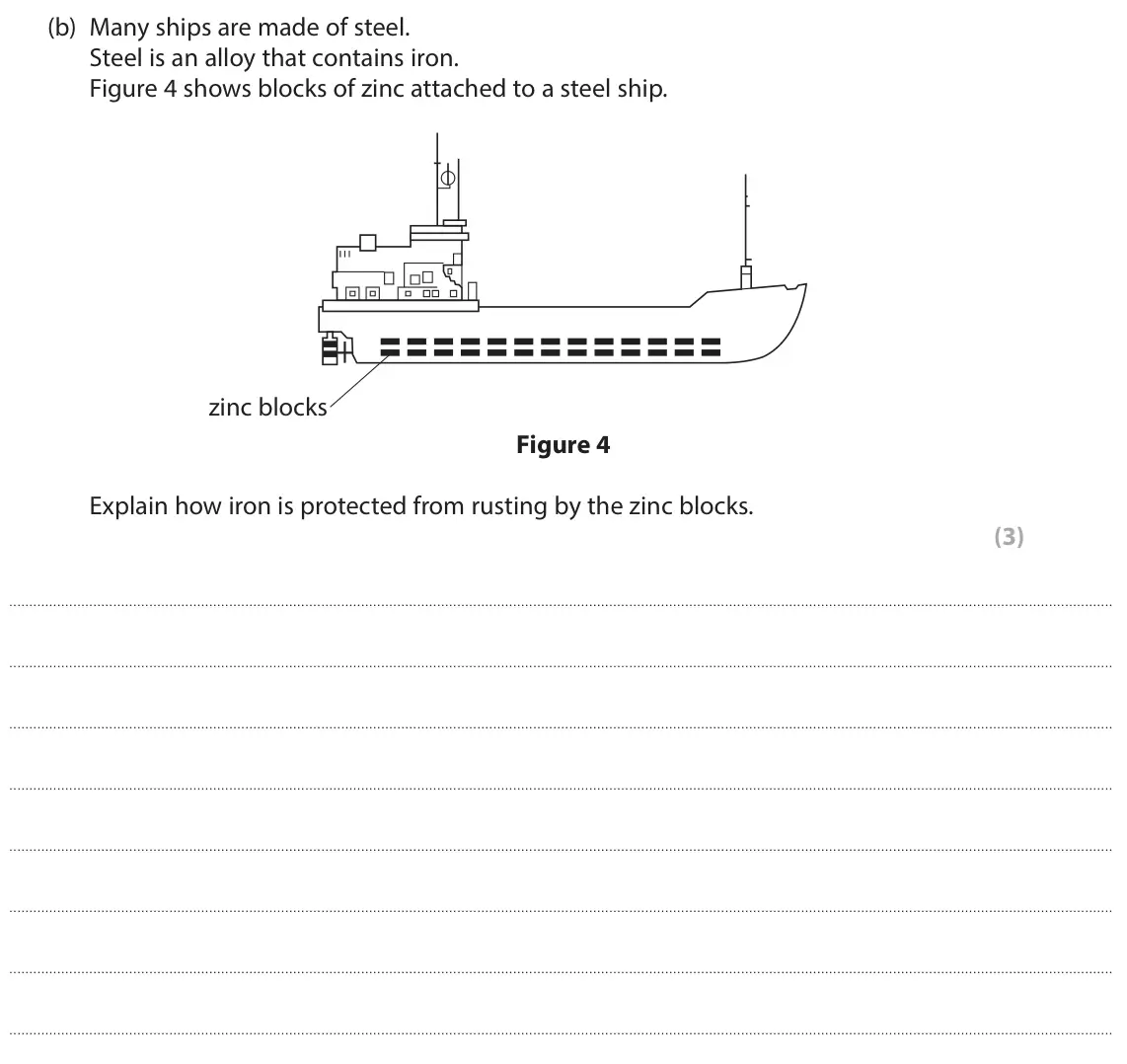
Q7(c)(i)
The whole paper ↗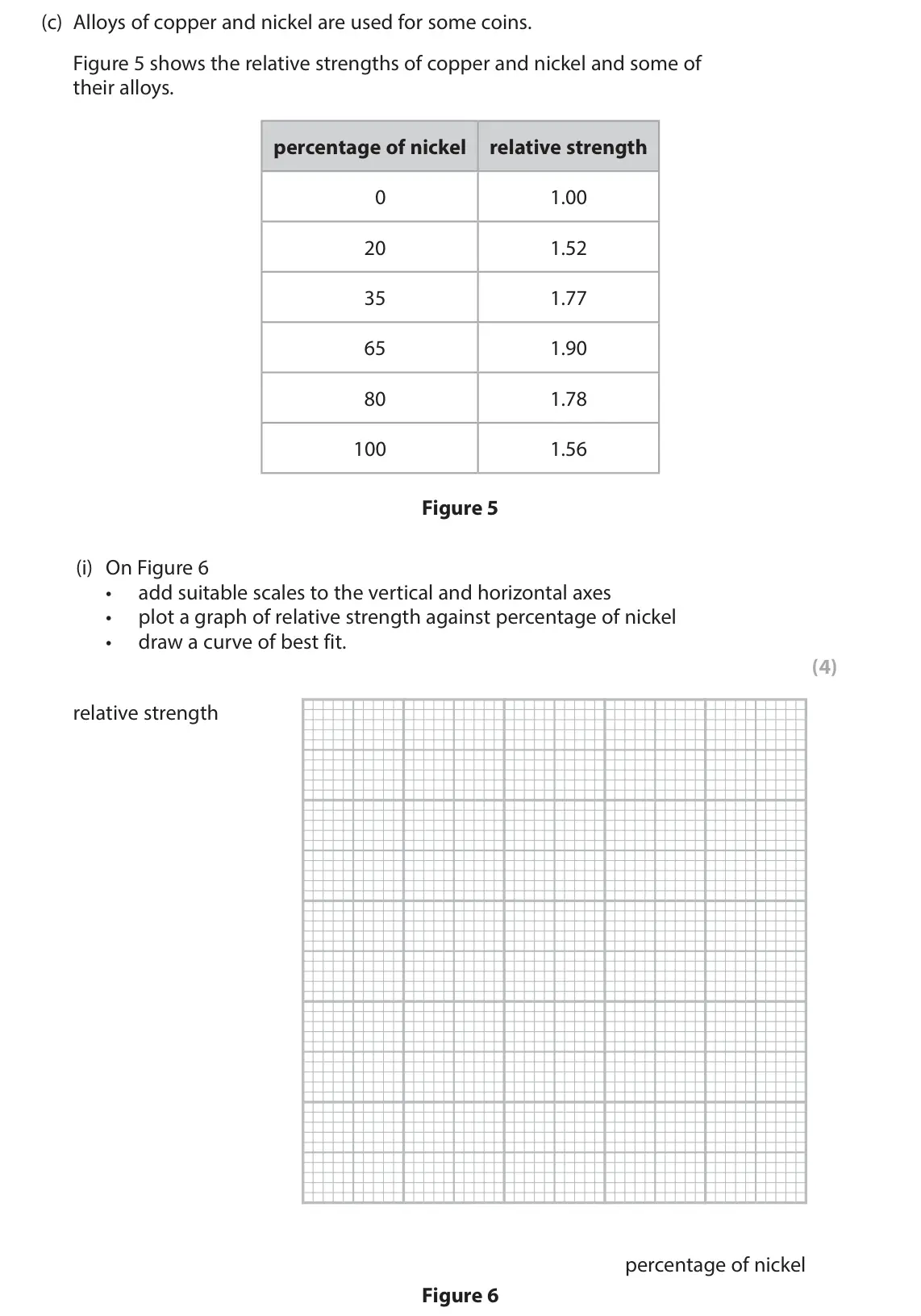
Q7(c)(ii)
The whole paper ↗
Q7(c)(iii)
The whole paper ↗
Q7(a)(i)
The whole paper ↗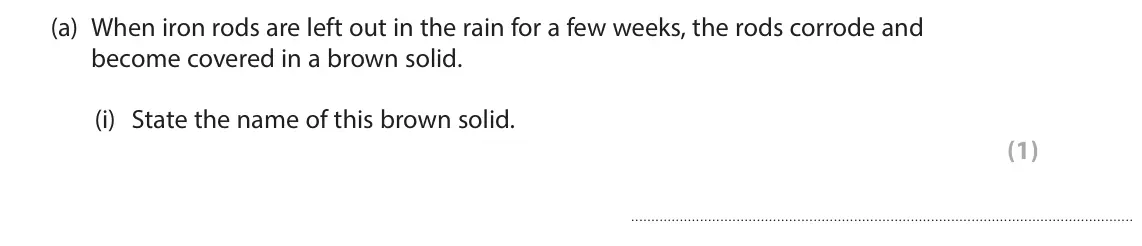
Q7(a)(ii)
The whole paper ↗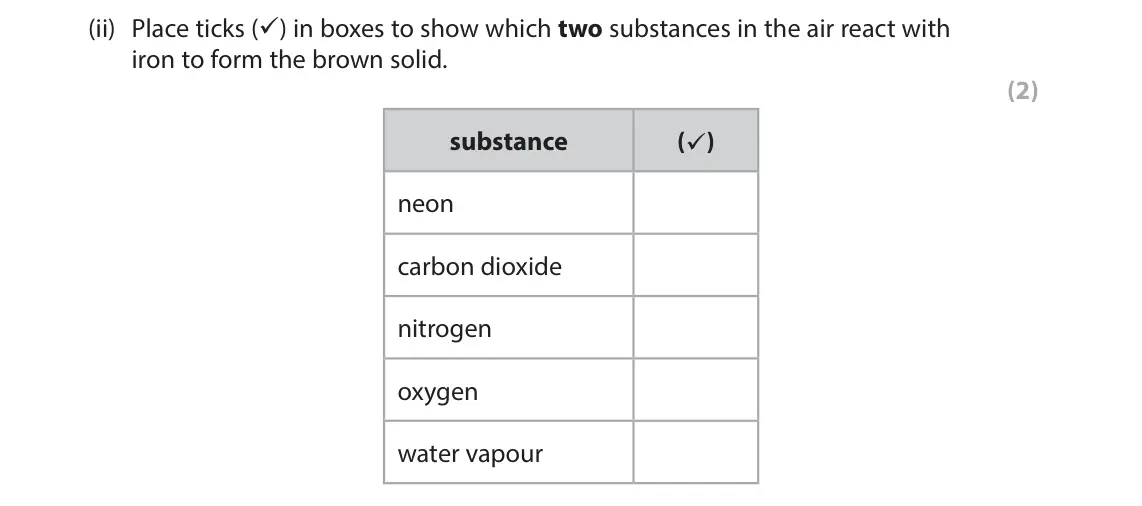
Q7(a)(iii)
The whole paper ↗
Q7(a)(iv)
The whole paper ↗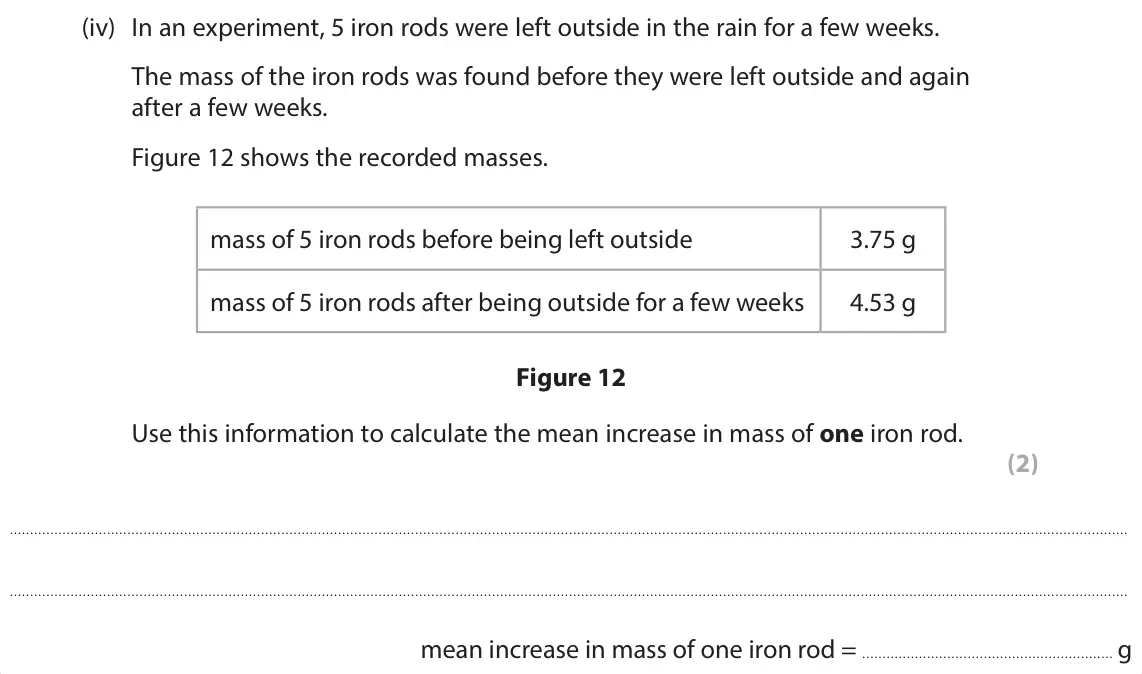
Q7(b)(i)
The whole paper ↗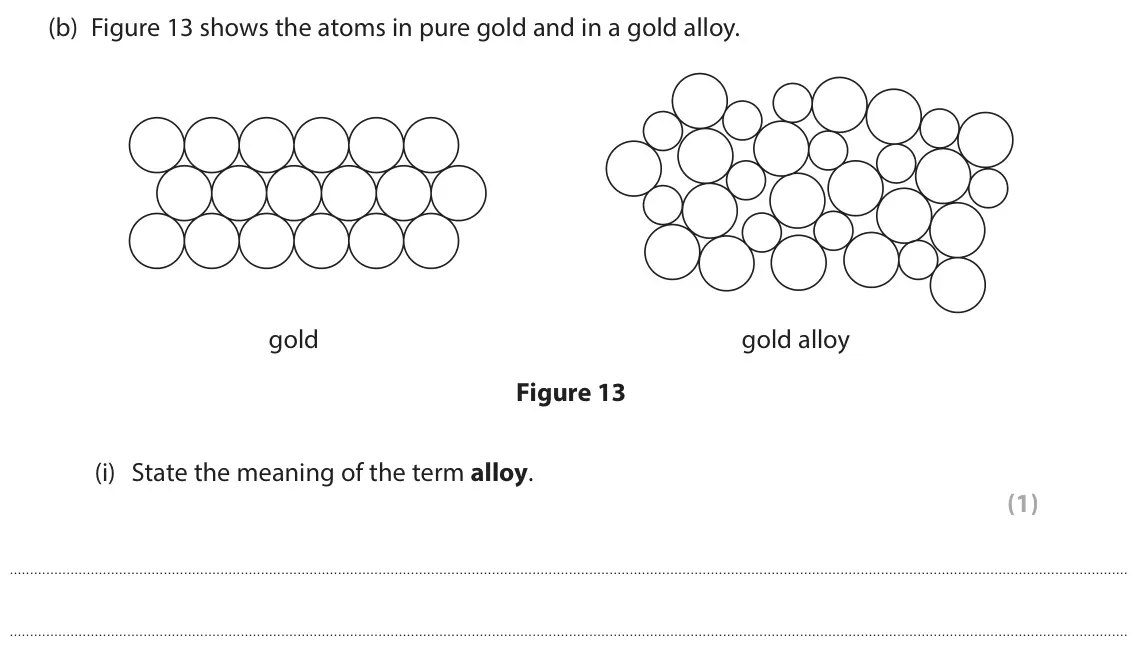
Q7(b)(ii)
The whole paper ↗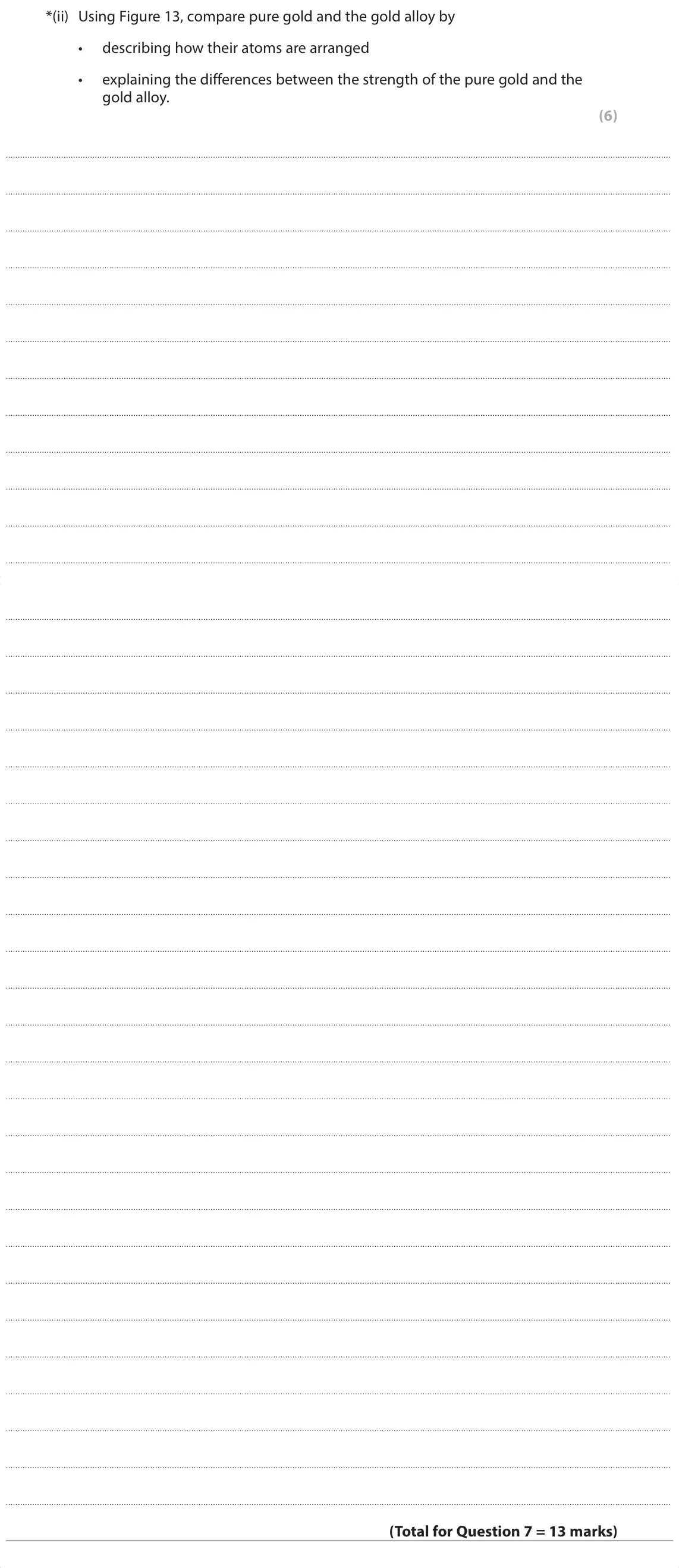
Q1(b)
The whole paper ↗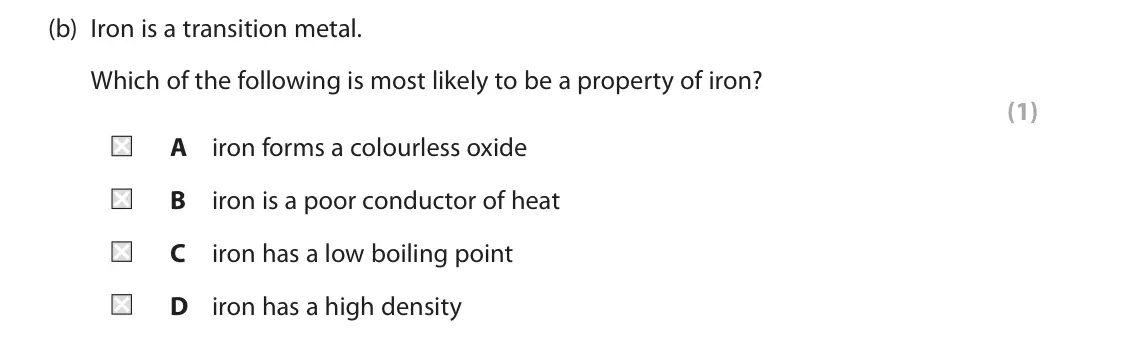
Q1(d)
The whole paper ↗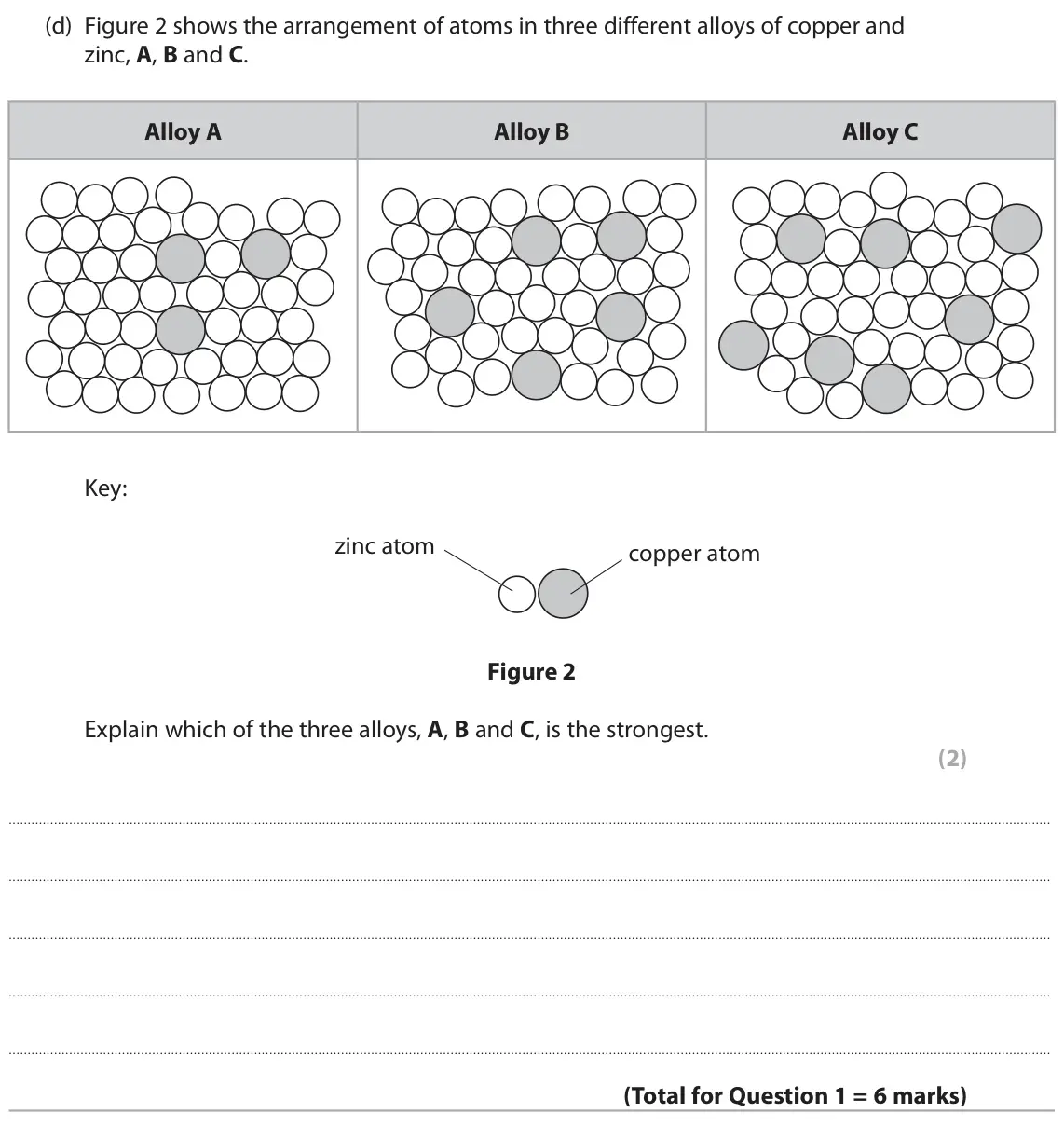
Q7(a)(i)
The whole paper ↗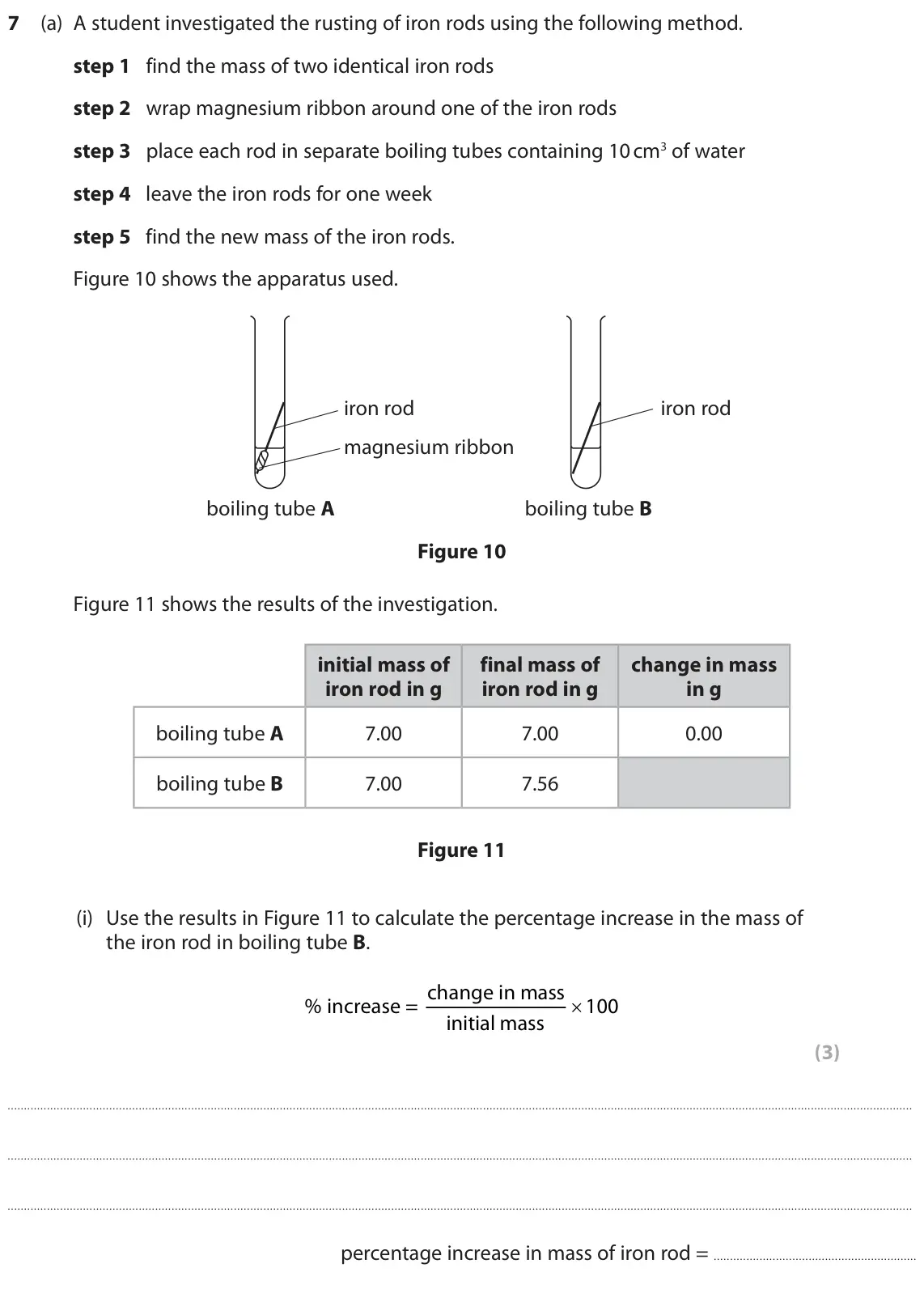
Q7(a)(ii)
The whole paper ↗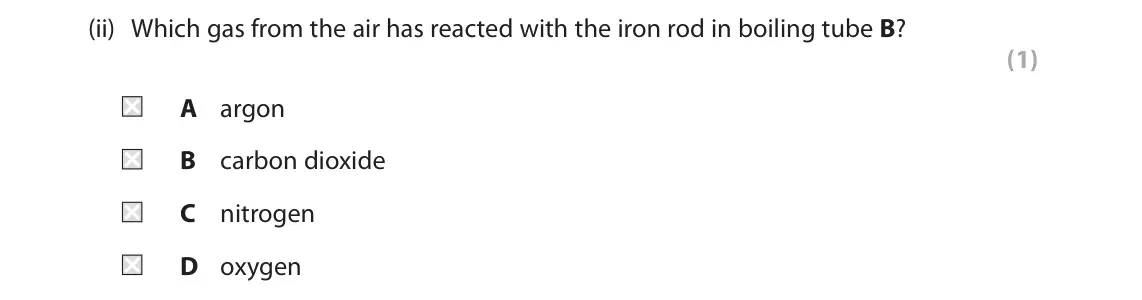
Q7(a)(iii)
The whole paper ↗
Q7(b)
The whole paper ↗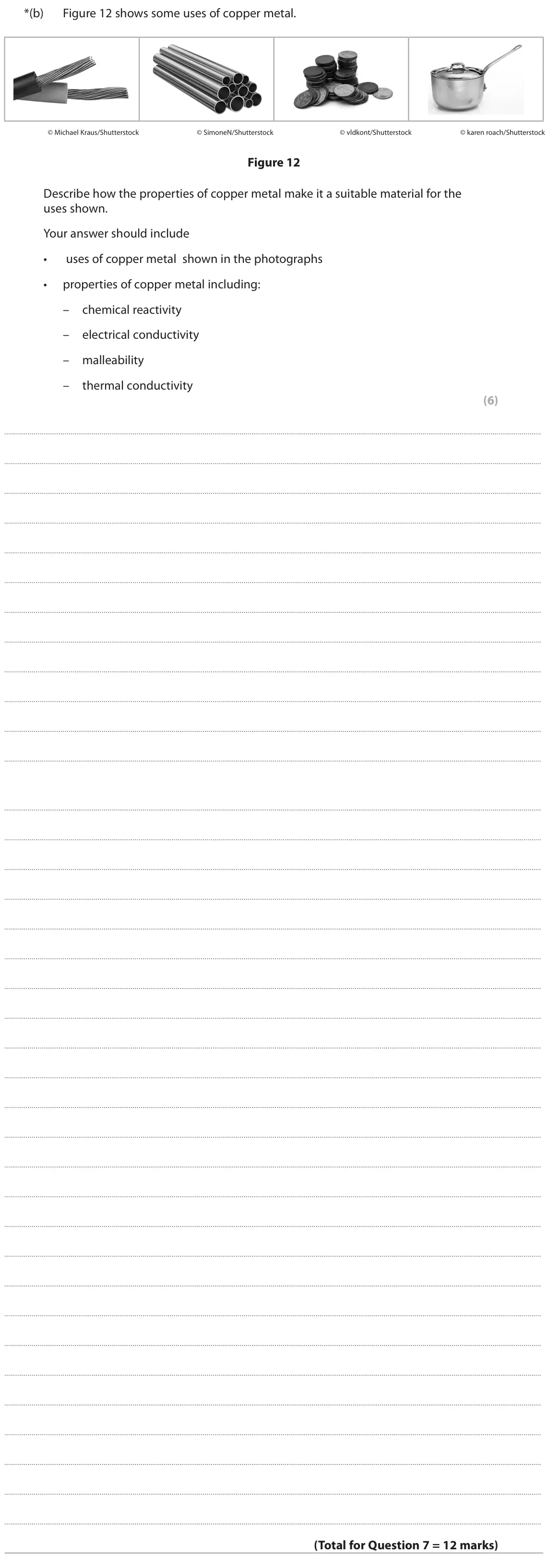
Q4(b)
The whole paper ↗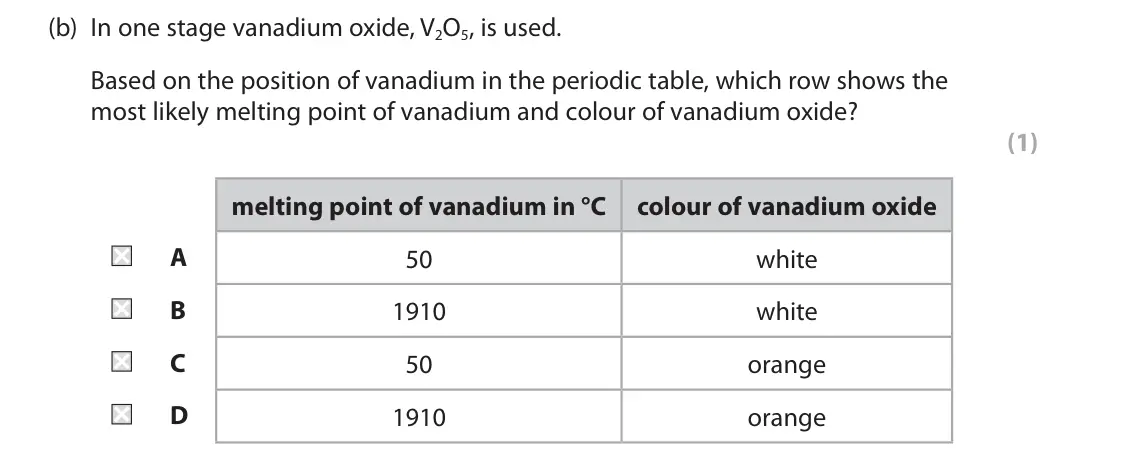
Q10(a)(i)
The whole paper ↗
Q10(b)
The whole paper ↗
All 87 questions on Transition metals, corrosion and alloys, as a list
- June 2025, Paper 1 Higher, Q7(a) (1 mark): Which row of the table applies to copper? (1) type of metal property it is an alkali metal it has a low melting point A it is an alkali metal it forms coloured
- June 2025, Paper 1 Higher, Q7(b) (3 marks): Many ships are made of steel. Steel is an alloy that contains iron. Figure 4 shows blocks of zinc attached to a steel ship. zinc blocks Figure 4 Explain how iro
- June 2025, Paper 1 Higher, Q7(c)(i) (4 marks): On Figure 6 • add suitable scales to the vertical and horizontal axes • plot a graph of relative strength against percentage of nickel • draw a curve of best fi
- June 2025, Paper 1 Higher, Q7(c)(ii) (1 mark): A coin is made from an alloy that contains 70% copper and 30% nickel. Determine the relative strength of this coin from your graph on Figure 6. (1) relative str
- June 2025, Paper 1 Higher, Q7(c)(iii) (3 marks): Explain, using Figure 6, how the percentage of nickel affects the relative strength of the alloys of copper and nickel. (3)
- June 2025, Paper 1 Foundation, Q7(a)(i) (1 mark): State the name of this brown solid. (1)
- June 2025, Paper 1 Foundation, Q7(a)(ii) (2 marks): Place ticks () in boxes to show which two substances in the air react with iron to form the brown solid. (2) substance () neon carbon dioxide nitrogen oxygen
- June 2025, Paper 1 Foundation, Q7(a)(iii) (1 mark): State one way to prevent the corrosion of iron rods that will be used outside. (1)
- June 2025, Paper 1 Foundation, Q7(a)(iv) (2 marks): In an experiment, 5 iron rods were left outside in the rain for a few weeks. The mass of the iron rods was found before they were left outside and again after a
- June 2025, Paper 1 Foundation, Q7(b)(i) (1 mark): State the meaning of the term alloy. (1)
- June 2025, Paper 1 Foundation, Q7(b)(ii) (6 marks): Using Figure 13, compare pure gold and the gold alloy by • describing how their atoms are arranged • explaining the differences between the strength of the pure
- June 2024, Paper 1 Higher, Q1(b) (1 mark): Iron is a transition metal. Which of the following is most likely to be a property of iron? (1) A iron forms a colourless oxide B iron is a poor conductor of he
- June 2024, Paper 1 Higher, Q1(d) (2 marks): Figure 2 shows the arrangement of atoms in three different alloys of copper and zinc, A, B and C. Alloy A Alloy B Alloy C Key: zinc atom copper atom Figure 2 Ex
- June 2024, Paper 1 Foundation, Q7(a)(i) (3 marks): Use the results in Figure 11 to calculate the percentage increase in the mass of the iron rod in boiling tube B. % increase = change in mass × 100 initial mass
- June 2024, Paper 1 Foundation, Q7(a)(ii) (1 mark): Which gas from the air has reacted with the iron rod in boiling tube B? (1) A argon B carbon dioxide C nitrogen D oxygen
- June 2024, Paper 1 Foundation, Q7(a)(iii) (2 marks): The iron rod did not rust in boiling tube A. Explain why. (2)
- June 2024, Paper 1 Foundation, Q7(b) (6 marks): Figure 12 shows some uses of copper metal. © Michael Kraus/Shutterstock © SimoneN/Shutterstock © vldkont/Shutterstock © karen roach/Shutterstock Figure 12 Descr
- June 2023, Paper 1 Higher, Q4(b) (1 mark): In one stage vanadium oxide, V2O5, is used. Based on the position of vanadium in the periodic table, which row shows the most likely melting point of vanadium a
- June 2023, Paper 1 Higher, Q10(a)(i) (2 marks): State what is meant by the term corrosion. (2)
- June 2023, Paper 1 Higher, Q10(b) (6 marks): Compare and contrast the properties and uses of pure aluminium and pure copper with the alloys of aluminium and the alloys of copper. Include in your answer an
- June 2023, Paper 1 Foundation, Q2(a) (1 mark): Most of the gold used in jewellery is not pure gold but alloys of gold. The purity of gold is measured in carats. Figure 3 shows how the percentage of gold is r
- June 2023, Paper 1 Foundation, Q2(b) (3 marks): Figure 4 shows the arrangement of atoms in pure gold and in an alloy of gold. pure gold alloy of gold Figure 4 Using Figure 4, explain why alloys of gold are st
- June 2023, Paper 1 Foundation, Q2(c) (2 marks): Explain one property of alloys of gold, other than their strength, that makes them suitable for use in jewellery. (2)
- June 2023, Paper 1 Foundation, Q4(a)(i) (1 mark): Which gas in the air is needed for corrosion to occur? . (1) A argon B carbon dioxide C nitrogen D oxygen
- June 2023, Paper 1 Foundation, Q4(a)(ii) (1 mark): What type of reaction happens when the iron in steel corrodes? (1) A the iron has been displaced B the iron has been neutralised C the iron has been oxidised D
- June 2023, Paper 1 Foundation, Q4(c)(i) (1 mark): Using Figure 6, state which non‑metal is in both types of steel. (1)
- June 2023, Paper 1 Foundation, Q4(c)(ii) (1 mark): Using Figure 6, state which metal is added to steel to increase its resistance to corrosion. (1)
- June 2023, Paper 1 Foundation, Q4(c)(iii) (2 marks): Explain one other way that corrosion of steel can be prevented. (2)
- June 2023, Paper 1 Foundation, Q4(d) (3 marks): A student is given two nails of the same size but made of different types of steel. They are also given two boiling tubes and some distilled water. Devise an ex
- June 2023, Paper 1 Foundation, Q10(b) (1 mark): In one stage vanadium oxide, V2O5, is used. Based on the position of vanadium in the periodic table, which row shows the most likely melting point of vanadium a
- June 2022, Paper 1 Higher, Q1(b) (1 mark): Copper is a transition metal. Which of the following is most likely to be a property of copper? (1) A copper forms a white oxide B copper has a high melting poi
- June 2022, Paper 1 Higher, Q1(d) (2 marks): Brass is an alloy of copper and zinc. One type of brass contains 70% copper. Zinc atoms are slightly larger than copper atoms. Draw a labelled diagram in the bo
- June 2022, Paper 1 Foundation, Q7(a) (1 mark): When iron wool reacts with oxygen from the air, the iron corrodes and iron oxide is formed. What happens to the iron in this reaction? (1) A it is decomposed B
- June 2022, Paper 1 Foundation, Q7(b)(i) (1 mark): Complete the table of results. (1) volume of gas in Figure 12 in cm3 50 volume of gas in Figure 13 in cm3
- June 2022, Paper 1 Foundation, Q7(b)(ii) (3 marks): Use these results to calculate the percentage decrease in the volume of gas in the measuring cylinder after one week. (3) percentage decrease in volume of gas =
- June 2022, Paper 1 Foundation, Q7(b)(iii) (1 mark): Not all of the oxygen in the air in the measuring cylinder has reacted with the iron. Give a reason why. (1)
- June 2022, Paper 1 Foundation, Q7(c) (6 marks): Pure metals can be made more useful by converting them into alloys or by electroplating them. Explain what alloying and electroplating are and how they can make
- November 2021, Paper 1 Higher, Q4(a) (3 marks): Explain, in terms of the arrangement of metal particles, why aluminium alloys are stronger than pure aluminium. (3)
- November 2021, Paper 1 Higher, Q4(b) (2 marks): A 695.0 g sample of an aluminium-magnesium alloy contains 2.00% by mass of magnesium. Calculate the mass of aluminium in this sample. (2) mass of aluminium = g
- November 2021, Paper 1 Higher, Q4(c)(i) (2 marks): Describe what Figure 5 shows about the relative strength of these alloys when the percentage by mass of magnesium changes. (2)
- November 2021, Paper 1 Higher, Q4(c)(ii) (2 marks): Determine, using Figure 5, the percentage by mass of aluminium in an aluminium‑magnesium alloy with a relative strength of 103. (2) percentage by mass of alumin
- November 2021, Paper 1 Foundation, Q3(d)(i) (2 marks): Explain why covering iron tools with a thin layer of grease prevents rusting. (2)
- November 2021, Paper 1 Foundation, Q3(d)(ii) (2 marks): Sacrificial protection is another way of preventing rusting. An example of sacrificial protection is when lumps of zinc are connected to the iron-containing str
- November 2021, Paper 1 Foundation, Q7(a)(i) (1 mark): Gold can be hammered into shape. State the name of this property. (1)
- November 2021, Paper 1 Foundation, Q7(a)(ii) (1 mark): Gold alloys can be used to repair teeth. One reason that gold alloys are used is that they can be hammered into shape. Give one other reason why gold alloys are
- November 2021, Paper 1 Foundation, Q7(b) (3 marks): A gold alloy contains 78% gold by mass. Calculate the mass of gold in 2.00 kg of this alloy. Give your answer in grams. (3) mass = g
- November 2021, Paper 1 Foundation, Q7(c) (2 marks): A substance used to purify gold is kept in a container. There are some hazard symbols on the container. Draw one straight line from each hazard symbol to its me
- November 2021, Paper 1 Foundation, Q10(a) (3 marks): Explain, in terms of the arrangement of metal particles, why aluminium alloys are stronger than pure aluminium. (3)
- November 2021, Paper 1 Foundation, Q10(b) (2 marks): A 695.0 g sample of an aluminium-magnesium alloy contains 2.00 % by mass of magnesium. Calculate the mass of aluminium in this sample. (2) mass of aluminium = g
- November 2021, Paper 1 Foundation, Q10(c)(i) (2 marks): Describe what Figure 12 shows about the relative strength of these alloys when the percentage by mass of magnesium changes. (2)
- November 2021, Paper 1 Foundation, Q10(c)(ii) (2 marks): Determine, using Figure 12, the percentage by mass of aluminium in an aluminium‑magnesium alloy with a relative strength of 103. (2) percentage by mass of alumi
- November 2020, Paper 1 Higher, Q1(a) (2 marks): Figure 1 shows the percentage of different metals in two samples of gold. percentage of metal gold silver copper 18 carat gold 75.0 15.0 10.0 24 carat gold 100.
- November 2020, Paper 1 Higher, Q1(b) (3 marks): Figure 2 shows the relationship between the purity of gold in carats and the percentage of gold in the alloy. 24 purity of gold in carats 22 20 18 16 14 12 10 8
- November 2020, Paper 1 Higher, Q6(b)(i) (1 mark): This reaction is an example of (1) A crystallisation B distillation C neutralisation D oxidation
- November 2020, Paper 1 Foundation, Q5(a) (1 mark): The pie chart in Figure 6 shows the uses of one transition metal. 7% transportation 3% coins 65% electrical equipment % construction Figure 6 Calculate the perc
- November 2020, Paper 1 Foundation, Q5(b) (3 marks): Figure 7 shows five statements about iron. Put ticks () in the boxes in Figure 7 to show which statements are true and which statements are false. The first on
- November 2020, Paper 1 Foundation, Q5(c)(i) (1 mark): State why alloys have more uses than pure metals. (1)
- November 2020, Paper 1 Foundation, Q5(c)(ii) (2 marks): An alloy of iron contains 0.40 % of molybdenum. Calculate the mass of molybdenum contained in a 30 g sample of this alloy of iron. (2) mass of molybdenum = g
- November 2020, Paper 1 Foundation, Q7(a)(i) (3 marks): Figure 9 shows the apparatus used to investigate the rusting of some iron nails. oil air air boiled water water drying agent A B C Figure 9 Explain why the iron
- November 2020, Paper 1 Foundation, Q7(a)(ii) (1 mark): Magnesium is more reactive than iron. Figure 10 shows an iron nail with a strip of magnesium wrapped around it, placed in some water. The tube was left for a fe
- November 2020, Paper 1 Foundation, Q7(a)(iii) (1 mark): When iron rusts, a brown solid forms on the surface of the iron. What happens to the iron as the rust forms? (1) A the iron is hydrated B the iron is neutralise
- November 2020, Paper 1 Foundation, Q7(c) (6 marks): The pure metals aluminium, copper and gold and the alloys brass and magnalium are used to make many useful articles. The way in which these metals and alloys ar
- June 2019, Paper 1 Higher, Q1(b)(ii) (1 mark): Platinum acts as a catalyst. State, in terms of its position in the periodic table, why you would expect platinum to act as a catalyst. (1)
- June 2019, Paper 1 Higher, Q7(a) (1 mark): When a metal corrodes (1) A the metal reacts with nitrogen B the metal reacts with another metal C the metal element decomposes D the metal is oxidised
- June 2019, Paper 1 Higher, Q7(b)(i) (2 marks): Explain why iron rod rather than stainless steel rod is used in this experiment. (2)
- June 2019, Paper 1 Higher, Q7(b)(ii) (1 mark): State why it is not necessary to use a pipette to measure out 10 cm3 water in this experiment. (1)
- June 2019, Paper 1 Higher, Q7(b)(iii) (2 marks): After a few days the two boiling tubes were examined. The results are shown in Figure 5. the appearance of the iron rod is unchanged boiling tube A the magnesiu
- June 2019, Paper 1 Higher, Q7(c) (2 marks): Hydrazine, N2H4, reacts with oxygen. N2H4 + O2 o N2 + 2H2O A metal in water corrodes faster than an identical piece of metal in the same volume of water contain
- June 2019, Paper 1 Foundation, Q2(a) (2 marks): Alloy steels are formed when other metals are mixed with iron. Cutlery is made of stainless steel. Give two reasons why cutlery is made of stainless steel rathe
- June 2019, Paper 1 Foundation, Q2(b) (1 mark): Brass is an alloy of copper. Figure 3 shows the brass pins of an electric plug. brass pins (Source: © Adamlee01/Shutterstock) Figure 3 Brass is harder than copp
- June 2019, Paper 1 Foundation, Q2(c)(i) (3 marks): Figure 4 shows information about pure aluminium and magnalium. resistance to density in gcm-3 relative strength substance corrosion high 2.7 low aluminium 2.0 h
- June 2019, Paper 1 Foundation, Q3(a) (1 mark): Transition metals and group 1 metals have many properties in common because they are all metals. However some properties of transition metals are different from
- June 2019, Paper 1 Foundation, Q3(c)(i) (1 mark): Water is one of two substances needed for iron to rust. Give the name of the other substance needed for iron to rust. (1)
- June 2019, Paper 1 Foundation, Q3(c)(ii) (3 marks): The rate of rusting can be increased by using sea water. Describe a simple experiment to compare how much an iron nail rusts in sea water when compared to water
- June 2019, Paper 1 Foundation, Q3(c)(iii) (1 mark): Rusting can be prevented by galvanising iron which involves coating the iron with a layer of zinc. A small iron bucket was galvanised. The surface area of the b
- June 2018, Paper 1 Higher, Q1(a) (1 mark): Which row of the table shows the typical properties of a transition metal? (1) used as a catalyst density colour of metal chloride A yes high colourless B no lo
- June 2018, Paper 1 Higher, Q1(b) (2 marks): Figure 1 shows the chain on a bicycle. chain Figure 1 Explain how lubricating the chain with oil prevents corrosion of the steel chain. (2)
- June 2018, Paper 1 Higher, Q1(c) (2 marks): Iron fences can be galvanised by coating them with a layer of zinc. When the layer of zinc is scratched exposing the iron to the weather, the iron does not rust
- June 2018, Paper 1 Foundation, Q7(a) (6 marks): Pure metals are often converted into more useful alloys. For example, aluminium is converted into an alloy used in aircraft, iron is converted into an alloy use
- June 2018, Paper 1 Foundation, Q7(b)(i) (1 mark): Corrosion involves the oxidation of iron. State what is meant by oxidation. (1)
- June 2018, Paper 1 Foundation, Q7(b)(ii) (2 marks): Painting iron objects prevents corrosion. Explain why painting iron objects prevents corrosion. (2)
- June 2018, Paper 1 Foundation, Q7(b)(iii) (1 mark): Corrosion of iron objects can be prevented by painting them or by electroplating them. State one other way of preventing the corrosion of iron objects. (1)
- Specimen, Paper 1 Higher, Q5(c) (2 marks): Duralumin is an alloy of aluminium and copper. The radii of the aluminium and copper atoms are shown in Figure 11. radius of atom / m aluminium 1.43 × 10⁻¹² cop
- Specimen, Paper 1 Higher, Q5(d) (2 marks): Gold is often alloyed with other metals when it is used to make jewellery. The proportion of gold in a piece of gold jewellery is measured in carats. Pure gold
- Specimen, Paper 1 Foundation, Q5(b) (2 marks): Solder is an alloy of tin and lead. A sample of a solder was made by mixing 22.5 g of lead with 15.0 g of tin. Calculate the percentage of tin in this solder. (
- Specimen, Paper 1 Foundation, Q5(c) (3 marks): The rusting of an iron nail was investigated by setting up three test tubes, as shown in Figure 6. oil boiled water water drying agent A B C Figure 6 State and
- Specimen, Paper 1 Foundation, Q5(d) (2 marks): An iron bucket is coated in zinc. Over many years of use, the iron bucket has been scratched and left outside in the rain. Although some of the zinc coating has
Questions, mark schemes and examiner’s reports are © Pearson Edexcel, from their published past papers. Plumi isn’t affiliated with any exam board. Want whole papers? Every Edexcel GCSE Chemistry paper.
Rather write your answers by hand on iPad? Plumi marks them against the same mark schemes.