 plumi
Titrations and concentration in mol dm⁻³: Edexcel GCSE Chemistry questions
Every Edexcel GCSE Chemistry exam question on Titrations and concentration in mol dm⁻³ (specification points 5.8–5.10), 2018–2025, with its mark scheme and examiner’s report.
Find questions1,880
Exam
All years
Calculations
Q10(a)(ii)
The whole paper ↗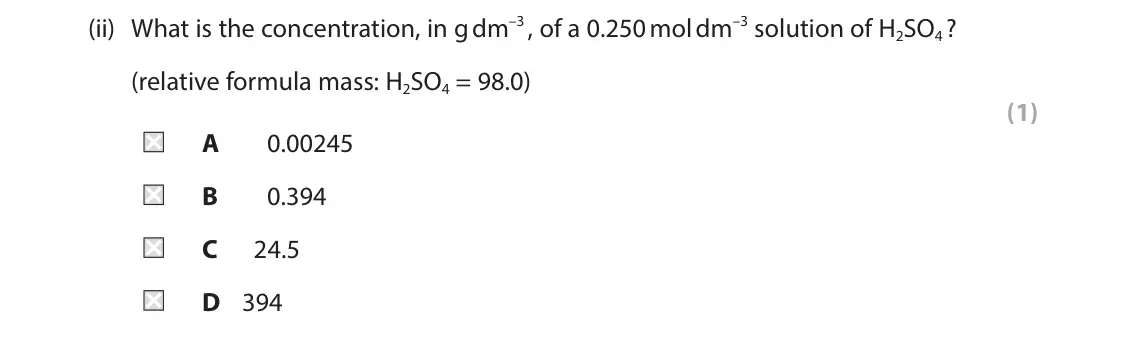
Q10(b)(i)
The whole paper ↗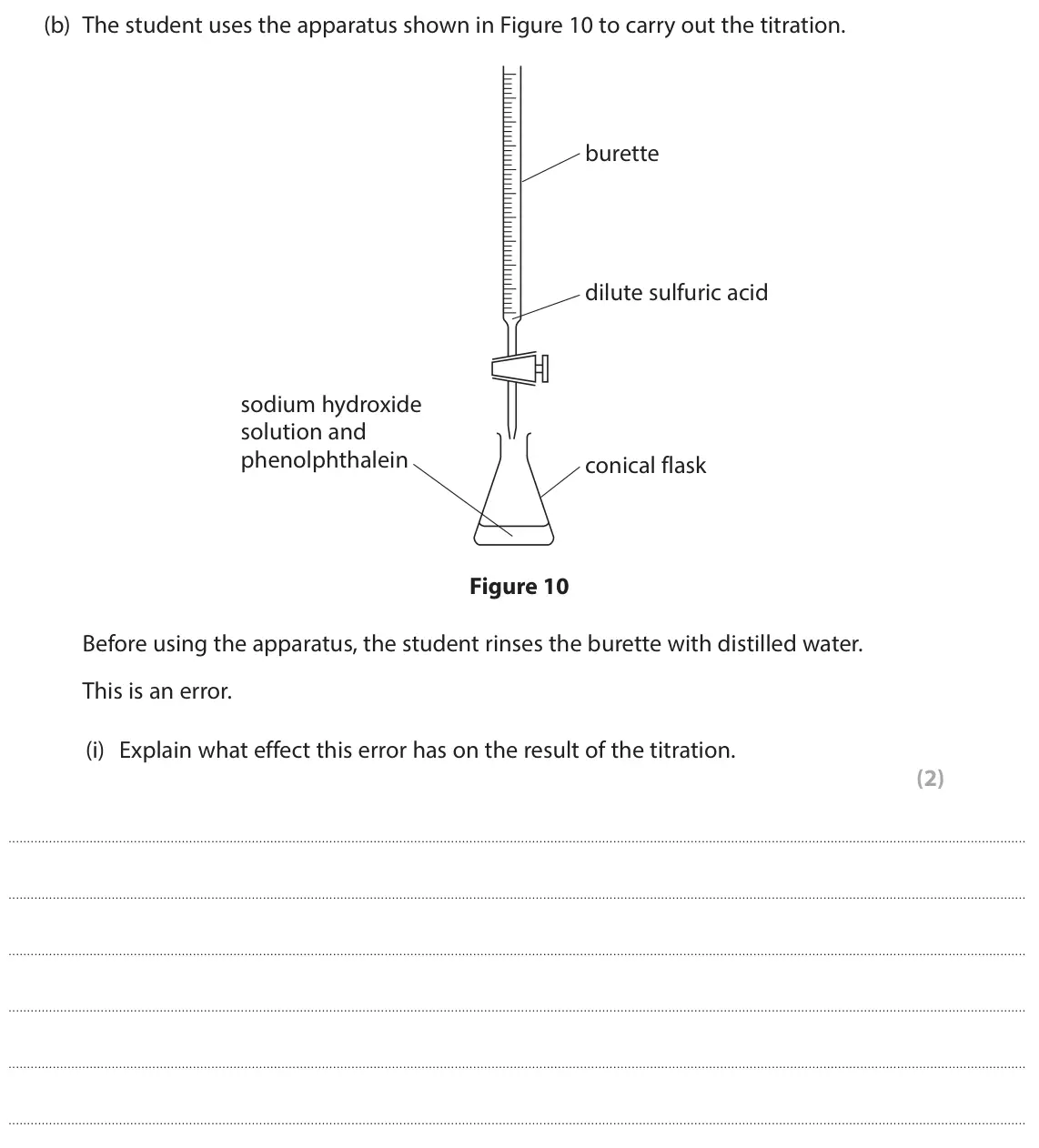
Q10(b)(ii)
The whole paper ↗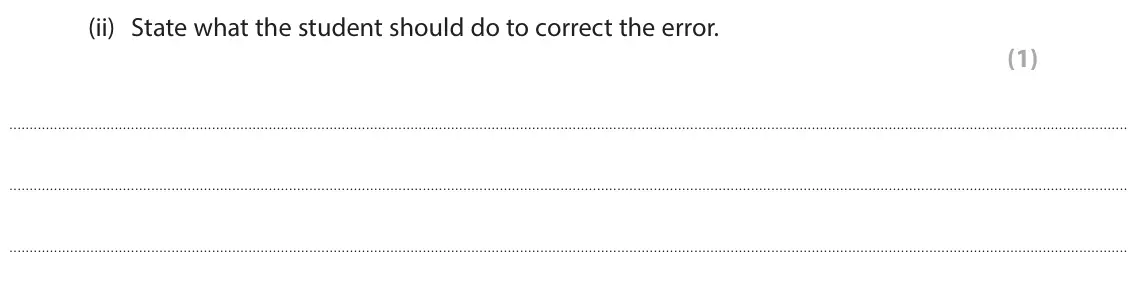
Q10(c)
The whole paper ↗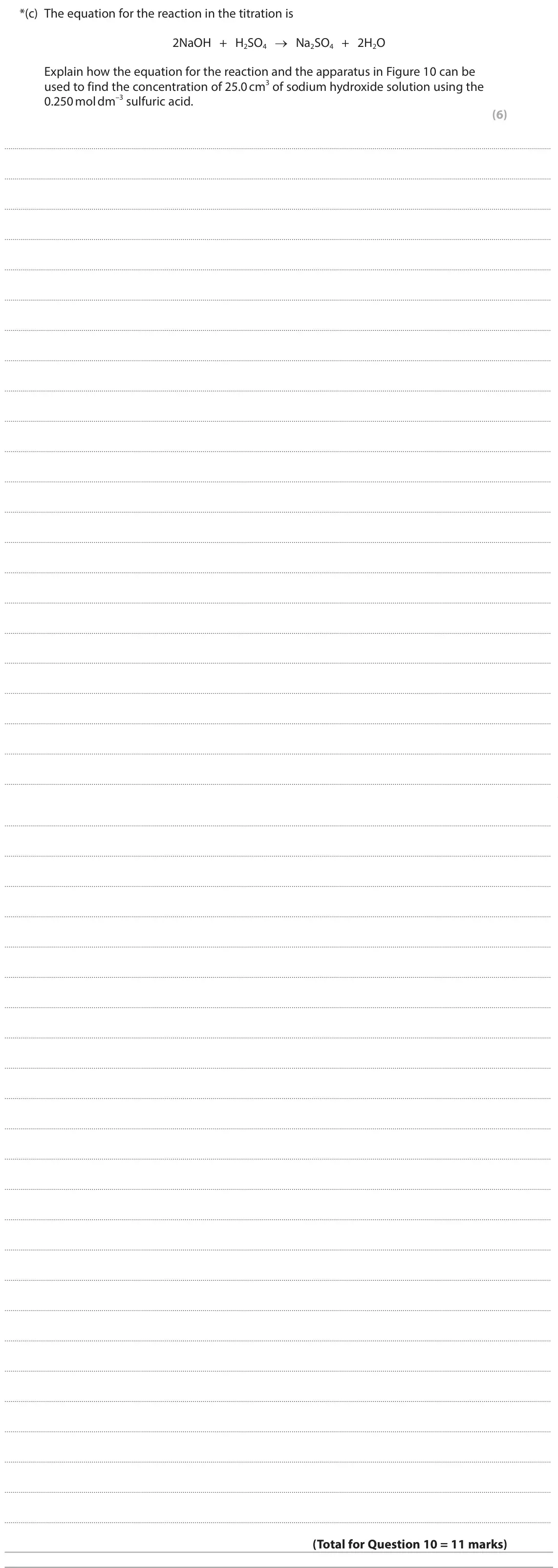
Q5(a)
The whole paper ↗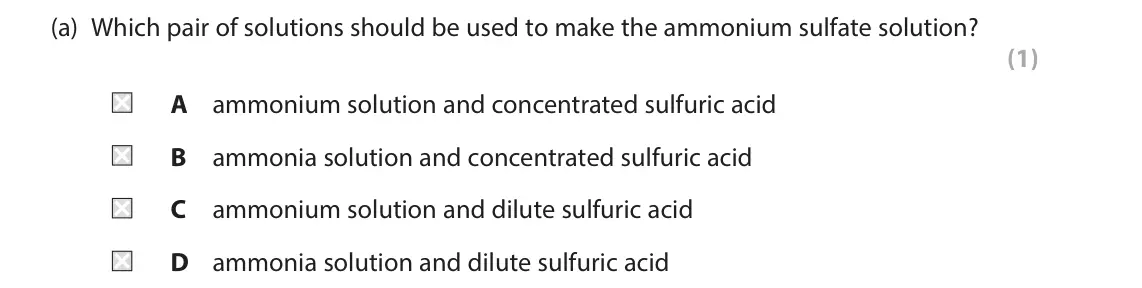
Q5(b)
The whole paper ↗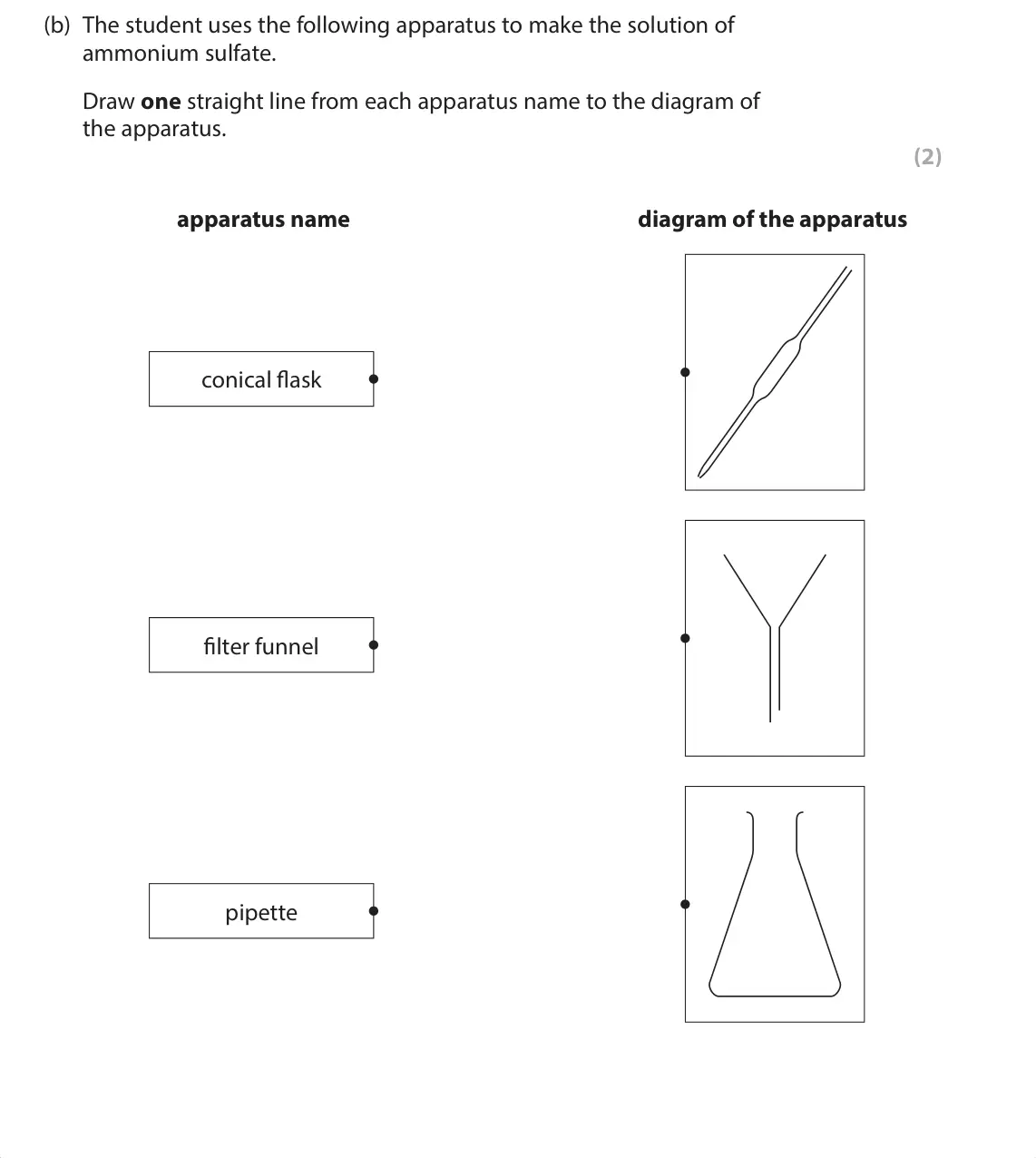
Q5(c)
The whole paper ↗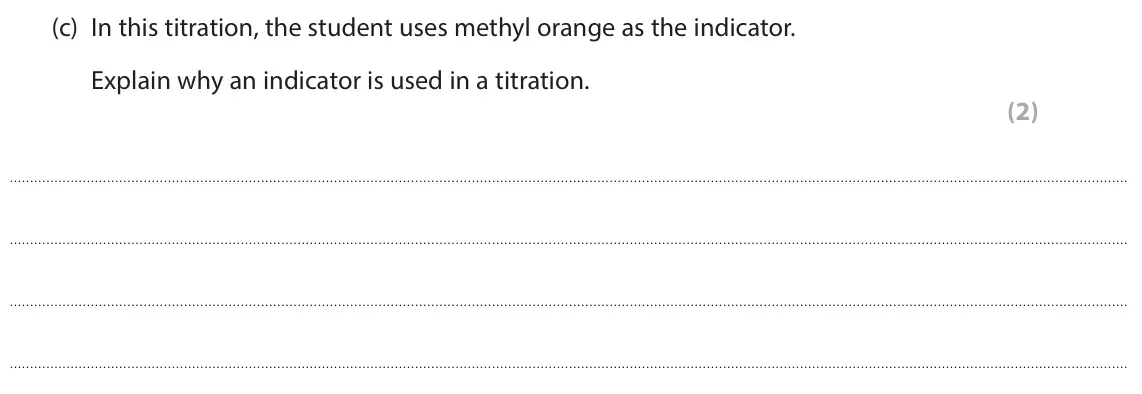
Q5(d)
The whole paper ↗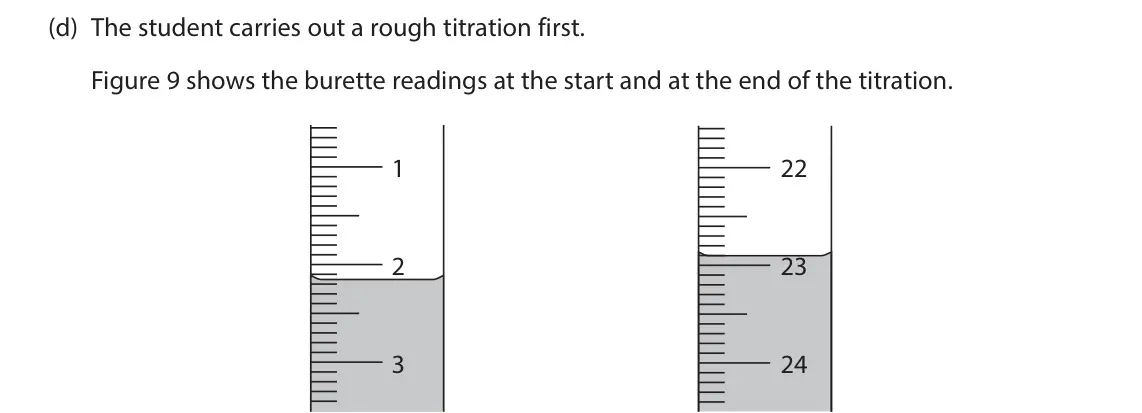
Q5(e)(i)
The whole paper ↗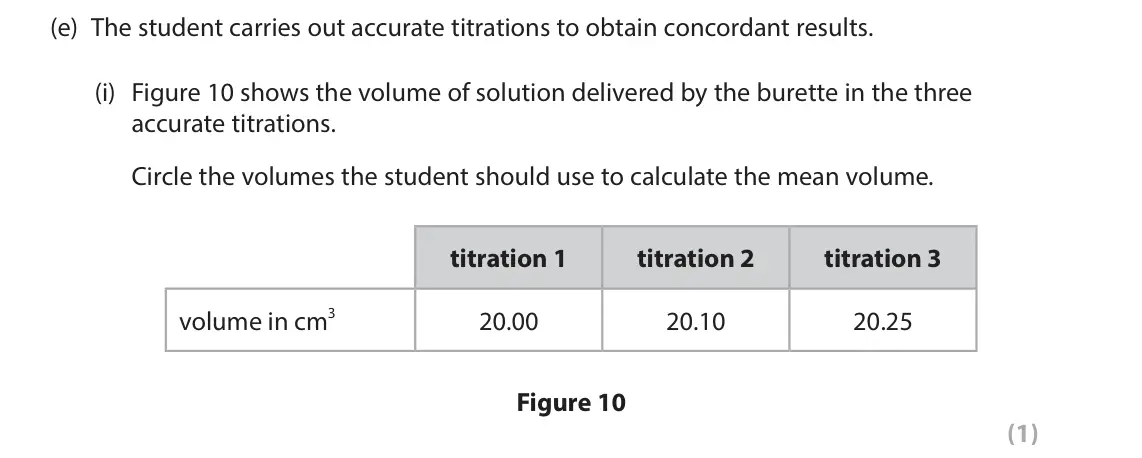
Q5(e)(ii)
The whole paper ↗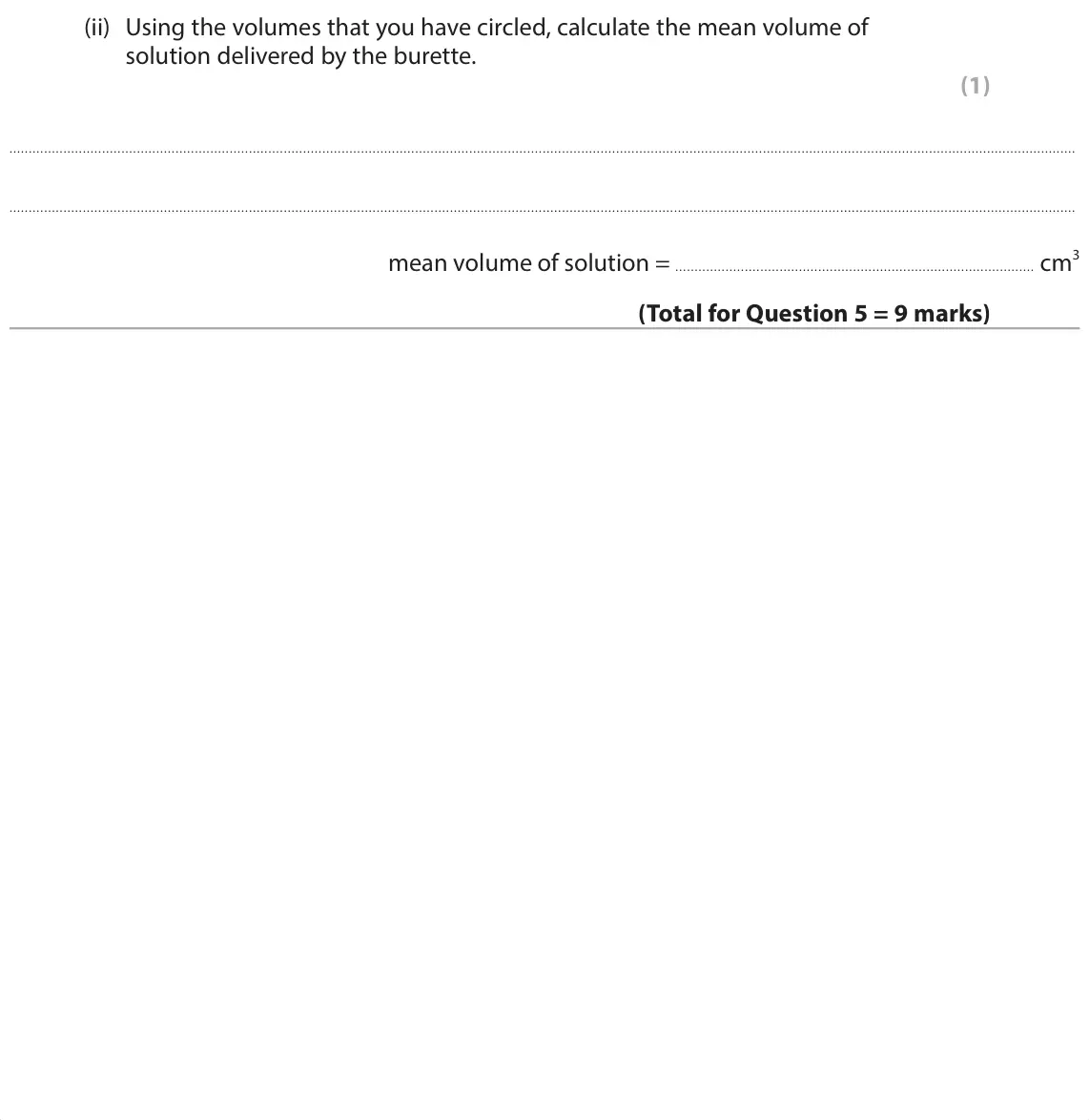
Q6(a)
The whole paper ↗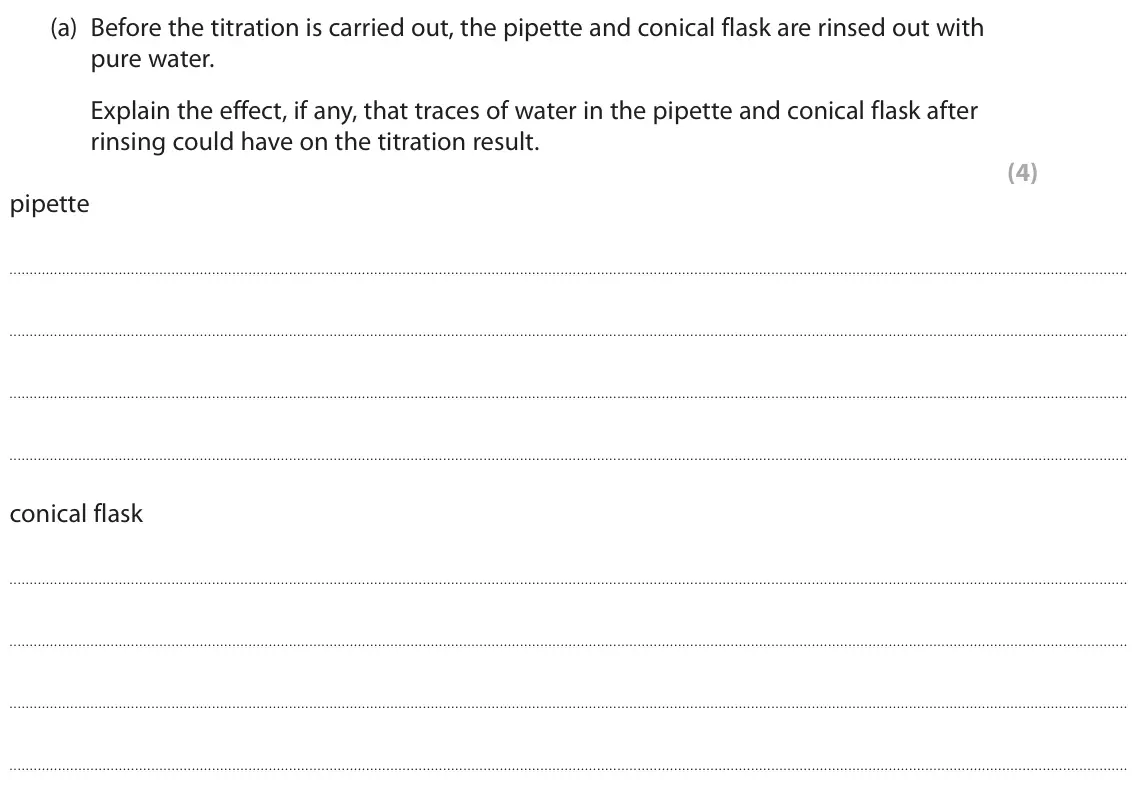
Q6(b)(i)
The whole paper ↗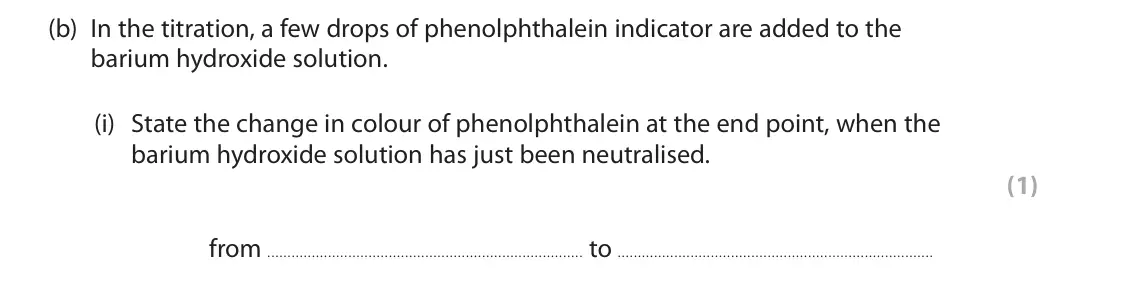
Q4(a)(i)
The whole paper ↗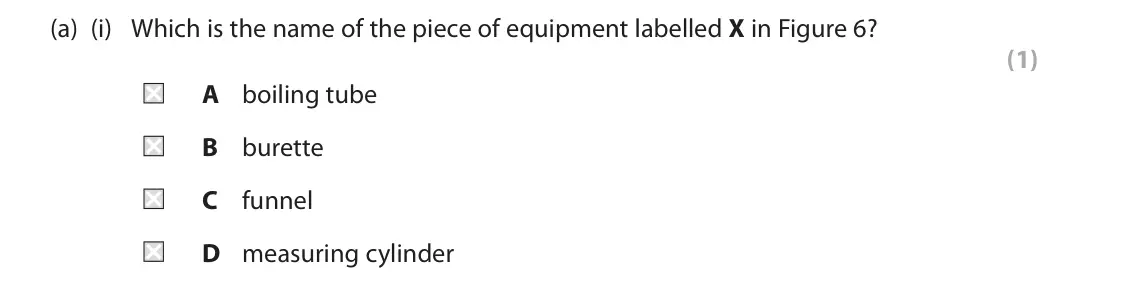
Q4(a)(ii)
The whole paper ↗
Q4(b)(i)
The whole paper ↗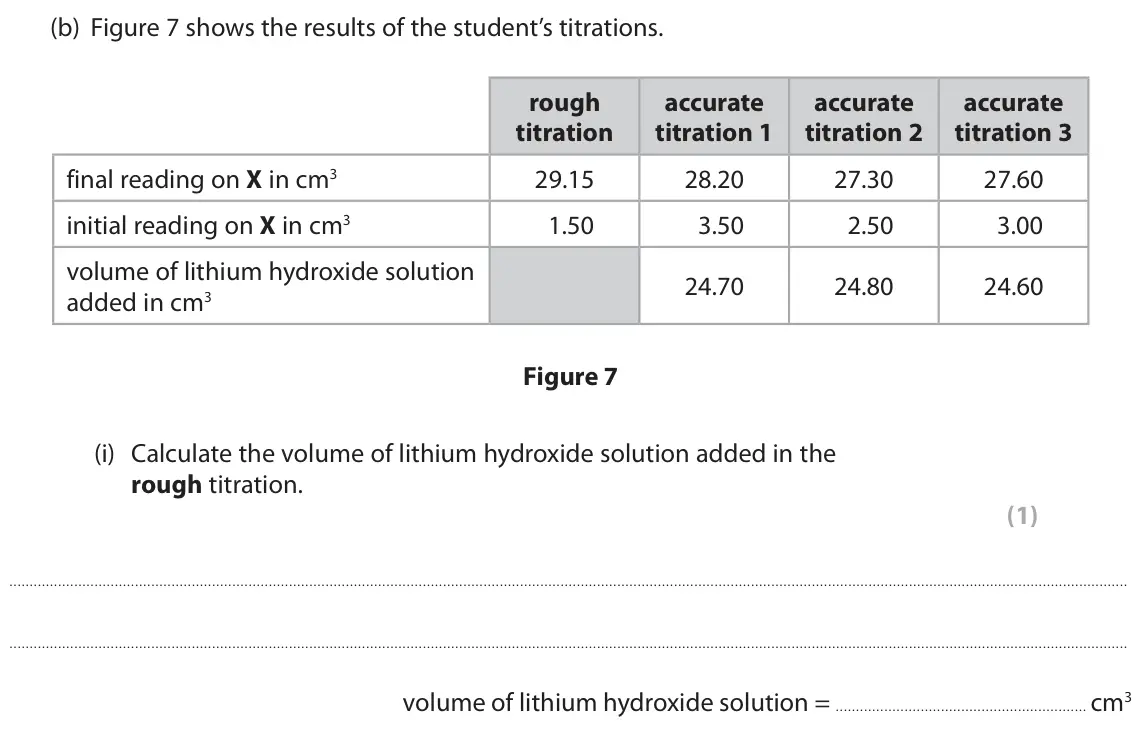
Q4(b)(ii)
The whole paper ↗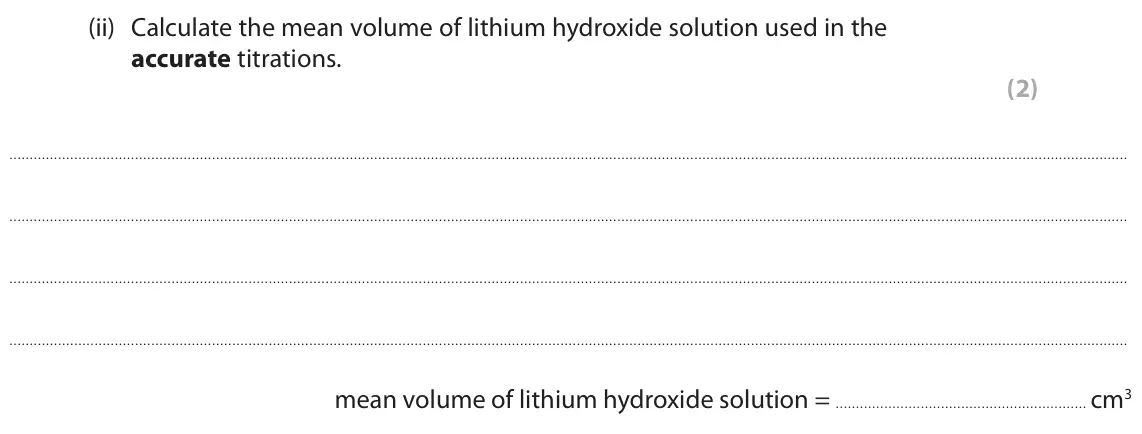
Q4(c)
The whole paper ↗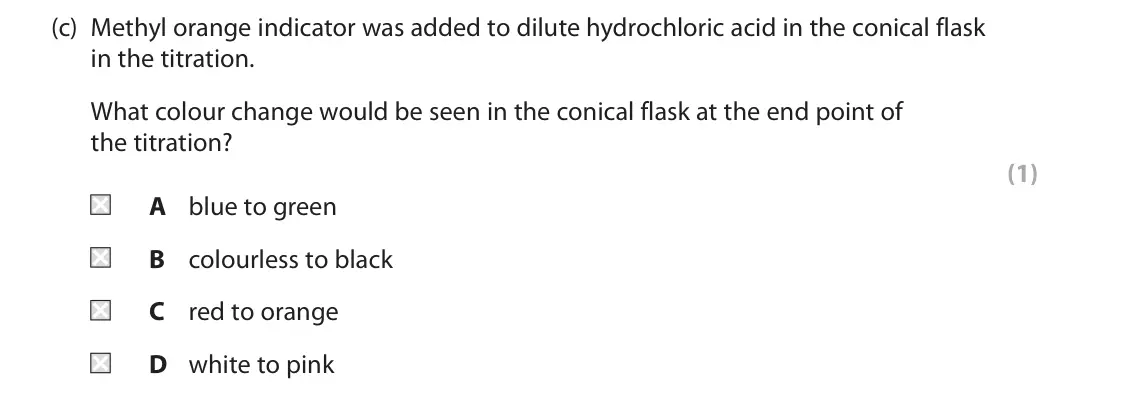
Q7(b)(i)
The whole paper ↗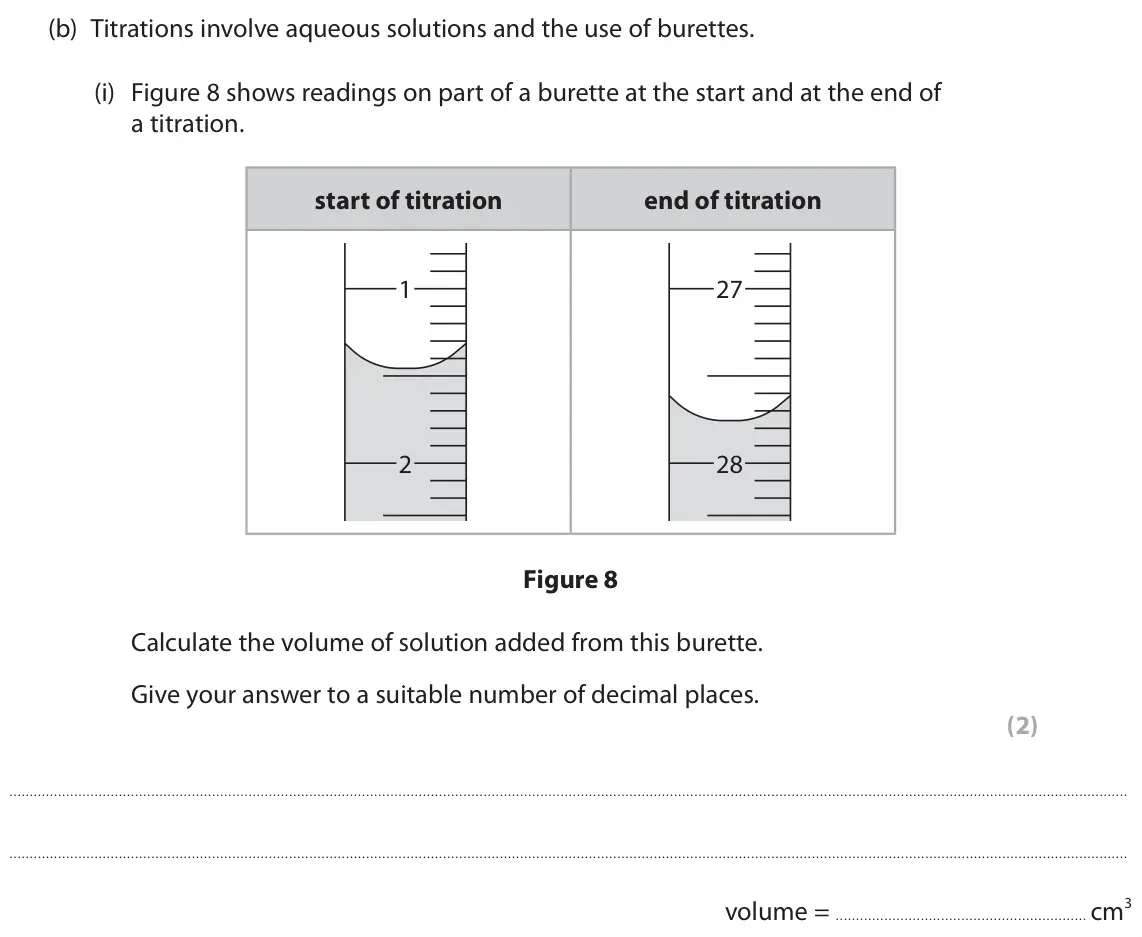
Q7(b)(ii)
The whole paper ↗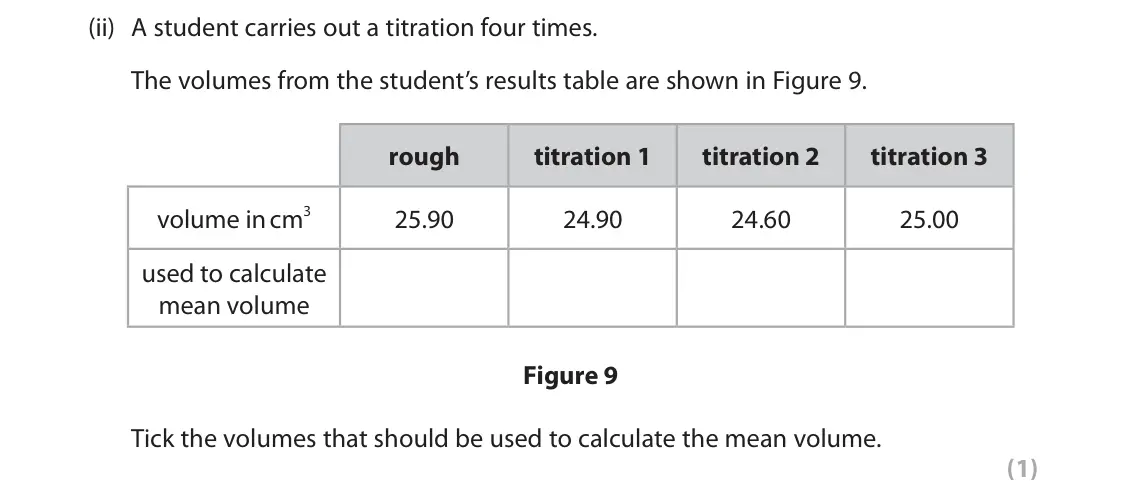
Q7(b)(iii)
The whole paper ↗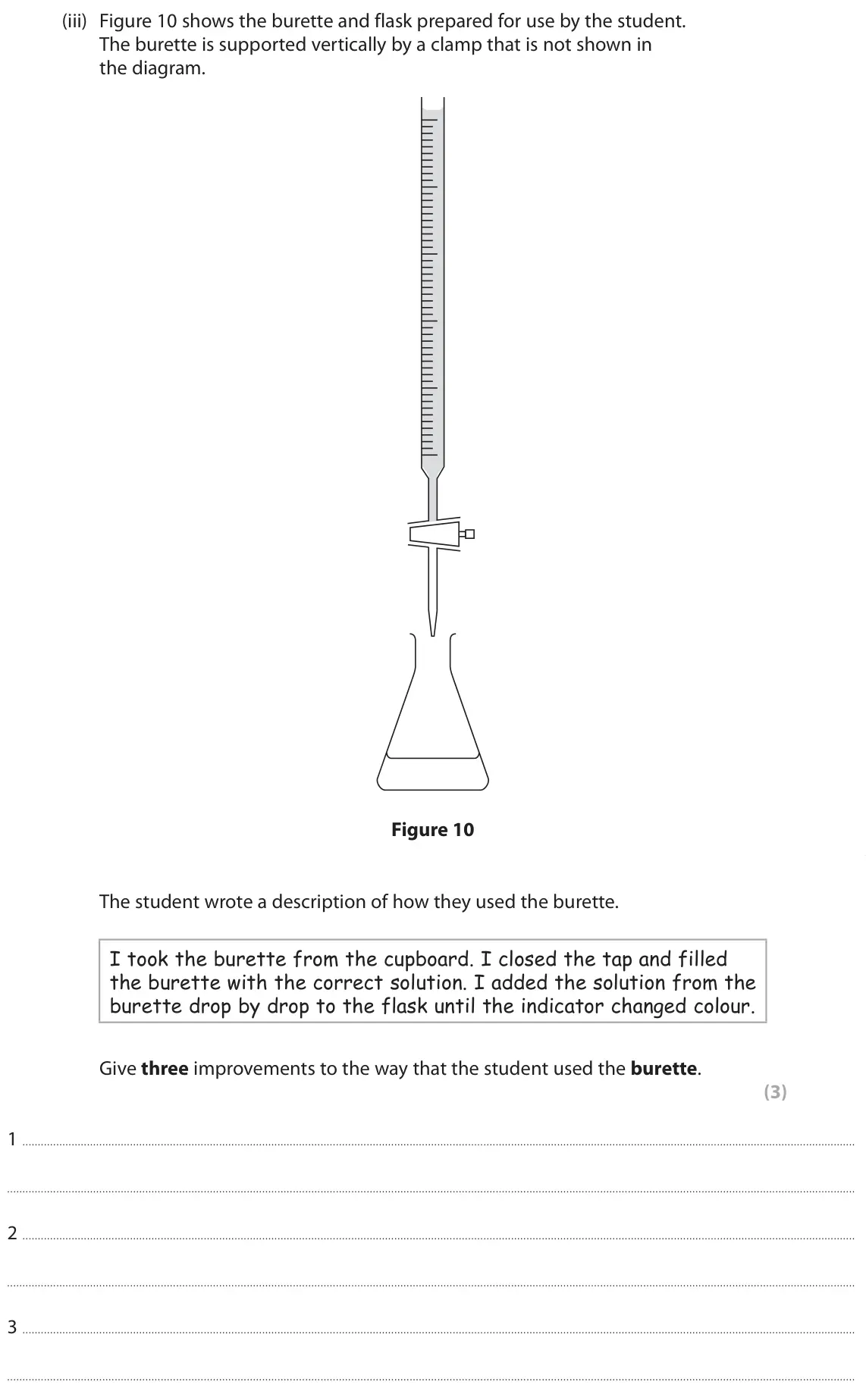
All 56 questions on Titrations and concentration in mol dm⁻³, as a list
- June 2025, Paper 1 Higher, Q10(a)(ii) (1 mark): What is the concentration, in g dm–3 , of a 0.250 mol dm–3 solution of H2SO4 ? (relative formula mass: H2SO4 = 98.0) (1) A 0.00245 B 0.394 C 24.5 D 394
- June 2025, Paper 1 Higher, Q10(b)(i) (2 marks): Explain what effect this error has on the result of the titration. (2)
- June 2025, Paper 1 Higher, Q10(b)(ii) (1 mark): State what the student should do to correct the error. (1)
- June 2025, Paper 1 Higher, Q10(c) (6 marks): The equation for the reaction in the titration is 2NaOH + H2SO4 → Na2SO4 + 2H2O Explain how the equation for the reaction and the apparatus in Figure 10 can be
- June 2025, Paper 1 Foundation, Q5(a) (1 mark): Which pair of solutions should be used to make the ammonium sulfate solution? (1) A ammonium solution and concentrated sulfuric acid B ammonia solution and conc
- June 2025, Paper 1 Foundation, Q5(b) (2 marks): The student uses the following apparatus to make the solution of ammonium sulfate. Draw one straight line from each apparatus name to the diagram of the apparat
- June 2025, Paper 1 Foundation, Q5(c) (2 marks): In this titration, the student uses methyl orange as the indicator. Explain why an indicator is used in a titration. (2)
- June 2025, Paper 1 Foundation, Q5(d) (2 marks): The student carries out a rough titration first. Figure 9 shows the burette readings at the start and at the end of the titration. 1 22 2 23 3 24
- June 2025, Paper 1 Foundation, Q5(e)(i) (1 mark): Figure 10 shows the volume of solution delivered by the burette in the three accurate titrations. Circle the volumes the student should use to calculate the mea
- June 2025, Paper 1 Foundation, Q5(e)(ii) (1 mark): Using the volumes that you have circled, calculate the mean volume of solution delivered by the burette. (1) mean volume of solution = cm3
- June 2024, Paper 1 Higher, Q6(a) (4 marks): Before the titration is carried out, the pipette and conical flask are rinsed out with pure water. Explain the effect, if any, that traces of water in the pipet
- June 2024, Paper 1 Higher, Q6(b)(i) (1 mark): State the change in colour of phenolphthalein at the end point, when the barium hydroxide solution has just been neutralised. (1) from to
- June 2024, Paper 1 Foundation, Q4(a)(i) (1 mark): Which is the name of the piece of equipment labelled X in Figure 6? (1) A boiling tube B burette C funnel D measuring cylinder
- June 2024, Paper 1 Foundation, Q4(a)(ii) (2 marks): Describe how the student should measure the 25.0 cm3 of dilute hydrochloric acid accurately into the conical flask. (2)
- June 2024, Paper 1 Foundation, Q4(b)(i) (1 mark): Calculate the volume of lithium hydroxide solution added in the rough titration. (1) volume of lithium hydroxide solution = cm3
- June 2024, Paper 1 Foundation, Q4(b)(ii) (2 marks): Calculate the mean volume of lithium hydroxide solution used in the accurate titrations. (2) mean volume of lithium hydroxide solution = cm3
- June 2024, Paper 1 Foundation, Q4(c) (1 mark): Methyl orange indicator was added to dilute hydrochloric acid in the conical flask in the titration. What colour change would be seen in the conical flask at th
- June 2023, Paper 1 Higher, Q7(b)(i) (2 marks): Figure 8 shows readings on part of a burette at the start and at the end of a titration. start of titration end of titration 1 27 2 28 Figure 8 Calculate the vo
- June 2023, Paper 1 Higher, Q7(b)(ii) (1 mark): A student carries out a titration four times. The volumes from the student’s results table are shown in Figure 9. rough titration 1 titration 2 titration 3 volu
- June 2023, Paper 1 Higher, Q7(b)(iii) (3 marks): Figure 10 shows the burette and flask prepared for use by the student. The burette is supported vertically by a clamp that is not shown in the diagram. Figure 1
- June 2023, Paper 1 Higher, Q7(d) (1 mark): In a titration a student rinsed out the flask with distilled water and did not dry it. They used the flask for titration, adding the solution from the burette u
- June 2023, Paper 1 Foundation, Q7(c) (6 marks): In the laboratory, ammonium sulfate crystals can be made using ammonia solution and dilute sulfuric acid. The volume of ammonia solution required to neutralise
- June 2022, Paper 1 Higher, Q7(a) (2 marks): State the change in colour of the methyl orange at the end point when the ammonia solution has just been neutralised. (2) from to
- June 2022, Paper 1 Higher, Q7(c) (4 marks): The titration was repeated to obtain a mean volume of dilute sulfuric acid required to neutralise the 25.0 cm3 of ammonia solution. The volumes of the two solut
- June 2022, Paper 1 Higher, Q7(d) (3 marks): The mean volume of dilute sulfuric acid required to neutralise the ammonia solution was determined from the results of the titration. This volume of dilute sulf
- June 2022, Paper 1 Foundation, Q4(a) (1 mark): Suggest why the student carried out a rough titration before the two accurate titrations. (1)
- June 2022, Paper 1 Foundation, Q4(b) (1 mark): Figure 8 shows the results of the rough titration. final reading on burette in cm3 30.10 initial reading on burette in cm3 2.50 Figure 8 What was the volume of
- June 2022, Paper 1 Foundation, Q4(c) (4 marks): Describe how the rough titration should be carried out once the dilute hydrochloric acid, lithium hydroxide solution and indicator are placed in the apparatus i
- June 2022, Paper 1 Foundation, Q4(d) (1 mark): Which is the name of an indicator that is suitable to use in this titration? (1) A limewater B litmus paper C methyl orange D universal indicator
- November 2021, Paper 1 Higher, Q10(a)(i) (3 marks): Suggest three ways to improve this method to obtain a more accurate mass of pure potassium hydroxide. (3) 1 2 3
- November 2021, Paper 1 Higher, Q10(a)(ii) (1 mark): The indicator used was phenolphthalein. Which row shows the colour change that would be seen in this titration? (1) colour at start colour at end point A yellow
- November 2021, Paper 1 Higher, Q10(b) (4 marks): Another student carried out the titration accurately. 12.15 cm3 of dilute sulfuric acid with a concentration of 0.140 mol dm–3 reacted completely with 25.00 cm3
- November 2021, Paper 1 Higher, Q10(c) (3 marks): A different solution of potassium hydroxide had a concentration of 0.175 mol dm–3. This potassium hydroxide solution was made by dissolving 2.56 g of impure pot
- November 2021, Paper 1 Foundation, Q1(b)(i) (2 marks): Give the names of the pieces of apparatus P and Q. (2) P Q
- November 2021, Paper 1 Foundation, Q1(b)(ii) (1 mark): In the titration experiment, small volumes of dilute sulfuric acid are added gradually to the ammonia solution in a flask. Give the letter, P, Q or R, of the pi
- November 2020, Paper 1 Higher, Q4(a)(i) (1 mark): Write the steps in the correct order. Some of the steps have been completed for you. (1) first step last step K M
- November 2020, Paper 1 Higher, Q4(a)(ii) (1 mark): Suggest an alternative piece of apparatus that could be used in step L to obtain exactly 25.0 cm3 of potassium hydroxide solution. (1)
- November 2020, Paper 1 Foundation, Q10(a)(i) (1 mark): Write the steps in the correct order. Some of the steps have been completed for you. (1) first step last step K M
- November 2020, Paper 1 Foundation, Q10(a)(ii) (1 mark): Suggest an alternative piece of apparatus that could be used in step L to obtain exactly 25.0 cm3 of potassium hydroxide solution. (1)
- June 2019, Paper 1 Foundation, Q7(d) (6 marks): Ammonia solution and dilute sulfuric acid are used to prepare pure, dry ammonium sulfate crystals. In an experiment a titration is carried out to determine the
- June 2018, Paper 1 Higher, Q10(a) (1 mark): Describe the colour change seen at the end point of the titration. (1) from to
- June 2018, Paper 1 Higher, Q10(b) (4 marks): A brief report of the practical method has been given above. Further detail can be added to this method to ensure that anyone following the method will obtain a
- June 2018, Paper 1 Higher, Q10(c) (4 marks): In the titration, 25.00 cm3 of dilute sulfuric acid reacted with 24.25 cm3 of 0.200 mol dm−3 sodium hydroxide solution, NaOH. H2SO4 + 2NaOH o Na2SO4 + 2H2O Calc
- June 2018, Paper 1 Higher, Q10(d) (2 marks): The concentration of some dilute sulfuric acid, H2SO4, is 0.250 mol dm−3. Calculate the concentration of sulfuric acid in this solution in g dm−3. (relative for
- June 2018, Paper 1 Foundation, Q2(a)(i) (2 marks): Describe how the pipette should be used to measure exactly 25.00 cm3 of sodium hydroxide solution into the conical flask. (2)
- June 2018, Paper 1 Foundation, Q2(a)(ii) (2 marks): The burette is first washed with water. It is then rinsed with some of the acid before it is filled with the acid to begin the titration. Explain why the burett
- June 2018, Paper 1 Foundation, Q2(b)(i) (1 mark): Give the name of an indicator that is suitable for use in the titration of sodium hydroxide solution with hydrochloric acid. (1)
- June 2018, Paper 1 Foundation, Q2(b)(ii) (1 mark): Universal indicator goes through a series of gradual colour changes as the pH changes in a solution. Give a reason why universal indicator is not a suitable ind
- June 2018, Paper 1 Foundation, Q2(c) (2 marks): Figure 3 shows some titration results obtained from an experiment in which an alkali is titrated with an acid. titration rough 1 2 final burette reading in cm3
- Specimen, Paper 1 Higher, Q10(b)(i) (3 marks): 25.0cm3 of 0.100mol dm–3 sodium hydroxide, NaOH, solution is added to 35.0cm3 of 0.0750mol dm–3 dilute hydrochloric acid, HCl. Use the information to determine
- Specimen, Paper 1 Higher, Q10(b)(ii) (1 mark): To find the exact amount of dilute hydrochloric acid that reacts with 25.0 cm3 of the sodium hydroxide solution, a titration is carried out. Figure 14 shows the
- Specimen, Paper 1 Higher, Q10(b)(iii) (1 mark): During the titration, the indicator used changed colour at the end point. Which of the following shows an indicator with the colour change that would be seen in
- Specimen, Paper 1 Higher, Q10(c) (4 marks): In another titration, 25.0cm3 of a different sodium hydroxide solution is titrated with 0.200mol dm–3 sulfuric acid, H2SO4. 2NaOH + H2SO4 → Na2SO4 + 2H2O 24.80
- Specimen, Paper 1 Foundation, Q8(a) (1 mark): State one safety precaution that must be taken when using sodium hydroxide solution and dilute sulfuric acid. (1)
- Specimen, Paper 1 Foundation, Q8(d) (2 marks): The results of titrations to determine how much of an acid is required to neutralise a given volume of an alkaline solution are shown in Figure 14. titration 1
- Specimen, Paper 1 Foundation, Q8(e) (6 marks): Describe the experimental procedure to carry out a titration to find the exact volume of sulfuric acid needed to neutralise 25.0 cm3 of sodium hydroxide solutio
Questions, mark schemes and examiner’s reports are © Pearson Edexcel, from their published past papers. Plumi isn’t affiliated with any exam board. Want whole papers? Every Edexcel GCSE Chemistry paper.
Rather write your answers by hand on iPad? Plumi marks them against the same mark schemes.