 plumi
The Haber process and fertilisers: Edexcel GCSE Chemistry questions
Every Edexcel GCSE Chemistry exam question on The Haber process and fertilisers (specification points 5.19–5.24), 2018–2025, with its mark scheme and examiner’s report.
Find questions1,880
Exam
All years
Calculations
Q4(b)
The whole paper ↗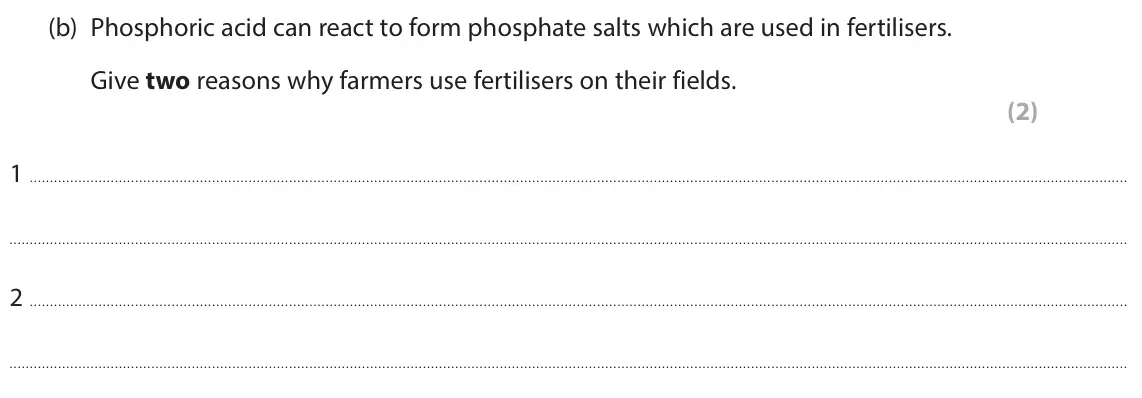
Q9(b)(ii)
The whole paper ↗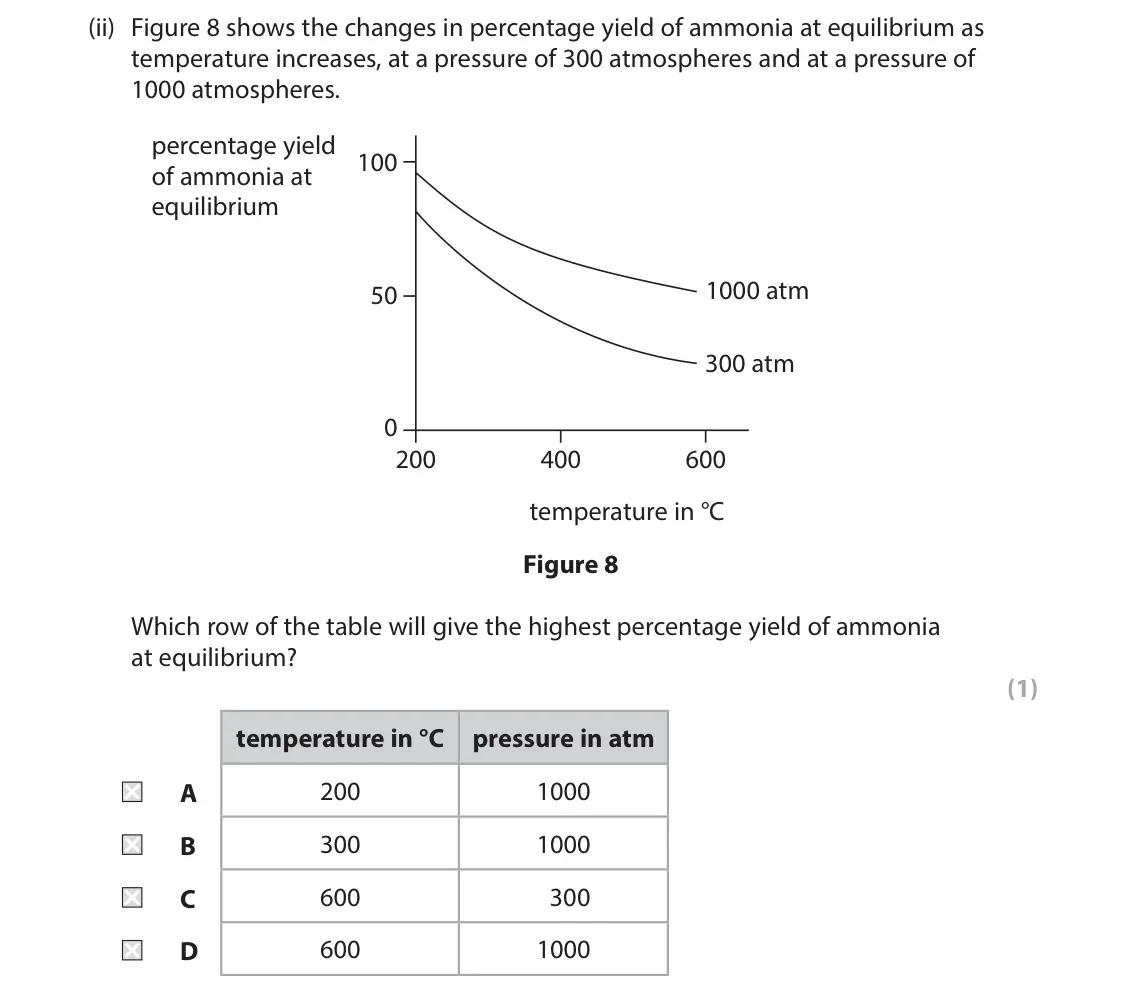
Q9(b)(iii)
The whole paper ↗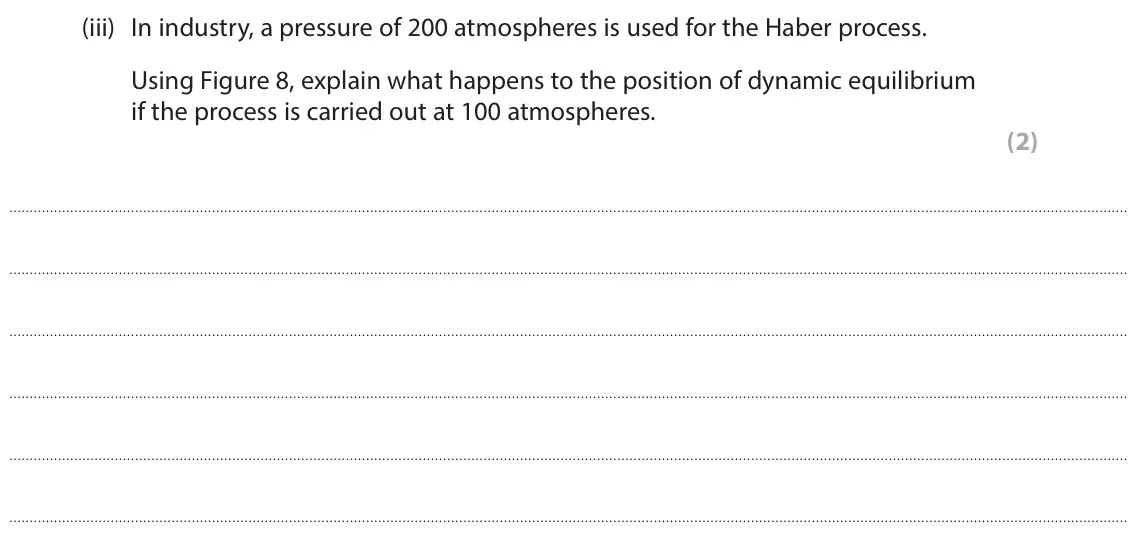
Q10(b)
The whole paper ↗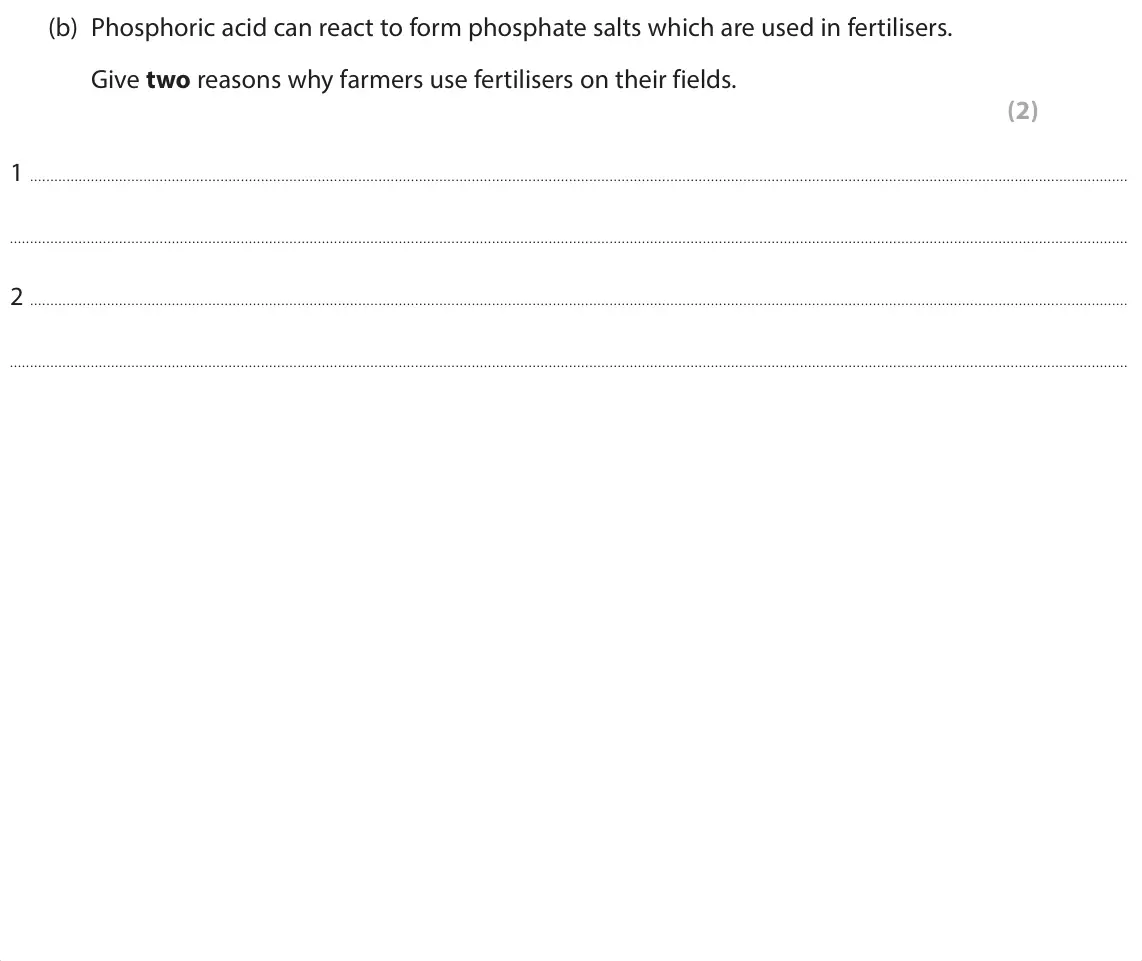
Q10(a)(i)
The whole paper ↗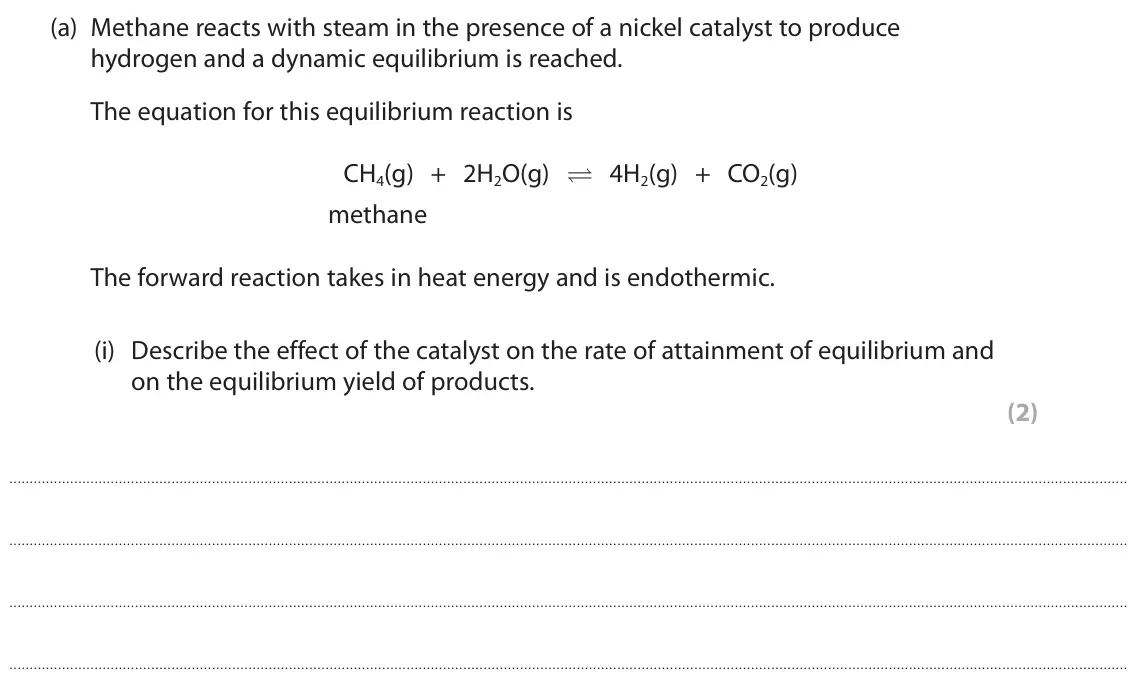
Q10(a)(ii)
The whole paper ↗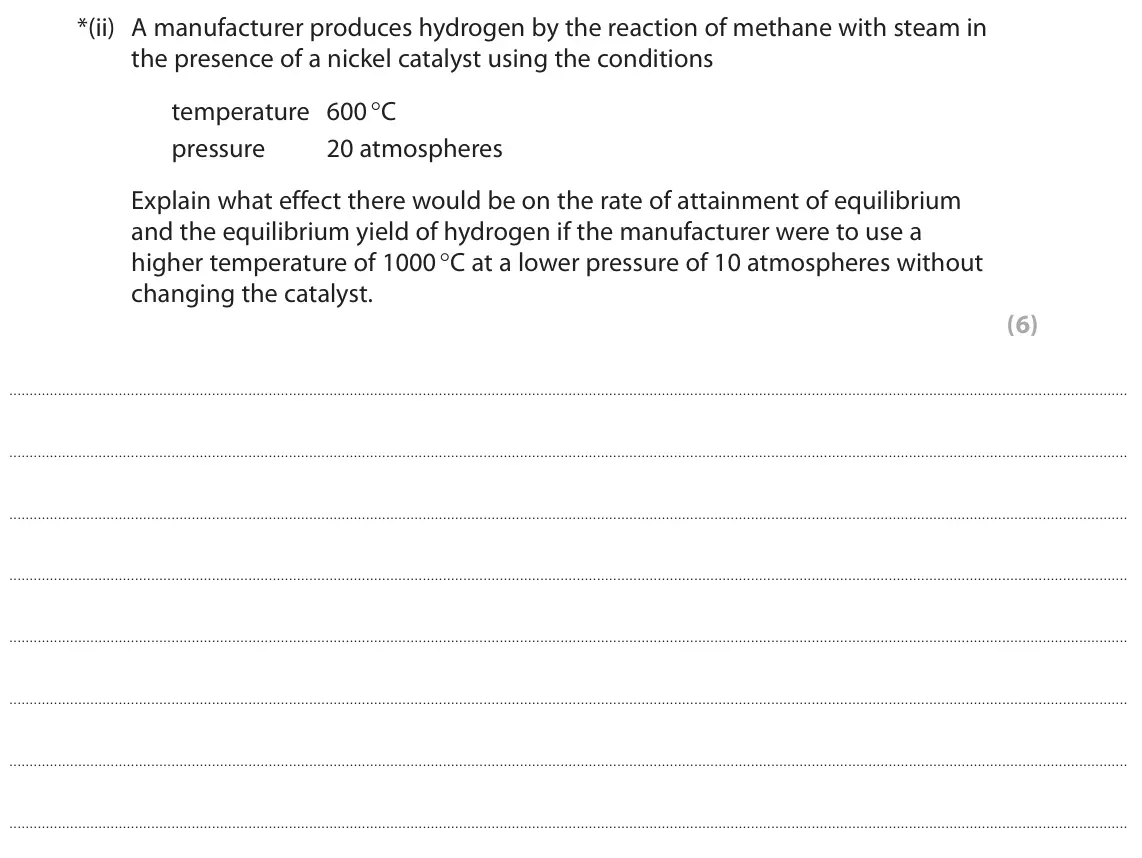
Q2(b)(iii)
The whole paper ↗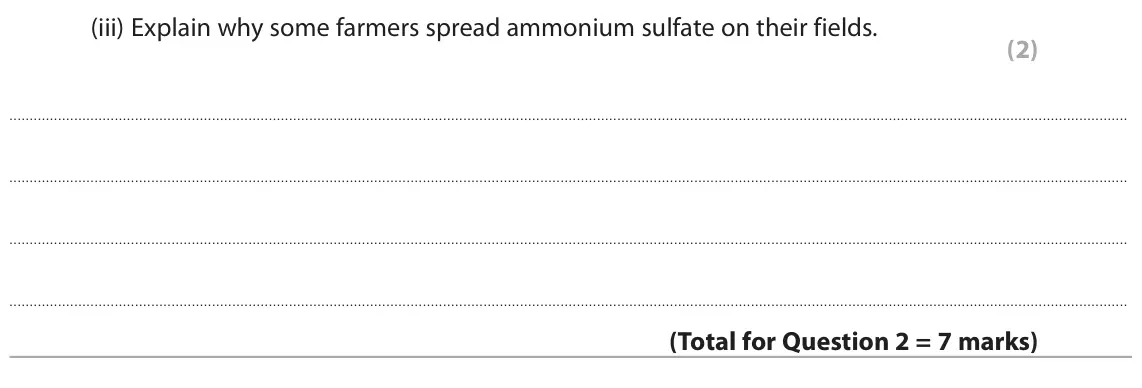
Q5(a)(i)
The whole paper ↗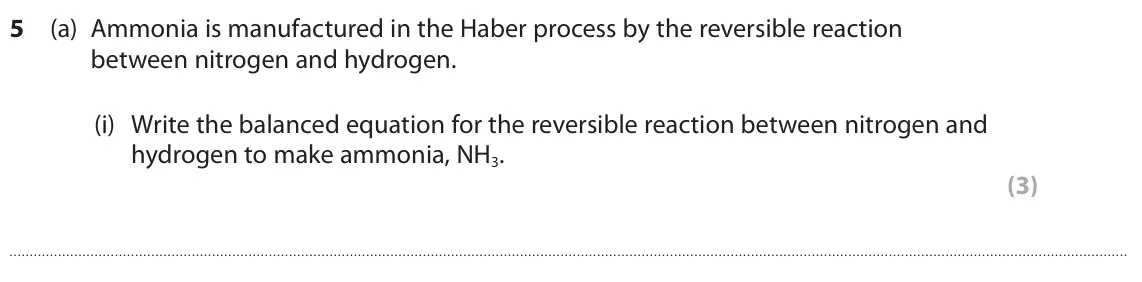
Q5(a)(ii)
The whole paper ↗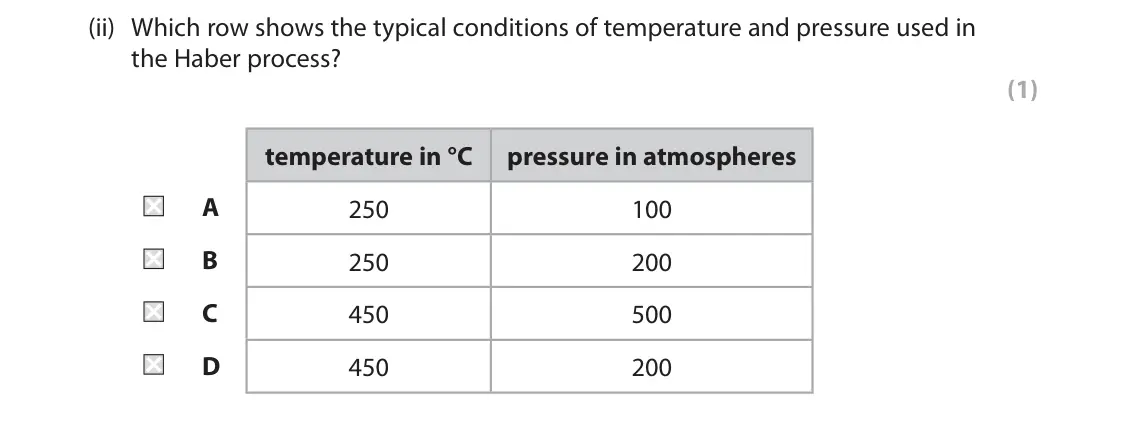
Q5(a)(iii)
The whole paper ↗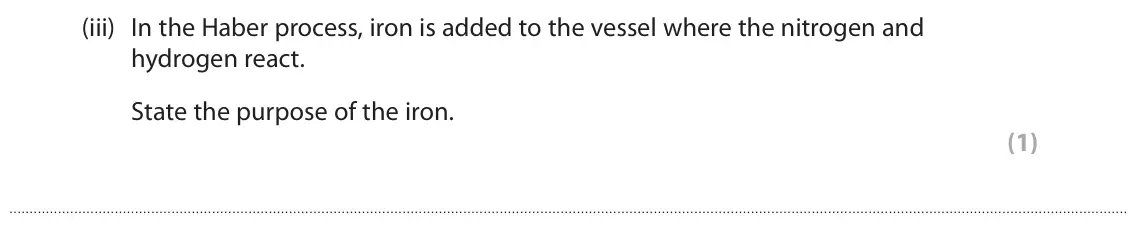
Q7(a)(ii)
The whole paper ↗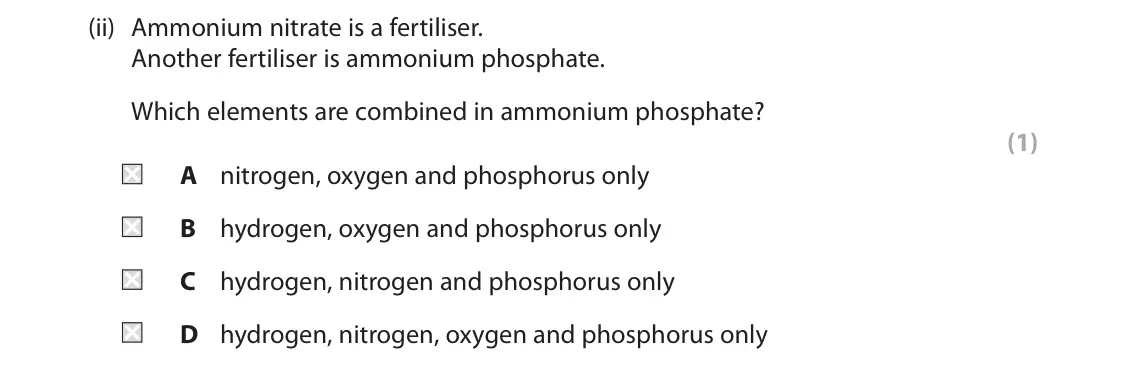
Q7(a)(i)
The whole paper ↗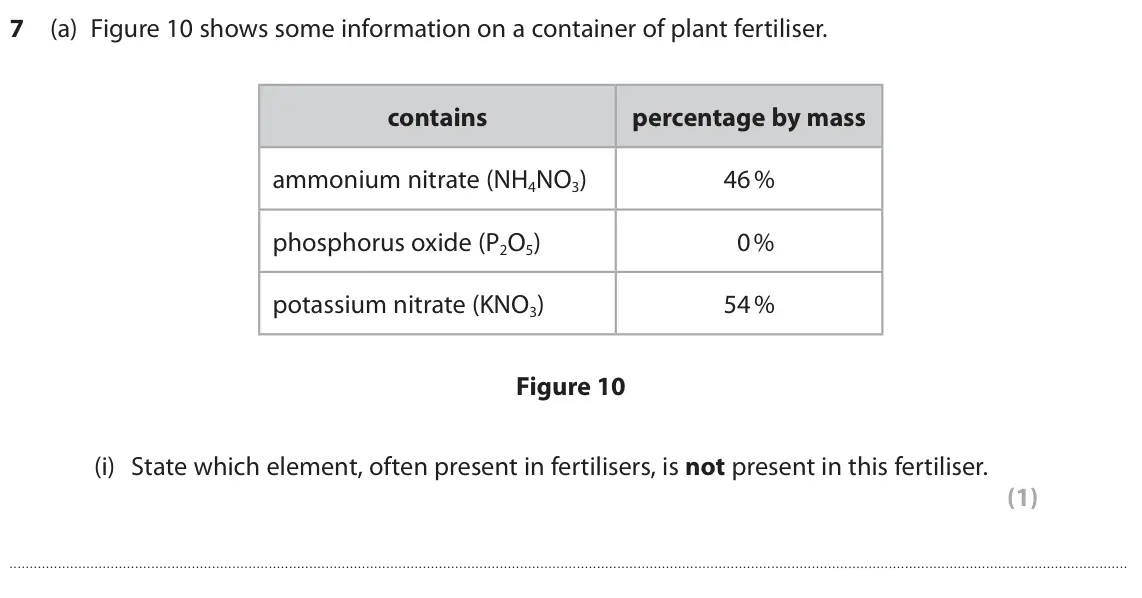
Q7(a)(iii)
The whole paper ↗
Q7(b)(ii)
The whole paper ↗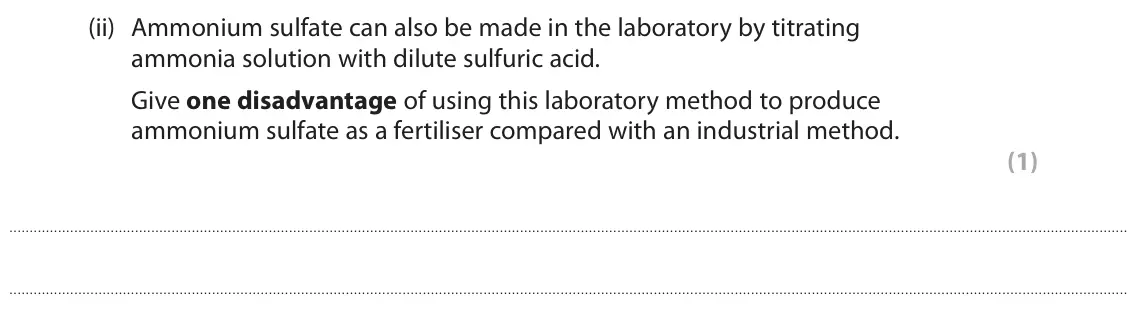
Q1(a)
The whole paper ↗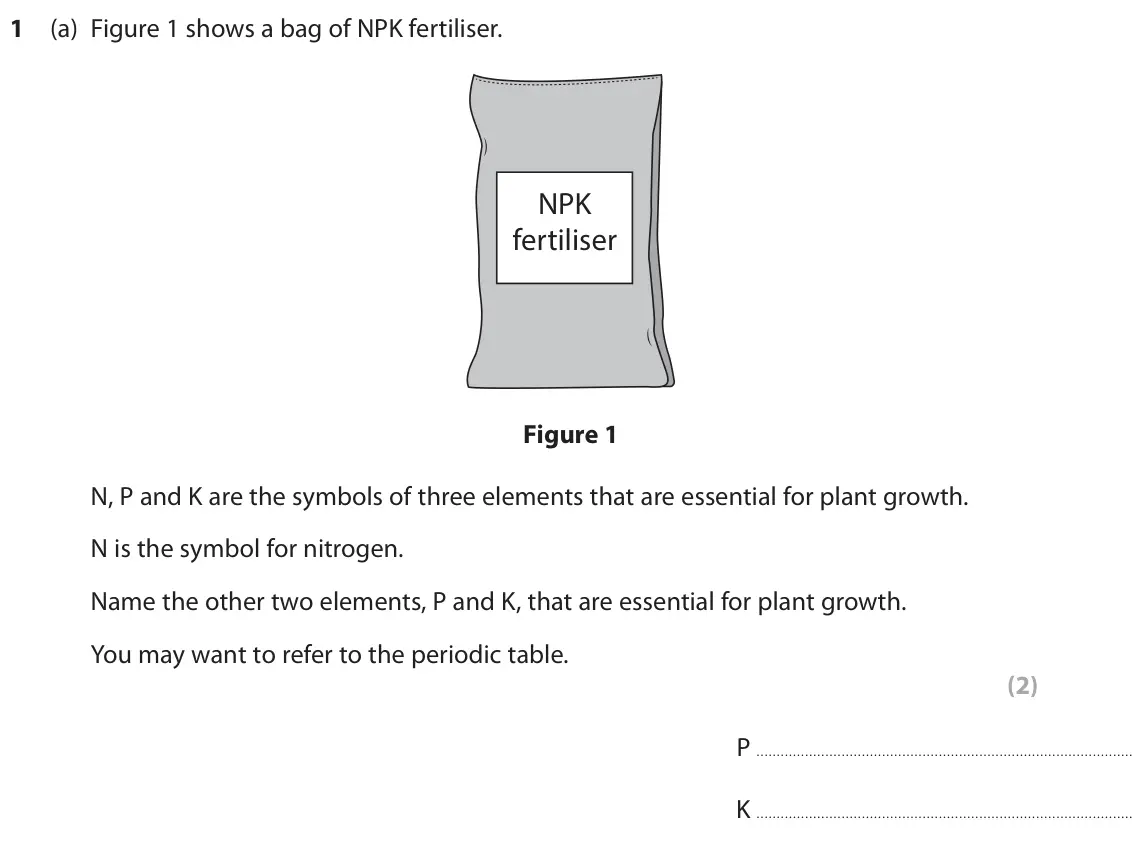
Q1(b)(i)
The whole paper ↗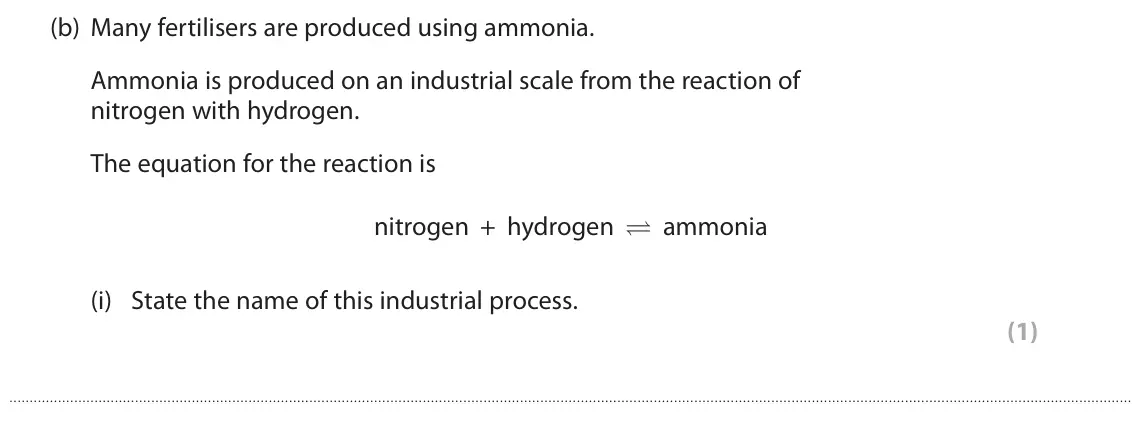
Q8(d)
The whole paper ↗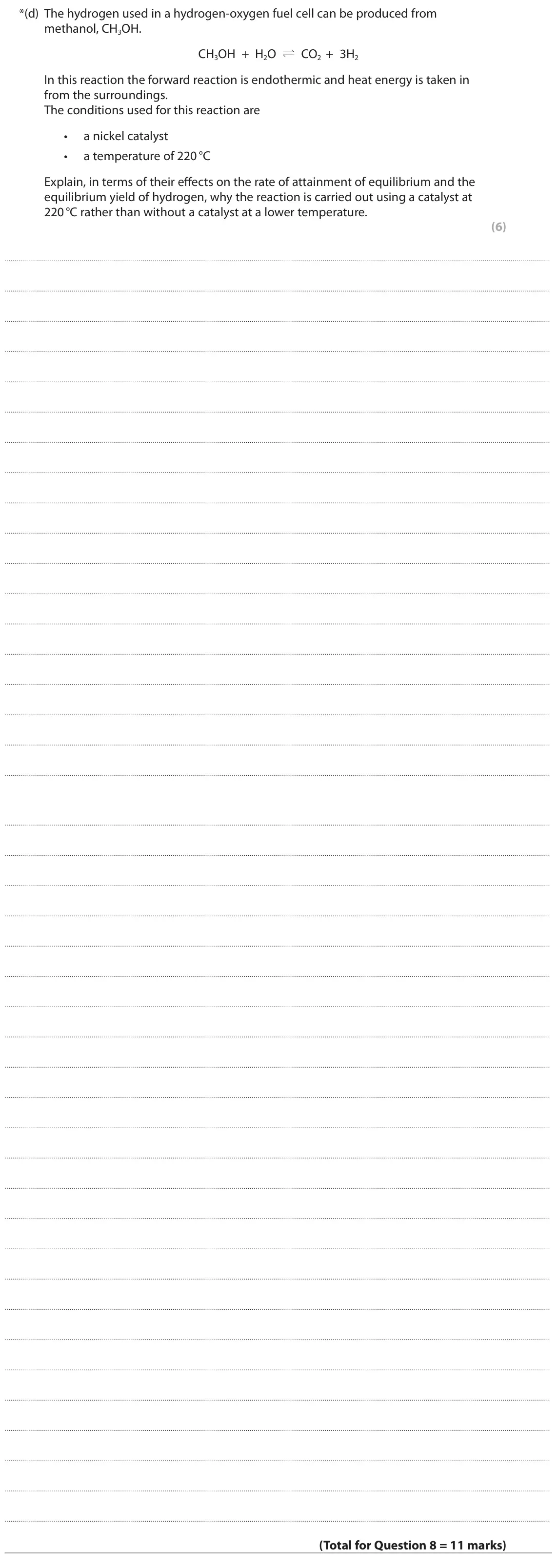
Q1(a)(i)
The whole paper ↗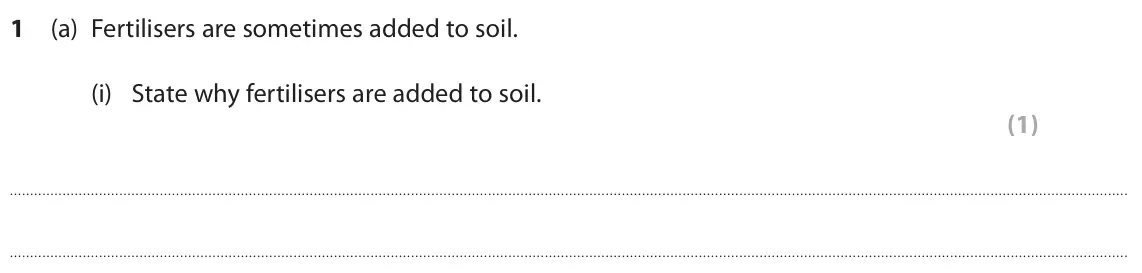
Q1(a)(ii)
The whole paper ↗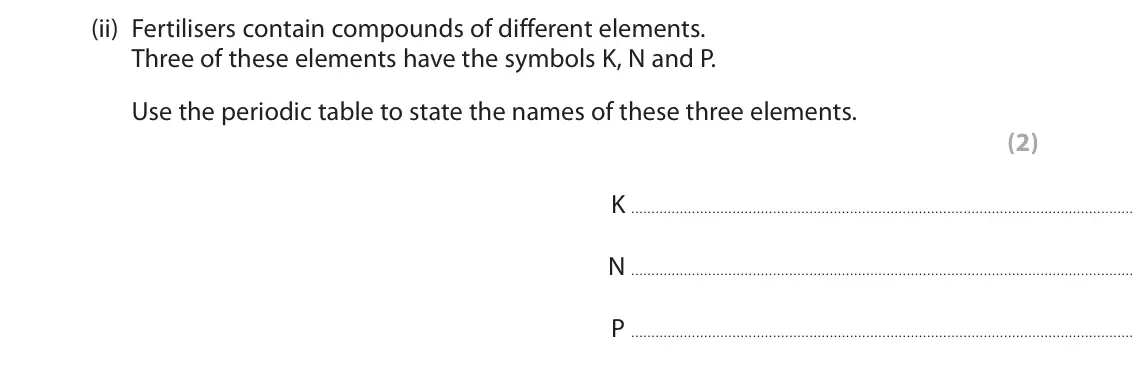
Q5(a)
The whole paper ↗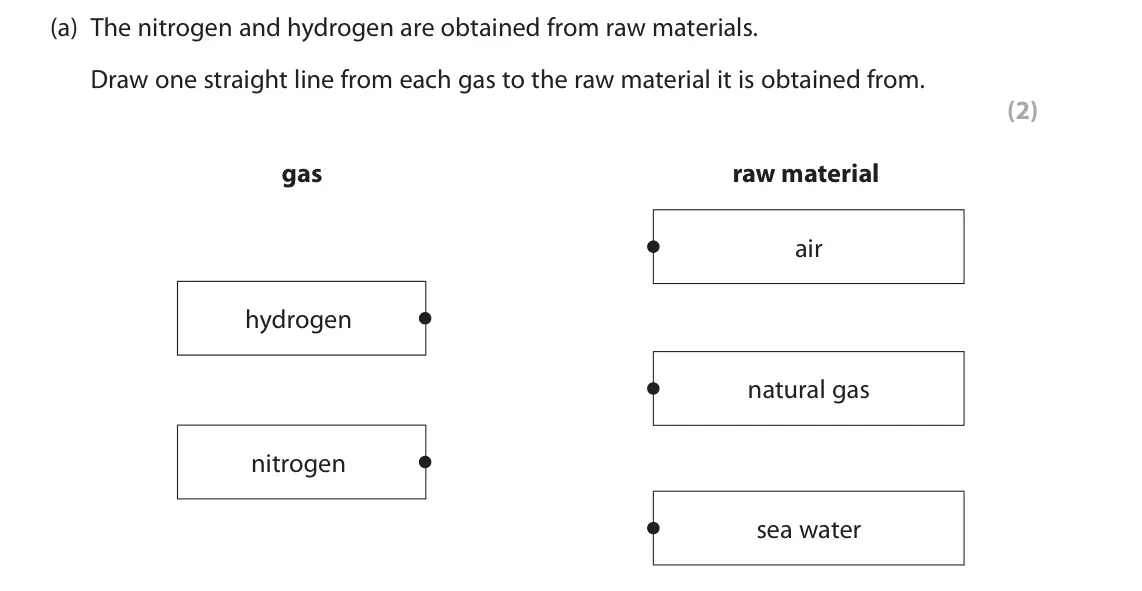
All 43 questions on The Haber process and fertilisers, as a list
- June 2025, Paper 1 Higher, Q4(b) (2 marks): Phosphoric acid can react to form phosphate salts which are used in fertilisers. Give two reasons why farmers use fertilisers on their fields. (2) 1 2
- June 2025, Paper 1 Higher, Q9(b)(ii) (1 mark): Figure 8 shows the changes in percentage yield of ammonia at equilibrium as temperature increases, at a pressure of 300 atmospheres and at a pressure of 1000 at
- June 2025, Paper 1 Higher, Q9(b)(iii) (2 marks): In industry, a pressure of 200 atmospheres is used for the Haber process. Using Figure 8, explain what happens to the position of dynamic equilibrium if the pro
- June 2025, Paper 1 Foundation, Q10(b) (2 marks): Phosphoric acid can react to form phosphate salts which are used in fertilisers. Give two reasons why farmers use fertilisers on their fields. (2) 1 2
- June 2024, Paper 1 Higher, Q10(a)(i) (2 marks): Describe the effect of the catalyst on the rate of attainment of equilibrium and on the equilibrium yield of products. (2)
- June 2024, Paper 1 Higher, Q10(a)(ii) (6 marks): A manufacturer produces hydrogen by the reaction of methane with steam in the presence of a nickel catalyst using the conditions temperature 600 °C pressure 20
- June 2024, Paper 1 Foundation, Q2(b)(iii) (2 marks): Explain why some farmers spread ammonium sulfate on their fields. (2)
- June 2023, Paper 1 Higher, Q5(a)(i) (3 marks): Write the balanced equation for the reversible reaction between nitrogen and hydrogen to make ammonia, NH3. (3)
- June 2023, Paper 1 Higher, Q5(a)(ii) (1 mark): Which row shows the typical conditions of temperature and pressure used in the Haber process? (1) temperature in °C pressure in atmospheres A 250 100 B 250 200
- June 2023, Paper 1 Higher, Q5(a)(iii) (1 mark): In the Haber process, iron is added to the vessel where the nitrogen and hydrogen react. State the purpose of the iron. (1)
- June 2023, Paper 1 Higher, Q7(a)(ii) (1 mark): Ammonium nitrate is a fertiliser. Another fertiliser is ammonium phosphate. Which elements are combined in ammonium phosphate? (1) A nitrogen, oxygen and phosph
- June 2023, Paper 1 Foundation, Q7(a)(i) (1 mark): State which element, often present in fertilisers, is not present in this fertiliser. (1)
- June 2023, Paper 1 Foundation, Q7(a)(iii) (1 mark): State why farmers spread fertilisers on their fields. (1)
- June 2023, Paper 1 Foundation, Q7(b)(ii) (1 mark): Ammonium sulfate can also be made in the laboratory by titrating ammonia solution with dilute sulfuric acid. Give one disadvantage of using this laboratory meth
- June 2022, Paper 1 Foundation, Q1(a) (2 marks): Figure 1 shows a bag of NPK fertiliser. NPK fertiliser Figure 1 N, P and K are the symbols of three elements that are essential for plant growth. N is the symbo
- June 2022, Paper 1 Foundation, Q1(b)(i) (1 mark): State the name of this industrial process. (1)
- November 2021, Paper 1 Higher, Q8(d) (6 marks): The hydrogen used in a hydrogen-oxygen fuel cell can be produced from CO2 + 3H2 methanol, CH3OH. CH3OH + H2O In this reaction the forward reaction is endoth
- November 2021, Paper 1 Foundation, Q1(a)(i) (1 mark): State why fertilisers are added to soil. (1)
- November 2021, Paper 1 Foundation, Q1(a)(ii) (2 marks): Fertilisers contain compounds of different elements. Three of these elements have the symbols K, N and P. Use the periodic table to state the names of these thr
- November 2021, Paper 1 Foundation, Q5(a) (2 marks): The nitrogen and hydrogen are obtained from raw materials. Draw one straight line from each gas to the raw material it is obtained from. (2) gas raw material ai
- November 2021, Paper 1 Foundation, Q5(c) (2 marks): The reaction between nitrogen and hydrogen happens at a pressure of 200 atmospheres. Another unit of pressure is Pascals, Pa (1 atmosphere = 101 325 Pa). Calcul
- November 2021, Paper 2 Foundation, Q8(d)(i) (1 mark): Which symbol should be placed on a container of a toxic gas? (1) A B C D
- November 2021, Paper 2 Foundation, Q8(d)(ii) (1 mark): Give one safety precaution that should be taken when working with toxic gases in the laboratory. (1)
- November 2020, Paper 1 Higher, Q10(a)(i) (1 mark): An iron catalyst can be used in the reaction. Which row of the table shows how adding the iron catalyst affects the rate of attainment of equilibrium and the eq
- November 2020, Paper 1 Higher, Q10(a)(iii) (4 marks): The reaction is carried out at a pressure of 200 atmospheres. Explain what effect a pressure higher than 200 atmospheres would have on the rate of attainment of
- November 2020, Paper 1 Higher, Q10(b)(i) (1 mark): Suggest one other reason for using solid ammonium sulfate and solid ammonium nitrate as nitrogenous fertilisers. (1)
- November 2020, Paper 1 Higher, Q10(b)(iii) (2 marks): Describe one similarity and one difference between the industrial production of ammonium sulfate and the laboratory preparation of ammonium sulfate. (2) similar
- November 2020, Paper 1 Foundation, Q3(a)(i) (1 mark): Give the name of the industrial process used to manufacture ammonia. (1)
- November 2020, Paper 1 Foundation, Q3(c)(ii) (2 marks): Explain the importance of fertilisers in farming. (2)
- June 2019, Paper 1 Higher, Q7(d)(i) (1 mark): State the name of the industrial process to manufacture ammonia. (1)
- June 2019, Paper 1 Higher, Q7(d)(ii) (1 mark): Predict the effect that adding the catalyst has on the rate of attainment of equilibrium. (1)
- June 2019, Paper 1 Higher, Q7(d)(iii) (1 mark): Predict the effect that adding the catalyst has on the equilibrium yield of ammonia. (1)
- June 2019, Paper 1 Higher, Q10(c) (6 marks): In another stage in the production of nitric acid, ammonia is reacted with oxygen to form nitrogen oxide and water. 4NH3(g) + 5O2(g) U 4NO(g) + 6H2O(g) Heat ene
- June 2019, Paper 1 Foundation, Q7(a)(i) (1 mark): State the name of an element in these compounds that promotes plant growth.
- June 2019, Paper 1 Foundation, Q7(b)(ii) (1 mark): State the formula of a molecule of ammonia. (1)
- June 2019, Paper 1 Foundation, Q7(b)(iii) (1 mark): Figure 7 shows a graph of world ammonia production, in millions of tonnes, from 1945 to 2015. 160 world ammonia 140 production in millions 120 - of tonnes 100 -
- June 2018, Paper 1 Higher, Q7(d) (6 marks): The reaction to produce sulfur trioxide reaches an equilibrium. ` 2SO3(g) 2SO2(g) + O2(g) _ The forward reaction is exothermic. The rate of attainment of equili
- June 2018, Paper 1 Higher, Q8(a)(ii) (2 marks): Ammonia, NH3, is made by reacting nitrogen with hydrogen. Write the balanced equation for this reaction. (2)
- June 2018, Paper 1 Foundation, Q1(c)(iii) (2 marks): Explain why farmers spread ammonium nitrate on their fields. (2)
- Specimen, Paper 1 Higher, Q7(a)(i) (3 marks): This reaction takes place in industry at 1–2 atm pressure and can reach a dynamic equilibrium. Explain the effect on the rate of attainment of equilibrium, if t
- Specimen, Paper 1 Higher, Q7(b) (1 mark): When there are alternative methods of producing a product, the final pathway is chosen by considering atom economy, cost of energy, yield of product and rates o
- Specimen, Paper 1 Higher, Q7(c) (6 marks): The reaction between nitrogen and hydrogen is exothermic. 2NH3 N2 + 3H2 If nitrogen and hydrogen were reacted at 150 atm pressure and 300 °C, without a cata
- Specimen, Paper 1 Foundation, Q2(b) (1 mark): Give one advantage of using fertilisers made from ammonia rather than using manure. (1)
Questions, mark schemes and examiner’s reports are © Pearson Edexcel, from their published past papers. Plumi isn’t affiliated with any exam board. Want whole papers? Every Edexcel GCSE Chemistry paper.
Rather write your answers by hand on iPad? Plumi marks them against the same mark schemes.