 plumi
The periodic table: Edexcel GCSE Chemistry questions
Every Edexcel GCSE Chemistry exam question on The periodic table (specification points 1.13–1.20), 2018–2025, with its mark scheme and examiner’s report.
Find questions1,880
Exam
All years
Calculations
Q5(a)
The whole paper ↗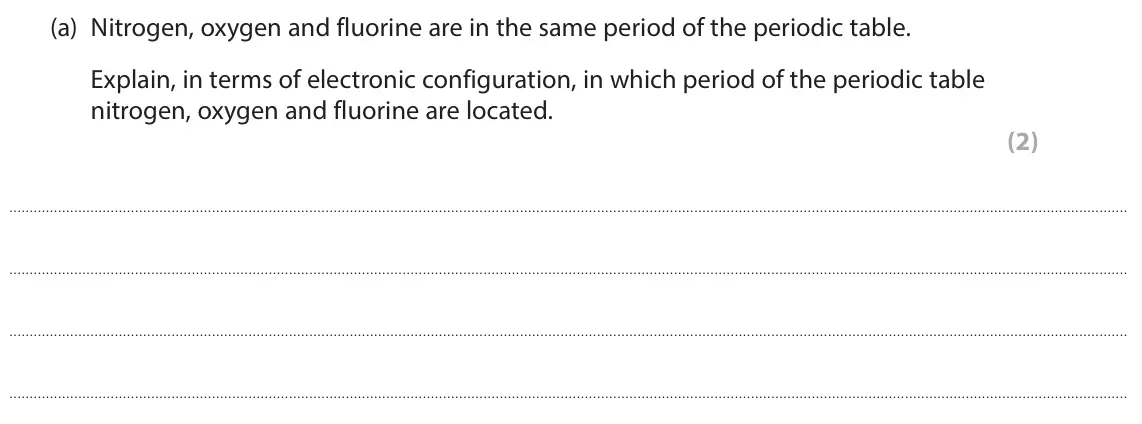
Q4(a)
The whole paper ↗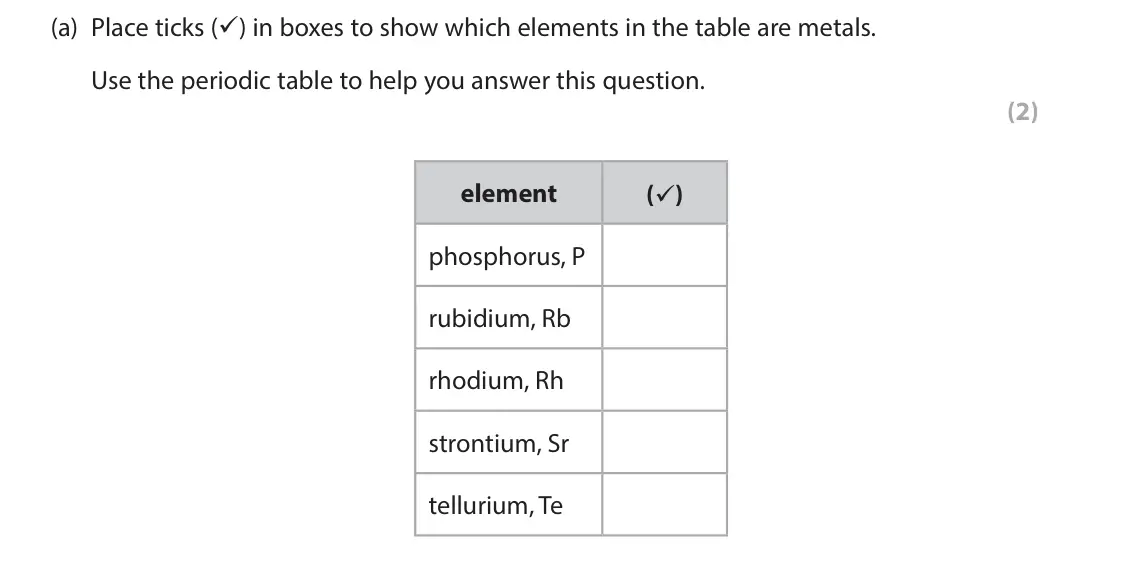
Q8(b)
The whole paper ↗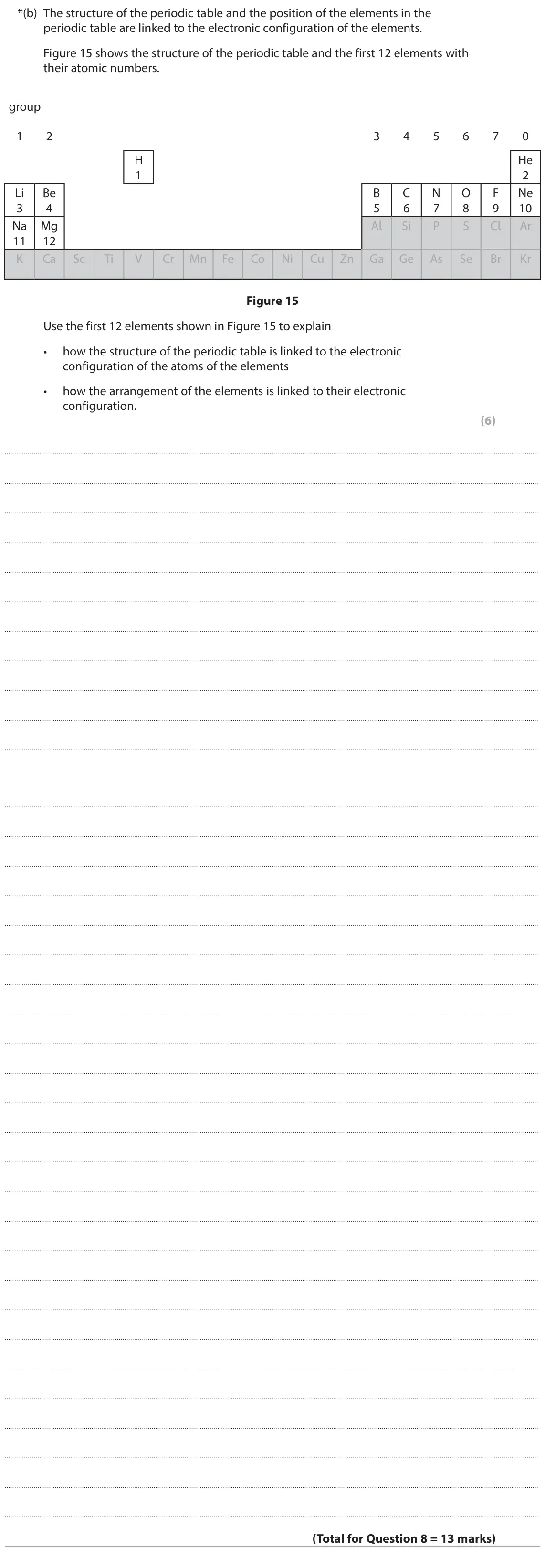

Q5(c)
The whole paper ↗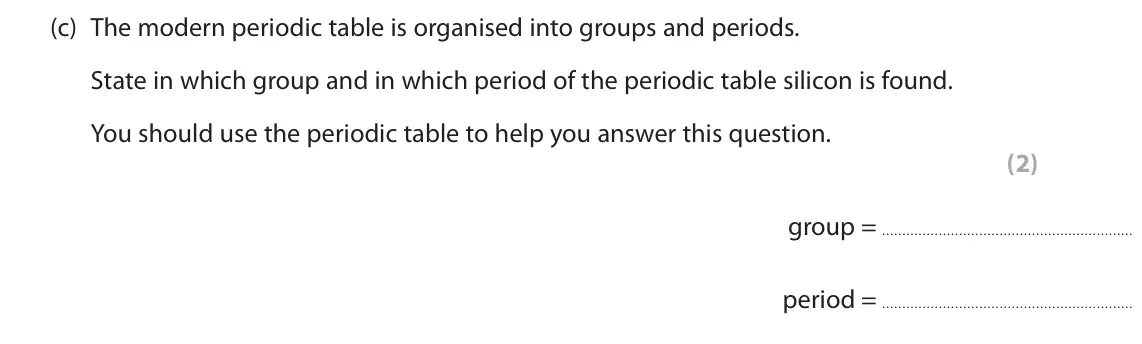
Q5(d)
The whole paper ↗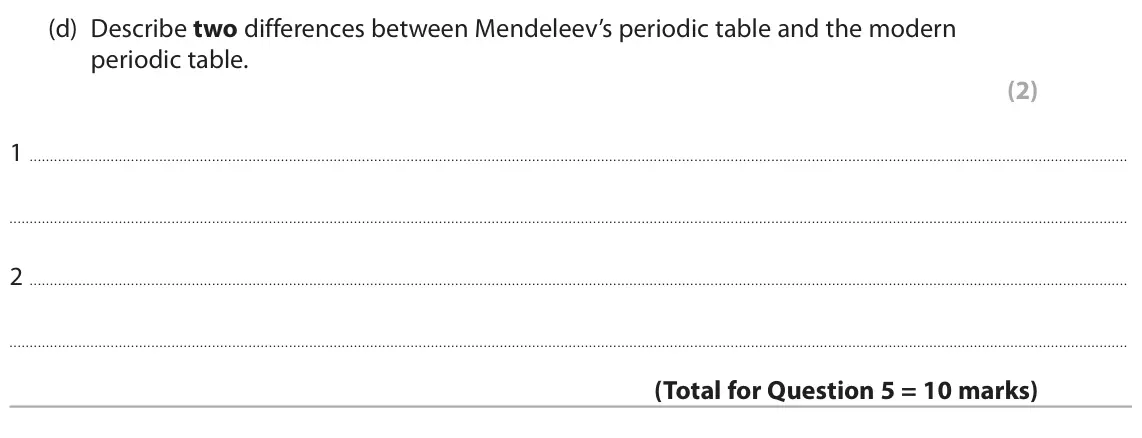
Q7(a)
The whole paper ↗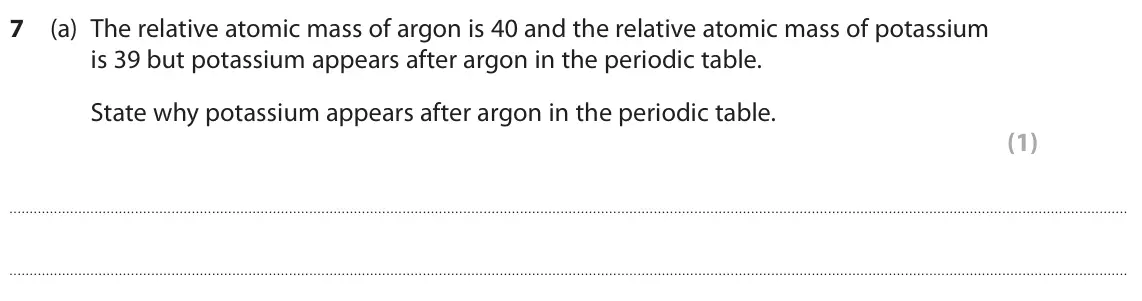
Q2(a)(i)
The whole paper ↗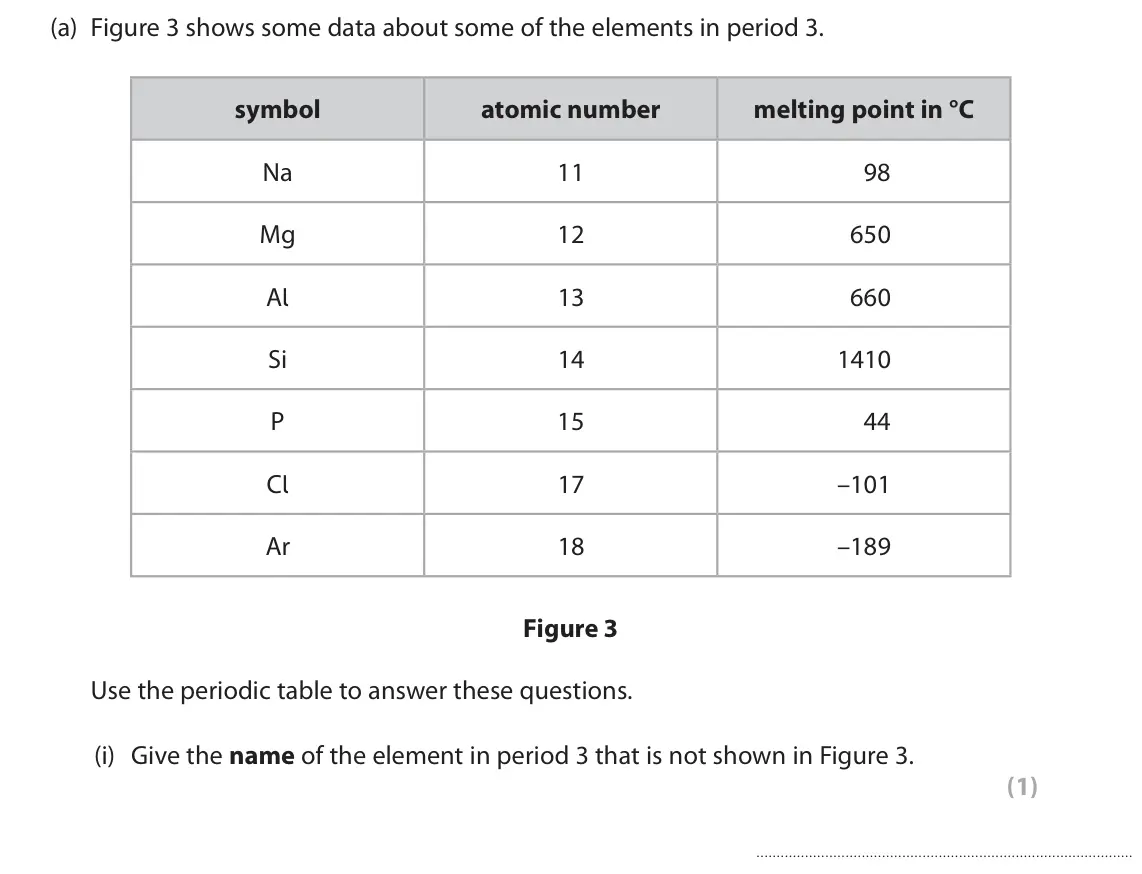

Q2(a)(iii)
The whole paper ↗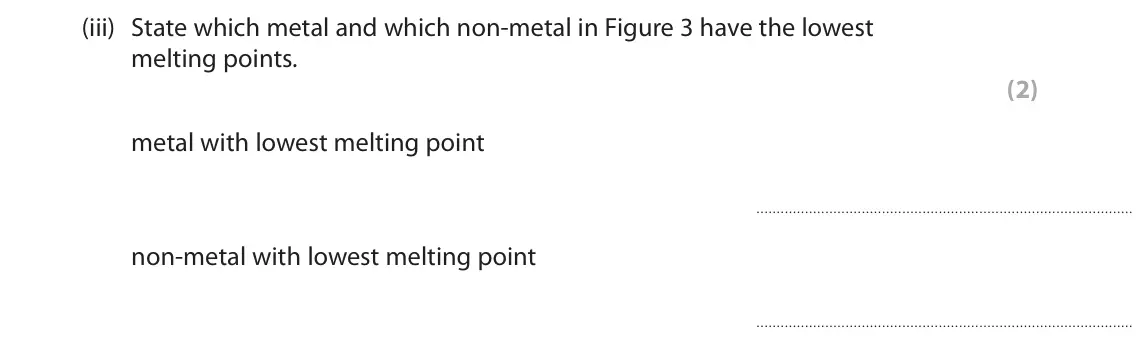
Q6(a)(ii)
The whole paper ↗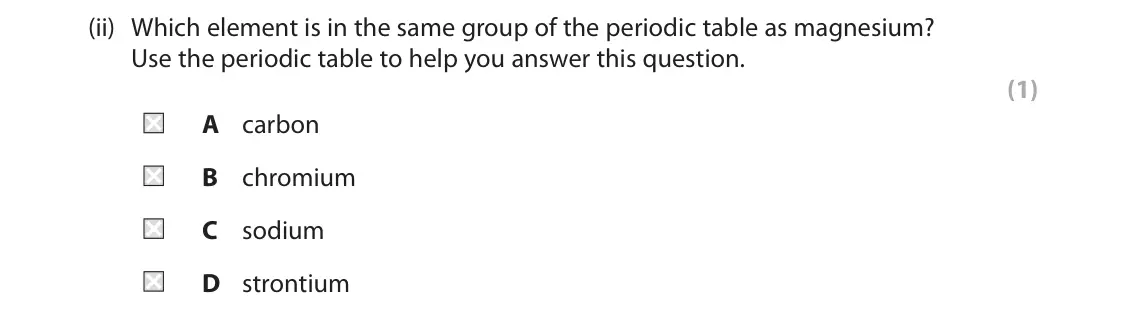
Q6(b)(ii)
The whole paper ↗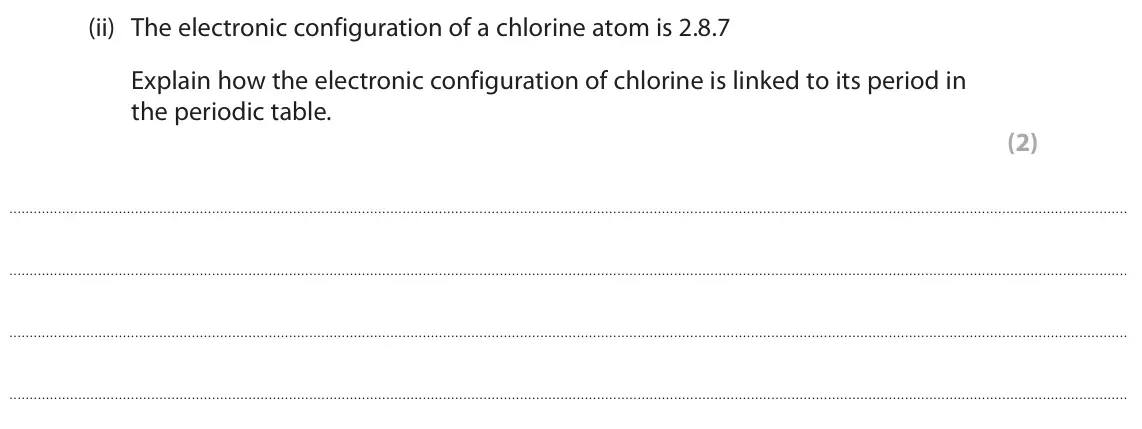
Q5(c)(i)
The whole paper ↗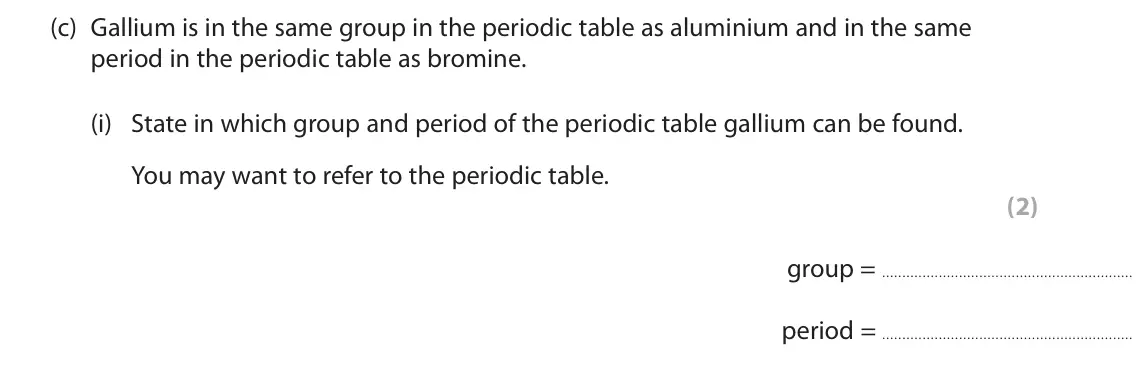
Q5(c)(ii)
The whole paper ↗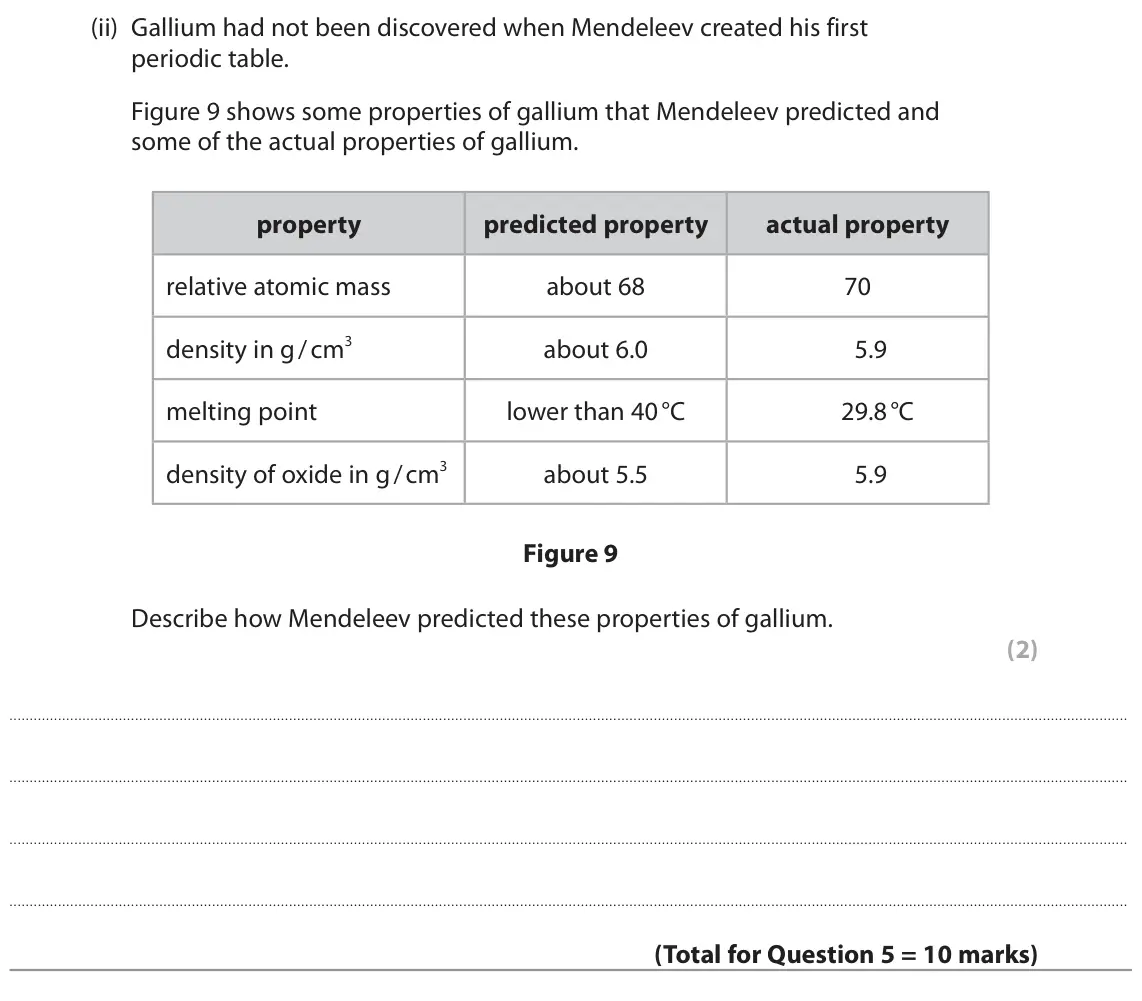
Q2(c)
The whole paper ↗
Q5(b)
The whole paper ↗
Q3(b)
The whole paper ↗
Q8(a)(ii)
The whole paper ↗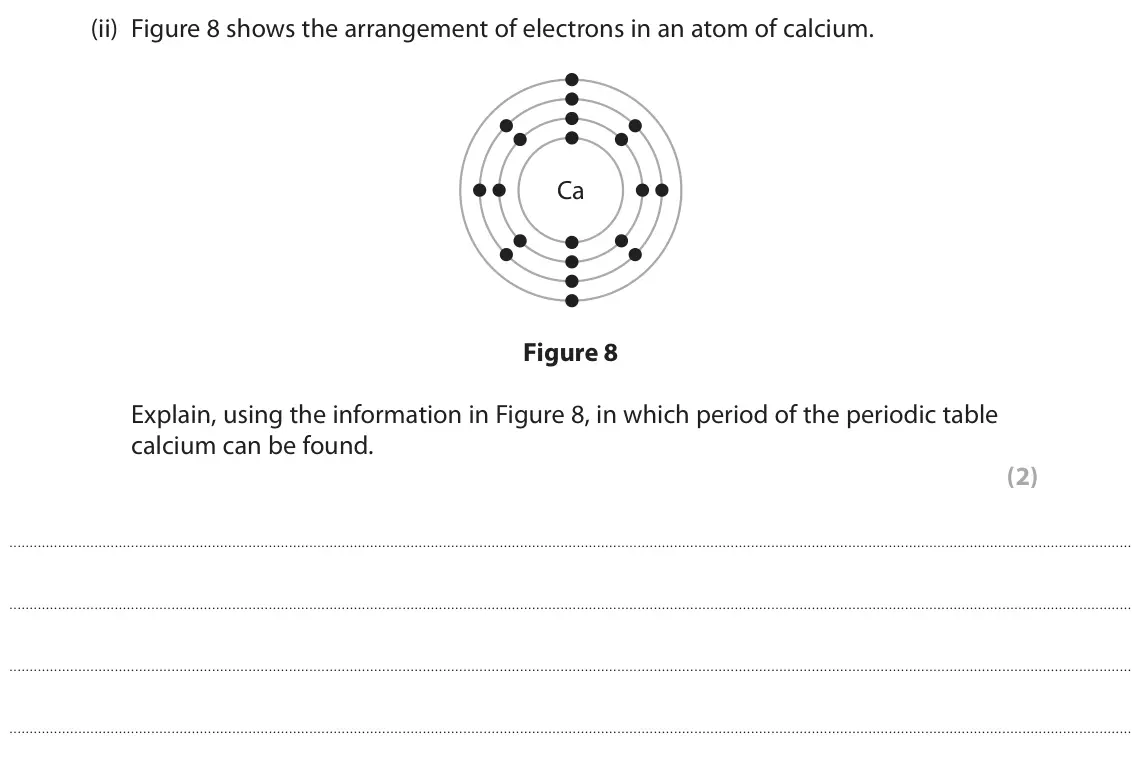
Q2(a)(ii)
The whole paper ↗
Q4(a)
The whole paper ↗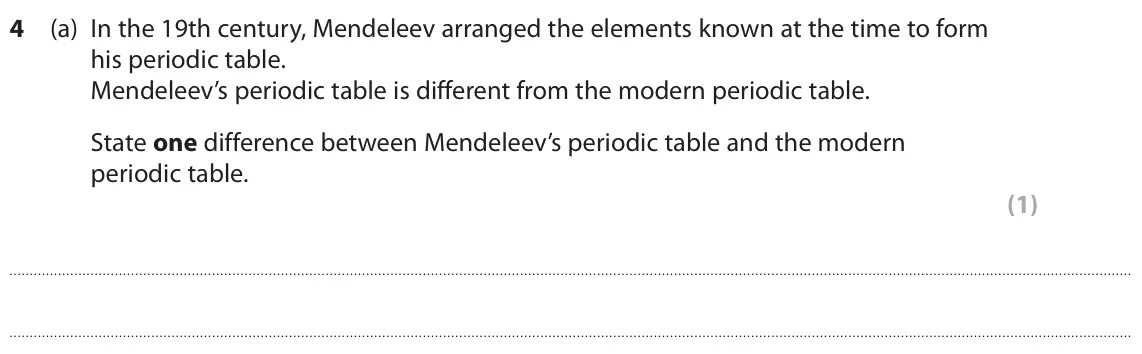
All 32 questions on The periodic table, as a list
- June 2025, Paper 1 Higher, Q5(a) (2 marks): Nitrogen, oxygen and fluorine are in the same period of the periodic table. Explain, in terms of electronic configuration, in which period of the periodic table
- June 2025, Paper 1 Foundation, Q4(a) (2 marks): Place ticks () in boxes to show which elements in the table are metals. Use the periodic table to help you answer this question. (2) element () phosphorus, P
- June 2025, Paper 1 Foundation, Q8(b) (6 marks): The structure of the periodic table and the position of the elements in the periodic table are linked to the electronic configuration of the elements. Figure 15
- June 2025, Paper 2 Foundation, Q1(a) (1 mark): Give the symbol of the element astatine. Use the periodic table to help you. (1)
- June 2024, Paper 1 Foundation, Q5(c) (2 marks): The modern periodic table is organised into groups and periods. State in which group and in which period of the periodic table silicon is found. You should use
- June 2024, Paper 1 Foundation, Q5(d) (2 marks): Describe two differences between Mendeleev’s periodic table and the modern periodic table. (2) 1 2
- June 2024, Paper 2 Higher, Q7(a) (1 mark): The relative atomic mass of argon is 40 and the relative atomic mass of potassium is 39 but potassium appears after argon in the periodic table. State why potas
- June 2024, Paper 2 Foundation, Q2(a)(i) (1 mark): Give the name of the element in period 3 that is not shown in Figure 3. (1)
- June 2024, Paper 2 Foundation, Q2(a)(ii) (1 mark): Give the relative atomic mass of silicon. (1)
- June 2024, Paper 2 Foundation, Q2(a)(iii) (2 marks): State which metal and which non-metal in Figure 3 have the lowest melting points. (2) metal with lowest melting point non-metal with lowest melting point
- June 2023, Paper 1 Foundation, Q6(a)(ii) (1 mark): Which element is in the same group of the periodic table as magnesium? Use the periodic table to help you answer this question. (1) A carbon B chromium C sodium
- June 2023, Paper 1 Foundation, Q6(b)(ii) (2 marks): The electronic configuration of a chlorine atom is 2.8.7 Explain how the electronic configuration of chlorine is linked to its period in the periodic table. (2)
- June 2022, Paper 1 Foundation, Q5(c)(i) (2 marks): State in which group and period of the periodic table gallium can be found. You may want to refer to the periodic table. (2) group = period =
- June 2022, Paper 1 Foundation, Q5(c)(ii) (2 marks): Gallium had not been discovered when Mendeleev created his first periodic table. Figure 9 shows some properties of gallium that Mendeleev predicted and some of
- November 2021, Paper 1 Foundation, Q2(c) (1 mark): State how you know that calcium is a metal from its position in the periodic table. (1)
- November 2021, Paper 2 Higher, Q5(b) (2 marks): Explain how the electronic configuration of an atom of potassium is related to its position in the periodic table. (2)
- November 2021, Paper 2 Foundation, Q3(b) (1 mark): Mendeleev produced one of the earliest periodic tables. State why he could not include any of the noble gases in his periodic table. (1)
- November 2020, Paper 1 Higher, Q8(a)(ii) (2 marks): Figure 8 shows the arrangement of electrons in an atom of calcium. Ca Figure 8 Explain, using the information in Figure 8, in which period of the periodic table
- November 2020, Paper 1 Foundation, Q2(a)(ii) (2 marks): Explain, using Figure 3, why chlorine belongs to group 7 of the periodic table. (2)
- November 2020, Paper 1 Foundation, Q4(a) (1 mark): In the 19th century, Mendeleev arranged the elements known at the time to form his periodic table. Mendeleev’s periodic table is different from the modern perio
- November 2020, Paper 2 Higher, Q2(b) (2 marks): Potassium and caesium are in the same group of the periodic table. Explain, in terms of electrons, why potassium and caesium are in the same group. (2)
- November 2020, Paper 2 Foundation, Q8(b) (2 marks): Potassium and caesium are in the same group of the periodic table. Explain, in terms of electrons, why potassium and caesium are in the same group. (2)
- June 2019, Paper 1 Higher, Q2(a)(i) (1 mark): give the letters of the two elements that are non-metals (1)
- June 2019, Paper 1 Higher, Q2(a)(ii) (1 mark): give the letters of two elements in period 2 (1)
- June 2019, Paper 1 Higher, Q2(a)(iii) (1 mark): give the letter of an element that normally forms an ion with a charge of +1. (1)
- June 2019, Paper 1 Foundation, Q8(a)(i) (1 mark): give the letters of the two elements that are non-metals (1)
- June 2019, Paper 1 Foundation, Q8(a)(ii) (1 mark): give the letters of two elements in period 2 (1)
- June 2019, Paper 1 Foundation, Q8(a)(iii) (1 mark): give the letter of an element that normally forms an ion with a charge of +1. (1)
- June 2019, Paper 2 Higher, Q6(a) (1 mark): The electronic configuration of a metal is 2.8.3 Which row shows the group and period of the periodic table where this metal is found? (1) group period A 2 3 B
- June 2018, Paper 1 Foundation, Q3(b) (1 mark): Argon is in group 0 of the periodic table. Identify, using the periodic table on the back cover of this paper, which of these elements is in the same period as
- Specimen, Paper 2 Foundation, Q2(a)(i) (1 mark): From the position of beryllium, Be, in the periodic table, beryllium is most likely to be a (1) A metal B halogen C compound D gas at room temperature
- Specimen, Paper 2 Foundation, Q2(a)(ii) (1 mark): Give the symbol of the element that is in period 2 and in group 3. (1)
Questions, mark schemes and examiner’s reports are © Pearson Edexcel, from their published past papers. Plumi isn’t affiliated with any exam board. Want whole papers? Every Edexcel GCSE Chemistry paper.
Rather write your answers by hand on iPad? Plumi marks them against the same mark schemes.