 plumi
Structure and properties: Edexcel GCSE Chemistry questions
Every Edexcel GCSE Chemistry exam question on Structure and properties (specification points 1.33–1.42), 2018–2025, with its mark scheme and examiner’s report.
Find questions1,880
Exam
All years
Calculations
Q3(b)
The whole paper ↗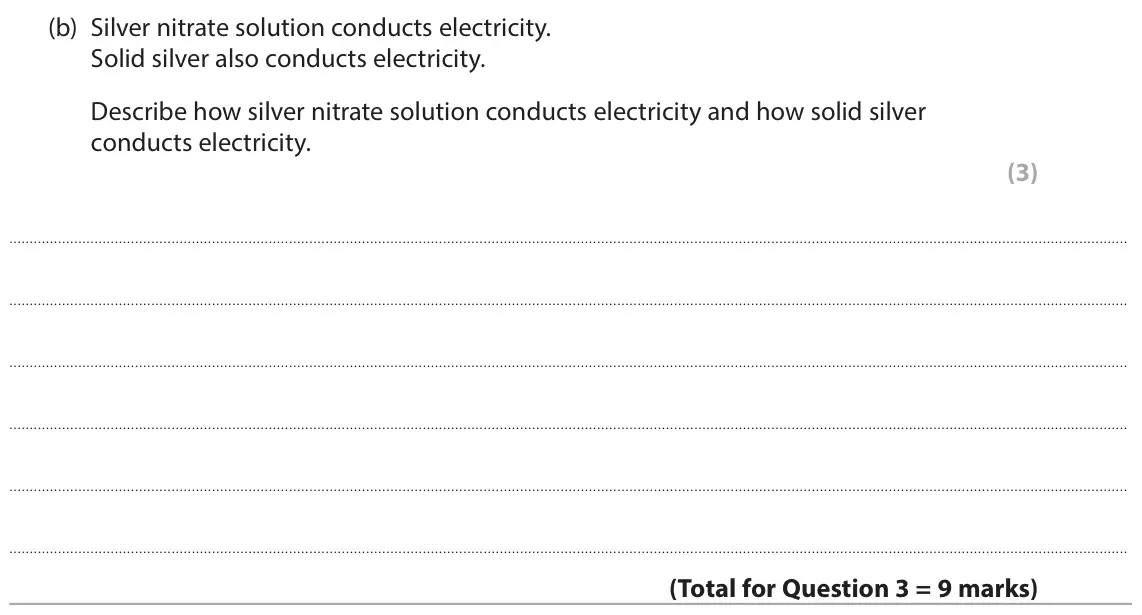
Q5(b)(i)
The whole paper ↗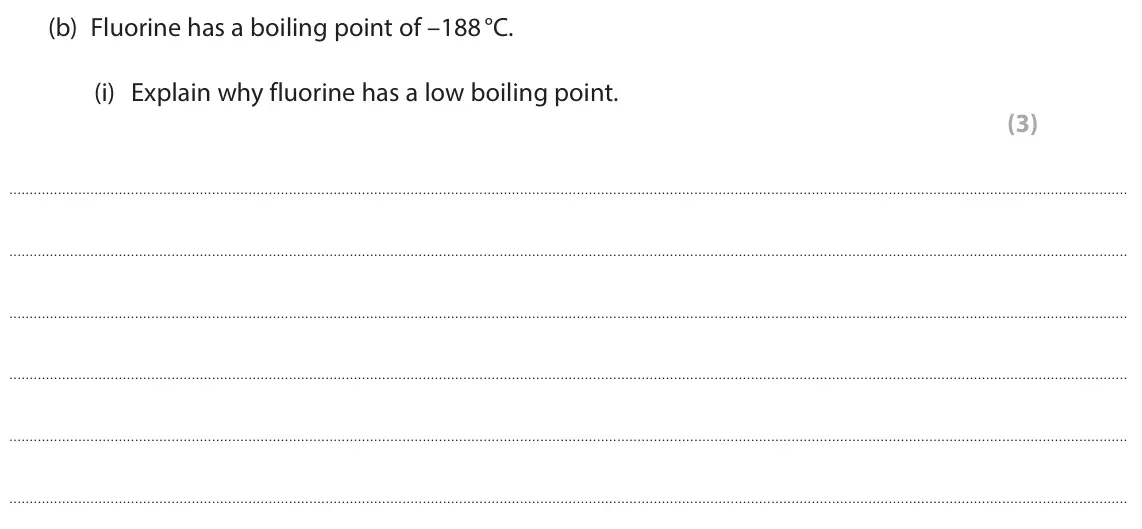
Q9(b)
The whole paper ↗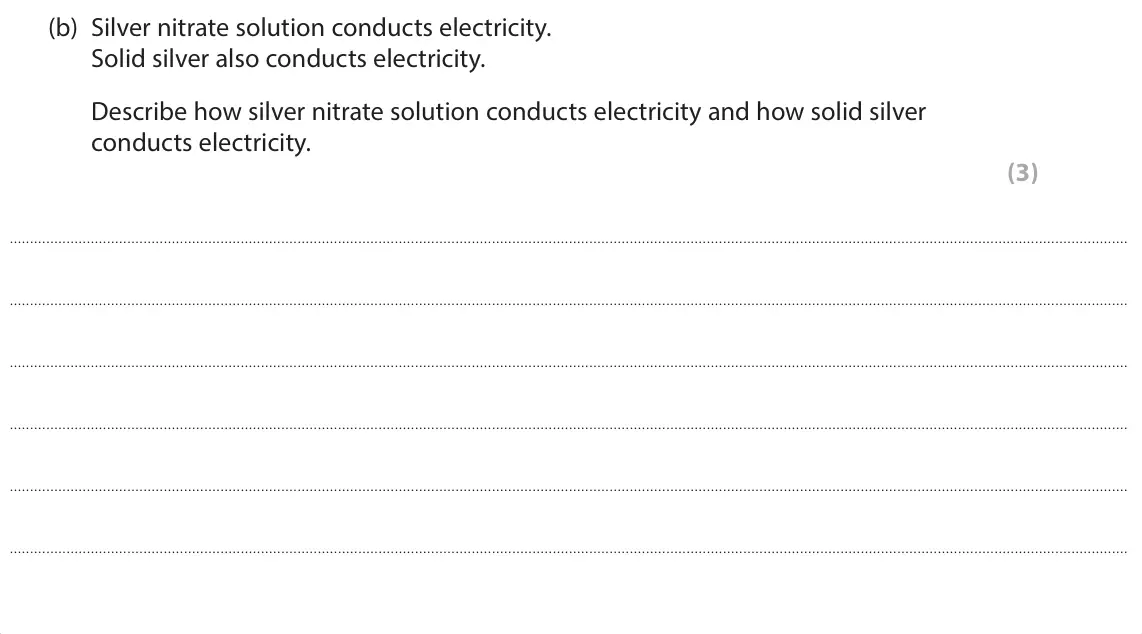
Q6(b)(ii)
The whole paper ↗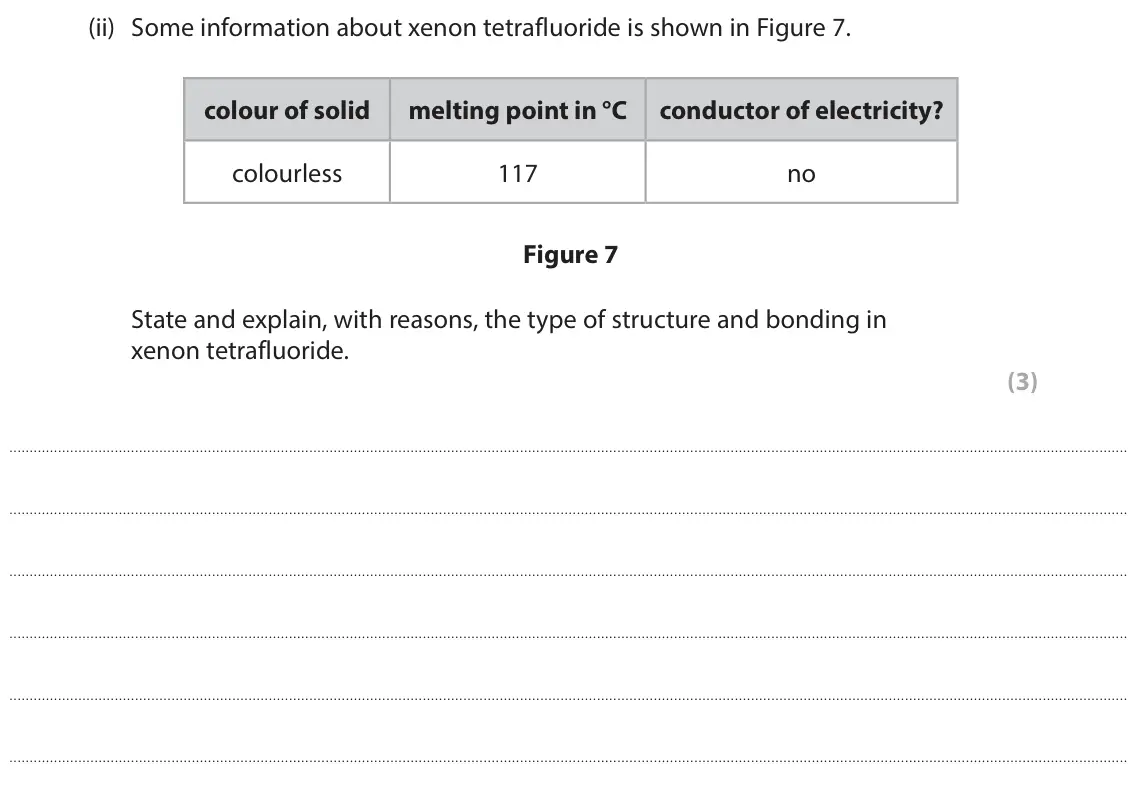
Q7(a)(i)
The whole paper ↗
Q3(a)(ii)
The whole paper ↗
Q8(a)(ii)
The whole paper ↗
Q8(b)
The whole paper ↗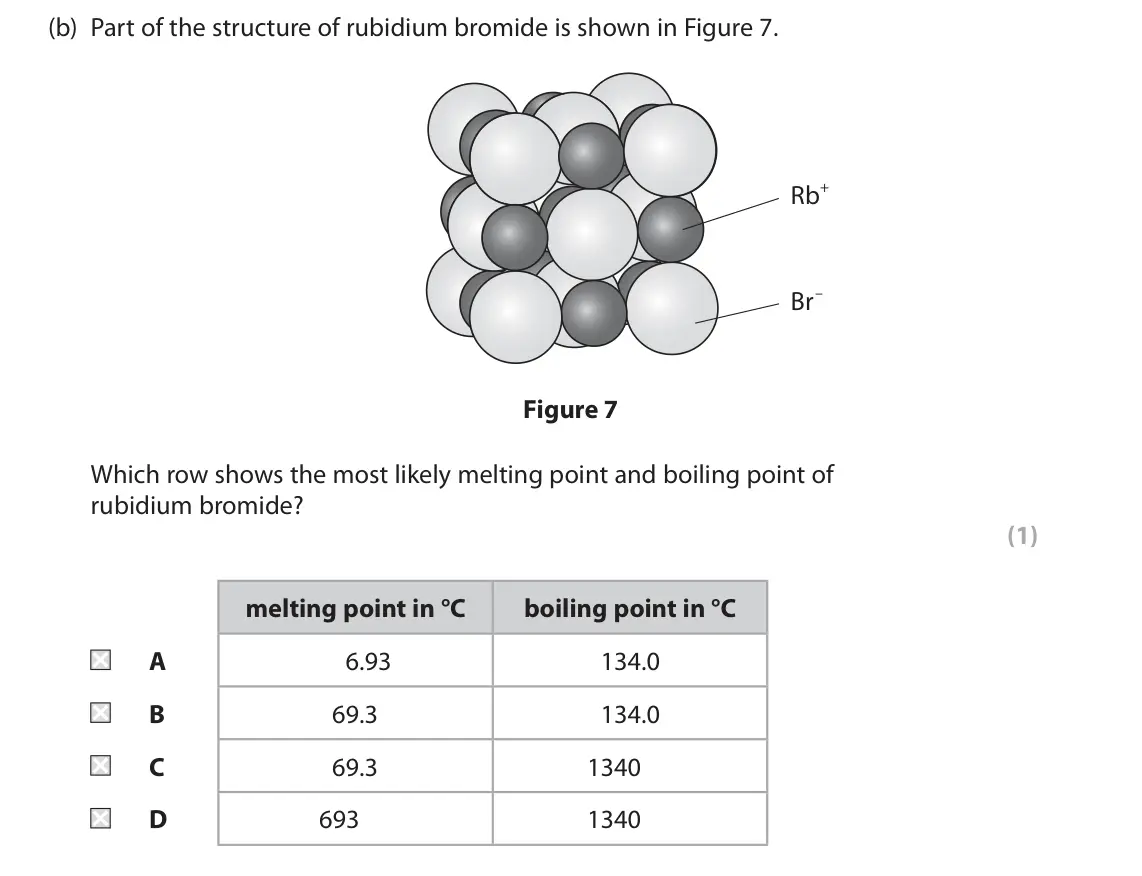
Q8(c)
The whole paper ↗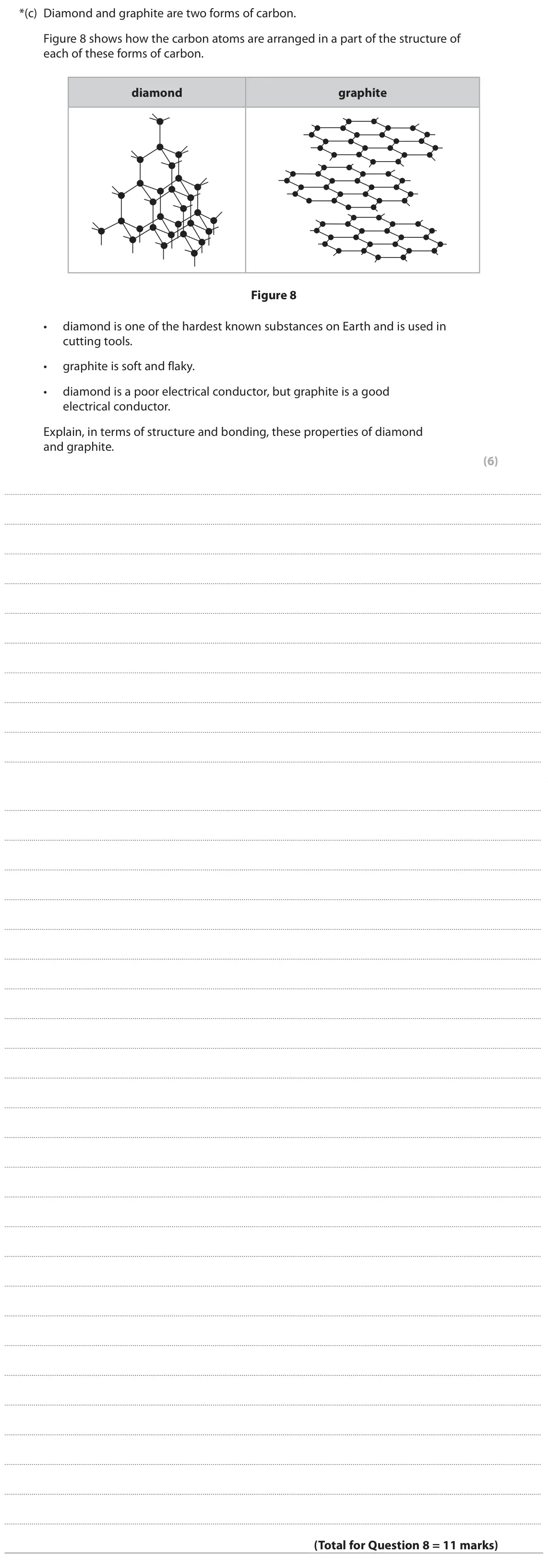
Q9(a)(ii)
The whole paper ↗
Q1(a)(iii)
The whole paper ↗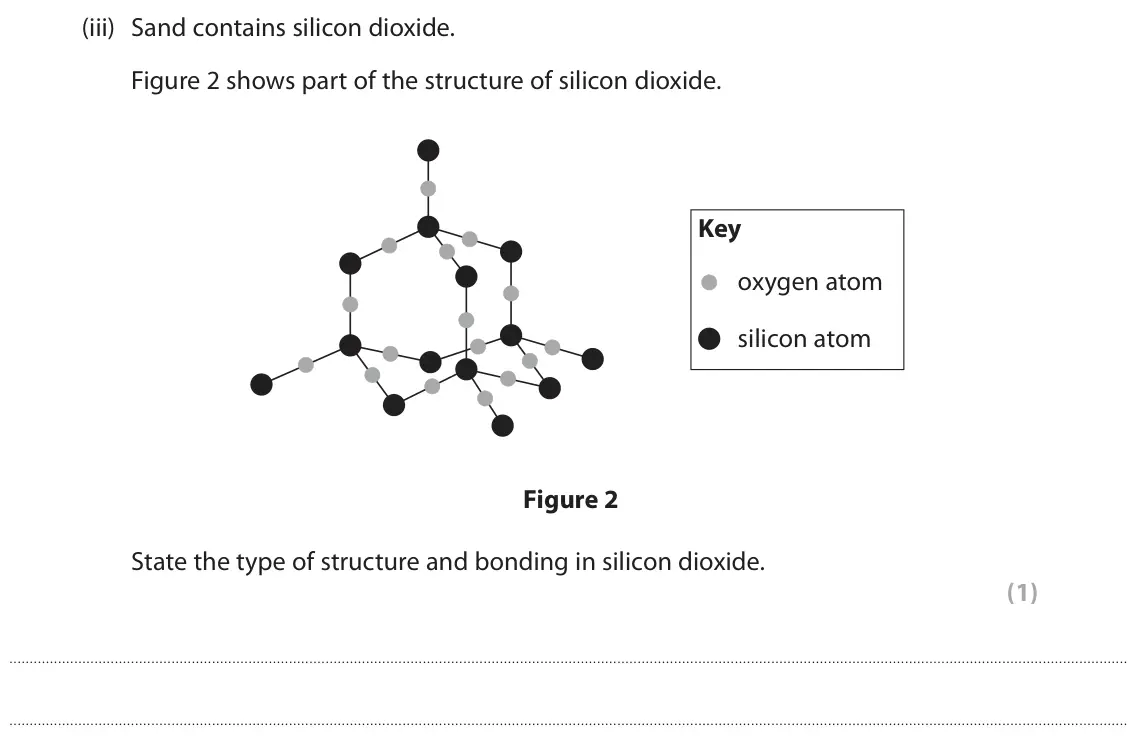
Q6(a)(i)
The whole paper ↗
Q8(c)
The whole paper ↗
Q6(b)(iii)
The whole paper ↗
Q6(b)(v)
The whole paper ↗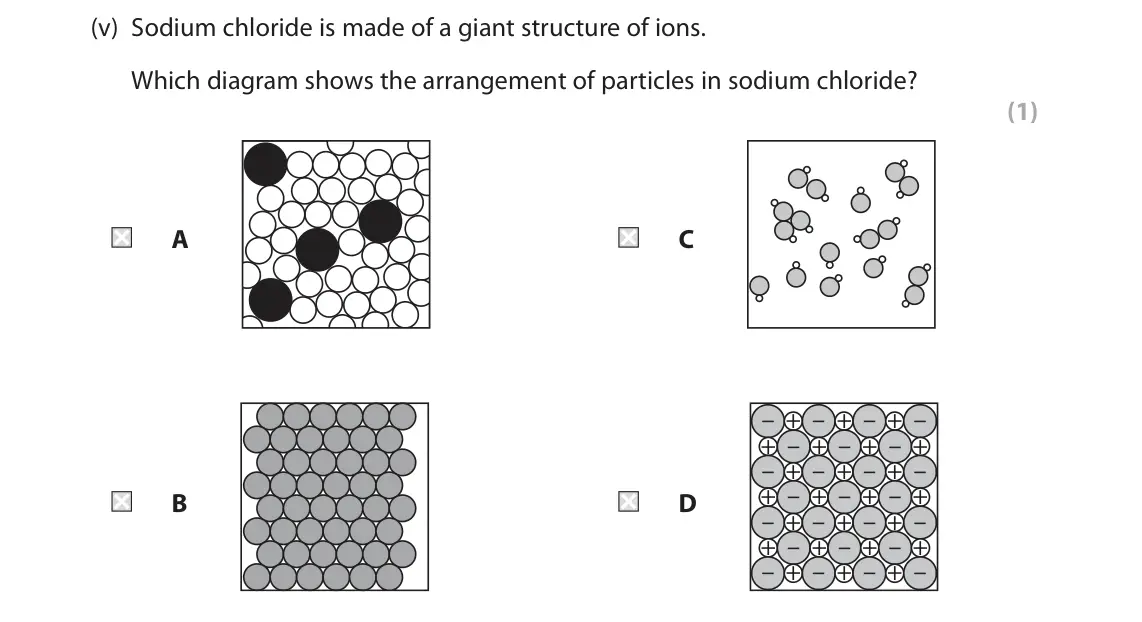
Q3(a)(ii)
The whole paper ↗
Q8(a)
The whole paper ↗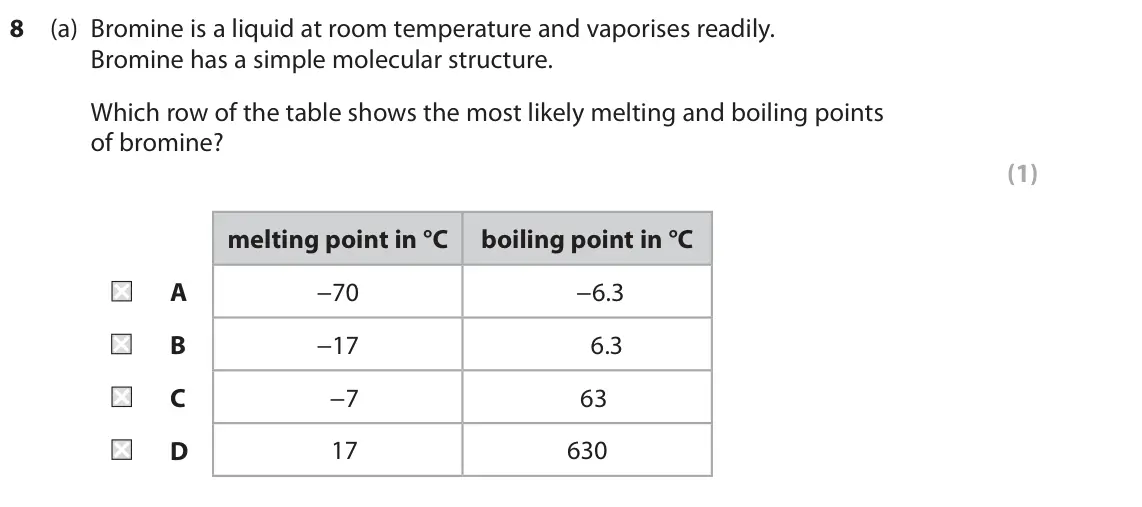
Q8(b)
The whole paper ↗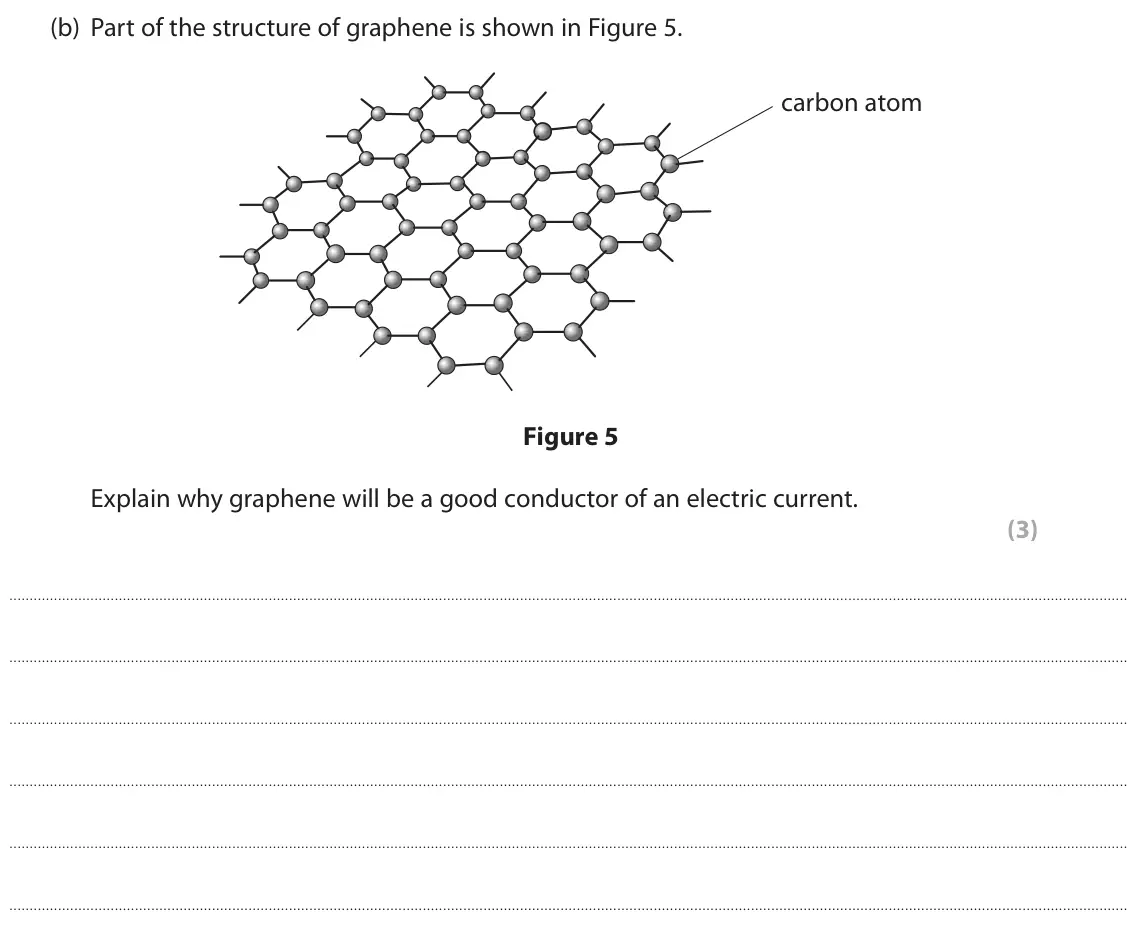
Q8(c)
The whole paper ↗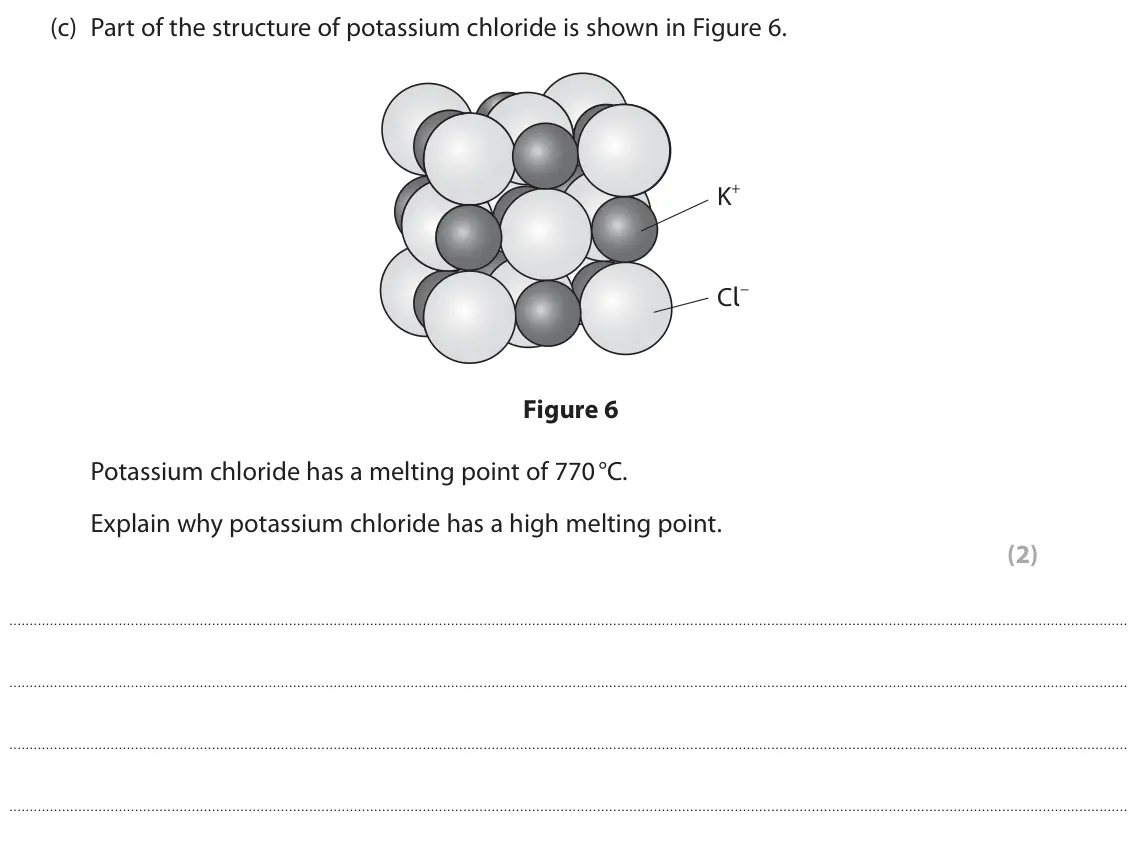
Q6(c)(iii)
The whole paper ↗
All 50 questions on Structure and properties, as a list
- June 2025, Paper 1 Higher, Q3(b) (3 marks): Silver nitrate solution conducts electricity. Solid silver also conducts electricity. Describe how silver nitrate solution conducts electricity and how solid si
- June 2025, Paper 1 Higher, Q5(b)(i) (3 marks): Explain why fluorine has a low boiling point. (3)
- June 2025, Paper 1 Foundation, Q9(b) (3 marks): Silver nitrate solution conducts electricity. Solid silver also conducts electricity. Describe how silver nitrate solution conducts electricity and how solid si
- June 2025, Paper 2 Higher, Q6(b)(ii) (3 marks): Some information about xenon tetrafluoride is shown in Figure 7. colour of solid melting point in °C conductor of electricity? colourless 117 no Figure 7 State
- June 2025, Paper 2 Higher, Q7(a)(i) (2 marks): Explain why graphite is used as a lubricant. (2)
- June 2024, Paper 1 Higher, Q3(a)(ii) (3 marks): Explain why solid sodium carbonate cannot conduct electricity but a solution of sodium carbonate can conduct electricity. (3)
- June 2024, Paper 1 Higher, Q8(a)(ii) (2 marks): Explain why simple molecular covalent compounds such as silicon tetrachloride have low melting and boiling points. (2)
- June 2024, Paper 1 Higher, Q8(b) (1 mark): Part of the structure of rubidium bromide is shown in Figure 7. Rb+ Br– Figure 7 Which row shows the most likely melting point and boiling point of rubidium bro
- June 2024, Paper 1 Higher, Q8(c) (6 marks): Diamond and graphite are two forms of carbon. Figure 8 shows how the carbon atoms are arranged in a part of the structure of each of these forms of carbon. diam
- June 2024, Paper 1 Foundation, Q9(a)(ii) (3 marks): Explain why solid sodium carbonate cannot conduct electricity but a solution of sodium carbonate can conduct electricity. (3)
- June 2024, Paper 2 Higher, Q1(a)(iii) (1 mark): Sand contains silicon dioxide. Figure 2 shows part of the structure of silicon dioxide. Key oxygen atom silicon atom Figure 2 State the type of structure and bo
- June 2023, Paper 1 Foundation, Q6(a)(i) (1 mark): State one physical property of magnesium. (1)
- June 2023, Paper 2 Higher, Q8(c) (3 marks): Ammonia, NH3 , and silicon dioxide, SiO2 , are both compounds that are made of two non-metallic elements. Ammonia has a boiling point of –33 °C. Silicon dioxide
- June 2023, Paper 2 Foundation, Q6(b)(iii) (2 marks): Sodium, like all metals, conducts electricity. Explain how sodium conducts electricity. (2)
- June 2023, Paper 2 Foundation, Q6(b)(v) (1 mark): Sodium chloride is made of a giant structure of ions. Which diagram shows the arrangement of particles in sodium chloride? (1) A C – + – + – + – + – + – + – + –
- June 2022, Paper 1 Higher, Q3(a)(ii) (3 marks): Explain why solid magnesium carbonate cannot conduct electricity but solid magnesium can. (3)
- June 2022, Paper 1 Higher, Q8(a) (1 mark): Bromine is a liquid at room temperature and vaporises readily. Bromine has a simple molecular structure. Which row of the table shows the most likely melting an
- June 2022, Paper 1 Higher, Q8(b) (3 marks): Part of the structure of graphene is shown in Figure 5. carbon atom Figure 5 Explain why graphene will be a good conductor of an electric current. (3)
- June 2022, Paper 1 Higher, Q8(c) (2 marks): Part of the structure of potassium chloride is shown in Figure 6. K+ Cl− Figure 6 Potassium chloride has a melting point of 770 °C. Explain why potassium chlori
- June 2022, Paper 1 Foundation, Q6(c)(iii) (2 marks): Explain, in terms of its structure, how graphite conducts electricity. (2)
- June 2022, Paper 1 Foundation, Q9(a)(ii) (3 marks): Explain why solid magnesium carbonate cannot conduct electricity but solid magnesium can. (3)
- November 2021, Paper 1 Higher, Q9(c) (6 marks): Figure 6 shows some properties of three substances, A, B and C. ability to conduct electricity substance melting point in °C solid molten A 1180 poor good B 153
- November 2021, Paper 2 Higher, Q2(c) (3 marks): A student used the equipment in Figure 3 to investigate whether electricity can pass through solid ammonium chloride and through ammonium chloride solution. 6 V
- November 2021, Paper 2 Foundation, Q1(b)(ii) (1 mark): Which type of particle moves through the metal wire to allow it to conduct electricity? (1) A atoms B electrons C neutrons D protons
- November 2021, Paper 2 Foundation, Q8(c) (3 marks): A student used the equipment in Figure 18 to investigate whether electricity can pass through solid ammonium chloride and through ammonium chloride solution. 6
- November 2020, Paper 1 Higher, Q8(c) (6 marks): Calcium chloride can be prepared by the reaction of calcium with chlorine gas. Figure 9 shows some properties of calcium, chlorine and calcium chloride. ability
- November 2020, Paper 1 Foundation, Q4(c)(ii) (1 mark): Gallium oxide has a very high melting point. Gallium oxide does not conduct electricity when solid but does conduct electricity when molten. What type of substa
- November 2020, Paper 1 Foundation, Q4(e) (2 marks): Gallium metal is a conductor of electricity. Explain how metals conduct electricity. (2)
- November 2020, Paper 2 Higher, Q2(c) (2 marks): Fluorine boils at –188 °C. There are forces between fluorine molecules. Explain, in terms of these forces, why the boiling point of fluorine is low. (2)
- November 2020, Paper 2 Foundation, Q5(d)(i) (1 mark): State what would happen to the lamp when glucose solution is tested. (1)
- November 2020, Paper 2 Foundation, Q5(d)(ii) (1 mark): State what would happen to the lamp when sodium chloride solution is tested. (1)
- November 2020, Paper 2 Foundation, Q5(e) (2 marks): Figure 9 shows how the conductivity of one solution changes as its concentration increases. increasing conductivity 0 50 100 150 200 250 300 350 400 450 500 con
- November 2020, Paper 2 Foundation, Q8(c) (2 marks): Fluorine boils at –188 °C. There are forces between fluorine molecules. Explain, in terms of these forces, why the boiling point of fluorine is low. (2)
- June 2019, Paper 1 Foundation, Q1(d) (2 marks): The diagrams below show particles in five different structures. The different circles show different particles. Draw one straight line from each substance to it
- June 2019, Paper 2 Higher, Q1(a)(i) (1 mark): Titanium(IV) oxide is an ionic solid. Many ionic solids are soluble in water. Titanium(IV) oxide is not soluble in water. Its other physical properties are typi
- June 2019, Paper 2 Higher, Q5(b) (2 marks): Carbon dioxide is a simple molecular, covalent compound. It has a low boiling point of –78.5 °C. Explain why carbon dioxide has a low boiling point. (2)
- June 2018, Paper 1 Higher, Q1(d) (2 marks): Metals have high melting points. Explain, in terms of their structure and bonding, why metals have high melting points. (2)
- June 2018, Paper 1 Higher, Q8(a)(i) (1 mark): Ammonia is a simple molecular, covalent substance. Which is the most likely set of properties for ammonia? (1) melting point boiling point ability to conduct in
- June 2018, Paper 1 Higher, Q8(c) (6 marks): Figure 8 shows the arrangement of carbon atoms in diamond, graphene and a fullerene (C60). diamond graphene a fullerene, C60 Figure 8 Consider these three subst
- June 2018, Paper 1 Foundation, Q4(d) (1 mark): Substance X is a gas at room temperature. It is a simple molecular, covalent substance. Which row of the table shows the properties that substance X is most lik
- June 2018, Paper 1 Foundation, Q4(e) (1 mark): Diamond has a giant covalent structure. State one property of diamond that is the result of its giant covalent structure. (1)
- June 2018, Paper 1 Foundation, Q8(a) (2 marks): State two characteristic properties of metals. (2) property 1 property 2
- June 2018, Paper 2 Higher, Q2(c)(ii) (2 marks): Explain why chlorine is a gas, rather than a liquid, at room temperature. (2)
- June 2018, Paper 2 Higher, Q7(d) (3 marks): A solid ionic compound is dissolved in water to form a solution. Describe a simple experiment to show that charged particles are present in this solution. (3)
- June 2018, Paper 2 Foundation, Q7(a)(i) (1 mark): Why is this wire made of metal? (1) A the metal is hard B the metal reacts with water C the metal is an element D the metal conducts electricity
- June 2018, Paper 2 Foundation, Q8(c)(ii) (2 marks): Explain why chlorine is a gas, rather than a liquid, at room temperature. (2)
- Specimen, Paper 1 Higher, Q8(a)(i) (2 marks): State two ways in which this model fails to accurately represent a crystal of sodium chloride. (2) 1 2
- Specimen, Paper 1 Higher, Q8(a)(ii) (3 marks): Magnesium oxide has a melting point of 2852 °C. Explain why magnesium oxide has such a high melting point. (3)
- Specimen, Paper 1 Foundation, Q1(c)(ii) (1 mark): What is the structure of water? (1) A ionic B simple molecular (covalent) C giant covalent D metallic
- Specimen, Paper 1 Foundation, Q9(c) (6 marks): Figure 18 shows the ability of different substances to conduct electricity. substance conducts electricity solid calcium chloride no molten calcium chloride yes
Questions, mark schemes and examiner’s reports are © Pearson Edexcel, from their published past papers. Plumi isn’t affiliated with any exam board. Want whole papers? Every Edexcel GCSE Chemistry paper.
Rather write your answers by hand on iPad? Plumi marks them against the same mark schemes.