 plumi
The Haber process and the use of NPK fertilisers: AQA GCSE Chemistry questions
Every AQA GCSE Chemistry exam question on 4.10.4 The Haber process and the use of NPK fertilisers, 2018–2025, with its mark scheme and examiner’s report.
Find questions1,744
Calculations
Q09.4
The whole paper ↗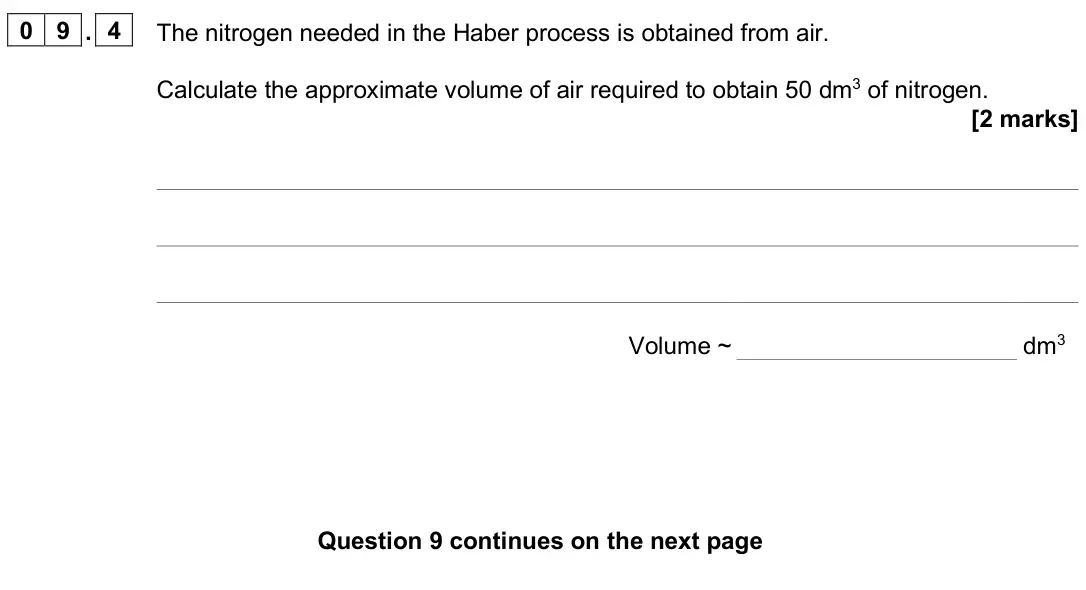
Q09.5
The whole paper ↗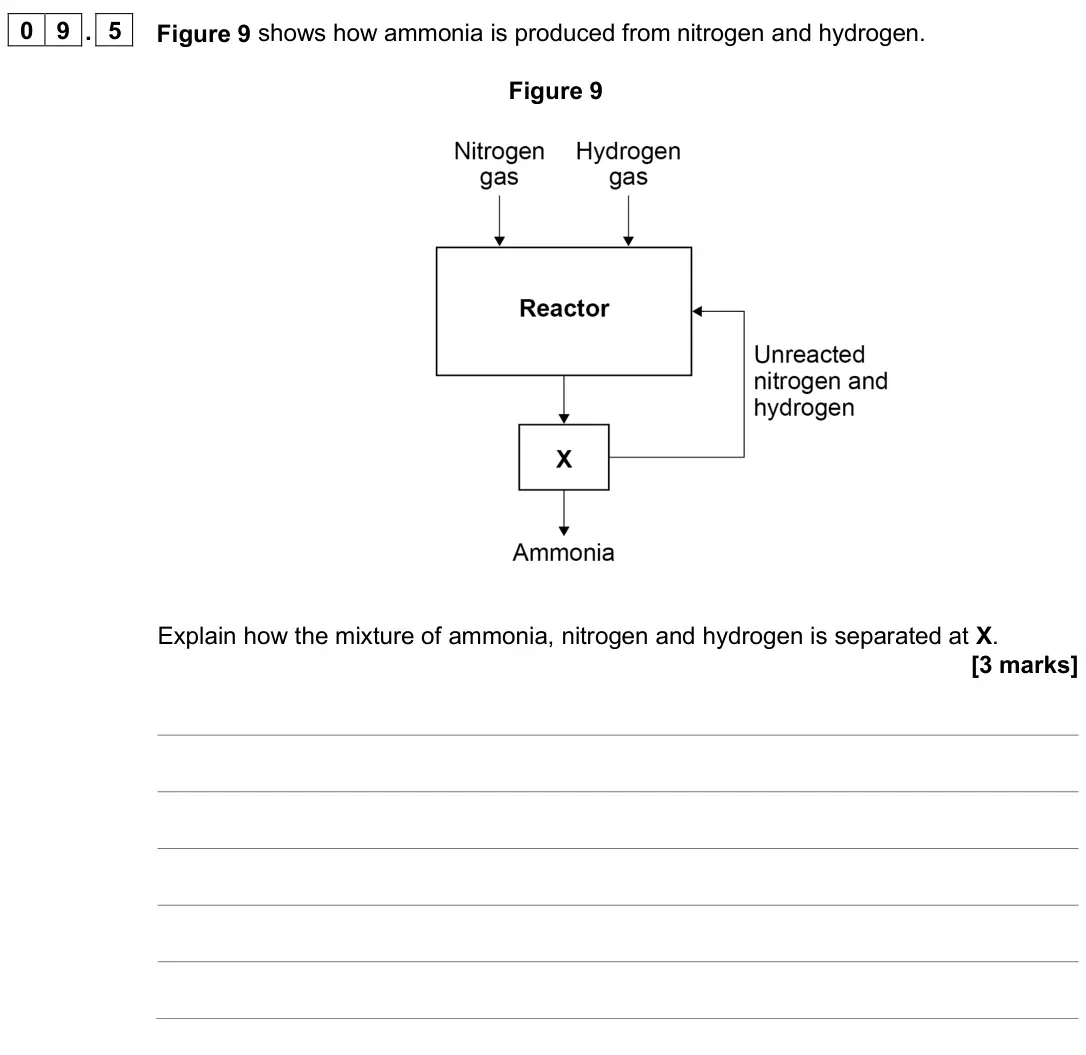
Q09.6
The whole paper ↗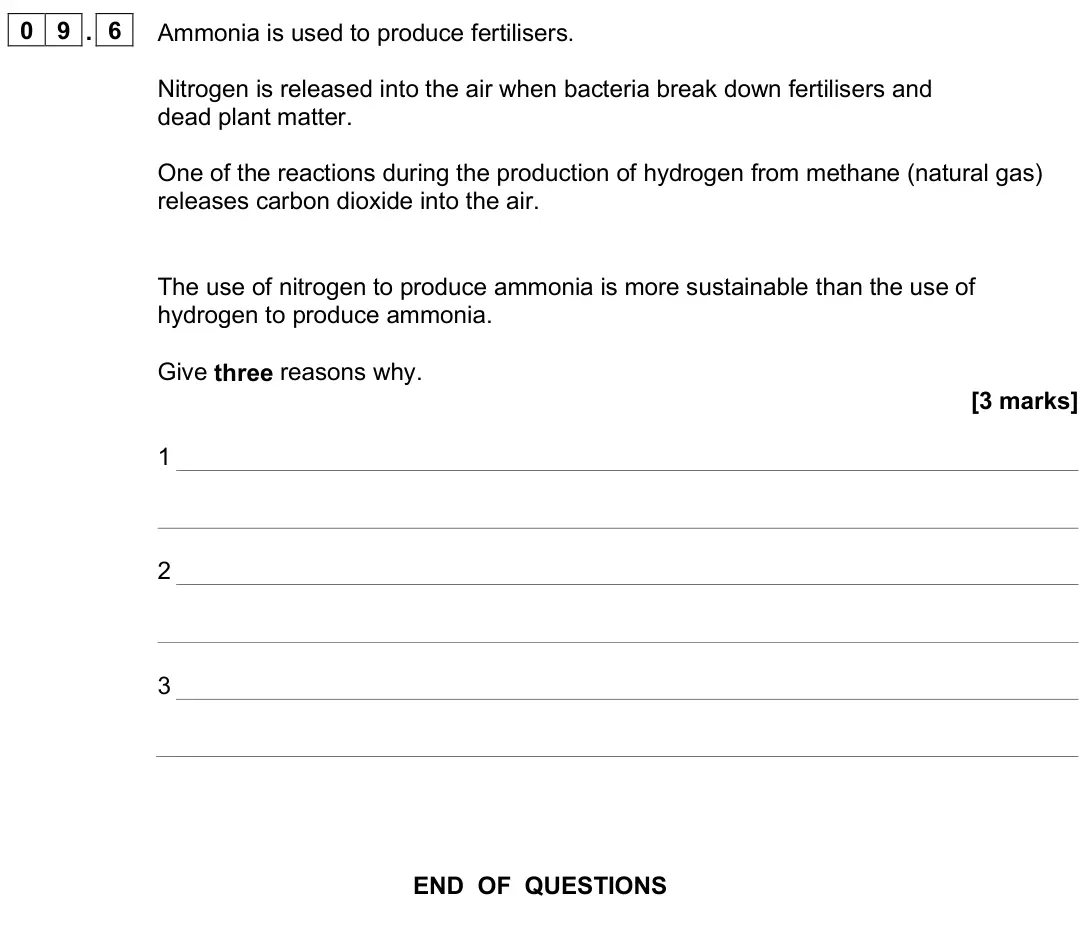
Q04.1
The whole paper ↗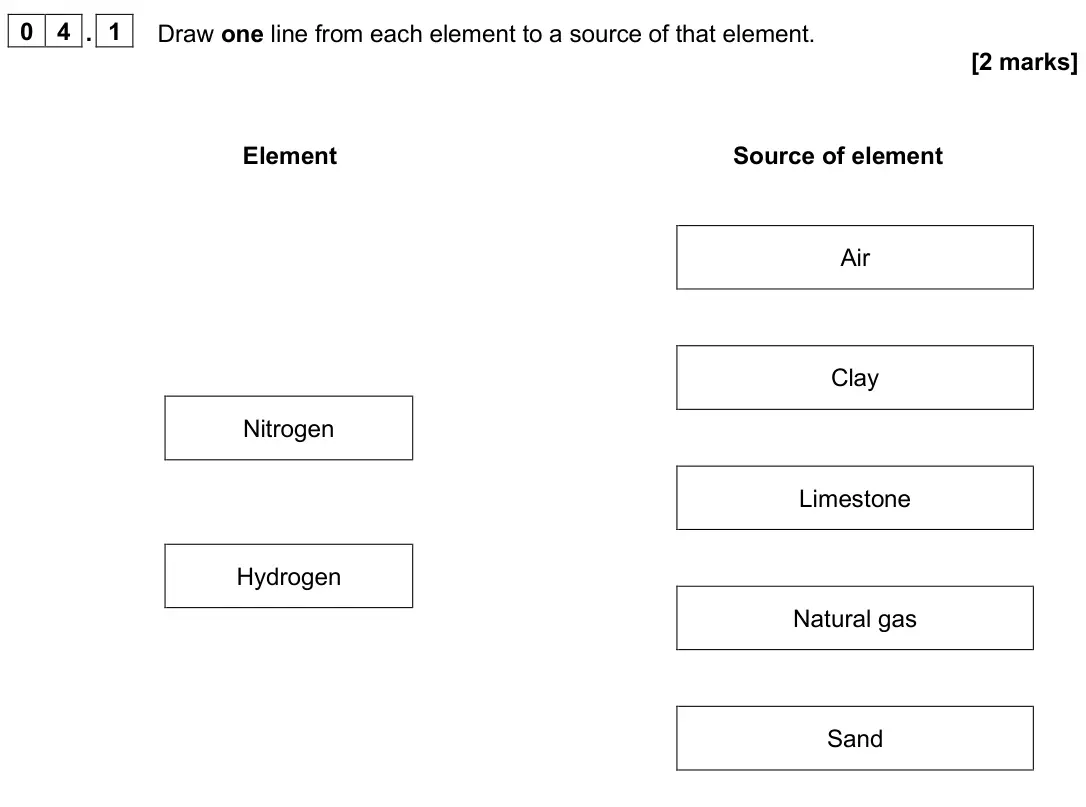
Q04.2
The whole paper ↗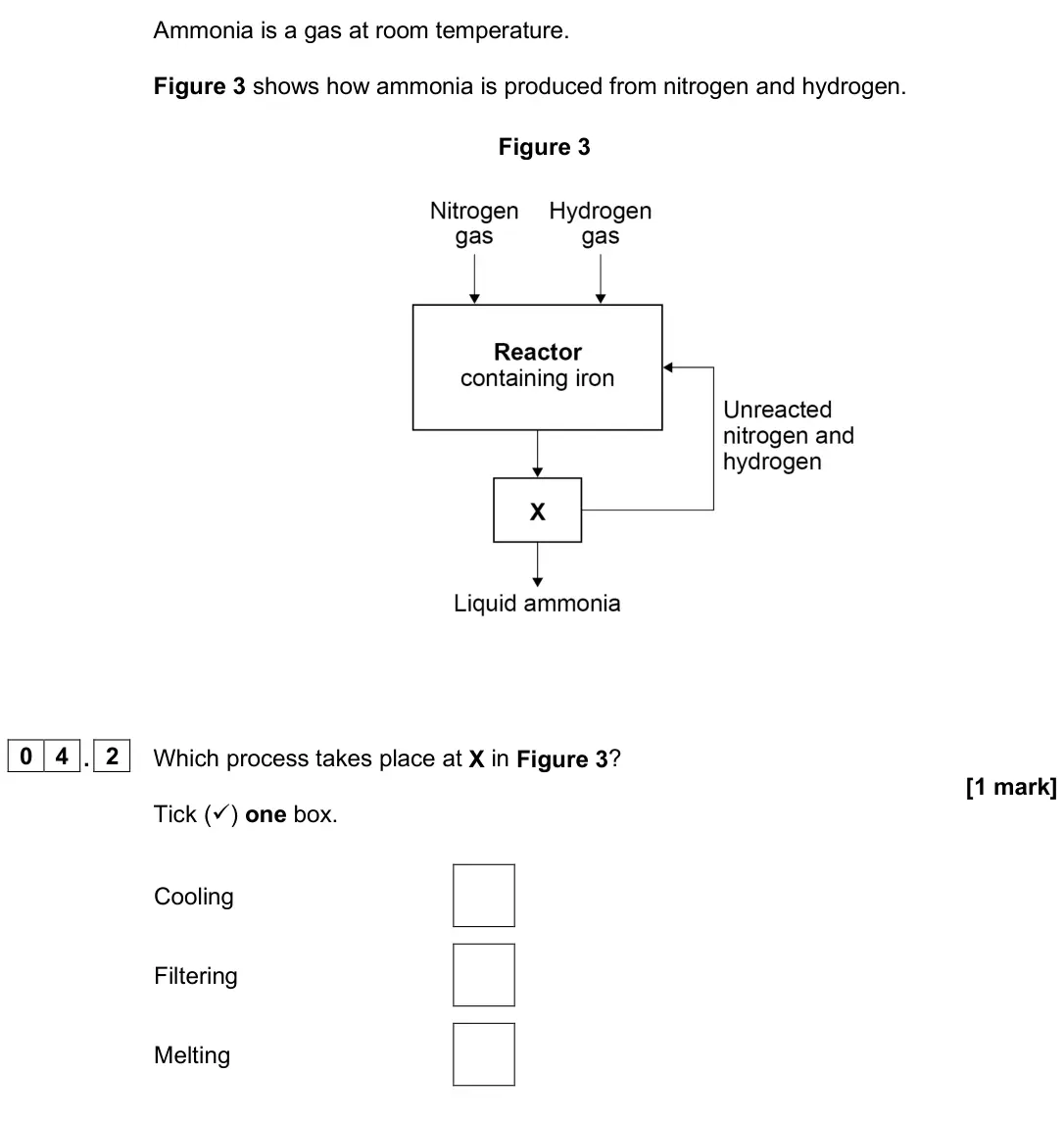
Q04.3
The whole paper ↗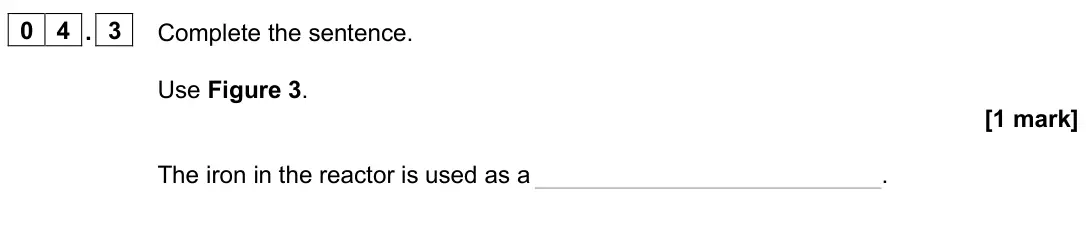
Q04.4
The whole paper ↗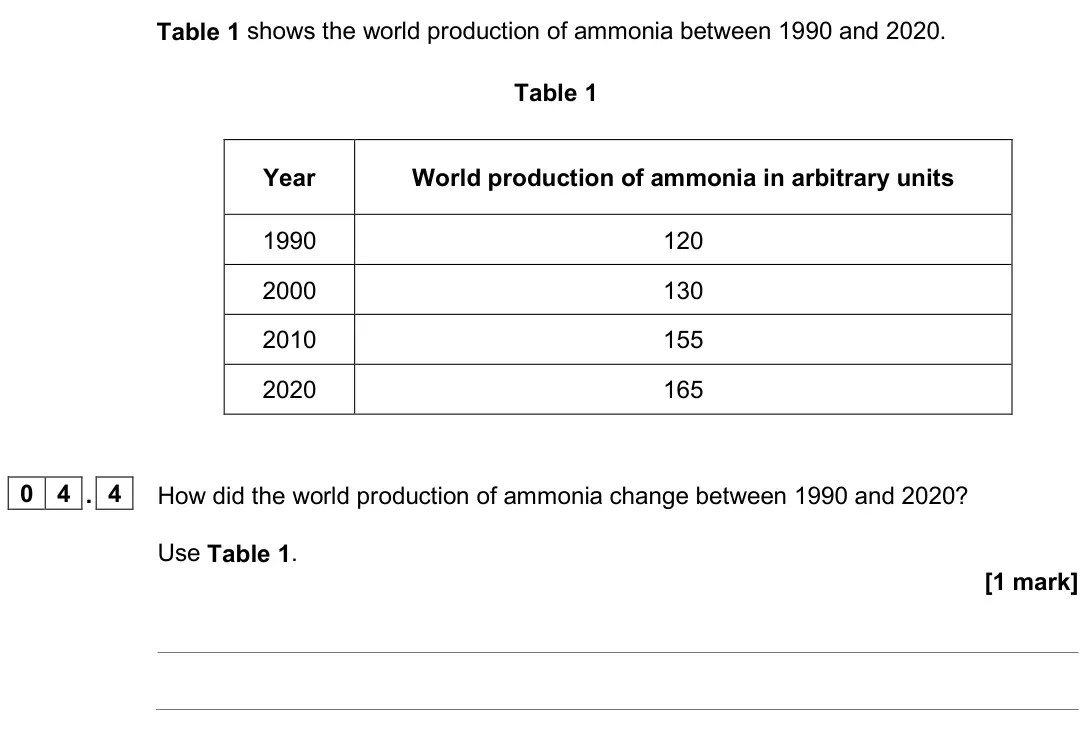
Q04.5
The whole paper ↗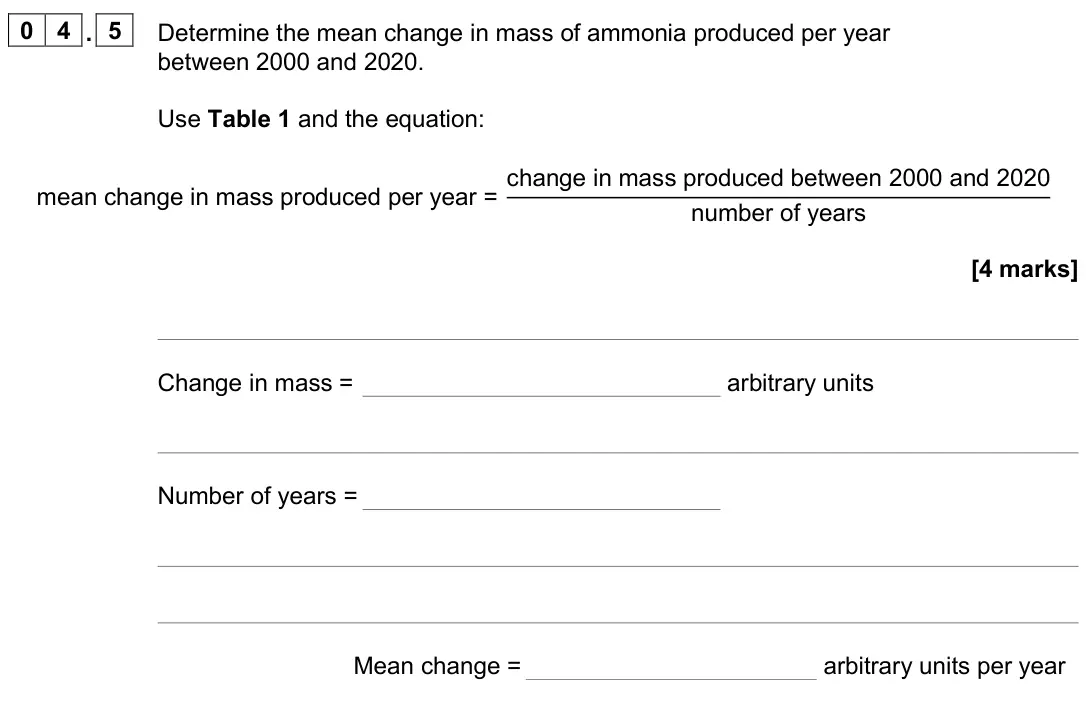
Q04.6
The whole paper ↗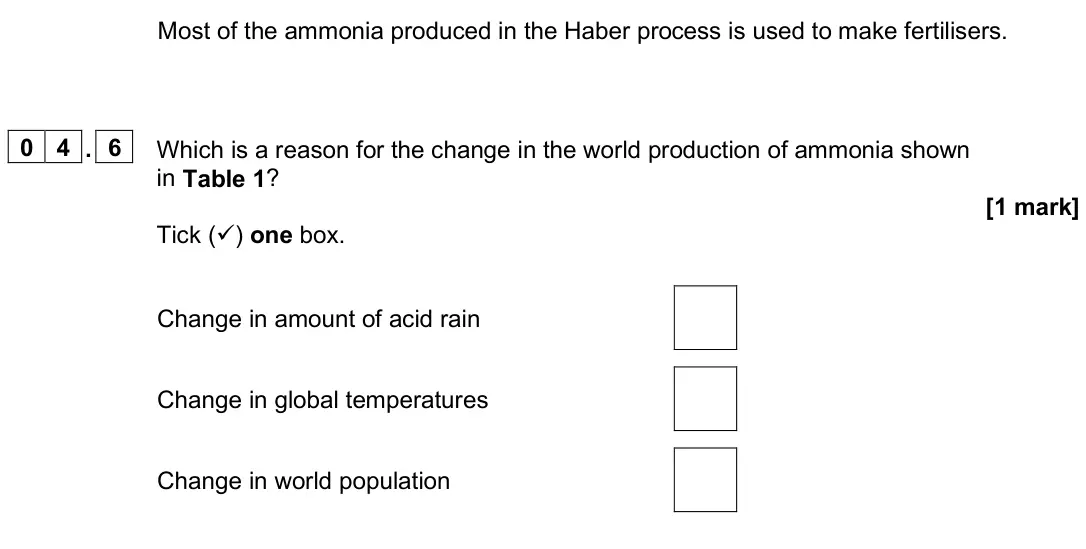
Q04.7
The whole paper ↗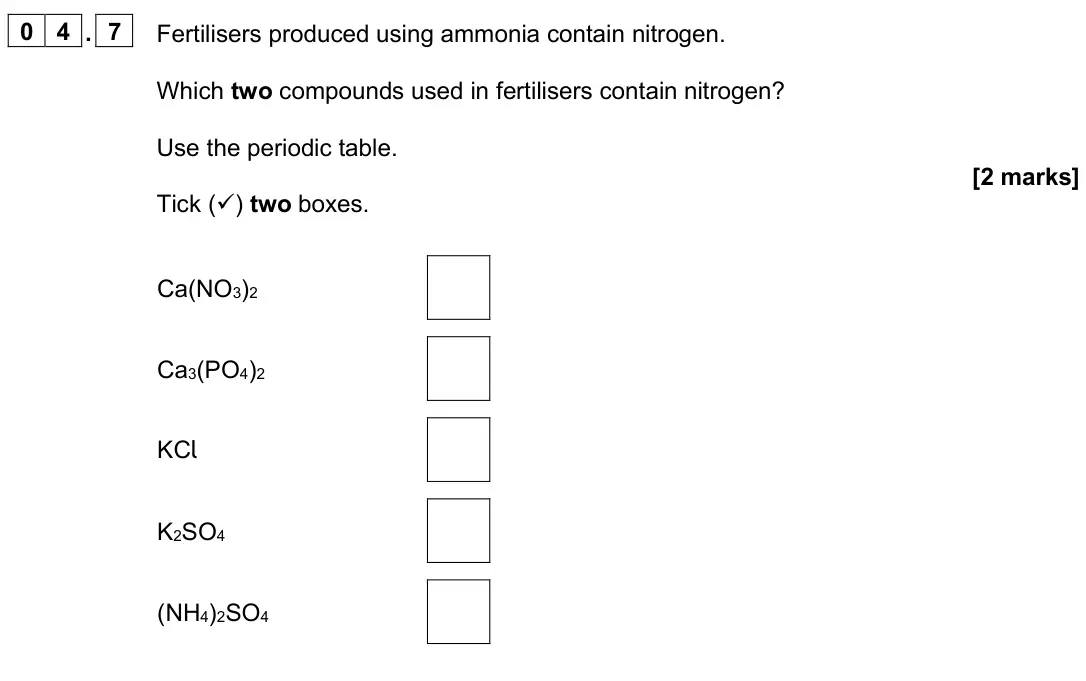
Q02.1
The whole paper ↗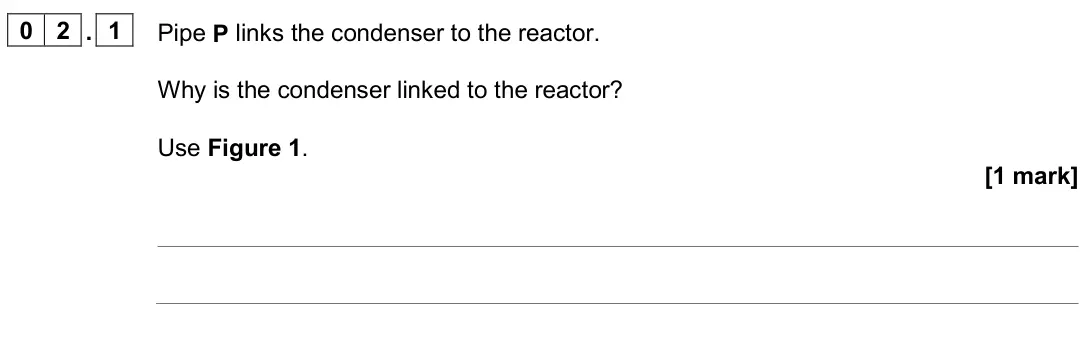
Q02.2
The whole paper ↗
Q02.4
The whole paper ↗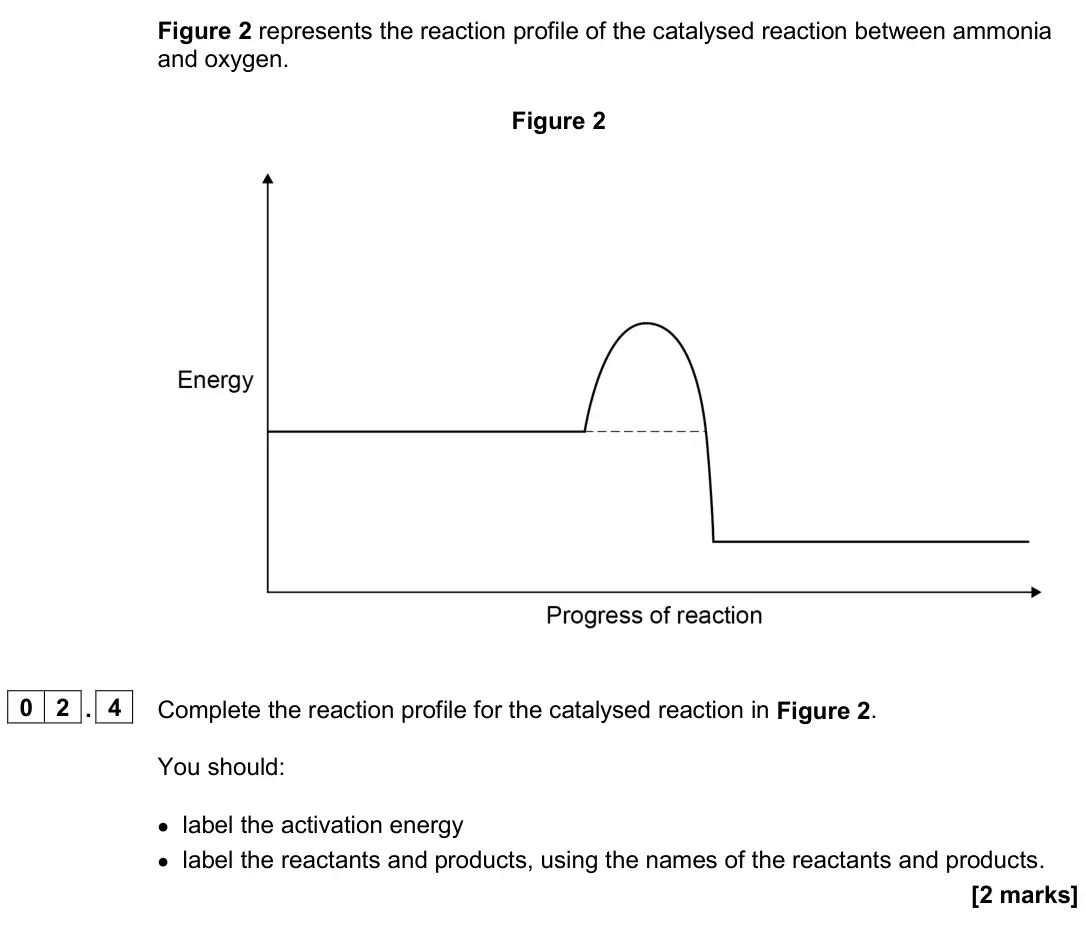
Q02.5
The whole paper ↗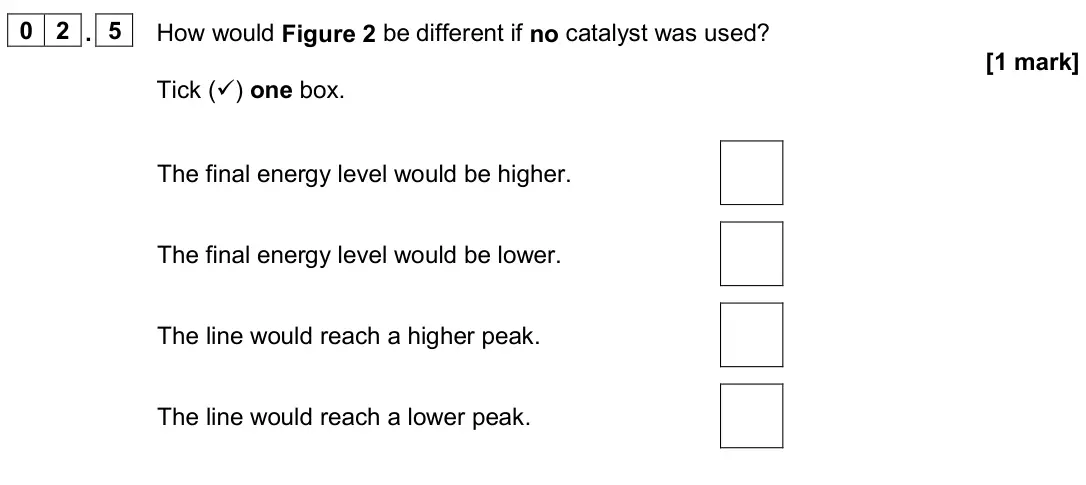
Q02.6
The whole paper ↗
Q09.1
The whole paper ↗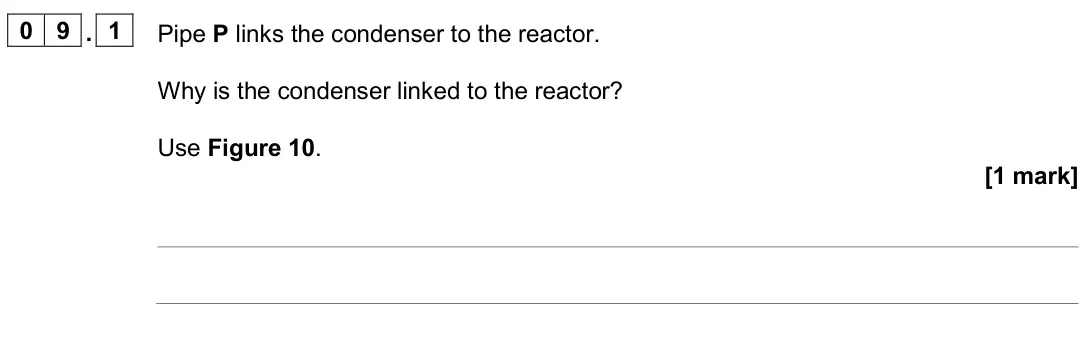
Q09.2
The whole paper ↗
Q09.4
The whole paper ↗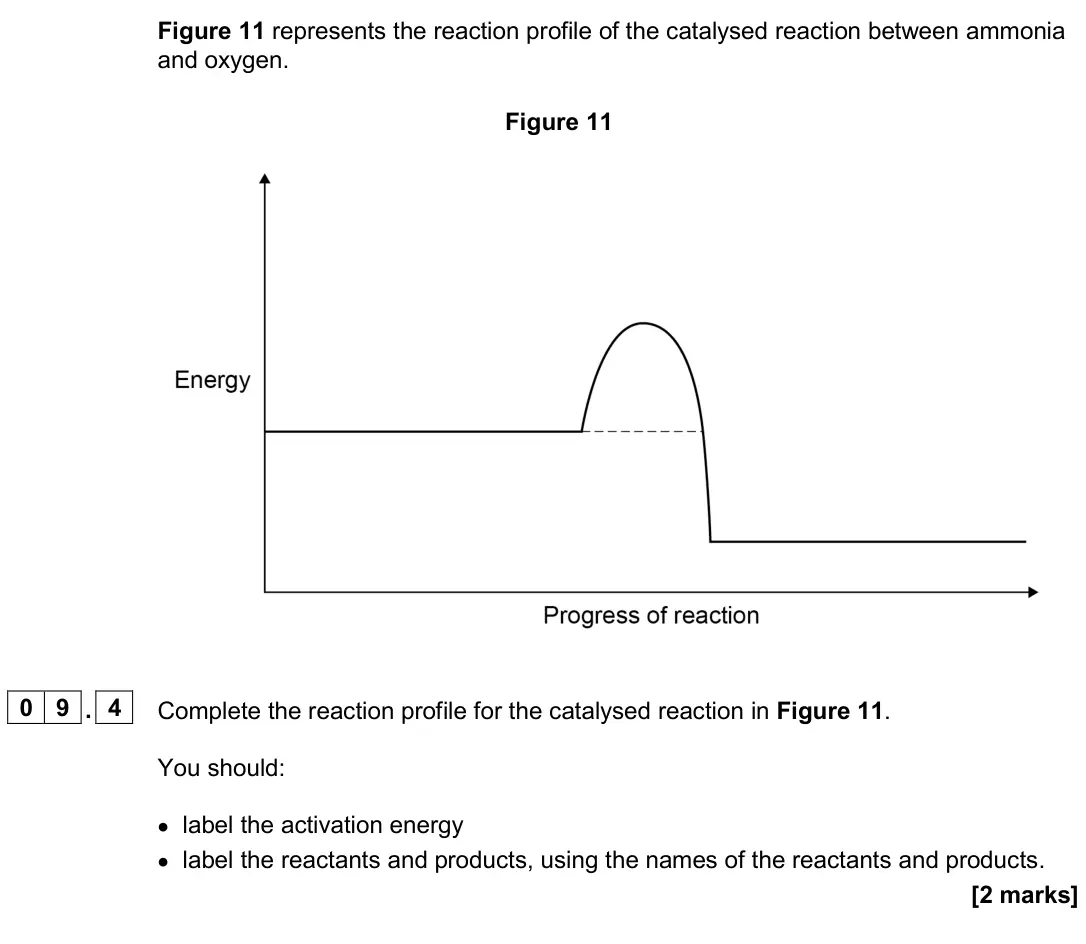
Q09.5
The whole paper ↗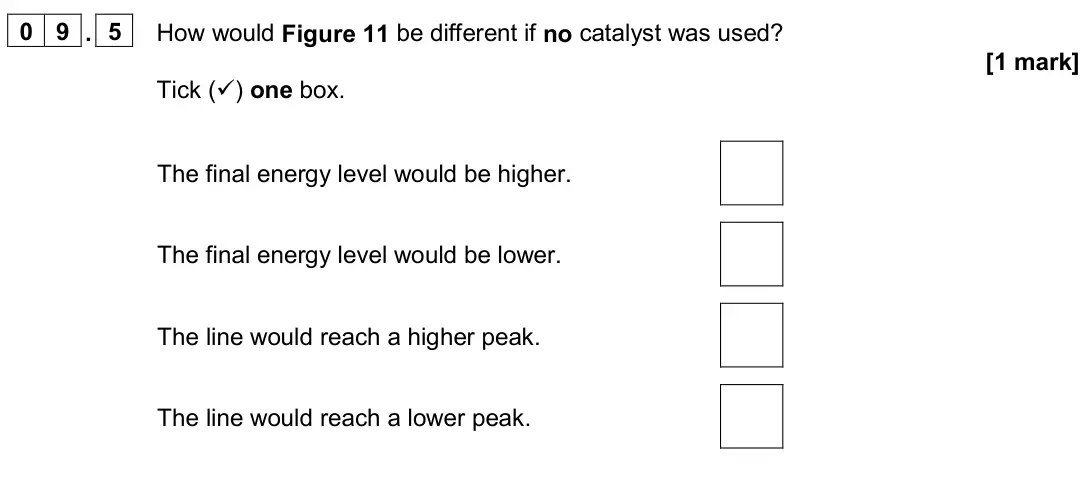
Q09.6
The whole paper ↗
All 62 questions on The Haber process and the use of NPK fertilisers, as a list
- June 2025, Paper 2 Higher, Q09.4 (2 marks): The nitrogen needed in the Haber process is obtained from air. Calculate the approximate volume of air required to obtain 50 dm3 of nitrogen. [2 marks] Volume ~
- June 2025, Paper 2 Higher, Q09.5 (3 marks): Figure 9 shows how ammonia is produced from nitrogen and hydrogen. Figure 9 Explain how the mixture of ammonia, nitrogen and hydrogen is separated at X. [3 mark
- June 2025, Paper 2 Higher, Q09.6 (3 marks): Ammonia is used to produce fertilisers. Nitrogen is released into the air when bacteria break down fertilisers and dead plant matter. One of the reactions durin
- June 2025, Paper 2 Foundation, Q04.1 (2 marks): Draw one line from each element to a source of that element. [2 marks] Element Source of element Nitrogen Hydrogen Air Clay Limestone Natural gas Sand
- June 2025, Paper 2 Foundation, Q04.2 (1 mark): Which process takes place at X in Figure 3? [1 mark] Tick () one box. Cooling Filtering Melting
- June 2025, Paper 2 Foundation, Q04.3 (1 mark): Complete the sentence. Use Figure 3. [1 mark] The iron in the reactor is used as a .
- June 2025, Paper 2 Foundation, Q04.4 (1 mark): How did the world production of ammonia change between 1990 and 2020? Use Table 1. [1 mark]
- June 2025, Paper 2 Foundation, Q04.5 (4 marks): Determine the mean change in mass of ammonia produced per year between 2000 and 2020. Use Table 1 and the equation: mean change in mass produced per year = chan
- June 2025, Paper 2 Foundation, Q04.6 (1 mark): Which is a reason for the change in the world production of ammonia shown in Table 1? [1 mark] Tick () one box. Change in amount of acid rain Change in global
- June 2025, Paper 2 Foundation, Q04.7 (2 marks): Fertilisers produced using ammonia contain nitrogen. Which two compounds used in fertilisers contain nitrogen? Use the periodic table. [2 marks] Tick () two bo
- June 2024, Paper 2 Higher, Q02.1 (1 mark): Pipe P links the condenser to the reactor. Why is the condenser linked to the reactor? Use Figure 1. [1 mark]
- June 2024, Paper 2 Higher, Q02.2 (1 mark): Which metal is used as a catalyst in this reaction? [1 mark]
- June 2024, Paper 2 Higher, Q02.4 (2 marks): Complete the reaction profile for the catalysed reaction in Figure 2. You should: • label the activation energy • label the reactants and products, using the na
- June 2024, Paper 2 Higher, Q02.5 (1 mark): How would Figure 2 be different if no catalyst was used? [1 mark] Tick () one box. The final energy level would be higher. The final energy level would be lowe
- June 2024, Paper 2 Higher, Q02.6 (1 mark): Ammonia and nitric acid react to produce the salt, ammonium nitrate. Ammonium ions and nitrate ions both contain nitrogen. Suggest one use of ammonium nitrate.
- June 2024, Paper 2 Foundation, Q09.1 (1 mark): Pipe P links the condenser to the reactor. Why is the condenser linked to the reactor? Use Figure 10. [1 mark]
- June 2024, Paper 2 Foundation, Q09.2 (1 mark): Which metal is used as a catalyst in this reaction? [1 mark]
- June 2024, Paper 2 Foundation, Q09.4 (2 marks): Complete the reaction profile for the catalysed reaction in Figure 11. You should: • label the activation energy • label the reactants and products, using the n
- June 2024, Paper 2 Foundation, Q09.5 (1 mark): How would Figure 11 be different if no catalyst was used? [1 mark] Tick () one box. The final energy level would be higher. The final energy level would be low
- June 2024, Paper 2 Foundation, Q09.6 (1 mark): Ammonia and nitric acid react to produce the salt, ammonium nitrate. Ammonium ions and nitrate ions both contain nitrogen. Suggest one use of ammonium nitrate.
- June 2023, Paper 2 Higher, Q10.2 (1 mark): How is potassium chloride (compound A) obtained from the Earth? [1 mark]
- June 2023, Paper 2 Higher, Q10.3 (1 mark): Name one other compound that could be used instead of potassium chloride (compound A) to give a similar improvement in agricultural productivity. [1 mark]
- June 2023, Paper 2 Higher, Q10.4 (1 mark): Nitric acid is needed to produce ammonium nitrate (compound B). Name a compound needed to produce nitric acid. [1 mark]
- June 2023, Paper 2 Higher, Q10.5 (1 mark): Phosphate rock contains phosphorus compounds. Plants absorb phosphorus from compounds dissolved in rainwater. Suggest why phosphate rock cannot be used directly
- June 2023, Paper 2 Higher, Q10.6 (2 marks): Phosphate rock can be treated with different acids to produce salts useful as fertilisers. Name the salts which are produced by treating phosphate rock with: •
- June 2022, Paper 2 Higher, Q07.1 (2 marks): Give the sources of the nitrogen and of the hydrogen used in the Haber process. [2 marks] Nitrogen Hydrogen
- June 2022, Paper 2 Higher, Q07.2 (1 mark): How does the equation for the reaction show that the atom economy of the forward reaction is 100%? [1 mark]
- June 2022, Paper 2 Higher, Q07.3 (2 marks): Figure 4 represents the Haber process. Figure 4 Explain how the ammonia produced is separated from the unreacted nitrogen and hydrogen in X. [2 marks]
- June 2022, Paper 2 Higher, Q07.4 (4 marks): Complete Figure 5. The first two points have been plotted. You should: • use a suitable scale for the x-axis • plot the remaining data from Table 6 • draw a lin
- June 2022, Paper 2 Higher, Q07.5 (2 marks): Determine the percentage yield of ammonia at 450 °C and 500 atmospheres. Show your working on Figure 5. [2 marks] Percentage yield = %
- June 2022, Paper 2 Foundation, Q05.1 (2 marks): Draw one line from each raw material to the source of that raw material. [2 marks] Raw material Source of raw material Nitrogen Hydrogen Air Clay Limestone Natu
- June 2022, Paper 2 Foundation, Q05.2 (1 mark): What are the states of nitrogen and of hydrogen when used in the Haber process? [1 mark] Tick () one box. State of nitrogen State of hydrogen Gas Gas Gas Liqui
- June 2022, Paper 2 Foundation, Q05.3 (1 mark): The word equation for the production of ammonia is: nitrogen + hydrogen ⇌ ammonia The atom economy of the reaction is 100%. How does the word equation show that
- June 2022, Paper 2 Foundation, Q05.4 (2 marks): Figure 5 represents the Haber process. Figure 5 A mixture of nitrogen, hydrogen and ammonia enters X. Complete the sentences. Choose answers from the box. [2 ma
- June 2022, Paper 2 Foundation, Q05.5 (3 marks): Plot the data from Table 8 on Figure 6. Draw a line of best fit. [3 marks] Figure 6
- June 2022, Paper 2 Foundation, Q05.6 (1 mark): What is the effect of increasing the pressure on the percentage yield of ammonia? Use Table 8. [1 mark]
- June 2022, Paper 2 Foundation, Q07.1 (1 mark): Complete the sentence. Choose the answer from the box. [1 mark] hydrochloric acid nitric acid sulfuric acid Ammonium nitrate is produced by reacting ammonia wit
- June 2022, Paper 2 Foundation, Q07.2 (2 marks): Ammonium nitrate fertiliser is sold in 600 kg bags. A farmer spreads 40 bags of ammonium nitrate fertiliser on land with an area of 800 000 m2. Calculate the ma
- June 2022, Paper 2 Foundation, Q07.3 (1 mark): A scientist works for a company which makes ammonium nitrate fertiliser. The scientist investigates the effect of different fertilisers on crop growth. The scie
- June 2022, Paper 2 Foundation, Q07.4 (1 mark): How many atoms of nitrogen are in the formula K2NH4PO4? [1 mark]
- June 2022, Paper 2 Foundation, Q07.5 (1 mark): Nitrogen and potassium in the fertiliser K2NH4PO4 are important for good crop growth. Which other element in the fertiliser K2NH4PO4 is important for good crop
- June 2022, Paper 2 Foundation, Q07.6 (1 mark): Some fertilisers are mixtures of different compounds in fixed proportions. What name is given to a mixture of different compounds in fixed proportions? [1 mark]
- November 2021, Paper 2 Higher, Q05.1 (2 marks): Which two compounds each contain two of these elements? [2 marks] Tick () two boxes. Ammonium nitrate Ammonium phosphate Calcium chloride Calcium phosphate Pot
- November 2021, Paper 2 Higher, Q05.2 (2 marks): Rocks containing calcium phosphate are treated with acid to produce soluble salts that can be used as fertilisers. Name the soluble salts produced when calcium
- November 2021, Paper 2 Higher, Q05.3 (4 marks): Ammonium sulfate is a compound in fertilisers. Ammonium sulfate can be made using an industrial process or in the laboratory. In the industrial process, the fol
- November 2020, Paper 2 Foundation, Q01.1 (1 mark): What does the symbol ⇌ show about the reaction? [1 mark]
- November 2020, Paper 2 Foundation, Q01.2 (1 mark): Which catalyst is used when ammonia is produced from nitrogen and hydrogen? [1 mark] Tick () one box. Chlorine Iron Oxygen
- November 2020, Paper 2 Foundation, Q01.3 (1 mark): Figure 1 shows the reaction profile for the production of ammonia both with a catalyst and without a catalyst. Figure 1 What is represented by label X? [1 mark]
- November 2020, Paper 2 Foundation, Q01.4 (2 marks): Draw a bar chart on Figure 2 to show the percentages of phosphorus and of potassium in this fertiliser. [2 marks] Figure 2
- November 2020, Paper 2 Foundation, Q01.5 (1 mark): Why do the percentages of phosphorus and of potassium in this fertiliser not add up to 100%? [1 mark]
- November 2020, Paper 2 Foundation, Q01.6 (1 mark): Plants lacking essential elements do not grow well because: • too little phosphorus can cause slow plant growth • too little potassium can cause leaves to have
- November 2020, Paper 2 Foundation, Q01.7 (1 mark): Which fertiliser has the greatest total percentage of essential elements? Use Table 1. [1 mark] Tick () one box. A B C D
- June 2018, Paper 2 Higher, Q03.1 (1 mark): Gas X in Figure 3 is obtained from methane. Name gas X. [1 mark]
- June 2018, Paper 2 Higher, Q03.2 (2 marks): Give the approximate temperature and pressure used in the reactor. [2 marks] Temperature Pressure
- June 2018, Paper 2 Higher, Q03.3 (1 mark): The mixture of gases from the reactor cools in the condenser. Suggest why ammonia condenses but the other gases do not. [1 mark]
- Specimen, Paper 2 Higher, Q08.1 (1 mark): Ammonium nitrate is used in fertilisers. Name the two compounds used to manufacture ammonium nitrate. [1 mark
- Specimen, Paper 2 Higher, Q08.2 (2 marks): A fertiliser contains the following information on the label: NPK value = 14 : 11 : 11 Explain why this information is useful to farmers. [2 marks
- Specimen, Paper 2 Higher, Q08.3 (3 marks): Figure 8 shows worldwide ammonia production and world population from 1950 to 2010. Figure 8 Use Figure 8 and your knowledge to explain the relationship between
- Specimen, Paper 2 Foundation, Q07.1 (1 mark): Nitrogen and hydrogen are passed over iron to produce ammonia in the Haber Process. Balance the equation for the reaction. [1 mark] N2 + H2 → NH3
- Specimen, Paper 2 Foundation, Q07.2 (1 mark): What is iron used for in the Haber process? [1 mark] Tick one box. catalyst fuel monomer reactant 9
- Specimen, Paper 2 Foundation, Q07.3 (1 mark): Figure 8 shows how the percentage yield of ammonia changes with pressure. Figure 8 Describe the trend shown in Figure 8. [1 mark]
- Specimen, Paper 2 Foundation, Q07.4 (2 marks): Use Figure 8 to determine the difference in percentage yield of ammonia at 150 atmospheres pressure and 250 atmospheres pressure. [2 marks] Difference in percen
Questions, mark schemes and examiner’s reports are © AQA, from their published past papers. Plumi isn’t affiliated with any exam board. Want whole papers? Every AQA GCSE Chemistry paper.
Rather write your answers by hand on iPad? Plumi marks them against the same mark schemes.