Skip to content
Try on iPad

Style

Get started

Forest resources: AQA A‑Level Environmental Science questions

AQA A-Level Environmental Science past-paper questions on 3.5.3 Forest resources, 2020–2025, with mark schemes and examiner’s reports where available.

Getting your paper ready…

AQA A-Level Environmental ScienceForest resources551 questions

Paper
All papers
Exam
All years
Calculations

Loading the full question list…
551 questions

More options
  1. Q08.3June 2025 · Paper 24 marks

    3.5.3 Forest resources

    1
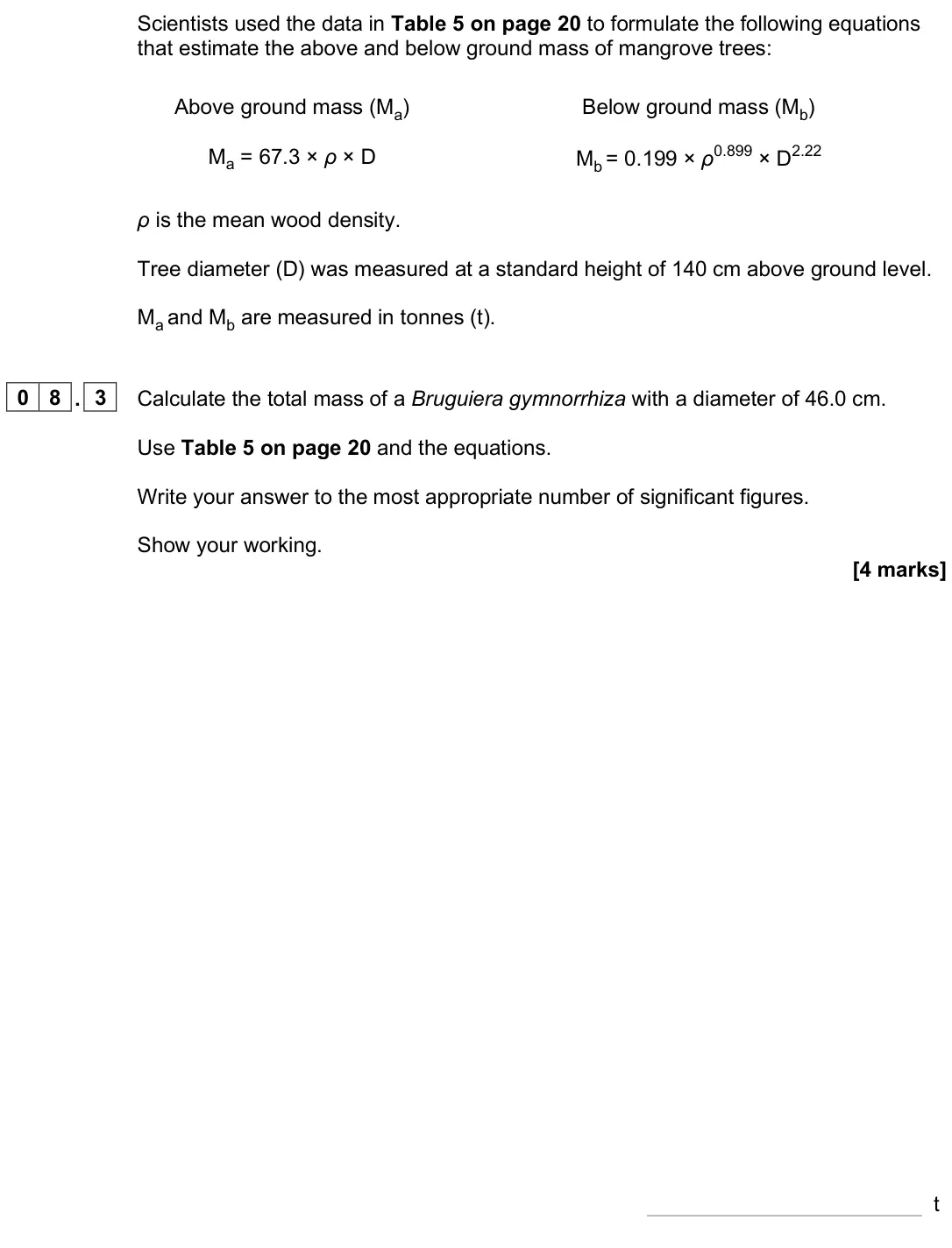
    Setup for original question 08.3

    Loading the question setup…

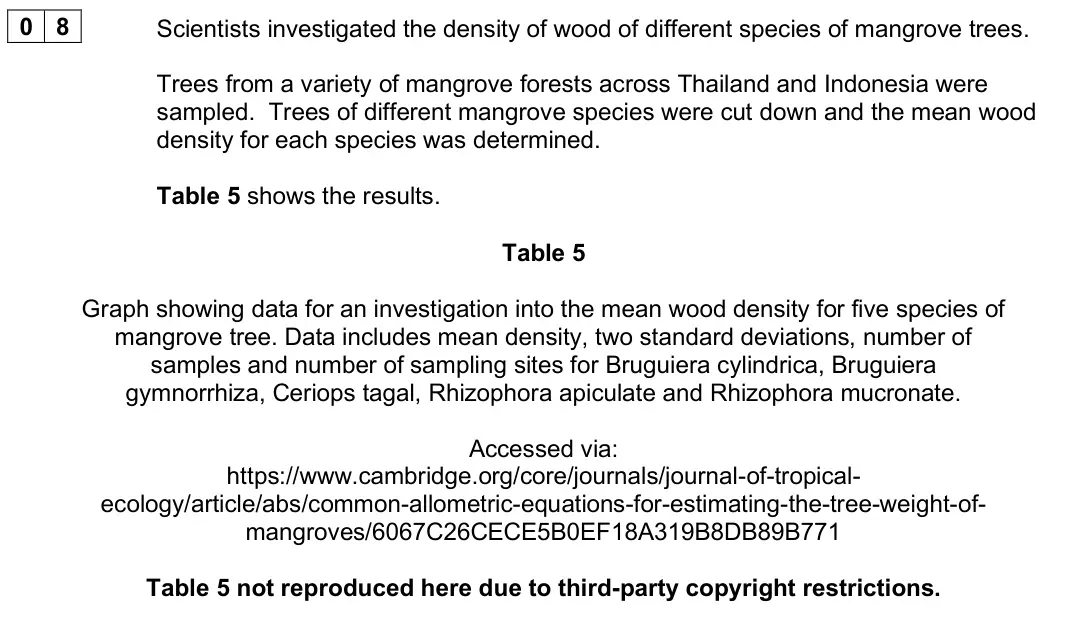
    Original question 08.3: Calculate the total mass of a Bruguiera gymnorrhiza with a diameter of 46.0 cm. Use Table 5 on page 20 and the equations. Write your answer to the most appropri

    Loading the question…

    The whole paper ↗
  2. 2
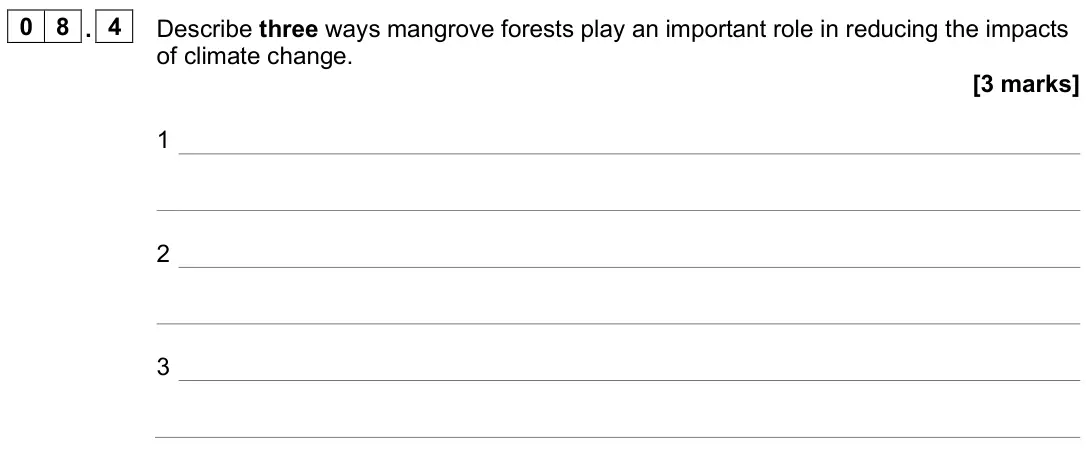
    Original question 08.4: Describe three ways mangrove forests play an important role in reducing the impacts of climate change. [3 marks] 1 2 3

    Loading the question…

    The whole paper ↗
  3. Q09.8June 2025 · Paper 23 marks

    3.7.2 Sampling techniques3.5.3 Forest resources

    3
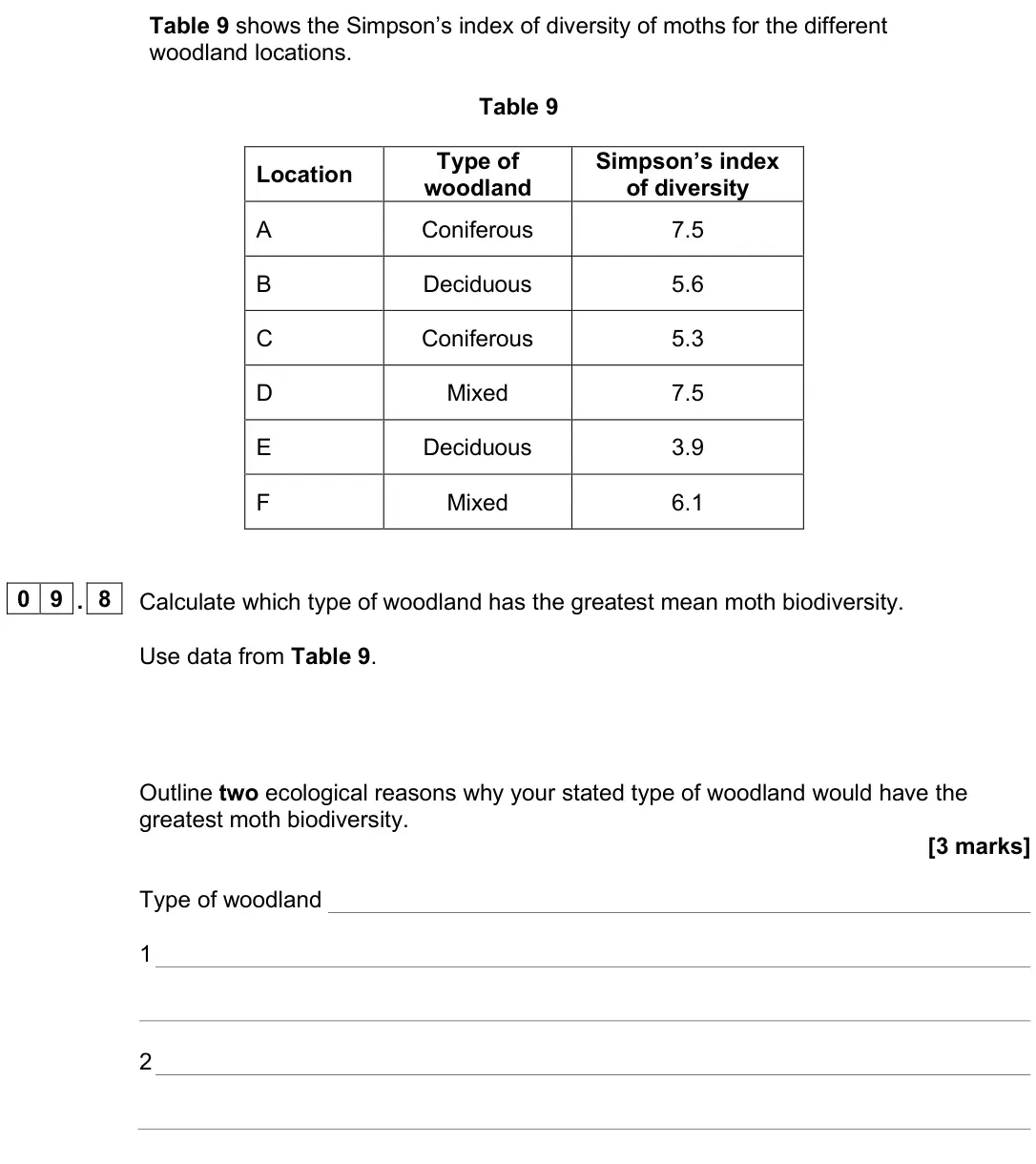
    Setup for original question 09.8

    Loading the question setup…

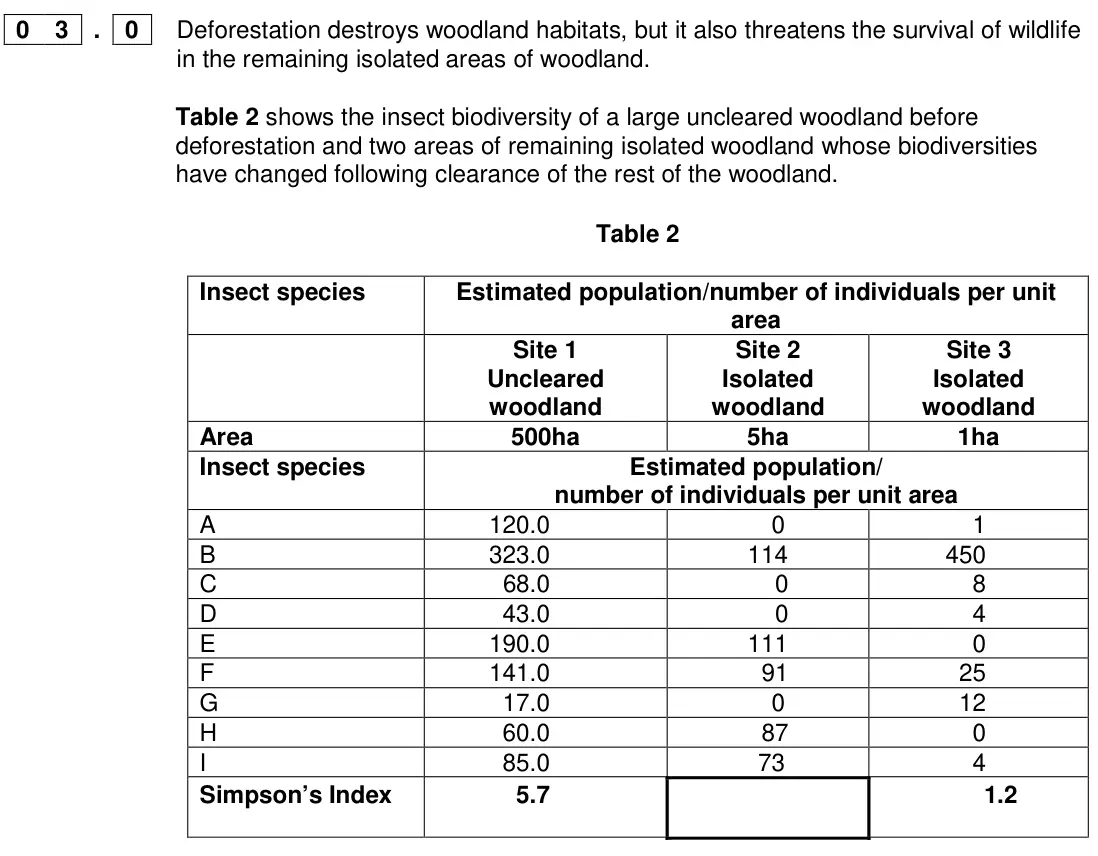
    Original question 09.8: Calculate which type of woodland has the greatest mean moth biodiversity. Use data from Table 9. Outline two ecological reasons why your stated type of woodland

    Loading the question…

    The whole paper ↗
  4. 4
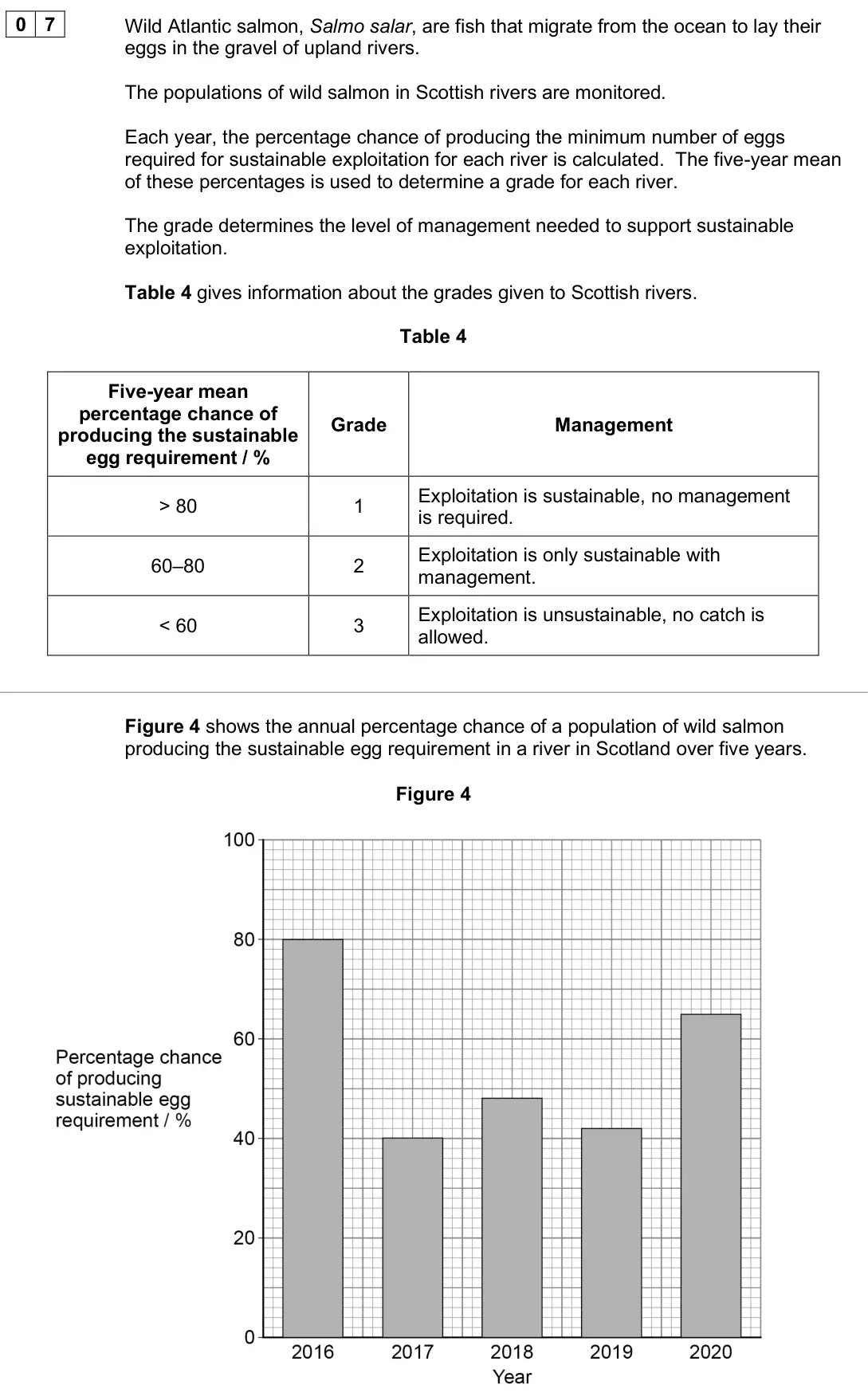
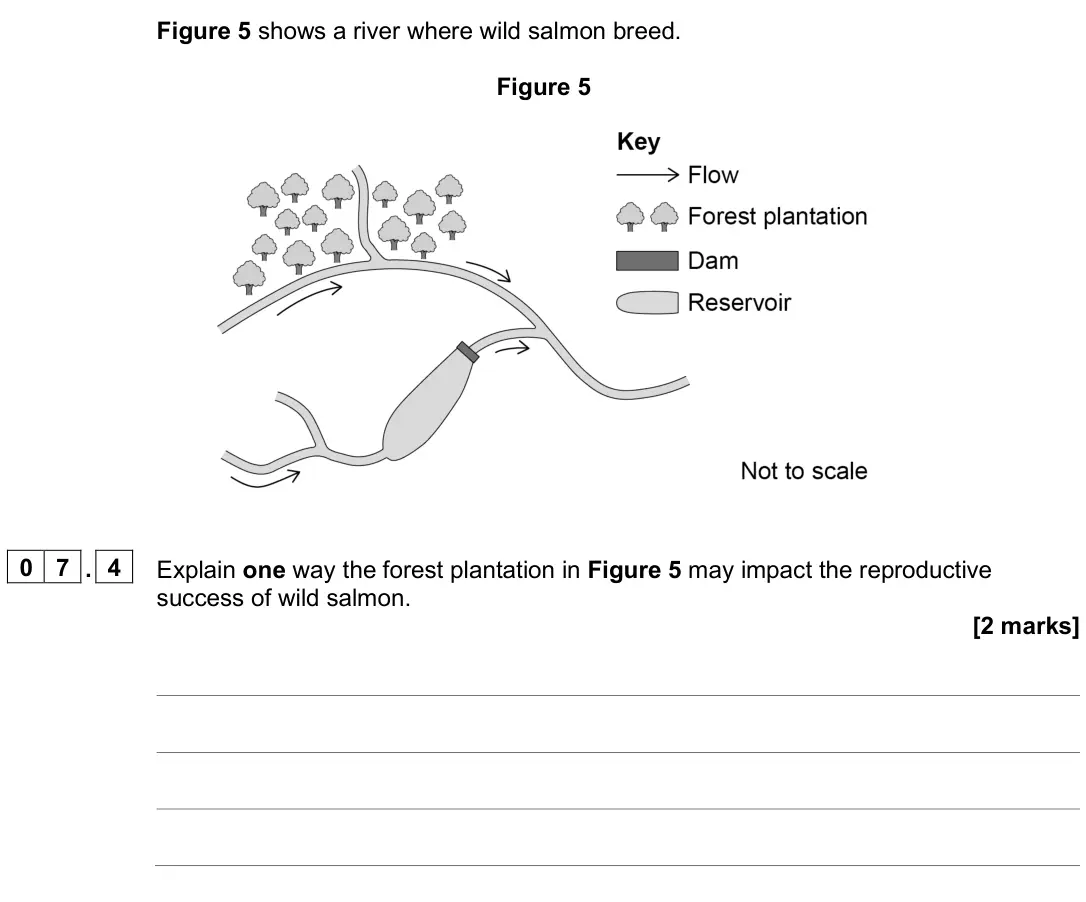
    Setup for original question 07.4

    Loading the question setup…

    Original question 07.4: Explain one way the forest plantation in Figure 5 may impact the reproductive success of wild salmon. [2 marks]

    Loading the question…

    The whole paper ↗
  5. 5
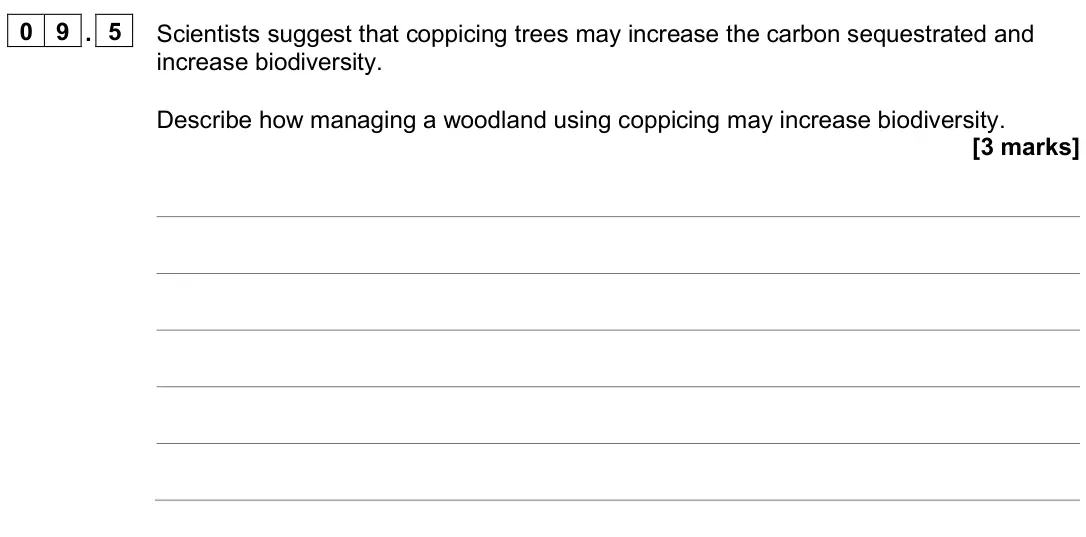
    Setup for original question 09.5

    Loading the question setup…

    Original question 09.5: Scientists suggest that coppicing trees may increase the carbon sequestrated and increase biodiversity. Describe how managing a woodland using coppicing may inc

    Loading the question…

    The whole paper ↗
  6. Q10.1June 2023 · Paper 23 marks

    3.5.3 Forest resources

    6
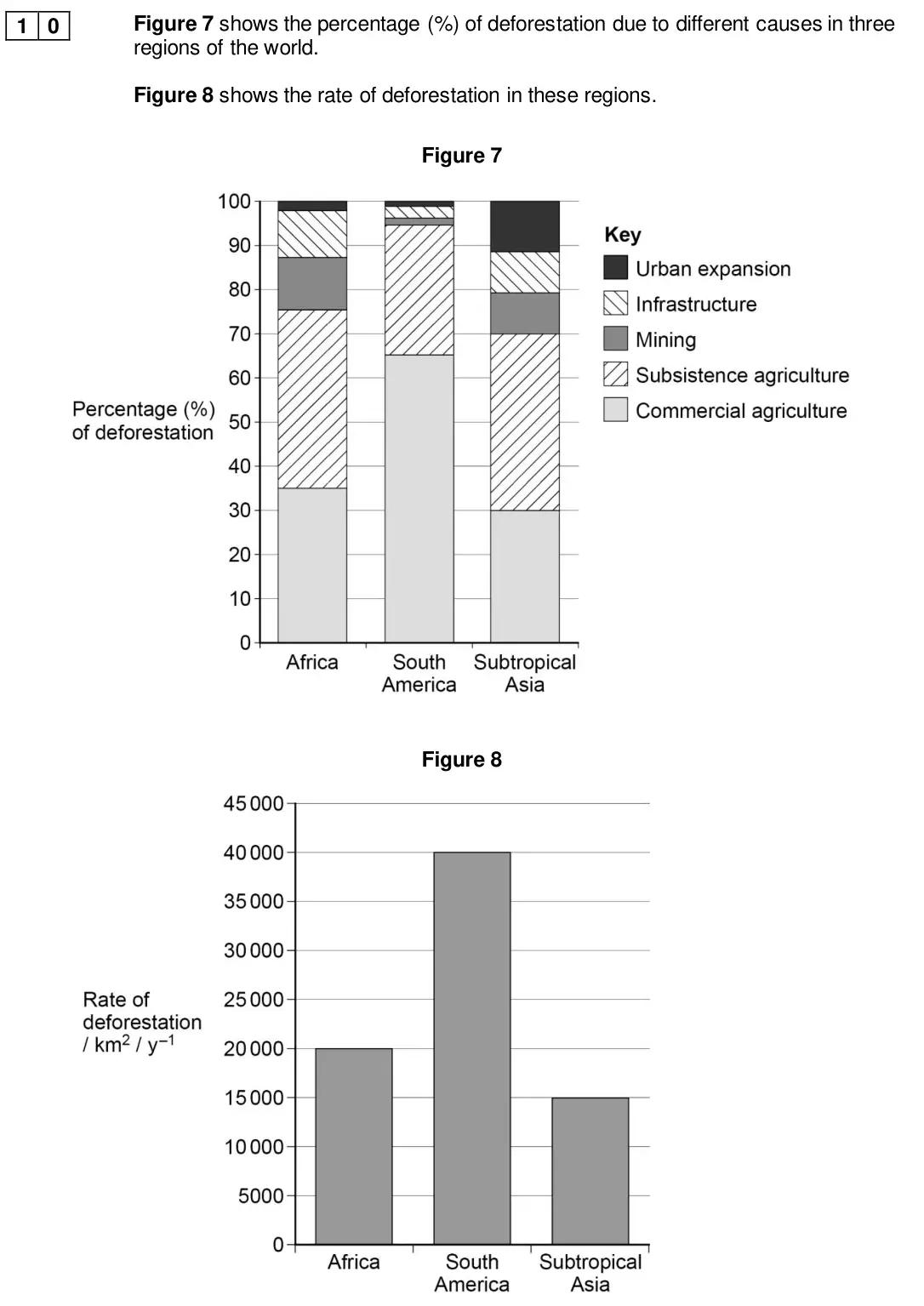
    Setup for original question 10.1

    Loading the question setup…

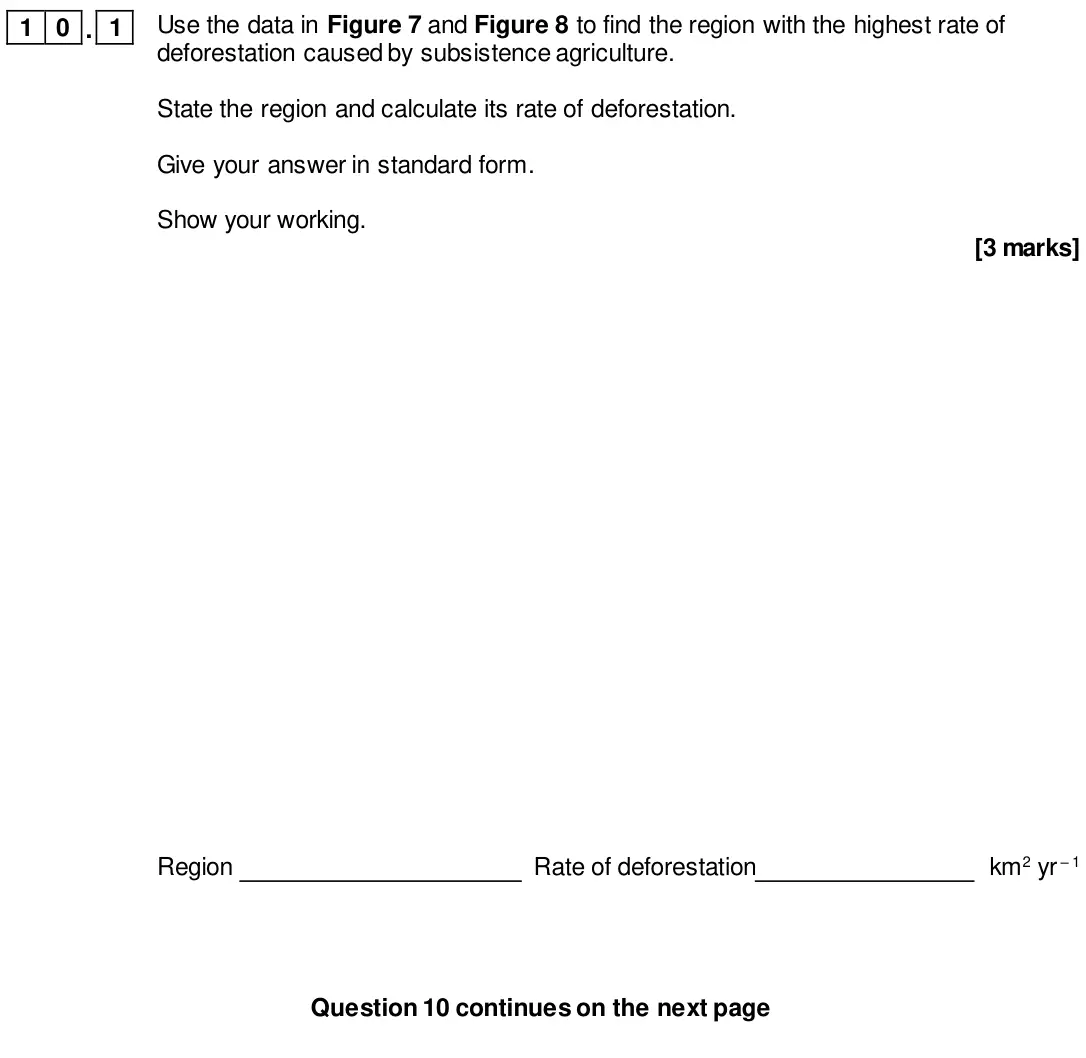
    Original question 10.1: Use the data in Figure 7 and Figure 8 to find the region with the highest rate of deforestation caused by subsistence agriculture. State the region and calculat

    Loading the question…

    The whole paper ↗
  7. Q10.2June 2023 · Paper 26 marks

    3.5.3 Forest resources

    7
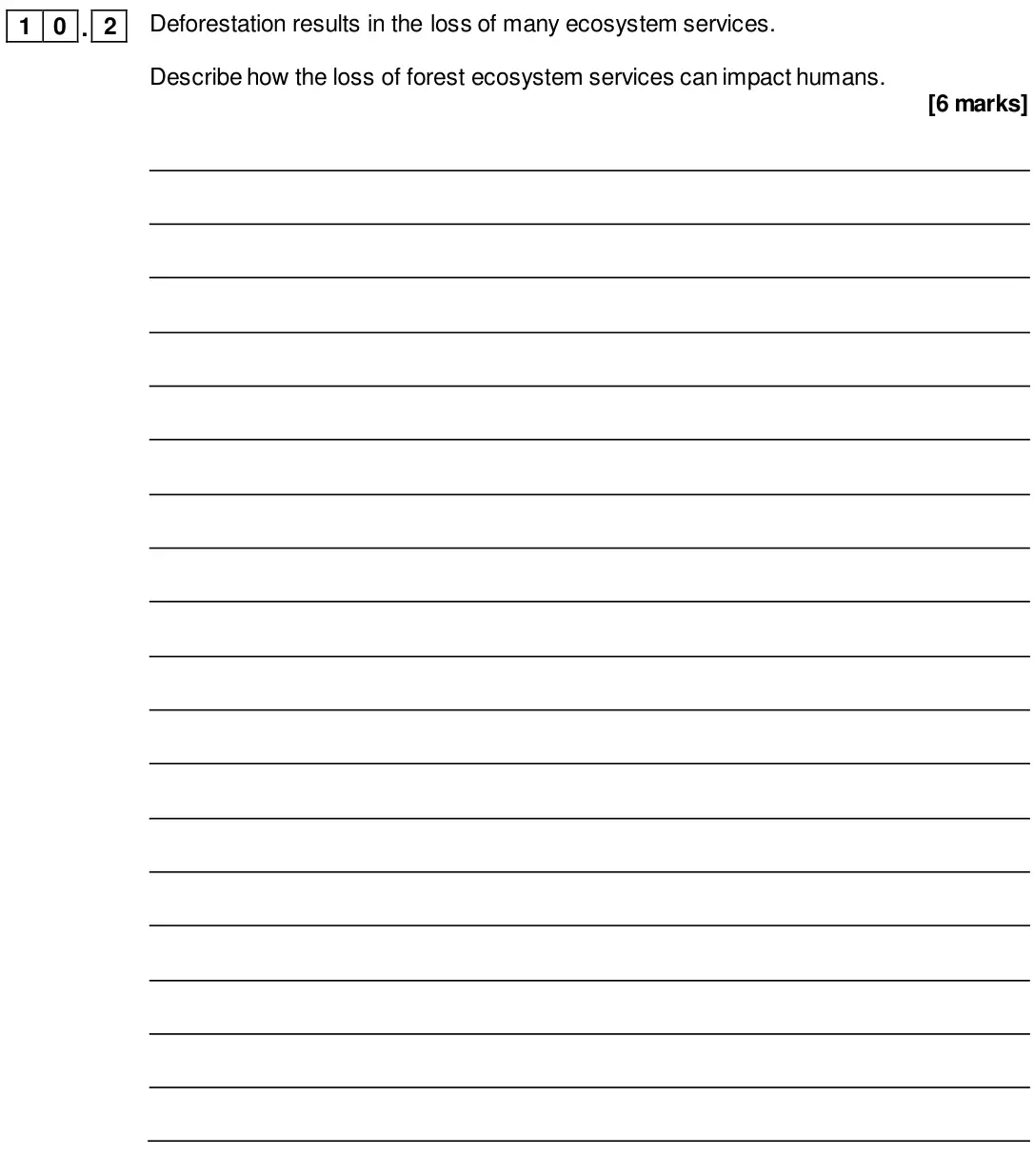
    Original question 10.2: Deforestation results in the loss of many ecosystem services. Describe how the loss of forest ecosystem services can impact humans. [6 marks]

    Loading the question…

    The whole paper ↗
  8. Q10.3June 2023 · Paper 21 mark

    3.5.3 Forest resources

    8
    Original question 10.3: Name an organisation that encourages the sustainable exploitation of forests. [1 mark]

    Loading the question…

    The whole paper ↗
  9. Q08.1June 2022 · Paper 22 marks

    3.5.3 Forest resources

    9
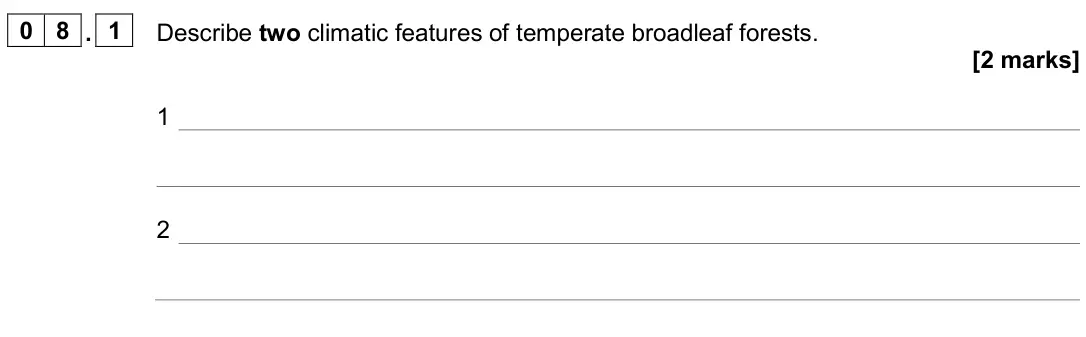
    Original question 08.1: Describe two climatic features of temperate broadleaf forests. [2 marks] 1 2

    Loading the question…

    The whole paper ↗
  10. Q08.7June 2022 · Paper 22 marks

    3.5.3 Forest resources3.2.2 The hydrosphere

    10
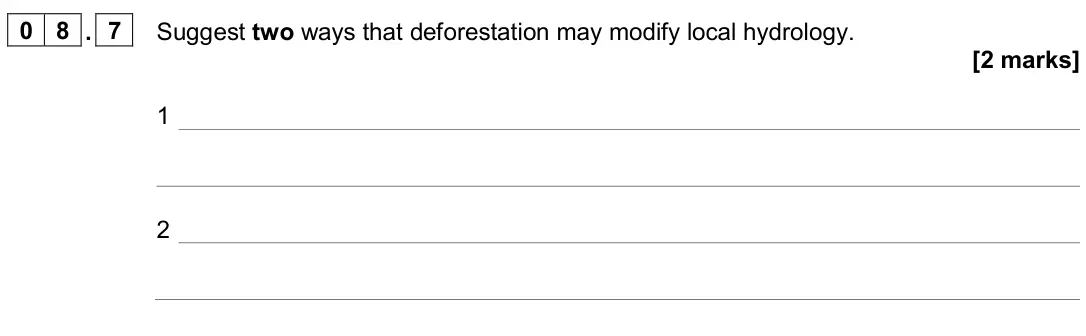
    Original question 08.7: Suggest two ways that deforestation may modify local hydrology. [2 marks] 1 2

    Loading the question…

    The whole paper ↗
  11. Q09.1November 2021 · Paper 23 marks

    3.5.3 Forest resources

    11
    Setup for original question 09.1

    Loading the question setup…

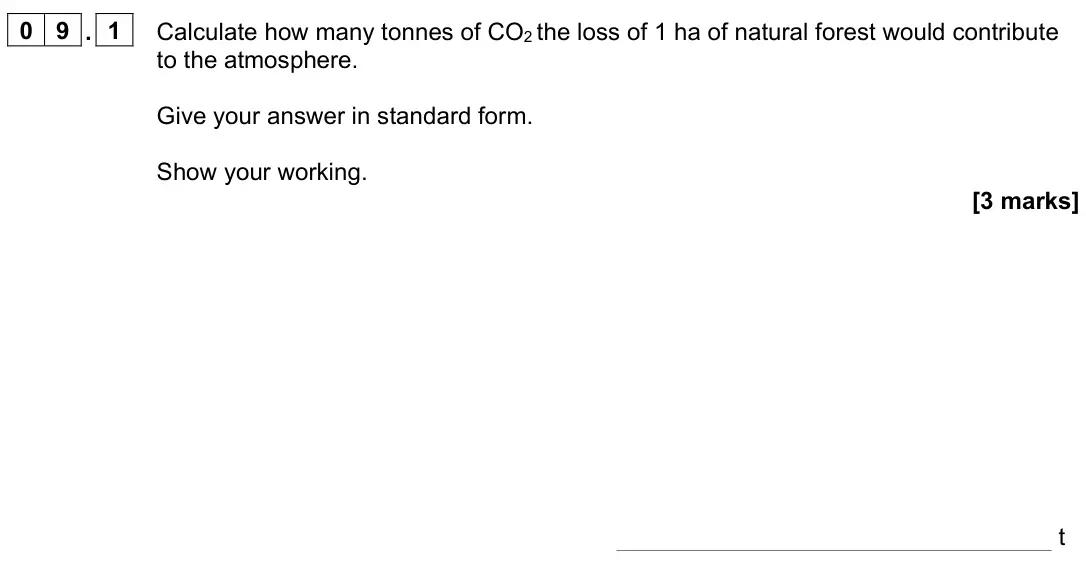
    Original question 09.1: Calculate how many tonnes of CO2 the loss of 1 ha of natural forest would contribute to the atmosphere. Give your answer in standard form. Show your working. [3

    Loading the question…

    The whole paper ↗
  12. Q09.2November 2021 · Paper 22 marks

    3.5.3 Forest resources3.2.4 Biogeochemical cycles

    12
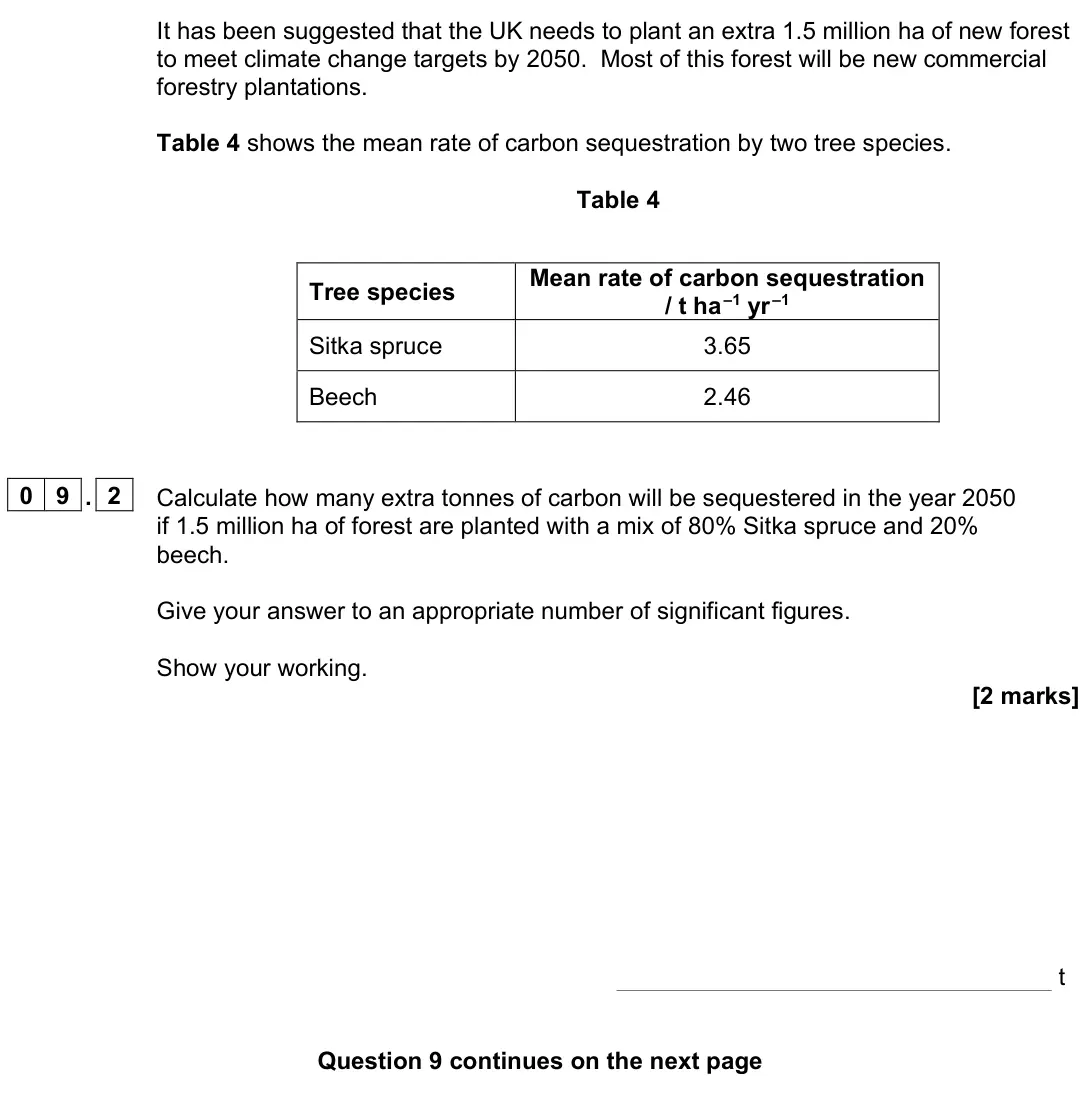
    Original question 09.2: Calculate how many extra tonnes of carbon will be sequestered in the year 2050 if 1.5 million ha of forest are planted with a mix of 80% Sitka spruce and 20% be

    Loading the question…

    The whole paper ↗
  13. Q09.3November 2021 · Paper 21 mark

    3.5.3 Forest resources

    13
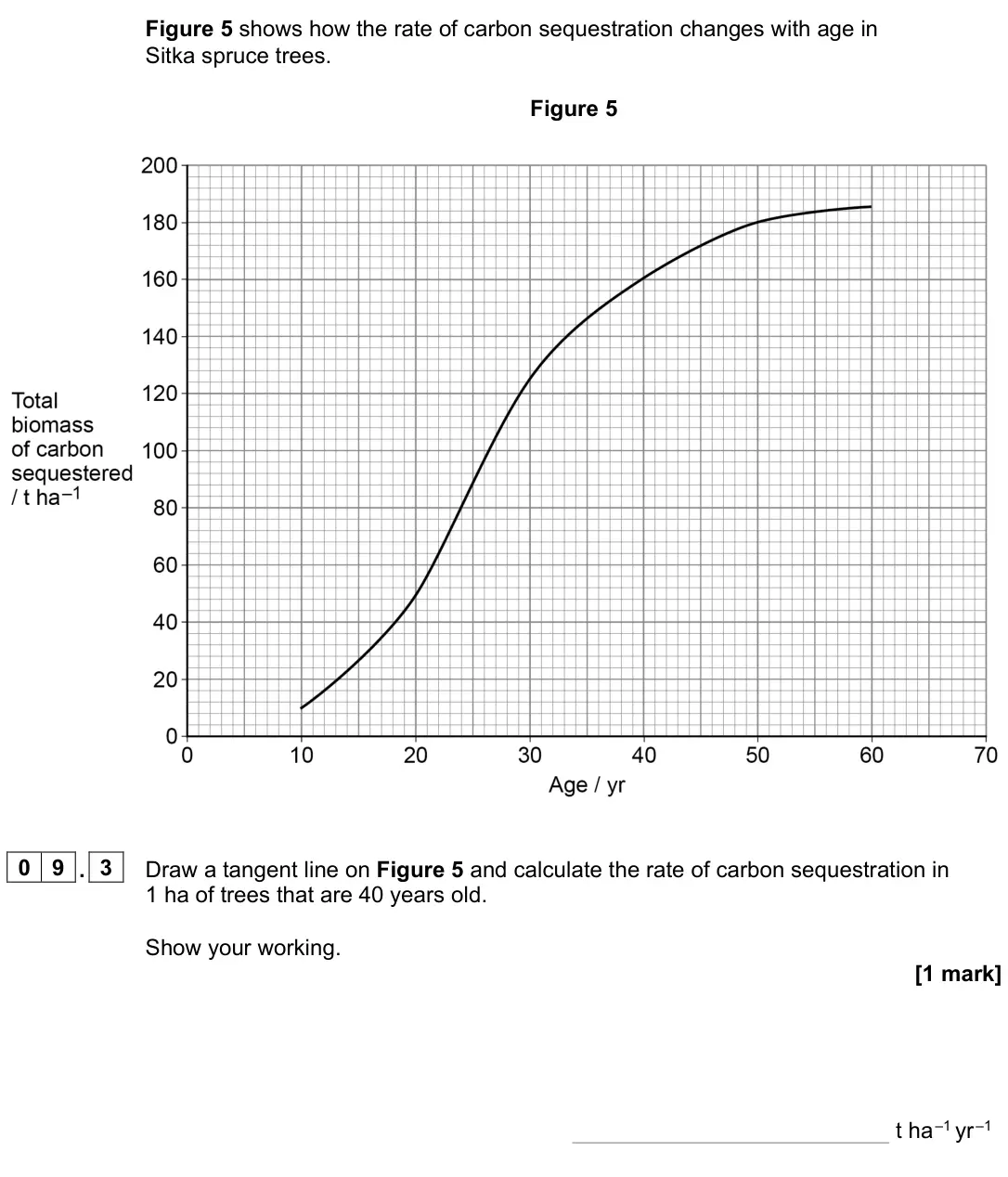
    Original question 09.3: Draw a tangent line on Figure 5 and calculate the rate of carbon sequestration in 1 ha of trees that are 40 years old. Show your working. [1 mark] t ha–1 yr–1

    Loading the question…

    The whole paper ↗
  14. Q09.4November 2021 · Paper 29 marks

    3.5.3 Forest resources

    14
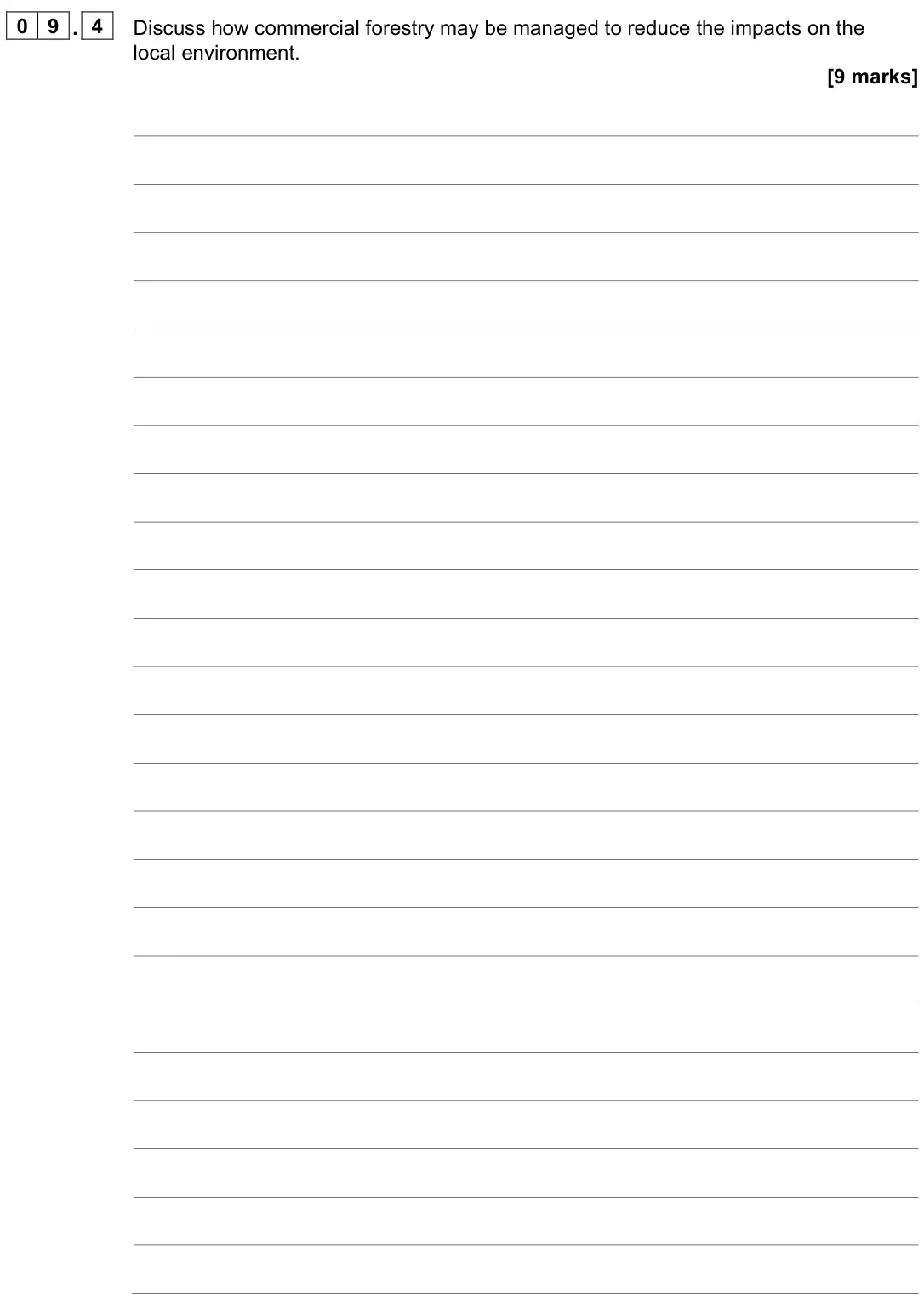
    Original question 09.4: Discuss how commercial forestry may be managed to reduce the impacts on the local environment. [9 marks]

    Loading the question…

    The whole paper ↗
  15. Q08.3November 2020 · Paper 12 marks

    3.2.4 Biogeochemical cycles3.5.3 Forest resources

    15
    Setup for original question 08.3

    Loading the question setup…

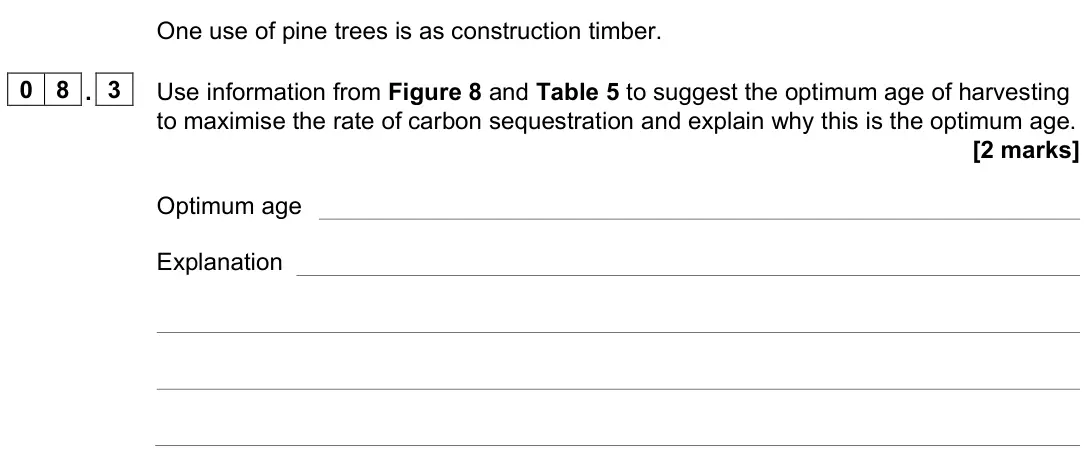
    Original question 08.3: Use information from Figure 8 and Table 5 to suggest the optimum age of harvesting to maximise the rate of carbon sequestration and explain why this is the opti

    Loading the question…

    The whole paper ↗
  16. Q09.1November 2020 · Paper 22 marks

    3.5.3 Forest resources3.2.2 The hydrosphere

    16
    Setup for original question 09.1

    Loading the question setup…

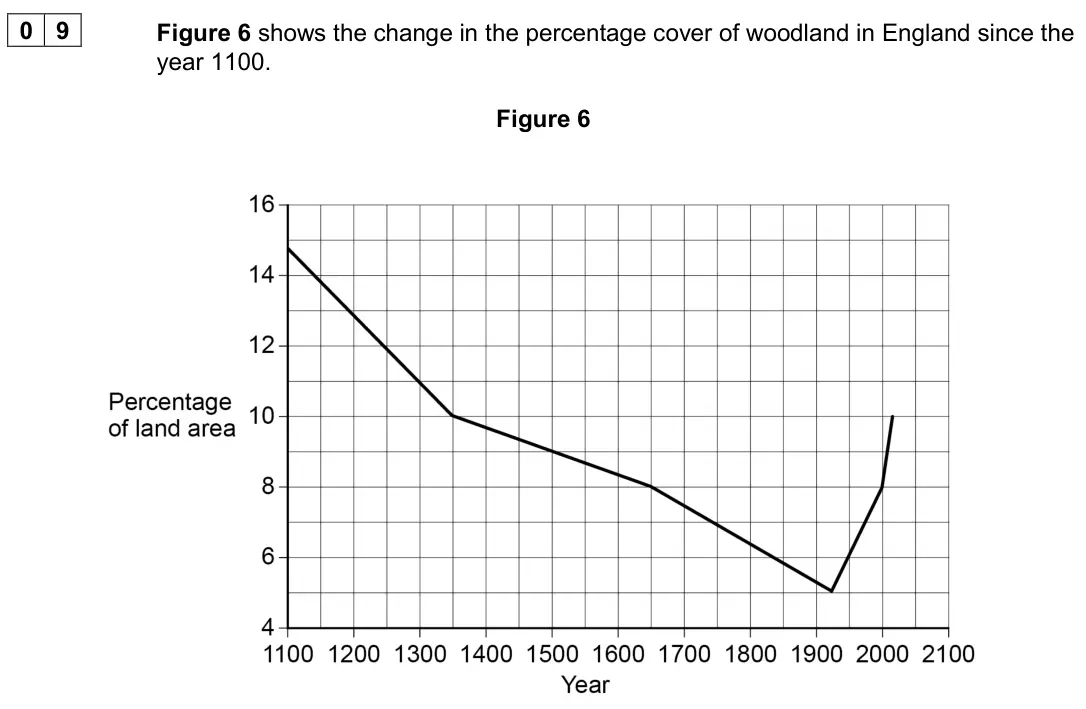
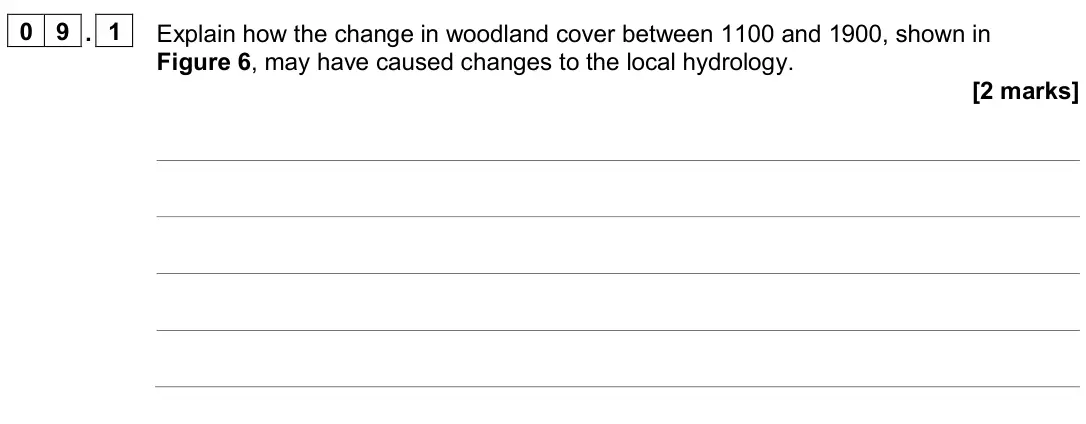
    Original question 09.1: Explain how the change in woodland cover between 1100 and 1900, shown in Figure 6, may have caused changes to the local hydrology. [2 marks]

    Loading the question…

    The whole paper ↗
  17. Q09.2November 2020 · Paper 21 mark

    3.5.3 Forest resources

    17
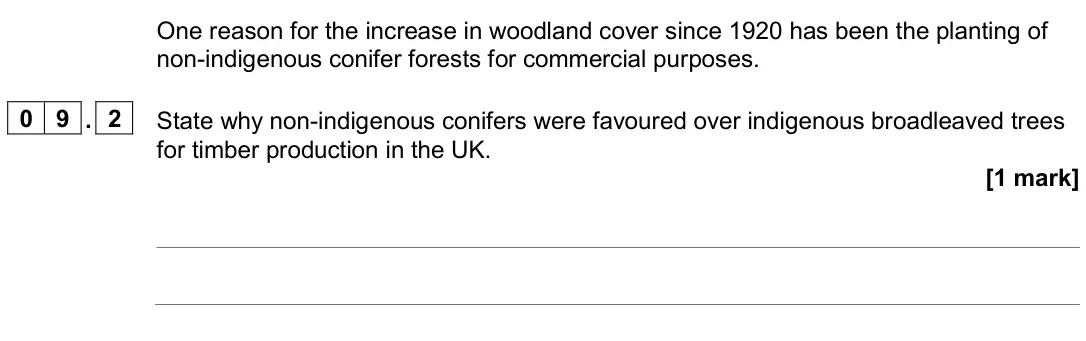
    Original question 09.2: State why non-indigenous conifers were favoured over indigenous broadleaved trees for timber production in the UK. [1 mark]

    Loading the question…

    The whole paper ↗
  18. Q09.5November 2020 · Paper 21 mark

    3.5.3 Forest resources

    18
    Original question 09.5: Suggest why the invertebrate species richness is lower in the conifer woodland. [1 mark]

    Loading the question…

    The whole paper ↗
  19. 19
    Setup for original question 03.3

    Loading the question setup…

    Original question 03.3: Explain how the canopy layer affects the survival of plants growing on the woodland floor. [4 marks]

    Loading the question…

    The whole paper ↗
All 19 questions on Forest resources, as a list
  1. June 2025, Paper 2, Q08.3 (4 marks): Calculate the total mass of a Bruguiera gymnorrhiza with a diameter of 46.0 cm. Use Table 5 on page 20 and the equations. Write your answer to the most appropri
  2. June 2025, Paper 2, Q08.4 (3 marks): Describe three ways mangrove forests play an important role in reducing the impacts of climate change. [3 marks] 1 2 3
  3. June 2025, Paper 2, Q09.8 (3 marks): Calculate which type of woodland has the greatest mean moth biodiversity. Use data from Table 9. Outline two ecological reasons why your stated type of woodland
  4. June 2024, Paper 2, Q07.4 (2 marks): Explain one way the forest plantation in Figure 5 may impact the reproductive success of wild salmon. [2 marks]
  5. June 2024, Paper 2, Q09.5 (3 marks): Scientists suggest that coppicing trees may increase the carbon sequestrated and increase biodiversity. Describe how managing a woodland using coppicing may inc
  6. June 2023, Paper 2, Q10.1 (3 marks): Use the data in Figure 7 and Figure 8 to find the region with the highest rate of deforestation caused by subsistence agriculture. State the region and calculat
  7. June 2023, Paper 2, Q10.2 (6 marks): Deforestation results in the loss of many ecosystem services. Describe how the loss of forest ecosystem services can impact humans. [6 marks]
  8. June 2023, Paper 2, Q10.3 (1 mark): Name an organisation that encourages the sustainable exploitation of forests. [1 mark]
  9. June 2022, Paper 2, Q08.1 (2 marks): Describe two climatic features of temperate broadleaf forests. [2 marks] 1 2
  10. June 2022, Paper 2, Q08.7 (2 marks): Suggest two ways that deforestation may modify local hydrology. [2 marks] 1 2
  11. November 2021, Paper 2, Q09.1 (3 marks): Calculate how many tonnes of CO2 the loss of 1 ha of natural forest would contribute to the atmosphere. Give your answer in standard form. Show your working. [3
  12. November 2021, Paper 2, Q09.2 (2 marks): Calculate how many extra tonnes of carbon will be sequestered in the year 2050 if 1.5 million ha of forest are planted with a mix of 80% Sitka spruce and 20% be
  13. November 2021, Paper 2, Q09.3 (1 mark): Draw a tangent line on Figure 5 and calculate the rate of carbon sequestration in 1 ha of trees that are 40 years old. Show your working. [1 mark] t ha–1 yr–1
  14. November 2021, Paper 2, Q09.4 (9 marks): Discuss how commercial forestry may be managed to reduce the impacts on the local environment. [9 marks]
  15. November 2020, Paper 1, Q08.3 (2 marks): Use information from Figure 8 and Table 5 to suggest the optimum age of harvesting to maximise the rate of carbon sequestration and explain why this is the opti
  16. November 2020, Paper 2, Q09.1 (2 marks): Explain how the change in woodland cover between 1100 and 1900, shown in Figure 6, may have caused changes to the local hydrology. [2 marks]
  17. November 2020, Paper 2, Q09.2 (1 mark): State why non-indigenous conifers were favoured over indigenous broadleaved trees for timber production in the UK. [1 mark]
  18. November 2020, Paper 2, Q09.5 (1 mark): Suggest why the invertebrate species richness is lower in the conifer woodland. [1 mark]
  19. Specimen, Paper 2, Q03.3 (4 marks): Explain how the canopy layer affects the survival of plants growing on the woodland floor. [4 marks]

Questions, mark schemes and examiner’s reports are © AQA, from their published past papers. Plumi isn’t affiliated with any exam board. Want whole papers? AQA A-Level Environmental Science past papers.

The Plumi iPad app also offers exam-style questions with AI feedback on your handwritten working.