Skip to content
Try on iPad

Style

Get started

Biogeochemical cycles: AQA A‑Level Environmental Science questions

AQA A-Level Environmental Science past-paper questions on 3.2.4 Biogeochemical cycles, 2020–2025, with mark schemes and examiner’s reports where available.

Getting your paper ready…

AQA A-Level Environmental ScienceBiogeochemical cycles551 questions

Paper
All papers
Exam
All years
Calculations

Loading the full question list…

551 questions

More options
  1. Q05.3June 2024 · Paper 12 marks

    3.2.4 Biogeochemical cycles

    1
    Setup for original question 05.3

    Loading the question setup…

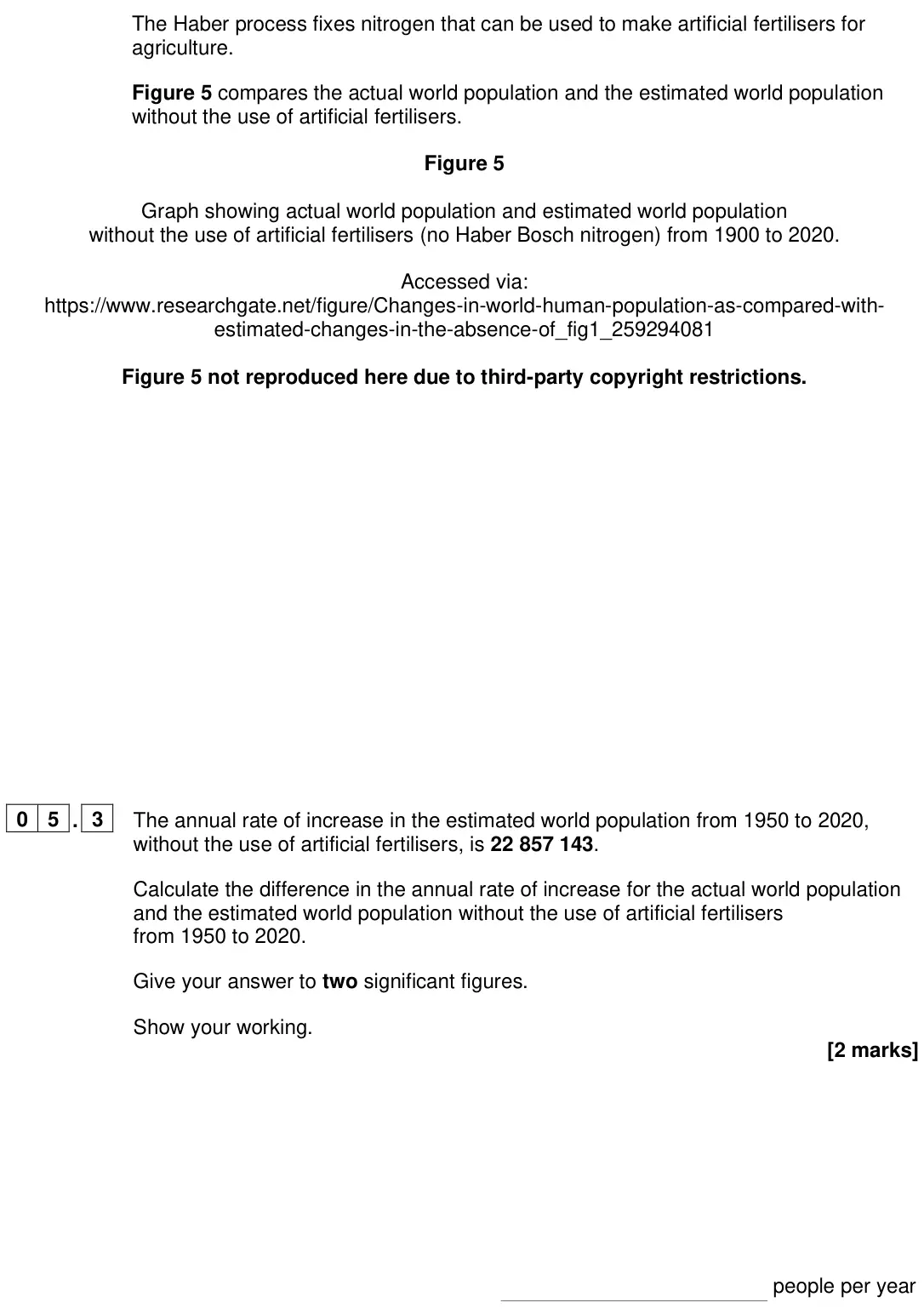
    Original question 05.3: The annual rate of increase in the estimated world population from 1950 to 2020, without the use of artificial fertilisers, is 22 857 143. Calculate the differe

    Loading the question…

    The whole paper ↗
  2. 2
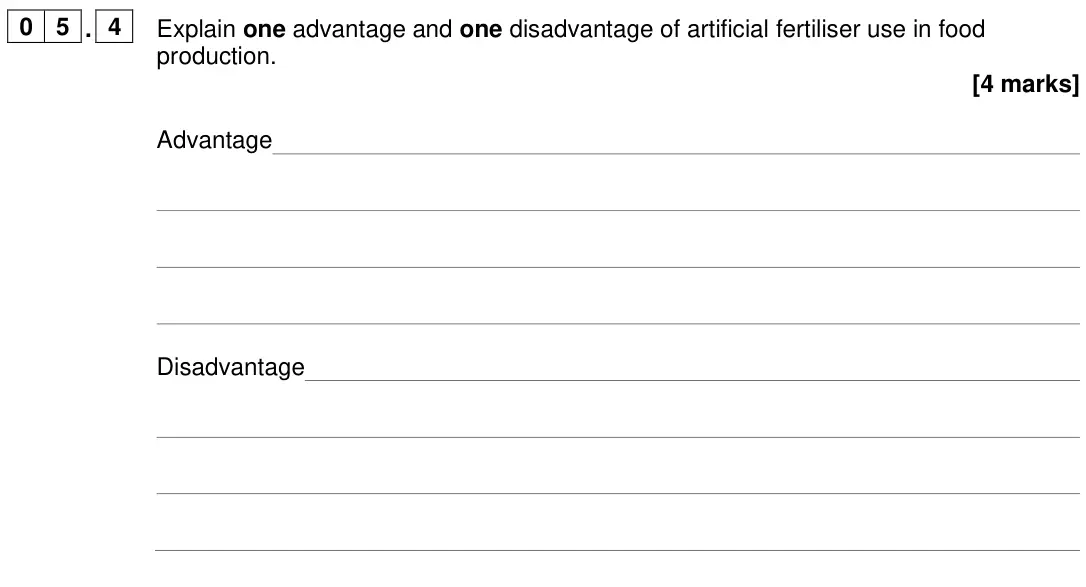
    Original question 05.4: Explain one advantage and one disadvantage of artificial fertiliser use in food production. [4 marks] Advantage Disadvantage

    Loading the question…

    The whole paper ↗
  3. Q01.1June 2023 · Paper 14 marks

    3.2.4 Biogeochemical cycles

    3
    Setup for original question 01.1

    Loading the question setup…

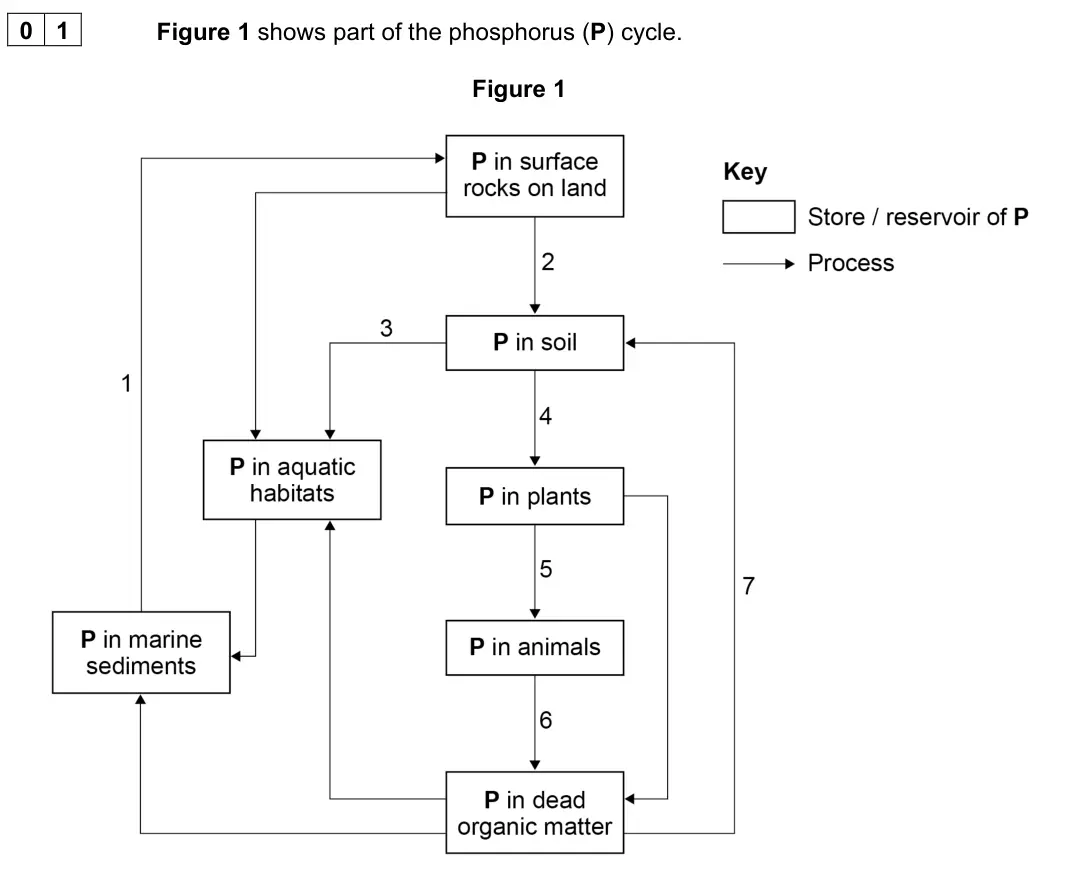
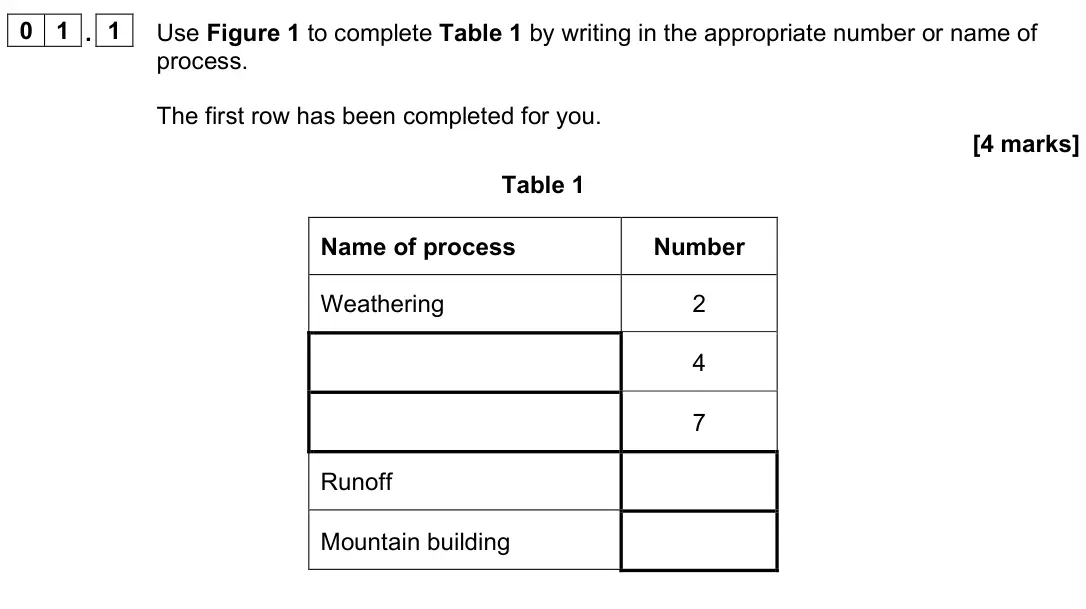
    Original question 01.1: Use Figure 1 to complete Table 1 by writing in the appropriate number or name of process. The first row has been completed for you. [4 marks] Table 1 Name of pr

    Loading the question…

    The whole paper ↗
  4. Q01.2June 2023 · Paper 11 mark

    3.2.4 Biogeochemical cycles3.2.5 Soils

    4
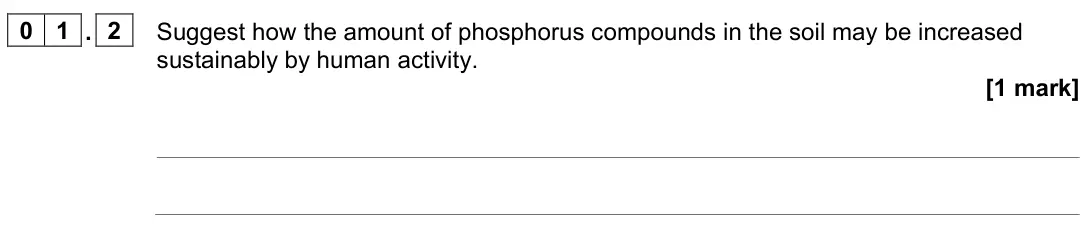
    Original question 01.2: Suggest how the amount of phosphorus compounds in the soil may be increased sustainably by human activity. [1 mark]

    Loading the question…

    The whole paper ↗
  5. Q03.1June 2022 · Paper 12 marks

    3.2.4 Biogeochemical cycles

    5
    Setup for original question 03.1

    Loading the question setup…

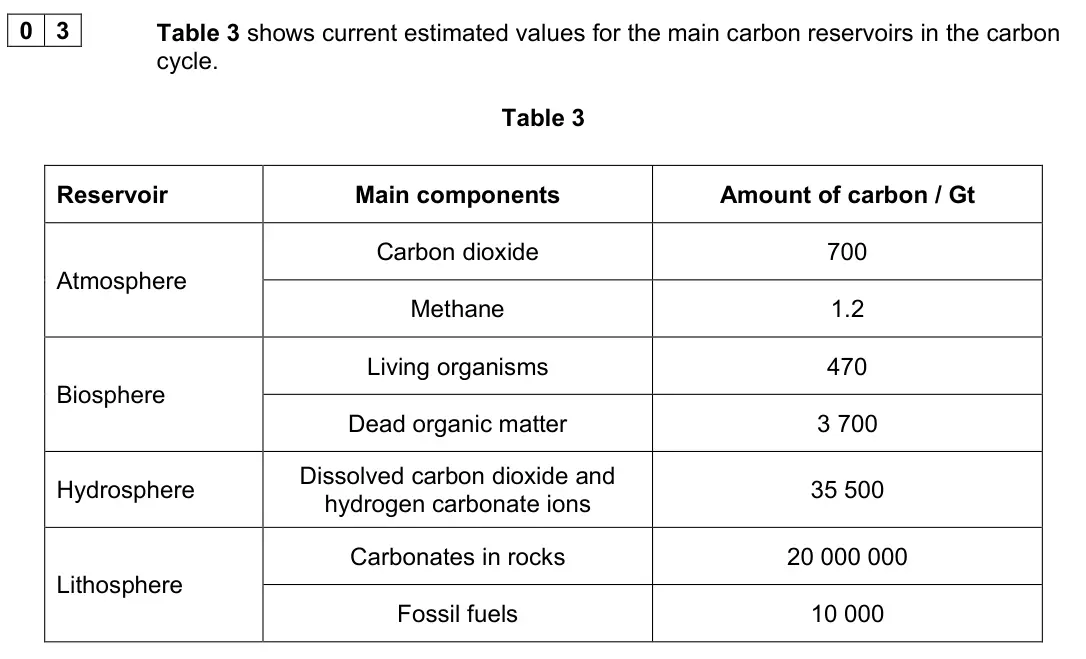
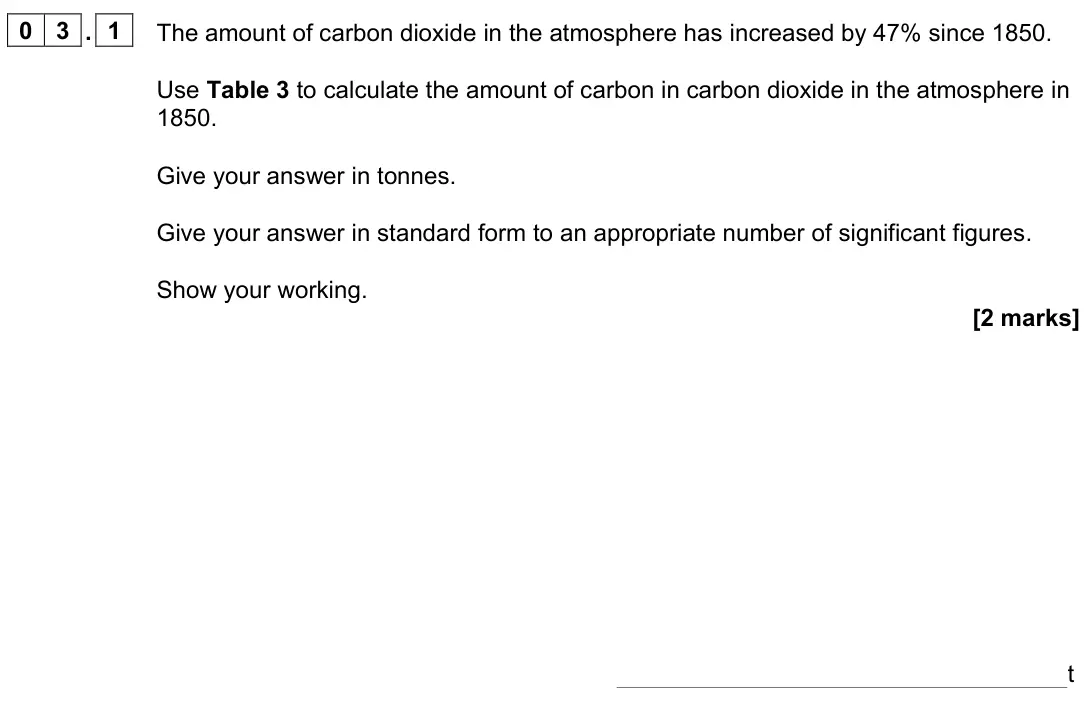
    Original question 03.1: The amount of carbon dioxide in the atmosphere has increased by 47% since 1850. Use Table 3 to calculate the amount of carbon in carbon dioxide in the atmospher

    Loading the question…

    The whole paper ↗
  6. Q03.2June 2022 · Paper 13 marks

    3.2.4 Biogeochemical cycles

    6
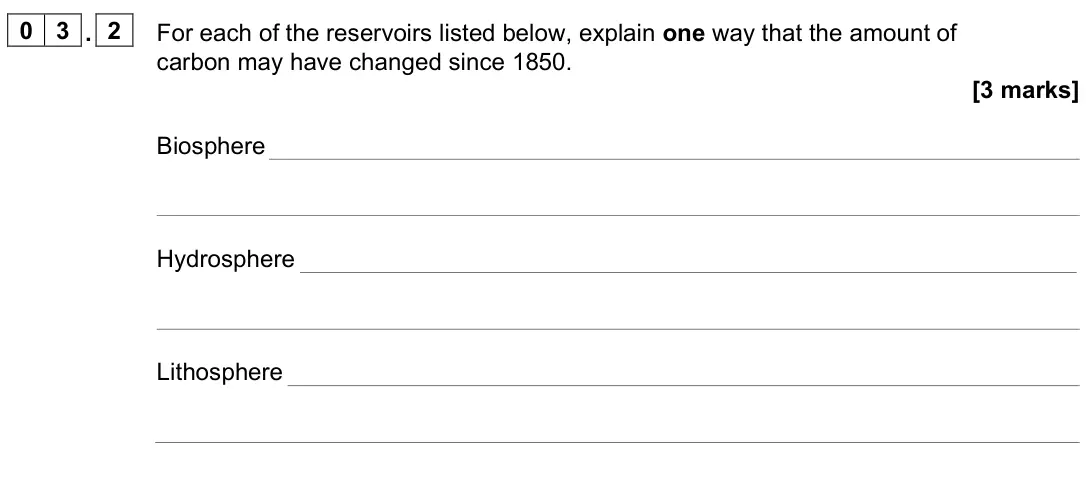
    Original question 03.2: For each of the reservoirs listed below, explain one way that the amount of carbon may have changed since 1850. [3 marks] Biosphere Hydrosphere Lithosphere

    Loading the question…

    The whole paper ↗
  7. 7
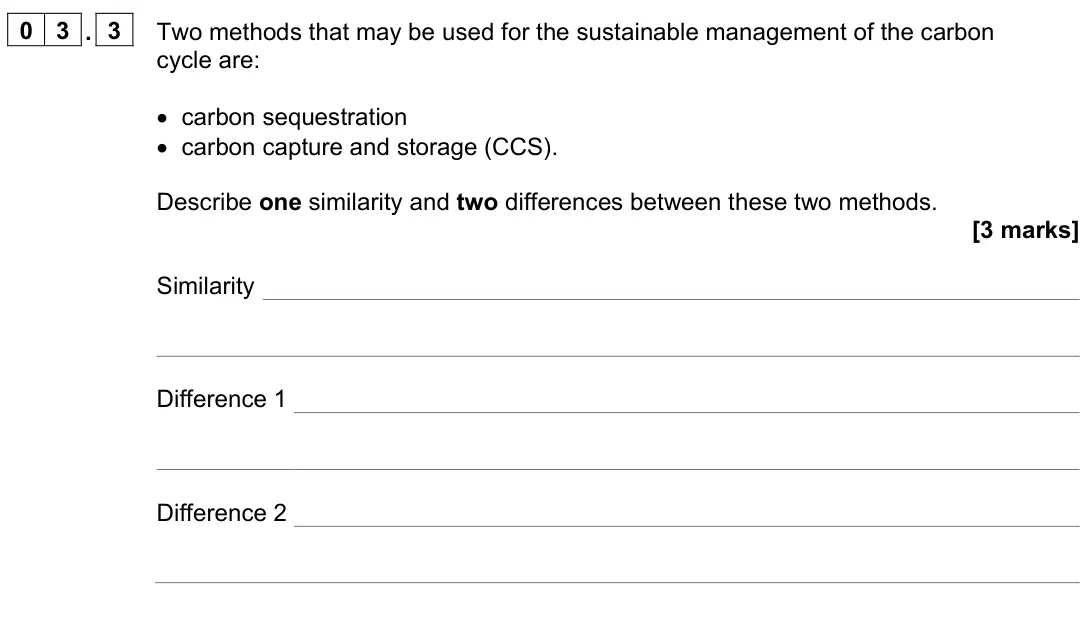
    Original question 03.3: Two methods that may be used for the sustainable management of the carbon cycle are: • carbon sequestration • carbon capture and storage (CCS). Describe one sim

    Loading the question…

    The whole paper ↗
  8. Q03.4June 2022 · Paper 12 marks

    3.2.4 Biogeochemical cycles

    8
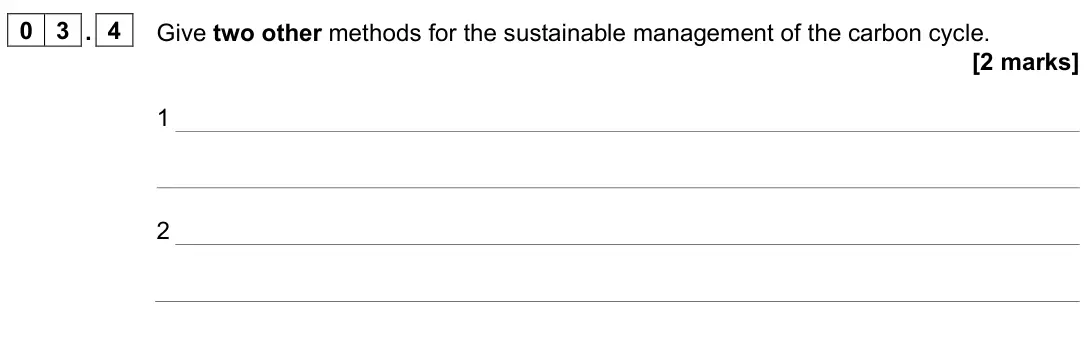
    Original question 03.4: Give two other methods for the sustainable management of the carbon cycle. [2 marks] 1 2

    Loading the question…

    The whole paper ↗
  9. Q09.5November 2021 · Paper 12 marks

    3.2.4 Biogeochemical cycles

    9
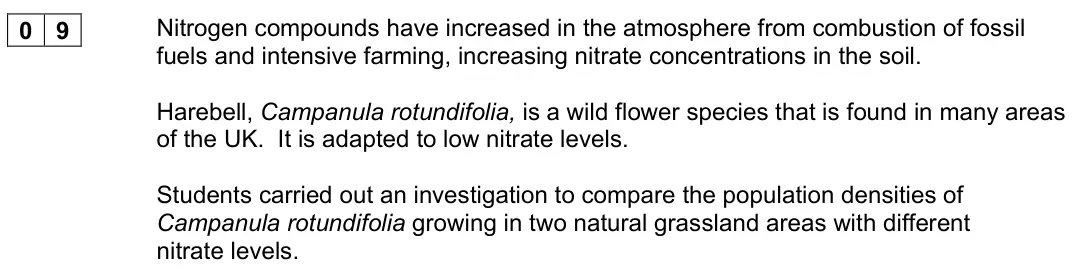
    Setup for original question 09.5

    Loading the question setup…

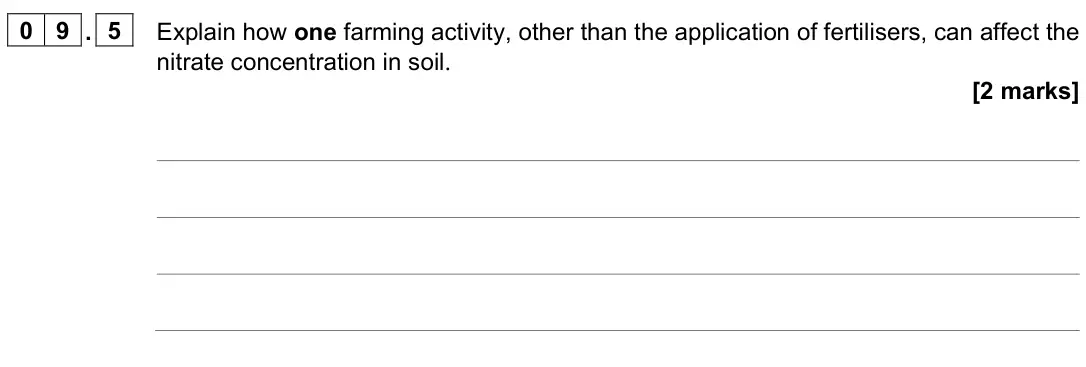
    Original question 09.5: Explain how one farming activity, other than the application of fertilisers, can affect the nitrate concentration in soil. [2 marks]

    Loading the question…

    The whole paper ↗
  10. Q09.2November 2021 · Paper 22 marks

    3.5.3 Forest resources3.2.4 Biogeochemical cycles

    10
    Setup for original question 09.2

    Loading the question setup…

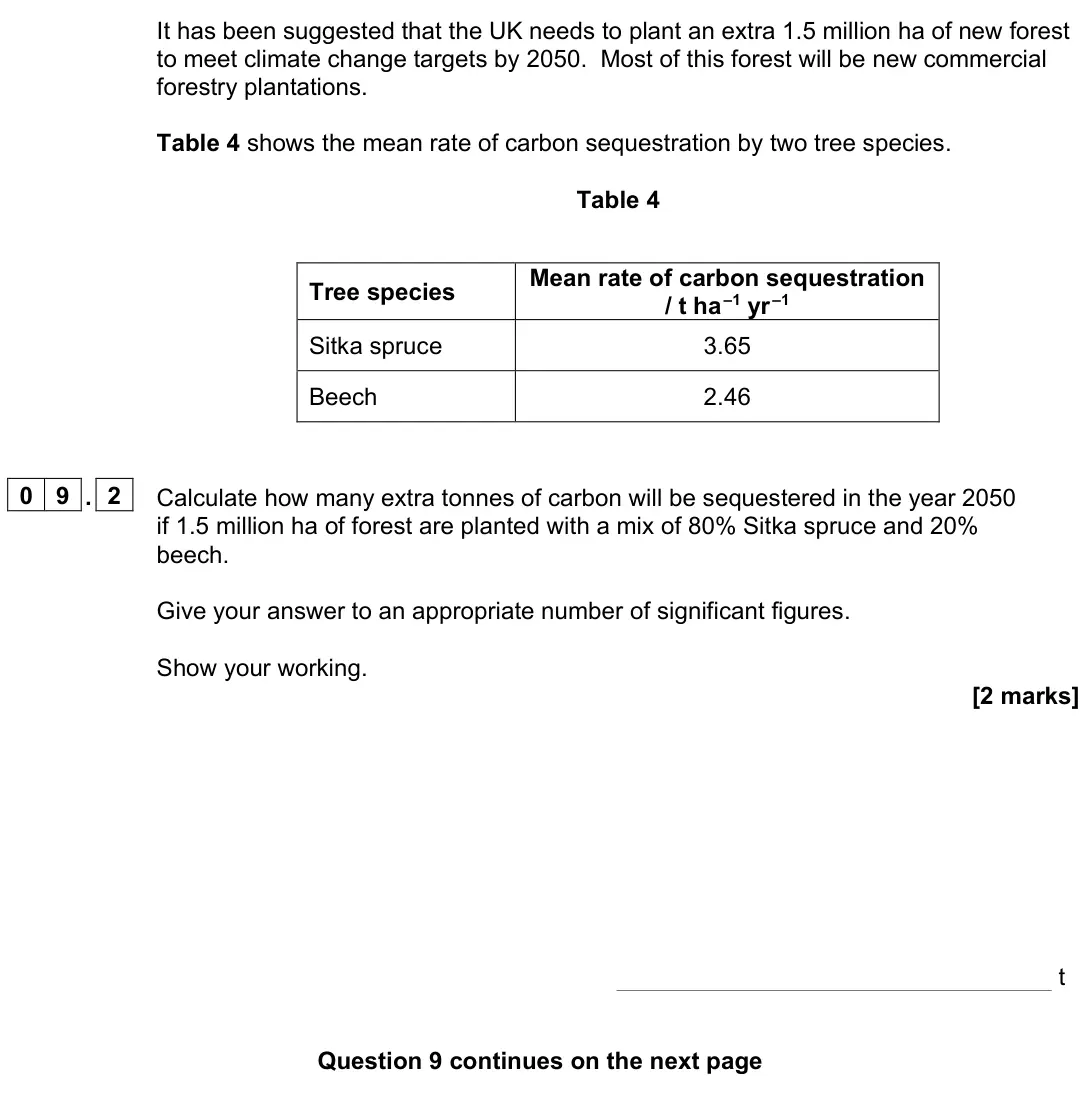
    Original question 09.2: Calculate how many extra tonnes of carbon will be sequestered in the year 2050 if 1.5 million ha of forest are planted with a mix of 80% Sitka spruce and 20% be

    Loading the question…

    The whole paper ↗
  11. Q08.2November 2020 · Paper 13 marks

    3.2.4 Biogeochemical cycles

    11
    Setup for original question 08.2

    Loading the question setup…

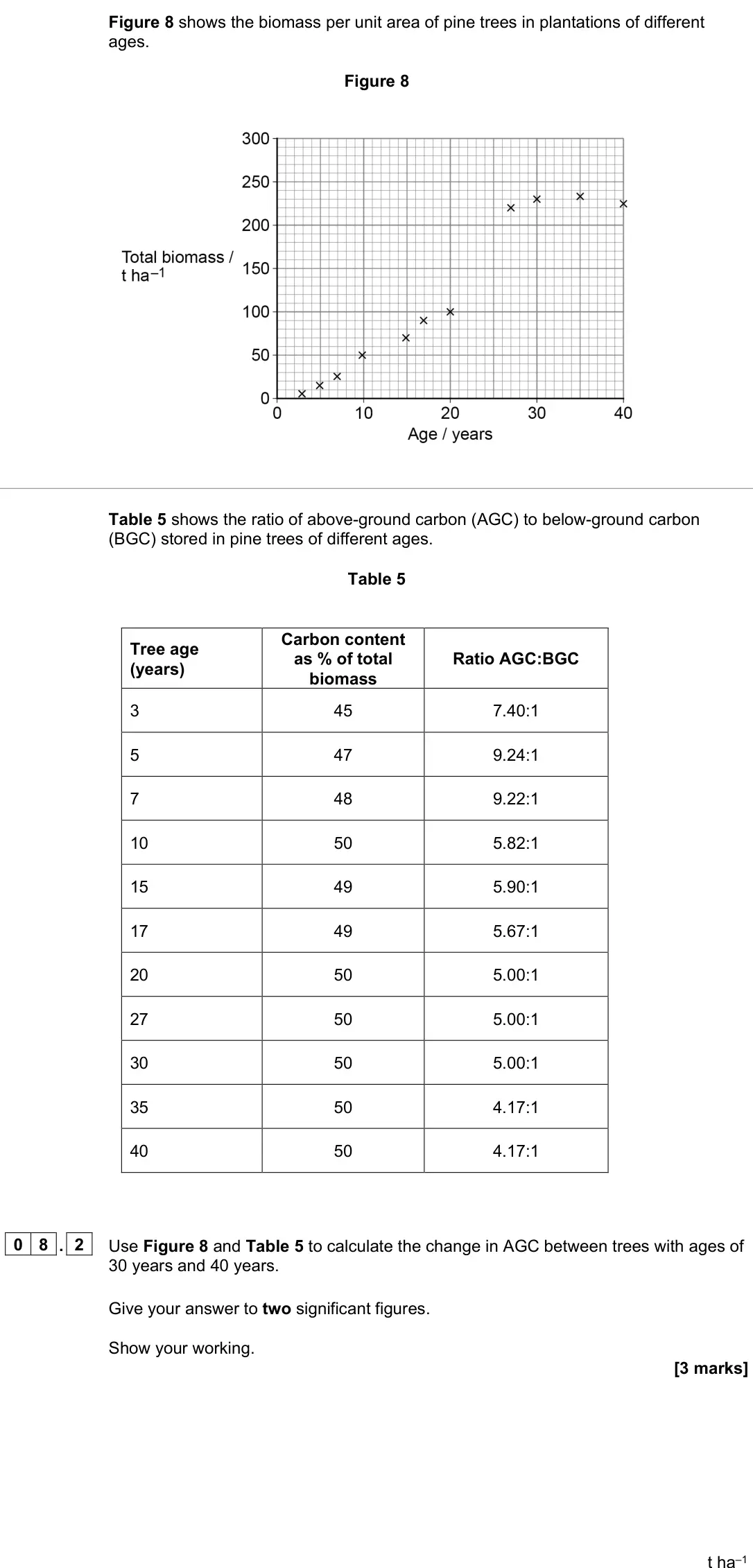
    Original question 08.2: Use Figure 8 and Table 5 to calculate the change in AGC between trees with ages of 30 years and 40 years. Give your answer to two significant figures. Show your

    Loading the question…

    The whole paper ↗
  12. Q08.3November 2020 · Paper 12 marks

    3.2.4 Biogeochemical cycles3.5.3 Forest resources

    12
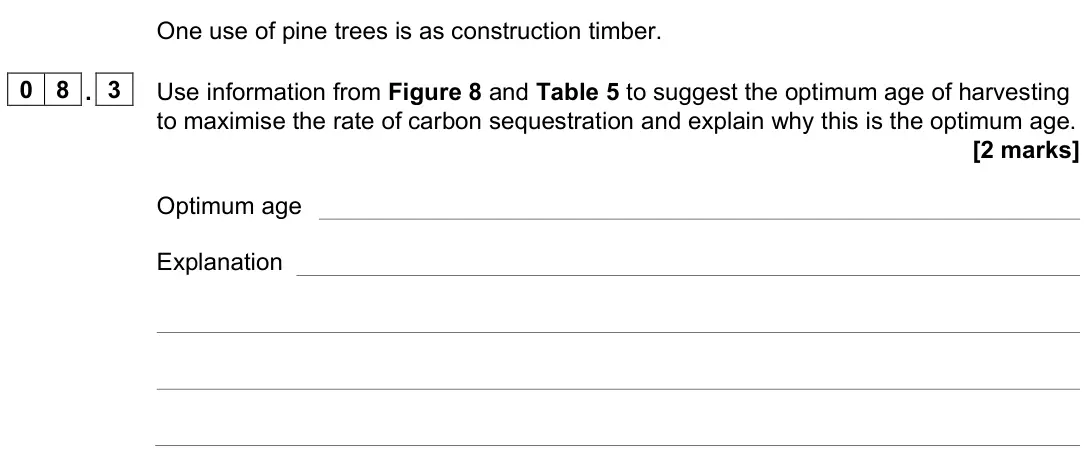
    Original question 08.3: Use information from Figure 8 and Table 5 to suggest the optimum age of harvesting to maximise the rate of carbon sequestration and explain why this is the opti

    Loading the question…

    The whole paper ↗
  13. Q08.4November 2020 · Paper 12 marks

    3.2.4 Biogeochemical cycles

    13
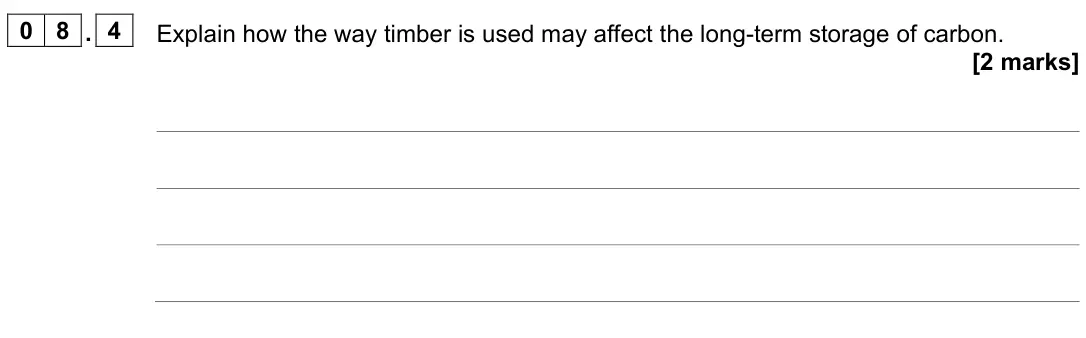
    Original question 08.4: Explain how the way timber is used may affect the long-term storage of carbon. [2 marks]

    Loading the question…

    The whole paper ↗
All 13 questions on Biogeochemical cycles, as a list
  1. June 2024, Paper 1, Q05.3 (2 marks): The annual rate of increase in the estimated world population from 1950 to 2020, without the use of artificial fertilisers, is 22 857 143. Calculate the differe
  2. June 2024, Paper 1, Q05.4 (4 marks): Explain one advantage and one disadvantage of artificial fertiliser use in food production. [4 marks] Advantage Disadvantage
  3. June 2023, Paper 1, Q01.1 (4 marks): Use Figure 1 to complete Table 1 by writing in the appropriate number or name of process. The first row has been completed for you. [4 marks] Table 1 Name of pr
  4. June 2023, Paper 1, Q01.2 (1 mark): Suggest how the amount of phosphorus compounds in the soil may be increased sustainably by human activity. [1 mark]
  5. June 2022, Paper 1, Q03.1 (2 marks): The amount of carbon dioxide in the atmosphere has increased by 47% since 1850. Use Table 3 to calculate the amount of carbon in carbon dioxide in the atmospher
  6. June 2022, Paper 1, Q03.2 (3 marks): For each of the reservoirs listed below, explain one way that the amount of carbon may have changed since 1850. [3 marks] Biosphere Hydrosphere Lithosphere
  7. June 2022, Paper 1, Q03.3 (3 marks): Two methods that may be used for the sustainable management of the carbon cycle are: • carbon sequestration • carbon capture and storage (CCS). Describe one sim
  8. June 2022, Paper 1, Q03.4 (2 marks): Give two other methods for the sustainable management of the carbon cycle. [2 marks] 1 2
  9. November 2021, Paper 1, Q09.5 (2 marks): Explain how one farming activity, other than the application of fertilisers, can affect the nitrate concentration in soil. [2 marks]
  10. November 2021, Paper 2, Q09.2 (2 marks): Calculate how many extra tonnes of carbon will be sequestered in the year 2050 if 1.5 million ha of forest are planted with a mix of 80% Sitka spruce and 20% be
  11. November 2020, Paper 1, Q08.2 (3 marks): Use Figure 8 and Table 5 to calculate the change in AGC between trees with ages of 30 years and 40 years. Give your answer to two significant figures. Show your
  12. November 2020, Paper 1, Q08.3 (2 marks): Use information from Figure 8 and Table 5 to suggest the optimum age of harvesting to maximise the rate of carbon sequestration and explain why this is the opti
  13. November 2020, Paper 1, Q08.4 (2 marks): Explain how the way timber is used may affect the long-term storage of carbon. [2 marks]

Questions, mark schemes and examiner’s reports are © AQA, from their published past papers. Plumi isn’t affiliated with any exam board. Want whole papers? AQA A-Level Environmental Science past papers.

The Plumi iPad app also offers exam-style questions with AI feedback on your handwritten working.