 plumi
Manipulating food species to increase productivity: AQA A‑Level Environmental Science questions
AQA A-Level Environmental Science past-paper questions on 3.5.1.2 Manipulating food species to increase productivity, 2020–2025, with mark schemes and examiner’s reports where available.
Getting your paper ready…
AQA A-Level Environmental ScienceManipulating food species to increase productivity551 questions
Paper
All papers
Exam
All years
Calculations
Loading the full question list…




All 8 questions on Manipulating food species to increase productivity, as a list
- June 2025, Paper 2, Q06.1 (1 mark): Define the term ‘monoculture’. [1 mark]
- June 2025, Paper 2, Q06.2 (9 marks): Compare the advantages of using asexual and sexual reproduction in agriculture. [9 marks]
- June 2023, Paper 2, Q07.1 (1 mark): Define the term ‘transgenics’. [1 mark]
- June 2022, Paper 2, Q06.1 (1 mark): Define the term ‘vegetative propagation’. [1 mark]
- June 2022, Paper 2, Q06.3 (4 marks): Outline a method to investigate the effects of the five different nitrate concentrations on the growth of micropropagated potato plants. [4 marks]
- June 2022, Paper 2, Q06.5 (2 marks): Explain how one method of gene manipulation is used to increase crop yields. [2 marks]
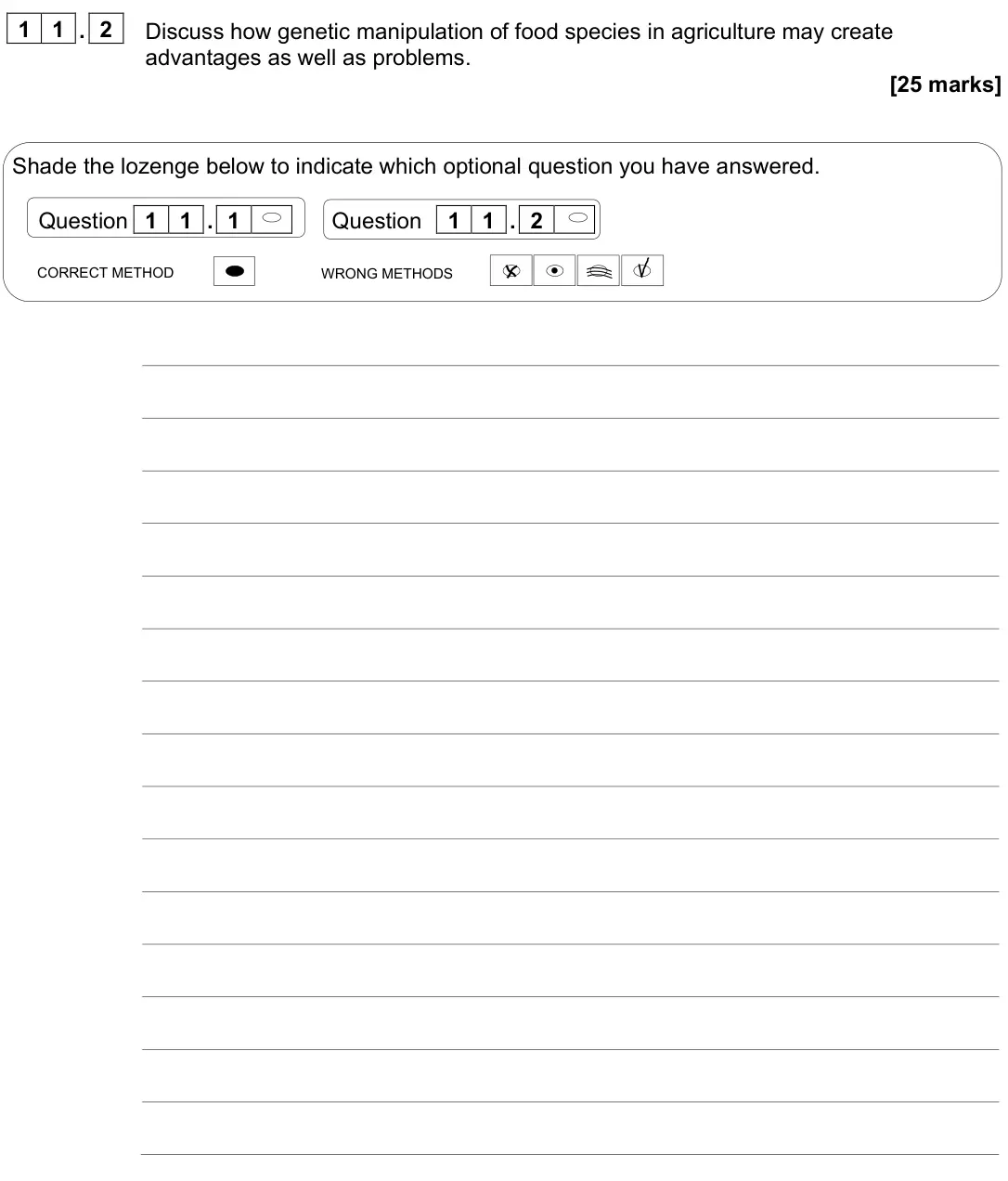
- November 2021, Paper 2, Q11.2 (25 marks): Discuss how genetic manipulation of food species in agriculture may create advantages as well as problems. [25 marks]
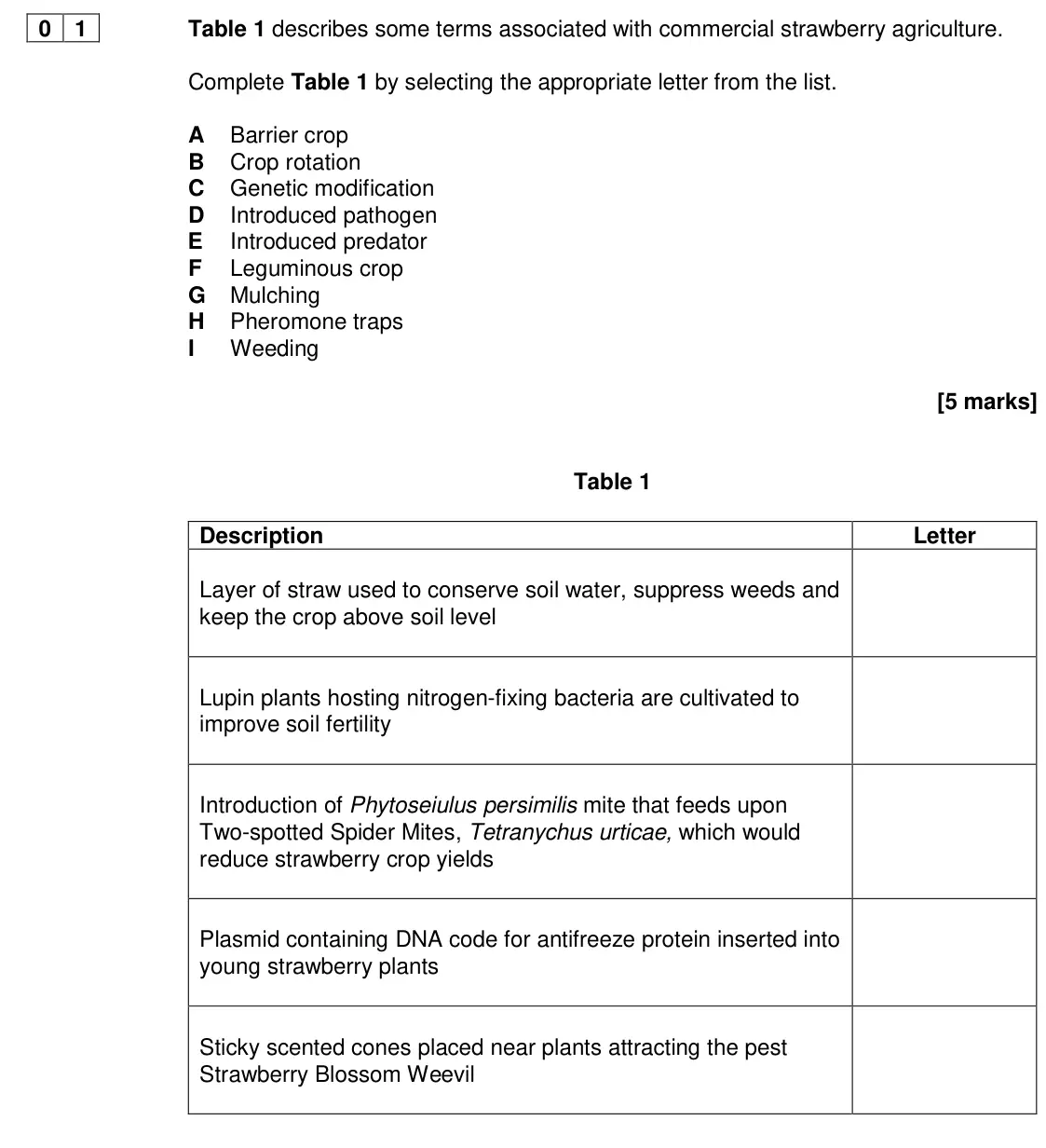
- Specimen, Paper 2, Q01 (5 marks): Table 1 describes some terms associated with commercial strawberry agriculture. Complete Table 1 by selecting the appropriate letter from the list. A Barrier cr
Questions, mark schemes and examiner’s reports are © AQA, from their published past papers. Plumi isn’t affiliated with any exam board. Want whole papers? AQA A-Level Environmental Science past papers.
The Plumi iPad app also offers exam-style questions with AI feedback on your handwritten working.