 plumi
Life processes in the biosphere and conservation planning: AQA A‑Level Environmental Science questions
AQA A-Level Environmental Science past-paper questions on 3.1.3 Life processes in the biosphere and conservation planning, 2020–2025, with mark schemes and examiner’s reports where available.
Getting your paper ready…
AQA A-Level Environmental ScienceLife processes in the biosphere and conservation planning551 questions
Paper
All papers
Exam
All years
Calculations
Loading the full question list…


All 19 questions on Life processes in the biosphere and conservation planning, as a list
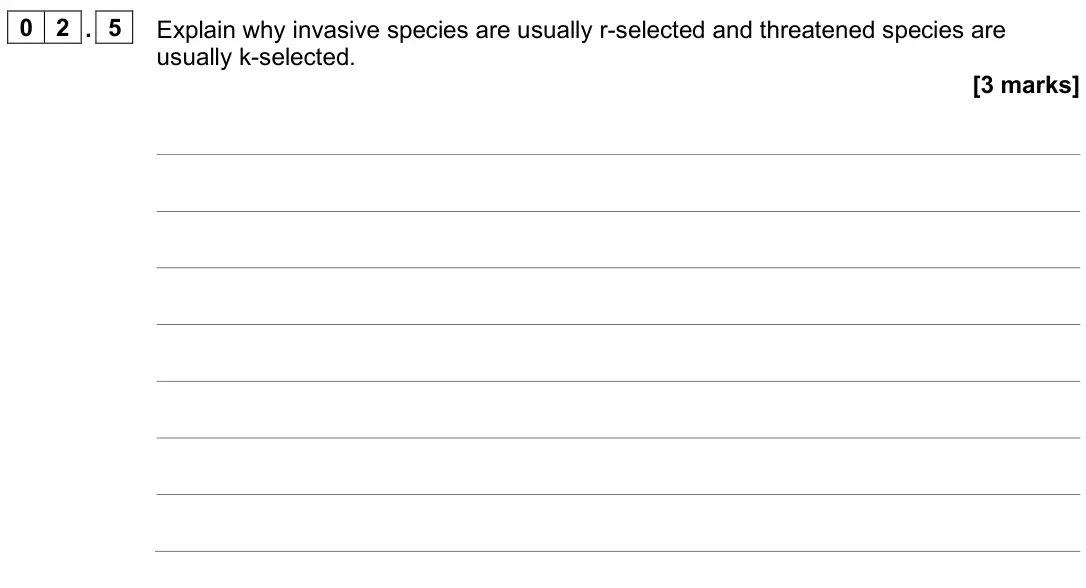
- June 2025, Paper 2, Q02.5 (3 marks): Explain why invasive species are usually r-selected and threatened species are usually k-selected. [3 marks]
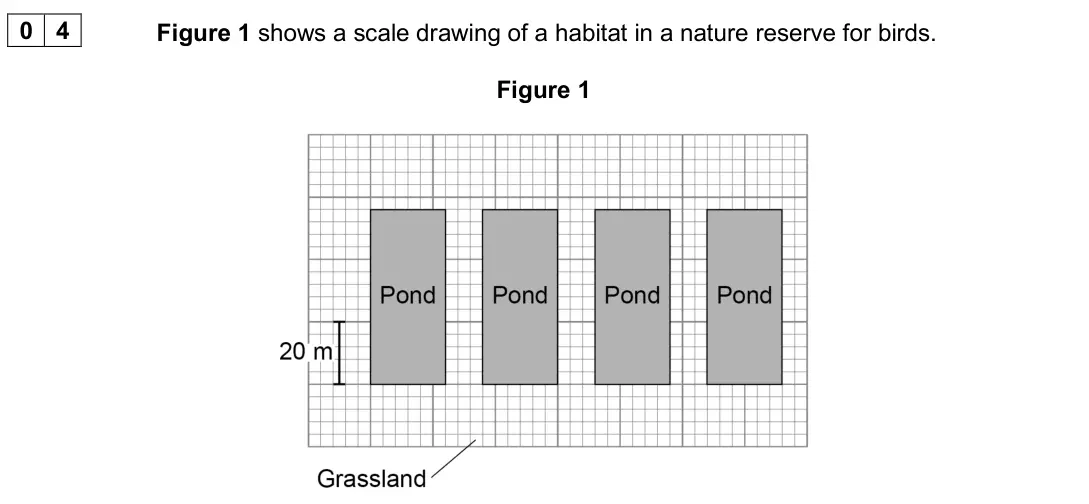
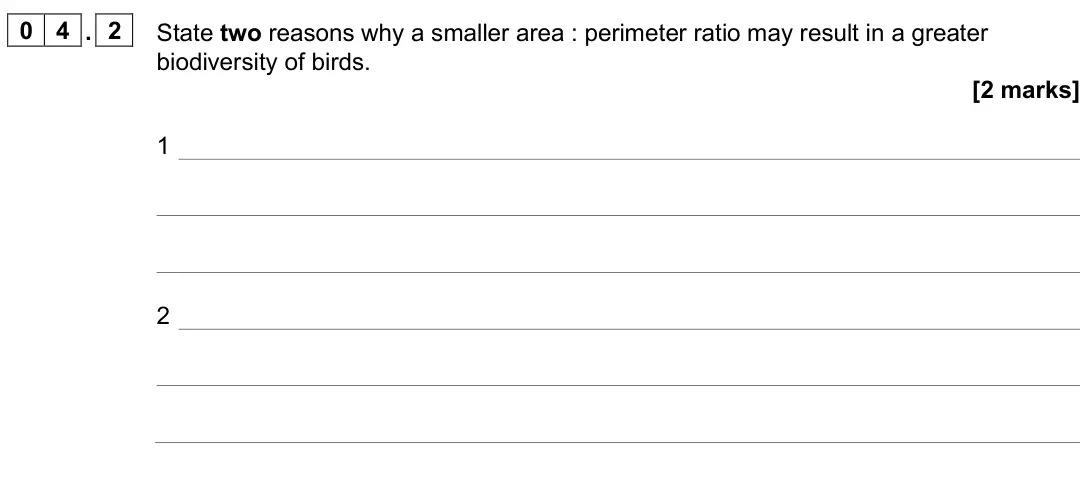
- June 2024, Paper 2, Q04.2 (2 marks): State two reasons why a smaller area : perimeter ratio may result in a greater biodiversity of birds. [2 marks] 1 2
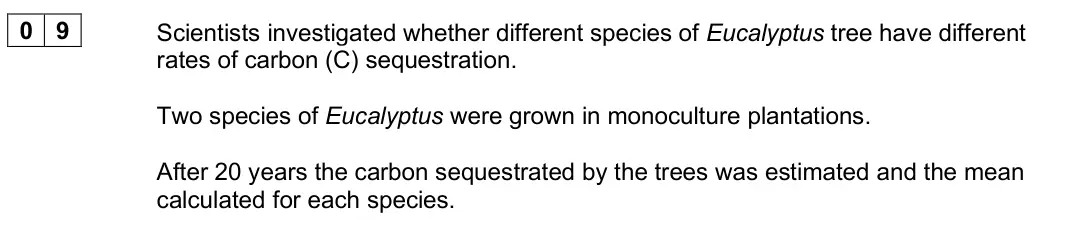
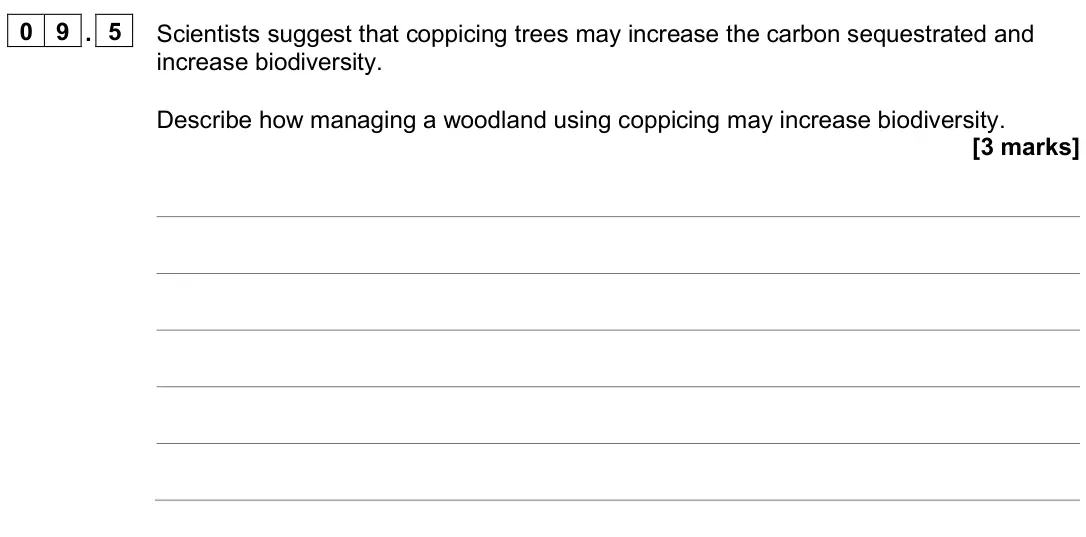
- June 2024, Paper 2, Q09.5 (3 marks): Scientists suggest that coppicing trees may increase the carbon sequestrated and increase biodiversity. Describe how managing a woodland using coppicing may inc
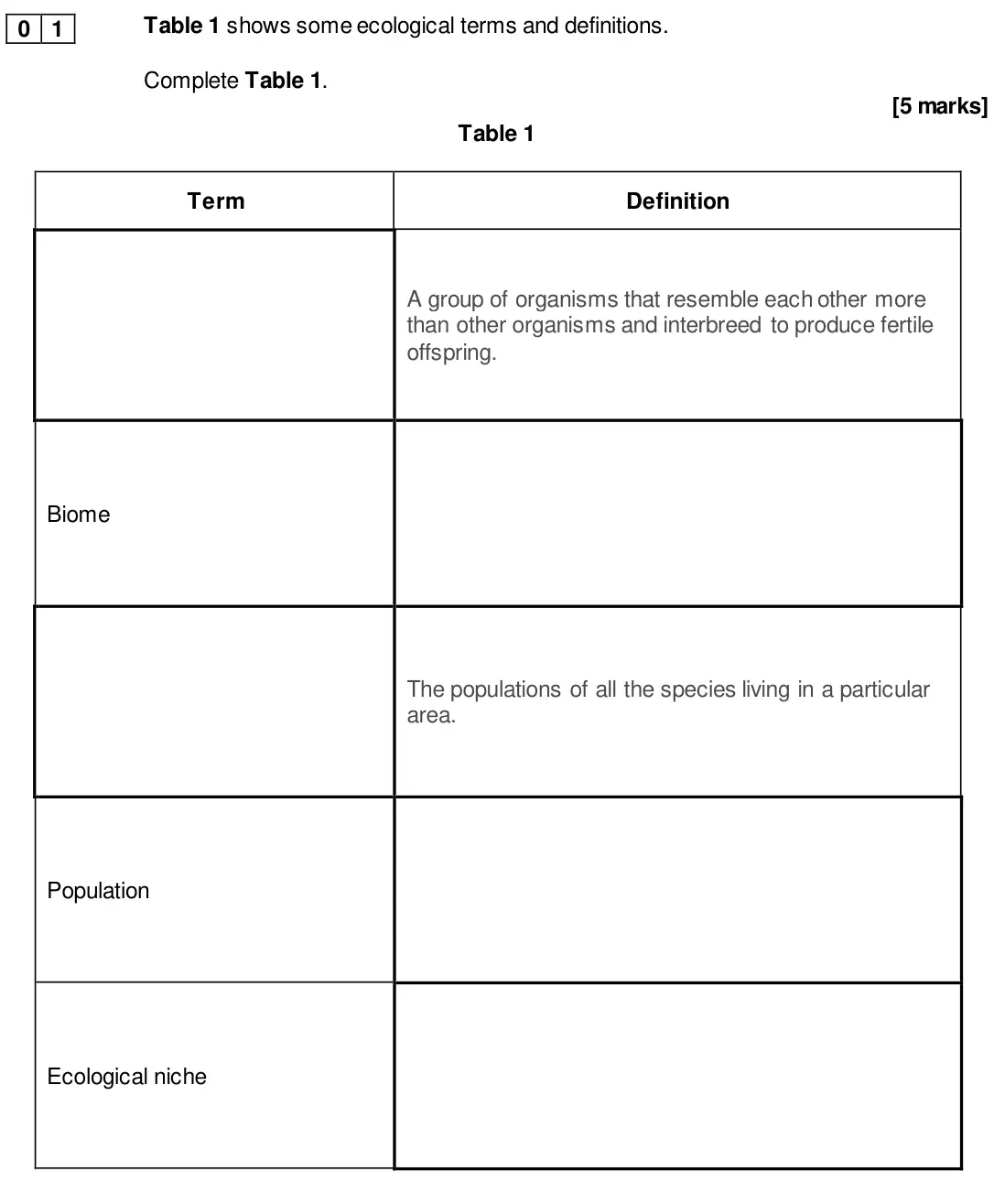
- June 2023, Paper 2, Q01 (5 marks): Table 1 shows some ecological terms and definitions. Complete Table 1. [5 marks] Table 1 Term Definition A group of organisms that resemble each other more than
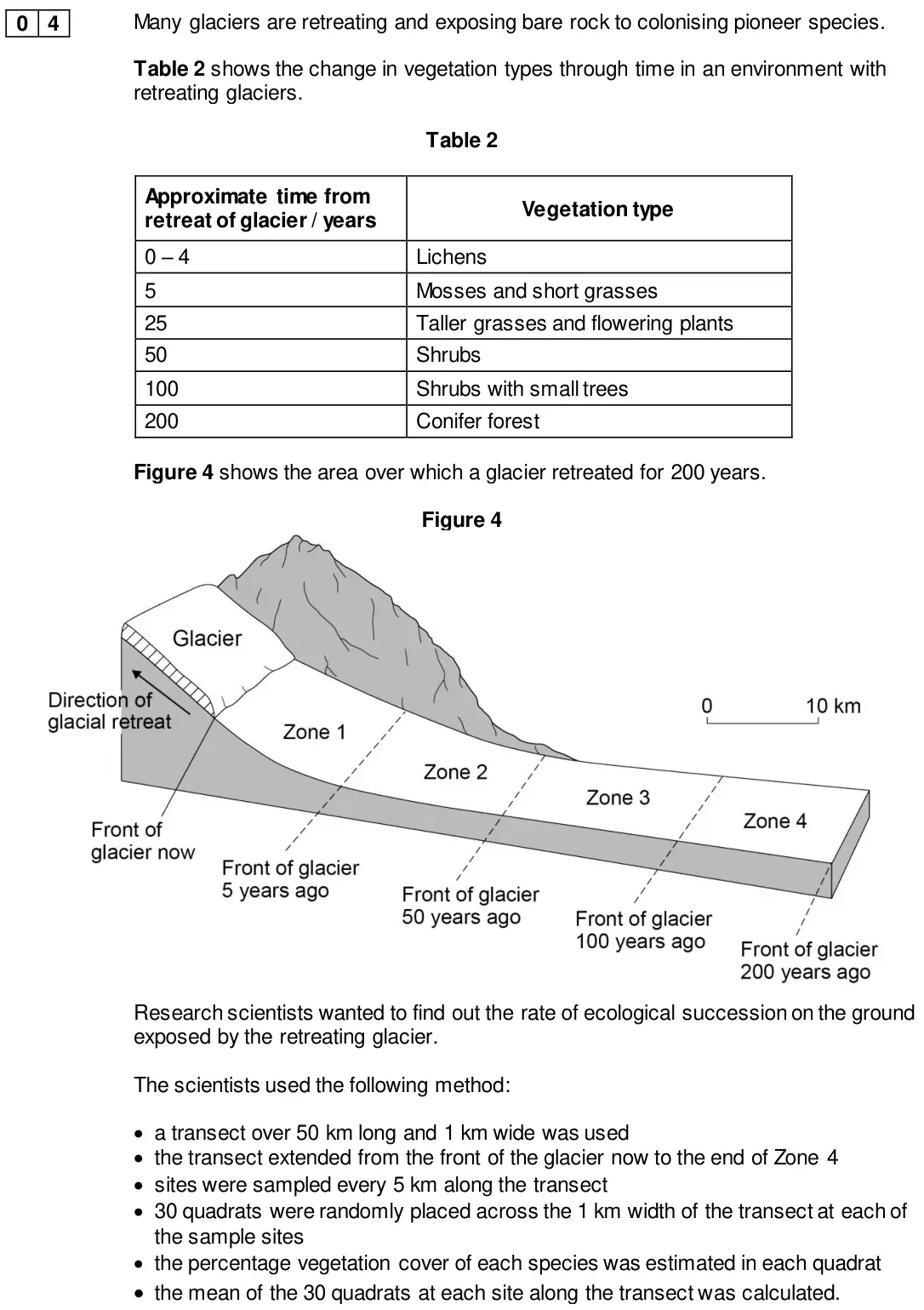
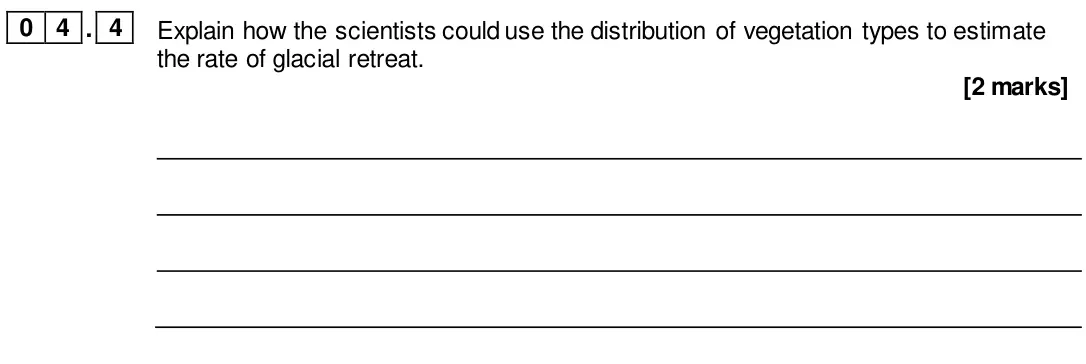
- June 2023, Paper 2, Q04.4 (2 marks): Explain how the scientists could use the distribution of vegetation types to estimate the rate of glacial retreat. [2 marks]
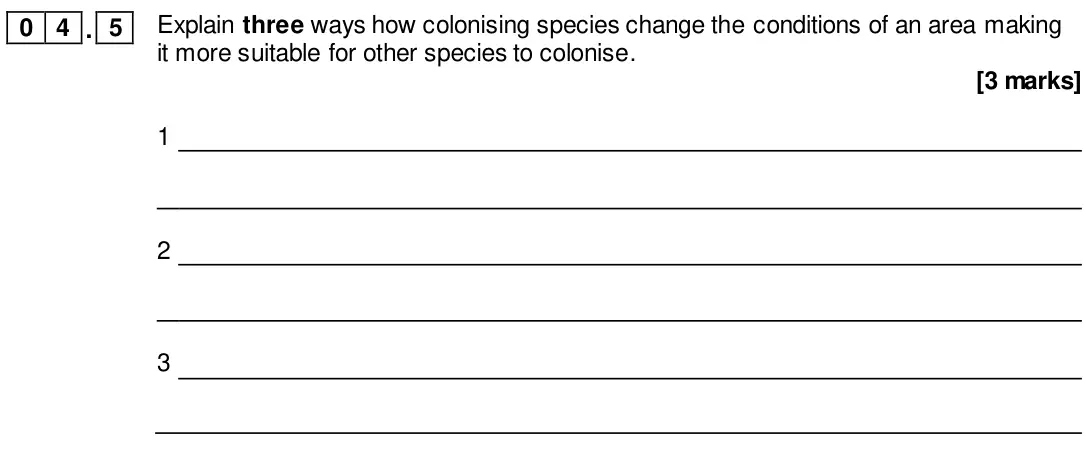
- June 2023, Paper 2, Q04.5 (3 marks): Explain three ways how colonising species change the conditions of an area making it more suitable for other species to colonise. [3 marks] 1 2 3
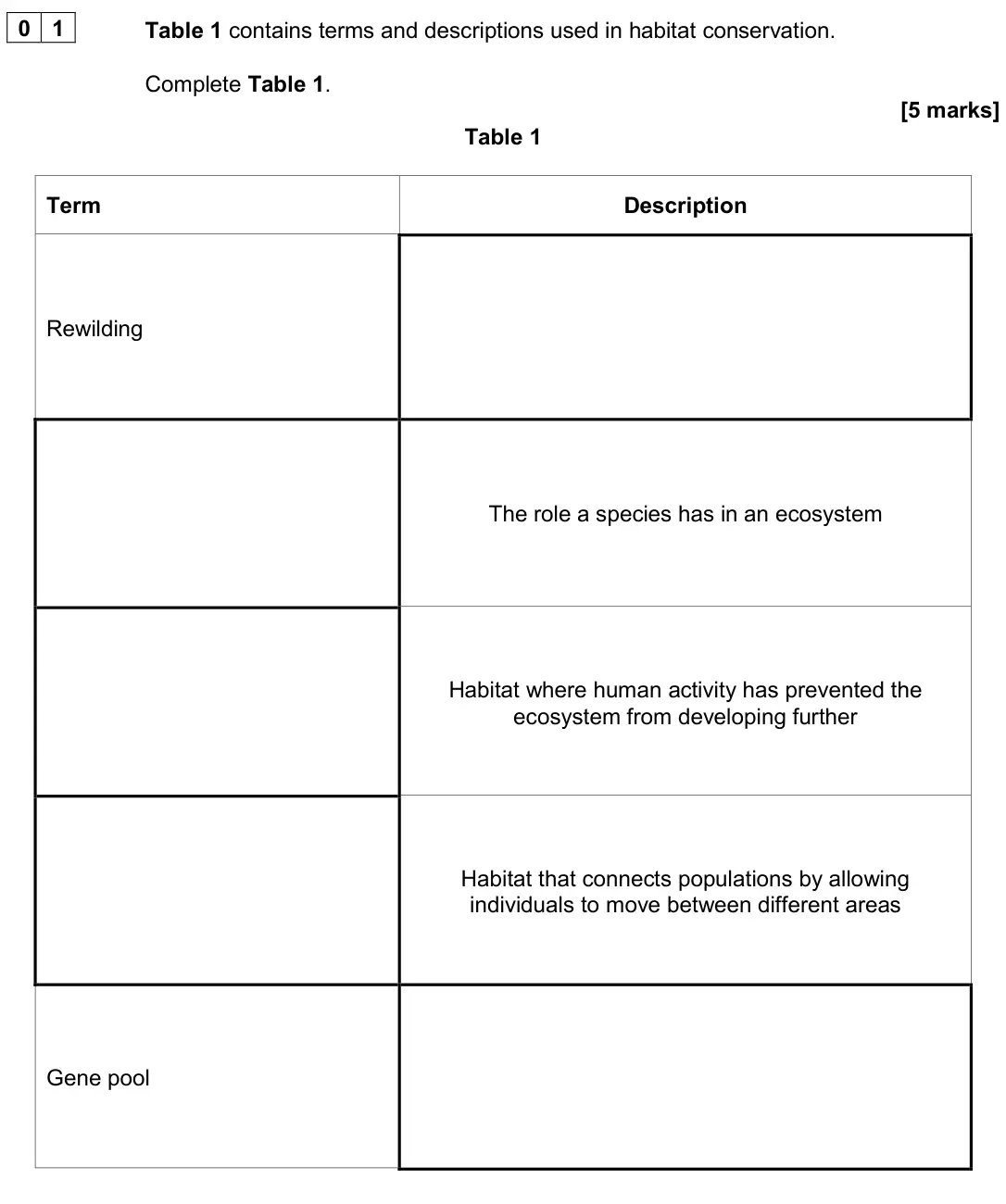
- June 2022, Paper 2, Q01 (5 marks): Table 1 contains terms and descriptions used in habitat conservation. Complete Table 1. [5 marks] Table 1 Term Description Rewilding The role a species has in a
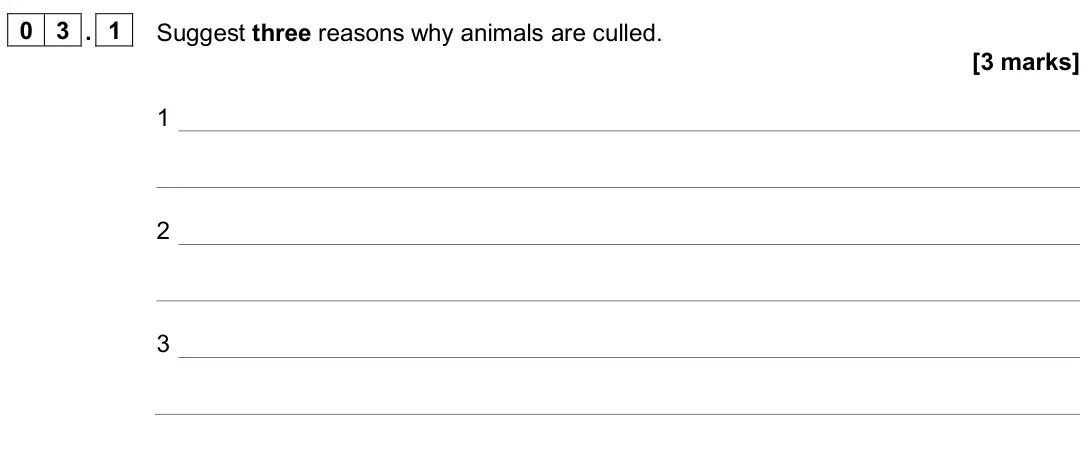
- June 2022, Paper 2, Q03.1 (3 marks): Suggest three reasons why animals are culled. [3 marks] 1 2 3
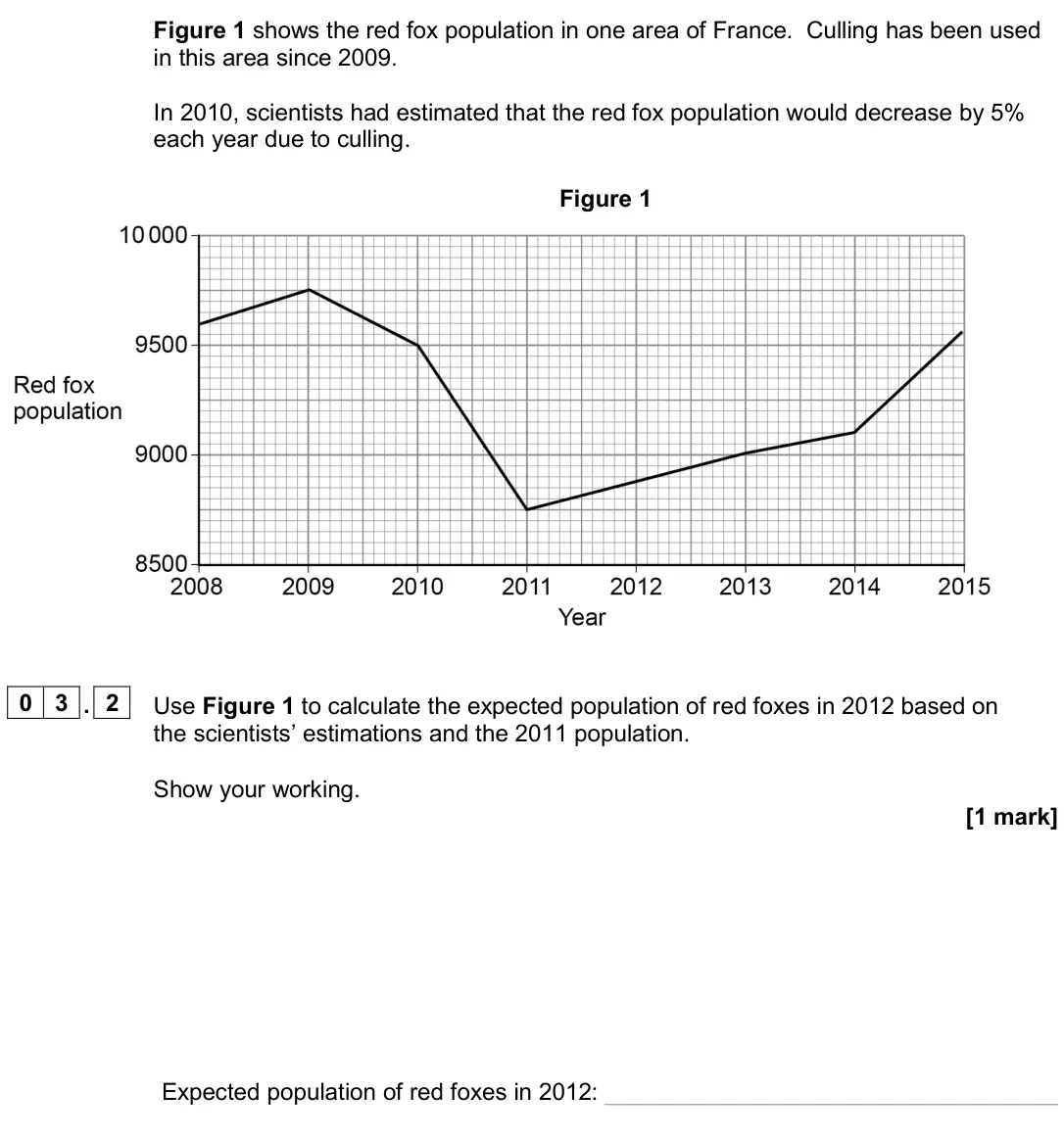
- June 2022, Paper 2, Q03.2 (1 mark): Use Figure 1 to calculate the expected population of red foxes in 2012 based on the scientists’ estimations and the 2011 population. Show your working. [1 mark]
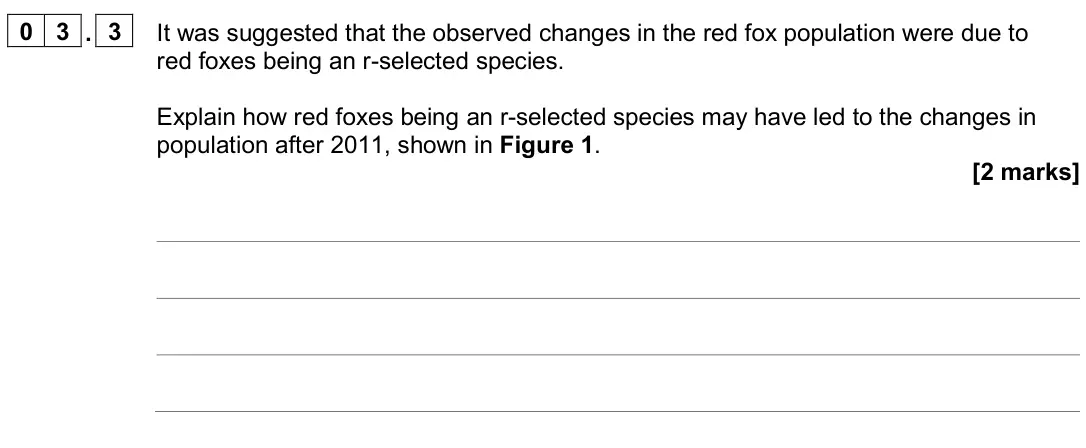
- June 2022, Paper 2, Q03.3 (2 marks): It was suggested that the observed changes in the red fox population were due to red foxes being an r-selected species. Explain how red foxes being an r-selecte
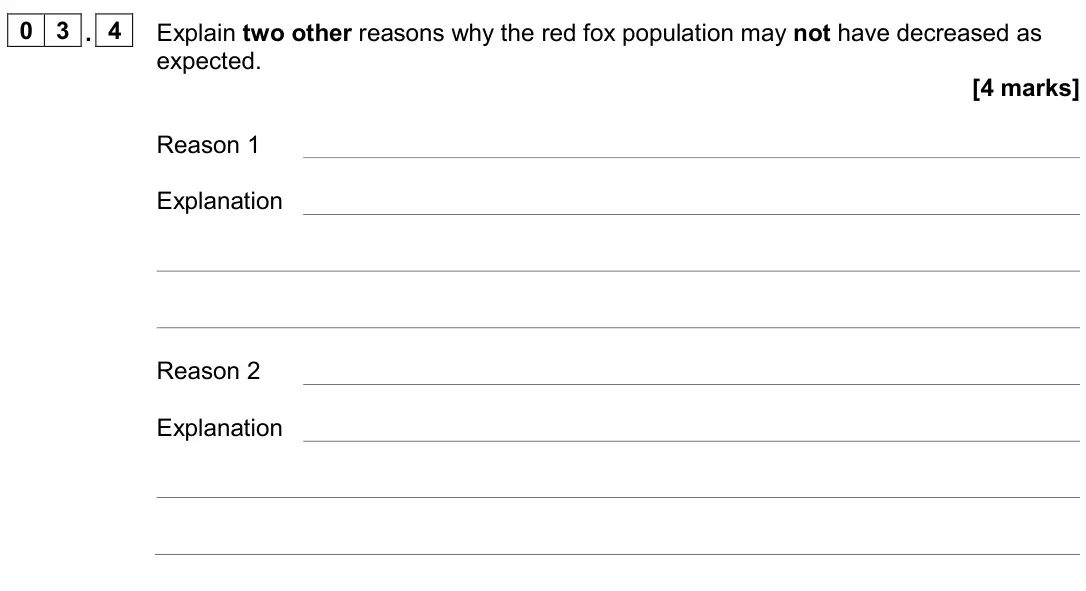
- June 2022, Paper 2, Q03.4 (4 marks): Explain two other reasons why the red fox population may not have decreased as expected. [4 marks] Reason 1 Explanation Reason 2 Explanation
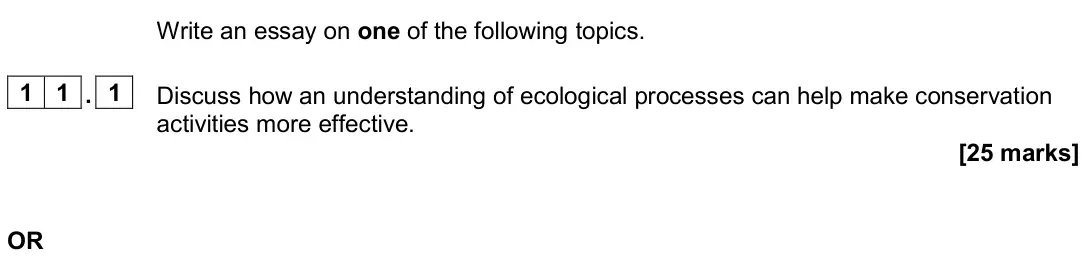
- June 2022, Paper 2, Q11.1 (25 marks): Discuss how an understanding of ecological processes can help make conservation activities more effective. [25 marks] OR
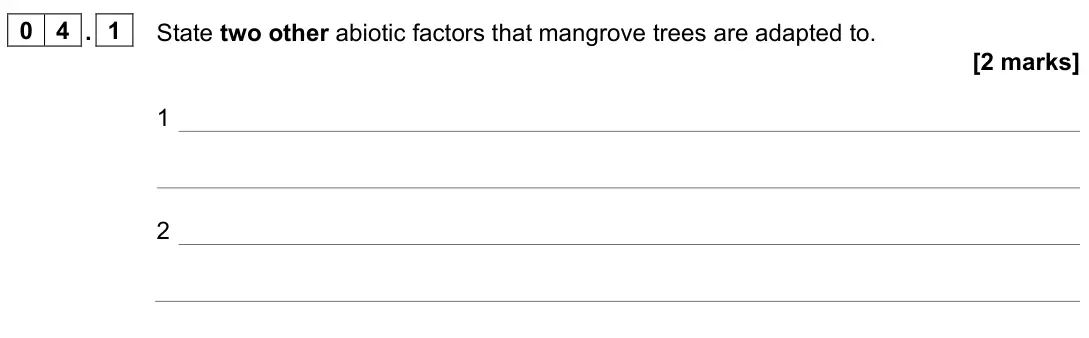
- November 2021, Paper 2, Q04.1 (2 marks): State two other abiotic factors that mangrove trees are adapted to. [2 marks] 1 2
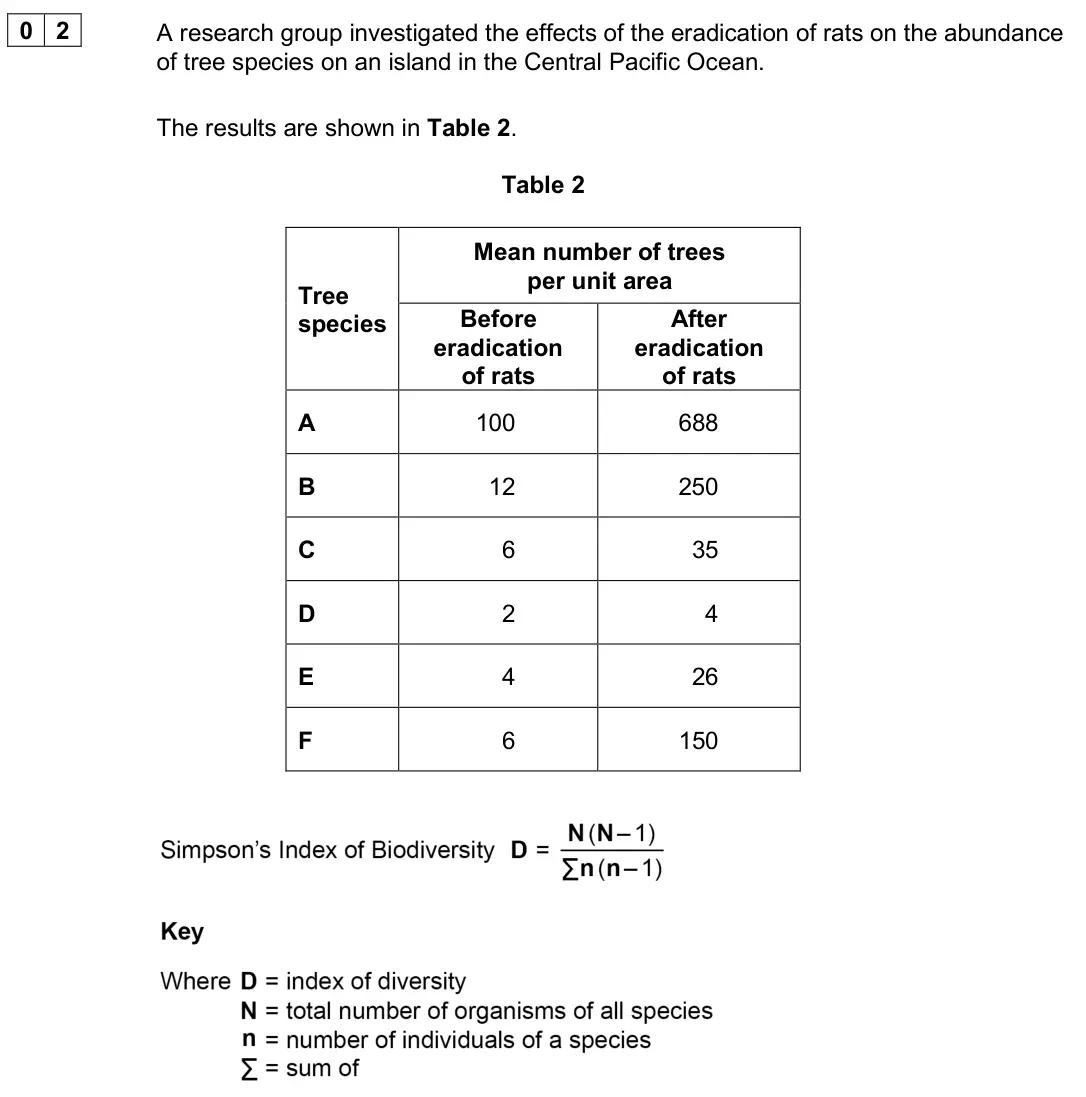
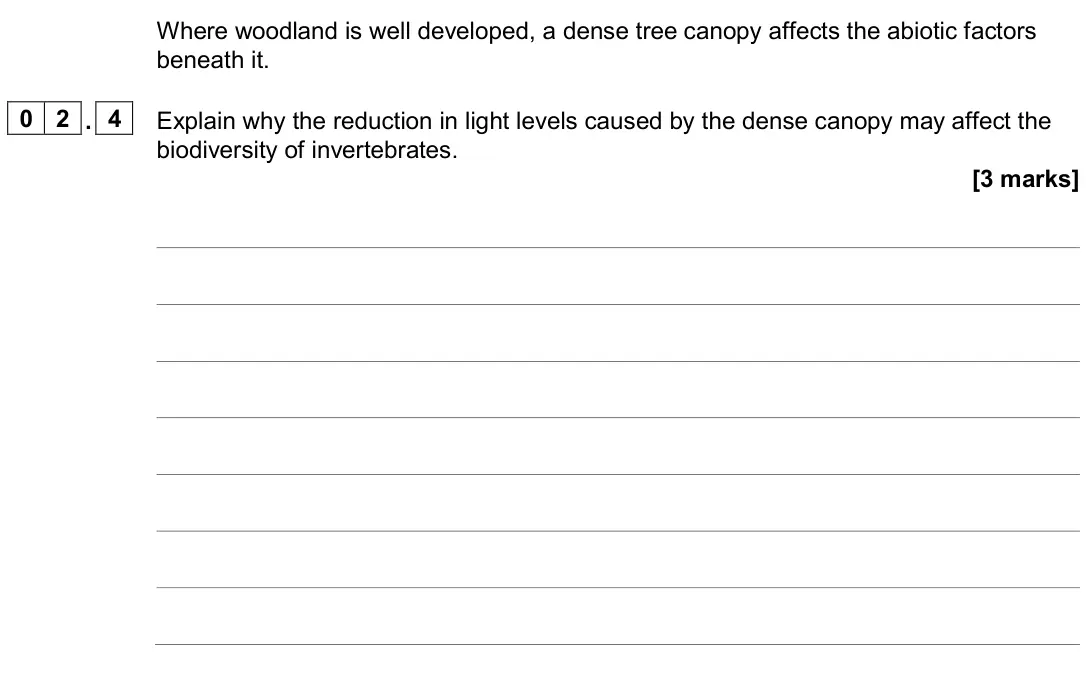
- November 2020, Paper 2, Q02.4 (3 marks): Explain why the reduction in light levels caused by the dense canopy may affect the biodiversity of invertebrates. [3 marks]
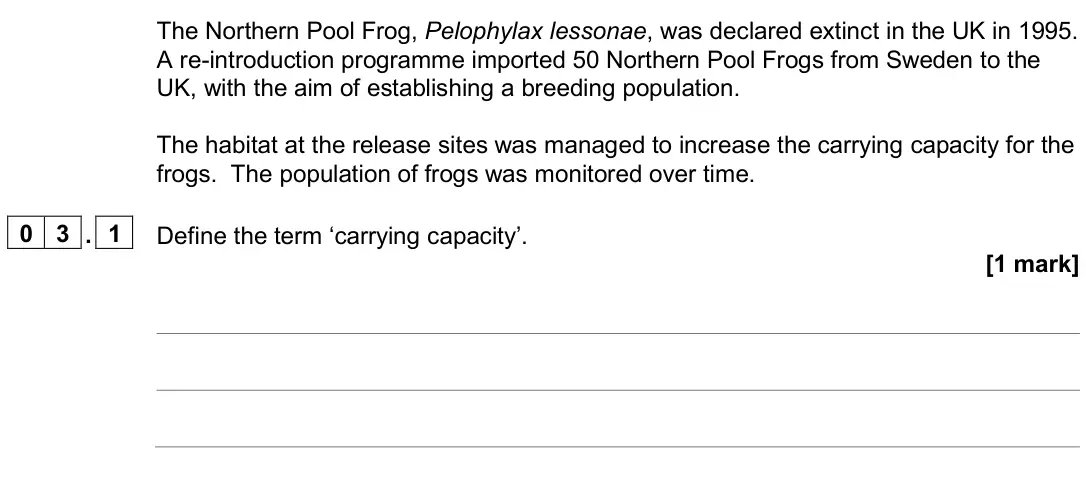
- November 2020, Paper 2, Q03.1 (1 mark): Define the term ‘carrying capacity’. [1 mark]
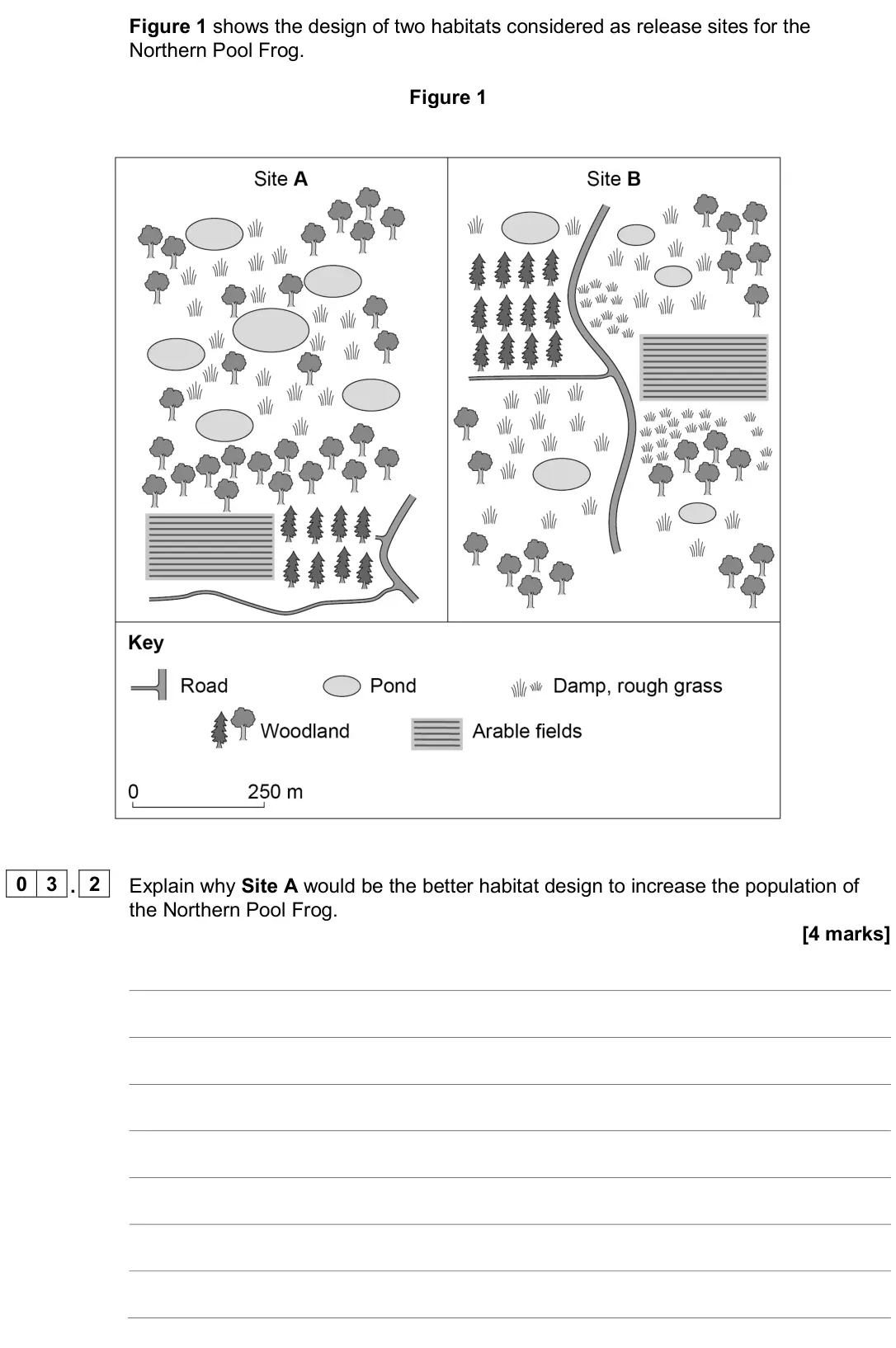
- November 2020, Paper 2, Q03.2 (4 marks): Explain why Site A would be the better habitat design to increase the population of the Northern Pool Frog. [4 marks]
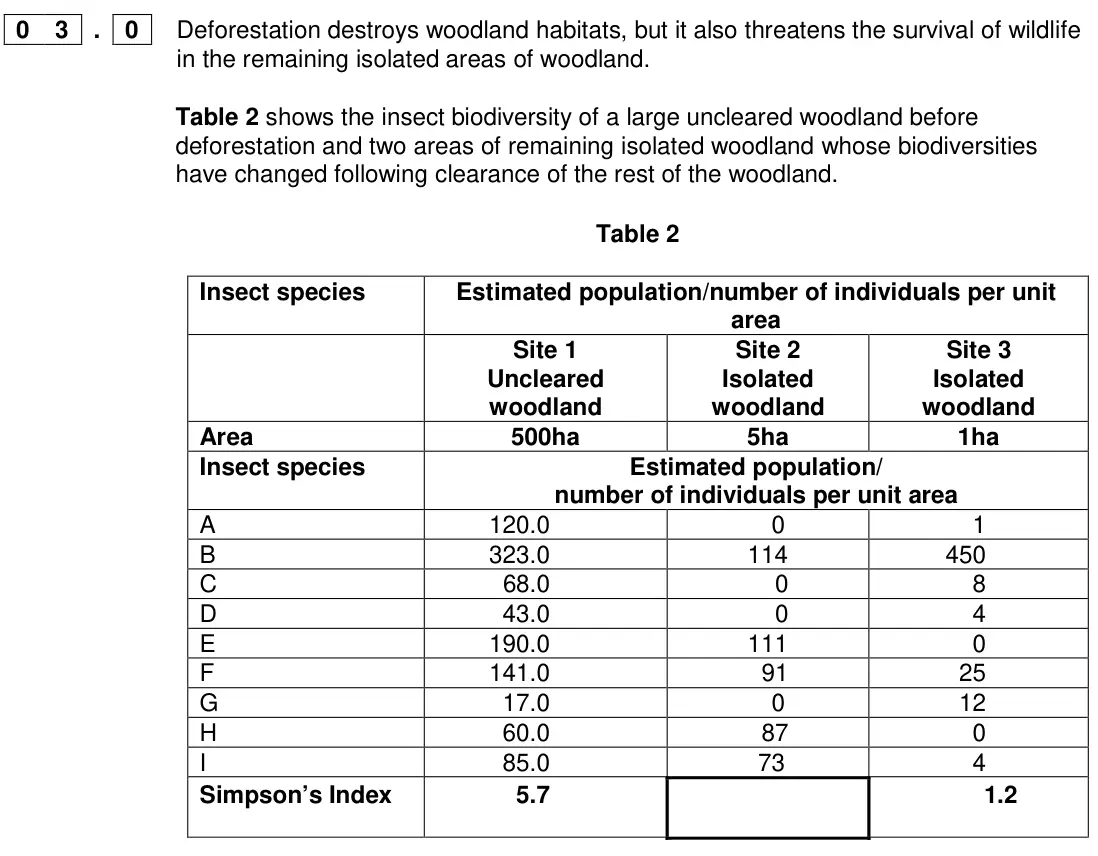
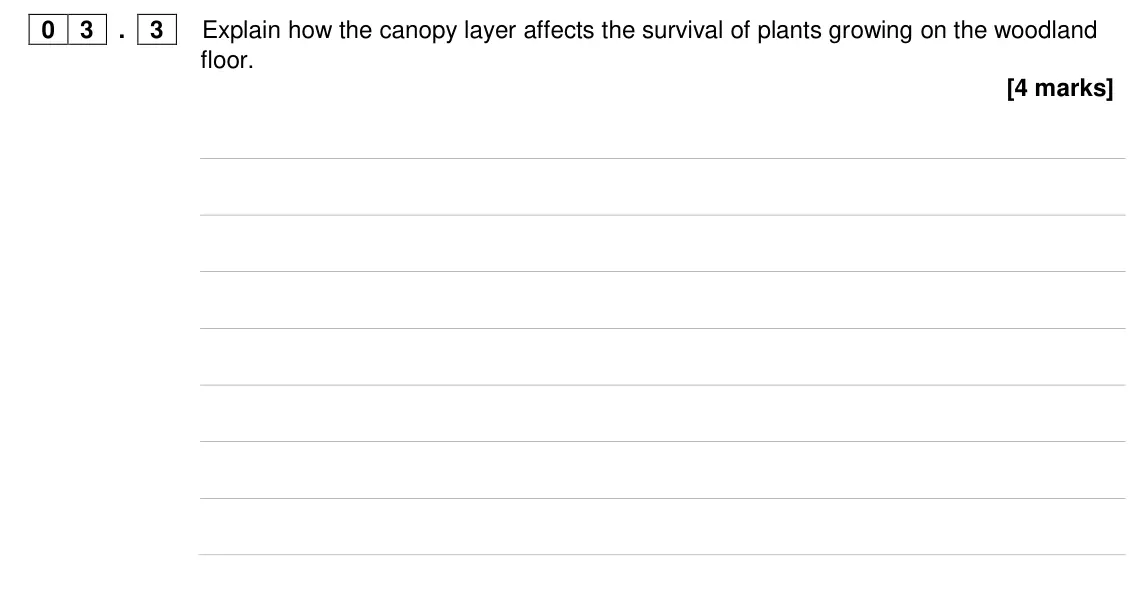
- Specimen, Paper 2, Q03.3 (4 marks): Explain how the canopy layer affects the survival of plants growing on the woodland floor. [4 marks]
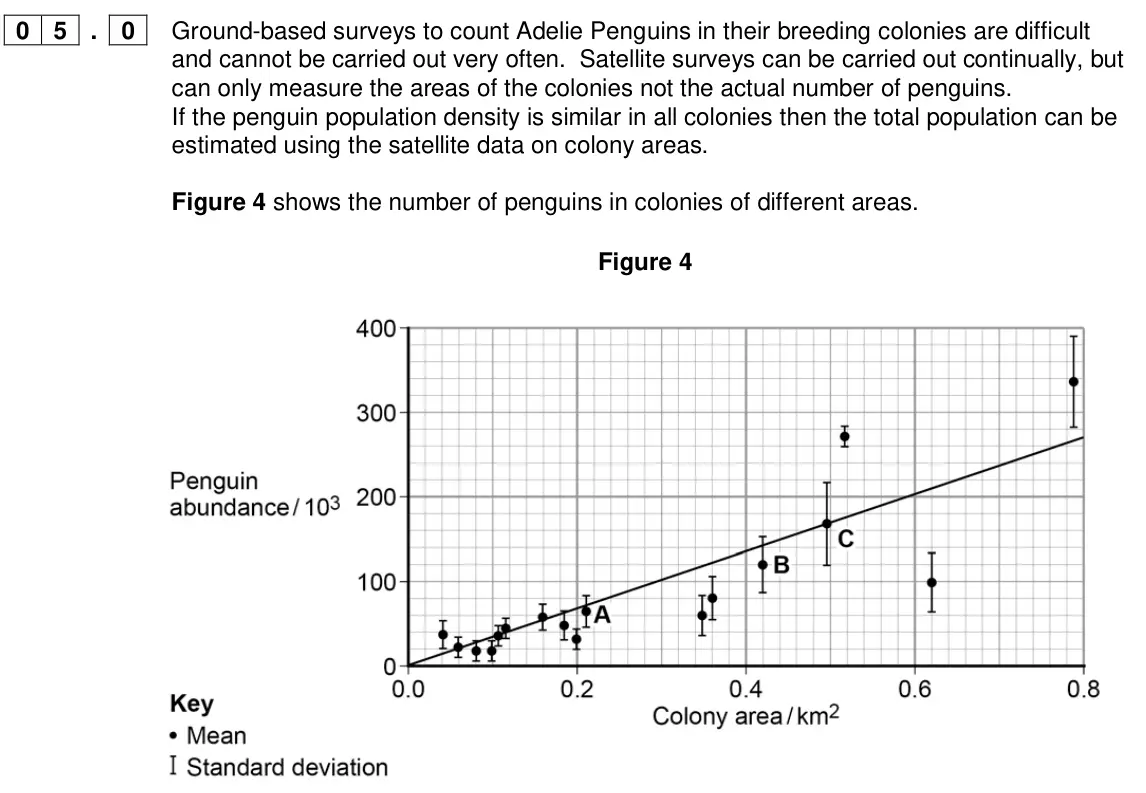
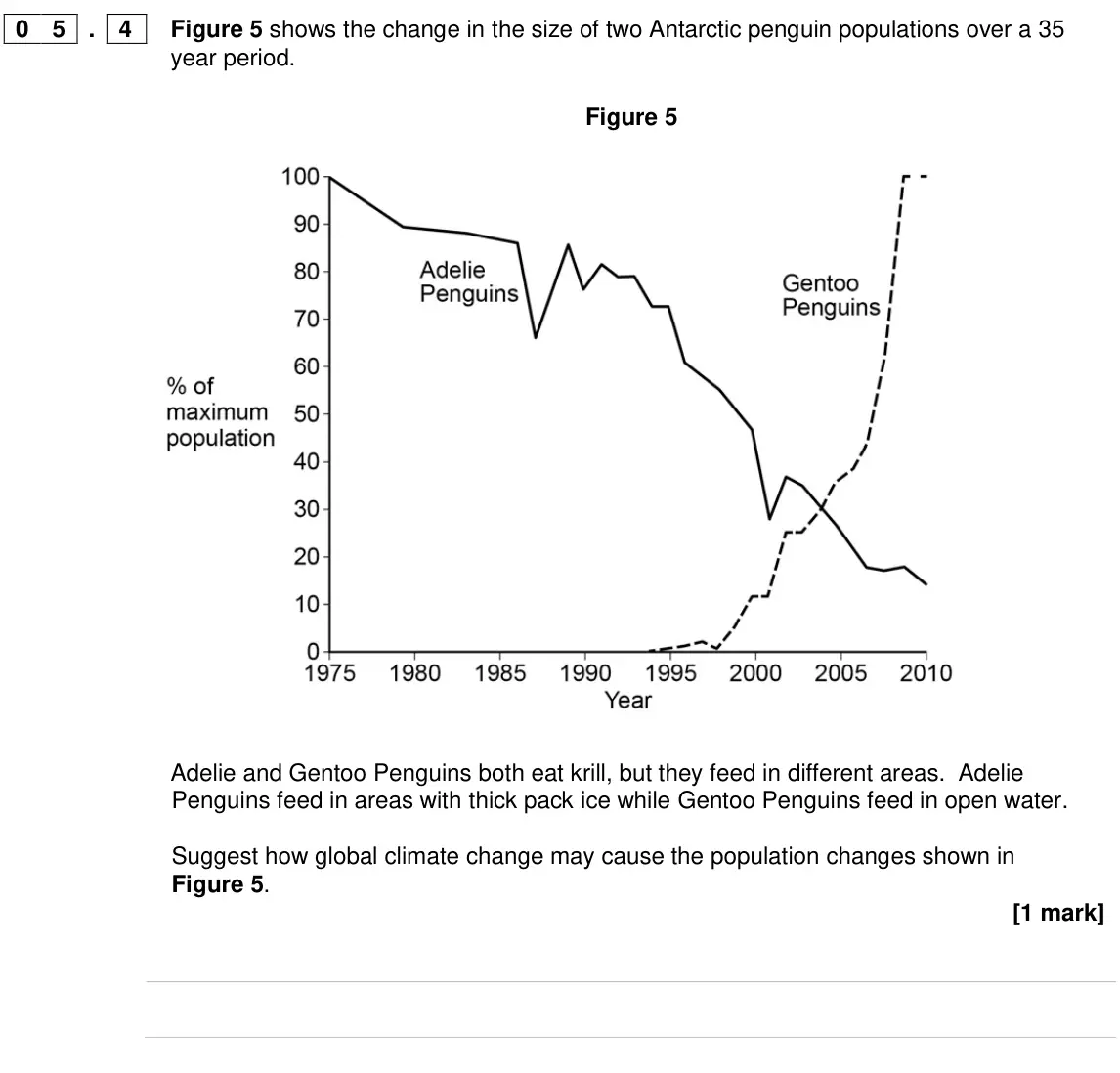
- Specimen, Paper 2, Q05.4 (1 mark): Figure 5 shows the change in the size of two Antarctic penguin populations over a 35 year period. Figure 5 Adelie and Gentoo Penguins both eat krill, but they f
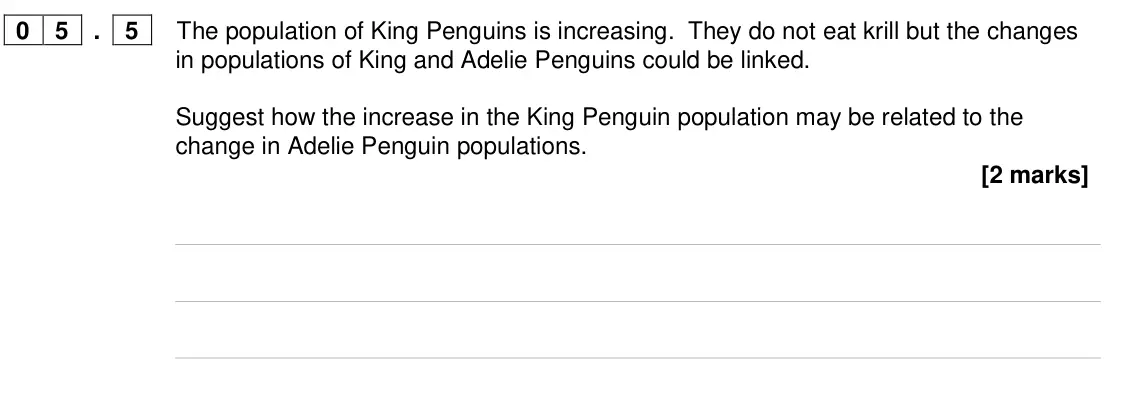
- Specimen, Paper 2, Q05.5 (2 marks): The population of King Penguins is increasing. They do not eat krill but the changes in populations of King and Adelie Penguins could be linked. Suggest how the
Questions, mark schemes and examiner’s reports are © AQA, from their published past papers. Plumi isn’t affiliated with any exam board. Want whole papers? AQA A-Level Environmental Science past papers.
The Plumi iPad app also offers exam-style questions with AI feedback on your handwritten working.