 plumi
Agroecosystems: AQA A‑Level Environmental Science questions
AQA A-Level Environmental Science past-paper questions on 3.5.1.1 Agroecosystems, 2020–2025, with mark schemes and examiner’s reports where available.
Getting your paper ready…
AQA A-Level Environmental ScienceAgroecosystems551 questions
Paper
All papers
Exam
All years
Calculations
Loading the full question list…

All 28 questions on Agroecosystems, as a list
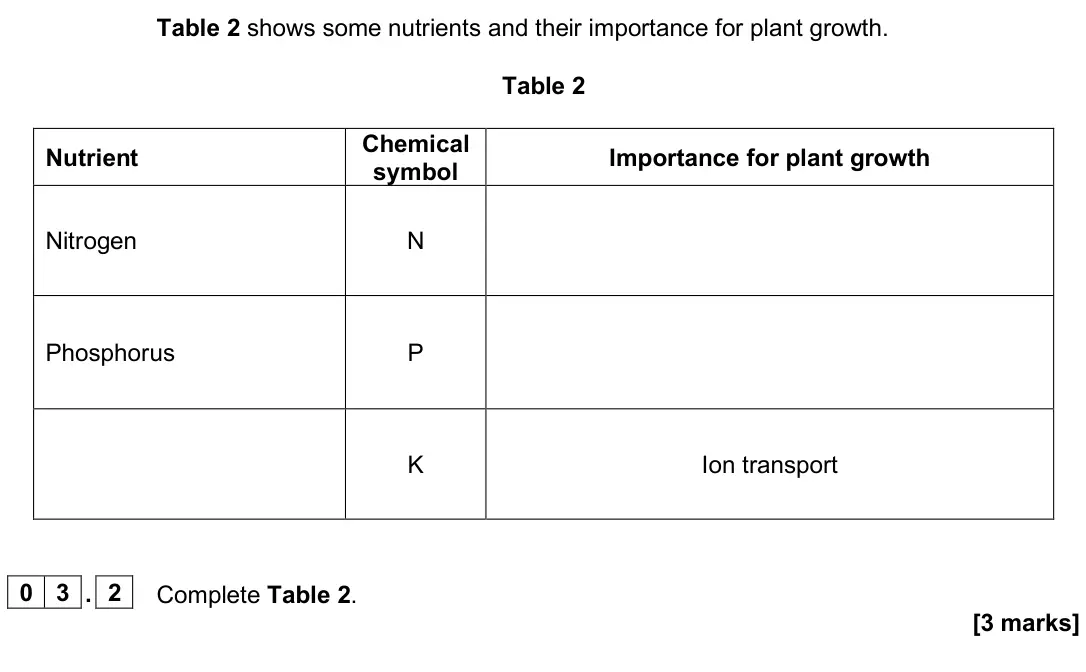
- June 2025, Paper 2, Q03.2 (3 marks): Complete Table 2. [3 marks]
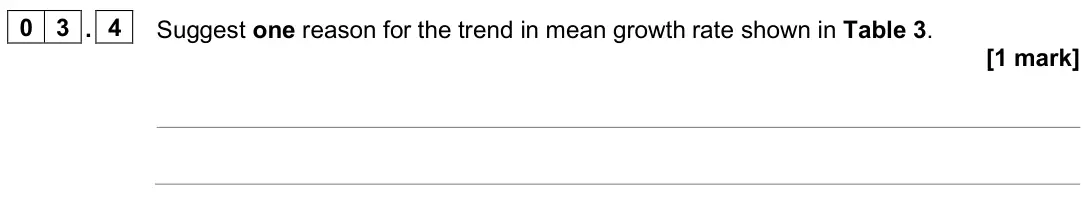
- June 2025, Paper 2, Q03.4 (1 mark): Suggest one reason for the trend in mean growth rate shown in Table 3. [1 mark]
- June 2025, Paper 2, Q11.1 (25 marks): Compare intensive agriculture and extensive agriculture in reference to agricultural energetics and environmental impacts. [25 marks] OR
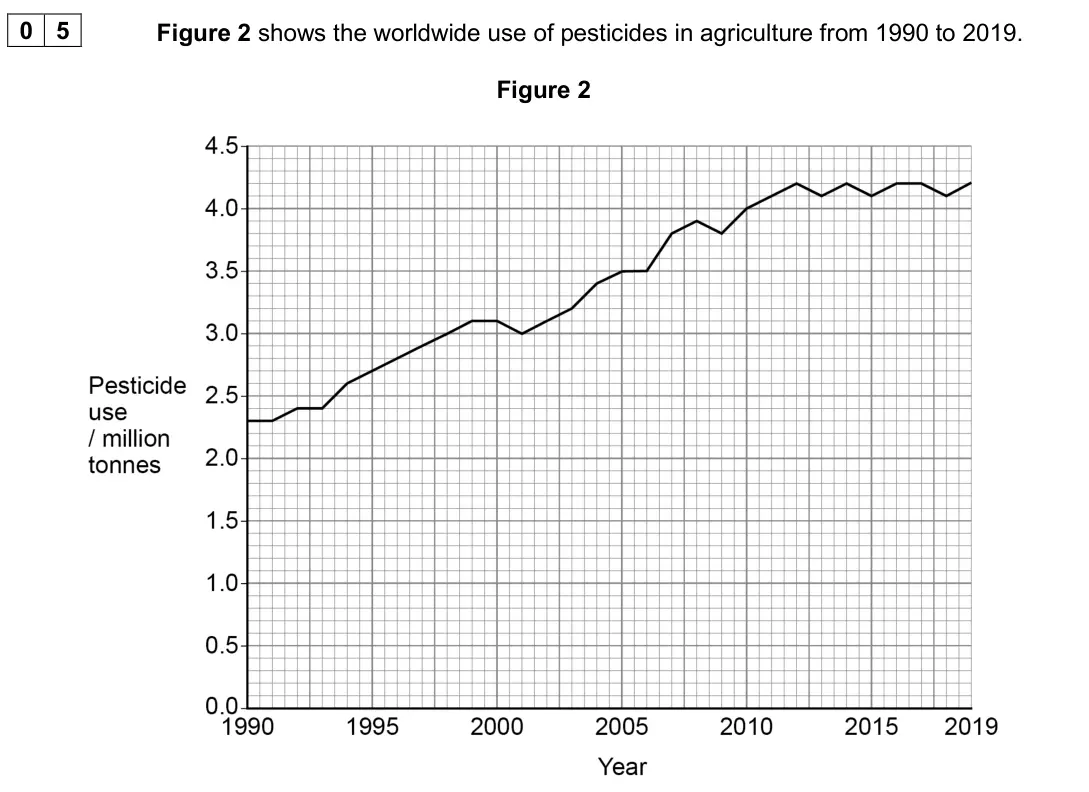
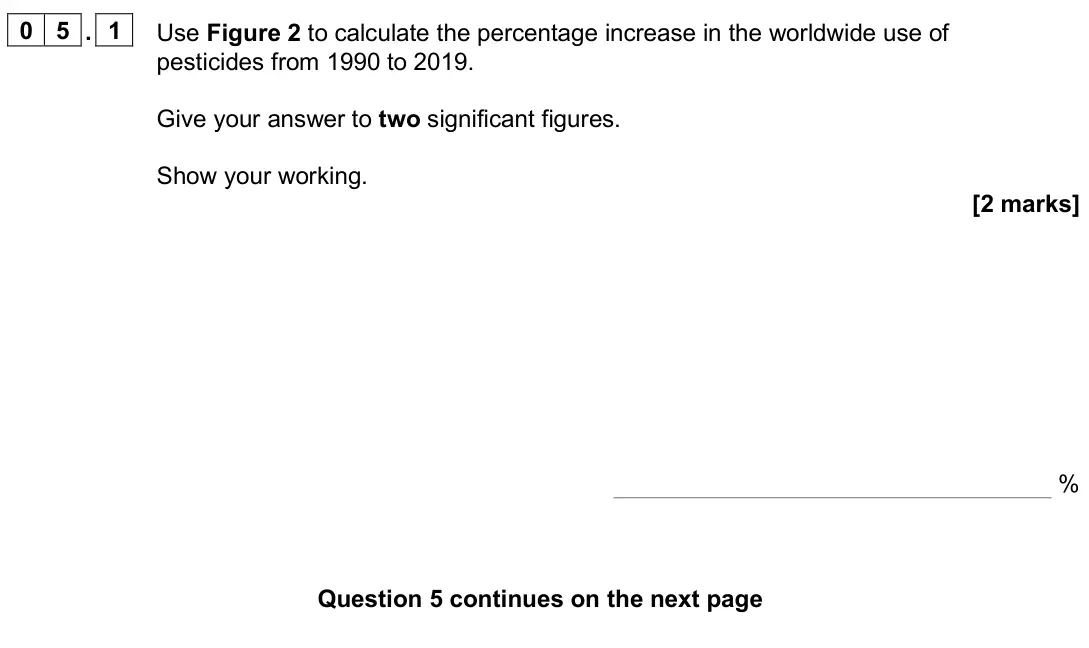
- June 2024, Paper 2, Q05.1 (2 marks): Use Figure 2 to calculate the percentage increase in the worldwide use of pesticides from 1990 to 2019. Give your answer to two significant figures. Show your w
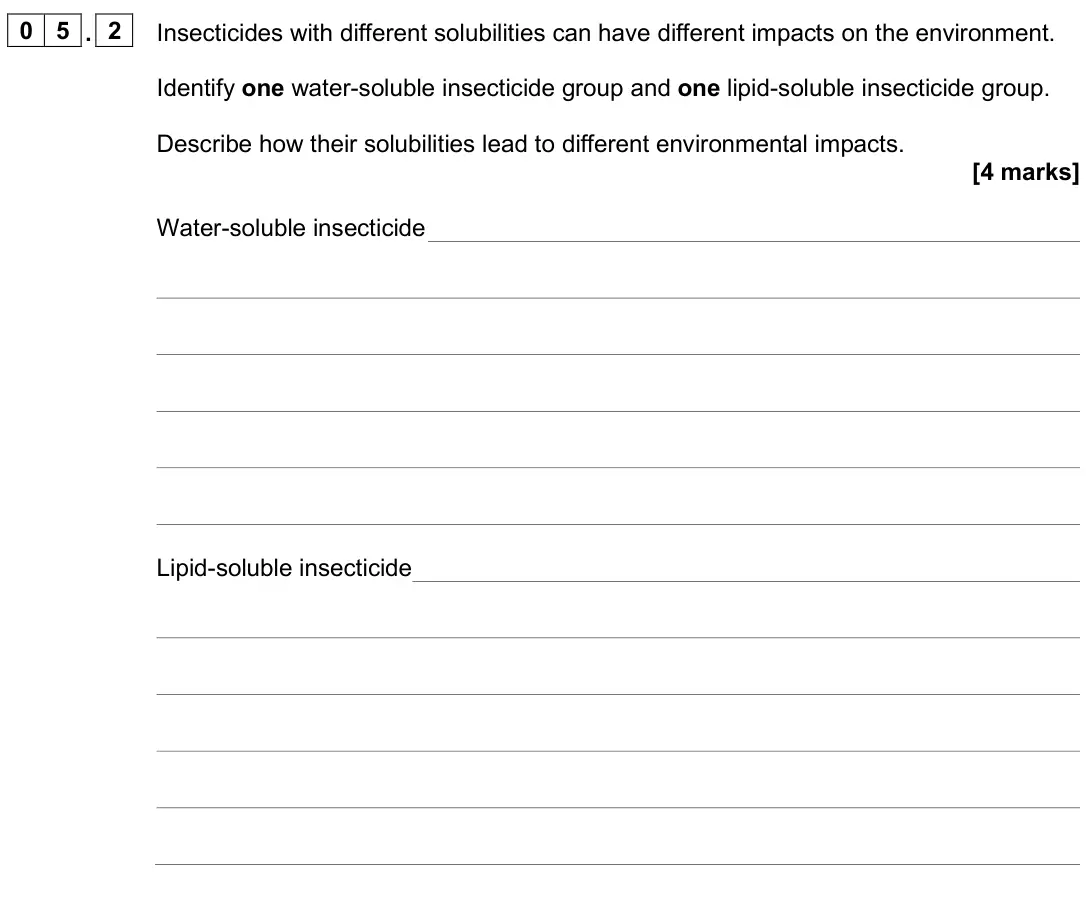
- June 2024, Paper 2, Q05.2 (4 marks): Insecticides with different solubilities can have different impacts on the environment. Identify one water-soluble insecticide group and one lipid-soluble insec
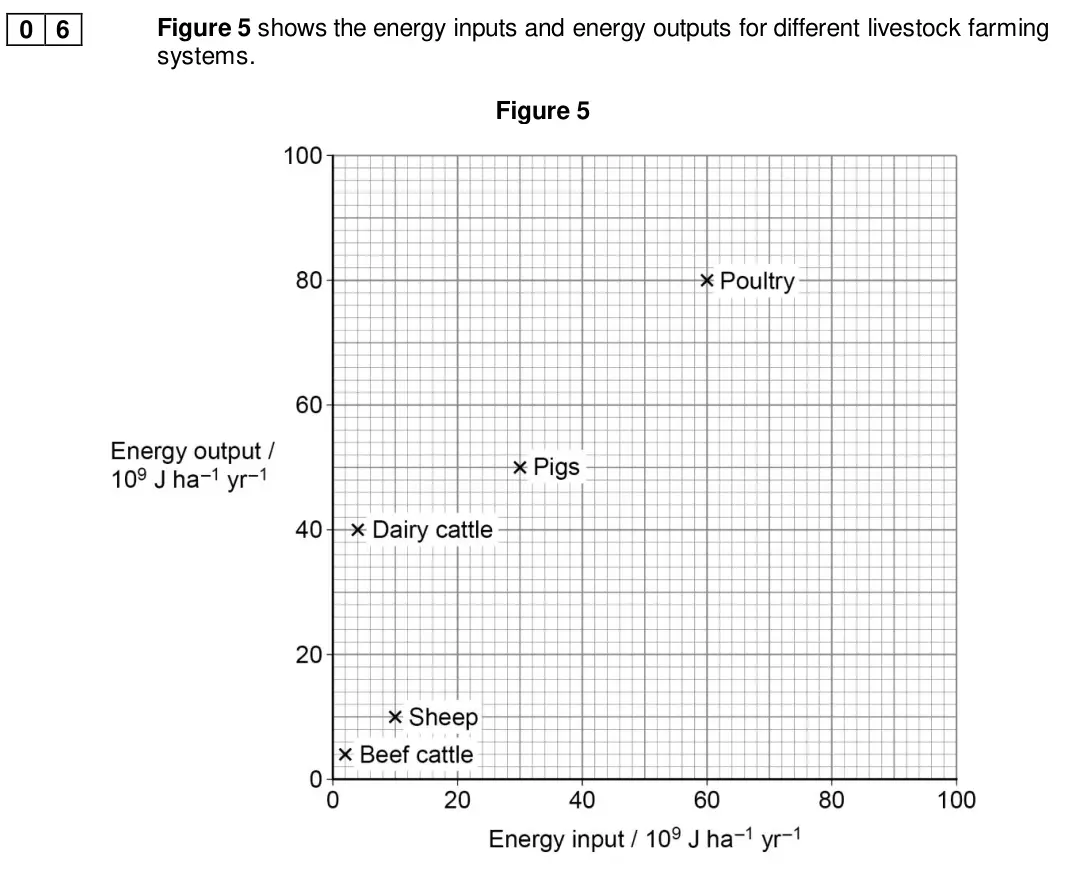
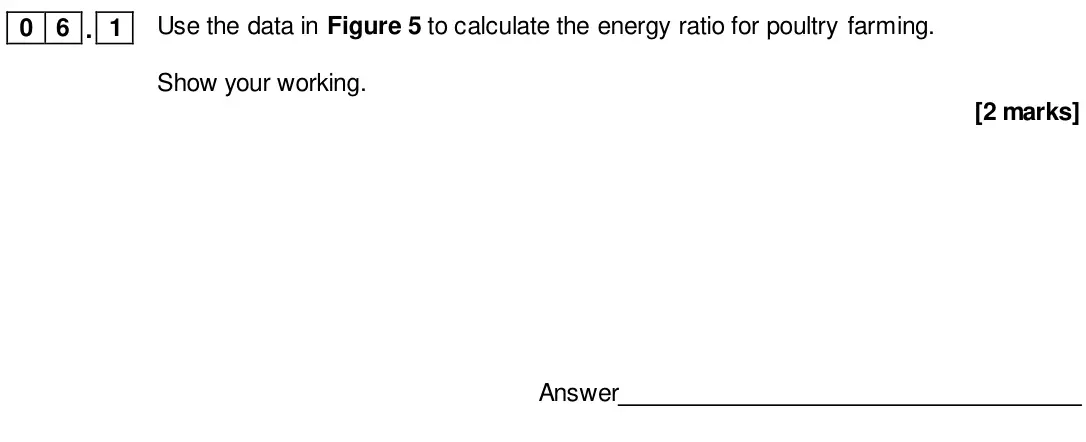
- June 2023, Paper 2, Q06.1 (2 marks): Use the data in Figure 5 to calculate the energy ratio for poultry farming. Show your working. [2 marks] Answer
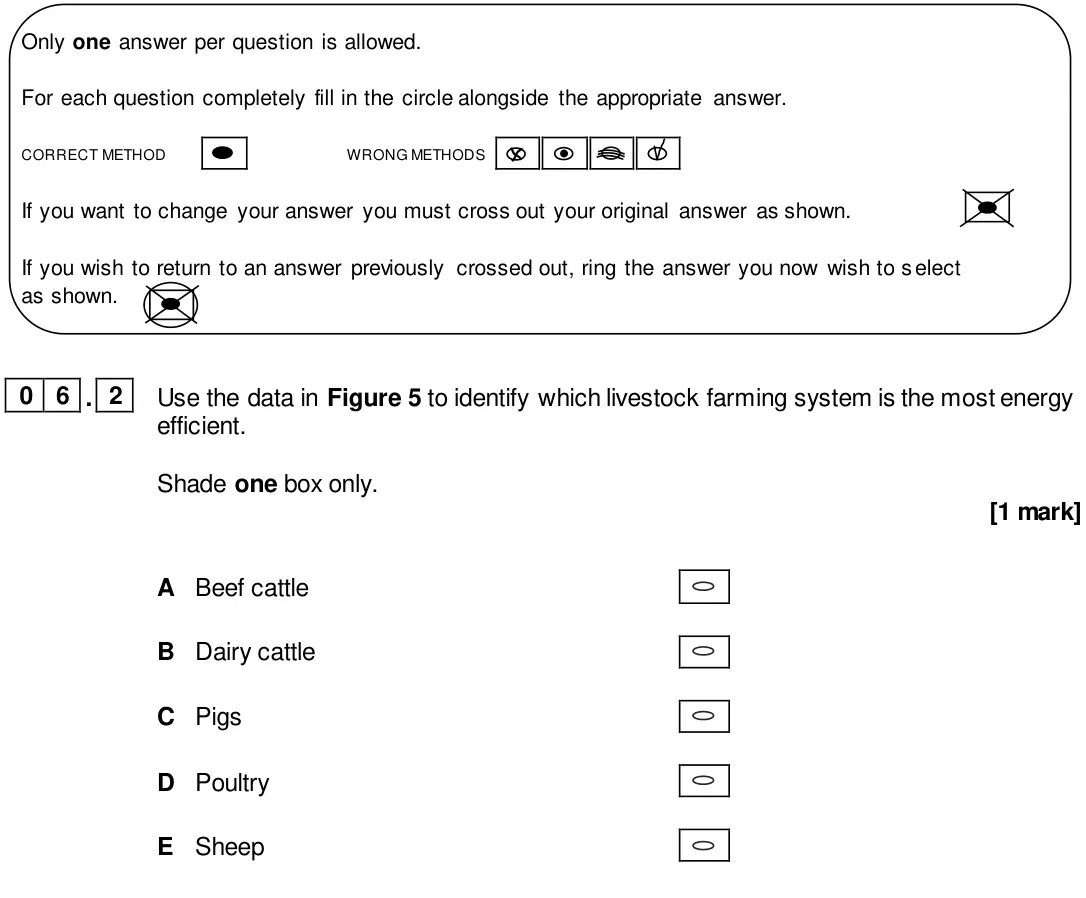
- June 2023, Paper 2, Q06.2 (1 mark): Use the data in Figure 5 to identify which livestock farming system is the most energy efficient. Shade one box only. [1 mark] A Beef cattle B Dairy cattle C Pi
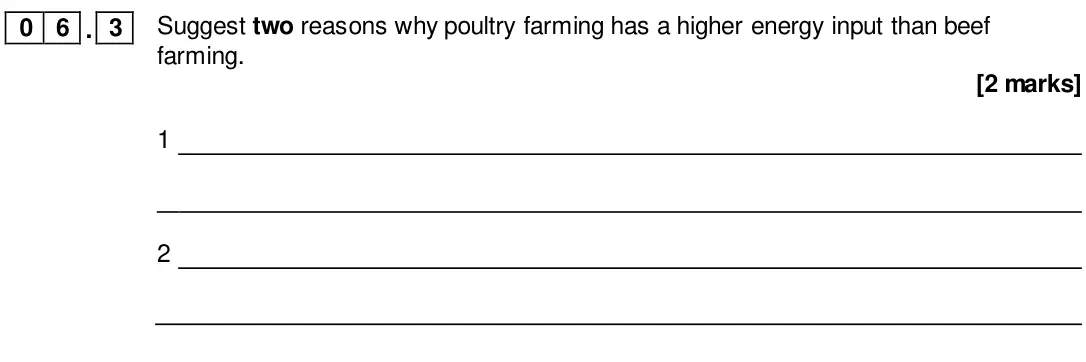
- June 2023, Paper 2, Q06.3 (2 marks): Suggest two reasons why poultry farming has a higher energy input than beef farming. [2 marks] 1 2
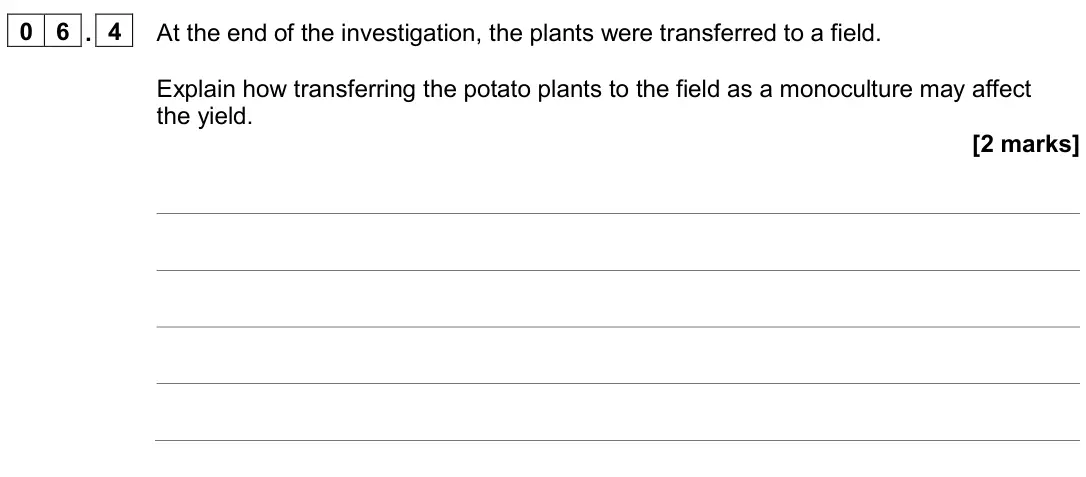
- June 2022, Paper 2, Q06.4 (2 marks): At the end of the investigation, the plants were transferred to a field. Explain how transferring the potato plants to the field as a monoculture may affect the
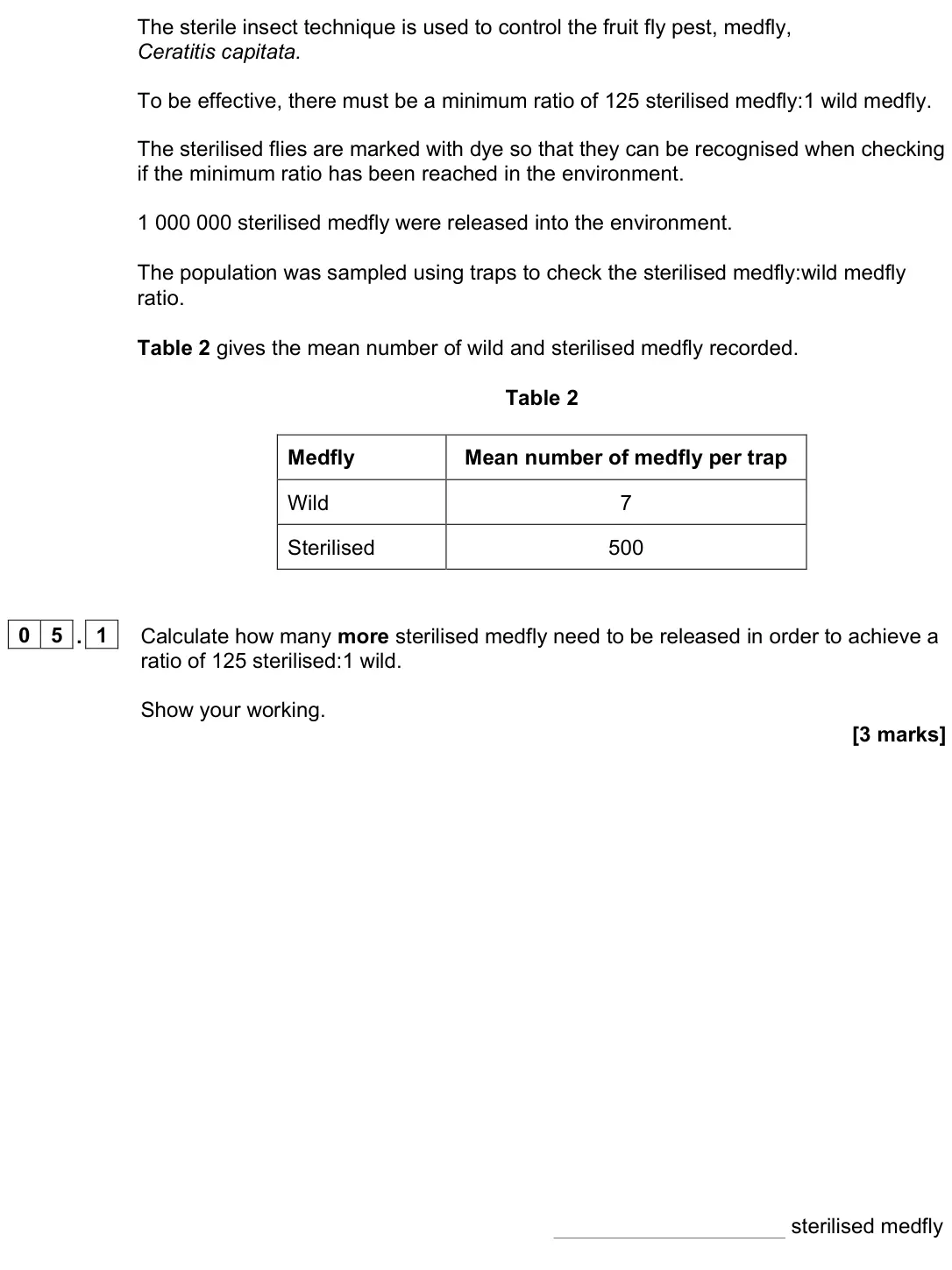
- November 2021, Paper 2, Q05.1 (3 marks): Calculate how many more sterilised medfly need to be released in order to achieve a ratio of 125 sterilised:1 wild. Show your working. [3 marks] sterilised medf
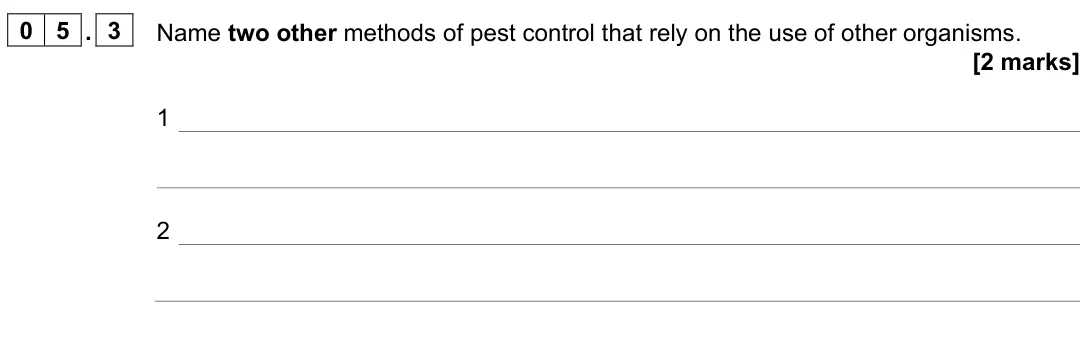
- November 2021, Paper 2, Q05.3 (2 marks): Name two other methods of pest control that rely on the use of other organisms. [2 marks] 1 2
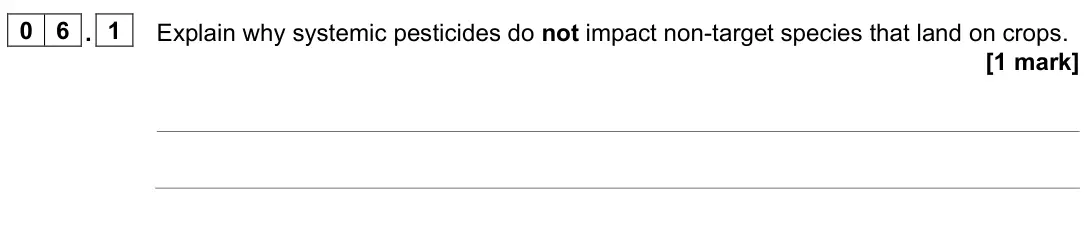
- November 2021, Paper 2, Q06.1 (1 mark): Explain why systemic pesticides do not impact non-target species that land on crops. [1 mark]
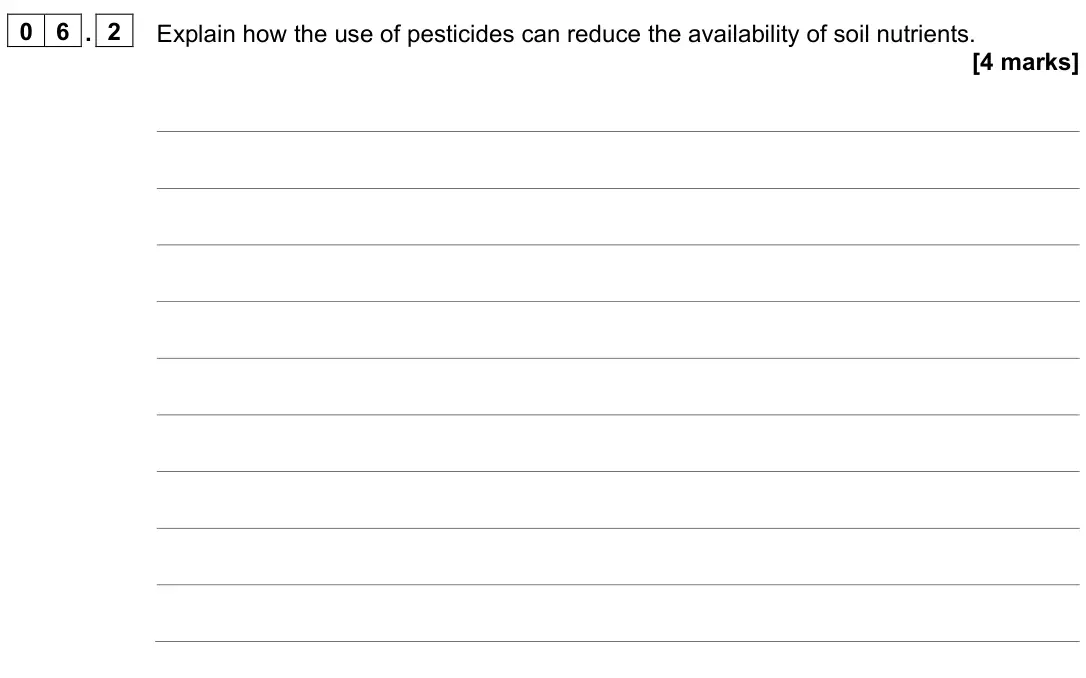
- November 2021, Paper 2, Q06.2 (4 marks): Explain how the use of pesticides can reduce the availability of soil nutrients. [4 marks]
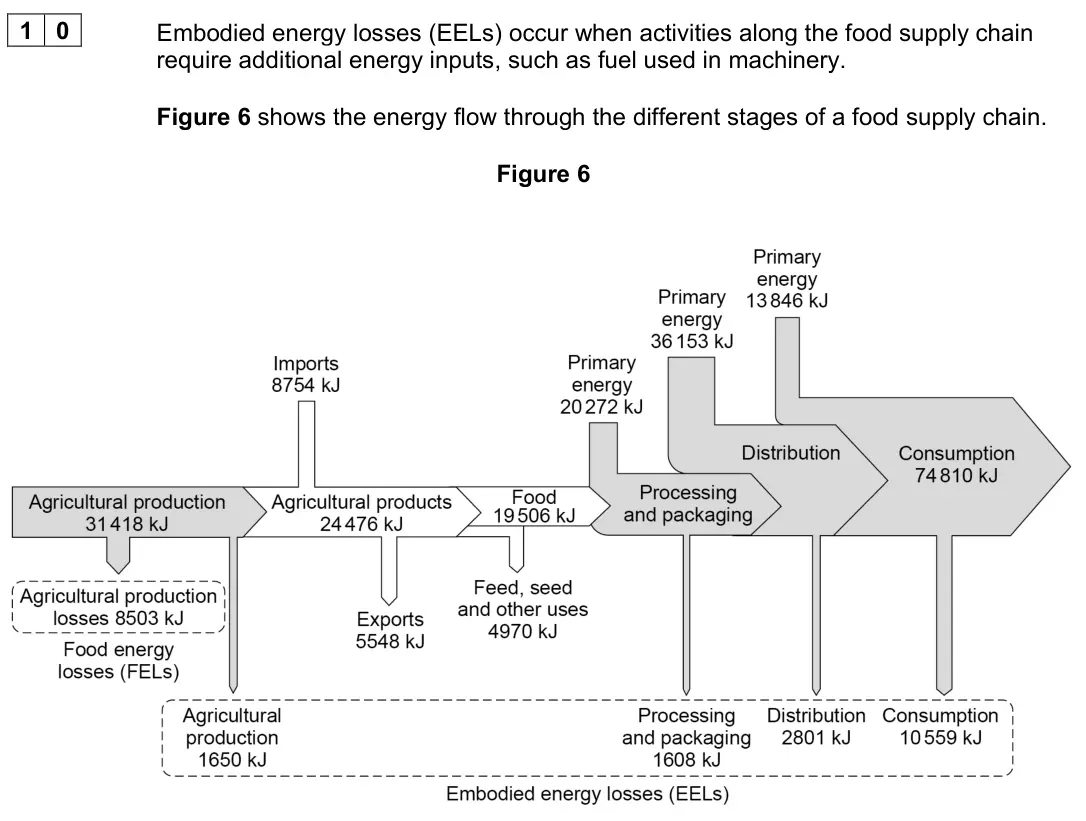
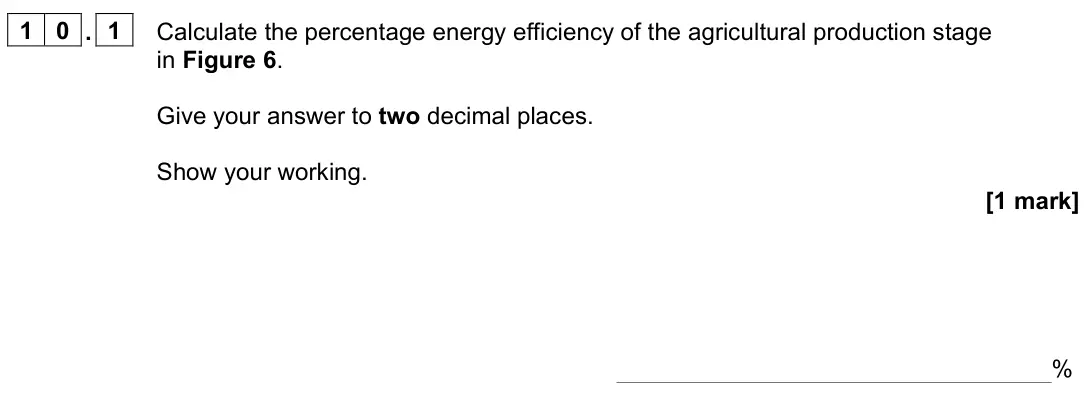
- November 2021, Paper 2, Q10.1 (1 mark): Calculate the percentage energy efficiency of the agricultural production stage in Figure 6. Give your answer to two decimal places. Show your working. [1 mark]
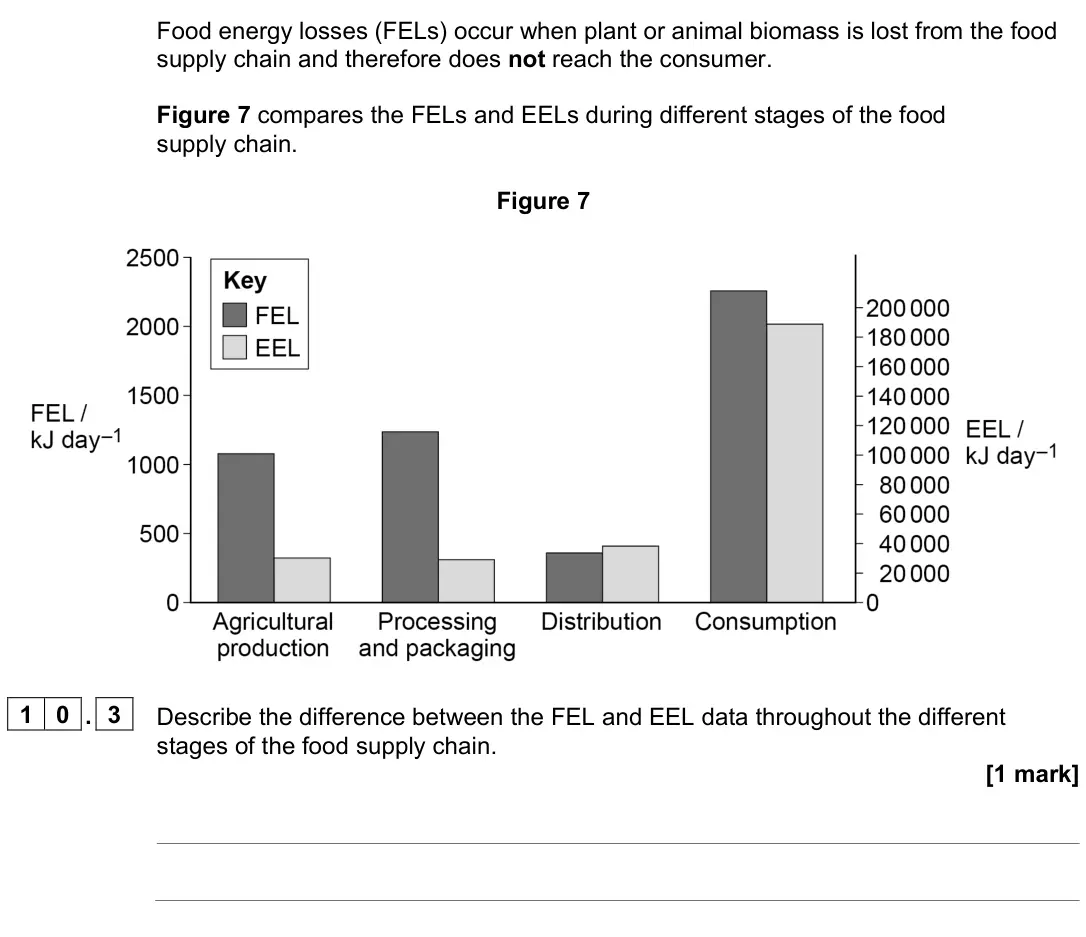
- November 2021, Paper 2, Q10.3 (1 mark): Describe the difference between the FEL and EEL data throughout the different stages of the food supply chain. [1 mark]
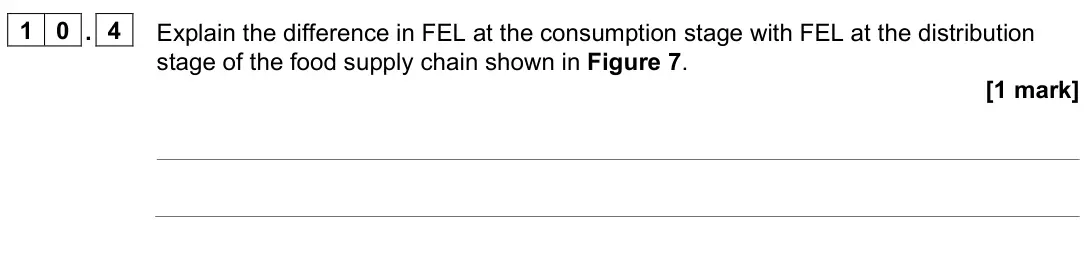
- November 2021, Paper 2, Q10.4 (1 mark): Explain the difference in FEL at the consumption stage with FEL at the distribution stage of the food supply chain shown in Figure 7. [1 mark]
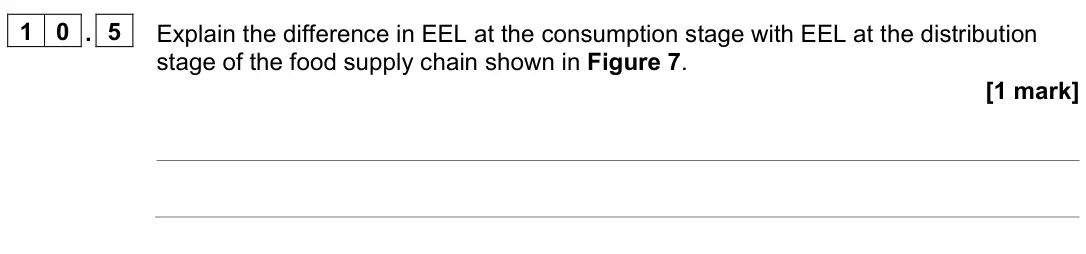
- November 2021, Paper 2, Q10.5 (1 mark): Explain the difference in EEL at the consumption stage with EEL at the distribution stage of the food supply chain shown in Figure 7. [1 mark]
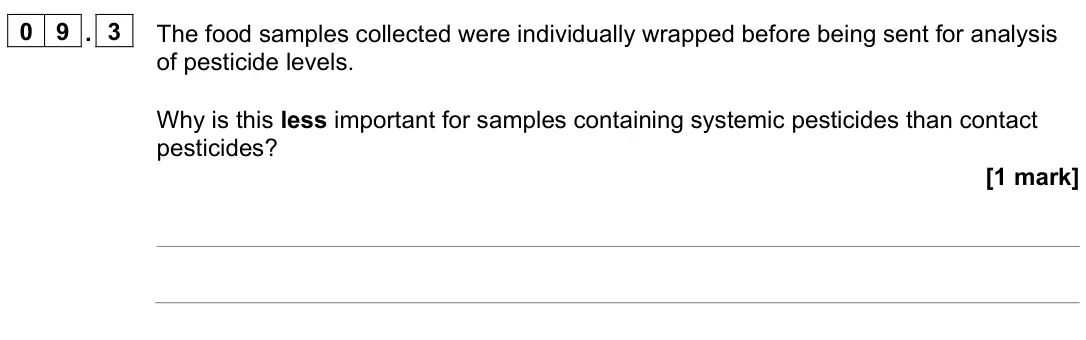
- November 2020, Paper 1, Q09.3 (1 mark): The food samples collected were individually wrapped before being sent for analysis of pesticide levels. Why is this less important for samples containing syste
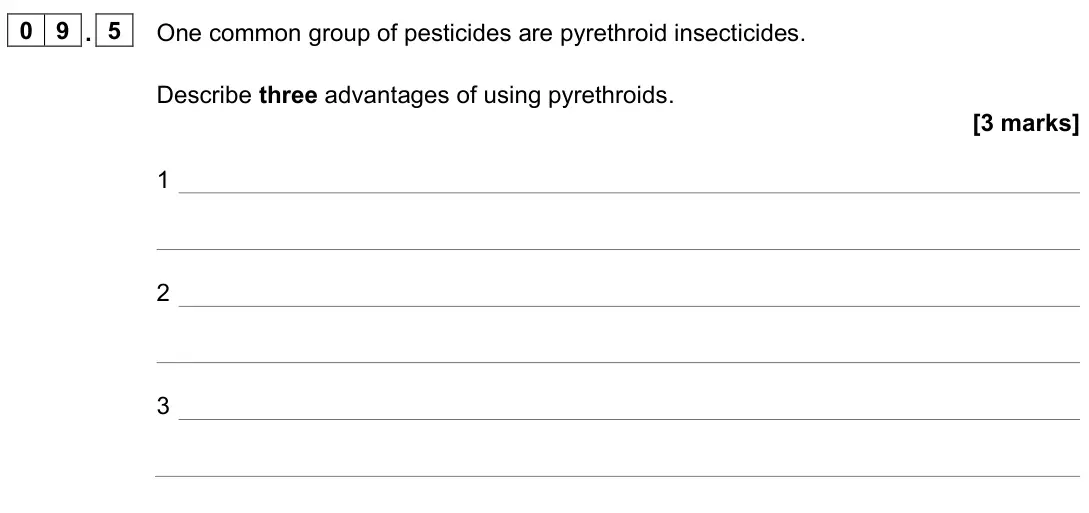
- November 2020, Paper 1, Q09.5 (3 marks): One common group of pesticides are pyrethroid insecticides. Describe three advantages of using pyrethroids. [3 marks] 1 2 3
- November 2020, Paper 2, Q06.1 (3 marks): The yields of agricultural production systems may be increased by using more intensive methods. Explain why intensive agricultural systems have higher energy in
- November 2020, Paper 2, Q06.2 (2 marks): Use the information in Table 5 to calculate the energy ratio for production of the edible proportion of the orange harvest. Give your answer to two significant
- November 2020, Paper 2, Q07.1 (2 marks): Use data in Figure 3 and Figure 4 to calculate the difference in productivity of oil palm and rapeseed. Give your answer to two decimal places. Show your workin
- Specimen, Paper 2, Q01 (5 marks): Table 1 describes some terms associated with commercial strawberry agriculture. Complete Table 1 by selecting the appropriate letter from the list. A Barrier cr
- Specimen, Paper 2, Q07.5 (5 marks): Many soil organisms cannot survive in waterlogged, acidic soil. Explain why food yields may be reduced if soil has fewer microorganisms and invertebrates. [5 ma
- Specimen, Paper 2, Q10.1 (3 marks): Explain why neonicotinoids are less likely to build up in soil than in aquifers. [3 marks]
- Specimen, Paper 2, Q10.2 (3 marks): Suggest possible causes, other than the use of neonicotinoids, of the decline in the bee population. [3 marks]
- Specimen, Paper 2, Q10.3 (3 marks): Explain how the total amount of pesticide used may be reduced by using seed coatings of persistent systemic pesticides rather than aerial spraying of non- persi
- Specimen, Paper 2, Q10.4 (6 marks): Describe the plan of an investigation that would show whether there is a synergistic relationship between the neonicotinoid insecticide, thiacloprid, and an EBI
Questions, mark schemes and examiner’s reports are © AQA, from their published past papers. Plumi isn’t affiliated with any exam board. Want whole papers? AQA A-Level Environmental Science past papers.
The Plumi iPad app also offers exam-style questions with AI feedback on your handwritten working.