 plumi
Sampling techniques: AQA A‑Level Environmental Science questions
AQA A-Level Environmental Science past-paper questions on 3.7.2 Sampling techniques, 2020–2025, with mark schemes and examiner’s reports where available.
Getting your paper ready…
AQA A-Level Environmental ScienceSampling techniques551 questions
Paper
All papers
Exam
All years
Calculations
Loading the full question list…







All 51 questions on Sampling techniques, as a list
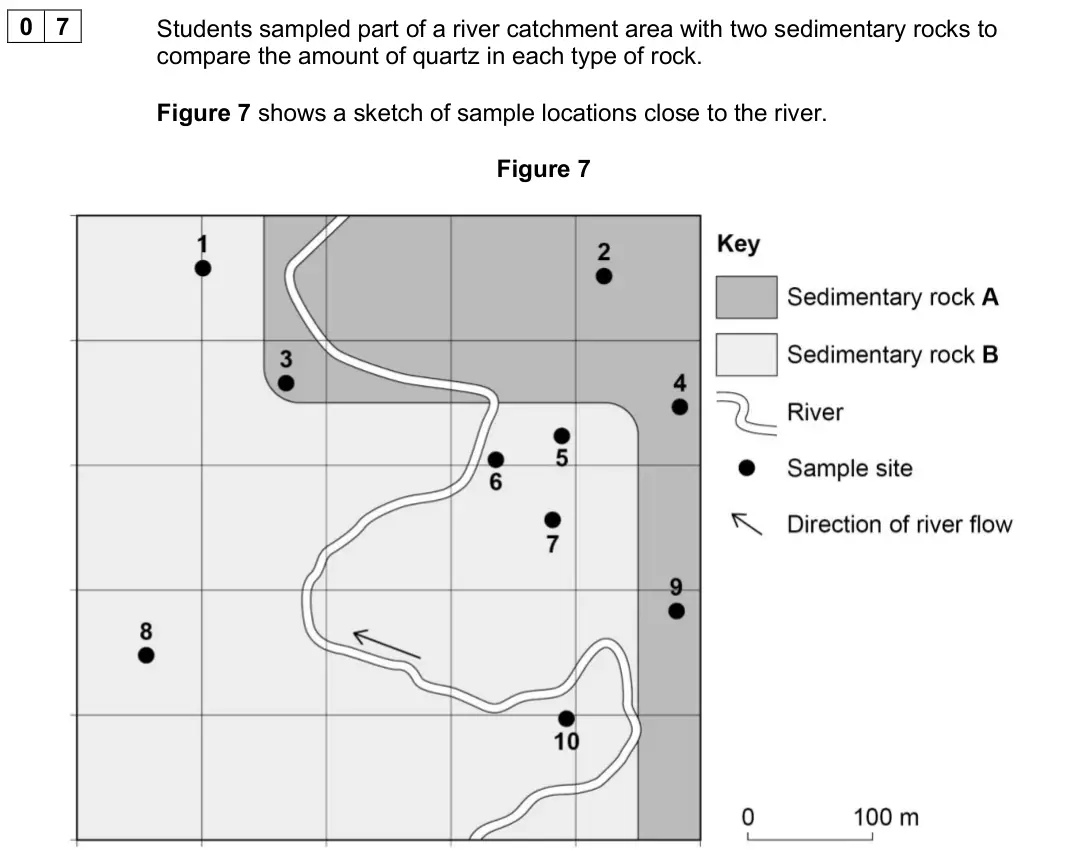
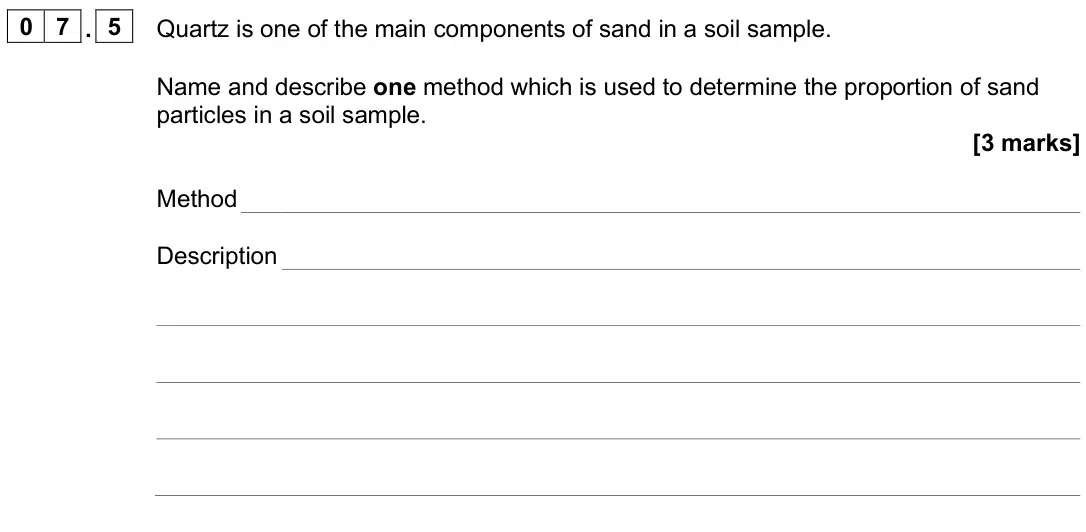
- June 2025, Paper 1, Q07.5 (3 marks): Quartz is one of the main components of sand in a soil sample. Name and describe one method which is used to determine the proportion of sand particles in a soi
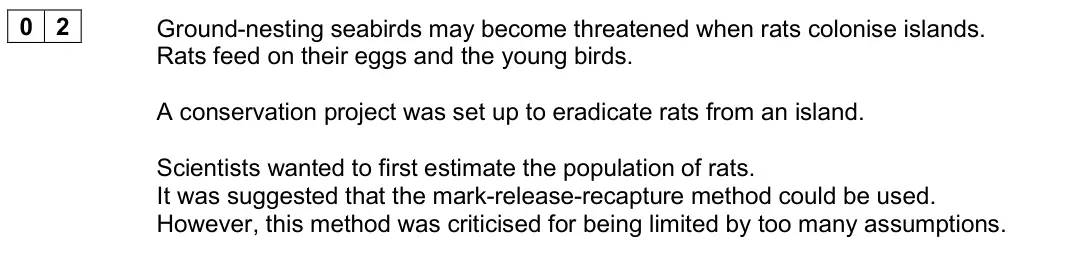
- June 2025, Paper 2, Q02.1 (1 mark): Describe one assumption of the mark-release-recapture method. [1 mark]
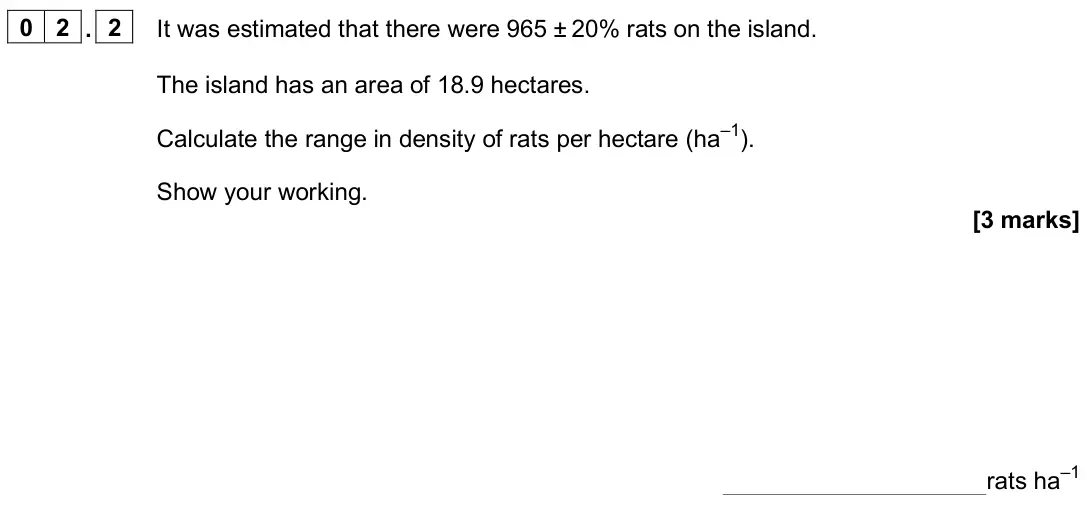
- June 2025, Paper 2, Q02.2 (3 marks): It was estimated that there were 965 ± 20% rats on the island. The island has an area of 18.9 hectares. Calculate the range in density of rats per hectare (ha–1
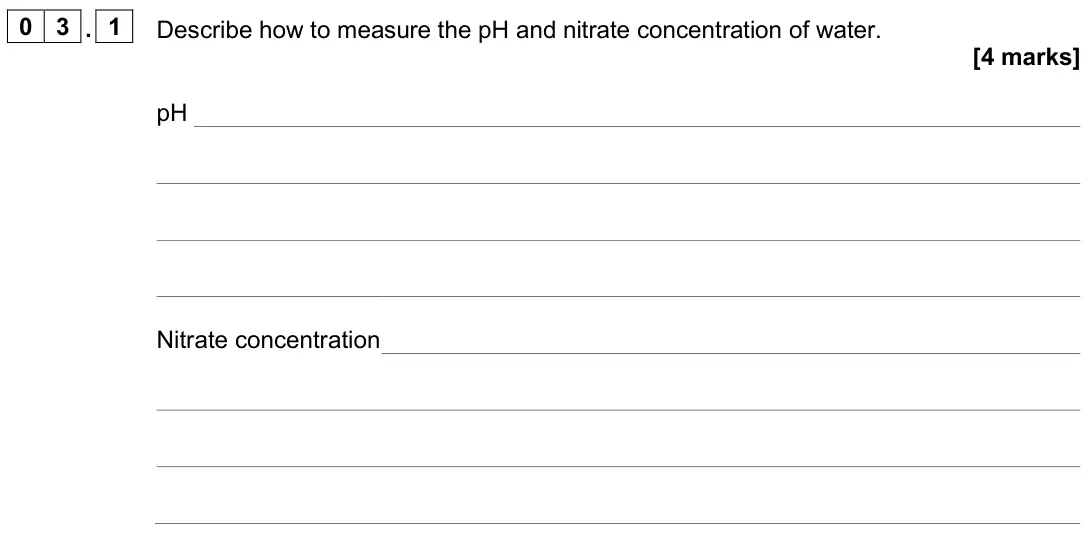
- June 2025, Paper 2, Q03.1 (4 marks): Describe how to measure the pH and nitrate concentration of water. [4 marks] pH Nitrate concentration
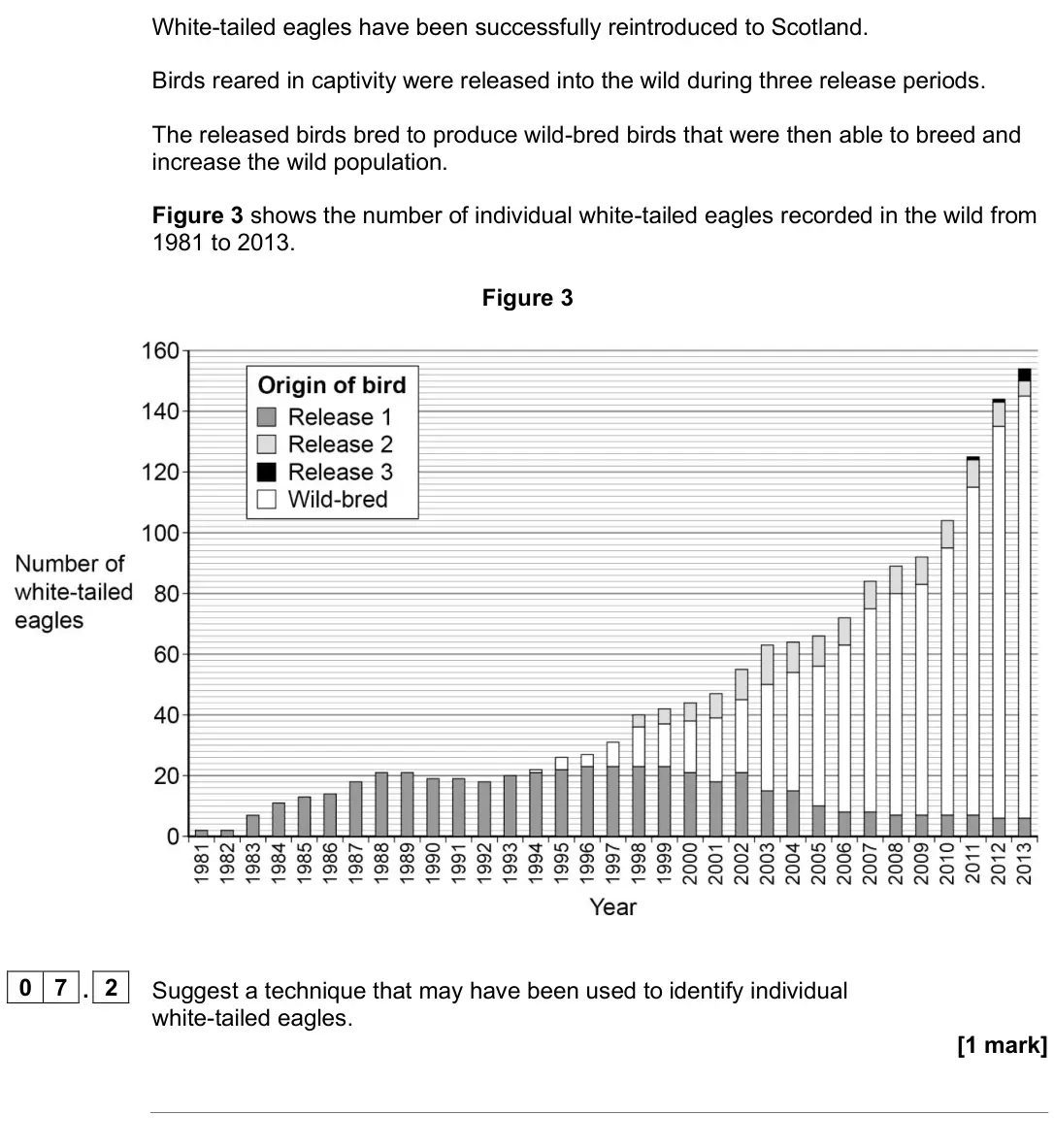
- June 2025, Paper 2, Q07.2 (1 mark): Suggest a technique that may have been used to identify individual white-tailed eagles. [1 mark]
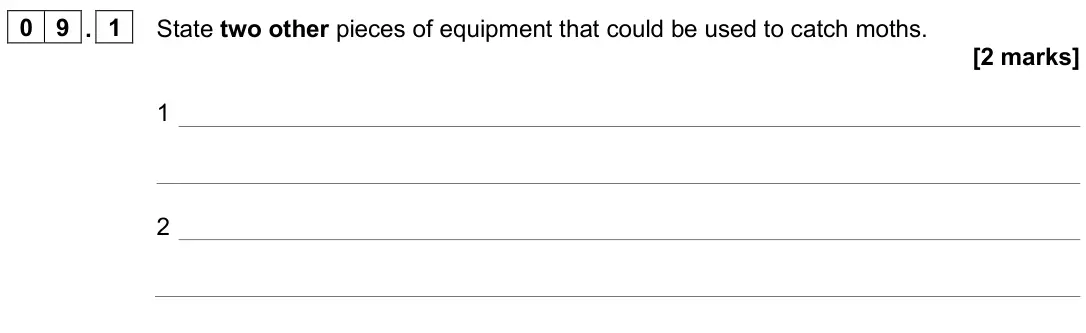
- June 2025, Paper 2, Q09.1 (2 marks): State two other pieces of equipment that could be used to catch moths. [2 marks] 1 2
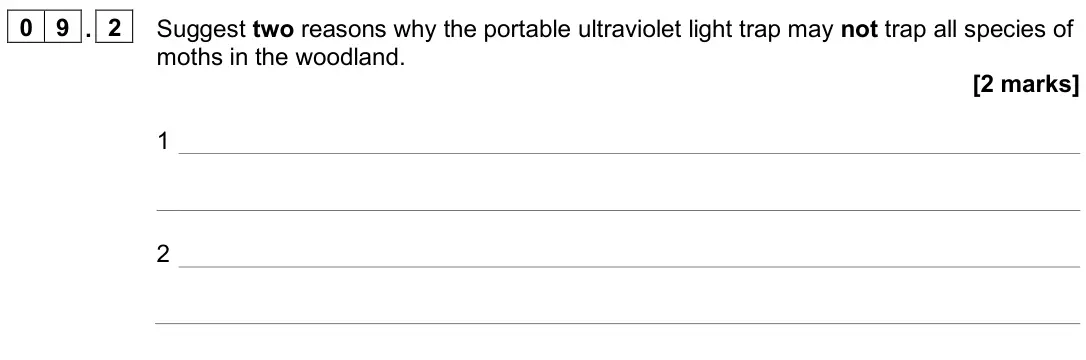
- June 2025, Paper 2, Q09.2 (2 marks): Suggest two reasons why the portable ultraviolet light trap may not trap all species of moths in the woodland. [2 marks] 1 2
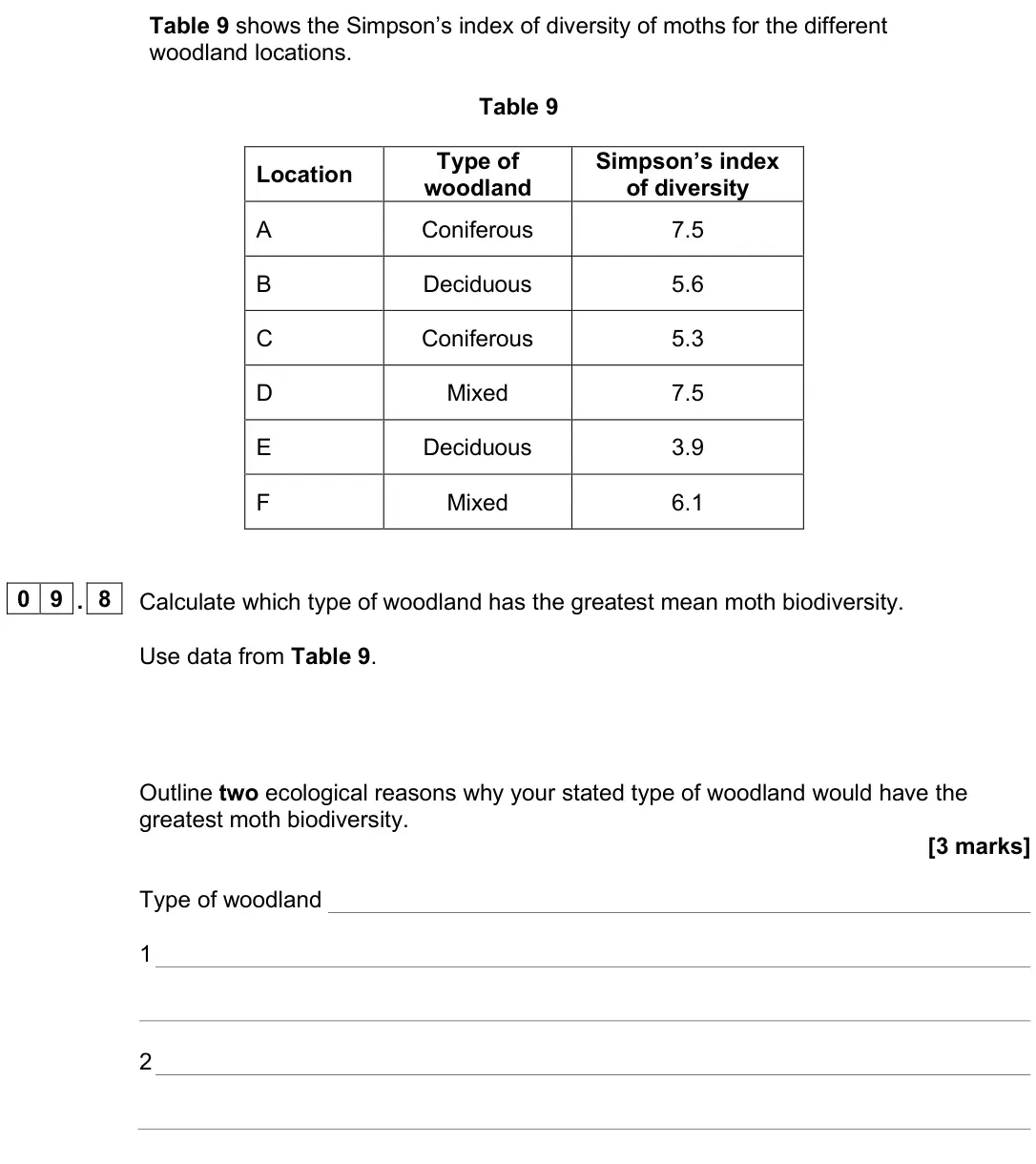
- June 2025, Paper 2, Q09.8 (3 marks): Calculate which type of woodland has the greatest mean moth biodiversity. Use data from Table 9. Outline two ecological reasons why your stated type of woodland
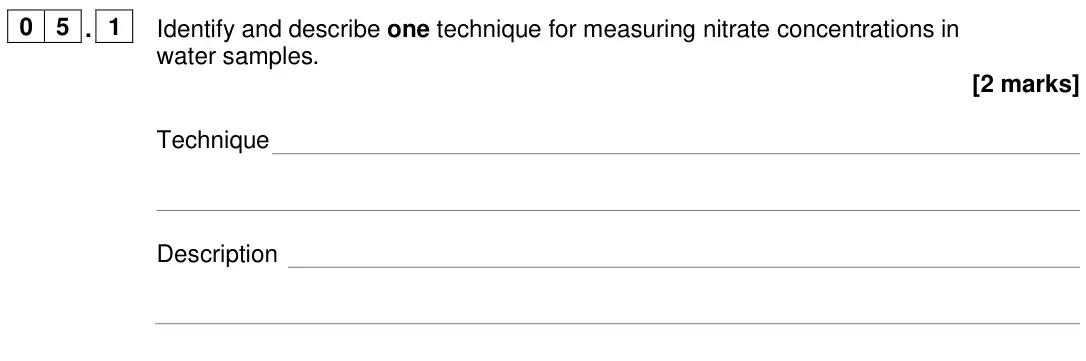
- June 2024, Paper 1, Q05.1 (2 marks): Identify and describe one technique for measuring nitrate concentrations in water samples. [2 marks] Technique Description
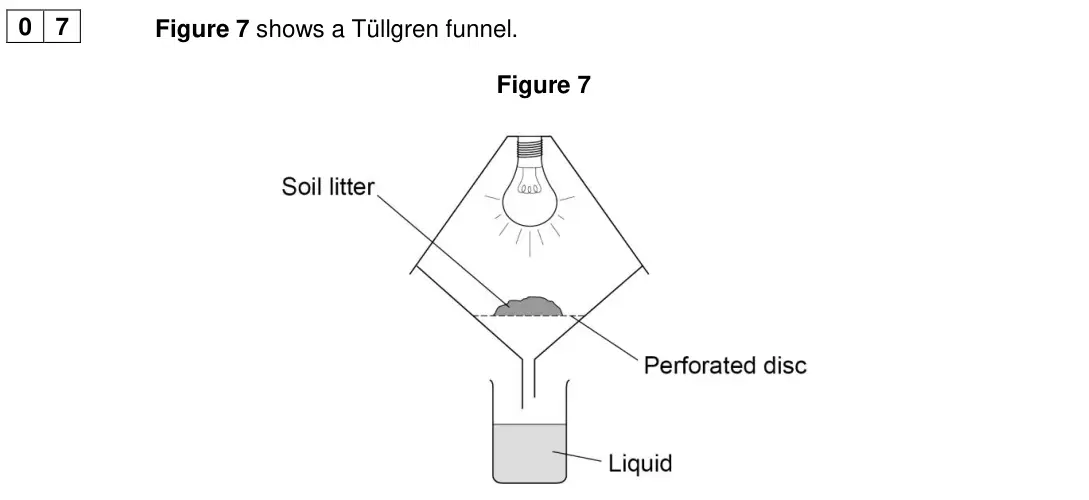
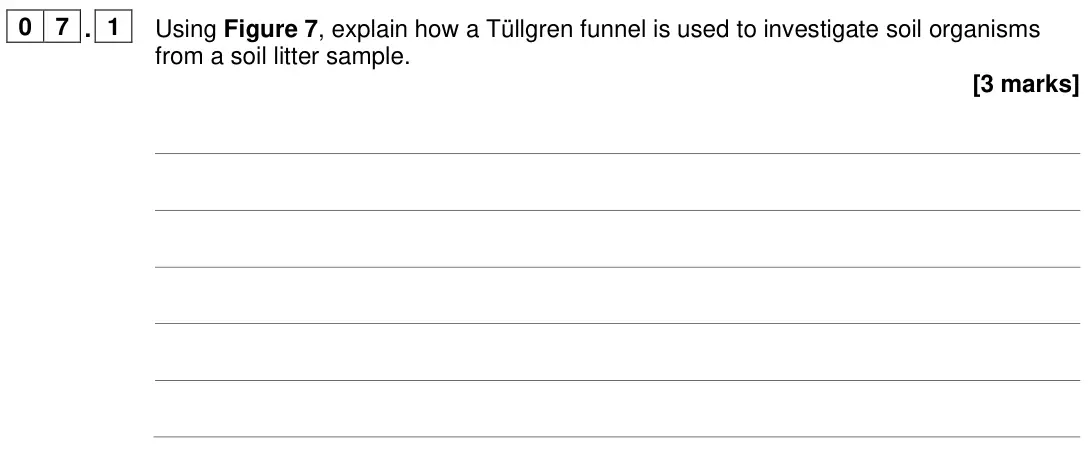
- June 2024, Paper 1, Q07.1 (3 marks): Using Figure 7, explain how a Tüllgren funnel is used to investigate soil organisms from a soil litter sample. [3 marks]
- June 2024, Paper 2, Q02.4 (2 marks): In the wild, Sumatran rhinoceros are monitored using radio collars. Suggest one way that data from the radio collars can be used to help with the conservation o
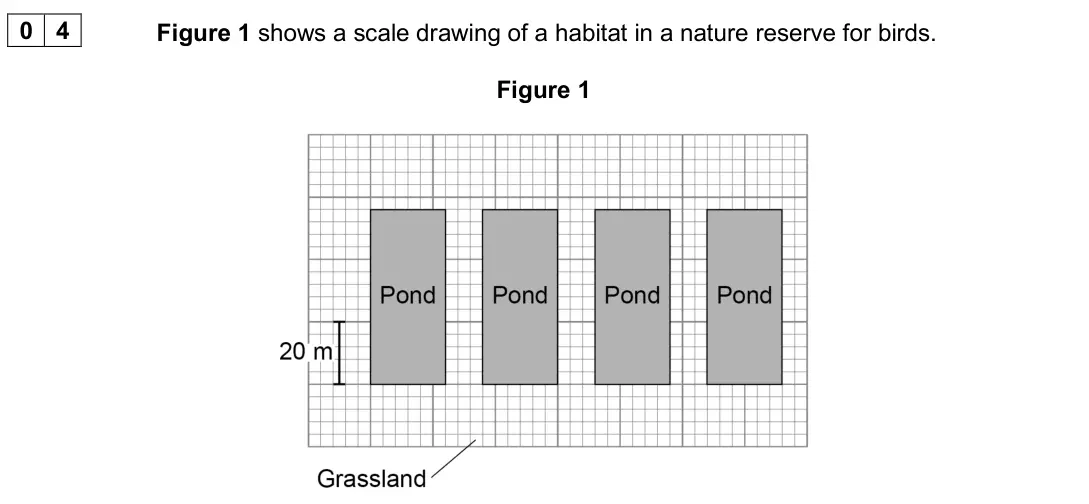
- June 2024, Paper 2, Q04.3 (2 marks): The species of birds in the nature reserve were investigated using auditory monitoring. State two advantages of using auditory monitoring to investigate the spe
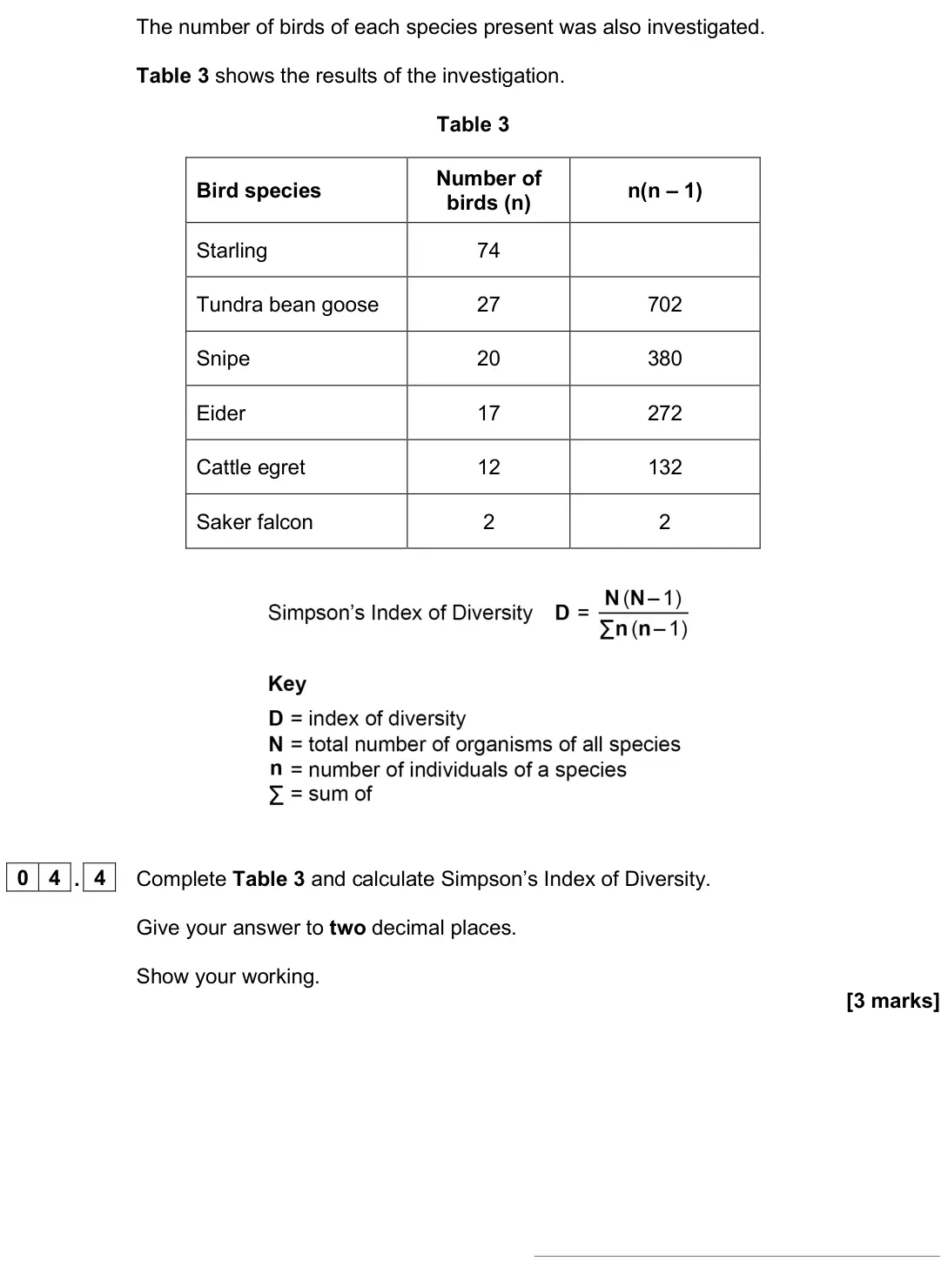
- June 2024, Paper 2, Q04.4 (3 marks): Complete Table 3 and calculate Simpson’s Index of Diversity. Give your answer to two decimal places. Show your working. [3 marks]
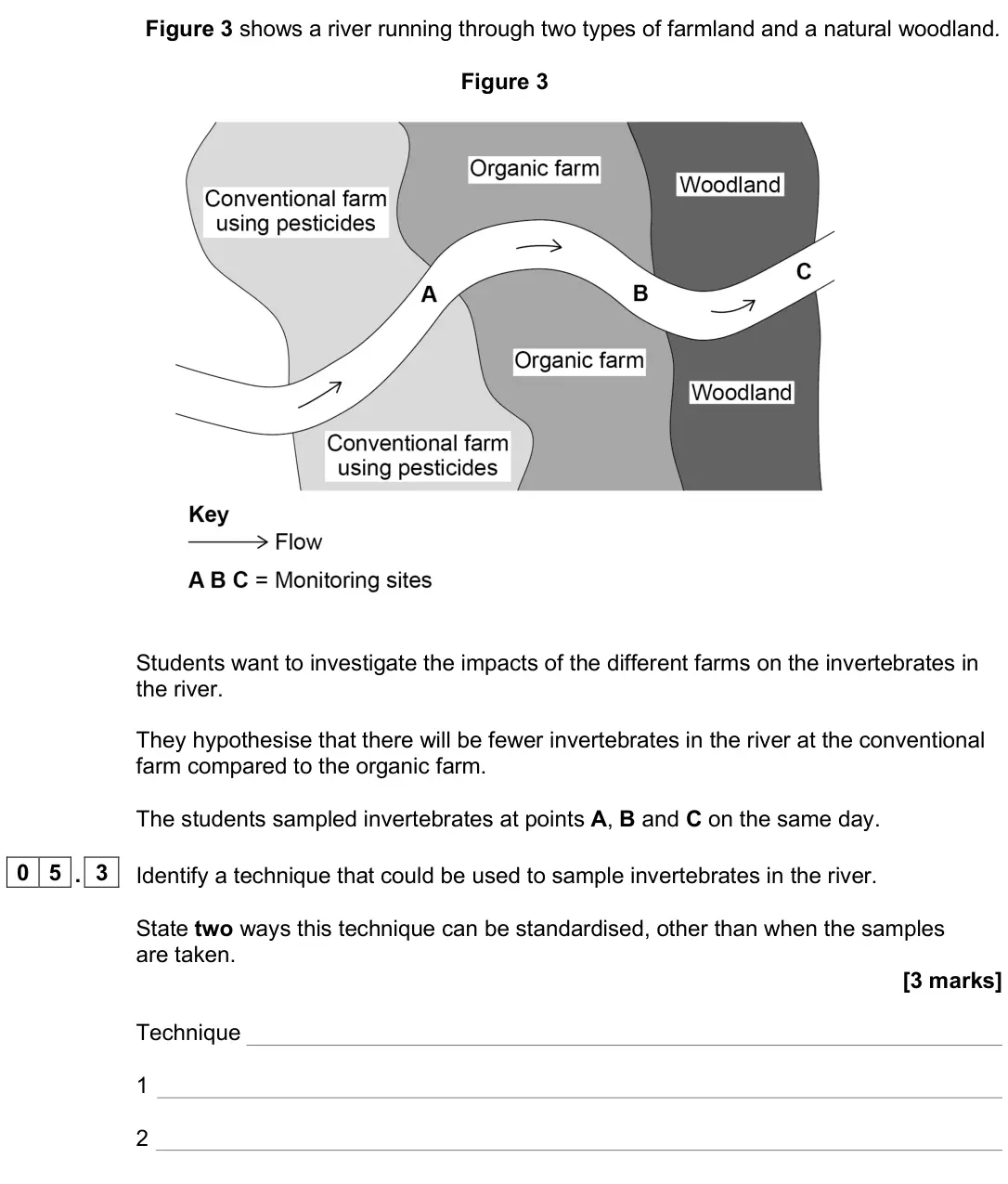
- June 2024, Paper 2, Q05.3 (3 marks): Identify a technique that could be used to sample invertebrates in the river. State two ways this technique can be standardised, other than when the samples are
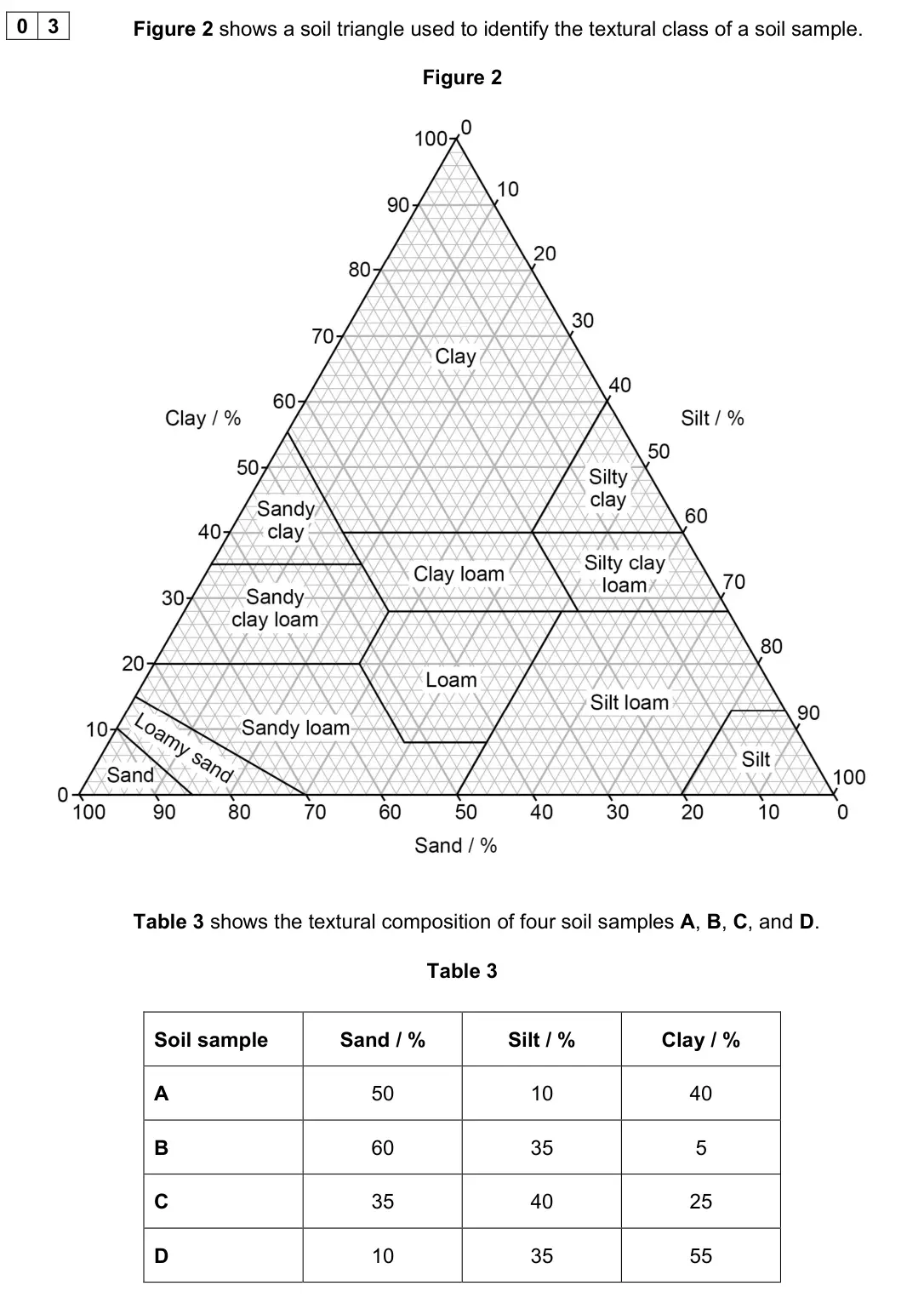
- June 2023, Paper 1, Q03.1 (1 mark): Use Figure 2 to identify the textural class of soil sample A in Table 3. [1 mark]
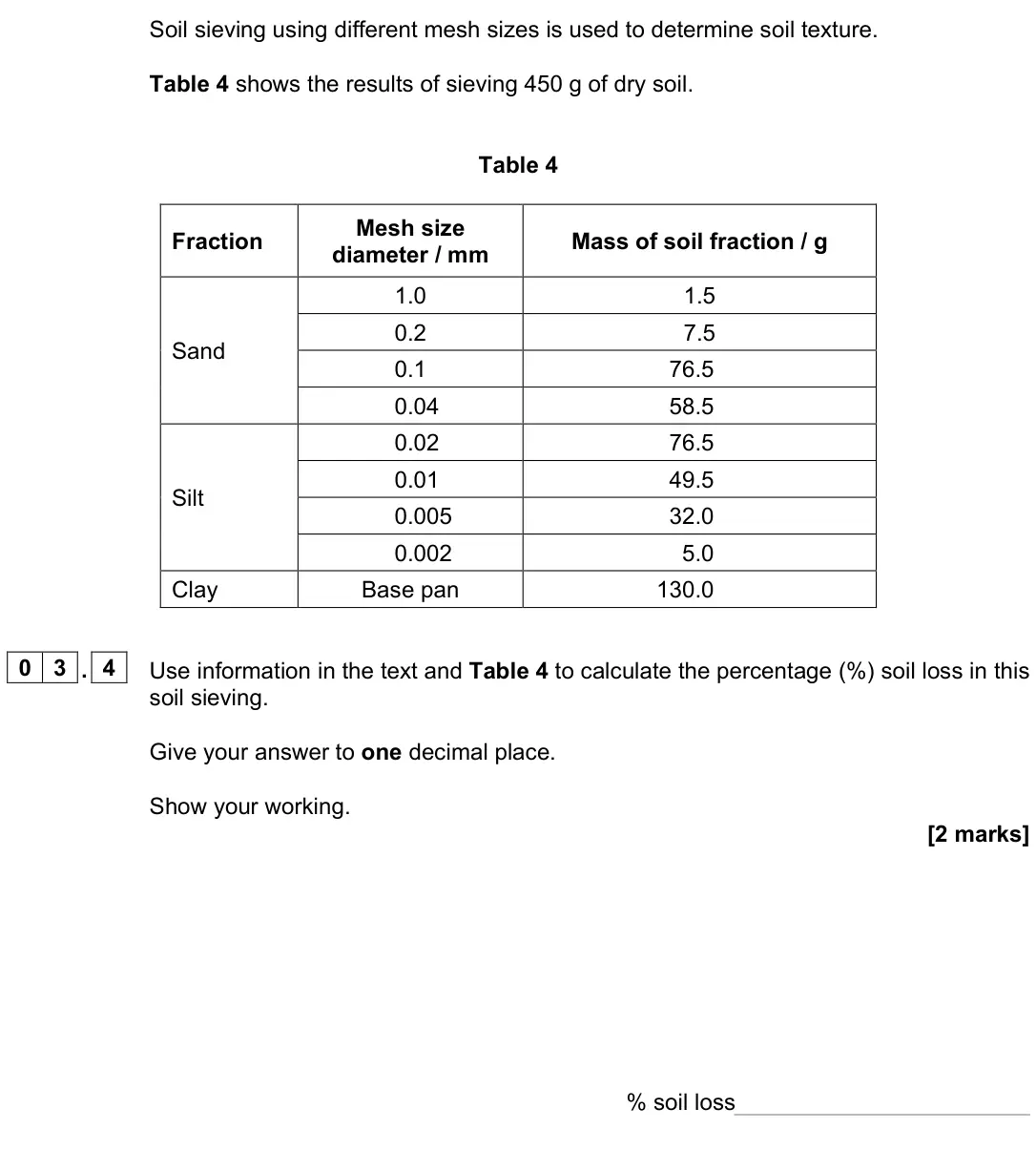
- June 2023, Paper 1, Q03.4 (2 marks): Use information in the text and Table 4 to calculate the percentage (%) soil loss in this soil sieving. Give your answer to one decimal place. Show your working
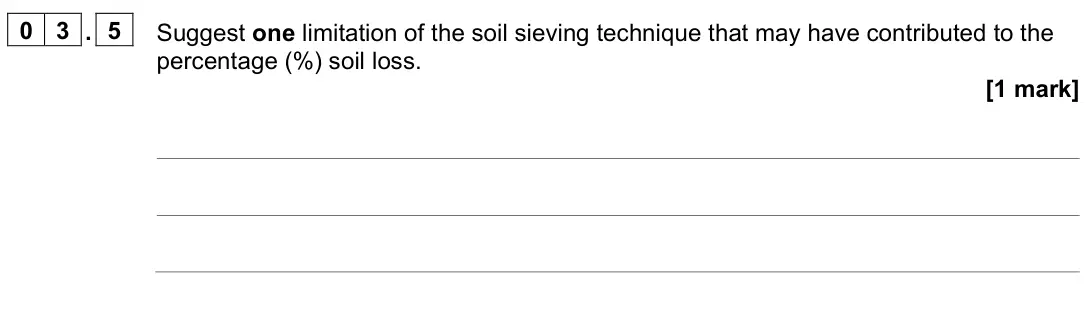
- June 2023, Paper 1, Q03.5 (1 mark): Suggest one limitation of the soil sieving technique that may have contributed to the percentage (%) soil loss. [1 mark]
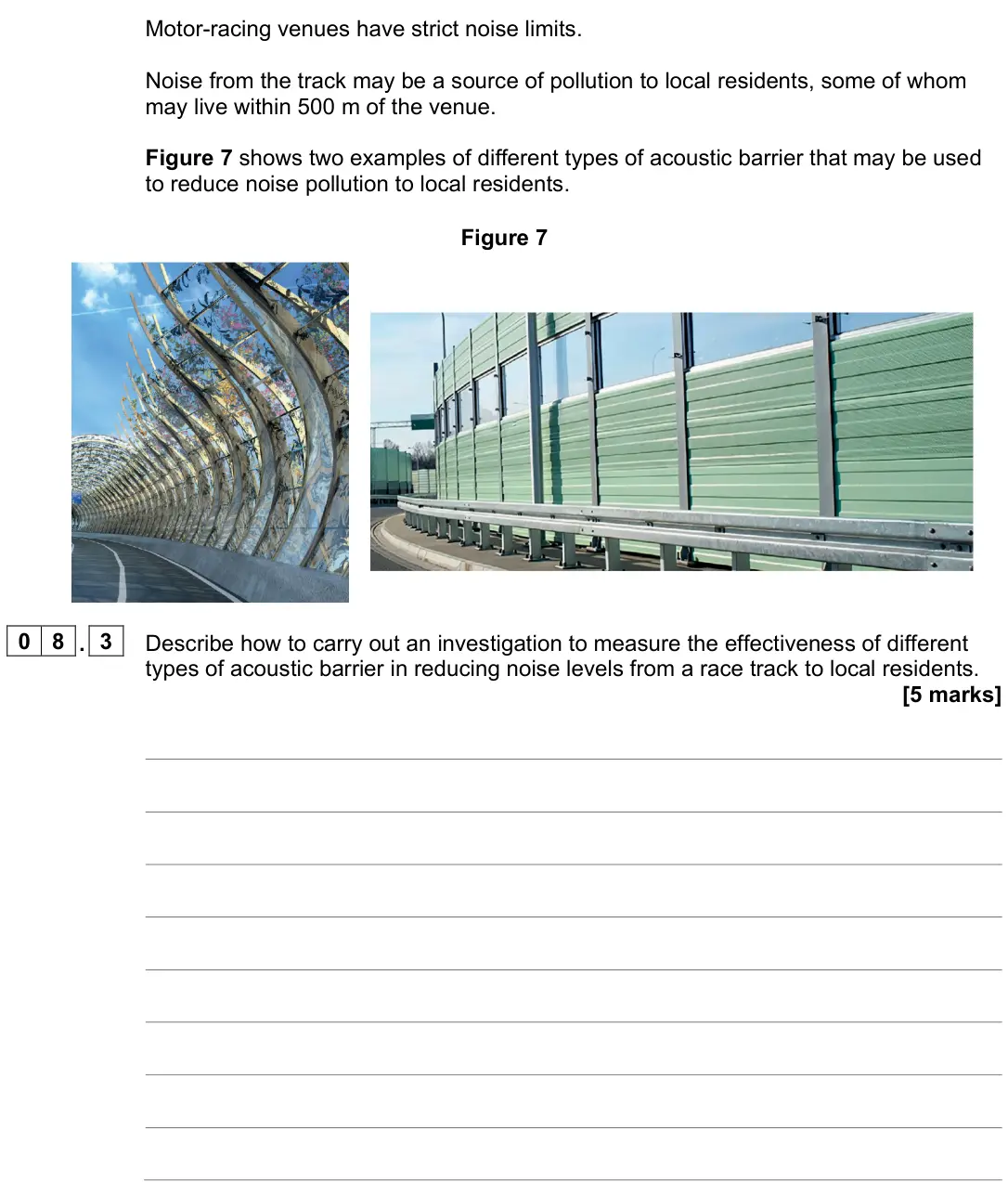
- June 2023, Paper 1, Q08.3 (5 marks): Describe how to carry out an investigation to measure the effectiveness of different types of acoustic barrier in reducing noise levels from a race track to loc
- June 2023, Paper 2, Q03.1 (1 mark): Define the term ‘species richness’. [1 mark]
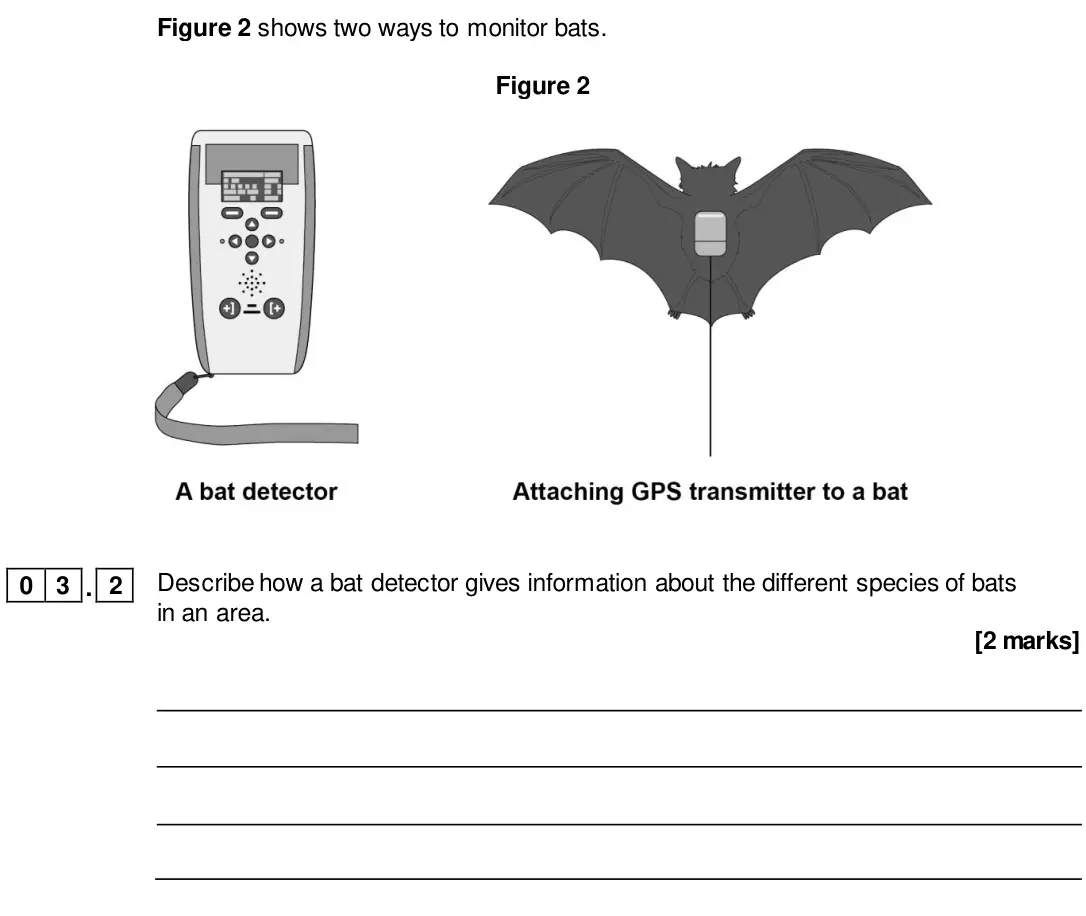
- June 2023, Paper 2, Q03.2 (2 marks): Describe how a bat detector gives information about the different species of bats in an area. [2 marks]
- June 2023, Paper 2, Q03.3 (3 marks): Analyse the information in Figure 3. State three differences in the flight behaviour of the male and female bats. [3 marks] 1 2 3
- June 2023, Paper 2, Q03.5 (1 mark): Suggest one limitation of using GPS transmitters for monitoring wildlife. [1 mark]
- June 2023, Paper 2, Q04.2 (1 mark): Use the information in Table 2 and Figure 4 to identify a suitable size of quadrat that would be used to assess the vegetation cover in Zone 2. [1 mark]
- June 2023, Paper 2, Q04.3 (2 marks): Other than size, suggest one feature of a quadrat that would make finding the percentage cover of the vegetation present easier in Zone 1 and Zone 2. Explain yo
- June 2022, Paper 1, Q05.4 (4 marks): Students investigated three different types of insulating material to see which was most effective at reducing heat loss from a container of water. Outline how
- June 2022, Paper 1, Q09.2 (4 marks): Describe the methods to get the results for dry soil mass and burnt soil mass. [4 marks]
- June 2022, Paper 2, Q05.1 (2 marks): Complete Table 3. Use the space below to show your working. [2 marks]
- June 2022, Paper 2, Q05.2 (2 marks): Explain how named remote sensing techniques could increase the accuracy of the study. [2 marks]
- June 2022, Paper 2, Q07.3 (1 mark): State one method to measure the acidity of river water. [1 mark]
- November 2021, Paper 1, Q09.2 (3 marks): Describe a method that students would use to collect the data at these sites. [3 marks]
- November 2021, Paper 1, Q09.4 (2 marks): Applications of nitrate fertilisers can cause leaching into nearby water. Outline one method that can be used to test for nitrates in water. [2 marks]
- November 2021, Paper 2, Q02.3 (4 marks): Suggest how the information collected by motion-sensitive cameras may be used in the conservation of Owston’s civets. [4 marks]
- November 2021, Paper 2, Q02.4 (1 mark): Other than motion-sensitive cameras, suggest one example of modern technology that could be used to collect data on Owston’s civets. [1 mark]
- November 2021, Paper 2, Q07.4 (4 marks): Describe how scientists could collect data to estimate the lobster population without the use of trawling. [4 marks]
- November 2020, Paper 1, Q02.4 (1 mark): State one remote sensing system that may be used to estimate the volume of ice in Antarctica. [1 mark]
- November 2020, Paper 1, Q07.2 (2 marks): Describe one method that may be used to measure the bulk density of soil from the field. [2 marks]
- November 2020, Paper 1, Q10.4 (5 marks): Describe one technique that may be used for monitoring changes in water turbidity. [5 marks]
- November 2020, Paper 2, Q01 (5 marks): Table 1 shows details of some ecological sampling activities and equipment that may be used. Complete Table 1 by adding the appropriate ecological activity or e
- November 2020, Paper 2, Q02.1 (3 marks): Calculate the Simpson’s Index of Biodiversity (D) for the trees before the eradication of rats. Give your answer to two decimal places. Show your working. [3 ma
- November 2020, Paper 2, Q03.3 (4 marks): Describe two advantages and two disadvantages of using eDNA instead of the traditional methods as a technique for monitoring aquatic species. [4 marks] Advantag
- November 2020, Paper 2, Q04.2 (9 marks): Explain how the use of electronic monitoring technology may provide information that is useful for the conservation of wildlife. [9 marks]
- November 2020, Paper 2, Q09.4 (4 marks): Describe how the students may have collected representative data for the number of ground invertebrate species in the different woodland habitats. [4 marks]
- Specimen, Paper 1, Q06.2 (1 mark): Describe how the nitrate concentration of the water could have been measured. [1 mark]
- Specimen, Paper 1, Q09.6 (2 marks): Give two limitations of using a Secchi disk to monitor the turbidity of water. [2 marks]
- Specimen, Paper 1, Q10.2 (4 marks): Use details of named technologies to explain how satellite surveys are used to collect reliable data about changes in the mass of ice on the Earth’s surface. [4
- Specimen, Paper 2, Q02.3 (2 marks): Describe how the growth of aquatic algae may be measured. [2 marks]
- Specimen, Paper 2, Q03.1 (3 marks): Complete Table 2 by calculating Simpson’s Index of Diversity (D) for the insects at Site 2 using the formula. D = N(N-1) Σn(n-1) where N = total number of organ
- Specimen, Paper 2, Q04.5 (3 marks): Great Crested Newts (GCN) are vulnerable when surface water features dry out. GCN spend the majority of their life on land, within 250 metres of a pond. They mi
- Specimen, Paper 2, Q05.1 (2 marks): Use information in Figure 4 to estimate the difference in mean penguin population density between colony A and colony B as a percentage of the density of colony
- Specimen, Paper 2, Q05.3 (4 marks): Although satellite surveys are used to estimate total populations, ground-based surveys are still used. Suggest why ground-based surveys are still used. [4 mark
- Specimen, Paper 2, Q07.1 (2 marks): The effect of soil pH on the growth of oats and wheat was investigated. Describe how soil pH may be measured. [2 marks]
Questions, mark schemes and examiner’s reports are © AQA, from their published past papers. Plumi isn’t affiliated with any exam board. Want whole papers? AQA A-Level Environmental Science past papers.
The Plumi iPad app also offers exam-style questions with AI feedback on your handwritten working.