 plumi
Solids under stress: WJEC A‑Level Physics questions
Every WJEC A-Level Physics exam question on 1.5 Solids under stress, 2016–2025, with its mark scheme and examiner’s report.
Find questions1,173
Calculations
Q2(a)
The whole paper ↗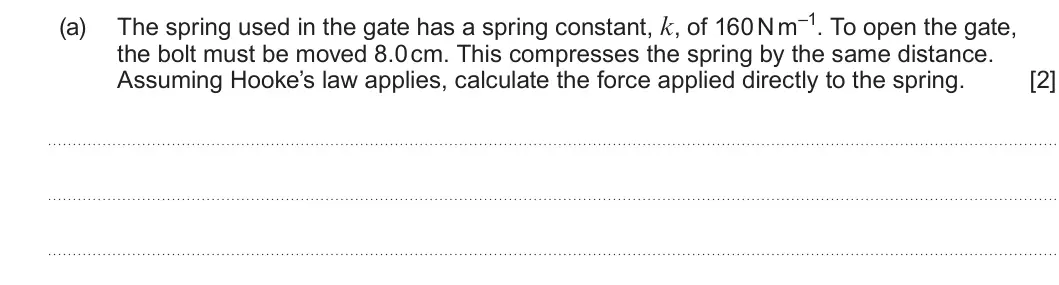
Q4(a)
The whole paper ↗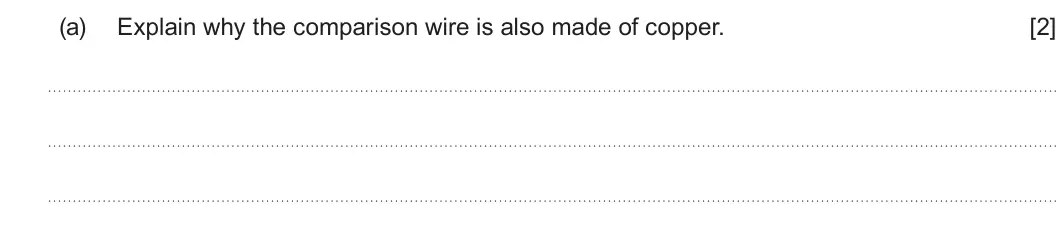
Q4(b)(i)
The whole paper ↗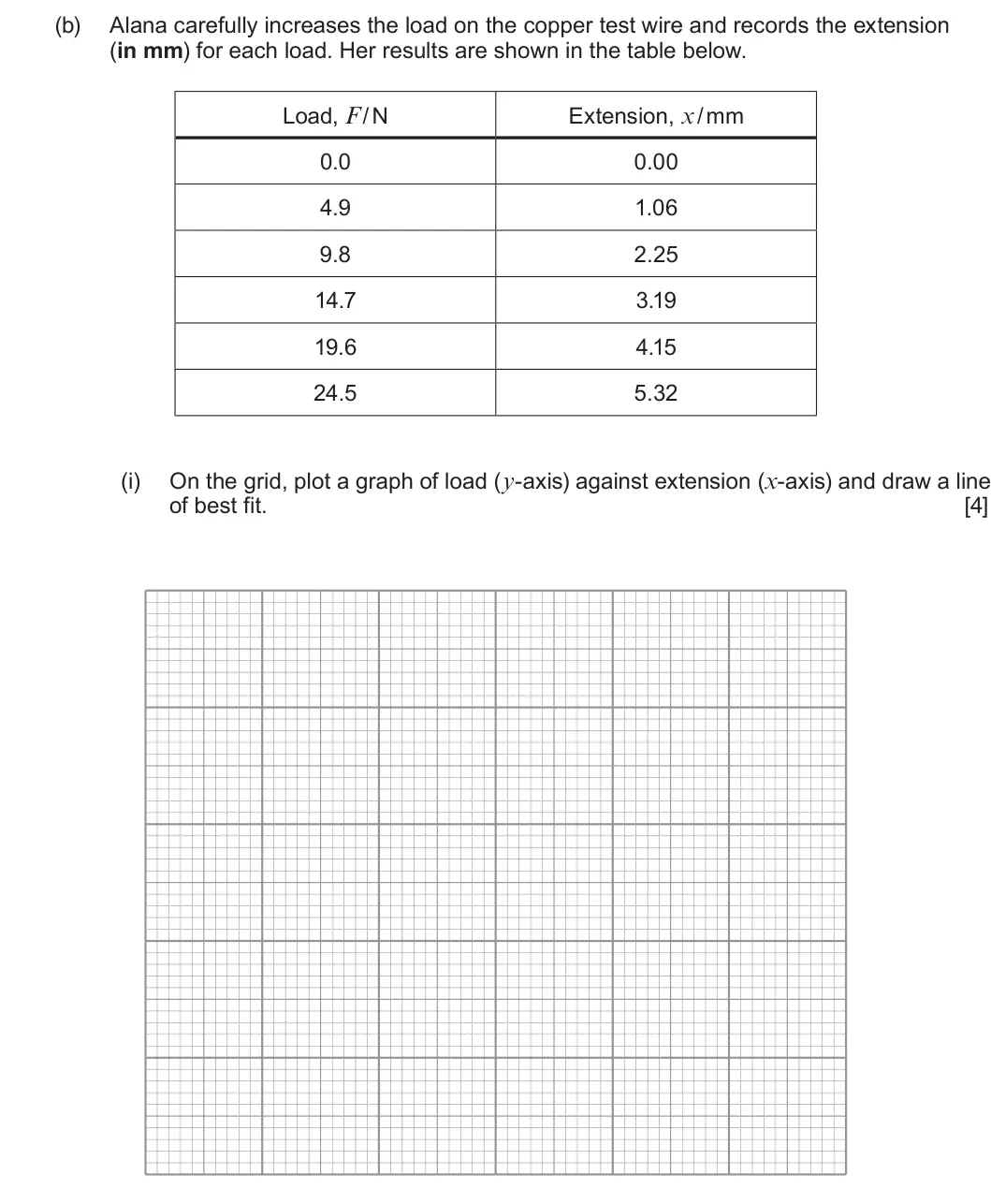
Q4(b)(ii)
The whole paper ↗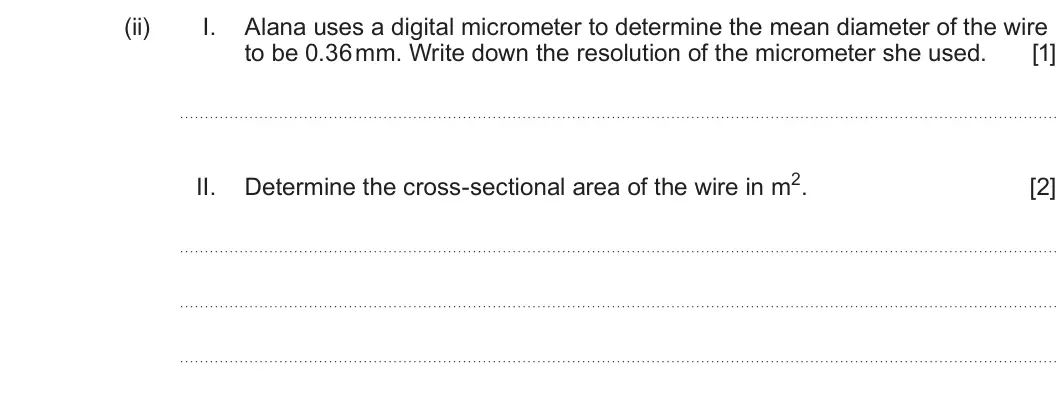
Q4(b)(iii)
The whole paper ↗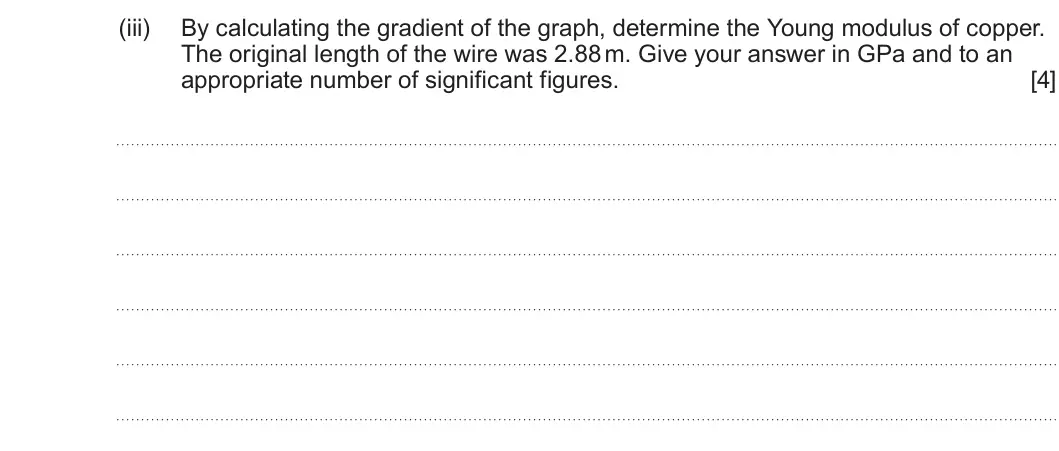
Q4(c)
The whole paper ↗
Q6(b)(i)
The whole paper ↗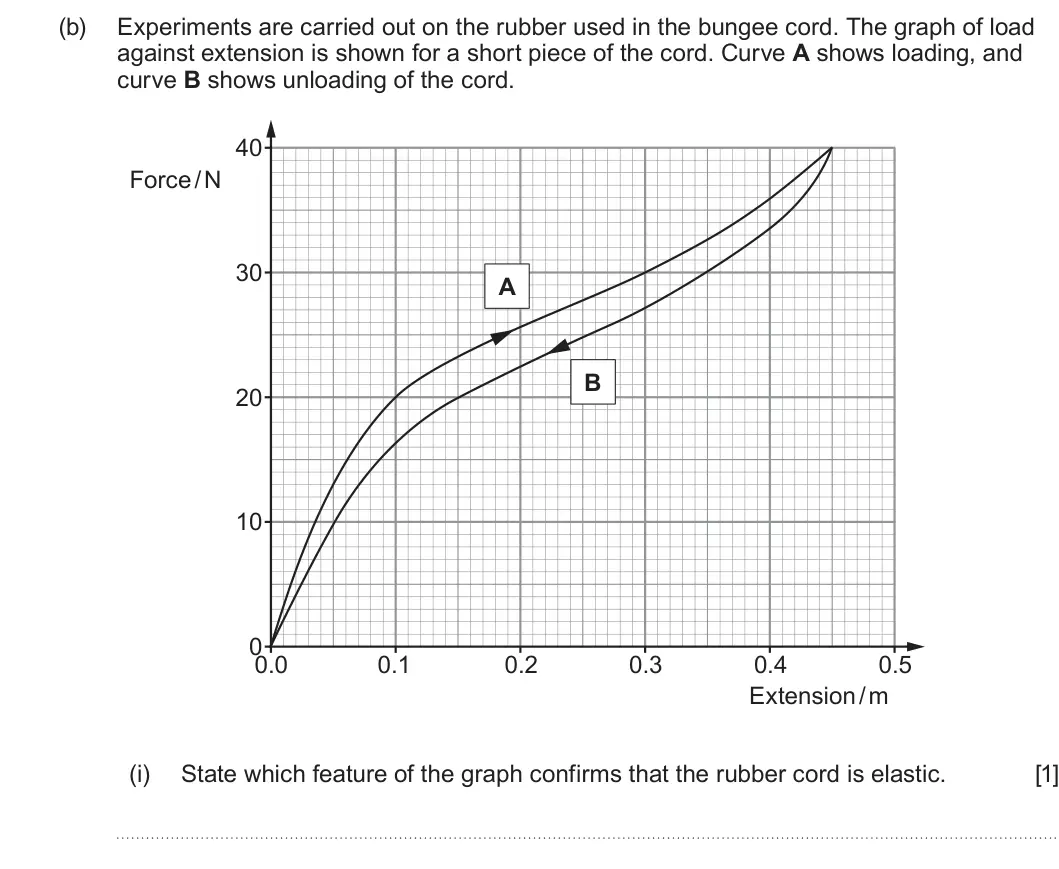
Q6(b)(ii)
The whole paper ↗
Q6(b)(iii)
The whole paper ↗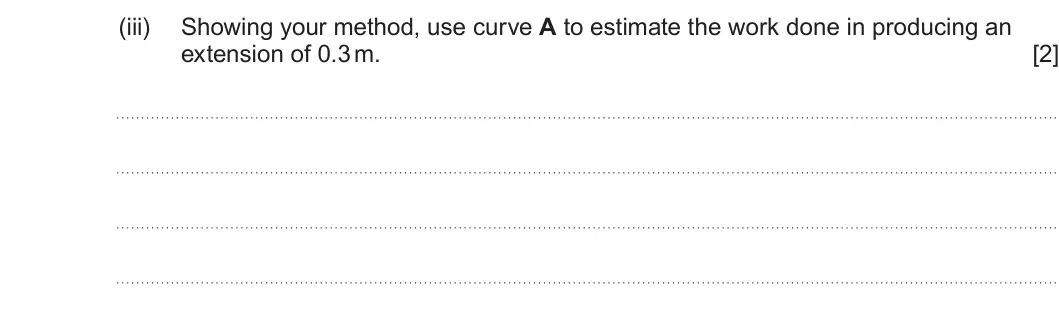
Q6(b)(iv)
The whole paper ↗
Q1(a)
The whole paper ↗
Q1(c)
The whole paper ↗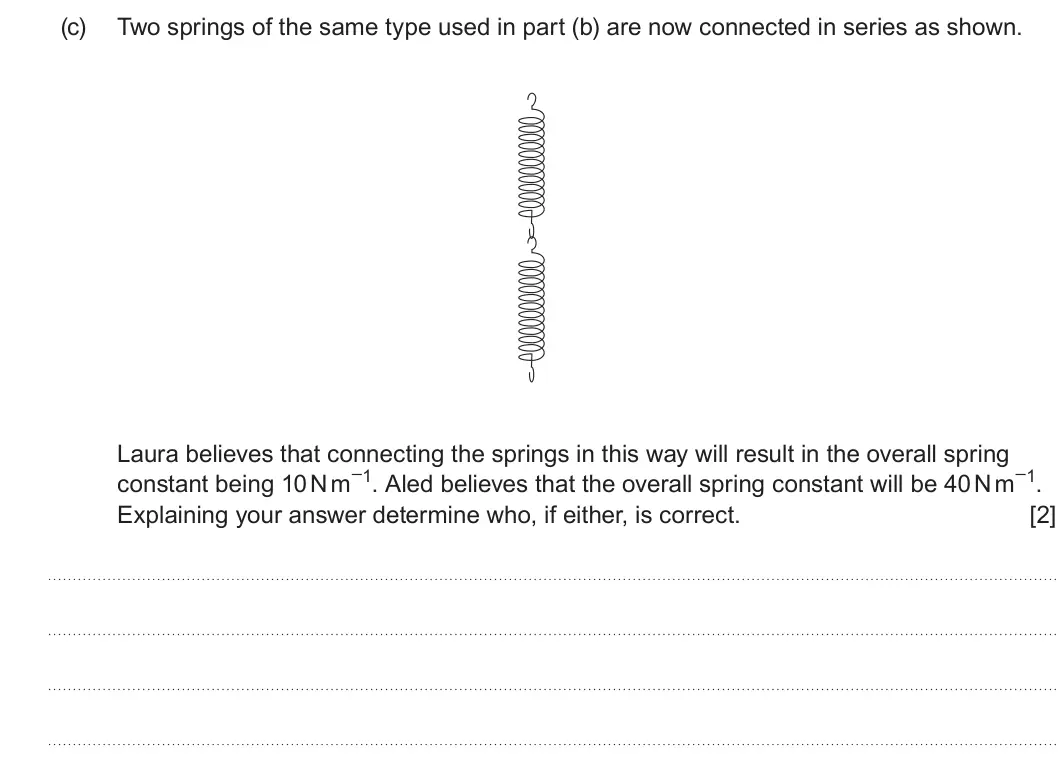
Q5(c)
The whole paper ↗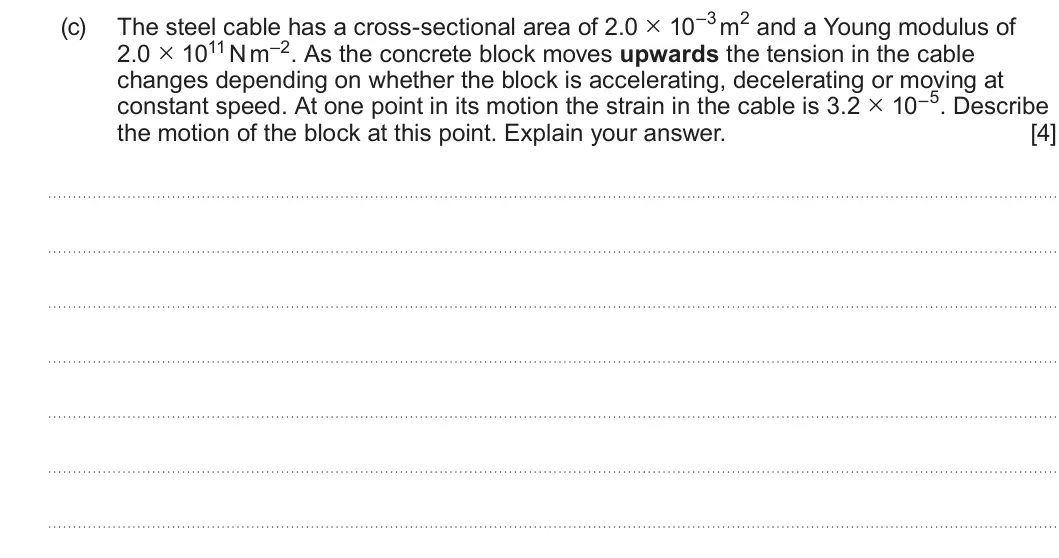
Q2(a)(i)
The whole paper ↗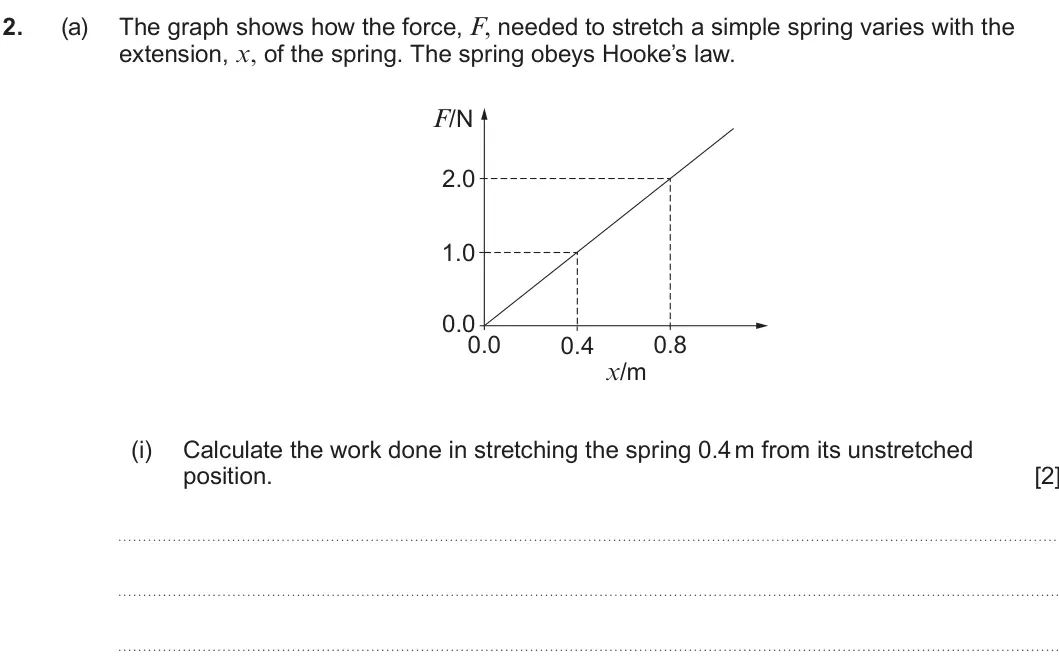
Q2(a)(ii)
The whole paper ↗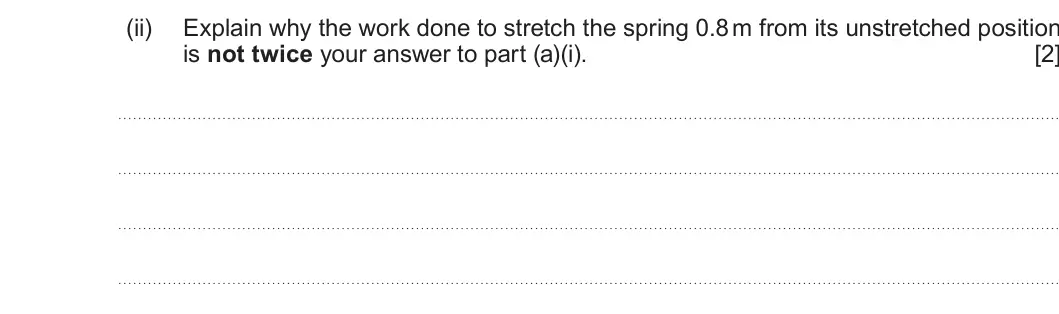
Q4(b)(i)
The whole paper ↗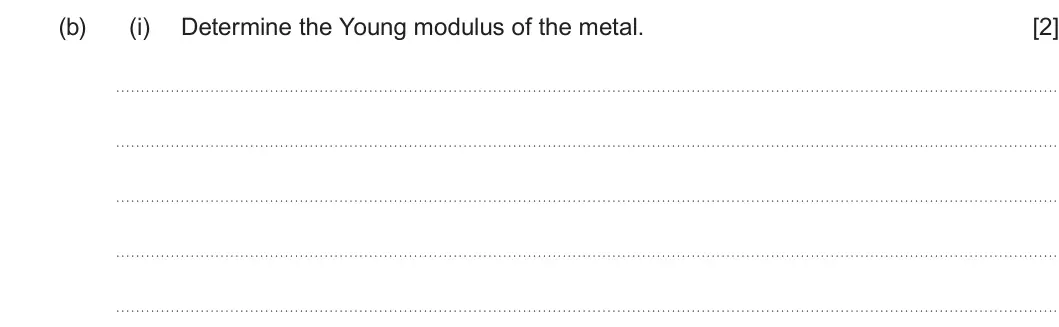
Q4(c)
The whole paper ↗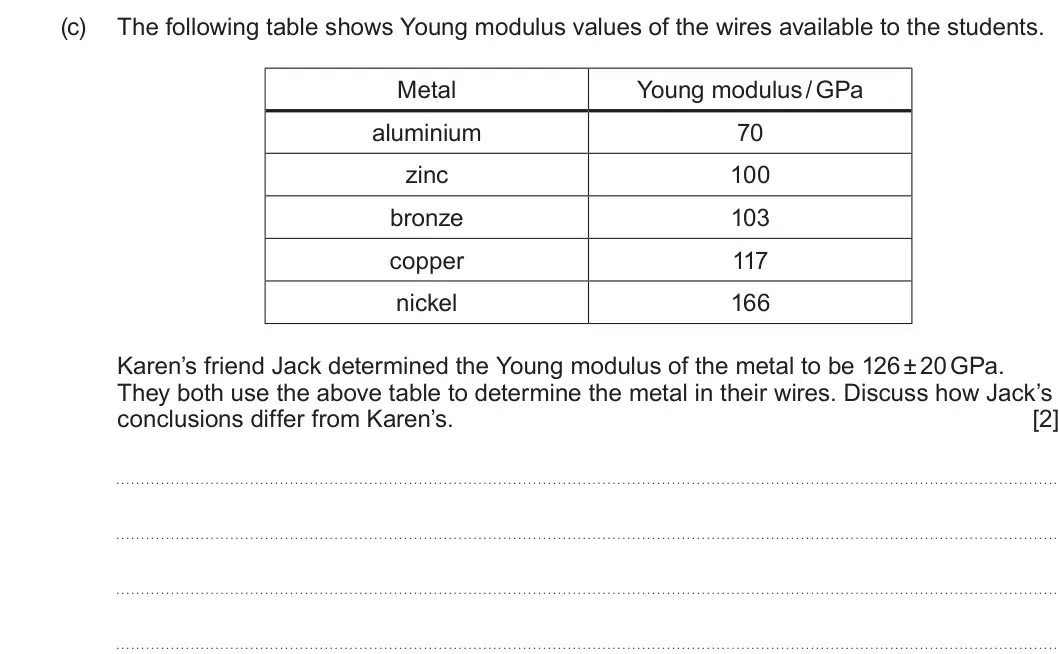
Q4(d)
The whole paper ↗
Q6(a)
The whole paper ↗
All 42 questions on Solids under stress, as a list
- Summer 2025, AS Unit 1, Q2(a) (2 marks): the bolt must be moved 8.0 cm. This compresses the spring by the same distance. Assuming Hooke’s law applies, calculate the force applied directly to the spring
- Summer 2025, AS Unit 1, Q4(a) (2 marks): Explain why the comparison wire is also made of copper. [2]
- Summer 2025, AS Unit 1, Q4(b)(i) (4 marks): On the grid, plot a graph of load (y-axis) against extension (x-axis) and draw a line of best fit. [4]
- Summer 2025, AS Unit 1, Q4(b)(ii) (3 marks): I. Alana uses a digital micrometer to determine the mean diameter of the wire to be 0.36 mm. Write down the resolution of the micrometer she used. [1] Determine
- Summer 2025, AS Unit 1, Q4(b)(iii) (4 marks): By calculating the gradient of the graph, determine the Young modulus of copper. The original length of the wire was 2.88 m. Give your answer in GPa and to an a
- Summer 2025, AS Unit 1, Q4(c) (2 marks): As part of her experimental procedure, Alana removes the load after taking each reading of extension and notes the reading on the vernier. Explain why she does
- Summer 2024, AS Unit 1, Q6(b)(i) (1 mark): State which feature of the graph confirms that the rubber cord is elastic. [1]
- Summer 2024, AS Unit 1, Q6(b)(ii) (1 mark): State what happens to the molecules when the elastic band is stretched. [1]
- Summer 2024, AS Unit 1, Q6(b)(iii) (2 marks): Showing your method, use curve A to estimate the work done in producing an extension of 0.3 m. [2]
- Summer 2024, AS Unit 1, Q6(b)(iv) (2 marks): When the specimen is gradually unloaded, it is noted that the curve for unloading, B, is different from the curve for loading, A. Name this phenomenon and accou
- Summer 2023, AS Unit 1, Q1(a) (1 mark): Define the spring constant, k. [1]
- Summer 2023, AS Unit 1, Q1(c) (2 marks): Two springs of the same type used in part (b) are now connected in series as shown. Laura believes that connecting the springs in this way will result in the ov
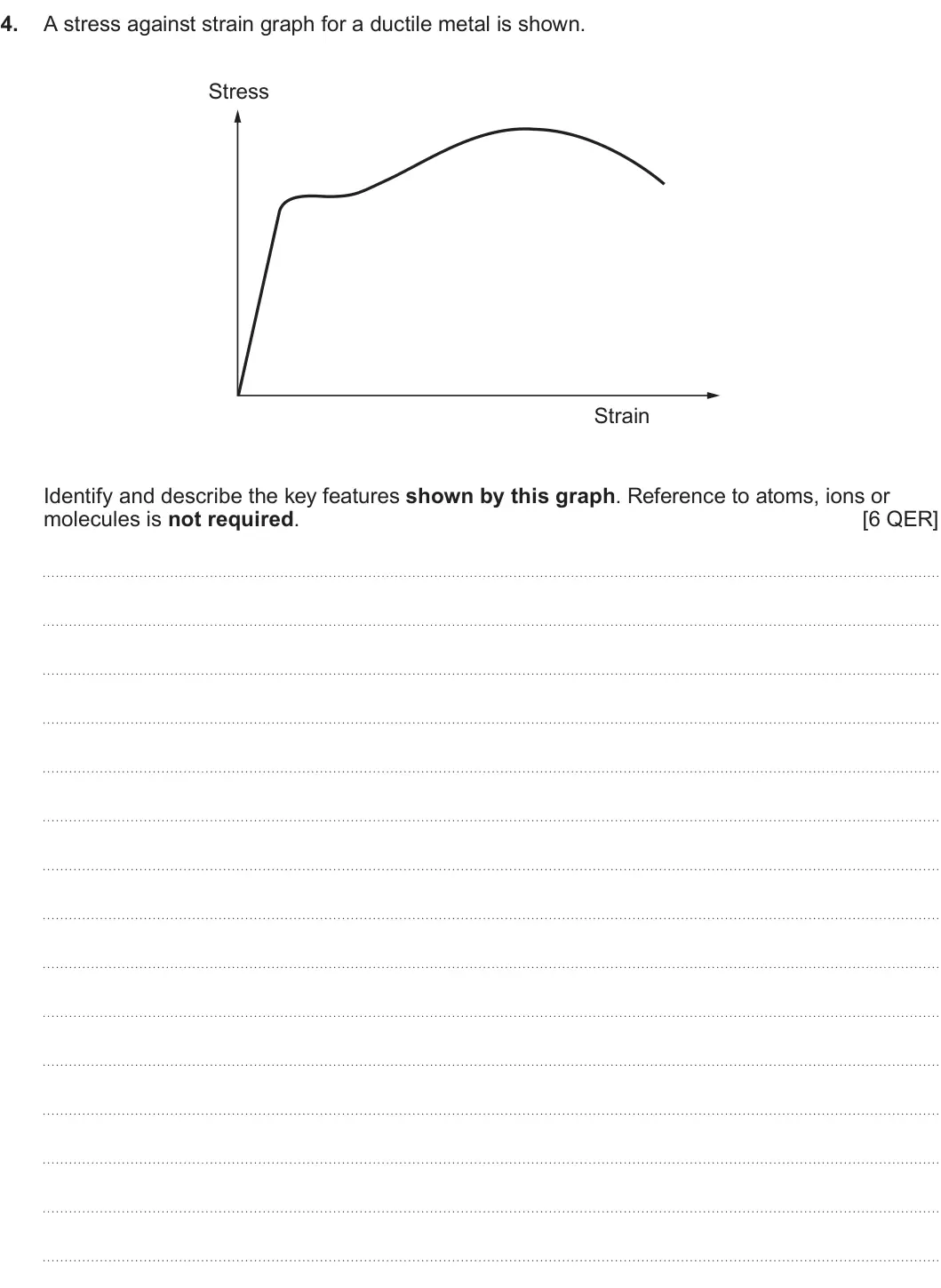
- Summer 2023, AS Unit 1, Q4 (6 marks): A stress against strain graph for a ductile metal is shown. Stress Strain Identify and describe the key features shown by this graph. Reference to atoms, ions o
- Summer 2023, AS Unit 1, Q5(c) (4 marks): 2.0 × 10¹¹ N m–2. As the concrete block moves upwards the tension in the cable changes depending on whether the block is accelerating, decelerating or moving at
- Summer 2022, AS Unit 1, Q2(a)(i) (2 marks): Calculate the work done in stretching the spring 0.4 m from its unstretched position. [2]
- Summer 2022, AS Unit 1, Q2(a)(ii) (2 marks): Explain why the work done to stretch the spring 0.8 m from its unstretched position is not twice your answer to part (a)(i). [2]
- Summer 2022, AS Unit 1, Q4(b)(i) (2 marks): Determine the Young modulus of the metal. [2]
- Summer 2022, AS Unit 1, Q4(c) (2 marks): The following table shows Young modulus values of the wires available to the students. Metal Young modulus / GPa aluminium 70 zinc 100 bronze 103 copper 117 nic
- Summer 2022, AS Unit 1, Q4(d) (3 marks): Jack had more time to carry out this experiment than Karen. Suggest differences in the way Jack carried out the experiment (i.e. procedure) and in the way that
- Summer 2019, AS Unit 1, Q6(a) (4 marks): Materials can be classified as crystalline, amorphous or polymeric. Explain the meaning of two of the terms in italics in terms of microscopic structure. Give o
- Summer 2019, AS Unit 1, Q6(b) (6 marks): The diagram shows apparatus that can be used to determine the Young modulus of a metal in the form of a wire. Describe the measurements which must be made, how
- Summer 2018, Unit 3, Q6(a)(i) (2 marks): the extension of the spring when the system is in equilibrium; [2]
- Summer 2018, AS Unit 1, Q3(a) (3 marks): Describe a method to investigate the force-extension properties of rubber in the form of an elastic band as it is loaded. You should describe how the extension
- Summer 2018, AS Unit 1, Q3(b)(i) (1 mark): Calculate the strain in the rubber at point B. [1]
- Summer 2018, AS Unit 1, Q3(b)(ii) (3 marks): Determine the Young modulus of the rubber in the region AB. Assume the band has a total cross-sectional area of 0.050 cm2. [3]
- Summer 2018, AS Unit 1, Q3(c) (3 marks): By referring to the molecular structure of rubber, explain why the gradient at C is less than the gradient at D. [3]
- Summer 2017, Unit 4, Q3(b)(ii) (4 marks): An historic alternative to Newton’s Law of Gravitation involved invisible steel rods connecting stars and planets and providing the force for keeping planets in
- Summer 2017, AS Unit 1, Q1(a) (3 marks): In the production of steel alloy, atoms of carbon are added to iron. The resulting alloy is less ductile than pure iron. State the meaning of the term ductile,
- Summer 2017, AS Unit 1, Q1(b)(i) (1 mark): the strain; [1]
- Summer 2017, AS Unit 1, Q1(b)(ii) (2 marks): the applied stress; [2]
- Summer 2017, AS Unit 1, Q1(b)(iii) (2 marks): the force applied to the wire; [2]
- Summer 2017, AS Unit 1, Q1(b)(iv) (2 marks): the elastic energy stored in the wire. [2]
- Summer 2017, AS Unit 1, Q1(c)(i) (1 mark): On the diagram label a point in tension with the letter T, and a point in compression with the letter C. [1]
- Summer 2017, AS Unit 1, Q1(c)(ii) (1 mark): Inserting a pre-stressed steel bar into the concrete beam would increase the breaking stress of the concrete. On the diagram, draw a pre-stressed steel bar in a
- Summer 2017, AS Unit 1, Q1(c)(iii) (2 marks): Explain how the steel bar strengthens the beam. [2]
- Summer 2017, AS Unit 1, Q6(c)(i) (2 marks): Based on the information on the web page the shopkeeper decides to apply a SWL ratio of 3:1 for the wire he will use. State, giving your reasoning, which minimu
- Summer 2017, AS Unit 1, Q6(c)(ii) (2 marks): The shopkeeper has no engineering background. Evaluate whether or not he has made an informed decision. [2] FOR THE LAST QUESTION
- Summer 2016, AS Unit 1, Q4(a)(i) (2 marks): Explain how the effect of a change in temperature on the wire is minimised. [2]
- Summer 2016, AS Unit 1, Q4(a)(ii) (2 marks): State what is meant by the term elastic limit and explain how an experimenter would know whether or not the test wire has extended beyond its elastic limit. [2]
- Summer 2016, AS Unit 1, Q4(a)(iii) (2 marks): The text book also states: ‘The apparatus and procedures are designed carefully to minimise uncertainties when taking measurements.’ I. State why a long wire is
- Summer 2016, AS Unit 1, Q4(b)(i) (4 marks): Use the graph and the measurements given to determine the Young modulus of the material of the wire. Give your answer to an appropriate number of significant fi
- Summer 2016, AS Unit 1, Q4(b)(ii) (2 marks): Calculate the energy stored in the wire when it is extended by 2.4 mm. [2]
Questions, mark schemes and examiner’s reports are © WJEC CBAC Ltd, from their published past papers. Plumi isn’t affiliated with any exam board. Want whole papers? Every WJEC A-Level Physics paper.
Rather write your answers by hand on iPad? Plumi marks them against the same mark schemes.