 plumi
Energy concepts: WJEC A‑Level Physics questions
Every WJEC A-Level Physics exam question on 1.4 Energy concepts, 2016–2025, with its mark scheme and examiner’s report.
Find questions1,173
Calculations
Q2(c)
The whole paper ↗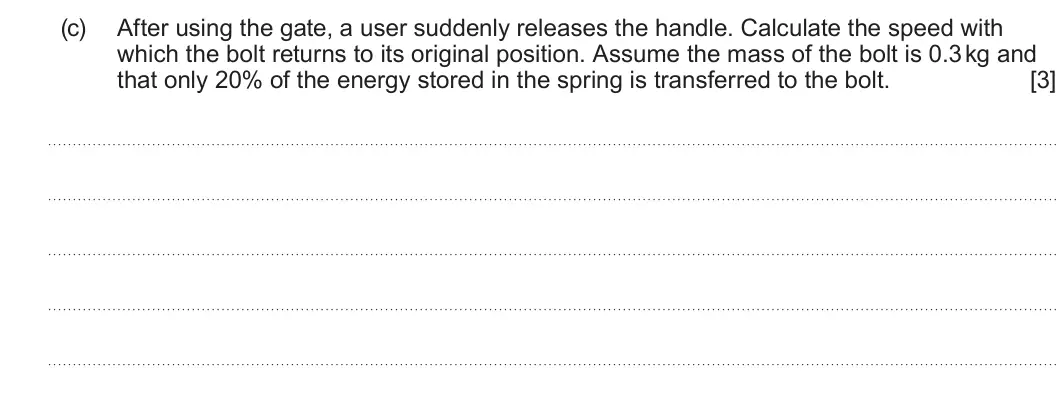
Q5(b)(i)
The whole paper ↗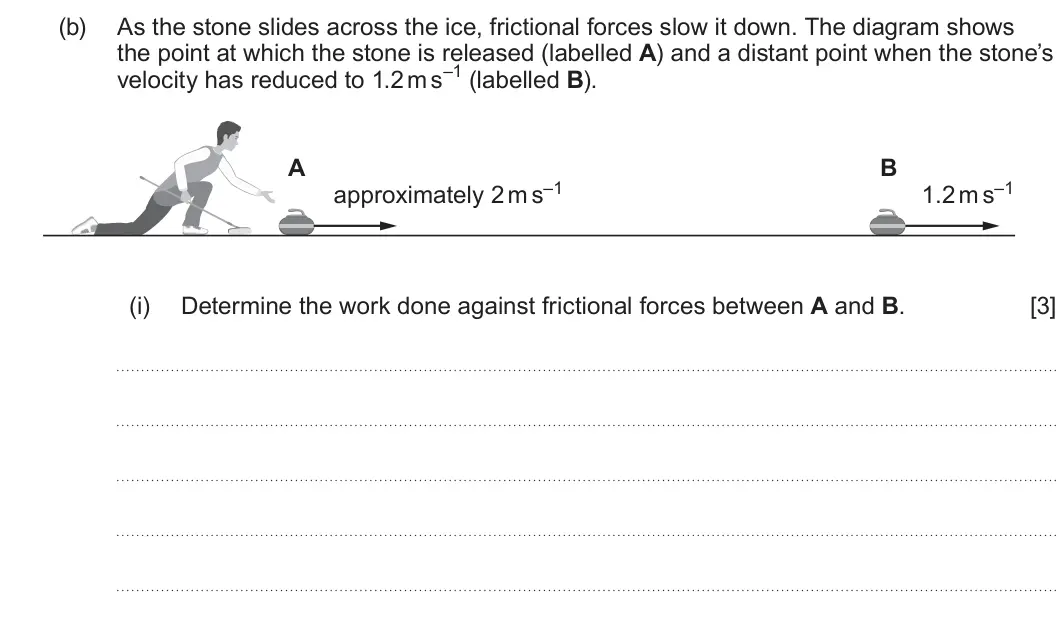
Q5(b)(ii)
The whole paper ↗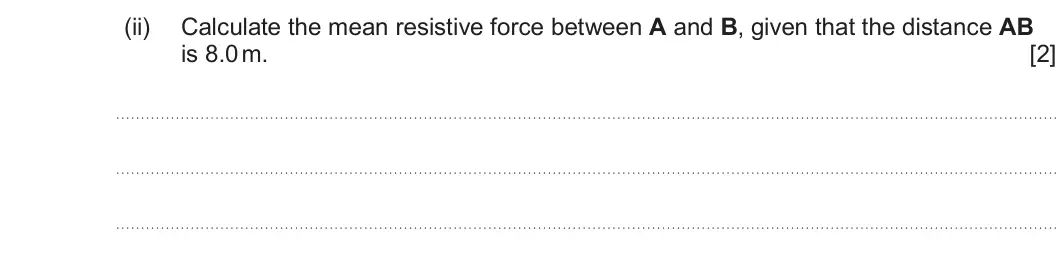
Q5(b)(iii)
The whole paper ↗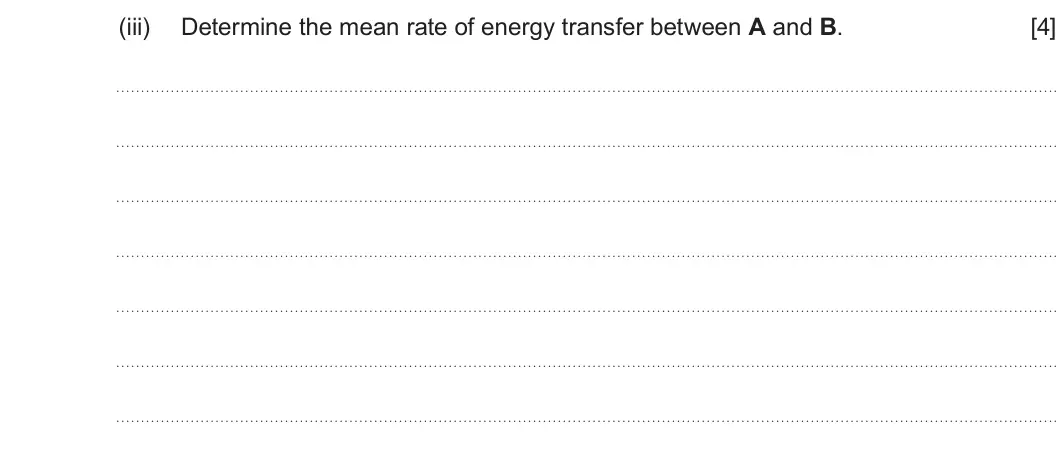
Q6(a)
The whole paper ↗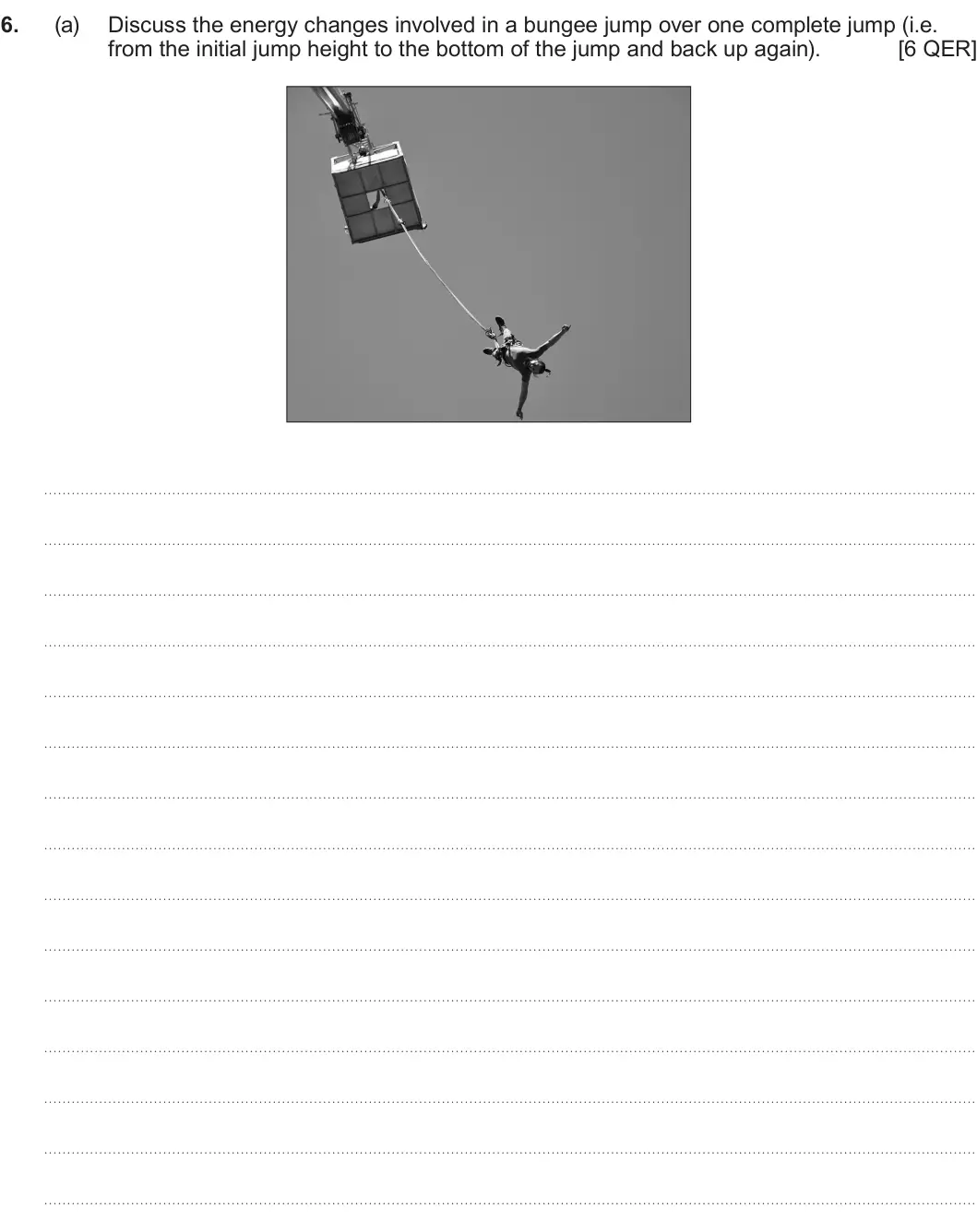
Q2(d)(i)
The whole paper ↗
Q3(b)(iii)
The whole paper ↗
Q3(c)
The whole paper ↗
Q2(b)(i)
The whole paper ↗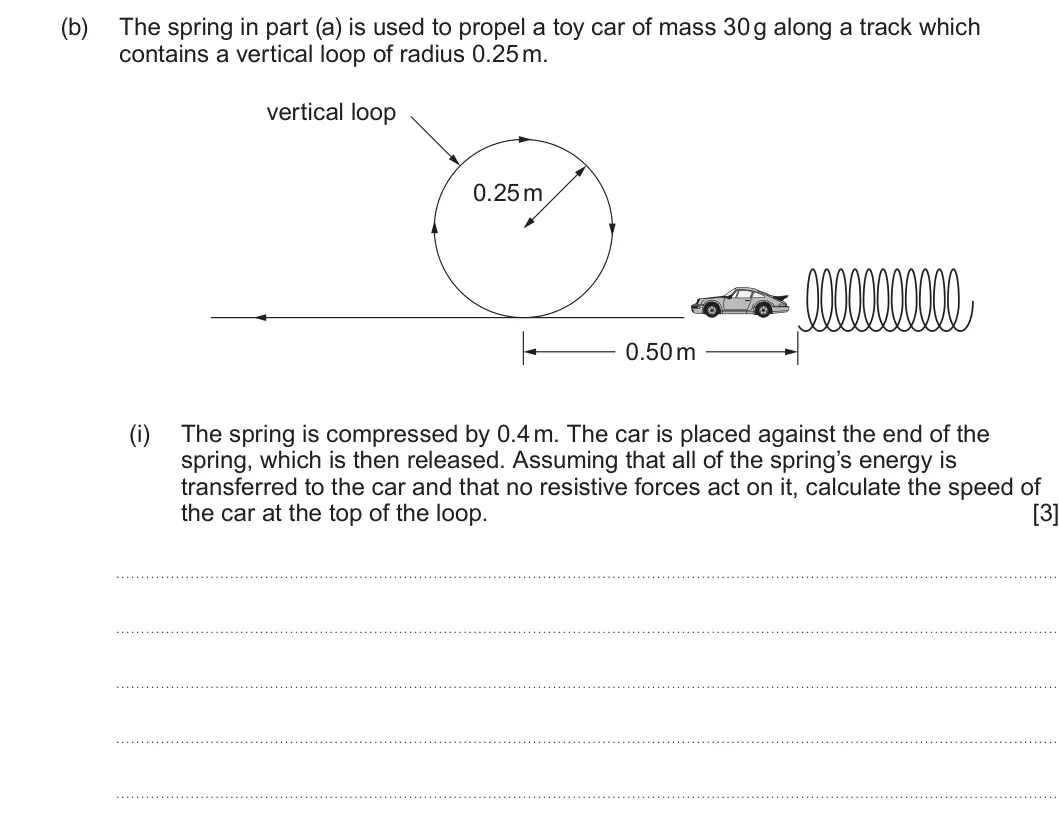
Q2(b)(ii)
The whole paper ↗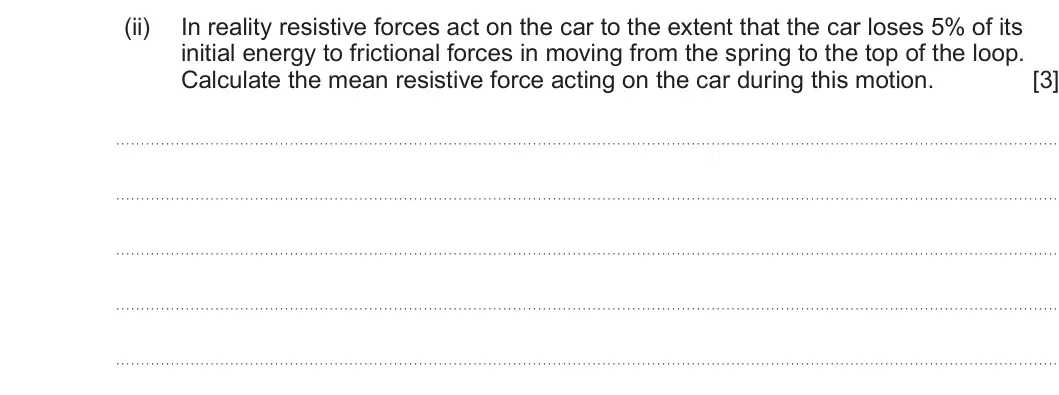
Q4(c)
The whole paper ↗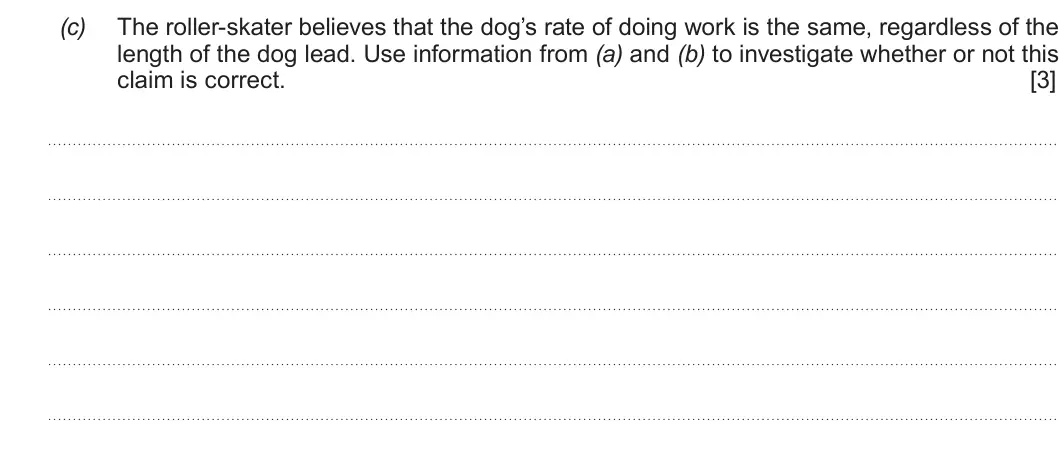
Q7(a)(i)
The whole paper ↗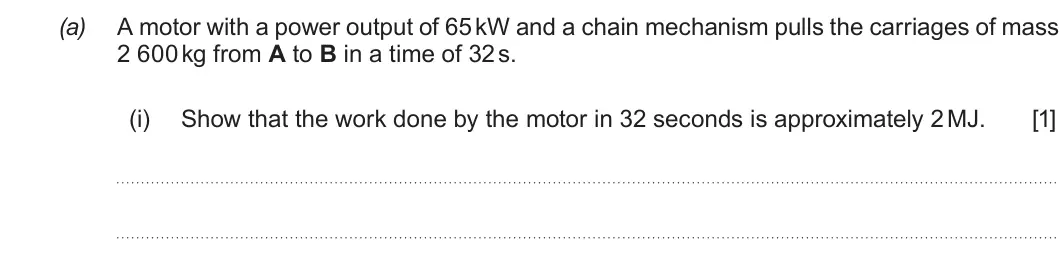
Q7(a)(ii)
The whole paper ↗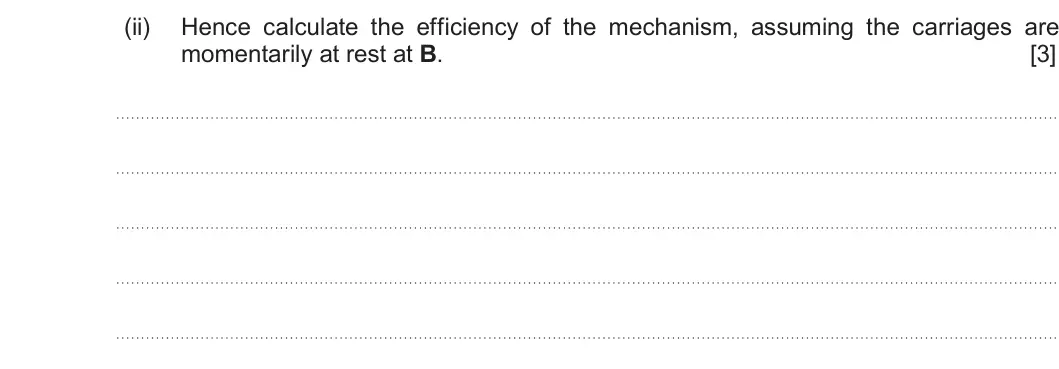
Q7(b)
The whole paper ↗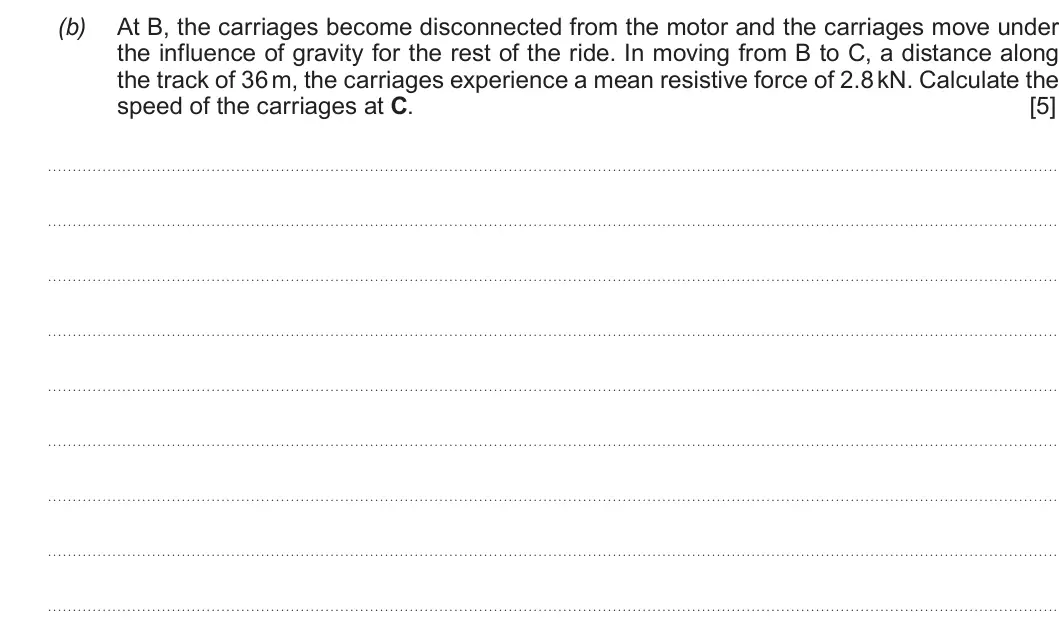
Q2(b)(i)
The whole paper ↗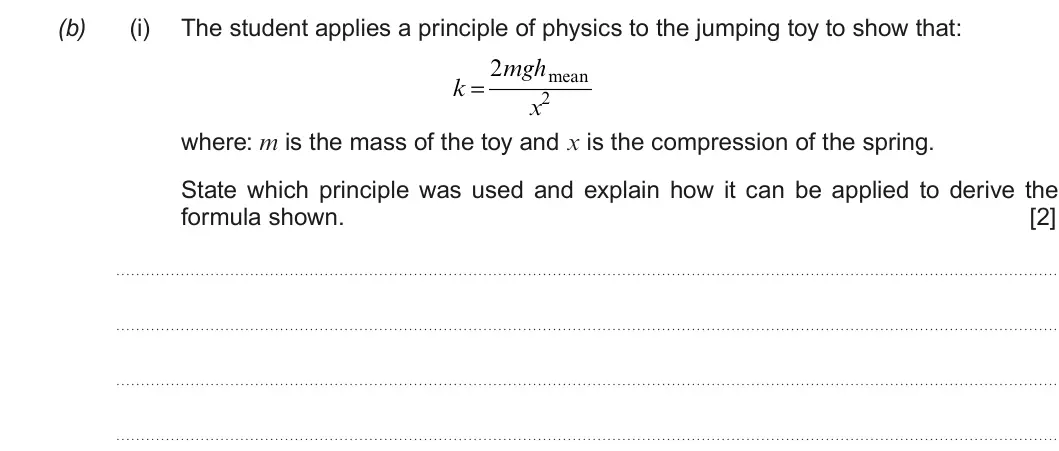
Q5(a)
The whole paper ↗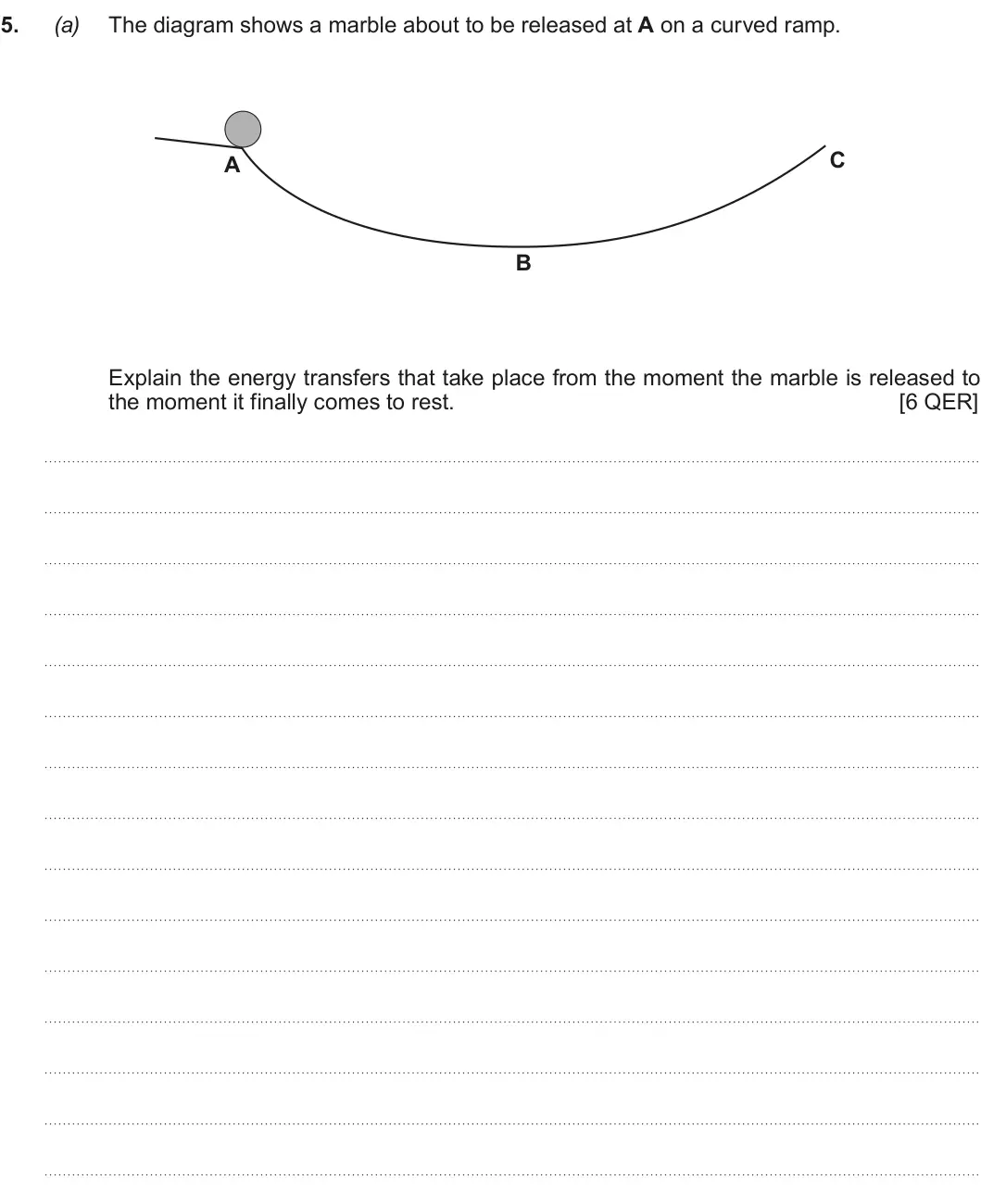
Q5(b)(i)
The whole paper ↗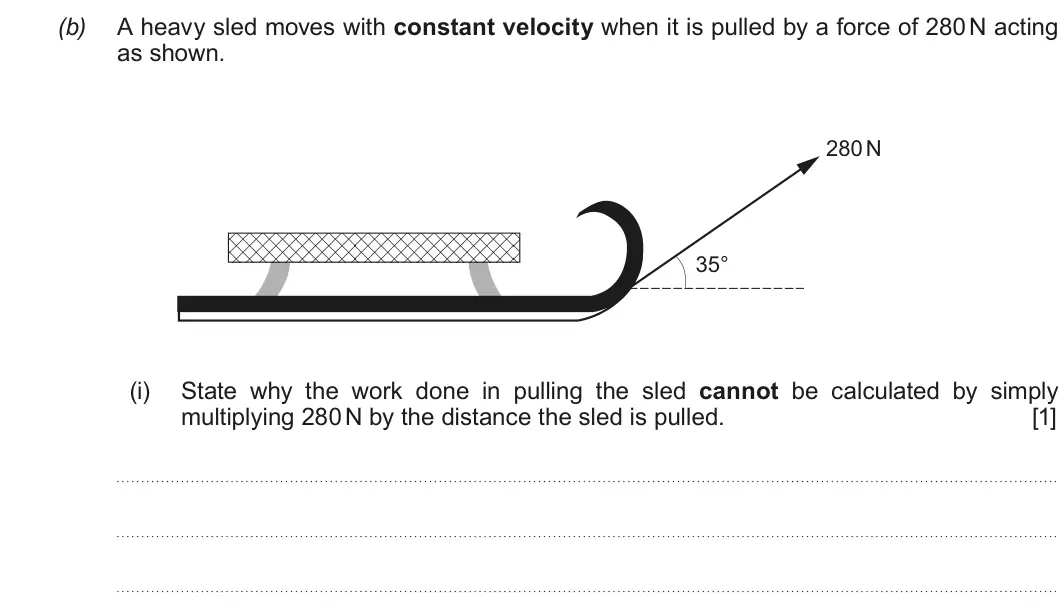
Q5(b)(ii)
The whole paper ↗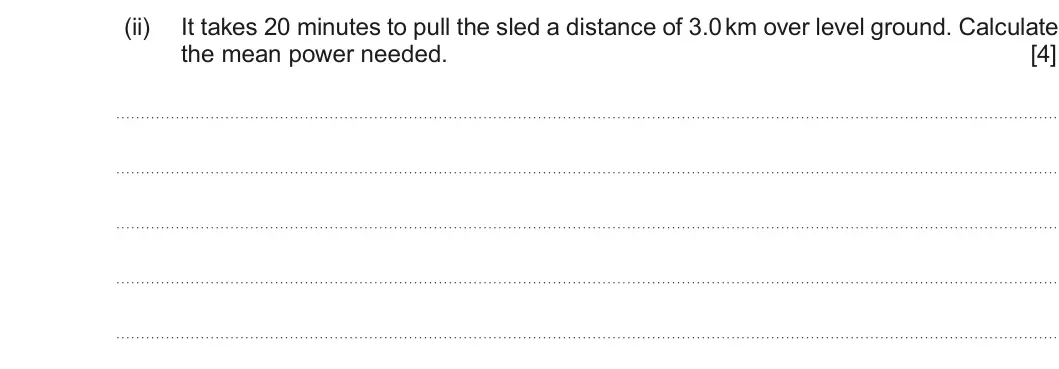
All 18 questions on Energy concepts, as a list
- Summer 2025, AS Unit 1, Q2(c) (3 marks): After using the gate, a user suddenly releases the handle. Calculate the speed with which the bolt returns to its original position. Assume the mass of the bolt
- Summer 2025, AS Unit 1, Q5(b)(i) (3 marks): Determine the work done against frictional forces between A and B. [3]
- Summer 2025, AS Unit 1, Q5(b)(ii) (2 marks): Calculate the mean resistive force between A and B, given that the distance AB is 8.0 m. [2]
- Summer 2025, AS Unit 1, Q5(b)(iii) (4 marks): Determine the mean rate of energy transfer between A and B. [4]
- Summer 2024, AS Unit 1, Q6(a) (6 marks): Discuss the energy changes involved in a bungee jump over one complete jump (i.e. from the initial jump height to the bottom of the jump and back up again). [6
- Summer 2023, Unit 3, Q2(d)(i) (3 marks): Calculate the speed of the sphere when it reaches the bottom of the circle. [3]
- Summer 2023, AS Unit 1, Q3(b)(iii) (3 marks): Calculate the total energy of the stone at height, h, given that it has a mass of 0.10 kg. [3]
- Summer 2023, AS Unit 1, Q3(c) (3 marks): The thrower believes that the stone loses 20 % of its energy every time it impacts with the water. Investigate whether or not this is true for the impact at B,
- Summer 2022, AS Unit 1, Q2(b)(i) (3 marks): The spring is compressed by 0.4 m. The car is placed against the end of the spring, which is then released. Assuming that all of the spring’s energy is transfer
- Summer 2022, AS Unit 1, Q2(b)(ii) (3 marks): In reality resistive forces act on the car to the extent that the car loses 5% of its initial energy to frictional forces in moving from the spring to the top o
- Summer 2019, AS Unit 1, Q4(c) (3 marks): The roller-skater believes that the dog’s rate of doing work is the same, regardless of the length of the dog lead. Use information from (a) and (b) to investig
- Summer 2018, AS Unit 1, Q7(a)(i) (1 mark): Show that the work done by the motor in 32 seconds is approximately 2 MJ. [1]
- Summer 2018, AS Unit 1, Q7(a)(ii) (3 marks): Hence calculate the efficiency of the mechanism, assuming the carriages are momentarily at rest at B. [3]
- Summer 2018, AS Unit 1, Q7(b) (5 marks): At B, the carriages become disconnected from the motor and the carriages move under the influence of gravity for the rest of the ride. In moving from B to C, a
- Summer 2017, AS Unit 1, Q2(b)(i) (2 marks): The student applies a principle of physics to the jumping toy to show that: 2mghmean k = x2 where: m is the mass of the toy and x is the compression of the spri
- Summer 2016, AS Unit 1, Q5(a) (6 marks): The diagram shows a marble about to be released at A on a curved ramp. C A B Explain the energy transfers that take place from the moment the marble is released
- Summer 2016, AS Unit 1, Q5(b)(i) (1 mark): State why the work done in pulling the sled cannot be calculated by simply multiplying 280 N by the distance the sled is pulled. [1]
- Summer 2016, AS Unit 1, Q5(b)(ii) (4 marks): It takes 20 minutes to pull the sled a distance of 3.0 km over level ground. Calculate the mean power needed. [4]
Questions, mark schemes and examiner’s reports are © WJEC CBAC Ltd, from their published past papers. Plumi isn’t affiliated with any exam board. Want whole papers? Every WJEC A-Level Physics paper.
Rather write your answers by hand on iPad? Plumi marks them against the same mark schemes.