 plumi
All organisms are related through their evolutionary history: WJEC A‑Level Biology questions
Every WJEC A-Level Biology exam question on 2.1 All organisms are related through their evolutionary history, 2016–2025, with its mark scheme and examiner’s report.
Find questions1,223
Calculations
Q1(a)(i)
The whole paper ↗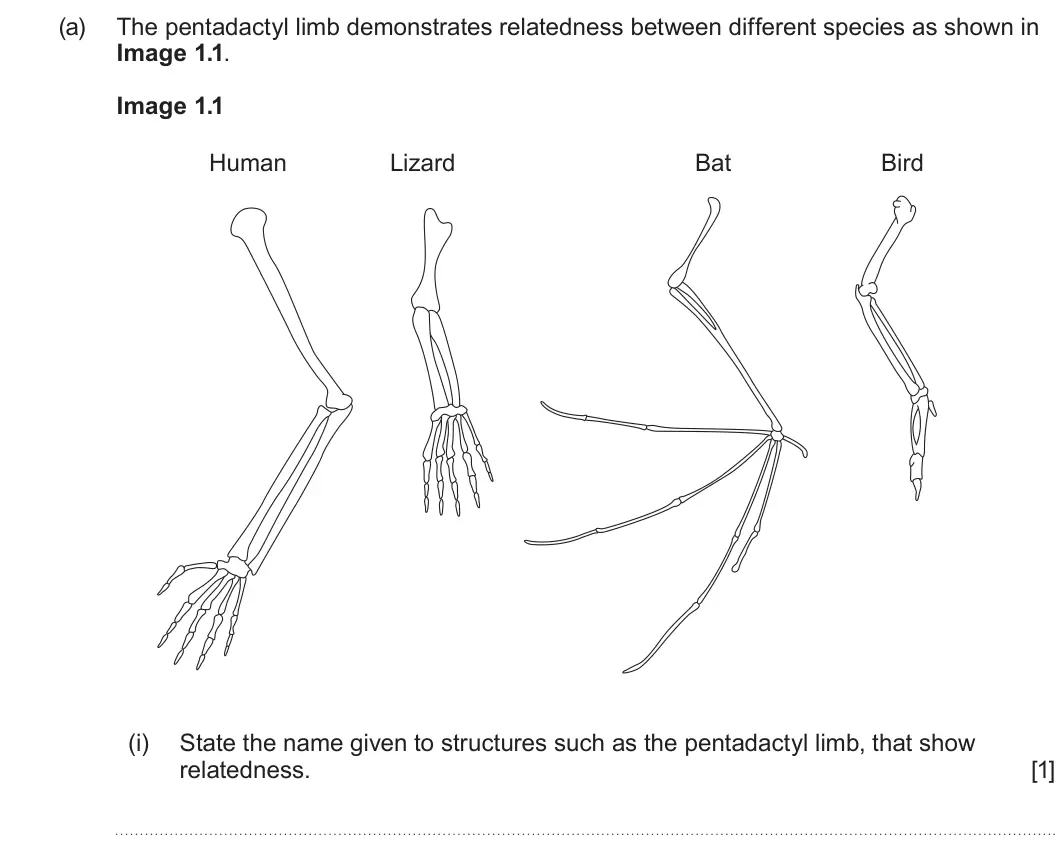
Q1(a)(ii)
The whole paper ↗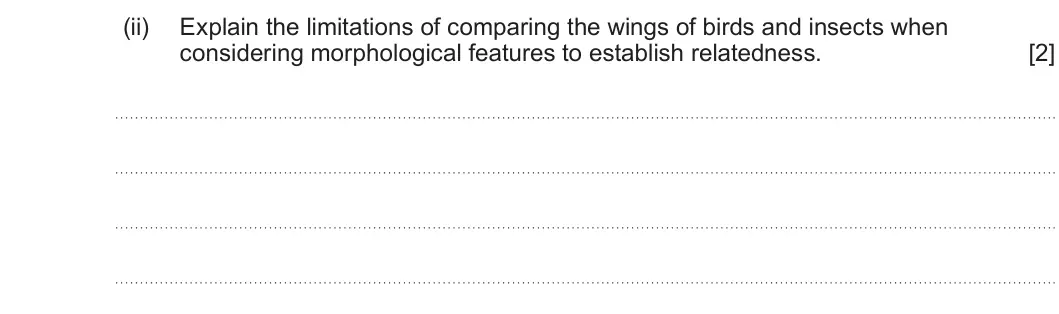
Q1(b)(i)
The whole paper ↗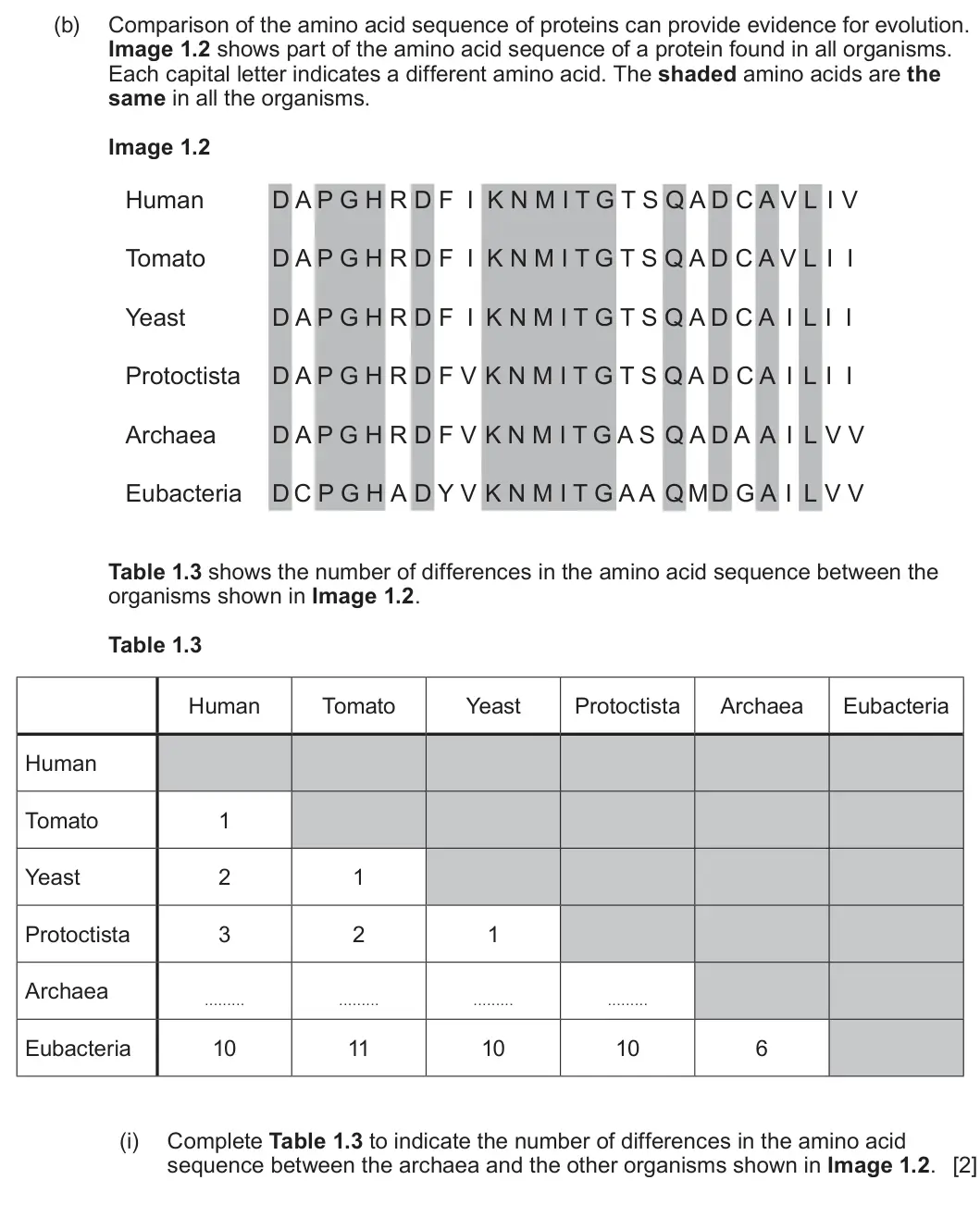
Q1(b)(ii)
The whole paper ↗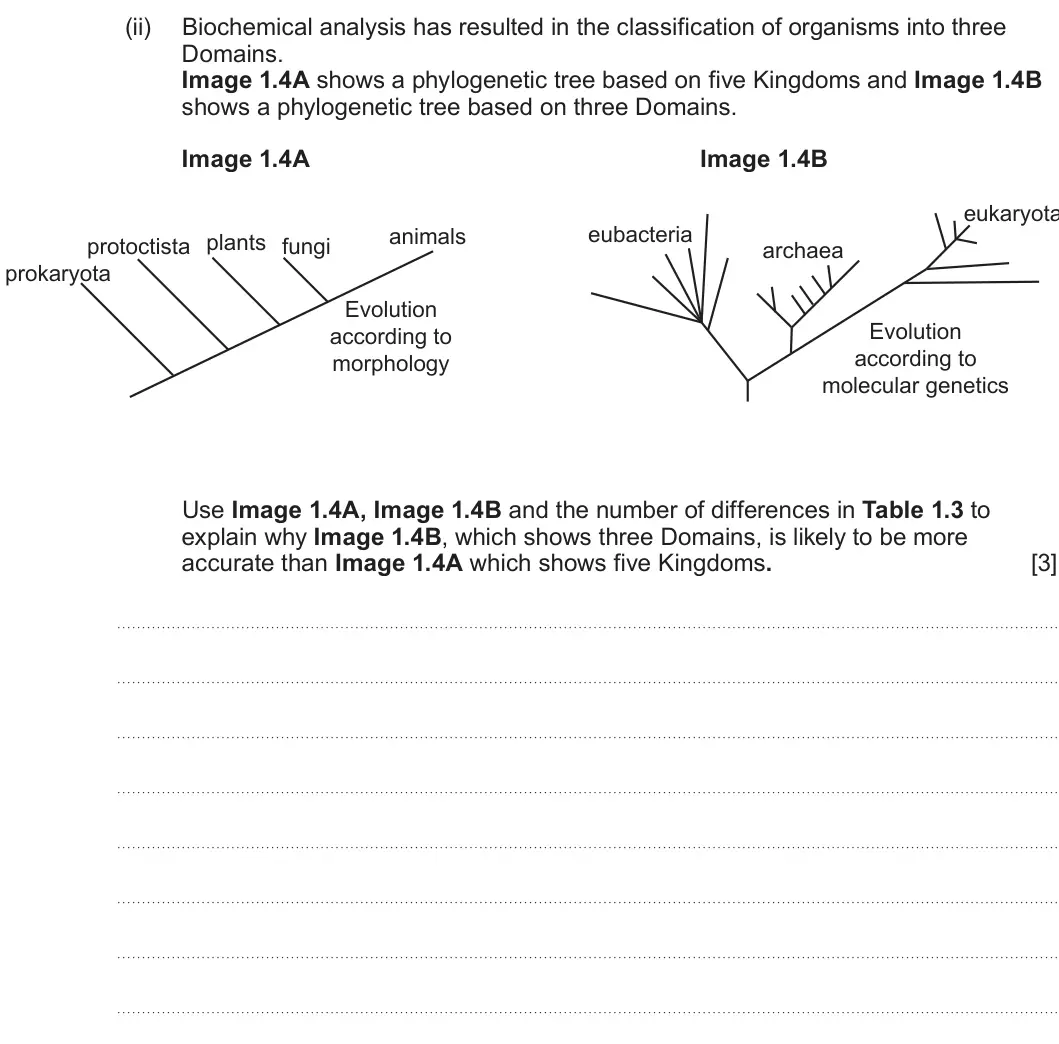
Q5(a)
The whole paper ↗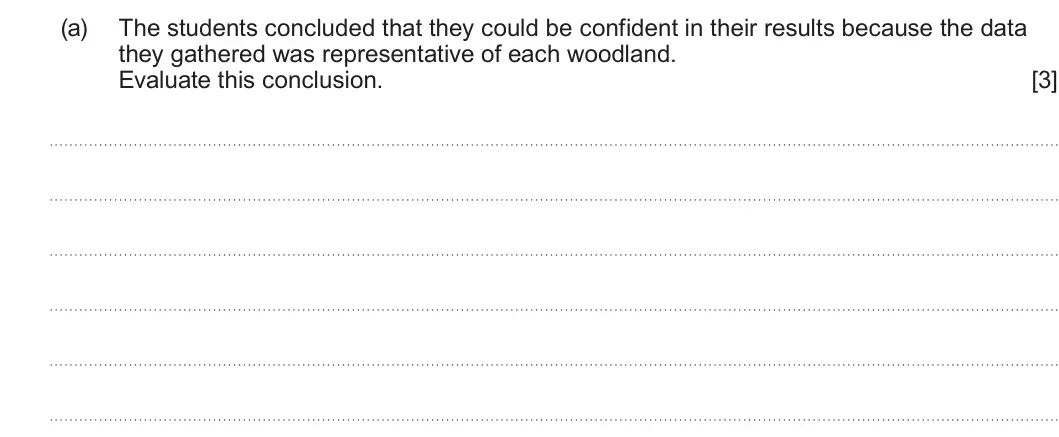
Q5(b)(i)
The whole paper ↗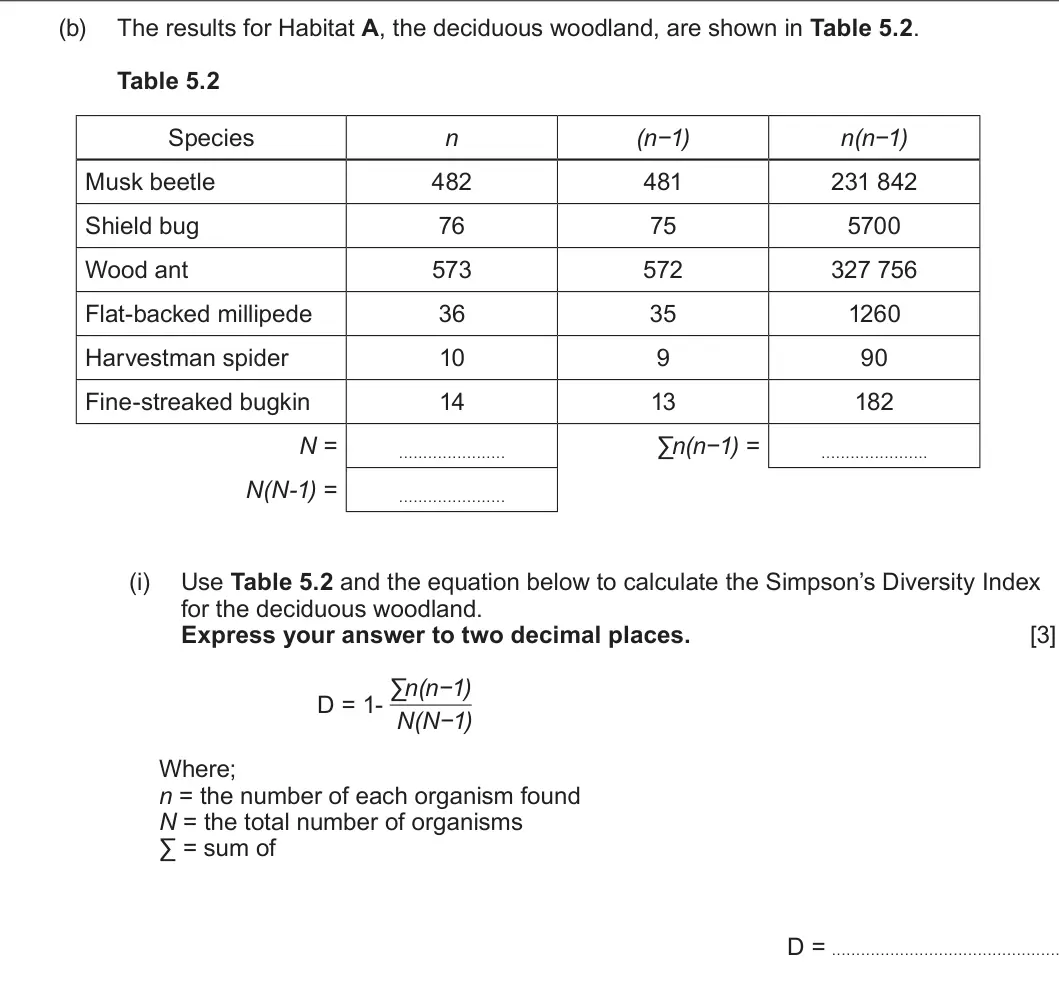
Q5(b)(ii)
The whole paper ↗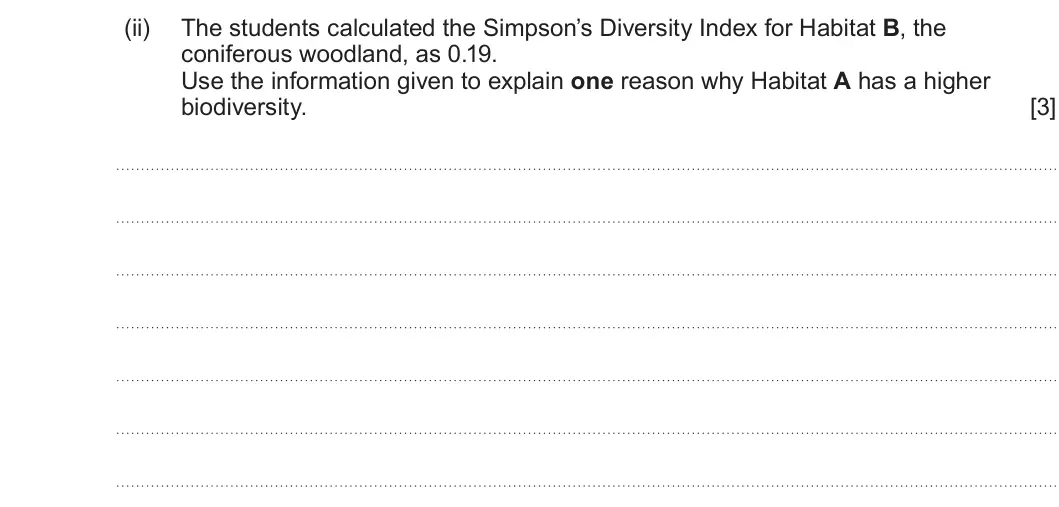
Q6(c)(i)
The whole paper ↗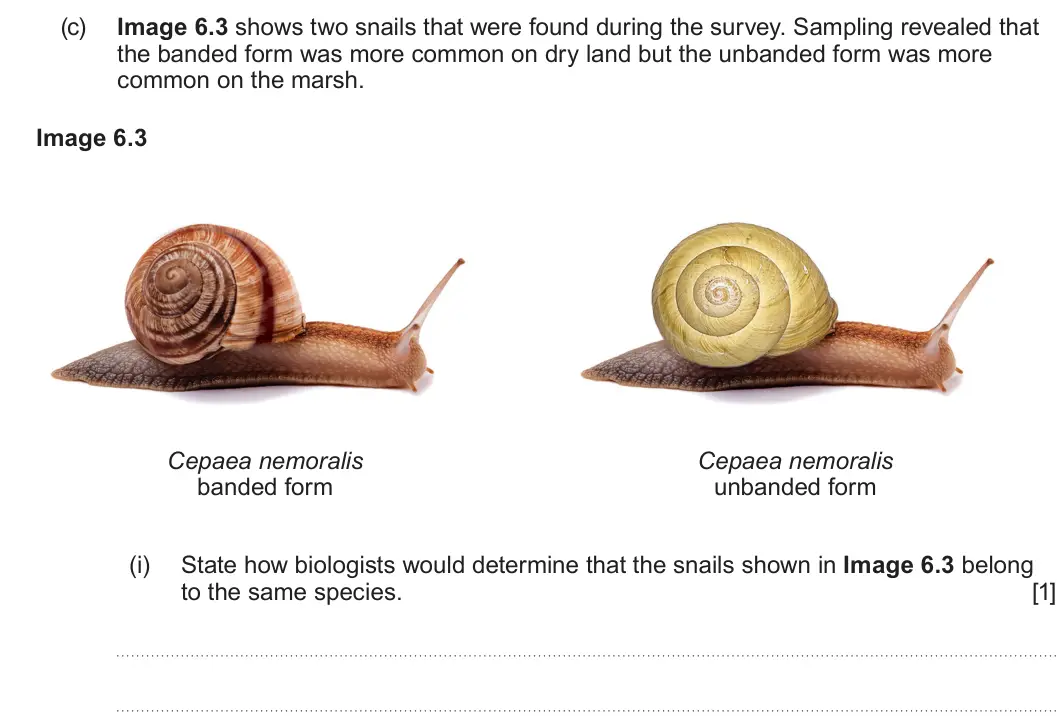
Q1(a)
The whole paper ↗
Q1(b)
The whole paper ↗
Q1(c)(i)
The whole paper ↗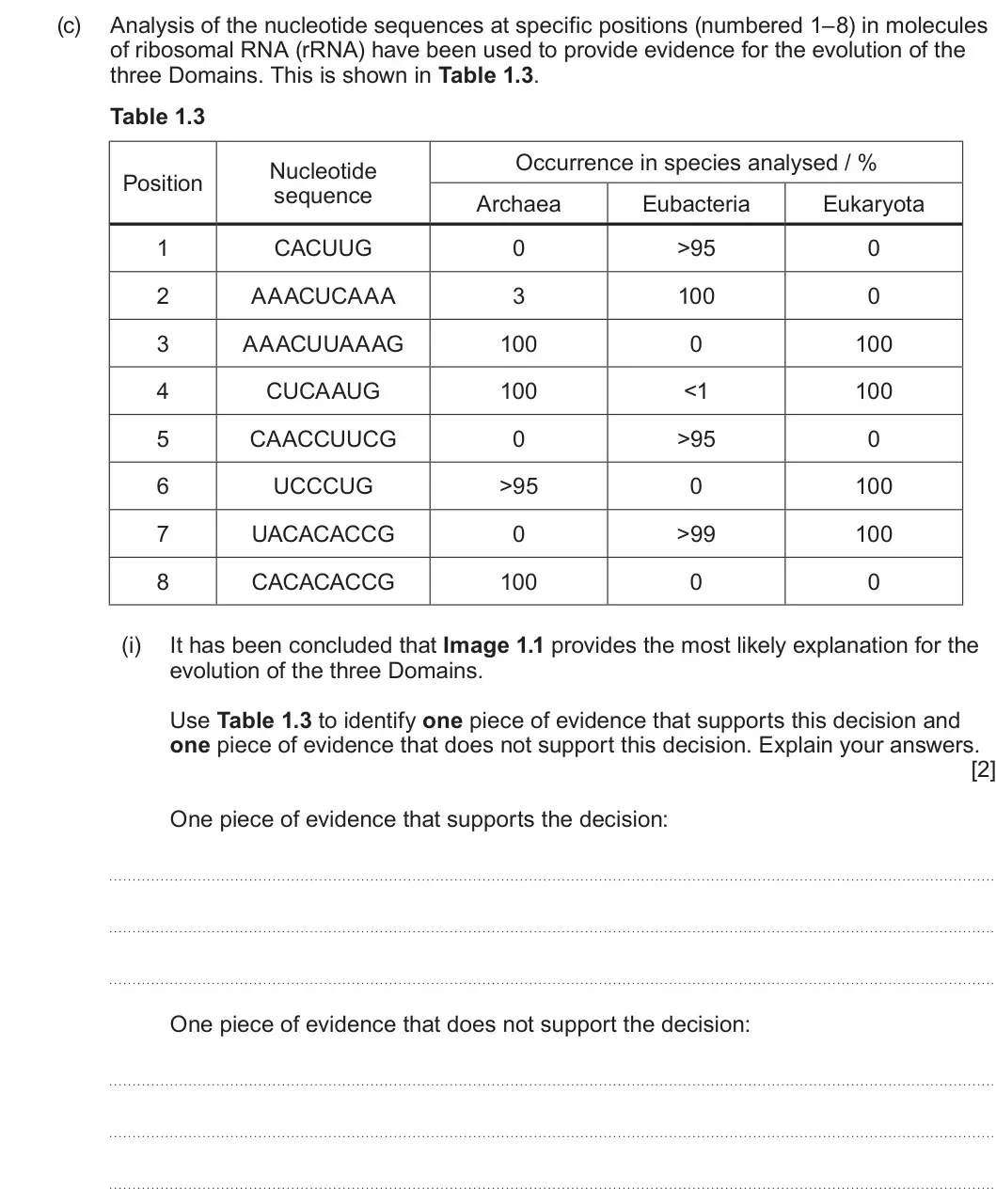
Q1(c)(ii)
The whole paper ↗
Q1(c)(iii)
The whole paper ↗
Q5(e)
The whole paper ↗
Q2(d)
The whole paper ↗
Q1(a)
The whole paper ↗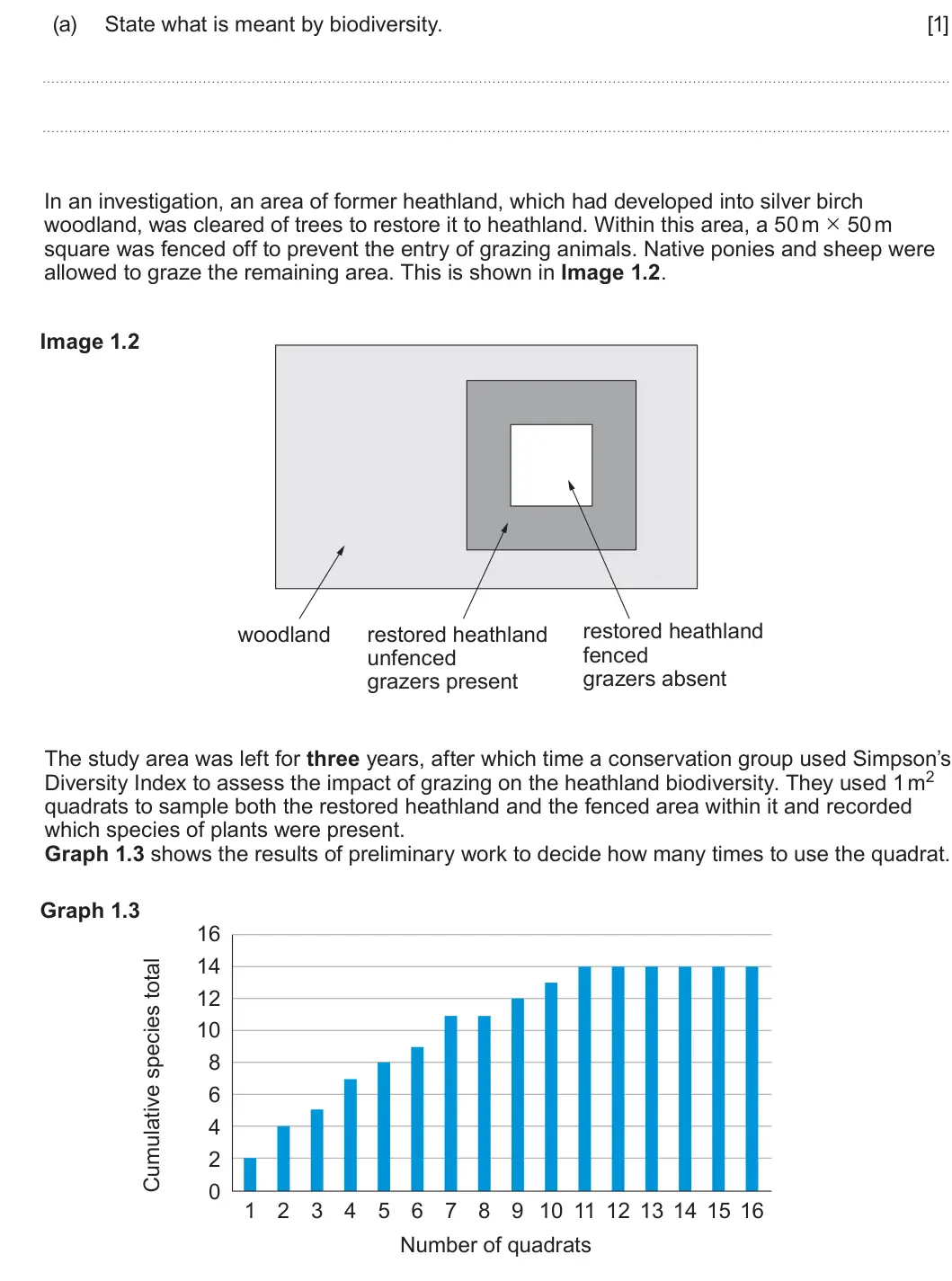
Q1(b)
The whole paper ↗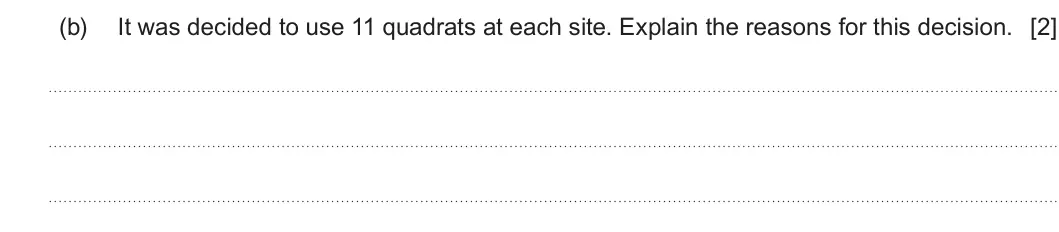
Q1(c)(i)
The whole paper ↗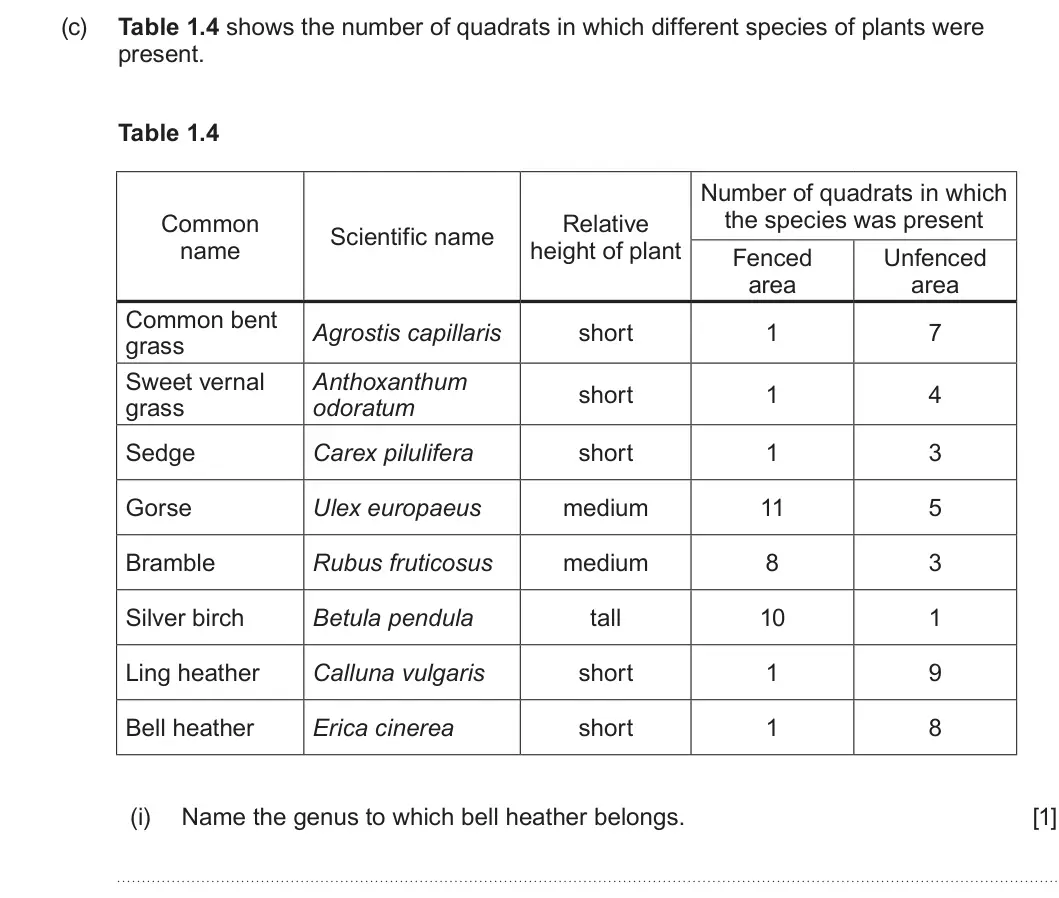
Q1(c)(ii)
The whole paper ↗
Q1(c)(iii)
The whole paper ↗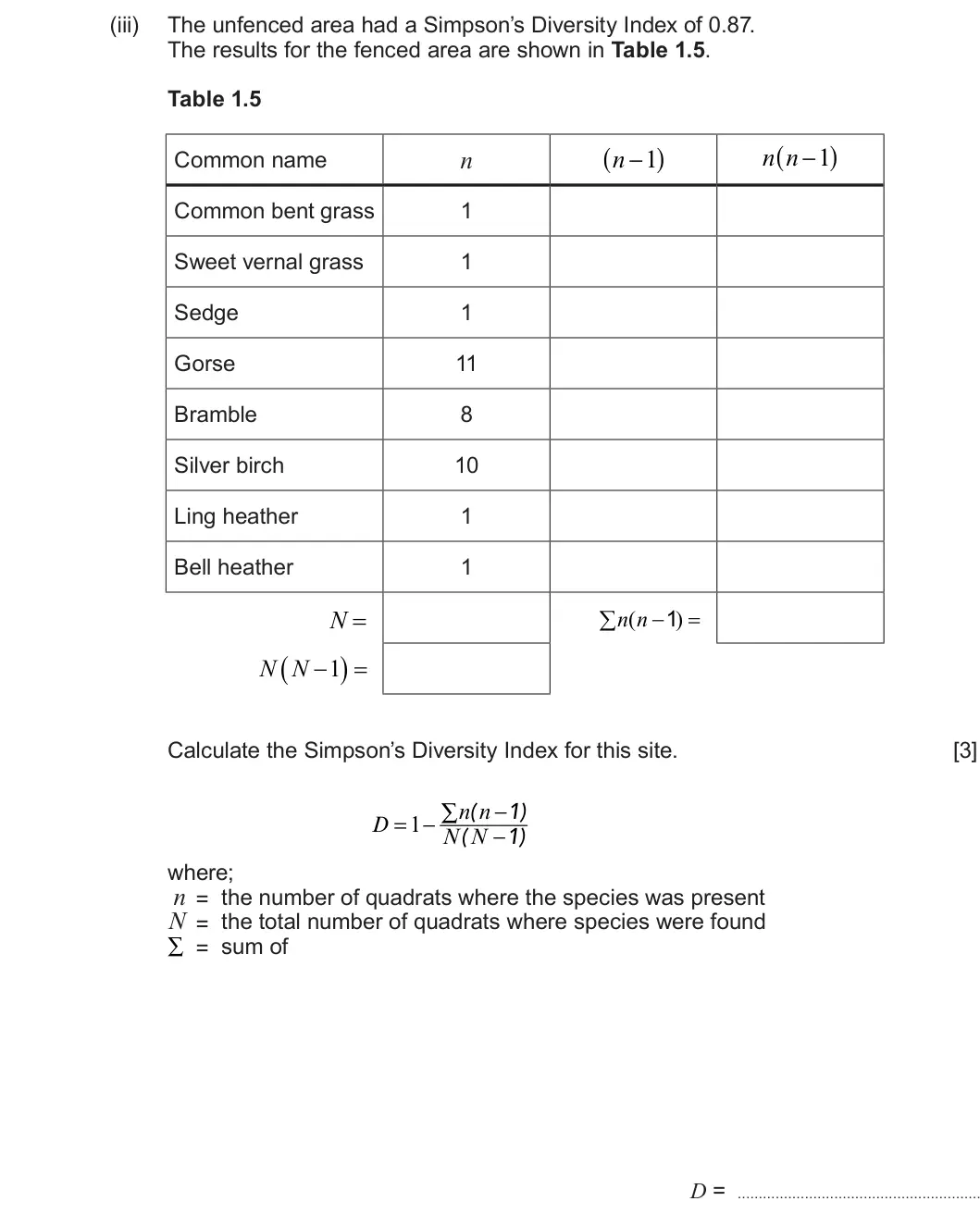
All 75 questions on All organisms are related through their evolutionary history, as a list
- Summer 2025, AS Unit 2, Q1(a)(i) (1 mark): State the name given to structures such as the pentadactyl limb, that show relatedness. [1]
- Summer 2025, AS Unit 2, Q1(a)(ii) (2 marks): Explain the limitations of comparing the wings of birds and insects when considering morphological features to establish relatedness. [2]
- Summer 2025, AS Unit 2, Q1(b)(i) (2 marks): Complete Table 1.3 to indicate the number of differences in the amino acid sequence between the archaea and the other organisms shown in Image 1.2. [2]
- Summer 2025, AS Unit 2, Q1(b)(ii) (3 marks): Biochemical analysis has resulted in the classification of organisms into three Domains. Image 1.4A shows a phylogenetic tree based on five Kingdoms and Image 1
- Summer 2025, AS Unit 2, Q5(a) (3 marks): The students concluded that they could be confident in their results because the data they gathered was representative of each woodland. Evaluate this conclusio
- Summer 2025, AS Unit 2, Q5(b)(i) (3 marks): The results for Habitat A, the deciduous woodland, are shown in Table 5.2. Table 5.2 Species n (n−1) n(n−1) Musk beetle 482 481 231 842 Shield bug 76 75 5700 Wo
- Summer 2025, AS Unit 2, Q5(b)(ii) (3 marks): The students calculated the Simpson’s Diversity Index for Habitat B, the coniferous woodland, as 0.19. Use the information given to explain one reason why Habit
- Summer 2024, Unit 3, Q6(c)(i) (1 mark): State how biologists would determine that the snails shown in Image 6.3 belong to the same species. [1]
- Summer 2024, AS Unit 2, Q1(a) (1 mark): The last universal common ancestor (LUCA) is the most recent population of organisms from which all organisms now living on Earth have evolved. Place a cross (×
- Summer 2024, AS Unit 2, Q1(b) (2 marks): State two features found in the cells of organisms in the Domain Eukaryota that are not found in the cells of organisms in the Domains Archaea and Eubacteria. [
- Summer 2024, AS Unit 2, Q1(c)(i) (2 marks): It has been concluded that Image 1.1 provides the most likely explanation for the evolution of the three Domains. Use Table 1.3 to identify one piece of evidenc
- Summer 2024, AS Unit 2, Q1(c)(ii) (1 mark): In this analysis, the rRNA molecules from each domain were extracted from large numbers of different species. Explain why this was necessary. [1]
- Summer 2024, AS Unit 2, Q1(c)(iii) (1 mark): Explain why evidence obtained from biochemical analysis is of more use in assessing the relatedness of organisms than the comparison of morphological features.
- Summer 2024, AS Unit 2, Q5(e) (1 mark): The structure of the lungs of lungfish are homologous to the lungs of mammals. State what conclusion can be made about the evolutionary relationships between lu
- Summer 2023, Unit 3, Q2(d) (2 marks): Using information from Image 2.4, classify diatoms into their Domain. Give a reason for your choice. [2] Domain .... Reason ..
- Summer 2023, AS Unit 2, Q1(a) (1 mark): State what is meant by biodiversity. [1] In an investigation, an area of former heathland, which had developed into silver birch woodland, was cleared of trees
- Summer 2023, AS Unit 2, Q1(b) (2 marks): It was decided to use 11 quadrats at each site. Explain the reasons for this decision. [2]
- Summer 2023, AS Unit 2, Q1(c)(i) (1 mark): Name the genus to which bell heather belongs. [1]
- Summer 2023, AS Unit 2, Q1(c)(ii) (1 mark): Explain why the values in the table do not provide information about the actual number of organisms present. [1]
- Summer 2023, AS Unit 2, Q1(c)(iii) (3 marks): The unfenced area had a Simpson’s Diversity Index of 0.87. The results for the fenced area are shown in Table 1.5. Table 1.5 ( ) ( ) n −1 n n −1 Common name n C
- Summer 2023, AS Unit 2, Q1(d)(i) (1 mark): Conclude the effect of grazing on heathland biodiversity. [1]
- Summer 2023, AS Unit 2, Q1(d)(ii) (2 marks): It was found that grazing increased the number of quadrats in which bell heather was found. Suggest an explanation for this. [2]
- Summer 2022, AS Unit 2, Q4(a)(i) (1 mark): Calculate the percentage of bird species that are endemic to Hawaii. [1] %
- Summer 2022, AS Unit 2, Q4(a)(ii) (1 mark): Less than 0.2% of UK bird species are endemic. Suggest one reason for the difference in the percentage of endemic species between the UK and Hawaii. [1]
- Summer 2022, AS Unit 2, Q4(b) (3 marks): Hawaiian honeycreepers are a group of birds endemic to Hawaii. At least 56 species are known to have existed, however 38 species are now extinct. Image 4.1 and
- Summer 2022, AS Unit 2, Q4(c)(i) (2 marks): Scientists have debated the identity of the ancestor of the honeycreepers. Morphological and behavioural data have suggested several possibilities. One group of
- Summer 2022, AS Unit 2, Q4(c)(ii) (3 marks): Use the information provided to explain how the technique allows the evolutionary relationships between the species to be determined. [3]
- Summer 2022, AS Unit 2, Q4(d)(i) (1 mark): The apapane and iiwi are found in similar habitats and have similar diets. Explain why they are regarded as separate species. [1]
- Summer 2022, AS Unit 2, Q4(d)(ii) (4 marks): Using the information provided, describe and explain the evolutionary change illustrated by Image 4.5. [4]
- Summer 2019, AS Unit 2, Q1(a)(i) (1 mark): State which of these domains contain organisms with a prokaryotic cell structure. [1]
- Summer 2019, AS Unit 2, Q1(a)(ii) (1 mark): Many members of the domain Archaea are extremophiles. Explain the meaning of the term “extremophile”. [1]
- Summer 2019, AS Unit 2, Q1(a)(iii) (1 mark): Members of the kingdom Animalia are classified in the domain Eukaryota. State the other kingdoms that are classified in the domain Eukaryota. [1]
- Summer 2019, AS Unit 2, Q1(b)(i) (1 mark): Name the taxonomic group to which these sub-groups belong. [1]
- Summer 2019, AS Unit 2, Q1(b)(ii) (3 marks): The photographs show the eye of an octopus and the eye of a human. Octopuses are molluscs and humans are chordates. Octopus Human Using the phylogenetic tree op
- Summer 2019, AS Unit 2, Q3(a) (1 mark): State why it is an adaptation for the clover to produce cyanide. [1]
- Summer 2019, AS Unit 2, Q3(b)(i) (2 marks): Identify two controlled variables in this test. [2]
- Summer 2019, AS Unit 2, Q3(b)(ii) (1 mark): Explain why the leaves are crushed before inserting the indicator paper. [1]
- Summer 2019, AS Unit 2, Q3(b)(iii) (1 mark): The indicator paper contains a corrosive chemical. Describe a risk in performing this test and the control measure that should be taken to minimise the risk. [1
- Summer 2019, AS Unit 2, Q3(c)(i) (1 mark): Identify the independent and dependent variables in this investigation. [1] Independent variable: Dependent variable:
- Summer 2019, AS Unit 2, Q3(c)(ii) (3 marks): Describe a method that could be used at each site to collect clover leaves at random. [3]
- Summer 2019, AS Unit 2, Q3(d) (1 mark): The scatter diagram summarises the results of this investigation. 50 40 Cyanogenic clover plants / % 30 20 10 0 0 50 100 150 200 250 Altitude / m The researcher
- Summer 2019, AS Unit 2, Q3(e) (2 marks): Cyanogenesis in Trifolium repens is an example of genetic polymorphism. Explain what is meant by genetic polymorphism. [2]
- Summer 2018, AS Unit 2, Q1(a)(i) (2 marks): Both streams were sampled in shallow, fast flowing regions. The samples were taken from areas of the same width and water depth, with similar stony stream beds.
- Summer 2018, AS Unit 2, Q1(a)(ii) (2 marks): When kick sampling, state two factors that need to be controlled to ensure standardisation of sampling. [2]
- Summer 2018, AS Unit 2, Q1(a)(iii) (2 marks): To improve the accuracy of species identification it was suggested that the specimens collected could be preserved in alcohol and taken back to the laboratory f
- Summer 2018, AS Unit 2, Q1(b)(i) (1 mark): The students collected invertebrates at sites chosen at random. Explain the importance of the site
- Summer 2018, AS Unit 2, Q1(b)(ii) (2 marks): Suggest two reasons why the values obtained using this technique might be an underestimate of the actual numbers of species at the kick sample sites. [2]
- Summer 2018, AS Unit 2, Q1(b)(iii) (3 marks): Use the following table and the formula to calculate Simpson’s Diversity Index for the moorland stream. [3] Species of invertebrate n (n–1) n(n–1) (common names
- Summer 2018, AS Unit 2, Q1(b)(iv) (2 marks): The Diversity Index for the forest stream is 0.4. With reference to the results table on page 4, explain how you could deduce that the forest stream was less di
- Summer 2018, AS Unit 2, Q1(c)(i) (2 marks): Explain how the confidence in this conclusion could be improved. [2]
- Summer 2018, AS Unit 2, Q1(c)(ii) (1 mark): Suggest how forest managers could use this information to increase diversity in forest streams. [1]
- Summer 2018, AS Unit 2, Q3(a) (1 mark): State the term used to describe diagrams such as those shown above. [1]
- Summer 2018, AS Unit 2, Q3(b)(i) (3 marks): Use the information in the table to explain whether Diagram A or Diagram B represents the currently accepted theory regarding the closest living relative to the
- Summer 2018, AS Unit 2, Q3(b)(ii) (2 marks): Modern taxonomic classification combines Cetacea and Artiodactyla into a single order, the Cetiartiodactyla. Explain how this illustrates the “tentative nature”
- Summer 2018, AS Unit 2, Q3(c) (1 mark): Both the common bottlenose dolphin (Tursiops truncates) and the killer whale (Orcinis orca) belong to a smaller taxonomic group of the sub-order Odontoceti call
- Summer 2018, AS Unit 2, Q3(d)(i) (2 marks): Describe the effect of latitude on the number of species of small odontocetes from the antarctic circle to the tropics. [2]
- Summer 2018, AS Unit 2, Q3(d)(ii) (1 mark): State the environmental factor that is most likely to explain the distribution of all marine mammal species. [1]
- Summer 2018, AS Unit 2, Q3(d)(iii) (1 mark): Why is the curve for all marine mammal species described as showing a bimodal distribution? [1]
- Summer 2017, AS Unit 2, Q1(a)(iii) (2 marks): State why these insect species are classified in the same domain and kingdom as humans (Homo sapiens). [2] Domain Kingdom
- Summer 2017, AS Unit 2, Q1(b)(i) (2 marks): Describe the evidence that suggests that the common ancestor of gorillas and humans was not infested with the pubic louse, Pthirus pubis. [2]
- Summer 2017, AS Unit 2, Q1(b)(ii) (1 mark): Suggest how DNA analysis could be used to measure the degree of genetic similarity between species. [1]
- Summer 2017, AS Unit 2, Q1(b)(iii) (1 mark): The table below represents a hypothetical molecular clock. Insert the value for the time of divergence for 90% genetic similarity in the table below. [1] Time o
- Summer 2017, AS Unit 2, Q1(c) (1 mark): Another human ectoparasite is the disease-carrying body louse. The body louse attaches its eggs to clothing whereas the head louse attaches its eggs to scalp ha
- Summer 2016, AS Unit 2, Q2(a)(i) (1 mark): Which phylogenetic tree represents the more probable hypothesis? Give a reason for your answer. [1]
- Summer 2016, AS Unit 2, Q2(a)(ii) (2 marks): Explain how analysis of protein could be used to confirm your answer. [2]
- Summer 2016, AS Unit 2, Q2(b)(i) (3 marks): What conclusions can be made from the diagram regarding the evolution of both forms of human HIV? [3]
- Summer 2016, AS Unit 2, Q2(b)(ii) (1 mark): Scientists have been able to calculate the mean rate of mutation in the virus which causes HIV. What use can scientists make of this information? [1]
- Summer 2016, AS Unit 2, Q2(b)(iii) (1 mark): Evidence shows a high similarity between one strain of HIV2 and a virus found in Sooty Mangabey monkeys. It was unclear if the virus had originally evolved in h
- Summer 2016, AS Unit 2, Q3(a)(i) (2 marks): Identify the dependent and independent variables in their study. [2] Dependent variable = Independent variable =
- Summer 2016, AS Unit 2, Q3(a)(ii) (1 mark): Identify one possible source of error when investigating the biodiversity of animals. [1]
- Summer 2016, AS Unit 2, Q3(a)(iii) (3 marks): The results for the unpolluted stream are given in the table below. Species. n (n-1) n(n-1) Common name with description Water boatman. 4 3 12 Surface living, f
- Summer 2016, AS Unit 2, Q3(a)(iv) (1 mark): figure? [1]
- Summer 2016, AS Unit 2, Q3(a)(v) (2 marks): One student calculated the diversity index in one section of a stream to be 10.24. Explain what can be concluded from this result. [2]
- Summer 2016, AS Unit 2, Q3(b)(i) (2 marks): These morphologically different snails are all the same species. Explain why Cepaea nemoralis is an example of ‘genetic polymorphism’. [2] The students made the
- Summer 2016, AS Unit 2, Q3(b)(ii) (3 marks): Explain how genetic polymorphism is maintained in banded snail populations. [3]
Questions, mark schemes and examiner’s reports are © WJEC CBAC Ltd, from their published past papers. Plumi isn’t affiliated with any exam board. Want whole papers? Every WJEC A-Level Biology paper.
Rather write your answers by hand on iPad? Plumi marks them against the same mark schemes.