 plumi
Adaptations for nutrition: WJEC A‑Level Biology questions
Every WJEC A-Level Biology exam question on 2.4 Adaptations for nutrition, 2016–2025, with its mark scheme and examiner’s report.
Find questions1,223
Calculations
Q6(a)(i)
The whole paper ↗
Q6(a)(ii)
The whole paper ↗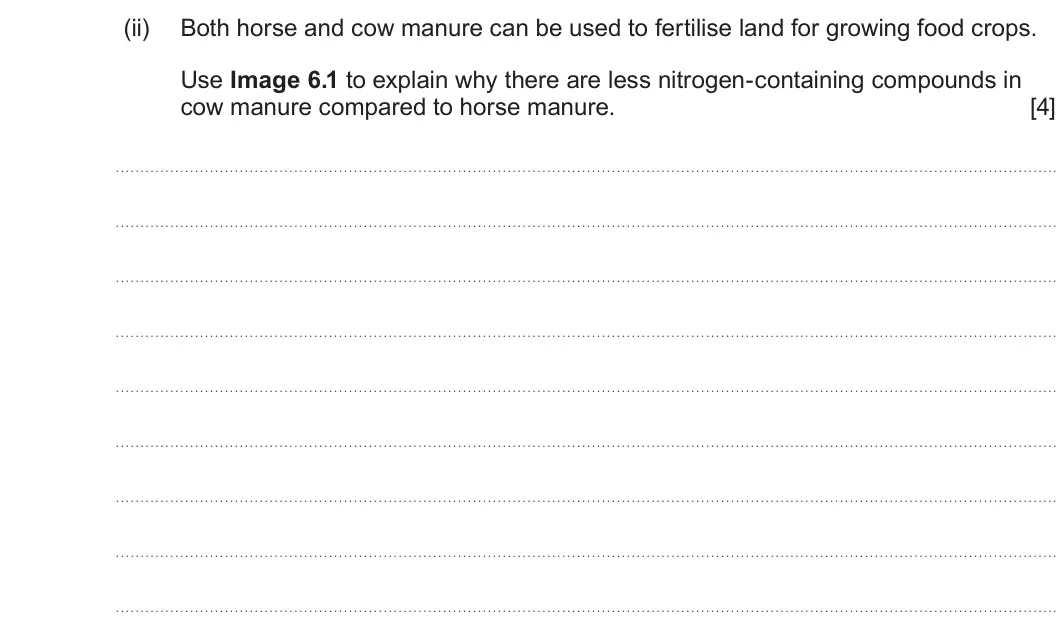
Q6(b)(i)
The whole paper ↗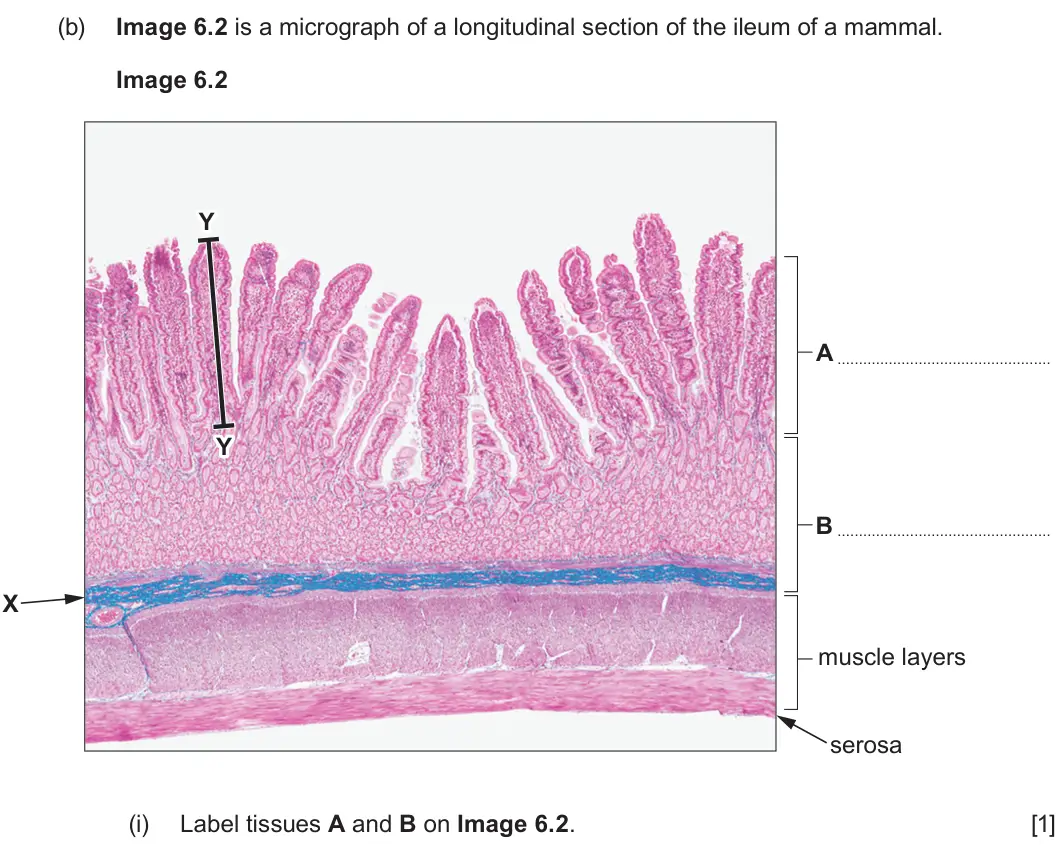
Q6(b)(ii)
The whole paper ↗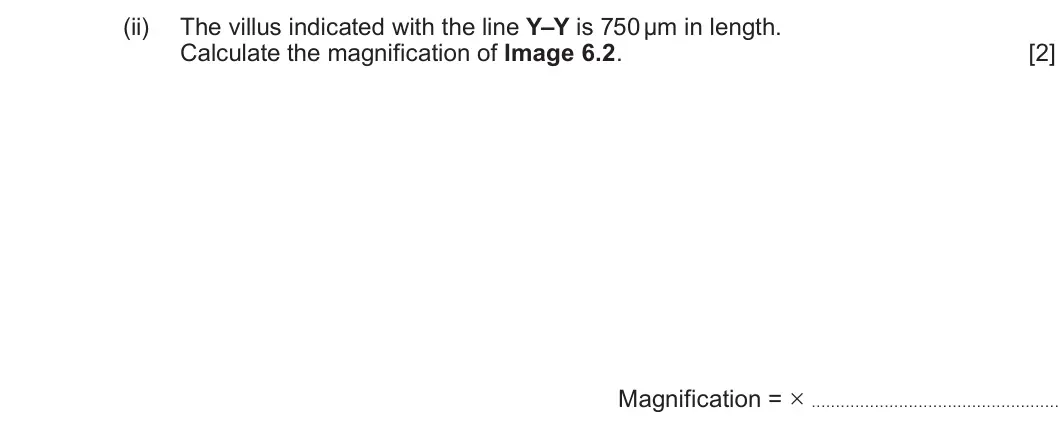
Q6(b)(iii)
The whole paper ↗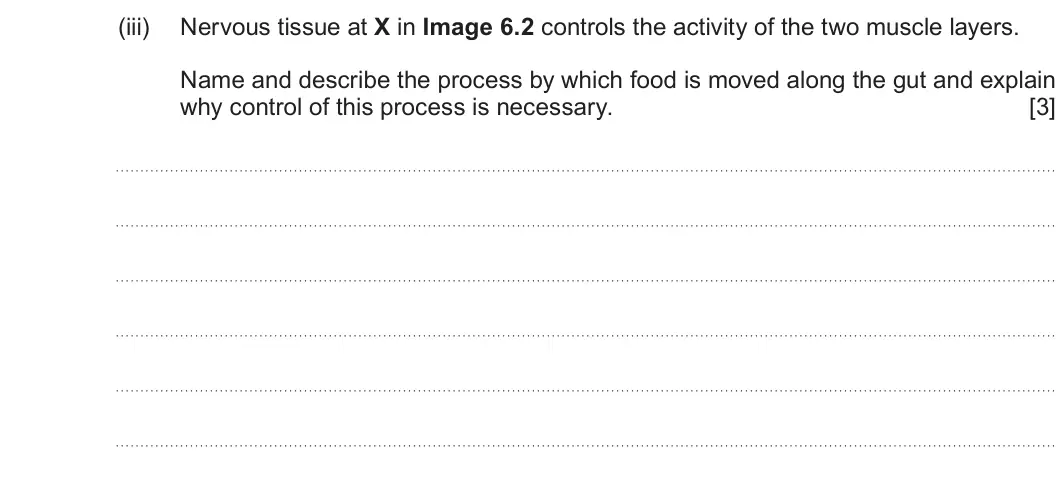
Q3(a)(i)
The whole paper ↗
Q3(a)(ii)
The whole paper ↗
Q3(a)(iii)
The whole paper ↗
Q3(b)
The whole paper ↗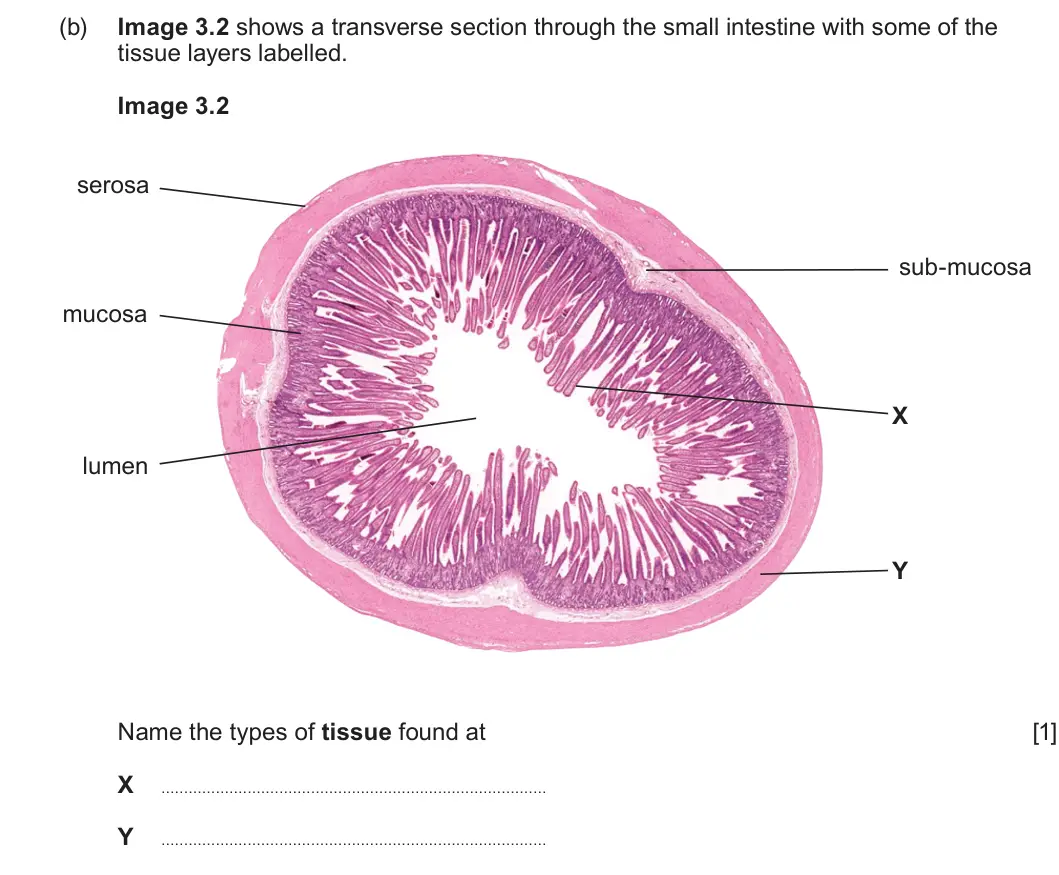
Q3(c)(i)
The whole paper ↗
Q3(c)(ii)
The whole paper ↗
Q5(a)(i)
The whole paper ↗
Q5(a)(ii)
The whole paper ↗
Q5(b)
The whole paper ↗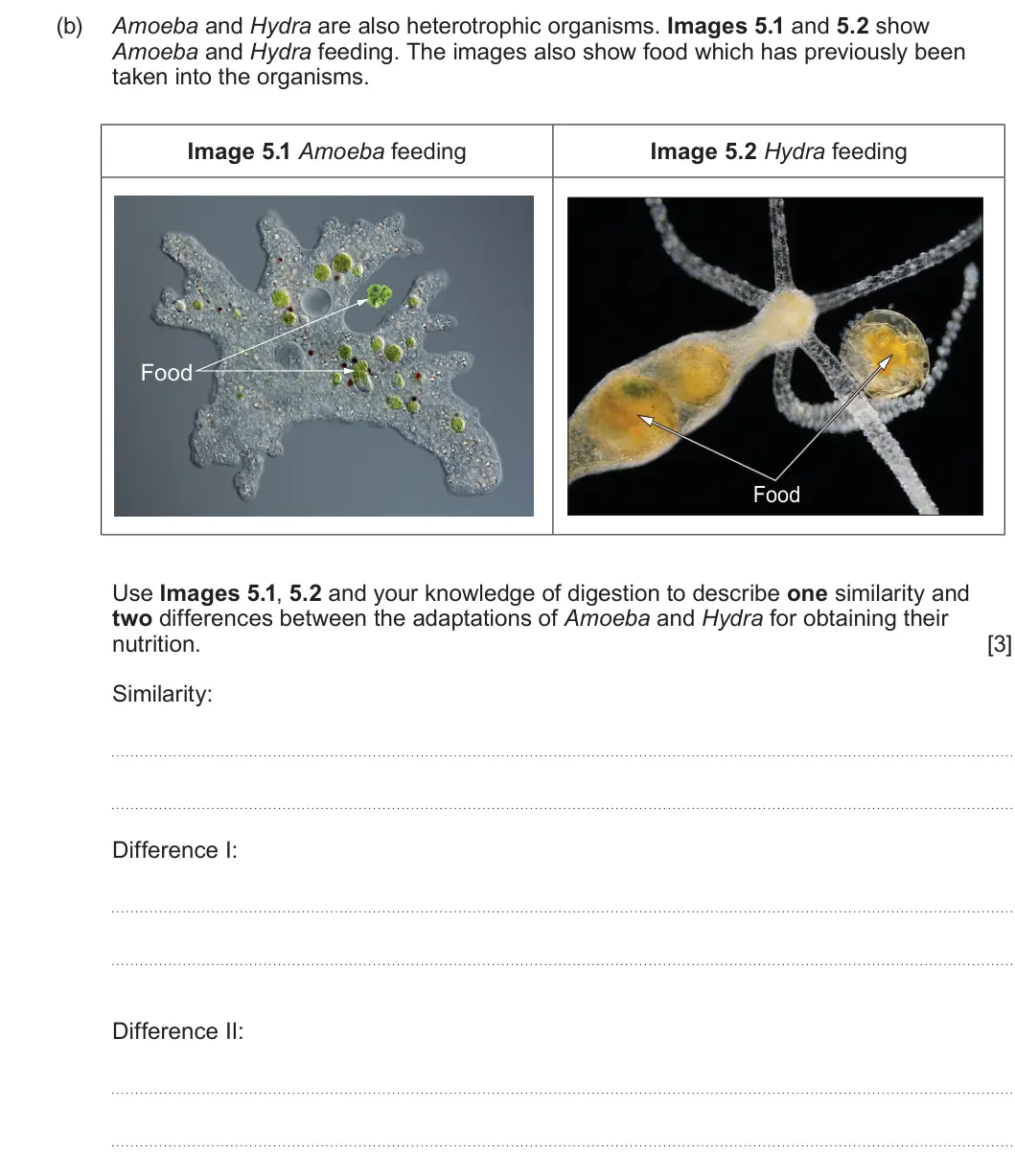
Q5(c)(i)
The whole paper ↗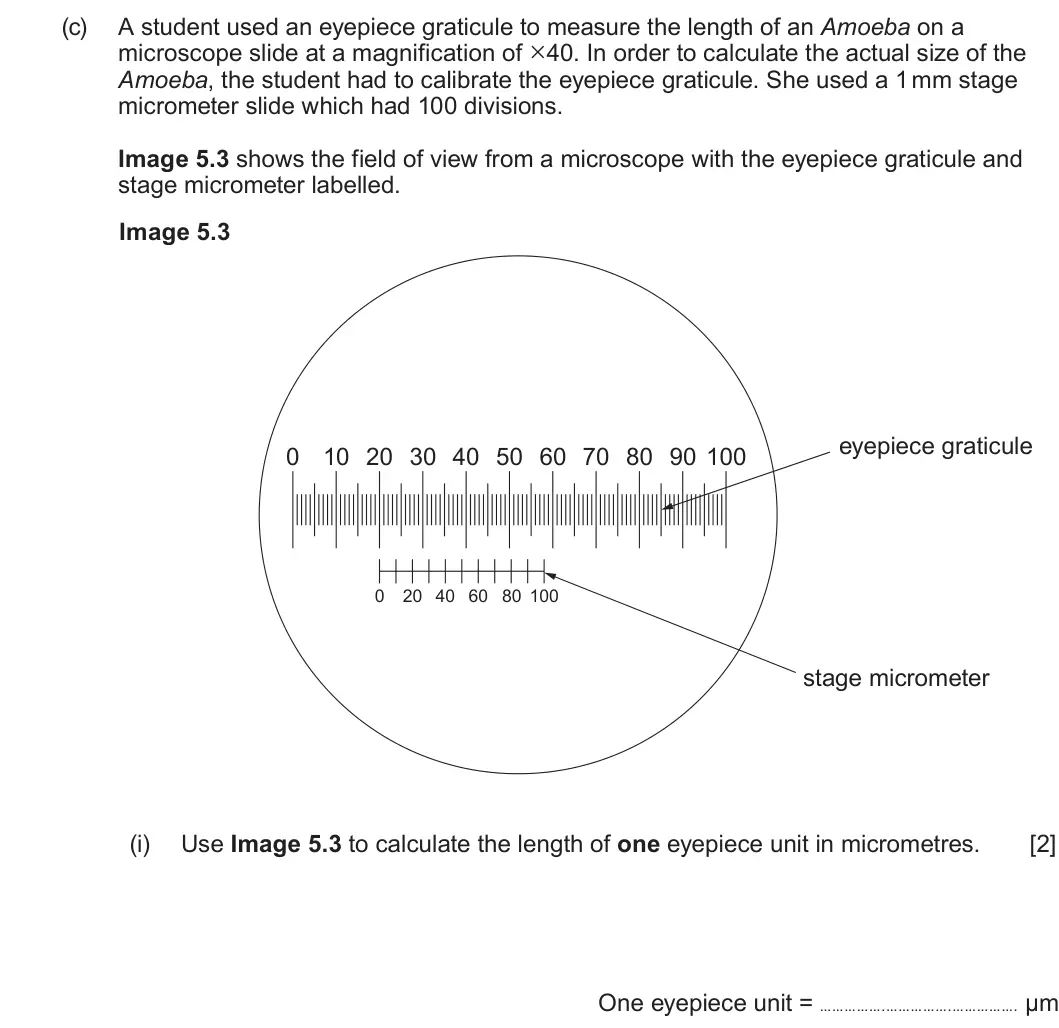
Q5(c)(ii)
The whole paper ↗
Q3(a)
The whole paper ↗
Q3(b)(i)
The whole paper ↗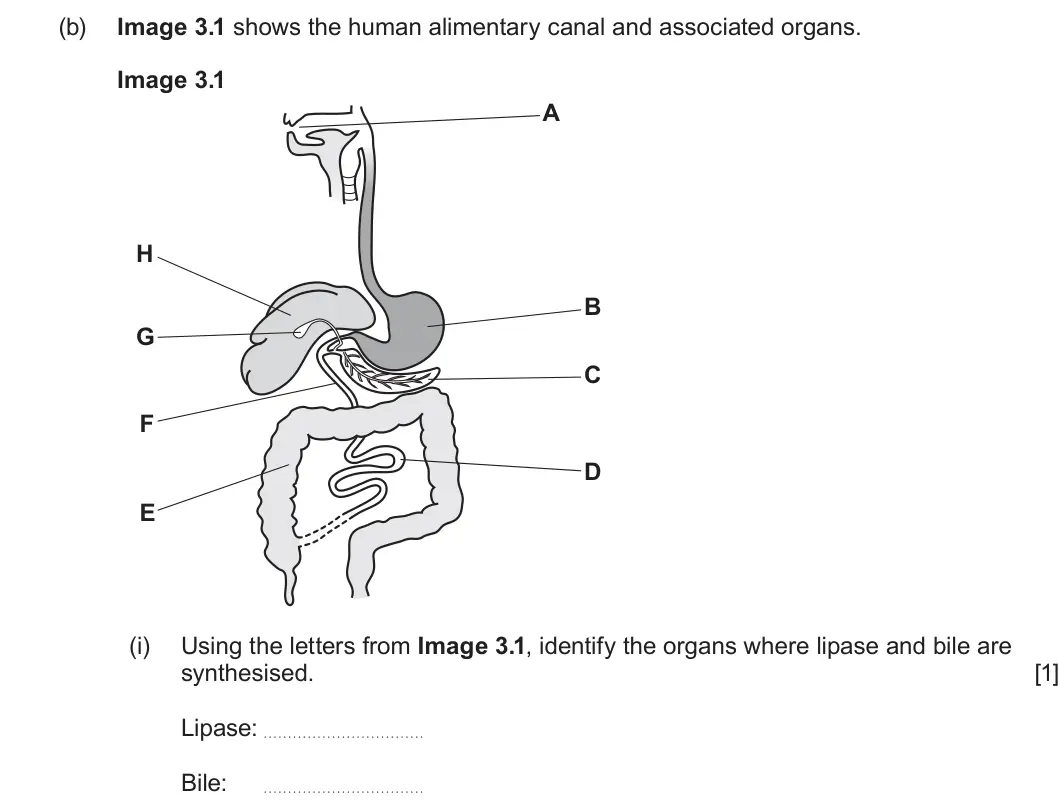
Q3(b)(ii)
The whole paper ↗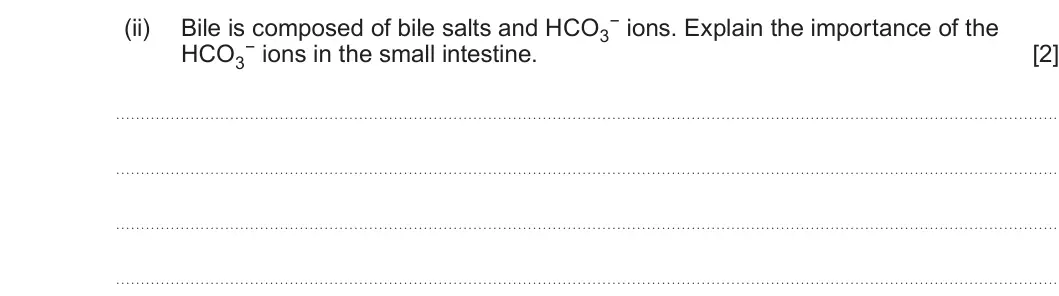
All 43 questions on Adaptations for nutrition, as a list
- Summer 2025, AS Unit 2, Q6(a)(i) (2 marks): Identify the two main sites of protein digestion in the digestive system in a mammal. [2]
- Summer 2025, AS Unit 2, Q6(a)(ii) (4 marks): Both horse and cow manure can be used to fertilise land for growing food crops. Use Image 6.1 to explain why there are less nitrogen-containing compounds in cow
- Summer 2025, AS Unit 2, Q6(b)(i) (1 mark): Label tissues A and B on Image 6.2. [1]
- Summer 2025, AS Unit 2, Q6(b)(ii) (2 marks): The villus indicated with the line Y–Y is 750 µm in length. Calculate the magnification of Image 6.2. [2] Magnification = × . . . . . . . . . . . . . . . . . .
- Summer 2025, AS Unit 2, Q6(b)(iii) (3 marks): Nervous tissue at X in Image 6.2 controls the activity of the two muscle layers. Name and describe the process by which food is moved along the gut and explain
- Summer 2024, AS Unit 2, Q3(a)(i) (3 marks): Explain why it is important that pepsin is produced in an inactive form and why it is necessary that hydrochloric acid and pepsinogen are produced by separate c
- Summer 2024, AS Unit 2, Q3(a)(ii) (1 mark): Describe the function of the goblet cells. [1]
- Summer 2024, AS Unit 2, Q3(a)(iii) (2 marks): Glands within the wall of the duodenum produce exopeptidases. Explain the advantage of the stomach producing endopeptidases and the duodenum producing exopeptid
- Summer 2024, AS Unit 2, Q3(b) (1 mark): Image 3.2 shows a transverse section through the small intestine with some of the tissue layers labelled. Image 3.2 serosa sub-mucosa mucosa X lumen Y Name the
- Summer 2024, AS Unit 2, Q3(c)(i) (1 mark): State what is meant by the term parasite. [1]
- Summer 2024, AS Unit 2, Q3(c)(ii) (4 marks): Explain how damage to the cells in tissue X can result in the symptoms described above. [4]
- Summer 2023, AS Unit 2, Q5(a)(i) (1 mark): State the meaning of the term heterotrophic organism. [1]
- Summer 2023, AS Unit 2, Q5(a)(ii) (3 marks): Describe the process of saprotrophic nutrition in fungi. [3]
- Summer 2023, AS Unit 2, Q5(b) (3 marks): Amoeba and Hydra are also heterotrophic organisms. Images 5.1 and 5.2 show Amoeba and Hydra feeding. The images also show food which has previously been taken i
- Summer 2023, AS Unit 2, Q5(c)(i) (2 marks): Use Image 5.3 to calculate the length of one eyepiece unit in micrometres. [2] One eyepiece unit = . . . µm
- Summer 2023, AS Unit 2, Q5(c)(ii) (1 mark): The Amoeba at ×40 magnification measured 27 eyepiece units (epu). Calculate the actual length of the Amoeba in micrometres. [1] Amoeba length = . . . µm
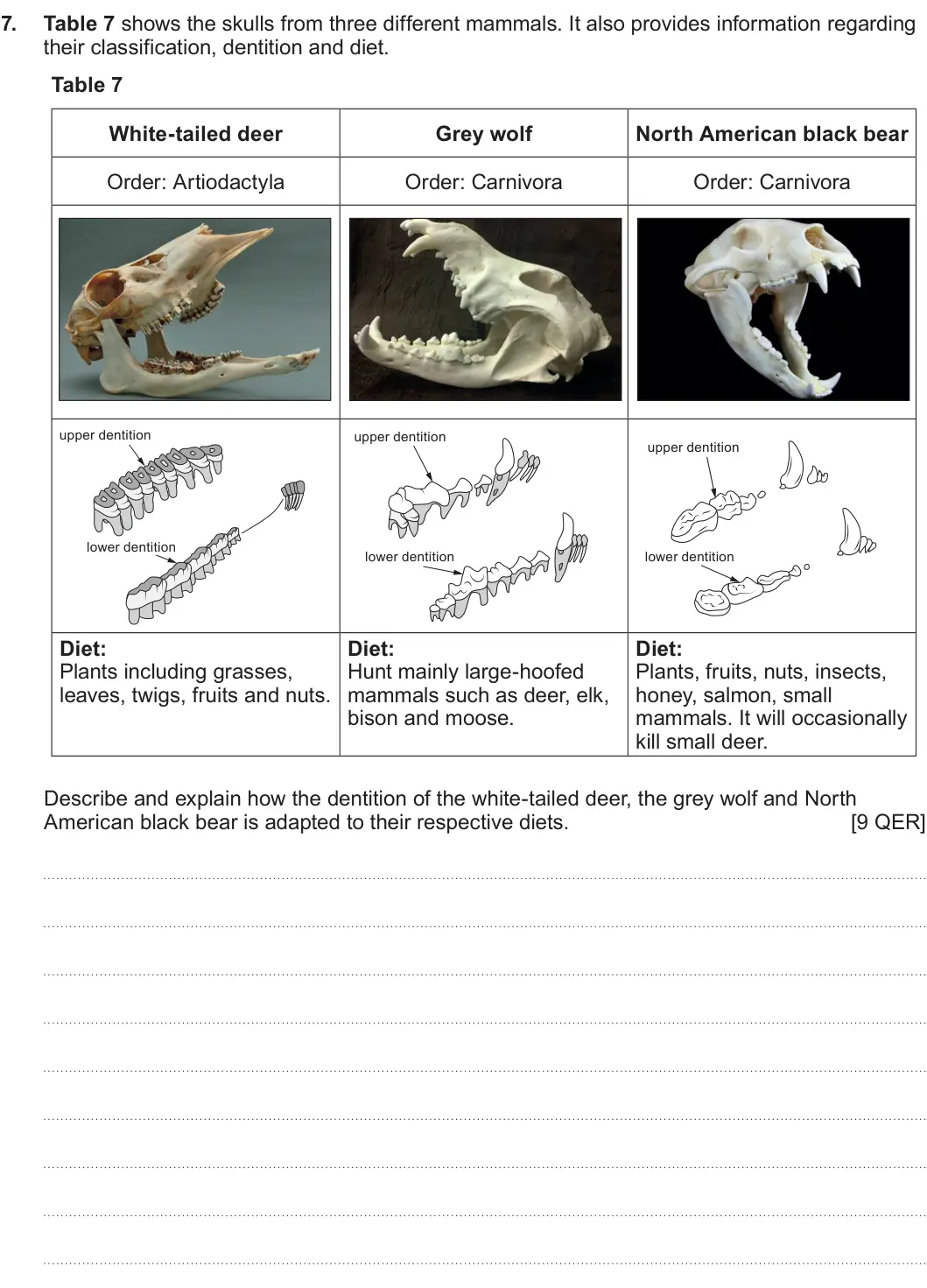
- Summer 2023, AS Unit 2, Q7 (9 marks): Table 7 shows the skulls from three different mammals. It also provides information regarding their classification, dentition and diet. Table 7 White-tailed dee
- Summer 2022, AS Unit 2, Q3(a) (2 marks): Describe what is meant by the terms mechanical digestion and chemical digestion. [2]
- Summer 2022, AS Unit 2, Q3(b)(i) (1 mark): Using the letters from Image 3.1, identify the organs where lipase and bile are synthesised. [1] Lipase: Bile:
- Summer 2022, AS Unit 2, Q3(b)(ii) (2 marks): Bile is composed of bile salts and HCO3 − ions in the small intestine. HCO3 [2]
- Summer 2022, AS Unit 2, Q3(c)(i) (1 mark): Explain why it was important that sodium carbonate solution was added to each of the test tubes. [1]
- Summer 2022, AS Unit 2, Q3(c)(ii) (1 mark): Explain why it was important that different volumes of water were added to each of the test tubes. [1]
- Summer 2022, AS Unit 2, Q3(d)(i) (4 marks): Explain the results shown in test tubes A and B. [4]
- Summer 2022, AS Unit 2, Q3(d)(ii) (1 mark): Explain why bile salts were included in test tube C but lipase was not. [1]
- Summer 2022, AS Unit 2, Q3(d)(iii) (2 marks): Suggest one source of inaccuracy with this investigation and suggest one possible way in which it could be improved. [2]
- Summer 2022, AS Unit 2, Q6 (9 marks): Image 6.1 shows two human parasites, the pork tapeworm (Taenia solium) and a head louse (Pediculus capitus). The diagrams illustrate the life cycles of these pa
- Summer 2019, AS Unit 2, Q6(a)(i) (1 mark): Carnivore. [1]
- Summer 2019, AS Unit 2, Q6(a)(ii) (1 mark): Herbivore. [1]
- Summer 2019, AS Unit 2, Q6(b) (2 marks): The alimentary canal of a wild boar is very similar to that of a human. State the region of the human alimentary canal where the digestion of the following diet
- Summer 2019, AS Unit 2, Q6(c) (5 marks): Porcine epidemic diarrhoea (PED) is a condition that is caused by a virus and leads to severe gastrointestinal disease in wild boars. The virus infects and dest
- Summer 2019, AS Unit 2, Q6(d) (4 marks): The epithelial cells of villi contain many mitochondria. These supply ATP for the active transport of sodium ions (Na+) out of epithelial cells and eventually i
- Summer 2018, AS Unit 2, Q2(a)(i) (1 mark): State the method of nutrition, exemplified by Hydra, where food is ingested and then digested internally. [1]
- Summer 2018, AS Unit 2, Q2(a)(ii) (2 marks): The endodermal cells of Hydra viridis contain cells of the green alga Chlorella. This is called mutualism which is a relationship between two different species
- Summer 2018, AS Unit 2, Q2(b) (3 marks): Nostoc commune and Nitrosomonas europaea are bacterial species that can be found in soil. Both species use simple inorganic molecules to build up their organic
- Summer 2018, AS Unit 2, Q2(c) (4 marks): The photograph illustrates the structure of a fungus belonging to the genus Rhizopus. All Rhizopus species have a similar structure. hyphae Two species of this
- Summer 2017, AS Unit 2, Q1(a)(i) (2 marks): Define the term ectoparasite. [2]
- Summer 2017, AS Unit 2, Q1(a)(ii) (1 mark): Unlike fleas, head lice normally infest a new host only by close contact between individuals. Suggest one reason why this is the case. [1]
- Summer 2017, AS Unit 2, Q6(a) (2 marks): Calculate the mean time for the milk solution to become clear when mixed with the endopeptidase. Insert your answer in the table above. [2]
- Summer 2017, AS Unit 2, Q6(b) (1 mark): The results show a great deal of variation. However, it was decided that there were no anomalous results. Explain why this decision was made. [1]
- Summer 2017, AS Unit 2, Q6(c) (4 marks): Suggest two sources of inaccuracy within the experimental method, which could account for the variation in the results of the groups. For each of your suggestio
- Summer 2017, AS Unit 2, Q6(d) (3 marks): Explain why digestion was more rapid when using the enzyme mixture than when using the individual enzymes. [3]
- Summer 2017, AS Unit 2, Q6(e) (2 marks): Explain why pepsin was not the endopeptidase chosen for use in this investigation. [2]
- Summer 2016, AS Unit 2, Q7 (9 marks): All animals need a source of amino acids for growth and repair of tissues. Bacteria, found in the gut of herbivores, can break down cellulose into energy rich m
Questions, mark schemes and examiner’s reports are © WJEC CBAC Ltd, from their published past papers. Plumi isn’t affiliated with any exam board. Want whole papers? Every WJEC A-Level Biology paper.
Rather write your answers by hand on iPad? Plumi marks them against the same mark schemes.