 plumi
Adaptations for transport: WJEC A‑Level Biology questions
Every WJEC A-Level Biology exam question on 2.3 Adaptations for transport, 2016–2025, with its mark scheme and examiner’s report.
Find questions1,223
Calculations
Q3(a)
The whole paper ↗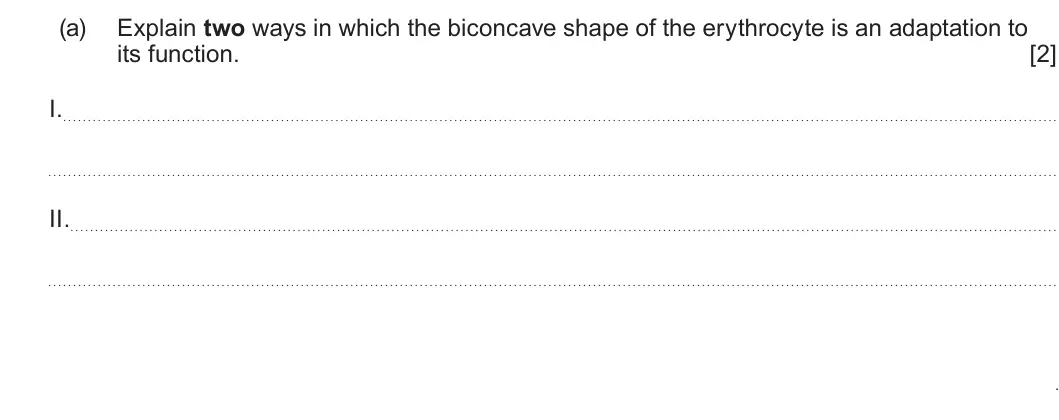
Q3(b)(i)
The whole paper ↗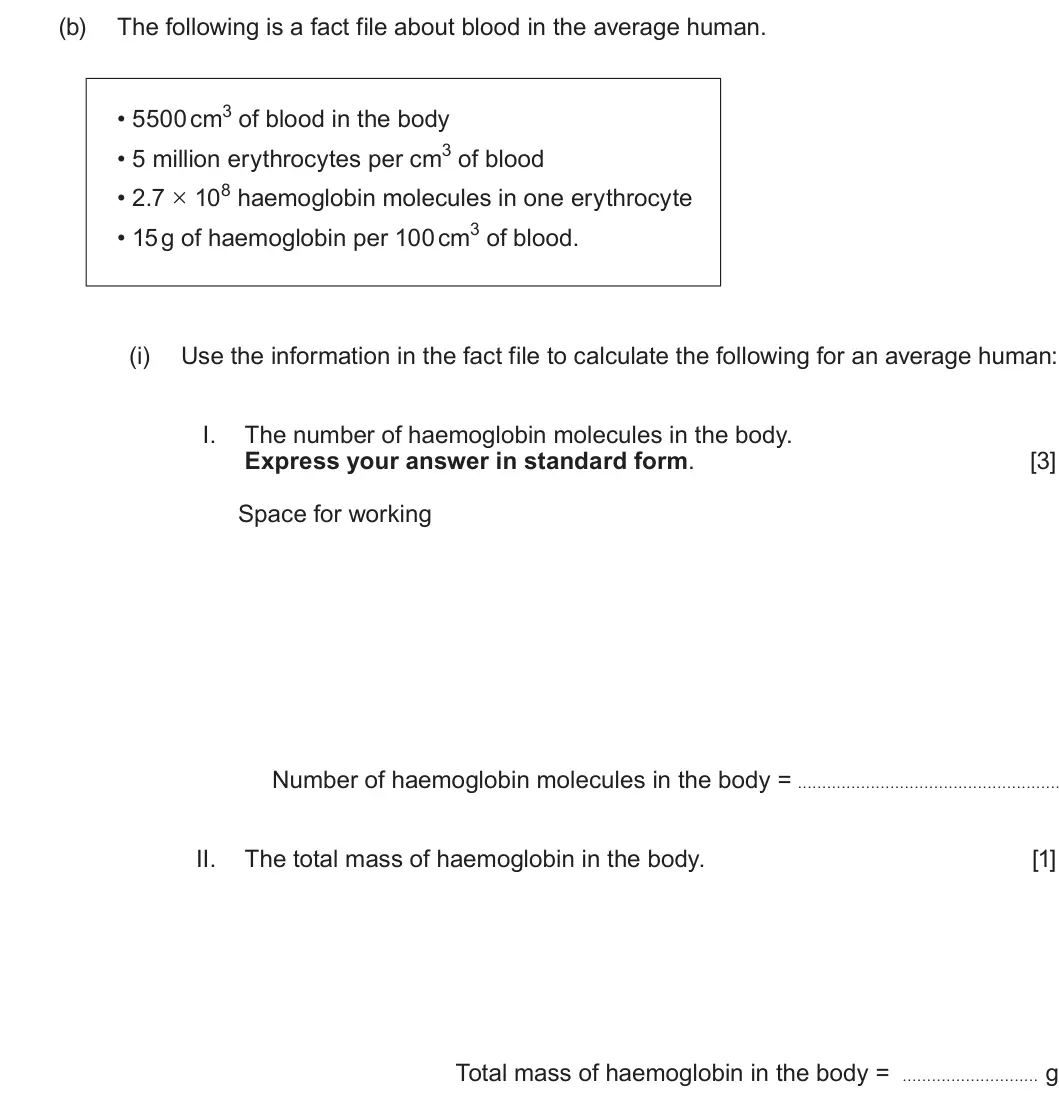
Q3(b)(ii)
The whole paper ↗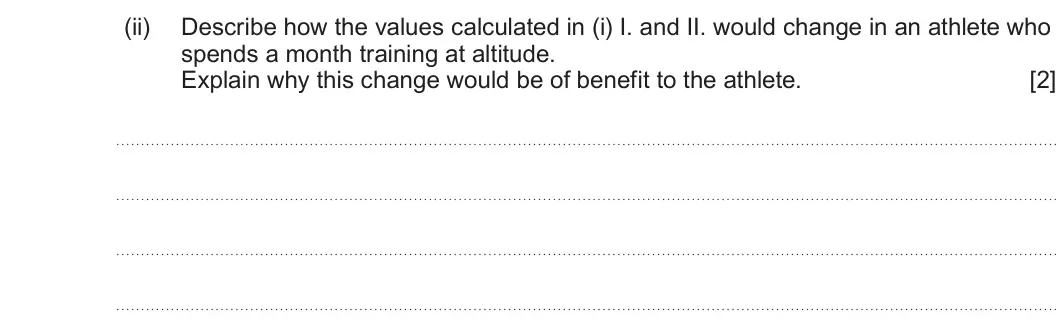
Q3(c)(i)
The whole paper ↗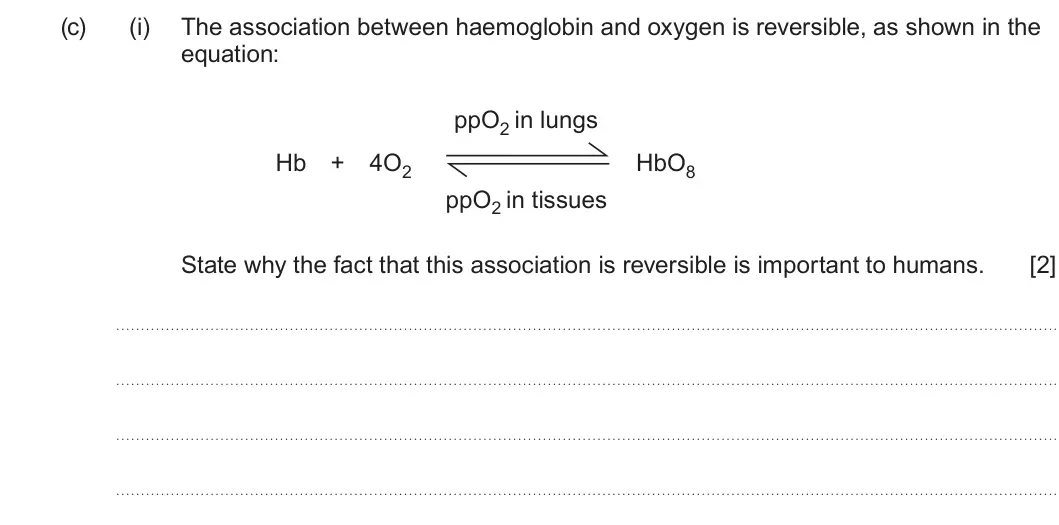
Q3(c)(ii)
The whole paper ↗
Q4(a)(i)
The whole paper ↗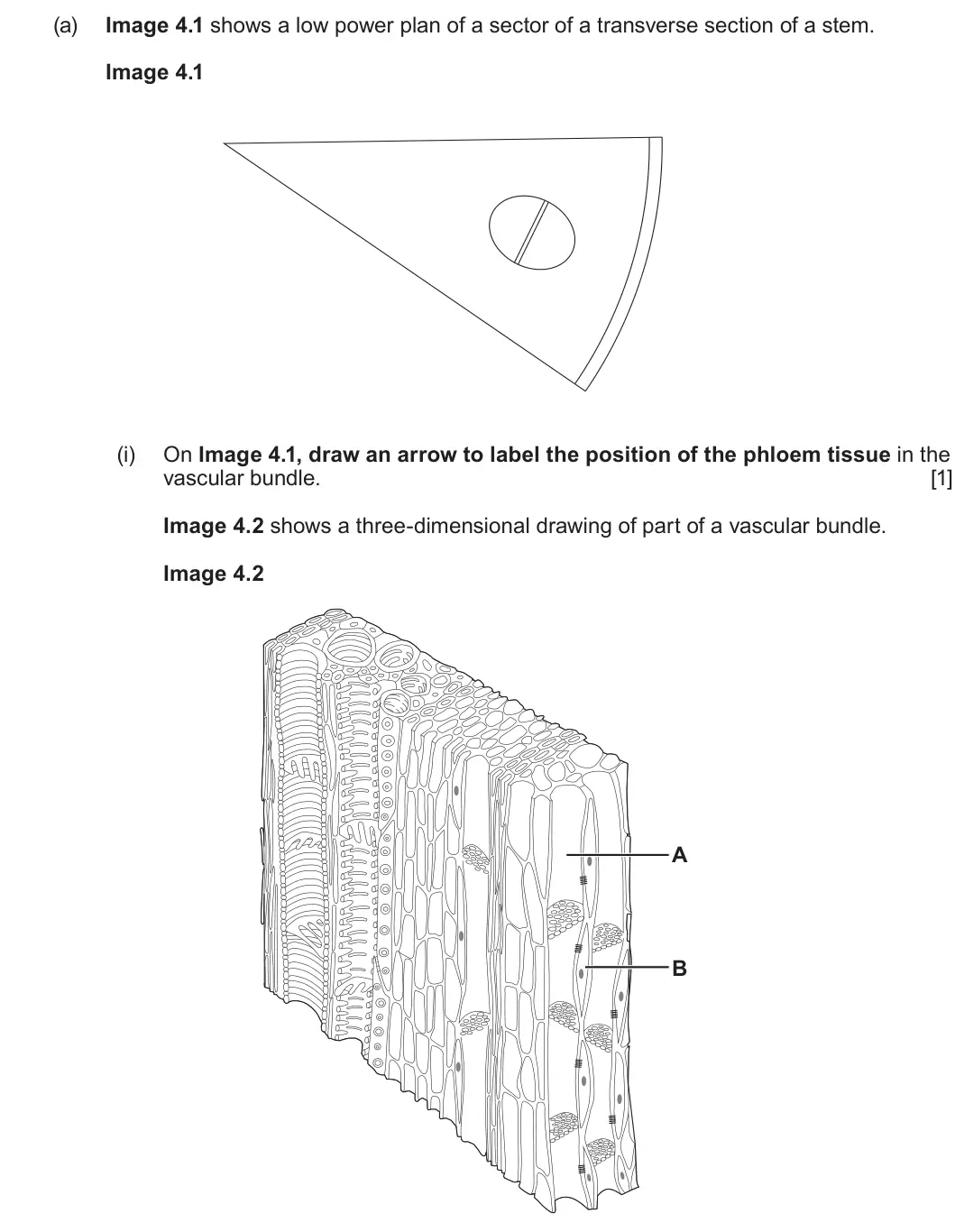
Q4(a)(ii)
The whole paper ↗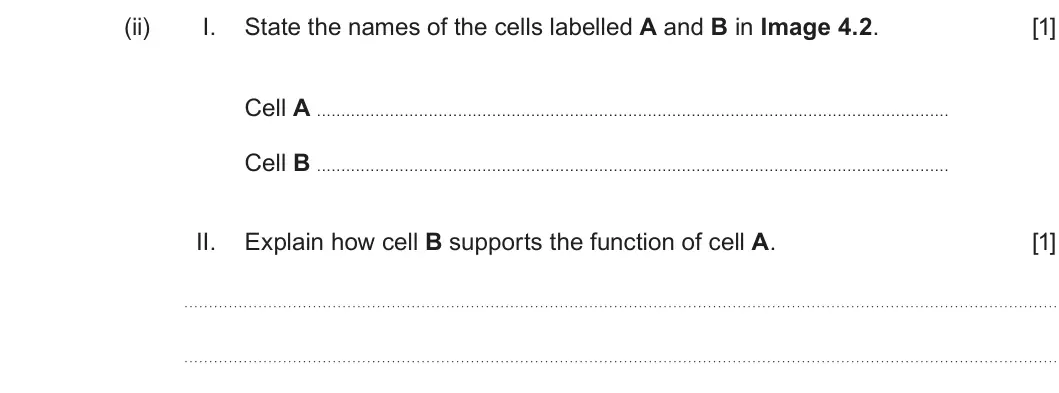
Q4(b)(i)
The whole paper ↗
Q4(b)(ii)
The whole paper ↗
Q4(c)(i)
The whole paper ↗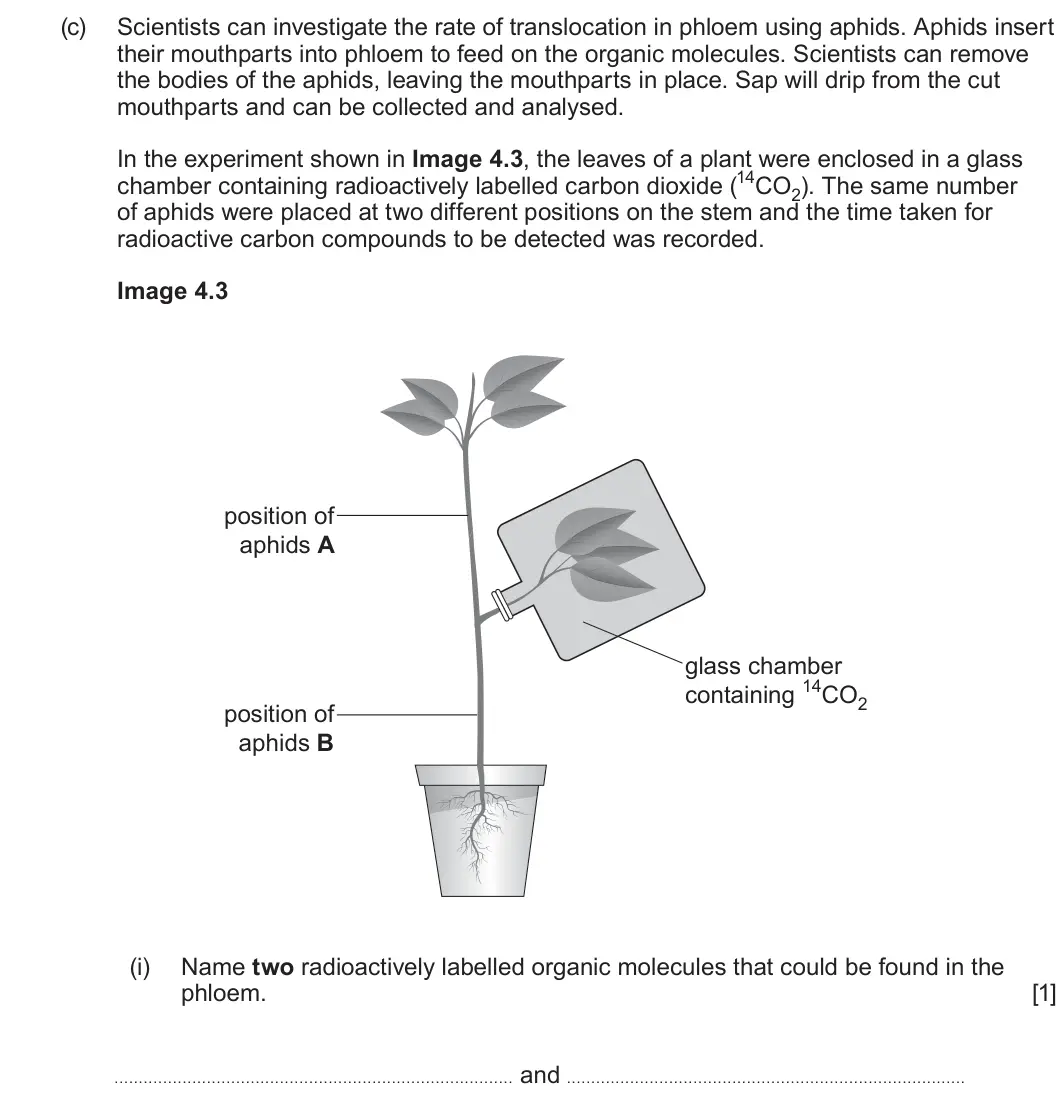
Q4(c)(ii)
The whole paper ↗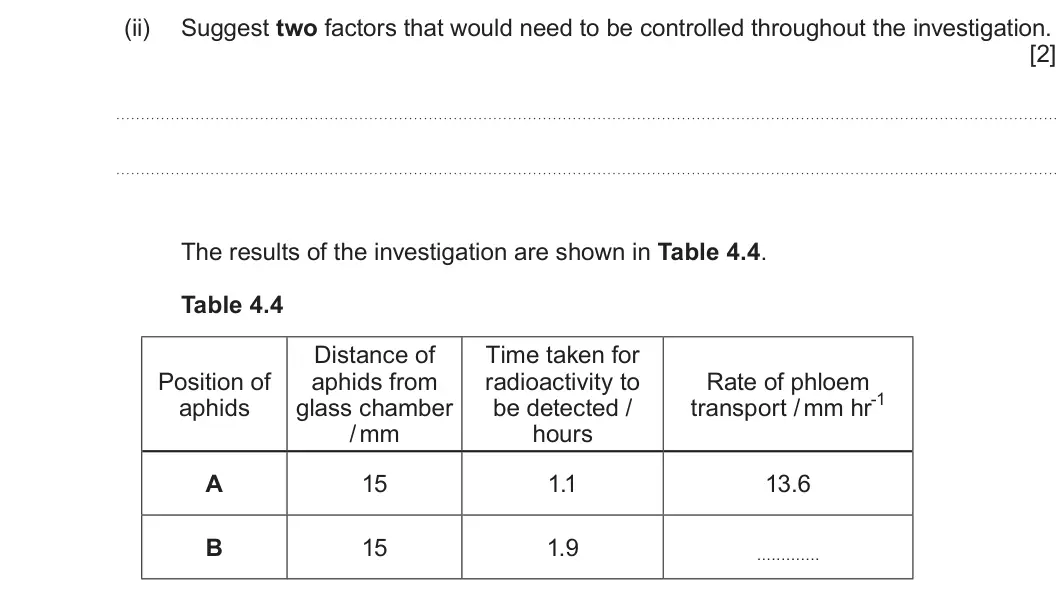
Q4(c)(iii)
The whole paper ↗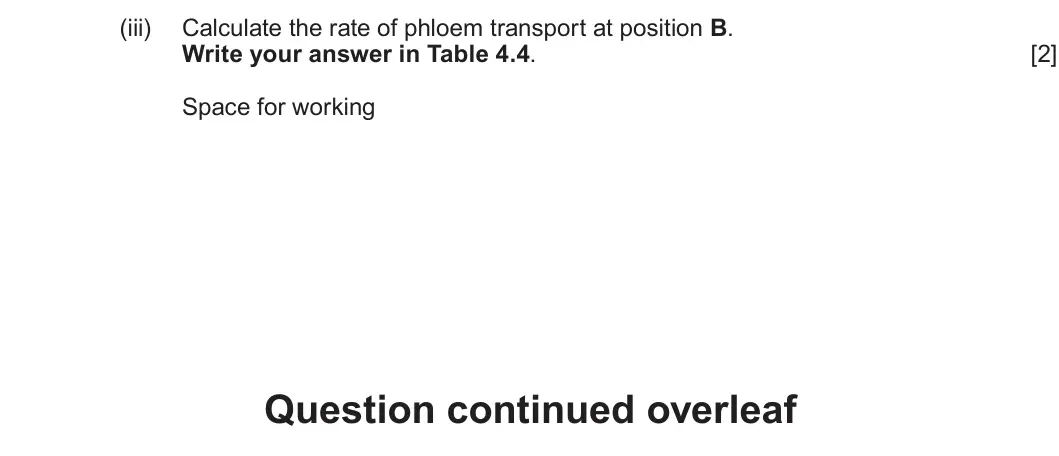
Q4(c)(iv)
The whole paper ↗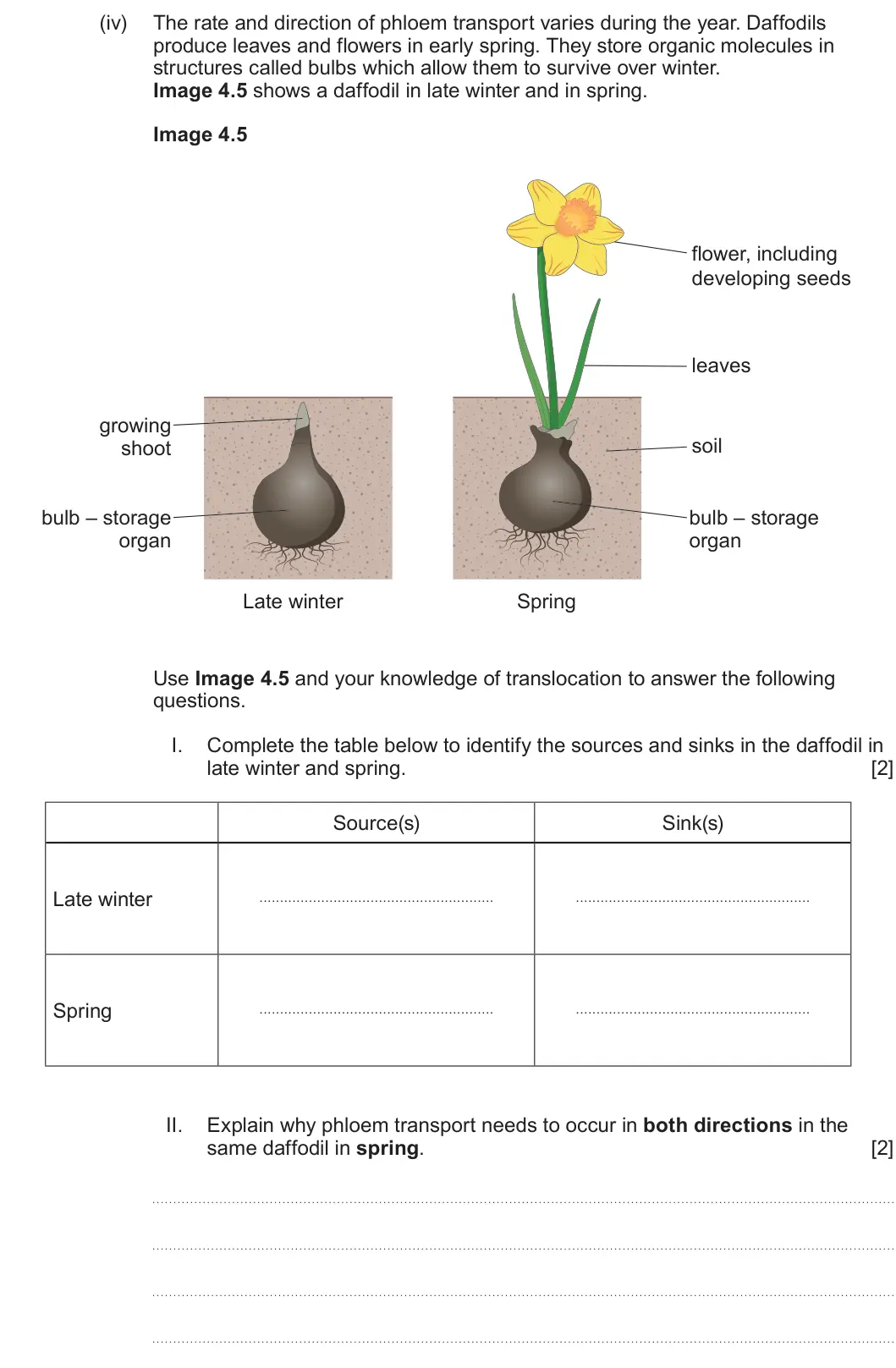
Q2(a)
The whole paper ↗
Q2(b)(i)
The whole paper ↗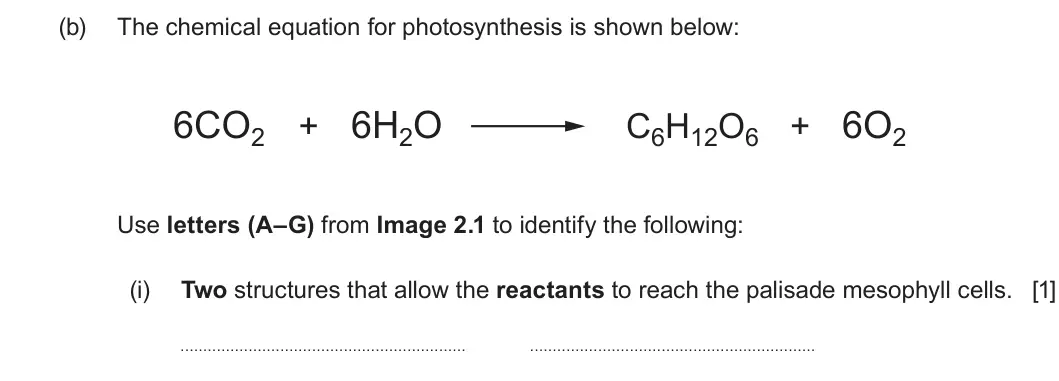
Q2(b)(ii)
The whole paper ↗
Q2(c)(i)
The whole paper ↗
Q2(c)(ii)
The whole paper ↗
Q2(d)
The whole paper ↗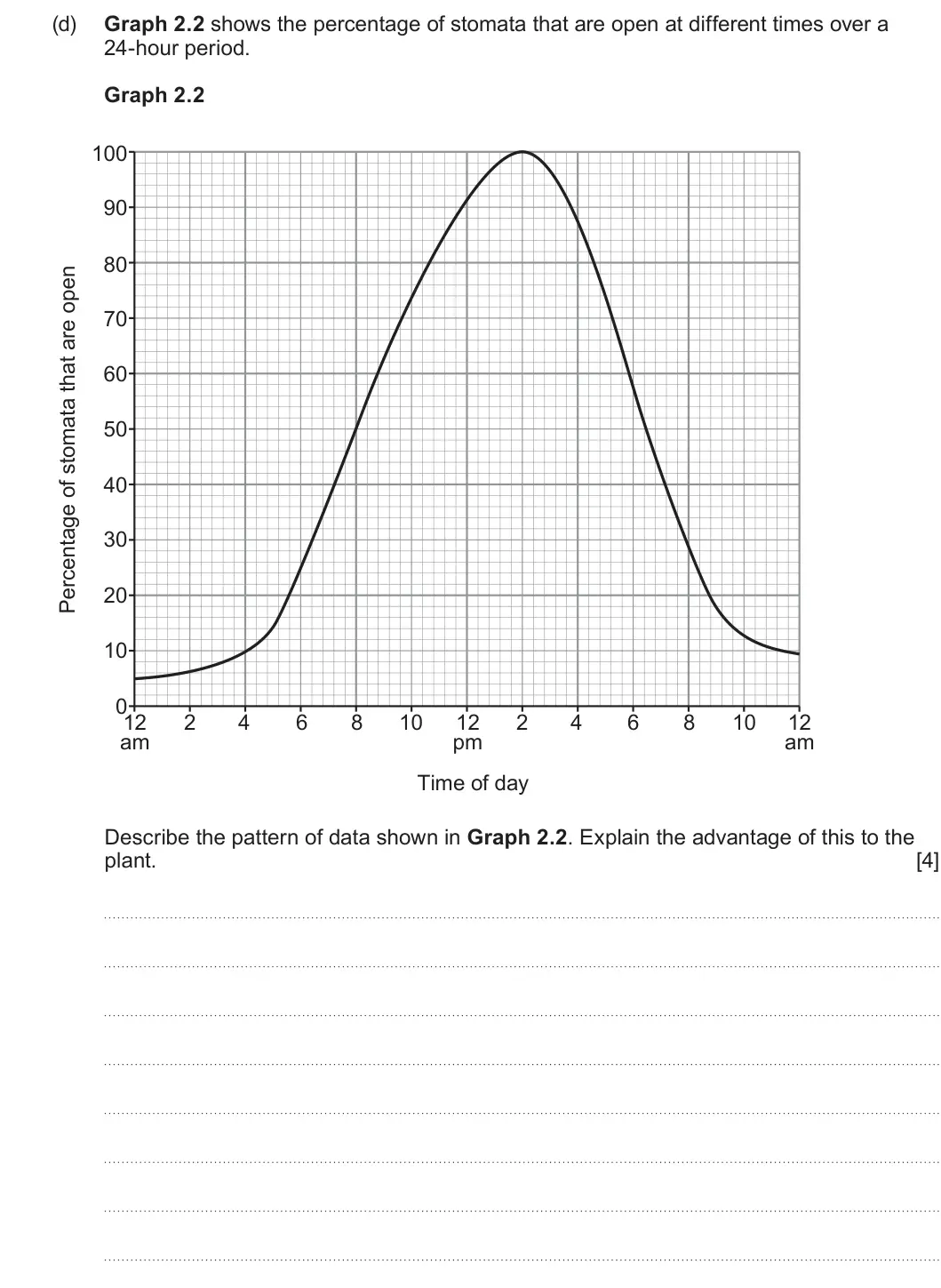
All 137 questions on Adaptations for transport, as a list
- Summer 2025, AS Unit 2, Q3(a) (2 marks): Explain two ways in which the biconcave shape of the erythrocyte is an adaptation to its function. [2] I. II. .
- Summer 2025, AS Unit 2, Q3(b)(i) (4 marks): Use the information in the fact file to calculate the following for an average human: I. The number of haemoglobin molecules in the body. Express your answer in
- Summer 2025, AS Unit 2, Q3(b)(ii) (2 marks): Describe how the values calculated in (i) I. and II. would change in an athlete who spends a month training at altitude. Explain why this change would be of ben
- Summer 2025, AS Unit 2, Q3(c)(i) (2 marks): The association between haemoglobin and oxygen is reversible, as shown in the equation: ppO2 in lungs Hb + 4O2 HbO8 ppO2 in tissues State why the fact that this
- Summer 2025, AS Unit 2, Q3(c)(ii) (1 mark): Myoglobin is a protein found in muscle. It can reach 100% oxygen saturation and has a higher affinity for oxygen than haemoglobin. Explain why and when this wou
- Summer 2025, AS Unit 2, Q4(a)(i) (1 mark): On Image 4.1, draw an arrow to label the position of the phloem tissue in the vascular bundle. [1] Image 4.2 shows a three-dimensional drawing of part of a vasc
- Summer 2025, AS Unit 2, Q4(a)(ii) (2 marks): I. State the names of the cells labelled A and B in Image 4.2. [1] Cell A . . . . . . . . . . . . . . . . . . . . . . . . . . . . . . . . . . . . . . . . . . .
- Summer 2025, AS Unit 2, Q4(b)(i) (1 mark): State the name of the material in the wall of the xylem vessel that provides strength. [1] . . . . . . . . . . . . . . . . . . . . . . . . . . . . . . . . . . .
- Summer 2025, AS Unit 2, Q4(b)(ii) (4 marks): Describe the movement of water across the root into the xylem. Include the role of the Casparian strip in your description. [4]
- Summer 2025, AS Unit 2, Q4(c)(i) (1 mark): Name two radioactively labelled organic molecules that could be found in the phloem. [1] . . . . . . . . . . . . . . . . . . . . . . . . . . . . . . . . . . . .
- Summer 2025, AS Unit 2, Q4(c)(ii) (2 marks): Suggest two factors that would need to be controlled throughout the investigation. [2] The results of the investigation are shown in Table 4.4. Table 4.4 Distan
- Summer 2025, AS Unit 2, Q4(c)(iii) (2 marks): Calculate the rate of phloem transport at position B. Write your answer in Table 4.4. [2] Space for working Question continued overleaf
- Summer 2025, AS Unit 2, Q4(c)(iv) (4 marks): The rate and direction of phloem transport varies during the year. Daffodils produce leaves and flowers in early spring. They store organic molecules in structu
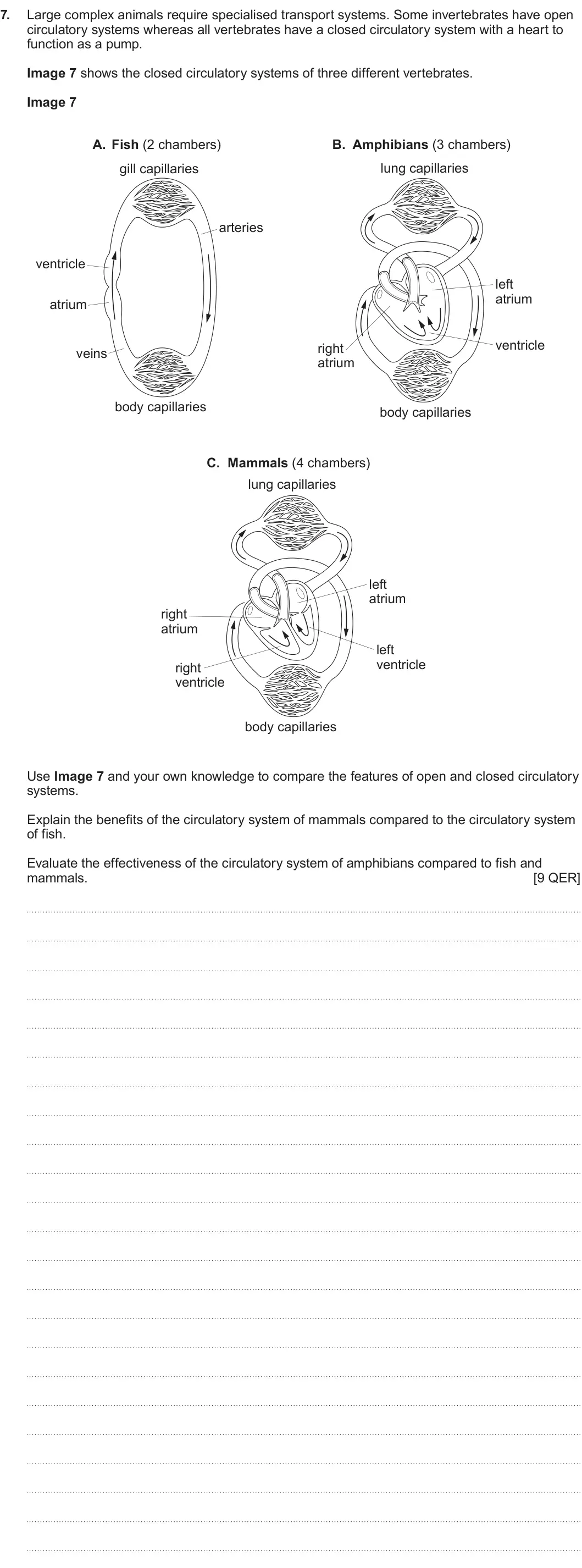
- Summer 2025, AS Unit 2, Q7 (9 marks): Large complex animals require specialised transport systems. Some invertebrates have open circulatory systems whereas all vertebrates have a closed circulatory
- Summer 2024, AS Unit 2, Q2(a) (2 marks): The palisade mesophyll tissue, shown in Image 2.1, is the main site of photosynthesis. Identify and explain two adaptations of this tissue for photosynthesis. [
- Summer 2024, AS Unit 2, Q2(b)(i) (1 mark): Two structures that allow the reactants to reach the palisade mesophyll cells. [1]
- Summer 2024, AS Unit 2, Q2(b)(ii) (1 mark): Two structures that allow the products to be moved from the palisade mesophyll cells. [1]
- Summer 2024, AS Unit 2, Q2(c)(i) (1 mark): hydrophyte; [1]
- Summer 2024, AS Unit 2, Q2(c)(ii) (1 mark): xerophyte. [1]
- Summer 2024, AS Unit 2, Q2(d) (4 marks): Graph 2.2 shows the percentage of stomata that are open at different times over a 24-hour period. Graph 2.2 100 90 80 70 60 50 40 30 20 10 0 12 2 4 6 8 10 12 2
- Summer 2024, AS Unit 2, Q4(a)(i) (1 mark): State the name of the apparatus shown in Image 4.1. [1]
- Summer 2024, AS Unit 2, Q4(a)(ii) (2 marks): When setting up the apparatus, it is important that air bubbles are prevented from entering the xylem. Describe how the leafy shoot is prepared and the apparatu
- Summer 2024, AS Unit 2, Q4(a)(iii) (1 mark): State two environmental factors that would need to be controlled during this investigation. [1]
- Summer 2024, AS Unit 2, Q4(b)(i) (5 marks): I. The internal diameter of the capillary tube was 1 mm. Use the equation below to calculate the volume of water taken up by the shoot when the bubble travels 2
- Summer 2024, AS Unit 2, Q4(b)(ii) (3 marks): Describe and explain the results shown in Table 4.2. [3]
- Summer 2024, AS Unit 2, Q4(c) (1 mark): The apparatus shown in Image 4.1 measures the rate of water uptake. Give one reason why this may not be equal to the rate of water lost in transpiration. [1]
- Summer 2024, AS Unit 2, Q6(a)(i) (1 mark): Cardiac muscle has the property of being myogenic. State what is meant by the term myogenic. [1]
- Summer 2024, AS Unit 2, Q6(a)(ii) (2 marks): Use letters (A–D) from Image 6.1 to identify the following structures: [2] I. the atrio-ventricular node …… …… II. the Purkyne fibres …… …… III. the sino-atrial
- Summer 2024, AS Unit 2, Q6(a)(iii) (4 marks): Describe and explain the role of structures labelled A–D in Image 6.1 in controlling the cardiac cycle. [4]
- Summer 2024, AS Unit 2, Q6(b) (2 marks): Image 6.2 shows a normal ECG (electrocardiogram) trace. Image 6.2 R T P Q S 0.2 s Use four cardiac cycles shown on Image 6.2 to calculate the heart rate of this
- Summer 2024, AS Unit 2, Q6(c)(i) (2 marks): Image 6.3 shows that there is an obstruction at the atrio-ventricular node and not at the sino-atrial node. Explain the evidence for this. [2]
- Summer 2024, AS Unit 2, Q6(c)(ii) (2 marks): Suggest the effect that this obstruction would have on the cardiac cycle. [2]
- Summer 2024, AS Unit 2, Q7 (9 marks): Graph 7 shows the oxygen dissociation curves for the haemoglobin from three different organisms. Haemoglobin A is from a naked mole-rat, haemoglobin B is from a
- Summer 2023, AS Unit 2, Q2(a)(i) (2 marks): Identify the structures labelled X and Y in Image 2.1. [2] X Y
- Summer 2023, AS Unit 2, Q2(a)(ii) (1 mark): Draw an arrow on Image 2.1 to show the direction of blood flow through the capillary network. [1]
- Summer 2023, AS Unit 2, Q2(b)(i) (2 marks): Explain why the hydrostatic pressure decreases as the blood travels along the capillaries. [2]
- Summer 2023, AS Unit 2, Q2(b)(ii) (2 marks): Explain why the osmotic pressure remains constant as the blood travels along the capillaries. [2]
- Summer 2023, AS Unit 2, Q2(b)(iii) (2 marks): Use the information provided in Graph 2.2 to explain why structure Y in Image 2.1 is necessary. [2]
- Summer 2023, AS Unit 2, Q2(c) (2 marks): Arterioles are responsible for the regulation of blood flow through a capillary network. Image 2.3 shows a section through an arteriole. Image 2.3 endothelium l
- Summer 2023, AS Unit 2, Q2(d)(i) (2 marks): Calculate the percentage increase in blood flow to the skin during vigorous exercise. [2] Percentage = …… ..
- Summer 2023, AS Unit 2, Q2(d)(ii) (1 mark): Suggest the significance of increased blood flow to the skin during exercise. [1]
- Summer 2023, AS Unit 2, Q3(a)(i) (1 mark): Identify the cells labelled A and B in Image 3.1. [1] A B
- Summer 2023, AS Unit 2, Q3(a)(ii) (4 marks): Describe the mechanism that causes stomata to open. [4]
- Summer 2023, AS Unit 2, Q3(a)(iii) (1 mark): Suggest an advantage to Kalanchoe of being able to close stomata. [1]
- Summer 2023, AS Unit 2, Q3(b)(i) (1 mark): State two variables that should have been controlled to maintain constant conditions. [1] I. II.
- Summer 2023, AS Unit 2, Q3(b)(ii) (1 mark): State one conclusion that can be drawn from this investigation. [1]
- Summer 2023, AS Unit 2, Q3(b)(iii) (3 marks): Using your knowledge of the functions of stomata, explain the results of this investigation. [3]
- Summer 2023, AS Unit 2, Q3(c) (2 marks): Darwin described Ginkgo biloba as a ‘living fossil’, as fossils of the genus Ginkgo have been found in rocks from the Mesozoic era (252 to 66 million years ago)
- Summer 2023, AS Unit 2, Q6(a) (2 marks): Use the letters (A-E) from Image 6.1 to identify the following: [2] I. the tissue responsible for transporting organic solutes II. the tissue where root hair ce
- Summer 2023, AS Unit 2, Q6(b) (2 marks): Water can be transported across the tissue labelled B by the apoplast and symplast pathways. Describe these two pathways. [2]
- Summer 2023, AS Unit 2, Q6(c)(i) (4 marks): Explain the role of structure C, in Image 6.1, in the uptake of water into the xylem vessels and in the generation of root pressure. [4]
- Summer 2023, AS Unit 2, Q6(c)(ii) (3 marks): If the same experiment is repeated with cyanide added to the soil, the water level in the tube remains constant. Explain this observation. [3]
- Summer 2022, AS Unit 2, Q1(a)(i) (1 mark): Identify the chamber of the heart labelled X. [1]
- Summer 2022, AS Unit 2, Q1(a)(ii) (1 mark): Explain your answer to (a)(i). [1]
- Summer 2022, AS Unit 2, Q1(b)(i) (1 mark): On Graph 1.2 mark with a Y a point at which blood is flowing from the left ventricle into the aorta. [1]
- Summer 2022, AS Unit 2, Q1(b)(ii) (2 marks): The numbers on Graph 1.2 indicate the points at which valves in the heart are either opening or closing. Complete the table below to show the name of the valve
- Summer 2022, AS Unit 2, Q1(b)(iii) (1 mark): Calculate the resting heart rate, in beats per minute, for this individual. [1] Heart rate = beats per minute
- Summer 2022, AS Unit 2, Q1(c) (2 marks): The volume of blood expelled from the left ventricle during each cardiac cycle is known as stroke volume. A person’s cardiac output is calculated by multiplying
- Summer 2022, AS Unit 2, Q1(d)(i) (2 marks): Name the tissue layers labelled A, B and C. [2] A B C
- Summer 2022, AS Unit 2, Q1(d)(ii) (2 marks): Although the pressure in the left ventricle drops almost to zero during diastole in the cardiac cycle, the pressure in the aorta remains relatively high. With r
- Summer 2022, AS Unit 2, Q2(a)(ii) (3 marks): Planaria does not require a circulatory system. Explain why Lumbricus does require a circulatory system. [3]
- Summer 2022, AS Unit 2, Q2(b)(ii) (5 marks): Use the information provided to explain how the difference in the positions of the dissociation curves for Lumbricus and Nereis haemoglobin reflects their metho
- Summer 2022, AS Unit 2, Q5(a)(i) (2 marks): State the main chemical found in the structures labelled X in Image 5.1 and explain the importance of these structures in the functioning of xylem. [2]
- Summer 2022, AS Unit 2, Q5(a)(ii) (2 marks): Calculate the length of the sieve tube element shown in Image 5.1 in micrometres (µm). Show your working. [2] Length = µm
- Summer 2022, AS Unit 2, Q5(a)(iii) (3 marks): Use your answer to (ii) to calculate the length of time, in seconds, that it would take for a molecule of sucrose to travel between the sieve plates labelled in
- Summer 2022, AS Unit 2, Q5(b) (4 marks): In an investigation into the mechanisms of transport, fluid filled micropipettes were inserted into xylem vessels and sieve tube elements. Image 5.2 shows the o
- Summer 2022, AS Unit 2, Q5(c)(i) (1 mark): transported in phloem. [1]
- Summer 2022, AS Unit 2, Q5(c)(ii) (4 marks): State the conclusions that can be drawn from the distribution of radioactivity in the leaves of the plant. [4]
- Summer 2022, AS Unit 2, Q5(c)(iii) (1 mark): The autoradiograph shows that radioactivity is also found in the roots. State the additional information that this provides about transport in phloem. [1]
- Summer 2022, AS Unit 2, Q5(c)(iv) (1 mark): Image 5.5 shows a transverse section of part of the stem of this plant. Image 5.5 Using a single arrow, indicate one region on Image 5.5 in which radioactivity
- Summer 2019, AS Unit 2, Q2(b) (2 marks): The animals shown in the table have closed circulatory systems. Describe what is meant by a closed circulatory system and explain its role in these animals. [2]
- Summer 2019, AS Unit 2, Q4(a) (3 marks): Describe and explain how the structure of a red blood cell is related to its function. [3]
- Summer 2019, AS Unit 2, Q4(b) (3 marks): Anaemia may be defined as a decrease in the oxygen carrying capacity of the blood. Macrocytic anaemia is caused by a dietary deficiency of vitamin B12 resulting
- Summer 2019, AS Unit 2, Q4(c)(i) (2 marks): Calculate the mean volume of a red blood cell for a person with a red blood cell count of 4.5 × 10⁶ cells per cubic millimetre where the percentage volume of re
- Summer 2019, AS Unit 2, Q4(c)(ii) (1 mark): State, with a reason, whether this person has macrocytic anaemia. [1]
- Summer 2019, AS Unit 2, Q4(c)(iii) (2 marks): Using the given information, suggest two reasons why macrocytic anaemia would cause a reduction in the oxygen carrying capacity of blood. Explain your answers.
- Summer 2019, AS Unit 2, Q5(a)(i) (1 mark): tissue fluid formation; [1] kPa
- Summer 2019, AS Unit 2, Q5(a)(ii) (1 mark): water reabsorption. [1] kPa
- Summer 2019, AS Unit 2, Q5(a)(iii) (1 mark): Name the vessel that removes excess tissue fluid. [1]
- Summer 2019, AS Unit 2, Q5(b) (3 marks): Explain why fluid will accumulate in the tissues of a person whose diet is poor in protein. [3]
- Summer 2019, AS Unit 2, Q7(a) (2 marks): With the exception of shape, state two structural features of guard cells that are different from epidermal cells. [2]
- Summer 2019, AS Unit 2, Q7(b)(i) (4 marks): leaf grown in full sun. Show your working in the space provided. Give your answer to three significant figures. [4] Number of stomata = 14 Diameter of field of
- Summer 2019, AS Unit 2, Q7(b)(ii) (2 marks): The stomatal index is the ratio of the number of stomata to the total number of epidermal cells. It is calculated using the following equation. S SI = S + E × 1
- Summer 2019, AS Unit 2, Q7(c)(i) (2 marks): Explain why the bean leaf stalk
- Summer 2019, AS Unit 2, Q7(c)(ii) (4 marks): Describe and explain the change in the humidity of the air leaving the leaf chamber after the addition of ABA. Explain how this change benefits the bean plant.
- Summer 2019, AS Unit 2, Q8 (9 marks): Most plants are unable to survive in waterlogged soil because air spaces between soil particles become filled with water. The photomicrograph shows a transverse
- Summer 2018, AS Unit 2, Q4(d)(i) (1 mark): State the type of correlation between the two variables shown on the scatter diagram. [1]
- Summer 2018, AS Unit 2, Q4(d)(ii) (2 marks): Use the graph to determine the gradient of the line of best fit. [2] gradient =
- Summer 2018, AS Unit 2, Q4(d)(iii) (1 mark): The equation for a straight line is: y = mx + c where: m = gradient y = velocity of blood flow x = lumen diameter c = y-intercept of the graph On this graph, c
- Summer 2018, AS Unit 2, Q4(d)(iv) (2 marks): In the single circulatory system of a fish, oxygenated blood leaves the capillaries of the gill lamellae and passes to the systemic circulation. Explain the imp
- Summer 2018, AS Unit 2, Q5(a)(i) (1 mark): What does the abbreviation ECG represent? [1]
- Summer 2018, AS Unit 2, Q5(a)(ii) (1 mark): Calculate the heart rate of the person in beats per minute (bpm). [1] Heart rate = bpm
- Summer 2018, AS Unit 2, Q5(a)(iii) (8 marks): Explain the events occurring during; I. The P wave. [3] II. The QRS complex. [3] III. The T wave. [2]
- Summer 2018, AS Unit 2, Q5(b) (2 marks): During exercise there is little change to the lengths of the P wave, QRS complex, or T wave. Describe and explain how the distance between consecutive P waves w
- Summer 2018, AS Unit 2, Q5(c)(i) (1 mark): On the graph above circle one region of the ECG where this abnormality occurs. [1]
- Summer 2018, AS Unit 2, Q5(c)(ii) (1 mark): Conclude which region of the conducting tissue of the heart is affected by a First Degree Heart Block. [1]
- Summer 2018, AS Unit 2, Q5(c)(iii) (1 mark): Suggest the effect that a First Degree Heart Block would have on the functioning of the heart. [1]
- Summer 2018, AS Unit 2, Q6 (9 marks): Many plants such as Quercus (oak), Ligustrum (privet) and Narcissus (daffodil), are mesophytes. However, other plants can be classified as xerophytes or hydroph
- Summer 2017, AS Unit 2, Q3(a)(i) (4 marks): Explain why blockage of xylem vessels by the fungus causes the wilting of leaves above the infection site and the death of elm trees. [4]
- Summer 2017, AS Unit 2, Q3(a)(ii) (2 marks): Explain the difference in the distribution of the symptoms of potato leafroll in a plant compared to those seen in Dutch elm disease. [2]
- Summer 2017, AS Unit 2, Q3(b)(i) (1 mark): Identify the cells labelled A and B. [1] A B
- Summer 2017, AS Unit 2, Q3(b)(ii) (1 mark): Give one reason for your choice of answer to (b)(i). [1]
- Summer 2017, AS Unit 2, Q3(b)(iii) (2 marks): The photomicrograph below is of region C at a higher magnification. It shows the adjoining cell walls of A and B. D Identify structures D and explain their impo
- Summer 2017, AS Unit 2, Q4(a) (4 marks): The photomicrograph below is of a transverse section through a privet (Ligustrum) leaf in the region of the midrib. A B Complete the table below to name the tis
- Summer 2017, AS Unit 2, Q4(b)(i) (2 marks): During the investigation the temperature was maintained constant at 20 °C. Name two other environmental factors that should have been kept constant during the i
- Summer 2017, AS Unit 2, Q4(b)(ii) (1 mark): Which unit should have been included on the bar chart to represent the mean transpiration rate? [1]
- Summer 2017, AS Unit 2, Q4(b)(iii) (1 mark): The student concluded that the transpiration rates of the two plants were significantly different. Use the information in the bar chart to explain why she was c
- Summer 2017, AS Unit 2, Q4(b)(iv) (2 marks): Suggest one structural adaptation of navelwort and explain how it could account for the difference in transpiration rates of privet and navelwort. [2]
- Summer 2017, AS Unit 2, Q4(b)(v) (2 marks): The student found that the scale on the capillary tube was accurate to ±1.0 mm. She measured the time taken for the air bubble to travel a distance of 50 mm alo
- Summer 2017, AS Unit 2, Q4(b)(vi) (1 mark): Using the same apparatus, suggest one way in which the accuracy of the measurement could be improved other than by using a capillary tube with smaller graduatio
- Summer 2017, AS Unit 2, Q5(a) (1 mark): State the name given to the difference in position between the three curves as a result of an increase in the partial pressure of carbon dioxide. [1]
- Summer 2017, AS Unit 2, Q5(b)(i) (2 marks): The graph shows that at the pO2 and pCO2 typical in the lungs the percentage saturation of haemoglobin with oxygen is 96 %. Give the percentage saturation of ha
- Summer 2017, AS Unit 2, Q5(b)(ii) (2 marks): Explain the significance of the effect of an increase in pCO2 for respiring muscle tissue. [2]
- Summer 2017, AS Unit 2, Q5(c)(i) (2 marks): Explain how an increase in minute volume results in a decrease in pCO2 of blood in alveolar capillaries. [2]
- Summer 2017, AS Unit 2, Q5(c)(ii) (2 marks): Suggest why people with reduced blood pCO2 commonly feel tired and lack energy. [2]
- Summer 2017, AS Unit 2, Q5(d)(i) (2 marks): Identify the substances shown above: [2] X Y Z
- Summer 2017, AS Unit 2, Q5(d)(ii) (1 mark): State one other form in which carbon dioxide is carried in the blood. [1]
- Summer 2017, AS Unit 2, Q5(d)(iii) (3 marks): The table shows the concentrations of hydrogen carbonate ions and chloride ions in the blood plasma of an arteriole entering and a venule leaving a respiring mu
- Summer 2017, AS Unit 2, Q7 (9 marks): Mammals have a double circulatory system, whereas fish have a single circulatory system. The graph illustrates pressure changes in the double circulation of a h
- Summer 2016, AS Unit 2, Q1(e) (4 marks): Mammals evolved in the Triassic period when levels of oxygen in the atmosphere were 50% lower than now. Birds evolved much later, in the Jurassic period, when o
- Summer 2016, AS Unit 2, Q4(a)(i) (1 mark): Explain why the water uptake from the potometer gives an estimate of the transpiration rate and not its true value. [1]
- Summer 2016, AS Unit 2, Q4(a)(ii) (3 marks): Give three other variables that would need to be controlled when using a potometer to investigate the difference in transpiration rates of leafy shoots of two d
- Summer 2016, AS Unit 2, Q4(b) (2 marks): The table shows the average density and distribution of stomata on the leaves of oak and wheat. Density of Stomata (number mm–2) Plant Upper leaf surface Lower
- Summer 2016, AS Unit 2, Q4(c) (5 marks): The diagrams below show the arrangement of guard cells in a leaf of wheat under two different environmental conditions. Thin cellulose cell wall Cytoplasm Thick
- Summer 2016, AS Unit 2, Q4(d)(i) (2 marks): Calculate the total circumference of the stomatal pores for species B. Give your answer to three significant figures. [2] Circumference =
- Summer 2016, AS Unit 2, Q4(d)(ii) (1 mark): Use these figures to identify which plant species, A or B, has the higher transpiration rate. Explain your answer. [1]
- Summer 2016, AS Unit 2, Q5(a)(i) (1 mark): Explain the advantage to humans of the oxygen dissociation curve in the shaded region of the graph. [1]
- Summer 2016, AS Unit 2, Q5(a)(ii) (1 mark): Suggest how people become adapted to living at very high altitudes. [1]
- Summer 2016, AS Unit 2, Q5(a)(iii) (2 marks): Explain why the parasitic worm Ascaris lumbricoides has an oxygen dissociation curve as shown. [2]
- Summer 2016, AS Unit 2, Q5(b)(i) (2 marks): Haemoglobin and haemocyanin can be described as an example of convergent evolution. State what is meant by this term. [2] The graph shows the effect of temperat
- Summer 2016, AS Unit 2, Q5(b)(ii) (1 mark): What effect does an increase in temperature have on the partial pressure of oxygen at which the haemocyanin becomes 96% saturated? [1]
- Summer 2016, AS Unit 2, Q5(b)(iii) (1 mark): The crab is living in water with a partial pressure of oxygen of 4 kPa and the partial pressure of oxygen in its tissues is 2.5 kPa. State an advantage to the c
- Summer 2016, AS Unit 2, Q6(a)(i) (2 marks): xylem and phloem? [2]
- Summer 2016, AS Unit 2, Q6(a)(ii) (2 marks): A suitable control for this experiment would be to separate the xylem and phloem but not to insert waxed paper. Suggest why this would be a suitable control and
- Summer 2016, AS Unit 2, Q6(b)(i) (2 marks): and phloem? [2]
- Summer 2016, AS Unit 2, Q6(b)(ii) (2 marks): Describe how you would refine the experiment to determine the direction of transport of 32P. [2]
- Summer 2016, AS Unit 2, Q6(c) (5 marks): Bud developing into stem and leaves. Roots developing Spring Summer Spring Bud developing Buds Tuber Winter Stem and leaves decompose Autumn Tubers The diagram
Questions, mark schemes and examiner’s reports are © WJEC CBAC Ltd, from their published past papers. Plumi isn’t affiliated with any exam board. Want whole papers? Every WJEC A-Level Biology paper.
Rather write your answers by hand on iPad? Plumi marks them against the same mark schemes.