 plumi
Adaptations for gas exchange: WJEC A‑Level Biology questions
Every WJEC A-Level Biology exam question on 2.2 Adaptations for gas exchange, 2016–2025, with its mark scheme and examiner’s report.
Find questions1,223
Calculations
Q2(a)
The whole paper ↗
Q2(b)(i)
The whole paper ↗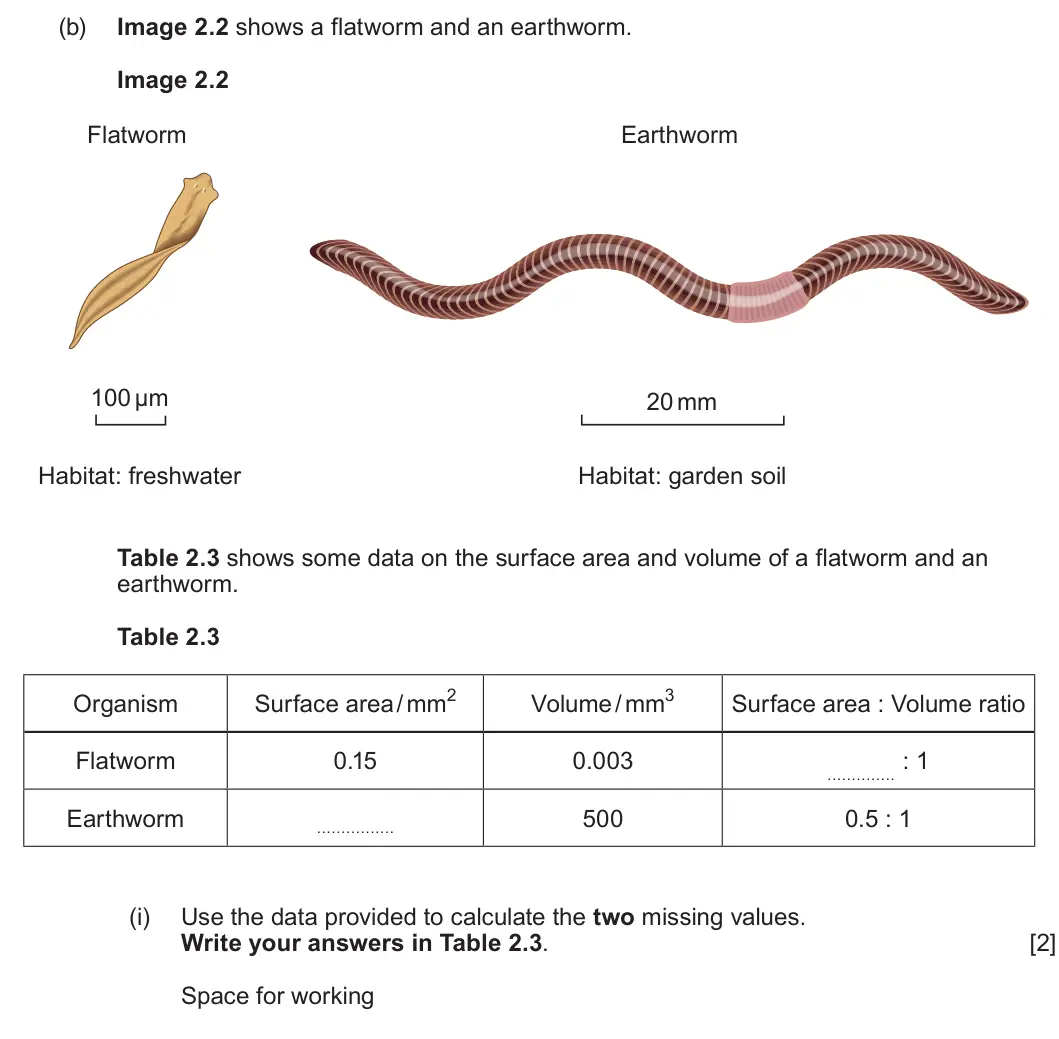
Q2(b)(ii)
The whole paper ↗
Q2(b)(iii)
The whole paper ↗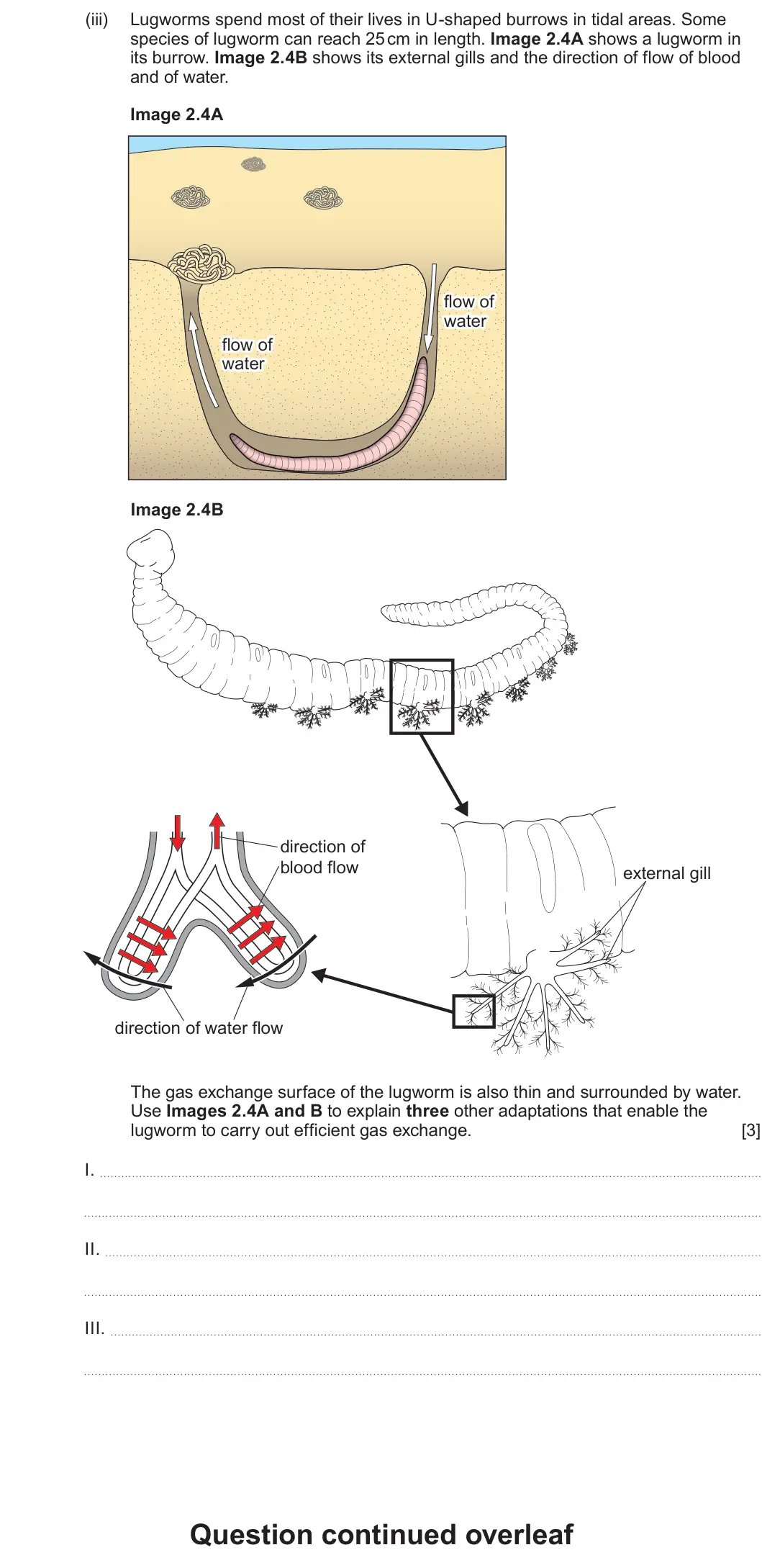
Q2(c)(i)
The whole paper ↗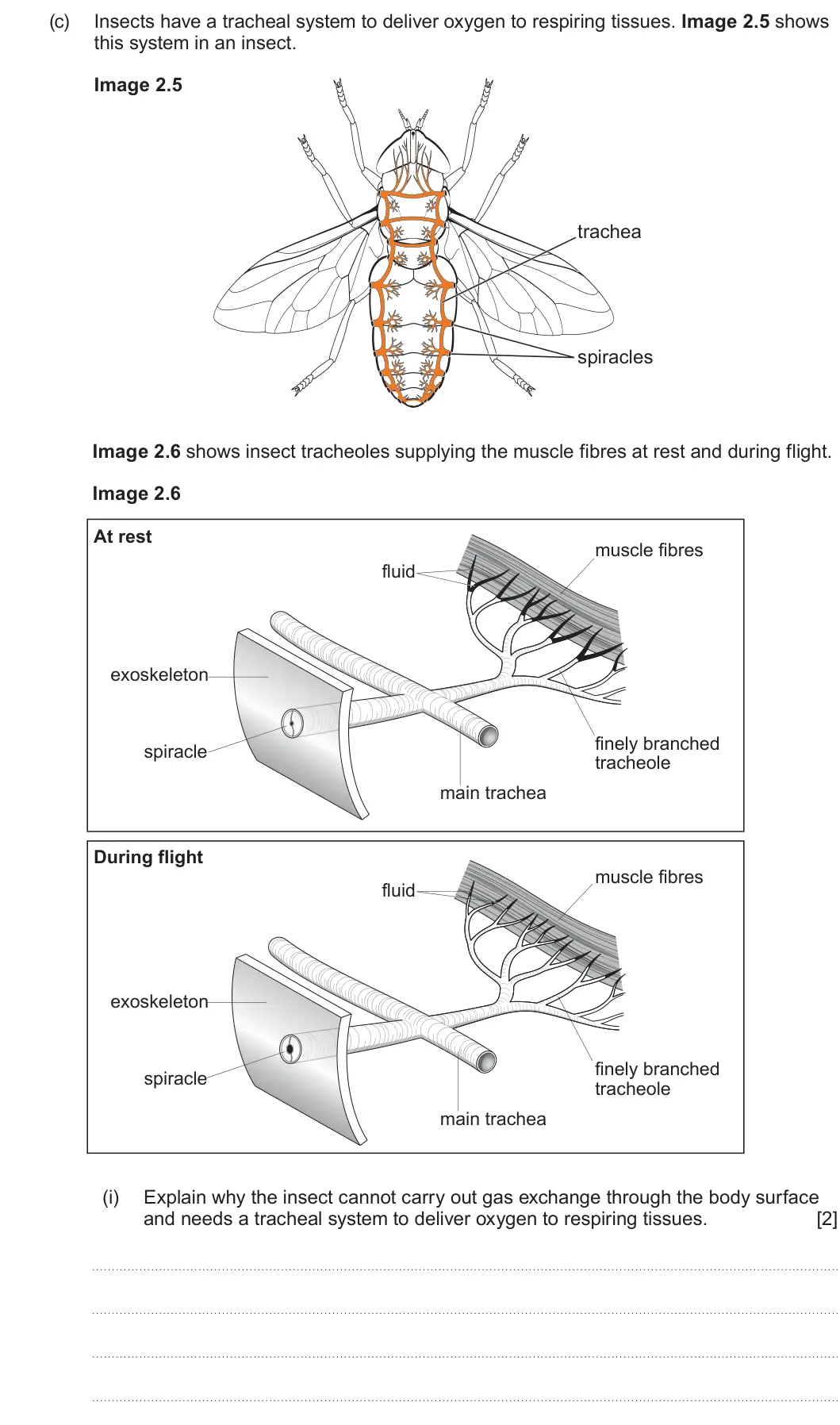
Q2(c)(ii)
The whole paper ↗
Q2(c)(iii)
The whole paper ↗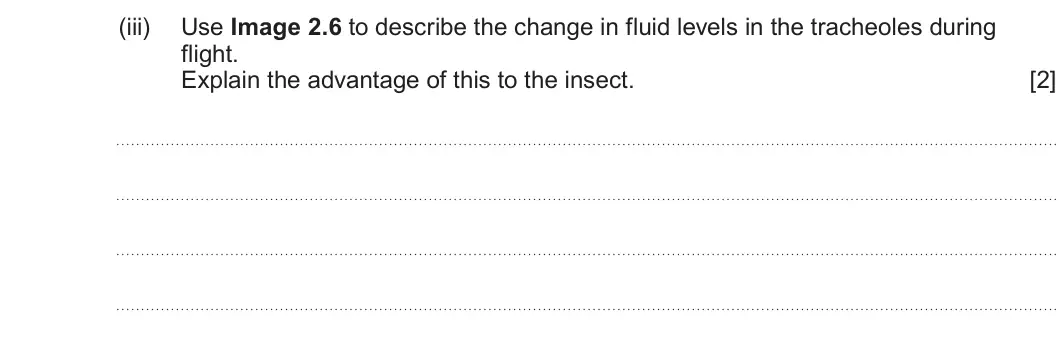
Q5(a)
The whole paper ↗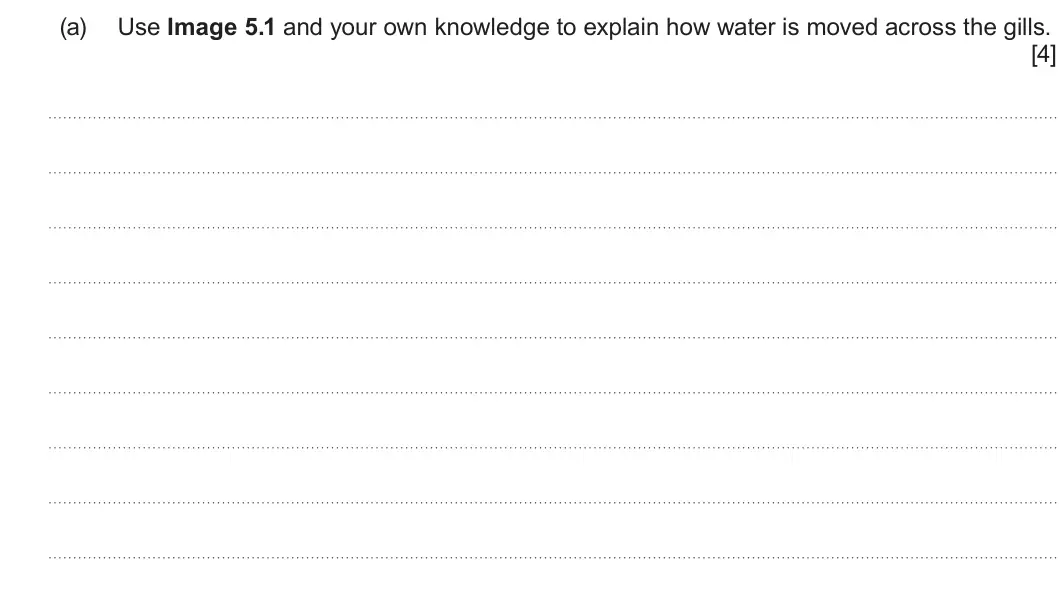
Q5(b)(i)
The whole paper ↗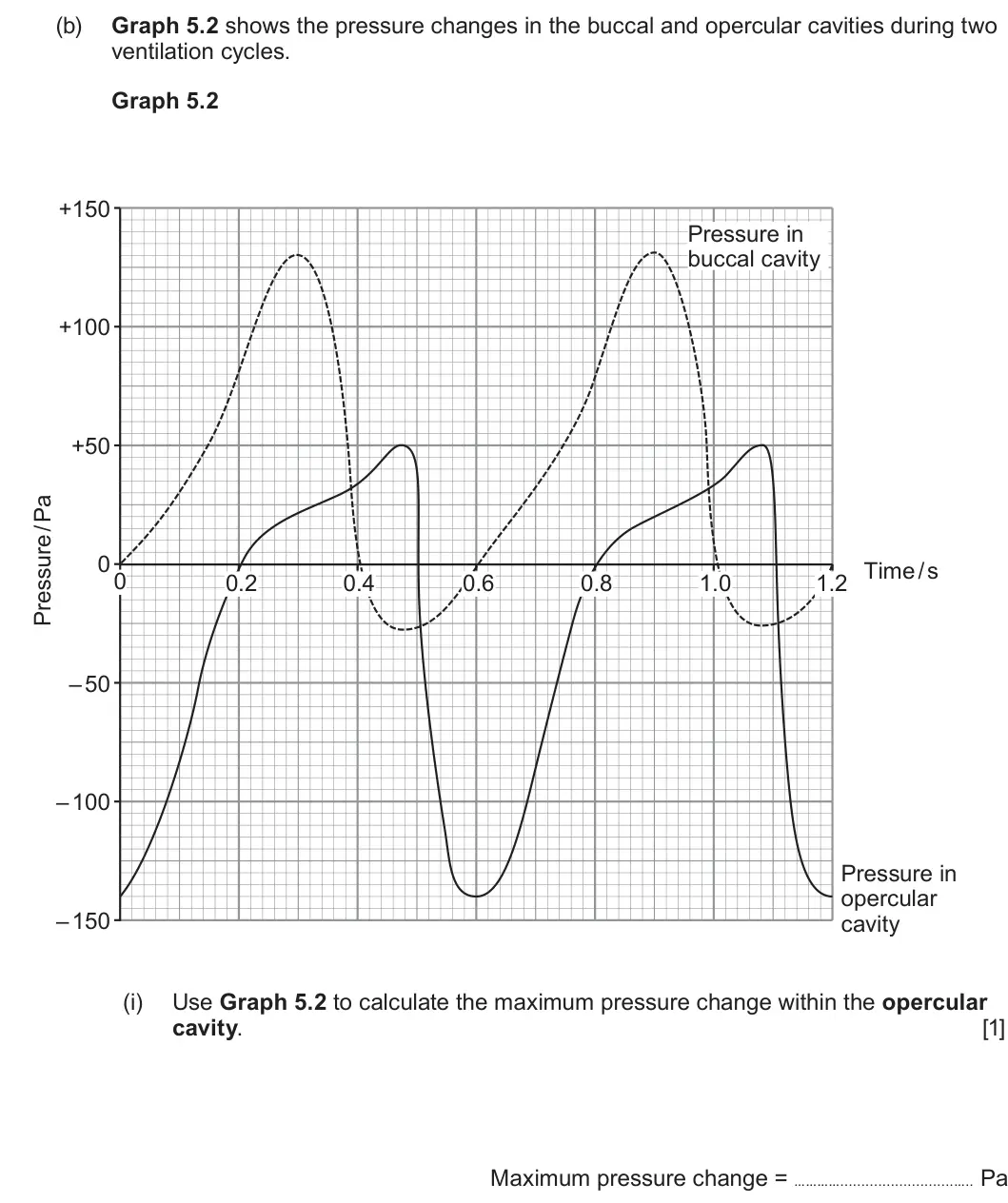
Q5(b)(ii)
The whole paper ↗
Q5(c)(i)
The whole paper ↗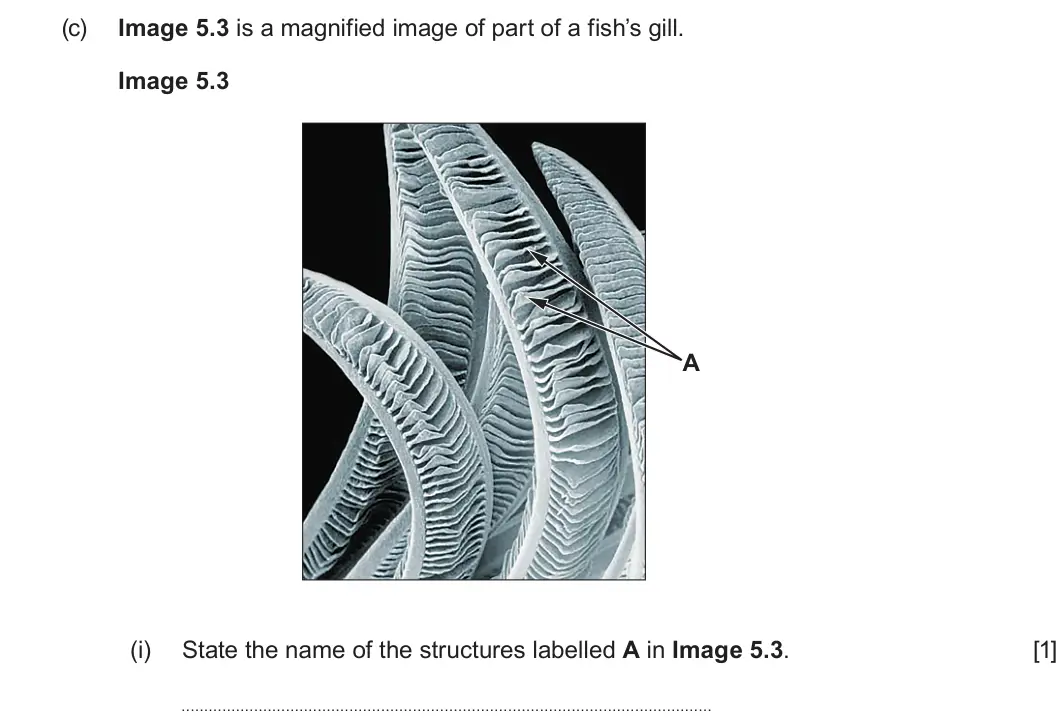
Q5(c)(ii)
The whole paper ↗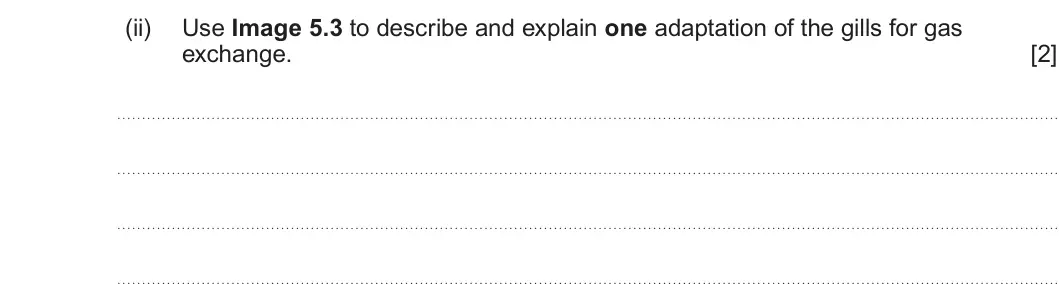
Q5(c)(iii)
The whole paper ↗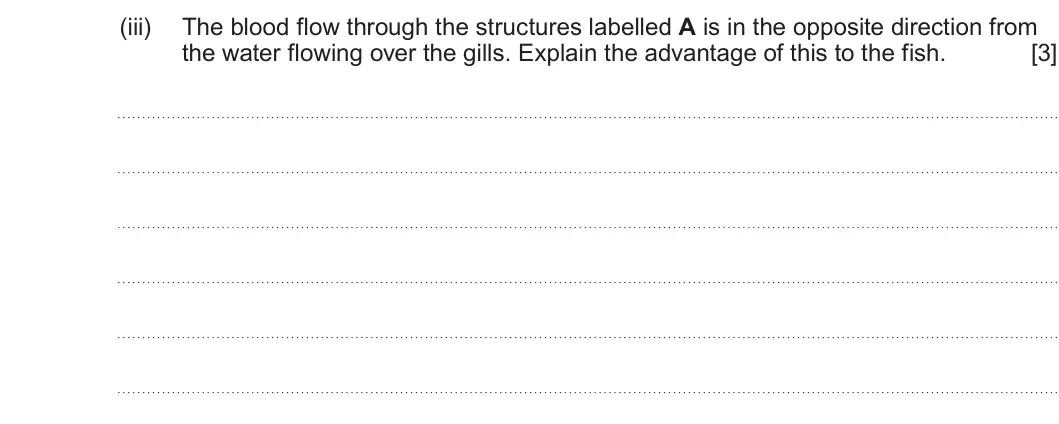
Q5(d)
The whole paper ↗
Q4(a)(i)
The whole paper ↗
Q4(a)(ii)
The whole paper ↗
Q4(b)(i)
The whole paper ↗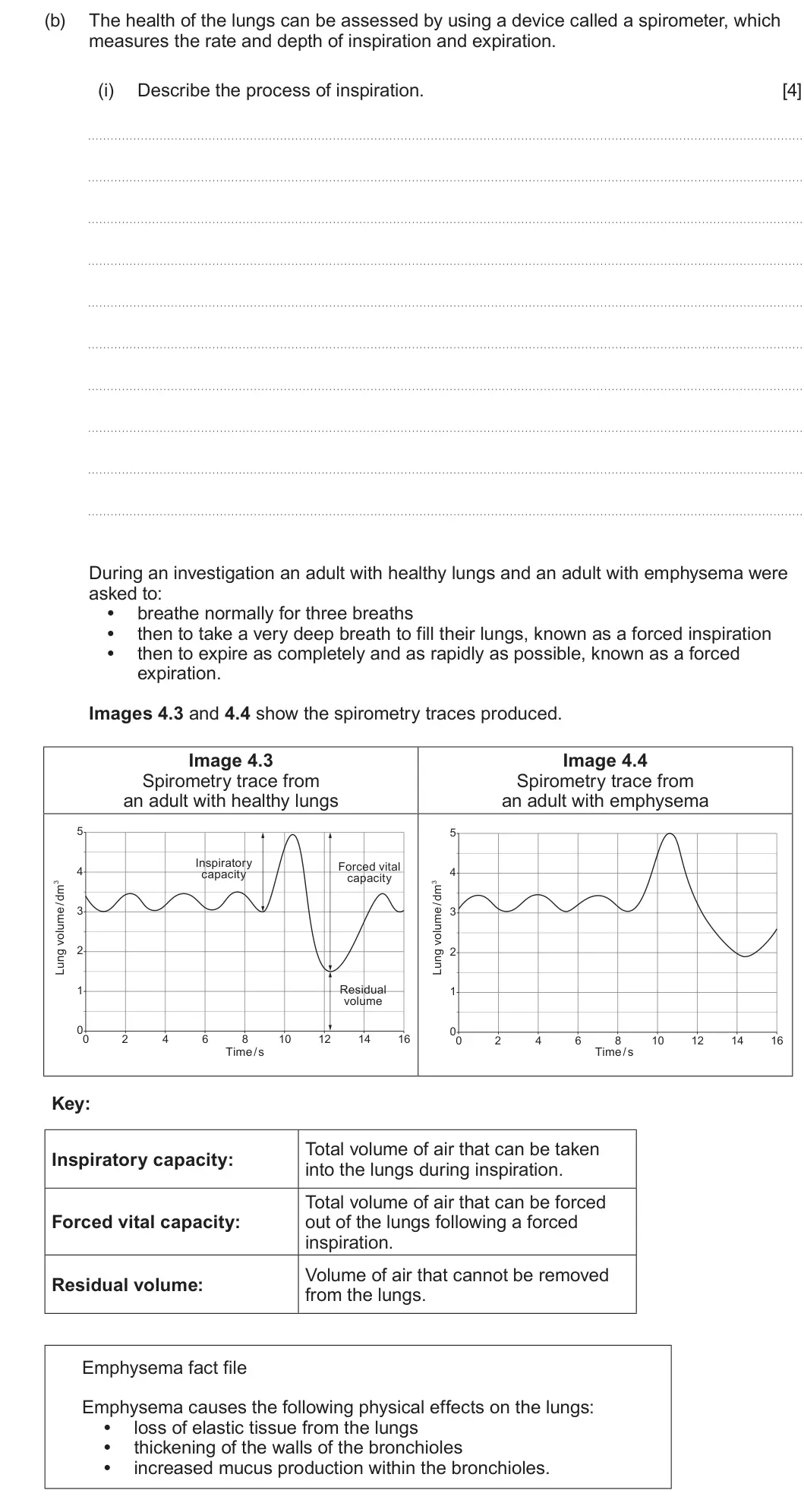
Q4(b)(ii)
The whole paper ↗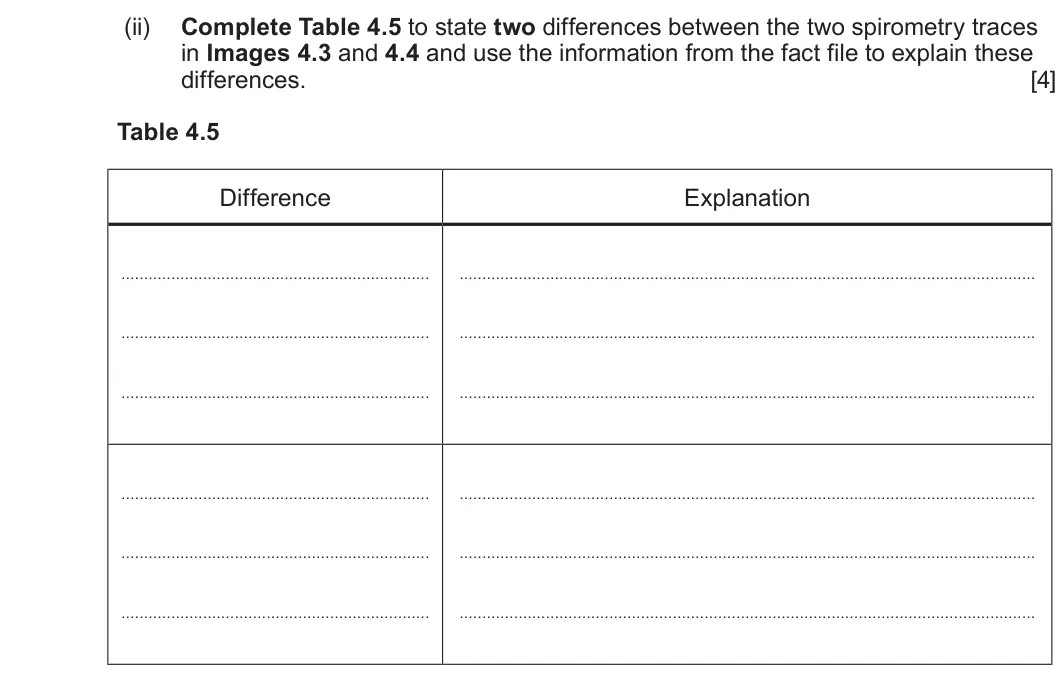
Q2(a)(i)
The whole paper ↗
Q2(a)(iii)
The whole paper ↗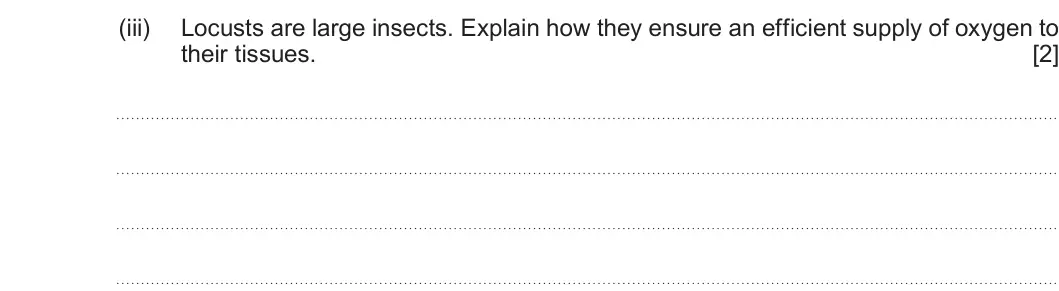
All 39 questions on Adaptations for gas exchange, as a list
- Summer 2025, AS Unit 2, Q2(a) (2 marks): Explain how an amoeba carries out gas exchange. [2]
- Summer 2025, AS Unit 2, Q2(b)(i) (2 marks): Use the data provided to calculate the two missing values. Write your answers in Table 2.3. [2] Space for working
- Summer 2025, AS Unit 2, Q2(b)(ii) (2 marks): Explain why the body surface of both the flatworm and the earthworm is: I. thin; [1] II. moist. [1]
- Summer 2025, AS Unit 2, Q2(b)(iii) (3 marks): Lugworms spend most of their lives in U-shaped burrows in tidal areas. Some species of lugworm can reach 25 cm in length. Image 2.4A shows a lugworm in its burr
- Summer 2025, AS Unit 2, Q2(c)(i) (2 marks): Explain why the insect cannot carry out gas exchange through the body surface and needs a tracheal system to deliver oxygen to respiring tissues. [2]
- Summer 2025, AS Unit 2, Q2(c)(ii) (1 mark): Suggest the role of the rings of chitin in the tracheoles. [1]
- Summer 2025, AS Unit 2, Q2(c)(iii) (2 marks): Use Image 2.6 to describe the change in fluid levels in the tracheoles during flight. Explain the advantage of this to the insect. [2]
- Summer 2024, AS Unit 2, Q5(a) (4 marks): Use Image 5.1 and your own knowledge to explain how water is moved across the gills. [4]
- Summer 2024, AS Unit 2, Q5(b)(i) (1 mark): Use Graph 5.2 to calculate the maximum pressure change within the opercular cavity. [1] Maximum pressure change = ….. Pa
- Summer 2024, AS Unit 2, Q5(b)(ii) (2 marks): I. Indicate on Graph 5.2, with an arrow labelled B, a point when water will enter the buccal cavity. [1] II. Indicate on Graph 5.2, with an arrow labelled G, a
- Summer 2024, AS Unit 2, Q5(c)(i) (1 mark): State the name of the structures labelled A in Image 5.3. [1]
- Summer 2024, AS Unit 2, Q5(c)(ii) (2 marks): Use Image 5.3 to describe and explain one adaptation of the gills for gas exchange. [2]
- Summer 2024, AS Unit 2, Q5(c)(iii) (3 marks): The blood flow through the structures labelled A is in the opposite direction from the water flowing over the gills. Explain the advantage of this to the fish.
- Summer 2024, AS Unit 2, Q5(d) (2 marks): The Australian Lungfish (Neoceratodus forsteri) is one of several species of fish that have evolved simple lungs. The lungs are subdivided into numerous smaller
- Summer 2023, AS Unit 2, Q4(a)(i) (2 marks): Using Image 4.1 and your own knowledge, describe and explain two adaptations of the lungs for gas exchange. [2]
- Summer 2023, AS Unit 2, Q4(a)(ii) (2 marks): Using Image 4.2, explain why the person with emphysema would have a lower oxygen saturation of haemoglobin than an adult with healthy lungs. [2]
- Summer 2023, AS Unit 2, Q4(b)(i) (4 marks): Describe the process of inspiration. [4] During an investigation an adult with healthy lungs and an adult with emphysema were asked to: • breathe normally for t
- Summer 2023, AS Unit 2, Q4(b)(ii) (4 marks): Complete Table 4.5 to state two differences between the two spirometry traces in Images 4.3 and 4.4 and use the information from the fact file to explain these
- Summer 2022, AS Unit 2, Q2(a)(i) (1 mark): The body surface of both animals is adapted for gas exchange by being thin, moist, and permeable to gases. State one other feature of the body surface that thes
- Summer 2022, AS Unit 2, Q2(a)(iii) (2 marks): Locusts are large insects. Explain how they ensure an efficient supply of oxygen to their tissues. [2]
- Summer 2022, AS Unit 2, Q2(b)(i) (1 mark): Suggest how parapodia are also adapted to increase the efficiency of gas exchange. [1] Graph 2.3 shows the oxygen haemoglobin dissociation curves for Lumbricus
- Summer 2019, AS Unit 2, Q2(a) (2 marks): Calculate the mean skin surface area of the annelid. Give your answer in standard form. [2] Surface area = mm2
- Summer 2019, AS Unit 2, Q2(c) (4 marks): The amphibian and the mammal possess mechanisms to ventilate their lungs. Use the information in the table and your own knowledge, to explain why the amphibian
- Summer 2018, AS Unit 2, Q4(a)(i) (1 mark): Identify the structures labelled X and Y in Photograph B. [1] X Y
- Summer 2018, AS Unit 2, Q4(a)(ii) (1 mark): Suggest the function of the gill rakers. [1]
- Summer 2018, AS Unit 2, Q4(a)(iii) (4 marks): Use the photographs, and your knowledge, to explain why fish suffocate when out of water. [4]
- Summer 2018, AS Unit 2, Q4(b) (4 marks): Gas exchange in bony fish uses the countercurrent flow mechanism, where blood flows through the capillaries of the gill lamellae in the opposite direction to wa
- Summer 2018, AS Unit 2, Q4(c)(i) (1 mark): Identify which graph illustrates parallel flow and which graph illustrates countercurrent flow. [1] Parallel flow Countercurrent flow
- Summer 2018, AS Unit 2, Q4(c)(ii) (1 mark): Clearly insert arrows on the graph which represents countercurrent flow to show the direction of blood flow and of water flow. [1]
- Summer 2017, AS Unit 2, Q2(a) (4 marks): These systems have a number of features in common. Complete the table below to explain the purpose of these features. [4] Feature Explanation Both systems are i
- Summer 2017, AS Unit 2, Q2(b)(i) (1 mark): The rings of chitin in an insect’s trachea are complete. The rings of cartilage in a mammal’s trachea are incomplete or “C-shaped”. Use the information in the p
- Summer 2017, AS Unit 2, Q2(b)(ii) (1 mark): Name one plant tissue that shows a similar pattern of support material to that seen in an insect’s tracheae. [1]
- Summer 2017, AS Unit 2, Q2(c)(i) (4 marks): During inspiration the external intercostal muscles contract raising the rib cage. This causes the outer pleural membrane to move outwards. Using the graphs, ex
- Summer 2017, AS Unit 2, Q2(c)(ii) (1 mark): Suggest one change that you would expect to see in these curves during strenuous exercise. [1]
- Summer 2016, AS Unit 2, Q1(a)(i) (1 mark): Calculate the surface area to volume ratio of the housefly. [1] Surface area to volume ratio =
- Summer 2016, AS Unit 2, Q1(a)(ii) (2 marks): Give one advantage and one disadvantage of the tracheal system. [2] Advantage: Disadvantage:
- Summer 2016, AS Unit 2, Q1(b) (3 marks): Use the table to explain why an amoeba does not need a specialised gas exchange surface or circulatory system. [3]
- Summer 2016, AS Unit 2, Q1(c) (2 marks): State how mammals maintain the concentration gradient at their gas exchange surface. [2]
- Summer 2016, AS Unit 2, Q1(d) (2 marks): Suggest why cellular demand for oxygen is lower in a fish compared to a dog of the same size. [2]
Questions, mark schemes and examiner’s reports are © WJEC CBAC Ltd, from their published past papers. Plumi isn’t affiliated with any exam board. Want whole papers? Every WJEC A-Level Biology paper.
Rather write your answers by hand on iPad? Plumi marks them against the same mark schemes.