 plumi
How do electric motors work?: OCR GCSE Physics B questions
Every OCR GCSE Physics B exam question on P3.6 How do electric motors work?, 2018–2025, with its mark scheme and examiner’s report.
Paper
All papers
Exam
All years
Calculations
Q6(b)(i)
The whole paper ↗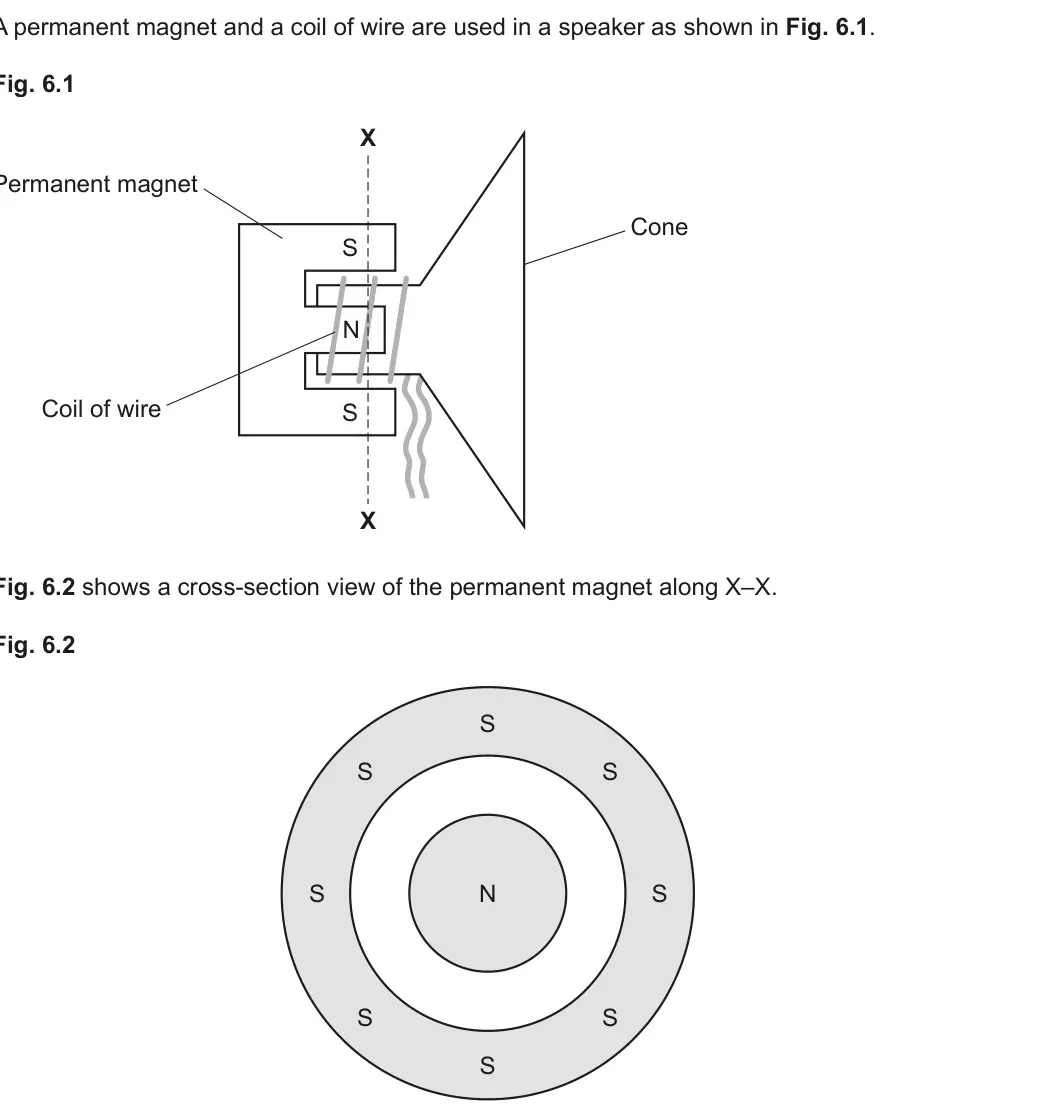
Q6(b)(ii)
The whole paper ↗Q6(b)(iii)
The whole paper ↗Q6(b)(iv)
The whole paper ↗Q6(d)
The whole paper ↗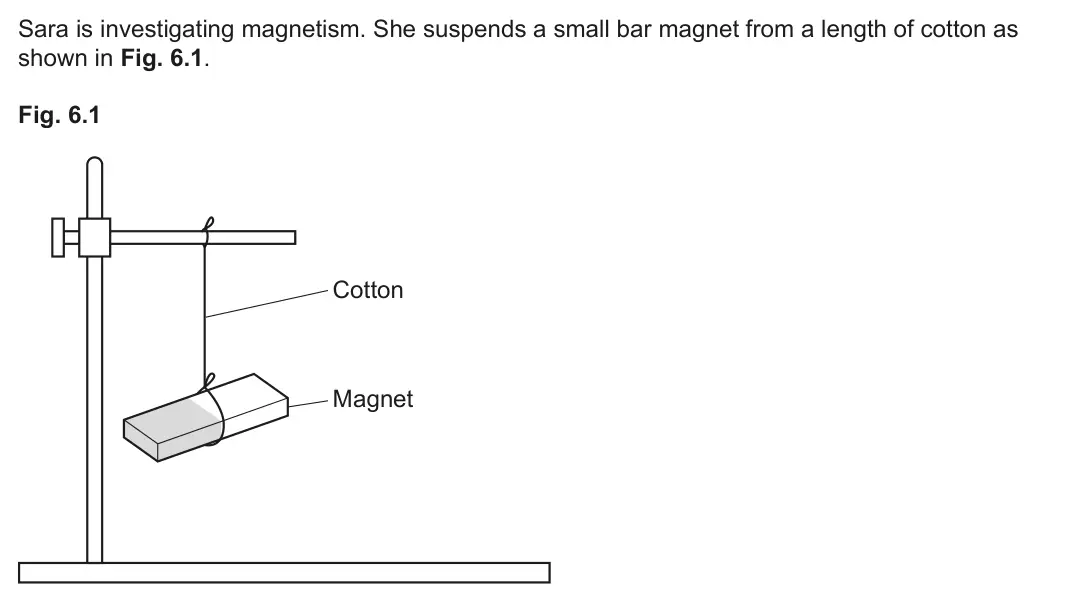
Q10(b)(i)
The whole paper ↗
Q10(b)(ii)
The whole paper ↗Q7(a)(i)
The whole paper ↗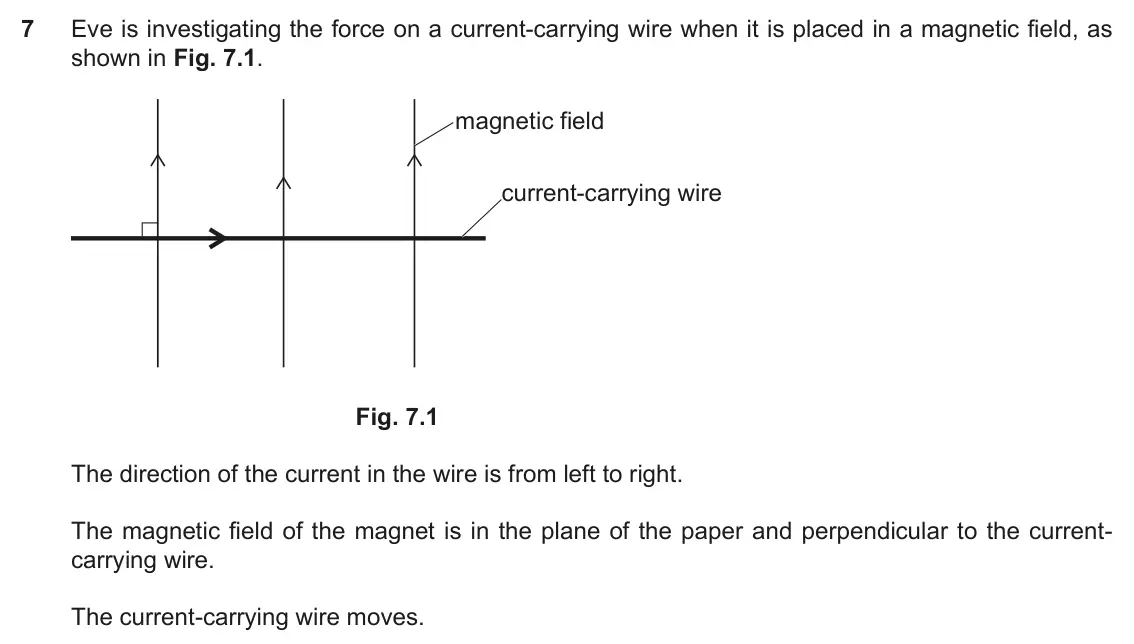
Q7(a)(ii)
The whole paper ↗Q7(b)
The whole paper ↗Q7(c)
The whole paper ↗Q7(d)
The whole paper ↗
How many marks did you get?
How many marks did you get?
All 14 questions on How do electric motors work?, as a list
- June 2025, Paper 3 Higher, Q6(b)(i) (3 marks): Explain why there is a force on the coil of wire. [3]
- June 2025, Paper 3 Higher, Q6(b)(ii) (3 marks): Explain how the force on the coil of wire produces sound from the speaker with the same frequency as the alternating current. [3]
- June 2025, Paper 3 Higher, Q6(b)(iii) (4 marks): Calculate the force on the one coil of wire. • The magnetic flux density is 1.2 T. • The current is 0.3 A. • The circumference of the coil of wire is 5 cm. Use
- June 2025, Paper 3 Higher, Q6(b)(iv) (3 marks): Suggest three ways to increase the size of force on the coil of wire in the speaker. 1 2 3 [3]
- June 2023, Paper 4 Higher, Q6(d) (4 marks): Sara makes an electric motor using a length of wire and a magnet with a magnetic flux density of 20 mT. She winds the wire into a coil and connects the ends of
- June 2022, Paper 3 Higher, Q10(b)(i) (3 marks): The wire P experiences a downwards magnetic force of 2.4 × 10⁻⁴ N when it carries a current of 0.80 A. The length of wire P is 0.012 m. Use the Data Sheet. Calc
- June 2022, Paper 3 Higher, Q10(b)(ii) (2 marks): Explain why the coil of wire in the motor rotates. [2]
- June 2019, Paper 4 Higher, Q7(a)(i) (1 mark): Use Fleming’s left-hand rule to predict the direction in which the wire moves. Tick (3) one box. Up along the plane of the paper. Down along the plane of the pa
- June 2019, Paper 4 Higher, Q7(a)(ii) (1 mark): Describe how you used Fleming’s left-hand rule to find the direction in which the wire moves. [1]
- June 2019, Paper 4 Higher, Q7(b) (2 marks): Explain why the current-carrying wire moves. Use ideas about magnetic fields in your answer. [2]
- June 2019, Paper 4 Higher, Q7(c) (4 marks): The current in the wire is 2.0 A. The magnetic flux density is 0.060 T. Calculate the force acting on the 4.5 cm length of the wire. Force = N [4]
- June 2019, Paper 4 Higher, Q7(d) (2 marks): Explain what happens to the size of the force in (c) when the current in the wire is doubled. [2]
- June 2018, Paper 3 Higher, Q13(a) (1 mark): What is the direction of the force on the coil? Tick (✓) one box. Anti-clockwise Clockwise Into the page Out of the page [1]
- June 2018, Paper 3 Higher, Q13(b) (4 marks): Calculate the magnitude of the force acting on the coil. Force = N [4]
Questions, mark schemes and examiner’s reports are © OCR, from their published past papers. Plumi isn’t affiliated with any exam board. Want whole papers? Every OCR GCSE Physics B paper.
Rather write your answers by hand on iPad? Plumi marks them against the same mark schemes.