 plumi
Bond fission and radicals: OCR A‑Level Chemistry A questions
OCR A-Level Chemistry A past-paper questions on 4.1.1.4 Bond fission and radicals, 2016–2025, with mark schemes and examiner’s reports where available.
Paper
All papers
Exam
All years
Calculations
Q4(d)(ii)
The whole paper ↗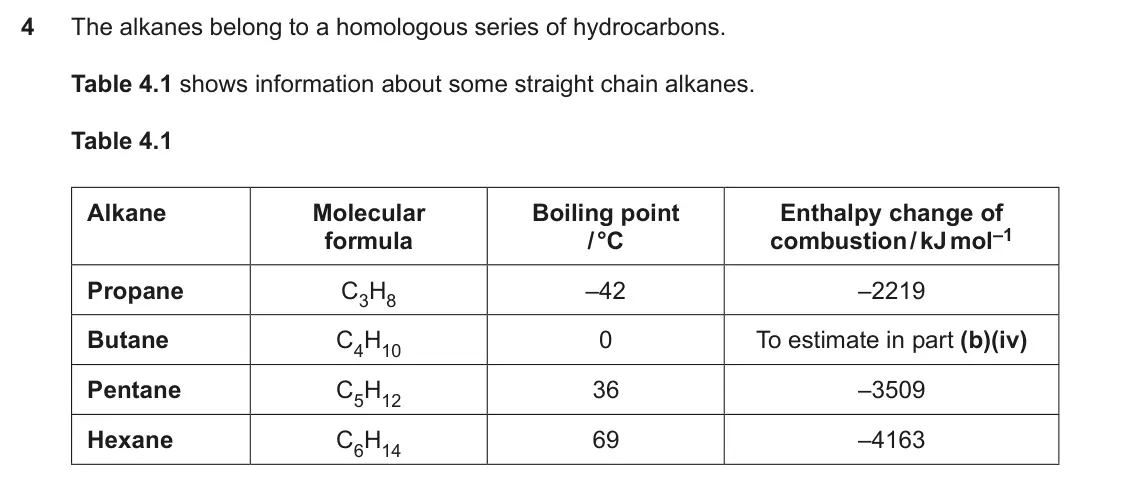
Q2(a)
The whole paper ↗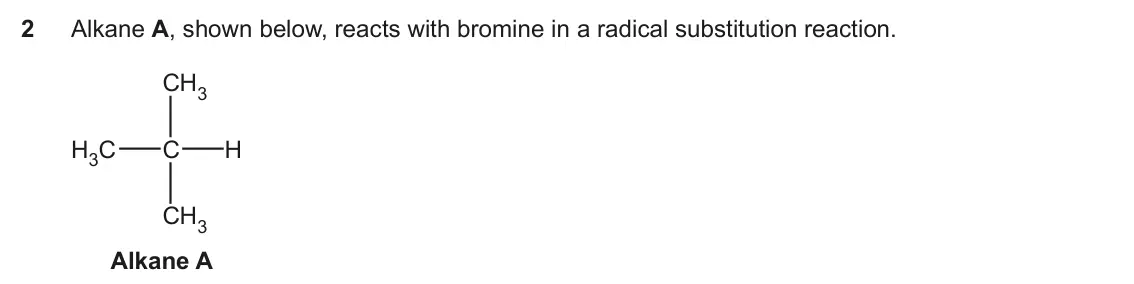
Q2(b)
The whole paper ↗Q19(c)(ii)
The whole paper ↗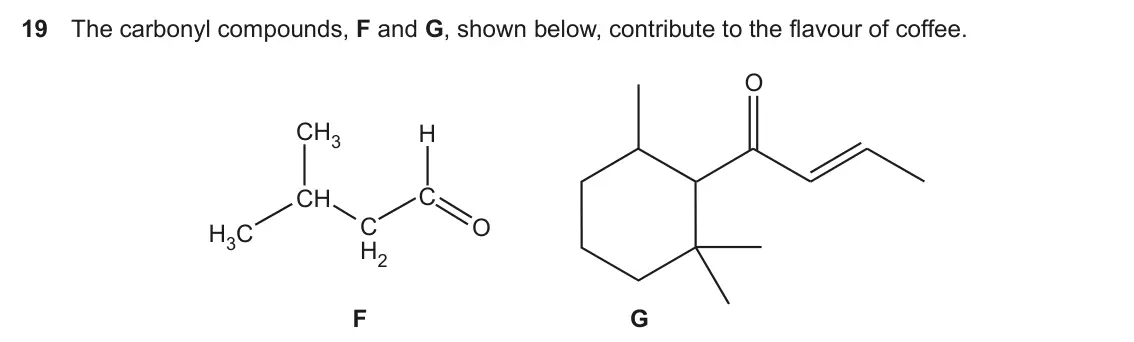
Q20(a)(ii)
The whole paper ↗
Q20(a)(iii)
The whole paper ↗Q5(d)(iii)
The whole paper ↗
Q5(d)(v)
The whole paper ↗
All 8 questions on Bond fission and radicals, as a list
- June 2025, AS Paper 2, Q4(d)(ii) (1 mark): The first step in the mechanism of the reaction is the homolytic fission of a Br–Br bond. Explain what is meant by homolytic fission. [1]
- November 2021, AS Paper 2, Q2(a) (1 mark): What is meant by a radical? [1]
- November 2021, AS Paper 2, Q2(b) (1 mark): Name the type of bond breaking that occurs in a radical substitution reaction. [1]
- November 2020, Paper 2, Q19(c)(ii) (2 marks): Explain why the mechanism in (c)(i) involves heterolytic fission. [2]
- June 2019, Paper 2, Q20(a)(ii) (2 marks): Draw structures to show the products in the reaction mechanism below. H H + O [2]
- June 2019, Paper 2, Q20(a)(iii) (2 marks): Use the mechanism in (ii) to explain what is meant by heterolytic fission. [2]
- June 2017, AS Paper 2, Q5(d)(iii) (1 mark): The first step in the reaction mechanism involves homolytic fission of a chlorine molecule to form two chlorine radicals. Why is this step an example of homolyt
- June 2017, AS Paper 2, Q5(d)(v) (1 mark): Draw the displayed formula of the radical formed in the first propagation step. Use a dot,•, to show the position of the unpaired electron. [1]
Questions, mark schemes and examiner’s reports are © OCR, from their published past papers. Plumi isn’t affiliated with any exam board. Want whole papers? OCR A-Level Chemistry A past papers, or our free OCR-style practice pack.
The Plumi iPad app also offers exam-style questions with AI feedback on your handwritten working.