 plumi
Thermal physics: Eduqas A‑Level Physics questions
Every Eduqas A-Level Physics exam question on 1.8 Thermal physics, 2016–2025, with its mark scheme and examiner’s report.
Find questions1,592
Calculations
Q7(a)
The whole paper ↗
Q7(b)
The whole paper ↗
Q7(c)
The whole paper ↗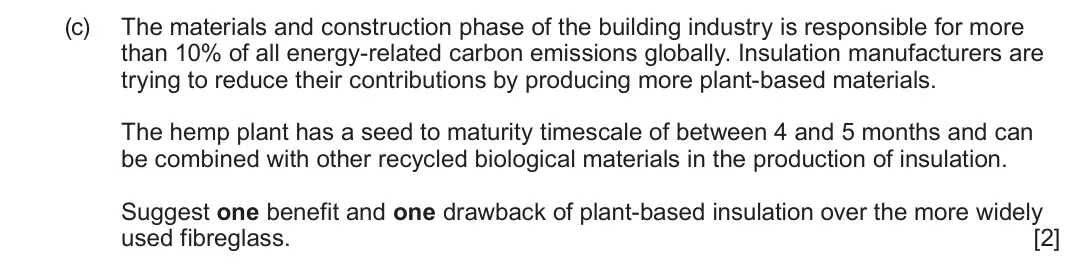
Q7(b)(i)
The whole paper ↗
Q7(b)(ii)
The whole paper ↗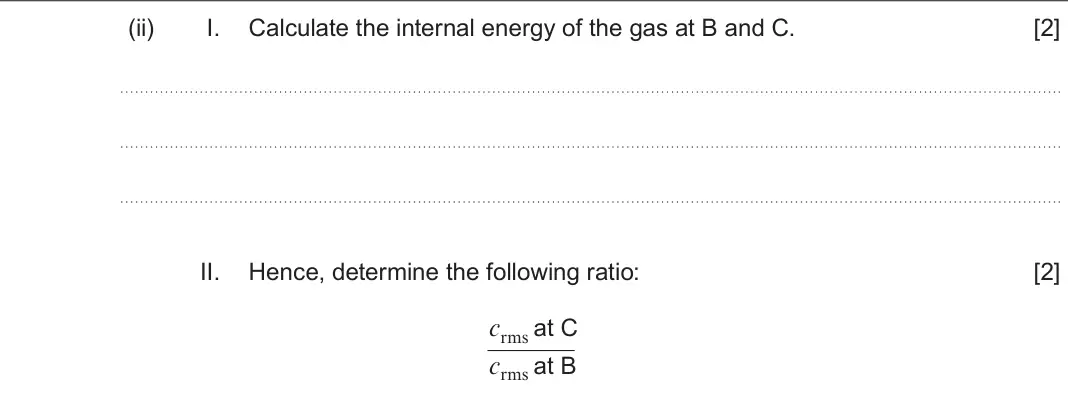
Q7(c)
The whole paper ↗
Q8(c)
The whole paper ↗
Q2(b)(i)
The whole paper ↗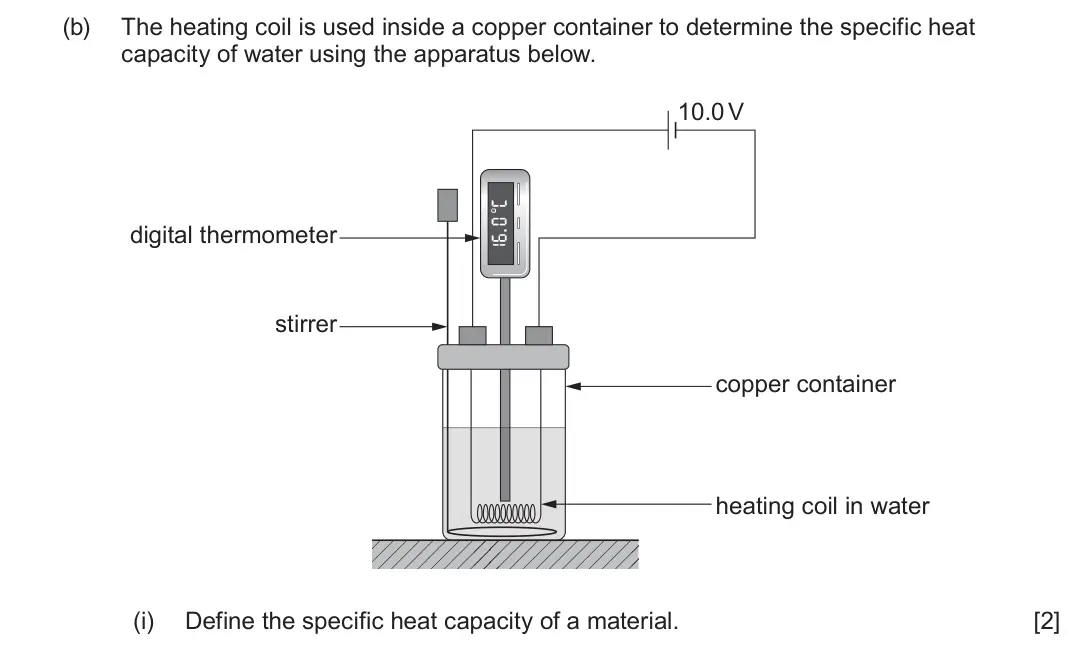
Q2(b)(ii)
The whole paper ↗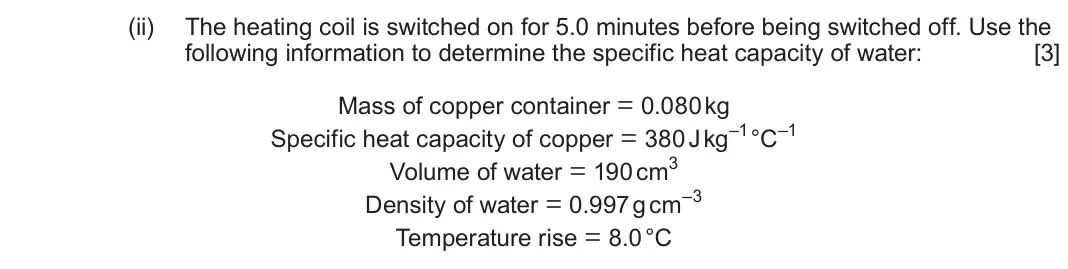
Q2(b)(iii)
The whole paper ↗
Q4(a)
The whole paper ↗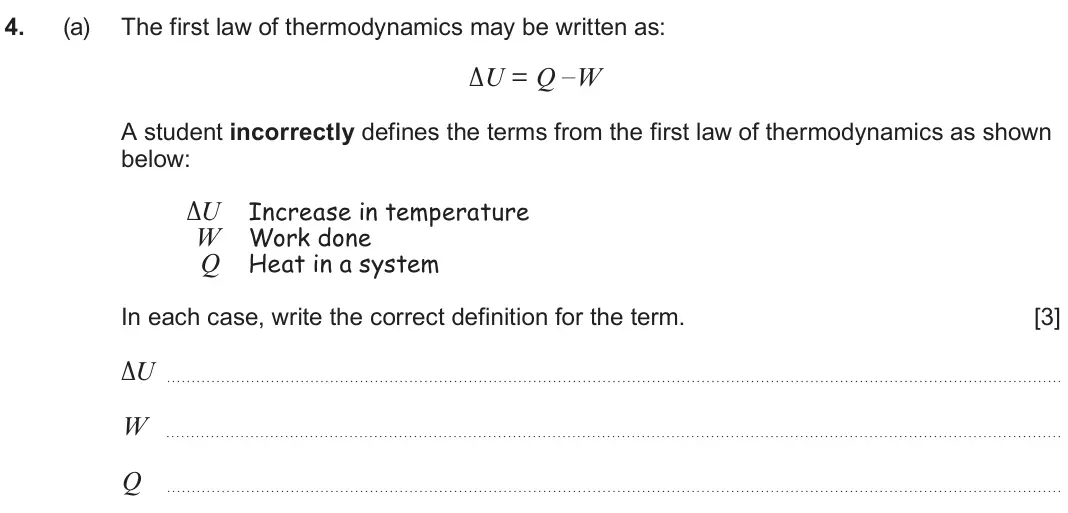
Q4(b)(ii)
The whole paper ↗
Q4(b)(iii)
The whole paper ↗
Q7(b)
The whole paper ↗
Q7(c)
The whole paper ↗
Q6(a)(ii)
The whole paper ↗
Q6(b)(ii)
The whole paper ↗
Q6(b)(iii)
The whole paper ↗
Q7(a)
The whole paper ↗
All 33 questions on Thermal physics, as a list
- June 2025, Component 1, Q7(a) (3 marks): State what is meant by heat, Q, and explain how the rate of heat flow changes from the moment the metal blocks are placed in contact to when they reach thermal
- June 2025, Component 1, Q7(b) (4 marks): Determine the temperature of the blocks when they reach thermal equilibrium. [4] caluminium = 920 J kg–1 °C–1 cbrass = 400 J kg–1 °C–1
- June 2025, Component 1, Q7(c) (2 marks): The materials and construction phase of the building industry is responsible for more than 10% of all energy-related carbon emissions globally. Insulation manuf
- June 2024, Component 1, Q7(b)(i) (1 mark): State what is meant by the internal energy of an ideal gas. [1]
- June 2024, Component 1, Q7(b)(ii) (4 marks): I. Calculate the internal energy of the gas at B and C. [2] II. Hence, determine the following ratio: [2] crms at C crms at B
- June 2024, Component 1, Q7(c) (3 marks): For the whole cycle, ABCA , explain using the first law of thermodynamics, whether or not there is a net flow of heat into the system. [3]
- June 2024, Component 3, Q8(c) (3 marks): The mass of the magnet is 325 g and the specific heat capacity of copper is 389 J K–1 kg–1. Calculate the rise in temperature of the copper tube when the magnet
- June 2023, Component 1, Q2(b)(i) (2 marks): Define the specific heat capacity of a material. [2]
- June 2023, Component 1, Q2(b)(ii) (3 marks): The heating coil is switched on for 5.0 minutes before being switched off. Use the following information to determine the specific heat capacity of water: [3] M
- June 2023, Component 1, Q2(b)(iii) (2 marks): Zayn repeated the experiment and noted that the room temperature was 16.0 °C. Before he started the heating process, he cooled the apparatus to 12.0 °C in a ref
- June 2023, Component 1, Q4(a) (3 marks): The first law of thermodynamics may be written as: ∆U = Q –W A student incorrectly defines the terms from the first law of thermodynamics as shown below: ΔU Inc
- June 2023, Component 1, Q4(b)(ii) (2 marks): Show that the work done during the process A → B is approximately 330 J. [2]
- June 2023, Component 1, Q4(b)(iii) (3 marks): Joseph considers the whole process A → B → C → A. He calculates the heat flow into the system to be 150 J. Grace disagrees, and states that 150 J of heat would
- Autumn 2021, Component 1, Q7(b) (2 marks): Use the graph to determine (approximately) the work done by the expansion. [2]
- Autumn 2021, Component 1, Q7(c) (2 marks): Use the first law of thermodynamics to explain why a fall of temperature is to be expected over AB. [2]
- Autumn 2020, Component 1, Q6(a)(ii) (1 mark): State the significance, in terms of molecules, of the absolute zero of temperature. [1]
- Autumn 2020, Component 1, Q6(b)(ii) (2 marks): Calculate the work done on the gas over ABC. [2]
- Autumn 2020, Component 1, Q6(b)(iii) (3 marks): Determine the net heat flow over ABC, stating whether it is in or out of the system, and justifying your answer clearly in terms of the 1st law of thermodynamic
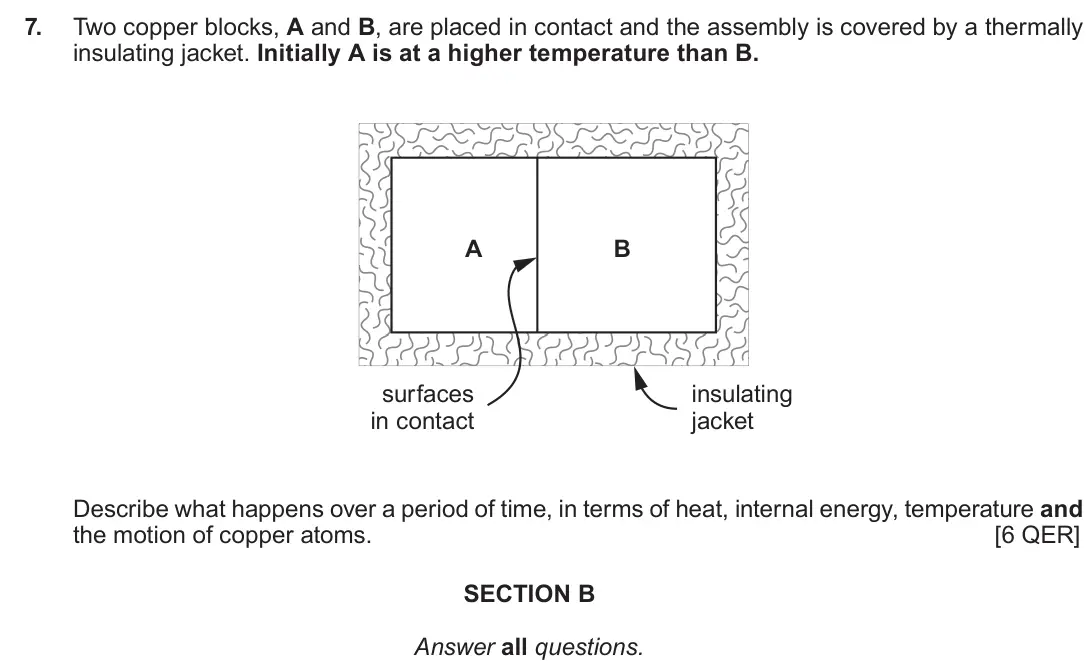
- Autumn 2020, Component 1, Q7 (6 marks): Two copper blocks, A and B, are placed in contact and the assembly is covered by a thermally insulating jacket. Initially A is at a higher temperature than B. A
- June 2019, Component 1, Q7(a) (2 marks): State what is meant by the heat, Q, entering a system. [2]
- June 2019, Component 1, Q7(b)(i) (2 marks): Calculate the work done by the gas in the stage AB. [2]
- June 2019, Component 1, Q7(b)(ii) (6 marks): For each of the stages AB, BC and CA separately, and for the cycle as a whole, use the first law of thermodynamics to explain whether heat flows into the system
- June 2019, Component 2, Q3(c) (5 marks): A 1.6 mF capacitor is charged from a 300 V d.c supply. Engineers wish to use the energy stored in this capacitor to heat a small coil embedded in a thermally in
- June 2018, Component 1, Q8(a)(ii) (2 marks): Determine the approximate amount of work done by the gas during the expansion. [2]
- June 2018, Component 1, Q8(a)(iii) (2 marks): Rini claims that the work done by the gas results in an equal amount of internal energy being lost by the gas. Give the correct application of the first law of
- June 2018, Component 1, Q8(b) (3 marks): An estimated 600 MJ of work can be produced by an ordinary car engine burning 0.10 m3 (100 litre) of petrol. An estimated 15 MJ of work can be produced by the e
- June 2017, Component 1, Q6(a)(i) (2 marks): Draw a circuit diagram of the circuit required. [Show the heating coil as a resistor.] [2]
- June 2017, Component 1, Q6(a)(ii) (2 marks): Suggest why the points for the highest temperatures show significant deviations from the trend of the points at lower temperatures, and what could have been don
- June 2017, Component 1, Q6(a)(iii) (4 marks): Using an appropriate portion of the graph, determine the maximum gradient and the minimum gradient. [4]
- June 2017, Component 1, Q6(a)(iv) (2 marks): Show clearly that the graph gradient should be: VI [2] gradient = mc
- June 2017, Component 1, Q6(a)(v) (5 marks): Hence determine a value for the specific heat capacity of the metal of the cylinder, together with its absolute uncertainty. Assume that the percentage uncertai
- June 2017, Component 1, Q6(b)(i) (3 marks): Calculate the heat flow into the gas during this change. [3]
- June 2017, Component 1, Q6(b)(ii) (2 marks): Discuss whether or not this amount of heat would be needed in all circumstances to raise the temperature of 0.031 mol of helium from 295 K to 424 K. [2]
Questions, mark schemes and examiner’s reports are © WJEC Eduqas, from their published past papers. Plumi isn’t affiliated with any exam board. Want whole papers? Every Eduqas A-Level Physics paper.
Rather write your answers by hand on iPad? Plumi marks them against the same mark schemes.