 plumi
The nervous system: Eduqas A‑Level Biology questions
Every Eduqas A-Level Biology exam question on 3.5 The nervous system, 2016–2025, with its mark scheme and examiner’s report.
Find questions2,061
Calculations
Q4(c)(i)
The whole paper ↗
Q4(c)(ii)
The whole paper ↗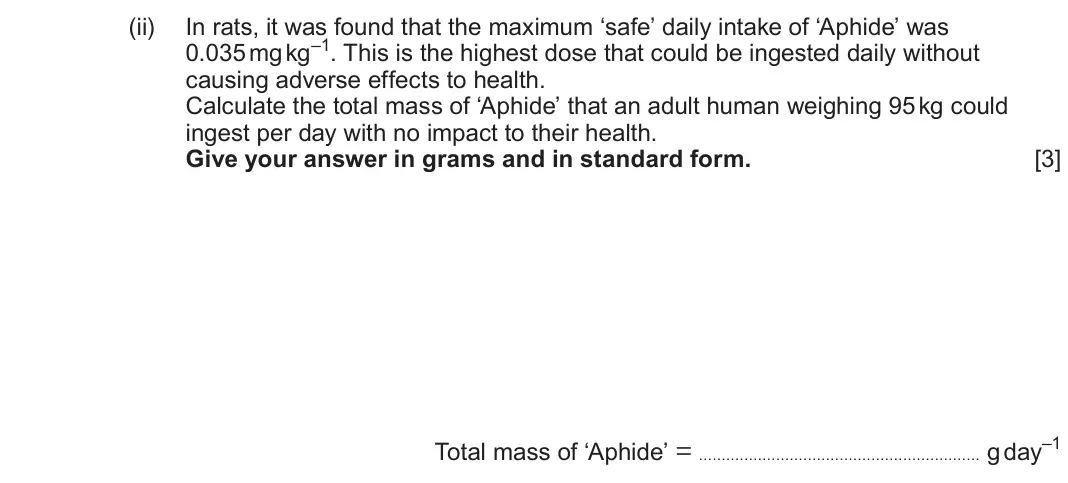
Q4(c)(iii)
The whole paper ↗
Q1(a)
The whole paper ↗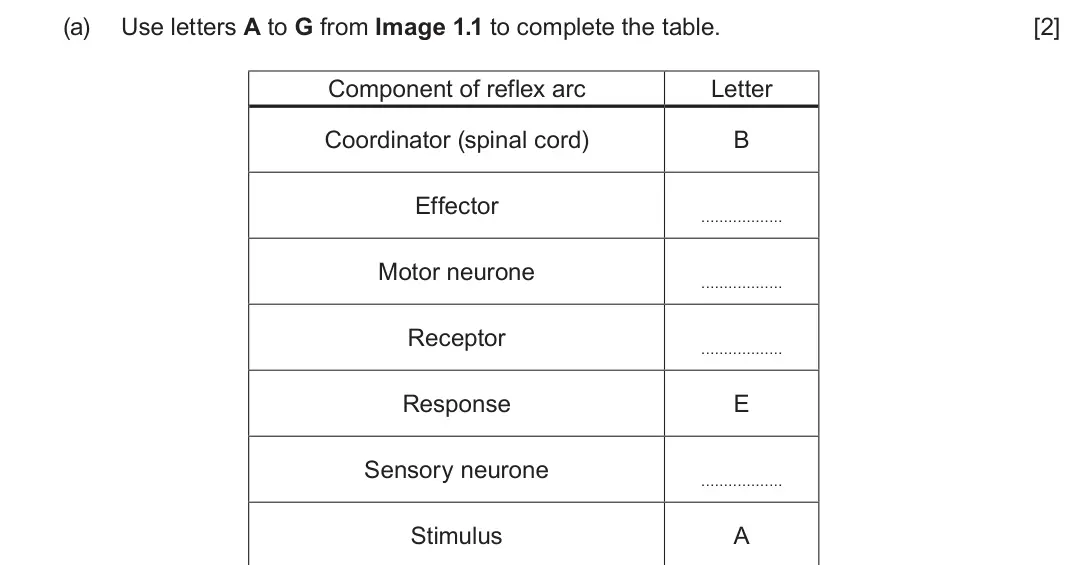
Q1(b)
The whole paper ↗
Q1(c)(i)
The whole paper ↗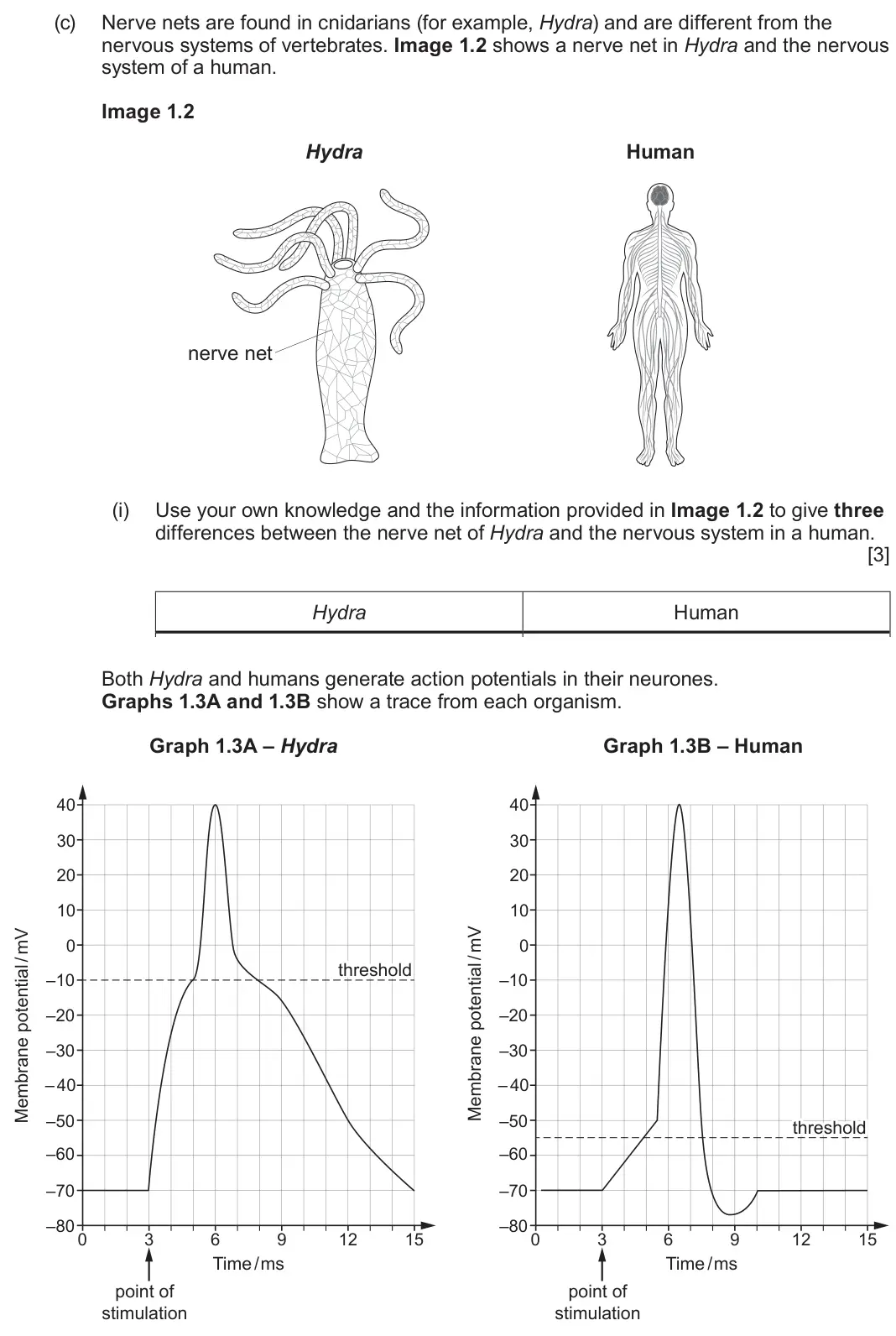
Q1(c)(ii)
The whole paper ↗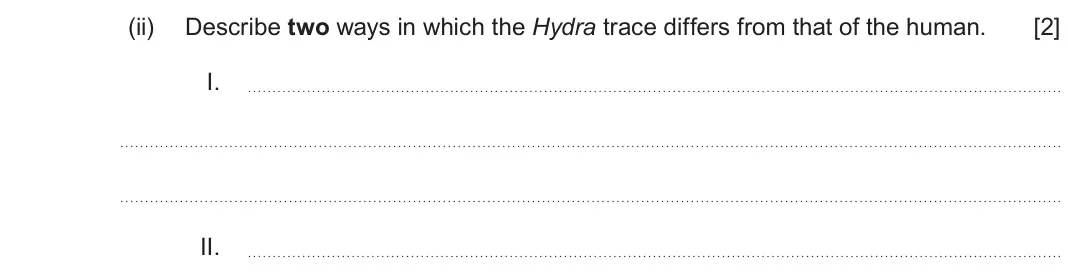
Q4(a)
The whole paper ↗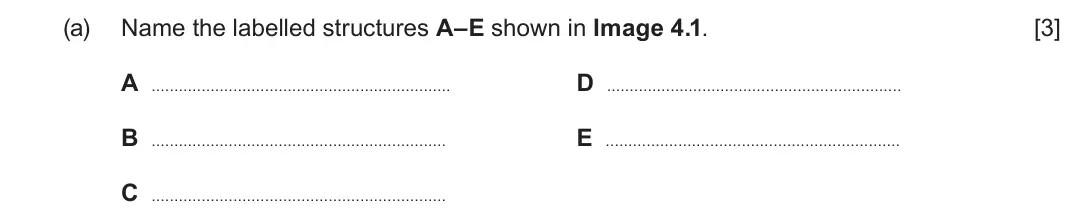
Q4(b)(i)
The whole paper ↗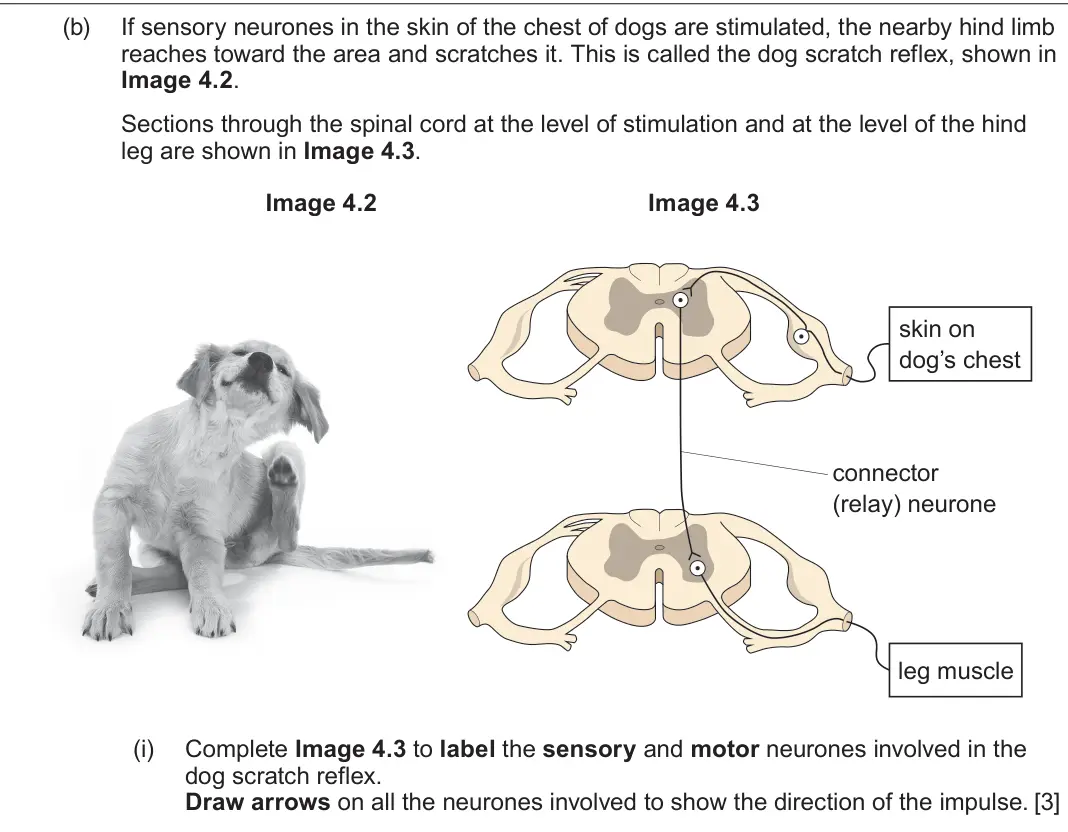
Q4(b)(ii)
The whole paper ↗
Q4(c)
The whole paper ↗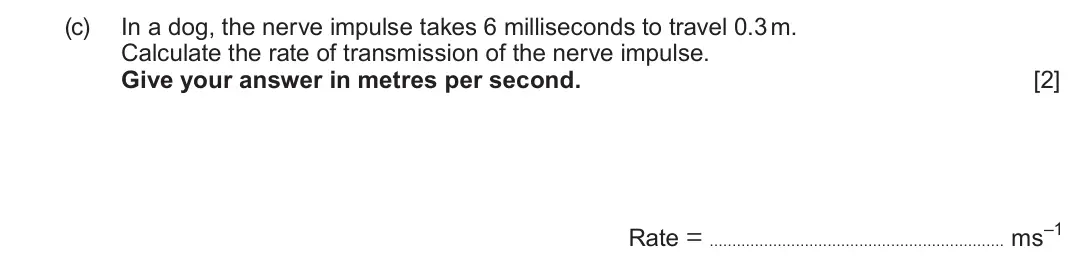
Q5(a)
The whole paper ↗
Q5(b)
The whole paper ↗
Q5(c)(i)
The whole paper ↗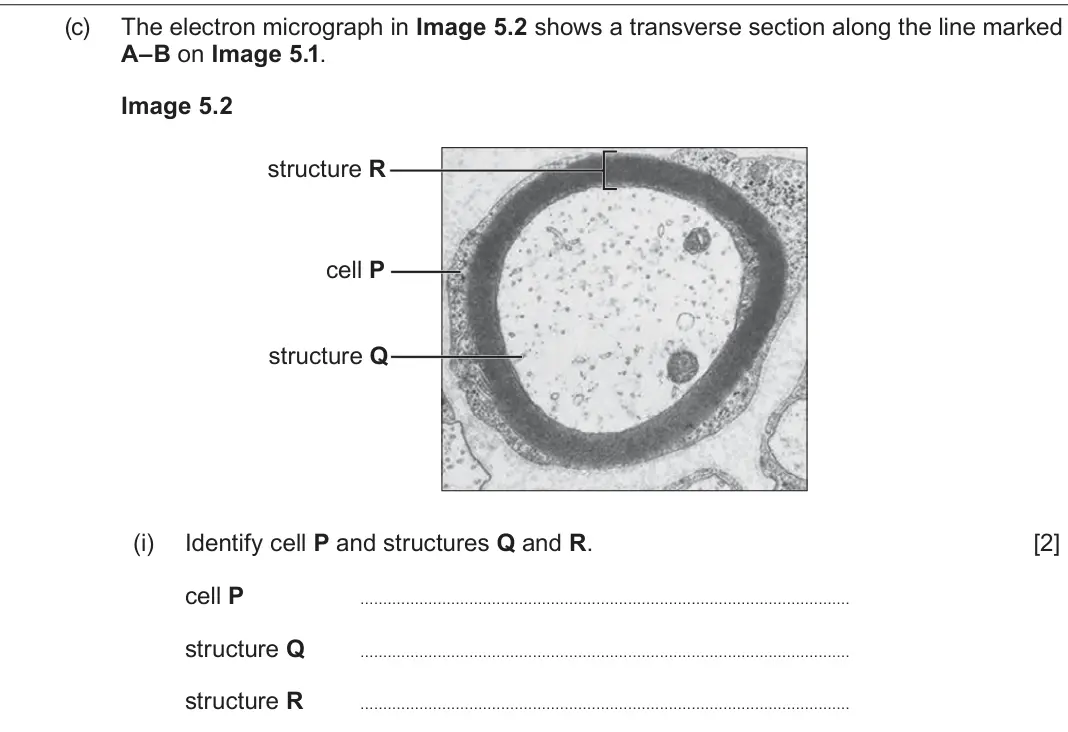
Q5(c)(ii)
The whole paper ↗
Q5(c)(iii)
The whole paper ↗
Q5(d)
The whole paper ↗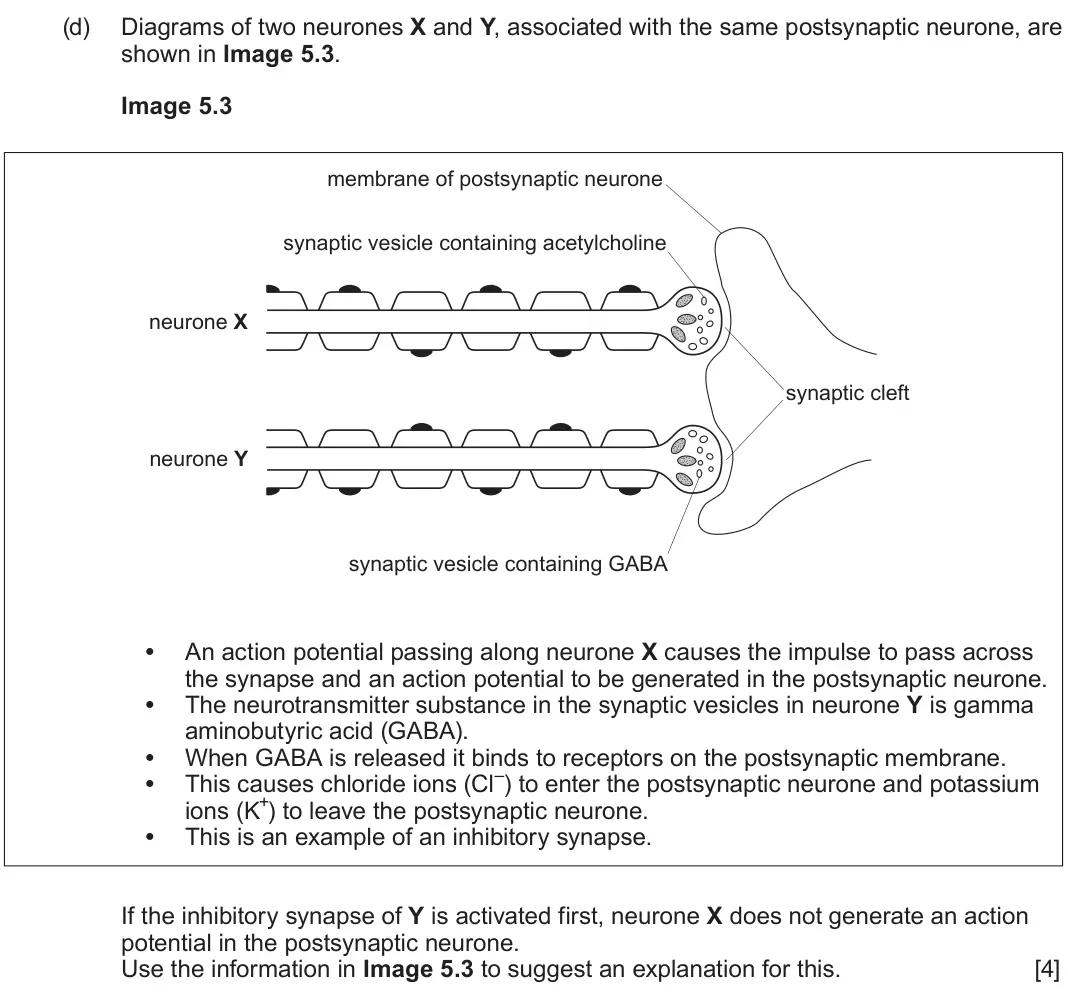
Q5(e)
The whole paper ↗
Q1(b)
The whole paper ↗
Q1(c)(i)
The whole paper ↗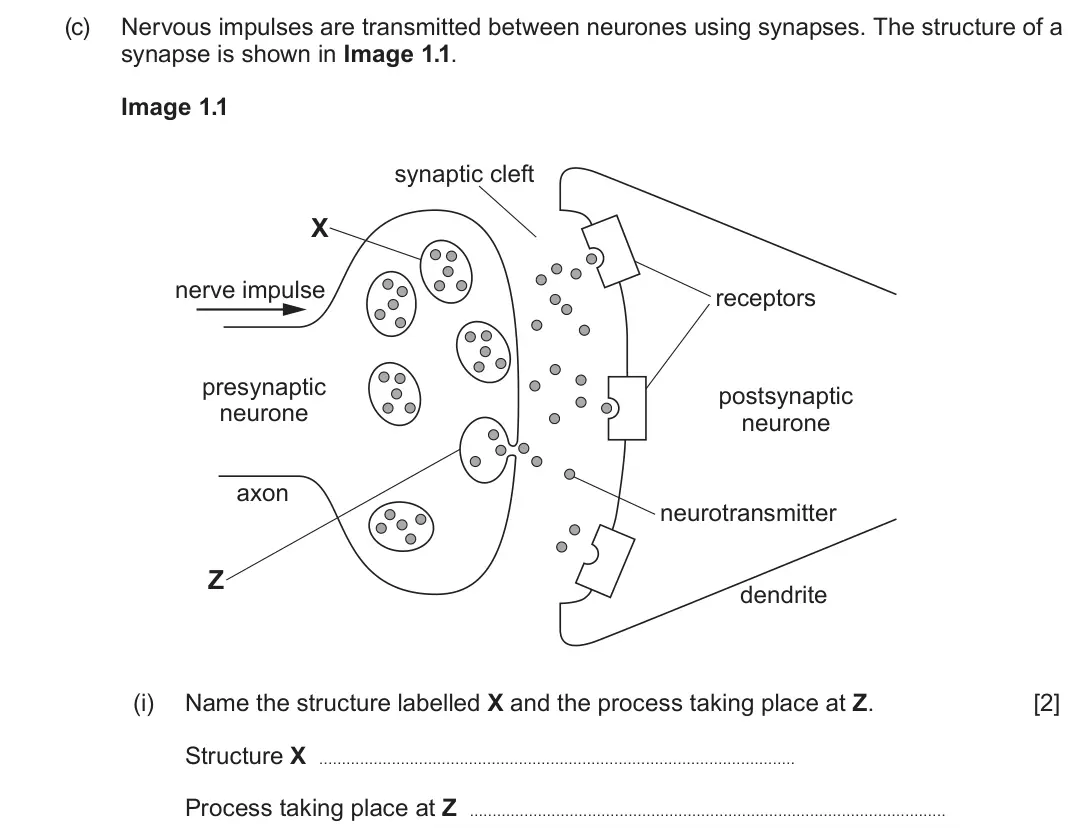
All 40 questions on The nervous system, as a list
- June 2025, Component 1, Q4(c)(i) (2 marks): Use the information given to explain why it is recommended that all fruit and vegetables should be washed before being eaten. [2]
- June 2025, Component 1, Q4(c)(ii) (3 marks): In rats, it was found that the maximum ‘safe’ daily intake of ‘Aphide’ was 0.035 mg kg–1 This is the highest dose that could be ingested daily without causing a
- June 2025, Component 1, Q4(c)(iii) (1 mark): Suggest one disadvantage to humans of using rats to determine the maximum ‘safe’ daily intake of ‘Aphide’ for a human. [1]
- June 2025, Component 3, Q1(a) (2 marks): Use letters A to G from Image 1.1 to complete the table. [2] Component of reflex arc Letter Coordinator (spinal cord) B Effector Motor neurone Receptor Response
- June 2025, Component 3, Q1(b) (3 marks): Impulses are transferred along both sensory and motor neurones as a wave of action potentials. Describe how the movement of ions generates an action potential.
- June 2025, Component 3, Q1(c)(i) (3 marks): Use your own knowledge and the information provided in Image 1.2 to give three differences between the nerve net of Hydra and the nervous system in a human. [3]
- June 2025, Component 3, Q1(c)(ii) (2 marks): Describe two ways in which the Hydra trace differs from that of the human. [2] I. II.
- June 2024, Component 3, Q4(a) (3 marks): Name the labelled structures A–E shown in Image 4.1. [3] A D B E C
- June 2024, Component 3, Q4(b)(i) (3 marks): Complete Image 4.3 to label the sensory and motor neurones involved in the dog scratch reflex. Draw arrows on all the neurones involved to show the direction of
- June 2024, Component 3, Q4(b)(ii) (2 marks): Use the information in Images 4.2 and 4.3 to explain why the axon of the connector (relay) neurone is so long in this reflex arc. [2]
- June 2024, Component 3, Q4(c) (2 marks): In a dog, the nerve impulse takes 6 milliseconds to travel 0.3 m. Calculate the rate of transmission of the nerve impulse. Give your answer in metres per second
- June 2023, Component 3, Q5(a) (2 marks): Draw an arrow to indicate one region of the axon in Image 5.1 where an action potential is taking place. Explain your choice. [2]
- June 2023, Component 3, Q5(b) (2 marks): The nerve impulse is prevented from travelling in the opposite direction to that shown in Image 5.1. Use Image 5.1 to give two pieces of evidence to explain thi
- June 2023, Component 3, Q5(c)(i) (2 marks): Identify cell P and structures Q and R. [2] cell P structure Q structure R
- June 2023, Component 3, Q5(c)(ii) (2 marks): Explain what would happen to the rate of transmission of the nerve impulse if structure R was not present. [2]
- June 2023, Component 3, Q5(c)(iii) (2 marks): Complete the following table to state and explain two other factors which affect the speed of conduction of the nerve impulse. [2] Factor Explanation
- June 2023, Component 3, Q5(d) (4 marks): Diagrams of two neurones X and Y, associated with the same postsynaptic neurone, are shown in Image 5.3. Image 5.3 membrane of postsynaptic neurone synaptic ves
- June 2023, Component 3, Q5(e) (2 marks): Some organophosphates block the active site of the enzyme acetylcholinesterase that breaks down the neurotransmitter acetylcholine. Suggest why the presence of
- June 2022, Component 3, Q1(b) (4 marks): When a bee stings a human, it injects melittin. One model of the action of melittin proposes that it causes more sodium ion channels to open in the membrane of
- June 2022, Component 3, Q1(c)(i) (2 marks): Name the structure labelled X and the process taking place at Z. [2] Structure X Process taking place at Z
- June 2022, Component 3, Q1(c)(ii) (3 marks): ATP is required for the processes shown in Image 1.1. Explain how ATP is used at a synapse. [3]
- Autumn 2021, Component 3, Q4(a)(i) (1 mark): Suggest why log scales are used on the axes of the graph. [1]
- Autumn 2021, Component 3, Q4(a)(ii) (2 marks): For each organism, as the axon diameter increases, the speed of conduction increases. Suggest an explanation for this increase in speed of conduction. [2]
- Autumn 2021, Component 3, Q4(b)(i) (2 marks): A 10 µm diameter myelinated frog axon has a lower speed of conduction than a 10 µm diameter myelinated cat axon. [2]
- Autumn 2021, Component 3, Q4(b)(ii) (2 marks): A 10 µm diameter myelinated frog axon uses less ATP to transmit impulses than a 10 µm diameter unmyelinated fish axon. [2]
- Autumn 2021, Component 3, Q4(c) (3 marks): Some studies have suggested that lead ions (Pb2+) may block calcium ion channels on the pre-synaptic membrane of a synapse. This may cause loss of sensitivity i
- Autumn 2021, Component 3, Q4(d)(ii) (2 marks): Using labels from image 4.3, state where: I. the axon of a sensory neurone enters the spinal cord; [1] II. you would find the position of a cell body of a motor
- Autumn 2021, Component 3, Q4(d)(iii) (1 mark): Simple organisms, such as Cnidaria, have nerve cells with short extensions joined to each other and branching in a number of different directions. State the nam
- Autumn 2020, Component 3, Q2(a)(i) (3 marks): Describe and explain the distribution of sodium ions (Na+) across the membrane at rest. [3]
- Autumn 2020, Component 3, Q2(b) (3 marks): Describe how the drug TEA would affect the action potential trace. Explain the cause of this effect. [3]
- June 2019, Component 3, Q4(a)(i) (1 mark): Name the part of the vertebrate nervous system that carries impulses to and from the central nervous system. [1] Sensory receptors in Hydra are located across t
- June 2019, Component 3, Q4(a)(ii) (3 marks): Using the information given, suggest why starfish have more co-ordinated movements than Hydra but they only move slowly. [3]
- June 2019, Component 3, Q4(b)(i) (2 marks): Structures have evolved to ensure that action potentials are only transmitted in one direction. Label Figure 4.2 using label lines with letters P, Q and R to sh
- June 2019, Component 3, Q4(b)(ii) (3 marks): Explain how the structures labelled S increase the rate of transmission of an action potential. [3]
- June 2018, Component 2, Q1(b)(i) (2 marks): Complete the diagram of a neurone below to show how this fatty substance is usually distributed, your labels should include the name of the fatty substance. [2]
- June 2018, Component 2, Q1(b)(ii) (3 marks): Explain how the arrangement of the fatty substance affects the transmission of nerve impulses. [3]
- June 2018, Component 3, Q5(a)(i) (1 mark): Using the letters A to D, identify the neurones involved in the reflex arcs involving: [1] I. the quadriceps muscle II. the hamstring muscle
- June 2018, Component 3, Q5(a)(ii) (2 marks): With reference to the neurones involved, explain why the contraction of the hamstring muscle occurs after the quadriceps muscle, in response to the same stimulu
- June 2018, Component 3, Q5(b) (4 marks): Impulses are transmitted through the neurones as a wave of action potentials. Explain how the movement of ions results in the generation of an action potential.
- June 2017, Component 3, Q6 (9 marks): Neurotoxins are chemicals produced by many organisms as a defence against predators. Most neurotoxins cause paralysis of muscles and eventually death. Different
Questions, mark schemes and examiner’s reports are © WJEC Eduqas, from their published past papers. Plumi isn’t affiliated with any exam board. Want whole papers? Every Eduqas A-Level Biology paper.
Rather write your answers by hand on iPad? Plumi marks them against the same mark schemes.