 plumi
Neurobiology and Behaviour: Eduqas A‑Level Biology questions
Every Eduqas A-Level Biology exam question on 3.C Neurobiology and Behaviour, 2016–2025, with its mark scheme and examiner’s report.
Find questions2,061
Calculations
Q9(a)(i)
The whole paper ↗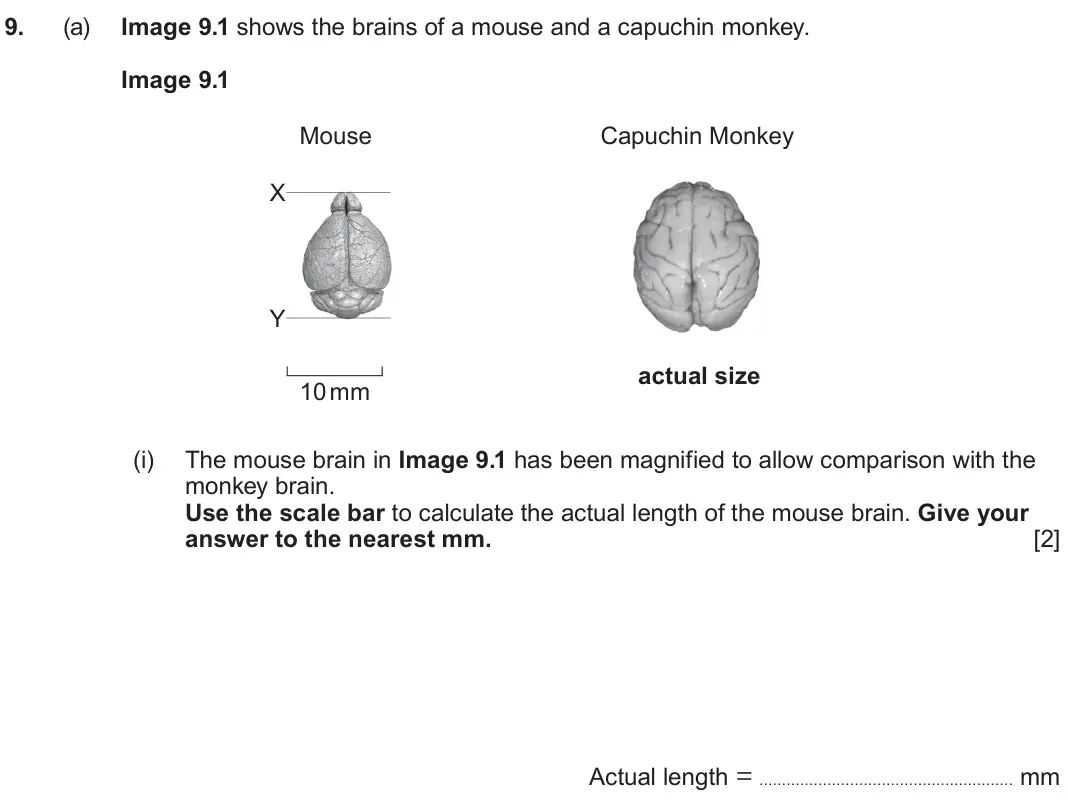
Q9(a)(ii)
The whole paper ↗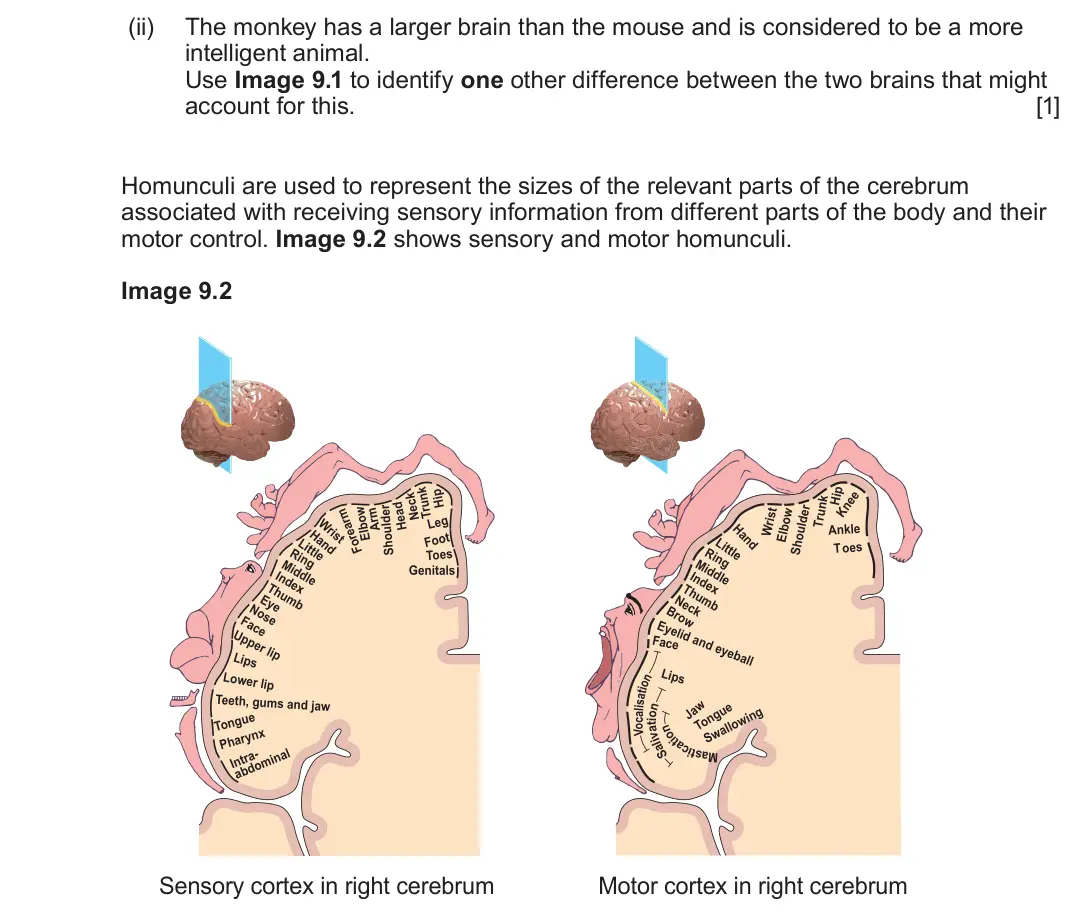
Q9(a)(iii)
The whole paper ↗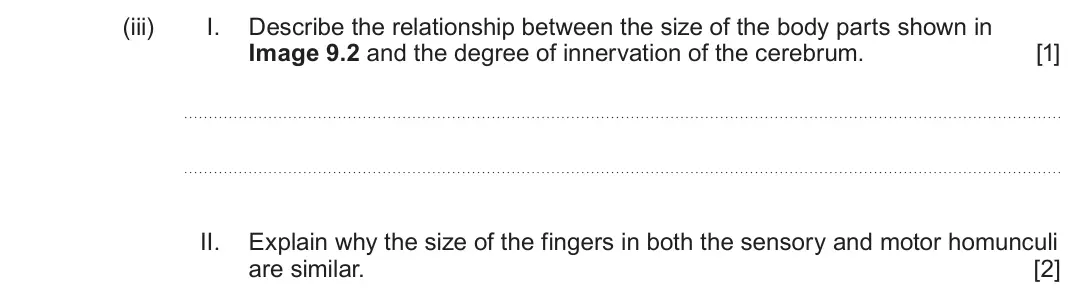
Q9(b)(i)
The whole paper ↗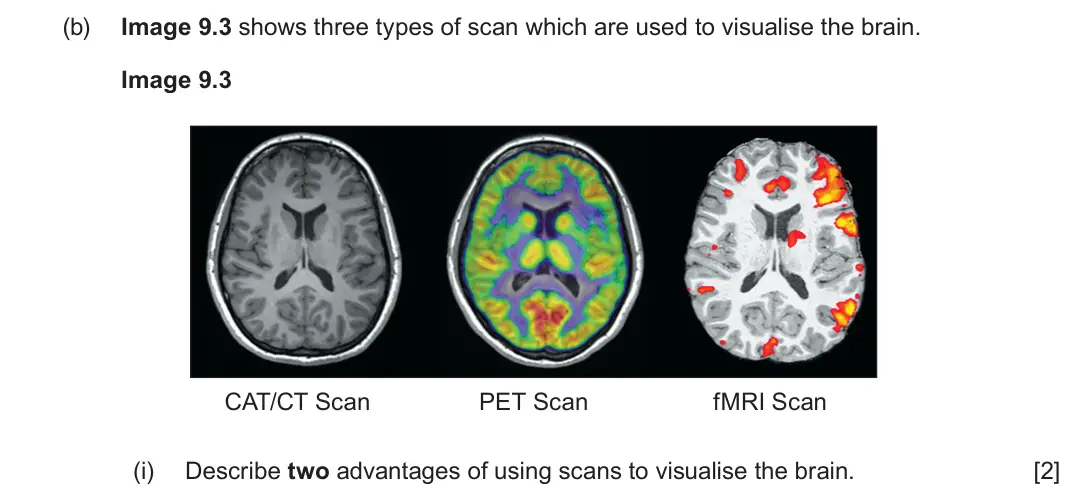
Q9(b)(ii)
The whole paper ↗
Q9(b)(iii)
The whole paper ↗
Q9(c)(i)
The whole paper ↗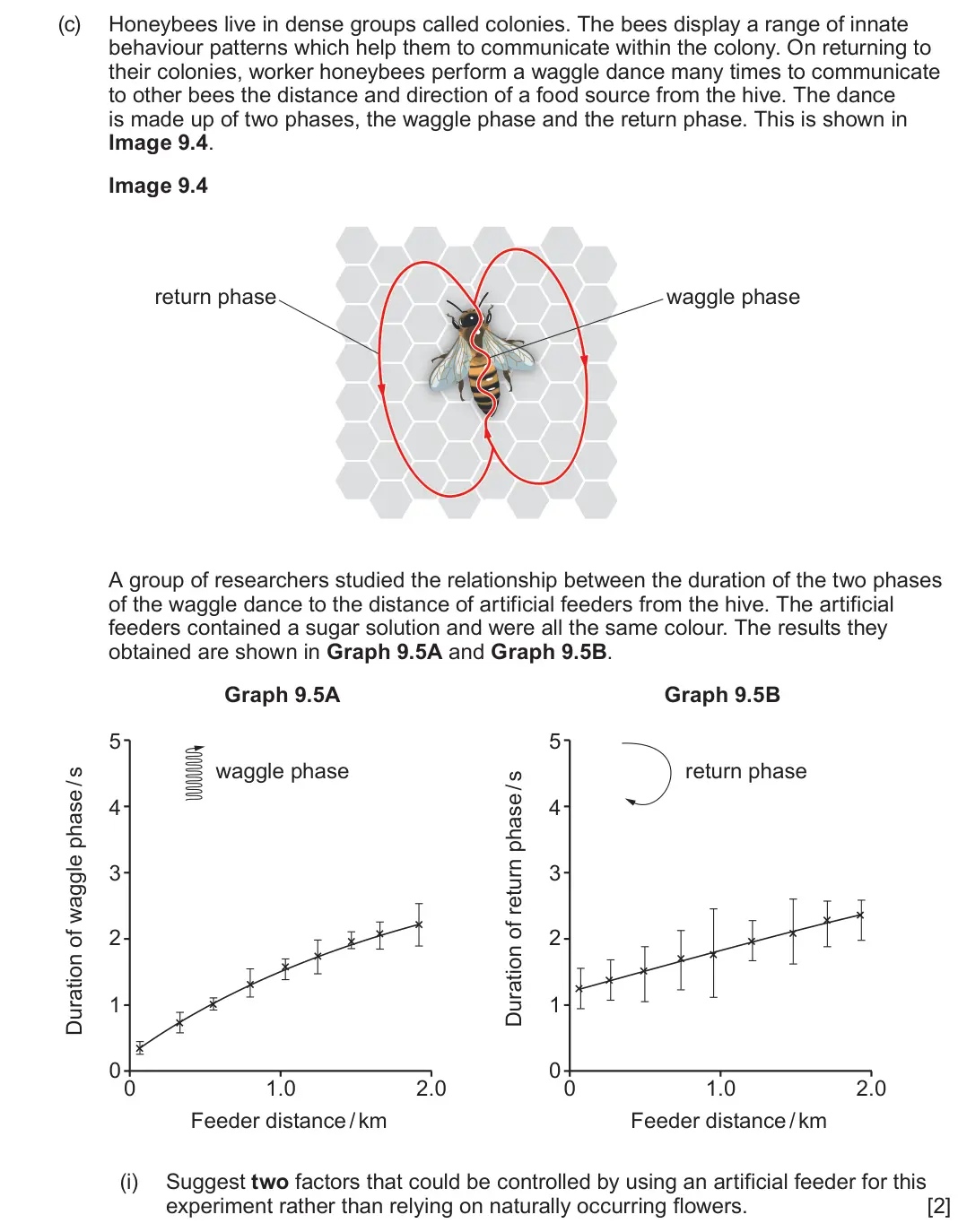
Q9(c)(ii)
The whole paper ↗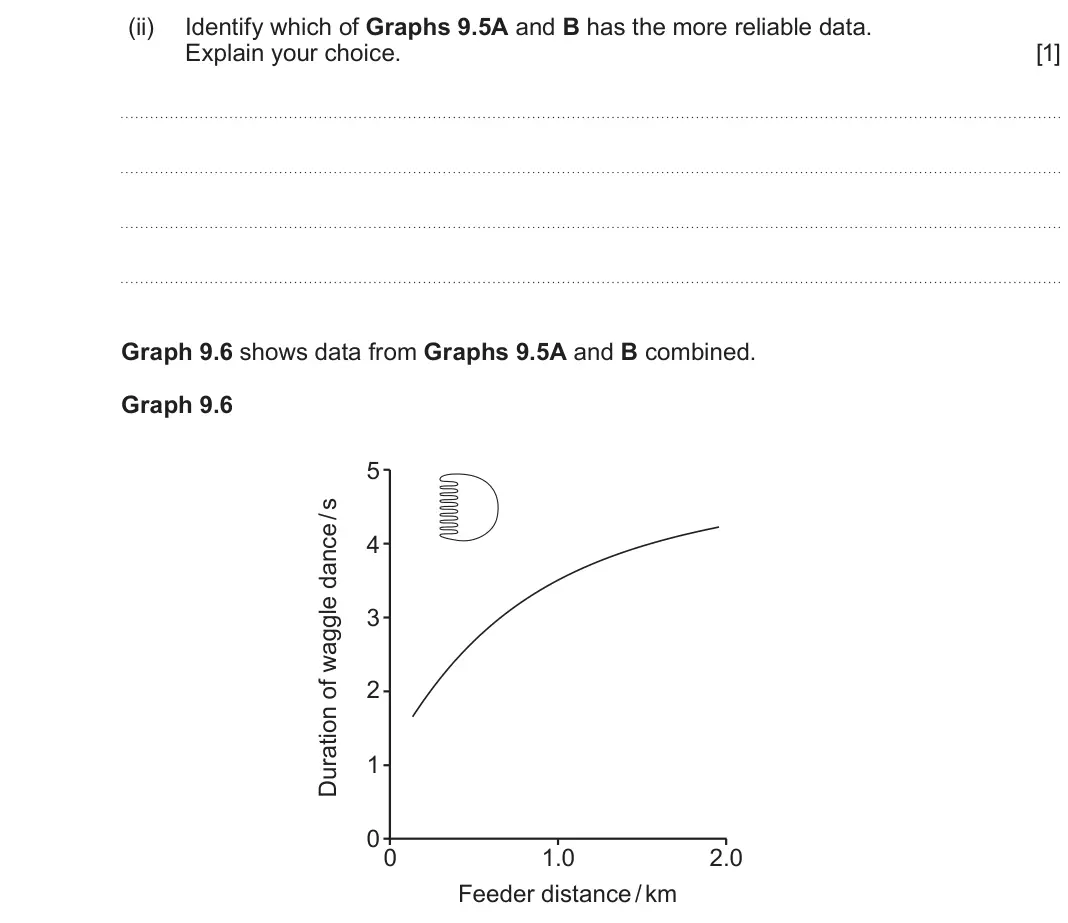
Q9(c)(iii)
The whole paper ↗
Q9(c)(iv)
The whole paper ↗
Q9(a)(i)
The whole paper ↗
Q9(a)(ii)
The whole paper ↗
Q9(a)(iii)
The whole paper ↗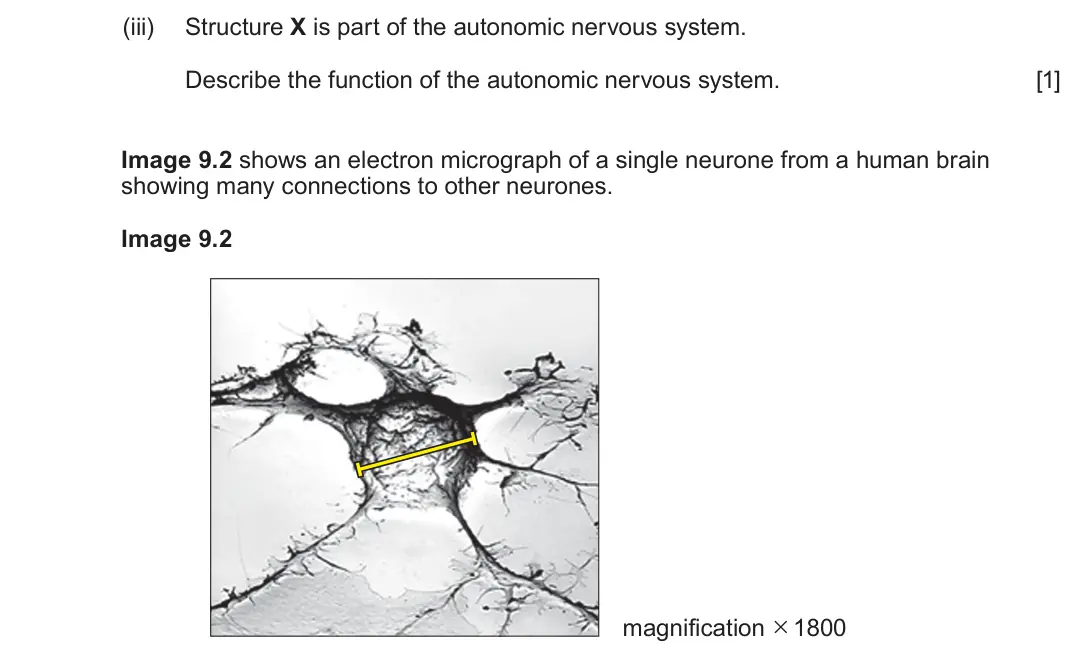
Q9(a)(iv)
The whole paper ↗
Q9(a)(v)
The whole paper ↗
Q9(b)(i)
The whole paper ↗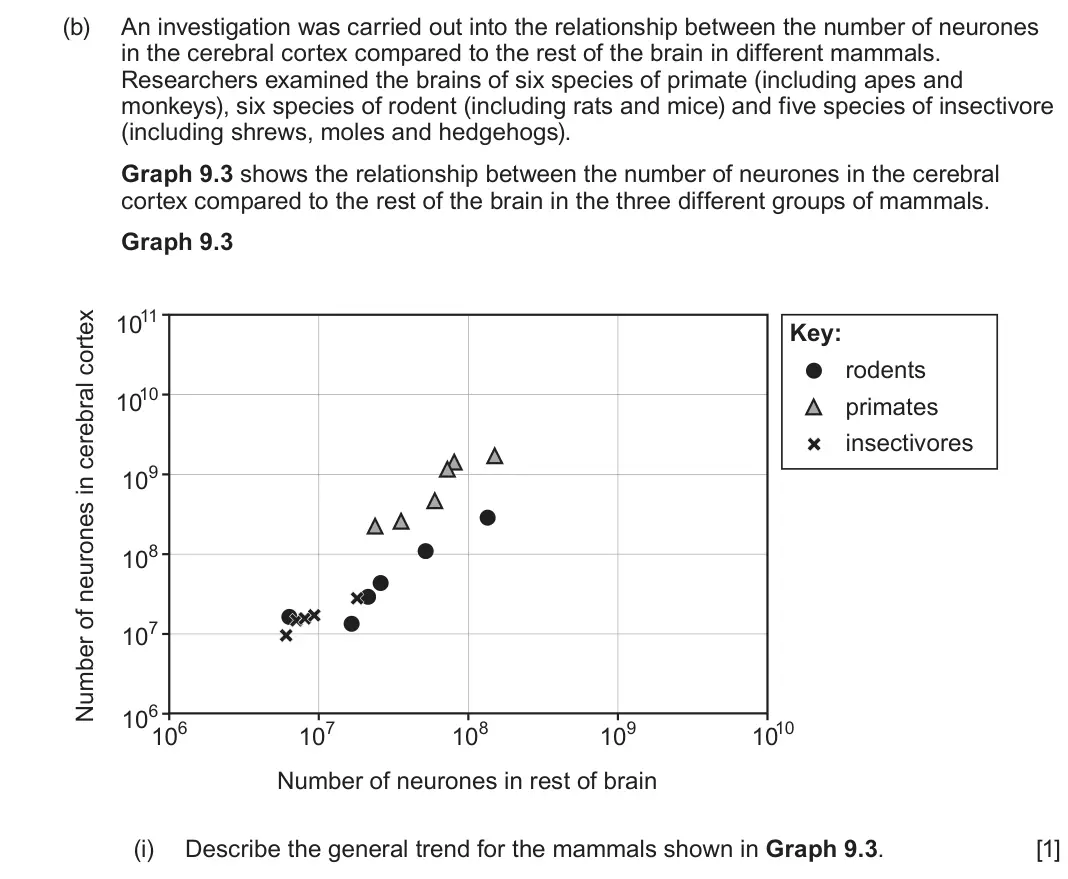
Q9(b)(ii)
The whole paper ↗
Q9(c)(i)
The whole paper ↗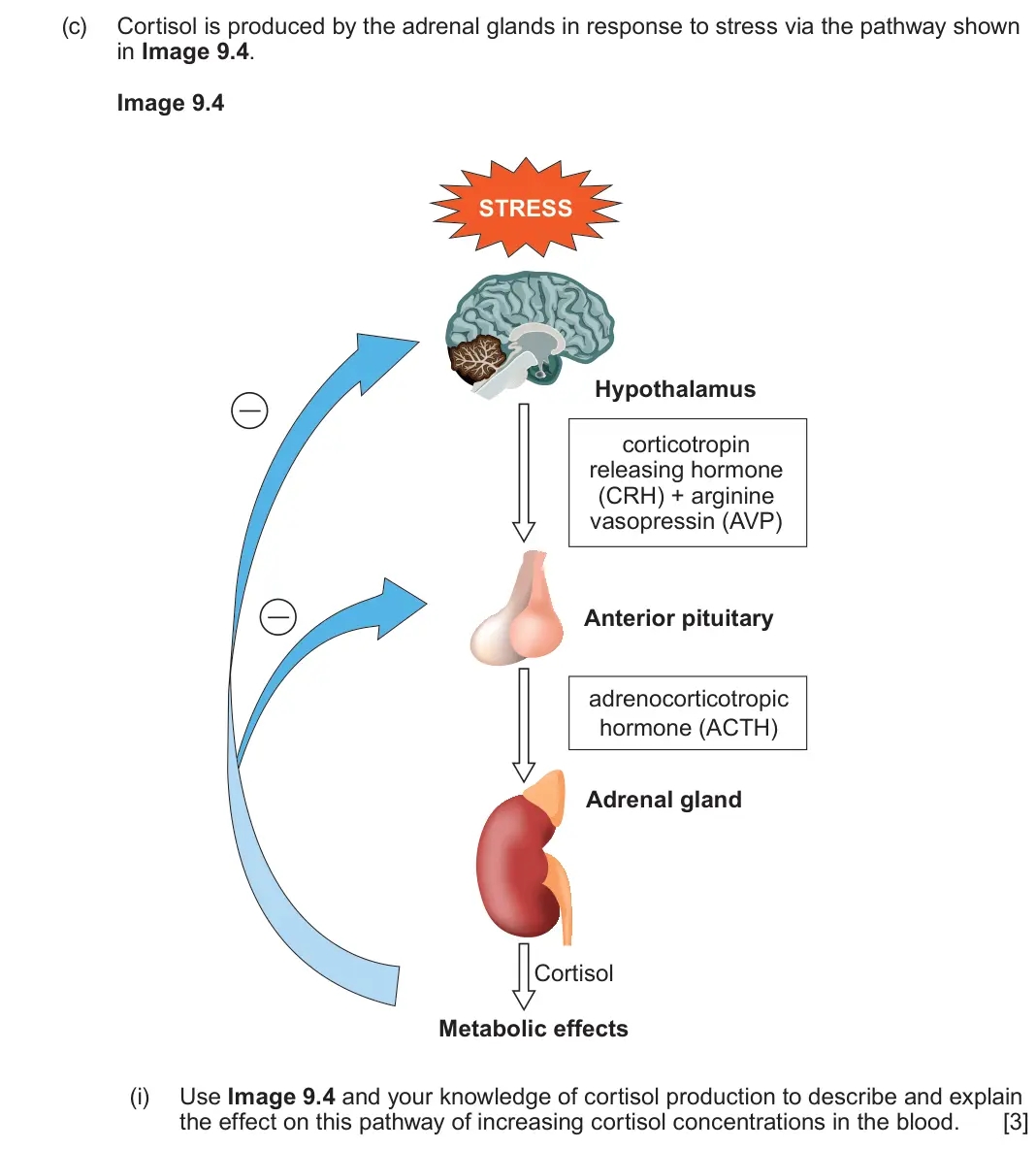
Q9(c)(ii)
The whole paper ↗
Q9(c)(iii)
The whole paper ↗
All 101 questions on Neurobiology and Behaviour, as a list
- June 2025, Component 3, Q9(a)(i) (2 marks): The mouse brain in Image 9.1 has been magnified to allow comparison with the monkey brain. Use the scale bar to calculate the actual length of the mouse brain.
- June 2025, Component 3, Q9(a)(ii) (1 mark): The monkey has a larger brain than the mouse and is considered to be a more intelligent animal. Use Image 9.1 to identify one other difference between the two b
- June 2025, Component 3, Q9(a)(iii) (3 marks): I. Describe the relationship between the size of the body parts shown in Image 9.2 and the degree of innervation of the cerebrum. [1] II. Explain why the size o
- June 2025, Component 3, Q9(b)(i) (2 marks): Describe two advantages of using scans to visualise the brain. [2]
- June 2025, Component 3, Q9(b)(ii) (1 mark): fMRI scanning is considered the best method for monitoring brain activity. State the full name for this scanning method. [1]
- June 2025, Component 3, Q9(b)(iii) (2 marks): The coloured areas on the fMRI scan correspond to increased flow of oxygenated blood in that region. Explain how this can be used to monitor brain activity. [2]
- June 2025, Component 3, Q9(c)(i) (2 marks): Suggest two factors that could be controlled by using an artificial feeder for this experiment rather than relying on naturally occurring flowers. [2]
- June 2025, Component 3, Q9(c)(ii) (1 mark): Identify which of Graphs 9.5A and B has the more reliable data. Explain your choice. [1] Graph 9.6 shows data from Graphs 9.5A and B combined. Graph 9.6 5 4 3 2
- June 2025, Component 3, Q9(c)(iii) (3 marks): State the general relationship shown in Graph 9.6 and suggest the benefit of this relationship to the bee colony. [3]
- June 2025, Component 3, Q9(c)(iv) (3 marks): The bee waggle dance is an example of innate behaviour in a social insect. Primates also live in close social groups and display both innate and learned behavio
- June 2024, Component 3, Q9(a)(i) (1 mark): Account for the different appearance of the brain in the two scans. [1]
- June 2024, Component 3, Q9(a)(ii) (1 mark): Identify structure X on Image 9.1. [1]
- June 2024, Component 3, Q9(a)(iii) (1 mark): Structure X is part of the autonomic nervous system. Describe the function of the autonomic nervous system. [1] Image 9.2 shows an electron micrograph of a sing
- June 2024, Component 3, Q9(a)(iv) (2 marks): Calculate the actual diameter of the cell body of the neurone in Image 9.2 along the line shown. State your answer in µm. [2] Diameter = µm
- June 2024, Component 3, Q9(a)(v) (1 mark): Following damage to the brain, there can be changes in neural pathways by establishing new connections between neurones. State the term used to describe these c
- June 2024, Component 3, Q9(b)(i) (1 mark): Describe the general trend for the mammals shown in Graph 9.3. [1]
- June 2024, Component 3, Q9(b)(ii) (3 marks): Primates generally exhibit complex social behaviours such as imitation and insight. They are capable of higher levels of cognitive functioning than the other gr
- June 2024, Component 3, Q9(c)(i) (3 marks): Use Image 9.4 and your knowledge of cortisol production to describe and explain the effect on this pathway of increasing cortisol concentrations in the blood. [
- June 2024, Component 3, Q9(c)(ii) (1 mark): Suggest the benefit of the response described in Image 9.4. [1]
- June 2024, Component 3, Q9(c)(iii) (2 marks): Some individuals have an unusually high concentration of corticotropin releasing hormone in their bloodstreams. Suggest a possible life event that may have caus
- June 2024, Component 3, Q9(d)(i) (1 mark): Use evidence from Image 9.5 to explain how this species shows sexual dimorphism. [1]
- June 2024, Component 3, Q9(d)(ii) (3 marks): Use all the information provided to identify the two types of selection that have resulted in sexual dimorphism in black grouse. Explain each answer. [3]
- June 2023, Component 3, Q9(a)(i) (2 marks): Identify the structures labelled A, B and C on Image 9.1. [2] Label Name of structure A B C
- June 2023, Component 3, Q9(a)(ii) (2 marks): The symptoms of a patient who had suffered a brain injury included partial paralysis of the right arm and hand and the right side of the face. Conclude which he
- June 2023, Component 3, Q9(b)(i) (2 marks): Use the data in Graph 9.2 to conclude how the number of months after injury before therapy started affected the improvement. Explain how the range bars increase
- June 2023, Component 3, Q9(b)(ii) (2 marks): Explain how the brain can recover following a brain injury that destroys neural pathways. [2]
- June 2023, Component 3, Q9(b)(iii) (2 marks): The data shown in Graph 9.2 were obtained by studying the recovery of many patients over an extended period. Suggest two factors that would have to be controlle
- June 2023, Component 3, Q9(b)(iv) (4 marks): Use Graph 9.3 to suggest why children who are not exposed to language between birth and four years of age are less likely to develop language skills. [4]
- June 2023, Component 3, Q9(c)(i) (1 mark): State the type of innate behaviour shown by the woodlice in this investigation. [1] The results of this investigation are shown in Table 9.5. Table 9.5 Speed of
- June 2023, Component 3, Q9(c)(ii) (1 mark): Calculate the mean speed of the woodlice at 4 au light intensity and record your answer in Table 9.5. [1]
- June 2023, Component 3, Q9(c)(iii) (1 mark): State the relationship between light intensity and mean speed of the woodlice in the investigation. [1]
- June 2023, Component 3, Q9(c)(iv) (1 mark): Explain how this type of behaviour would benefit woodlice in their natural habitat. [1]
- June 2023, Component 3, Q9(c)(v) (2 marks): Suggest how this method could be adapted to investigate the effect of humidity on the behaviour of the woodlice. [2]
- June 2022, Component 3, Q9(a)(i) (2 marks): One feature of a eusocial colony is division of labour. Describe what is meant by division of labour and suggest one role that worker termites may carry out tha
- June 2022, Component 3, Q9(a)(ii) (4 marks): I. State the specific name of this type of innate response. [1] II. Suggest the advantage to the colony of the responses to light shown by wingless and winged a
- June 2022, Component 3, Q9(b)(i) (1 mark): Explain one advantage of a dominance hierarchy to a group of chimpanzees. [1] Dominant males in the group show more assertive behaviour than other males. They a
- June 2022, Component 3, Q9(b)(ii) (2 marks): Using the arrows marked on Image 9.3, calculate the facial width-to-height ratio (fWHR) of chimpanzee X. [2] Ratio :1 Scientists calculated an assertiveness sco
- June 2022, Component 3, Q9(b)(iii) (1 mark): Use your answer from (b)(ii) and Graph 9.5 to predict the expected assertiveness score for chimpanzee X. [1] Expected assertiveness score =
- June 2022, Component 3, Q9(b)(iv) (1 mark): The graph shows considerable variation in data for the calculated assertiveness scores compared to facial width-to-height ratio. Suggest why the calculated asse
- June 2022, Component 3, Q9(c)(i) (1 mark): Suggest which form of learning behaviour enables many chimpanzees in this group to acquire the skill shown in Image 9.6. [1] All primates can use an opposable t
- June 2022, Component 3, Q9(c)(ii) (2 marks): Explain why the shape and size of the hand appears distorted and disproportionately large compared to other parts of the body in Image 9.7 [2]
- June 2022, Component 3, Q9(d)(i) (3 marks): Describe and explain the procedure that causes the areas of highest brain activity to appear darker in a PET scan image. [3]
- June 2022, Component 3, Q9(d)(ii) (2 marks): Using Image 9.8, name the areas of the cerebral cortex that show greatest activity when the subject is: I. viewing written words. [1] II. speaking individual wo
- June 2022, Component 3, Q9(d)(iii) (1 mark): Suggest why speaking sentences (complex speech) uses a greater area of the cerebral cortex than all the other components combined. [1]
- Autumn 2021, Component 3, Q9(a)(i) (1 mark): Name the main region of the brain responsible for controlling the autonomic nervous system. [1] The sympathetic nerves release the neurotransmitter noradrenalin
- Autumn 2021, Component 3, Q9(a)(ii) (2 marks): I. Name the area of heart tissue that has adrenergic receptors and initiates the heartbeat. [1] II. Explain why this tissue has a nerve supply from both the par
- Autumn 2021, Component 3, Q9(a)(iii) (1 mark): Explain why noradrenaline and adrenaline exert similar effects on body tissues. [1]
- Autumn 2021, Component 3, Q9(b)(i) (1 mark): Describe what is meant by an epigenetic change in the DNA. [1] One example of epigenetic modification is the methylation of DNA that prevents transcription of a
- Autumn 2021, Component 3, Q9(b)(ii) (3 marks): Use the information in image 9.3 to explain how methylation of the NR3C1 gene could lead to higher incidences of stress-related mental illnesses in survivors of
- Autumn 2021, Component 3, Q9(b)(iii) (2 marks): Evaluate whether the graph supports the hypothesis that as the age of maternal exposure to trauma increases, the production of cortisol in their descendants dec
- Autumn 2021, Component 3, Q9(b)(iv) (1 mark): Explain why the mass of cortisol excreted in the urine over 24 hours was measured and not the concentration of cortisol. [1]
- Autumn 2021, Component 3, Q9(b)(v) (2 marks): Suggest two features of the sample of people in this investigation that reduce the reliability of the data. [2]
- Autumn 2021, Component 3, Q9(c)(i) (2 marks): Explain what is meant by the term ‘sign stimulus’ and state the name given to the type or pattern of behaviour that is the result of this type of stimulus. [2]
- Autumn 2021, Component 3, Q9(c)(ii) (2 marks): Larger tusks place male elephants at a social advantage. Describe two ways by which male elephants gain social advantage from having larger tusks. [2] The prese
- Autumn 2021, Component 3, Q9(c)(iii) (2 marks): Using the information in image 9.5, calculate the percentage decrease in the mean length of the tusks of male elephants with a shoulder height of 2 metres. [2]
- Autumn 2021, Component 3, Q9(c)(iv) (1 mark): One attempt to reduce poaching has been to anaesthetise elephants with larger tusks and remove the tusks so that poachers have no reason to kill these individua
- Autumn 2020, Component 3, Q10(a)(i) (1 mark): Explain what is meant by innate behaviour. [1] Blowflies (Calliphora spp) are insects that lay eggs on recently dead animals. Eggs hatch into larvae called magg
- Autumn 2020, Component 3, Q10(a)(ii) (1 mark): Before use in the experiment, the maggots were kept at room temperature for 10 minutes to allow them to equilibrate. Explain why this was necessary. [1] After 2
- Autumn 2020, Component 3, Q10(a)(iii) (2 marks): Identify the type of innate behaviour shown by the maggot in this experiment and describe one feature of the pattern of movement that supports your conclusion.
- Autumn 2020, Component 3, Q10(a)(iv) (2 marks): Suggest how this behaviour would be an advantage to the maggot in its natural environment. [2]
- Autumn 2020, Component 3, Q10(a)(v) (1 mark): The rate of movement during the first minute was calculated by measuring the total length of the lines drawn on the lid from 0 to 6 and dividing by 60 seconds.
- Autumn 2020, Component 3, Q10(b)(i) (1 mark): State the name that describes the changes in the development of neurones illustrated in image 10.3. [1] Graph 10.4 shows the rate of formation of synapses invol
- Autumn 2020, Component 3, Q10(b)(ii) (3 marks): Using information from graph 10.4, together with your own knowledge, explain why hearing deficiency during the critical period for the formation of sensory path
- Autumn 2020, Component 3, Q10(b)(iii) (1 mark): With reference to the neurones of a 4 year old and 6 year old (photographs 6 and 7), suggest why speech and language does not improve significantly if hearing i
- Autumn 2020, Component 3, Q10(b)(iv) (1 mark): State the names of the two areas of the cerebral cortex associated with the development of speech and language. [1]
- Autumn 2020, Component 3, Q10(c)(i) (3 marks): Compare the way that a CT and MRI scan image is produced and suggest two advantages of using an MRI scan for monitoring the progression of Alzheimer’s disease.
- Autumn 2020, Component 3, Q10(c)(ii) (1 mark): State one factor that should be considered in order to make a valid comparison between the brain of an Alzheimer’s patient and a normal brain. [1] Memory loss c
- Autumn 2020, Component 3, Q10(c)(iii) (3 marks): The ratio of the total brain volume to hippocampus volume at the start of the 12 month period was 377 : 1. I. Calculate the ratio of the total brain volume to h
- June 2019, Component 3, Q10(a)(i) (2 marks): Label the lobes A-D of the cerebral cortex shown in figure 10.1. [2]
- June 2019, Component 3, Q10(a)(ii) (1 mark): In humans the cortex is greatly folded and contains around 1.6 × 10¹⁰ neurones. Figure 10.2 shows the values for some other mammals. Figure 10.2 Mammal Number o
- June 2019, Component 3, Q10(a)(iii) (2 marks): State the conclusion you could make about the cognitive function of a long-finned pilot whale when compared to the other mammals. [2]
- June 2019, Component 3, Q10(a)(iv) (2 marks): Damage to the cerebral cortex, through either injury or disease, produces different symptoms according to which lobe of the cerebral cortex is affected. Conside
- June 2019, Component 3, Q10(b)(i) (1 mark): Identify the neurotransmitters involved in the following divisions of the autonomic nervous system. [1] parasympathetic sympathetic
- June 2019, Component 3, Q10(b)(ii) (2 marks): Using figure 10.4, describe and explain how the sympathetic nervous system helps an individual during a fight or flight response. [2]
- June 2019, Component 3, Q10(c)(i) (2 marks): Using the diagram and your own knowledge, explain the role of the brain in preventing the individual becoming overstressed. [2]
- June 2019, Component 3, Q10(c)(ii) (1 mark): The blood cortisol levels of an individual who had suffered a traumatic childhood would be expected to be higher than normal. Explain why such individuals may b
- June 2019, Component 3, Q10(d)(i) (1 mark): Explain why this social behaviour benefits the colony. [1] Karl von Frisch discovered much of what we know today about honeybee communication. He studied thousa
- June 2019, Component 3, Q10(d)(ii) (1 mark): Identify the main risk associated with the study and how the risk could be minimised. [1] He observed that when food is more than 70 m away from the hive they p
- June 2019, Component 3, Q10(d)(iii) (2 marks): I. Using the graph, complete the table below by calculating the difference in the number of times the waggle dance is repeated in 15 seconds between 100 and 500
- June 2019, Component 3, Q10(d)(iv) (2 marks): There were two factors which were important in terms of making a valid conclusion. 1 Karl von Frisch studied thousands of bees and collected data from more than
- June 2019, Component 3, Q10(e) (1 mark): Different groups of chimpanzees obtain food in a variety of ways. One group of chimpanzees was observed trapping colobus monkeys in order to eat them. Other gro
- June 2018, Component 3, Q10(a) (4 marks): The cortical homunculus is a drawing showing the area of cortex devoted to specific regions of the body. It correlates the anatomy of the body with a neurologic
- June 2018, Component 3, Q10(b)(i) (3 marks): With reference to the image, describe the advantage of fMRI over computerised tomography (CT) and magnetic resonance imaging (MRI) scans. Explain what has happe
- June 2018, Component 3, Q10(b)(ii) (2 marks): Some studies suggest that in a healthy person 375 neurones per hour die due to the aging process. In an untreated stroke patient, it is estimated that 1.9 milli
- June 2018, Component 3, Q10(b)(iii) (2 marks): Use the scans opposite to suggest which part of the brain was damaged. Give reasons for your answer. [2]
- June 2018, Component 3, Q10(b)(iv) (2 marks): A stroke affecting Wernicke’s area has a different affect to a stroke affecting Broca’s area. Using your knowledge of these areas of the cerebral cortex describ
- June 2018, Component 3, Q10(c)(i) (2 marks): What are the advantages, to the meerkat colony, of this dominance hierarchy? [2]
- June 2018, Component 3, Q10(c)(ii) (1 mark): There is little difference between the size of males and females in meerkats. In other mammals, however, such as African lions, Panthera leo, the male is much l
- June 2018, Component 3, Q10(d)(i) (1 mark): What is the advantage to the study of using meerkats ‘habituated’ to close observation and handling? [1]
- June 2018, Component 3, Q10(d)(ii) (1 mark): What type of correlation is shown between relative weight gain and relative rate of play? [1]
- June 2018, Component 3, Q10(d)(iii) (2 marks): How could this investigation be improved to give more valid data? [2]
- June 2017, Component 3, Q9(a)(i) (1 mark): The following image depicts an MRI scan of a human brain. Which number (1-6) shows the hippocampus? [1] 4 3 2 5 6 1
- June 2017, Component 3, Q9(a)(ii) (2 marks): Suggest why the scientist studied the hippocampus region of the brain. Give reasons for your answer. [2]
- June 2017, Component 3, Q9(a)(iii) (1 mark): The independent variable in this research was being a male taxi driver. The dependent variable was the volume of the hippocampus as seen using MRI. Male non-tax
- June 2017, Component 3, Q9(b)(i) (4 marks): The scientist’s hypothesis stated, “the regions of hippocampi in London taxi drivers will be structurally different to the hippocampi in non-taxi drivers”. Usin
- June 2017, Component 3, Q9(b)(ii) (4 marks): The line shown on the graph is a correlation line. Using the trend shown and your knowledge of brain structure and neuroplasticity, what conclusions can be draw
- June 2017, Component 3, Q9(b)(iii) (2 marks): A further investigation is to be carried out to look at changes in brain activity during a map reading exercise whilst driving the taxi. Suggest a brain imaging
- June 2017, Component 3, Q9(c)(i) (2 marks): Calculate the percentage change in mean time to escape between the start and end of the trials. [2] percentage change in mean time =
- June 2017, Component 3, Q9(c)(ii) (2 marks): State and explain the type of behaviour exhibited by the hyenas. [2]
- June 2017, Component 3, Q9(c)(iii) (1 mark): Explain why the time taken to escape from the box decreases. [1]
- June 2017, Component 3, Q9(c)(iv) (1 mark): Suggest how the experiment could be modified to improve the reliability of the conclusion. [1]
Questions, mark schemes and examiner’s reports are © WJEC Eduqas, from their published past papers. Plumi isn’t affiliated with any exam board. Want whole papers? Every Eduqas A-Level Biology paper.
Rather write your answers by hand on iPad? Plumi marks them against the same mark schemes.