 plumi
Human Musculoskeletal Anatomy: Eduqas A‑Level Biology questions
Every Eduqas A-Level Biology exam question on 3.B Human Musculoskeletal Anatomy, 2016–2025, with its mark scheme and examiner’s report.
Find questions2,061
Calculations
Q8(a)(i)
The whole paper ↗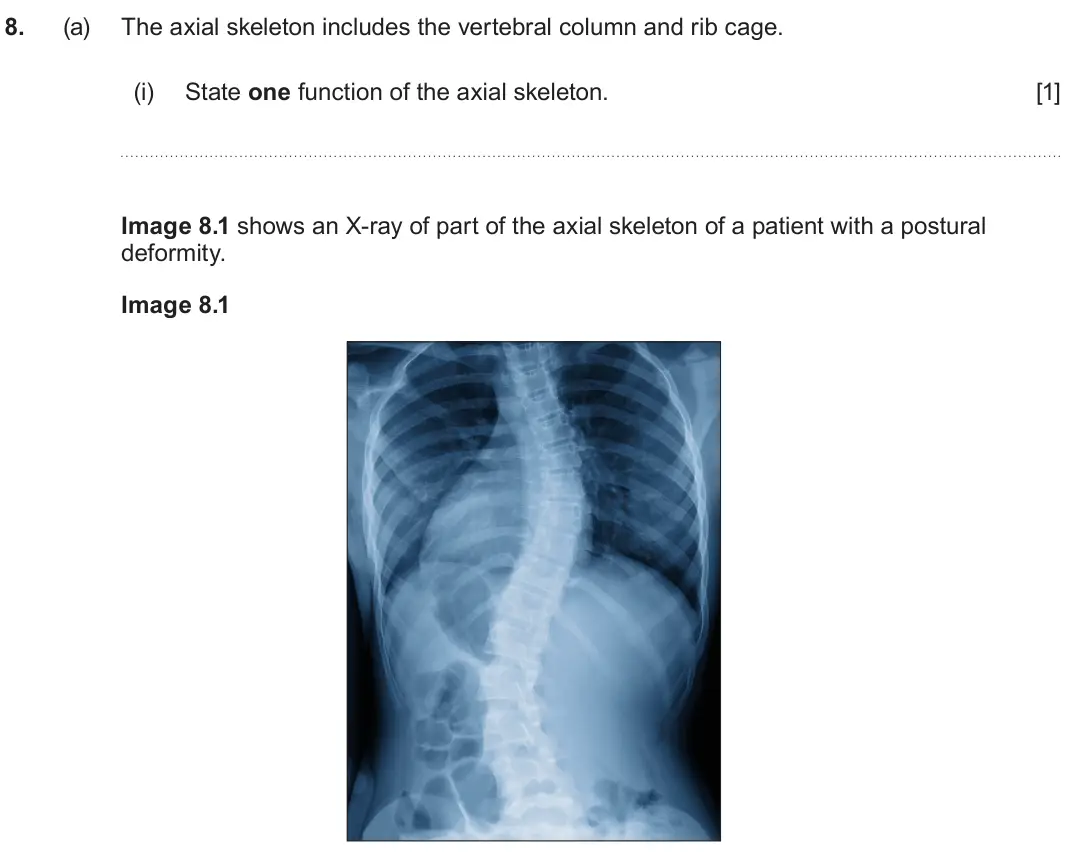
Q8(a)(ii)
The whole paper ↗
Q8(a)(iii)
The whole paper ↗
Q8(b)(i)
The whole paper ↗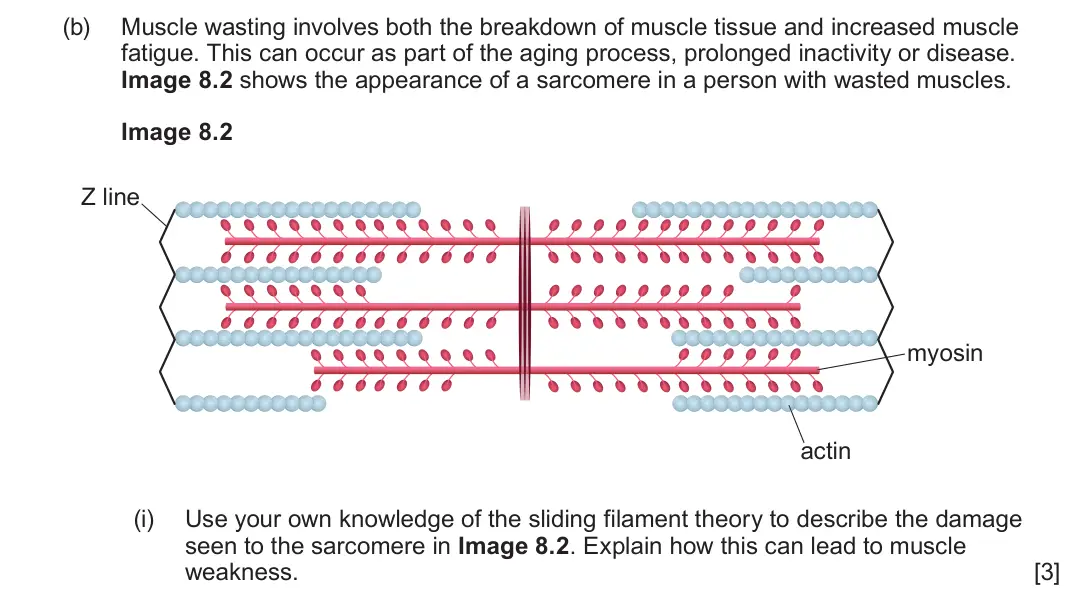
Q8(b)(ii)
The whole paper ↗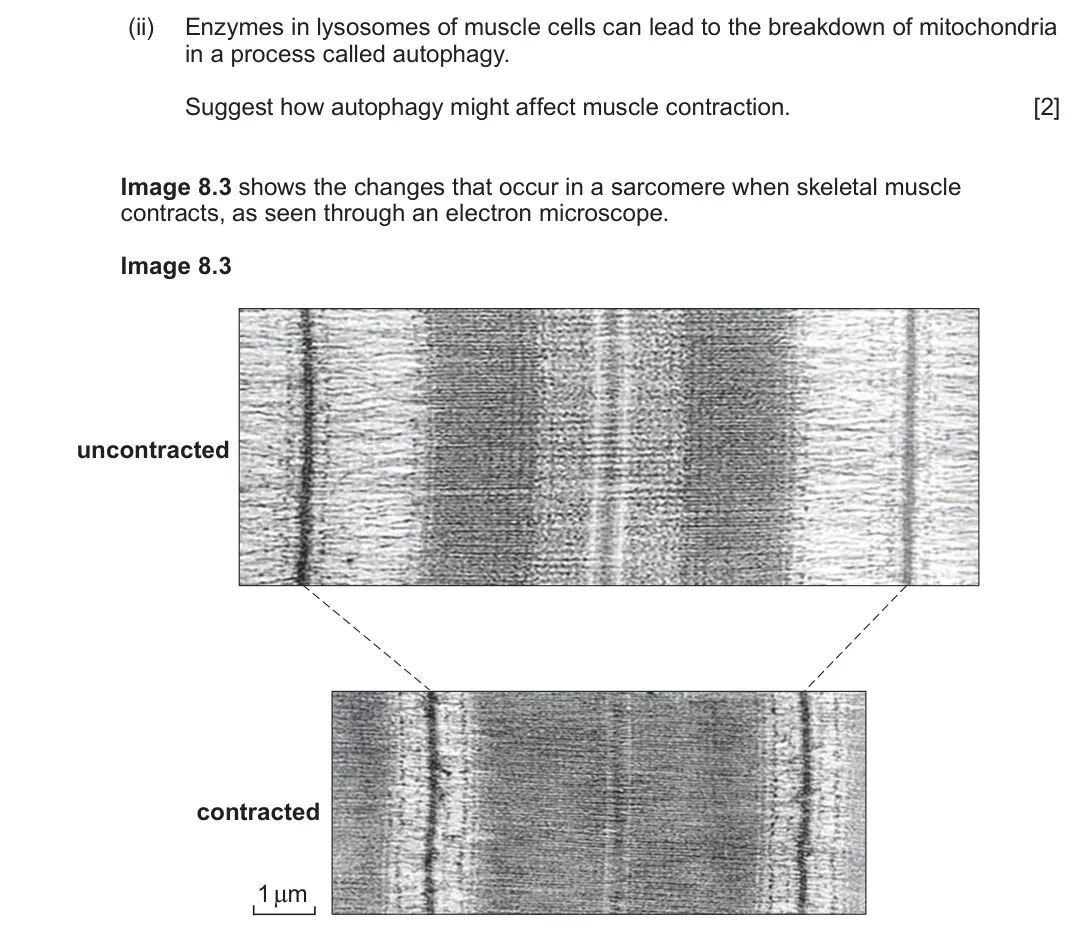
Q8(b)(iii)
The whole paper ↗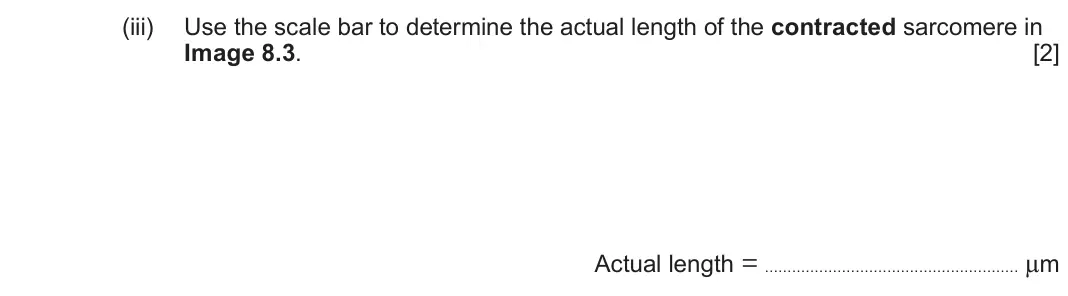
Q8(c)(i)
The whole paper ↗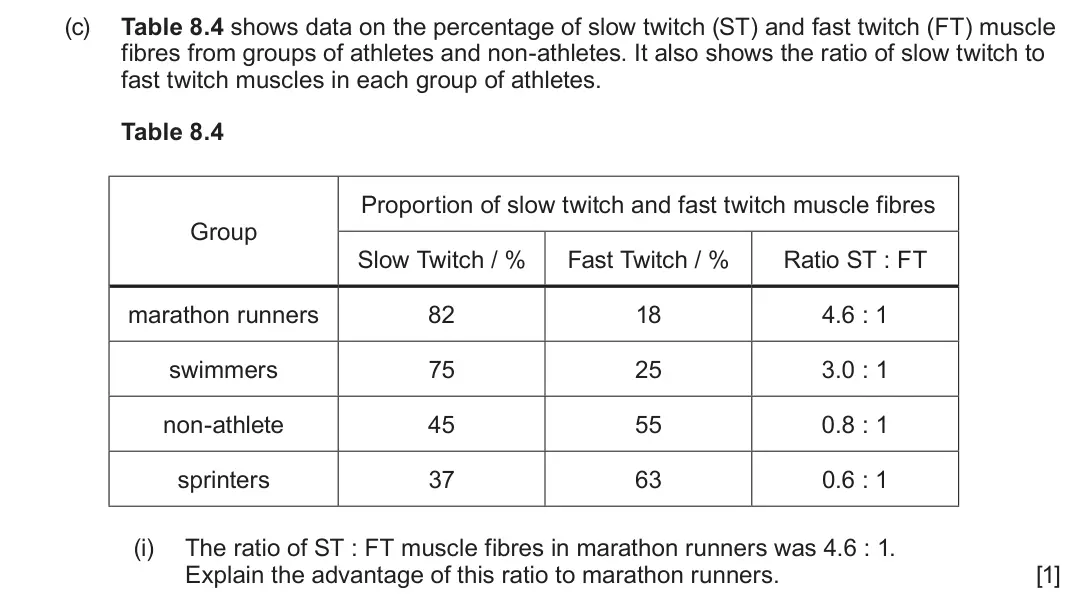
Q8(c)(ii)
The whole paper ↗
Q8(c)(iii)
The whole paper ↗
Q8(d)(i)
The whole paper ↗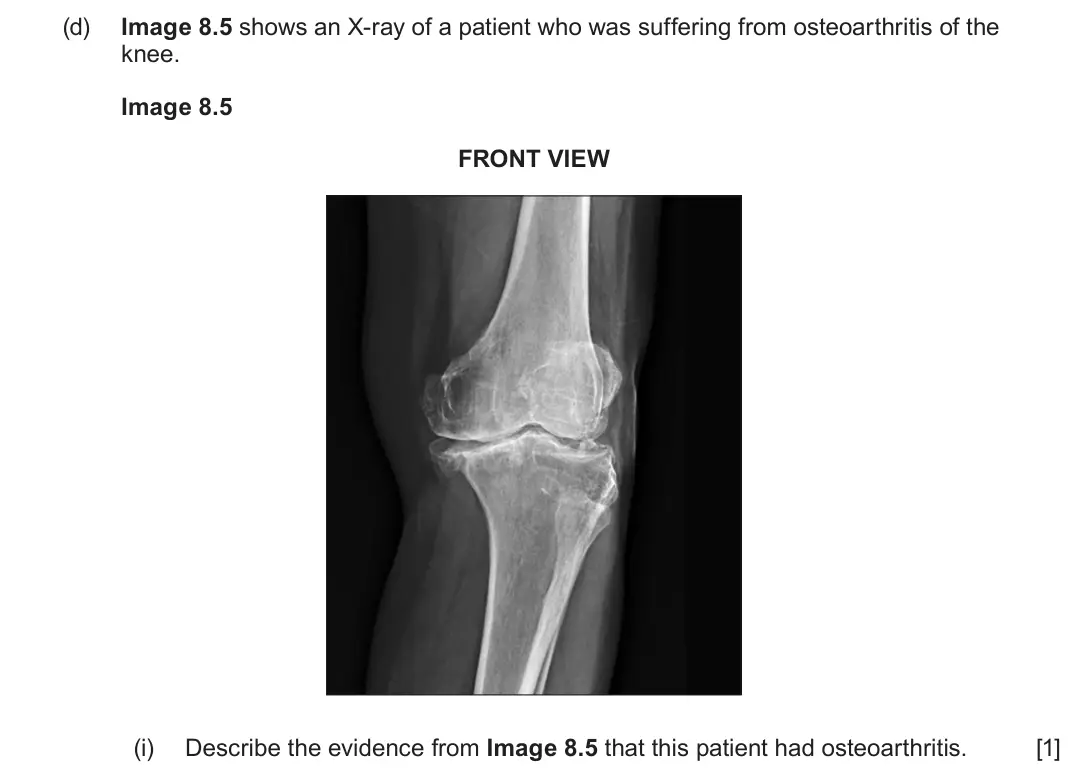
Q8(d)(ii)
The whole paper ↗
Q8(a)(i)
The whole paper ↗
Q8(a)(ii)
The whole paper ↗
Q8(b)(i)
The whole paper ↗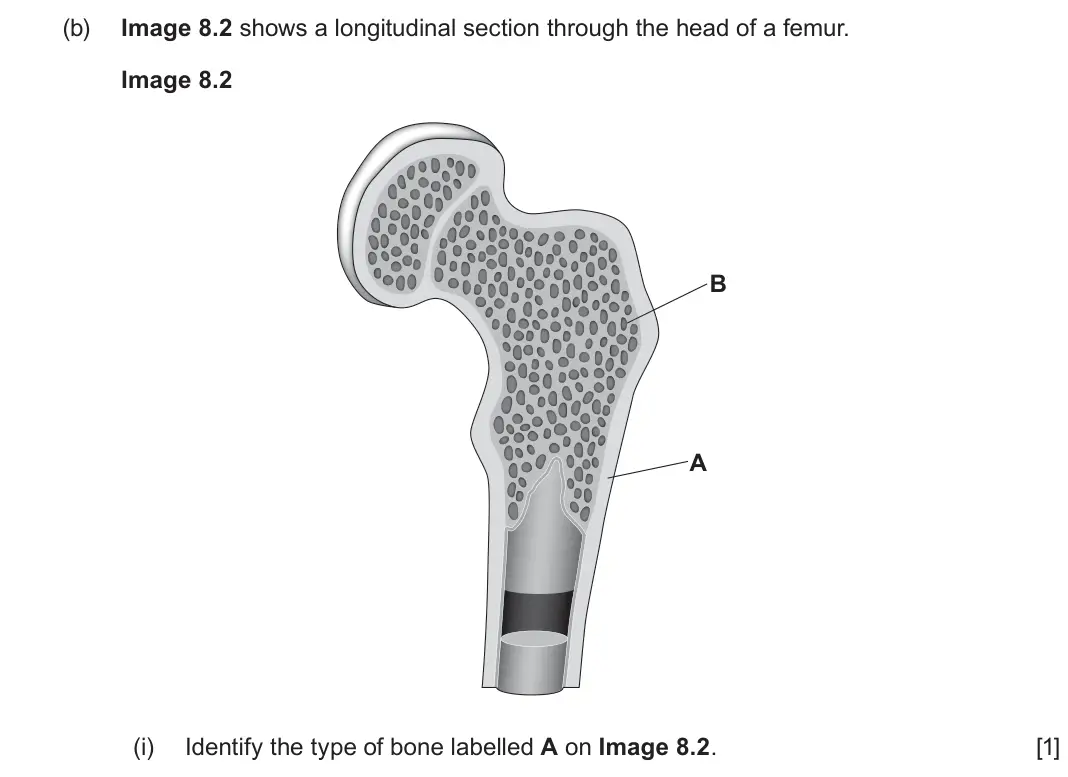
Q8(b)(ii)
The whole paper ↗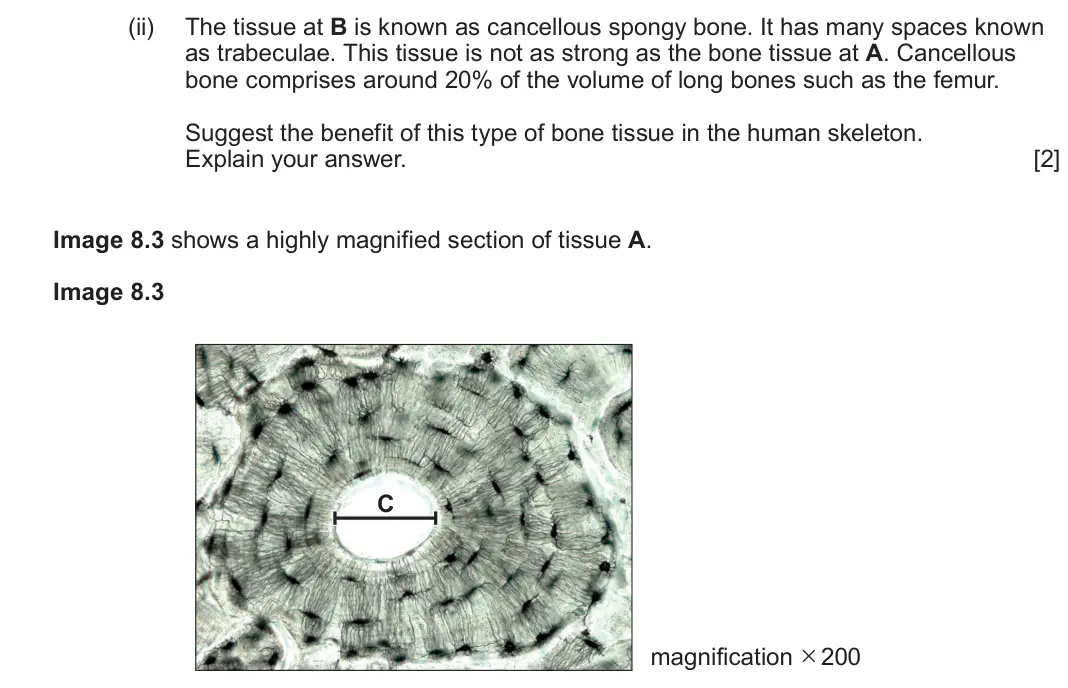
Q8(b)(iii)
The whole paper ↗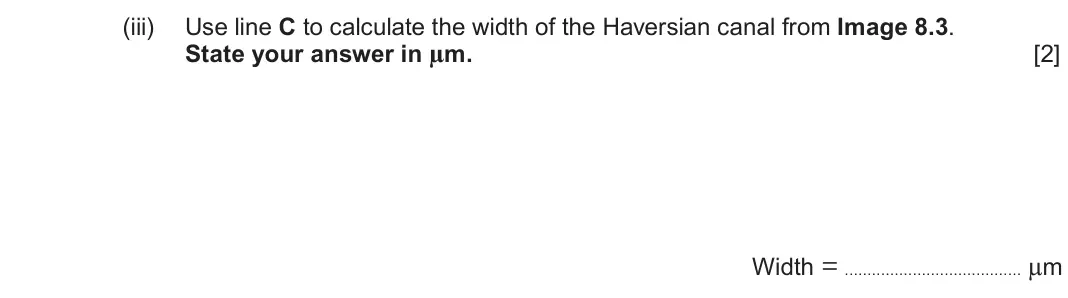
Q8(b)(iv)
The whole paper ↗
Q8(c)(i)
The whole paper ↗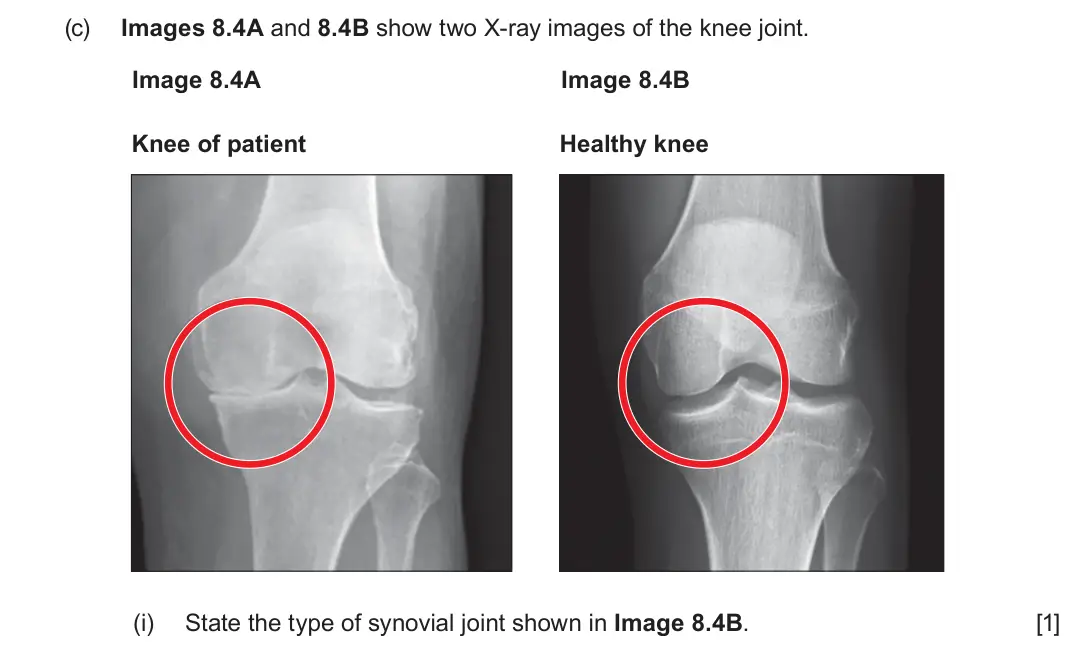
Q8(c)(ii)
The whole paper ↗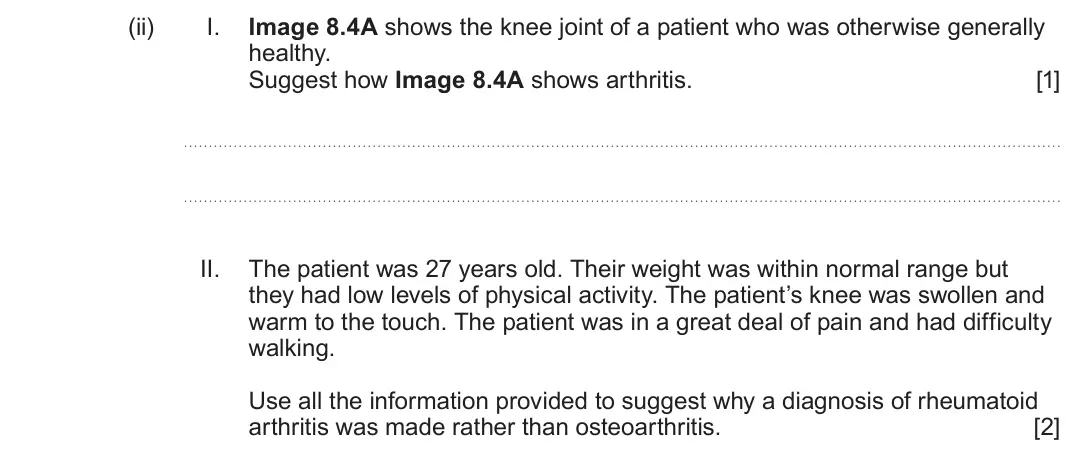
Q8(d)(i)
The whole paper ↗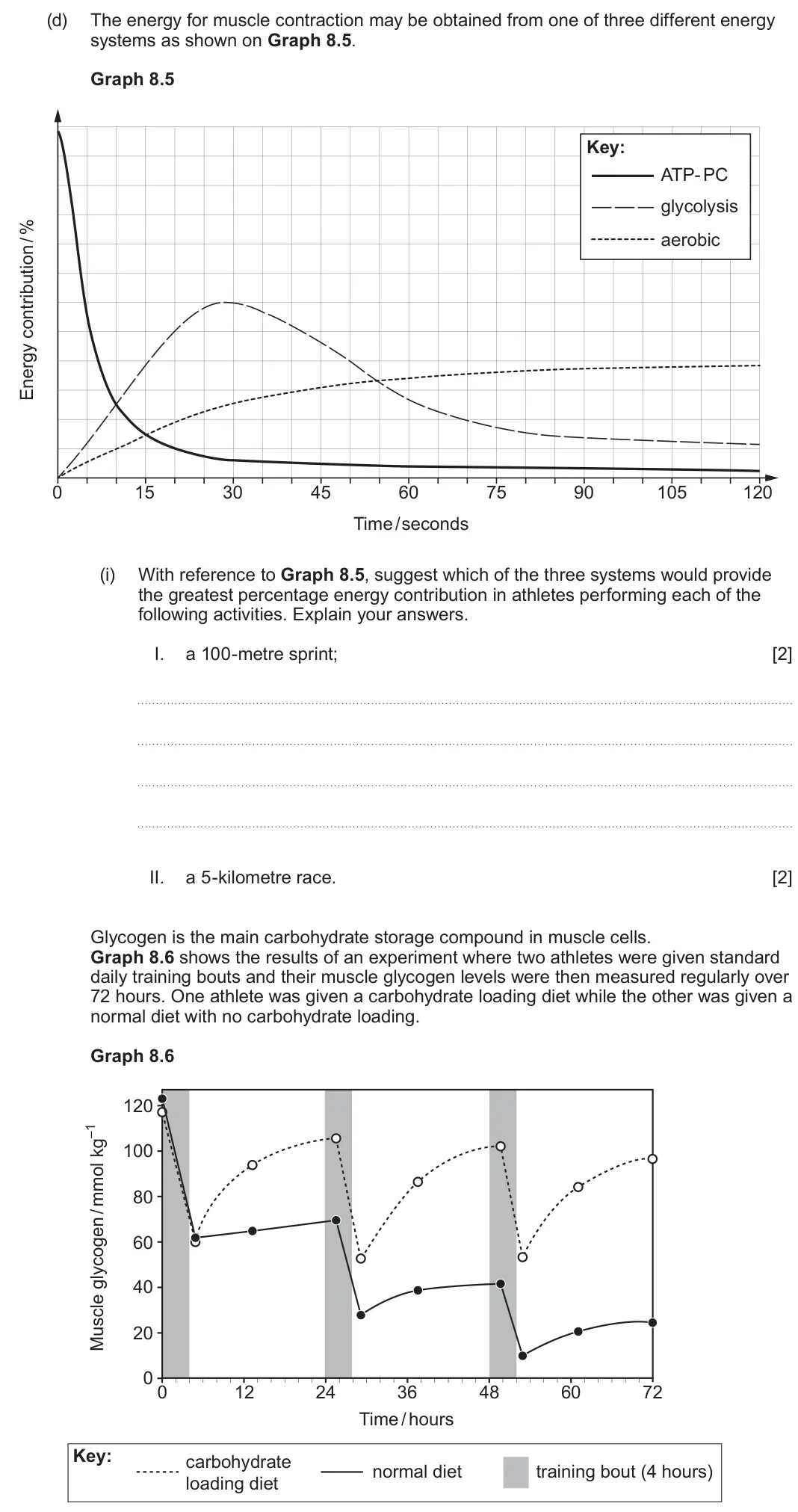
All 96 questions on Human Musculoskeletal Anatomy, as a list
- June 2025, Component 3, Q8(a)(i) (1 mark): State one function of the axial skeleton. [1] Image 8.1 shows an X-ray of part of the axial skeleton of a patient with a postural deformity. Image 8.1
- June 2025, Component 3, Q8(a)(ii) (2 marks): Name the type of deformity shown in Image 8.1 and identify the region of the spine which is most affected in this patient. [2]
- June 2025, Component 3, Q8(a)(iii) (1 mark): In addition to surgery, identify one type of treatment which might be used to correct the deformity shown in Image 8.1 [1]
- June 2025, Component 3, Q8(b)(i) (3 marks): Use your own knowledge of the sliding filament theory to describe the damage seen to the sarcomere in Image 8.2 Explain how this can lead to muscle weakness. [3
- June 2025, Component 3, Q8(b)(ii) (2 marks): Enzymes in lysosomes of muscle cells can lead to the breakdown of mitochondria in a process called autophagy. Suggest how autophagy might affect muscle contract
- June 2025, Component 3, Q8(b)(iii) (2 marks): Use the scale bar to determine the actual length of the contracted sarcomere in Image 8.3 [2] Actual length = μm
- June 2025, Component 3, Q8(c)(i) (1 mark): The ratio of ST : FT muscle fibres in marathon runners was 4.6 : 1 Explain the advantage of this ratio to marathon runners. [1]
- June 2025, Component 3, Q8(c)(ii) (2 marks): The samples analysed were all obtained from the same muscle in all individuals in the study. Explain why it is important to obtain the samples from the same mus
- June 2025, Component 3, Q8(c)(iii) (2 marks): State two factors that should have been controlled within each group to improve confidence in the conclusions. [2]
- June 2025, Component 3, Q8(d)(i) (1 mark): Describe the evidence from Image 8.5 that this patient had osteoarthritis. [1]
- June 2025, Component 3, Q8(d)(ii) (3 marks): The patient above was advised that they would be a suitable candidate for knee replacement surgery. State three disadvantages of this treatment. [3] I. II. III.
- June 2024, Component 3, Q8(a)(i) (2 marks): Identify the cells present in the hyaline cartilage shown in Image 8.1 and explain how nutrients and oxygen are supplied to these cells. [2]
- June 2024, Component 3, Q8(a)(ii) (1 mark): Describe the role of hyaline cartilage in the trachea. [1]
- June 2024, Component 3, Q8(b)(i) (1 mark): Identify the type of bone labelled A on Image 8.2. [1]
- June 2024, Component 3, Q8(b)(ii) (2 marks): The tissue at B is known as cancellous spongy bone. It has many spaces known as trabeculae. This tissue is not as strong as the bone tissue at A. Cancellous bon
- June 2024, Component 3, Q8(b)(iii) (2 marks): Use line C to calculate the width of the Haversian canal from Image 8.3. State your answer in µm. [2] Width = µm
- June 2024, Component 3, Q8(b)(iv) (1 mark): Describe the role of the Haversian canal in bone. [1]
- June 2024, Component 3, Q8(c)(i) (1 mark): State the type of synovial joint shown in Image 8.4B. [1]
- June 2024, Component 3, Q8(c)(ii) (3 marks): I. Image 8.4A shows the knee joint of a patient who was otherwise generally healthy. Suggest how Image 8.4A shows arthritis. [1] II. The patient was 27 years ol
- June 2024, Component 3, Q8(d)(i) (4 marks): With reference to Graph 8.5, suggest which of the three systems would provide the greatest percentage energy contribution in athletes performing each of the fol
- June 2024, Component 3, Q8(d)(ii) (1 mark): Explain why the intensity and duration of training bouts were controlled in this experiment. [1]
- June 2024, Component 3, Q8(d)(iii) (2 marks): With reference to Graph 8.6 explain how carbohydrate loading might improve an athlete’s performance. [2] Option C: Neurobiology and Behaviour
- June 2023, Component 3, Q8(a)(i) (2 marks): The postural changes that can occur in later life with osteoporosis sometimes cause breathing difficulties in sufferers. Use Image 8.1 to suggest why people wit
- June 2023, Component 3, Q8(a)(ii) (2 marks): Use Graph 8.2 to conclude the effect of increased levels of activity on the development of osteoporosis by the age of 80 years. [2]
- June 2023, Component 3, Q8(a)(iii) (2 marks): Suggest two factors that should be kept constant when selecting candidates for the study. [2]
- June 2023, Component 3, Q8(b) (3 marks): A common fracture in osteoporosis sufferers is a fracture of the wrist as shown in Image 8.3. Image 8.3 Identify the type of fracture and the bones involved in
- June 2023, Component 3, Q8(c)(i) (1 mark): Name the order of lever shown in Image 8.4. [1]
- June 2023, Component 3, Q8(c)(ii) (2 marks): In Image 8.4 the elbow to hand distance is 36 cm and elbow to biceps is 4 cm. Use this information and the formula below to calculate the force required to lift
- June 2023, Component 3, Q8(c)(iii) (4 marks): The flexion and extension of the elbow involves antagonistic pairs of muscles which alternately contract and relax to flex and extend the elbow. Explain why the
- June 2023, Component 3, Q8(d)(i) (1 mark): Name the type of muscle cell shown in Image 8.5. [1]
- June 2023, Component 3, Q8(d)(ii) (2 marks): Identify the molecules labelled A and B in Image 8.5. [2] A: B: Image 8.6 shows a longitudinal view of a single sarcomere. Image 8.6 A B C
- June 2023, Component 3, Q8(d)(iii) (1 mark): Identify which of the three lines A, B or C drawn on Image 8.6 best represents the region from where the cross section in Image 8.5 was taken. [1] Option C: Neu
- June 2022, Component 3, Q8(a)(i) (2 marks): Name the type of cartilage that forms articular cartilage and state its function in a joint such as the knee. [2]
- June 2022, Component 3, Q8(a)(ii) (1 mark): State the name of the cells labelled X and the structure labelled Y in Image 8.2 [1] X Y
- June 2022, Component 3, Q8(a)(iii) (2 marks): Using the information in Image 8.2, suggest why the transport of nutrients and oxygen to the cells in the cartilage is limited and describe how oxygen and nutri
- June 2022, Component 3, Q8(b)(i) (2 marks): Describe and explain the appearance of the H zone and the A band when the sarcomere is contracted. [2]
- June 2022, Component 3, Q8(b)(ii) (2 marks): Sarcomeres, such as the one shown in Image 8.3, have a mean length of 40 µm. Calculate how many sarcomeres there would be in a single myofibril from a muscle in
- June 2022, Component 3, Q8(b)(iii) (1 mark): State the term that describes how the quadriceps and hamstring muscles work together to enable movement at the knee joint. [1]
- June 2022, Component 3, Q8(c)(i) (3 marks): In bones affected by vitamin D deficiency, specific bone cells are unable to add inorganic calcium salts. State the name of these cells and explain why the tibi
- June 2022, Component 3, Q8(c)(ii) (2 marks): Suggest why young, albino rats were used in the experiment. [2]
- June 2022, Component 3, Q8(c)(iii) (3 marks): Describe the conclusions that can be made from the data in Table 8.6 and explain whether the results can be considered significant. [3]
- June 2022, Component 3, Q8(d)(i) (1 mark): Identify the condition shown in Image 8.7 [1]
- June 2022, Component 3, Q8(d)(ii) (1 mark): State one potential cause of this condition. [1] Option C: Neurobiology and Behaviour
- Autumn 2021, Component 3, Q8(a) (2 marks): On the image of the arm, identify the bones labelled X, Y and Z in the spaces provided. [2]
- Autumn 2021, Component 3, Q8(b)(i) (2 marks): Explain how changes in the proportion of fast and slow twitch fibres contracting in the muscles enable swimmers to achieve greater speed. [2] Some swimmers have
- Autumn 2021, Component 3, Q8(b)(ii) (2 marks): Slow twitch fibres are dark red due to the presence of myoglobin and have larger numbers of mitochondria than fast twitch fibres. Explain how these two features
- Autumn 2021, Component 3, Q8(b)(iii) (3 marks): Describe the function of ATP in the molecular mechanism of muscle contraction and explain why a change in the shape of the head region of the myosin molecule co
- Autumn 2021, Component 3, Q8(b)(iv) (2 marks): State why the procedure was carried out at 0 °C using a buffer solution. [2] The scientists concluded that there was very little difference in the molecular mas
- Autumn 2021, Component 3, Q8(b)(v) (1 mark): Use image 8.4 together with your knowledge of electrophoresis to assess why they came to this conclusion. [1]
- Autumn 2021, Component 3, Q8(c)(i) (2 marks): The fulcrum is at the articulation of the big toe and metatarsals as shown in image 8.5. D1 measures 0.12 m and is the distance between the fulcrum and the load
- Autumn 2021, Component 3, Q8(c)(ii) (1 mark): Name the type of lever illustrated by the movement described above. [1]
- Autumn 2021, Component 3, Q8(d)(i) (2 marks): Use the information in image 8.6 and your knowledge of the structure of ball and socket joints in the pectoral and pelvic girdles to explain why shoulder disloc
- Autumn 2021, Component 3, Q8(d)(ii) (1 mark): Identify the type of fracture shown in image 8.7. [1]
- Autumn 2021, Component 3, Q8(d)(iii) (2 marks): After administering pain killing and anti-inflammatory drugs, suggest how this fractured clavicle might be treated in order to allow the bone to heal. [2] Optio
- Autumn 2020, Component 3, Q9(a)(i) (2 marks): Vertebra A is found in the lumbar region of the vertebral column. Identify the region of the vertebral column where vertebra B is found and state the specific f
- Autumn 2020, Component 3, Q9(a)(ii) (1 mark): Identify structure X. [1] In the matrix, organic and inorganic compounds contribute to bone density and hardness.
- Autumn 2020, Component 3, Q9(a)(iii) (2 marks): Name one organic and one inorganic compound found in the matrix. [2] Organic Inorganic
- Autumn 2020, Component 3, Q9(b)(i) (2 marks): The mean baseline total mass of four lumbar vertebrae (L1–L4) was 59.74 g. At the end of a flight this had decreased to 52.14 g. Calculate the percentage loss o
- Autumn 2020, Component 3, Q9(b)(ii) (1 mark): State the region of the skeleton that provides the greatest confidence in the data. Give a reason for your answer. [1]
- Autumn 2020, Component 3, Q9(b)(iii) (2 marks): Suggest a reason why the scientists chose to measure the bone density of lumbar vertebrae and the wrist as part of their study. [2]
- Autumn 2020, Component 3, Q9(b)(iv) (3 marks): Describe why running on a treadmill might be expected to increase bone density or reduce bone density loss in parts of bones such as the centrum of the vertebra
- Autumn 2020, Component 3, Q9(c)(i) (2 marks): The position of inflammation is highlighted by the red areas. From the image, identify the tissue most likely to be affected in those areas. Explain how pain an
- Autumn 2020, Component 3, Q9(c)(ii) (1 mark): Rheumatoid arthritis is an autoimmune disease that results in joint inflammation. Explain the cause of inflammation in this form of arthritis. [1] The spine pro
- Autumn 2020, Component 3, Q9(c)(iii) (1 mark): State the letter and name the component of the muscle fibre where calcium ions are stored. [1] Letter Name Image 9.6 shows a representation of the arrangement o
- Autumn 2020, Component 3, Q9(c)(iv) (3 marks): With reference to structures represented in image 9.7 and using your knowledge of proteins in the myofibril, explain the relationship between the presence of ca
- June 2019, Component 3, Q9(a)(i) (1 mark): Label the bones A-C of the arm as indicated in figure 9.1. [1]
- June 2019, Component 3, Q9(a)(ii) (2 marks): The cartilage in the elbow joint is made of hyaline cartilage. Describe the role of the hyaline cartilage in the elbow joint and how the structure of the joint
- June 2019, Component 3, Q9(a)(iii) (3 marks): The external ear in mammals contains yellow elastic cartilage. Compare the structure of hyaline cartilage to yellow elastic cartilage. Explain the benefits of e
- June 2019, Component 3, Q9(a)(iv) (1 mark): When cartilage is damaged, it does not heal quickly, unlike bone and muscle. Use your knowledge of the structures of these tissues to explain why. [1]
- June 2019, Component 3, Q9(b)(i) (3 marks): I. Calculate the percentage increase in cases from 2005 to 2011. [2] Percentage increase = % II. Explain the reason for this increase. [1]
- June 2019, Component 3, Q9(b)(ii) (1 mark): Suggest why the data collected may be inaccurate in representing the total number of cases in the UK. [1]
- June 2019, Component 3, Q9(b)(iii) (3 marks): Some scientists wanted to examine the effects of vitamin D supplements on prevention of rickets in children. They gave 500 children the supplement and compared
- June 2019, Component 3, Q9(b)(iv) (1 mark): State the name that is given to the similar, milder condition seen in adults. Explain why it is a less serious condition in adults. [1]
- June 2019, Component 3, Q9(c)(i) (3 marks): Using figure 9.4 and your own knowledge, explain the shape of the graph for ATP and creatine phosphate and explain why aerobic respiration takes over from anaer
- June 2019, Component 3, Q9(c)(ii) (1 mark): The runner is interested in finding out which distance is suited to her muscle type and undertakes a muscle biopsy. The biopsy showed that her muscles contained
- June 2019, Component 3, Q9(c)(iii) (1 mark): The runner is concerned over the shape of her feet. Her footprint on the ground is not entirely normal and is shown next to a normal footprint in figure 9.5: Fi
- June 2018, Component 3, Q9(a)(i) (1 mark): State whether circles A-C represent transverse or longitudinal sections. [1]
- June 2018, Component 3, Q9(a)(ii) (3 marks): With reference to the micrograph, for each of the circles state which region of the sarcomere they are taken from and explain your reasoning. [3] A B C
- June 2018, Component 3, Q9(a)(iii) (4 marks): Describe how the different protein fibres interact to bring about contraction of the sarcomere. [4]
- June 2018, Component 3, Q9(b)(i) (1 mark): Why is it important that muscle sample, before and after flight, is taken from the same muscle in the same astronaut? [1]
- June 2018, Component 3, Q9(b)(ii) (2 marks): Using the image and your knowledge of muscle contraction, conclude how spaceflight would affect the maximum force that the muscle could generate. [2]
- June 2018, Component 3, Q9(c)(i) (2 marks): Explain why the fracture shown in X-ray C is more likely to heal with the best chance of full recovery than the fracture shown in X-ray D. [2]
- June 2018, Component 3, Q9(c)(ii) (1 mark): Both fractures required surgery and the use of screws and/or metal plates. Suggest why this treatment would lead to a faster recovery than bed rest or immobilis
- June 2018, Component 3, Q9(d)(i) (1 mark): State the orders of lever represented in the elbow joint when the: [1] Biceps are contracting Triceps are contracting
- June 2018, Component 3, Q9(d)(ii) (2 marks): Explain why there is a difference in the type of lever represented when the arm is being bent and straightened. [2]
- June 2018, Component 3, Q9(d)(iii) (1 mark): In experiments to determine the force generated by the biceps and triceps muscles in individuals, comparisons can be made regarding the relative strength of the
- June 2018, Component 3, Q9(d)(iv) (2 marks): Using the formula below, calculate the force needed to hold the head erect in the position shown [2] F1 × d1 = F2 × d2 Force = N Option C: Neurobiology and Beha
- June 2017, Component 3, Q8(a)(i) (2 marks): Name structure X and describe its role in bone. [2]
- June 2017, Component 3, Q8(a)(ii) (1 mark): State the percentages of organic and inorganic material in compact bone. [1] Organic Inorganic Bone mineral density (BMD) is a useful measure of bone health. Bo
- June 2017, Component 3, Q8(b) (4 marks): Denosumab is a drug that binds to receptors on osteoclasts and inhibits their activity. With reference to the mineral composition of compact bone and the cells
- June 2017, Component 3, Q8(c) (2 marks): With reference to data provided, conclude whether Denosumab or oestrogen is the most effective treatment for osteoporosis. Give a reason for your answer. [2]
- June 2017, Component 3, Q8(d)(i) (1 mark): The image above depicts a displaced fracture of the wrist. Suggest one possible treatment for this. [1]
- June 2017, Component 3, Q8(d)(ii) (1 mark): Ideally, doctors need to identify and treat patients with osteoporosis before a fracture occurs. A radiograph of the vertebral column can be used to diagnose os
- June 2017, Component 3, Q8(d)(iii) (2 marks): Use the T score and the information provided to diagnose her condition and fracture risk. [2]
- June 2017, Component 3, Q8(e)(i) (4 marks): Compare and contrast the structure and movement of the wrist joint with those found in the fingers. [4]
- June 2017, Component 3, Q8(e)(ii) (3 marks): A patient presents symptoms of pain, stiffness and swelling in their joints. Physical examination reveals an increase in temperature at the swollen areas. Is th
Questions, mark schemes and examiner’s reports are © WJEC Eduqas, from their published past papers. Plumi isn’t affiliated with any exam board. Want whole papers? Every Eduqas A-Level Biology paper.
Rather write your answers by hand on iPad? Plumi marks them against the same mark schemes.