 plumi
Organic problem solving and synthesis routes: Edexcel International A Level Chemistry questions
Edexcel International A Level Chemistry past-paper questions on 20.1.3 Organic problem solving and synthesis routes, 2019–2025, with mark schemes and examiner’s reports where available.
Paper
All papers
Exam
All years
Calculations
Q11(a)
The whole paper ↗ Your answer
Q19(c)
The whole paper ↗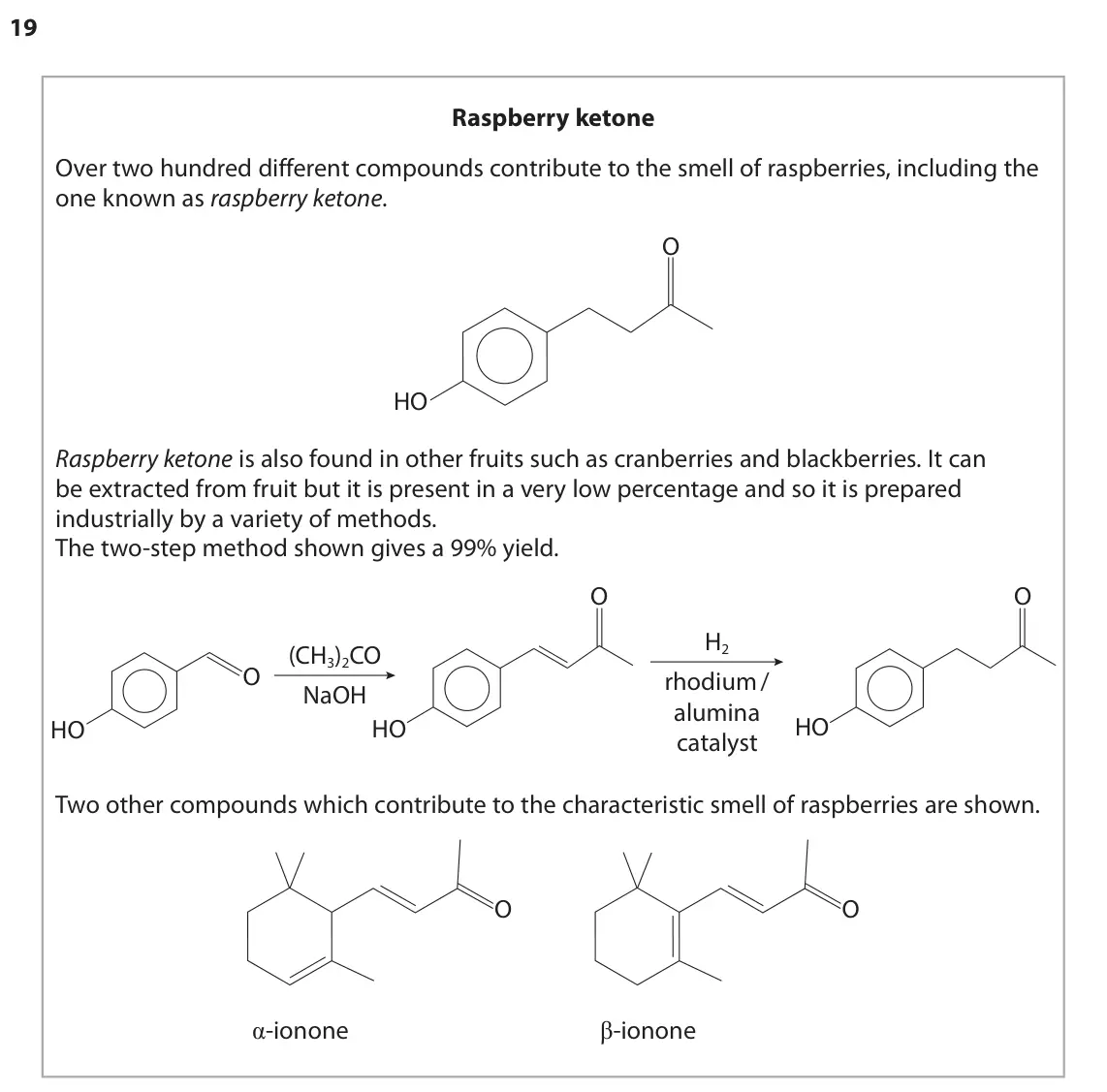
Q4(c)
The whole paper ↗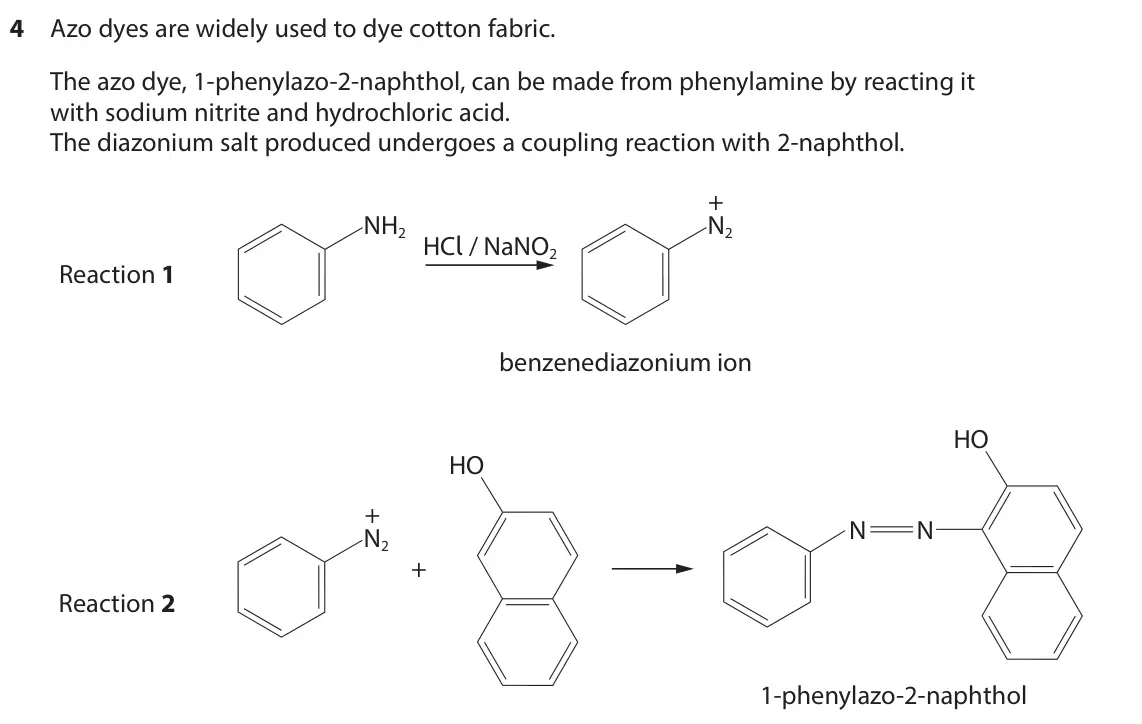
Q15(b)
The whole paper ↗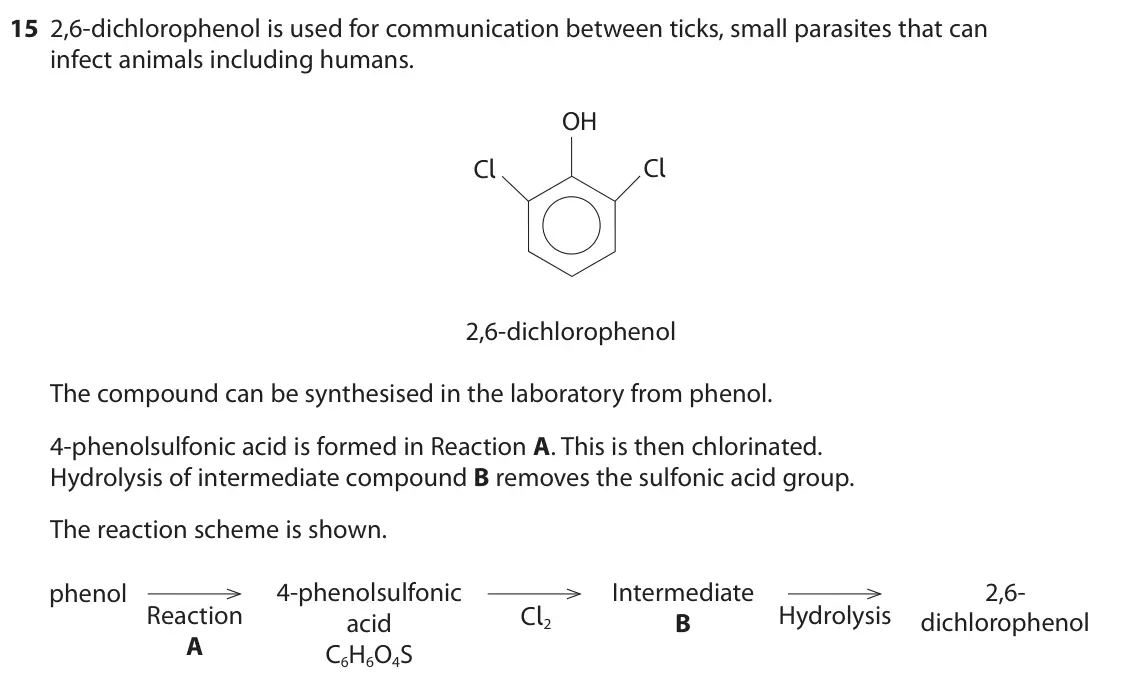
Q15(c)
The whole paper ↗Q15(b)
The whole paper ↗Q20(b)
The whole paper ↗
Q17(b)
The whole paper ↗
Q19(b)
The whole paper ↗
- Your answer
- Your answer
Q23(d)
The whole paper ↗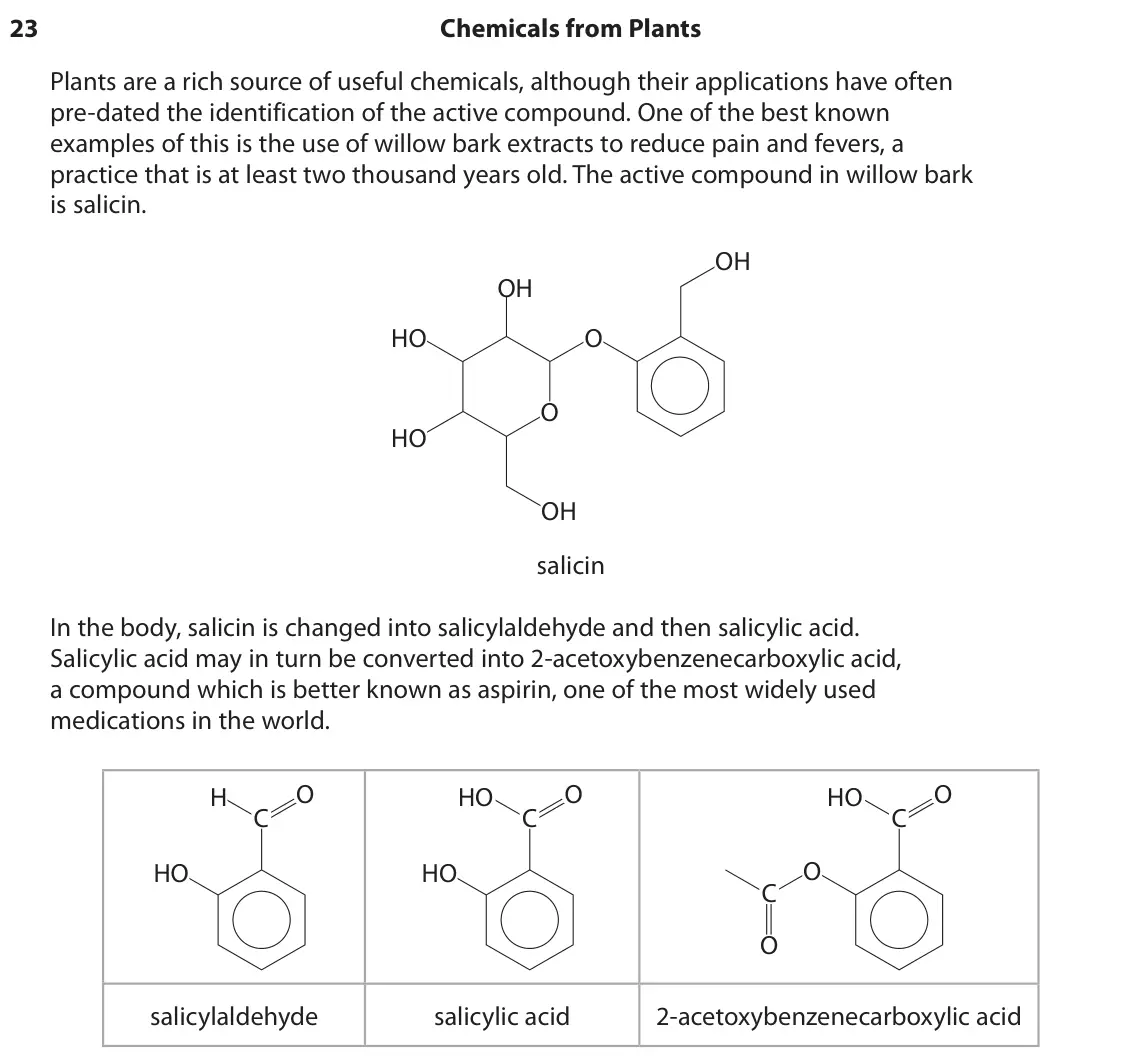
Q12(c)
The whole paper ↗
- Your answer
Q16(a)
The whole paper ↗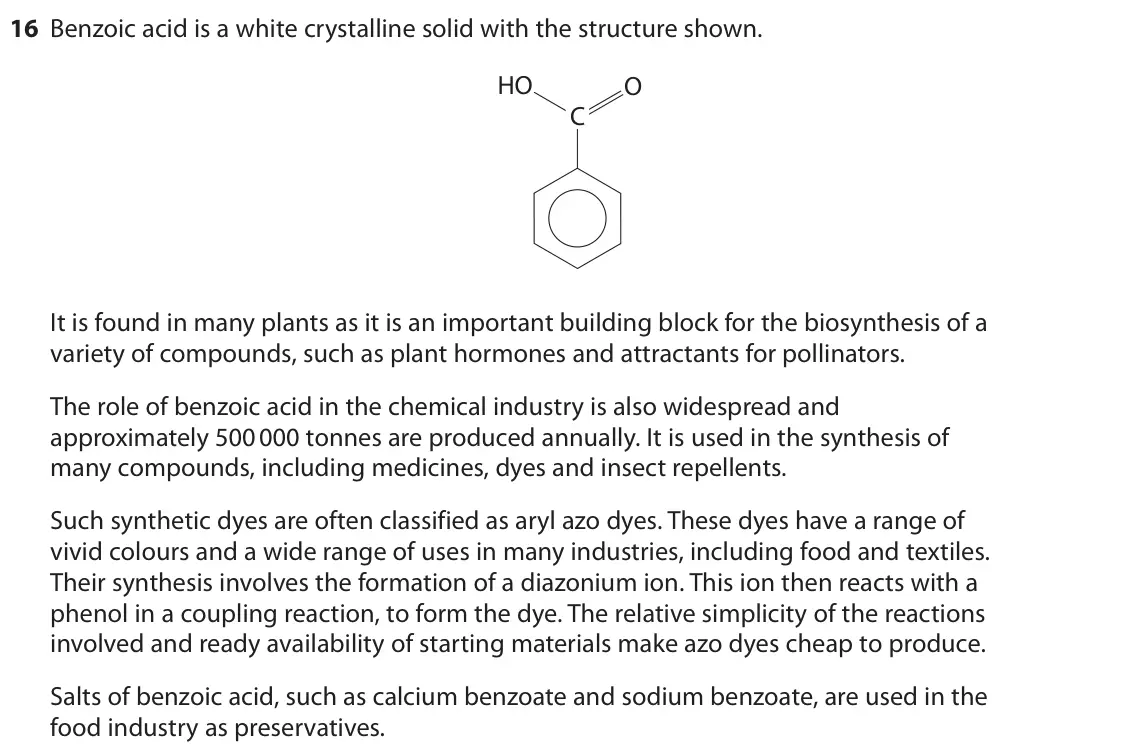
Q21(e)(i)
The whole paper ↗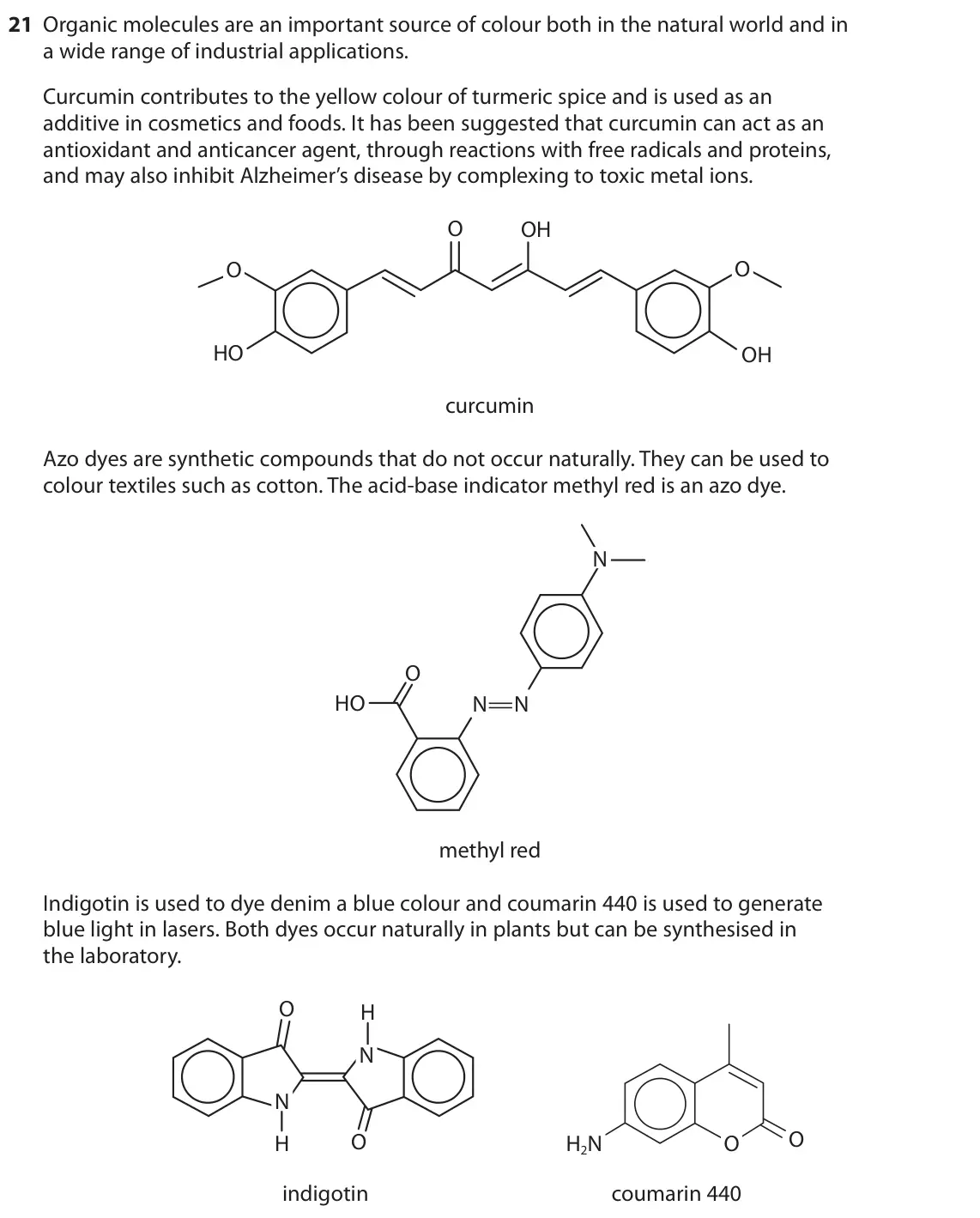
Q21(f)(i)
The whole paper ↗- Your answer
Q20(b)
The whole paper ↗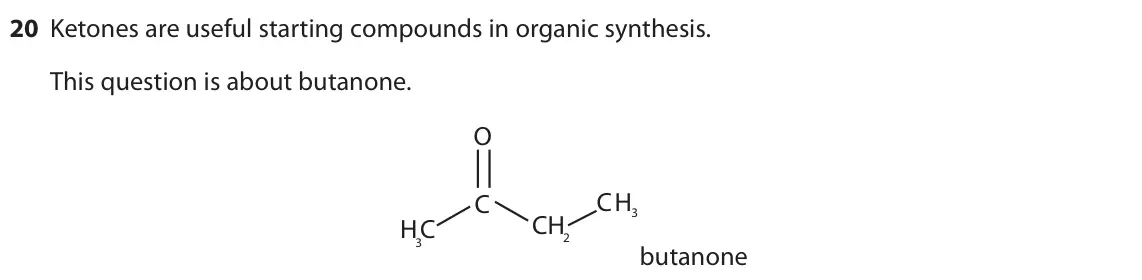
All 23 questions on Organic problem solving and synthesis routes, as a list
- June 2025, Unit 5, Q11(a) (1 mark): Which is the name of the functional group that is replaced in step A? (1) A phenyl B nitrile C amine D amide
- October 2024, Unit 5, Q19(c) (7 marks): Raspberry ketone can also be synthesised in the laboratory using a Grignard reagent via a multi-step process. The overall reaction is shown. OH O HO HO Devise t
- October 2024, Unit 6, Q4(c) (1 mark): Azo dyes were developed during the nineteenth century but workers in the industry showed high rates of bladder cancer and the production of some dyes was discon
- June 2024, Unit 5, Q15(b) (1 mark): An alternative synthesis of 2,6‑dichlorophenol starts with compound C. OH O O compound C Compound C is chlorinated and hydrolysed and then the CO2 group is remo
- June 2024, Unit 5, Q15(c) (3 marks): Identify three factors that organic chemists would take into account when considering alternative methods for an organic synthesis. (3)
- January 2024, Unit 5, Q15(b) (7 marks): Cooking fresh ginger converts gingerol into zingerone, which is less pungent and has a sweeter flavour. Zingerone can be formed in a four‑step synthesis from co
- October 2023, Unit 5, Q20(b) (7 marks): Devise a synthesis to convert bromobenzene into benzamide. Include reagents, conditions and the structures of the intermediate compounds. O Br C NH2 bromobenzen
- January 2023, Unit 5, Q17(b) (5 marks): Compound A, C9H12O, contains a benzene ring and one side-chain. A is oxidised when heated with acidified potassium dichromate(VI) to produce a compound B which
- January 2023, Unit 5, Q19(b) (5 marks): Devise a synthesis of N-phenylethylethanamide from (bromomethyl)benzene without the use of a Grignard reagent. Include reagents, conditions and the structures o
- October 2022, Unit 4, Q13 (1 mark): Which reaction does not produce a tertiary alcohol as one of the products? A (CH3)2C=CH2 + H2O B (CH3)3CBr + H2O C (CH3)3CCOC(CH3)3 + LiAlH4 D (CH3)3CCOOC(CH3)3
- October 2022, Unit 5, Q17 (1 mark): The structures of cocaine and its metabolite benzoylecgonine are shown. O O O OH N N O O O O cocaine benzoylecgonine How would you expect the solubility of coca
- October 2022, Unit 5, Q23(d) (4 marks): Salicylaldehyde may be used in the synthesis of coumarin, a compound which occurs in many plants. Coumarin is in turn used to prepare warfarin, a compound presc
- June 2022, Unit 5, Q12(c) (1 mark): State the type of reaction in Step 3. (1)
- June 2022, Unit 5, Q16 (6 marks): The ester ethyl 2‑methylbutanoate is found in wild berries such as bilberries. Devise a synthesis to convert but‑2‑ene into ethyl 2‑methylbutanoate in four step
- January 2022, Unit 4, Q13 (1 mark): But‑2‑ene‑1,4‑diol may be converted into 2‑oxobutanedioic acid in a two‑step synthesis through an intermediate compound W. steam and H2SO4 W HOCH2CH CHCH2OH HO2
- January 2022, Unit 5, Q16(a) (6 marks): Devise a reaction scheme to produce benzoic acid from benzene, via bromobenzene and then a Grignard reagent. Include the reagents and essential conditions for e
- October 2021, Unit 5, Q21(e)(i) (2 marks): Complete the equation for this reaction. (2) O O H O O N + + + + 2 NaOH H2O N NO2 ONa H O
- October 2021, Unit 5, Q21(f)(i) (2 marks): Hydrolysis with excess aqueous sodium hydroxide. (2)
- January 2021, Unit 5, Q18 (1 mark): Benzenecarboxylic acid may be produced from benzene in a two-step synthesis. O OH CH3 C Step 1 Step 2 Yield 45% Yield 60% benzene methylbenzene benzenecarboxyli
- January 2021, Unit 5, Q20(b) (4 marks): Devise a reaction scheme to prepare propan-1-ol from butanone, using no more than four steps. Identify the reagents and essential conditions for each step and g
- January 2021, Unit 5, Q20(c) (5 marks): Devise a reaction scheme to prepare 2-methylbut-2-ene from butanone, using no more than four steps. Identify the reagents and essential conditions for each step
- January 2021, Unit 5, Q24(c)(ii) (1 mark): Deduce the structure of quinic acid which combines with caffeic acid to form chlorogenic acid. (1) O H O OH caffeic acid OH OH H O O O H O O OH OH OH chlorogenic
- October 2020, Unit 5, Q23(b) (6 marks): Devise a reaction scheme to convert butan-2-ol into 1-amino-2-methylbutan-2-ol in three steps. H H OH H H H OH H H C C C C H H C C C C H H H H H H H CH2 H NH2 1
Questions, mark schemes and examiner’s reports are © Pearson Edexcel, from their published past papers. Plumi isn’t affiliated with any exam board. Want whole papers? Edexcel International A Level Chemistry past papers.
The Plumi iPad app also offers exam-style questions with AI feedback on your handwritten working.