 plumi
Measuring the growth of microorganisms: Edexcel International A Level Biology questions
Edexcel International A Level Biology past-paper questions on 6.1.2 Measuring the growth of microorganisms, 2019–2025, with mark schemes and examiner’s reports where available.
Paper
All papers
Exam
All years
Calculations
Q3(d)
The whole paper ↗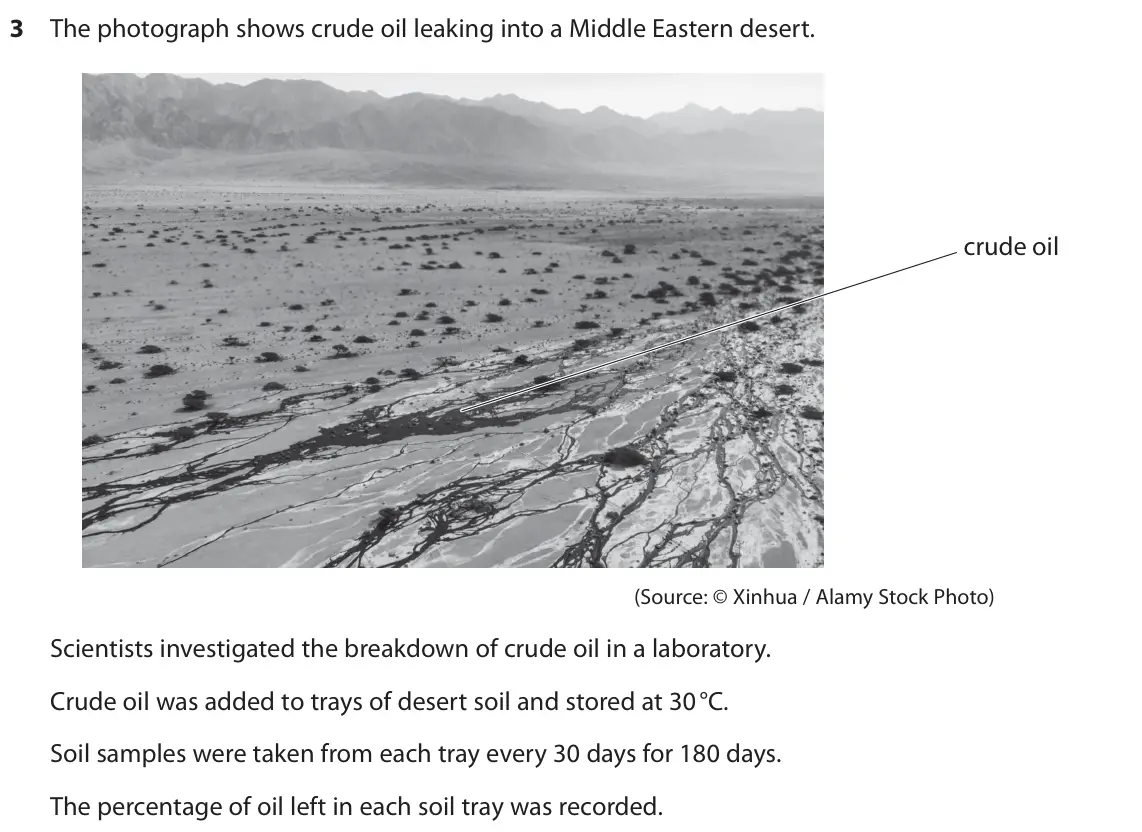
Q7(e)(i)
The whole paper ↗
Q2(c)(i)
The whole paper ↗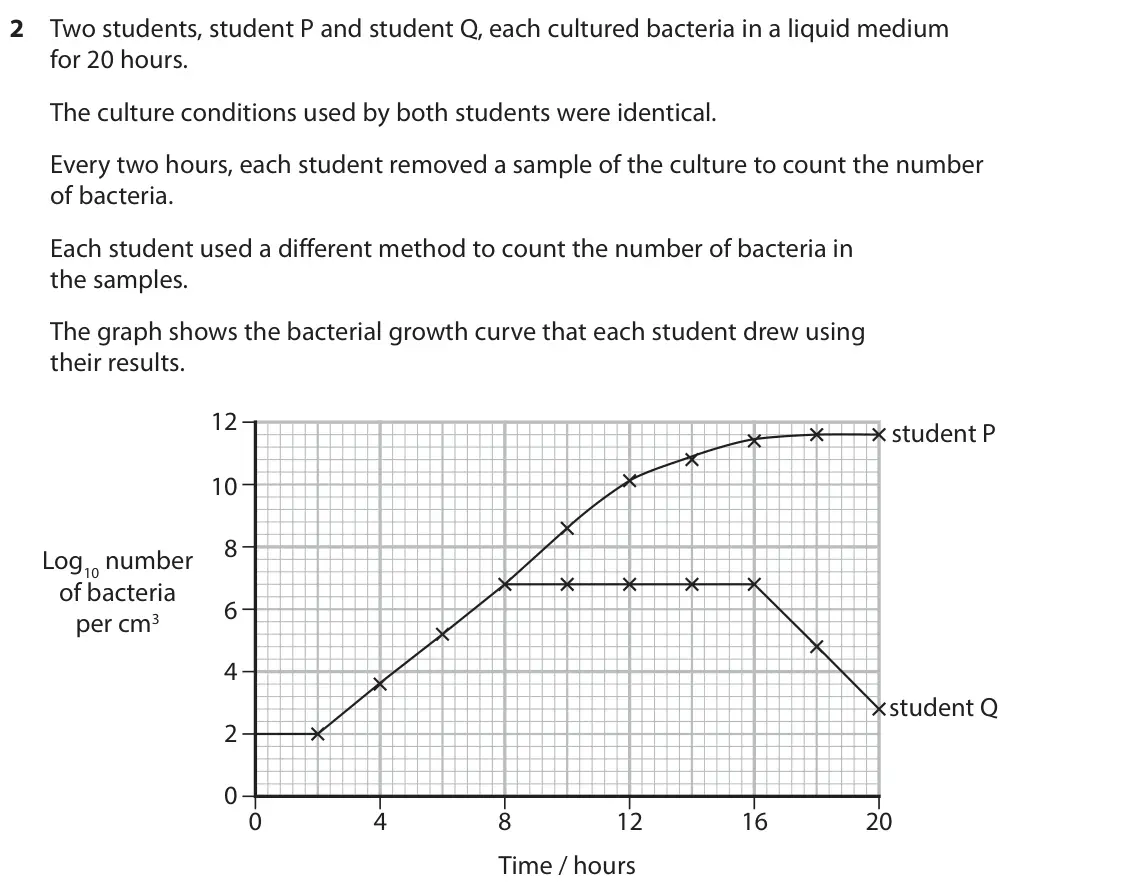
Q2(c)(ii)
The whole paper ↗Q6(b)(i)
The whole paper ↗ Your answer
Q7(b)(i)
The whole paper ↗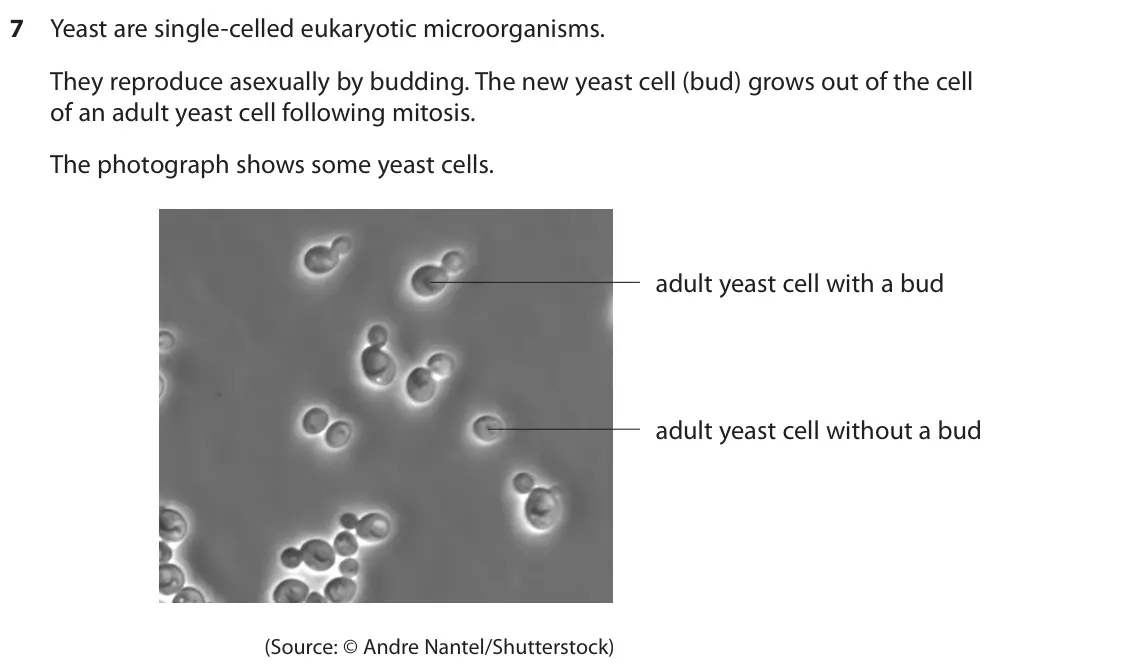
Q3(a)
The whole paper ↗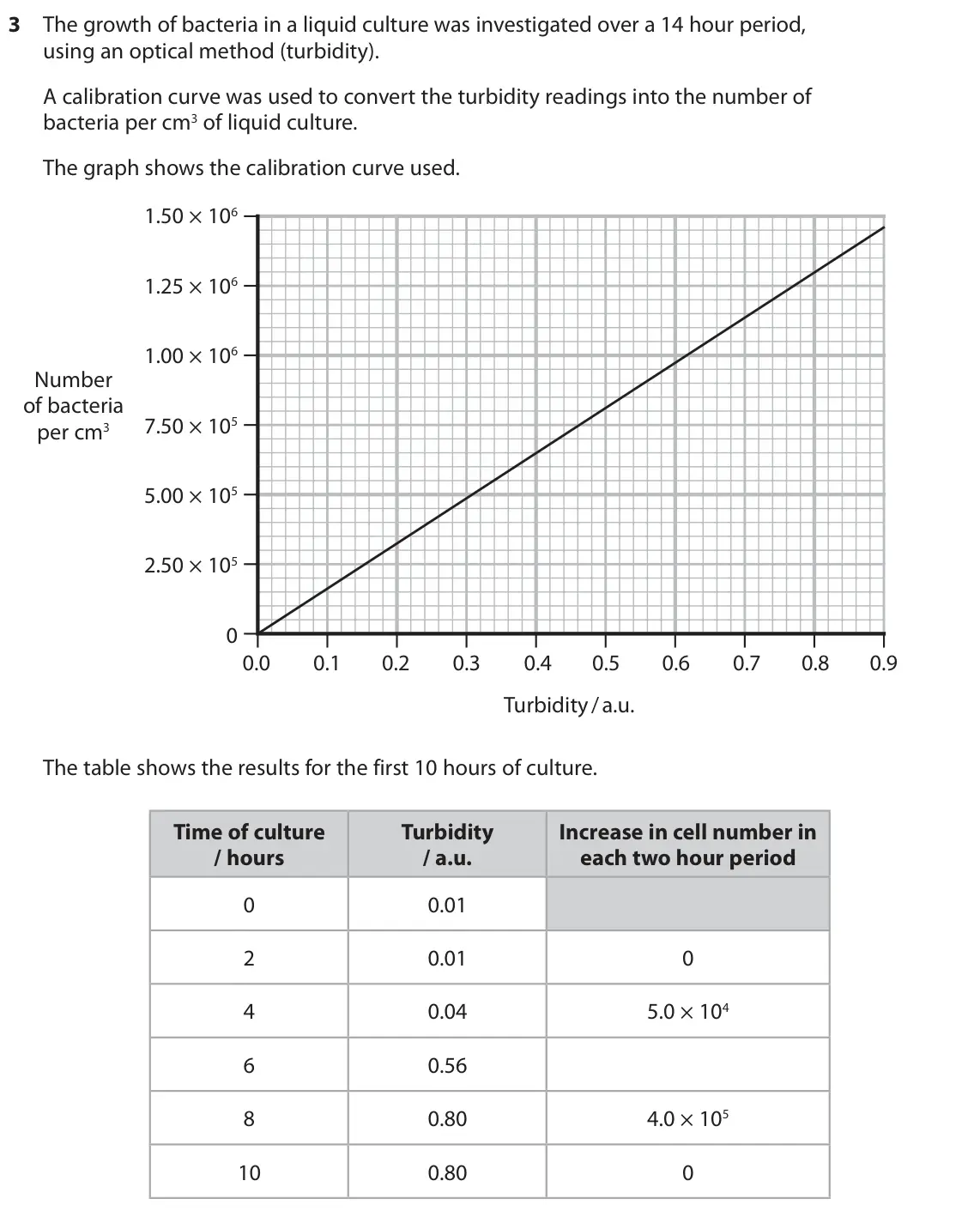
Q3(c)(i)
The whole paper ↗Q3(c)(ii)
The whole paper ↗Q4(c)(ii)
The whole paper ↗
Q9(c)(iii)
The whole paper ↗
Q2(a)
The whole paper ↗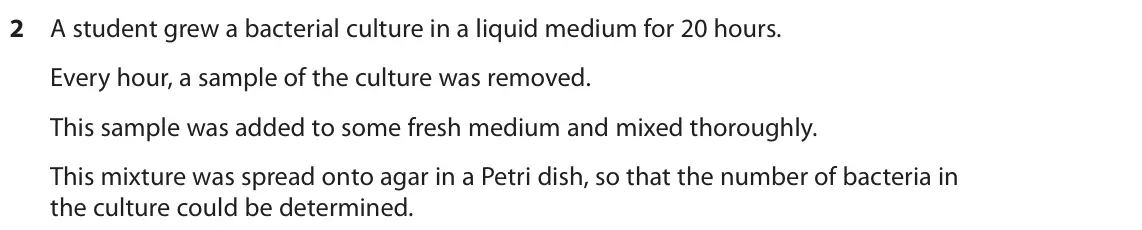 Your answer
Q5(c)(iii)
The whole paper ↗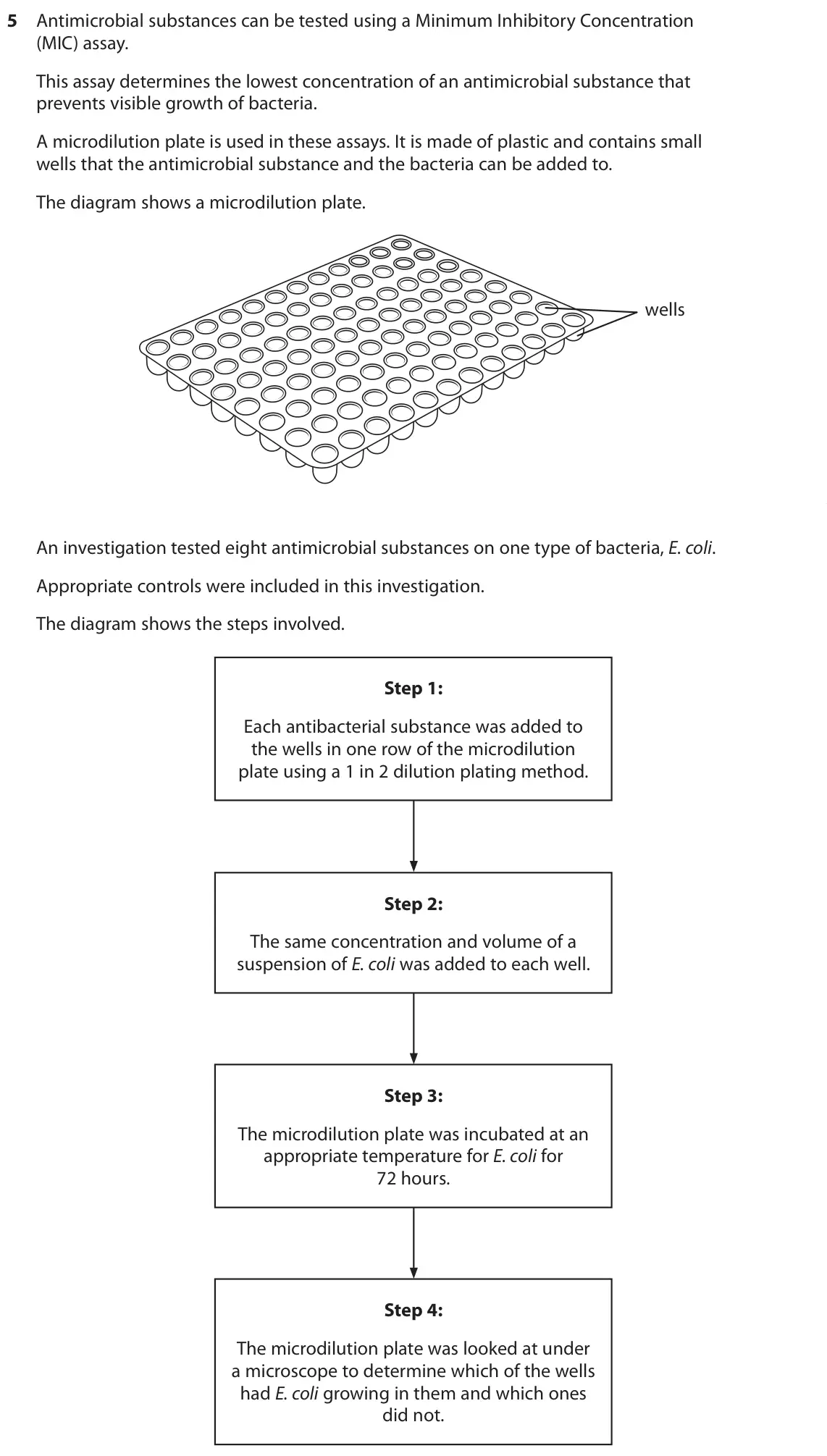
Q4(a)
The whole paper ↗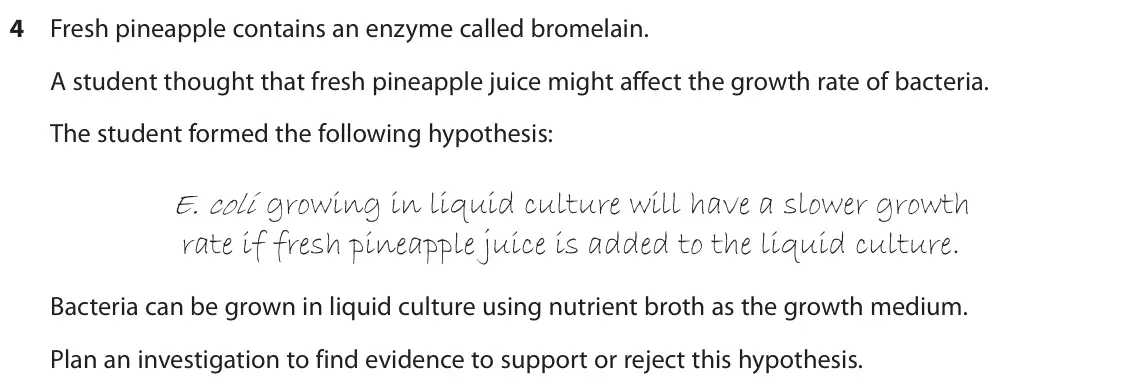
Q4(b)
The whole paper ↗Q4(d)
The whole paper ↗Q9(a)
The whole paper ↗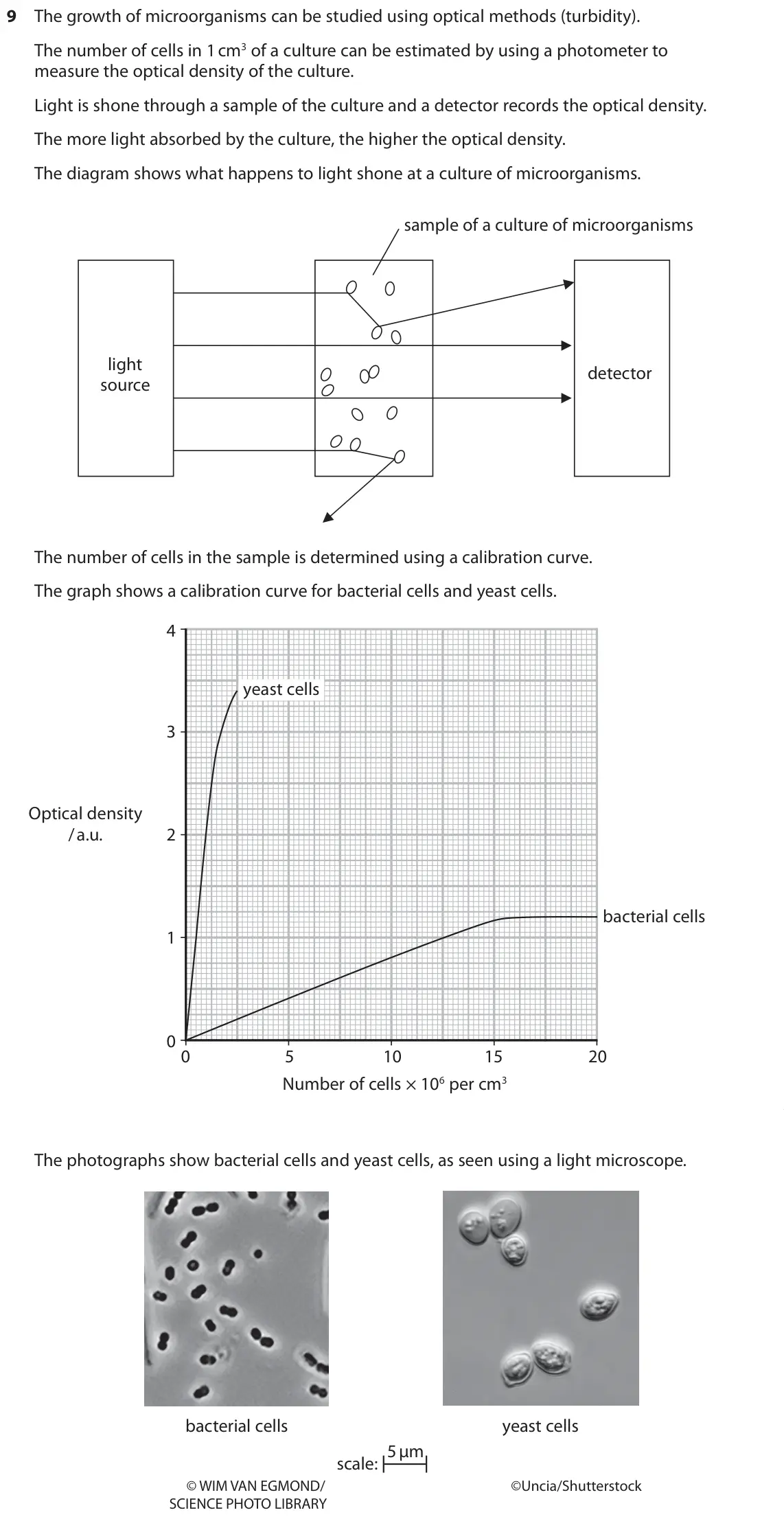
Q9(b)
The whole paper ↗Q9(c)(i)
The whole paper ↗Q9(c)(ii)
The whole paper ↗
All 21 questions on Measuring the growth of microorganisms, as a list
- June 2025, Unit 6, Q3(d) (6 marks): Bacteria in the desert soil can break down crude oil. A scientist predicted that the number of bacteria in the desert soil would increase as the crude oil was b
- January 2025, Unit 4, Q7(e)(i) (2 marks): The graph shows the growth curve for two types of methanotrophs grown in a methane concentration of 500 a.u. The increase in turbidity of the culture was used t
- June 2024, Unit 4, Q2(c)(i) (1 mark): Calculate the ratio of the number of bacteria in these two cultures. (1) Answer : 1
- June 2024, Unit 4, Q2(c)(ii) (2 marks): Student P and student Q used different methods for determining the number of bacteria. State which method each student used. Give a reason for your answer. (2)
- June 2024, Unit 4, Q6(b)(i) (1 mark): How many times does the highest concentration need to be diluted to make the lowest concentration? (1) A 5.12 B 51.2 C 512 D 5120
- January 2024, Unit 4, Q7(b)(i) (3 marks): A student had a suspension of yeast cells in a liquid culture and wanted to determine the concentration of yeast cells in this culture. A sample of this culture
- October 2023, Unit 4, Q3(a) (1 mark): Complete the table to show the increase in cell number between 4 and 6 hours of culture. (1)
- October 2023, Unit 4, Q3(c)(i) (2 marks): Describe the method used in dilution plating. (2)
- October 2023, Unit 4, Q3(c)(ii) (3 marks): The sketch shows the shape of the growth curve produced using dilution plating and colony counts between 8 and 14 hours of this culture. Log10 number of bacteri
- June 2023, Unit 4, Q4(c)(ii) (4 marks): Describe one method that could be used in this study to determine the relative abundance of Streptococcus in a giant panda. (4)
- January 2023, Unit 4, Q9(c)(iii) (4 marks): The scientists identified a protein that could be responsible for inhibiting the activation of the macrophages. They used Mycobacterium tuberculosis with a muta
- June 2022, Unit 4, Q2(a) (1 mark): Which method is being used to determine the number of bacteria in this culture? (1) A dilution plating B latency C mass method D optical method (turbidity)
- October 2021, Unit 4, Q5(c)(iii) (2 marks): The MIC for the antimicrobial substance used in row E was in column 4. Describe how a 1 in 2 dilution plating method would have been carried out to achieve the
- October 2021, Unit 6, Q4(a) (3 marks): Describe preliminary practical work that you might undertake to ensure your proposed method would provide quantitative results. (3)
- October 2021, Unit 6, Q4(b) (8 marks): Devise a detailed method, including how you would control and monitor important variables. (8)
- October 2021, Unit 6, Q4(d) (3 marks): Suggest three limitations of your proposed method. (3)
- January 2020, Unit 4, Q9(a) (1 mark): State the relationship between optical density and the size of the microorganisms. (1)
- January 2020, Unit 4, Q9(b) (2 marks): Calculate how many times more bacterial cells there are than yeast cells if both samples have an optical density of 1.0 a.u. (2) Answer
- January 2020, Unit 4, Q9(c)(i) (1 mark): State the relationship between the number of bacterial cells and optical density. (1)
- January 2020, Unit 4, Q9(c)(ii) (2 marks): Suggest why using optical density to measure the concentration of microorganisms is more accurate at lower concentrations of cells. Use the information in the d
- January 2020, Unit 4, Q9(e) (6 marks): Explain why one calibration curve cannot be used to determine the growth of all microorganisms. Use all the information in this question and your own knowledge
Questions, mark schemes and examiner’s reports are © Pearson Edexcel, from their published past papers. Plumi isn’t affiliated with any exam board. Want whole papers? Edexcel International A Level Biology past papers.
The Plumi iPad app also offers exam-style questions with AI feedback on your handwritten working.