 plumi
Newton’s laws, weight and mass: Edexcel GCSE Physics questions
Every Edexcel GCSE Physics exam question on Newton’s laws, weight and mass (specification points 2.14–2.19), 2018–2025, with its mark scheme and examiner’s report.
Find questions1,554
Exam
All years
Calculations
Q2(a)(i)
The whole paper ↗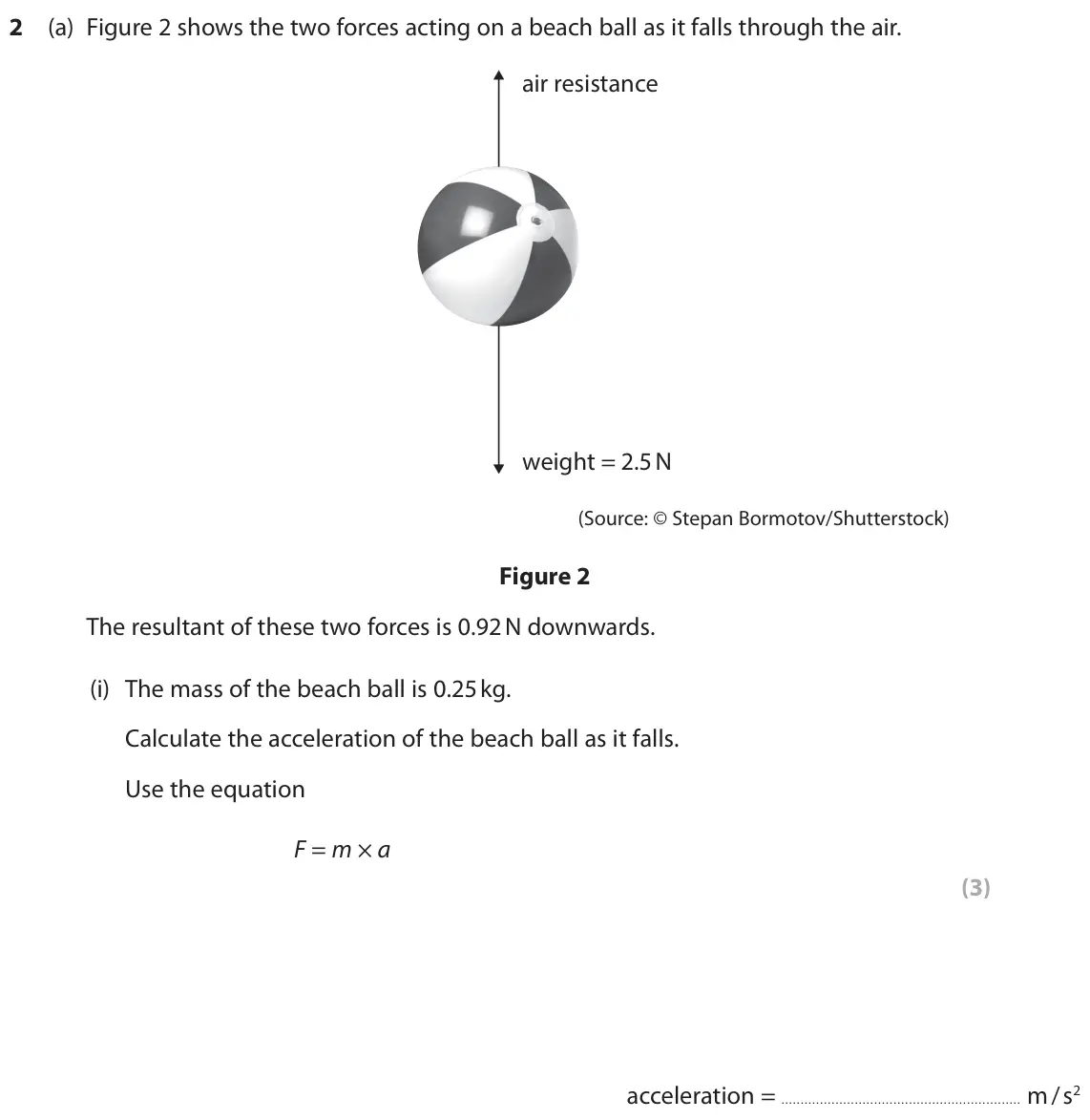
Q2(a)(ii)
The whole paper ↗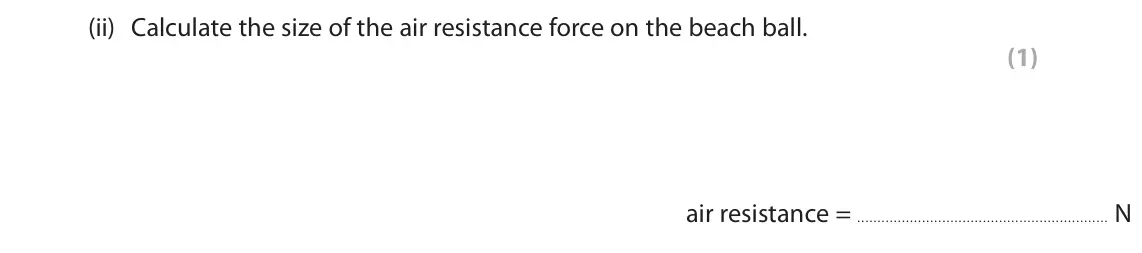
Q8(a)(i)
The whole paper ↗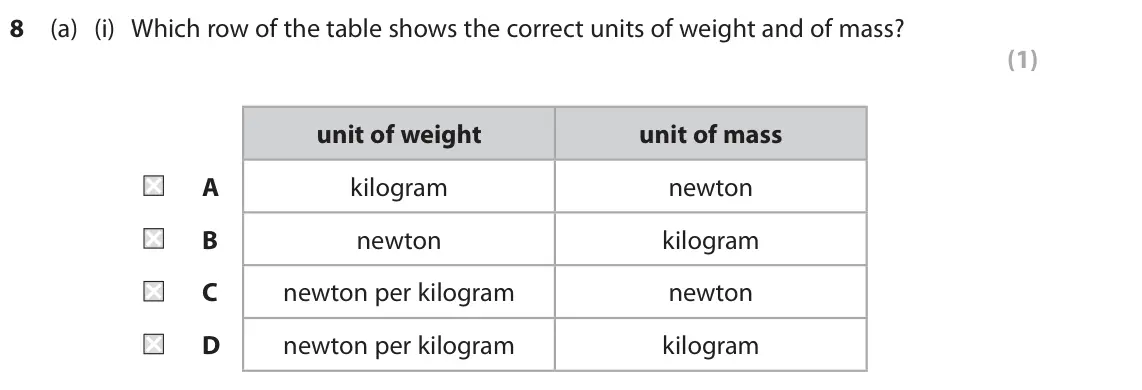
Q8(a)(ii)
The whole paper ↗
Q8(b)(i)
The whole paper ↗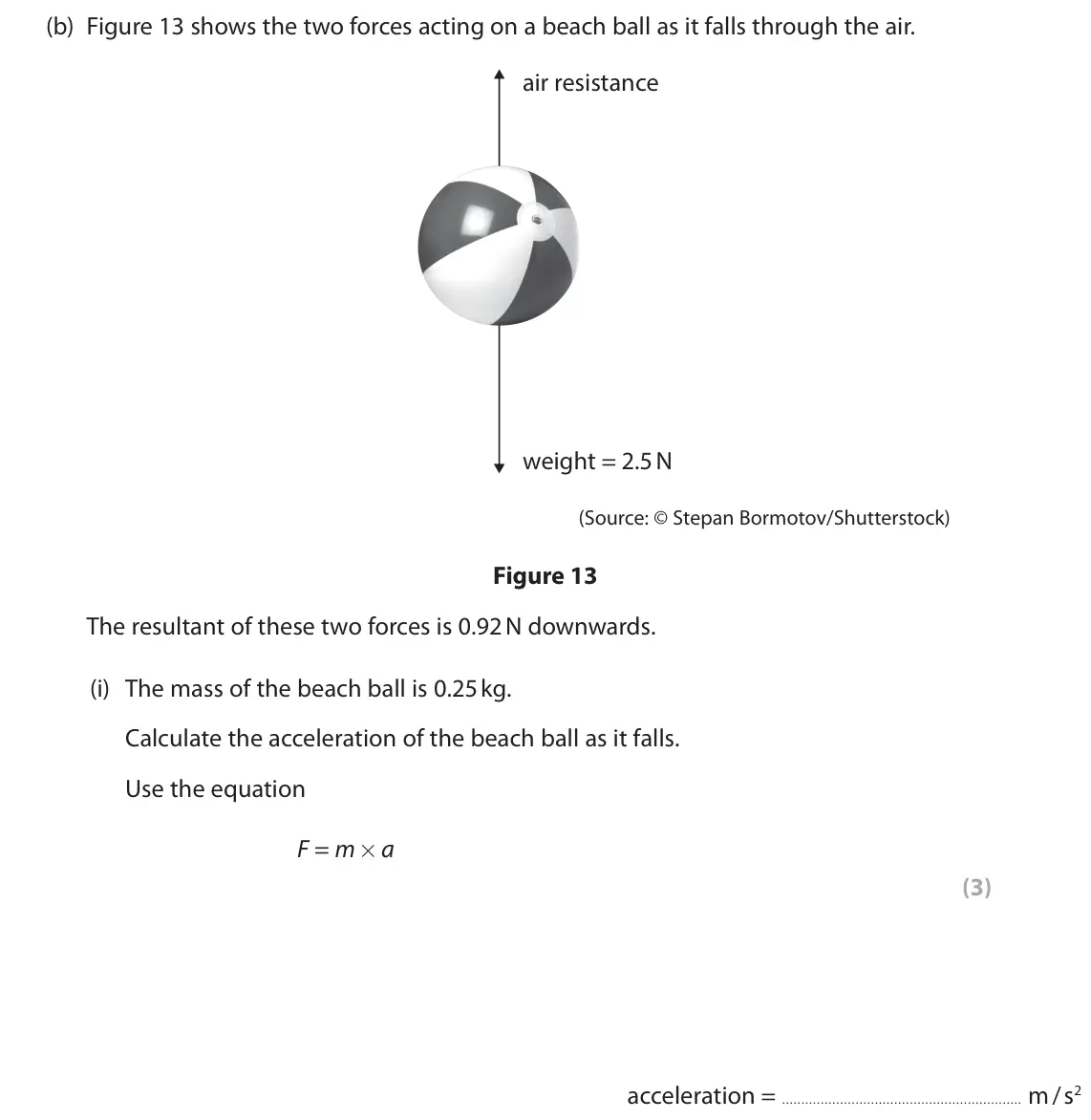
Q8(b)(ii)
The whole paper ↗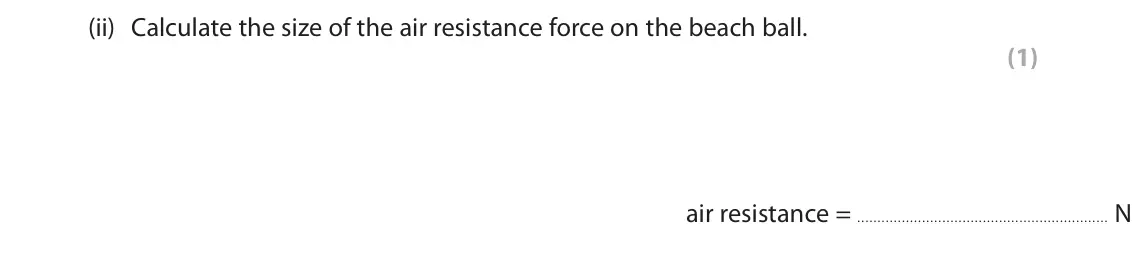
Q7(b)
The whole paper ↗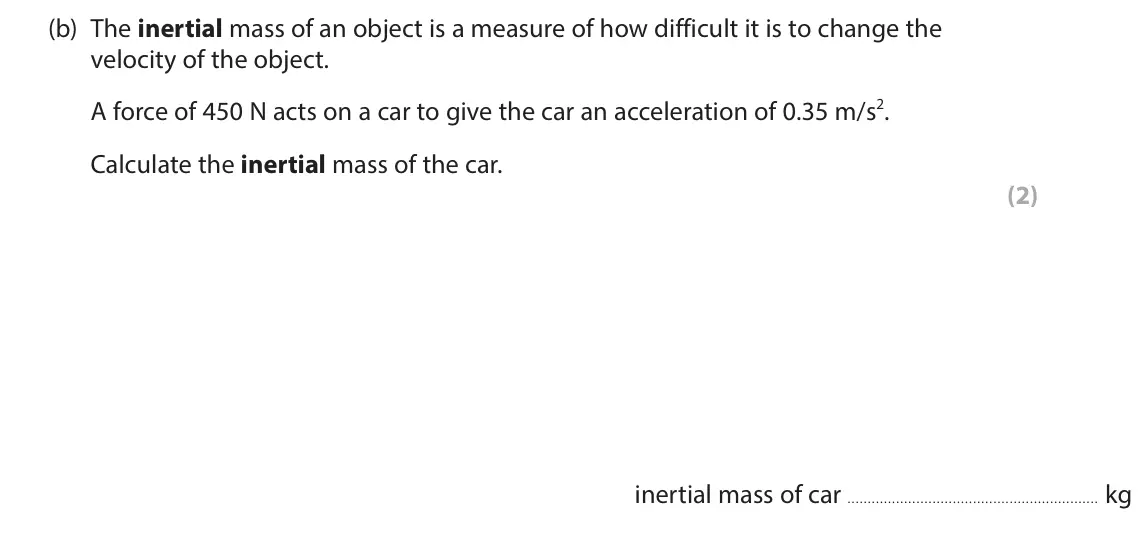
Q5(b)
The whole paper ↗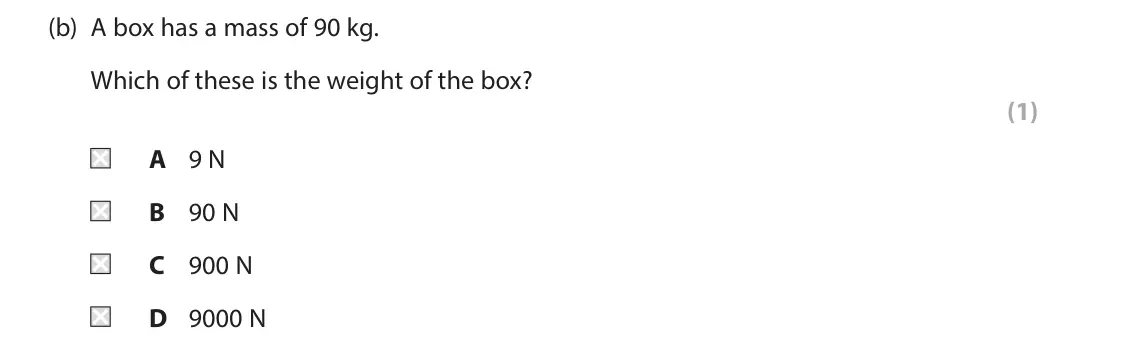
Q2(b)(ii)
The whole paper ↗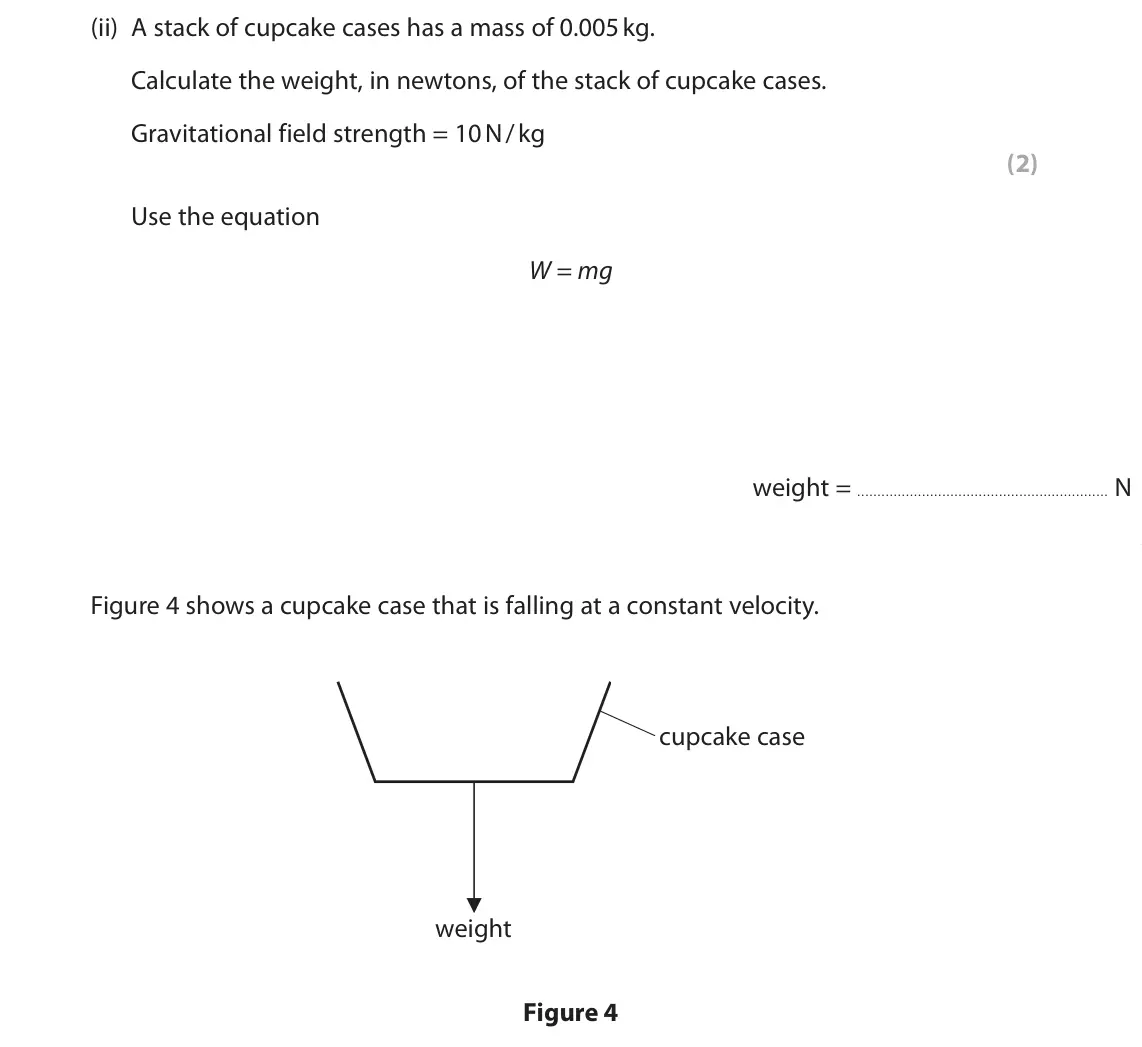
Q2(b)(iii)
The whole paper ↗
Q2(b)(iv)
The whole paper ↗
Q9(c)
The whole paper ↗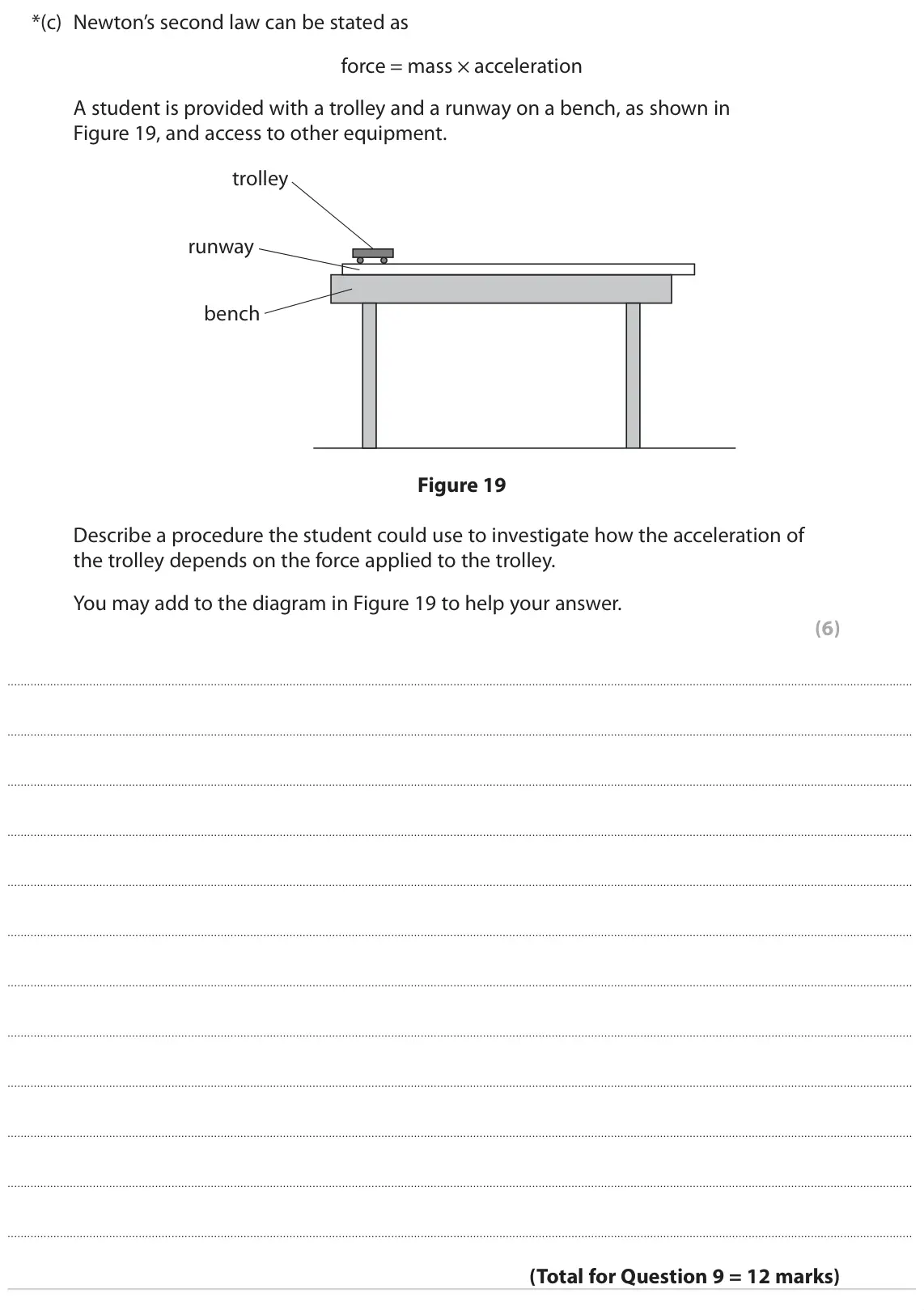
Q3(b)
The whole paper ↗
Q8(b)(ii)
The whole paper ↗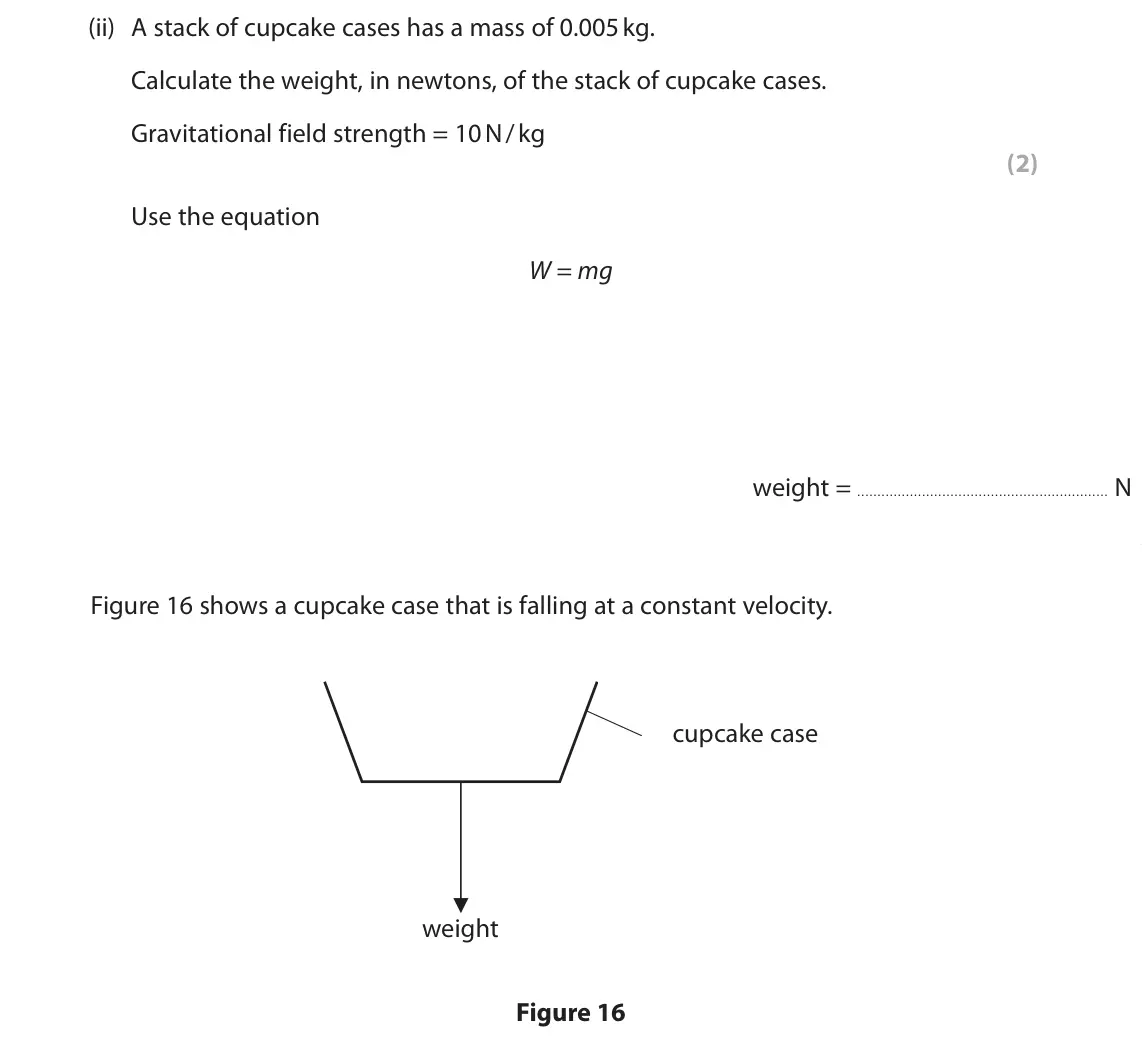
Q8(b)(iii)
The whole paper ↗
Q8(b)(iv)
The whole paper ↗
Q7(a)(i)
The whole paper ↗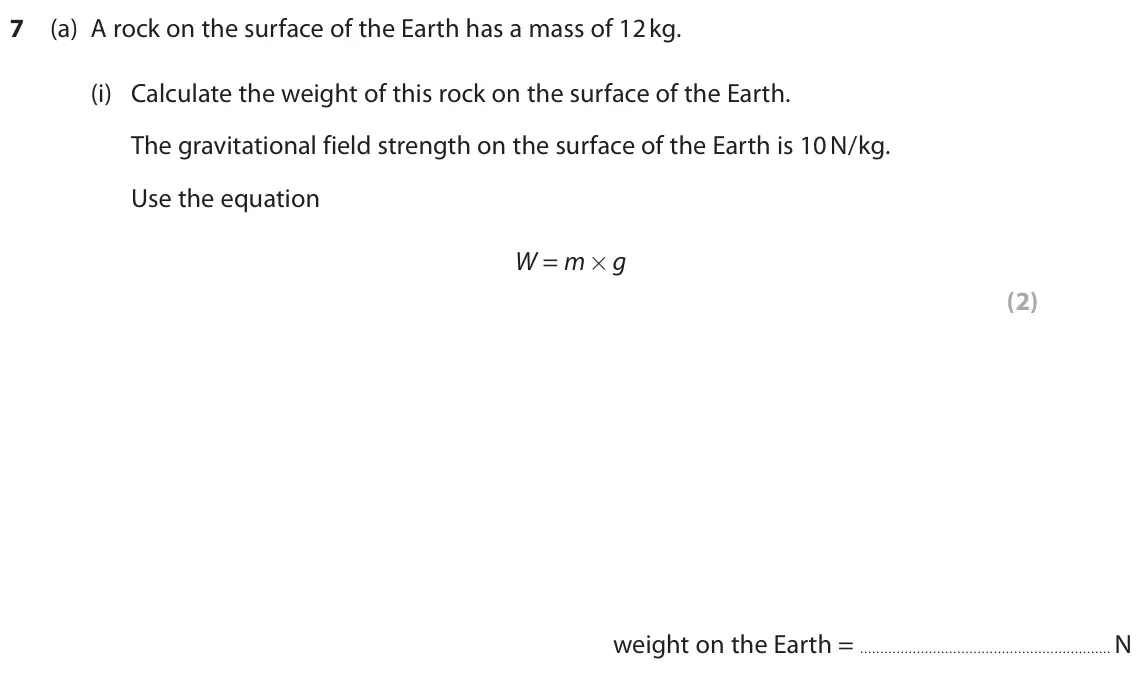
Q7(a)(ii)
The whole paper ↗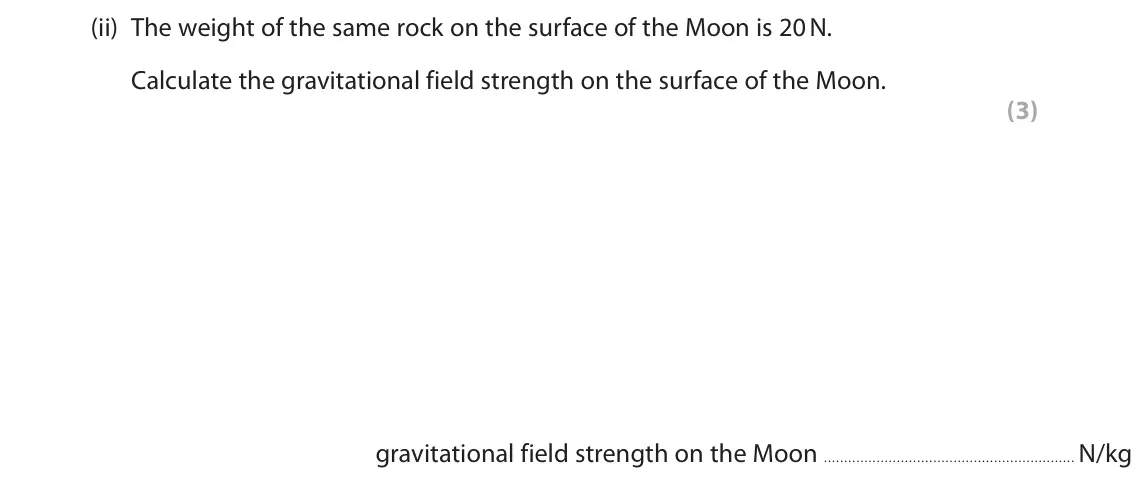
Q6(c)
The whole paper ↗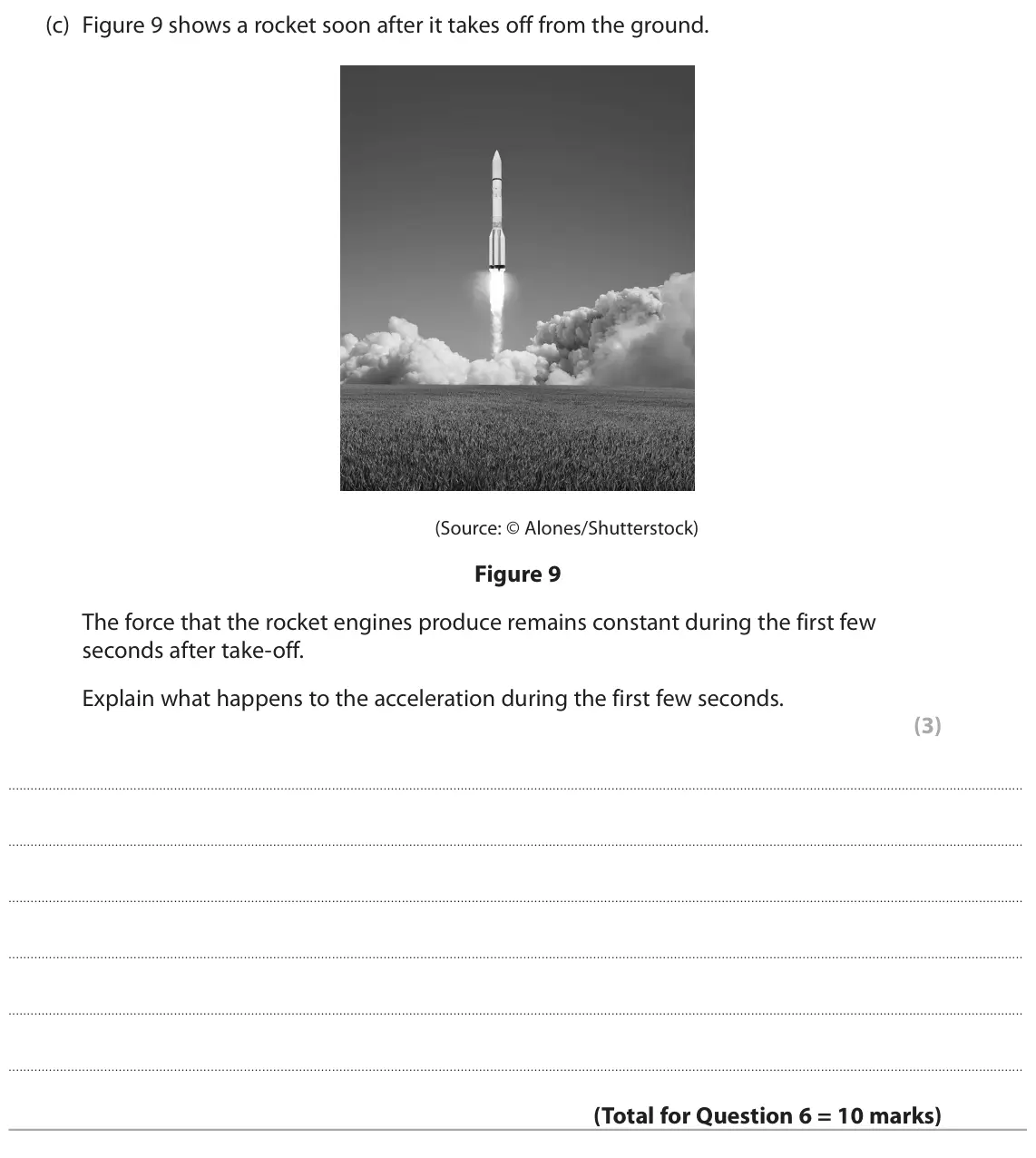
Q1(d)
The whole paper ↗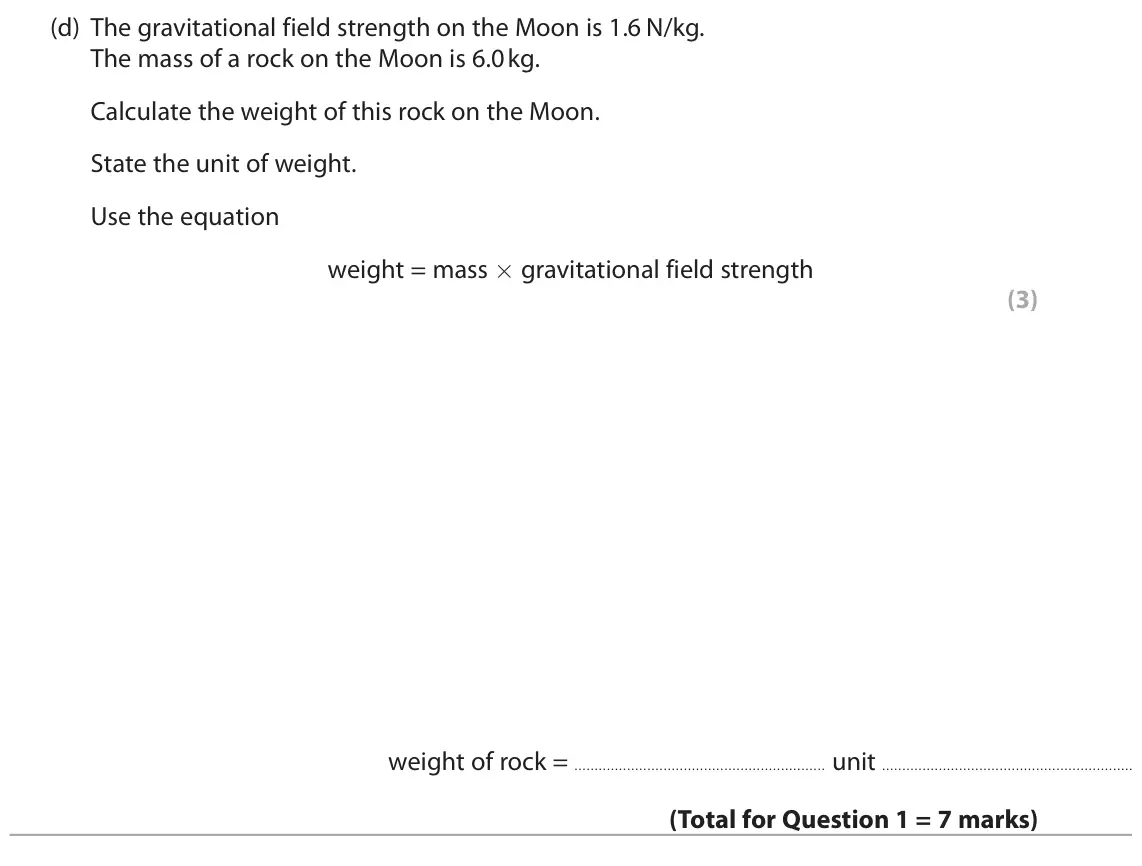
All 33 questions on Newton’s laws, weight and mass, as a list
- June 2025, Paper 1 Higher, Q2(a)(i) (3 marks): The mass of the beach ball is 0.25 kg. Calculate the acceleration of the beach ball as it falls. Use the equation F = m × a (3) acceleration = m / s2
- June 2025, Paper 1 Higher, Q2(a)(ii) (1 mark): Calculate the size of the air resistance force on the beach ball. (1) air resistance = N
- June 2025, Paper 1 Foundation, Q8(a)(i) (1 mark): Which row of the table shows the correct units of weight and of mass? (1) unit of weight unit of mass A kilogram newton B newton kilogram C newton per kilogram
- June 2025, Paper 1 Foundation, Q8(a)(ii) (1 mark): State the name of a piece of equipment that can be used to measure mass. (1)
- June 2025, Paper 1 Foundation, Q8(b)(i) (3 marks): The mass of the beach ball is 0.25 kg. Calculate the acceleration of the beach ball as it falls. Use the equation F = m × a (3) acceleration = m / s2
- June 2025, Paper 1 Foundation, Q8(b)(ii) (1 mark): Calculate the size of the air resistance force on the beach ball. (1) air resistance = N
- June 2024, Paper 1 Higher, Q7(b) (2 marks): The inertial mass of an object is a measure of how difficult it is to change the velocity of the object. A force of 450 N acts on a car to give the car an accel
- June 2024, Paper 2 Foundation, Q5(b) (1 mark): A box has a mass of 90 kg. Which of these is the weight of the box? (1) A 9 N B 90 N C 900 N D 9000 N
- June 2023, Paper 1 Higher, Q2(b)(ii) (2 marks): A stack of cupcake cases has a mass of 0.005 kg. Calculate the weight, in newtons, of the stack of cupcake cases. Gravitational field strength = 10 N / kg (2) U
- June 2023, Paper 1 Higher, Q2(b)(iii) (1 mark): Draw an arrow on Figure 4 to show the force due to air resistance on the cupcake case. (1)
- June 2023, Paper 1 Higher, Q2(b)(iv) (1 mark): State the value of the acceleration of the cupcake case when it is falling at a constant velocity. (1)
- June 2023, Paper 1 Higher, Q9(c) (6 marks): Newton’s second law can be stated as force = mass × acceleration A student is provided with a trolley and a runway on a bench, as shown in Figure 19, and access
- June 2023, Paper 1 Foundation, Q3(b) (2 marks): A different car has a mass of 1200 kg. Calculate the force needed to give this car an acceleration of 2.4 m / s2 . (2) Use the equation F = m × a force = N
- June 2023, Paper 1 Foundation, Q8(b)(ii) (2 marks): A stack of cupcake cases has a mass of 0.005 kg. Calculate the weight, in newtons, of the stack of cupcake cases. Gravitational field strength = 10 N / kg (2) U
- June 2023, Paper 1 Foundation, Q8(b)(iii) (1 mark): Draw an arrow on Figure 16 to show the force due to air resistance on the cupcake case. (1)
- June 2023, Paper 1 Foundation, Q8(b)(iv) (1 mark): State the value of the acceleration of the cupcake case when it is falling at a constant velocity (1)
- June 2022, Paper 1 Foundation, Q7(a)(i) (2 marks): Calculate the weight of this rock on the surface of the Earth. The gravitational field strength on the surface of the Earth is 10 N/kg. Use the equation W = m×g
- June 2022, Paper 1 Foundation, Q7(a)(ii) (3 marks): The weight of the same rock on the surface of the Moon is 20 N. Calculate the gravitational field strength on the surface of the Moon. (3) gravitational field s
- November 2021, Paper 1 Higher, Q6(c) (3 marks): Figure 9 shows a rocket soon after it takes off from the ground. (Source: © Alones/Shutterstock) Figure 9 The force that the rocket engines produce remains cons
- November 2021, Paper 1 Foundation, Q1(d) (3 marks): The gravitational field strength on the Moon is 1.6 N/kg. The mass of a rock on the Moon is 6.0kg. Calculate the weight of this rock on the Moon. State the unit
- November 2020, Paper 1 Foundation, Q2(a)(i) (1 mark): Which of these is the correct equation that relates force, mass and acceleration? (1) A F = m + a B F = m − a C F = m × a D F = m ÷ a
- November 2020, Paper 1 Foundation, Q2(a)(ii) (2 marks): A cyclist has a mass of 70 kg. Calculate the force needed to accelerate the cyclist at 2.0 m / s2. State the unit. (2) force = unit =
- November 2020, Paper 1 Foundation, Q3(c)(i) (1 mark): The gravitational field strength on Earth is 10 N / kg. Calculate the weight of the rover on Earth. Use the equation weight = mass × gravitational field strengt
- November 2020, Paper 1 Foundation, Q3(c)(ii) (2 marks): The weight of the rover on Mars is 700 N. Calculate the gravitational field strength on Mars. (2) gravitational field strength on Mars = N / kg
- June 2019, Paper 1 Foundation, Q1(a)(ii) (2 marks): In two parts of the graph in Figure 1 the forces are balanced. State the letters of the two parts of the graph where the horizontal forces acting on the car are
- June 2019, Paper 1 Foundation, Q1(b) (2 marks): A car with a mass of 1800 kg is accelerating at 1.2 m/s'. Calculate the force used to accelerate the car. Use the equation force = mass x acceleration (2) force
- June 2019, Paper 1 Foundation, Q6(c)(ii) (2 marks): Describe how the student can make the trolley accelerate along the bench. (2)
- June 2018, Paper 1 Higher, Q6(a) (1 mark): The symbol ‘g’ can be used to refer to the acceleration due to gravity. The acceleration due to gravity ‘g’ has the unit of m/s2. ‘g’ can also have another unit
- June 2018, Paper 1 Higher, Q9(a)(i) (2 marks): Describe how the student could increase the accelerating force applied to the trolley. (2)
- June 2018, Paper 1 Higher, Q9(a)(ii) (2 marks): Describe how the mass of the moving system can be kept constant. (2)
- June 2018, Paper 1 Higher, Q9(a)(iii) (2 marks): Explain how the student could improve the procedure to compensate for the effects of frictional forces acting on the trolley. (2)
- June 2018, Paper 1 Foundation, Q1(b) (1 mark): Figure 1 shows a block hanging from a spring balance. spring balance showing 3.8 N © webscaping.co.uk Figure 1 Use a word from the box to complete the sentence
- June 2018, Paper 1 Foundation, Q1(c) (3 marks): A toy car has a mass of 0.10 kg. The toy car accelerates at 2.0 m/s2. Calculate the force producing this acceleration. State the unit. Use the equation F = m ×
Questions, mark schemes and examiner’s reports are © Pearson Edexcel, from their published past papers. Plumi isn’t affiliated with any exam board. Want whole papers? Every Edexcel GCSE Physics paper.
Rather write your answers by hand on iPad? Plumi marks them against the same mark schemes.