 plumi
Circular motion and Newton’s third law: Edexcel GCSE Physics questions
Every Edexcel GCSE Physics exam question on Circular motion and Newton’s third law (specification points 2.20–2.23), 2018–2025, with its mark scheme and examiner’s report.
Find questions1,554
Exam
All years
Calculations
Q6(b)(i)
The whole paper ↗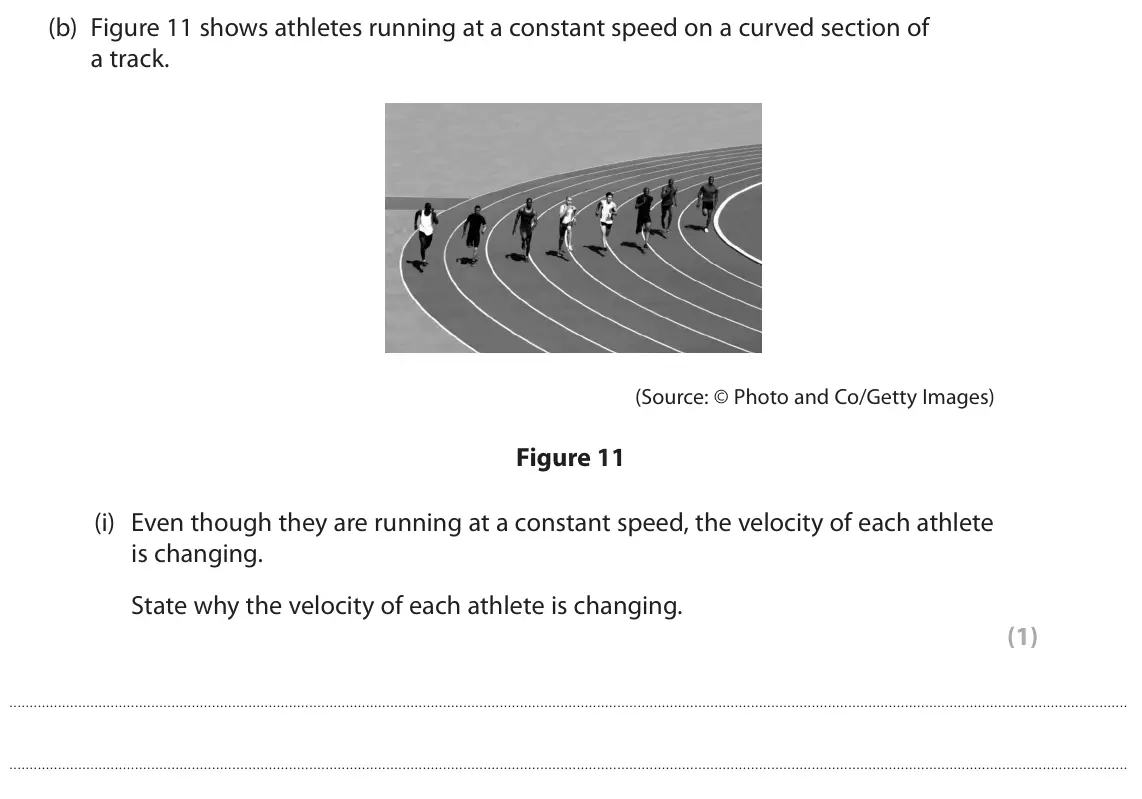
Q8(a)(iii)
The whole paper ↗
Q9(a)(i)
The whole paper ↗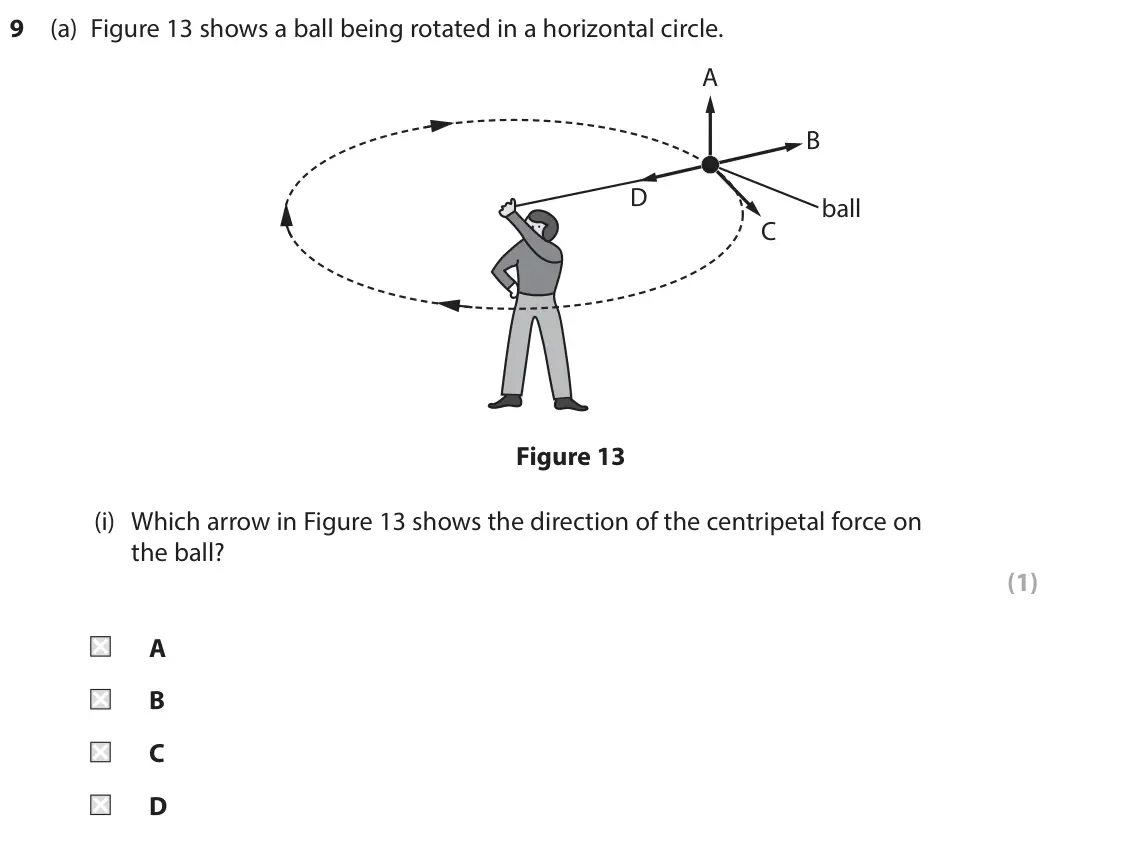
Q9(a)(ii)
The whole paper ↗
Q7(a)(ii)
The whole paper ↗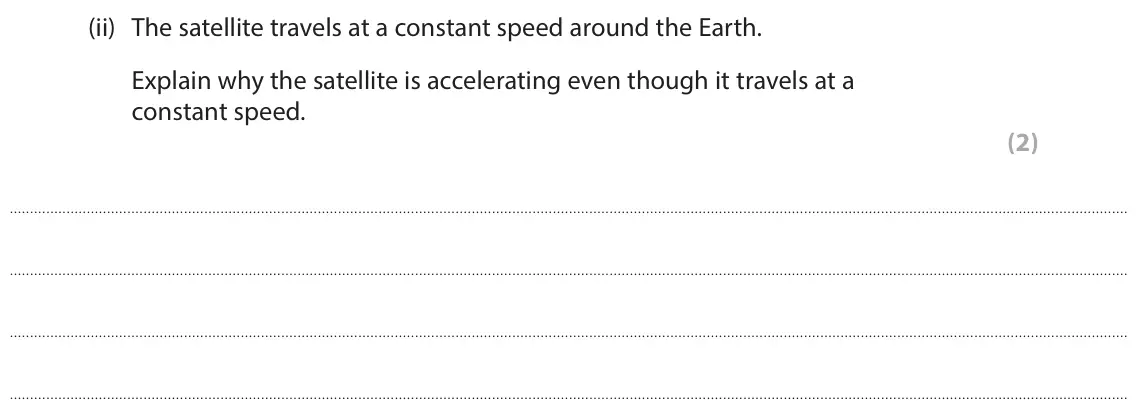
Q7(c)(ii)
The whole paper ↗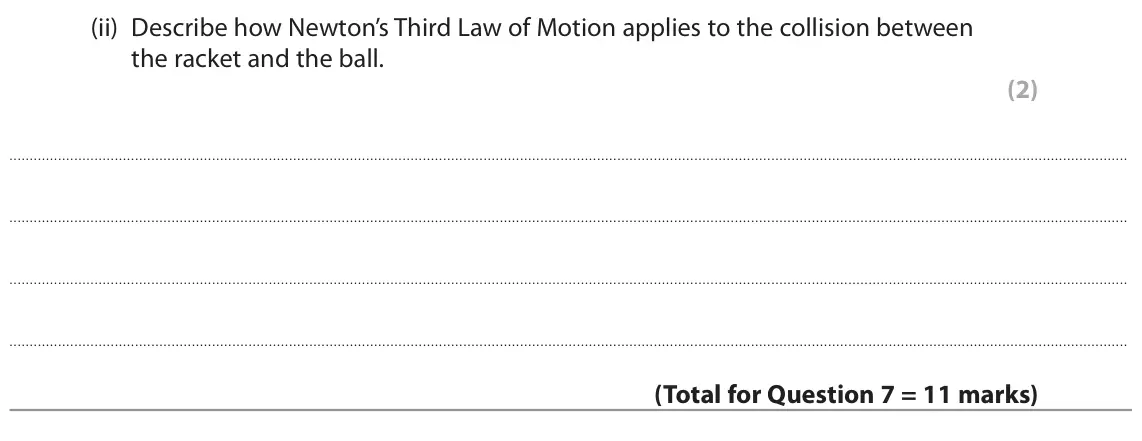
Q7(c)(ii)
The whole paper ↗
Q8(c)
The whole paper ↗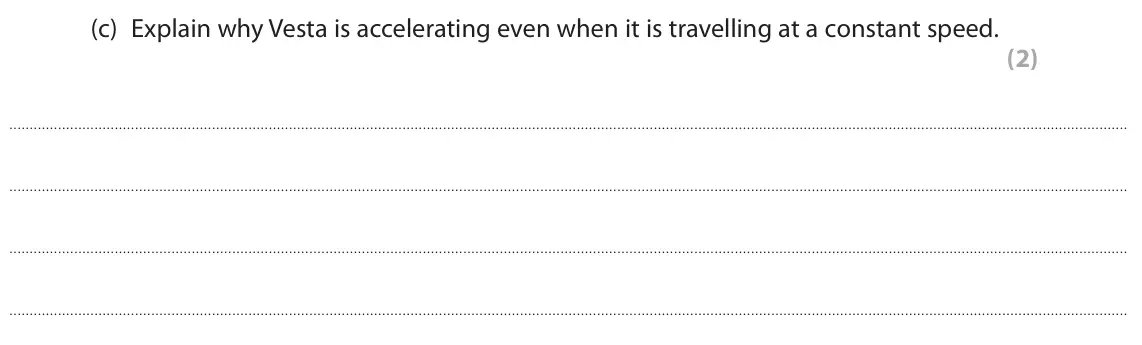
Q9(c)
The whole paper ↗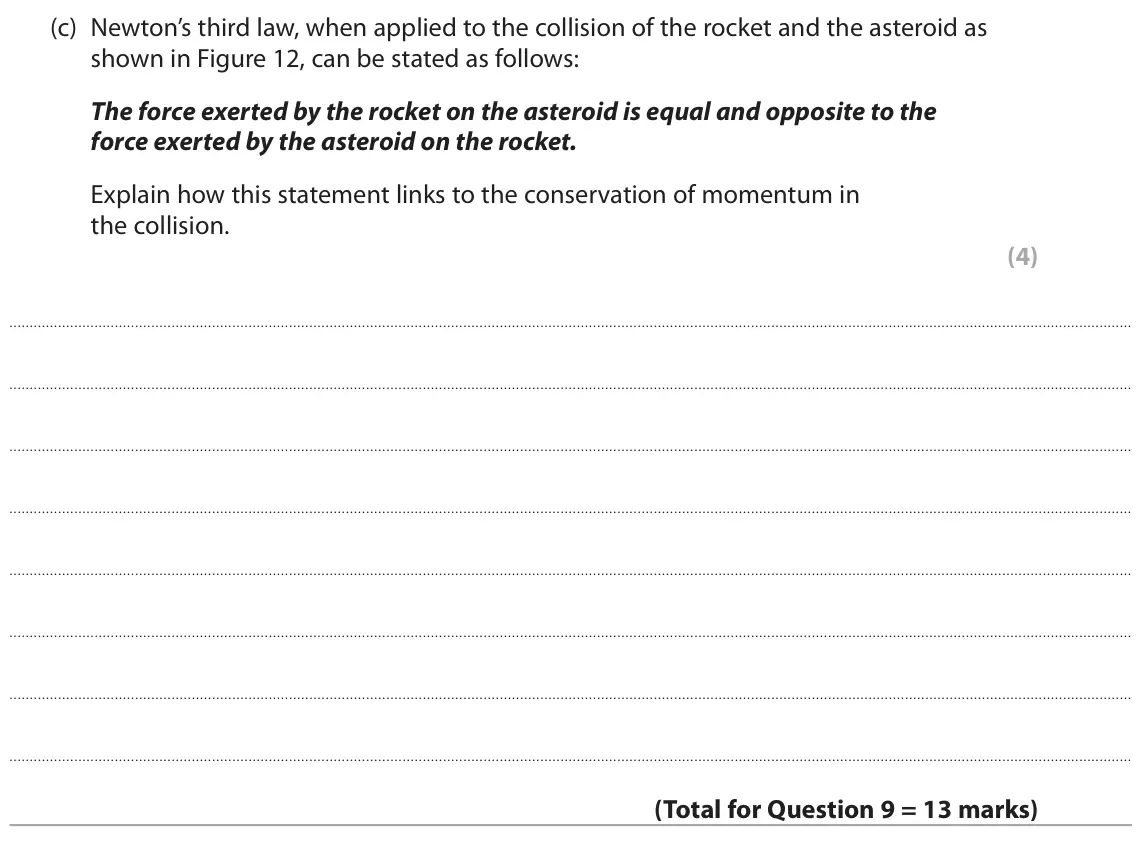
Q7(a)
The whole paper ↗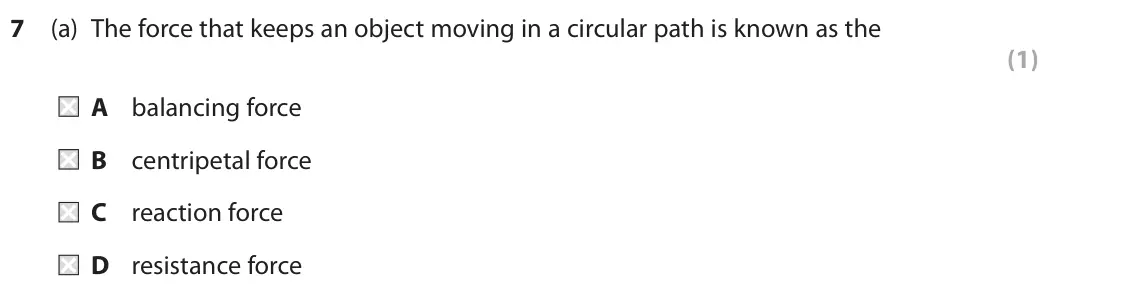
Q7(b)(i)
The whole paper ↗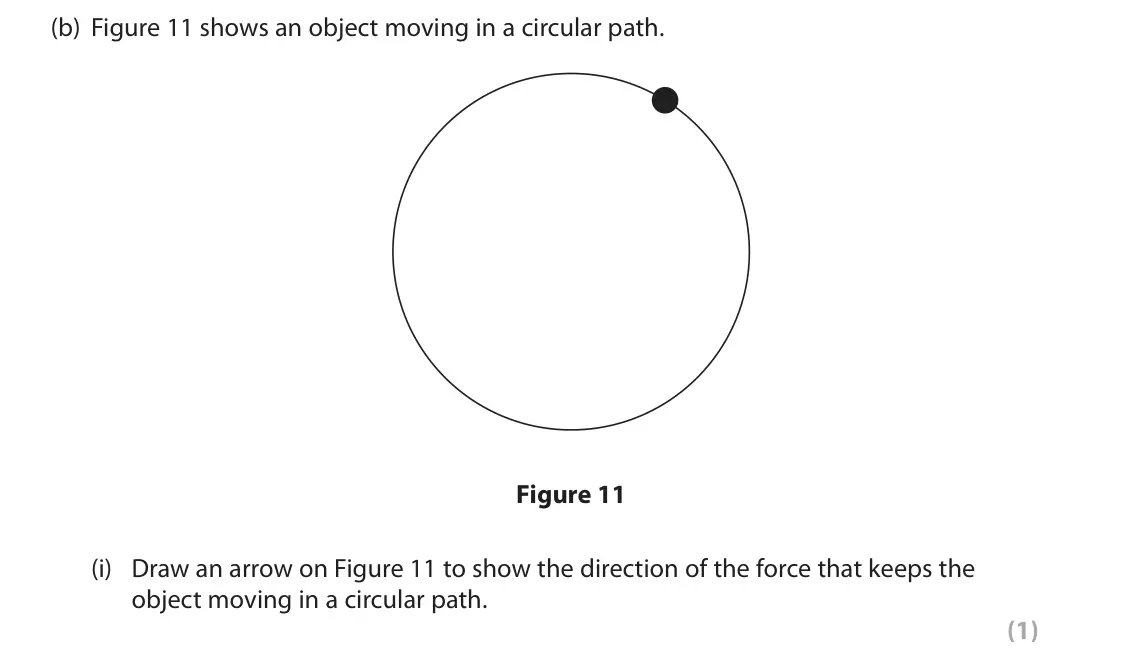
Q7(b)(ii)
The whole paper ↗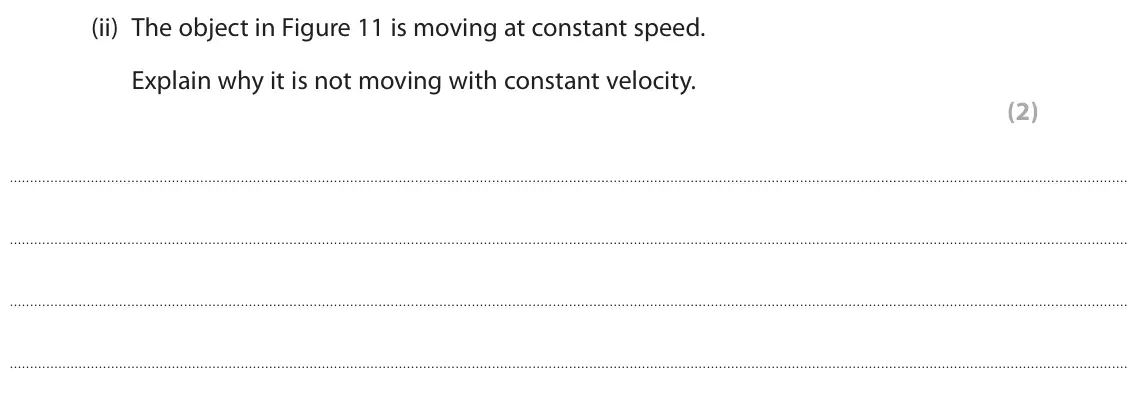
All 12 questions on Circular motion and Newton’s third law, as a list
- June 2025, Paper 1 Higher, Q6(b)(i) (1 mark): Even though they are running at a constant speed, the velocity of each athlete is changing. State why the velocity of each athlete is changing. (1)
- June 2025, Paper 1 Higher, Q8(a)(iii) (3 marks): Explain how Newton’s third law applies to the interaction between the kicking foot and the football. (3)
- June 2024, Paper 1 Higher, Q9(a)(i) (1 mark): Which arrow in Figure 13 shows the direction of the centripetal force on the ball? (1) A B C D
- June 2024, Paper 1 Higher, Q9(a)(ii) (1 mark): The ball is moving at constant speed. Give one reason why the velocity of the ball is continuously changing. (1)
- June 2024, Paper 1 Foundation, Q7(a)(ii) (2 marks): The satellite travels at a constant speed around the Earth. Explain why the satellite is accelerating even though it travels at a constant speed. (2)
- June 2022, Paper 1 Higher, Q7(c)(ii) (2 marks): Describe how Newton’s Third Law of Motion applies to the collision between the racket and the ball. (2)
- November 2021, Paper 1 Higher, Q7(c)(ii) (2 marks): State the magnitude and direction of the force exerted by the box on the floor. (2) magnitude direction
- November 2021, Paper 1 Higher, Q8(c) (2 marks): Explain why Vesta is accelerating even when it is travelling at a constant speed. (2)
- November 2020, Paper 1 Higher, Q9(c) (4 marks): Newton’s third law, when applied to the collision of the rocket and the asteroid as shown in Figure 12, can be stated as follows: The force exerted by the rocke
- June 2019, Paper 1 Higher, Q7(a) (1 mark): The force that keeps an object moving in a circular path is known as the (1) A balancing force B centripetal force C reaction force D resistance force
- June 2019, Paper 1 Higher, Q7(b)(i) (1 mark): Draw an arrow on Figure 11 to show the direction of the force that keeps the object moving in a circular path. (1)
- June 2019, Paper 1 Higher, Q7(b)(ii) (2 marks): The object in Figure 11 is moving at constant speed. Explain why it is not moving with constant velocity. (2)
Questions, mark schemes and examiner’s reports are © Pearson Edexcel, from their published past papers. Plumi isn’t affiliated with any exam board. Want whole papers? Every Edexcel GCSE Physics paper.
Rather write your answers by hand on iPad? Plumi marks them against the same mark schemes.