 plumi
Atoms and isotopes: Edexcel GCSE Physics questions
Every Edexcel GCSE Physics exam question on Atoms and isotopes (specification points 6.1–6.9), 2018–2025, with its mark scheme and examiner’s report.
Find questions1,554
Exam
All years
Calculations
Q4(a)
The whole paper ↗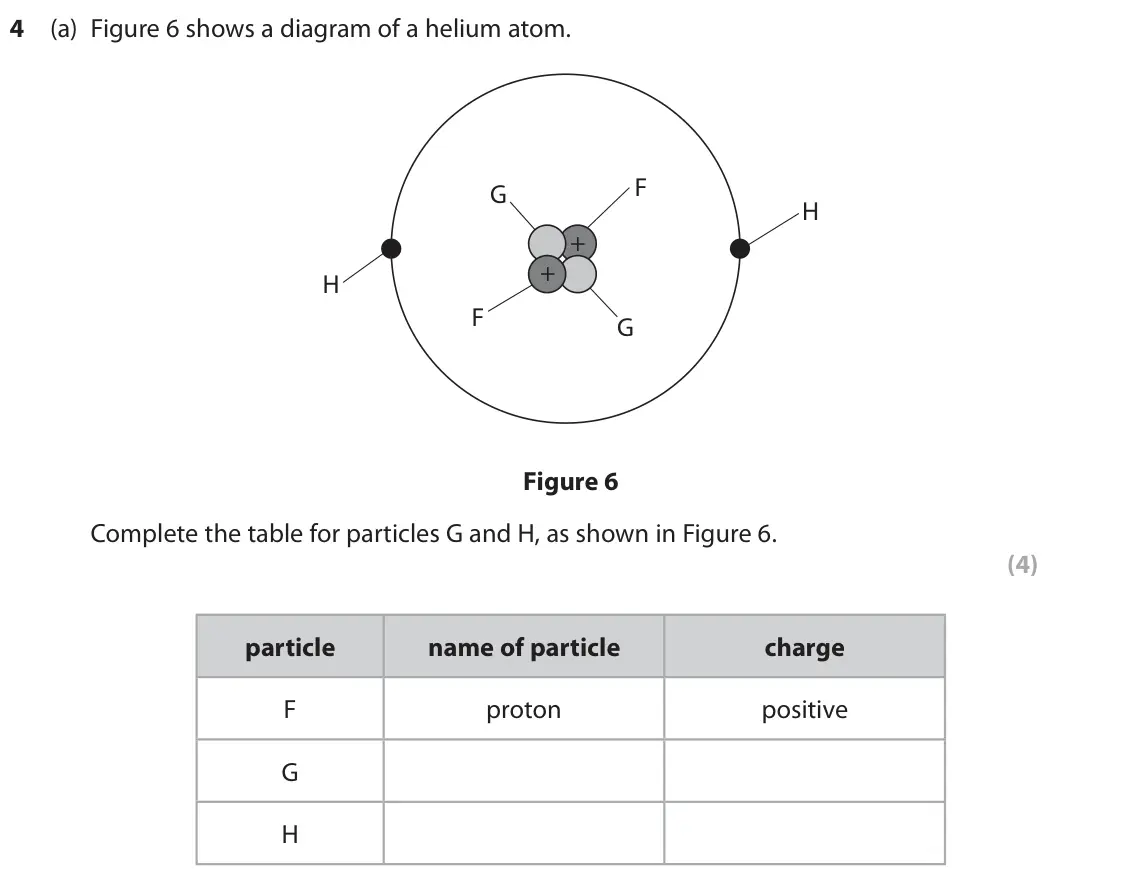
Q4(b)(i)
The whole paper ↗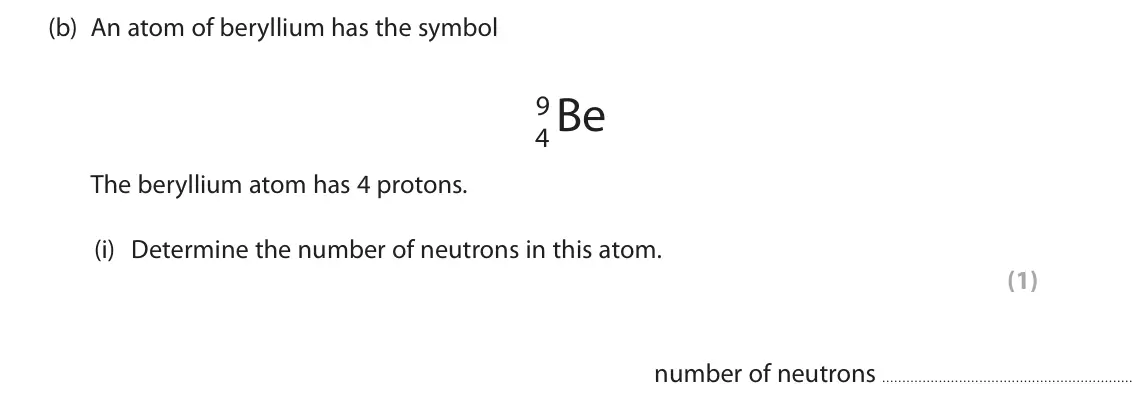
Q4(b)(ii)
The whole paper ↗
Q6(a)
The whole paper ↗
Q7(a)(i)
The whole paper ↗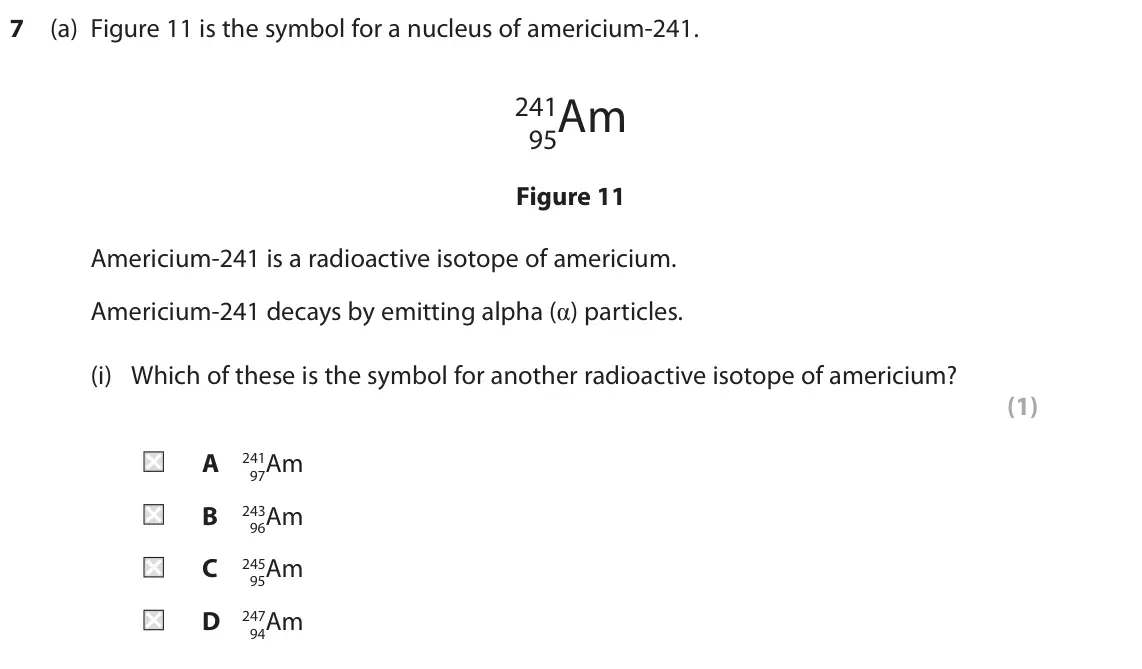
Q4(a)(i)
The whole paper ↗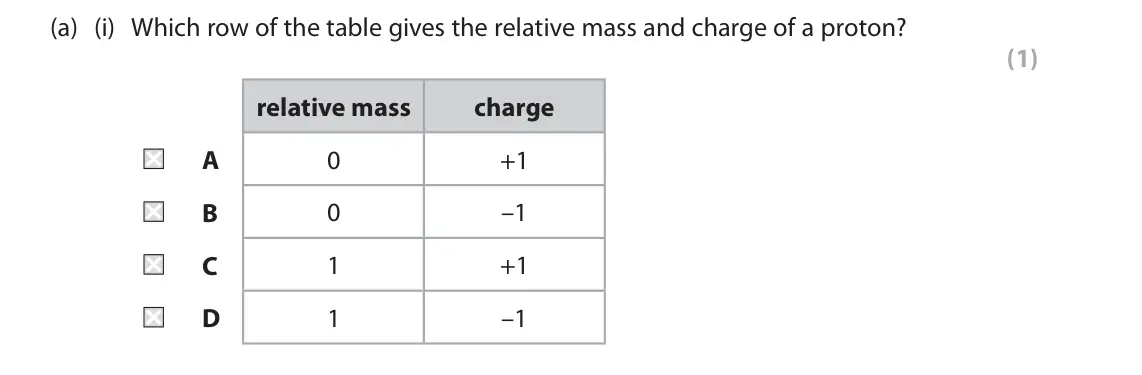
Q4(a)(ii)
The whole paper ↗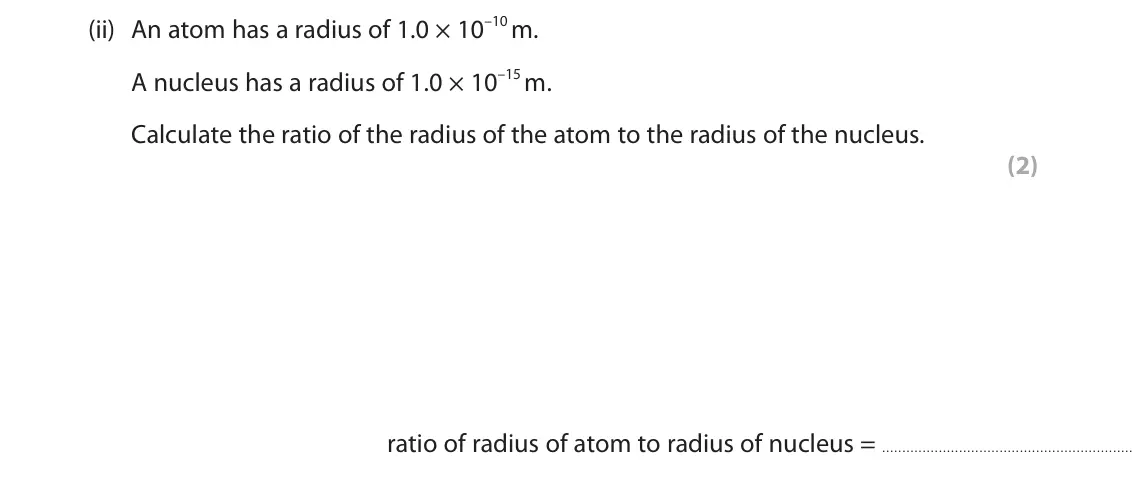
Q4(a)(iii)
The whole paper ↗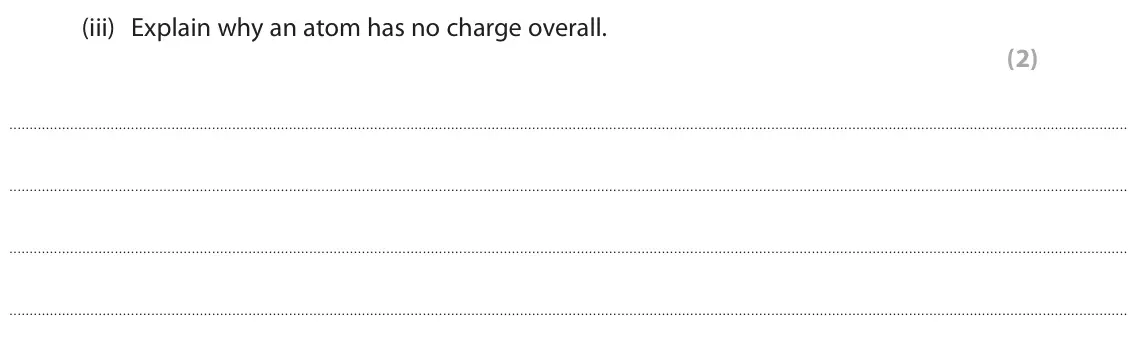
Q4(b)(i)
The whole paper ↗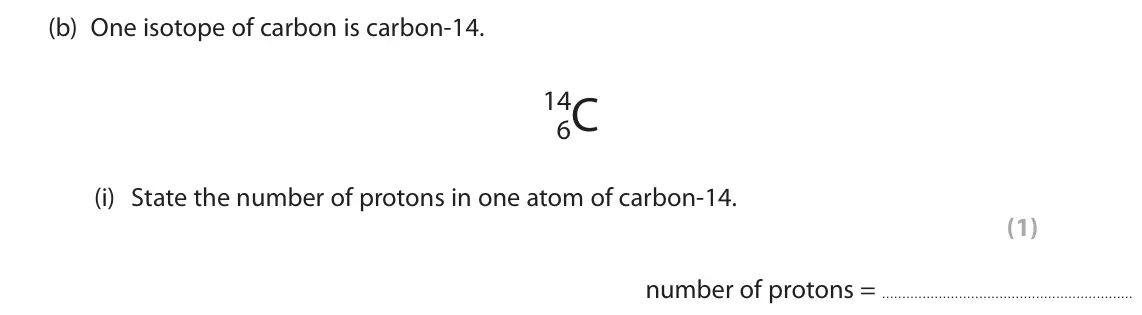
Q4(b)(ii)
The whole paper ↗
Q8(a)
The whole paper ↗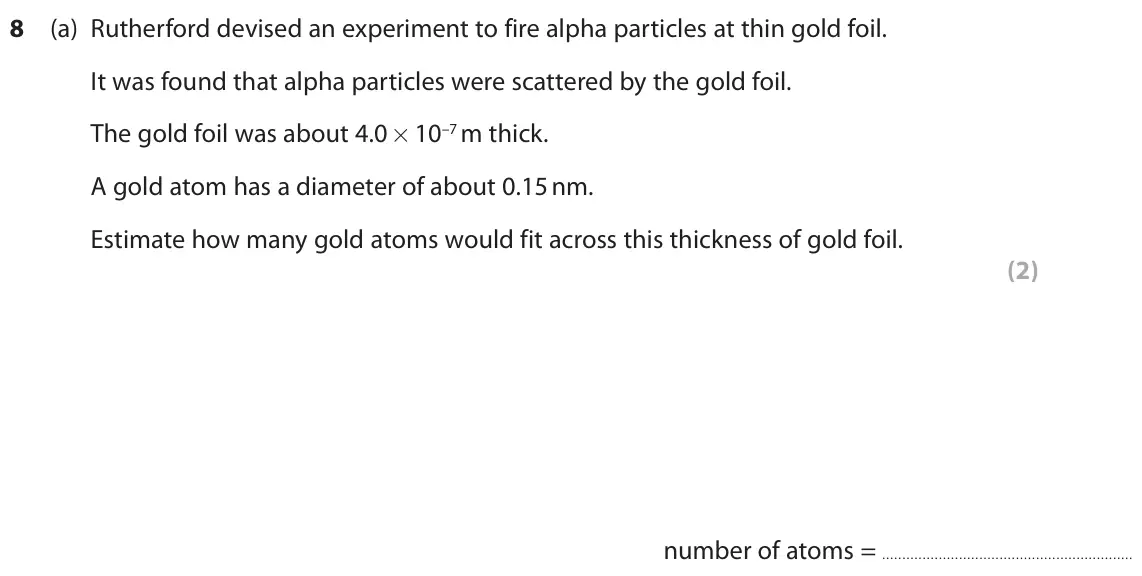
Q8(b)(i)
The whole paper ↗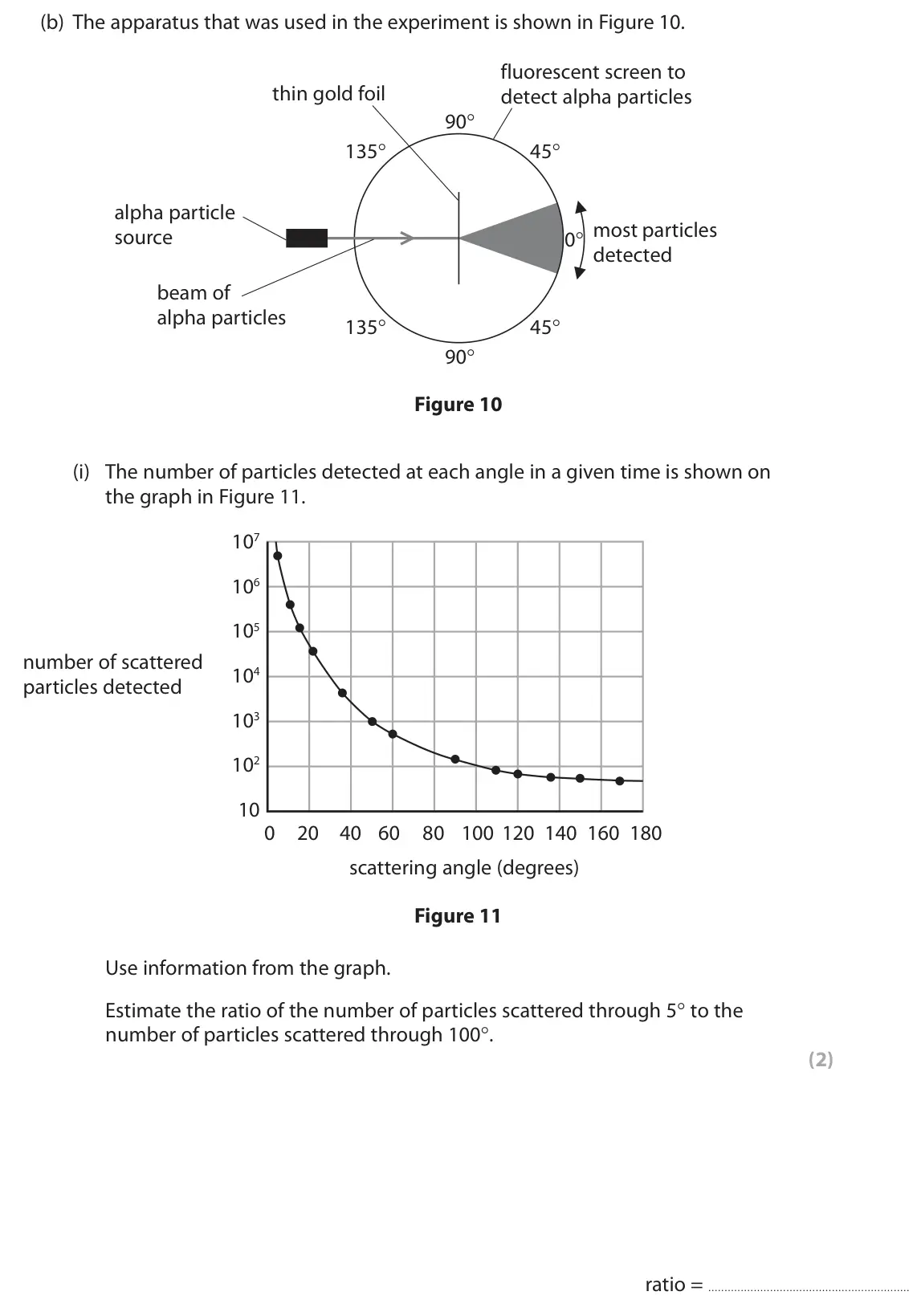
Q8(b)(ii)
The whole paper ↗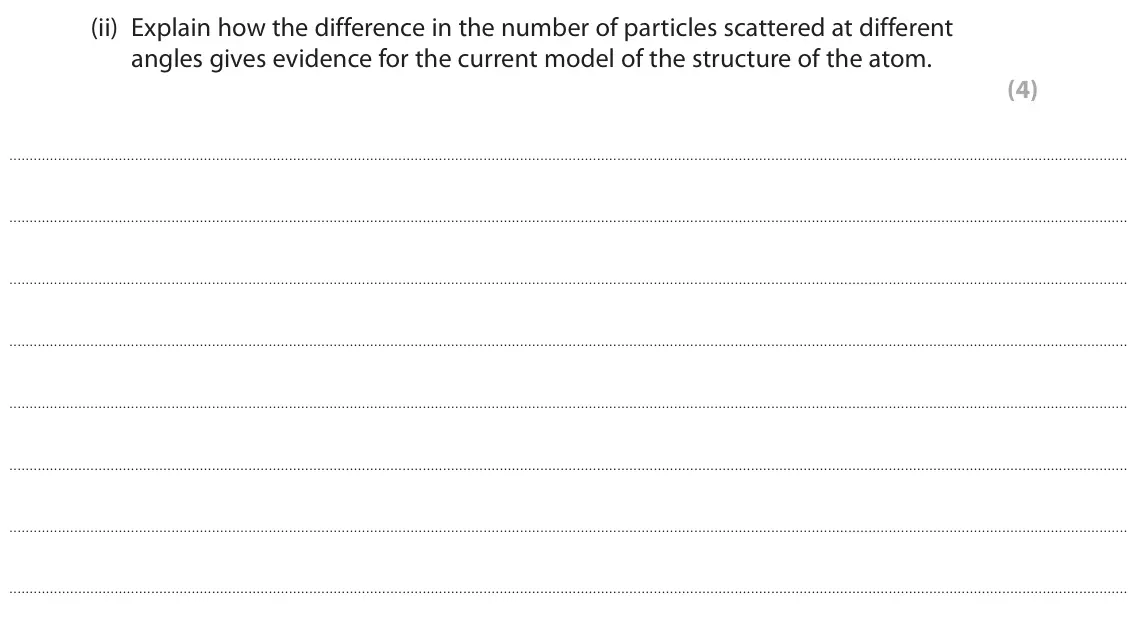
Q8(c)(i)
The whole paper ↗
Q8(c)(ii)
The whole paper ↗
Q6(b)
The whole paper ↗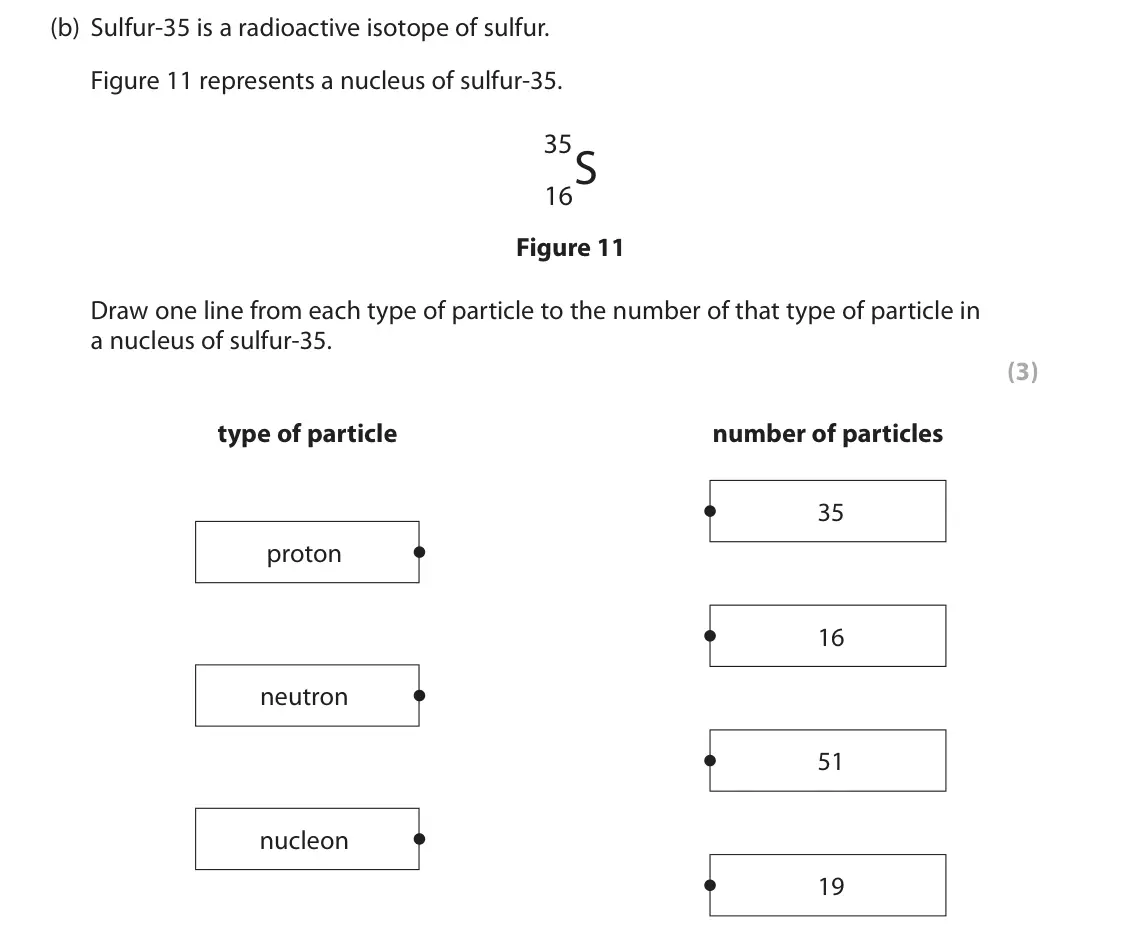
Q3(b)
The whole paper ↗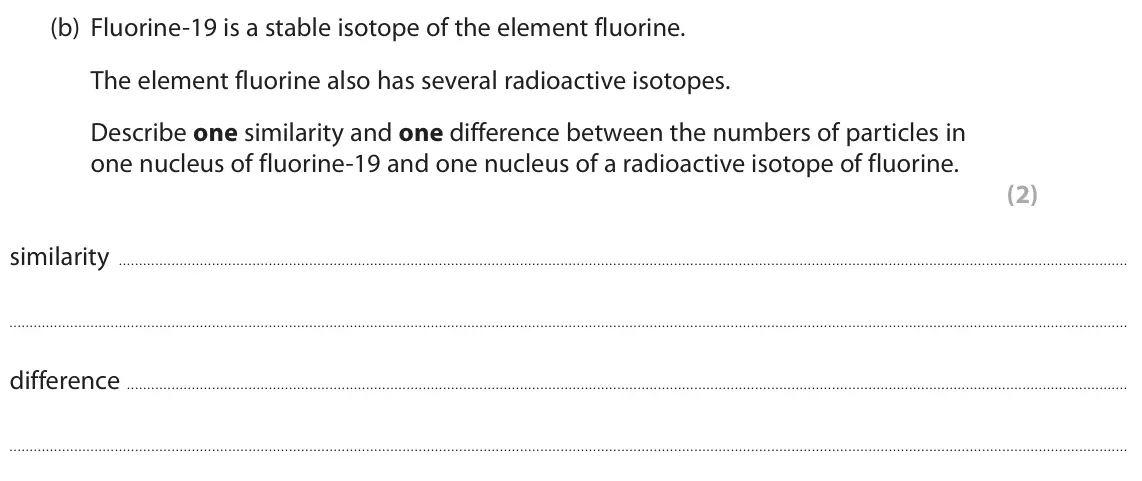
Q7(a)
The whole paper ↗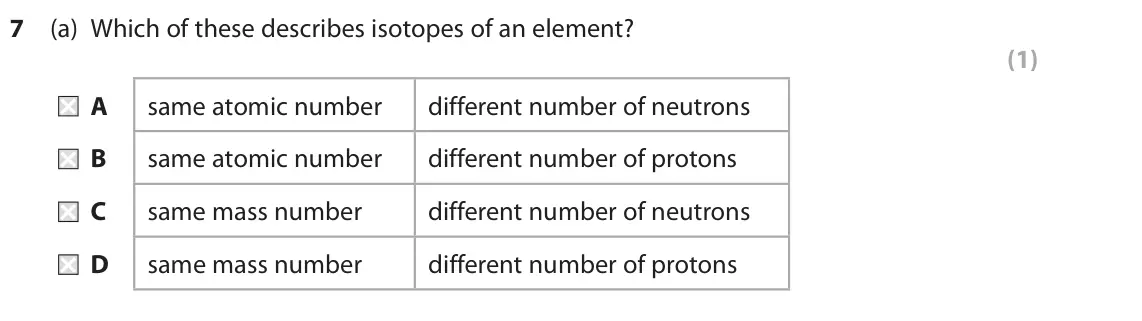
Q5(a)(i)
The whole paper ↗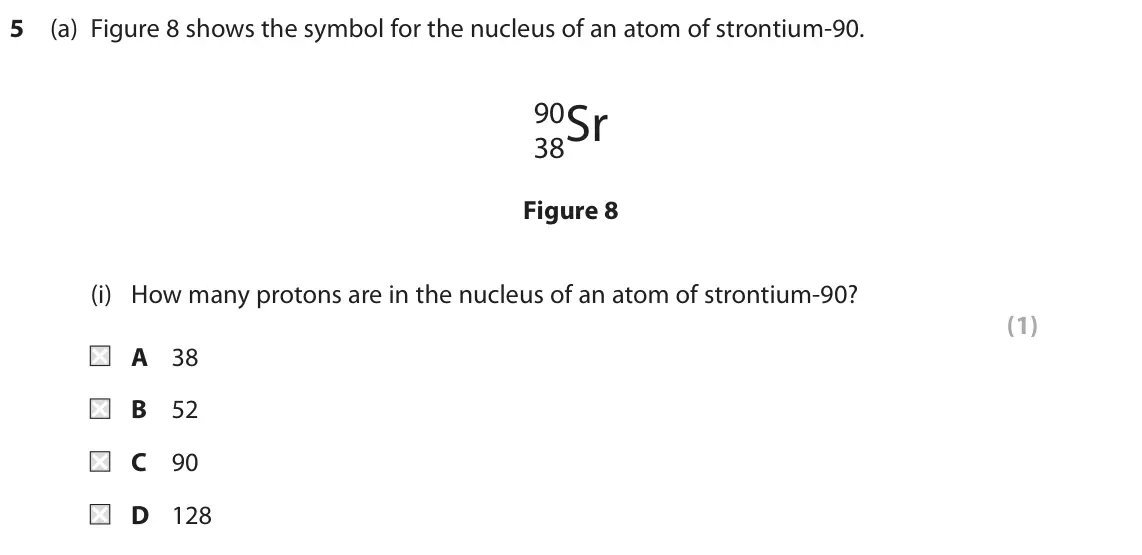
Q5(a)(ii)
The whole paper ↗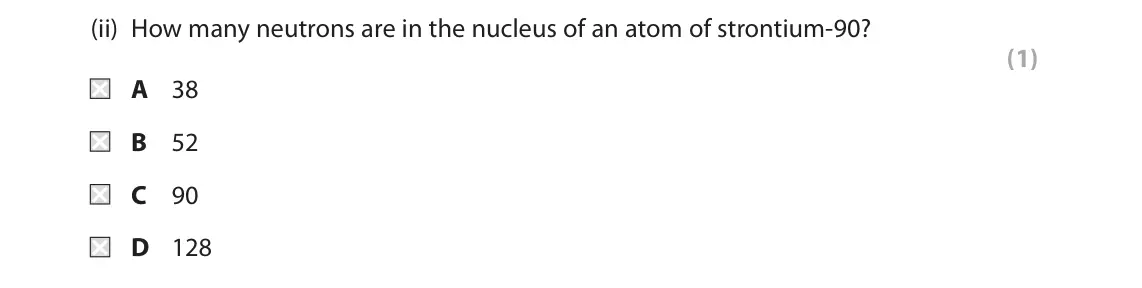
All 27 questions on Atoms and isotopes, as a list
- June 2025, Paper 1 Foundation, Q4(a) (4 marks): Figure 6 shows a diagram of a helium atom. F G H + + H F G Figure 6 Complete the table for particles G and H, as shown in Figure 6. (4) particle name of particl
- June 2025, Paper 1 Foundation, Q4(b)(i) (1 mark): Determine the number of neutrons in this atom. (1) number of neutrons
- June 2025, Paper 1 Foundation, Q4(b)(ii) (1 mark): Determine the number of electrons in this atom. (1) number of electrons
- June 2024, Paper 1 Foundation, Q6(a) (3 marks): Write the names of the particles X, Y and Z on the lines next to each letter in Figure 12. (3)
- June 2023, Paper 1 Higher, Q7(a)(i) (1 mark): Which of these is the symbol for another radioactive isotope of americium? (1) A 97Am 241 B 96Am 243 C 95Am 245 D 94Am 247
- June 2023, Paper 1 Foundation, Q4(a)(i) (1 mark): Which row of the table gives the relative mass and charge of a proton? (1) relative mass charge A 0 +1 B 0 –1 C 1 +1 D 1 –1
- June 2023, Paper 1 Foundation, Q4(a)(ii) (2 marks): An atom has a radius of 1.0 × 10⁻¹⁰ m. A nucleus has a radius of 1.0 × 10⁻¹⁵ m. Calculate the ratio of the radius of the atom to the radius of the nucleus. (2)
- June 2023, Paper 1 Foundation, Q4(a)(iii) (2 marks): Explain why an atom has no charge overall. (2)
- June 2023, Paper 1 Foundation, Q4(b)(i) (1 mark): State the number of protons in one atom of carbon-14. (1) number of protons =
- June 2023, Paper 1 Foundation, Q4(b)(ii) (1 mark): State the number of neutrons in one atom of carbon-14. (1) number of neutrons =
- June 2022, Paper 1 Higher, Q8(a) (2 marks): Rutherford devised an experiment to fire alpha particles at thin gold foil. It was found that alpha particles were scattered by the gold foil. The gold foil was
- June 2022, Paper 1 Higher, Q8(b)(i) (2 marks): The number of particles detected at each angle in a given time is shown on the graph in Figure 11. 107 106 105 number of scattered 104 particles detected 103 10
- June 2022, Paper 1 Higher, Q8(b)(ii) (4 marks): Explain how the difference in the number of particles scattered at different angles gives evidence for the current model of the structure of the atom. (4)
- June 2022, Paper 1 Higher, Q8(c)(i) (2 marks): Describe how the students could use the apparatus to model the scattering of alpha particles. (2)
- June 2022, Paper 1 Higher, Q8(c)(ii) (1 mark): Give one limitation of this model. (1)
- June 2022, Paper 1 Foundation, Q6(b) (3 marks): Sulfur‑35 is a radioactive isotope of sulfur. Figure 11 represents a nucleus of sulfur‑35. 35 16S Figure 11 Draw one line from each type of particle to the numb
- November 2021, Paper 1 Higher, Q3(b) (2 marks): Fluorine-19 is a stable isotope of the element fluorine. The element fluorine also has several radioactive isotopes. Describe one similarity and one difference
- November 2020, Paper 1 Higher, Q7(a) (1 mark): Which of these describes isotopes of an element? (1) A same atomic number different number of neutrons B same atomic number different number of protons C same m
- November 2020, Paper 1 Foundation, Q5(a)(i) (1 mark): How many protons are in the nucleus of an atom of strontium‑90? (1) A 38 B 52 C 90 D 128
- November 2020, Paper 1 Foundation, Q5(a)(ii) (1 mark): How many neutrons are in the nucleus of an atom of strontium‑90? (1) A 38 B 52 C 90 D 128
- June 2019, Paper 1 Higher, Q3(a) (2 marks): Carbon‑13 and carbon‑14 are isotopes of carbon. Nuclei of carbon‑13 and carbon‑14 can be represented by these symbols 6C and 14 6C 13 Complete the table for an
- June 2019, Paper 1 Foundation, Q4(a)(i) (2 marks): Use words from the box to complete the sentences below about ions. outer inner losing absorbing gaining (2) Atoms may form positive ions b electrons. electrons.
- June 2019, Paper 1 Foundation, Q4(c) (1 mark): The typical size of an atom is (1) •A 10-5m • в 10-1°m • C 10-15m XD 10-20m
- June 2019, Paper 1 Foundation, Q4(d) (3 marks): The mass of a proton is 1.6726 × 10⁻² kg. The mass of an electron is 9.1094 × 10⁻³¹ kg. Calculate how many times the mass of a proton is greater than the mass o
- June 2019, Paper 1 Foundation, Q9(a) (2 marks): Carbon-13 and carbon-14 are isotopes of carbon. Nuclei of carbon-13 and carbon-14 can be represented by these symbols 13C 14C and 6 Complete the table for an at
- June 2019, Paper 1 Foundation, Q9(d) (6 marks): In 1908 a scientist called Rutherford was investigating ideas about atoms. His students fired a beam of alpha particles at a thin piece of gold foil. Figure 10
- June 2018, Paper 1 Foundation, Q5(a) (1 mark): Two of the particles in the helium nucleus are neutrons. State the name of the other two particles in the helium nucleus. (1)
Questions, mark schemes and examiner’s reports are © Pearson Edexcel, from their published past papers. Plumi isn’t affiliated with any exam board. Want whole papers? Every Edexcel GCSE Physics paper.
Rather write your answers by hand on iPad? Plumi marks them against the same mark schemes.