 plumi
States of matter: Edexcel GCSE Chemistry questions
Every Edexcel GCSE Chemistry exam question on States of matter (specification points 2.1–2.4), 2018–2025, with its mark scheme and examiner’s report.
Find questions1,880
Exam
All years
Calculations
Q5(b)(ii)
The whole paper ↗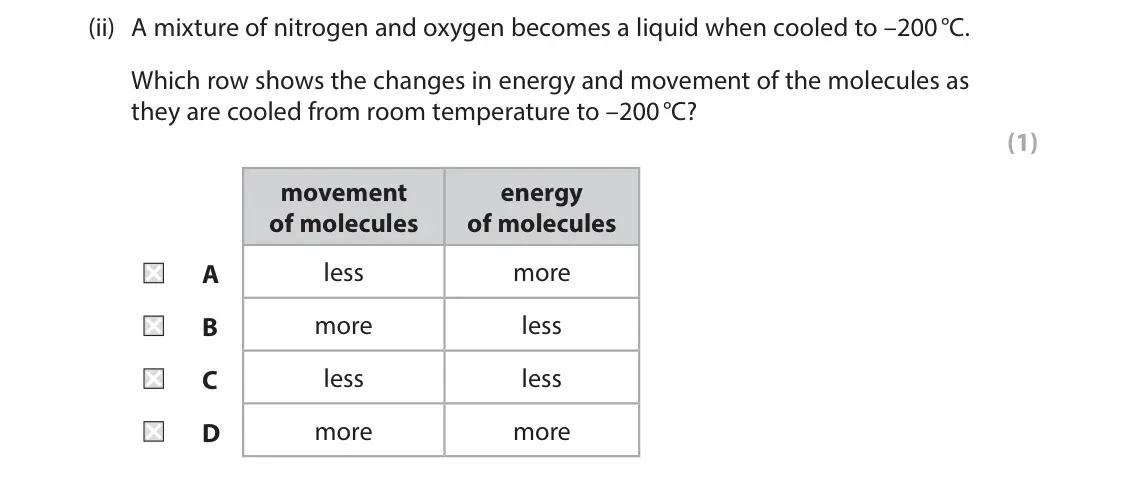
Q3(a)(i)
The whole paper ↗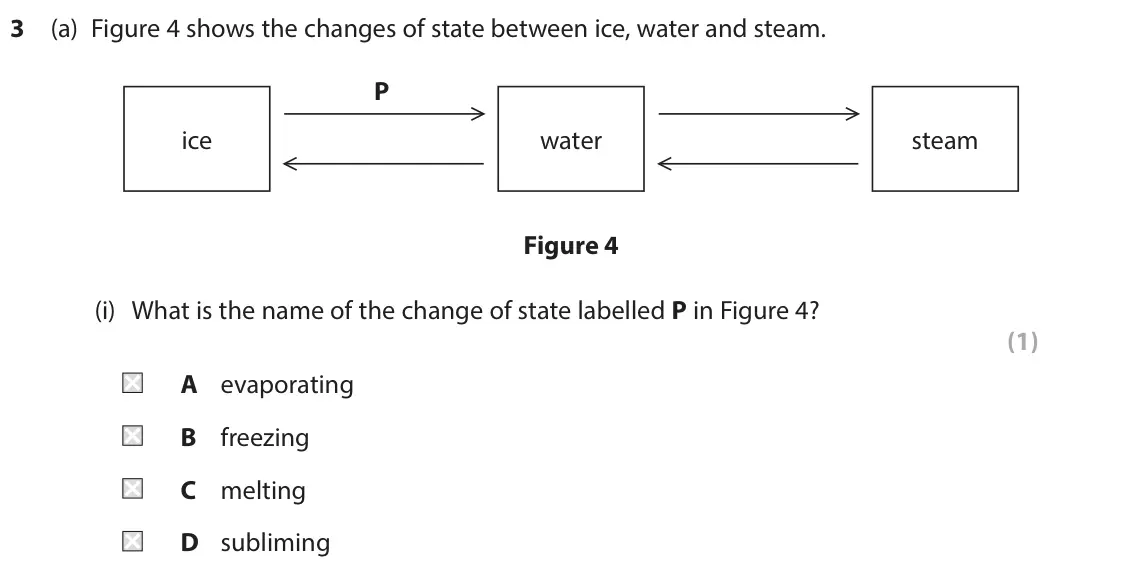
Q3(a)(ii)
The whole paper ↗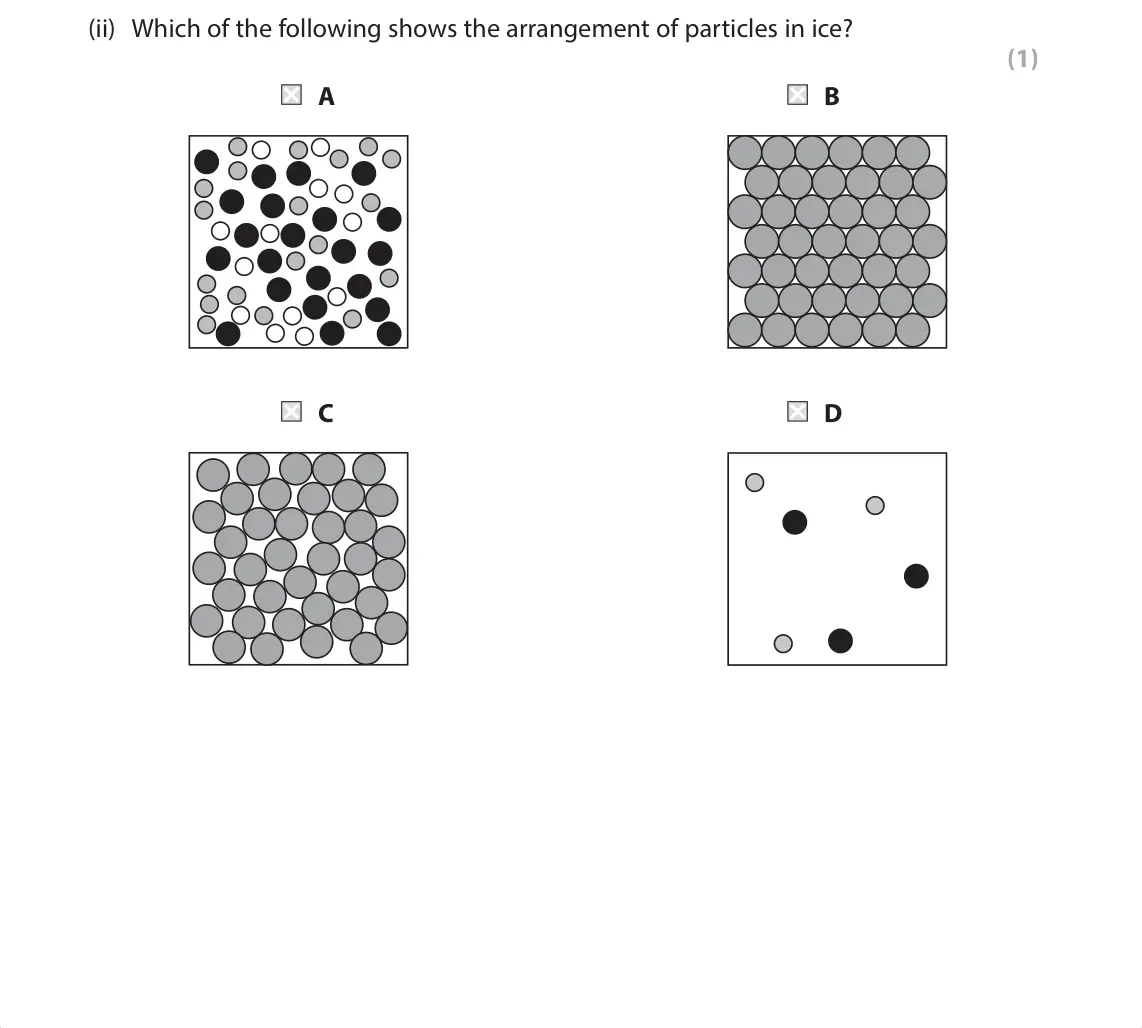
Q1(a)
The whole paper ↗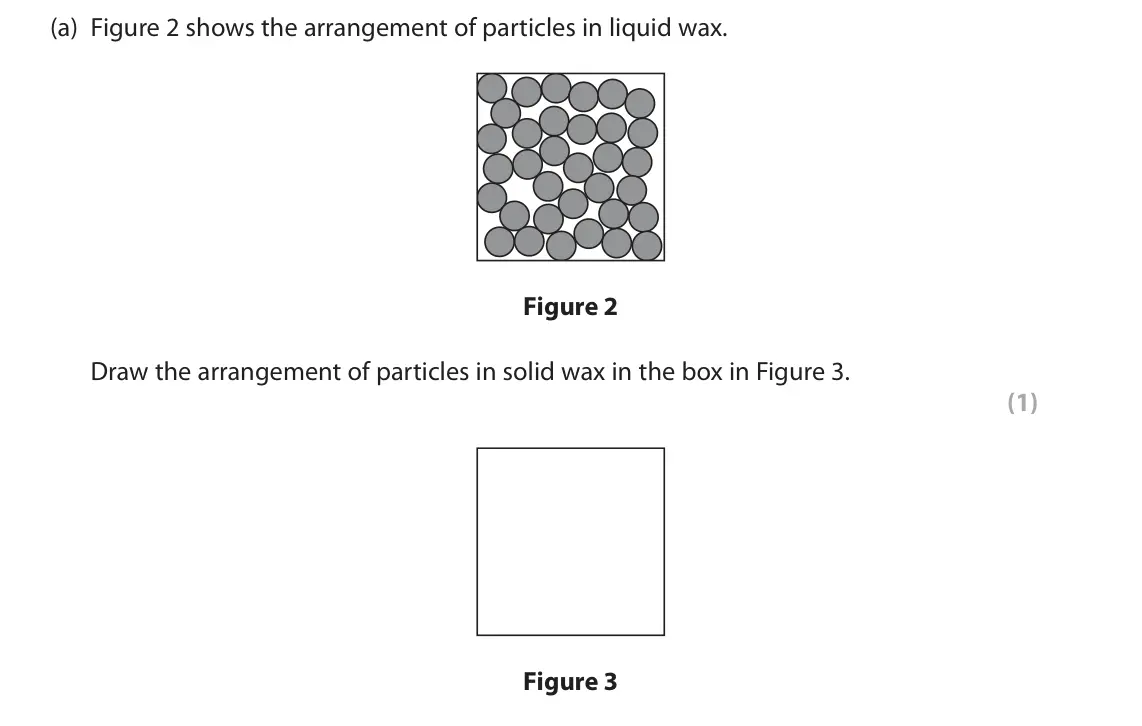
Q1(b)(i)
The whole paper ↗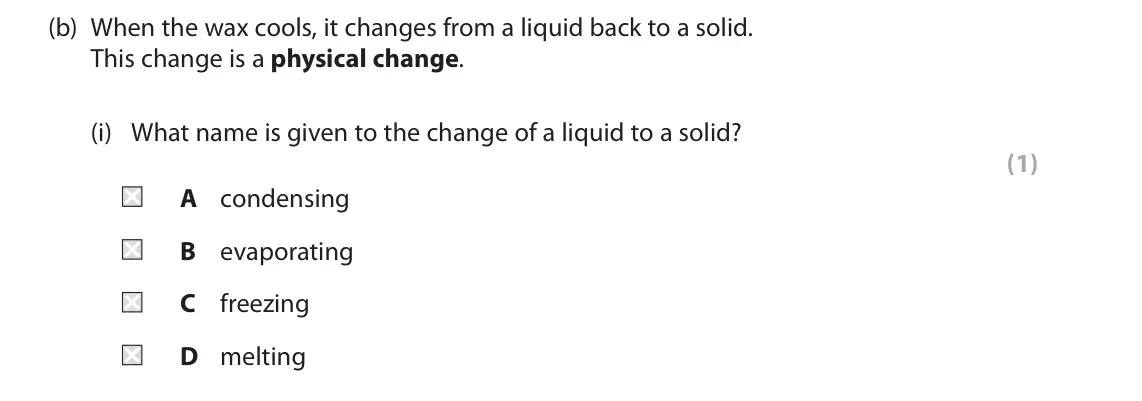
Q1(b)(ii)
The whole paper ↗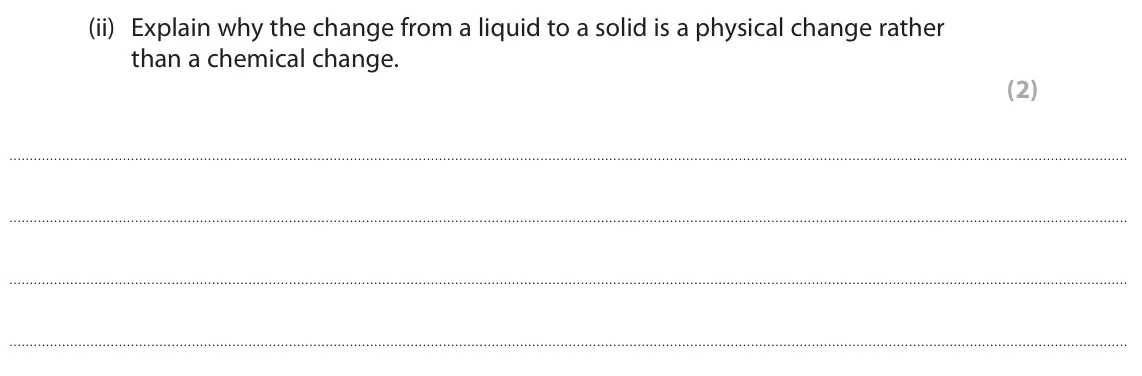
Q1(c)(i)
The whole paper ↗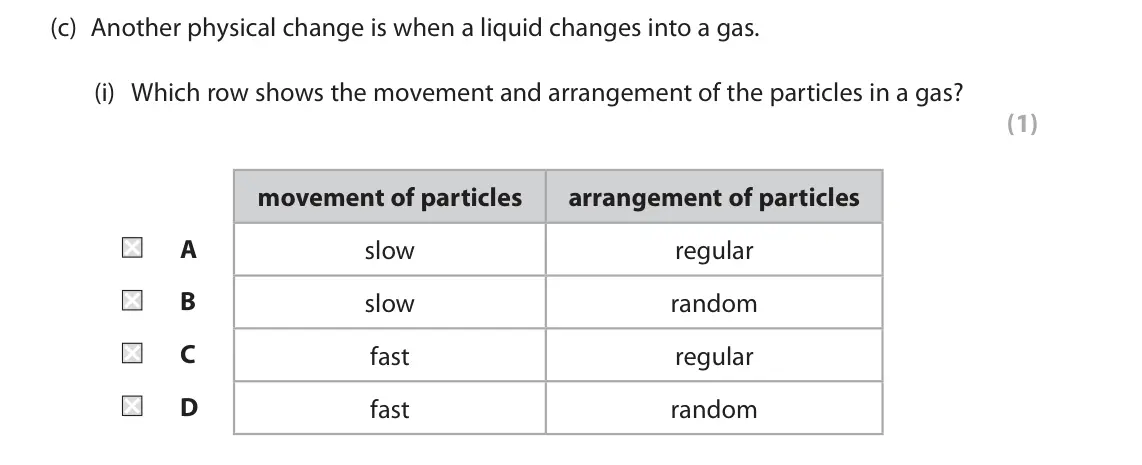
Q1(c)(ii)
The whole paper ↗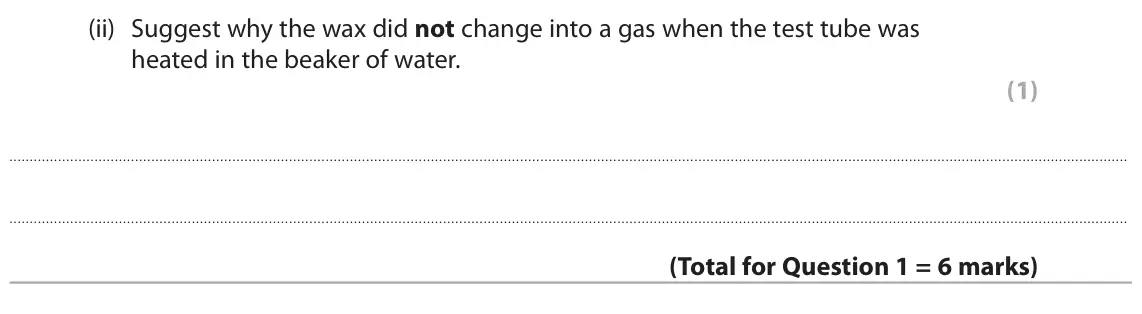
Q8(d)
The whole paper ↗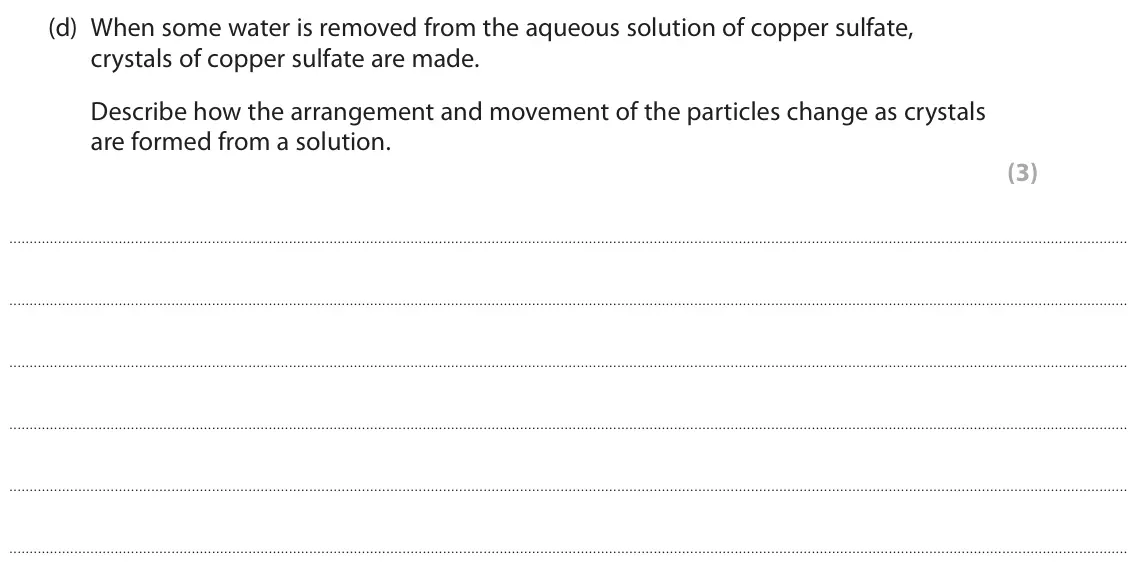
Q1(b)(i)
The whole paper ↗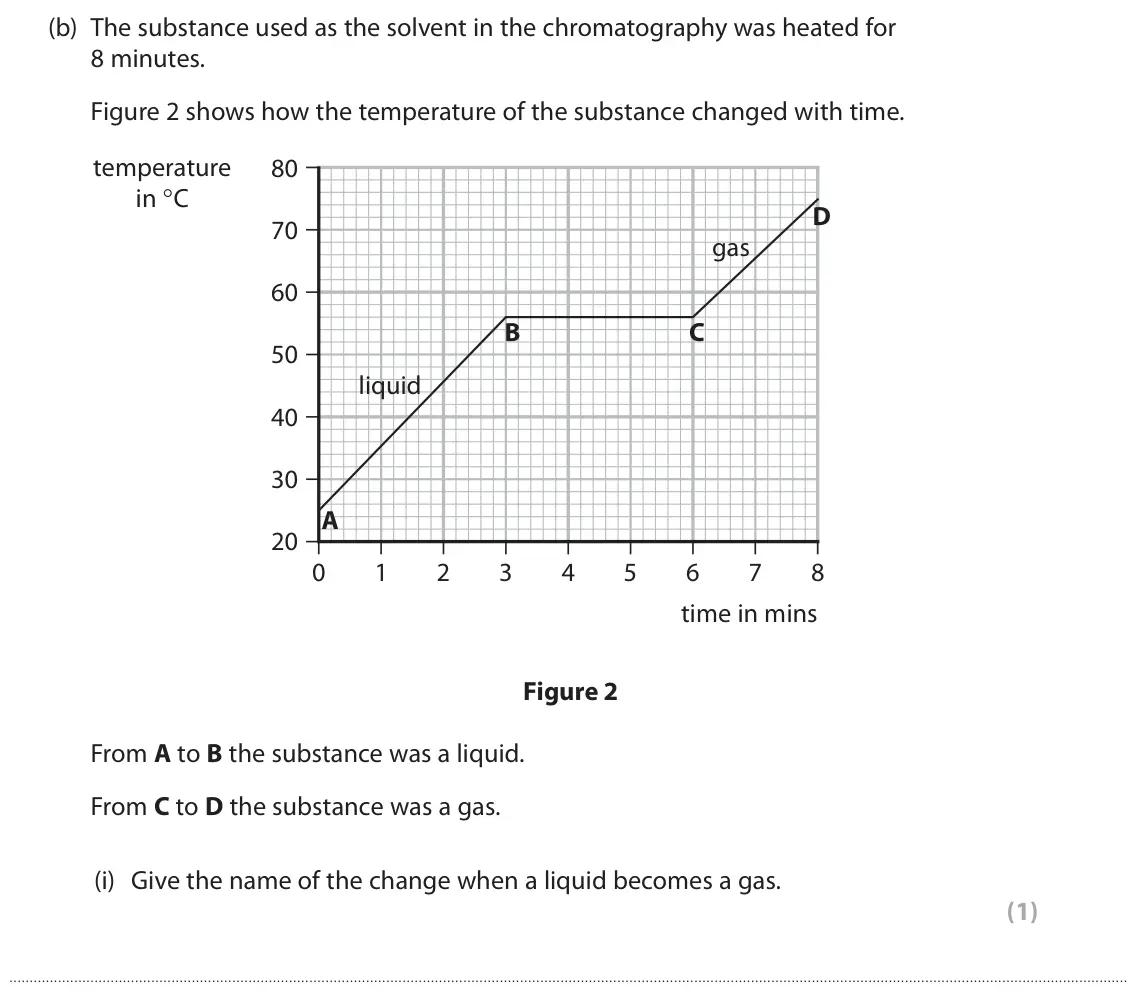
Q1(b)(ii)
The whole paper ↗
Q1(b)(iii)
The whole paper ↗
Q1(b)(iv)
The whole paper ↗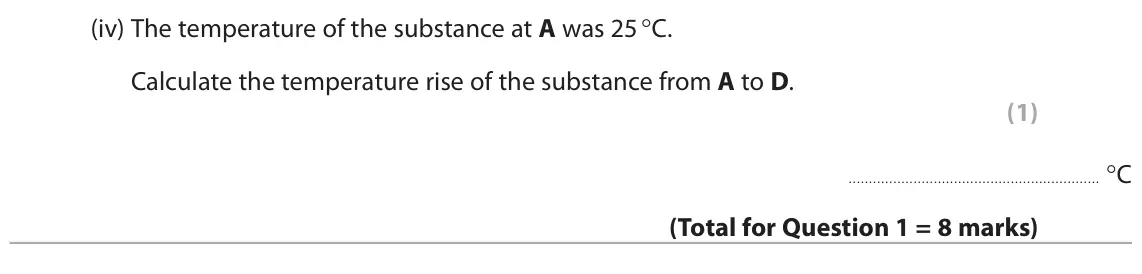
Q2(a)
The whole paper ↗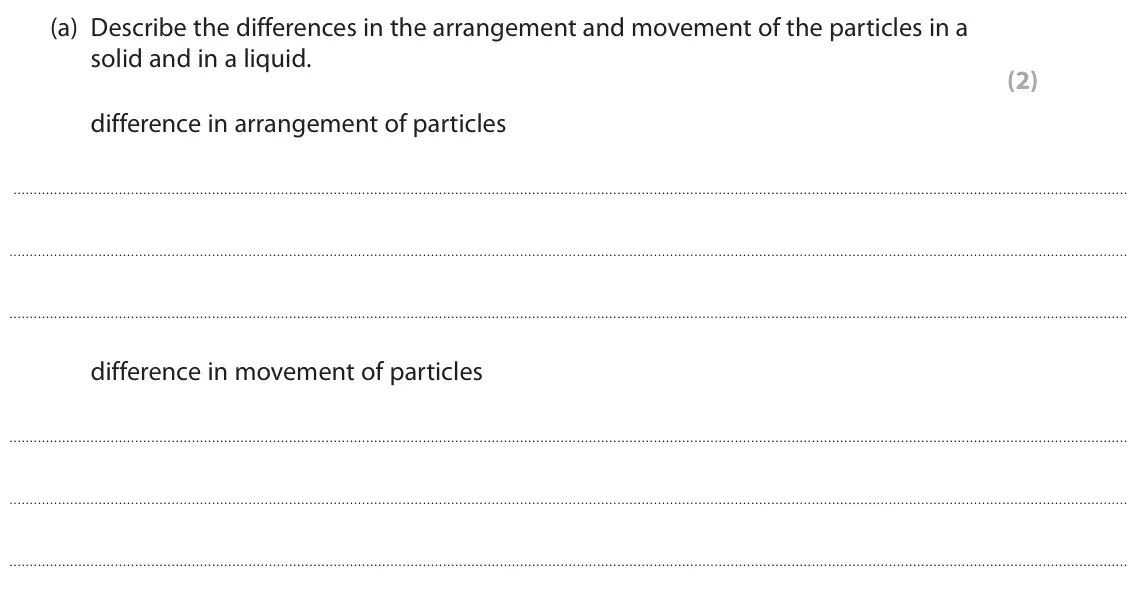
Q2(b)
The whole paper ↗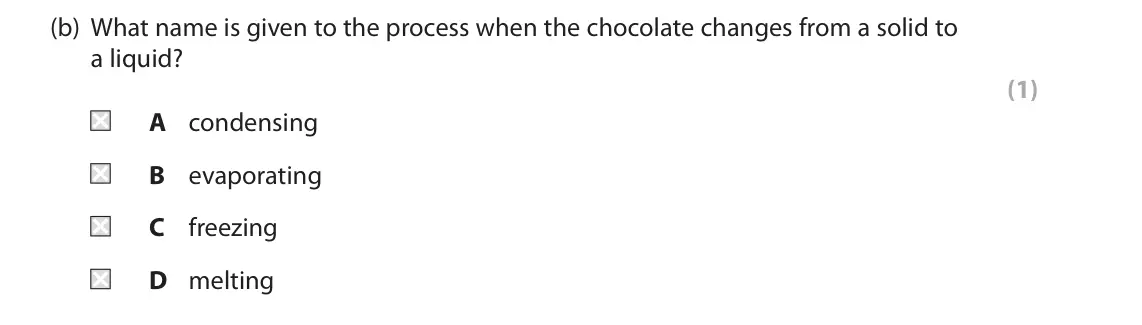
Q2(c)
The whole paper ↗
Q2(d)
The whole paper ↗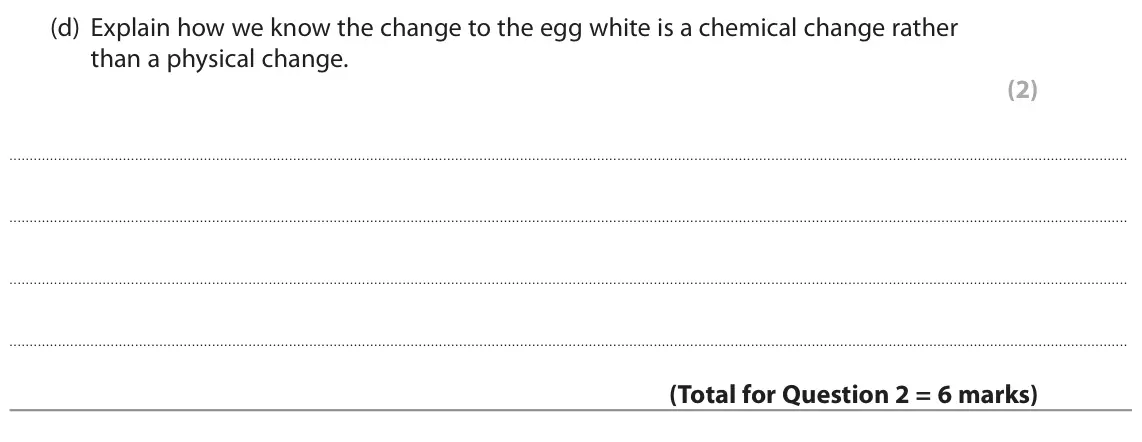
Q2(a)(i)
The whole paper ↗
Q2(a)(ii)
The whole paper ↗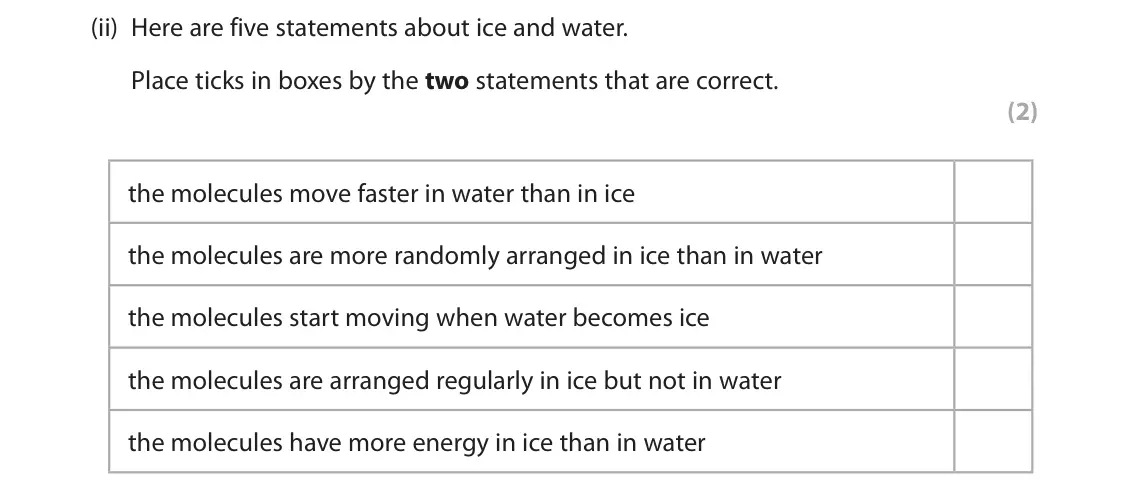
Q4(d)(i)
The whole paper ↗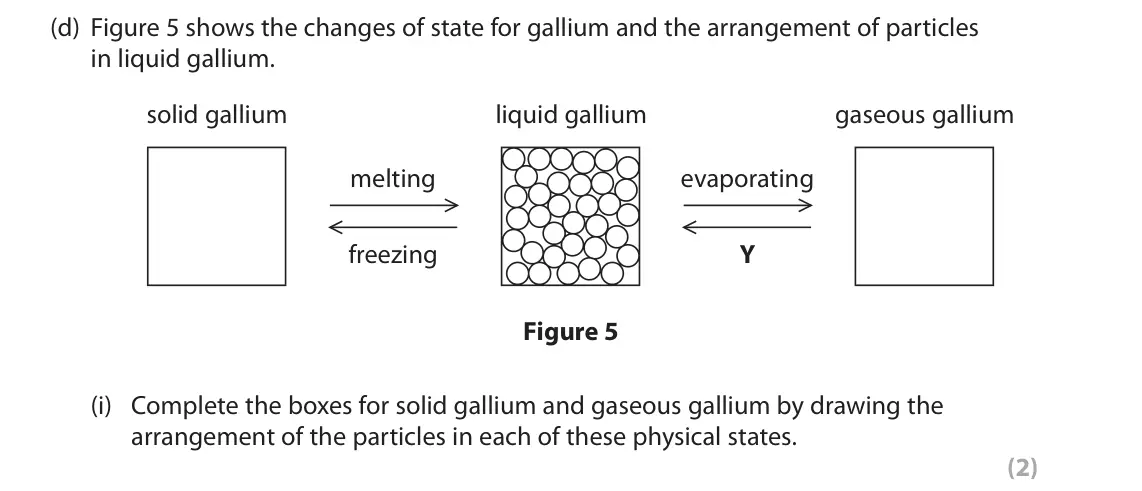
All 36 questions on States of matter, as a list
- June 2025, Paper 1 Higher, Q5(b)(ii) (1 mark): A mixture of nitrogen and oxygen becomes a liquid when cooled to –200 °C. Which row shows the changes in energy and movement of the molecules as they are cooled
- June 2025, Paper 1 Foundation, Q3(a)(i) (1 mark): What is the name of the change of state labelled P in Figure 4? (1) A evaporating B freezing C melting D subliming
- June 2025, Paper 1 Foundation, Q3(a)(ii) (1 mark): Which of the following shows the arrangement of particles in ice? (1) A B C D
- June 2024, Paper 1 Foundation, Q1(a) (1 mark): Figure 2 shows the arrangement of particles in liquid wax. Figure 2 Draw the arrangement of particles in solid wax in the box in Figure 3. (1) Figure 3
- June 2024, Paper 1 Foundation, Q1(b)(i) (1 mark): What name is given to the change of a liquid to a solid? (1) A condensing B evaporating C freezing D melting
- June 2024, Paper 1 Foundation, Q1(b)(ii) (2 marks): Explain why the change from a liquid to a solid is a physical change rather than a chemical change. (2)
- June 2024, Paper 1 Foundation, Q1(c)(i) (1 mark): Which row shows the movement and arrangement of the particles in a gas? (1) movement of particles arrangement of particles A slow regular B slow random C fast r
- June 2024, Paper 1 Foundation, Q1(c)(ii) (1 mark): Suggest why the wax did not change into a gas when the test tube was heated in the beaker of water. (1)
- June 2023, Paper 1 Higher, Q8(d) (3 marks): When some water is removed from the aqueous solution of copper sulfate, crystals of copper sulfate are made. Describe how the arrangement and movement of the pa
- June 2023, Paper 1 Foundation, Q1(b)(i) (1 mark): Give the name of the change when a liquid becomes a gas. (1)
- June 2023, Paper 1 Foundation, Q1(b)(ii) (1 mark): Use Figure 2 to give the temperature of the substance at 4 minutes. (1) °C
- June 2023, Paper 1 Foundation, Q1(b)(iii) (1 mark): Use Figure 2 to give the time when the substance has completely changed into a gas. (1) minutes
- June 2023, Paper 1 Foundation, Q1(b)(iv) (1 mark): The temperature of the substance at A was 25 °C. Calculate the temperature rise of the substance from A to D. (1) °C
- June 2022, Paper 1 Foundation, Q2(a) (2 marks): Describe the differences in the arrangement and movement of the particles in a solid and in a liquid. (2) difference in arrangement of particles . difference in
- June 2022, Paper 1 Foundation, Q2(b) (1 mark): What name is given to the process when the chocolate changes from a solid to a liquid? (1) A condensing B evaporating C freezing D melting
- June 2022, Paper 1 Foundation, Q2(c) (1 mark): Give a reason why the metal spoon has not changed state during the experiment. (1)
- June 2022, Paper 1 Foundation, Q2(d) (2 marks): Explain how we know the change to the egg white is a chemical change rather than a physical change. (2)
- November 2021, Paper 1 Foundation, Q2(a)(i) (1 mark): Give the name for the change of state from liquid to solid. (1)
- November 2021, Paper 1 Foundation, Q2(a)(ii) (2 marks): Here are five statements about ice and water. Place ticks in boxes by the two statements that are correct. (2) the molecules move faster in water than in ice th
- November 2020, Paper 1 Foundation, Q4(d)(i) (2 marks): Complete the boxes for solid gallium and gaseous gallium by drawing the arrangement of the particles in each of these physical states. (2)
- November 2020, Paper 1 Foundation, Q4(d)(ii) (1 mark): Give the name of the change of state labelled Y in Figure 5. (1)
- June 2019, Paper 1 Foundation, Q1(a) (1 mark): What is the name of the change of state when a liquid changes into a solid? (1) X A condensation evaporation C freezing D melting
- June 2019, Paper 1 Foundation, Q1(b)(i) (1 mark): State the time when the gas first started to form a liquid. (1) minutes
- June 2019, Paper 1 Foundation, Q1(b)(ii) (1 mark): Calculate the number of minutes it took from the gas first starting to form a liquid until the substance was completely liquid. (1) minutes
- June 2019, Paper 1 Foundation, Q1(c)(i) (1 mark): give the letter of the substance that is a solid at 20°C (1)
- June 2019, Paper 1 Foundation, Q1(c)(ii) (1 mark): give the letter of a substance that is a liquid at 50°C (1)
- June 2018, Paper 1 Higher, Q4(a)(i) (2 marks): The boiling points of hydrogen and water are shown in Figure 3. boiling point in qC hydrogen −253 water 100 Figure 3 Use this information to add the missing sta
- June 2018, Paper 1 Higher, Q5(a) (1 mark): Which of the following substances will be a solid at 20 qC and will melt when placed in a beaker of hot water at 80 qC? (1) melting point in °C boiling point in
- June 2018, Paper 1 Higher, Q5(c) (4 marks): A substance is heated at a constant rate and its temperature is taken every minute. During the heating, the substance undergoes one change of state. The results
- June 2018, Paper 1 Foundation, Q6(c) (2 marks): The particles in the ink in the flask can be shown as in Figure 10. particle of water particle of coloured substances Figure 10 In the boxes below, draw the arr
- June 2018, Paper 1 Foundation, Q6(d) (2 marks): Changes of state between the three states of matter are shown in Figure 11. melting evaporating SOLID LIQUID GAS freezing condensing Figure 11 The changes shown
- June 2018, Paper 1 Foundation, Q10(a)(i) (2 marks): The boiling points of hydrogen and water are shown in Figure 15. boiling point in °C hydrogen –253 water 100 Figure 15 Use this information to add the missing s
- Specimen, Paper 1 Foundation, Q1(a)(i) (2 marks): Under each box write the name of the state of matter shown. (2) Figure 1
- Specimen, Paper 1 Foundation, Q1(a)(ii) (2 marks): A student is given some solid wax. Use words from the box to name two pieces of equipment that the student should use to convert the solid wax into a liquid. Bu
- Specimen, Paper 1 Foundation, Q1(b) (1 mark): Some liquid is left in a warm room. After a few days no liquid can be seen. Give the name of the process that has occurred. (1)
- Specimen, Paper 1 Foundation, Q1(c)(i) (2 marks): Describe how the movement and arrangement of water particles changes when water is cooled from 10°C to –10°C. (2)
Questions, mark schemes and examiner’s reports are © Pearson Edexcel, from their published past papers. Plumi isn’t affiliated with any exam board. Want whole papers? Every Edexcel GCSE Chemistry paper.
Rather write your answers by hand on iPad? Plumi marks them against the same mark schemes.