 plumi
Chromatography: Edexcel GCSE Chemistry questions
Every Edexcel GCSE Chemistry exam question on Chromatography (specification points 2.9–2.11), 2018–2025, with its mark scheme and examiner’s report.
Find questions1,880
Exam
All years
Calculations
Q3(c)(i)
The whole paper ↗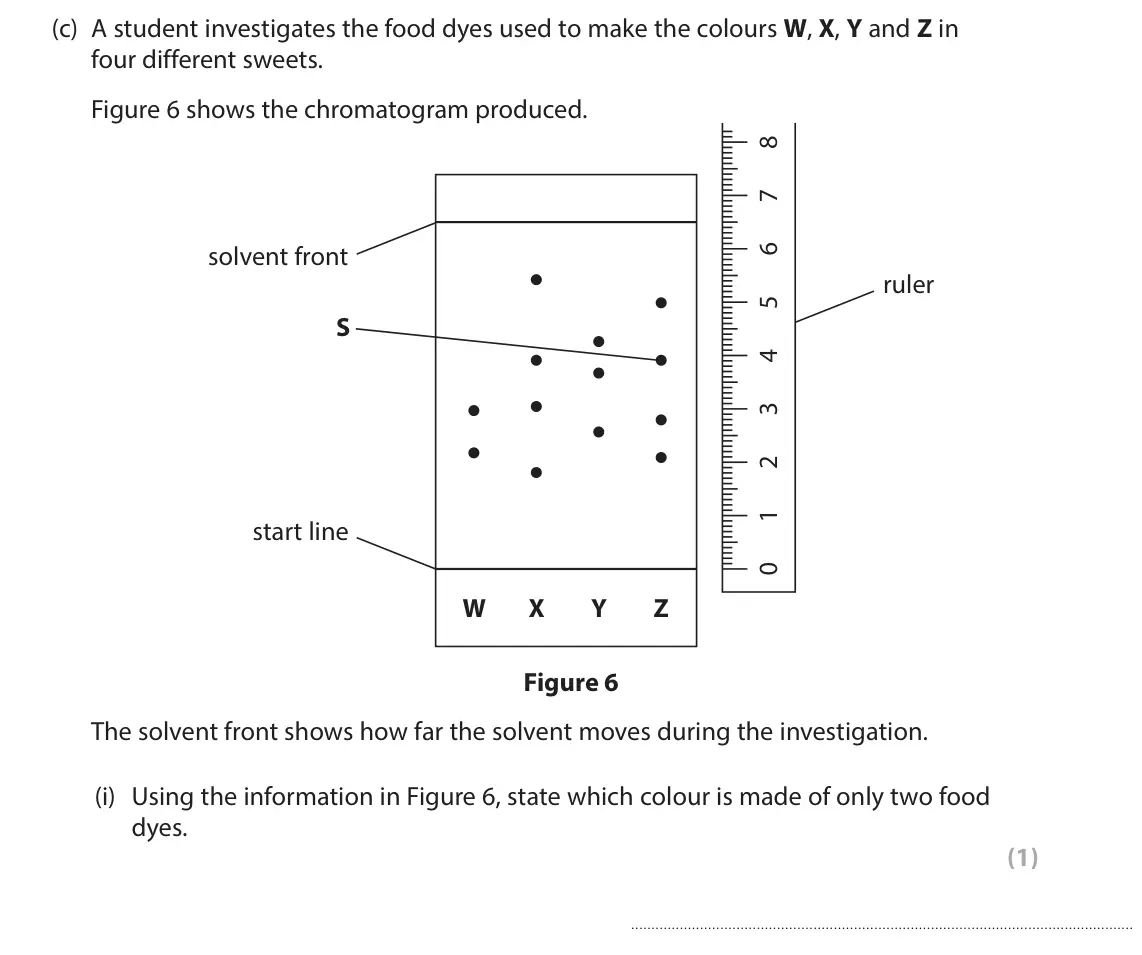
Q3(c)(ii)
The whole paper ↗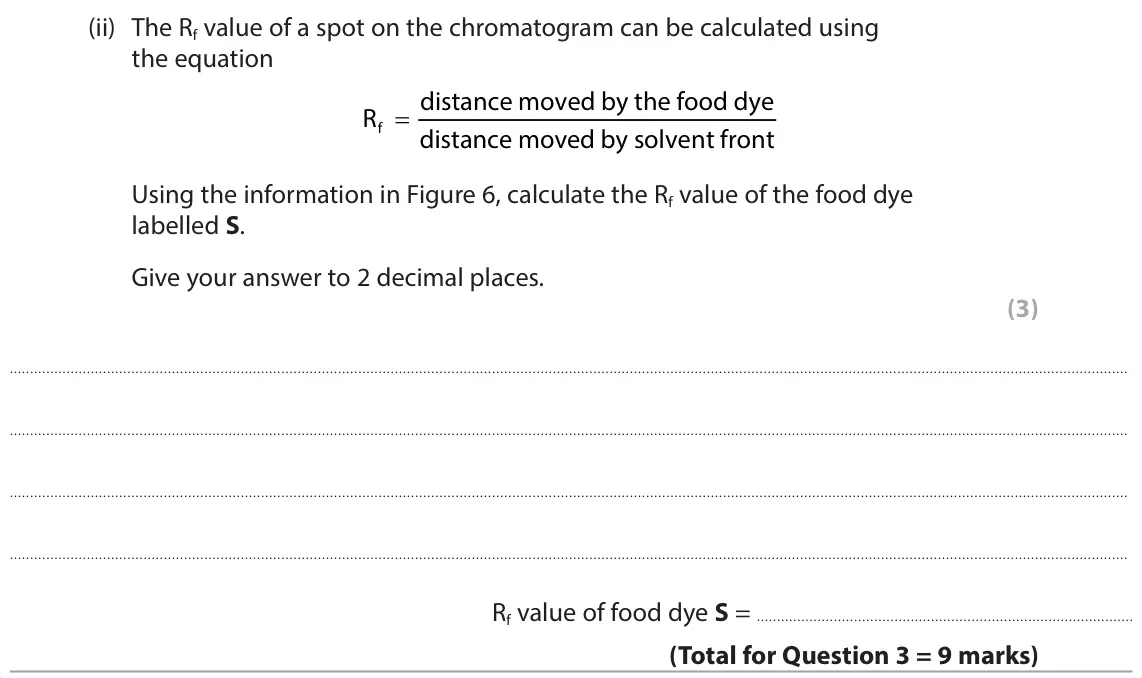
Q9(b)
The whole paper ↗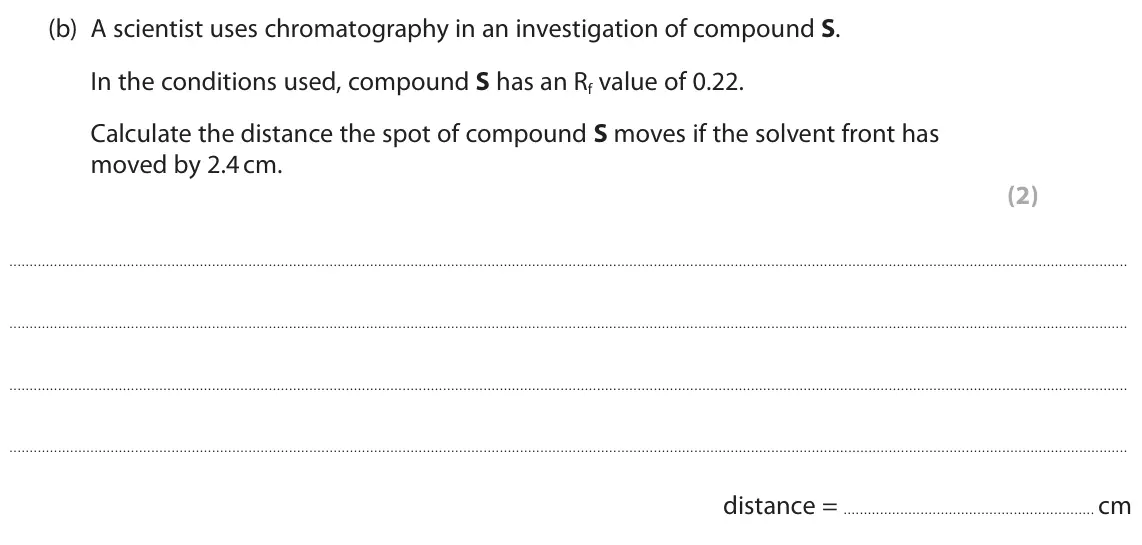
Q1(a)(i)
The whole paper ↗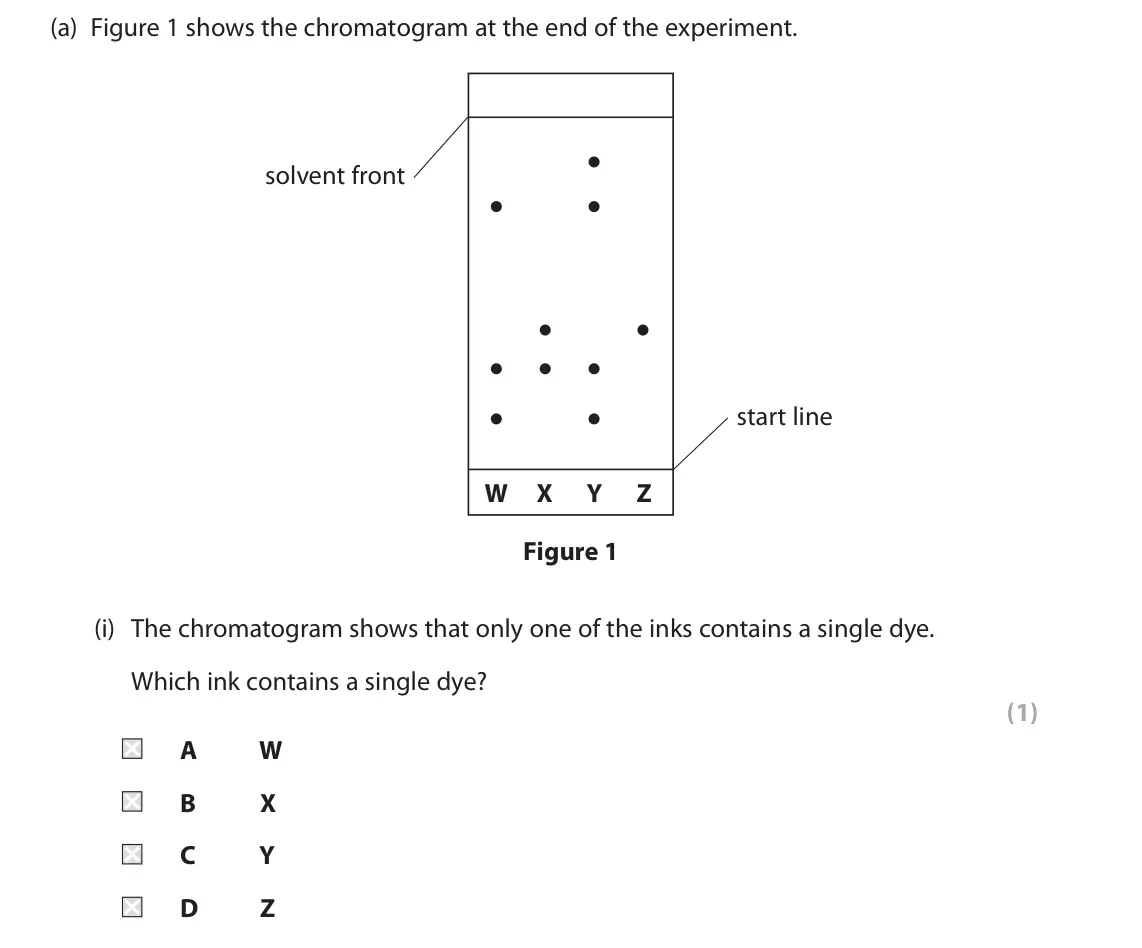
Q1(a)(ii)
The whole paper ↗
Q1(a)(iii)
The whole paper ↗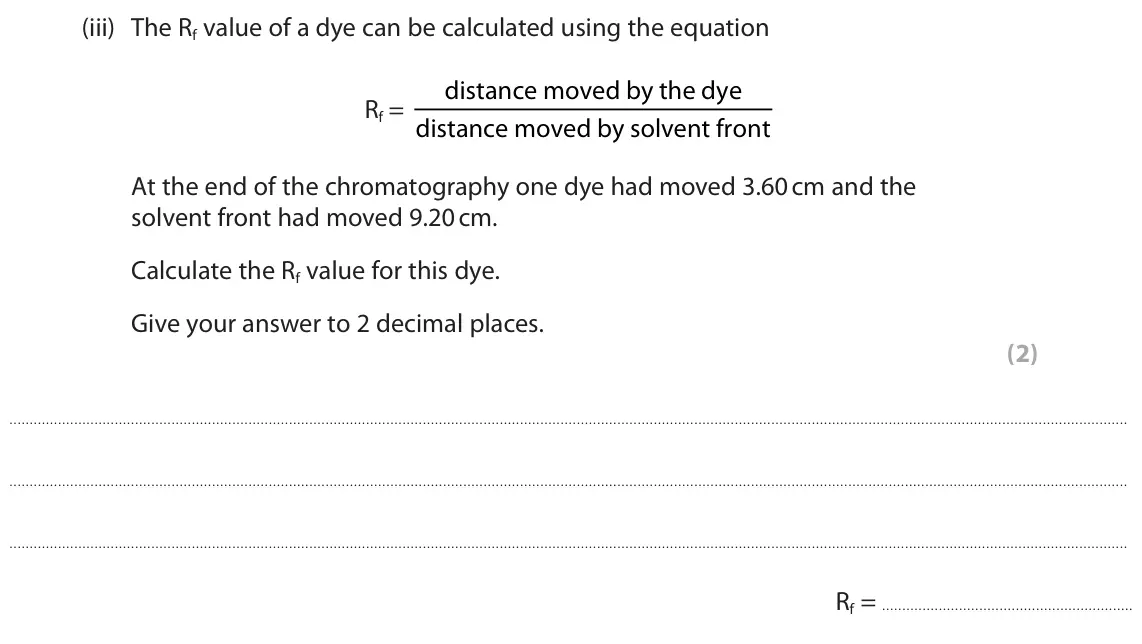
Q5(b)(i)
The whole paper ↗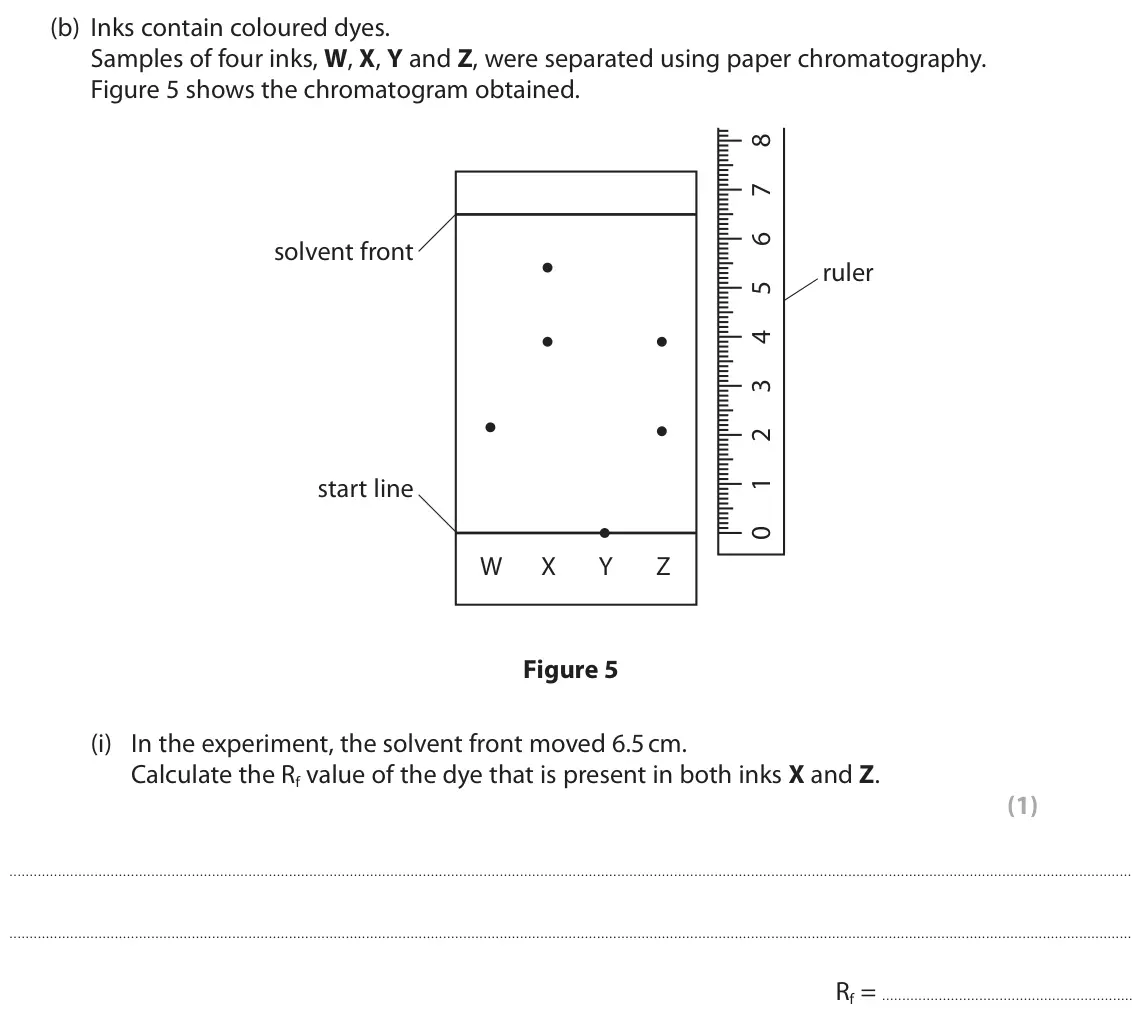
Q5(b)(ii)
The whole paper ↗
Q5(b)(iii)
The whole paper ↗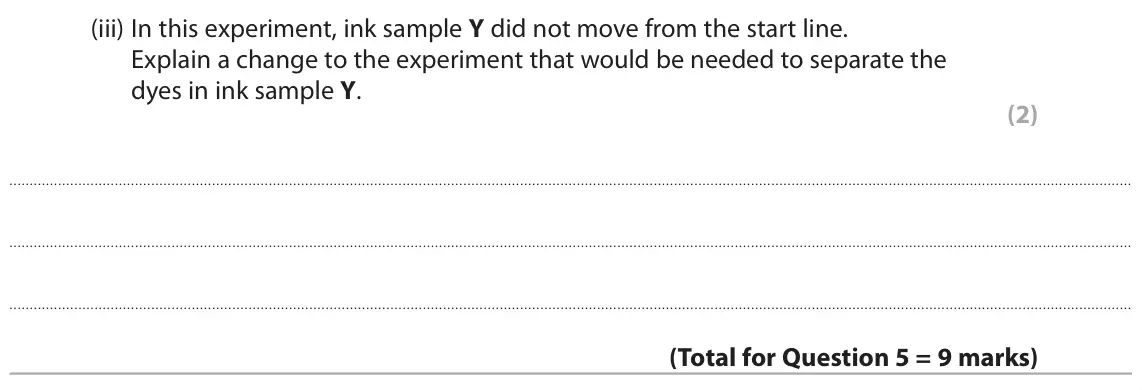
Q4(c)(i)
The whole paper ↗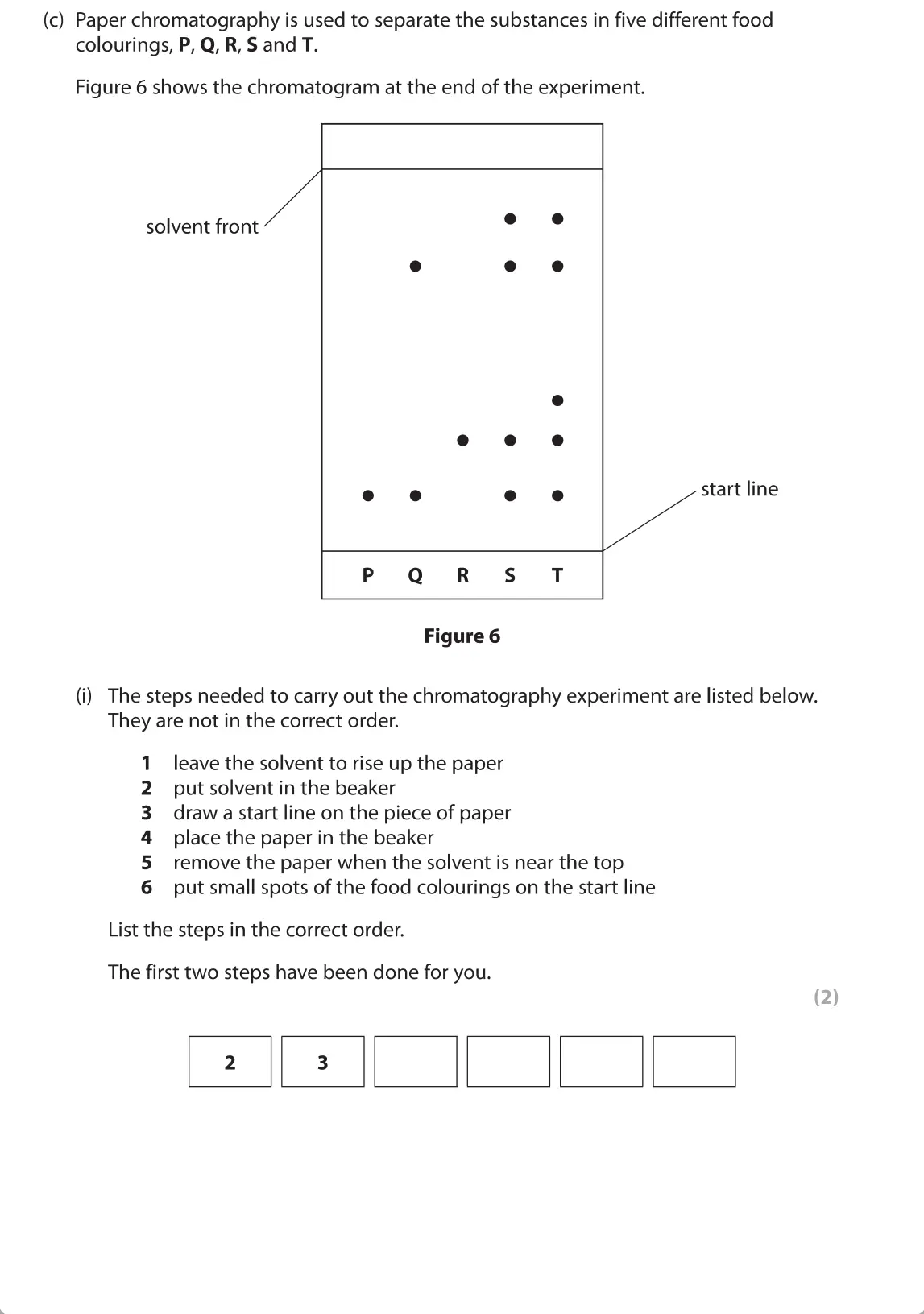
Q4(c)(ii)
The whole paper ↗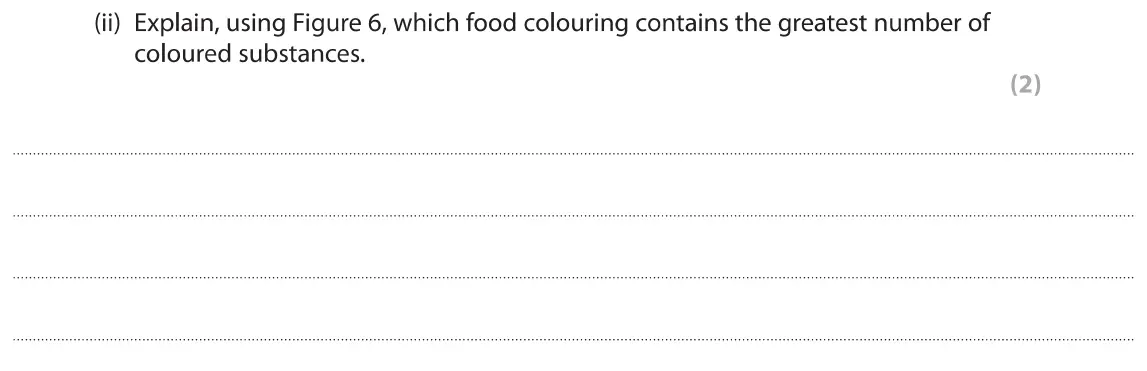
Q4(c)(iii)
The whole paper ↗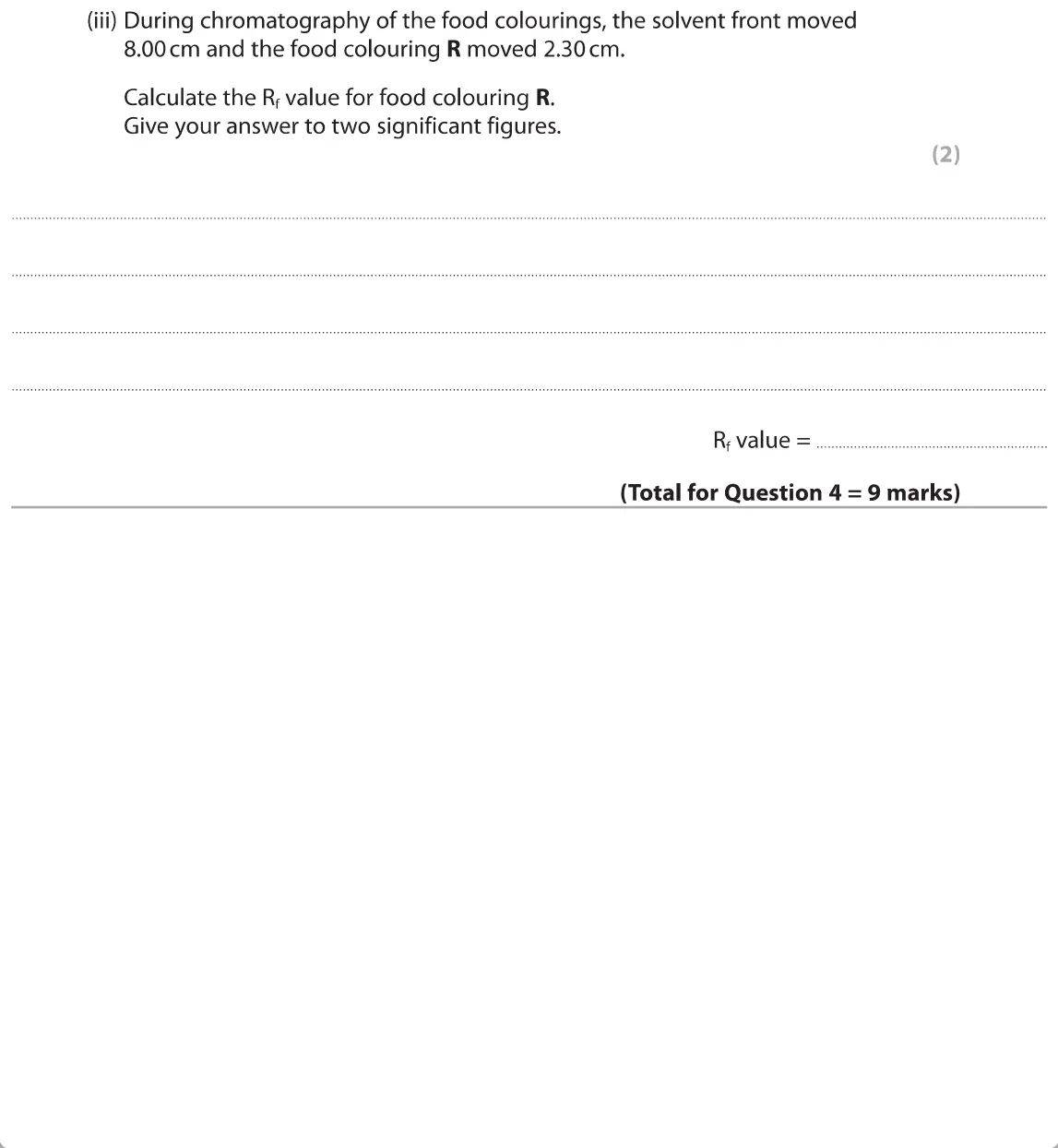
Q6(a)
The whole paper ↗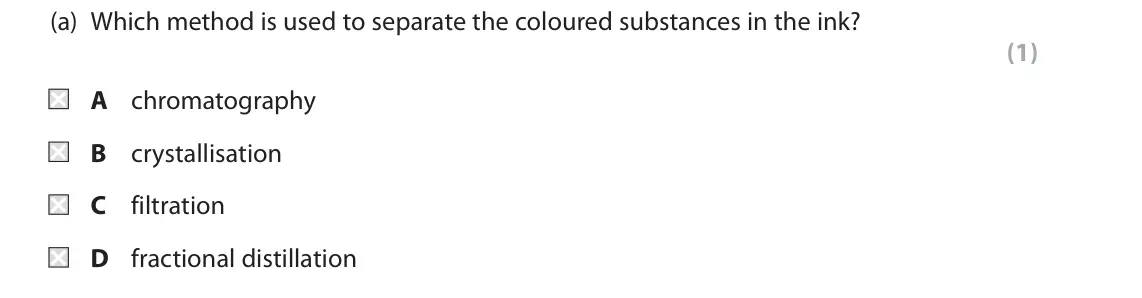
Q1(a)(i)
The whole paper ↗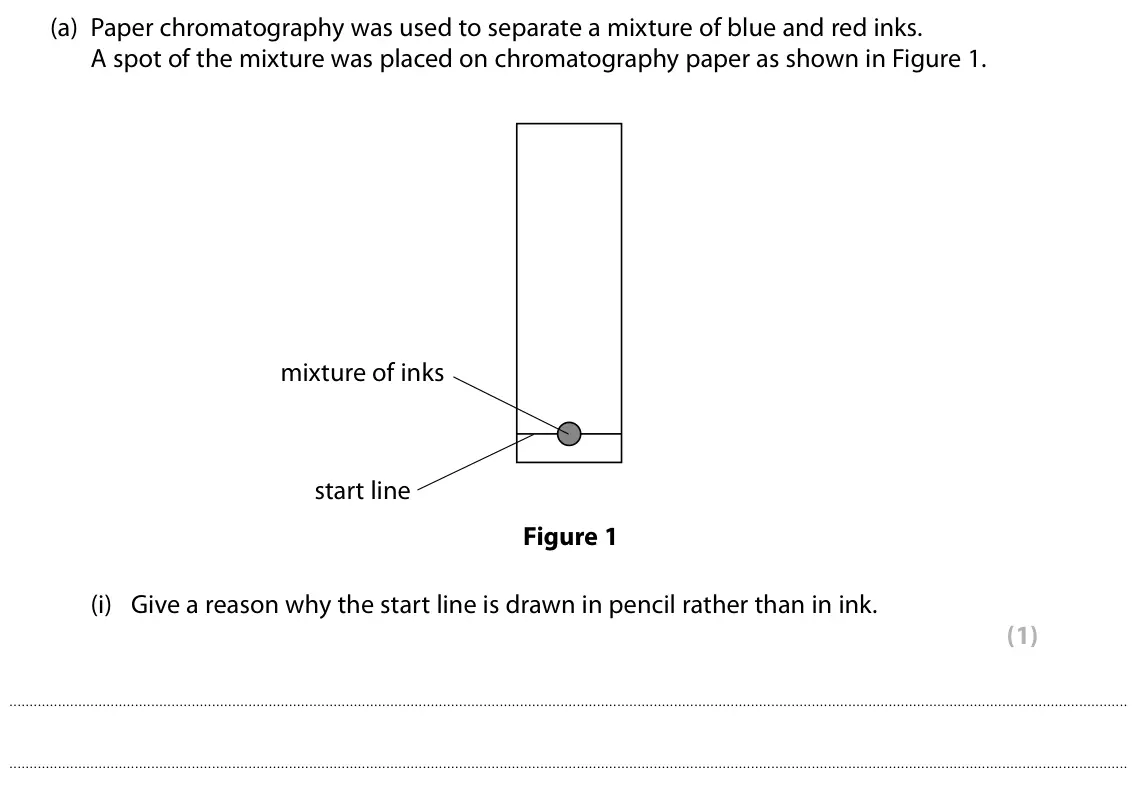
Q1(a)(ii)
The whole paper ↗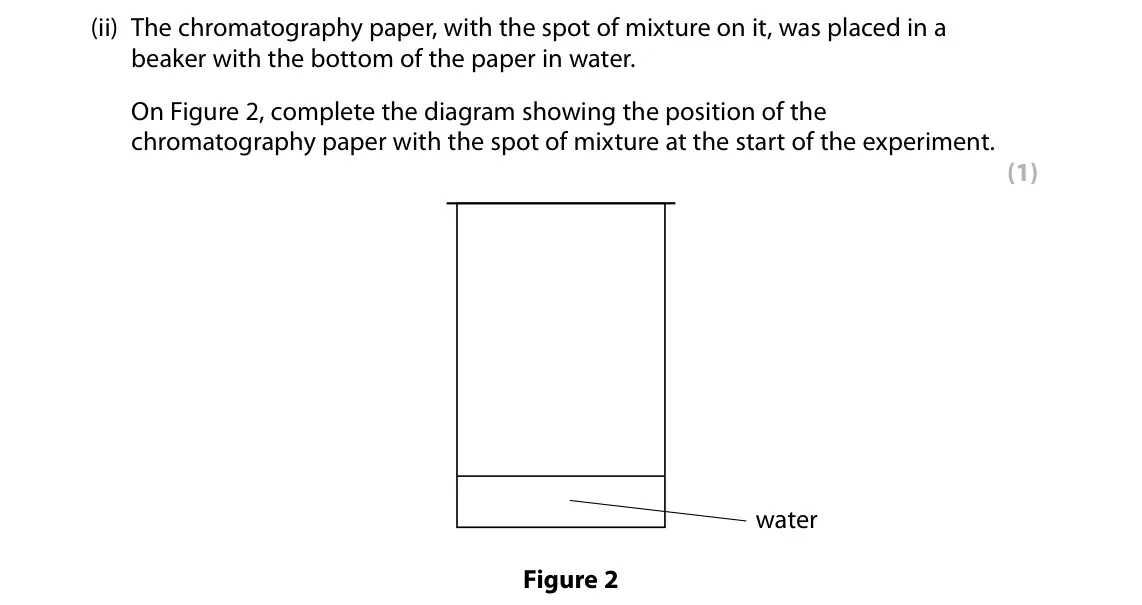
Q1(a)(iii)
The whole paper ↗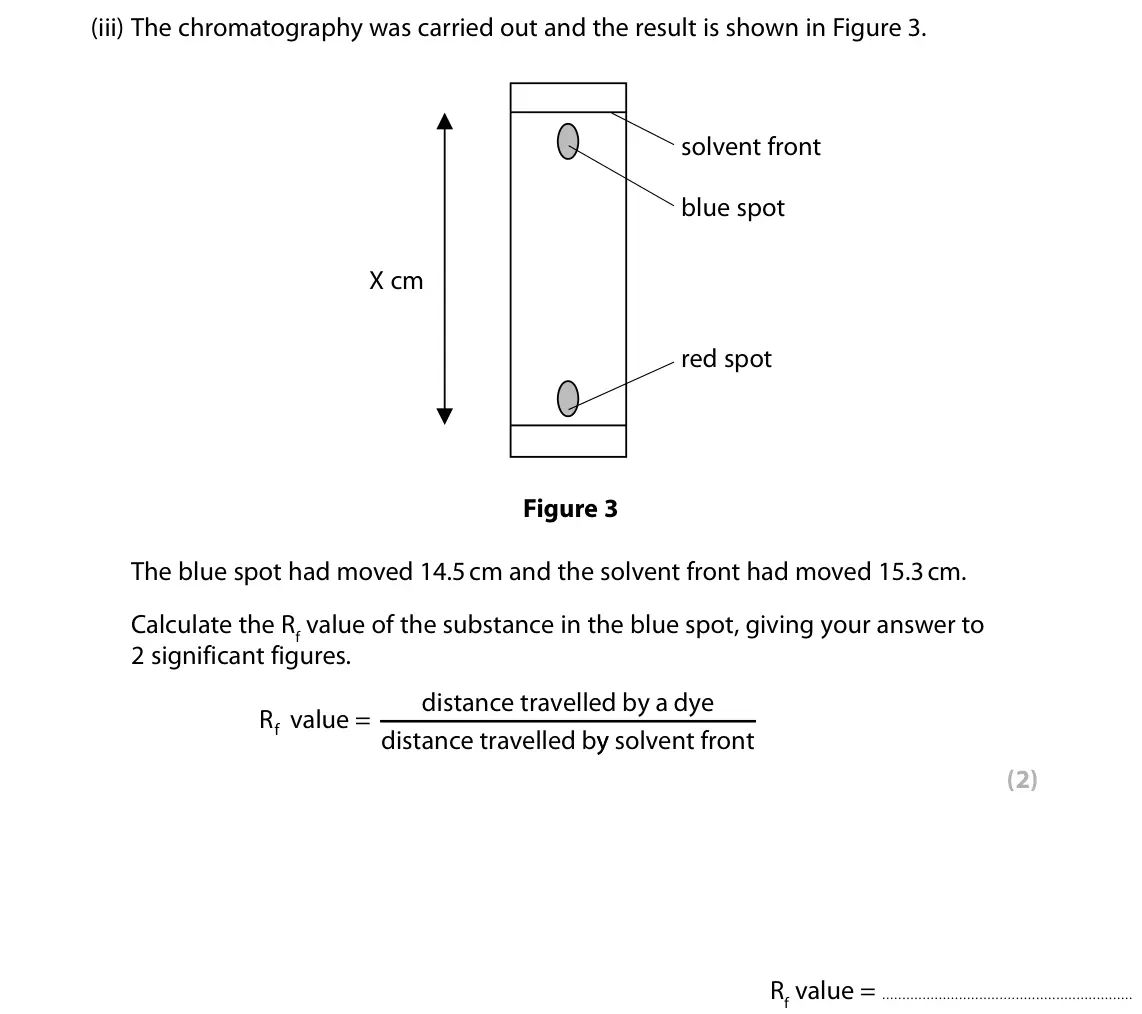
Q1(b)(i)
The whole paper ↗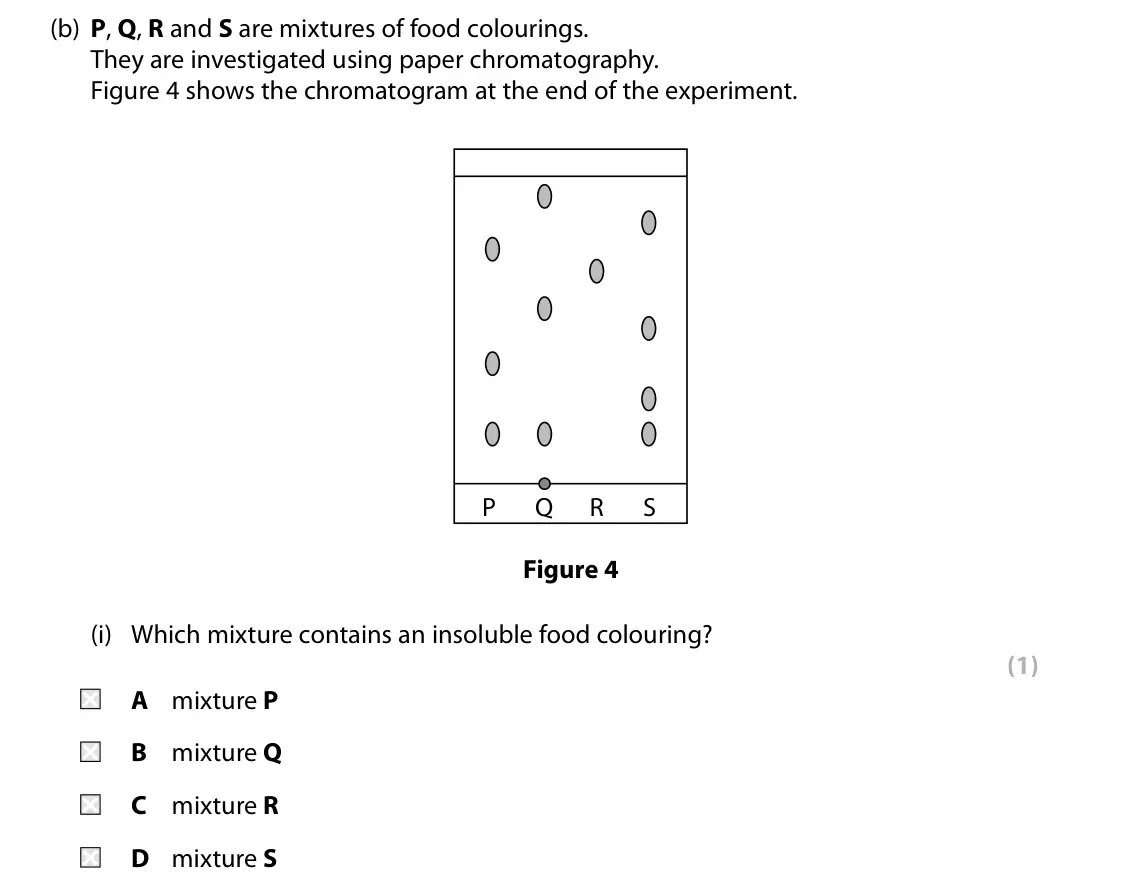
Q1(b)(ii)
The whole paper ↗
Q1(b)(iii)
The whole paper ↗
Q7(c)(i)
The whole paper ↗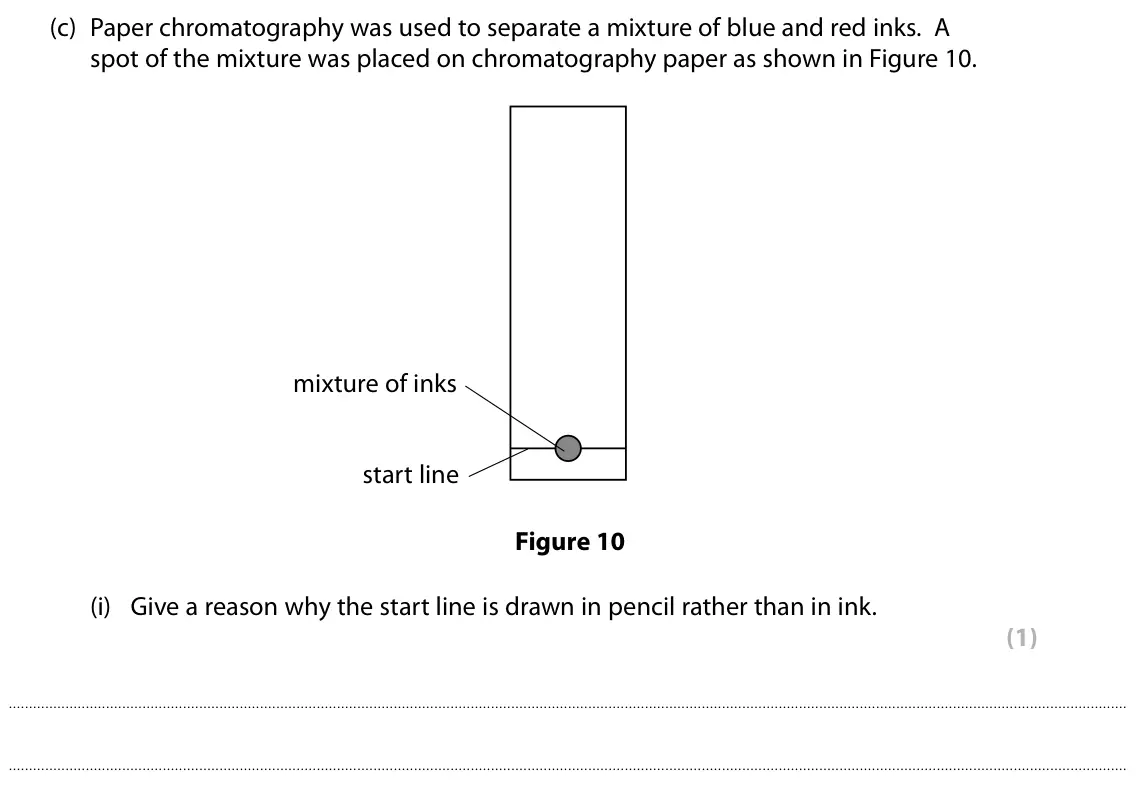
All 25 questions on Chromatography, as a list
- June 2025, Paper 1 Foundation, Q3(c)(i) (1 mark): Using the information in Figure 6, state which colour is made of only two food dyes. (1)
- June 2025, Paper 1 Foundation, Q3(c)(ii) (3 marks): The Rf value of a spot on the chromatogram can be calculated using the equation distance moved by the food dye f = R distance moved by solvent front Using the i
- June 2023, Paper 1 Higher, Q9(b) (2 marks): A scientist uses chromatography in an investigation of compound S. In the conditions used, compound S has an Rf value of 0.22. Calculate the distance the spot o
- June 2023, Paper 1 Foundation, Q1(a)(i) (1 mark): The chromatogram shows that only one of the inks contains a single dye. Which ink contains a single dye? (1) A W B X C Y D Z
- June 2023, Paper 1 Foundation, Q1(a)(ii) (1 mark): Which ink contains the greatest number of dyes? (1) A W B X C Y D Z
- June 2023, Paper 1 Foundation, Q1(a)(iii) (2 marks): The Rf value of a dye can be calculated using the equation distance moved by the dye Rf = distance moved by solvent front At the end of the chromatography one d
- November 2020, Paper 1 Higher, Q5(b)(i) (1 mark): In the experiment, the solvent front moved 6.5 cm. Calculate the Rf value of the dye that is present in both inks X and Z. (1) Rf =
- November 2020, Paper 1 Higher, Q5(b)(ii) (1 mark): State what could be changed in the experiment to make the Rf value more accurate. (1)
- November 2020, Paper 1 Higher, Q5(b)(iii) (2 marks): In this experiment, ink sample Y did not move from the start line. Explain a change to the experiment that would be needed to separate the dyes in ink sample Y.
- June 2019, Paper 1 Foundation, Q4(c)(i) (2 marks): The steps needed to carry out the chromatography experiment are listed below. They are not in the correct order. 1 leave the solvent to rise up the paper put so
- June 2019, Paper 1 Foundation, Q4(c)(ii) (2 marks): Explain, using Figure 6, which food colouring contains the greatest number of coloured substances. (2)
- June 2019, Paper 1 Foundation, Q4(c)(iii) (2 marks): During chromatography of the food colourings, the solvent front moved 8.00 cm and the food colouring R moved 2.30 cm. Calculate the R, value for food colouring
- June 2018, Paper 1 Foundation, Q6(a) (1 mark): Which method is used to separate the coloured substances in the ink? (1) A chromatography B crystallisation C filtration D fractional distillation
- Specimen, Paper 1 Higher, Q1(a)(i) (1 mark): Give a reason why the start line is drawn in pencil rather than in ink. (1)
- Specimen, Paper 1 Higher, Q1(a)(ii) (1 mark): The chromatography paper, with the spot of mixture on it, was placed in a beaker with the bottom of the paper in water. On Figure 2, complete the diagram showin
- Specimen, Paper 1 Higher, Q1(a)(iii) (2 marks): The chromatography was carried out and the result is shown in Figure 3. solvent front blue spot X cm red spot Figure 3 The blue spot had moved 14.5 cm and the s
- Specimen, Paper 1 Higher, Q1(b)(i) (1 mark): Which mixture contains an insoluble food colouring? (1) A mixture P B mixture Q C mixture R D mixture S
- Specimen, Paper 1 Higher, Q1(b)(ii) (1 mark): Give a change that could be made to the experiment to obtain an Rf value for the insoluble colouring. (1)
- Specimen, Paper 1 Higher, Q1(b)(iii) (2 marks): Explain, by referring to Figure 4, which mixture is separated into the greatest number of soluble food colourings by this chromatography experiment. (2)
- Specimen, Paper 1 Foundation, Q7(c)(i) (1 mark): Give a reason why the start line is drawn in pencil rather than in ink. (1)
- Specimen, Paper 1 Foundation, Q7(c)(ii) (1 mark): The chromatography paper, with the spot of mixture on it, was placed in a beaker with the bottom of the paper in solvent. On Figure 11, complete the diagram sho
- Specimen, Paper 1 Foundation, Q7(c)(iii) (2 marks): The chromatography was carried out and the result is shown in Figure 12. solvent front blue spot X cm red spot Figure 12 The blue spot had moved 14.5 cm and the
- Specimen, Paper 1 Foundation, Q7(d)(i) (1 mark): Which mixture contains an insoluble food colouring? (1) A mixture P B mixture Q C mixture R D mixture S
- Specimen, Paper 1 Foundation, Q7(d)(ii) (1 mark): Give a change that could be made to the experiment to obtain an Rf value for the insoluble colouring. (1)
- Specimen, Paper 1 Foundation, Q7(d)(iii) (2 marks): Explain, by referring to Figure 13, which mixture is separated into the greatest number of soluble food colourings by this chromatography experiment. (2)
Questions, mark schemes and examiner’s reports are © Pearson Edexcel, from their published past papers. Plumi isn’t affiliated with any exam board. Want whole papers? Every Edexcel GCSE Chemistry paper.
Rather write your answers by hand on iPad? Plumi marks them against the same mark schemes.