 plumi
Nanoparticles and materials: Edexcel GCSE Chemistry questions
Every Edexcel GCSE Chemistry exam question on Nanoparticles and materials (specification points 9.35–9.39), 2018–2025, with its mark scheme and examiner’s report.
Find questions1,880
Exam
All years
Calculations
Q1(d)
The whole paper ↗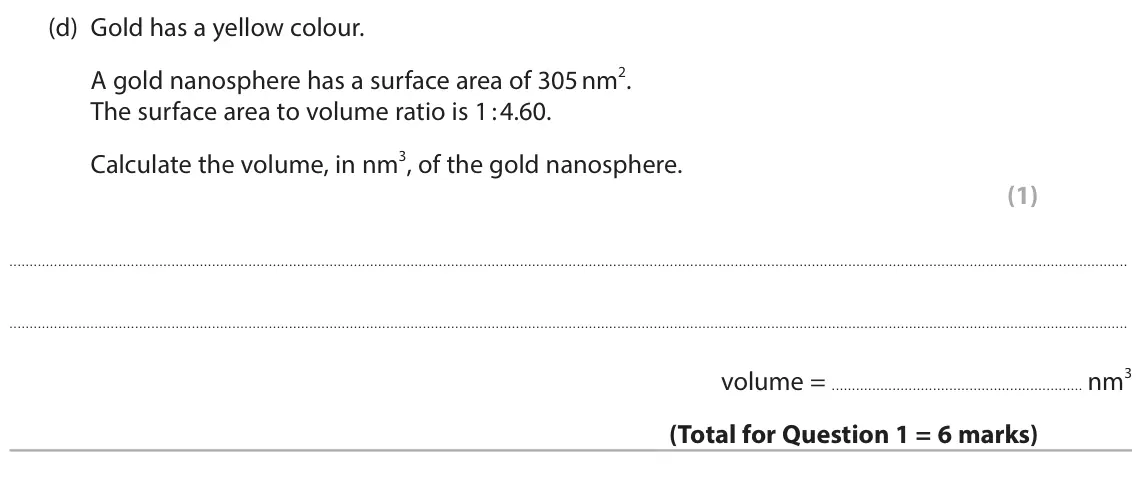
Q4(b)
The whole paper ↗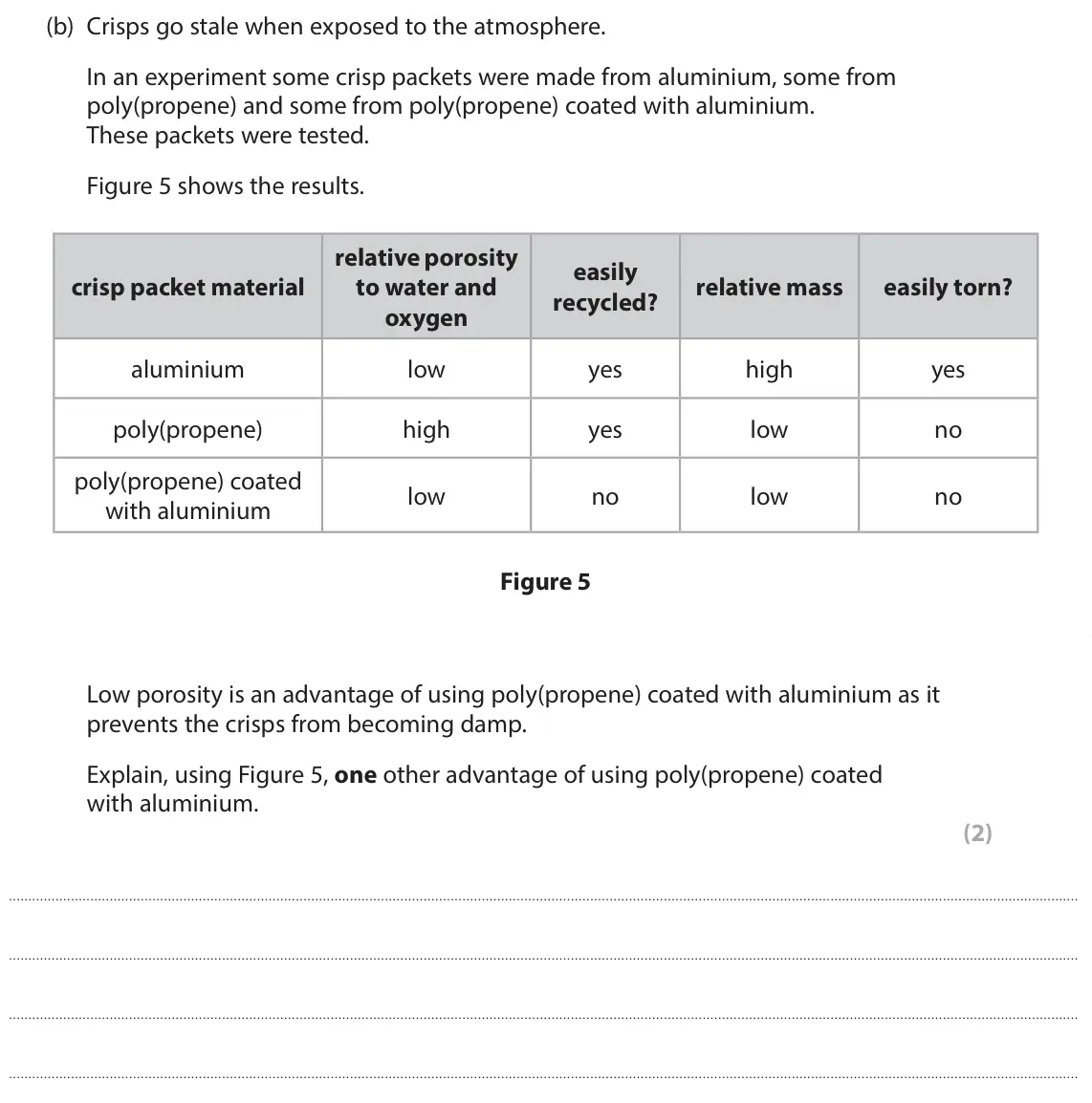
Q4(c)(i)
The whole paper ↗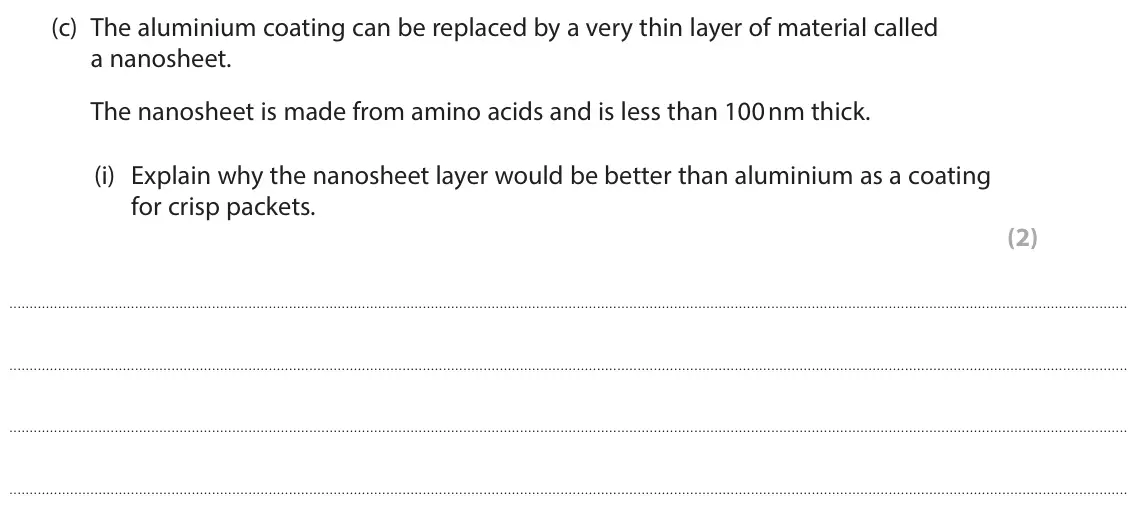
Q10(b)
The whole paper ↗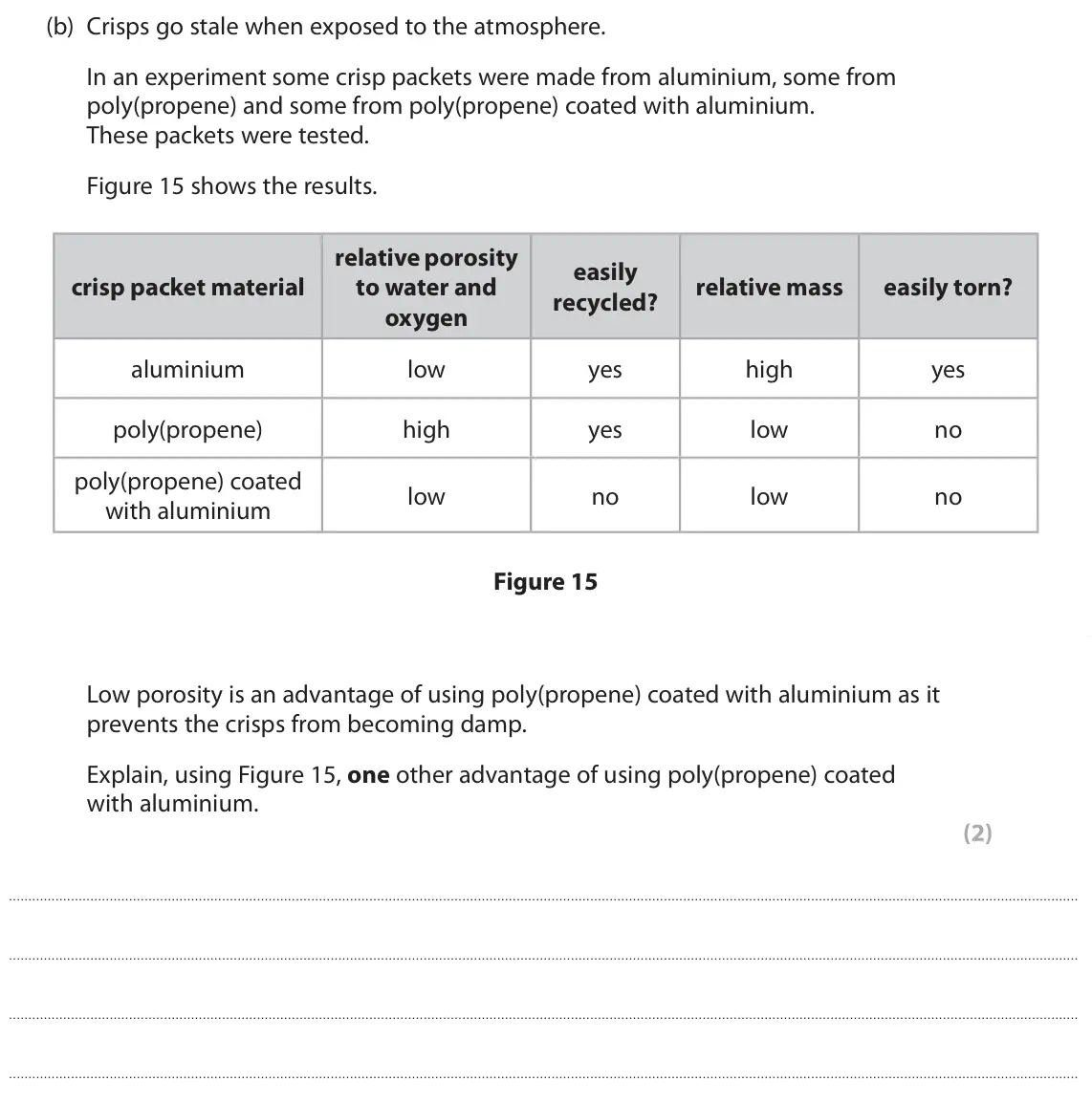
Q10(c)(i)
The whole paper ↗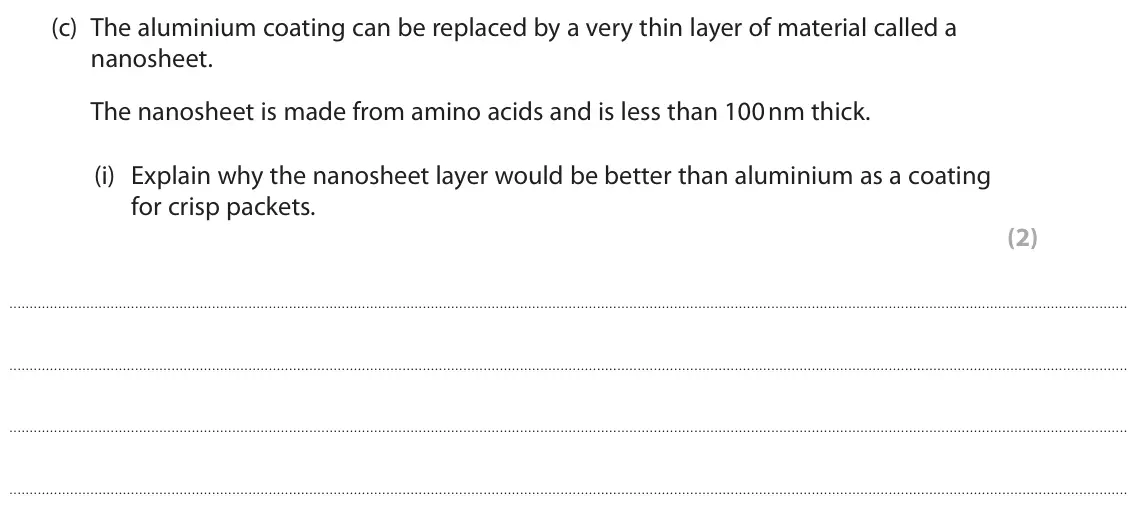
Q1(a)(i)
The whole paper ↗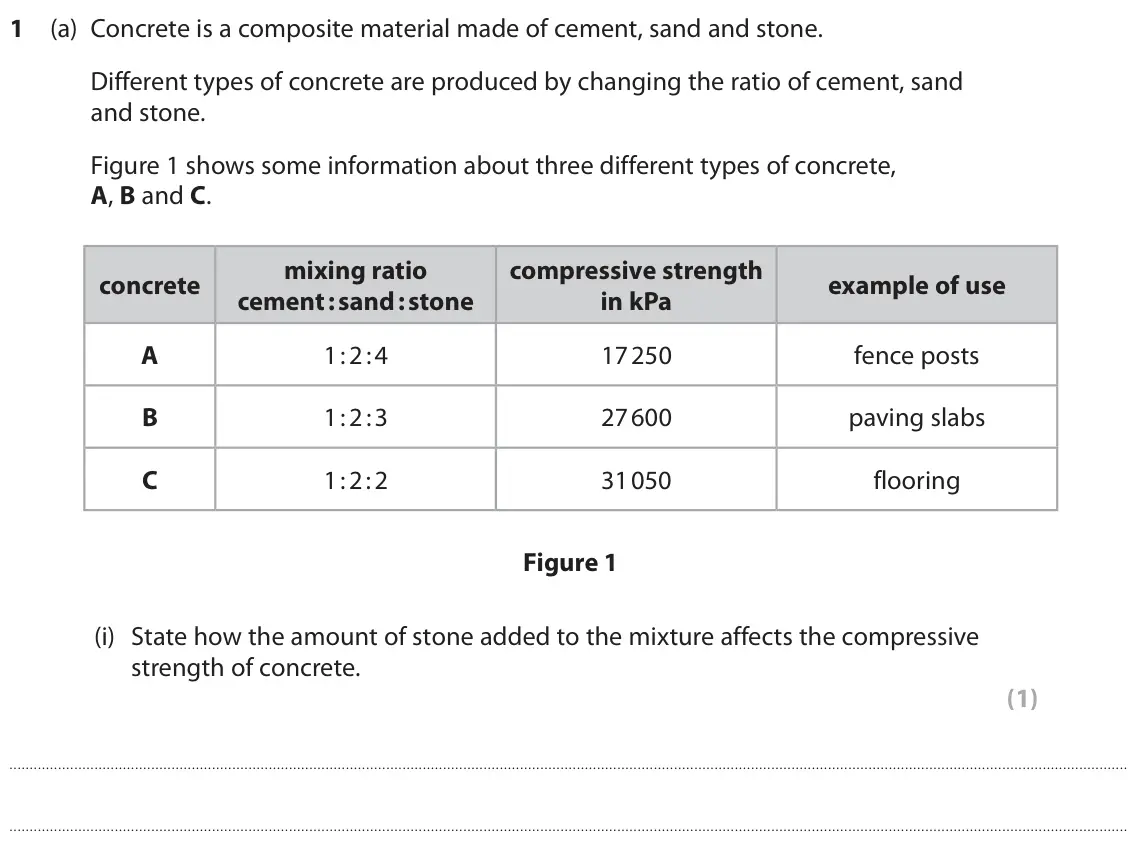
Q1(a)(ii)
The whole paper ↗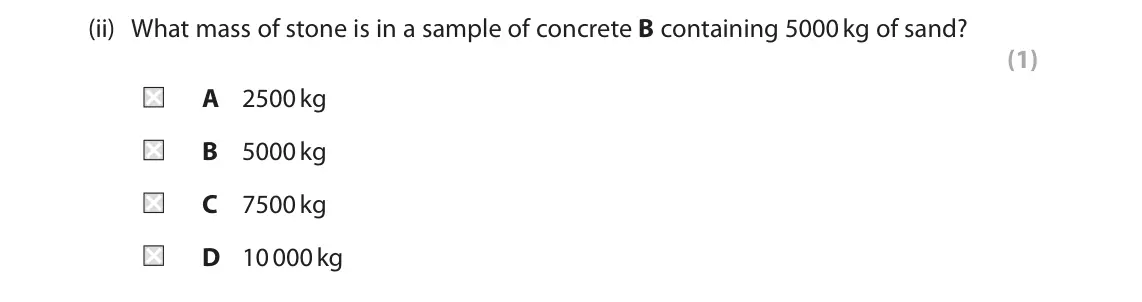
Q1(b)(i)
The whole paper ↗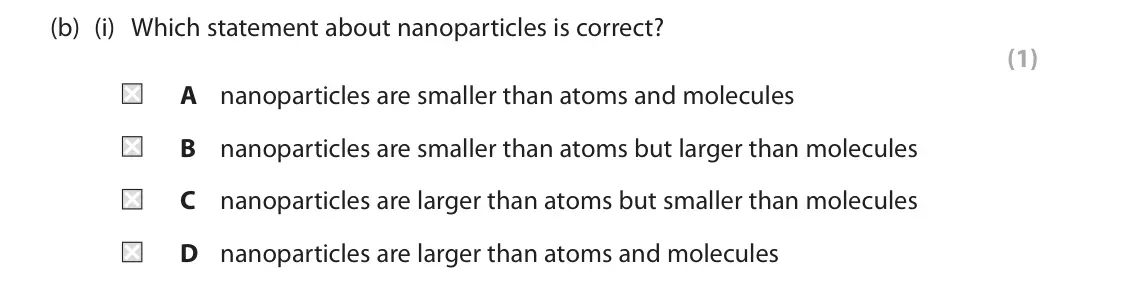
Q1(b)(ii)
The whole paper ↗
Q4(a)(iii)
The whole paper ↗
Q1(a)(i)
The whole paper ↗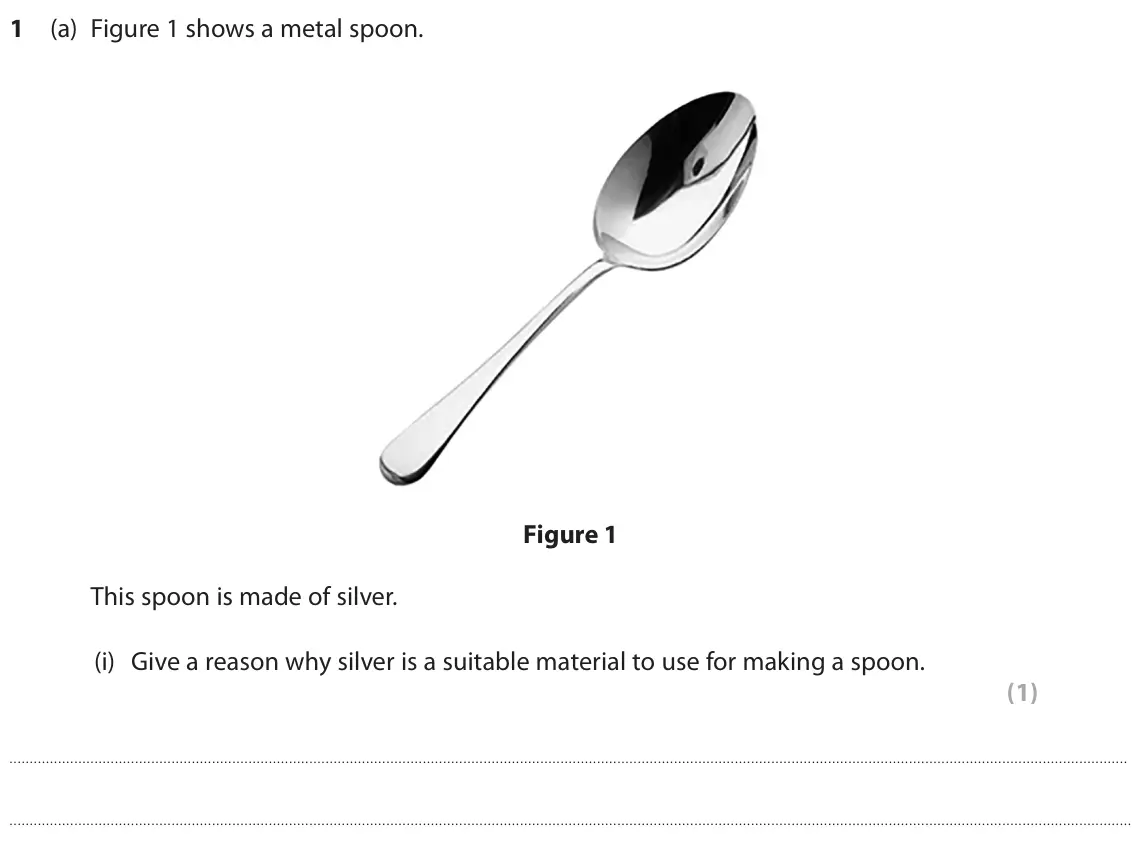
Q1(a)(ii)
The whole paper ↗
Q1(b)(i)
The whole paper ↗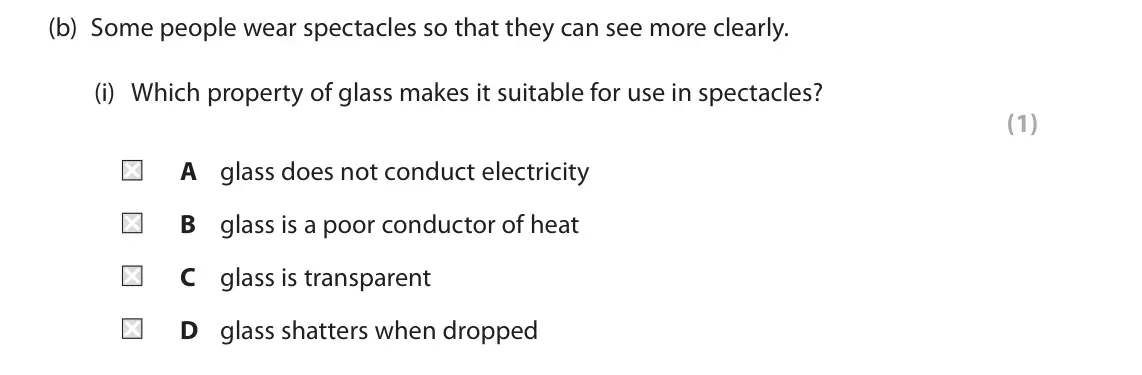
Q1(b)(ii)
The whole paper ↗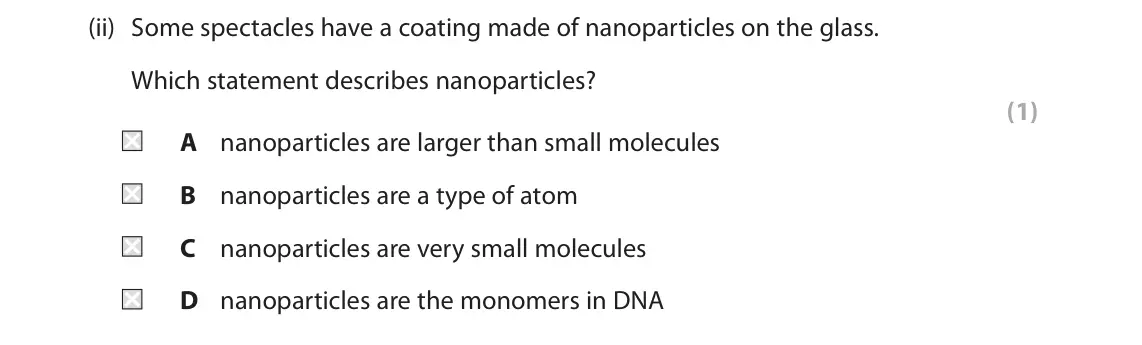
Q1(c)
The whole paper ↗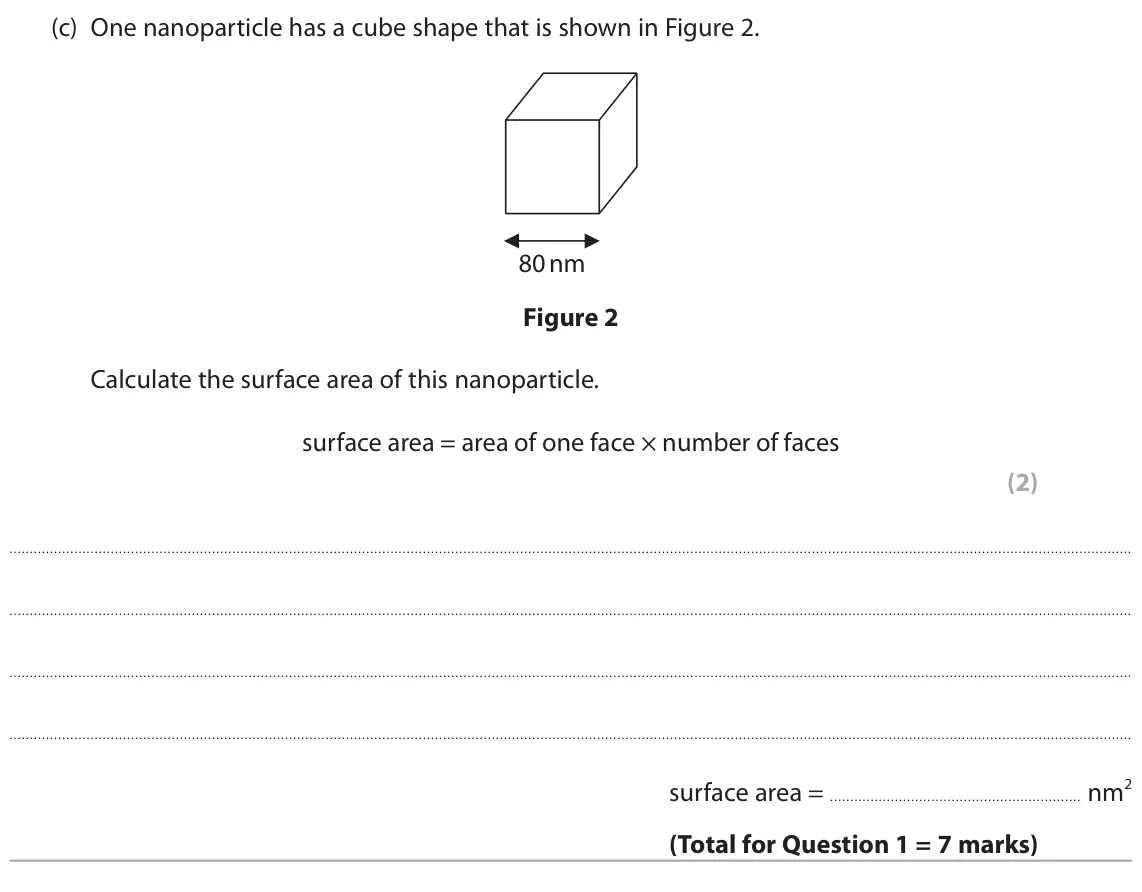
Q10(a)(iii)
The whole paper ↗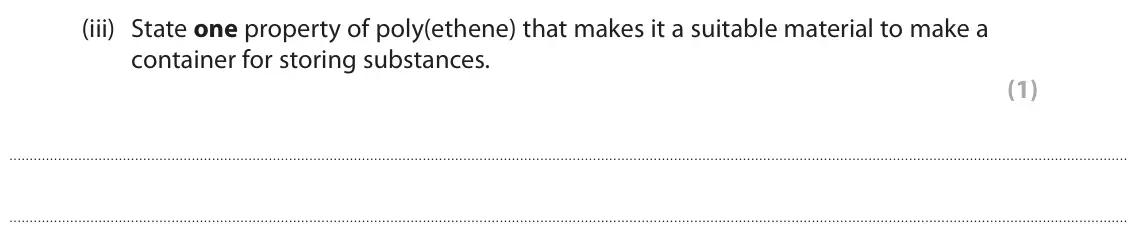
Q4(a)
The whole paper ↗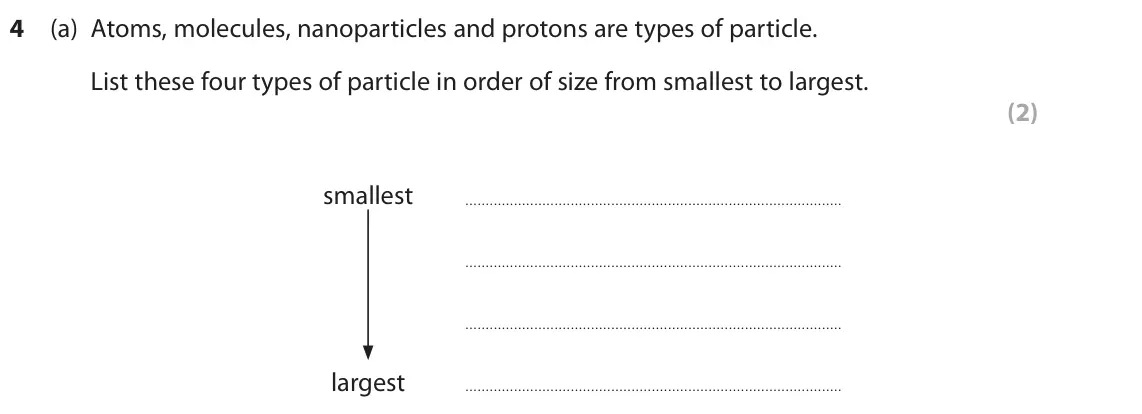
Q4(b)(i)
The whole paper ↗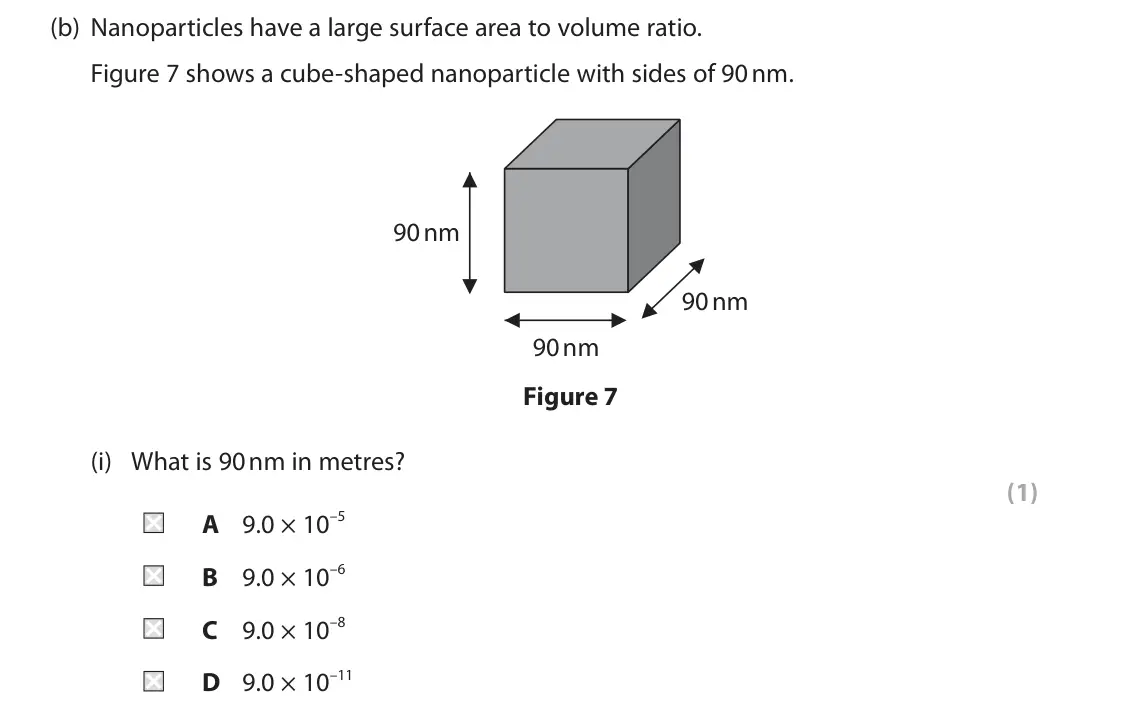
Q4(b)(ii)
The whole paper ↗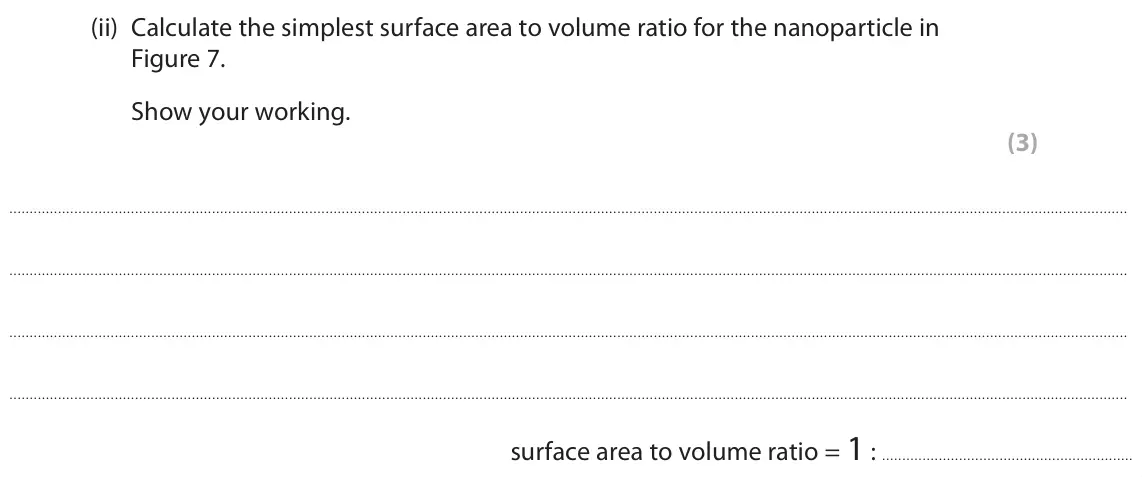
Q10(a)
The whole paper ↗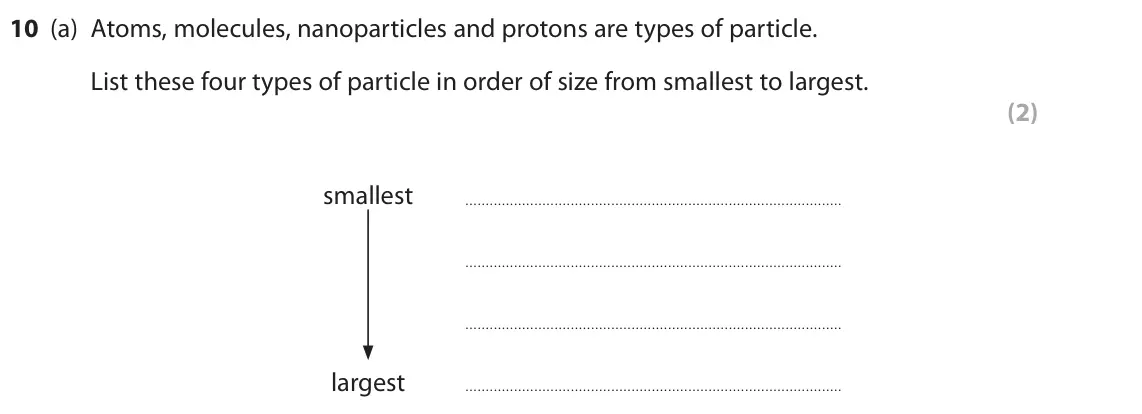
All 59 questions on Nanoparticles and materials, as a list
- June 2025, Paper 2 Higher, Q1(d) (1 mark): Gold has a yellow colour. A gold nanosphere has a surface area of 305 nm2. The surface area to volume ratio is 1 : 4.60. Calculate the volume, in nm3, of the go
- June 2025, Paper 2 Higher, Q4(b) (2 marks): Crisps go stale when exposed to the atmosphere. In an experiment some crisp packets were made from aluminium, some from poly(propene) and some from poly(propene
- June 2025, Paper 2 Higher, Q4(c)(i) (2 marks): Explain why the nanosheet layer would be better than aluminium as a coating for crisp packets. (2)
- June 2025, Paper 2 Foundation, Q10(b) (2 marks): Crisps go stale when exposed to the atmosphere. In an experiment some crisp packets were made from aluminium, some from poly(propene) and some from poly(propene
- June 2025, Paper 2 Foundation, Q10(c)(i) (2 marks): Explain why the nanosheet layer would be better than aluminium as a coating for crisp packets. (2)
- June 2024, Paper 2 Higher, Q1(a)(i) (1 mark): State how the amount of stone added to the mixture affects the compressive strength of concrete. (1)
- June 2024, Paper 2 Higher, Q1(a)(ii) (1 mark): What mass of stone is in a sample of concrete B containing 5000 kg of sand? (1) A 2500 kg B 5000 kg C 7500 kg D 10 000 kg
- June 2024, Paper 2 Higher, Q1(b)(i) (1 mark): Which statement about nanoparticles is correct? (1) A nanoparticles are smaller than atoms and molecules B nanoparticles are smaller than atoms but larger than
- June 2024, Paper 2 Higher, Q1(b)(ii) (2 marks): Some sunscreens contain nanoparticles of titanium dioxide. Explain why nanoparticles of titanium dioxide are used in some sunscreens. (2)
- June 2024, Paper 2 Higher, Q4(a)(iii) (1 mark): State one property of poly(ethene) that makes it a suitable material to make a container for storing substances. (1)
- June 2024, Paper 2 Foundation, Q1(a)(i) (1 mark): Give a reason why silver is a suitable material to use for making a spoon. (1)
- June 2024, Paper 2 Foundation, Q1(a)(ii) (2 marks): Some spoons are made of wood or plastic, not metal. The raw material for wooden spoons is trees and the raw material for plastic spoons is crude oil. Explain an
- June 2024, Paper 2 Foundation, Q1(b)(i) (1 mark): Which property of glass makes it suitable for use in spectacles? (1) A glass does not conduct electricity B glass is a poor conductor of heat C glass is transpa
- June 2024, Paper 2 Foundation, Q1(b)(ii) (1 mark): Some spectacles have a coating made of nanoparticles on the glass. Which statement describes nanoparticles? (1) A nanoparticles are larger than small molecules
- June 2024, Paper 2 Foundation, Q1(c) (2 marks): One nanoparticle has a cube shape that is shown in Figure 2. 80 nm Figure 2 Calculate the surface area of this nanoparticle. surface area = area of one face × n
- June 2024, Paper 2 Foundation, Q10(a)(iii) (1 mark): State one property of poly(ethene) that makes it a suitable material to make a container for storing substances. (1)
- June 2023, Paper 2 Higher, Q4(a) (2 marks): Atoms, molecules, nanoparticles and protons are types of particle. List these four types of particle in order of size from smallest to largest. (2) smallest lar
- June 2023, Paper 2 Higher, Q4(b)(i) (1 mark): What is 90 nm in metres? (1) A 9.0 × 10⁻⁵ B 9.0 × 10⁻⁶ C 9.0 × 10⁻⁸ D 9.0 × 10⁻¹¹
- June 2023, Paper 2 Higher, Q4(b)(ii) (3 marks): Calculate the simplest surface area to volume ratio for the nanoparticle in Figure 7. Show your working. (3) surface area to volume ratio = 1 :
- June 2023, Paper 2 Foundation, Q10(a) (2 marks): Atoms, molecules, nanoparticles and protons are types of particle. List these four types of particle in order of size from smallest to largest. (2) smallest lar
- June 2023, Paper 2 Foundation, Q10(b)(i) (1 mark): What is 90 nm in metres? (1) A 9.0 × 10⁻⁵ B 9.0 × 10⁻⁶ C 9.0 × 10⁻⁸ D 9.0 × 10⁻¹¹
- June 2023, Paper 2 Foundation, Q10(b)(ii) (3 marks): Calculate the simplest surface area to volume ratio for the nanoparticle in Figure 19. Show your working. (3) surface area to volume ratio = 1 :
- June 2022, Paper 2 Higher, Q1(a)(i) (1 mark): State one property of titanium dioxide nanoparticles that make them suitable for use in sunscreens. (1)
- June 2022, Paper 2 Higher, Q1(a)(ii) (1 mark): Suggest one possible risk associated with using nanoparticles. (1)
- June 2022, Paper 2 Higher, Q1(b)(i) (1 mark): State the trend shown by the data in Figure 1. (1)
- June 2022, Paper 2 Higher, Q1(b)(ii) (1 mark): What is the surface area : volume ratio for a spherical nanoparticle with a diameter of 80 nm? (1) A 3 : 35 B 3 : 40 C 3 : 45 D 3 : 50
- June 2022, Paper 2 Higher, Q1(c) (3 marks): A different nanoparticle is cube shaped, as shown in Figure 2. The length of one side of this cube is 60 nm. 60 nm Figure 2 Show that the surface area : volume
- June 2022, Paper 2 Higher, Q4(a)(iii) (1 mark): State a property of glass that makes it a suitable material to make the container for an acid. (1)
- June 2022, Paper 2 Foundation, Q1(a)(i) (1 mark): Give a reason why plastic is a suitable material to make a toothbrush handle. (1)
- June 2022, Paper 2 Foundation, Q1(a)(ii) (2 marks): Some toothbrush handles are made of wood, not plastic. Explain a disadvantage of using plastics. (2)
- June 2022, Paper 2 Foundation, Q1(b) (1 mark): The container is made of a ceramic material. Which is a property of the ceramic that makes it suitable for the container? (1) A it will break if dropped B it do
- June 2022, Paper 2 Foundation, Q1(c) (1 mark): In some countries, toothpastes contain nanoparticles of silver. Which statement describes the size of a nanoparticle? (1) A the size of an electron B the size o
- June 2022, Paper 2 Foundation, Q10(a)(iii) (1 mark): State a property of glass that makes it a suitable material to make the container for an acid. (1)
- November 2021, Paper 2 Higher, Q1(a) (2 marks): Figure 1 shows a list of particles. ethene molecule nanoparticle sodium atom starch molecule Figure 1 In the spaces below, write the names of these particles in
- November 2021, Paper 2 Higher, Q1(b) (2 marks): Explain a possible risk associated with nanoparticulate materials. (2)
- November 2021, Paper 2 Higher, Q1(c) (2 marks): Explain the advantage of using catalysts made of nanoparticles rather than larger particles. (2)
- November 2021, Paper 2 Foundation, Q1(a) (1 mark): Figure 1 shows a mug made of clay ceramic. Figure 1 Which property of clay ceramic makes it suitable for use as a mug? (1) A is brittle B is not transparent C d
- November 2021, Paper 2 Foundation, Q1(b)(i) (1 mark): Name a material from Figure 2 that would be suitable for coating the metal wire. (1)
- November 2021, Paper 2 Foundation, Q1(c)(i) (1 mark): Suggest one way that nanoparticles can enter the human body. (1)
- November 2021, Paper 2 Foundation, Q1(c)(ii) (1 mark): Suggest one possible risk if nanoparticles enter the human body. (1)
- November 2021, Paper 2 Foundation, Q1(c)(iii) (1 mark): The surface area of a nanoparticle of gold is 150 nm2. The volume of a nanoparticle of gold is 125 nm3. ratio = surface area volume Calculate the surface area t
- November 2020, Paper 2 Higher, Q1(a) (1 mark): A chloride ion, a fluorine atom and a nanoparticle are all types of particle. Which of the following shows the particles in order of size, starting from the sma
- November 2020, Paper 2 Foundation, Q2(a) (2 marks): Figure 2 shows information about three different materials, a composite, a glass and a metal. a composite a glass a metal density low high high ability to condu
- November 2020, Paper 2 Foundation, Q2(b)(i) (1 mark): Nanoparticles are very small. Some nanoparticles have a radius of 17 nm. The radius of a magnesium atom is 0.16 nm. Approximately how many times larger is the r
- November 2020, Paper 2 Foundation, Q2(b)(ii) (2 marks): A catalyst contains cube‑shaped nanoparticles. Figure 3 shows a diagram of a cube‑shaped nanoparticle. The length of each side of the cube is 9 nm. © Gauravjuve
- November 2020, Paper 2 Foundation, Q2(b)(iii) (1 mark): Nanoparticles have many uses. Some scientists are concerned about the possible risks of using nanoparticles. Give one possible risk of using nanoparticles. (1)
- June 2019, Paper 2 Higher, Q1(b)(i) (1 mark): Particles less than 100 nanometres in size are classified as nanoparticles. 100 nanometres is (1) A 1 × 10⁻⁴ metres B 1 × 10⁻⁵ metres C 1 × 10⁻⁷ metres D 1 × 10
- June 2019, Paper 2 Higher, Q1(b)(ii) (2 marks): Nanoparticles of titanium(IV) oxide are used in some sunscreens. Describe a reason why nanoparticles of titanium(IV) oxide are used in some sunscreens. (2)
- June 2019, Paper 2 Higher, Q1(b)(iii) (2 marks): Some people are concerned that there is a risk when sunscreens containing nanoparticles are used. Explain a possible risk associated with using nanoparticles in
- June 2018, Paper 2 Higher, Q5(a) (1 mark): Figure 4 shows information about a ceramic and a metal. ceramic metal flexibility low high hardness medium low reaction with water no reaction very slow reactio
- June 2018, Paper 2 Higher, Q5(c) (2 marks): A layer of poly(chloroethene) (PVC) is used to surround the copper in electrical cables. Explain why poly(chloroethene) is a suitable material for this purpose.
- June 2018, Paper 2 Foundation, Q4(a)(i) (1 mark): An atom has a radius of about 0.1 nm. A nanoparticle might have a radius of about (1) A 0.01 nm B 0.1 nm C 50 nm D 1 cm
- June 2018, Paper 2 Foundation, Q4(a)(ii) (1 mark): A useful property of nanoparticles in sunscreens is that they (1) A have a low surface area to volume ratio B are toxic C are white D prevent harmful UV radiati
- June 2018, Paper 2 Foundation, Q4(a)(iii) (2 marks): A nanoparticle has a surface area of 38 400 nm2 and a volume of 51 200 nm3. Calculate the surface area to volume ratio. (2) surface area to volume ratio = 1.00
- June 2018, Paper 2 Foundation, Q7(a)(ii) (1 mark): Which type of material would be most suitable for the insulation on this household wire? (1) A the glass B the ceramic C the polymer D the metal
- June 2018, Paper 2 Foundation, Q7(b) (2 marks): Explain, using information from Figure 10, why the ceramic is a suitable material to make a cup that will contain a hot drink of tea or coffee. (2)
- Specimen, Paper 2 Higher, Q6(a) (4 marks): Figure 6 shows some properties of steel and Kevlar®. property steel Kevlar® density / g cm–3 7.85 1.44 relative strength 1 5 flexibility low high resistance to
- Specimen, Paper 2 Higher, Q6(b)(i) (3 marks): The length of one side of a cube of silver is 2 cm as shown in Figure 7. 2 cm Figure 7 Calculate the surface area to volume ratio of this cube of silver. (3) su
- Specimen, Paper 2 Higher, Q6(b)(ii) (3 marks): Suggest an explanation of why a given mass of silver is more effective as a catalyst when used as nanoparticles rather than in a powder form. (3)
Questions, mark schemes and examiner’s reports are © Pearson Edexcel, from their published past papers. Plumi isn’t affiliated with any exam board. Want whole papers? Every Edexcel GCSE Chemistry paper.
Rather write your answers by hand on iPad? Plumi marks them against the same mark schemes.