 plumi
Alcohols and carboxylic acids: Edexcel GCSE Chemistry questions
Every Edexcel GCSE Chemistry exam question on Alcohols and carboxylic acids (specification points 9.26–9.34), 2018–2025, with its mark scheme and examiner’s report.
Find questions1,880
Exam
All years
Calculations
Q4(d)(i)
The whole paper ↗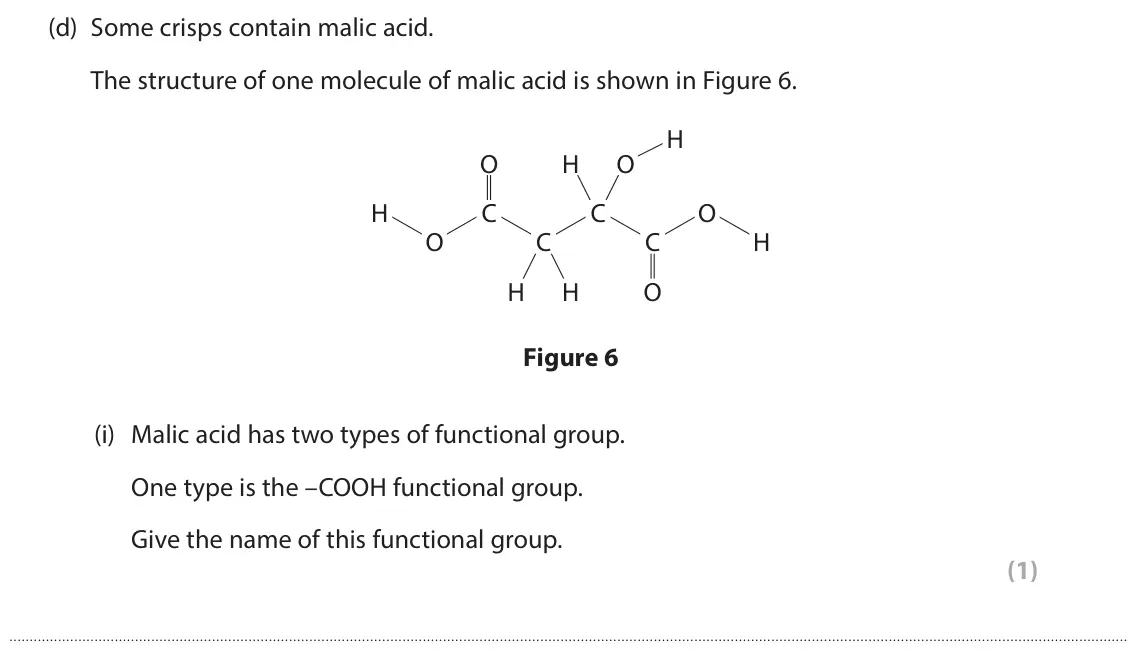
Q4(d)(ii)
The whole paper ↗
Q10(a)(i)
The whole paper ↗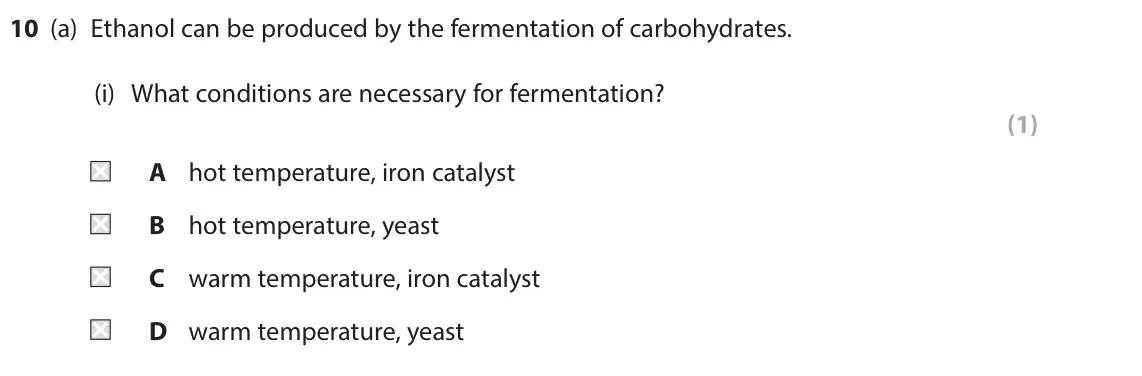
Q10(a)(ii)
The whole paper ↗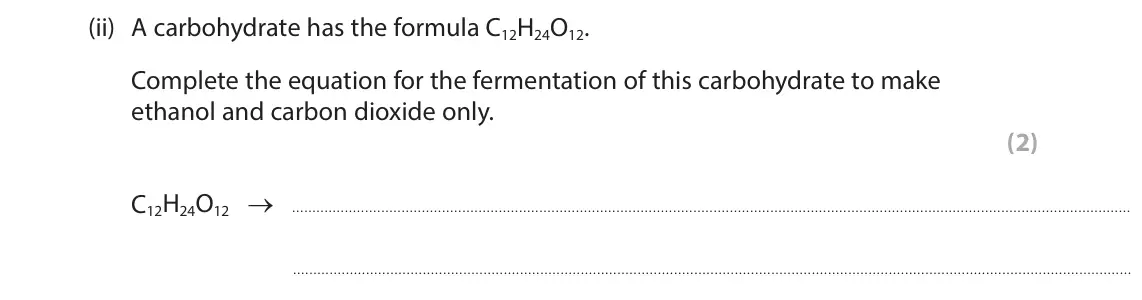
Q4(c)(i)
The whole paper ↗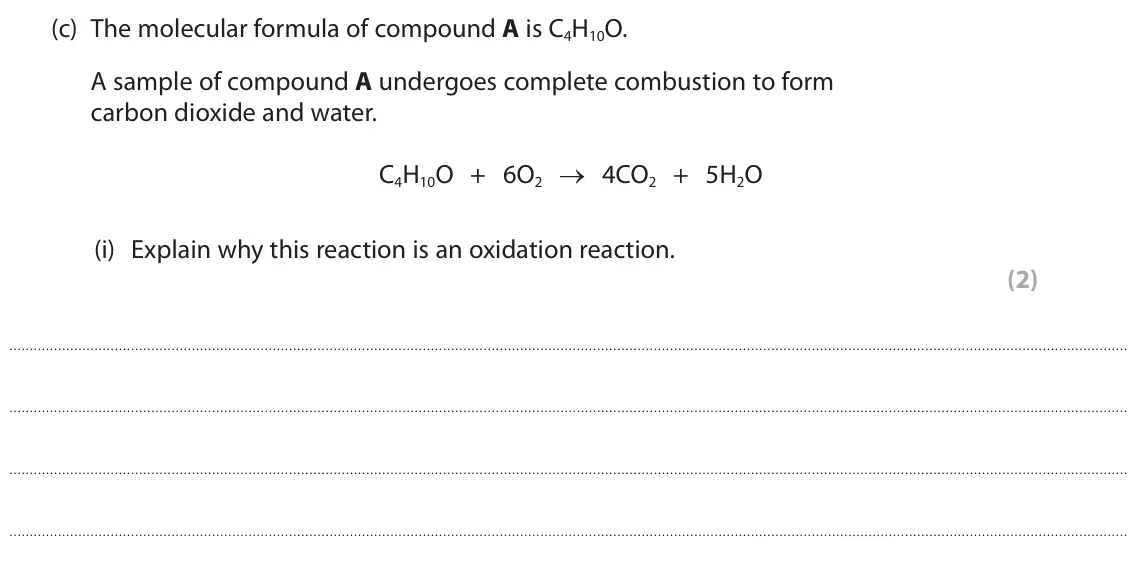
Q7(a)(i)
The whole paper ↗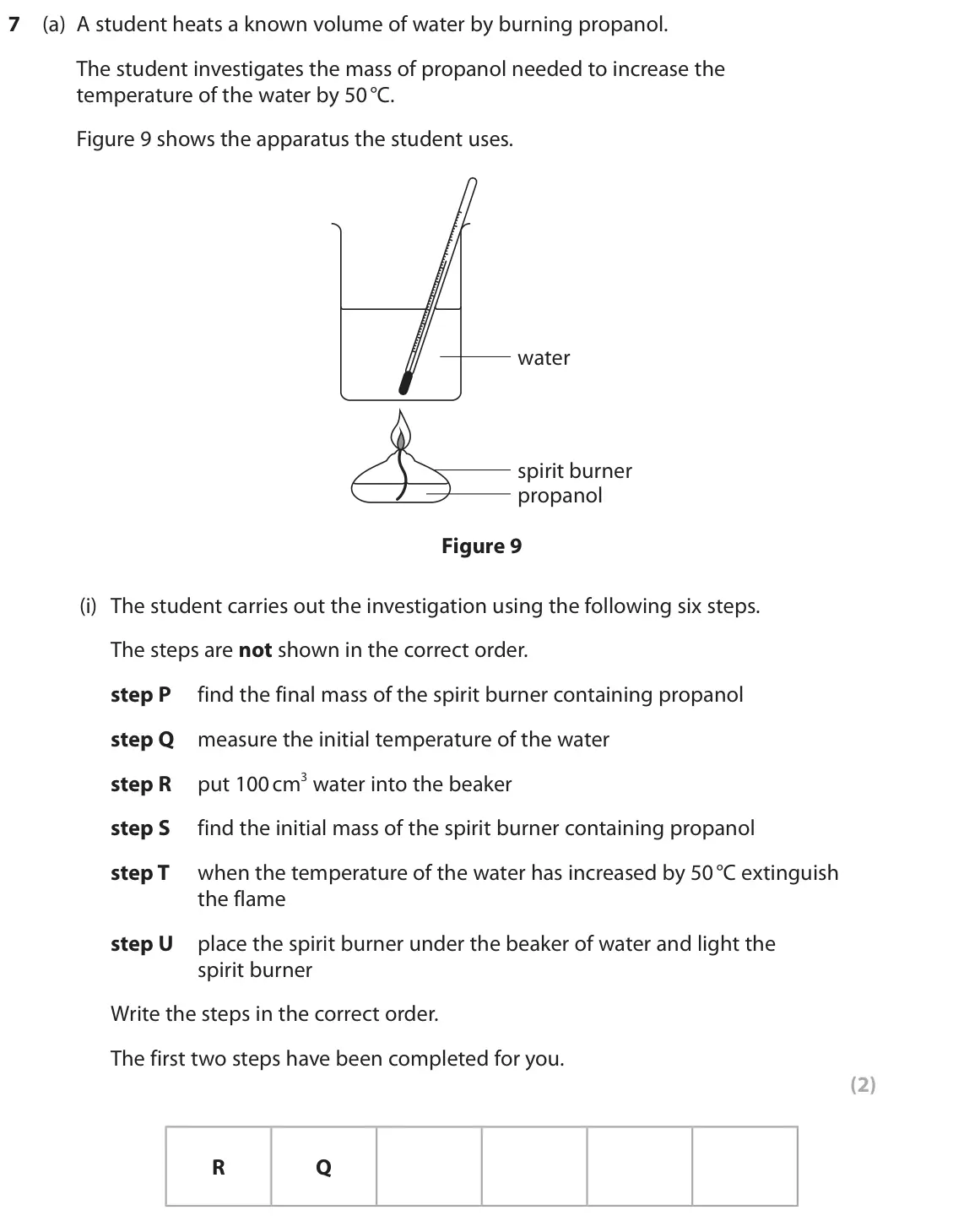
Q7(a)(ii)
The whole paper ↗
Q7(a)(iii)
The whole paper ↗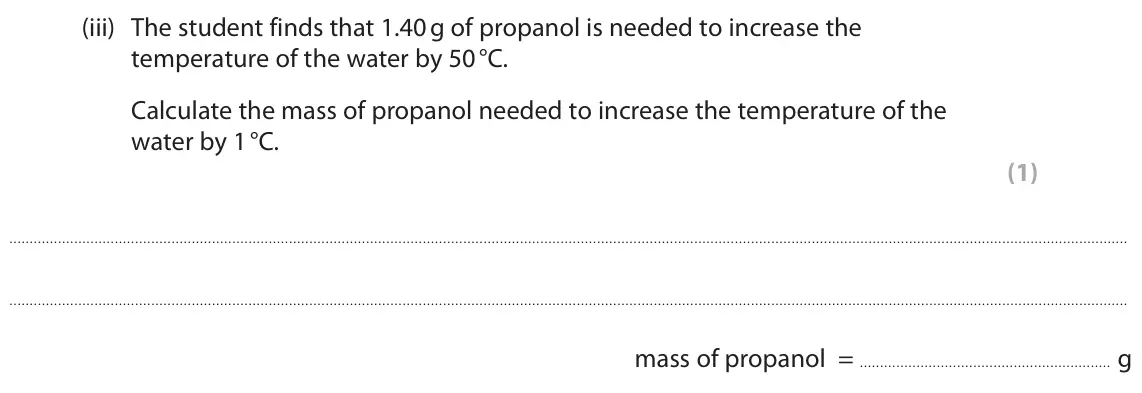
Q7(b)
The whole paper ↗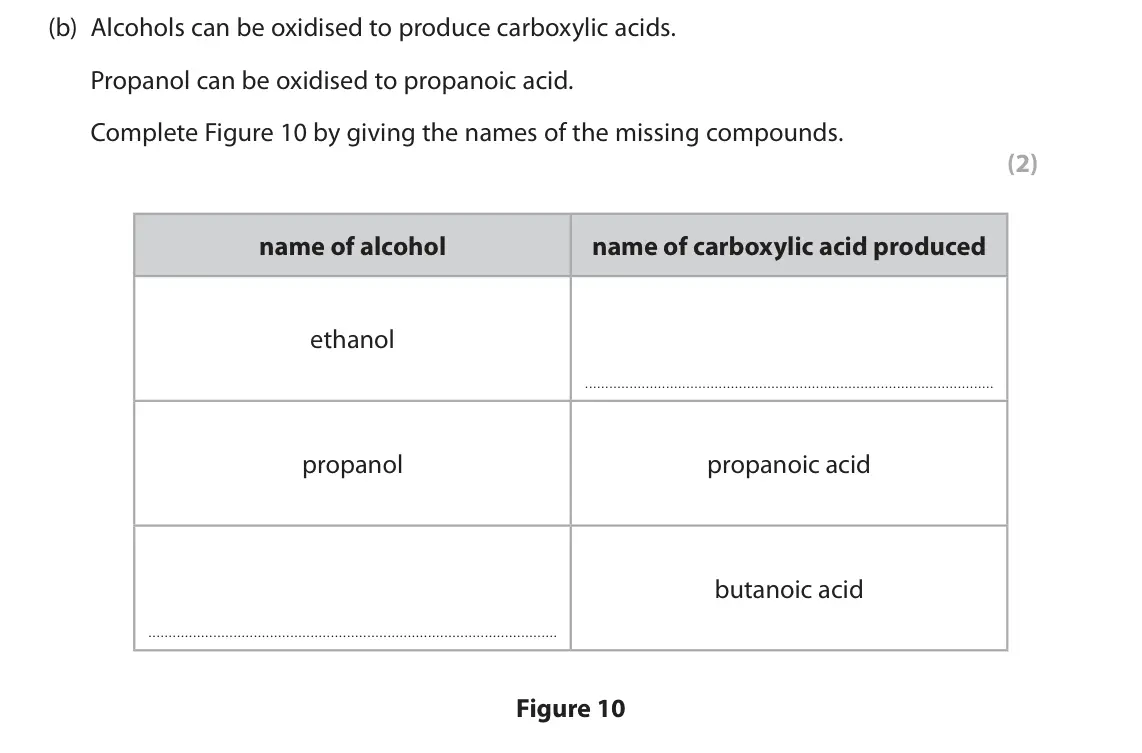
Q7(c)
The whole paper ↗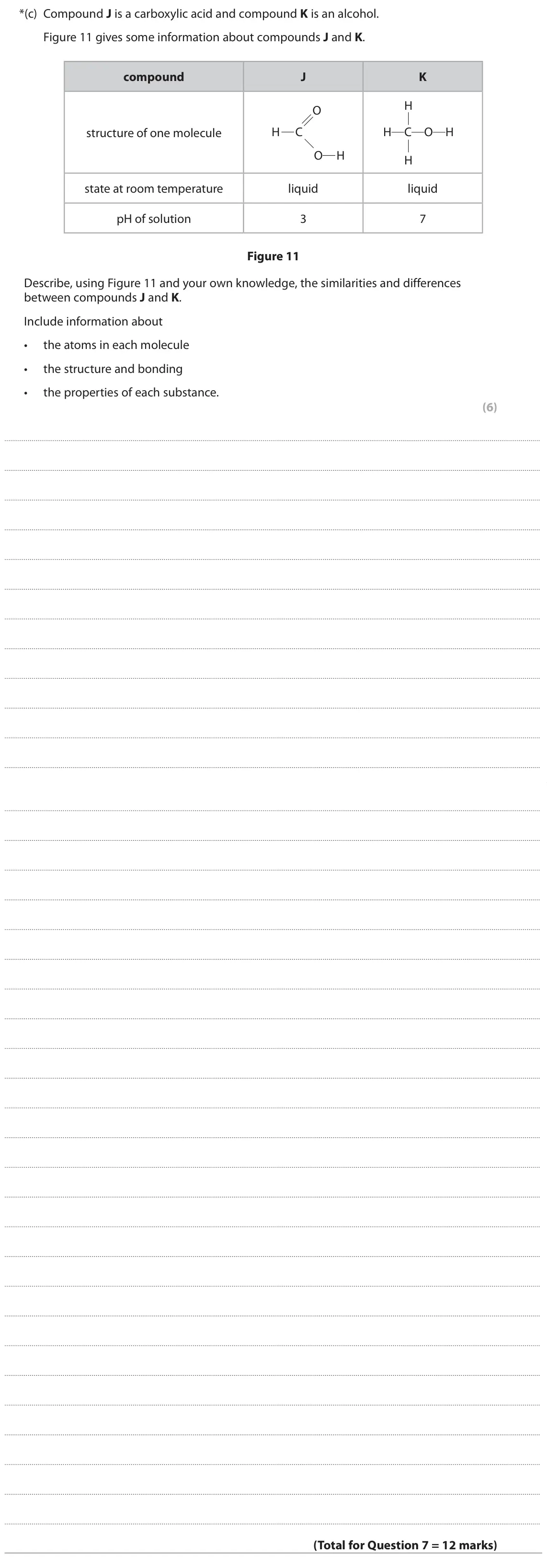
Q10(d)(i)
The whole paper ↗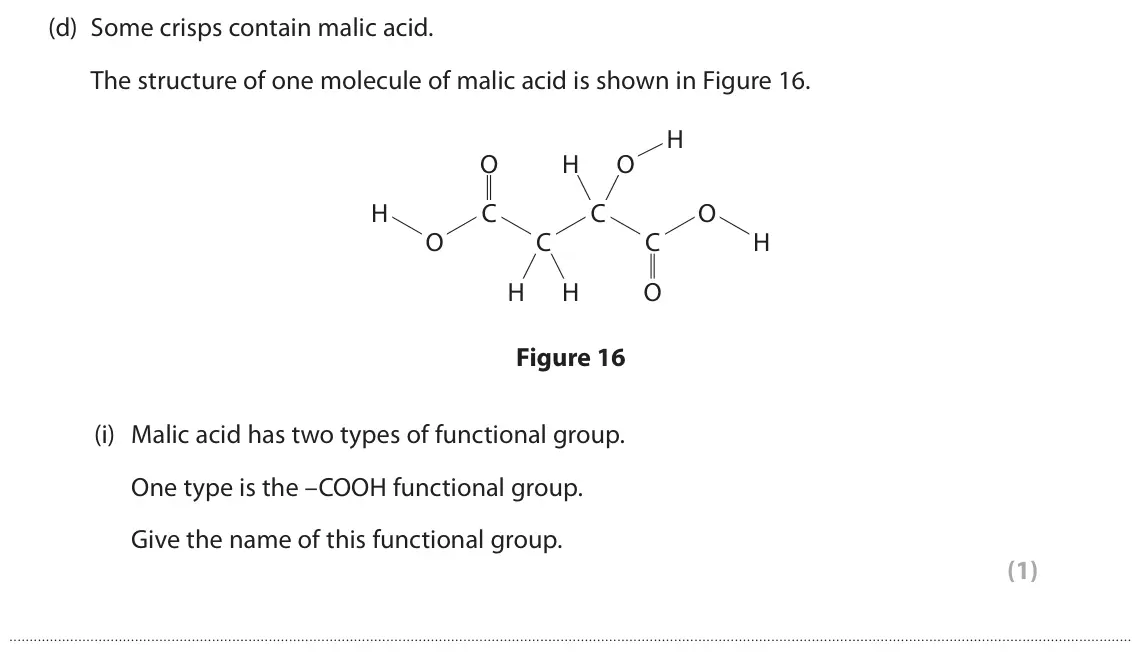
Q10(d)(ii)
The whole paper ↗
Q8(c)
The whole paper ↗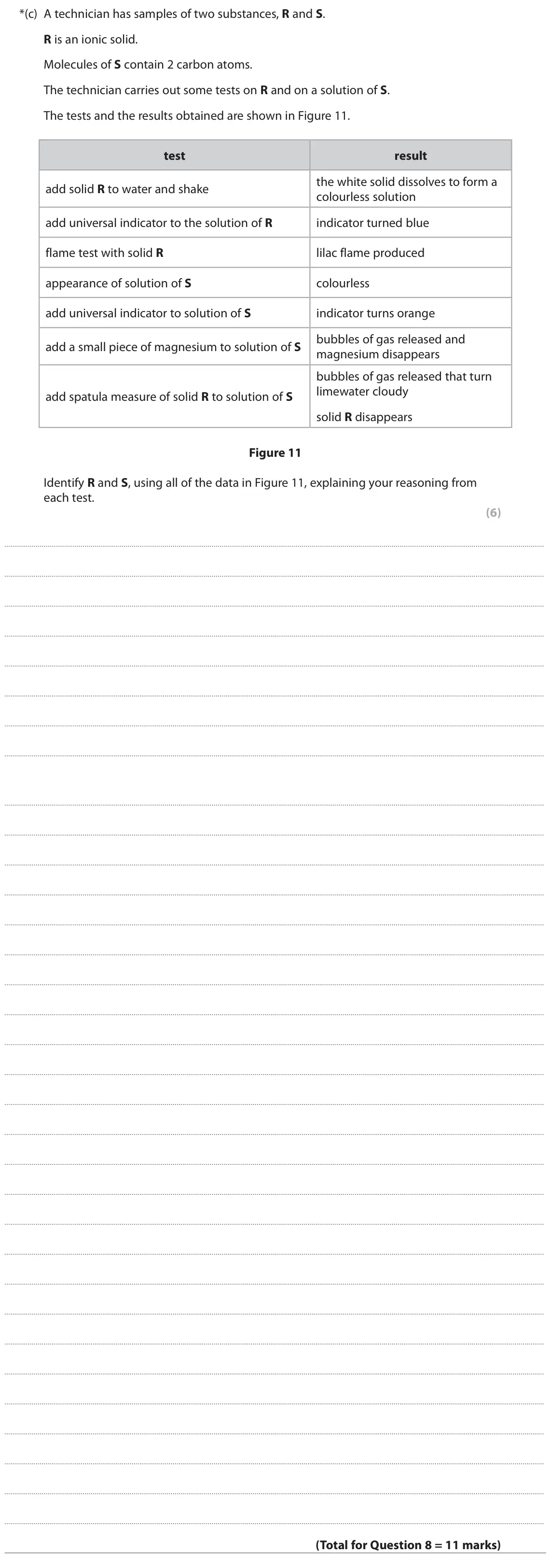
Q10(a)(i)
The whole paper ↗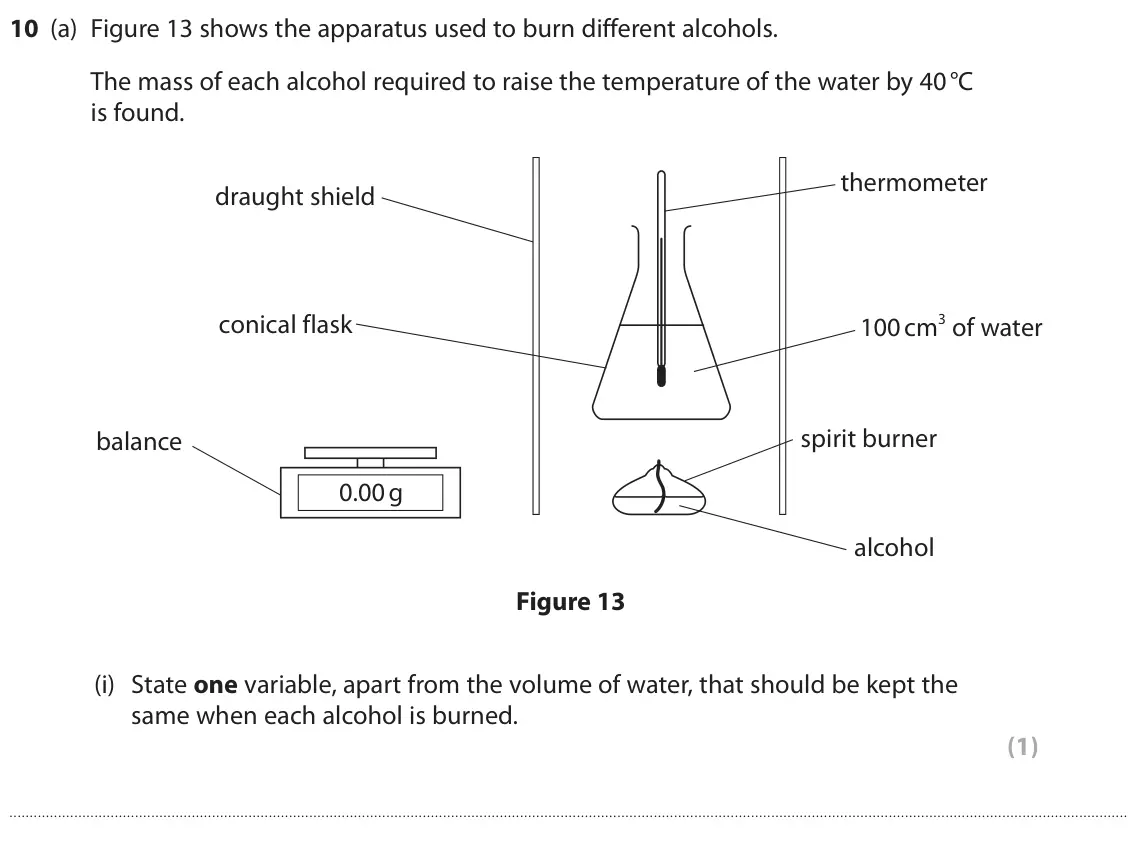
Q10(a)(iii)
The whole paper ↗
Q1(a)
The whole paper ↗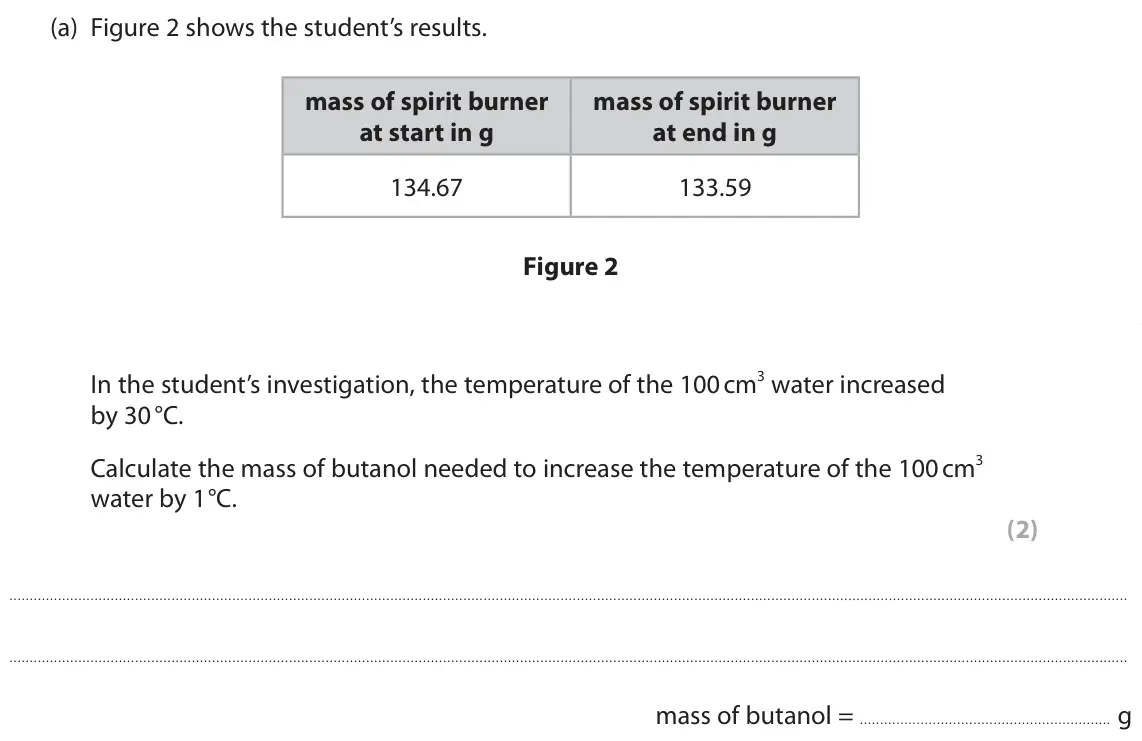
Q1(b)
The whole paper ↗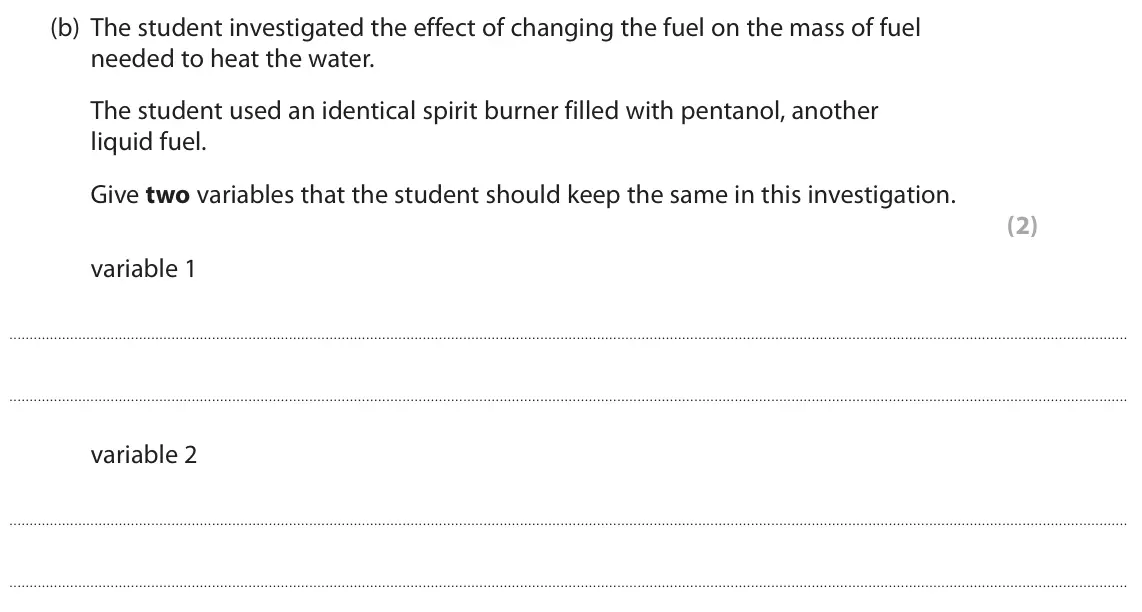
Q1(c)
The whole paper ↗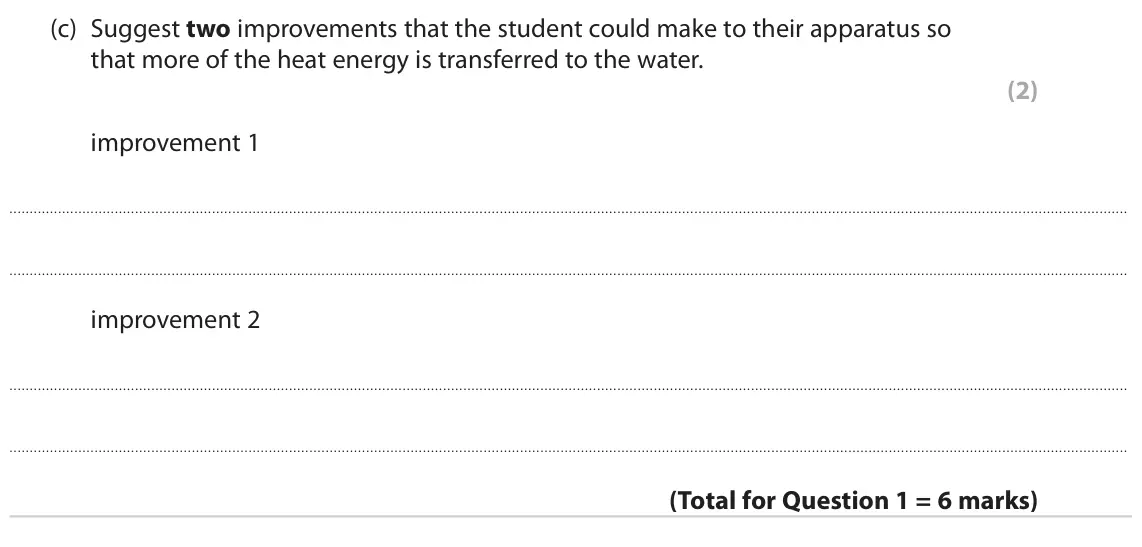
Q7(a)(iii)
The whole paper ↗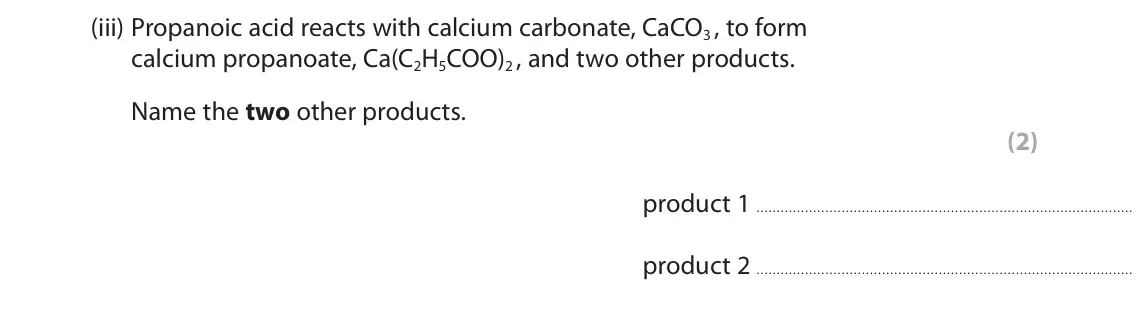
Q7(b)
The whole paper ↗
All 74 questions on Alcohols and carboxylic acids, as a list
- June 2025, Paper 2 Higher, Q4(d)(i) (1 mark): Malic acid has two types of functional group. One type is the –COOH functional group. Give the name of this functional group. (1)
- June 2025, Paper 2 Higher, Q4(d)(ii) (1 mark): Name the other functional group. (1)
- June 2025, Paper 2 Higher, Q10(a)(i) (1 mark): What conditions are necessary for fermentation? (1) A hot temperature, iron catalyst B hot temperature, yeast C warm temperature, iron catalyst D warm temperatu
- June 2025, Paper 2 Higher, Q10(a)(ii) (2 marks): A carbohydrate has the formula C12H24O12. Complete the equation for the fermentation of this carbohydrate to make ethanol and carbon dioxide only. (2) C12H24O12
- June 2025, Paper 2 Foundation, Q4(c)(i) (2 marks): Explain why this reaction is an oxidation reaction. (2)
- June 2025, Paper 2 Foundation, Q7(a)(i) (2 marks): The student carries out the investigation using the following six steps. The steps are not shown in the correct order. step P find the final mass of the spirit
- June 2025, Paper 2 Foundation, Q7(a)(ii) (1 mark): State what should be used to find the mass of the spirit burner. (1)
- June 2025, Paper 2 Foundation, Q7(a)(iii) (1 mark): The student finds that 1.40 g of propanol is needed to increase the temperature of the water by 50 °C. Calculate the mass of propanol needed to increase the tem
- June 2025, Paper 2 Foundation, Q7(b) (2 marks): Alcohols can be oxidised to produce carboxylic acids. Propanol can be oxidised to propanoic acid. Complete Figure 10 by giving the names of the missing compound
- June 2025, Paper 2 Foundation, Q7(c) (6 marks): Compound J is a carboxylic acid and compound K is an alcohol. Figure 11 gives some information about compounds J and K. compound J K H O H C H C O H structure o
- June 2025, Paper 2 Foundation, Q10(d)(i) (1 mark): Malic acid has two types of functional group. One type is the –COOH functional group. Give the name of this functional group. (1)
- June 2025, Paper 2 Foundation, Q10(d)(ii) (1 mark): Name the other functional group. (1)
- June 2024, Paper 2 Higher, Q8(c) (6 marks): A technician has samples of two substances, R and S. R is an ionic solid. Molecules of S contain 2 carbon atoms. The technician carries out some tests on R and
- June 2024, Paper 2 Higher, Q10(a)(i) (1 mark): State one variable, apart from the volume of water, that should be kept the same when each alcohol is burned. (1)
- June 2024, Paper 2 Higher, Q10(a)(iii) (1 mark): The mass of ethanol used to raise the temperature of the water by 40 °C is higher than the theoretical value. The experiment is repeated and the same result obt
- June 2023, Paper 2 Higher, Q1(a) (2 marks): Figure 2 shows the student’s results. mass of spirit burner mass of spirit burner at start in g at end in g 134.67 133.59 Figure 2 In the student’s investigatio
- June 2023, Paper 2 Higher, Q1(b) (2 marks): The student investigated the effect of changing the fuel on the mass of fuel needed to heat the water. The student used an identical spirit burner filled with p
- June 2023, Paper 2 Higher, Q1(c) (2 marks): Suggest two improvements that the student could make to their apparatus so that more of the heat energy is transferred to the water. (2) improvement 1 improveme
- June 2023, Paper 2 Higher, Q7(a)(iii) (2 marks): Propanoic acid reacts with calcium carbonate, CaCO3 , to form calcium propanoate, Ca(C2H5COO)2 , and two other products. Name the two other products. (2) produc
- June 2023, Paper 2 Higher, Q7(b) (6 marks): Glucose, C6H12O6 , is a carbohydrate. A dilute solution of ethanol can be produced from glucose by fermentation. The dilute solution of ethanol can then be proc
- June 2023, Paper 2 Foundation, Q5(a) (1 mark): Complete the missing label on Figure 9. (1)
- June 2023, Paper 2 Foundation, Q5(c) (1 mark): State what should be added to the glucose solution to cause the fermentation reaction. (1)
- June 2023, Paper 2 Foundation, Q5(f) (1 mark): The structure of a molecule of ethanol is shown in Figure 10. H H H C C O H H H Figure 10 Ethanol is an example of an alcohol. What is the functional group of a
- June 2023, Paper 2 Foundation, Q5(g) (1 mark): Ethanol can be oxidised to form ethanoic acid. State what is seen when a piece of universal indicator paper is placed in some dilute ethanoic acid. (1)
- June 2022, Paper 2 Higher, Q10(b)(i) (1 mark): Give the name of the carbon‑containing product formed when the alcohol in Figure 15 undergoes dehydration. (1)
- June 2022, Paper 2 Higher, Q10(b)(ii) (1 mark): Give the formula of the functional group of the product formed when the alcohol in Figure 15 undergoes oxidation. (1)
- June 2022, Paper 2 Higher, Q10(b)(iii) (1 mark): A student wants to investigate the amount of energy released when 1.00 g of the alcohol is burned. They set up the apparatus shown in Figure 16 to measure the t
- June 2022, Paper 2 Higher, Q10(c)(i) (1 mark): Give the formula of the other product formed in this reaction. (1)
- June 2022, Paper 2 Higher, Q10(c)(ii) (2 marks): Draw the structure of one molecule of the alcohol used to produce the polyester shown in Figure 17, showing all covalent bonds. (2)
- November 2021, Paper 2 Higher, Q10(a)(i) (1 mark): What happens to propanol when it forms compound Y? (1) A propanol undergoes an addition reaction B propanol is dehydrated C propanol is hydrated D propanol is o
- November 2021, Paper 2 Higher, Q10(a)(iii) (1 mark): Compound Z is a carboxylic acid. Which of the following shows the functional group of a carboxylic acid? (1) O C A O O C B O C C O H C D O H
- November 2021, Paper 2 Higher, Q10(a)(iv) (2 marks): Compound Z is an acid and turns litmus and universal indicator papers red. Compound Z also shows other acidic properties. Devise an experiment that would show a
- November 2021, Paper 2 Foundation, Q7(a)(i) (2 marks): Figure 14 shows an incomplete diagram of the structure of a molecule of propanol, CH3CH2CH2OH. Complete the structure of the molecule of propanol in Figure 14.
- November 2021, Paper 2 Foundation, Q7(a)(ii) (1 mark): Propanol can be converted into propanoic acid. What happens to propanol in this reaction? (1) A it is dehydrated B it is neutralised C it is oxidised D it is po
- November 2021, Paper 2 Foundation, Q7(b)(i) (1 mark): Calculate the mass of butanol used. (1) mass of butanol = g
- November 2021, Paper 2 Foundation, Q7(b)(ii) (6 marks): Figure 16 shows equipment that can be used to obtain the results shown in Figure 15. thermometer beaker measuring electronic cylinder balance wick alcohol burne
- November 2021, Paper 2 Foundation, Q7(b)(iii) (2 marks): The results show that 0.36g of pentanol was needed to raise the temperature of the water by 20°C. Calculate the mass of pentanol needed to raise the temperature
- November 2020, Paper 2 Higher, Q5(a)(i) (2 marks): Monomer B contains a carboxylic acid group. Describe what you would see when a small amount of solid sodium carbonate is added to a solution of monomer B. (2)
- November 2020, Paper 2 Higher, Q5(c) (3 marks): Alcohols can be dehydrated. Complete the balanced equation for the dehydration of butan‑1‑ol by drawing the structures of the two products in the boxes. Name th
- November 2020, Paper 2 Higher, Q10(a)(i) (2 marks): State two steps that need to be taken to turn the solution of the carbohydrate in the flask into a solution of ethanol. (2) 1 2
- November 2020, Paper 2 Higher, Q10(c) (6 marks): Figure 12 shows information about some compounds in the same homologous series. does it does it react boiling formula density react with sodium name structural
- November 2020, Paper 2 Foundation, Q7(a) (1 mark): Ethanol can be produced by the fermentation of glucose solution. Which of these shows the word equation for the fermentation of glucose solution? (1) A glucose
- November 2020, Paper 2 Foundation, Q7(b)(i) (1 mark): Pentanol is the next member of this series. A molecule of pentanol contains five carbon atoms. Suggest the formula of a molecule of pentanol. (1)
- November 2020, Paper 2 Foundation, Q7(b)(ii) (2 marks): Draw the structure of a molecule of ethanol. Show all bonds. (2)
- November 2020, Paper 2 Foundation, Q7(c)(i) (2 marks): Complete the equation for this reaction. (2) CH3CH2OH + → CH3COOH +
- June 2019, Paper 2 Higher, Q4(a) (2 marks): Ethanol is made by fermentation of a carbohydrate dissolved in water, in the presence of yeast. The reaction is carried out at 30 °C. Explain why the reaction i
- June 2019, Paper 2 Higher, Q4(b)(i) (1 mark): In this reaction ethanol is (1) A hydrated B oxidised C polymerised D reduced
- June 2019, Paper 2 Higher, Q4(b)(ii) (2 marks): Draw the structure of a molecule of ethanoic acid, CH3COOH, showing all covalent bonds. (2)
- June 2019, Paper 2 Higher, Q4(c)(i) (3 marks): The apparatus in Figure 3 can be used to investigate the temperature rise produced in a known mass of water when a sample of ethanol is burned. thermometer beak
- June 2019, Paper 2 Higher, Q4(c)(ii) (3 marks): In a different experiment, separate samples of the alcohols methanol, ethanol, propanol, butanol and pentanol were burned to determine the mass of each alcohol
- June 2019, Paper 2 Foundation, Q10(a) (2 marks): Ethanol is made by fermentation of a carbohydrate dissolved in water, in the presence of yeast. The reaction is carried out at 30 °C. Explain why the reaction i
- June 2019, Paper 2 Foundation, Q10(b)(i) (1 mark): In this reaction ethanol is (1) A hydrated B oxidised C polymerised D reduced
- June 2019, Paper 2 Foundation, Q10(b)(ii) (2 marks): Draw the structure of a molecule of ethanoic acid, CH3COOH, showing all covalent bonds. (2)
- June 2019, Paper 2 Foundation, Q10(c)(i) (3 marks): The apparatus in Figure 16 can be used to investigate the temperature rise produced in a known mass of water when a sample of ethanol is burned. thermometer bea
- June 2019, Paper 2 Foundation, Q10(c)(ii) (3 marks): In a different experiment, separate samples of the alcohols methanol, ethanol, propanol, butanol and pentanol were burned to determine the mass of each alcohol
- June 2018, Paper 2 Higher, Q4(a)(i) (1 mark): Give a reason why, even if the ethanol burns completely, the actual temperature rise is much less than the theoretical value. (1)
- June 2018, Paper 2 Higher, Q4(a)(ii) (2 marks): Explain how the method described above could be improved to give a temperature rise closer to the theoretical value. (2)
- June 2018, Paper 2 Higher, Q4(a)(iii) (2 marks): The amount of heat energy used to raise the temperature of the water by 34.8 °C can be calculated using heat energy = 210 × temperature rise Calculate the amoun
- June 2018, Paper 2 Higher, Q4(b) (3 marks): Propanol and butanol are both members of the same homologous series as ethanol. H H H H H H H H C C C O H H C C C C O H H H H H H H H propanol butanol Propanol
- June 2018, Paper 2 Higher, Q4(c)(i) (2 marks): Write the word equation for the reaction when propanol oxidises when it is exposed to air. (2)
- June 2018, Paper 2 Higher, Q4(c)(ii) (1 mark): What is the formula of the functional group in carboxylic acids? (1) A −OH B −CH3 C −COOH D −CO2
- June 2018, Paper 2 Higher, Q10(b) (6 marks): A student is provided with unlabelled samples of three liquids. The three liquids are known to be hexane, C6H14, a liquid alkane hexene, C6H12, a liquid alkene
- June 2018, Paper 2 Foundation, Q10(a)(i) (1 mark): Give a reason why, even if the ethanol burns completely, the actual temperature rise is much less than the theoretical value. (1)
- June 2018, Paper 2 Foundation, Q10(a)(ii) (2 marks): Explain how the method described above could be improved to give a temperature rise closer to the theoretical value. (2)
- June 2018, Paper 2 Foundation, Q10(a)(iii) (2 marks): The amount of heat energy used to raise the temperature of the water by 34.8 °C can be calculated using heat energy = 210 × temperature rise Calculate the amoun
- June 2018, Paper 2 Foundation, Q10(b) (3 marks): Propanol and butanol are both members of the same homologous series as ethanol. H H H H H H H H C C C O H H C C C C O H H H H H H H H propanol butanol Propanol
- June 2018, Paper 2 Foundation, Q10(c)(i) (2 marks): Write the word equation for the reaction when propanol oxidises when it is exposed to air. (2)
- June 2018, Paper 2 Foundation, Q10(c)(ii) (1 mark): What is the formula of the functional group in carboxylic acids? (1) A −OH B −CH3 C −COOH D −CO2
- Specimen, Paper 2 Higher, Q9(c)(i) (1 mark): Compound B is not an alcohol and is a member of another homologous series. State the name of this homologous series. (1)
- Specimen, Paper 2 Higher, Q9(c)(ii) (2 marks): Draw the structure of a molecule of compound A and a molecule of compound B, showing all covalent bonds. (2) Compound A Compound B
- Specimen, Paper 2 Foundation, Q6(a) (1 mark): Predict the formula of the alcohol that has five carbon atoms in its molecule, using the information in Figure 8. (1)
- Specimen, Paper 2 Foundation, Q6(c) (2 marks): Ethanol can be oxidised to form ethanoic acid. Draw the structure of a molecule of ethanoic acid, showing all the covalent bonds. (2)
- Specimen, Paper 2 Foundation, Q6(d)(i) (2 marks): A student compares the temperature rise produced in the water when propanol burns with the temperature rise produced when ethanol burns. State two factors that
- Specimen, Paper 2 Foundation, Q6(d)(ii) (2 marks): The results for the two alcohols are shown in Figure 10. mass of alcohol burned temperature rise alcohol / g / °C ethanol 0.33 20 propanol 0.28 20 Figure 10 Exp
Questions, mark schemes and examiner’s reports are © Pearson Edexcel, from their published past papers. Plumi isn’t affiliated with any exam board. Want whole papers? Every Edexcel GCSE Chemistry paper.
Rather write your answers by hand on iPad? Plumi marks them against the same mark schemes.