 plumi
Cracking: Edexcel GCSE Chemistry questions
Every Edexcel GCSE Chemistry exam question on Cracking (specification points 8.15–8.17), 2018–2025, with its mark scheme and examiner’s report.
Find questions1,880
Exam
All years
Calculations
Q9(b)
The whole paper ↗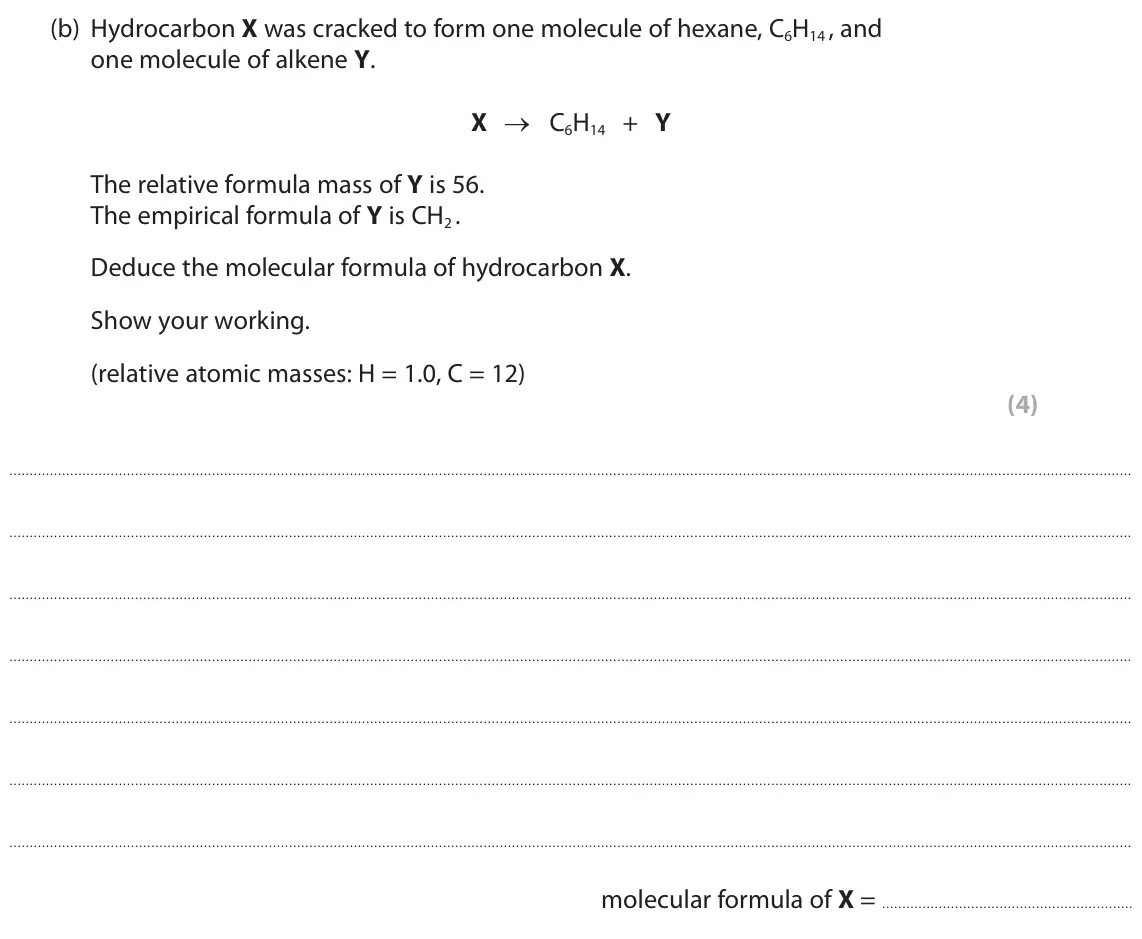
Q9(b)
The whole paper ↗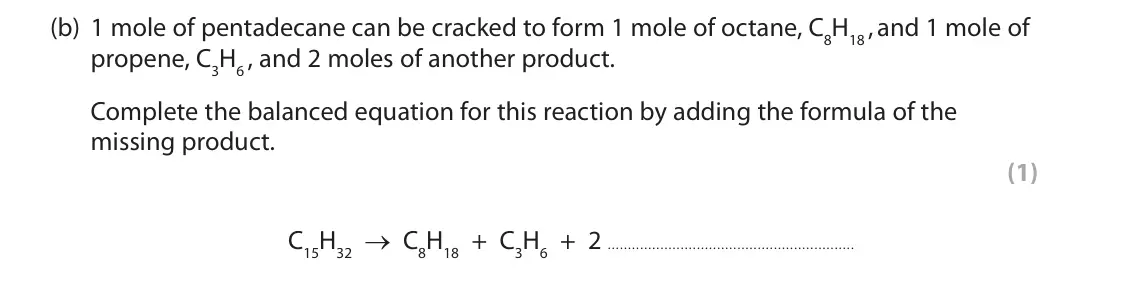
Q6(c)
The whole paper ↗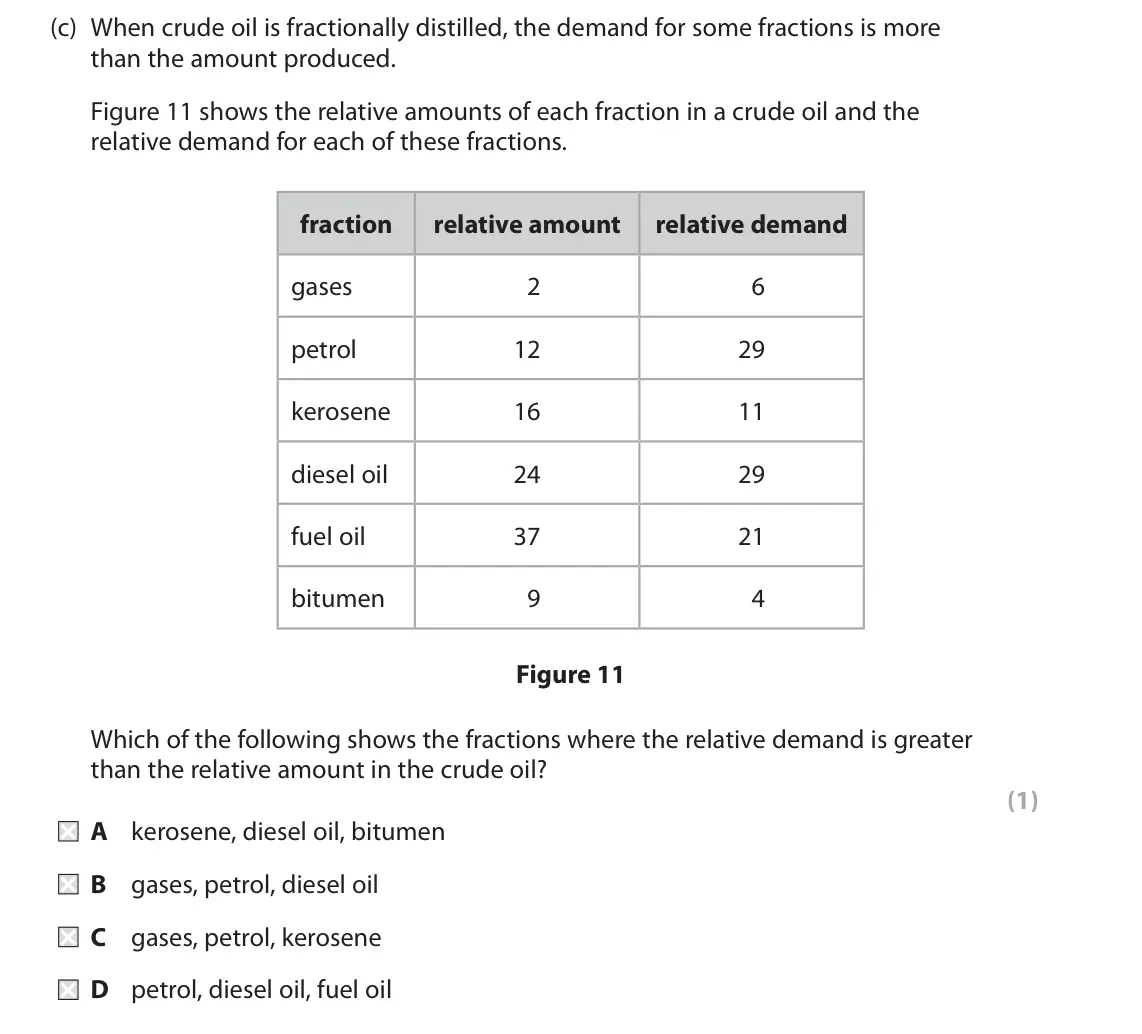
Q6(d)(i)
The whole paper ↗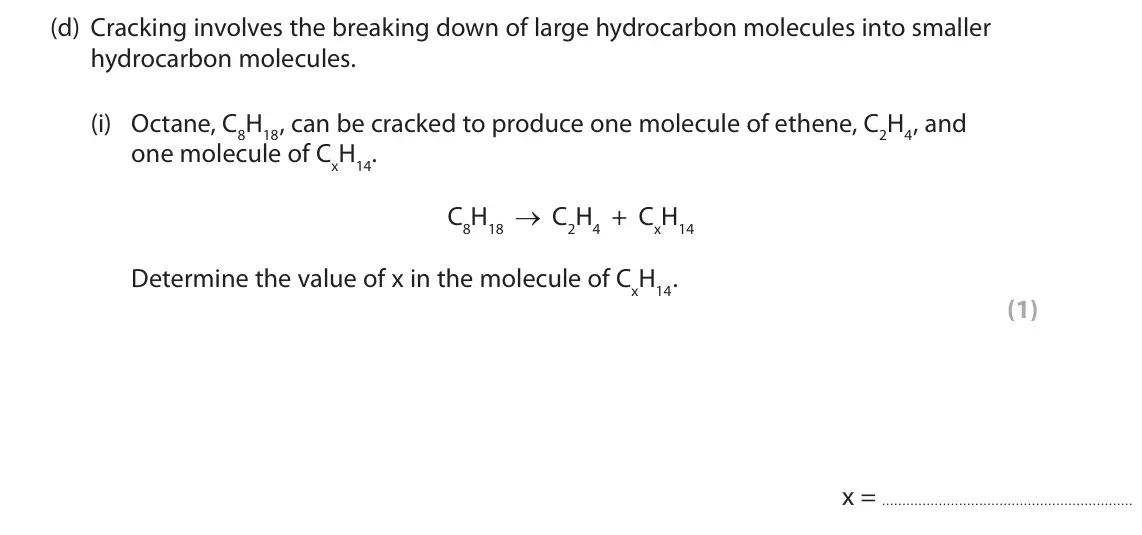
Q6(d)(ii)
The whole paper ↗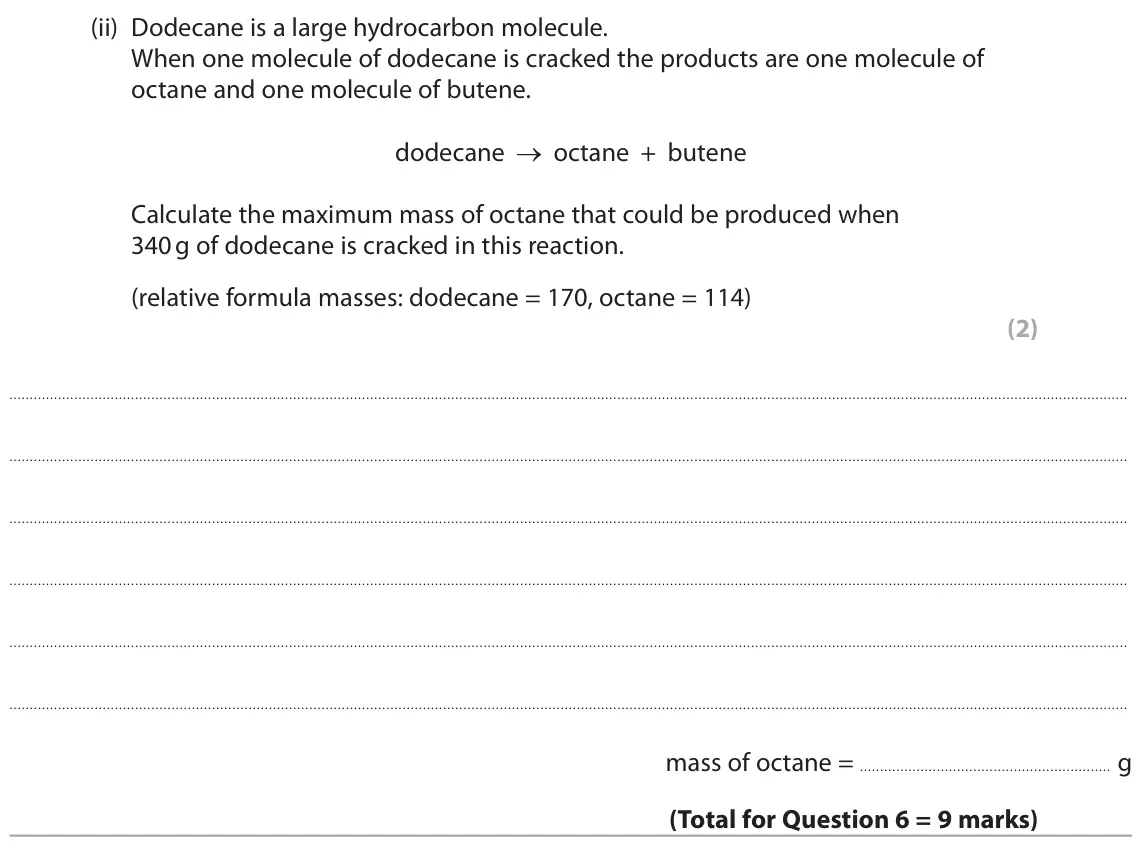
Q5(a)(i)
The whole paper ↗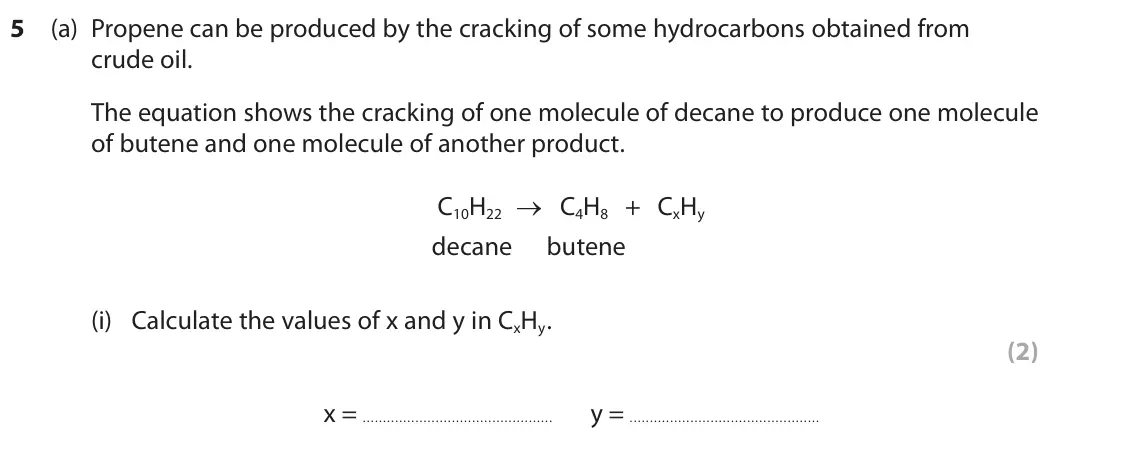
Q5(a)(ii)
The whole paper ↗
Q6(d)(i)
The whole paper ↗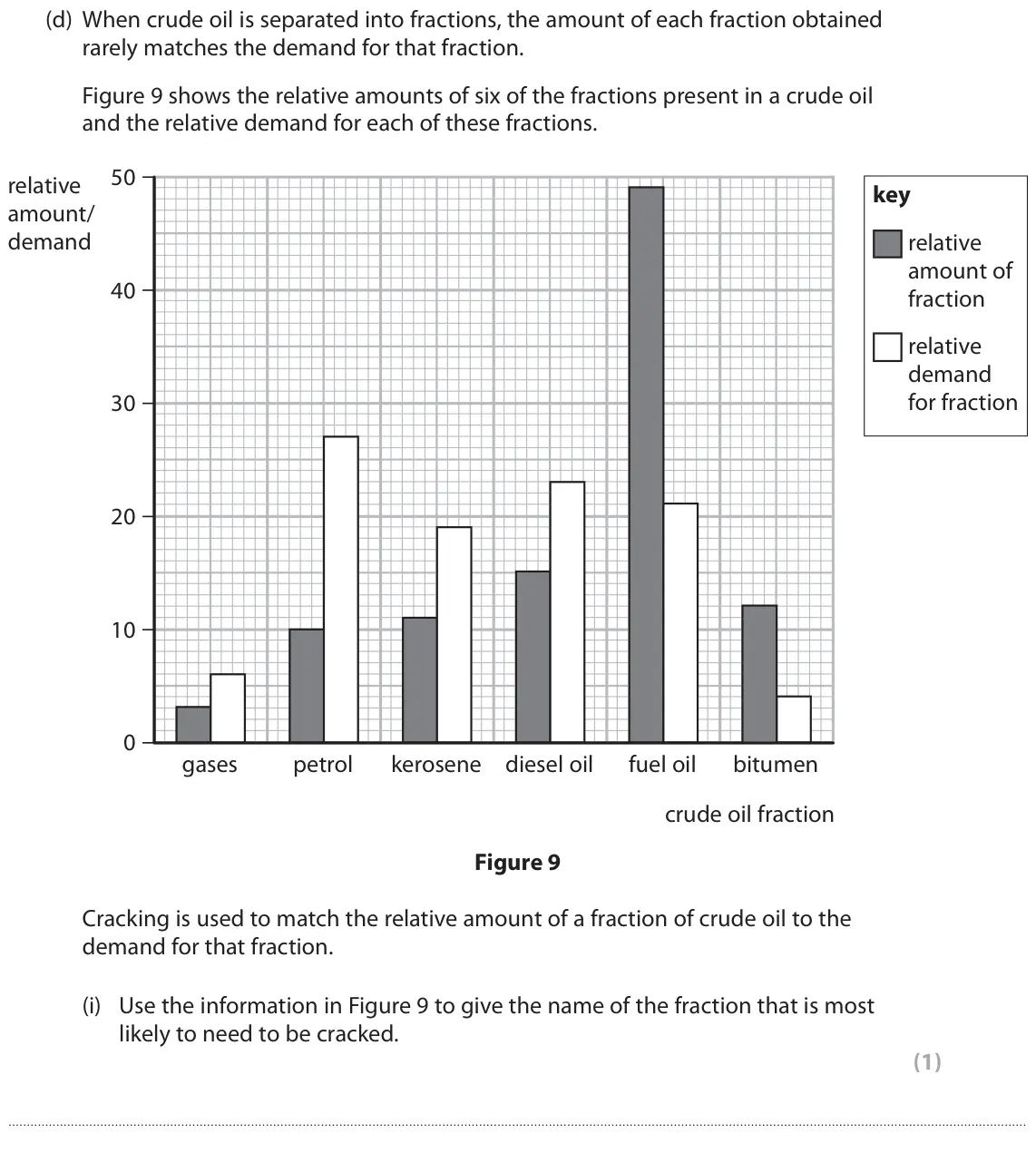
Q6(d)(ii)
The whole paper ↗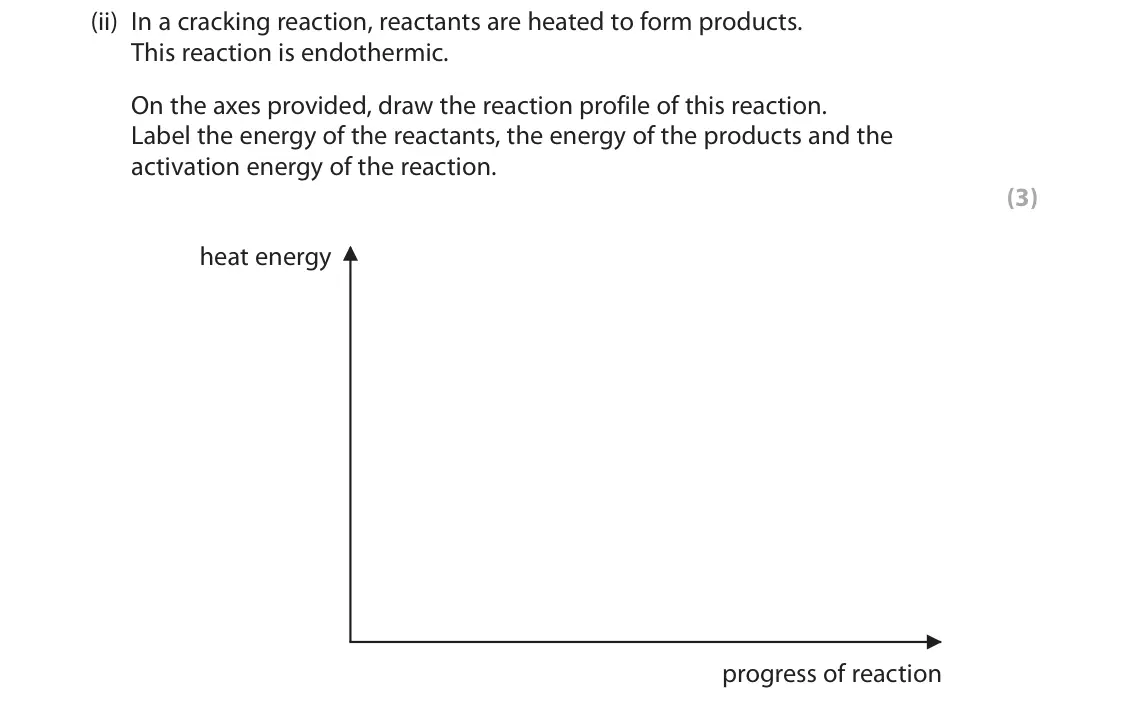
Q6(d)(iii)
The whole paper ↗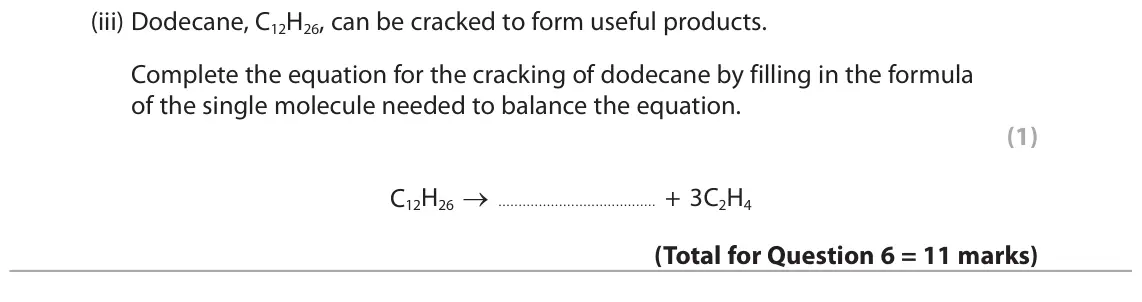
Q5(d)
The whole paper ↗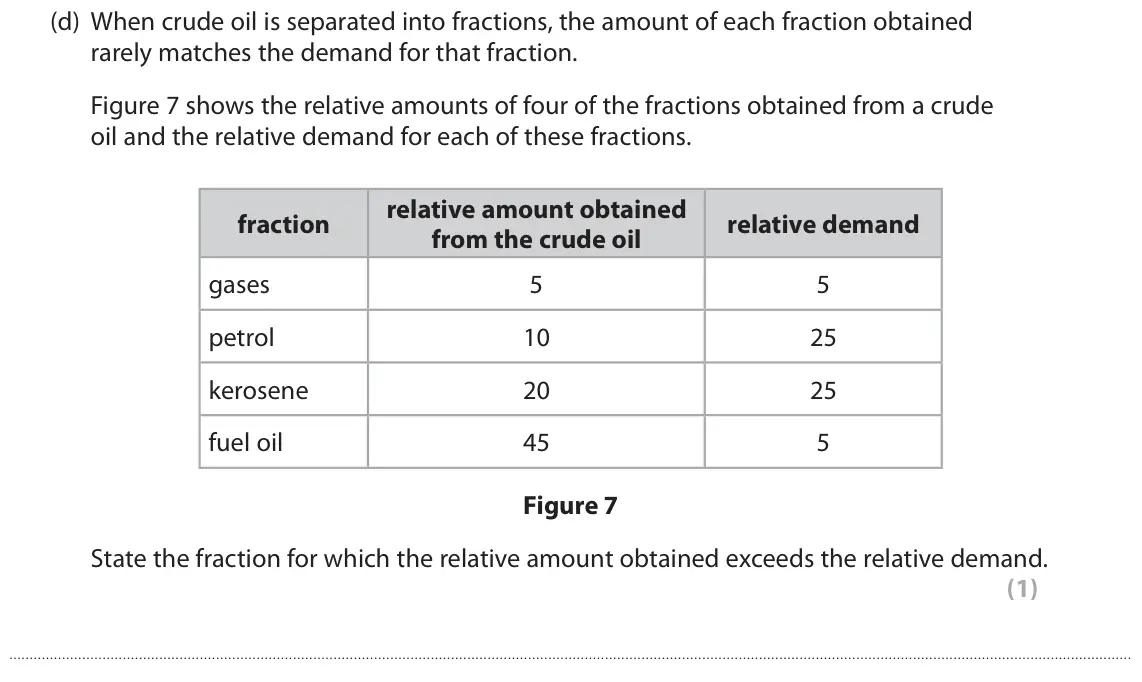
Q3(c)(i)
The whole paper ↗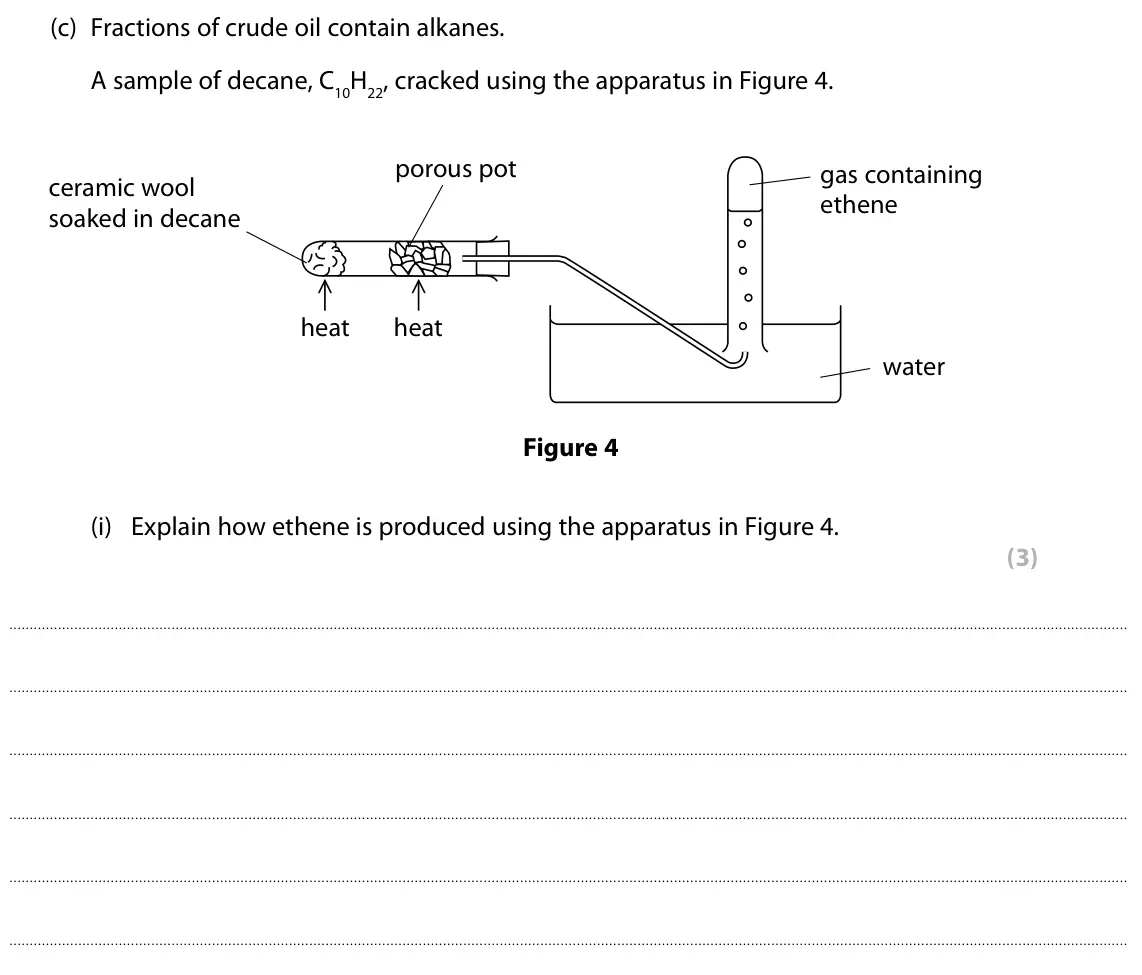
Q3(c)(ii)
The whole paper ↗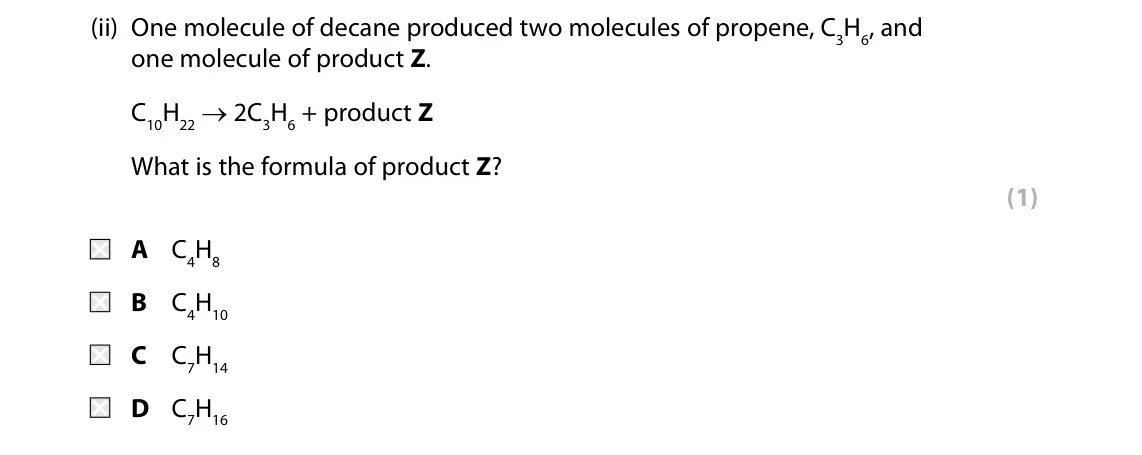
Q8(d)(i)
The whole paper ↗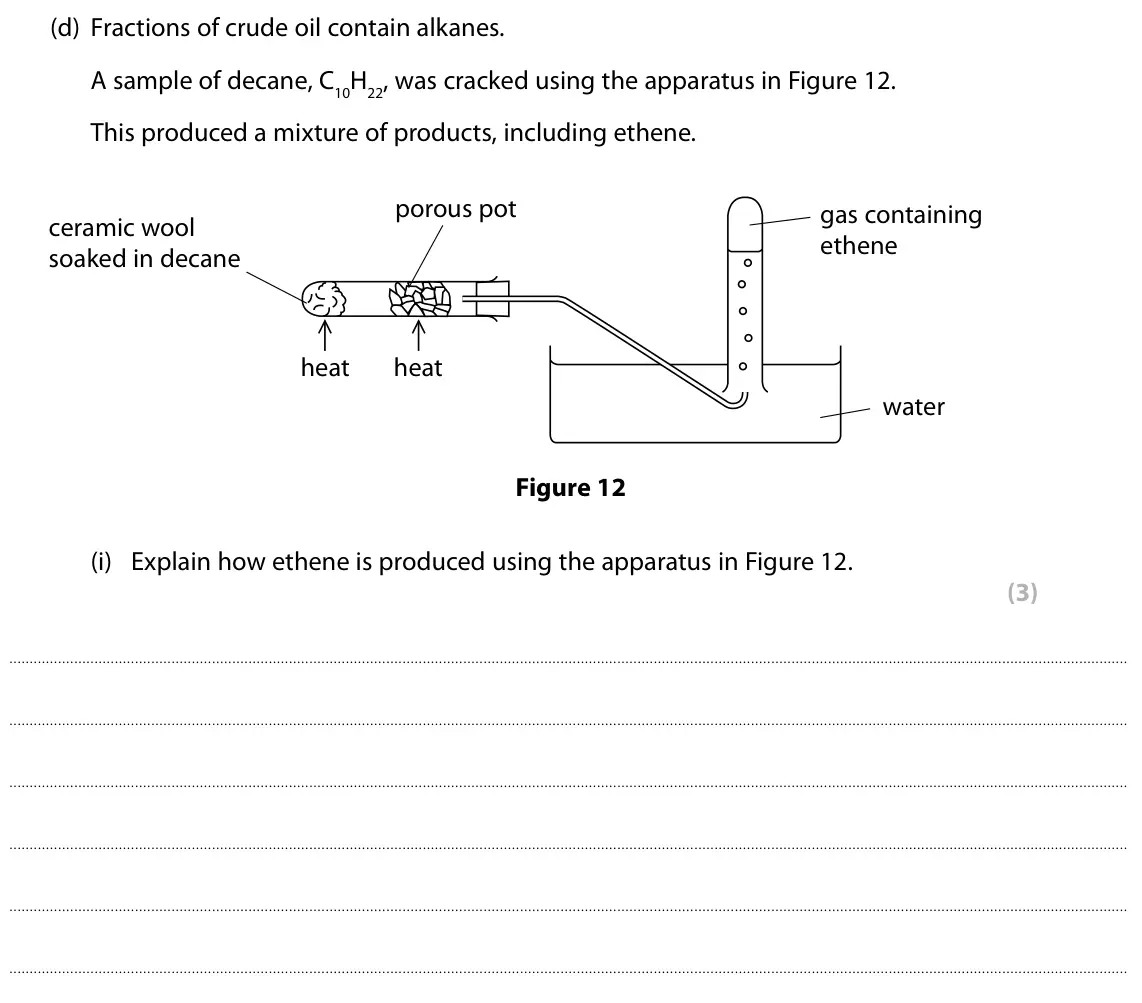
Q8(d)(ii)
The whole paper ↗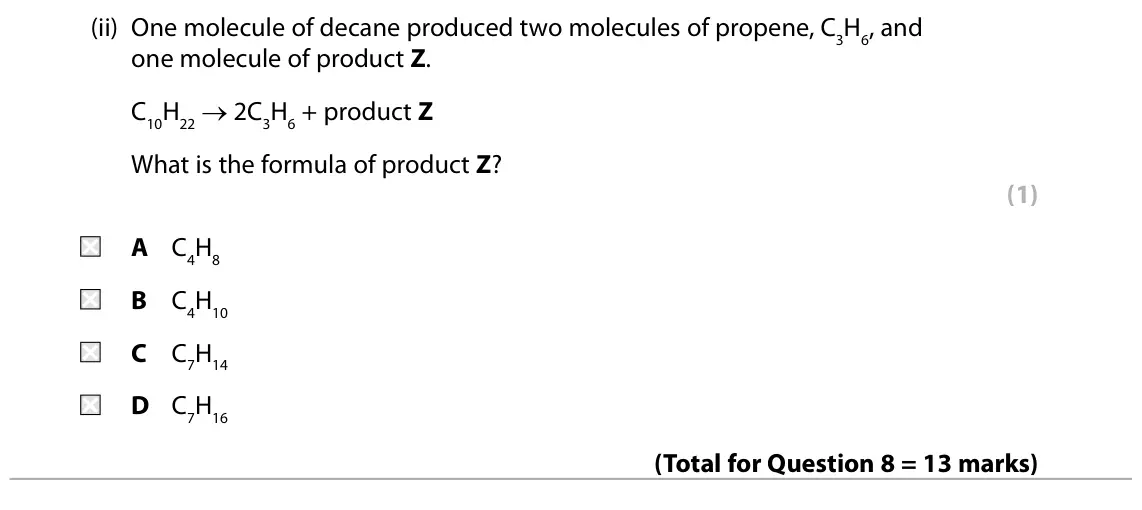
All 15 questions on Cracking, as a list
- June 2023, Paper 2 Higher, Q9(b) (4 marks): Hydrocarbon X was cracked to form one molecule of hexane, C6H14 , and one molecule of alkene Y. X → C6H14 + Y The relative formula mass of Y is 56. The empirica
- November 2021, Paper 2 Higher, Q9(b) (1 mark): 1 mole of pentadecane can be cracked to form 1 mole of octane, C8H18 , and 1 mole of propene, C3H6 , and 2 moles of another product. Complete the balanced equat
- November 2020, Paper 2 Foundation, Q6(c) (1 mark): When crude oil is fractionally distilled, the demand for some fractions is more than the amount produced. Figure 11 shows the relative amounts of each fraction
- November 2020, Paper 2 Foundation, Q6(d)(i) (1 mark): Octane, C8H18, can be cracked to produce one molecule of ethene, C2H4, and one molecule of CxH14. C8H18 → C2H4 + CxH14 Determine the value of x in the molecule
- November 2020, Paper 2 Foundation, Q6(d)(ii) (2 marks): Dodecane is a large hydrocarbon molecule. When one molecule of dodecane is cracked the products are one molecule of octane and one molecule of butene. dodecane
- June 2019, Paper 2 Foundation, Q5(a)(i) (2 marks): Calculate the values of x and y in CxHy. (2) x = y =
- June 2019, Paper 2 Foundation, Q5(a)(ii) (1 mark): State the total mass of products formed if 25 g of decane is cracked in this way. (1)
- June 2018, Paper 2 Higher, Q6(d)(i) (1 mark): Use the information in Figure 9 to give the name of the fraction that is most likely to need to be cracked. (1)
- June 2018, Paper 2 Higher, Q6(d)(ii) (3 marks): In a cracking reaction, reactants are heated to form products. This reaction is endothermic. On the axes provided, draw the reaction profile of this reaction. L
- June 2018, Paper 2 Higher, Q6(d)(iii) (1 mark): Dodecane, C12H26, can be cracked to form useful products. Complete the equation for the cracking of dodecane by filling in the formula of the single molecule ne
- June 2018, Paper 2 Foundation, Q5(d) (1 mark): When crude oil is separated into fractions, the amount of each fraction obtained rarely matches the demand for that fraction. Figure 7 shows the relative amount
- Specimen, Paper 2 Higher, Q3(c)(i) (3 marks): Explain how ethene is produced using the apparatus in Figure 4. (3)
- Specimen, Paper 2 Higher, Q3(c)(ii) (1 mark): One molecule of decane produced two molecules of propene, C3H6, and one molecule of product Z. C10H22 → 2C3H6 + product Z What is the formula of product Z? (1)
- Specimen, Paper 2 Foundation, Q8(d)(i) (3 marks): Explain how ethene is produced using the apparatus in Figure 12. (3)
- Specimen, Paper 2 Foundation, Q8(d)(ii) (1 mark): One molecule of decane produced two molecules of propene, C3H6, and one molecule of product Z. C10H22 → 2C3H6 + product Z What is the formula of product Z? (1)
Questions, mark schemes and examiner’s reports are © Pearson Edexcel, from their published past papers. Plumi isn’t affiliated with any exam board. Want whole papers? Every Edexcel GCSE Chemistry paper.
Rather write your answers by hand on iPad? Plumi marks them against the same mark schemes.