 plumi
The Earth’s atmosphere: Edexcel GCSE Chemistry questions
Every Edexcel GCSE Chemistry exam question on The Earth’s atmosphere (specification points 8.18–8.23), 2018–2025, with its mark scheme and examiner’s report.
Find questions1,880
Exam
All years
Calculations
Q5(a)
The whole paper ↗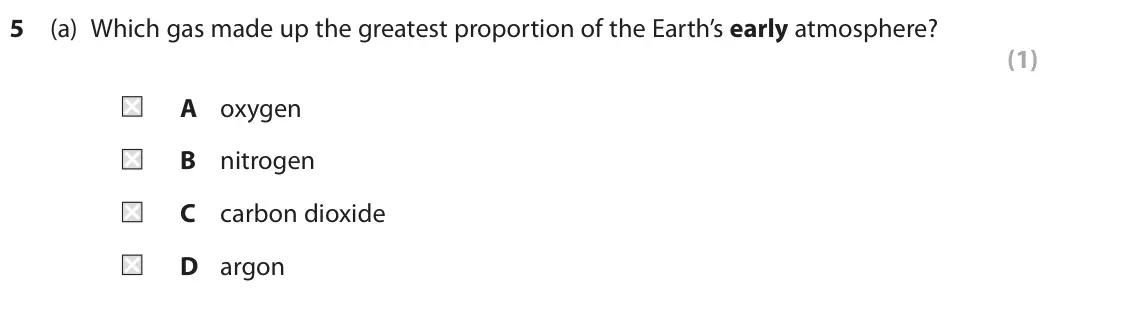
Q5(b)(i)
The whole paper ↗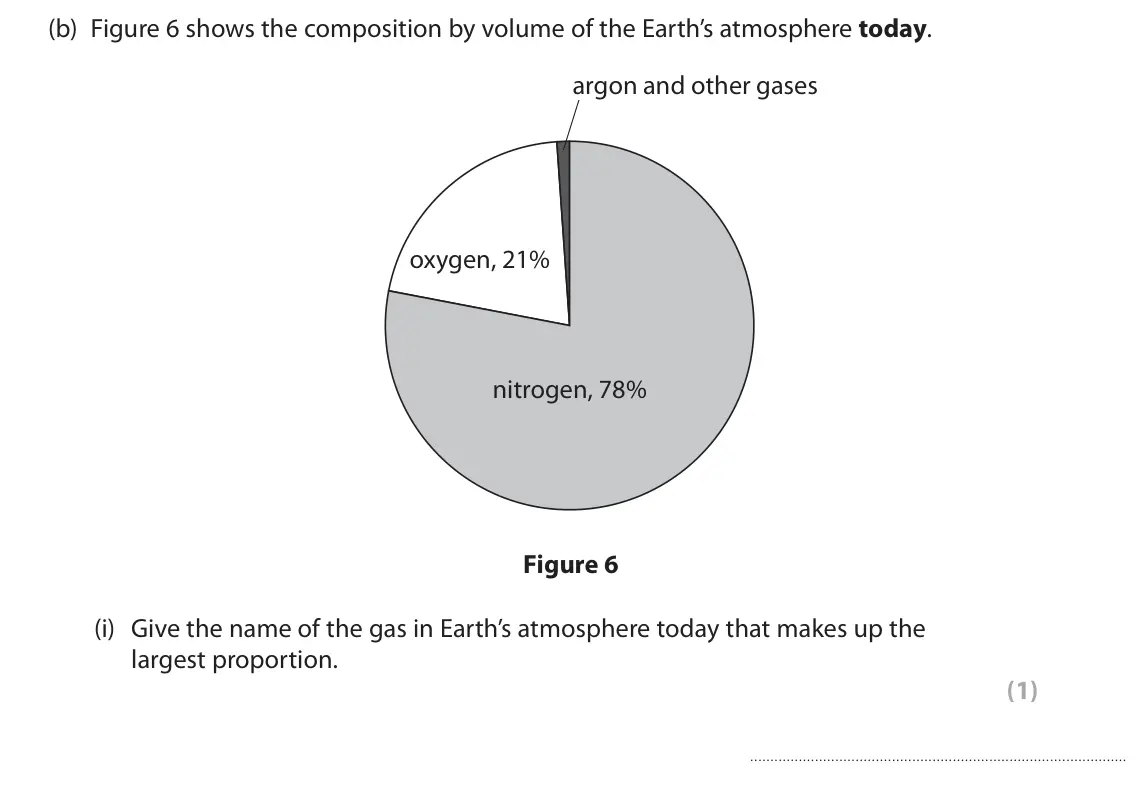
Q5(b)(ii)
The whole paper ↗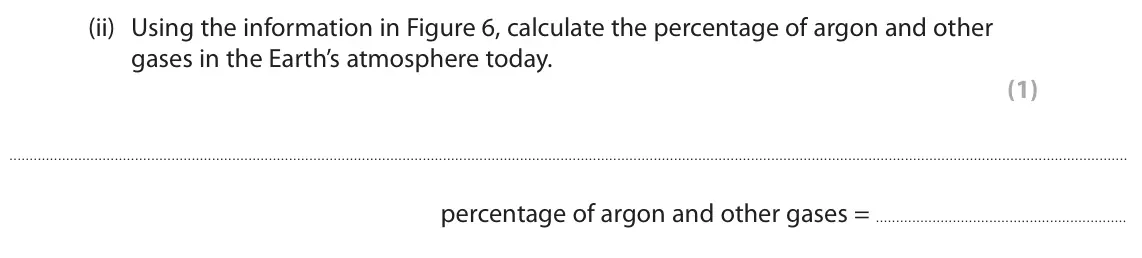
Q5(c)(i)
The whole paper ↗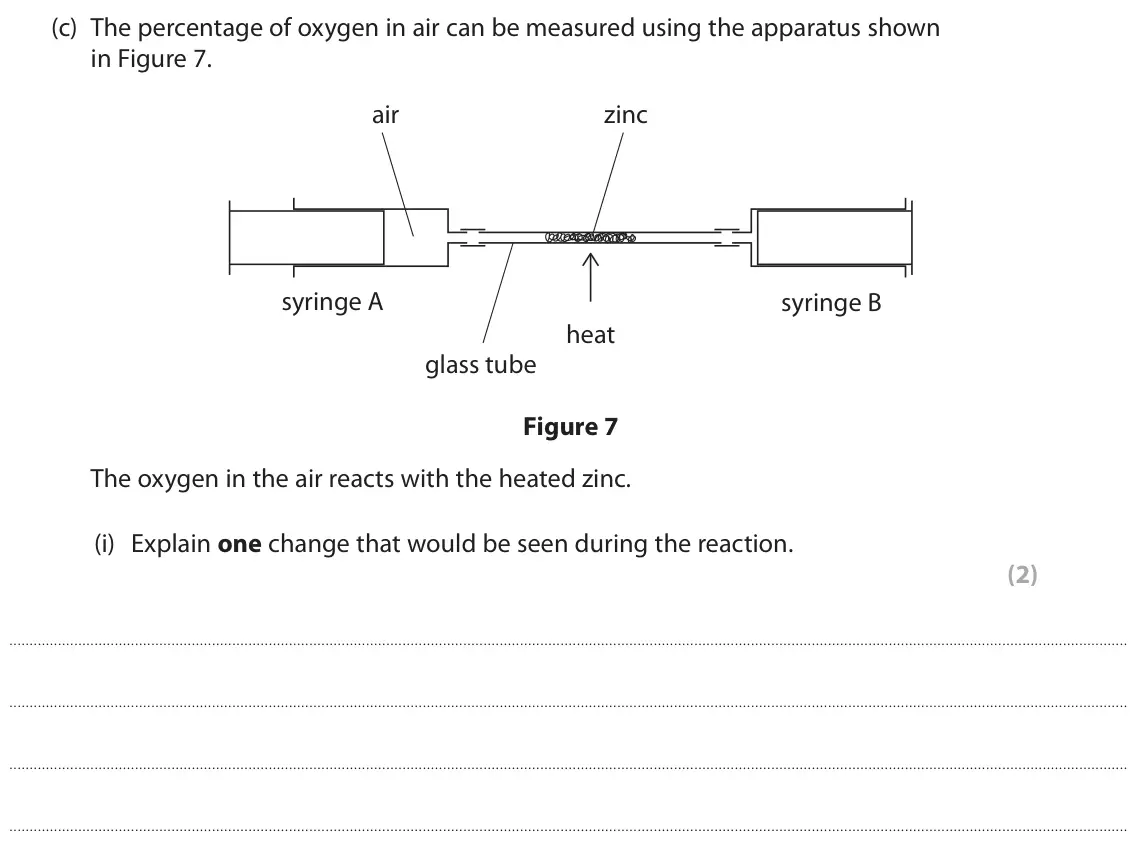
Q5(c)(ii)
The whole paper ↗
Q5(d)(ii)
The whole paper ↗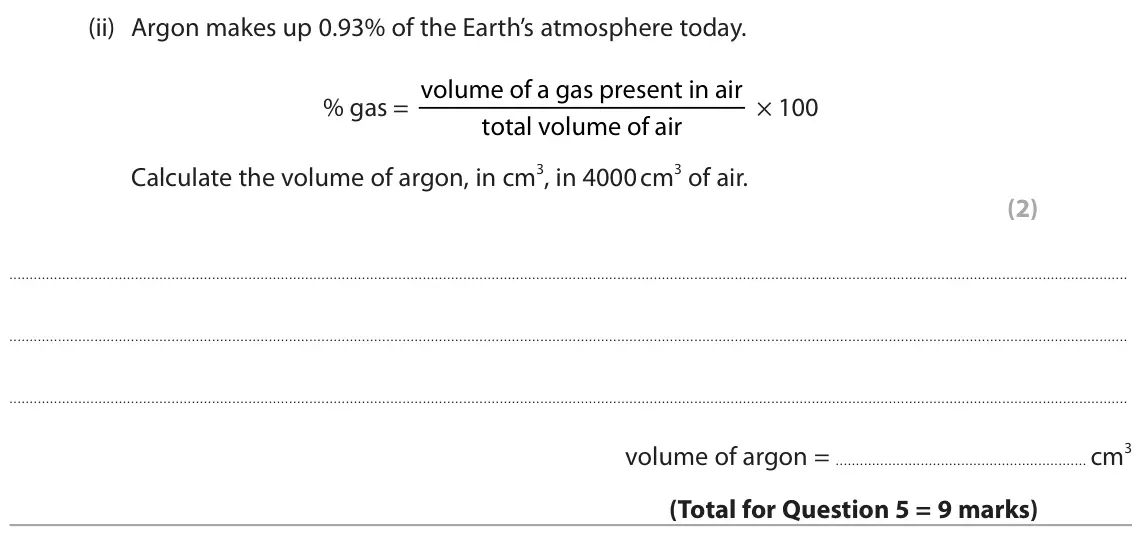
Q3(a)
The whole paper ↗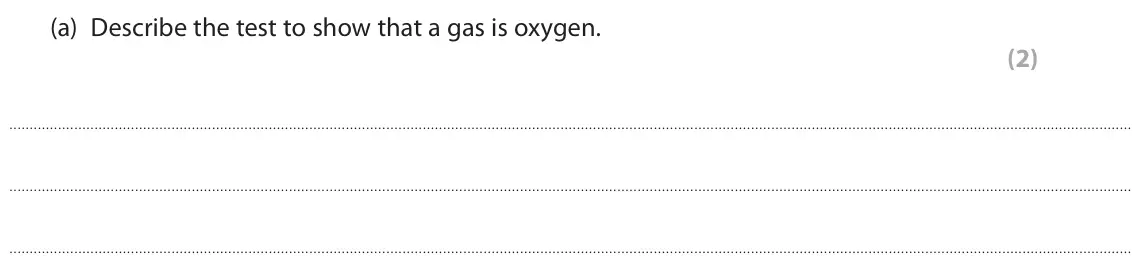
Q6(a)(i)
The whole paper ↗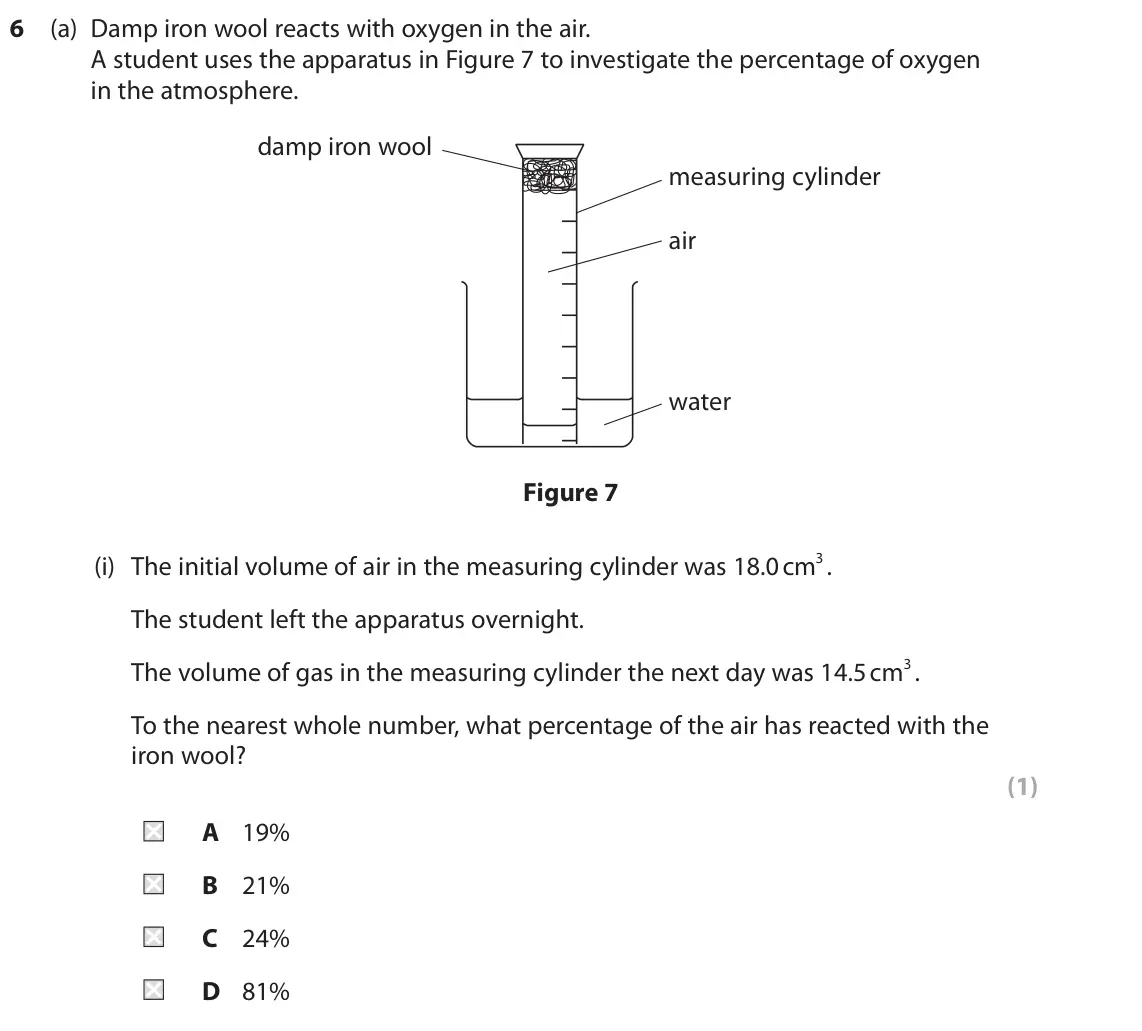
Q6(a)(ii)
The whole paper ↗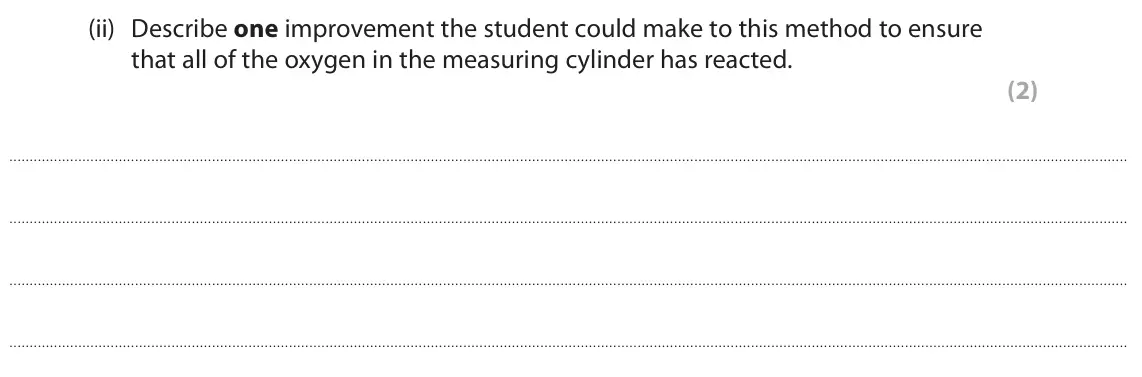
Q9(a)
The whole paper ↗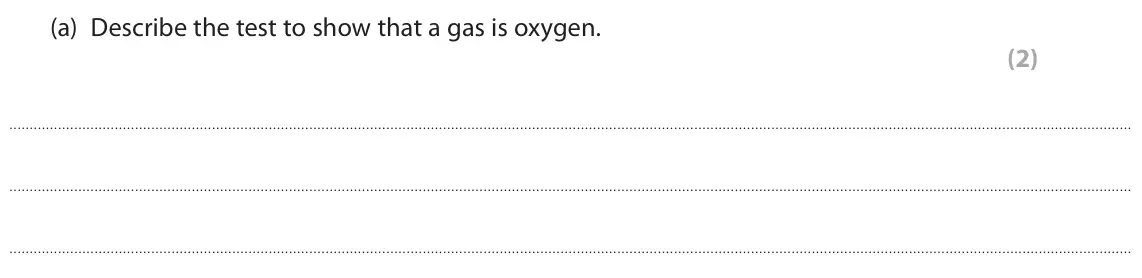
Q9(d)
The whole paper ↗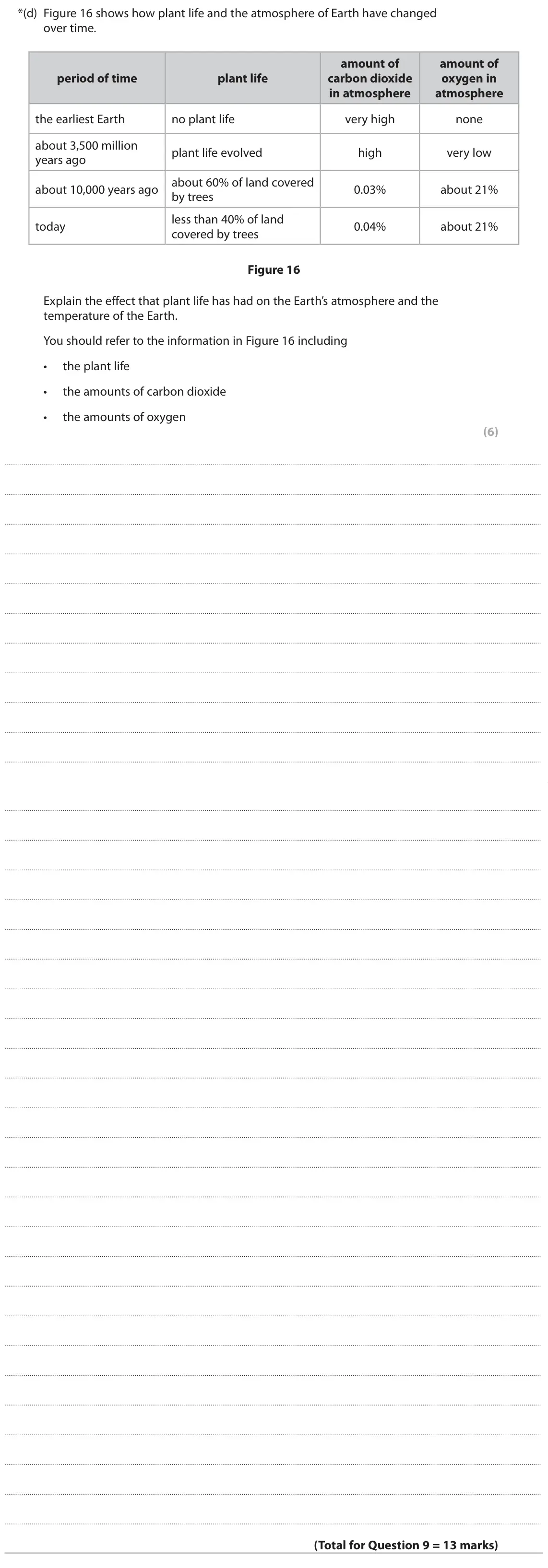
Q5(a)
The whole paper ↗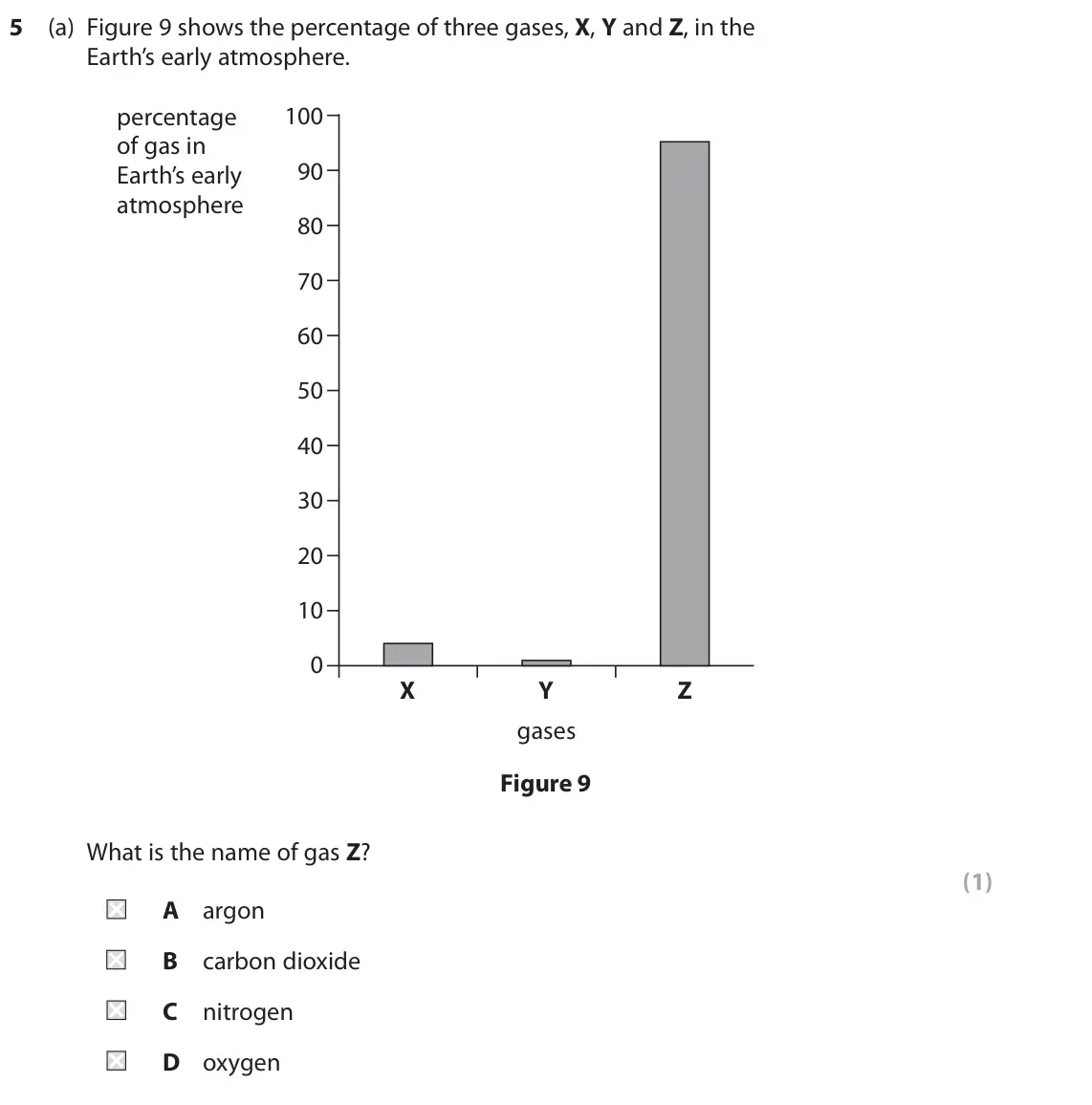
Q4(a)
The whole paper ↗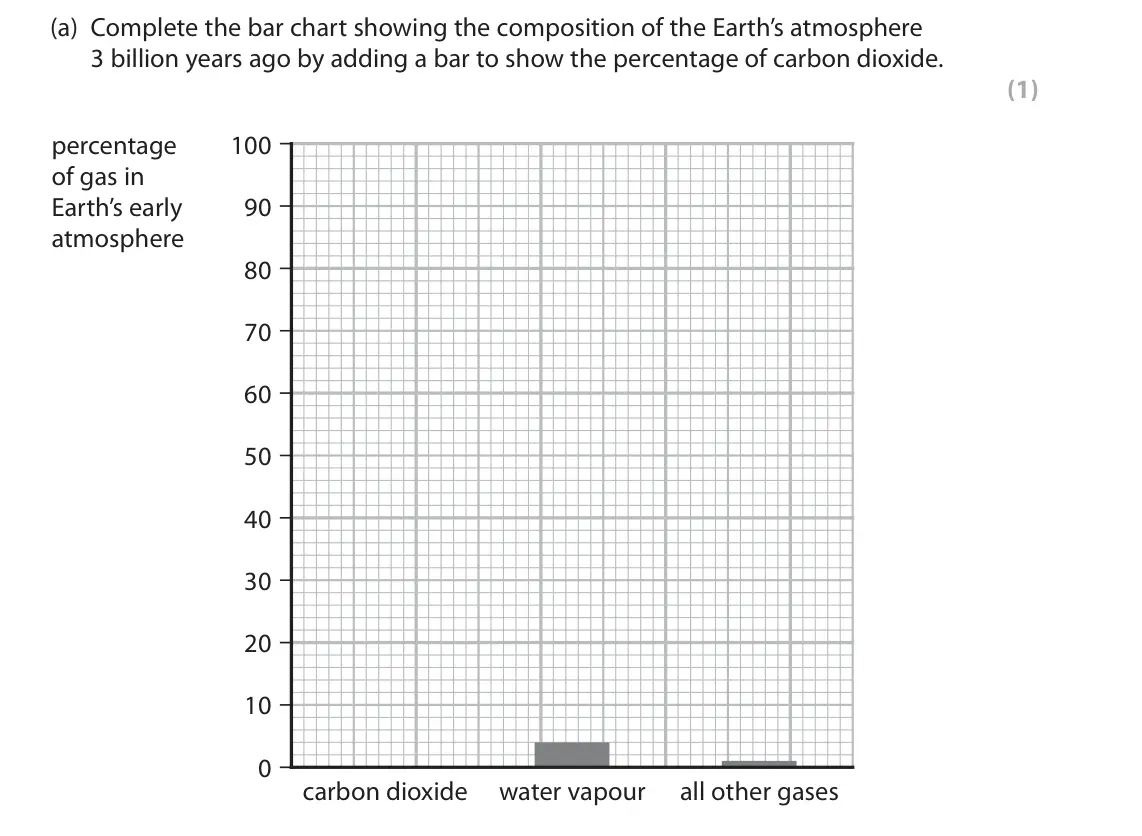
Q4(b)(i)
The whole paper ↗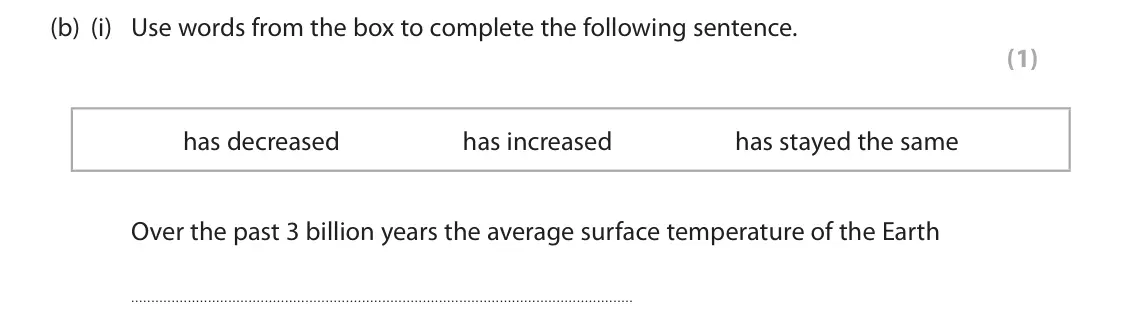
Q4(b)(ii)
The whole paper ↗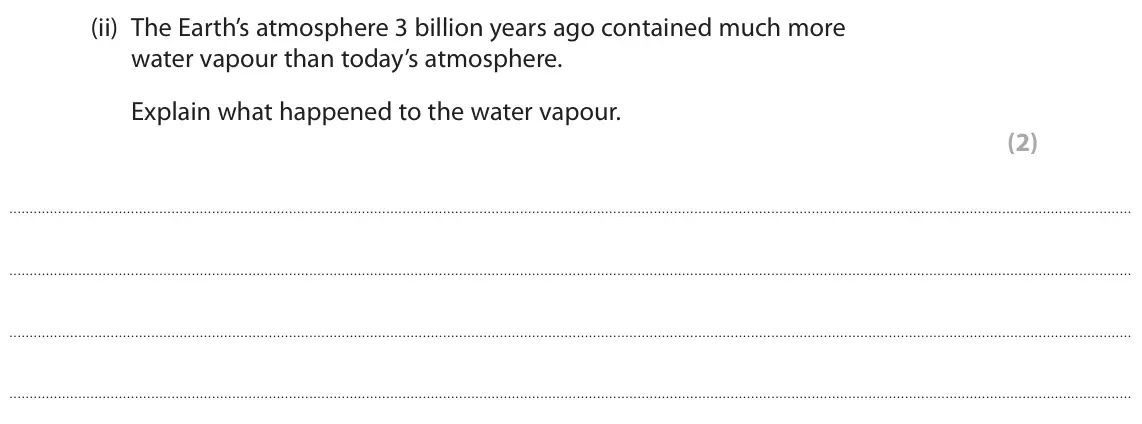
Q4(c)(i)
The whole paper ↗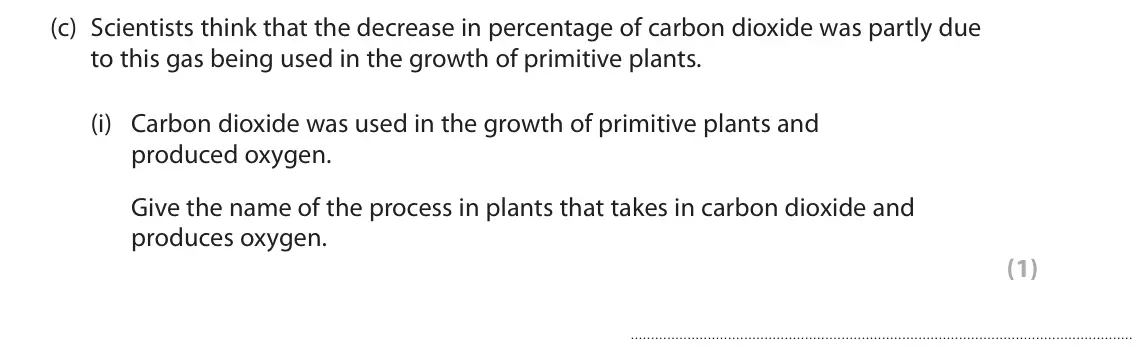
Q4(c)(ii)
The whole paper ↗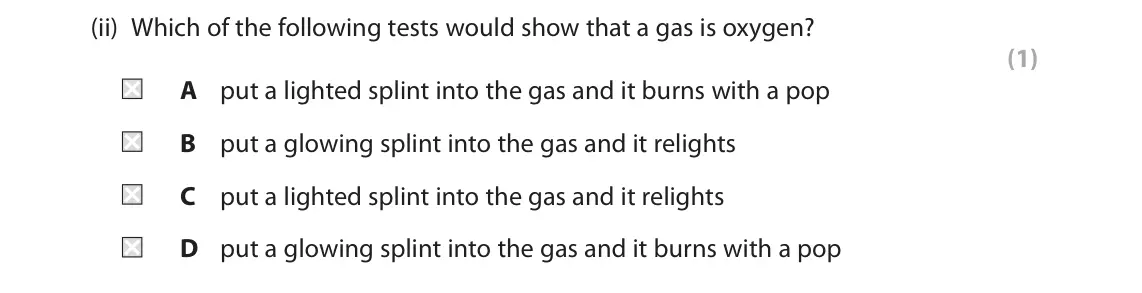
Q7(a)
The whole paper ↗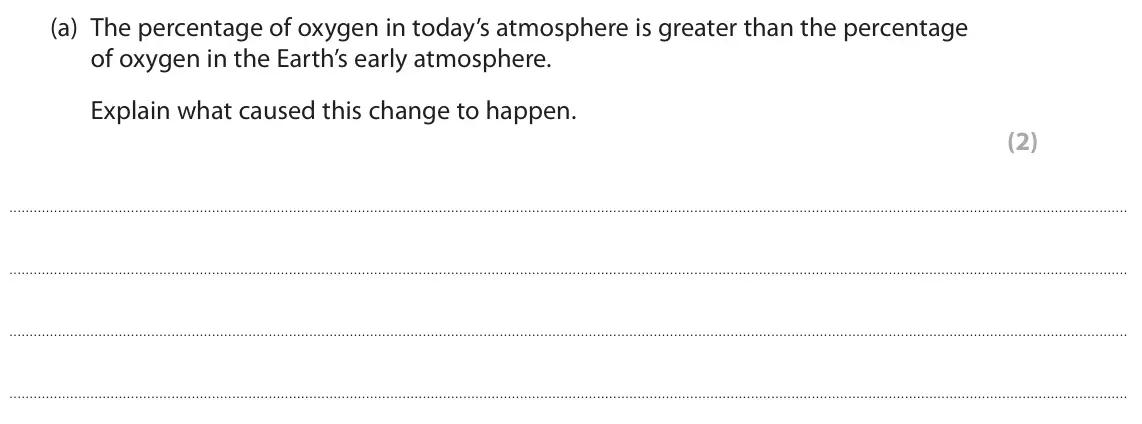
Q7(d)(i)
The whole paper ↗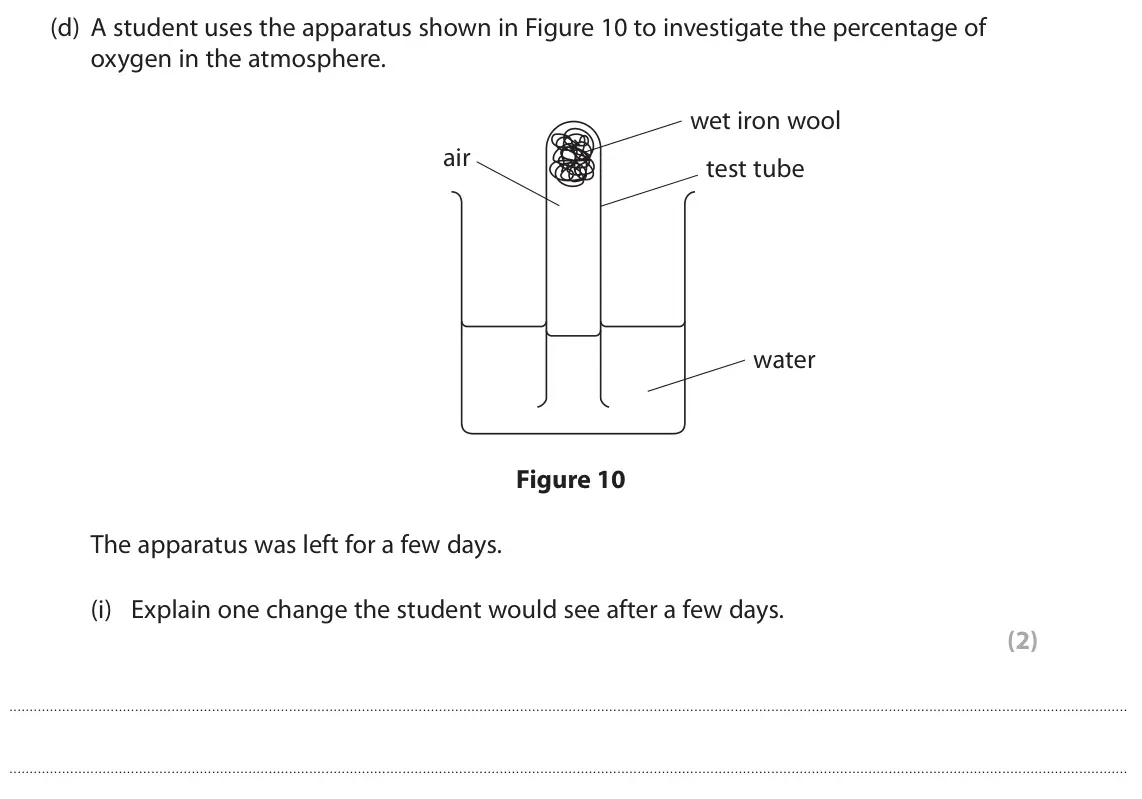
Q7(d)(ii)
The whole paper ↗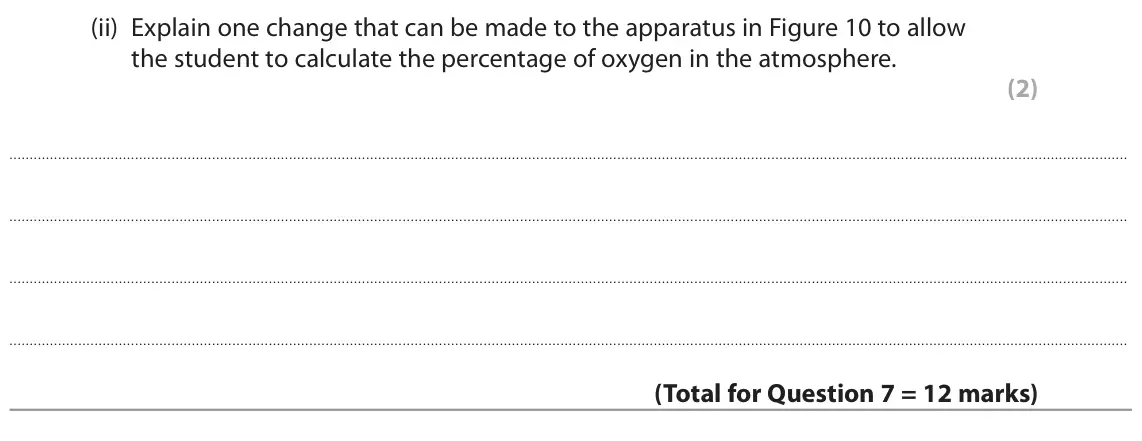
All 45 questions on The Earth’s atmosphere, as a list
- June 2025, Paper 2 Foundation, Q5(a) (1 mark): Which gas made up the greatest proportion of the Earth’s early atmosphere? (1) A oxygen B nitrogen C carbon dioxide D argon
- June 2025, Paper 2 Foundation, Q5(b)(i) (1 mark): Give the name of the gas in Earth’s atmosphere today that makes up the largest proportion. (1)
- June 2025, Paper 2 Foundation, Q5(b)(ii) (1 mark): Using the information in Figure 6, calculate the percentage of argon and other gases in the Earth’s atmosphere today. (1) percentage of argon and other gases =
- June 2025, Paper 2 Foundation, Q5(c)(i) (2 marks): Explain one change that would be seen during the reaction. (2)
- June 2025, Paper 2 Foundation, Q5(c)(ii) (1 mark): Name the product formed when the zinc reacts with oxygen in this experiment. (1)
- June 2025, Paper 2 Foundation, Q5(d)(ii) (2 marks): Argon makes up 0.93% of the Earth’s atmosphere today. % gas = volume of a gas present in air × 100 total volume of air Calculate the volume of argon, in cm3, in
- June 2024, Paper 2 Higher, Q3(a) (2 marks): Describe the test to show that a gas is oxygen. (2)
- June 2024, Paper 2 Higher, Q6(a)(i) (1 mark): The initial volume of air in the measuring cylinder was 18.0 cm3 . The student left the apparatus overnight. The volume of gas in the measuring cylinder the nex
- June 2024, Paper 2 Higher, Q6(a)(ii) (2 marks): Describe one improvement the student could make to this method to ensure that all of the oxygen in the measuring cylinder has reacted. (2)
- June 2024, Paper 2 Foundation, Q9(a) (2 marks): Describe the test to show that a gas is oxygen. (2)
- June 2024, Paper 2 Foundation, Q9(d) (6 marks): Figure 16 shows how plant life and the atmosphere of Earth have changed over time. amount of amount of period of time plant life carbon dioxide oxygen in in atm
- June 2023, Paper 2 Higher, Q5(a) (1 mark): Figure 9 shows the percentage of three gases, X, Y and Z, in the Earth’s early atmosphere. percentage 100 of gas in 90 Earth’s early atmosphere 80 70 60 50 40 3
- June 2023, Paper 2 Foundation, Q4(a) (1 mark): Complete the bar chart showing the composition of the Earth’s atmosphere 3 billion years ago by adding a bar to show the percentage of carbon dioxide. (1) perce
- June 2023, Paper 2 Foundation, Q4(b)(i) (1 mark): Use words from the box to complete the following sentence. (1) has decreased has increased has stayed the same Over the past 3 billion years the average surface
- June 2023, Paper 2 Foundation, Q4(b)(ii) (2 marks): The Earth’s atmosphere 3 billion years ago contained much more water vapour than today’s atmosphere. Explain what happened to the water vapour. (2)
- June 2023, Paper 2 Foundation, Q4(c)(i) (1 mark): Carbon dioxide was used in the growth of primitive plants and produced oxygen. Give the name of the process in plants that takes in carbon dioxide and produces
- June 2023, Paper 2 Foundation, Q4(c)(ii) (1 mark): Which of the following tests would show that a gas is oxygen? (1) A put a lighted splint into the gas and it burns with a pop B put a glowing splint into the ga
- June 2022, Paper 2 Higher, Q7(a) (2 marks): The percentage of oxygen in today’s atmosphere is greater than the percentage of oxygen in the Earth’s early atmosphere. Explain what caused this change to happ
- June 2022, Paper 2 Higher, Q7(d)(i) (2 marks): Explain one change the student would see after a few days. (2)
- June 2022, Paper 2 Higher, Q7(d)(ii) (2 marks): Explain one change that can be made to the apparatus in Figure 10 to allow the student to calculate the percentage of oxygen in the atmosphere. (2)
- June 2022, Paper 2 Foundation, Q9(e) (6 marks): Figure 16 shows the relative amounts of three gases in the early atmosphere compared to the composition of today’s atmosphere. relative amount in composition of
- November 2021, Paper 2 Higher, Q5(d) (4 marks): Figure 6 shows two gas syringes connected by a glass tube. Inside the glass tube there are some pieces of zinc. Zinc reacts with oxygen at a temperature of over
- November 2020, Paper 2 Higher, Q7(a) (1 mark): Air contains several gaseous elements. Which of these shows the three most common gaseous elements in air, listed in order from the most common to the least com
- November 2020, Paper 2 Higher, Q7(d) (2 marks): Much of the carbon dioxide present in the Earth’s early atmosphere dissolved into the oceans. This led to the formation of compounds including calcium carbonate
- November 2020, Paper 2 Higher, Q7(e) (2 marks): P and Q are both mixtures of gases. One has the same composition as the early atmosphere and the other has the same composition as the current atmosphere. Tests
- November 2020, Paper 2 Foundation, Q1(a)(i) (1 mark): What is the third most common gas in today’s atmosphere? (1) A argon B butane C chlorine D hydrogen
- November 2020, Paper 2 Foundation, Q1(a)(ii) (1 mark): What is the percentage of oxygen in today’s atmosphere? (1) A 0.04 B 1 C 21 D 78
- November 2020, Paper 2 Foundation, Q1(b) (1 mark): Give the name of the most common gas in the Earth’s early atmosphere. (1)
- November 2020, Paper 2 Foundation, Q1(c) (2 marks): This early atmosphere was hot and contained water vapour. The atmosphere today contains less water vapour. Explain what caused the amount of water vapour in the
- June 2019, Paper 2 Higher, Q5(a)(i) (1 mark): Which row of the table shows the approximate percentage of carbon dioxide thought to be in the Earth’s early atmosphere and how this percentage changed to form
- June 2019, Paper 2 Higher, Q5(a)(ii) (4 marks): The actual percentage of carbon dioxide in the Earth’s atmosphere today varies. Explain two factors that cause the percentage of carbon dioxide in today’s atmos
- June 2019, Paper 2 Foundation, Q1(a) (1 mark): Plants release oxygen into the atmosphere. What is the name of the process that releases oxygen into the atmosphere? (1) A combustion B oxidation C photosynthes
- June 2019, Paper 2 Foundation, Q1(b)(i) (1 mark): Figure 1 shows an incomplete bar chart of the main gases in the atmosphere. 100 percentage of gas in today’s 90 atmosphere 78 80 70 60 50 40 30 20 10 1 0 nitrog
- June 2019, Paper 2 Foundation, Q1(b)(ii) (2 marks): Calculate the volume of oxygen present in 300 cm3 of air. (volumes are measured under the same conditions of temperature and pressure) (2) volume of oxygen = cm
- June 2019, Paper 2 Foundation, Q1(d) (1 mark): Which test shows a gas is oxygen? (1) A a few drops of limewater will turn cloudy when shaken with the gas B a glowing splint will relight when placed in the ga
- June 2018, Paper 2 Higher, Q1(a) (2 marks): Figure 1 shows the relative amounts of gases thought to be in the Earth’s early atmosphere. relative amount in Earth’s gas early atmosphere oxygen small carbon
- June 2018, Paper 2 Higher, Q1(b)(i) (2 marks): The following results were obtained initial volume of air in apparatus = 50 cm3 final volume of gas in apparatus = 40 cm3 Calculate the percentage of oxygen in
- June 2018, Paper 2 Higher, Q1(b)(ii) (1 mark): At the end of the experiment, the apparatus and its contents are allowed to cool before the final volume of gas is measured. (1) The apparatus and its contents
- June 2018, Paper 2 Higher, Q1(c) (2 marks): The Earth’s earliest rocks contained iron sulfide and no iron oxide. Later the rocks contained iron oxide as well as iron sulfide. Explain what happened to allo
- June 2018, Paper 2 Foundation, Q6(c) (2 marks): The amount of oxygen in the atmosphere has increased since the Earth’s early atmosphere was formed. Explain what has caused this change. (2)
- June 2018, Paper 2 Foundation, Q6(d) (2 marks): Carbon dioxide is present in the Earth’s atmosphere. Some processes increase the amount of carbon dioxide in the atmosphere, other processes decrease it. Draw o
- Specimen, Paper 2 Higher, Q1(a) (1 mark): Which of the following is a correct statement about the relative amounts of carbon dioxide and oxygen in the Earth’s early atmosphere? (1) A large amount of car
- Specimen, Paper 2 Higher, Q1(b) (2 marks): Several processes change the composition of the Earth’s atmosphere. Describe how the composition of the atmosphere is affected by burning fossil fuels. (2)
- Specimen, Paper 2 Foundation, Q1(a) (1 mark): The Earth’s early atmosphere was formed by (1) A animals breathing. B global warming. C plants growing. D volcanic activity.
- Specimen, Paper 2 Foundation, Q1(b) (2 marks): Figure 1 shows some data about the composition of gases present in the Earth’s early atmosphere and today’s atmosphere. composition (%) gas Earth’s early atmosp
Questions, mark schemes and examiner’s reports are © Pearson Edexcel, from their published past papers. Plumi isn’t affiliated with any exam board. Want whole papers? Every Edexcel GCSE Chemistry paper.
Rather write your answers by hand on iPad? Plumi marks them against the same mark schemes.