 plumi
The immune system and immunisation: Edexcel GCSE Biology questions
Every Edexcel GCSE Biology exam question on The immune system and immunisation (specification points 5.12–5.15), 2018–2025, with its mark scheme and examiner’s report.
Find questions1,834
Exam
All years
Calculations
Q6(b)
The whole paper ↗
Q7(a)(ii)
The whole paper ↗
Q7(b)(i)
The whole paper ↗
Q7(b)(ii)
The whole paper ↗
Q2(a)
The whole paper ↗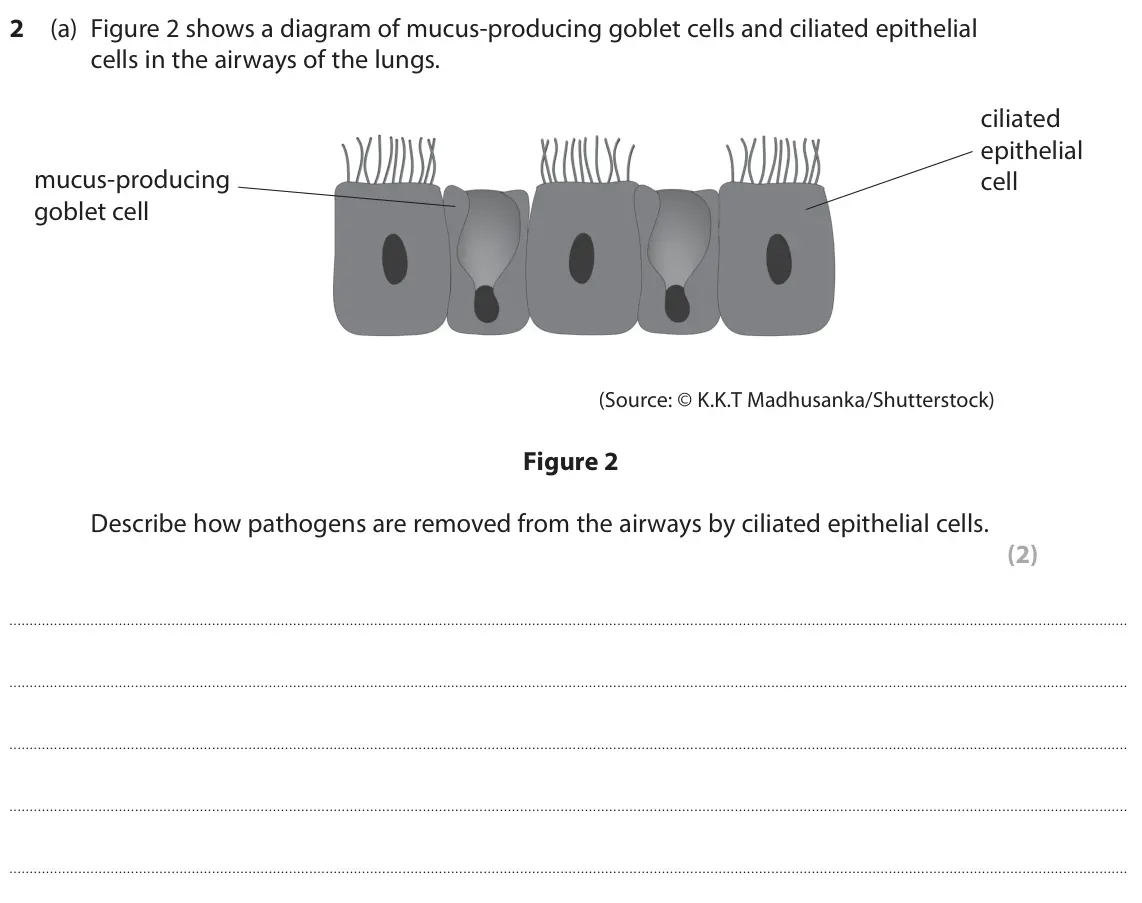
Q8(b)
The whole paper ↗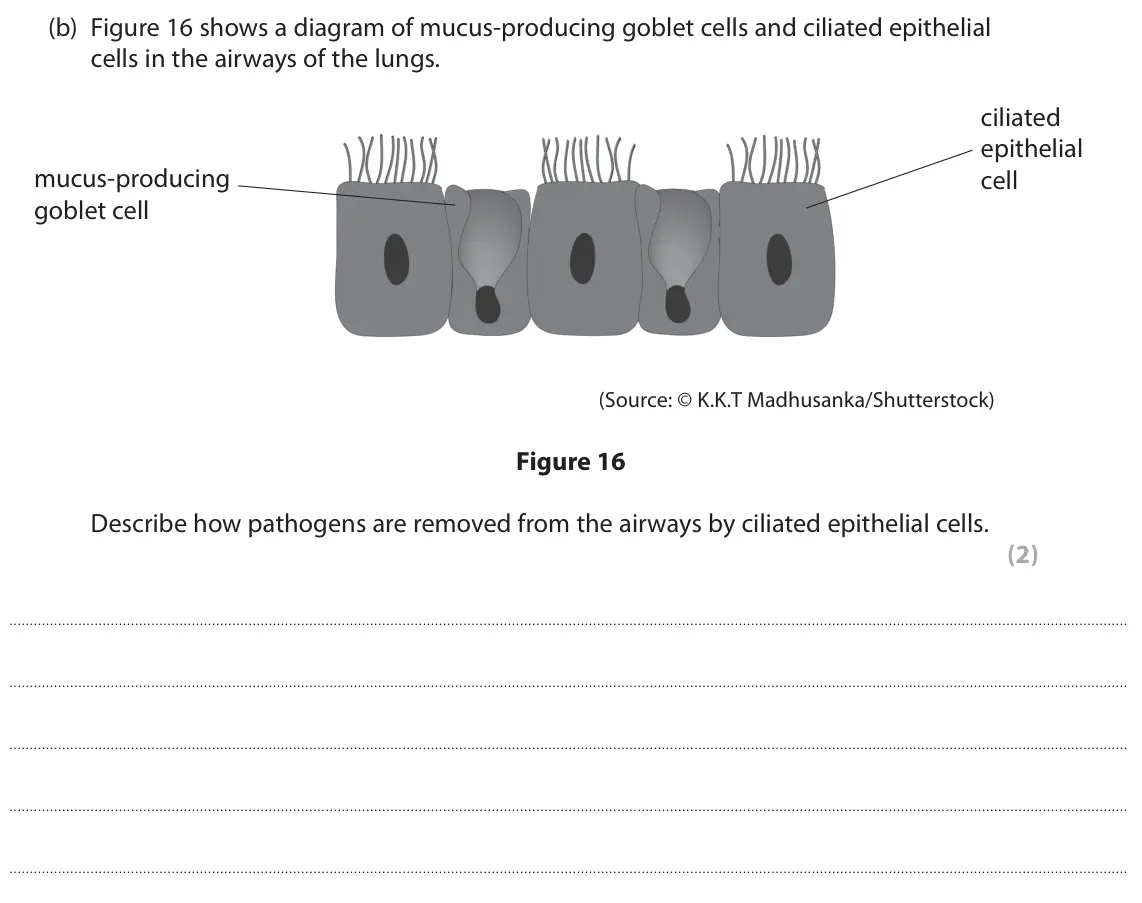
Q3(b)
The whole paper ↗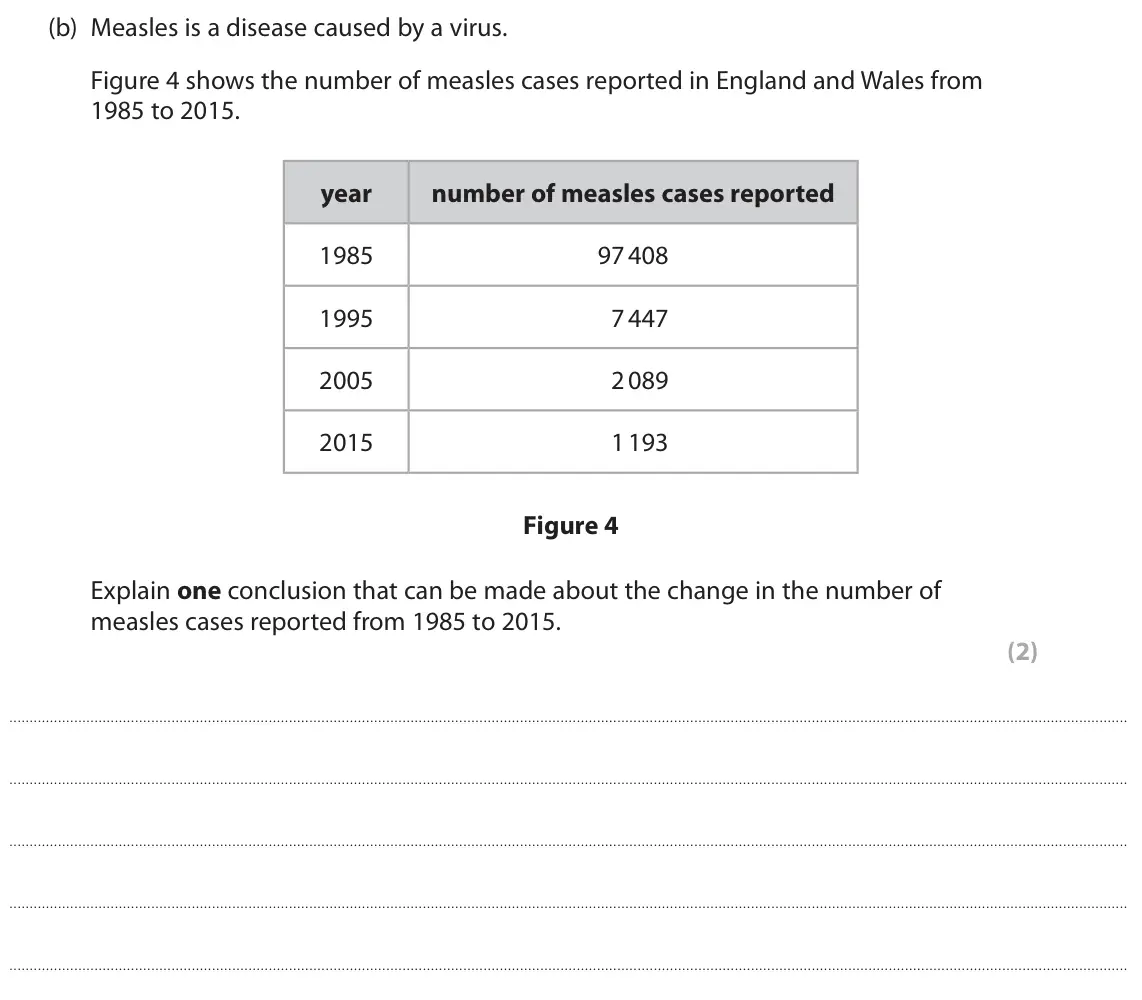
Q3(c)
The whole paper ↗
Q1(b)
The whole paper ↗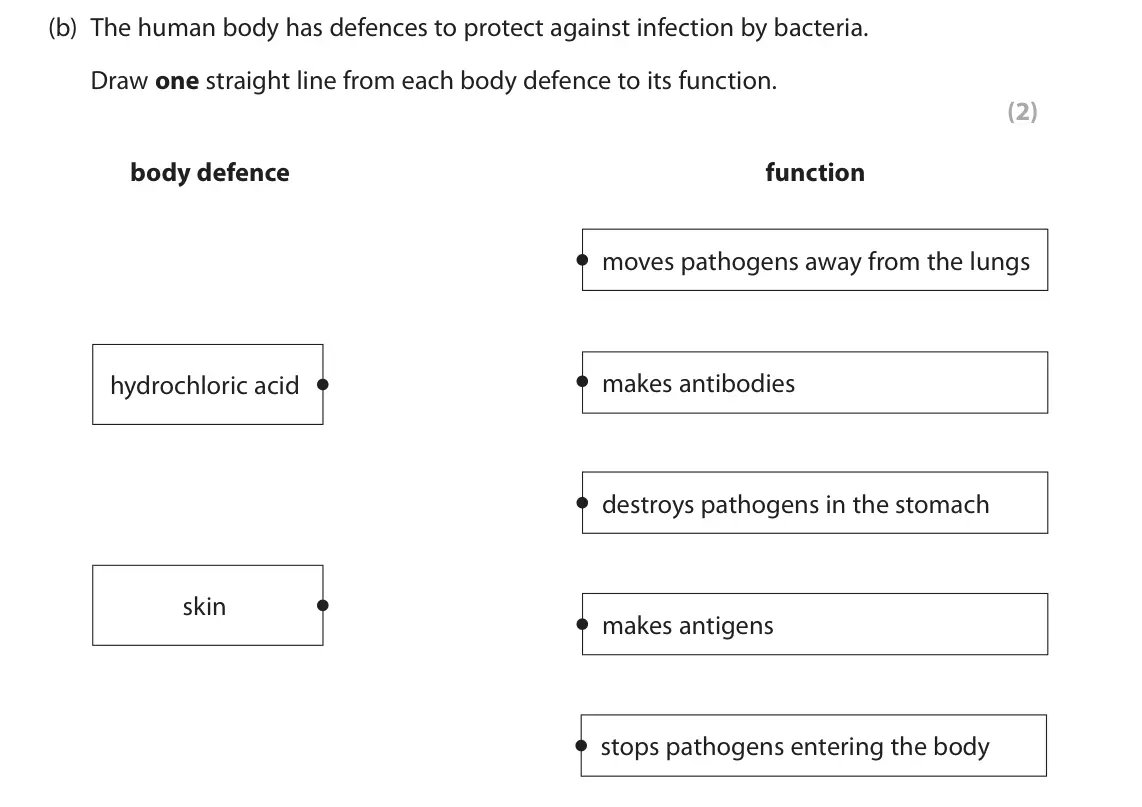
Q9(b)
The whole paper ↗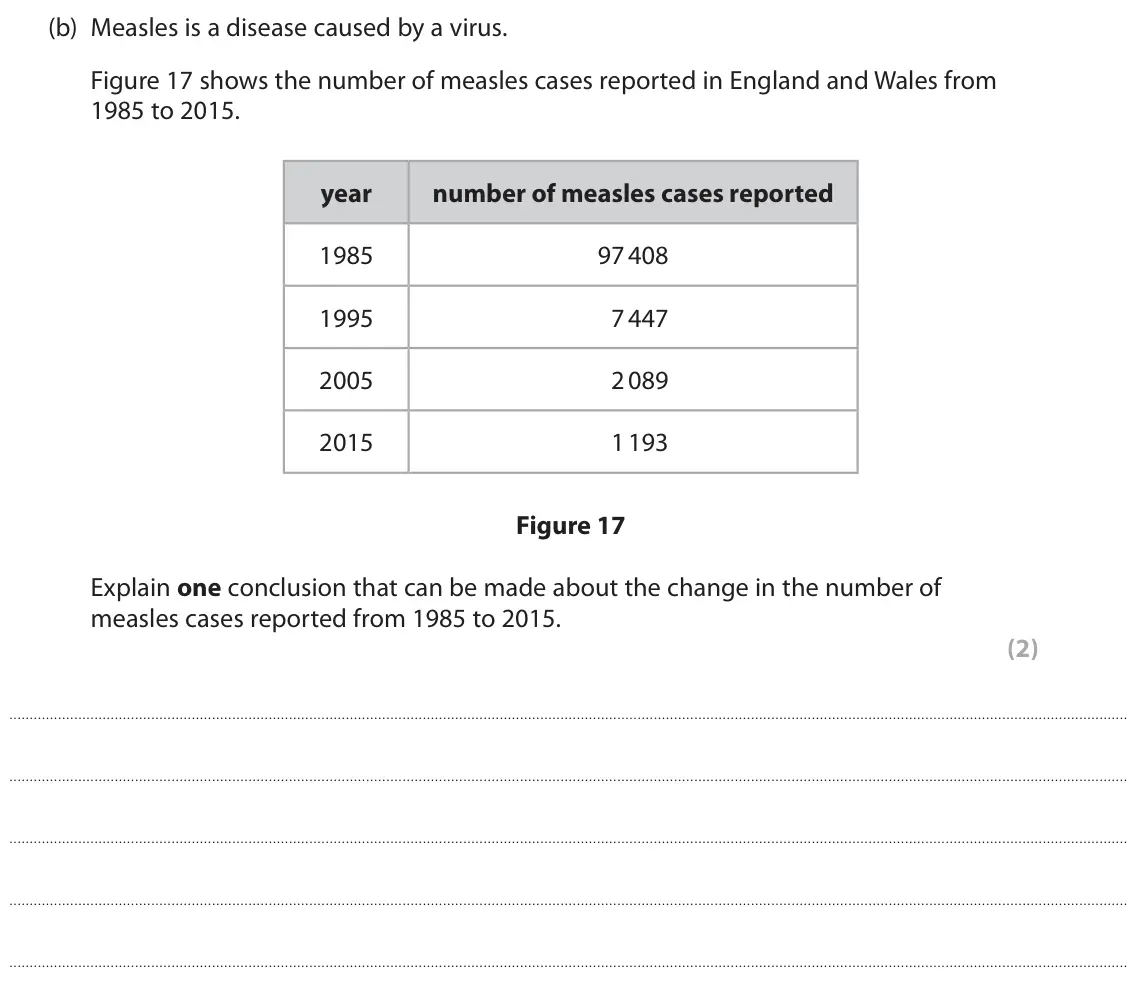
Q9(c)
The whole paper ↗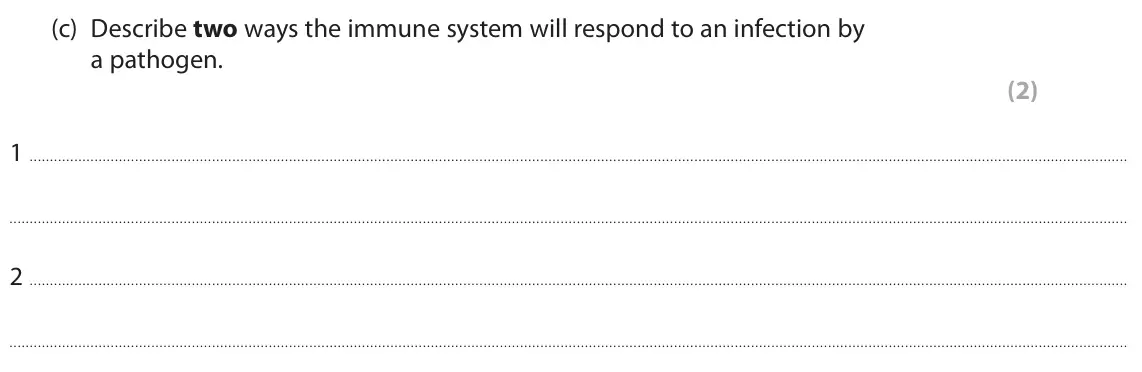
Q9(b)
The whole paper ↗
Q9(c)
The whole paper ↗
Q9(a)(ii)
The whole paper ↗
Q2(b)
The whole paper ↗
Q2(c)(iii)
The whole paper ↗
Q8(c)
The whole paper ↗
Q8(d)(iii)
The whole paper ↗
Q3(a)
The whole paper ↗
Q7(c)(i)
The whole paper ↗
All 24 questions on The immune system and immunisation, as a list
- June 2025, Paper 1 Higher, Q6(b) (3 marks): Describe the specific immune response when a pathogen infects the body. (3)
- June 2025, Paper 1 Foundation, Q7(a)(ii) (2 marks): In the UK, most children are immunised against serious infections such as measles. Give two advantages of immunising children against measles. (2) 1 2
- June 2025, Paper 1 Foundation, Q7(b)(i) (2 marks): Name two of these physical barriers. (2) 1 2
- June 2025, Paper 1 Foundation, Q7(b)(ii) (1 mark): State the chemical in the stomach that destroys bacteria. (1)
- June 2025, Paper 2 Higher, Q2(a) (2 marks): Figure 2 shows a diagram of mucus‑producing goblet cells and ciliated epithelial cells in the airways of the lungs. ciliated epithelial mucus-producing cell gob
- June 2025, Paper 2 Foundation, Q8(b) (2 marks): Figure 16 shows a diagram of mucus‑producing goblet cells and ciliated epithelial cells in the airways of the lungs. ciliated epithelial mucus-producing cell go
- June 2024, Paper 1 Higher, Q3(b) (2 marks): Measles is a disease caused by a virus. Figure 4 shows the number of measles cases reported in England and Wales from 1985 to 2015. year number of measles cases
- June 2024, Paper 1 Higher, Q3(c) (2 marks): Describe two ways the immune system will respond to an infection by a pathogen. (2) 1 2
- June 2024, Paper 1 Foundation, Q1(b) (2 marks): The human body has defences to protect against infection by bacteria. Draw one straight line from each body defence to its function. (2) body defence function m
- June 2024, Paper 1 Foundation, Q9(b) (2 marks): Measles is a disease caused by a virus. Figure 17 shows the number of measles cases reported in England and Wales from 1985 to 2015. year number of measles case
- June 2024, Paper 1 Foundation, Q9(c) (2 marks): Describe two ways the immune system will respond to an infection by a pathogen. (2) 1 2
- June 2022, Paper 1 Foundation, Q9(b) (6 marks): When a person is infected with a disease, the immune system will respond to protect their body. Explain how the immune system will respond to an infection cause
- November 2021, Paper 1 Foundation, Q9(c) (6 marks): Describe how the physical barriers and chemical defences of the human body provide protection from diseases. (6)
- November 2021, Paper 2 Foundation, Q9(a)(ii) (1 mark): State the function of the ciliated epithelial cells in the airways of the human breathing system. (1)
- November 2020, Paper 1 Higher, Q2(b) (3 marks): Describe how the specific immune system defends the body against disease. (3)
- November 2020, Paper 1 Higher, Q2(c)(iii) (1 mark): Give one reason why the number of people per million diagnosed with measles is different in these countries. (1)
- November 2020, Paper 1 Foundation, Q8(c) (3 marks): Describe how the specific immune system defends the body against disease. (3)
- November 2020, Paper 1 Foundation, Q8(d)(iii) (1 mark): Give one reason why the number of people per million diagnosed with measles is different in these countries. (1)
- June 2019, Paper 1 Higher, Q3(a) (3 marks): Clostridium tetani is a bacterium that can be found in soil. It causes the infection tetanus. Children are vaccinated against tetanus. Explain why these childre
- June 2019, Paper 1 Higher, Q7(c)(i) (2 marks): State two reasons why people might not be immunised against measles. (2) 1 2
- June 2019, Paper 1 Higher, Q7(c)(ii) (2 marks): The spread of measles is prevented by herd immunity. Describe herd immunity. (2)
- June 2019, Paper 1 Foundation, Q9(a) (3 marks): Clostridium tetani is a bacterium that can be found in soil. It causes the infection tetanus. Children are vaccinated against tetanus. Explain why these childre
- June 2018, Paper 1 Higher, Q5(c) (3 marks): Most cases of scarlet fever occur in children. Adults have usually developed immunity to a toxin that the Streptococcus bacteria produce during infection. Expla
- Specimen, Paper 1 Foundation, Q6(a)(ii) (2 marks): Describe how the conjunctiva helps protects the eye from infection. (2) Cataracts are caused by cloudy patches that develop on the lens. The chance of being aff
Questions, mark schemes and examiner’s reports are © Pearson Edexcel, from their published past papers. Plumi isn’t affiliated with any exam board. Want whole papers? Every Edexcel GCSE Biology paper.
Rather write your answers by hand on iPad? Plumi marks them against the same mark schemes.