 plumi
Pathogens and infections: Edexcel GCSE Biology questions
Every Edexcel GCSE Biology exam question on Pathogens and infections (specification points 5.4–5.8), 2018–2025, with its mark scheme and examiner’s report.
Find questions1,834
Exam
All years
Calculations
Q2(a)
The whole paper ↗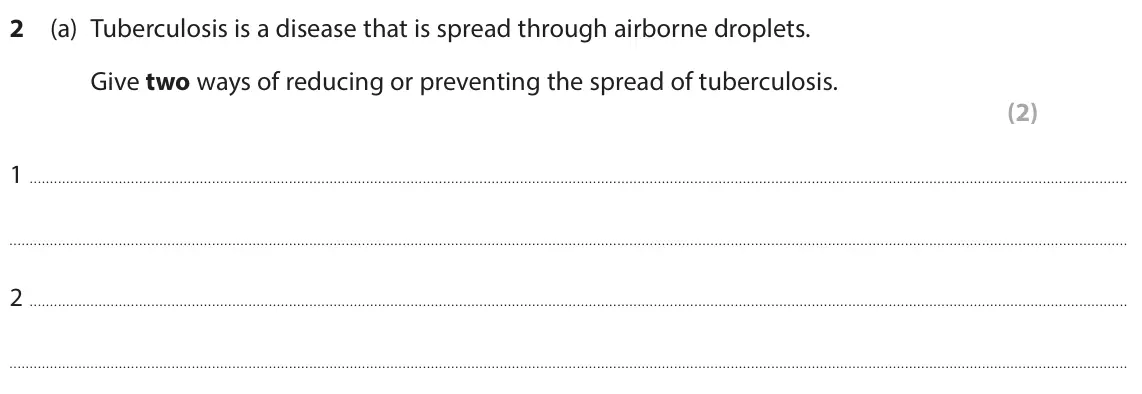
Q6(a)(iii)
The whole paper ↗
Q6(a)(iv)
The whole paper ↗
Q5(b)
The whole paper ↗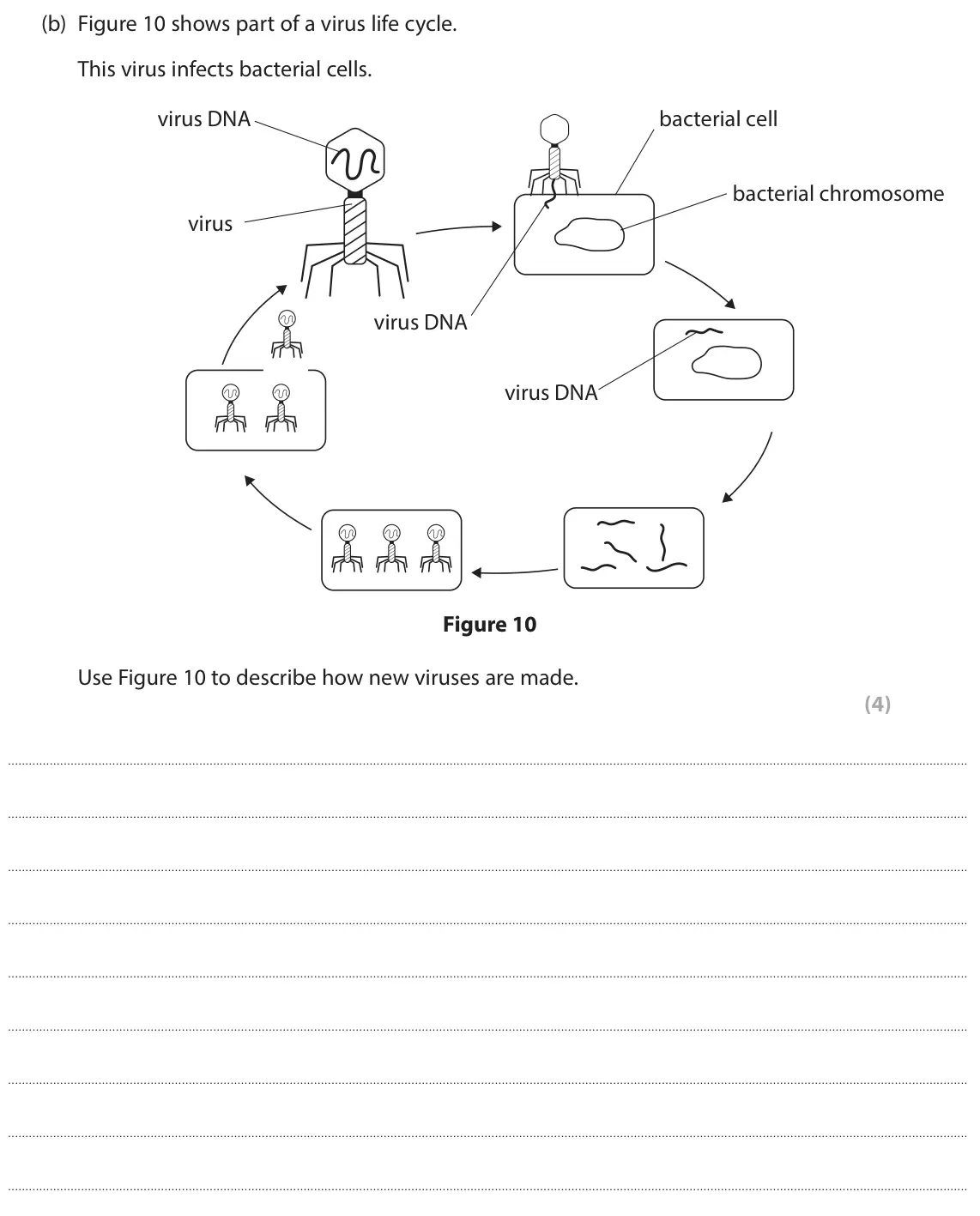
Q7(a)(i)
The whole paper ↗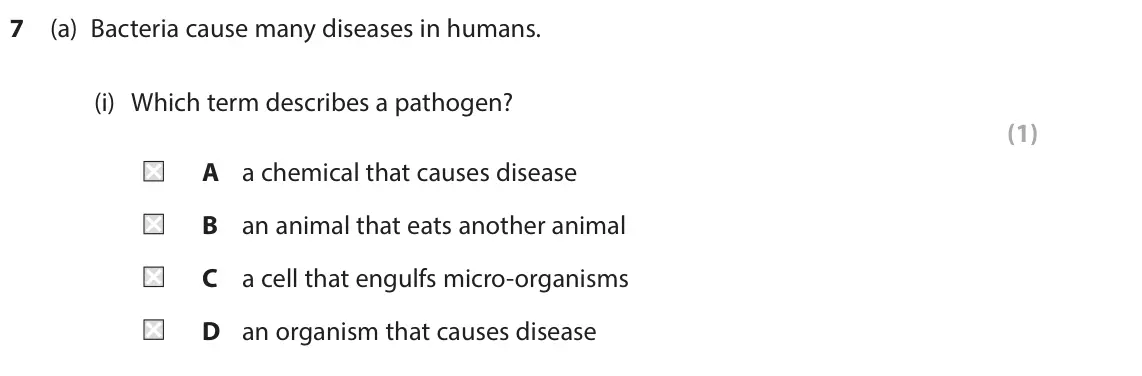
Q8(a)(i)
The whole paper ↗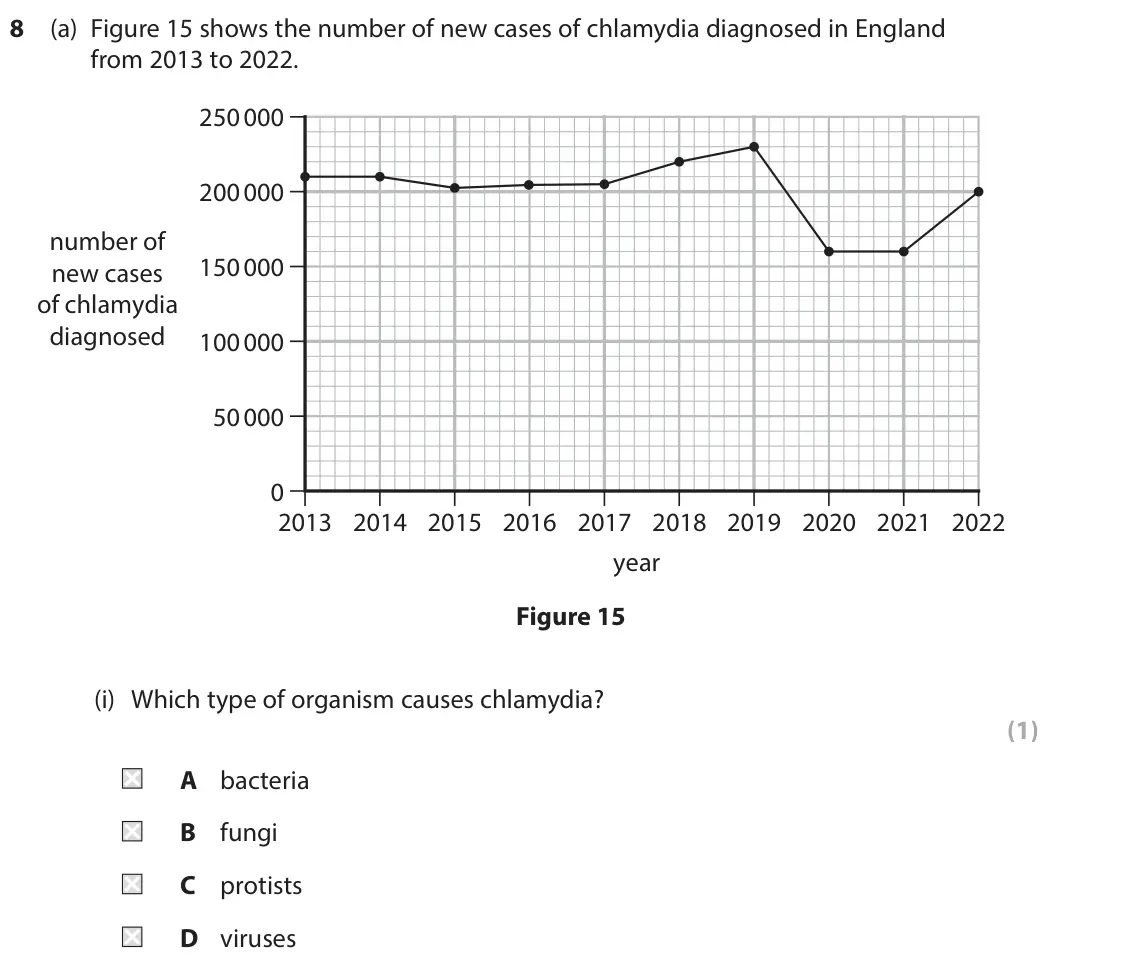
Q8(a)(ii)
The whole paper ↗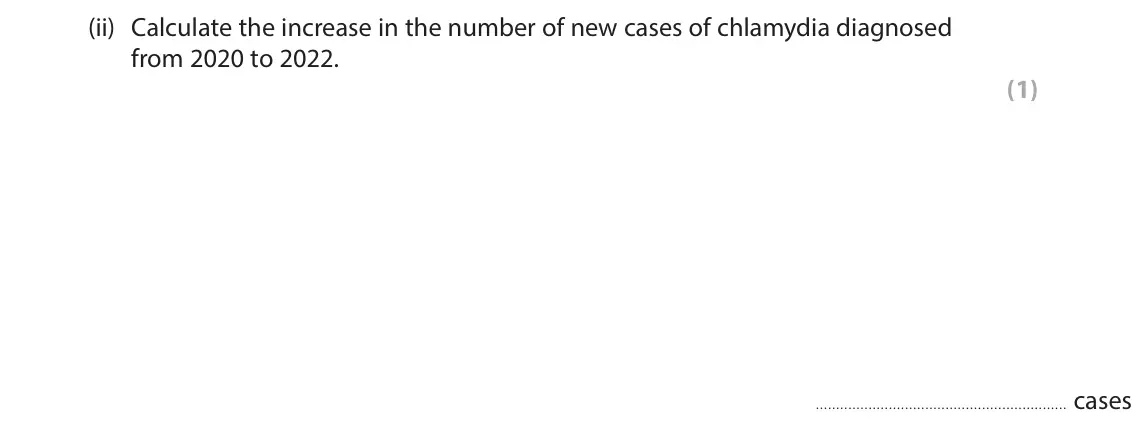
Q8(a)(iii)
The whole paper ↗
Q3(a)(i)
The whole paper ↗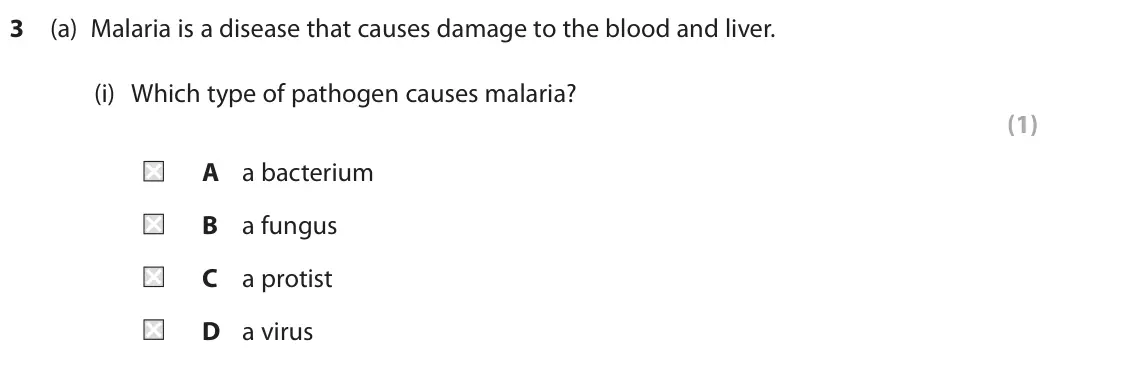
Q3(a)(ii)
The whole paper ↗
Q7(a)(i)
The whole paper ↗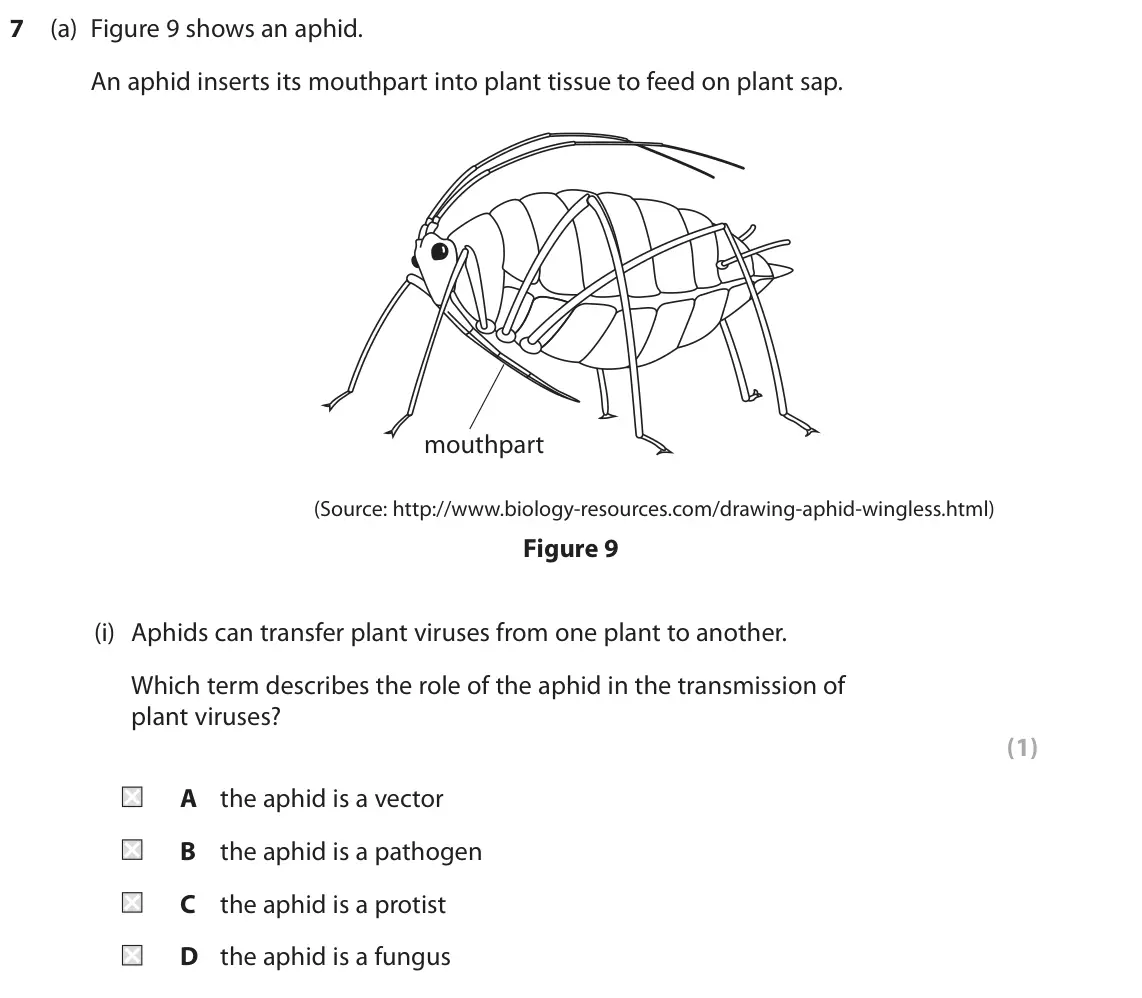
Q10(a)(i)
The whole paper ↗
Q10(a)(ii)
The whole paper ↗
Q9(a)(i)
The whole paper ↗
Q9(a)(ii)
The whole paper ↗
Q3(a)
The whole paper ↗
Q3(b)(i)
The whole paper ↗
Q9(a)
The whole paper ↗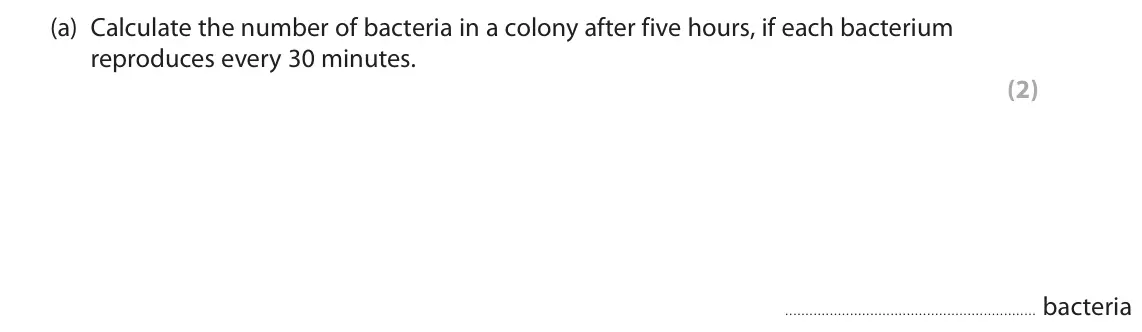
Q9(b)(i)
The whole paper ↗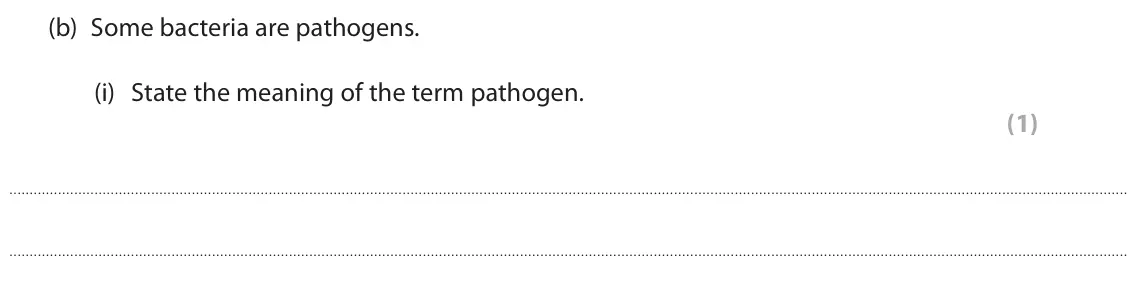
Q3(a)(i)
The whole paper ↗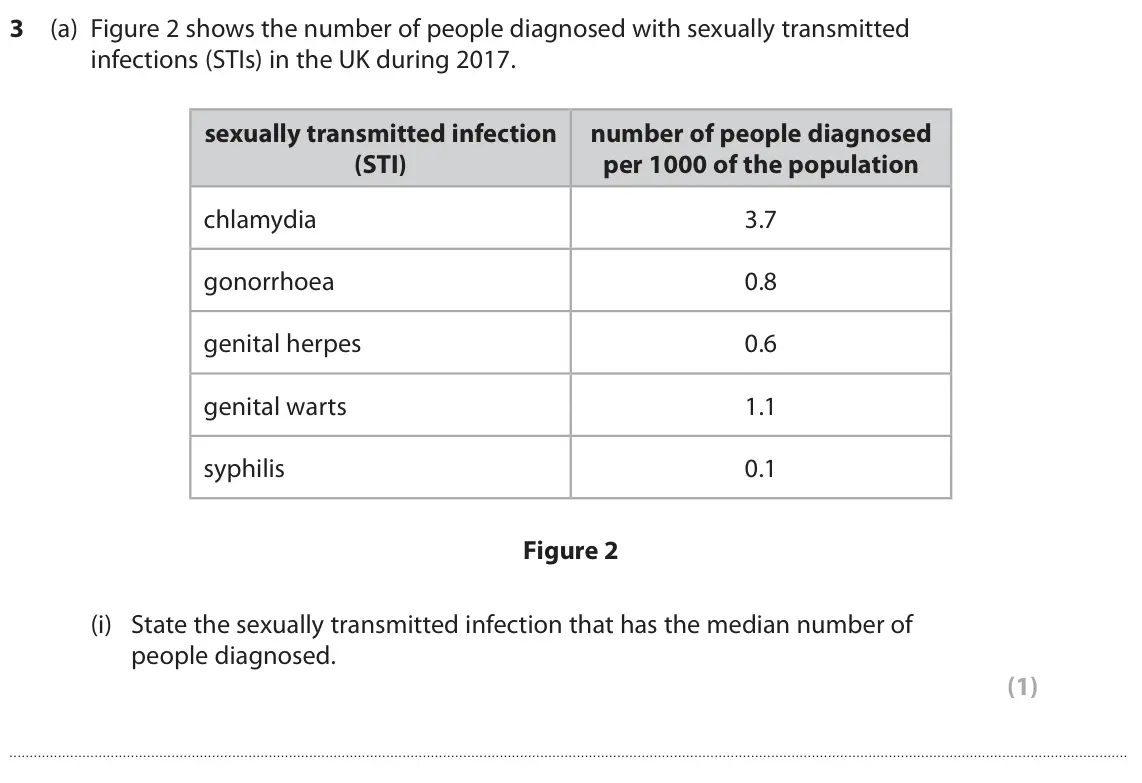
All 72 questions on Pathogens and infections, as a list
- June 2025, Paper 1 Higher, Q2(a) (2 marks): Tuberculosis is a disease that is spread through airborne droplets. Give two ways of reducing or preventing the spread of tuberculosis. (2) 1 2
- June 2025, Paper 1 Higher, Q6(a)(iii) (1 mark): State one symptom of the disease caused by Vibrio cholerae. (1)
- June 2025, Paper 1 Higher, Q6(a)(iv) (1 mark): State how the disease caused by Vibrio cholerae is transmitted. (1)
- June 2025, Paper 1 Foundation, Q5(b) (4 marks): Figure 10 shows part of a virus life cycle. This virus infects bacterial cells. virus DNA bacterial cell bacterial chromosome virus virus DNA virus DNA Figure 1
- June 2025, Paper 1 Foundation, Q7(a)(i) (1 mark): Which term describes a pathogen? (1) A a chemical that causes disease B an animal that eats another animal C a cell that engulfs micro-organisms D an organism t
- June 2025, Paper 1 Foundation, Q8(a)(i) (1 mark): Which type of organism causes chlamydia? (1) A bacteria B fungi C protists D viruses
- June 2025, Paper 1 Foundation, Q8(a)(ii) (1 mark): Calculate the increase in the number of new cases of chlamydia diagnosed from 2020 to 2022. (1) cases
- June 2025, Paper 1 Foundation, Q8(a)(iii) (2 marks): Tuberculosis is a disease that is spread through airborne droplets. Give two ways of reducing or preventing the spread of tuberculosis. (2) 1 2
- June 2024, Paper 1 Higher, Q3(a)(i) (1 mark): Which type of pathogen causes malaria? (1) A a bacterium B a fungus C a protist D a virus
- June 2024, Paper 1 Higher, Q3(a)(ii) (1 mark): State how the pathogen that causes malaria is spread. (1)
- June 2024, Paper 1 Higher, Q7(a)(i) (1 mark): Aphids can transfer plant viruses from one plant to another. Which term describes the role of the aphid in the transmission of plant viruses? (1) A the aphid is
- June 2024, Paper 1 Higher, Q10(a)(i) (1 mark): Name the bacteria that cause stomach ulcers. (1)
- June 2024, Paper 1 Higher, Q10(a)(ii) (1 mark): People with a stomach ulcer are treated with antibiotics and an alkaline medicine to reduce symptoms. Give a reason why the alkaline medicine is used. (1)
- June 2024, Paper 1 Foundation, Q9(a)(i) (1 mark): Which type of pathogen causes malaria? (1) A a bacterium B a fungus C a protist D a virus
- June 2024, Paper 1 Foundation, Q9(a)(ii) (1 mark): State how the pathogen that causes malaria is spread. (1)
- June 2023, Paper 1 Higher, Q3(a) (2 marks): Calculate the number of bacteria in a colony after five hours, if each bacterium reproduces every 30 minutes. (2) bacteria
- June 2023, Paper 1 Higher, Q3(b)(i) (1 mark): State the meaning of the term pathogen. (1)
- June 2023, Paper 1 Foundation, Q9(a) (2 marks): Calculate the number of bacteria in a colony after five hours, if each bacterium reproduces every 30 minutes. (2) bacteria
- June 2023, Paper 1 Foundation, Q9(b)(i) (1 mark): State the meaning of the term pathogen. (1)
- June 2022, Paper 1 Higher, Q3(a)(i) (1 mark): State the sexually transmitted infection that has the median number of people diagnosed. (1)
- June 2022, Paper 1 Higher, Q3(a)(ii) (2 marks): The population of the UK in 2017 was 66 million people. Calculate the total number of people diagnosed with chlamydia in the UK in 2017. (2) people
- June 2022, Paper 1 Higher, Q3(a)(iv) (1 mark): Give one way the transmission of chlamydia can be prevented. (1)
- June 2022, Paper 1 Higher, Q3(b) (2 marks): HIV is another sexually transmitted infection. Explain how HIV can lead to the onset of AIDS. (2)
- June 2022, Paper 1 Higher, Q10(b) (4 marks): Viruses can cause disease. Describe how the lytic pathway is involved in the reproduction of viruses. (4)
- June 2022, Paper 1 Foundation, Q1(a) (1 mark): Which word describes an organism that causes disease? (1) A pathogen B culture C antibiotic D platelet
- June 2022, Paper 1 Foundation, Q1(b) (2 marks): Draw one straight line from each disease to the main way that the disease is spread. (2) disease main way the disease is spread in the air by animal vectors cho
- June 2022, Paper 1 Foundation, Q1(c)(i) (1 mark): Plot the points on the graph for the number of bacteria at 10 °C. The first two points have been plotted for you. (1)
- June 2022, Paper 1 Foundation, Q1(c)(ii) (1 mark): Draw a line of best fit on the graph for 10 °C. (1)
- June 2022, Paper 1 Foundation, Q1(c)(iii) (2 marks): Describe how the growth of bacteria at 10 °C was different from the growth of bacteria at 20 °C. (2)
- June 2022, Paper 1 Foundation, Q9(a)(i) (1 mark): State the sexually transmitted infection that has the median number of people diagnosed. (1)
- June 2022, Paper 1 Foundation, Q9(a)(ii) (2 marks): The population of the UK in 2017 was 66 million people. Calculate the total number of people diagnosed with chlamydia in the UK in 2017. (2) people
- June 2022, Paper 1 Foundation, Q9(a)(iv) (1 mark): Give one way the transmission of chlamydia can be prevented. (1)
- November 2021, Paper 1 Higher, Q3(b)(ii) (2 marks): Explain one way that the spread of tuberculosis (TB) can be reduced or prevented. (2)
- November 2021, Paper 1 Higher, Q3(b)(iii) (2 marks): A student researched the number of people with TB in some countries. Figure 4 shows the student’s data. Belgium 1000 Portugal 2400 UK 5400 people Germany 5800 i
- November 2021, Paper 1 Higher, Q3(c) (2 marks): Explain why people with AIDS are more susceptible to TB. (2)
- November 2021, Paper 1 Foundation, Q9(b)(ii) (2 marks): Explain one way that the spread of tuberculosis (TB) can be reduced or prevented. (2)
- November 2021, Paper 1 Foundation, Q9(b)(iii) (2 marks): A student researched the number of people with TB in some countries. Figure 19 shows the student’s data. Belgium 1000 Portugal 2400 UK 5400 people Germany 5800
- November 2020, Paper 1 Higher, Q1(a)(i) (1 mark): Why is the number of deaths from Ebola only an estimate? (1) A many people were immune to Ebola B many deaths were not confirmed to be caused by Ebola C Ebola d
- November 2020, Paper 1 Higher, Q1(a)(ii) (1 mark): State how Ebola is spread from person to person. (1)
- November 2020, Paper 1 Higher, Q1(a)(iii) (2 marks): The lytic pathway is part of the lifecycle of the Ebola virus. After infection of the host cell, components of the virus are produced. Describe the next stages
- November 2020, Paper 1 Higher, Q1(b)(i) (1 mark): Name this type of pathway. (1)
- November 2020, Paper 1 Higher, Q2(a) (1 mark): The human immunodeficiency virus (HIV) can cause AIDS. Which type of cell is destroyed by the HIV virus? (1) A red blood cell B nerve cell C white blood cell D
- November 2020, Paper 1 Higher, Q2(c)(i) (3 marks): The population of Belgium in that year was 11.18 million. Calculate the number of people in Belgium diagnosed with measles. Give your answer to three significan
- November 2020, Paper 1 Higher, Q2(c)(ii) (1 mark): Countries do not report the total number of people diagnosed with measles. Countries report the number of people diagnosed with measles per million of the popul
- November 2020, Paper 1 Foundation, Q8(a)(i) (1 mark): What can a virus also be classified as? (1) A a bacterium B a fungus C a pathogen D a protist
- November 2020, Paper 1 Foundation, Q8(b) (1 mark): The human immunodeficiency virus (HIV) can cause AIDS. Which type of cell is destroyed by the HIV virus? (1) A red blood cell B nerve cell C white blood cell D
- November 2020, Paper 1 Foundation, Q8(d)(i) (3 marks): The population of Belgium in that year was 11.18 million. Calculate the number of people in Belgium diagnosed with measles. Give your answer to three significan
- November 2020, Paper 1 Foundation, Q8(d)(ii) (1 mark): Countries do not report the total number of people diagnosed with measles. Countries report the number of people diagnosed with measles per million of the popul
- June 2019, Paper 1 Higher, Q7(a) (3 marks): Describe the lytic pathway for a virus. (3)
- June 2019, Paper 1 Higher, Q7(b)(ii) (3 marks): The death rate from measles is 0.15%. In 2015, 134 250 people died from measles. Calculate the number of people infected with measles in 2015. Give your answer
- June 2019, Paper 1 Higher, Q8(c) (6 marks): Gonorrhoea is a sexually transmitted bacterial infection. Figure 13 shows the number of people diagnosed with gonorrhoea in the UK. 30 000 male 25 000 20 000 nu
- June 2019, Paper 1 Foundation, Q3(a)(i) (1 mark): Chlamydia is transmitted by (1) A insect vectors B sneezing C sexual intercourse D contaminated food
- June 2019, Paper 1 Foundation, Q3(a)(ii) (1 mark): The type of pathogen that causes chlamydia is a (1) A bacterium B fungus C protist D virus
- June 2019, Paper 1 Foundation, Q3(b)(i) (2 marks): Describe the trend in the number of cases of chlamydia between 1996 and 2013. (2)
- June 2019, Paper 1 Foundation, Q3(b)(ii) (1 mark): State the number of cases of chlamydia per 100 000 in 2013. (1)
- June 2019, Paper 1 Foundation, Q3(b)(iii) (2 marks): The population of the United Kingdom in 2013 was 64 000 000. Calculate the number of people with chlamydia in 2013. (2)
- June 2018, Paper 1 Higher, Q5(a)(i) (2 marks): Give two precautions a doctor should take when treating a patient who is infected with Streptococcus. (2)
- June 2018, Paper 1 Higher, Q5(a)(ii) (2 marks): From September 2013 to March 2014 there were 2 830 cases of scarlet fever in the UK. From September 2014 to March 2015 there were 5 943 cases of scarlet fever.
- June 2018, Paper 1 Higher, Q10(b) (6 marks): Infections can also be caused by viruses. Describe the lytic pathway of a virus and how this causes the spread of infection through a population. (6)
- June 2018, Paper 1 Foundation, Q1(a) (2 marks): Pathogens cause disease. Draw one straight line from each type of pathogen to the disease that is caused by that pathogen. (2) type of pathogen disease AIDS mal
- June 2018, Paper 1 Foundation, Q1(c) (2 marks): Figure 1 shows the number of white blood cells in blood samples from three patients. Patient X Patient Y Patient Z Number of white blood 8 500 5 700 12 500 cell
- June 2018, Paper 1 Foundation, Q1(d) (2 marks): HIV is diagnosed by blood tests. State two safety precautions that need to be taken when handling blood samples. (2) 1 2
- June 2018, Paper 2 Higher, Q4(b)(i) (2 marks): Calculate the percentage increase in the number of cases of Lyme disease in humans in France from 2003 to 2015. (2) %
- June 2018, Paper 2 Higher, Q4(b)(ii) (2 marks): Explain why there has been an increase in the number of cases of Lyme disease in humans in France. (2)
- June 2018, Paper 2 Foundation, Q10(b)(i) (2 marks): Calculate the percentage increase in the number of cases of Lyme disease in humans in France from 2003 to 2015. (2) %
- June 2018, Paper 2 Foundation, Q10(b)(ii) (2 marks): Explain why there has been an increase in the number of cases of Lyme disease in humans in France. (2)
- Specimen, Paper 1 Higher, Q10(a) (2 marks): Explain why the CD4+ count of 1.5 × 10⁸ cells/dm3 has led to the diagnosis of AIDS. (2)
- Specimen, Paper 1 Foundation, Q2(a) (1 mark): What type of pathogen causes Chlamydia? (1) A bacteria B fungus C protist D virus Figure 4 shows the number of new cases of Chlamydia diagnosed each year, in a
- Specimen, Paper 1 Foundation, Q2(b)(i) (1 mark): In 2009 there were 4800 new cases diagnosed. In 2010 there were 4100 new cases diagnosed. Plot this data on the graph in Figure 4. (1)
- Specimen, Paper 1 Foundation, Q2(b)(ii) (2 marks): Describe the trend in cases between 2000 and 2010. (2) People infected with Chlamydia are more likely to be infected with the STI Gonorrhoea.
- Specimen, Paper 1 Foundation, Q2(b)(iii) (2 marks): Explain how people become infected with both Chlamydia and Gonorrhoea. (2) HIV is a sexually transmitted infection.
- Specimen, Paper 1 Foundation, Q2(c) (2 marks): Explain how infection with HIV can lead to AIDS. (2)
Questions, mark schemes and examiner’s reports are © Pearson Edexcel, from their published past papers. Plumi isn’t affiliated with any exam board. Want whole papers? Every Edexcel GCSE Biology paper.
Rather write your answers by hand on iPad? Plumi marks them against the same mark schemes.