 plumi
Non-communicable diseases: Edexcel GCSE Biology questions
Every Edexcel GCSE Biology exam question on Non-communicable diseases (specification points 5.23–5.25), 2018–2025, with its mark scheme and examiner’s report.
Find questions1,834
Exam
All years
Calculations
Q2(b)(ii)
The whole paper ↗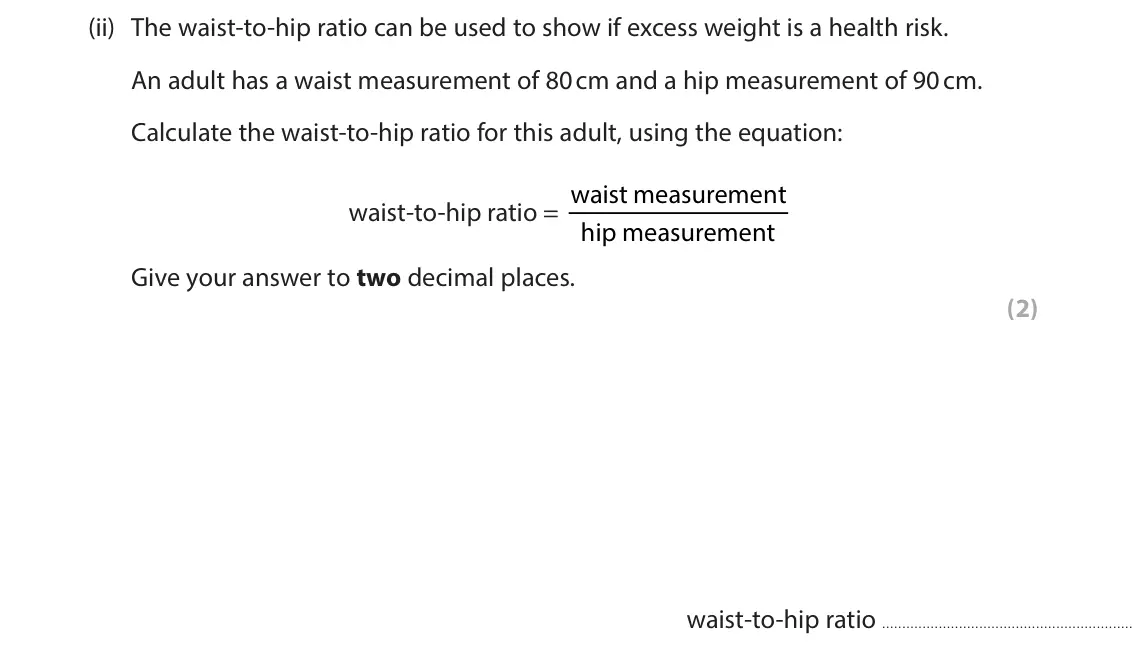
Q2(b)(iii)
The whole paper ↗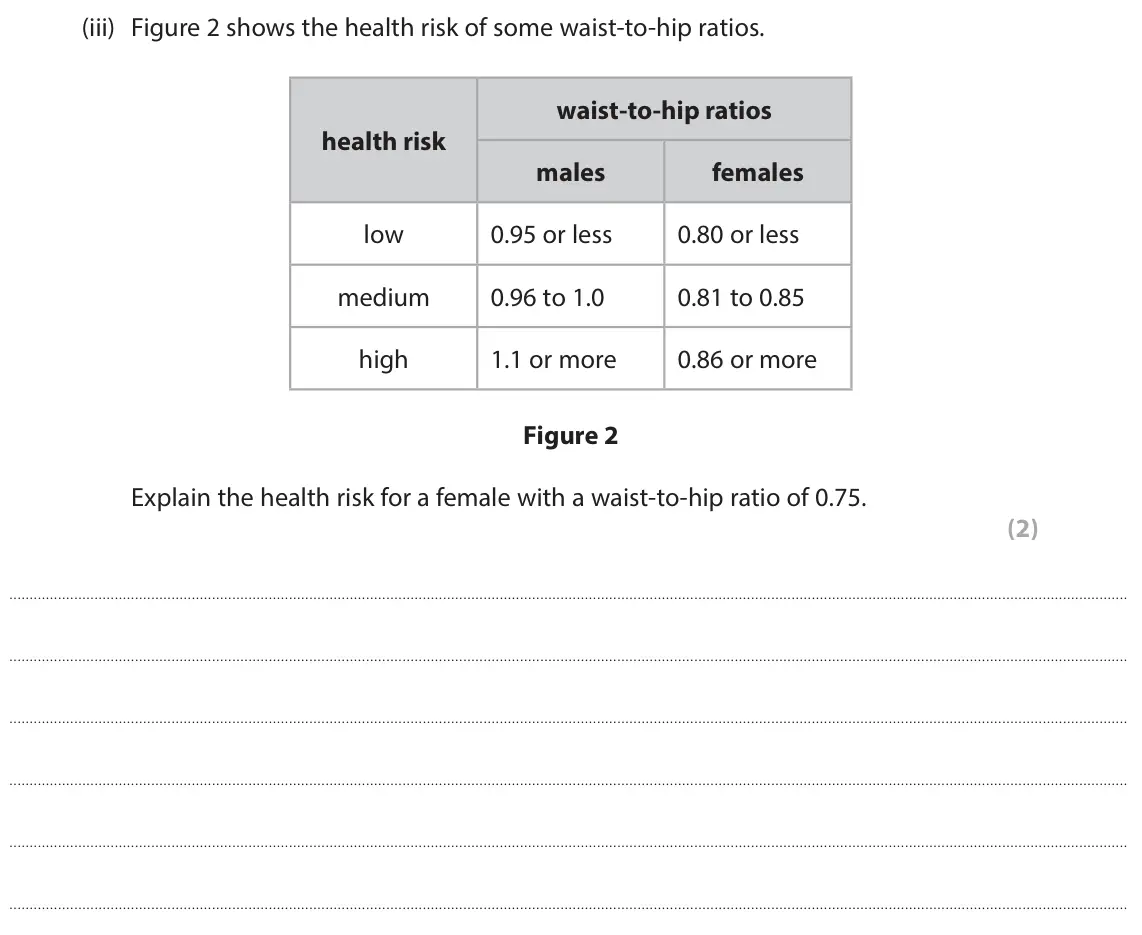
Q8(b)(i)
The whole paper ↗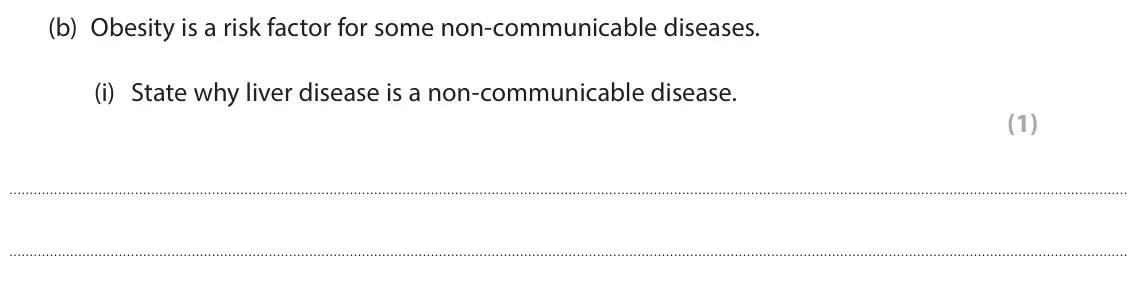
Q8(b)(ii)
The whole paper ↗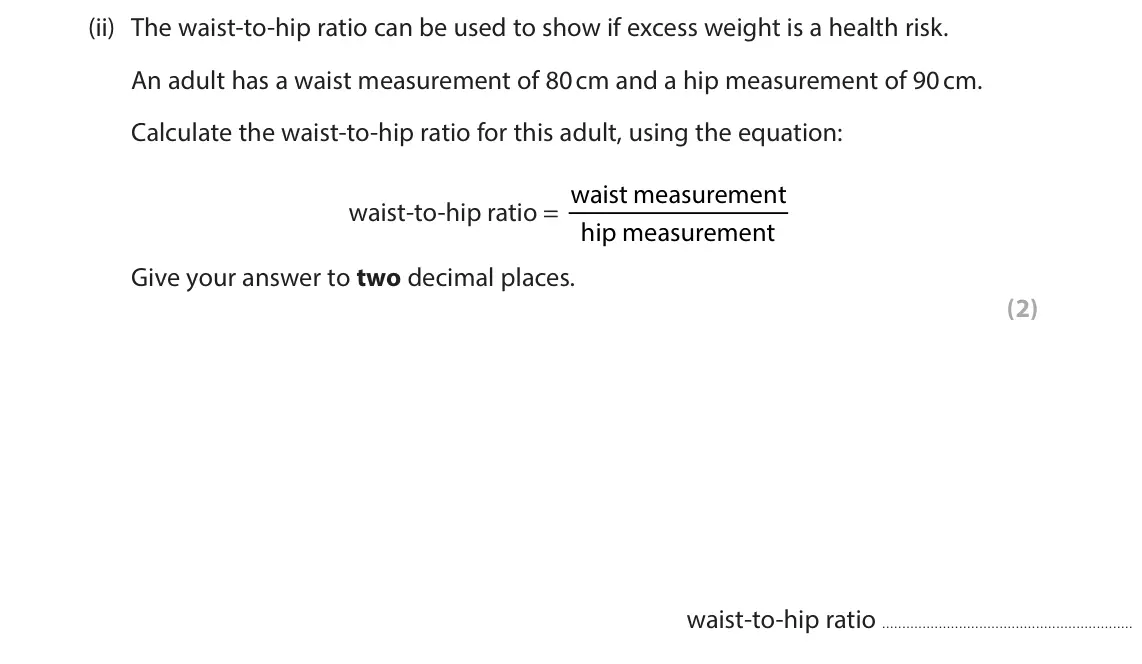
Q8(b)(iii)
The whole paper ↗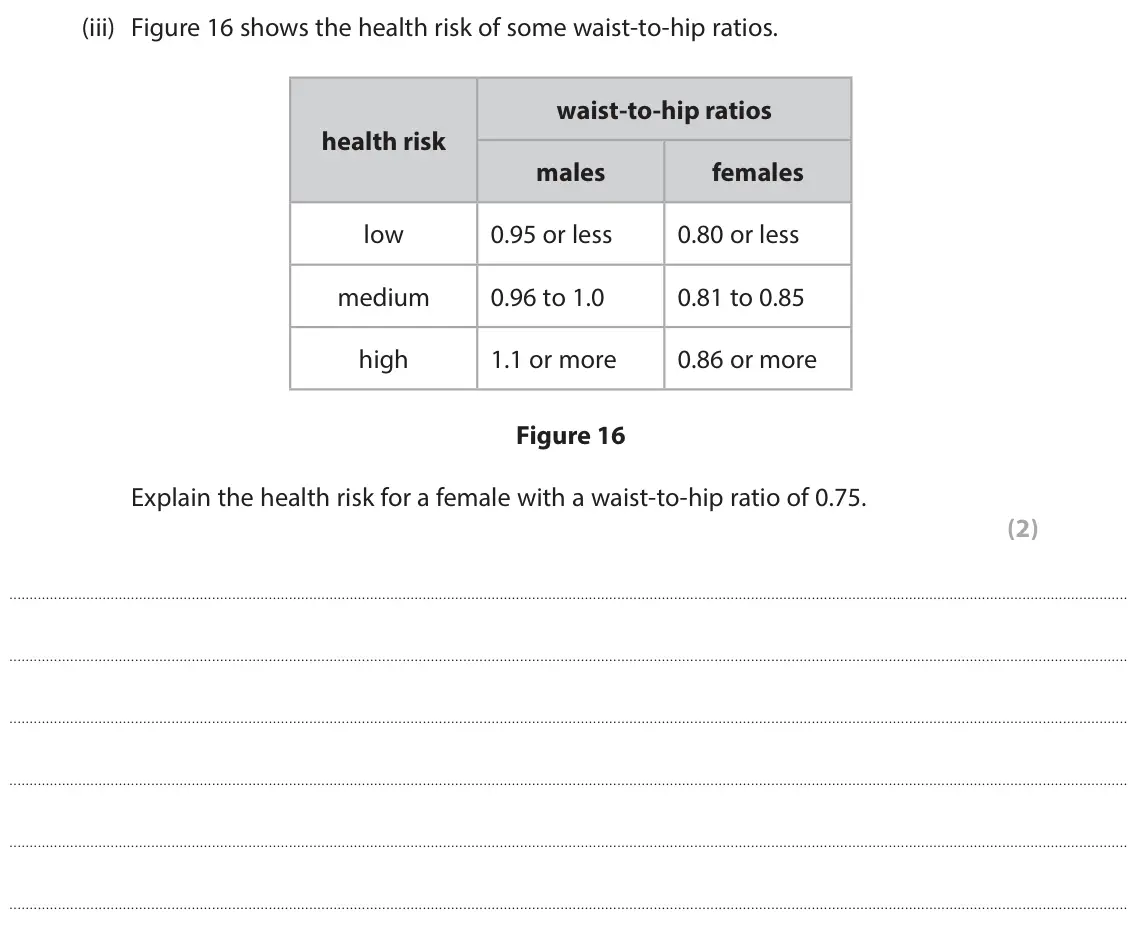
Q1(c)
The whole paper ↗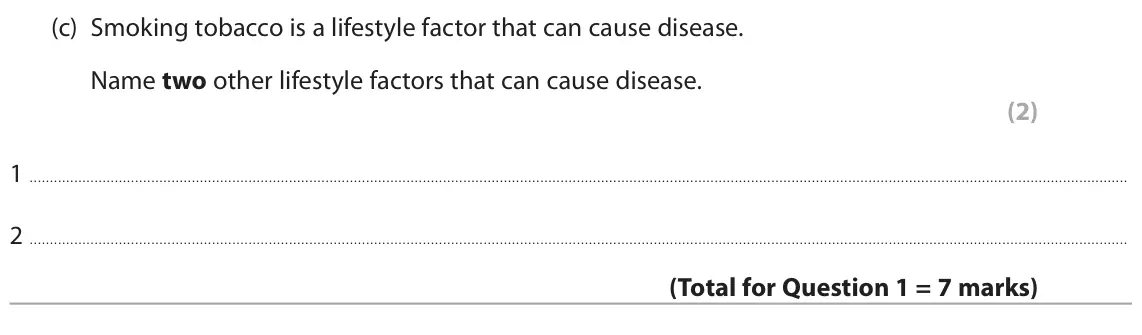
Q9(a)
The whole paper ↗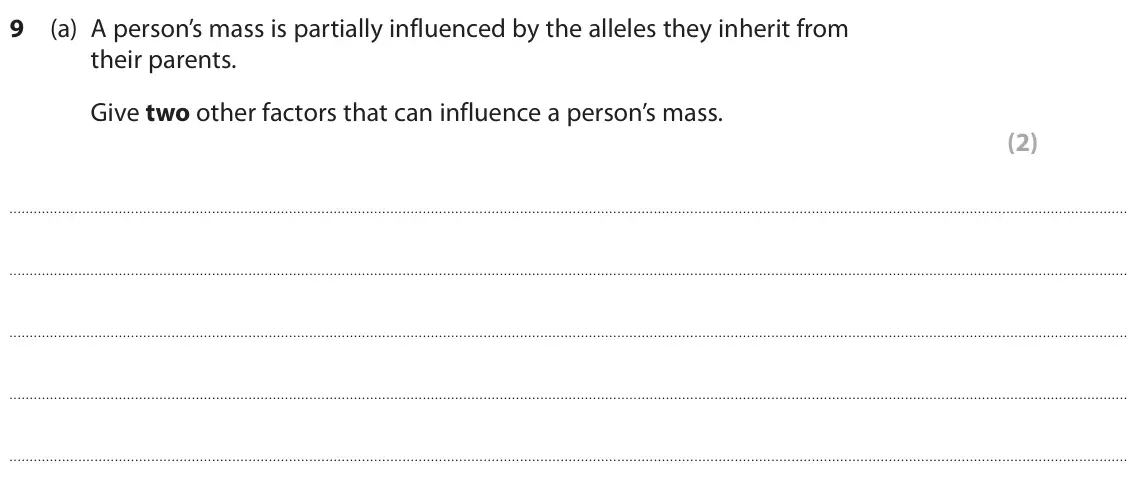
Q9(b)
The whole paper ↗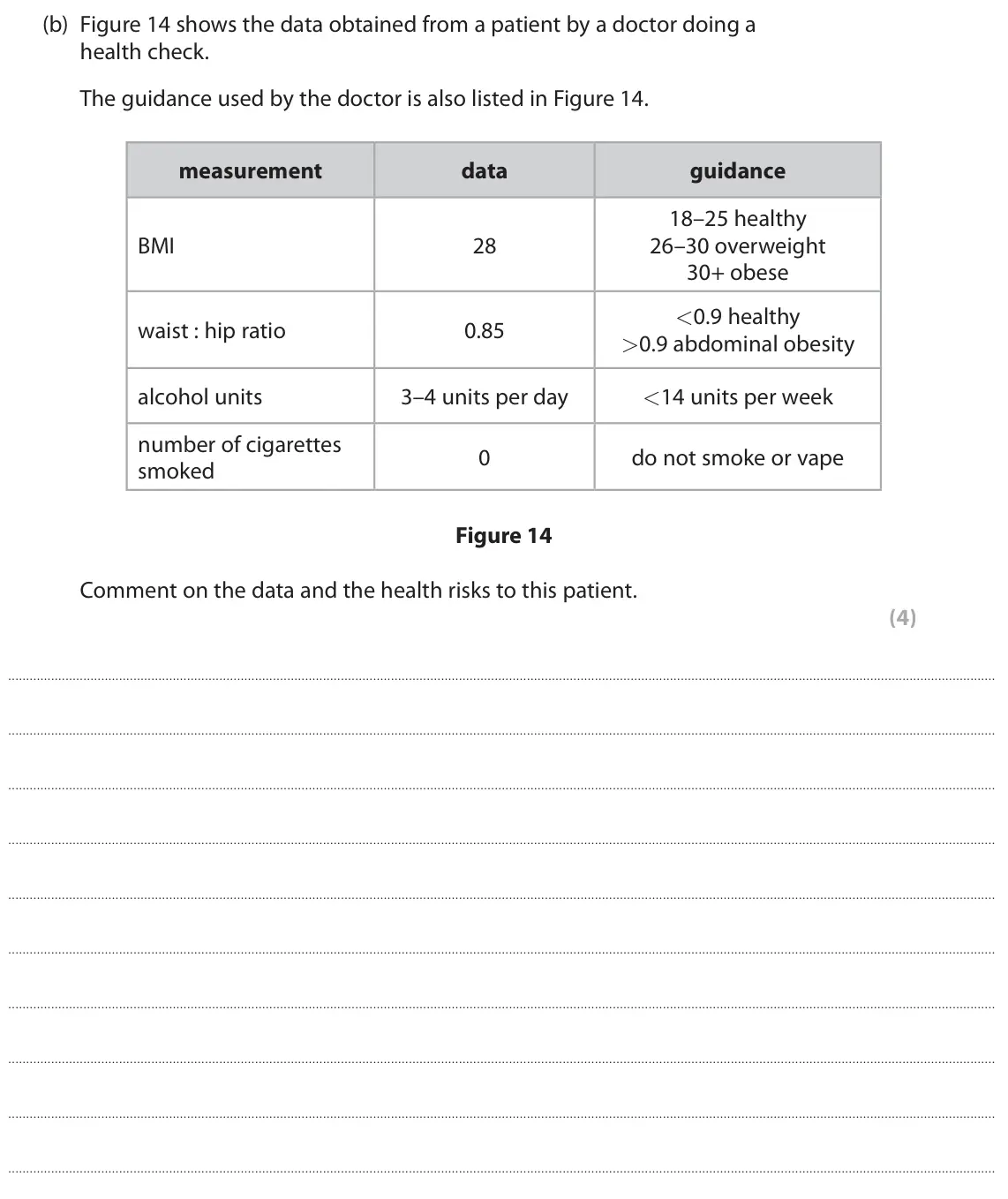
Q4(b)(i)
The whole paper ↗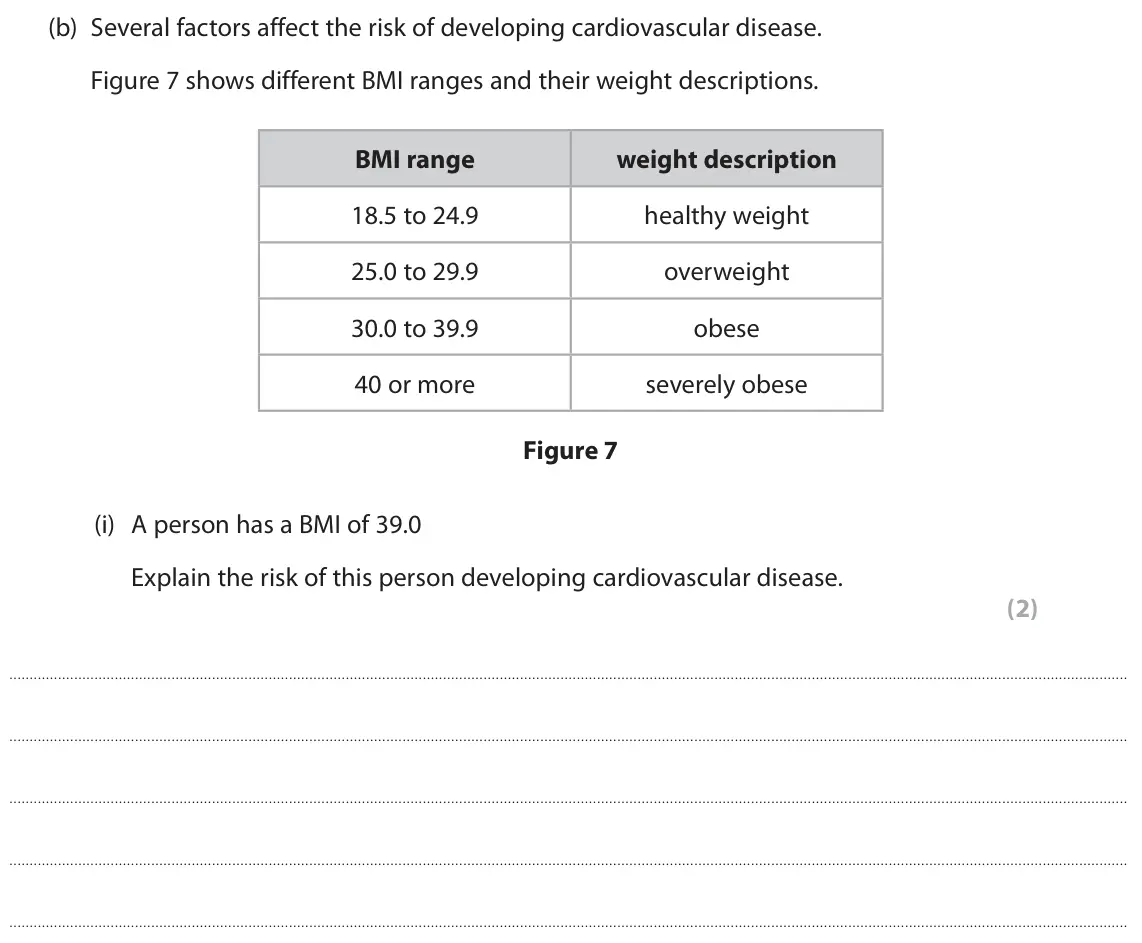
Q4(b)(ii)
The whole paper ↗
Q4(c)(i)
The whole paper ↗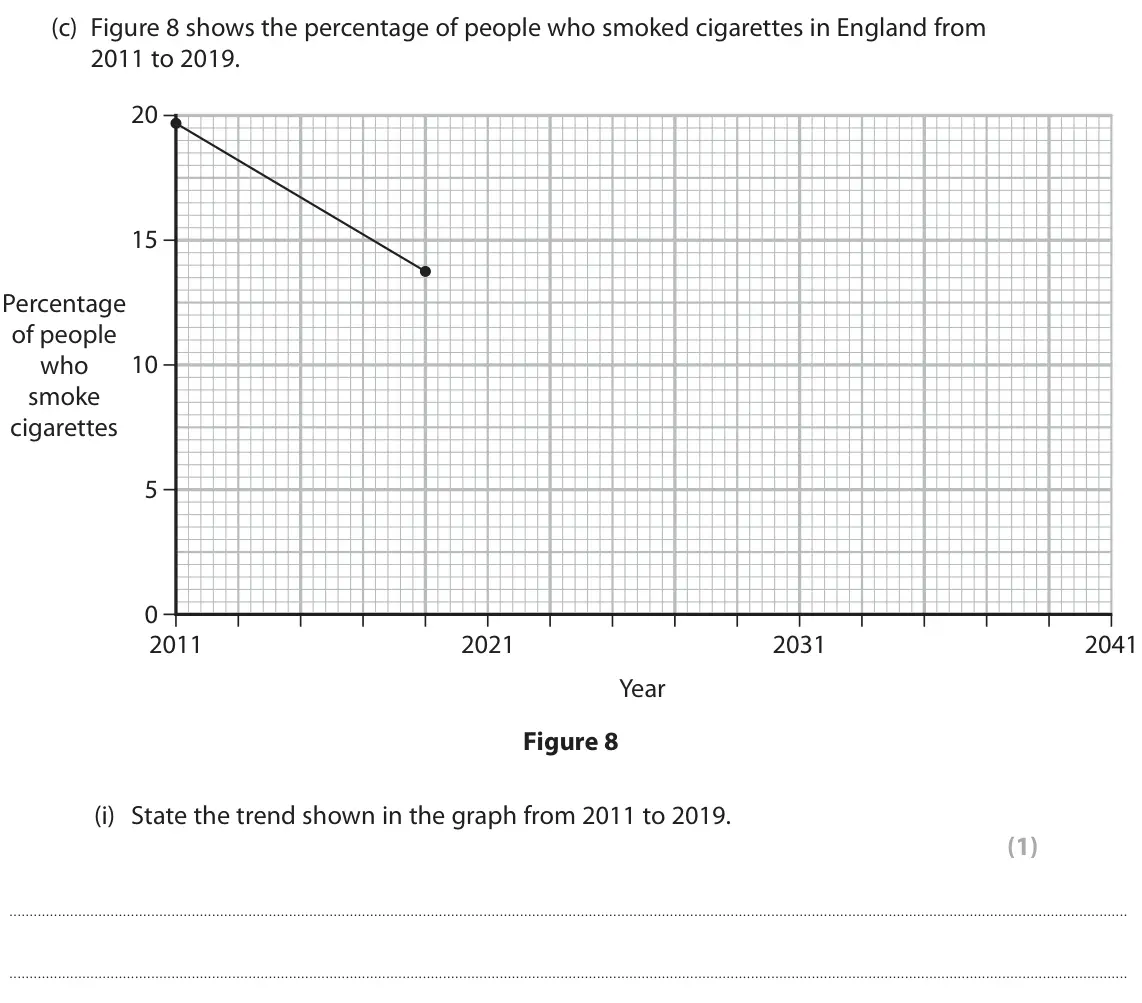
Q4(c)(ii)
The whole paper ↗
Q4(c)(iii)
The whole paper ↗
Q4(b)(i)
The whole paper ↗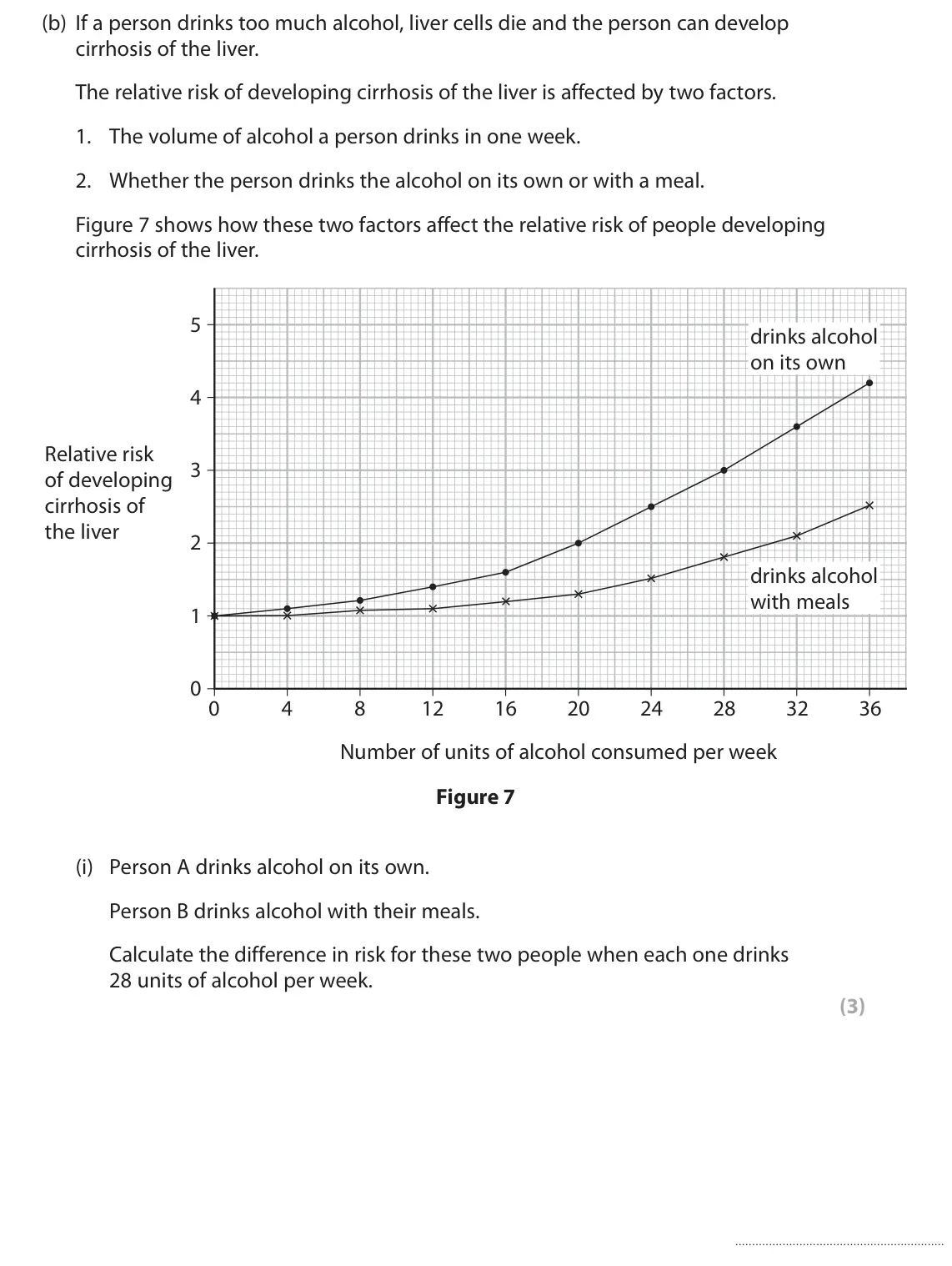
Q4(b)(ii)
The whole paper ↗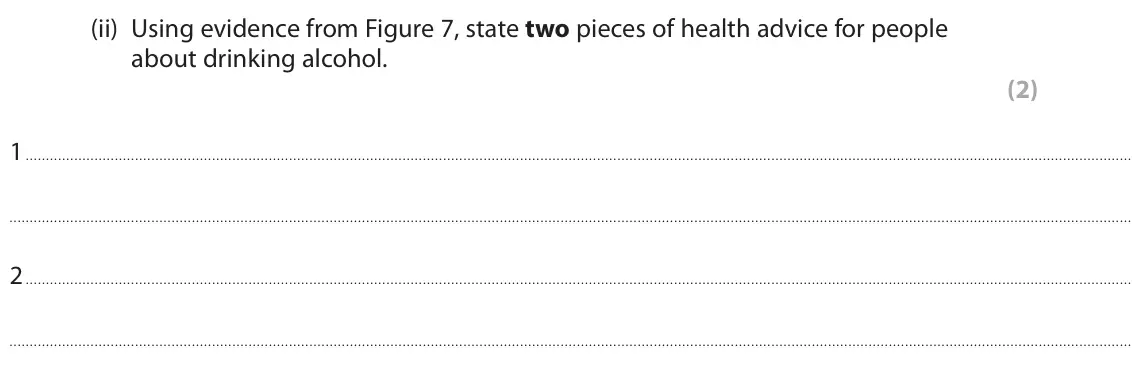
Q6(a)(i)
The whole paper ↗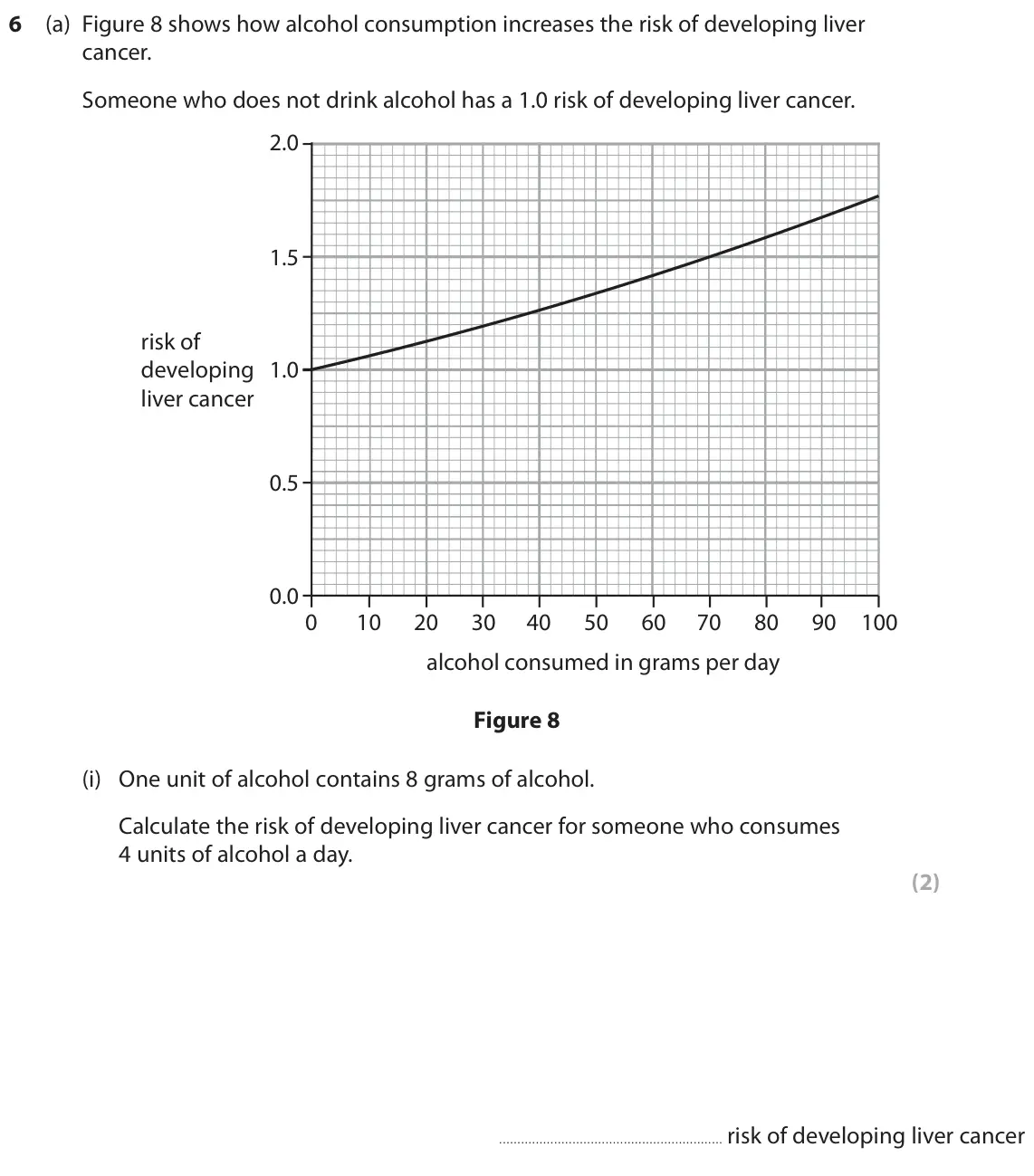
Q6(b)(i)
The whole paper ↗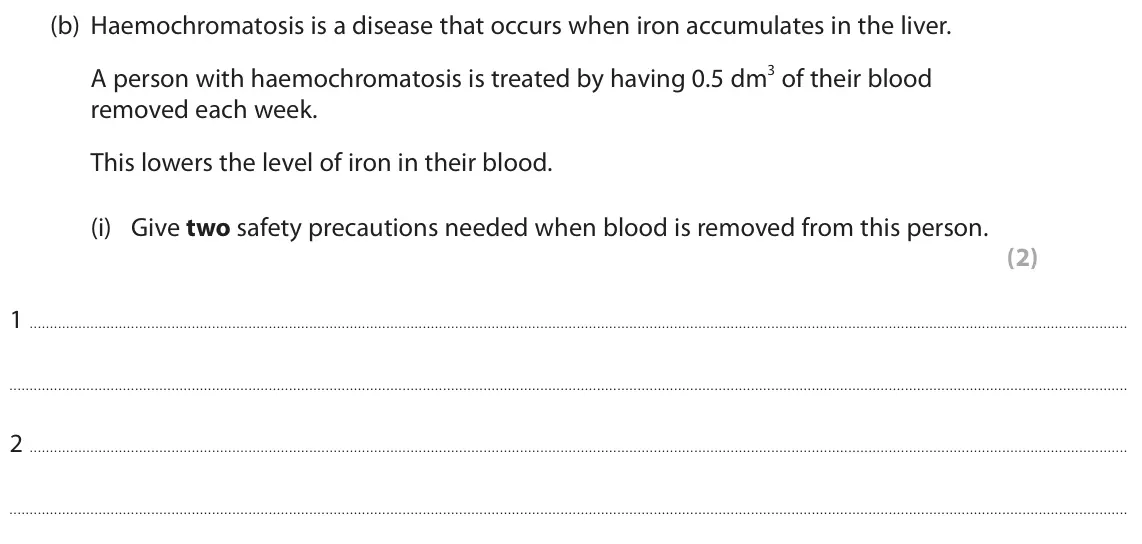
Q4(b)(i)
The whole paper ↗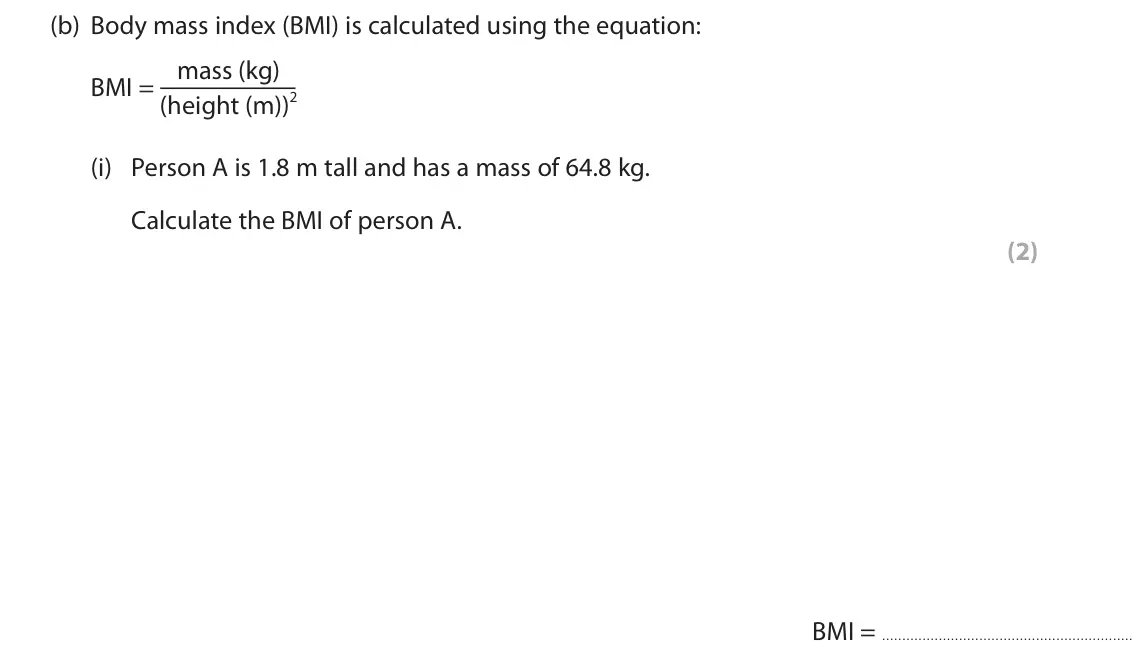
Q4(b)(ii)
The whole paper ↗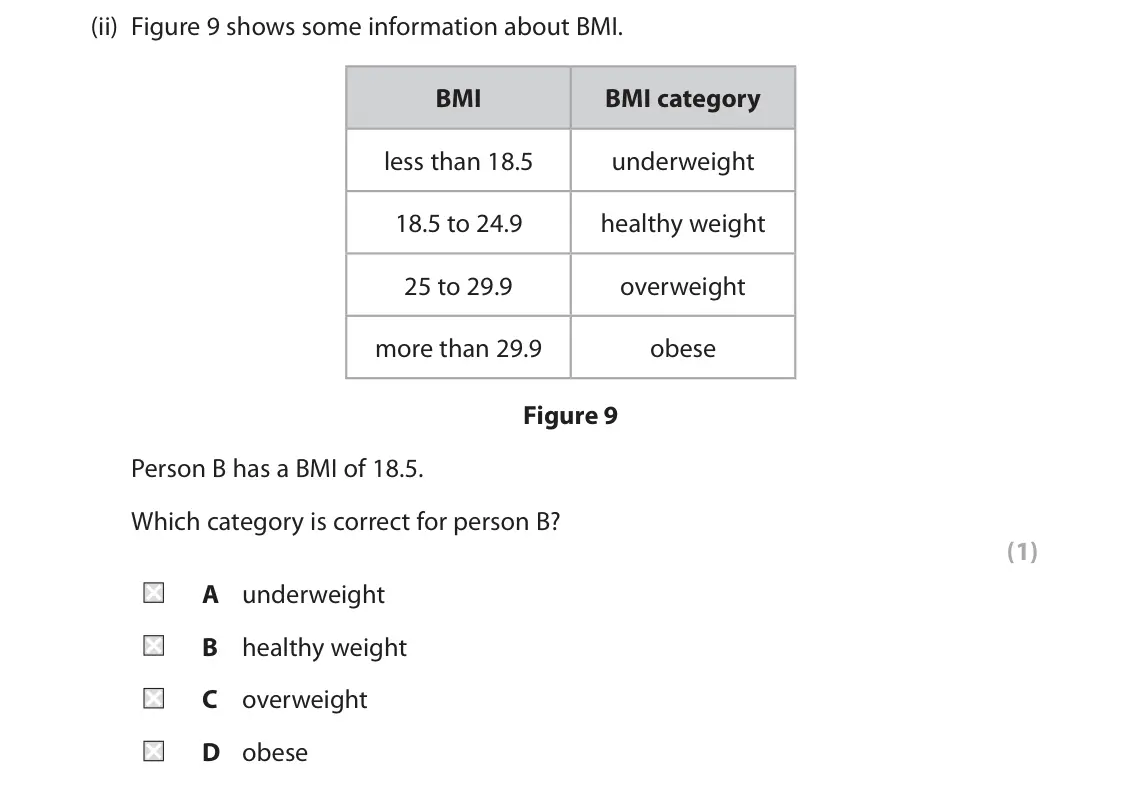
Q4(b)(iii)
The whole paper ↗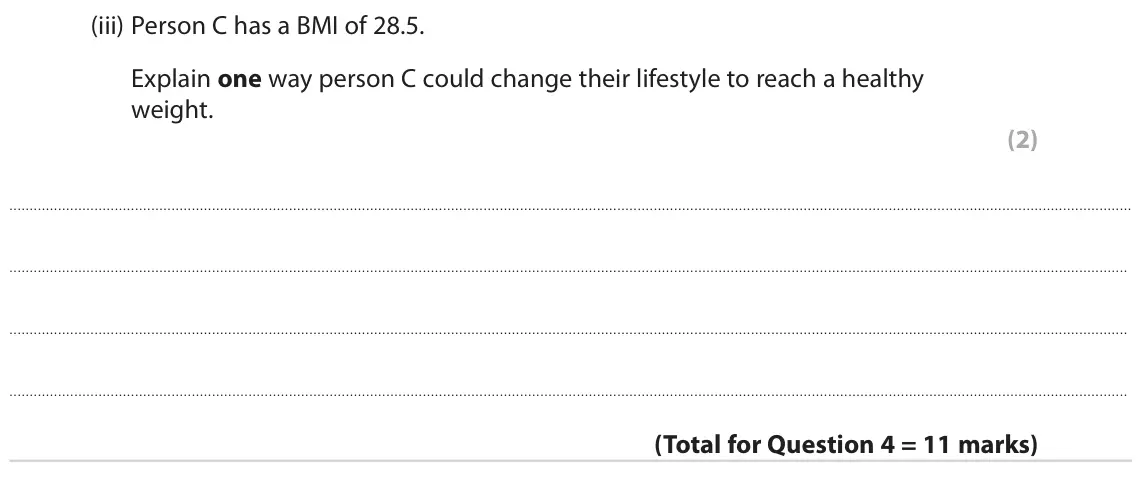
All 50 questions on Non-communicable diseases, as a list
- June 2025, Paper 1 Higher, Q2(b)(ii) (2 marks): The waist‑to‑hip ratio can be used to show if excess weight is a health risk. An adult has a waist measurement of 80 cm and a hip measurement of 90 cm. Calculat
- June 2025, Paper 1 Higher, Q2(b)(iii) (2 marks): Figure 2 shows the health risk of some waist‑to‑hip ratios. waist‑to‑hip ratios health risk males females low 0.95 or less 0.80 or less medium 0.96 to 1.0 0.81
- June 2025, Paper 1 Foundation, Q8(b)(i) (1 mark): State why liver disease is a non-communicable disease. (1)
- June 2025, Paper 1 Foundation, Q8(b)(ii) (2 marks): The waist‑to‑hip ratio can be used to show if excess weight is a health risk. An adult has a waist measurement of 80 cm and a hip measurement of 90 cm. Calculat
- June 2025, Paper 1 Foundation, Q8(b)(iii) (2 marks): Figure 16 shows the health risk of some waist‑to‑hip ratios. waist‑to‑hip ratios health risk males females low 0.95 or less 0.80 or less medium 0.96 to 1.0 0.81
- June 2024, Paper 1 Foundation, Q1(c) (2 marks): Smoking tobacco is a lifestyle factor that can cause disease. Name two other lifestyle factors that can cause disease. (2) 1 2
- June 2023, Paper 1 Higher, Q9(a) (2 marks): A person’s mass is partially influenced by the alleles they inherit from their parents. Give two other factors that can influence a person’s mass. (2)
- June 2023, Paper 1 Higher, Q9(b) (4 marks): Figure 14 shows the data obtained from a patient by a doctor doing a health check. The guidance used by the doctor is also listed in Figure 14. measurement data
- June 2023, Paper 1 Foundation, Q4(b)(i) (2 marks): A person has a BMI of 39.0 Explain the risk of this person developing cardiovascular disease. (2)
- June 2023, Paper 1 Foundation, Q4(b)(ii) (2 marks): Changes in lifestyle can reduce the risk of cardiovascular disease. State two other treatments for cardiovascular disease. (2) 1 2
- June 2023, Paper 1 Foundation, Q4(c)(i) (1 mark): State the trend shown in the graph from 2011 to 2019. (1)
- June 2023, Paper 1 Foundation, Q4(c)(ii) (2 marks): Give two reasons for this change in the number of people smoking cigarettes. (2) 1 2
- June 2023, Paper 1 Foundation, Q4(c)(iii) (1 mark): Draw a line on Figure 8 to show the likely trend in the percentage of people smoking cigarettes from 2019 to 2041. (1)
- June 2022, Paper 1 Foundation, Q4(b)(i) (3 marks): Person A drinks alcohol on its own. Person B drinks alcohol with their meals. Calculate the difference in risk for these two people when each one drinks 28 unit
- June 2022, Paper 1 Foundation, Q4(b)(ii) (2 marks): Using evidence from Figure 7, state two pieces of health advice for people about drinking alcohol. (2) 1 2
- November 2021, Paper 1 Higher, Q6(a)(i) (2 marks): One unit of alcohol contains 8 grams of alcohol. Calculate the risk of developing liver cancer for someone who consumes 4 units of alcohol a day. (2) risk of de
- November 2021, Paper 1 Higher, Q6(b)(i) (2 marks): Give two safety precautions needed when blood is removed from this person. (2) 1 2
- November 2021, Paper 1 Foundation, Q4(b)(i) (2 marks): Person A is 1.8 m tall and has a mass of 64.8 kg. Calculate the BMI of person A. (2) BMI =
- November 2021, Paper 1 Foundation, Q4(b)(ii) (1 mark): Figure 9 shows some information about BMI. BMI BMI category less than 18.5 underweight 18.5 to 24.9 healthy weight 25 to 29.9 overweight more than 29.9 obese Fi
- November 2021, Paper 1 Foundation, Q4(b)(iii) (2 marks): Person C has a BMI of 28.5. Explain one way person C could change their lifestyle to reach a healthy weight. (2)
- November 2020, Paper 1 Higher, Q9(a)(iii) (2 marks): Obesity is linked to 1 in 20 cases of all types of cancer. Approximately 13% of cases of bowel cancer are caused by obesity. Determine how the impact of obesity
- November 2020, Paper 1 Higher, Q9(b) (2 marks): Two men have the same mass of 80 kg. One man’s BMI is categorised as normal weight, the other man’s BMI is categorised as obese. Explain why the men have differ
- November 2020, Paper 1 Higher, Q9(c) (3 marks): Obesity can also cause cardiovascular disease to develop. Describe the different treatments available for cardiovascular disease. (3)
- November 2020, Paper 1 Foundation, Q4(d)(i) (1 mark): What is the percentage of preventable cases of cancer that are caused by tobacco? (1) A 41% B 37% C 34% D 26%
- November 2020, Paper 1 Foundation, Q4(d)(ii) (2 marks): In 2015, data from Cancer Research UK suggested that 163 440 cases of cancer could have been prevented. Calculate the number of preventable cases of cancer caus
- June 2019, Paper 1 Higher, Q8(a)(i) (2 marks): Describe the effect of statins on LDL cholesterol levels in the blood. Use data from the graph to support your answer. (2)
- June 2019, Paper 1 Higher, Q8(a)(ii) (2 marks): Use evidence from the graph to explain why statins are usually prescribed as life-long medication. (2)
- June 2019, Paper 1 Higher, Q8(b) (1 mark): Which data can be used to calculate the man’s BMI? (1) A waist circumference and height B waist circumference and hip circumference C mass and height D mass and
- June 2018, Paper 1 Higher, Q2(a) (2 marks): Obesity increases the risk of a person developing cardiovascular disease. Losing weight can reduce the risk of this disease occurring. Explain why exercise can
- June 2018, Paper 1 Higher, Q2(b) (2 marks): Figure 2 shows a gastric band fitted to a stomach. gastric band Figure 2 Explain how a gastric band helps a person to lose weight. (2)
- June 2018, Paper 1 Higher, Q2(c)(i) (3 marks): Male B has a mass of 72 kg and a height of 1.81 m. Calculate the BMI of male B. Give the answer to 3 significant figures. (3) BMI =
- June 2018, Paper 1 Higher, Q2(c)(ii) (2 marks): Figure 4 shows the interpretation of BMI values. BMI range interpretation below 18.5 underweight 18.5 – 24.9 normal 25.0 – 29.9 overweight 30.0 and above obese
- June 2018, Paper 1 Foundation, Q8(a)(i) (1 mark): Prolonged alcohol abuse causes cirrhosis of the (1) A brain B liver C heart D skin
- June 2018, Paper 1 Foundation, Q8(a)(ii) (1 mark): Give one reason why cirrhosis is described as a non-communicable disease. (1)
- June 2018, Paper 1 Foundation, Q8(b) (2 marks): Obesity increases the risk of a person developing cardiovascular disease. Losing weight can reduce the risk of this disease occurring. Explain why exercise can
- June 2018, Paper 1 Foundation, Q8(c) (2 marks): Figure 8 shows a gastric band fitted to a stomach. gastric band Figure 8 Explain how a gastric band helps a person to lose weight. (2)
- June 2018, Paper 1 Foundation, Q8(d)(i) (3 marks): Male B has a mass of 72 kg and a height of 1.81 m. Calculate the BMI of male B. Give the answer to 3 significant figures. (3) BMI =
- June 2018, Paper 1 Foundation, Q8(d)(ii) (2 marks): Figure 10 shows the interpretation of BMI values. BMI range interpretation below 18.5 underweight 18.5 – 24.9 normal 25.0 – 29.9 overweight 30.0 and above obese
- Specimen, Paper 1 Higher, Q3(a) (2 marks): Calculate the waist-to-hip ratio for a person with a waist measurement of 830 mm and a hip measurement of 0.99 m. Give your answer to 2 decimal places. (2) Answ
- Specimen, Paper 1 Higher, Q3(b)(i) (1 mark): Which statement gives a reason why dieting can be used to reduce weight in obese people? (1) A Dieting increases metabolism and growth rate B Dieting reduces en
- Specimen, Paper 1 Higher, Q3(b)(ii) (2 marks): A scientist is planning to test a new diet for weight loss. She selects 40 obese people to take part in the test. All the obese people are between 20 and 30 yea
- Specimen, Paper 1 Higher, Q3(b)(iii) (3 marks): Devise a plan the scientist could use to test the effectiveness of the new diet using the 40 obese people. (3)
- Specimen, Paper 1 Foundation, Q3(b)(i) (1 mark): Which drink is most likely to cause tooth decay? (1) A cola B lemonade C milkshake D squash
- Specimen, Paper 1 Foundation, Q3(b)(ii) (2 marks): Explain why it might be better to drink milk rather than a milkshake. Use data from Figure 5. (2) The scientist is concerned that the conclusions from this expe
- Specimen, Paper 1 Foundation, Q3(b)(iii) (2 marks): Give two ways in which the scientist could improve the investigation. (2) 1 2 The sugar content of drinks is not the only dietary factor that can affect health.
- Specimen, Paper 1 Foundation, Q3(b)(iv) (1 mark): Give one other dietary factor that a person should consider when choosing a drink. (1)
- Specimen, Paper 1 Foundation, Q9(a) (2 marks): Calculate the waist-to-hip ratio for a person with a waist measurement of 830 mm and a hip measurement of 0.99 m. Give your answer to two decimal places. (2) An
- Specimen, Paper 1 Foundation, Q9(b)(i) (2 marks): State two other factors the scientist should control when selecting the people. (2)
- Specimen, Paper 1 Foundation, Q9(b)(ii) (3 marks): Devise a plan the scientist could use to test the effectiveness of the new diet using the 40 obese people. (3) Smoking is a lifestyle factor that can cause many
- Specimen, Paper 1 Foundation, Q9(c) (6 marks): Explain how the changes in the trends for smoking may affect the occurrence of cardiovascular disease. (6)
Questions, mark schemes and examiner’s reports are © Pearson Edexcel, from their published past papers. Plumi isn’t affiliated with any exam board. Want whole papers? Every Edexcel GCSE Biology paper.
Rather write your answers by hand on iPad? Plumi marks them against the same mark schemes.