 plumi
Reactions of transition metal elements: Edexcel A‑Level Chemistry questions
Every Edexcel A-Level Chemistry exam question on 15B Reactions of transition metal elements, 2016–2025, with its mark scheme and examiner’s report.
Find questions2,028
Calculations
Q6(c)
The whole paper ↗
Q6(d)
The whole paper ↗
Q6(f)(i)
The whole paper ↗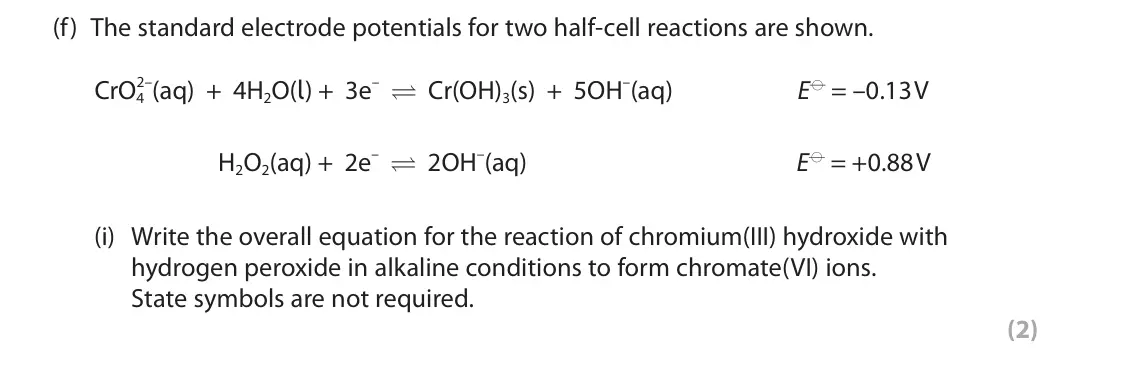
Q7(b)
The whole paper ↗
Q7(c)
The whole paper ↗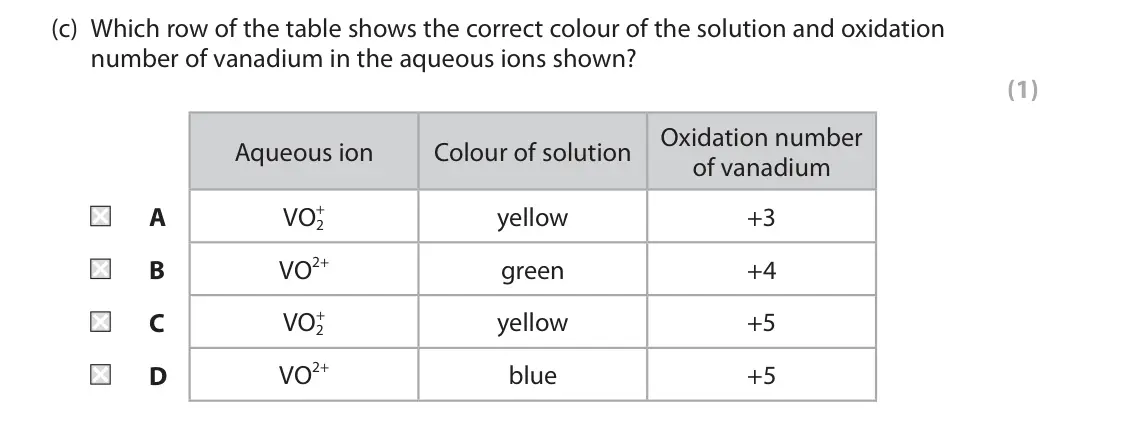
Q7(c)(ii)
The whole paper ↗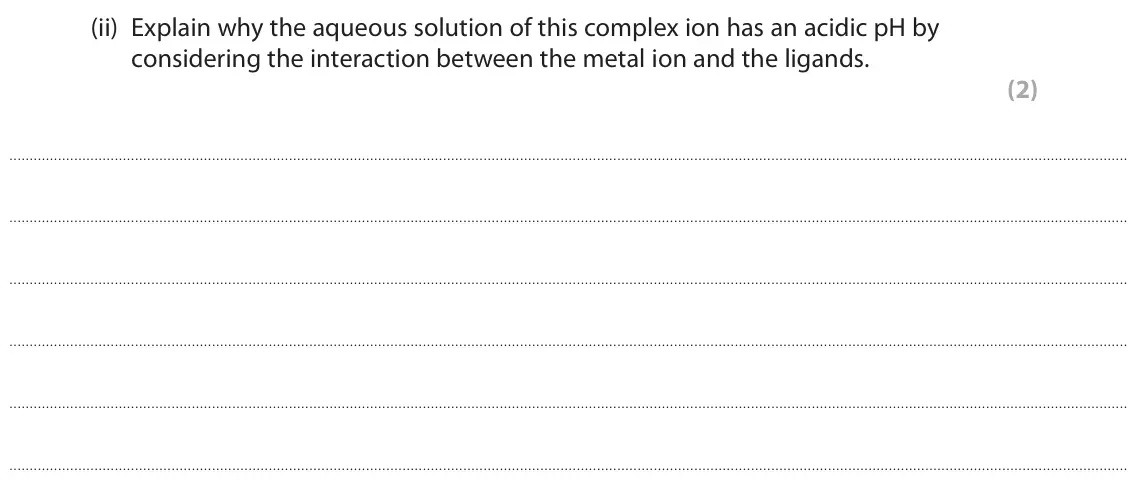
Q5(b)
The whole paper ↗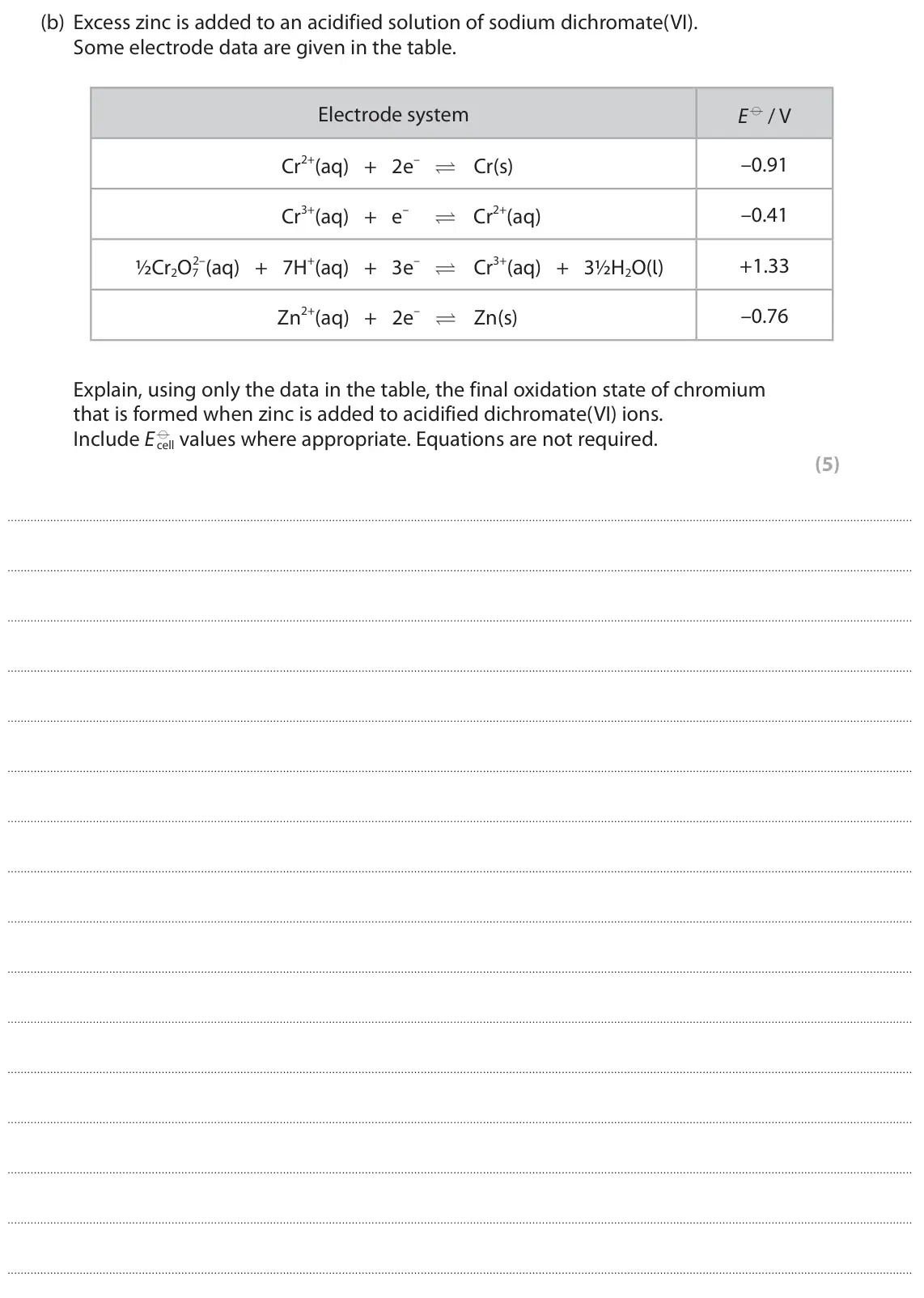
Q3(b)
The whole paper ↗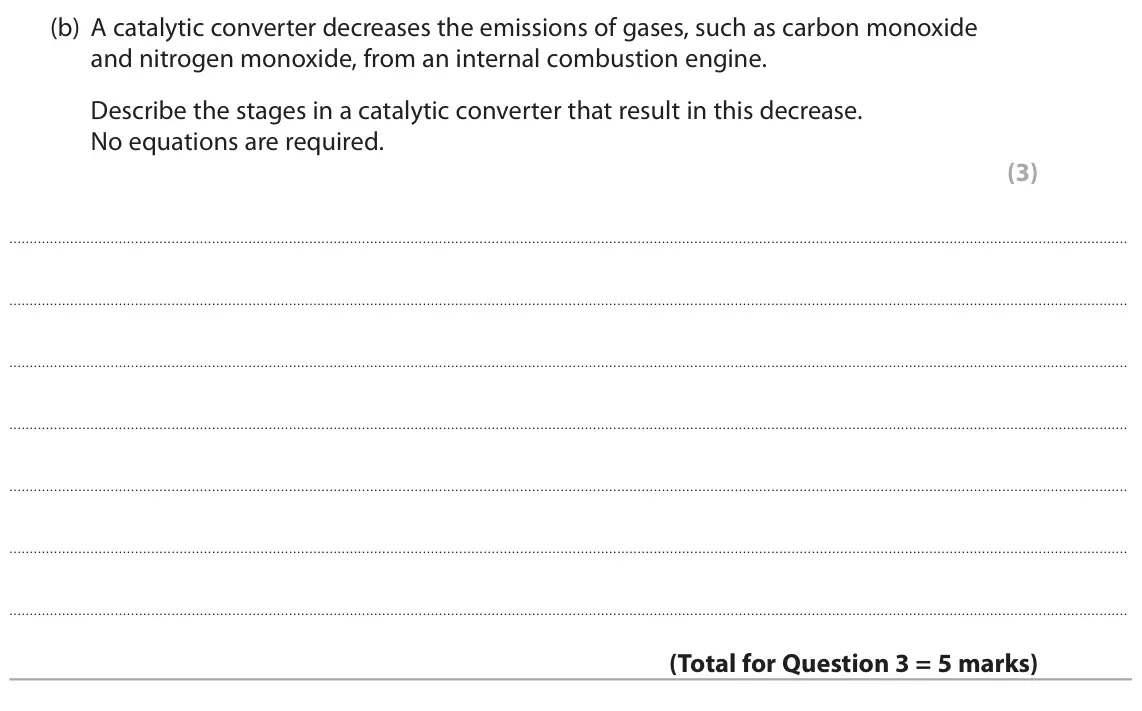
Q5(a)(i)
The whole paper ↗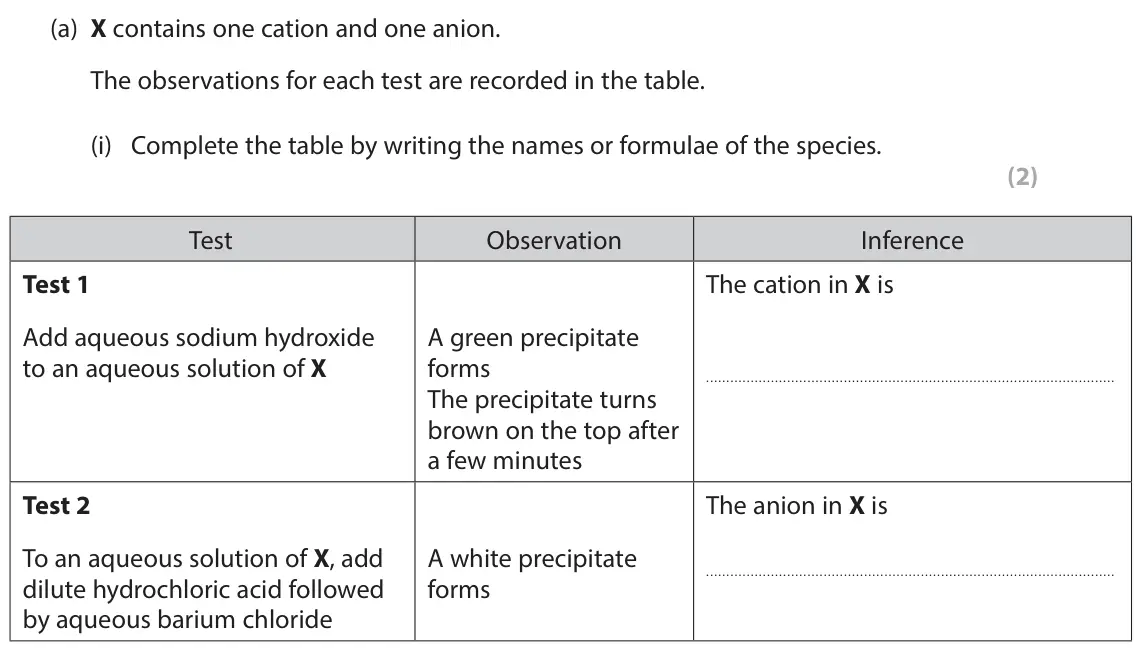
Q5(a)(ii)
The whole paper ↗
Q5(a)(iii)
The whole paper ↗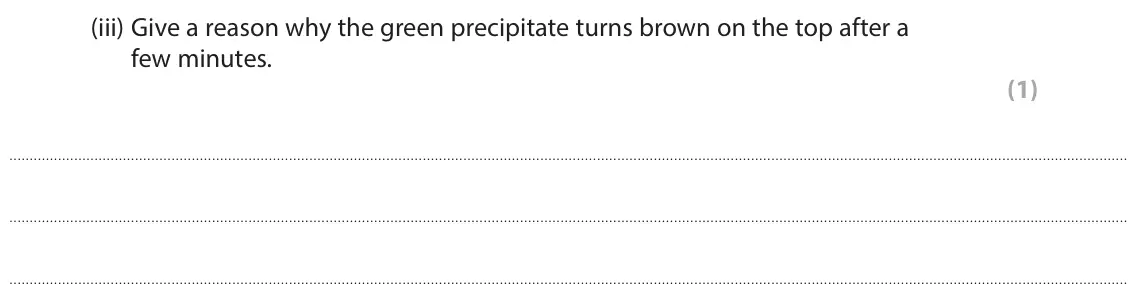
Q5(b)(i)
The whole paper ↗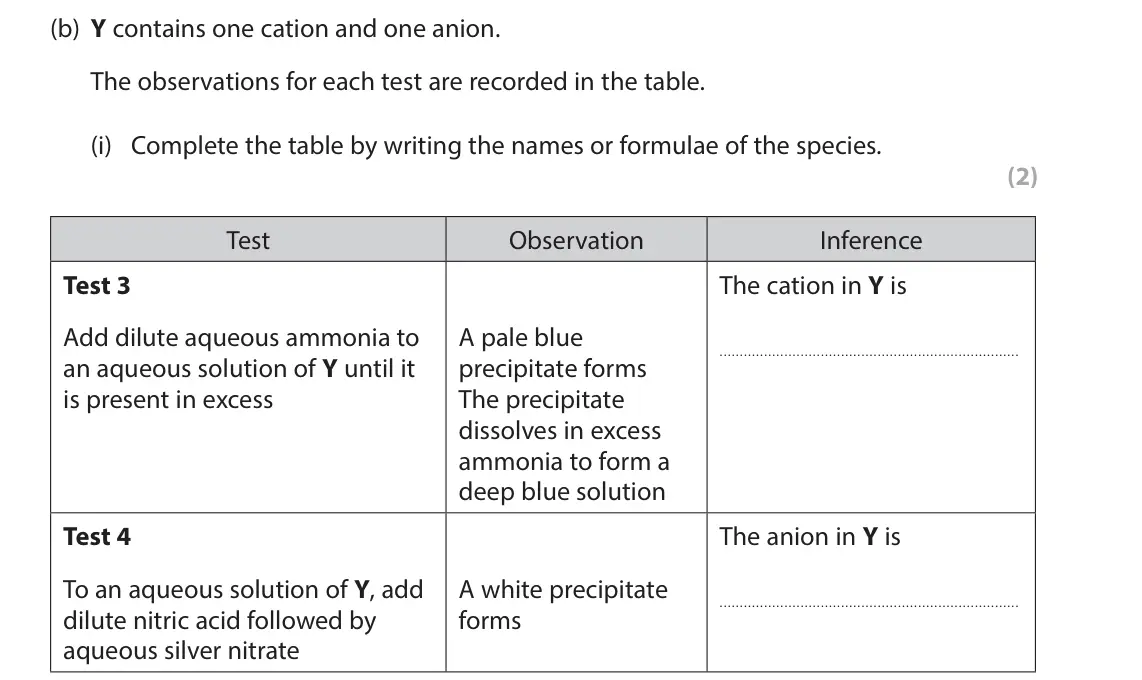
Q5(b)(ii)
The whole paper ↗
Q3(d)(ii)
The whole paper ↗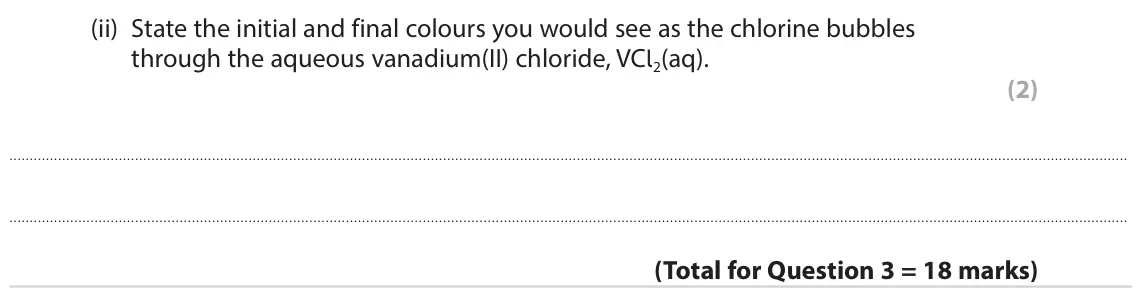
Q8(e)(iii)
The whole paper ↗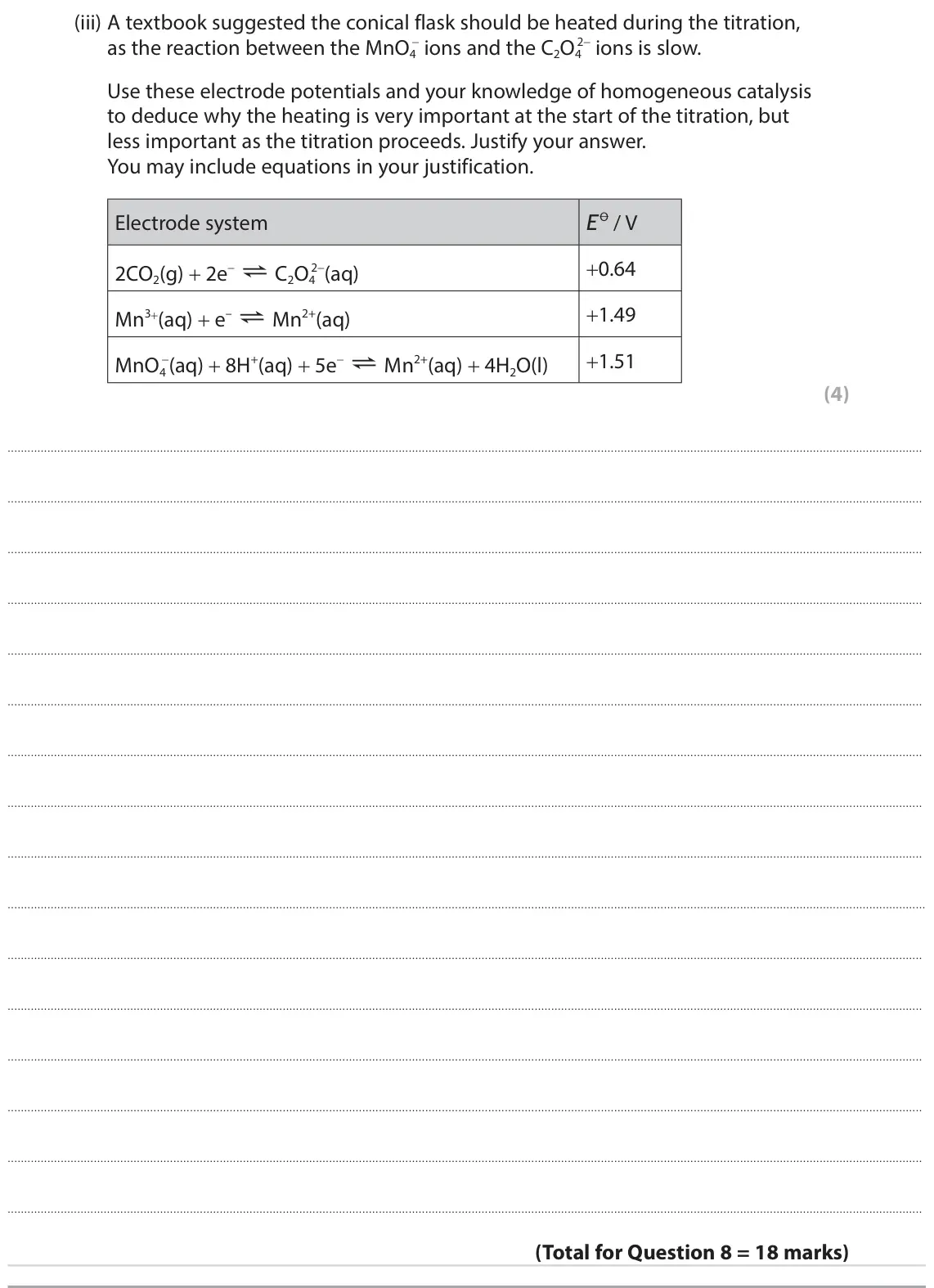
Q8(a)
The whole paper ↗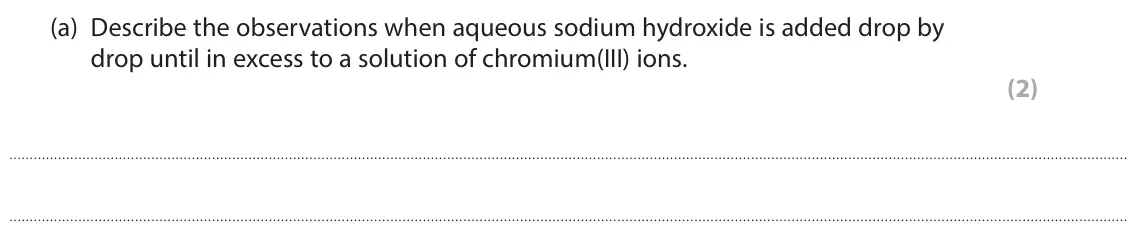
Q8(b)(i)
The whole paper ↗
Q8(b)(ii)
The whole paper ↗
All 45 questions on Reactions of transition metal elements, as a list
- June 2025, Paper 1, Q6(c) (3 marks): Write two ionic equations which demonstrate the amphoteric nature of chromium(III) hydroxide [Cr(OH)3(H2O)3]. Include state symbols. (3)
- June 2025, Paper 1, Q6(d) (1 mark): Name the type of reaction that occurs when chromium(III) hydroxide reacts with excess aqueous ammonia. (1)
- June 2025, Paper 1, Q6(f)(i) (2 marks): Write the overall equation for the reaction of chromium(III) hydroxide with hydrogen peroxide in alkaline conditions to form chromate(VI) ions. State symbols ar
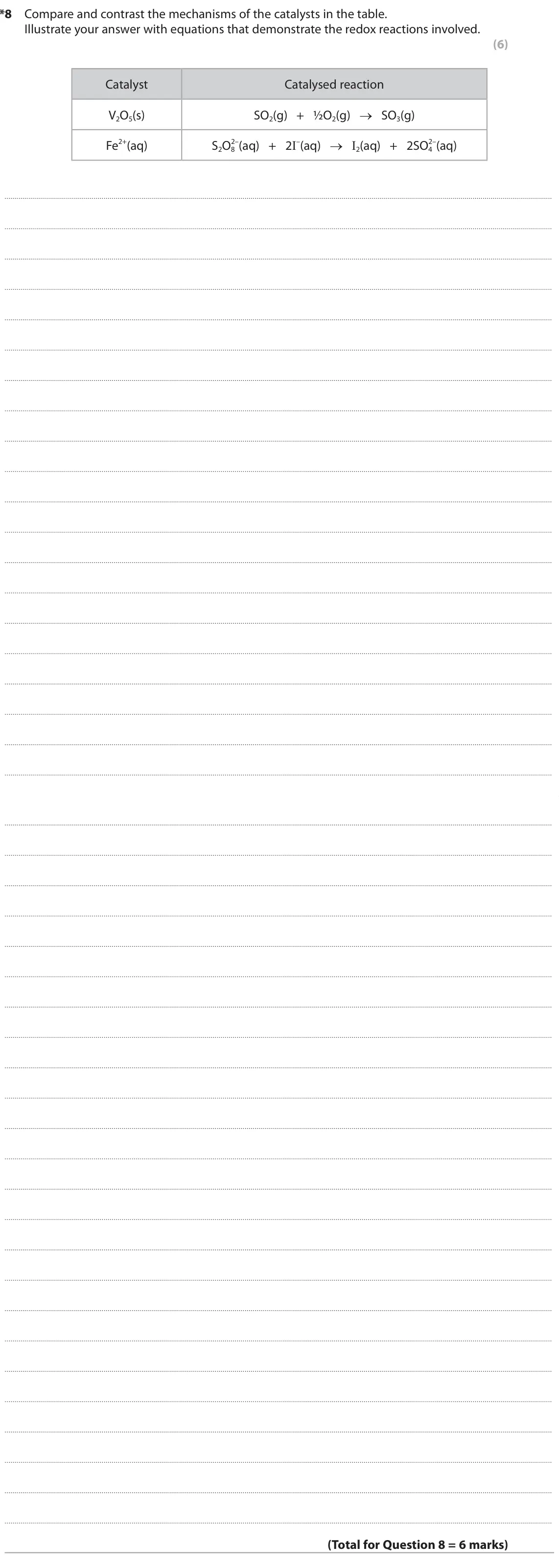
- June 2025, Paper 1, Q8 (6 marks): * 8 Compare and contrast the mechanisms of the catalysts in the table. Illustrate your answer with equations that demonstrate the redox reactions involved. (6)
- June 2024, Paper 1, Q7(b) (2 marks): Write two equations that show the conversion of SO2 and O2 into SO3 by using V2O5 as the catalyst. State symbols are not required. (2)
- June 2024, Paper 1, Q7(c) (1 mark): Which row of the table shows the correct colour of the solution and oxidation number of vanadium in the aqueous ions shown? (1) Oxidation number Aqueous ion Col
- June 2023, Paper 1, Q7(c)(ii) (2 marks): Explain why the aqueous solution of this complex ion has an acidic pH by considering the interaction between the metal ion and the ligands. (2)
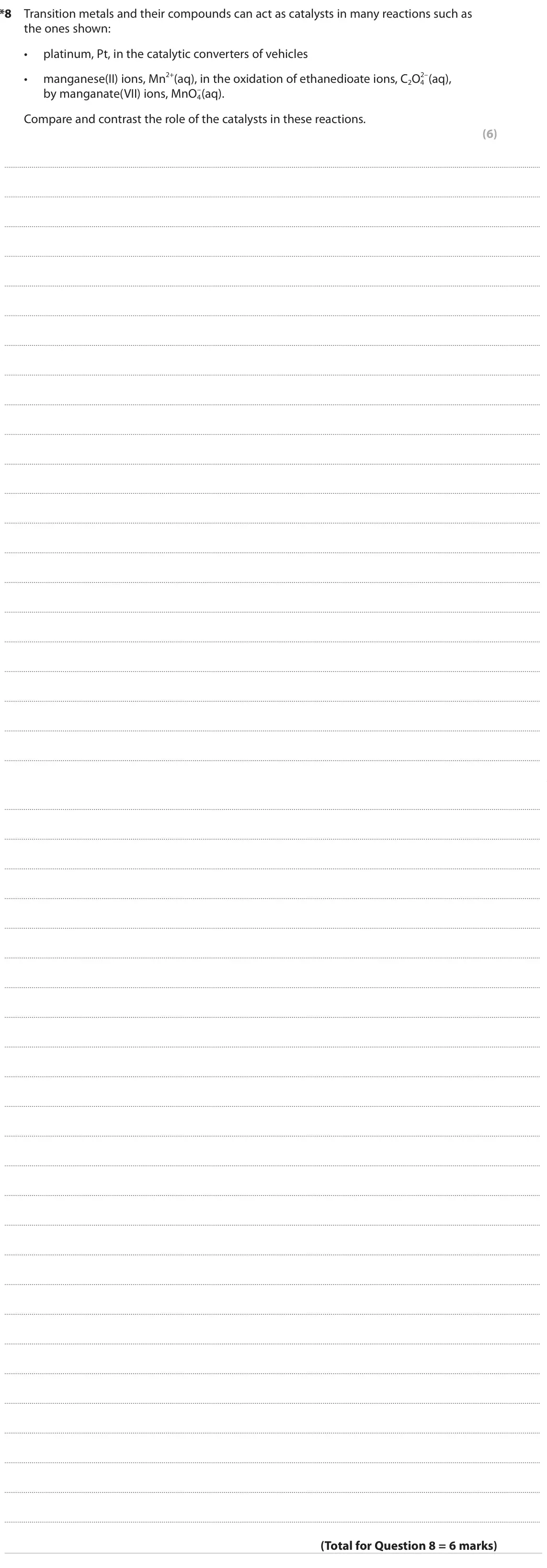
- June 2023, Paper 1, Q8 (6 marks): * 8 Transition metals and their compounds can act as catalysts in many reactions such as the ones shown: • platinum, Pt, in the catalytic converters of vehicles
- June 2023, Paper 3, Q5(b) (5 marks): Excess zinc is added to an acidified solution of sodium dichromate(VI). Some electrode data are given in the table. Electrode system E d / V Cr2+(aq) + 2e– Cr
- November 2021, Paper 1, Q3(b) (3 marks): A catalytic converter decreases the emissions of gases, such as carbon monoxide and nitrogen monoxide, from an internal combustion engine. Describe the stages i
- November 2021, Paper 3, Q5(a)(i) (2 marks): Complete the table by writing the names or formulae of the species. (2) Test Observation Inference Test 1 The cation in X is Add aqueous sodium hydroxide A gree
- November 2021, Paper 3, Q5(a)(ii) (2 marks): Write the ionic equation for the reaction between the cation in X and aqueous sodium hydroxide in Test 1. Include state symbols. (2)
- November 2021, Paper 3, Q5(a)(iii) (1 mark): Give a reason why the green precipitate turns brown on the top after a few minutes. (1)
- November 2021, Paper 3, Q5(b)(i) (2 marks): Complete the table by writing the names or formulae of the species. (2) Test Observation Inference Test 3 The cation in Y is Add dilute aqueous ammonia to A pal
- November 2021, Paper 3, Q5(b)(ii) (1 mark): Give the formula of the complex ion present in the deep blue solution at the end of Test 3. (1)
- October 2020, Paper 1, Q3(d)(ii) (2 marks): State the initial and final colours you would see as the chlorine bubbles through the aqueous vanadium(II) chloride, VCl2(aq). (2)
- October 2020, Paper 1, Q8(e)(iii) (4 marks): A textbook suggested the conical flask should be heated during the titration, − ions and the C2O4 2− ions is slow. as the reaction between the MnO4 Use these el
- October 2020, Paper 3, Q8(a) (2 marks): Describe the observations when aqueous sodium hydroxide is added drop by drop until in excess to a solution of chromium(III) ions. (2)
- October 2020, Paper 3, Q8(b)(i) (2 marks): Deduce the oxidation half-equation for this reaction, which takes place in alkaline conditions. State symbols are not required. (2)
- October 2020, Paper 3, Q8(b)(ii) (1 mark): If the solution of chromate(VI) ions is then acidified, the colour of the solution changes to orange as dichromate(VI) ions form. Write the equation for this ch
- June 2019, Paper 1, Q5(a)(i) (1 mark): Give a reason why the reaction between iodide ions and peroxodisulfate ions has a high activation energy and is therefore very slow without a catalyst. (1)
- June 2019, Paper 1, Q5(a)(ii) (3 marks): Explain, with the aid of two equations, how the iron(II) ions catalyse this reaction. State symbols are not required. (3)
- June 2019, Paper 1, Q5(b) (2 marks): The oxidation of sulfate(IV) ions to sulfate(VI) ions is catalysed by cobalt(II) ions in acidic solution. The role of cobalt(II) ions is similar to that of iron
- June 2019, Paper 1, Q5(c) (1 mark): The rate of oxidation of ethanedioate ions by manganate(VII) ions starts slowly and then rapidly increases. 2– o 2Mn2+ + 8H2O + 10CO2 – + 16H+ + 5C2O4 2MnO4 Wha
- June 2019, Paper 1, Q5(d) (1 mark): The trend in the strength of gaseous adsorption by three transition elements is tungsten ! platinum ! silver Silver is not suitable as a replacement for platinu
- June 2019, Paper 2, Q7(b)(iv) (3 marks): The heterogeneous catalyst palladium was suggested for use in this reaction. Explain how impurities in the gaseous reactants could make the catalyst less effect
- June 2019, Paper 3, Q4(a)(i) (6 marks): Complete the statements in the inference column by writing the names or formulae of the species. (6) Test Observation Inference Test 1 The gas evolved was Aqueo
- June 2019, Paper 3, Q4(c) (1 mark): State the type of reaction occurring in Test 2. (1)
- June 2019, Paper 3, Q6(c)(iv) (3 marks): Describe the stages in the catalytic decomposition of ammonia by tungsten. (3)
- June 2018, Paper 1, Q4(f) (3 marks): Manganate(VII) ions, MnO4 2− + 16H+ → 2Mn2+ + 10CO2 + 8H2O 2MnO4 − + 5C2O4 The reaction starts slowly, the rate of reaction then increases, before it decreases
- June 2018, Paper 2, Q2(a) (1 mark): Gaseous reactants attach to the catalytic surface by the process of (1) A absorption B activation C adsorption D desorption
- June 2018, Paper 2, Q2(b) (2 marks): Catalytic converters of car exhaust systems have internal honeycomb structures as shown. Explain why the honeycomb structure is used in a car exhaust system. (2
- June 2018, Paper 3, Q5(a) (1 mark): Give the oxidation state of vanadium in the compound NH4VO3. (1)
- June 2018, Paper 3, Q5(b) (7 marks): Excess zinc powder is added to an acidified solution of the compound NH4VO3. Using the data in the table, explain the sequence of reactions that takes place. In
- June 2018, Paper 3, Q5(c) (2 marks): Explain how vanadium(V) oxide acts as a catalyst in one step of the contact process. The equation for this step is 2SO2(g) + O2(g) 2SO3(g) (2)
- June 2018, Paper 3, Q5(d) (6 marks): Describe the reactions of separate portions of aqueous copper(II) ions with aqueous sodium hydroxide solution, with excess aqueous ammonia solution and with con
- June 2017, Paper 1, Q4(d) (2 marks): Iodide ions, I–, react with peroxodisulfate(VI) ions, S2O8 2– 2I–(aq) + S2O8 2–(aq) r I2(aq) + 2SO4 2–(aq) This reaction is catalysed by iron(II) ions, Fe2+(aq)
- June 2017, Paper 2, Q5(a)(i) (1 mark): Write the equation for the reaction between these two polluting gases that takes place on the surface of a catalytic converter. State symbols are not required.
- June 2017, Paper 2, Q5(a)(ii) (3 marks): Describe the stages by which the reaction in (a)(i) occurs in a catalytic converter. (3)
- June 2017, Paper 3, Q1(a)(i) (2 marks): Write an ionic equation for the reaction of solid chromium(III) hydroxide with dilute hydrochloric acid, showing the formula of the complex ion formed. Include
- June 2017, Paper 3, Q1(a)(ii) (2 marks): Describe the changes you would see when the reaction in (a)(i) is carried out. (2)
- June 2017, Paper 3, Q1(a)(iii) (2 marks): Write an ionic equation for the reaction of solid chromium(III) hydroxide with dilute sodium hydroxide solution, showing the formula of the complex ion formed.
- June 2017, Paper 3, Q1(a)(iv) (1 mark): State the final appearance of the reaction mixture in (a)(iii). (1)
- June 2017, Paper 3, Q1(b)(i) (2 marks): Describe what you would see during this experiment. (2)
- June 2017, Paper 3, Q1(b)(ii) (2 marks): The reaction between aqueous copper(II) sulfate and excess aqueous ammonia is an example of a ligand substitution reaction. Write an equation for the ligand sub
Questions, mark schemes and examiner’s reports are © Pearson Edexcel, from their published past papers. Plumi isn’t affiliated with any exam board. Want whole papers? Every Edexcel A-Level Chemistry paper.
Rather write your answers by hand on iPad? Plumi marks them against the same mark schemes.