 plumi
Analysis of inorganic compounds: Edexcel A‑Level Chemistry questions
Every Edexcel A-Level Chemistry exam question on 4C Analysis of inorganic compounds, 2016–2025, with its mark scheme and examiner’s report.
Find questions2,028
Calculations
Q4(a)(i)
The whole paper ↗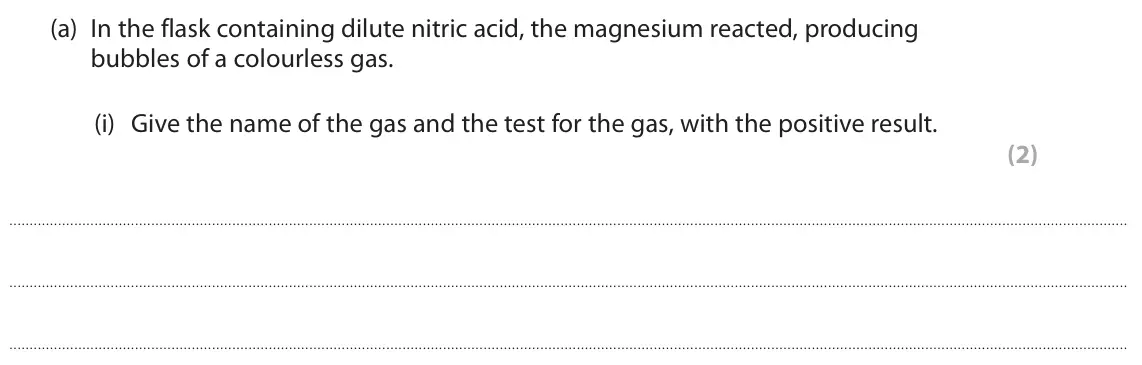
Q3(c)
The whole paper ↗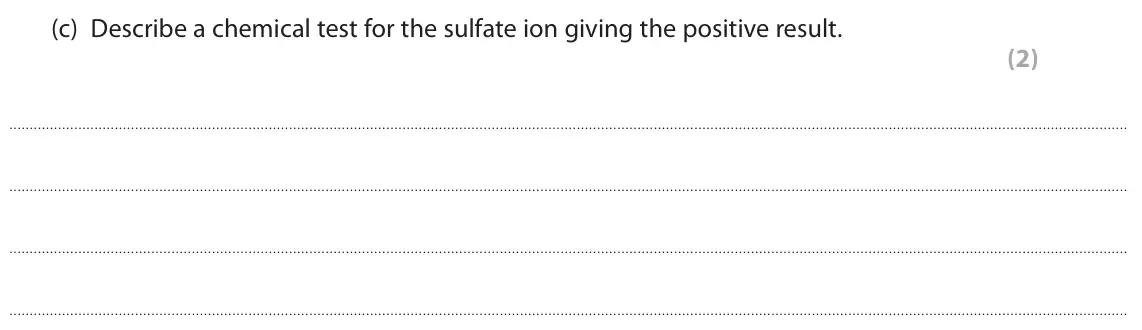
Q3(d)(i)
The whole paper ↗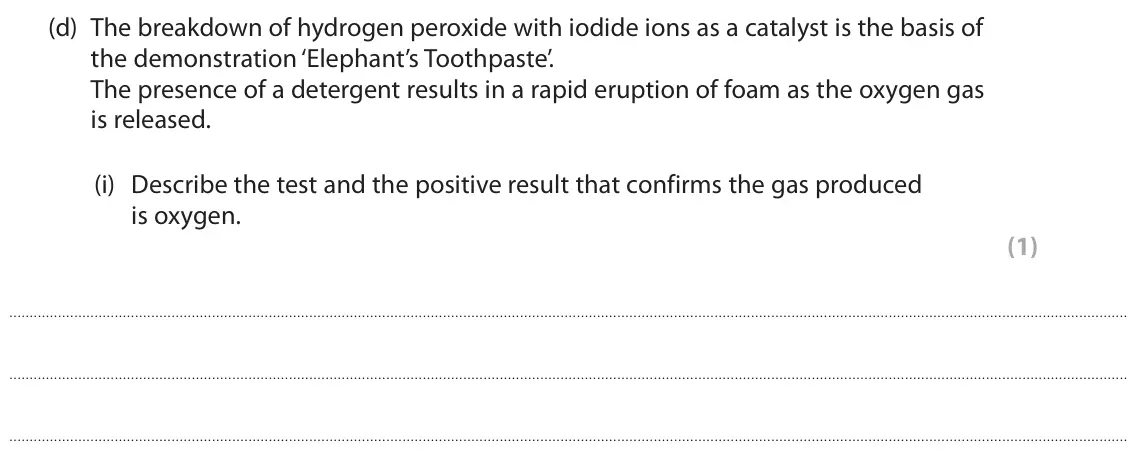
Q3(e)(ii)
The whole paper ↗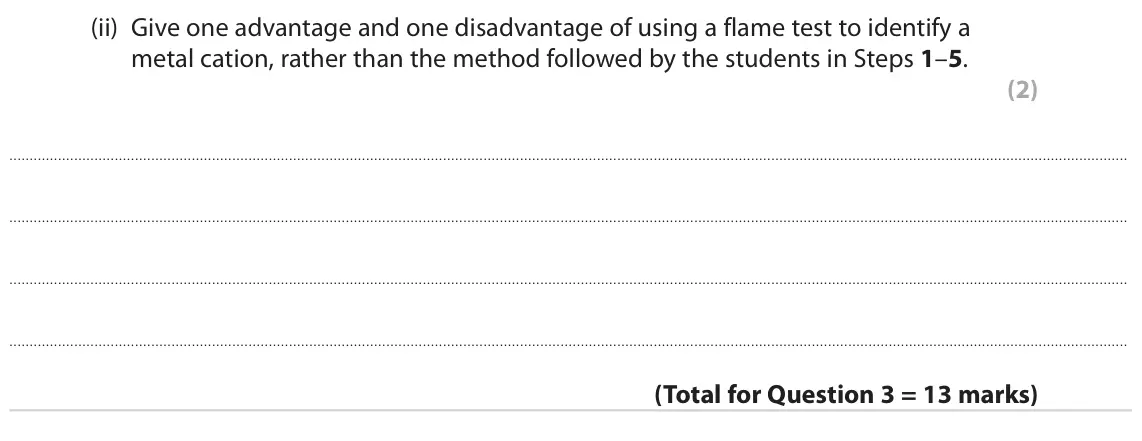
Q4(c)(ii)
The whole paper ↗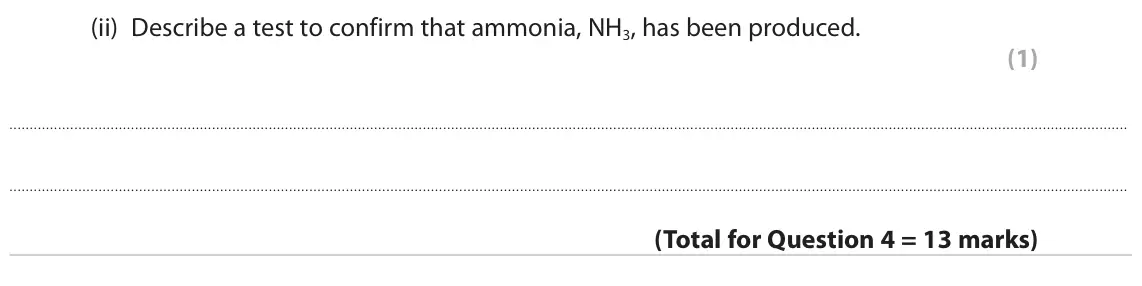
Q4(b)(i)
The whole paper ↗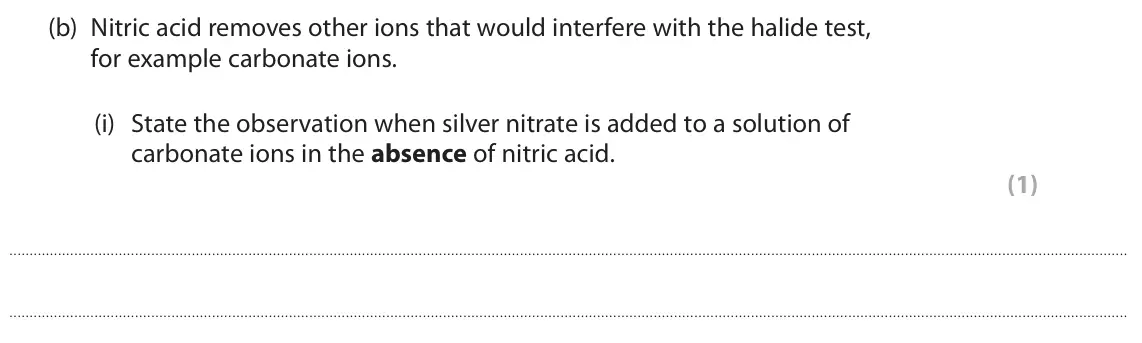
Q4(b)(ii)
The whole paper ↗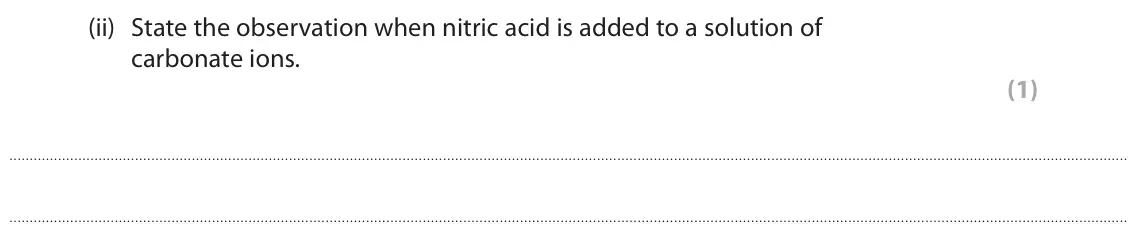
Q4(b)(iii)
The whole paper ↗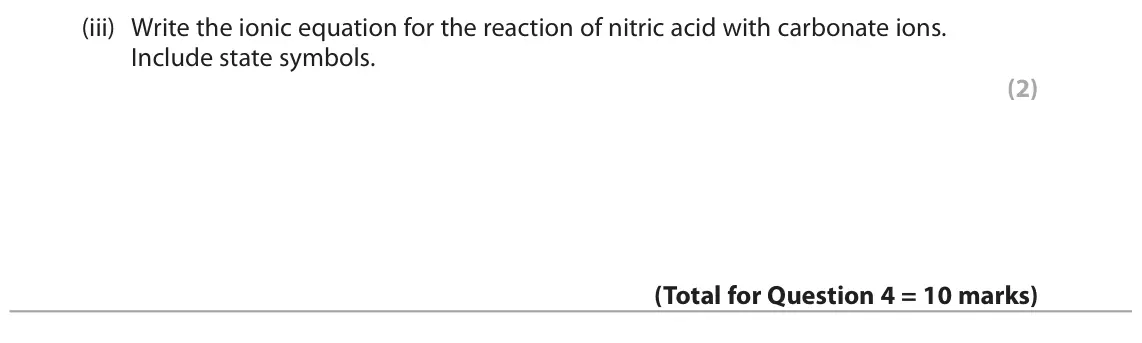
Q2(c)(i)
The whole paper ↗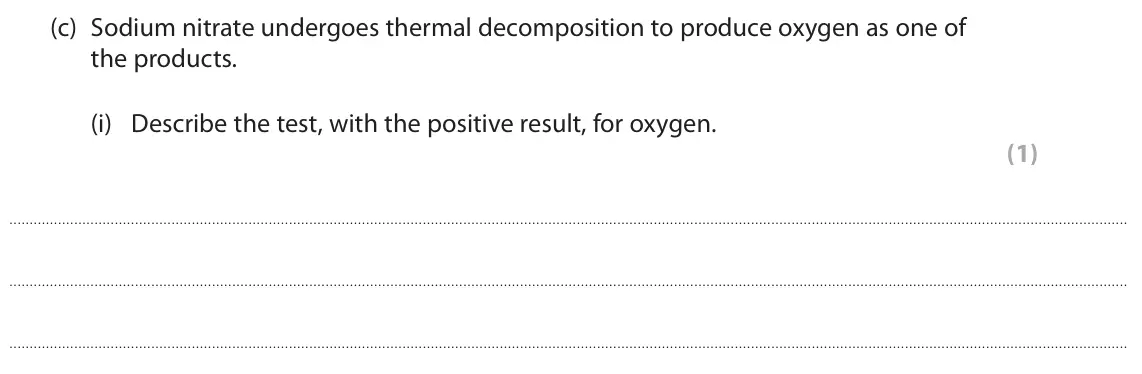
Q2(c)(i)
The whole paper ↗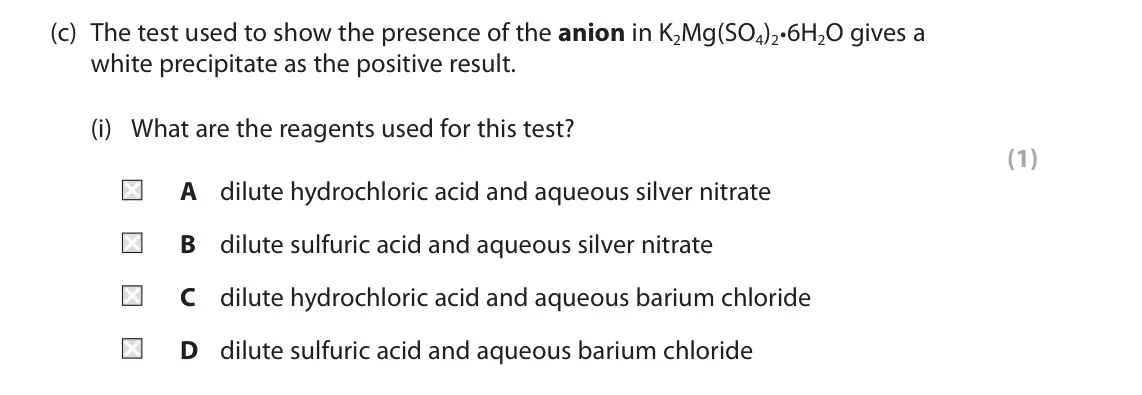
Q2(c)(ii)
The whole paper ↗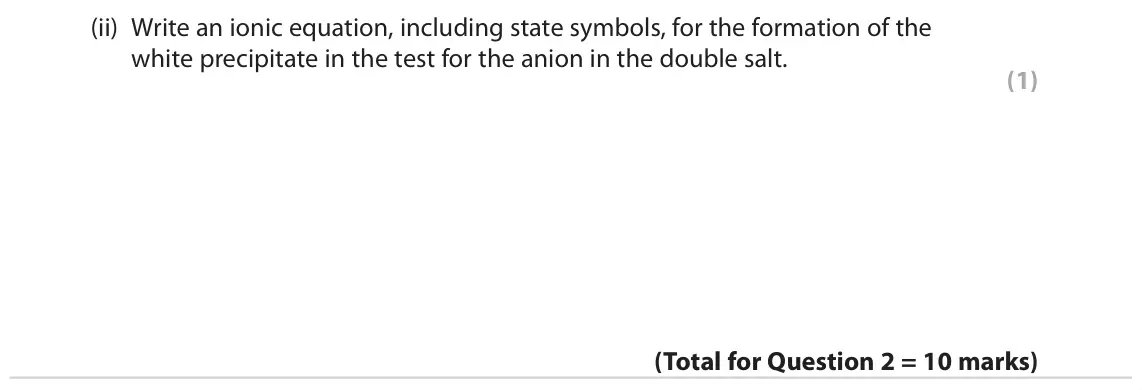
Q3(a)(i)
The whole paper ↗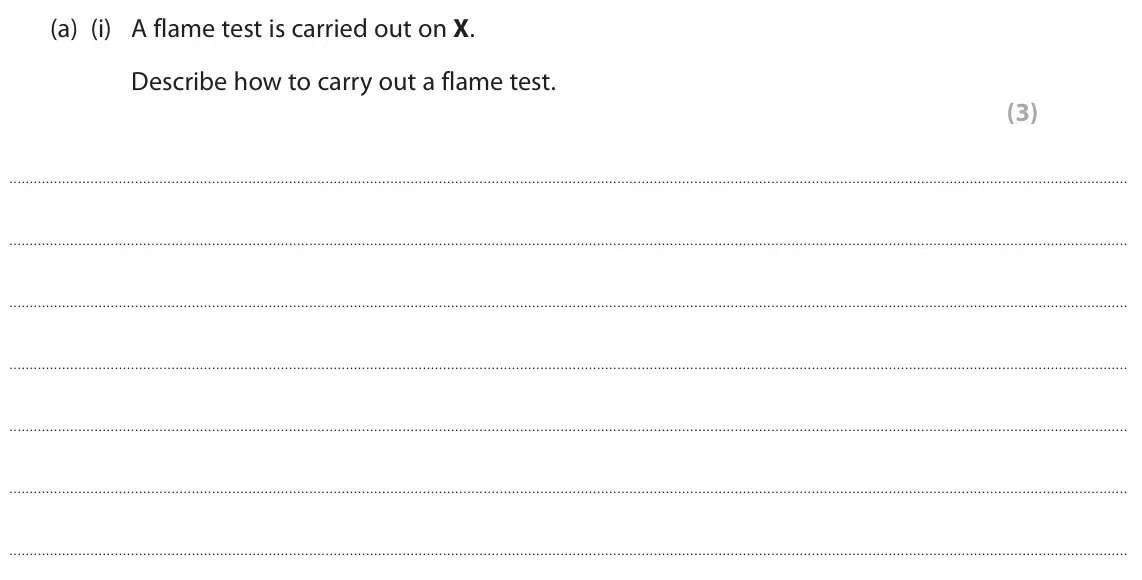
Q3(a)(ii)
The whole paper ↗
Q3(b)(i)
The whole paper ↗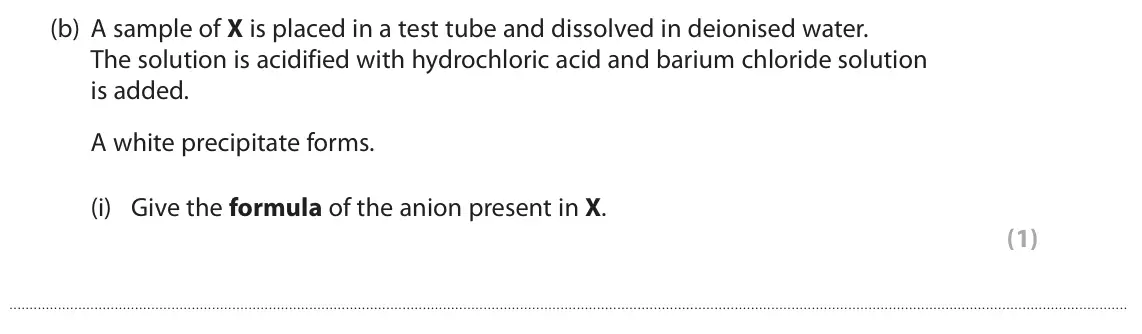
Q3(b)(ii)
The whole paper ↗
Q4(c)
The whole paper ↗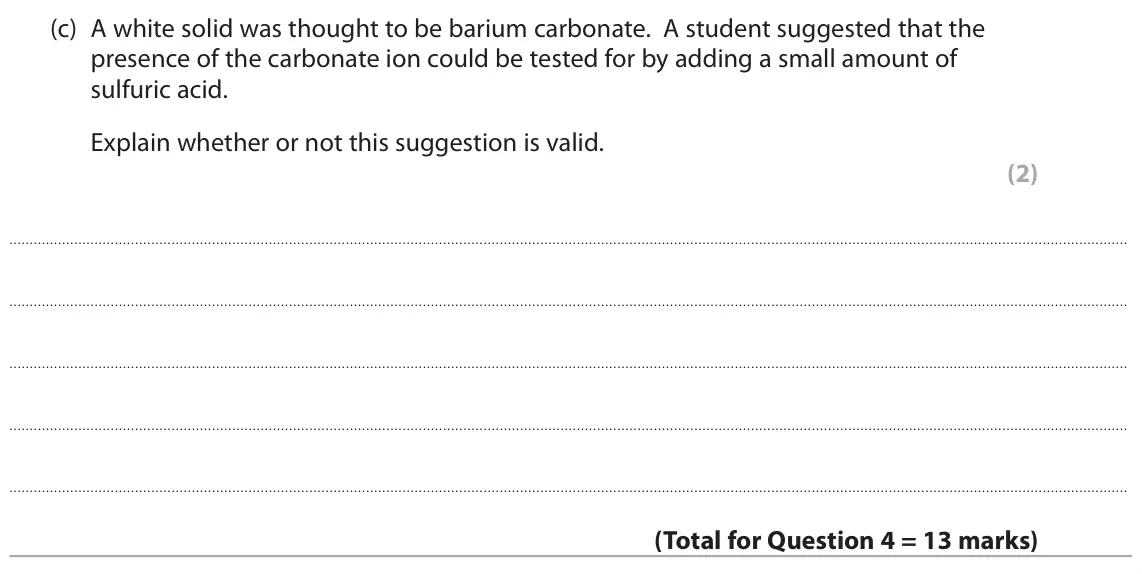
Q8(b)(iii)
The whole paper ↗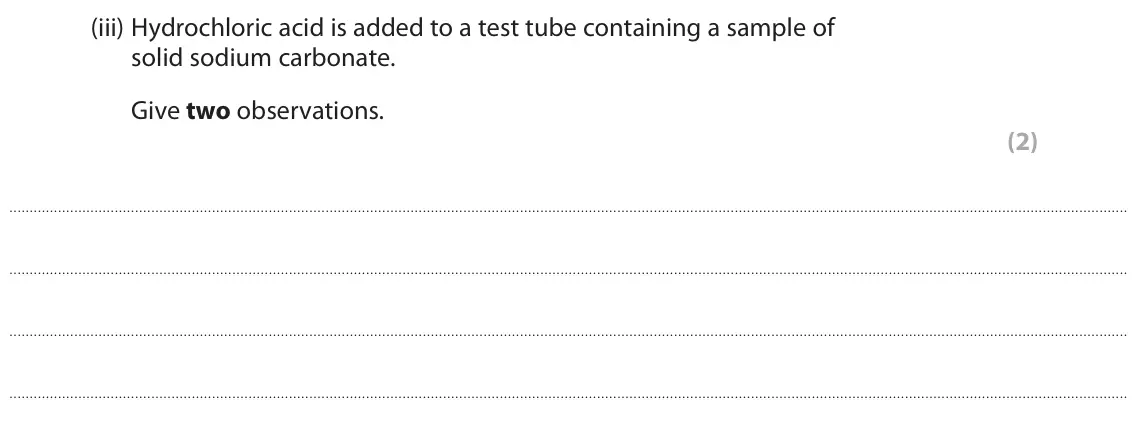
Q9(b)
The whole paper ↗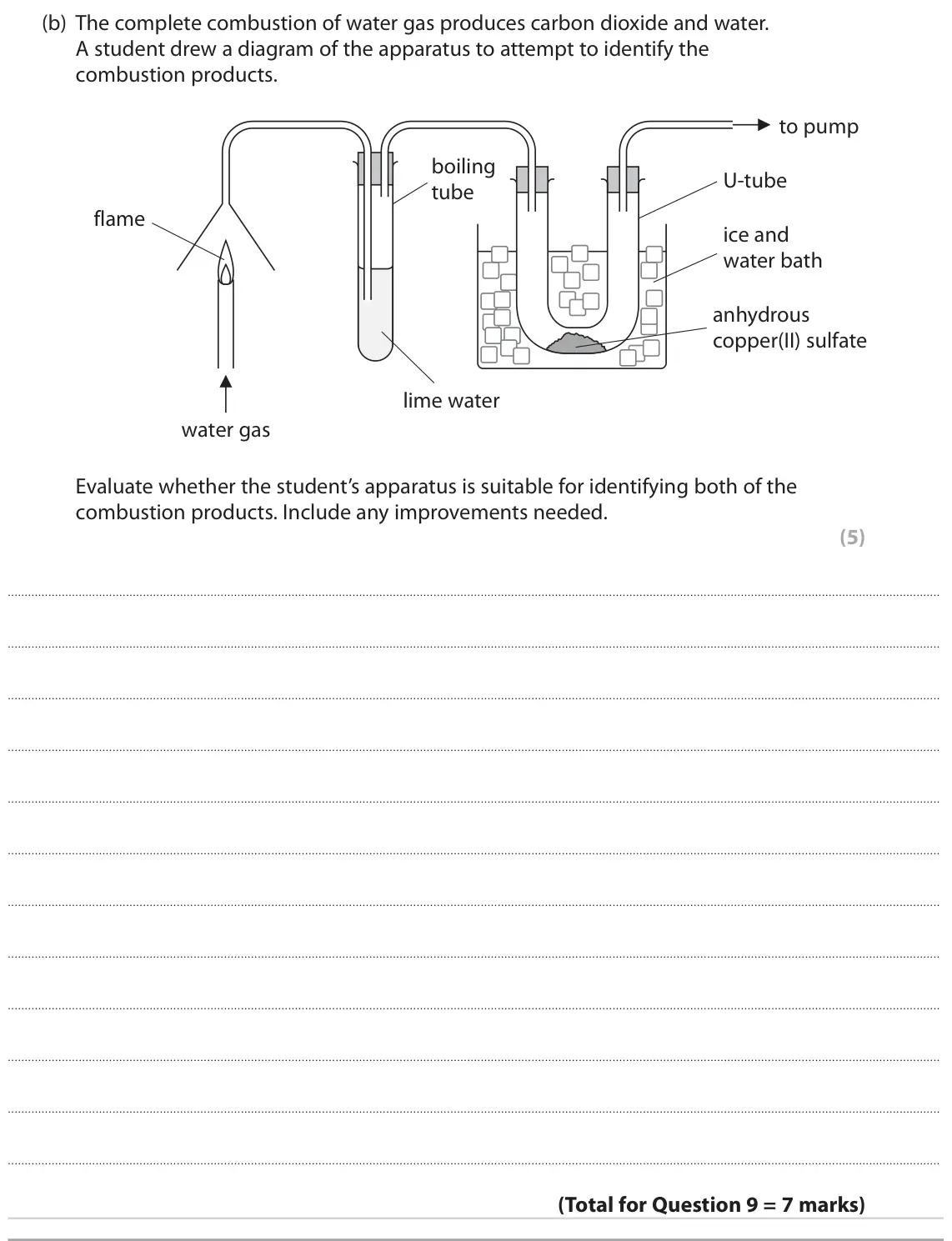
Q5(a)(i)
The whole paper ↗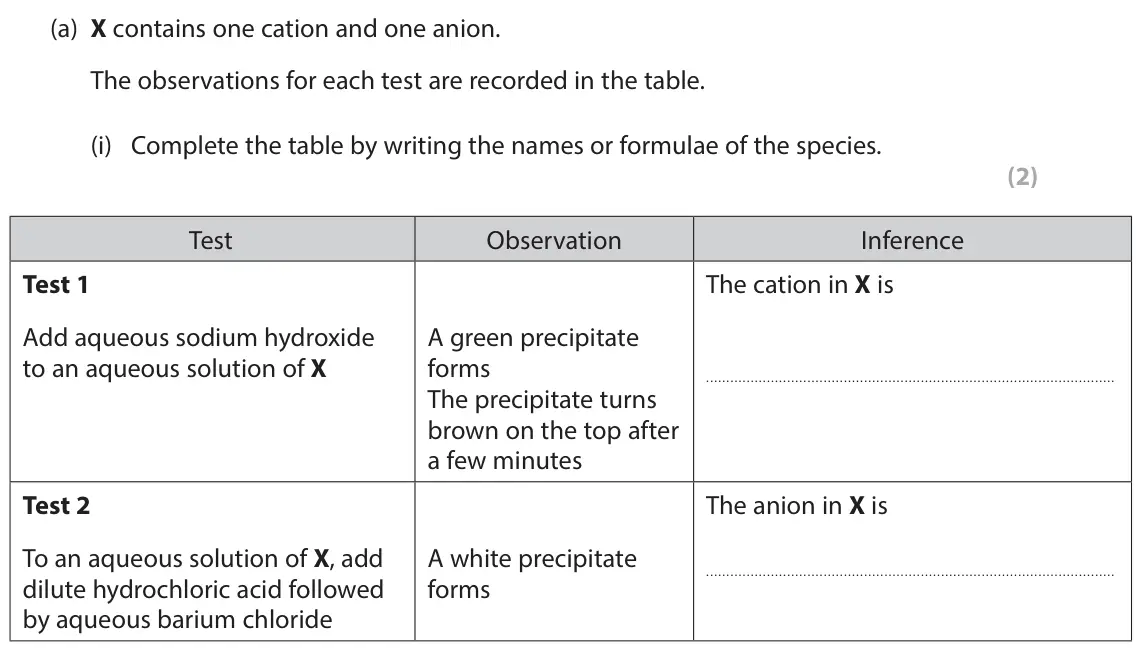
All 44 questions on Analysis of inorganic compounds, as a list
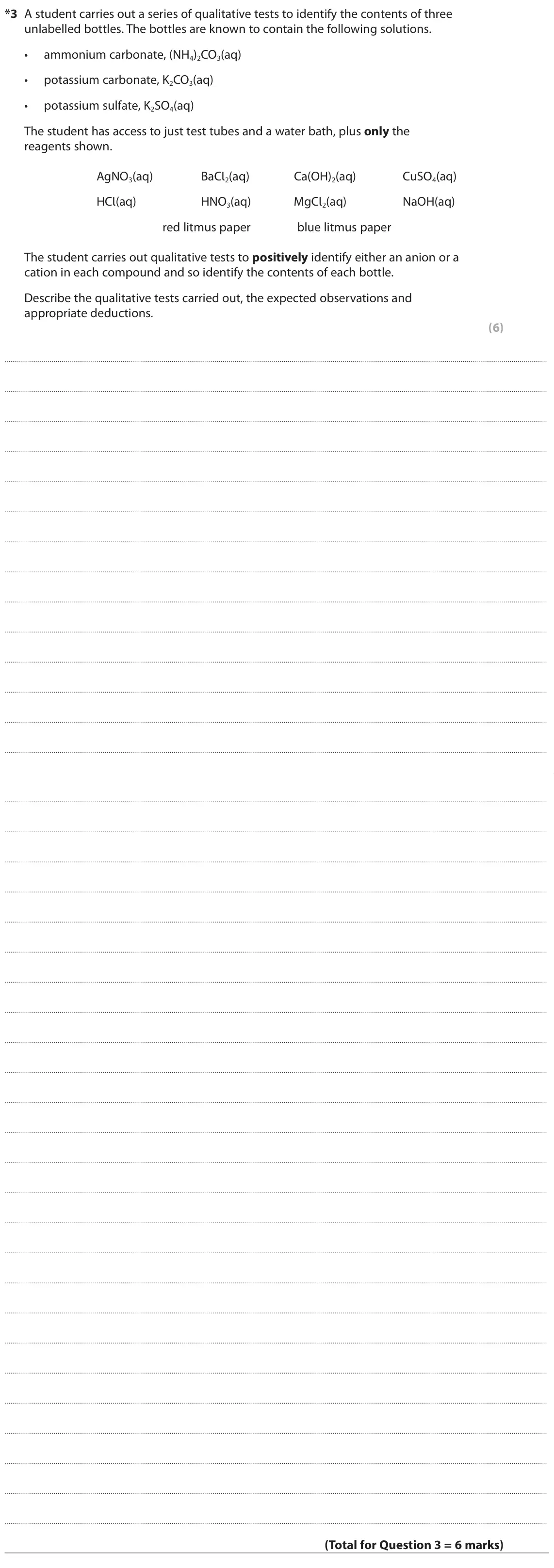
- June 2025, Paper 3, Q3 (6 marks): *3 A student carries out a series of qualitative tests to identify the contents of three unlabelled bottles. The bottles are known to contain the following solu
- June 2025, AS Paper 1, Q4(a)(i) (2 marks): Give the name of the gas and the test for the gas, with the positive result. (2)
- June 2024, Paper 1, Q3(c) (2 marks): Describe a chemical test for the sulfate ion giving the positive result. (2)
- June 2024, Paper 2, Q3(d)(i) (1 mark): Describe the test and the positive result that confirms the gas produced is oxygen. (1)
- June 2024, Paper 3, Q3(e)(ii) (2 marks): Give one advantage and one disadvantage of using a flame test to identify a metal cation, rather than the method followed by the students in Steps 1–5. (2)
- June 2024, Paper 3, Q4(c)(ii) (1 mark): Describe a test to confirm that ammonia, NH3, has been produced. (1)
- June 2024, AS Paper 1, Q4(b)(i) (1 mark): State the observation when silver nitrate is added to a solution of carbonate ions in the absence of nitric acid. (1)
- June 2024, AS Paper 1, Q4(b)(ii) (1 mark): State the observation when nitric acid is added to a solution of carbonate ions. (1)
- June 2024, AS Paper 1, Q4(b)(iii) (2 marks): Write the ionic equation for the reaction of nitric acid with carbonate ions. Include state symbols. (2)
- June 2023, Paper 3, Q2(c)(i) (1 mark): Describe the test, with the positive result, for oxygen. (1)
- June 2023, AS Paper 1, Q2(c)(i) (1 mark): What are the reagents used for this test? (1) A dilute hydrochloric acid and aqueous silver nitrate B dilute sulfuric acid and aqueous silver nitrate C dilute h
- June 2023, AS Paper 1, Q2(c)(ii) (1 mark): Write an ionic equation, including state symbols, for the formation of the white precipitate in the test for the anion in the double salt. (1)
- June 2022, Paper 3, Q3(a)(i) (3 marks): A flame test is carried out on X. Describe how to carry out a flame test. (3)
- June 2022, Paper 3, Q3(a)(ii) (1 mark): The colour of the flame is yellow. Give the formula of the metal ion present in salt X. (1)
- June 2022, Paper 3, Q3(b)(i) (1 mark): Give the formula of the anion present in X. (1)
- June 2022, Paper 3, Q3(b)(ii) (1 mark): Deduce the formula of X, using your answers to (a)(ii) and (b)(i). (1)
- June 2022, Paper 3, Q4(c) (2 marks): A white solid was thought to be barium carbonate. A student suggested that the presence of the carbonate ion could be tested for by adding a small amount of sul
- June 2022, AS Paper 1, Q8(b)(iii) (2 marks): Hydrochloric acid is added to a test tube containing a sample of solid sodium carbonate. Give two observations. (2)
- June 2022, AS Paper 1, Q9(b) (5 marks): The complete combustion of water gas produces carbon dioxide and water. A student drew a diagram of the apparatus to attempt to identify the combustion products
- November 2021, Paper 3, Q5(a)(i) (2 marks): Complete the table by writing the names or formulae of the species. (2) Test Observation Inference Test 1 The cation in X is Add aqueous sodium hydroxide A gree
- November 2021, Paper 3, Q5(a)(iv) (1 mark): Give a reason why dilute hydrochloric acid is needed in Test 2. (1)
- November 2021, Paper 3, Q5(b)(i) (2 marks): Complete the table by writing the names or formulae of the species. (2) Test Observation Inference Test 3 The cation in Y is Add dilute aqueous ammonia to A pal
- November 2021, Paper 3, Q5(b)(iii) (2 marks): Give a reagent that could be added to the mixture at the end of Test 4 to confirm the identity of the anion in Y. Include the observation when this reagent is a
- October 2020, Paper 3, Q1(a) (2 marks): Give the reagent and the observation to show the presence of carbonate ions. (2)
- October 2020, Paper 3, Q1(b) (2 marks): Give the reagent and the observation to show the presence of sulfate ions. (2)
- October 2020, Paper 3, Q2(a)(i) (1 mark): State the colour of the flame produced by separate samples of potassium and strontium ions. (1) Potassium ions Strontium ions
- October 2020, Paper 3, Q2(a)(ii) (1 mark): Give a reason why carrying out a flame test on a mixture of potassium chloride and strontium chloride does not clearly show that two different metal ions are pr
- October 2020, Paper 3, Q2(b)(i) (2 marks): Give two reasons why the wire is made of nichrome and not iron. (2)
- October 2020, Paper 3, Q2(b)(ii) (1 mark): Give a reason why the wire is dipped into acid and then heated in the first stage. (1)
- October 2020, Paper 3, Q2(b)(iii) (1 mark): State why fresh concentrated hydrochloric acid is used in the second stage of the flame test. (1)
- October 2020, Paper 3, Q2(b)(iv) (1 mark): State why hydrochloric acid is used in the second stage of the flame test. (1)
- October 2020, AS Paper 1, Q6(b) (3 marks): Describe what you would expect to see when an excess of dilute hydrochloric acid is added to a sample of pure solid malachite. (3)
- June 2019, Paper 3, Q4(a)(i) (6 marks): Complete the statements in the inference column by writing the names or formulae of the species. (6) Test Observation Inference Test 1 The gas evolved was Aqueo
- June 2019, Paper 3, Q4(a)(ii) (1 mark): Use the results of the tests in (a)(i) to give a formula of C. Do not include water of crystallisation. (1)
- June 2019, Paper 3, Q4(b) (1 mark): Write the ionic equation for the reaction between the cation in C and sodium hydroxide producing the gas in Test 1. State symbols are not required. (1)
- June 2019, Paper 3, Q4(d) (1 mark): Give a reason why dilute hydrochloric acid is needed in Test 3. (1)
- June 2019, AS Paper 1, Q5(b) (2 marks): Describe a chemical test, and the expected result, to show that sulfate ions are present in a solution of iron(II) sulfate in water. (2)
- June 2018, Paper 1, Q1(a) (2 marks): Deduce the name of salt A. (2)
- June 2018, AS Paper 1, Q4(a)(i) (1 mark): Addition of a few drops of a solution of barium chloride to one of the test tubes gave a white precipitate. Identify, by name or formula, two possible anions th
- June 2018, AS Paper 1, Q4(a)(ii) (1 mark): Addition of 1 cm3 of dilute hydrochloric acid to the test tube in (a)(i) resulted in no further change. Give the formula of the anion. (1)
- June 2018, AS Paper 1, Q4(a)(iii) (1 mark): What is the charge on the cation? (1) A +1 B −1 C +2 D −2
- June 2017, AS Paper 1, Q1(b) (2 marks): A flame test on a white powder gave a lilac flame colour. Dilute hydrochloric acid was added to a second sample of the same powder in a boiling tube and the gas
- June 2016, AS Paper 1, Q4(c) (1 mark): Which solution produces a white precipitate with acidified barium chloride solution? (1) A hydrochloric acid B magnesium sulfate C potassium chloride D sodium c
- June 2016, AS Paper 1, Q4(e) (2 marks): The hydrochloric acid and the sodium carbonate solution react together. State an observation you would make and write the ionic equation for the reaction. State
Questions, mark schemes and examiner’s reports are © Pearson Edexcel, from their published past papers. Plumi isn’t affiliated with any exam board. Want whole papers? Every Edexcel A-Level Chemistry paper.
Rather write your answers by hand on iPad? Plumi marks them against the same mark schemes.