 plumi
Redox II: Edexcel A‑Level Chemistry questions
Every Edexcel A-Level Chemistry exam question on 14 Redox II, 2016–2025, with its mark scheme and examiner’s report.
Find questions2,028
Calculations
Q6(f)(ii)
The whole paper ↗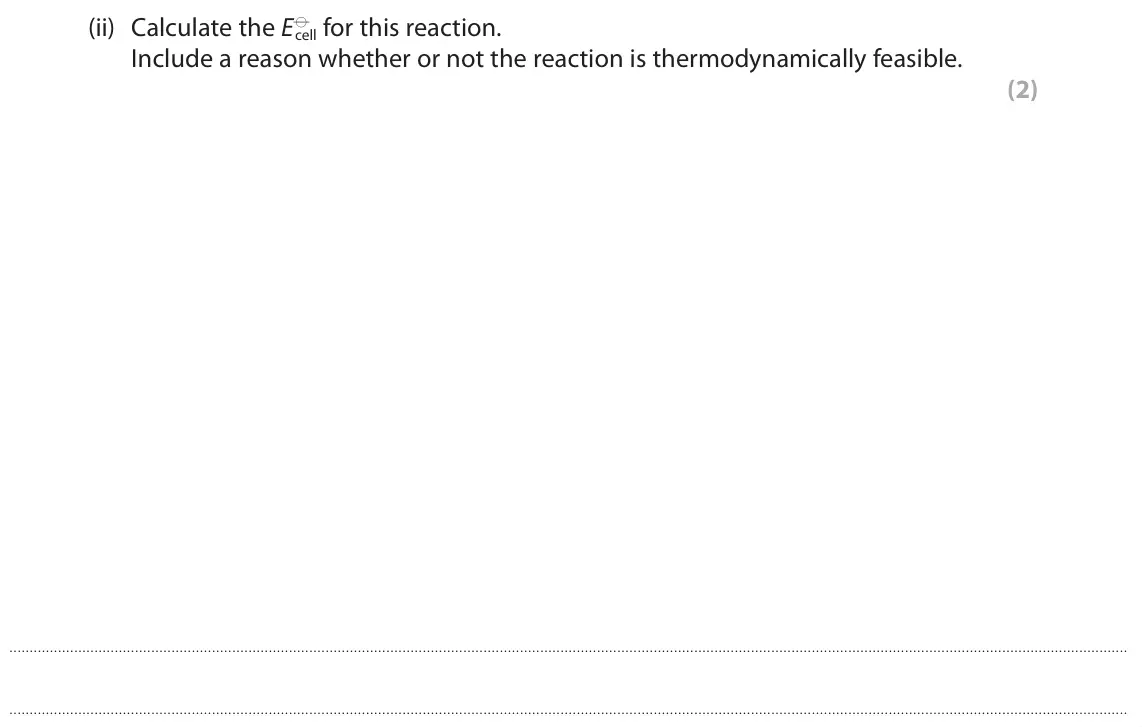
Q6(f)(iii)
The whole paper ↗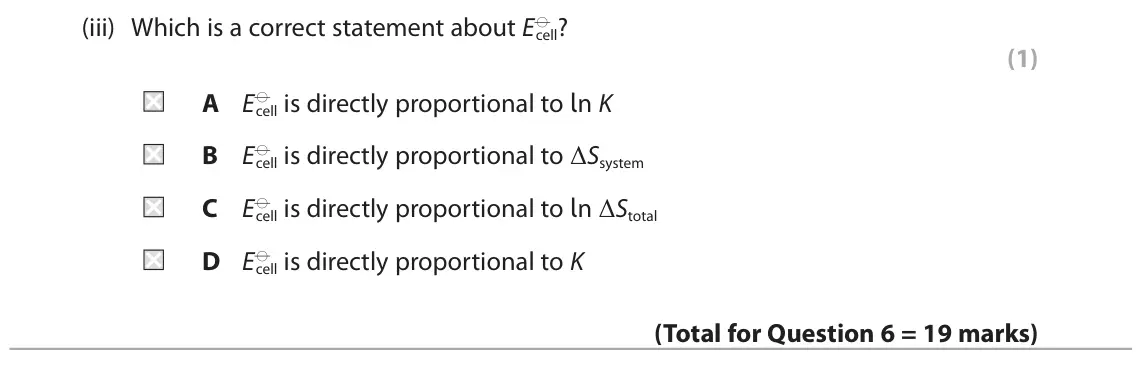
Q9(a)
The whole paper ↗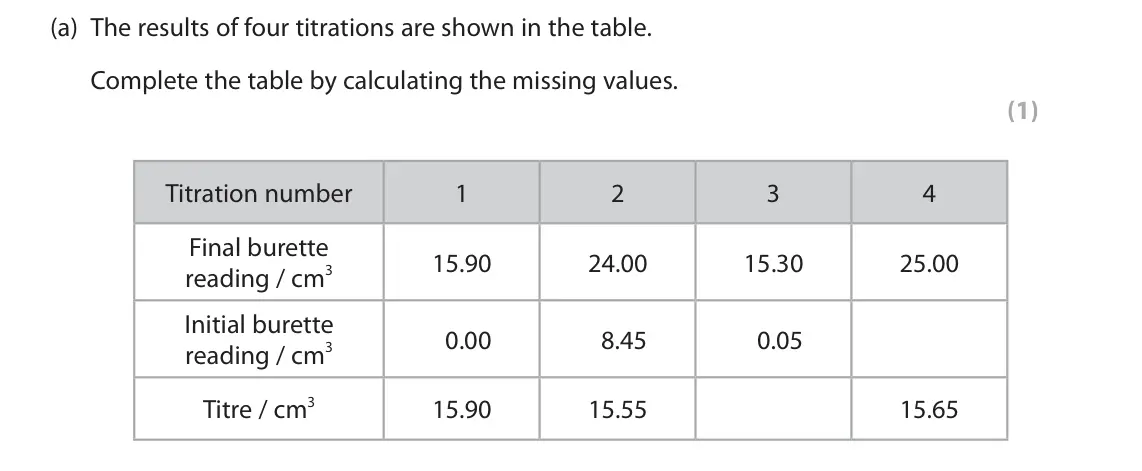
Q9(b)
The whole paper ↗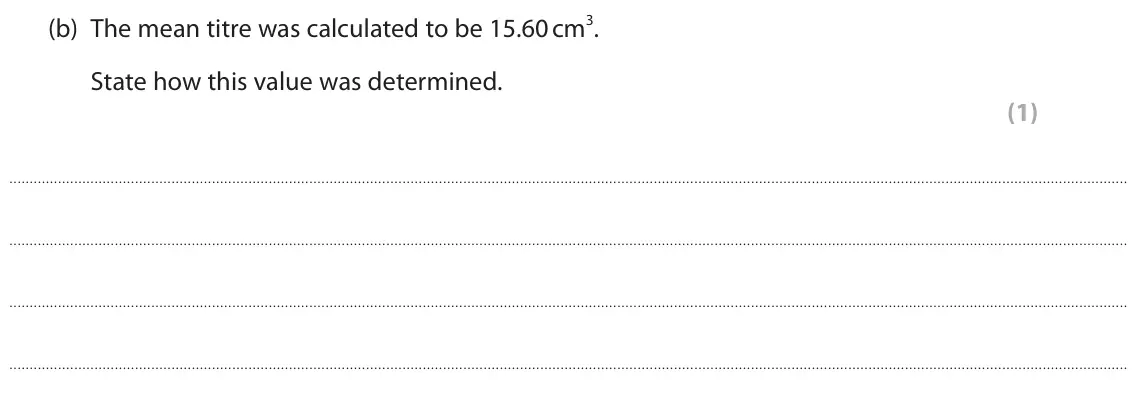
Q9(c)
The whole paper ↗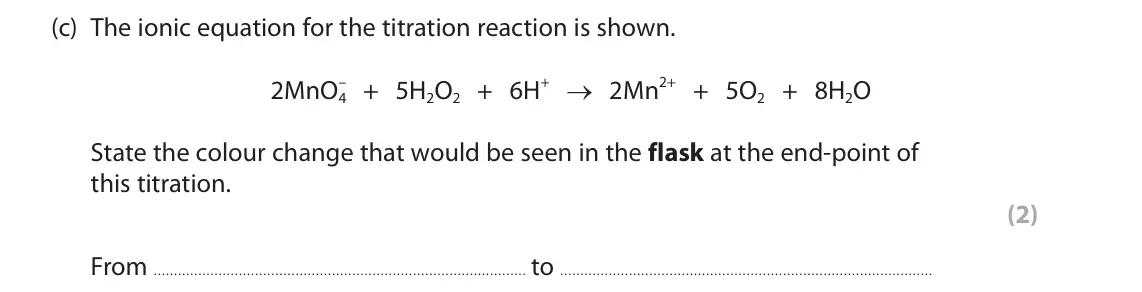
Q9(d)
The whole paper ↗
Q9(e)
The whole paper ↗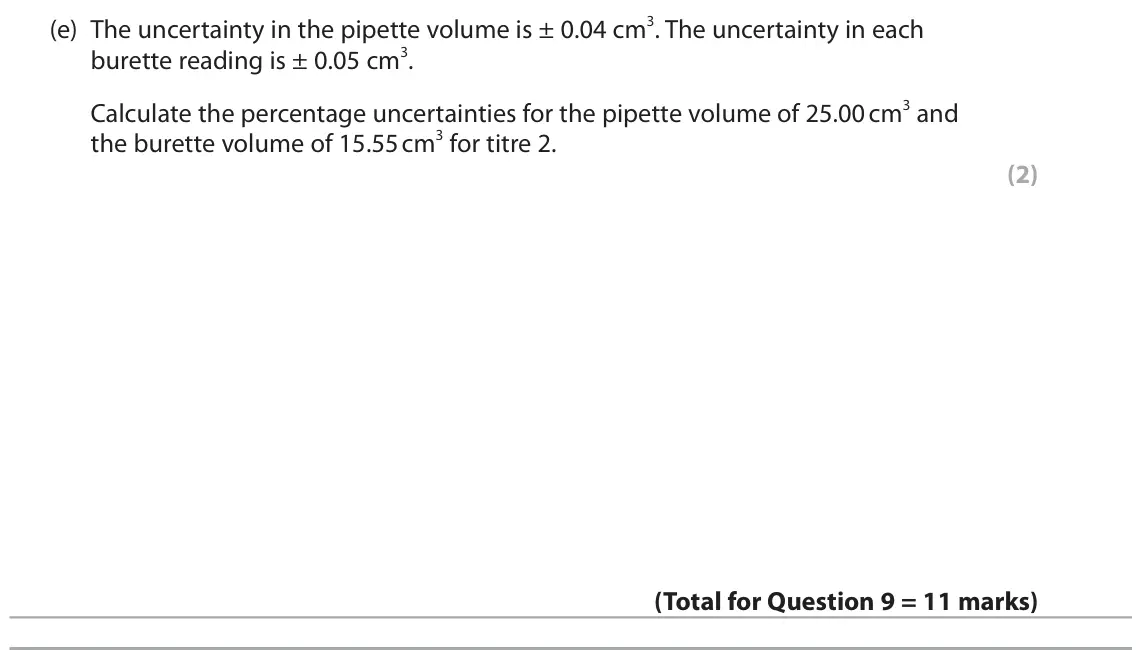
Q7(a)
The whole paper ↗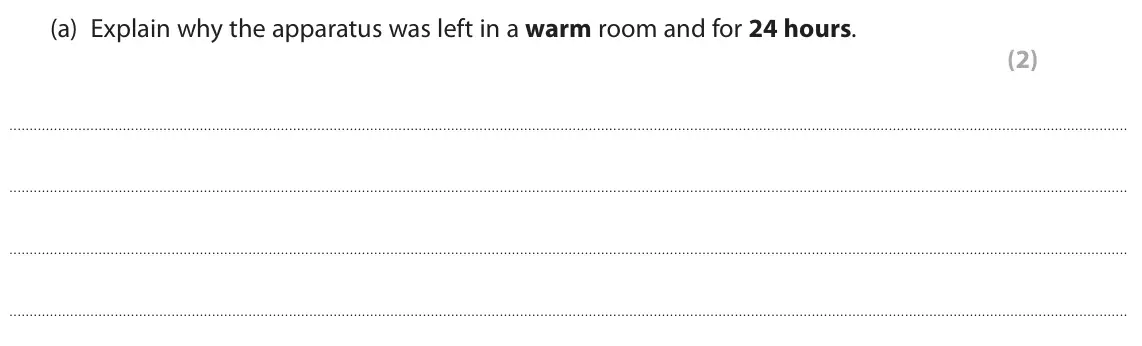
Q7(b)(i)
The whole paper ↗
Q7(b)(ii)
The whole paper ↗
Q7(c)
The whole paper ↗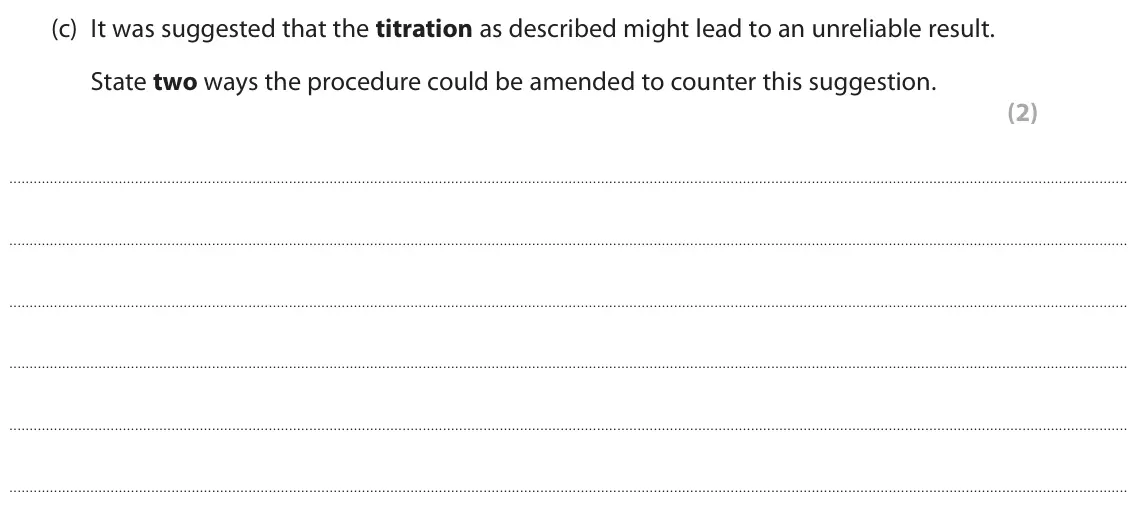
Q7(d)
The whole paper ↗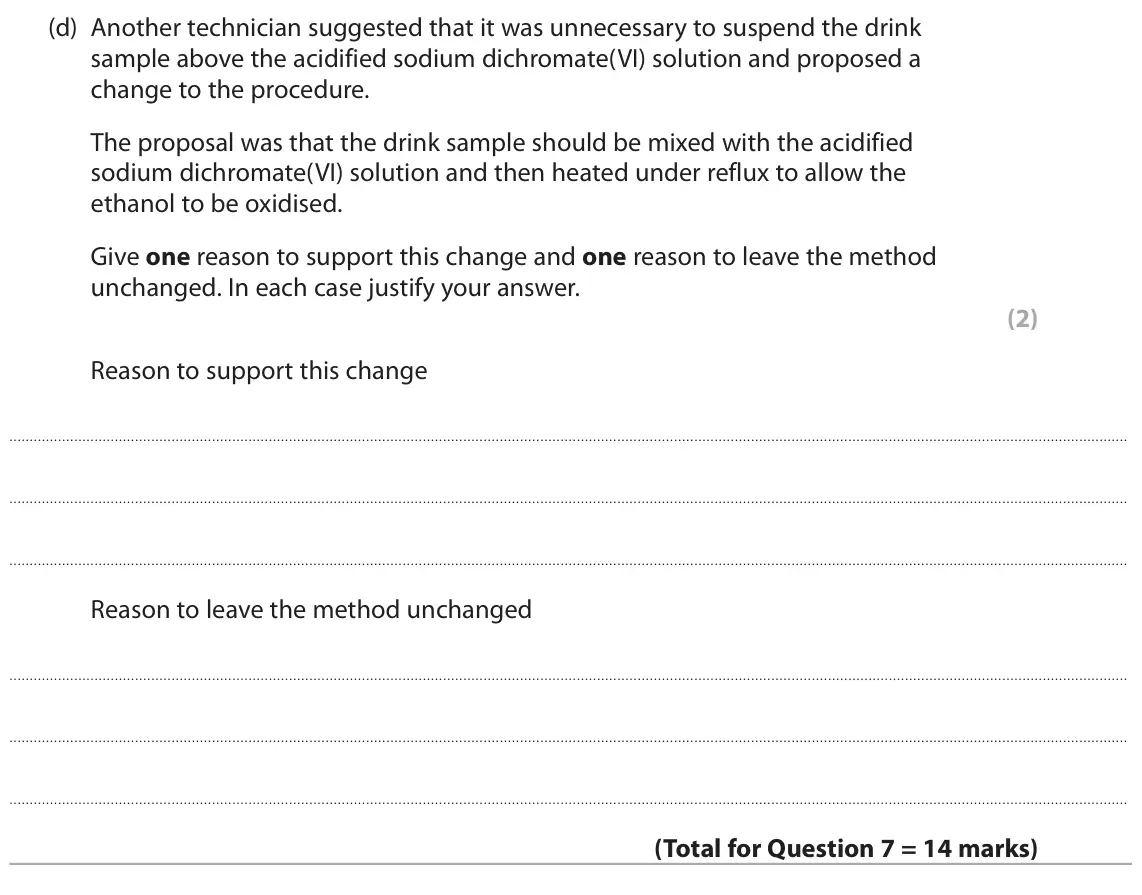
Q5(d)
The whole paper ↗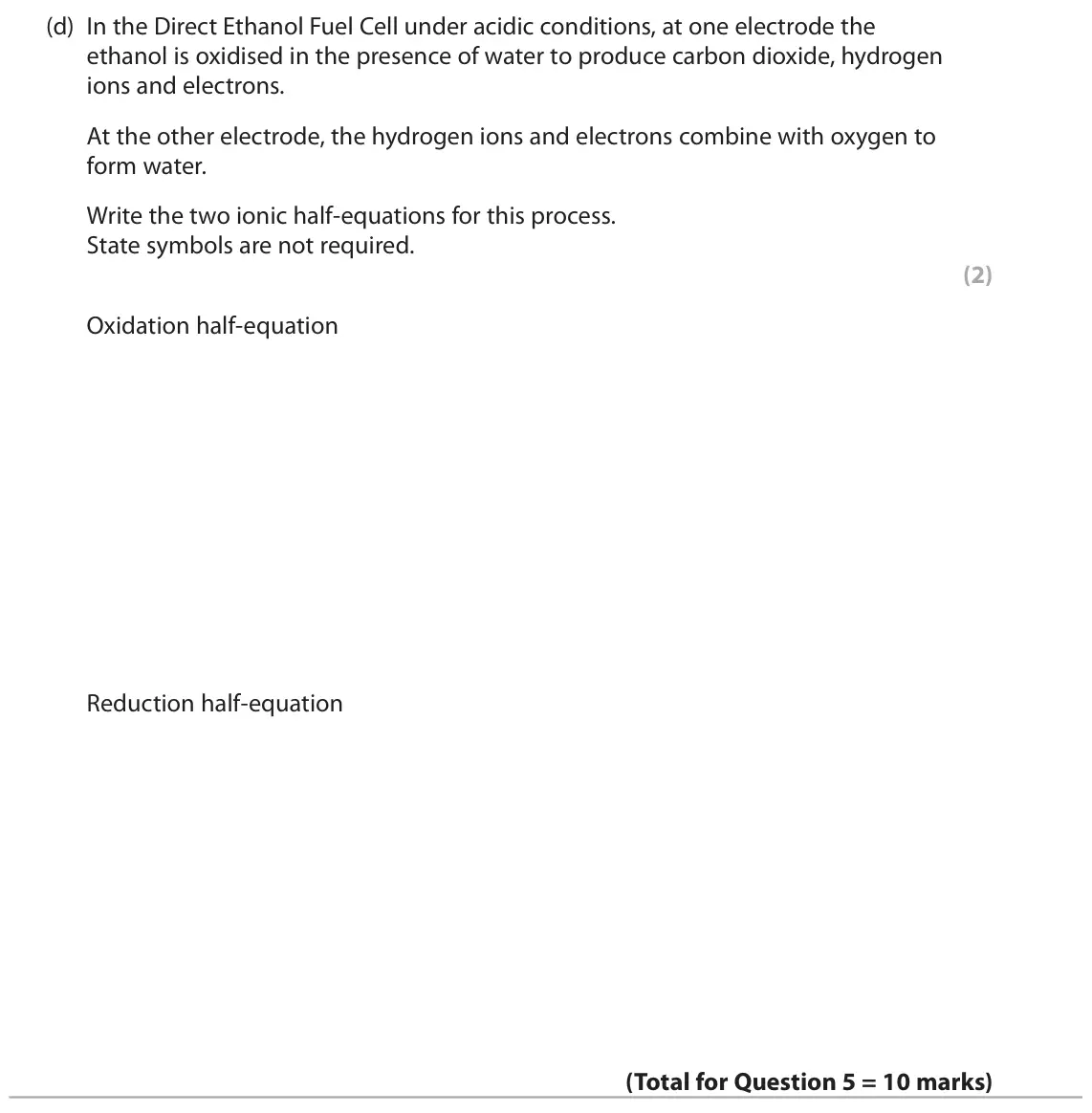
Q7(d)
The whole paper ↗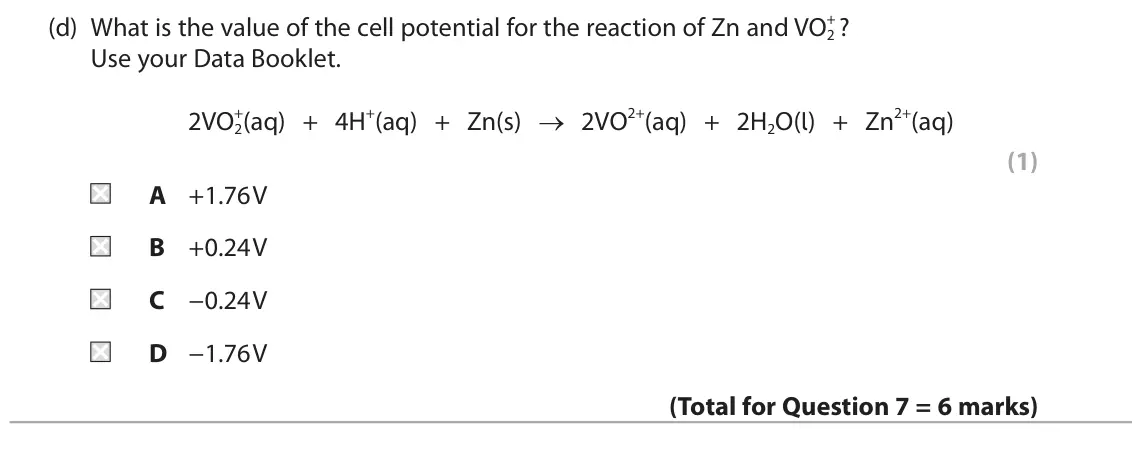
Q10(b)(i)
The whole paper ↗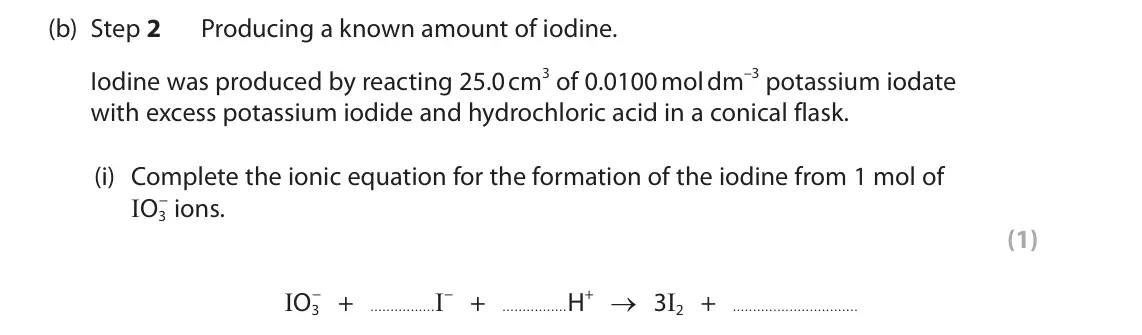
Q10(b)(ii)
The whole paper ↗
Q10(c)(i)
The whole paper ↗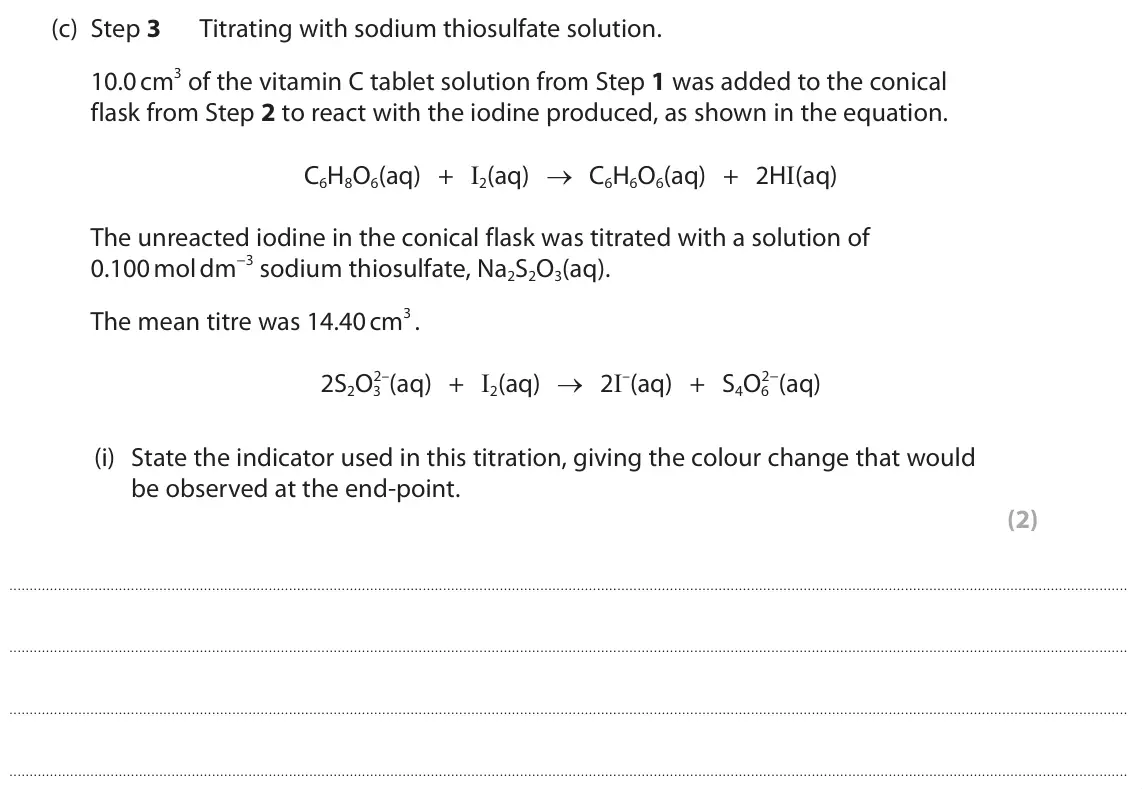
Q10(c)(ii)
The whole paper ↗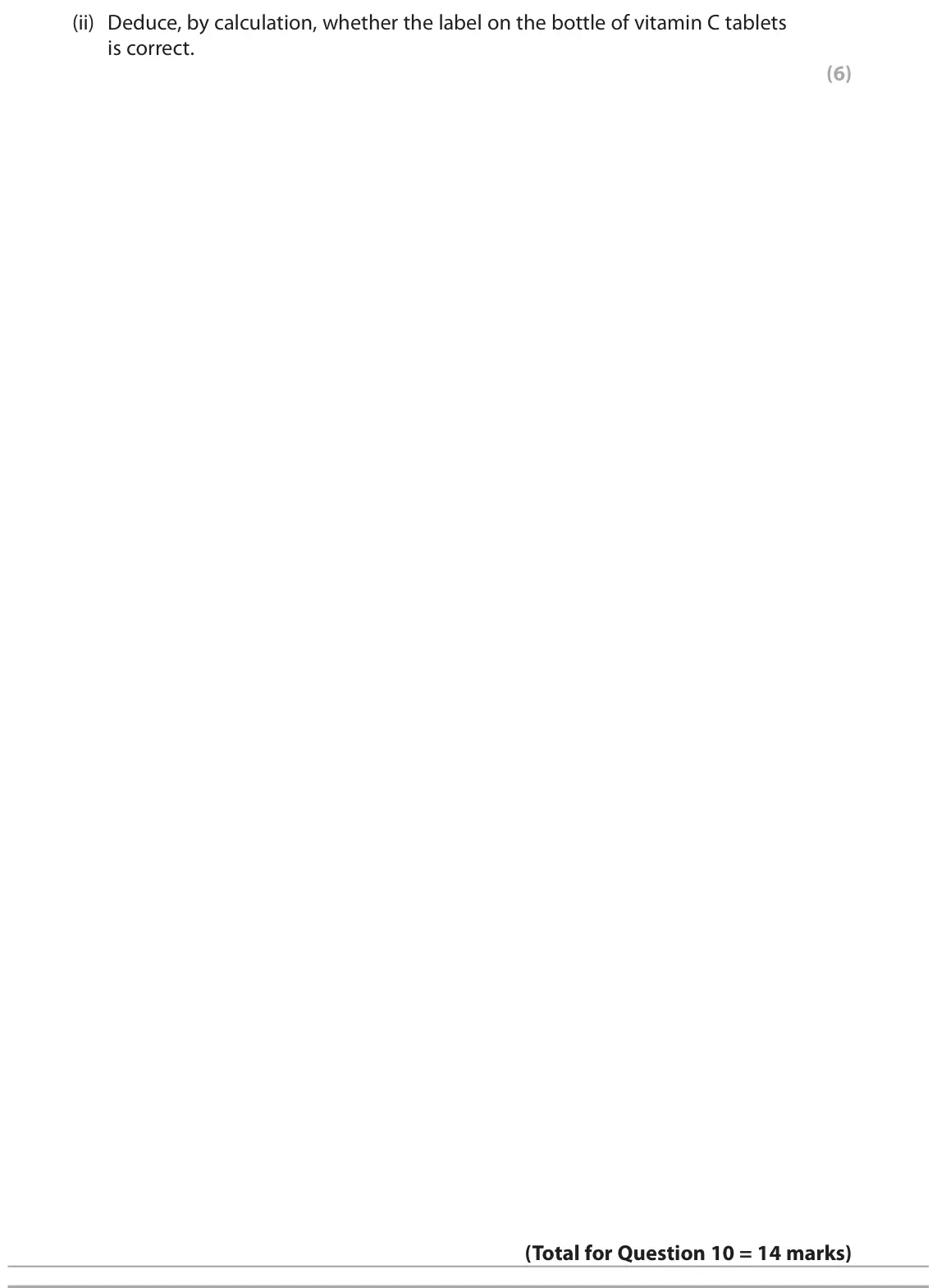
Q7(d)
The whole paper ↗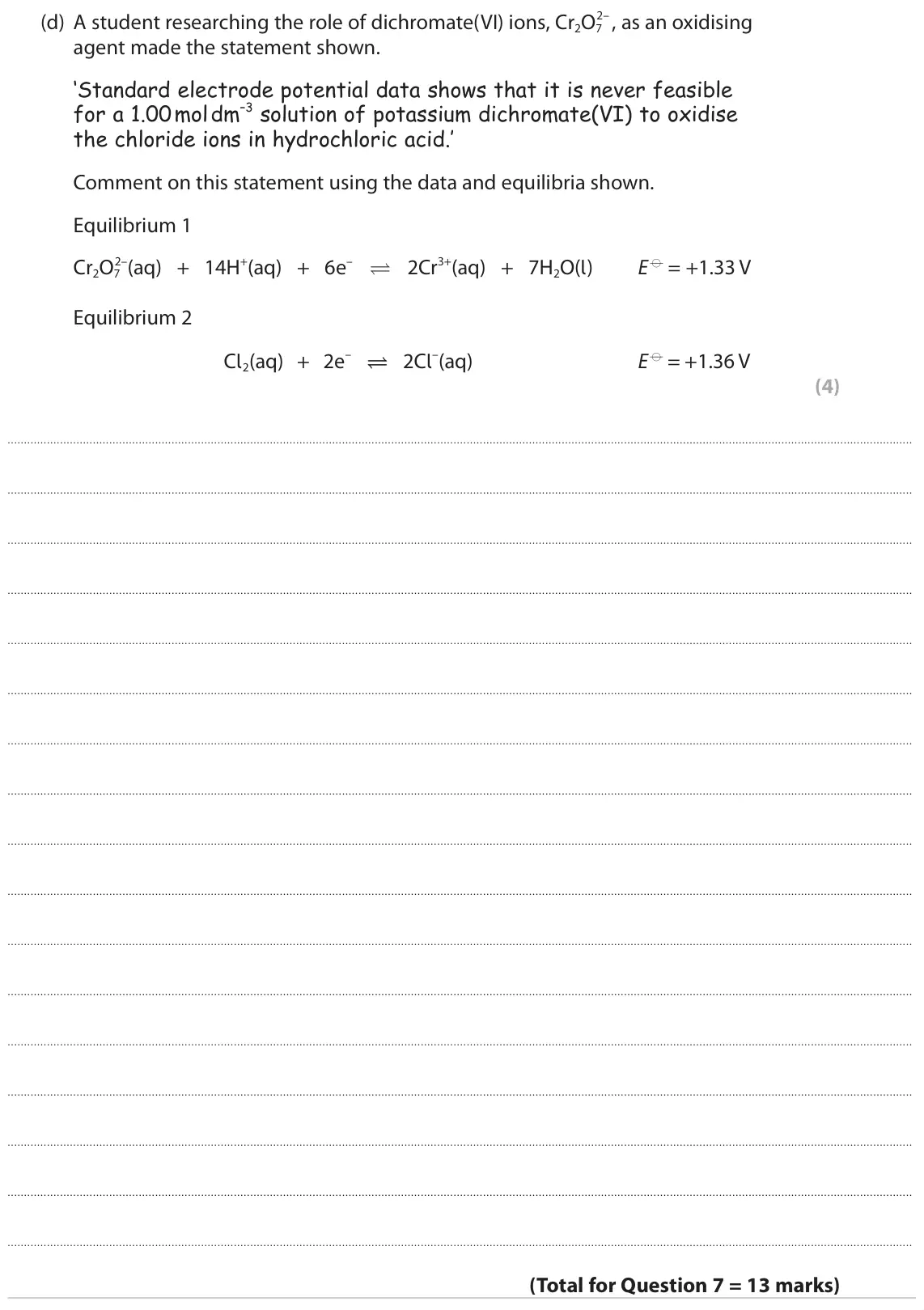
Q10(c)(i)
The whole paper ↗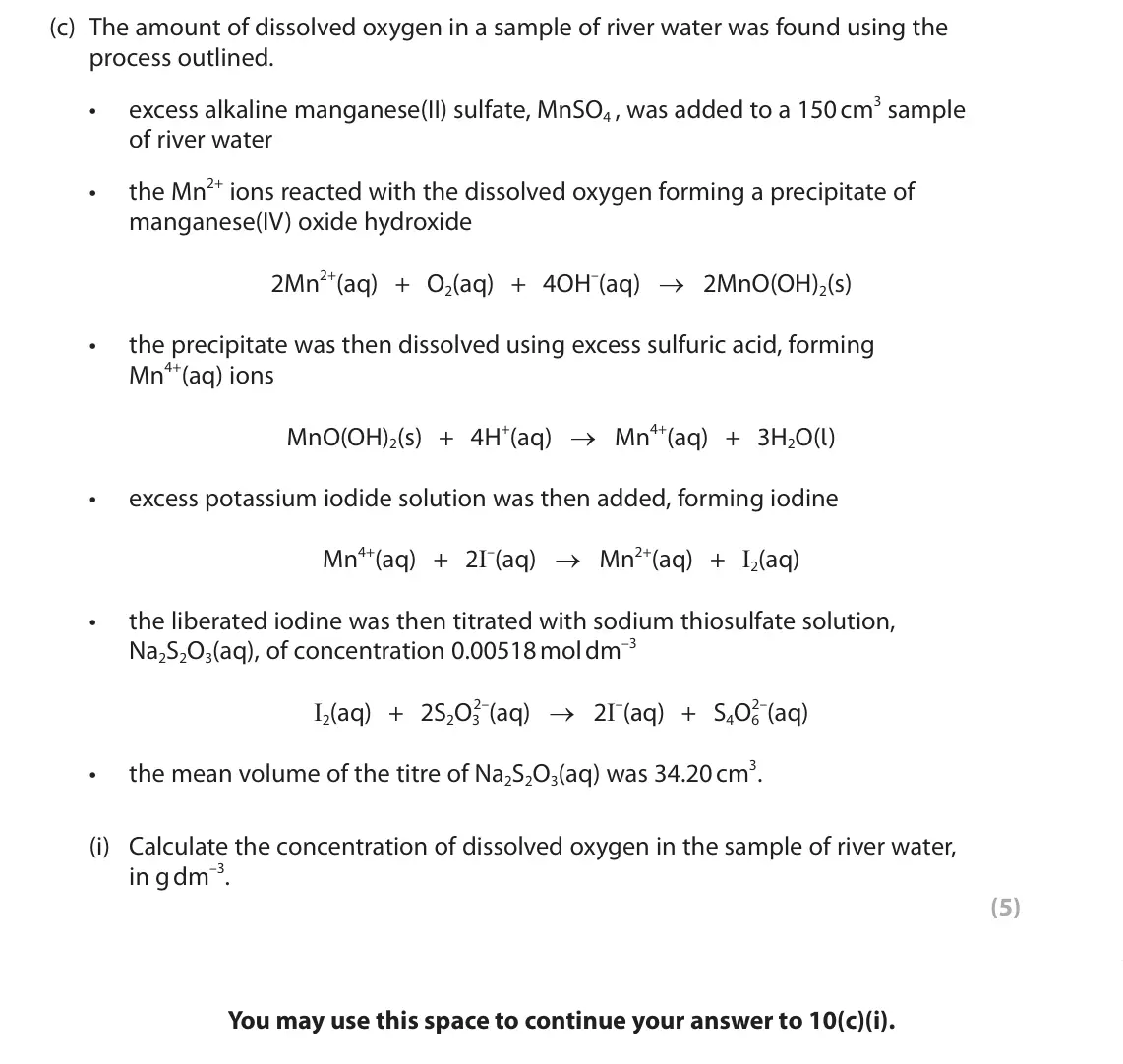
All 76 questions on Redox II, as a list
- June 2025, Paper 1, Q6(f)(ii) (2 marks): Calculate the Ed cell for this reaction. Include a reason whether or not the reaction is thermodynamically feasible. (2)
- June 2025, Paper 1, Q6(f)(iii) (1 mark): Which is a correct statement about Ed cell? (1) A Ed cell is directly proportional to ln K cell is directly proportional to ΔSsystem B Ed cell is directly propo
- June 2025, Paper 1, Q9(a) (1 mark): The results of four titrations are shown in the table. Complete the table by calculating the missing values. (1) Titration number 1 2 3 4 Final burette 15.90 24
- June 2025, Paper 1, Q9(b) (1 mark): The mean titre was calculated to be 15.60 cm3. State how this value was determined. (1)
- June 2025, Paper 1, Q9(c) (2 marks): The ionic equation for the titration reaction is shown. – + 5H2O2 + 6H+ → 2Mn2+ + 5O2 + 8H2O 2MnO4 State the colour change that would be seen in the flask at th
- June 2025, Paper 1, Q9(d) (5 marks): Deduce by calculation whether the concentration of hydrogen peroxide in the hand sanitiser is within World Health Organization guidelines. (5)
- June 2025, Paper 1, Q9(e) (2 marks): The uncertainty in the pipette volume is ± 0.04 cm3. The uncertainty in each burette reading is ± 0.05 cm3. Calculate the percentage uncertainties for the pipet
- June 2025, Paper 3, Q7(a) (2 marks): Explain why the apparatus was left in a warm room and for 24 hours. (2)
- June 2025, Paper 3, Q7(b)(i) (5 marks): Calculate the number of moles of ethanol in 5 cm3 of the diluted drink. (5)
- June 2025, Paper 3, Q7(b)(ii) (3 marks): Calculate the concentration of ethanol in the alcoholic drink in g dm−3. (3)
- June 2025, Paper 3, Q7(c) (2 marks): It was suggested that the titration as described might lead to an unreliable result. State two ways the procedure could be amended to counter this suggestion. (
- June 2025, Paper 3, Q7(d) (2 marks): Another technician suggested that it was unnecessary to suspend the drink sample above the acidified sodium dichromate(VI) solution and proposed a change to the
- June 2024, Paper 1, Q5(d) (2 marks): In the Direct Ethanol Fuel Cell under acidic conditions, at one electrode the ethanol is oxidised in the presence of water to produce carbon dioxide, hydrogen i
- June 2024, Paper 1, Q7(d) (1 mark): What is the value of the cell potential for the reaction of Zn and VO2 Use your Data Booklet. +(aq) + 4H+(aq) + Zn(s) → 2VO2+(aq) + 2H2O(l) + Zn2+(aq) 2VO2 (1)
- June 2024, Paper 1, Q10(b)(i) (1 mark): Complete the ionic equation for the formation of the iodine from 1 mol of IO3 − ions. (1) IO3 − + I− + H+ → 3I2 +
- June 2024, Paper 1, Q10(b)(ii) (2 marks): Show, by calculation, that 7.50 × 10⁻⁴ moles of iodine were produced in the flask. (2)
- June 2024, Paper 1, Q10(c)(i) (2 marks): State the indicator used in this titration, giving the colour change that would be observed at the end-point. (2)
- June 2024, Paper 1, Q10(c)(ii) (6 marks): Deduce, by calculation, whether the label on the bottle of vitamin C tablets is correct. (6)
- June 2023, Paper 1, Q7(d) (4 marks): A student researching the role of dichromate(VI) ions, Cr2O7 agent made the statement shown. ‘Standard electrode potential data shows that it is never feasible
- June 2023, Paper 1, Q10(c)(i) (5 marks): Calculate the concentration of dissolved oxygen in the sample of river water, in g dm–3. (5) You may use this space to continue your answer to 10(c)(i).
- June 2023, Paper 1, Q10(d) (4 marks): Some data is shown for electrode systems involving the Mn3+(aq) ion. Half‑cell Electrode system E d / V A MnO2(s) + 4H+(aq) + e– Mn3+(aq) + 2H2O(l) +0.95 B +1
- June 2023, Paper 3, Q5(a) (3 marks): A diagram is shown of the apparatus that is used to measure the emf of a cell with a zinc/zinc(II) electrode and an acidified manganese(II)/manganate(VII) elect
- June 2023, Paper 3, Q5(b) (5 marks): Excess zinc is added to an acidified solution of sodium dichromate(VI). Some electrode data are given in the table. Electrode system E d / V Cr2+(aq) + 2e– Cr
- June 2023, Paper 3, Q5(c) (1 mark): A cell diagram is shown. Ni(s) ½ Ni2+(aq) ½½ [NO3 –(aq) + 2H+(aq)], [NO2(g) + H2O(l)] ½ Pt(s) E d cell = +1.06 V Deduce the reduction half‑equation. State symbo
- June 2023, Paper 3, Q5(d) (2 marks): State the direction of the electron flow in the hydrogen‑oxygen fuel cell shown. Justify your answer by reference to the redox processes in the cell. hydrogen a
- June 2023, Paper 3, Q5(e) (1 mark): State one advantage of the hydrogen‑oxygen fuel cell over the use of petrol as fuel in a vehicle. (1)
- June 2022, Paper 1, Q3(d)(i) (3 marks): Explain why the disproportionation of bromine in water is not thermodynamically feasible under standard conditions. d Include the overall equation for the dispr
- June 2022, Paper 1, Q3(d)(ii) (1 mark): Bromine disproportionates in water to a small extent at 298 K. Give a possible reason why this reaction occurs. (1)
- June 2022, Paper 1, Q7(c)(i) (2 marks): Write the overall equation for the reduction of dichromate(VI) ions to chromium(III) ions by zinc in acid conditions. State symbols are not required. (2)
- June 2022, Paper 1, Q7(c)(ii) (1 mark): Calculate E cell for the reaction in (c)(i). (1)
- June 2022, Paper 1, Q7(c)(iii) (1 mark): Predict whether or not a further reduction of chromium(III) ions to chromium(II) ions will occur. Justify your answer. (1)
- June 2022, Paper 1, Q7(d) (5 marks): An iron nail was analysed using the following outline procedure. • An iron nail was placed in a beaker and excess dilute sulfuric acid was added. • After all th
- June 2022, Paper 1, Q8(a) (2 marks): Chlorine gas can be prepared by the oxidation of chloride ions with manganate(VII) ions in acid solution. –(aq) + 5Cl –(aq) + 8H +(aq) Mn 2+(aq) + 2½Cl2(g) +
- June 2022, Paper 1, Q8(b) (1 mark): A fuel cell produces a voltage from the reaction between a fuel and oxygen. The reaction occurring at one electrode in a methanol fuel cell is +(aq) + 4e– CH3OH
- June 2022, Paper 1, Q8(c) (3 marks): Lead‑acid batteries are used as storage cells in some cars. The electrolyte is sulfuric acid, one electrode is lead and the other is lead(IV) oxide, PbO2. As th
- June 2022, Paper 3, Q9(b)(i) (3 marks): The end-point of the titration is when the starch changes colour. Explain how this occurs, including the colour change. (3)
- June 2022, Paper 3, Q9(b)(ii) (5 marks): The total amount of acid in the 150 cm3 sample is 8.00 × 10⁻³ mol. The mean titre in Experiment 2 using 5.00 cm3 of pineapple juice is 9.50 cm3. Calculate the m
- November 2021, Paper 3, Q1(d)(i) (1 mark): Identify an oxidising agent from the Data Booklet that will convert chloride ions into chlorine under standard conditions. (1)
- November 2021, Paper 3, Q1(d)(ii) (1 mark): Calculate the value of E cell for the reaction in (d)(i). (1)
- November 2021, Paper 3, Q6(d)(ii) (5 marks): Determine, by calculation, which brand of tablet was analysed. (5)
- October 2020, Paper 1, Q3(d)(i) (5 marks): Use these data to calculate the final oxidation state of vanadium. You must show your working. (5)
- October 2020, Paper 1, Q8(a) (1 mark): Give the colour change at the end-point of the titration. (1)
- October 2020, Paper 1, Q8(c) (1 mark): Give the reason why sulfuric acid was also added to the conical flask. (1)
- October 2020, Paper 1, Q8(d) (2 marks): This redox reaction could be used in an electrochemical cell. The cell half-equations are 2CO2(g) + 2e− ⇌ C2O4 2−(aq) −(aq) + 5e− ⇌ Mn2+(aq) + 4H2O(l) 8H+(aq) +
- October 2020, Paper 1, Q8(e)(i) (2 marks): Complete the table. (2)
- October 2020, Paper 1, Q8(e)(ii) (5 marks): The equation for the reaction between MnO4 − ions from the KMnO4 and C2O4 2− ions from the sodium ethanedioate solution is shown. 16H+(aq) + 2MnO4 −(aq) + 5C2O4
- October 2020, Paper 1, Q8(e)(iii) (4 marks): A textbook suggested the conical flask should be heated during the titration, − ions and the C2O4 2− ions is slow. as the reaction between the MnO4 Use these el
- October 2020, Paper 3, Q8(b)(iii) (3 marks): In acidic conditions, dichromate(VI) ions can also be reduced to chromium(III) ions using hydrogen peroxide. The value of EO — cell = + 0.65 V for which the cel
- October 2020, Paper 3, Q8(c) (7 marks): Draw a labelled diagram of the apparatus that you would use to measure the standard emf of a cell with a zinc-zinc(II) electrode system and a chromium(III)-dich
- June 2019, Paper 1, Q8(c) (1 mark): The sodium hydride is crushed in the presence of water to release the hydrogen gas for a fuel cell. The overall equation for the reaction occurring in the fuel
- June 2019, Paper 3, Q2(a)(i) (1 mark): State the conditions of temperature and pressure under which standard electrode potentials are measured. (1)
- June 2019, Paper 3, Q2(a)(ii) (3 marks): The student drew the diagram shown. A hydrogen gas platinum electrode silver electrode 1 mol dm–3 1 mol dm–3 salt bridge ethanoic acid silver nitrate containing
- June 2019, Paper 3, Q2(b) (3 marks): The standard electrode potential, E , of the Ag+(aq)|Ag(s) half-cell is +0.80 V. The effect of changing the concentration of the ions on the value of the electr
- June 2019, Paper 3, Q5(c) (1 mark): Identify the species that is the strongest reducing agent from the list of standard electrode potentials in the Data Booklet. (1)
- June 2019, Paper 3, Q5(d)(i) (2 marks): Write the ionic equation for this reaction. State symbols are not required. (2)
- June 2019, Paper 3, Q7(a)(i) (2 marks): Complete the diagram to show the final burette reading in Titration 1. (2) 22 23 24
- June 2019, Paper 3, Q7(a)(ii) (2 marks): Explain why this student should use a mean titre of 23.15 cm3 and not 23.43 cm3 in the calculation. (2)
- June 2019, Paper 3, Q7(a)(iii) (1 mark): The uncertainty in each burette reading is ±0.05 cm3. Calculate the percentage uncertainty in the titre volume of potassium manganate(VII) solution used in Titr
- June 2019, Paper 3, Q7(a)(iv) (4 marks): The equation for the reaction is 2– + 16H+ o 2Mn2+ + 10CO2 + 8H2O – + 5C2O4 2MnO4 Deduce, by calculation, the value of y, to the nearest whole number, in the fo
- June 2018, Paper 1, Q5(a) (3 marks): Complete the diagram by adding labels on the dotted lines provided. (3)
- June 2018, Paper 1, Q5(b)(i) (1 mark): State what chemical is contained in the salt bridge. (1)
- June 2018, Paper 1, Q5(b)(ii) (1 mark): Give a possible reason why the salt bridge cannot be replaced by an unreactive metal wire. (1)
- June 2018, Paper 1, Q5(c)(i) (1 mark): Write the overall ionic equation for the reaction taking place. State symbols are not required. (1)
- June 2018, Paper 1, Q5(c)(ii) (1 mark): Calculate the value of the standard electrode potential for the Mn3+(aq) Ι Mn2+(aq) half-cell. (1)
- June 2018, Paper 1, Q10(b) (2 marks): State the indicator used and its colour change at the end-point in the titration in Step 6. (2)
- June 2018, Paper 1, Q10(c) (6 marks): The table shows the percentage by mass of gold in four different carats of yellow gold. Percentage by Carat mass of gold 9 37.5 10 41.7 14 58.3 18 75.0 Determin
- June 2018, Paper 3, Q5(b) (7 marks): Excess zinc powder is added to an acidified solution of the compound NH4VO3. Using the data in the table, explain the sequence of reactions that takes place. In
- June 2017, Paper 1, Q3(c)(i) (1 mark): Which species will oxidise Fe2+(aq) to Fe3+(aq)? (1) A Br2(aq) B Cl–(aq) C I2(aq) D Mn2+(aq)
- June 2017, Paper 1, Q3(c)(ii) (3 marks): Write the ionic equation and calculate the E cell value for the reaction between – ions and Br – ions in acidic solution. MnO4 State symbols are not required. (
- June 2017, Paper 3, Q6(a) (2 marks): A student carried out an investigation to determine the value of x in hydrated magnesium nitrate(III), Mg(NO2)2•xH2O, using three different methods. Method 1 •
- June 2017, Paper 3, Q6(b) (1 mark): A student carried out an investigation to determine the value of x in hydrated magnesium nitrate(III), Mg(NO2)2•xH2O, using three different methods. Method 1 •
- June 2017, Paper 3, Q6(c) (5 marks): A student carried out an investigation to determine the value of x in hydrated magnesium nitrate(III), Mg(NO2)2•xH2O, using three different methods. Method 1 •
- June 2017, Paper 3, Q6(d) (2 marks): A student carried out an investigation to determine the value of x in hydrated magnesium nitrate(III), Mg(NO2)2•xH2O, using three different methods. Method 1 •
- June 2017, Paper 3, Q6(e) (2 marks): A student carried out an investigation to determine the value of x in hydrated magnesium nitrate(III), Mg(NO2)2•xH2O, using three different methods. Method 1 •
- June 2017, Paper 3, Q7(b) (5 marks): Under certain conditions, dichromate(VI) ions, Cr2O7 In this reaction, dichromate(VI) ions are reduced to chromium(III) ions, in acidic conditions, according to
- June 2017, Paper 3, Q7(c) (4 marks): A student constructed an electrochemical cell as follows: • a half-cell was made from a strip of chromium metal and a solution of aqueous chromium(III) sulfate
Questions, mark schemes and examiner’s reports are © Pearson Edexcel, from their published past papers. Plumi isn’t affiliated with any exam board. Want whole papers? Every Edexcel A-Level Chemistry paper.
Rather write your answers by hand on iPad? Plumi marks them against the same mark schemes.