 plumi
Sexual reproduction in mammals: Edexcel A‑Level Biology B questions
Every Edexcel A-Level Biology B exam question on 2.4 Sexual reproduction in mammals, 2016–2025, with its mark scheme and examiner’s report.
Find questions1,826
Calculations
Q2(a)(i)
The whole paper ↗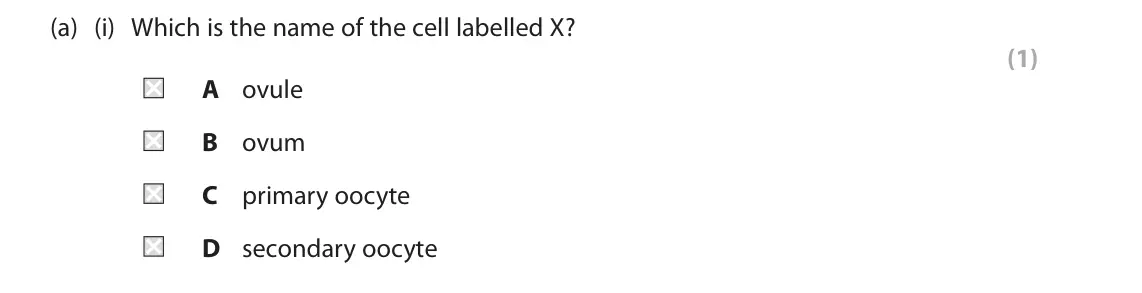
Q2(a)(iii)
The whole paper ↗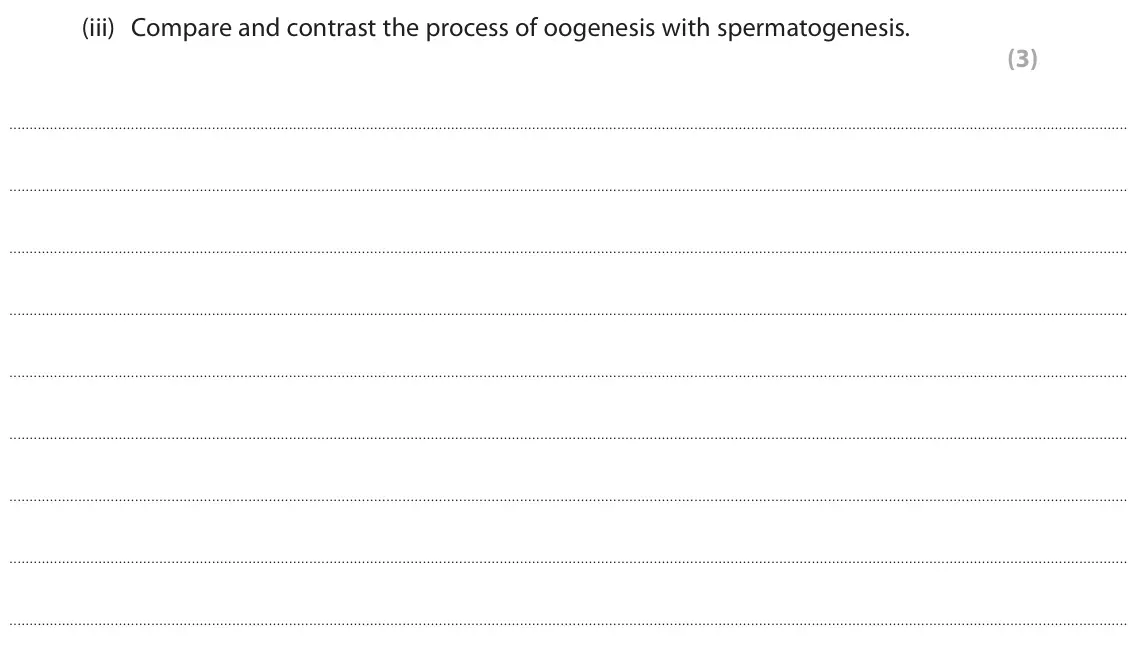
Q2(b)(i)
The whole paper ↗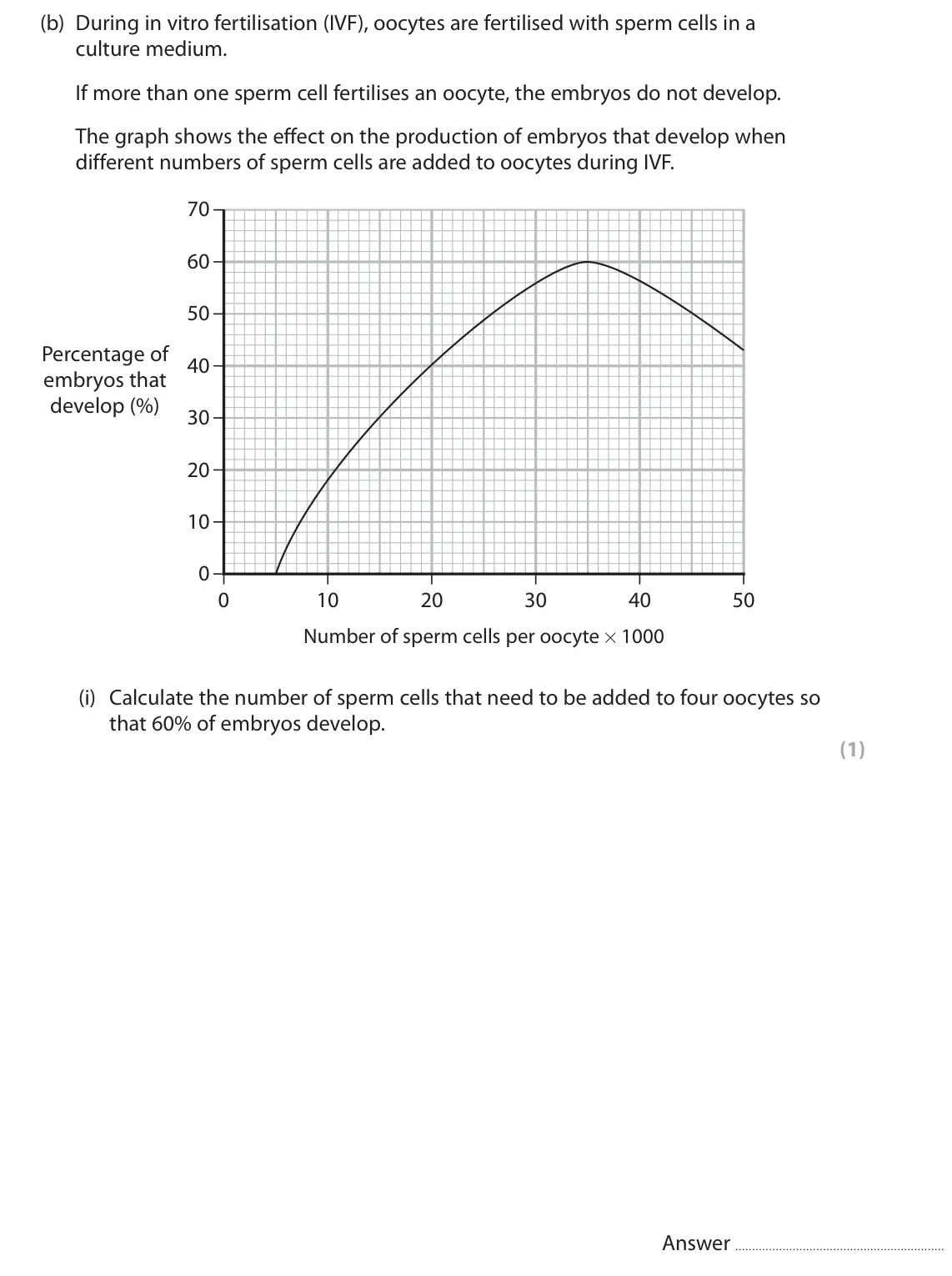
Q2(b)(ii)
The whole paper ↗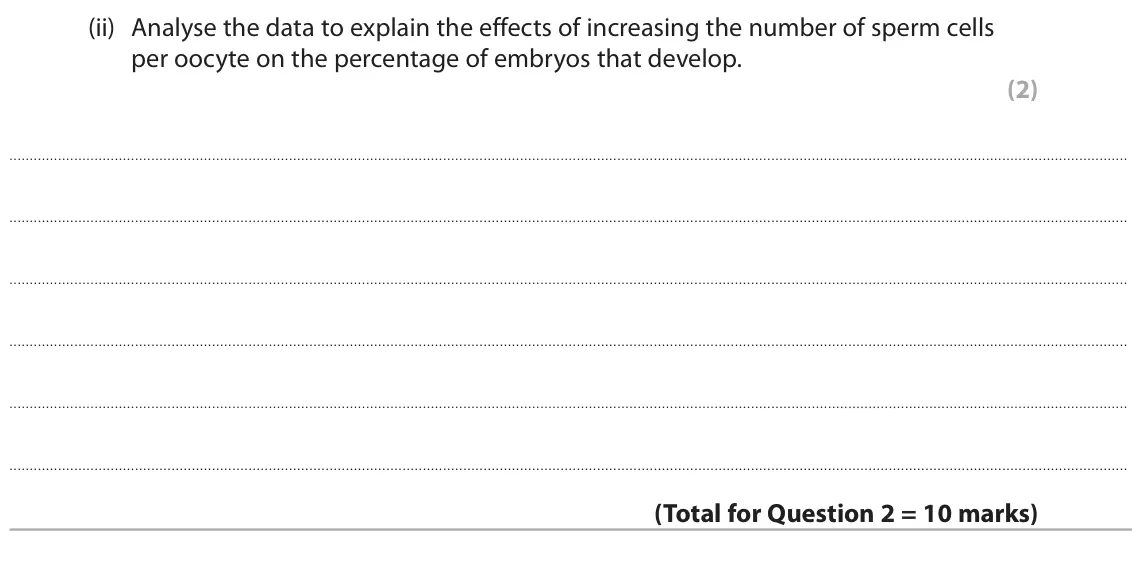
Q8(a)
The whole paper ↗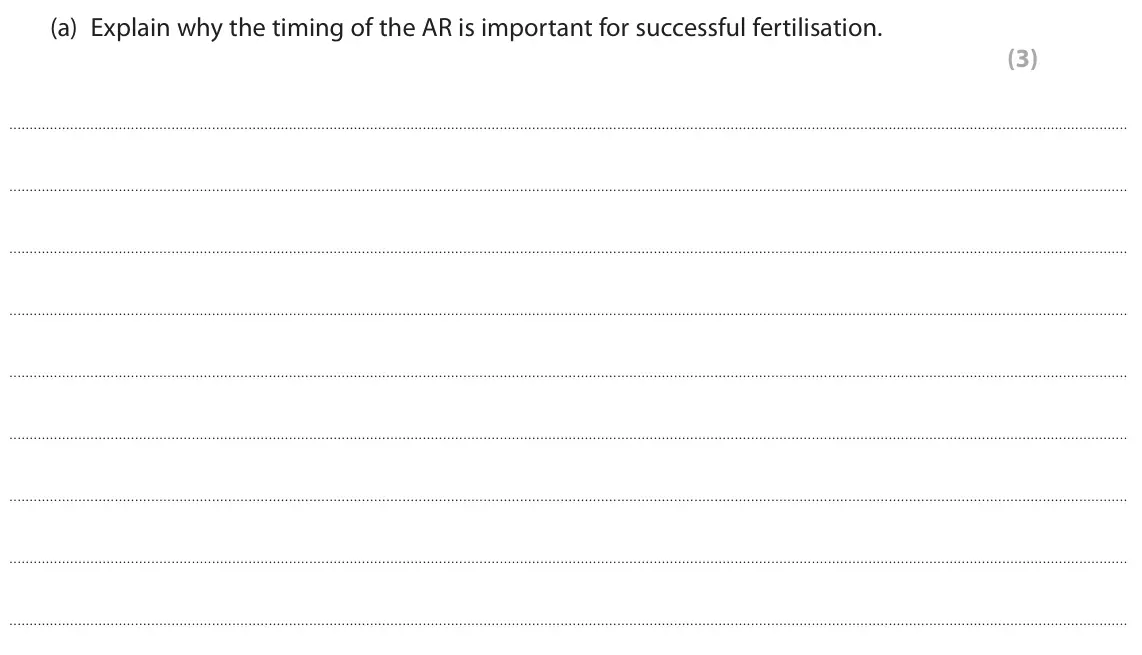
Q8(b)
The whole paper ↗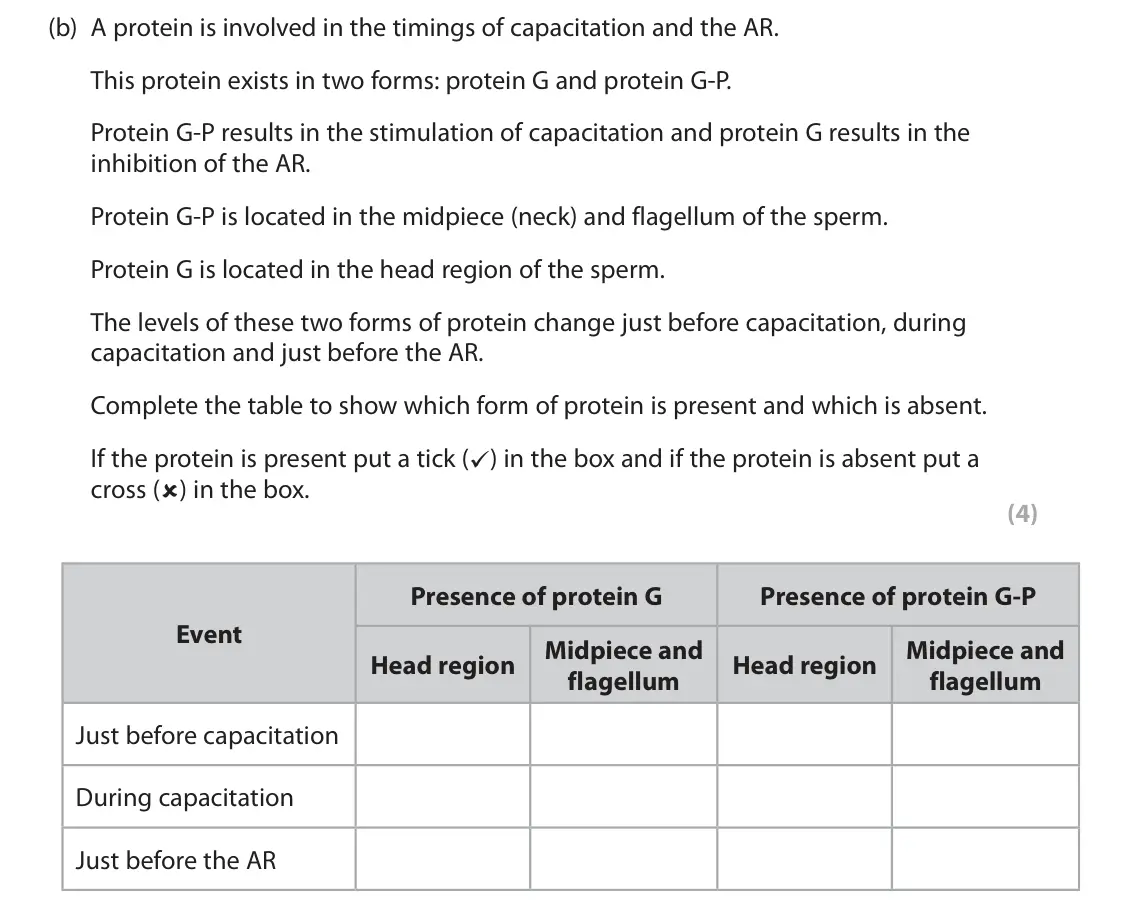
Q3(a)(i)
The whole paper ↗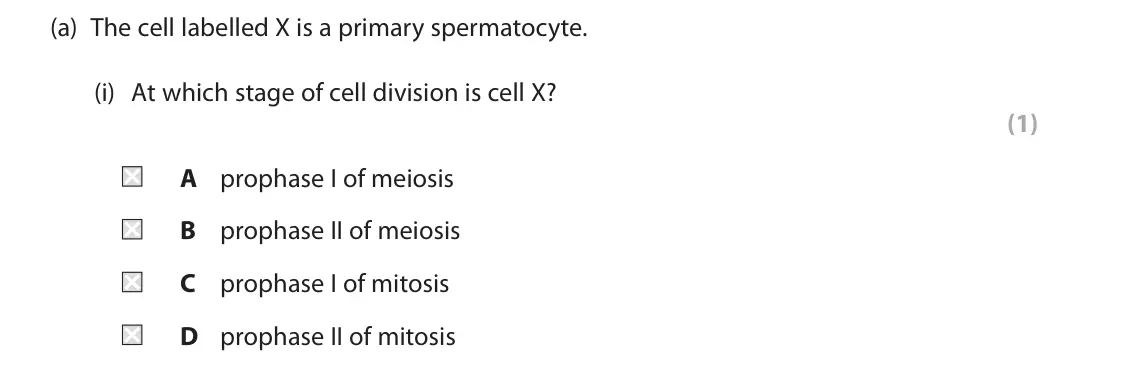
Q3(b)(i)
The whole paper ↗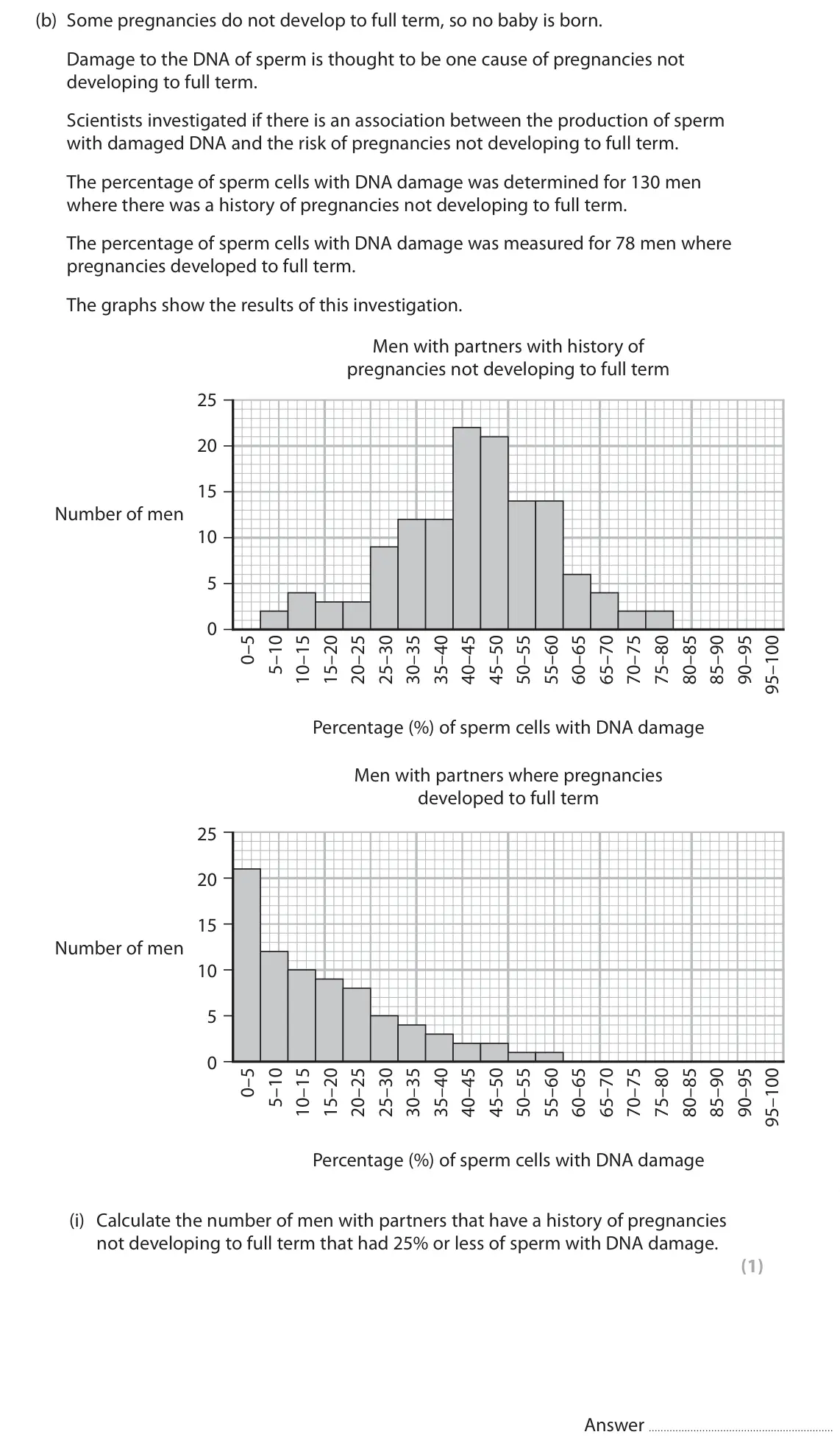
Q3(b)(ii)
The whole paper ↗
Q2(a)
The whole paper ↗
Q2(b)
The whole paper ↗
Q3(b)(i)
The whole paper ↗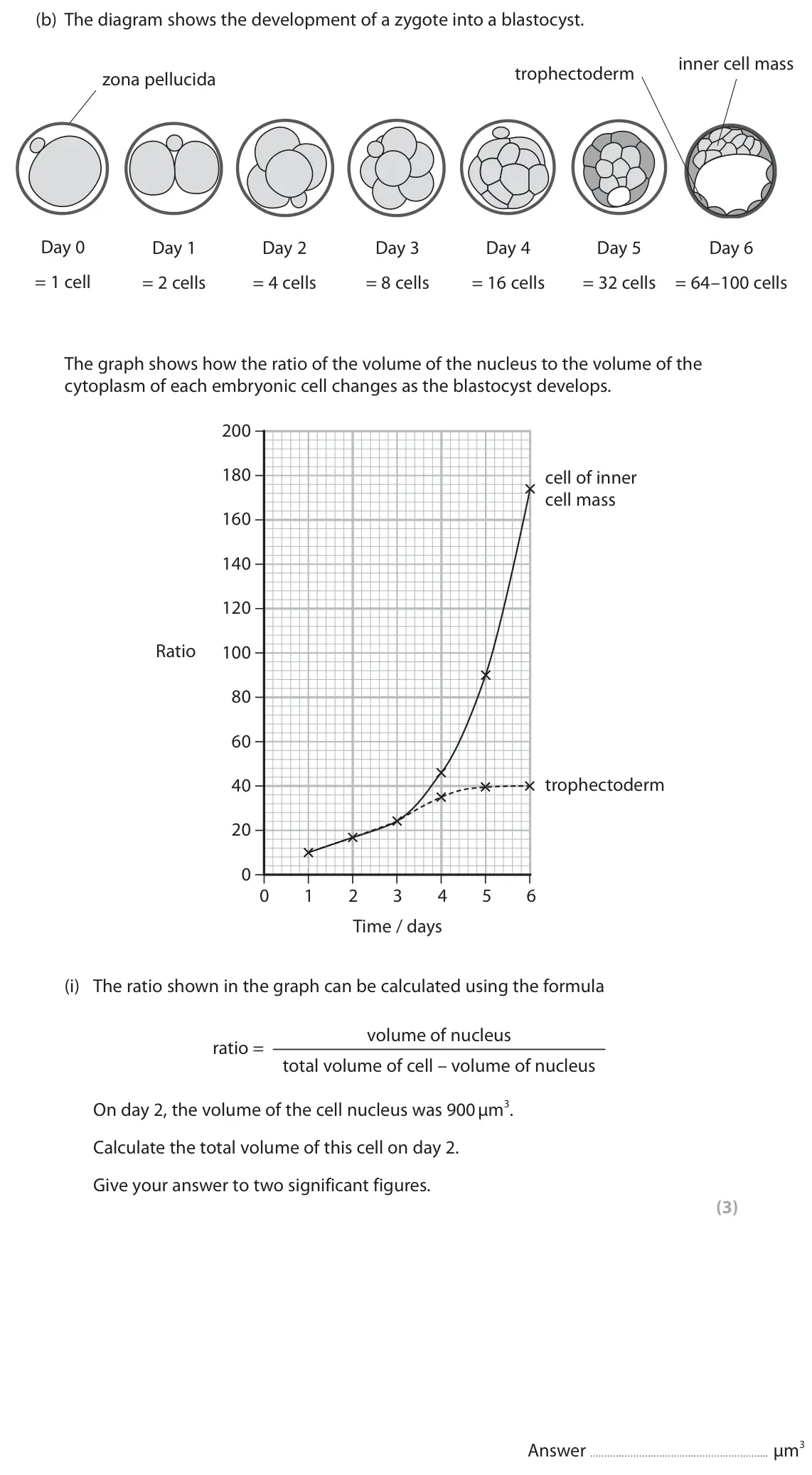
Q3(b)(ii)
The whole paper ↗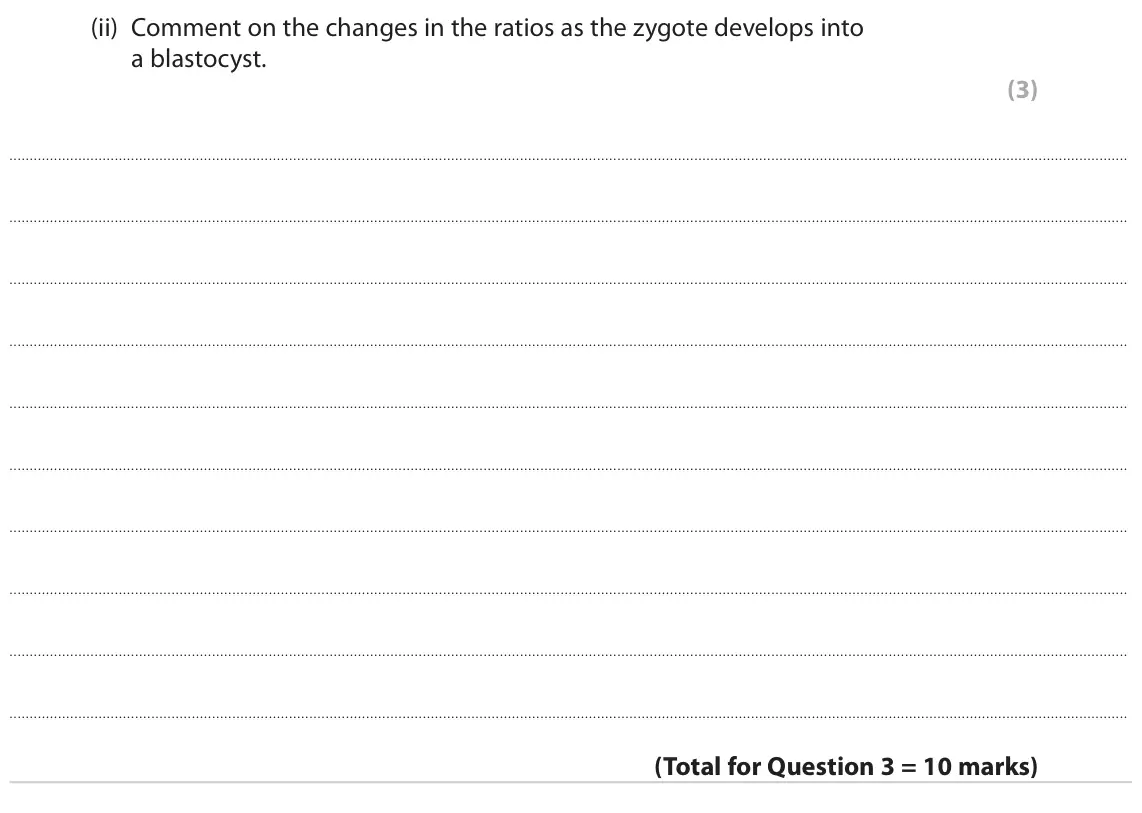
Q9(a)(i)
The whole paper ↗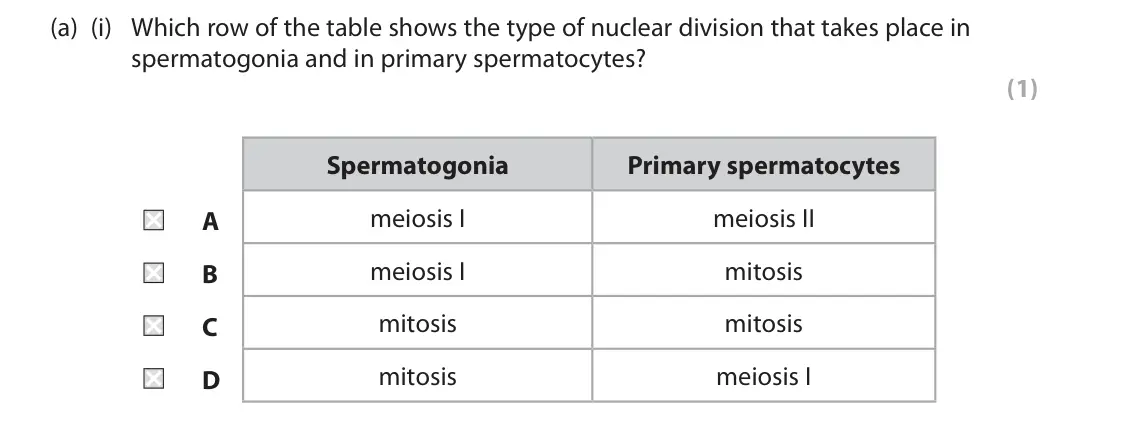
Q9(a)(ii)
The whole paper ↗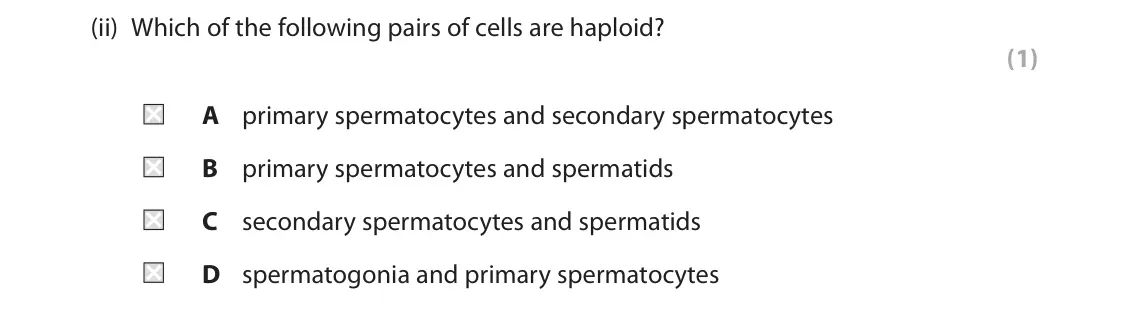
Q9(b)
The whole paper ↗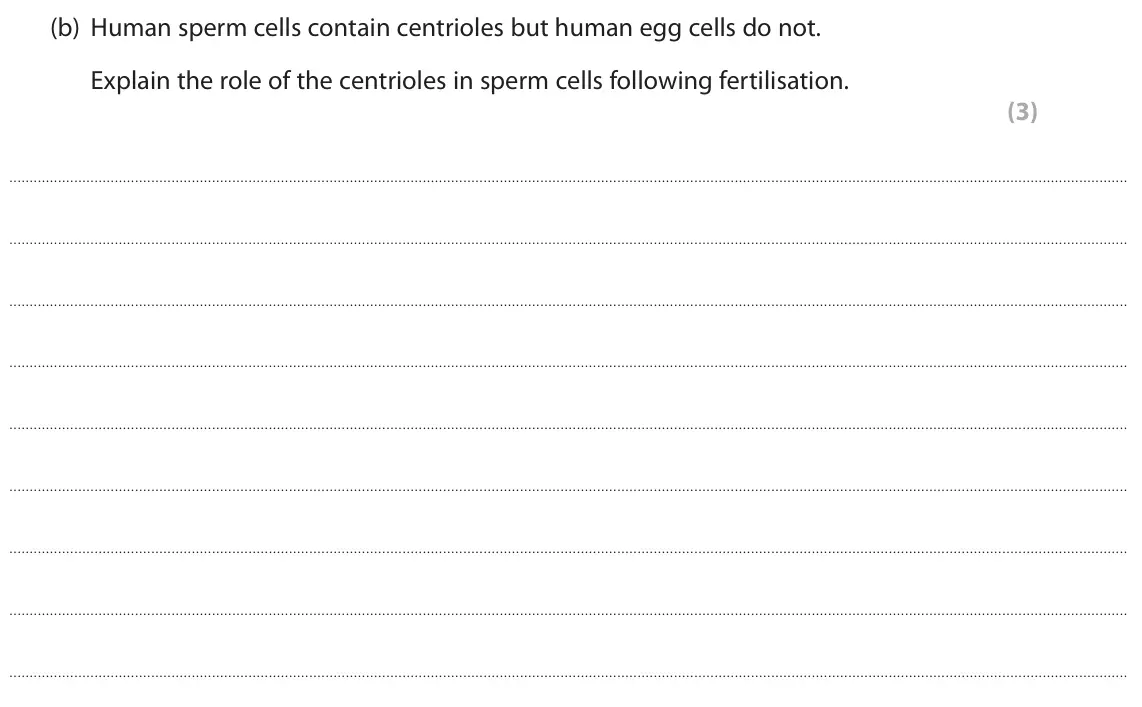
Q9(c)
The whole paper ↗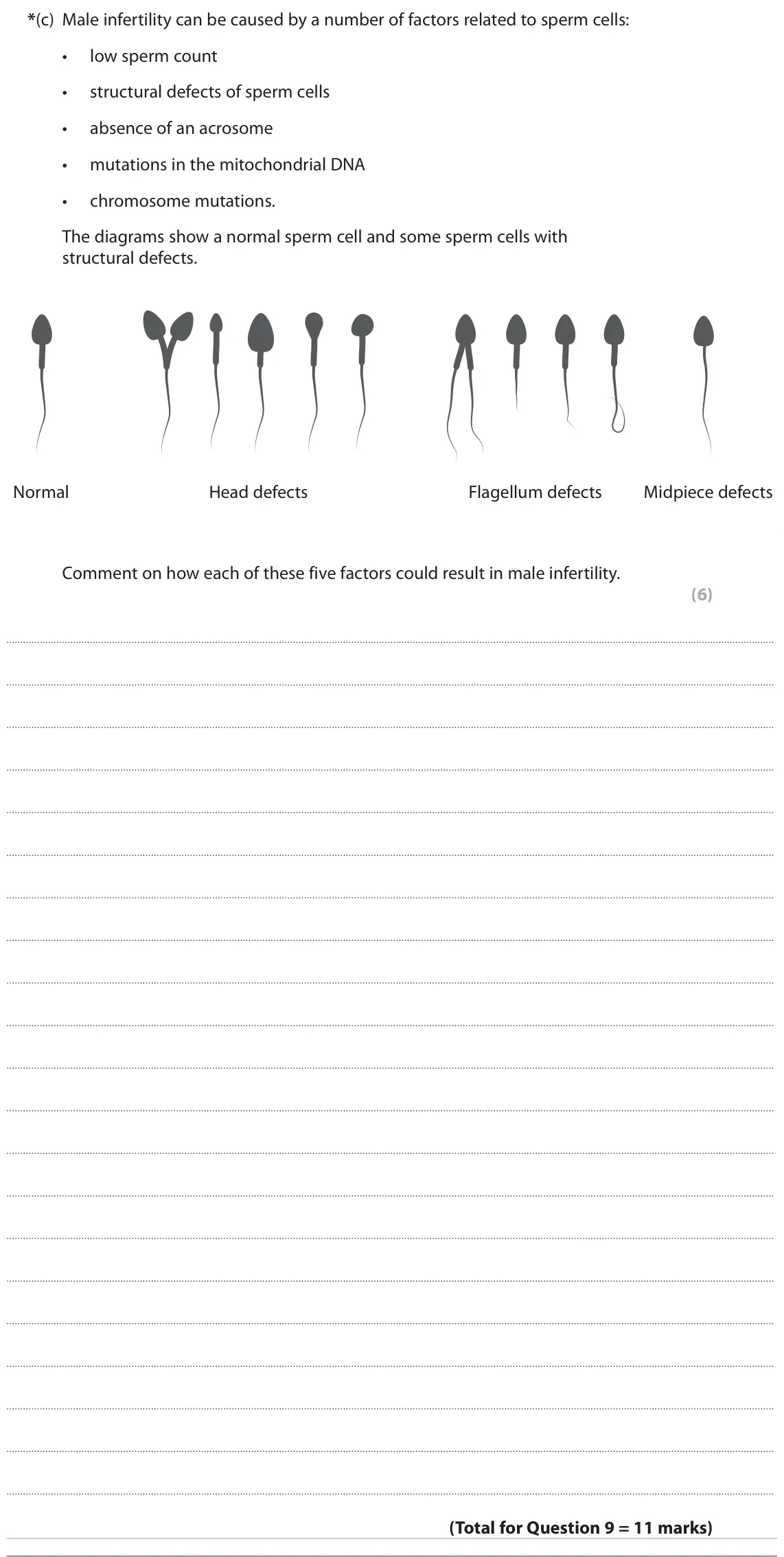
Q2(b)(i)
The whole paper ↗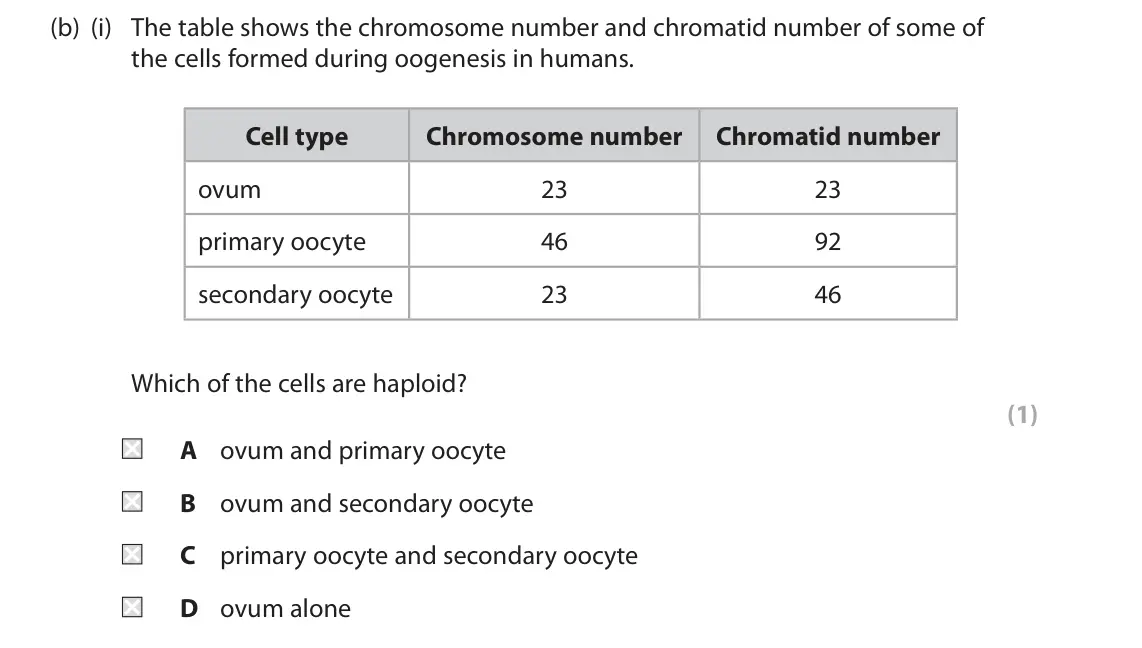
Q8(a)(i)
The whole paper ↗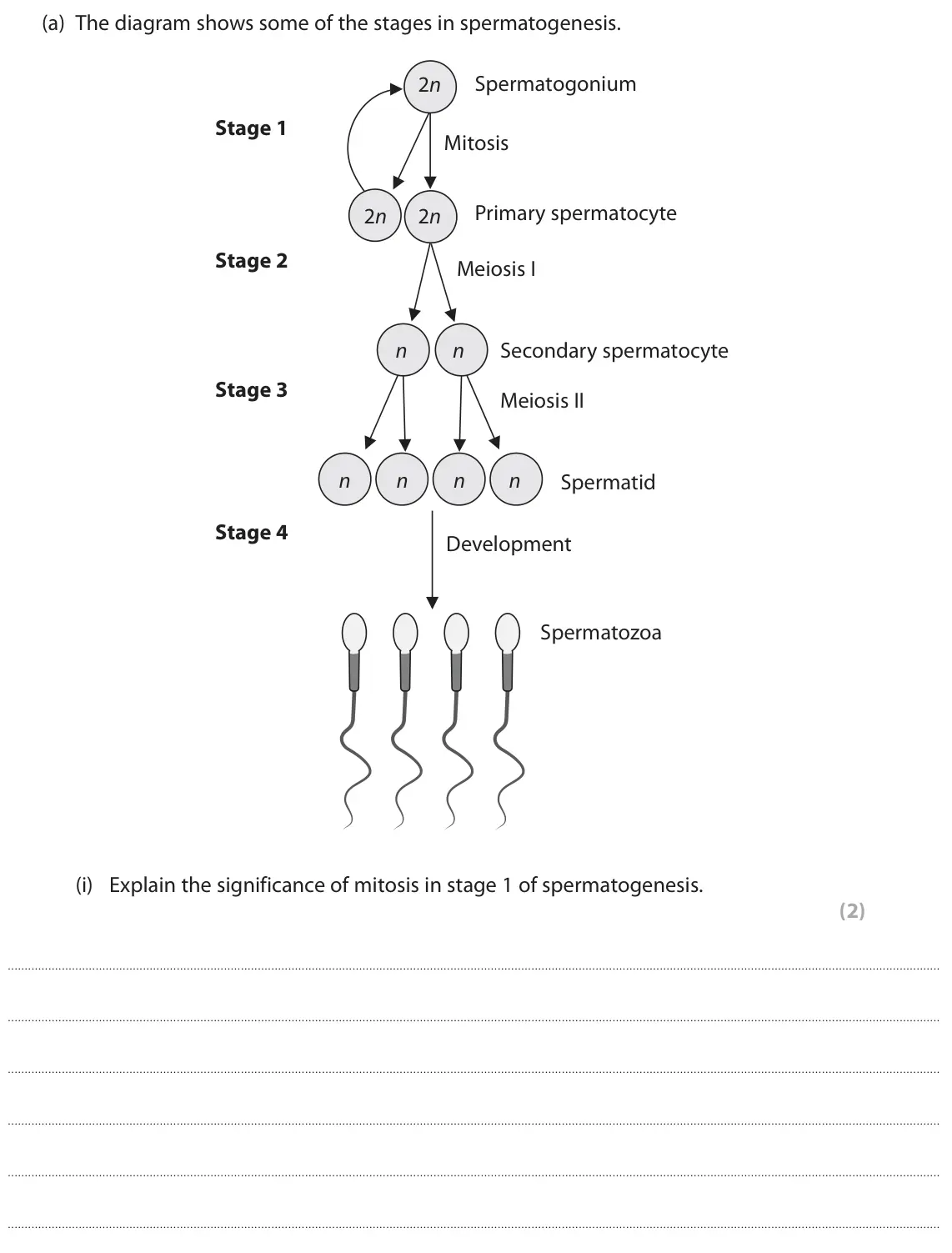
Q8(a)(iii)
The whole paper ↗
All 38 questions on Sexual reproduction in mammals, as a list
- June 2025, Paper 2, Q2(a)(i) (1 mark): Which is the name of the cell labelled X? (1) A ovule B ovum C primary oocyte D secondary oocyte
- June 2025, Paper 2, Q2(a)(iii) (3 marks): Compare and contrast the process of oogenesis with spermatogenesis. (3)
- June 2025, Paper 2, Q2(b)(i) (1 mark): Calculate the number of sperm cells that need to be added to four oocytes so that 60% of embryos develop. (1) Answer
- June 2025, Paper 2, Q2(b)(ii) (2 marks): Analyse the data to explain the effects of increasing the number of sperm cells per oocyte on the percentage of embryos that develop. (2)
- June 2024, Paper 1, Q8(a) (3 marks): Explain why the timing of the AR is important for successful fertilisation. (3)
- June 2024, Paper 1, Q8(b) (4 marks): A protein is involved in the timings of capacitation and the AR. This protein exists in two forms: protein G and protein G‑P. Protein G‑P results in the stimula
- June 2023, Paper 2, Q3(a)(i) (1 mark): At which stage of cell division is cell X? (1) A prophase I of meiosis B prophase II of meiosis C prophase I of mitosis D prophase II of mitosis
- June 2023, Paper 2, Q3(b)(i) (1 mark): Calculate the number of men with partners that have a history of pregnancies not developing to full term that had 25% or less of sperm with DNA damage. (1) Answ
- June 2023, Paper 2, Q3(b)(ii) (4 marks): The scientists concluded that having more than 25% of sperm with damaged DNA leads to a high risk of pregnancies not developing to full term. Analyse the data t
- June 2023, AS Paper 1, Q2(a) (2 marks): Describe the role of the acrosome in fertilisation. (2)
- June 2022, Paper 1, Q2(b) (3 marks): Describe how the process of fertilisation results in the formation of a zygote from the gametes in humans. (3)
- June 2022, Paper 2, Q3(b)(i) (3 marks): The ratio shown in the graph can be calculated using the formula volume of nucleus ratio = total volume of cell – volume of nucleus On day 2, the volume of the
- June 2022, Paper 2, Q3(b)(ii) (3 marks): Comment on the changes in the ratios as the zygote develops into a blastocyst. (3)
- June 2022, AS Paper 1, Q9(a)(i) (1 mark): Which row of the table shows the type of nuclear division that takes place in spermatogonia and in primary spermatocytes? (1) Spermatogonia Primary spermatocyte
- June 2022, AS Paper 1, Q9(a)(ii) (1 mark): Which of the following pairs of cells are haploid? (1) A primary spermatocytes and secondary spermatocytes B primary spermatocytes and spermatids C secondary sp
- June 2022, AS Paper 1, Q9(b) (3 marks): Human sperm cells contain centrioles but human egg cells do not. Explain the role of the centrioles in sperm cells following fertilisation. (3)
- June 2022, AS Paper 1, Q9(c) (6 marks): Male infertility can be caused by a number of factors related to sperm cells: • low sperm count • structural defects of sperm cells • absence of an acrosome • m
- November 2021, Paper 2, Q2(b)(i) (1 mark): The table shows the chromosome number and chromatid number of some of the cells formed during oogenesis in humans. Cell type Chromosome number Chromatid number
- November 2021, AS Paper 1, Q8(a)(i) (2 marks): Explain the significance of mitosis in stage 1 of spermatogenesis. (2)
- November 2021, AS Paper 1, Q8(a)(iii) (3 marks): Compare and contrast the products of stage 2 and stage 3 in spermatogenesis with the products from these stages in oogenesis. (3)
- November 2021, AS Paper 1, Q8(a)(iv) (2 marks): Explain the importance of the acrosome that develops during stage 4. (2)
- November 2021, AS Paper 1, Q8(b) (4 marks): The effect of storage time on sperm was investigated. The table shows some results of this investigation. Storage time Percentage of sperm with Percentage of sp
- October 2020, Paper 1, Q8(b)(ii) (3 marks): Explain the advantages of the presence of fructose in seminal fluid. (3)
- October 2020, AS Paper 1, Q6(a) (4 marks): Describe the process of spermatogenesis. (4)
- October 2020, AS Paper 1, Q6(b) (2 marks): The mean volume of the semen produced by a male ejaculation is 3.4 cm3. This contains a mean concentration of 17 000 sperm mm–3. Calculate the mean total number
- October 2020, AS Paper 1, Q6(c) (1 mark): The distance from the point of ejaculation in the vagina to the upper end of the fallopian tube (where fertilisation takes place) is 19 cm. Some sperm travel th
- October 2020, AS Paper 1, Q6(d)(i) (2 marks): Estimate the fertility of a man who produces a semen sample with: 25 million sperm per cm3 35% of which are motile after 2 hours and 84% of which have nor
- October 2020, AS Paper 1, Q6(d)(ii) (1 mark): Deduce why fertilisation is unlikely to occur if there are 5 million spermatozoa per cm3. (1)
- June 2019, AS Paper 1, Q6(a) (1 mark): Which row contains the names for cells P, Q and R? (1) P Q R A germ cell oocyte polar body B germ cell polar body ovum C oocyte polar body ovum D ovum germ cell
- June 2019, AS Paper 1, Q6(b)(i) (2 marks): Calculate the percentage change in the mean oocyte numbers between birth and 11 to 17 years. (2) Answer
- June 2019, AS Paper 1, Q6(b)(ii) (1 mark): Deduce when oocytes are produced in a female human. (1)
- June 2019, AS Paper 1, Q6(c)(i) (1 mark): State one structural difference between a spermatid and a mature spermatozoon. (1)
- June 2019, AS Paper 1, Q6(c)(ii) (2 marks): Explain why men with azoospermia are infertile. (2)
- June 2019, AS Paper 1, Q6(c)(iii) (2 marks): Infertility caused by azoospermia can be treated by using intracytoplasmic sperm injection (ICSI). This procedure injects a single spermatid directly into an oo
- June 2019, AS Paper 1, Q6(c)(iv) (2 marks): Describe two ethical implications of the use of ICSI. (2)
- June 2018, Paper 1, Q5(b)(i) (1 mark): The ‘three-parent’ baby produced by this technique will inherit mitochondrial DNA from the (1) A donor female B donor female and father C mother D mother and fa
- June 2018, AS Paper 1, Q1(b) (4 marks): In mammals, meiosis occurs during oogenesis and spermatogenesis. Describe how the products of oogenesis differ from the products of spermatogenesis in mammals.
- June 2017, Paper 1, Q7(a) (2 marks): Explain why mutations in nuclear DNA can be inherited from either the mother or the father whereas mutations in mtDNA are only inherited from the mother. (2)
Questions, mark schemes and examiner’s reports are © Pearson Edexcel, from their published past papers. Plumi isn’t affiliated with any exam board. Want whole papers? Every Edexcel A-Level Biology B paper.
Rather write your answers by hand on iPad? Plumi marks them against the same mark schemes.