 plumi
Oxidative phosphorylation: Edexcel A‑Level Biology B questions
Every Edexcel A-Level Biology B exam question on 5.4 Oxidative phosphorylation, 2016–2025, with its mark scheme and examiner’s report.
Find questions1,826
Calculations
Q7(a)(ii)
The whole paper ↗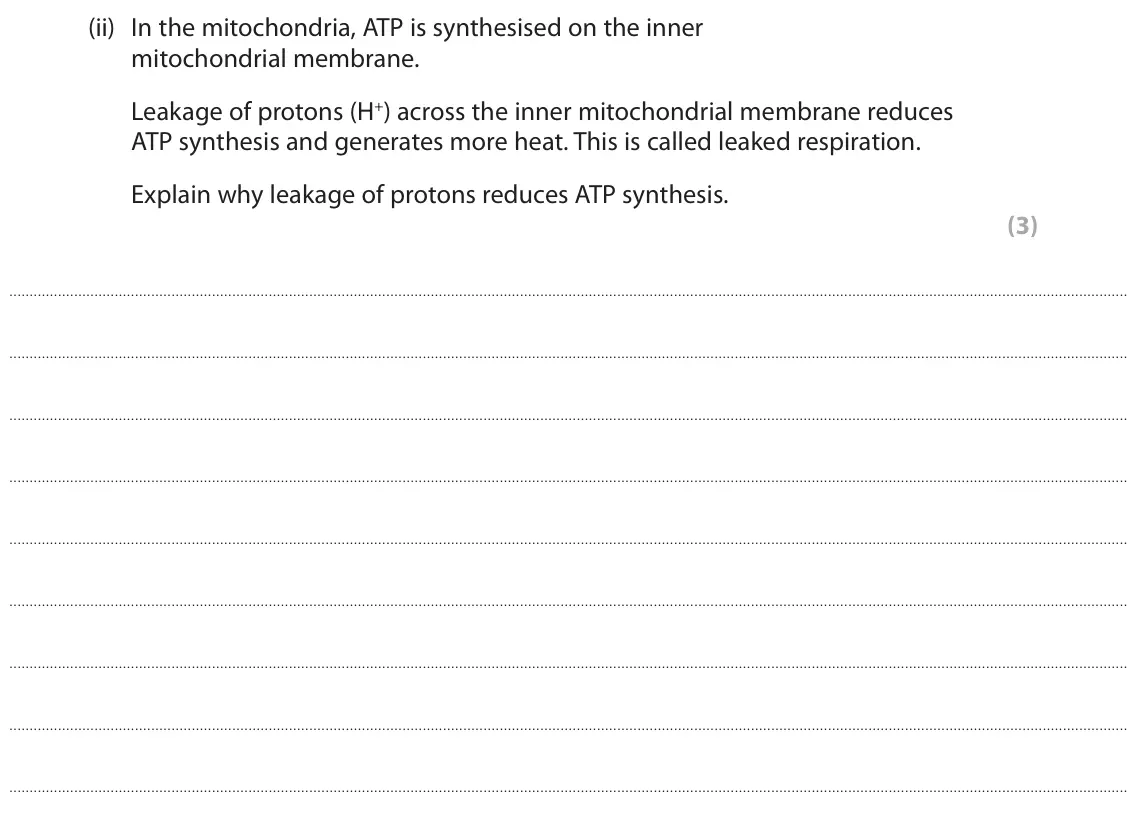
Q9(a)(i)
The whole paper ↗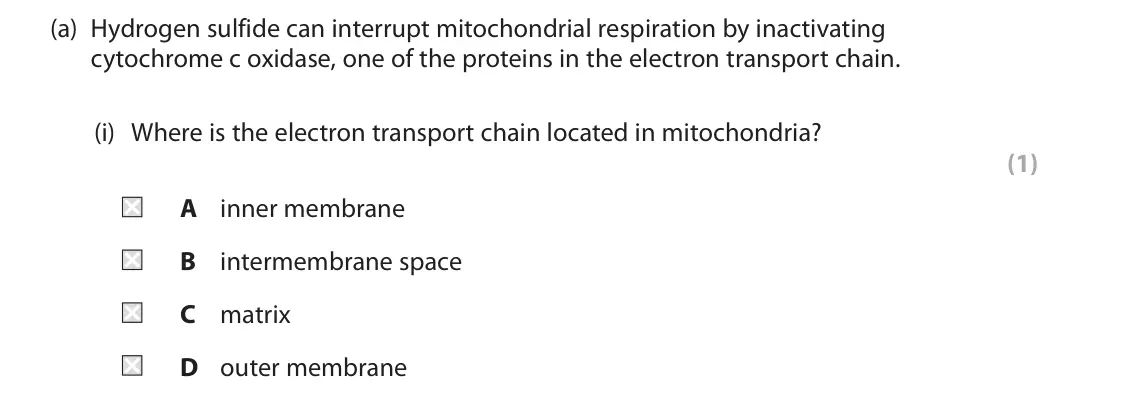
Q9(a)(ii)
The whole paper ↗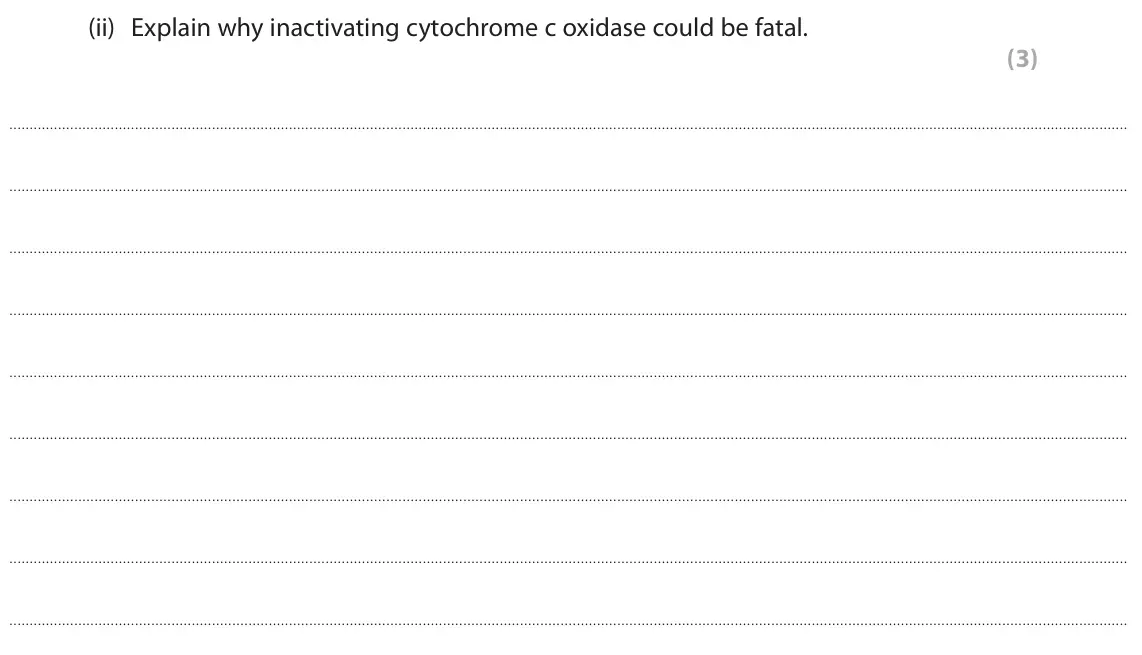
Q10(d)
The whole paper ↗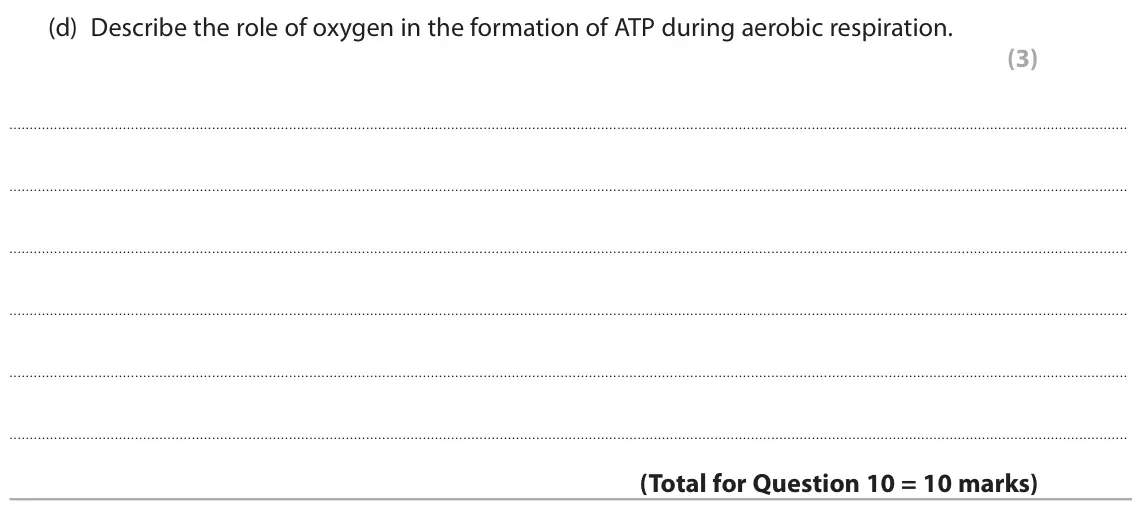
Q5(b)(i)
The whole paper ↗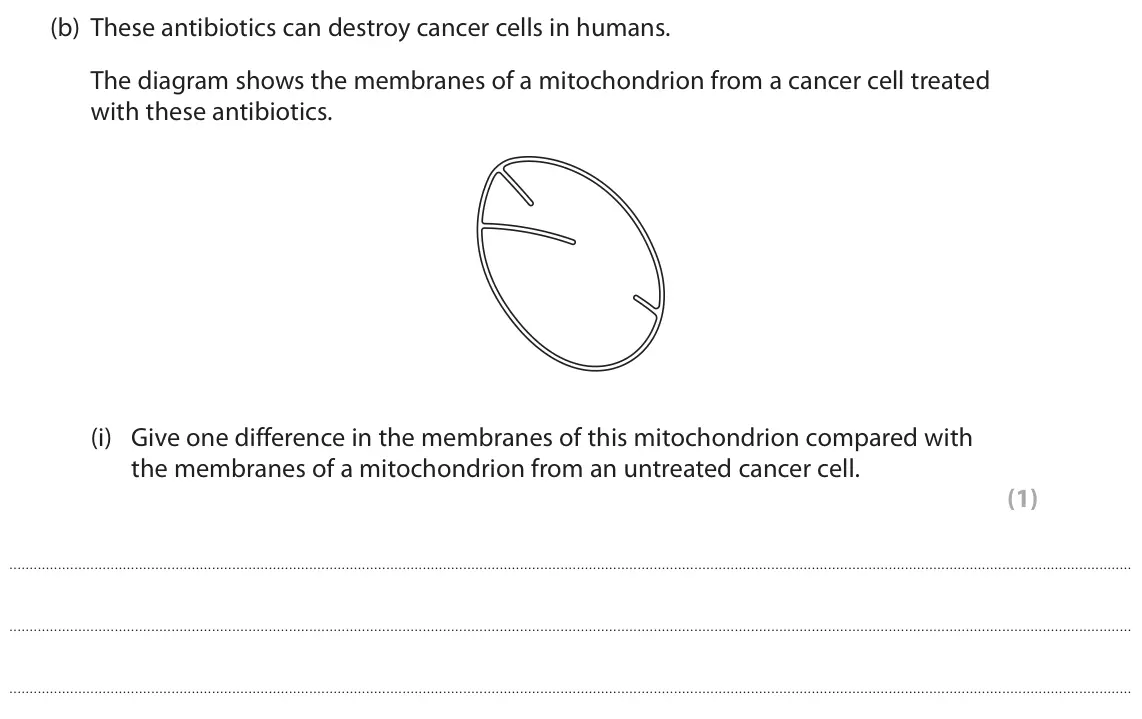
Q5(b)(ii)
The whole paper ↗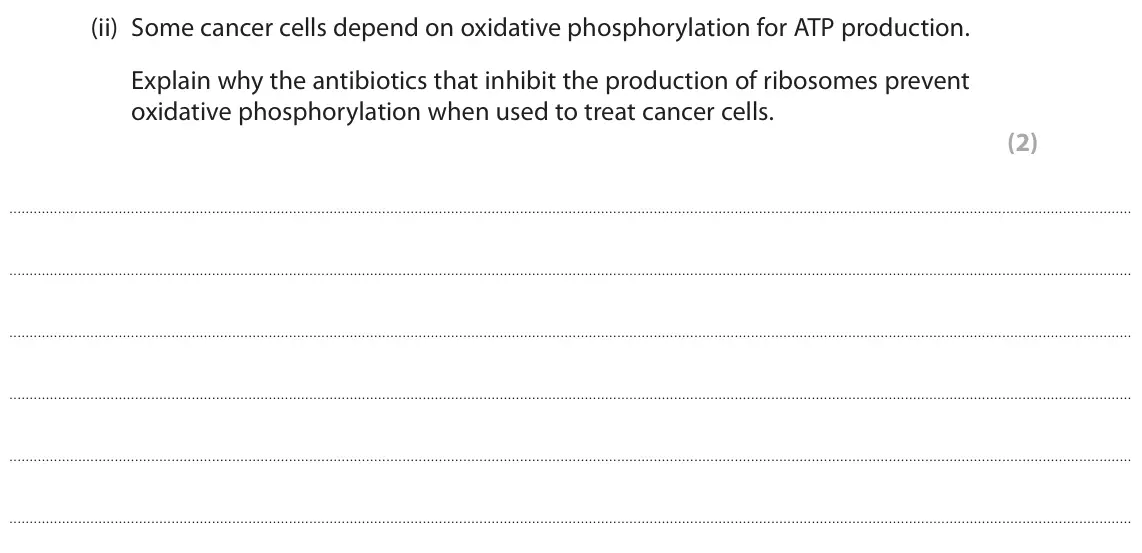
Q7(c)
The whole paper ↗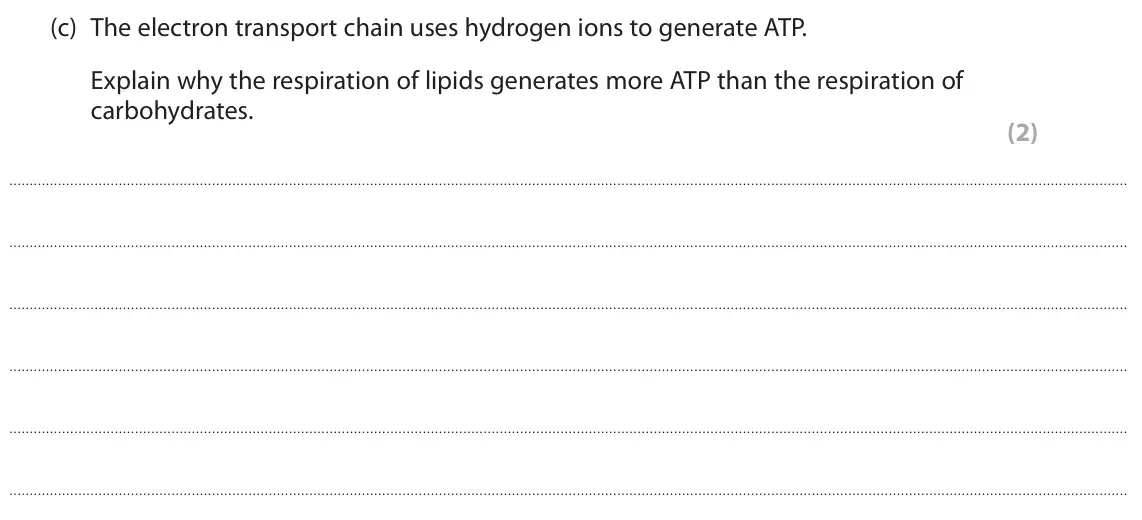
Q8(a)
The whole paper ↗
Q8(b)(i)
The whole paper ↗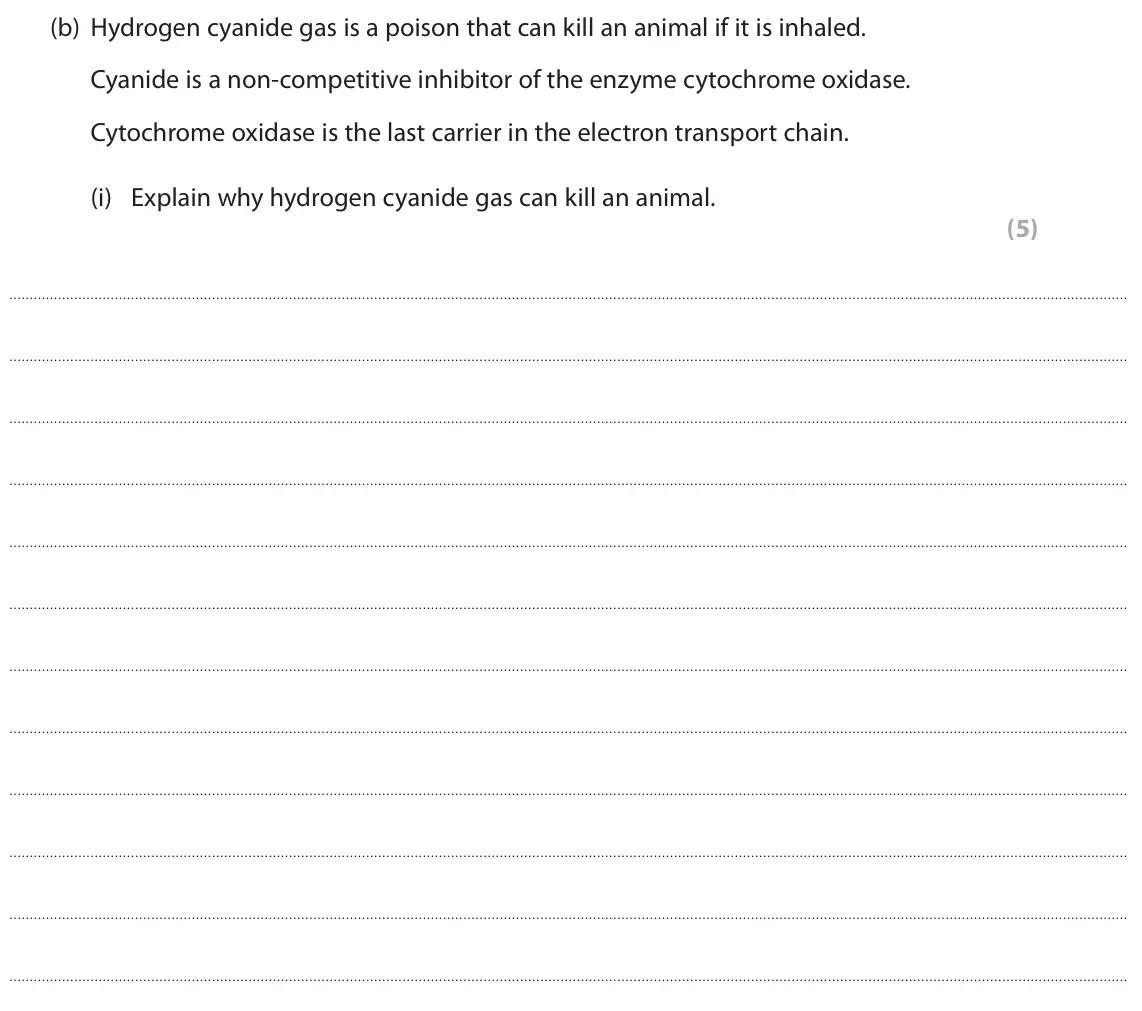
Q8(b)(ii)
The whole paper ↗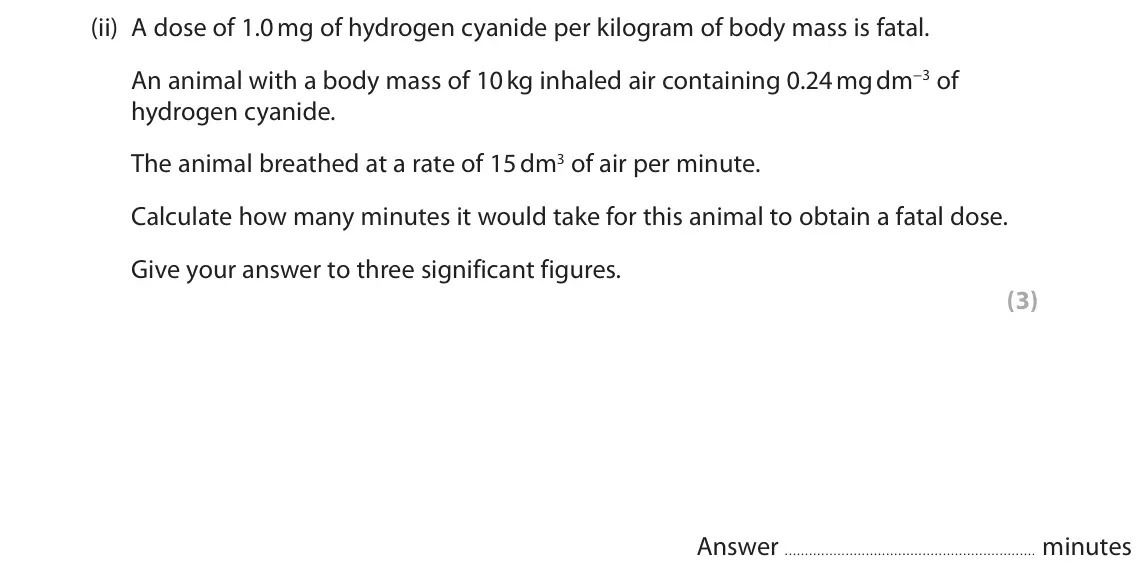
Q8(c)
The whole paper ↗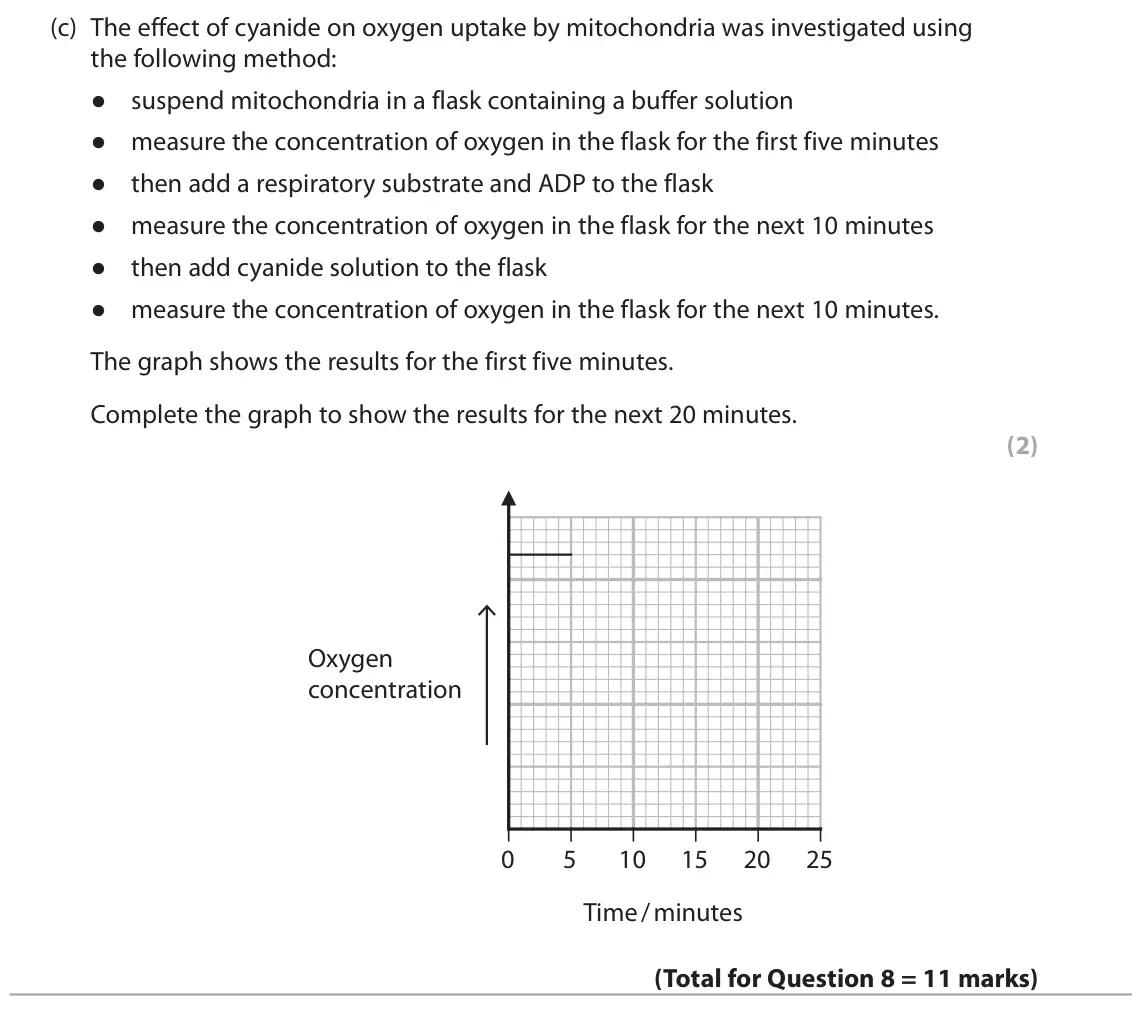
Q4(b)
The whole paper ↗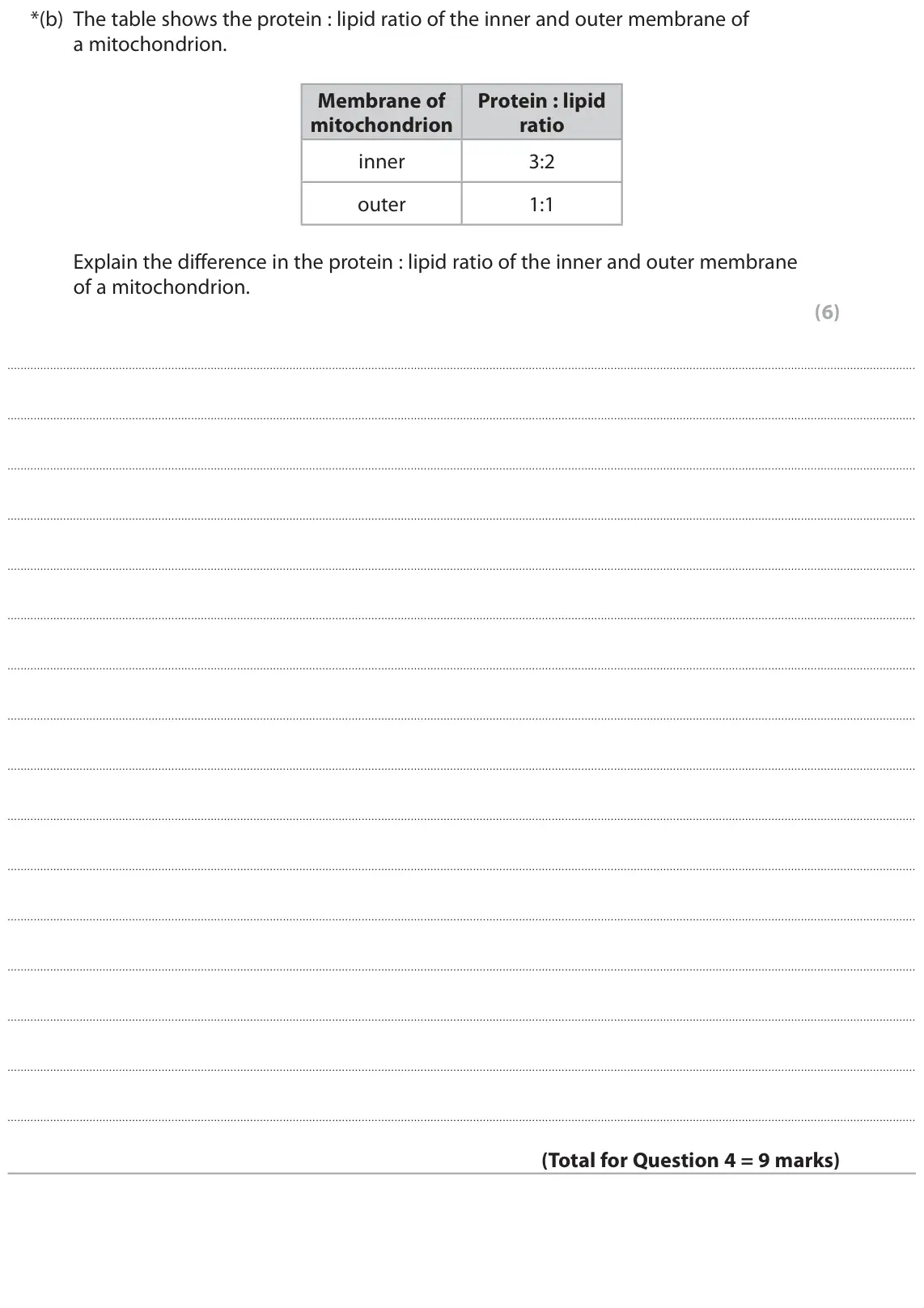
Q8(a)
The whole paper ↗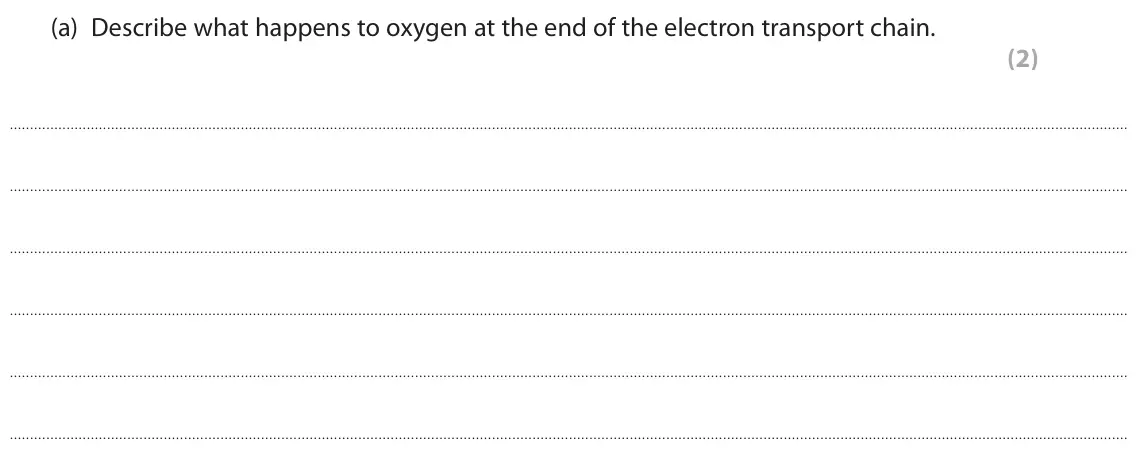
Q7(b)(ii)
The whole paper ↗
All 14 questions on Oxidative phosphorylation, as a list
- June 2024, Paper 1, Q7(a)(ii) (3 marks): In the mitochondria, ATP is synthesised on the inner mitochondrial membrane. Leakage of protons (H+) across the inner mitochondrial membrane reduces ATP synthes
- June 2023, Paper 1, Q9(a)(i) (1 mark): Where is the electron transport chain located in mitochondria? (1) A inner membrane B intermembrane space C matrix D outer membrane
- June 2023, Paper 1, Q9(a)(ii) (3 marks): Explain why inactivating cytochrome c oxidase could be fatal. (3)
- June 2023, Paper 3, Q10(d) (3 marks): Describe the role of oxygen in the formation of ATP during aerobic respiration. (3)
- November 2021, Paper 1, Q5(b)(i) (1 mark): Give one difference in the membranes of this mitochondrion compared with the membranes of a mitochondrion from an untreated cancer cell. (1)
- November 2021, Paper 1, Q5(b)(ii) (2 marks): Some cancer cells depend on oxidative phosphorylation for ATP production. Explain why the antibiotics that inhibit the production of ribosomes prevent oxidative
- October 2020, Paper 1, Q7(c) (2 marks): The electron transport chain uses hydrogen ions to generate ATP. Explain why the respiration of lipids generates more ATP than the respiration of carbohydrates.
- October 2020, Paper 3, Q8(a) (1 mark): State the location of the electron transport chain in a mitochondrion. (1)
- October 2020, Paper 3, Q8(b)(i) (5 marks): Explain why hydrogen cyanide gas can kill an animal. (5)
- October 2020, Paper 3, Q8(b)(ii) (3 marks): A dose of 1.0 mg of hydrogen cyanide per kilogram of body mass is fatal. An animal with a body mass of 10 kg inhaled air containing 0.24 mg dm−3 of hydrogen cya
- October 2020, Paper 3, Q8(c) (2 marks): The effect of cyanide on oxygen uptake by mitochondria was investigated using the following method: ● suspend mitochondria in a flask containing a buffer soluti
- June 2019, Paper 1, Q4(b) (6 marks): The table shows the protein : lipid ratio of the inner and outer membrane of a mitochondrion. Membrane of Protein : lipid mitochondrion ratio inner 3:2 outer 1:
- June 2019, Paper 3, Q8(a) (2 marks): Describe what happens to oxygen at the end of the electron transport chain. (2)
- June 2017, Paper 1, Q7(b)(ii) (3 marks): Explain how this mutation could affect oxidative phosphorylation. (3)
Questions, mark schemes and examiner’s reports are © Pearson Edexcel, from their published past papers. Plumi isn’t affiliated with any exam board. Want whole papers? Every Edexcel A-Level Biology B paper.
Rather write your answers by hand on iPad? Plumi marks them against the same mark schemes.