 plumi
Photosynthetic pigments: Edexcel A‑Level Biology B questions
Every Edexcel A-Level Biology B exam question on 5.6 Photosynthetic pigments, 2016–2025, with its mark scheme and examiner’s report.
Find questions1,826
Calculations
Q6(b)(ii)
The whole paper ↗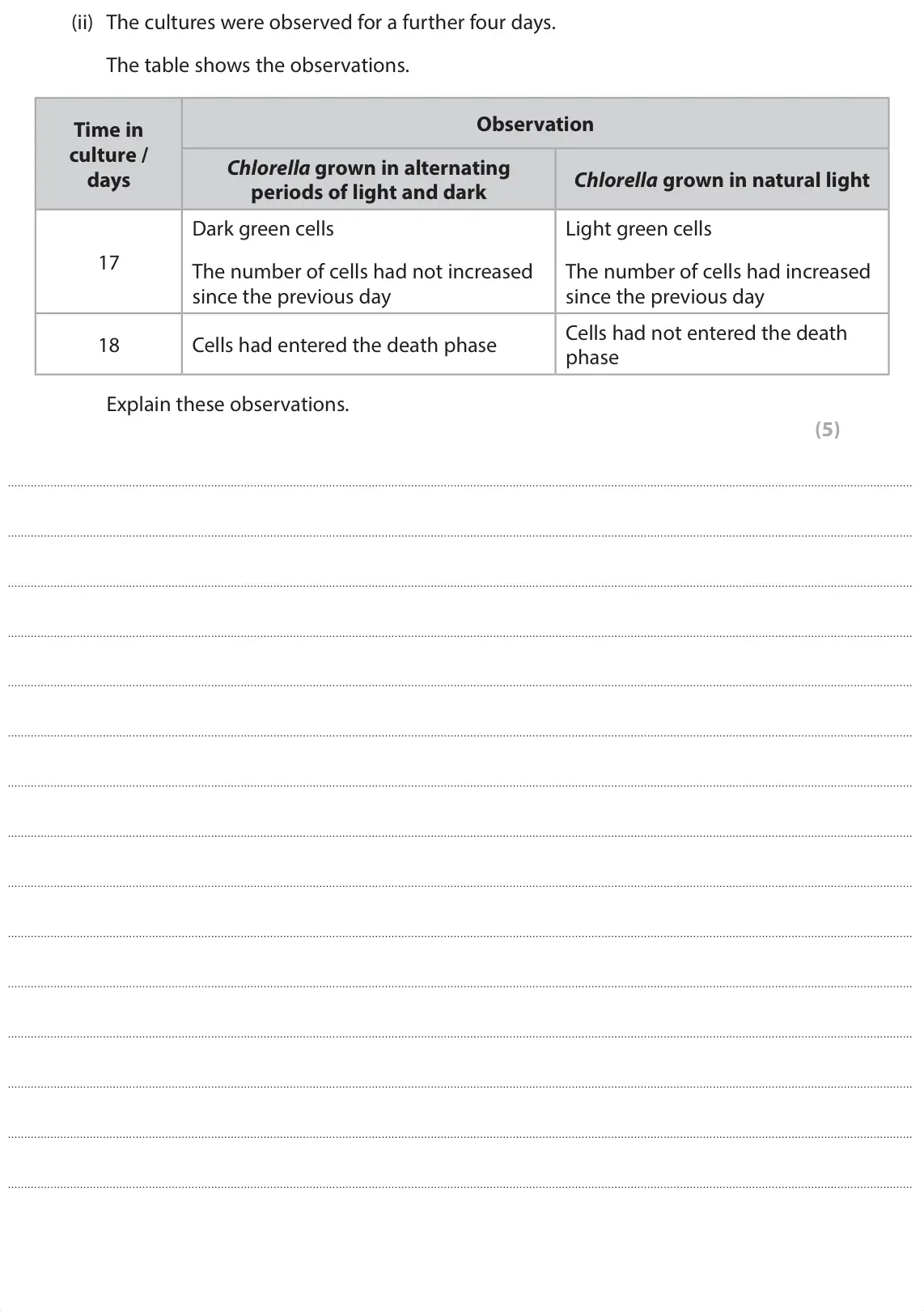
Q6(b)(iii)
The whole paper ↗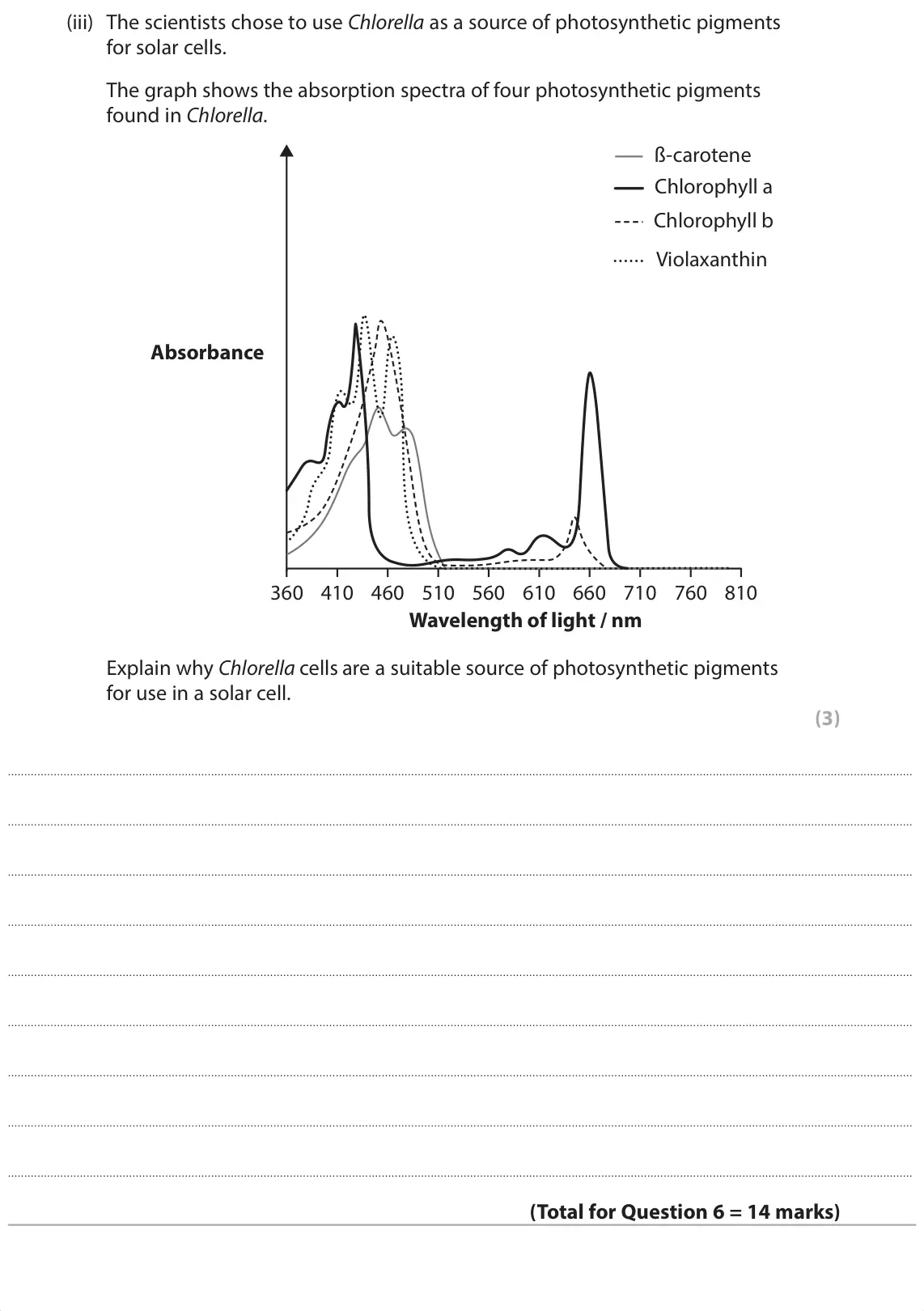
Q3(a)
The whole paper ↗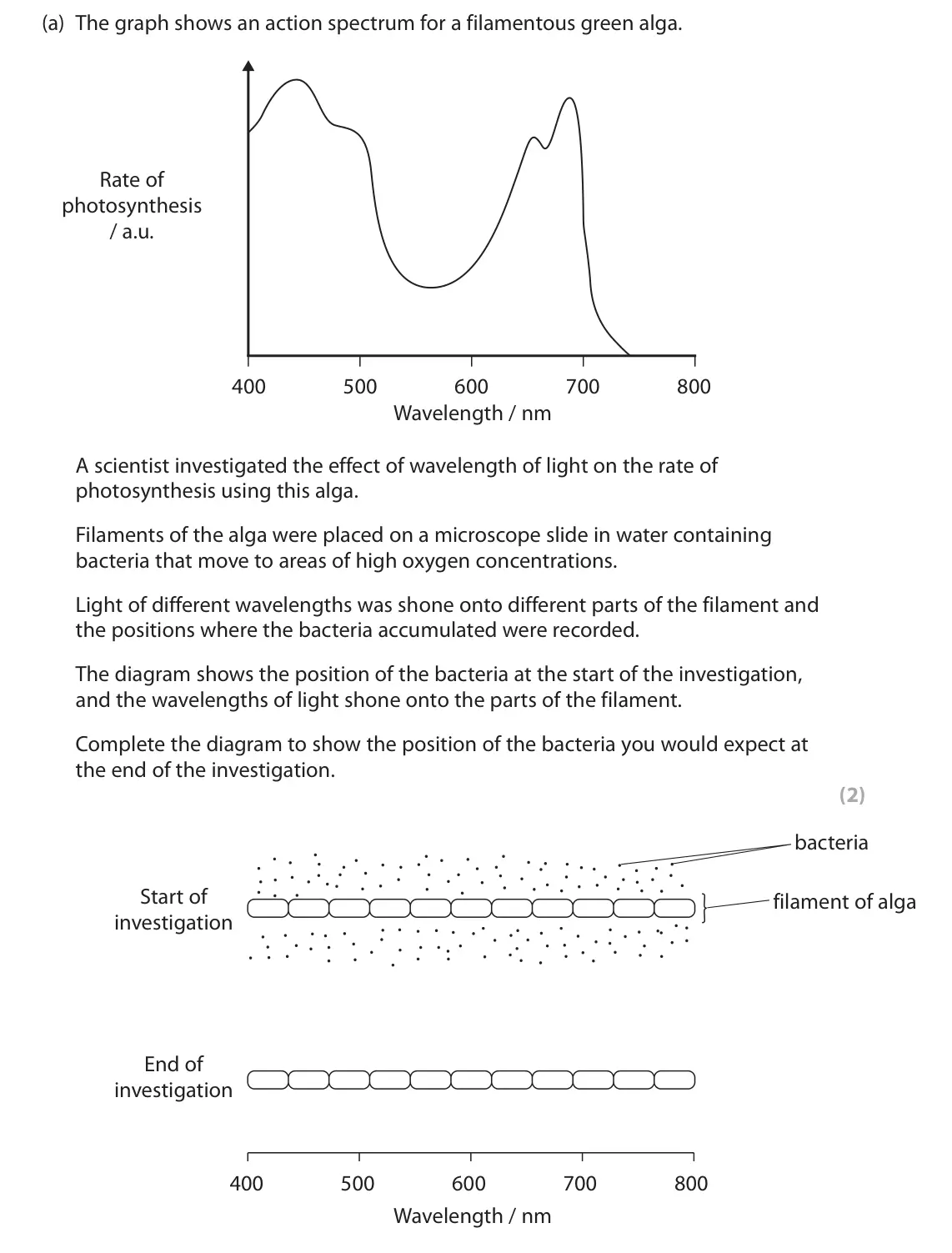
Q3(b)
The whole paper ↗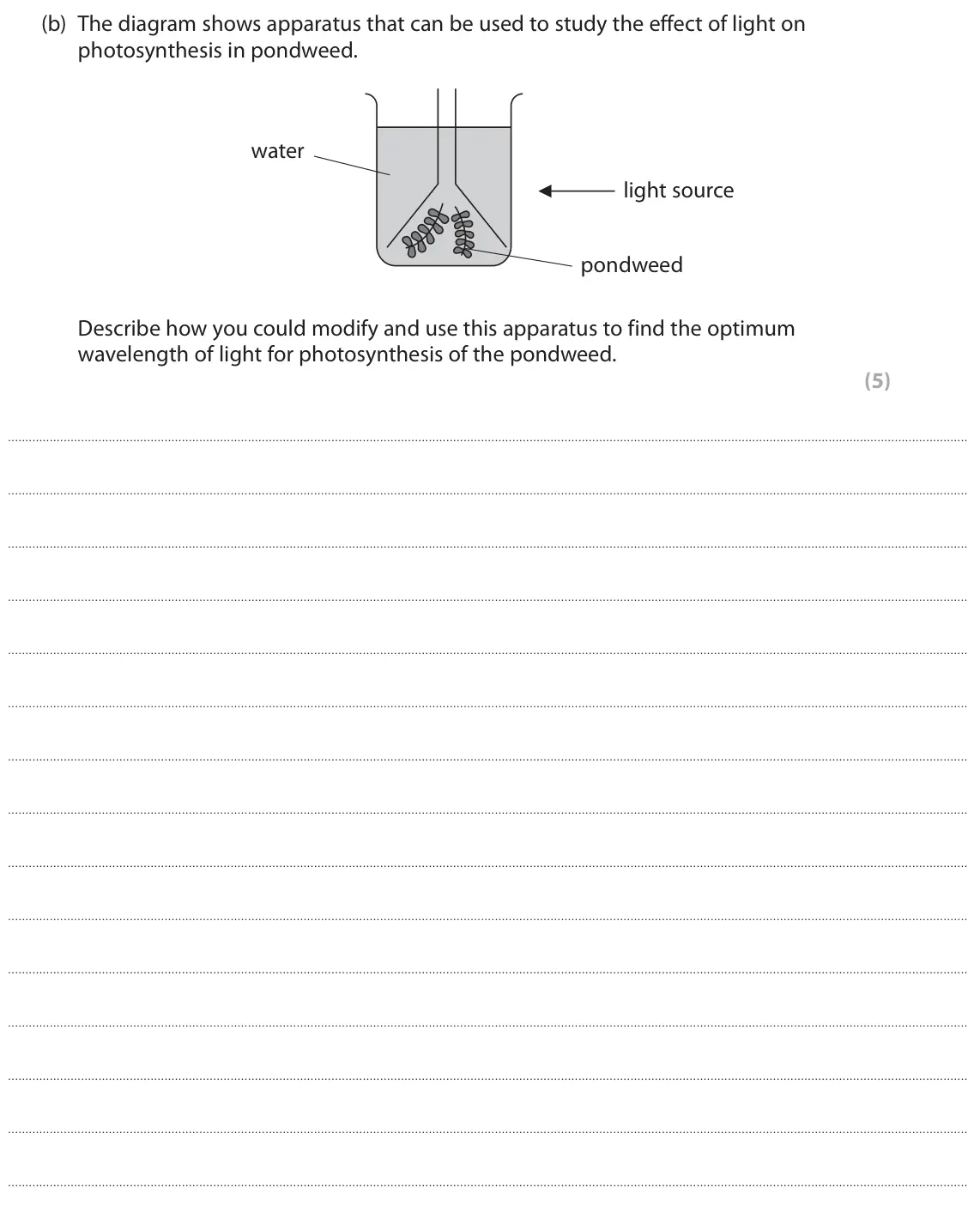
Q3(c)
The whole paper ↗
Q6(a)(i)
The whole paper ↗
Q6(a)(iii)
The whole paper ↗
Q6(a)(iv)
The whole paper ↗
Q6(b)(ii)
The whole paper ↗
Q6(a)(i)
The whole paper ↗
Q6(a)(ii)
The whole paper ↗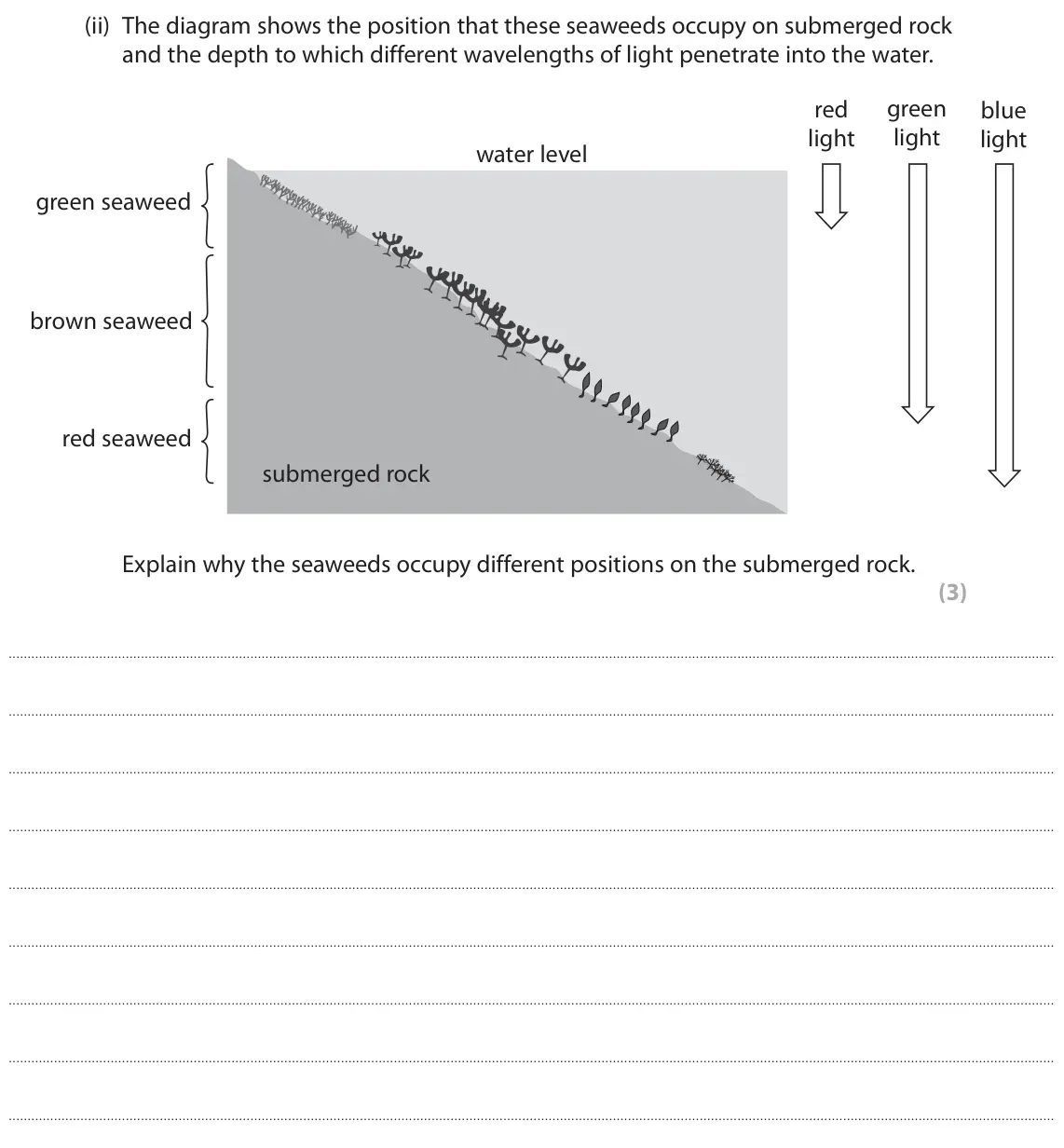
Q6(b)(i)
The whole paper ↗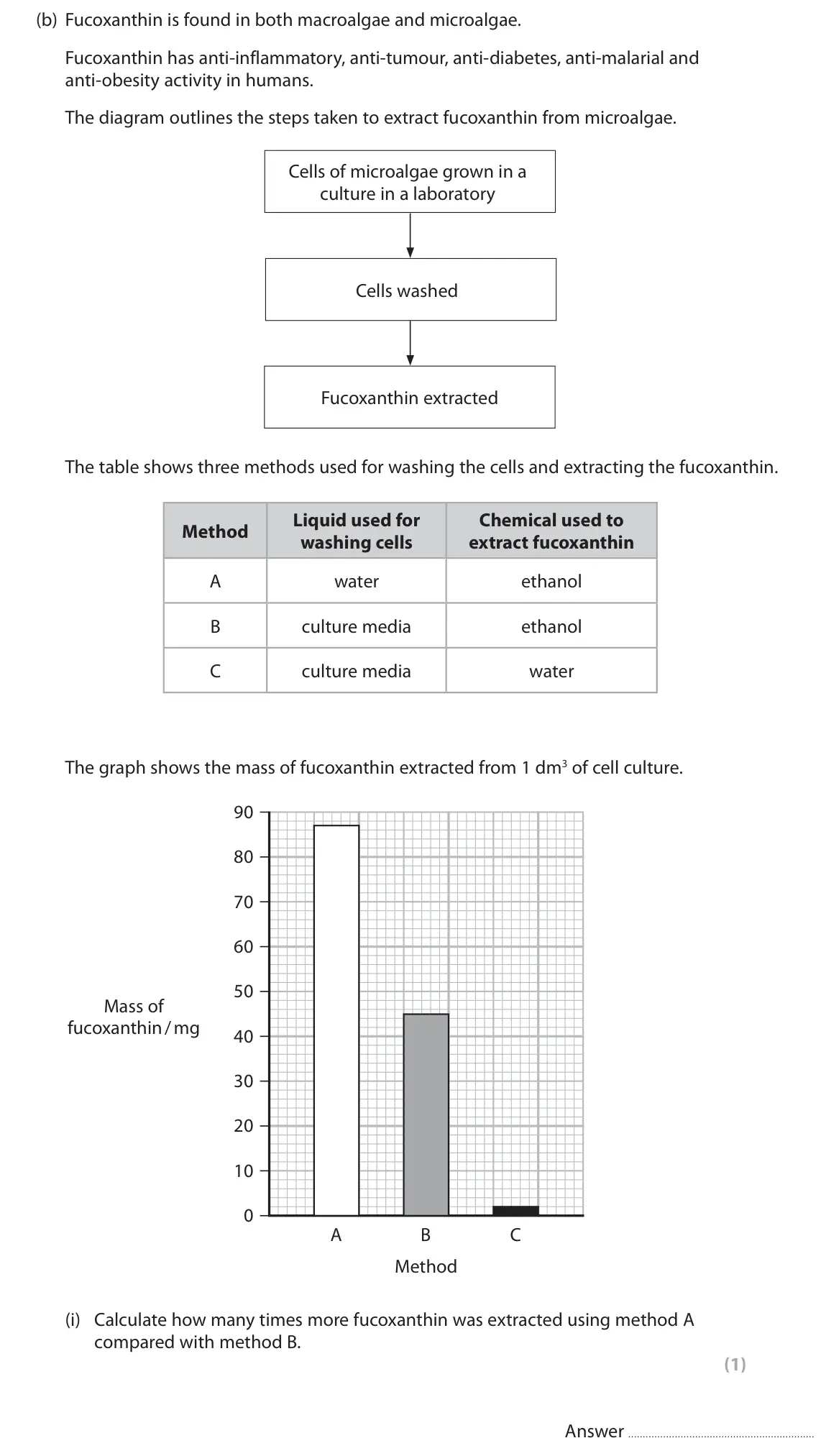
Q6(b)(ii)
The whole paper ↗
Q11(a)
The whole paper ↗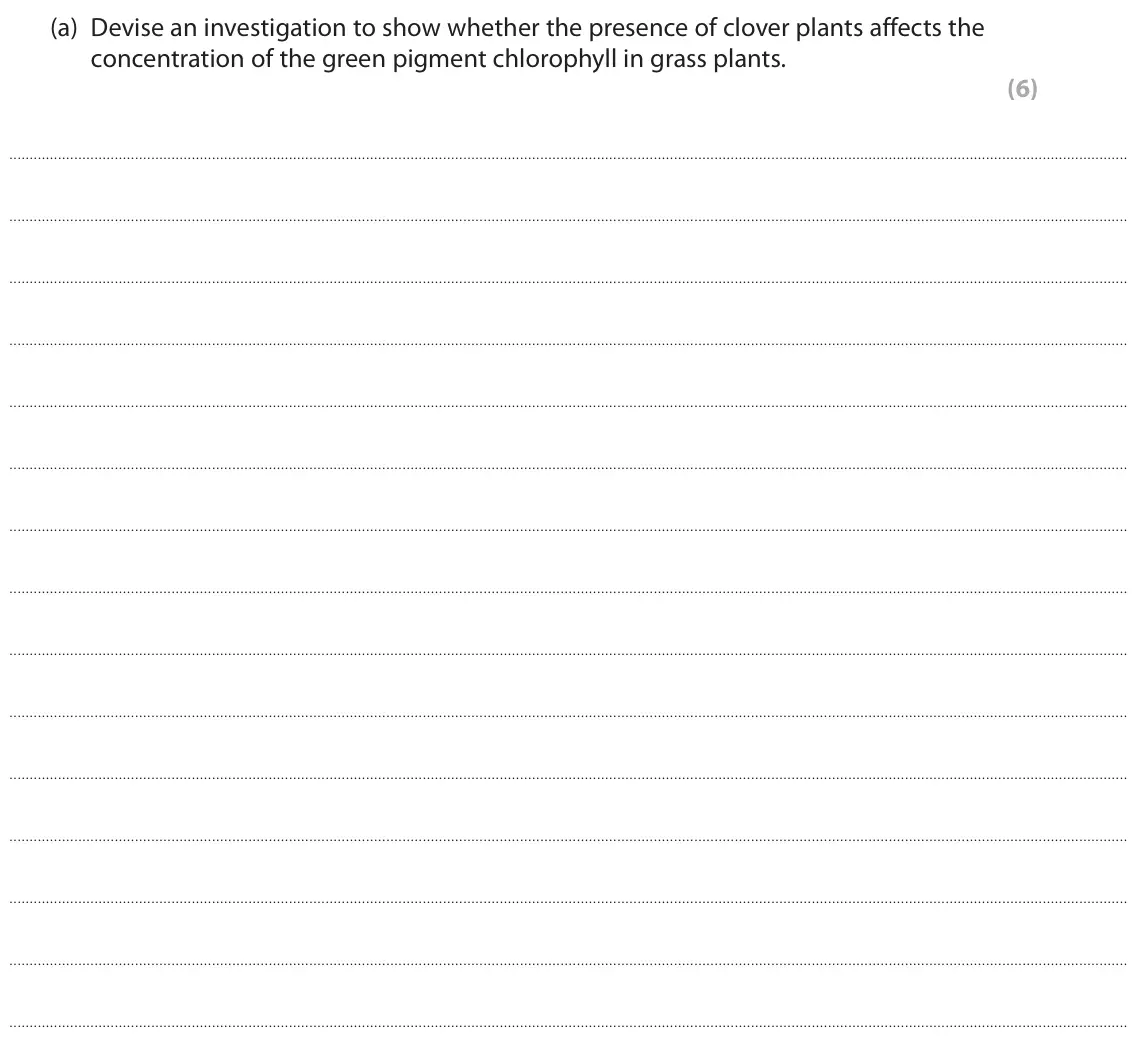
Q4(a)(i)
The whole paper ↗
Q4(a)(ii)
The whole paper ↗
Q4(b)(i)
The whole paper ↗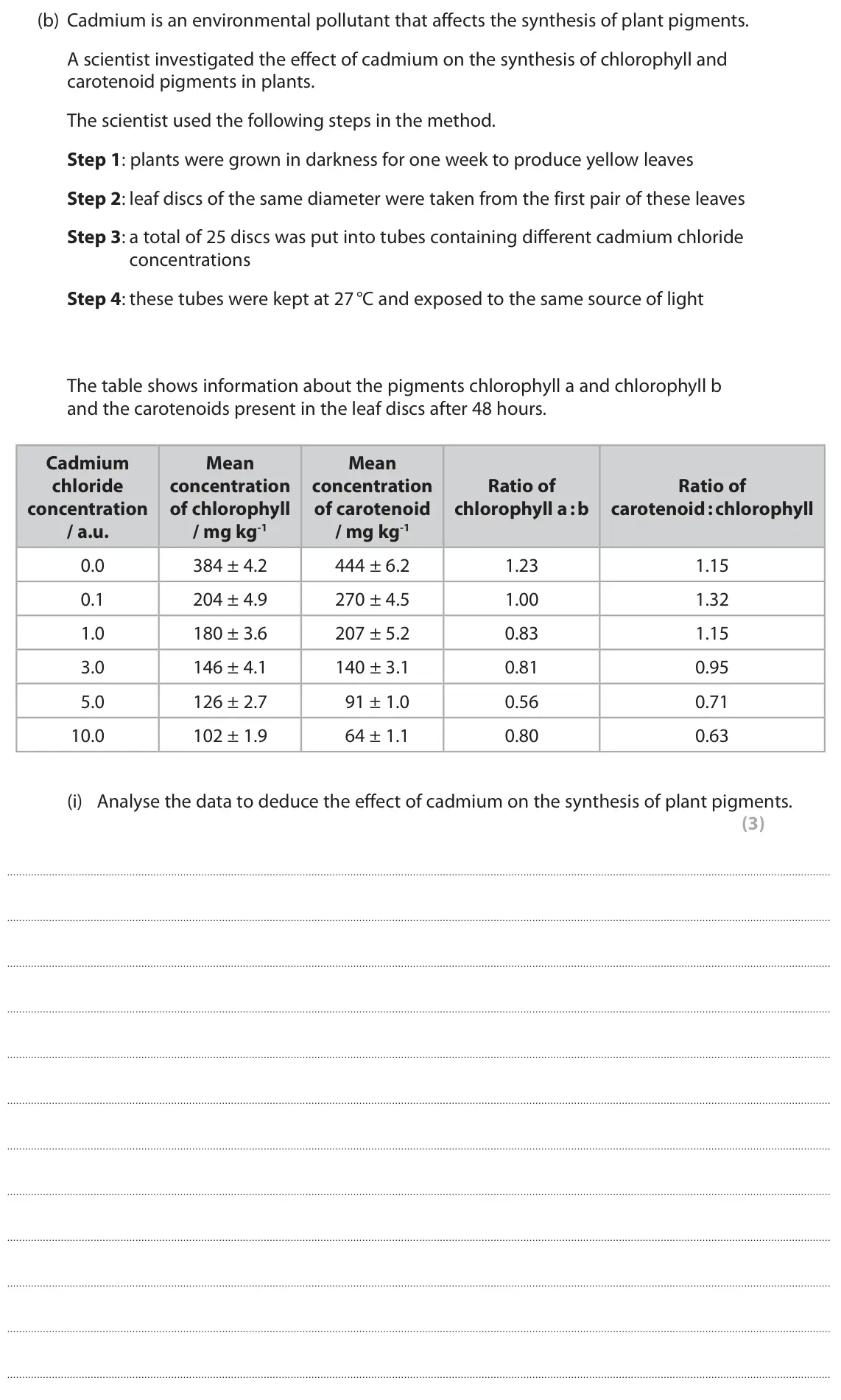
Q4(b)(ii)
The whole paper ↗
Q4(a)
The whole paper ↗
Q4(b)(i)
The whole paper ↗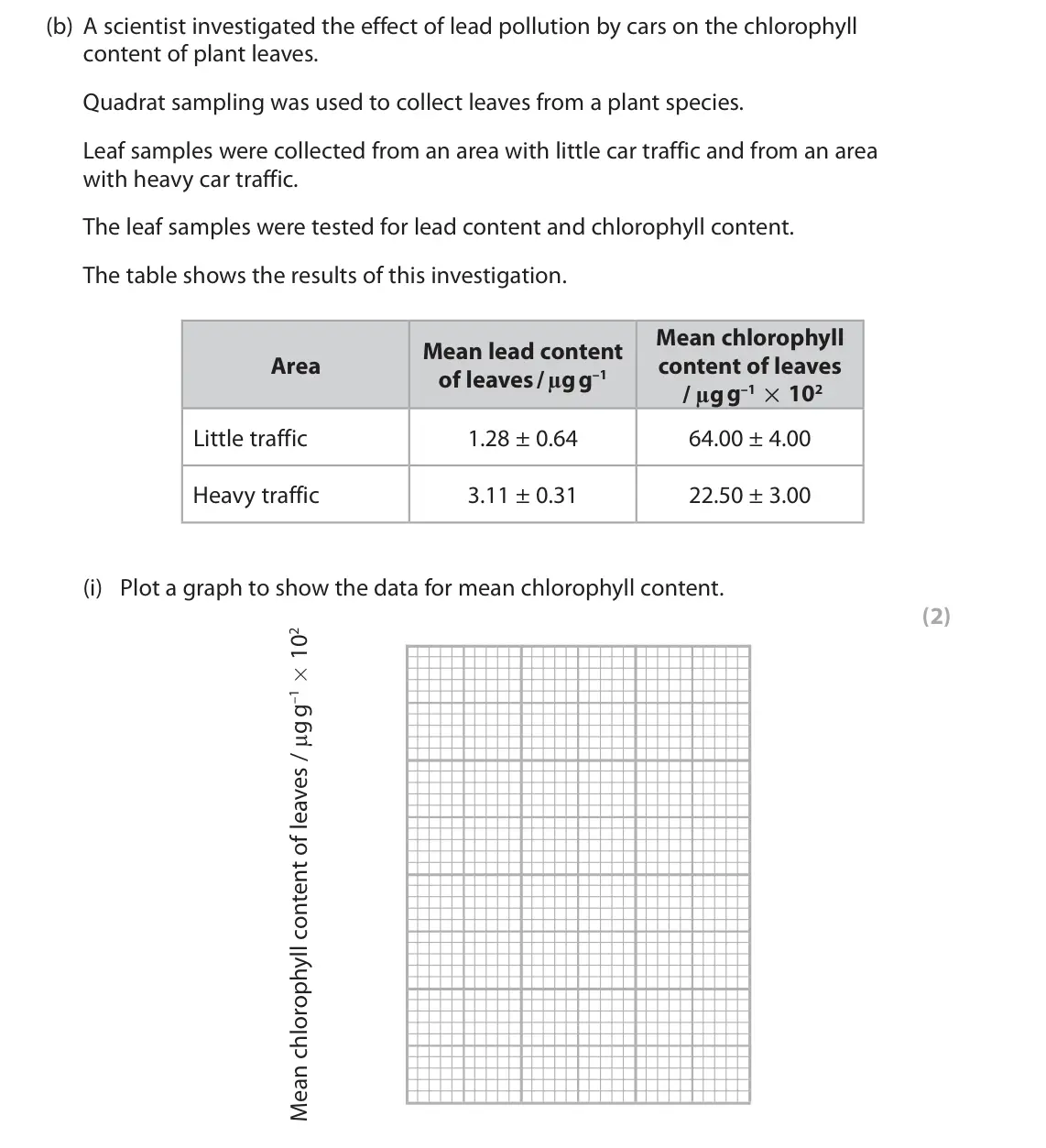
All 23 questions on Photosynthetic pigments, as a list
- June 2025, Paper 1, Q6(b)(ii) (5 marks): The cultures were observed for a further four days. The table shows the observations. Observation Time in culture / Chlorella grown in alternating days Chlorell
- June 2025, Paper 1, Q6(b)(iii) (3 marks): The scientists chose to use Chlorella as a source of photosynthetic pigments for solar cells. The graph shows the absorption spectra of four photosynthetic pigm
- June 2025, Paper 3, Q3(a) (2 marks): The graph shows an action spectrum for a filamentous green alga. Rate of photosynthesis / a.u. 400 500 600 700 800 Wavelength / nm A scientist investigated the
- June 2025, Paper 3, Q3(b) (5 marks): The diagram shows apparatus that can be used to study the effect of light on photosynthesis in pondweed. water light source pondweed Describe how you could modi
- June 2025, Paper 3, Q3(c) (2 marks): Explain why plants have a variety of photosynthetic pigments. (2)
- June 2024, Paper 3, Q6(a)(i) (2 marks): Explain the results of this investigation. (2)
- June 2024, Paper 3, Q6(a)(iii) (1 mark): Give one reason why the results may not be accurate. (1)
- June 2024, Paper 3, Q6(a)(iv) (2 marks): Describe a method that could be used to measure the growth of the plants more accurately. (2)
- June 2022, Paper 3, Q6(b)(ii) (2 marks): Explain why the features of the brightly-coloured plants enable them to grow successfully in the areas where they are not collected by humans. (2)
- November 2021, Paper 1, Q6(a)(i) (3 marks): Explain why these seaweeds have different absorption spectra and action spectra. (3)
- November 2021, Paper 1, Q6(a)(ii) (3 marks): The diagram shows the position that these seaweeds occupy on submerged rock and the depth to which different wavelengths of light penetrate into the water. red
- November 2021, Paper 1, Q6(b)(i) (1 mark): Calculate how many times more fucoxanthin was extracted using method A compared with method B. (1) Answer
- November 2021, Paper 1, Q6(b)(ii) (3 marks): Explain why different masses of fucoxanthin were extracted using these three methods. (3)
- November 2021, Paper 3, Q11(a) (6 marks): Devise an investigation to show whether the presence of clover plants affects the concentration of the green pigment chlorophyll in grass plants. (6)
- June 2019, Paper 3, Q4(a)(i) (1 mark): State the difference between an action spectrum and an absorption spectrum. (1)
- June 2019, Paper 3, Q4(a)(ii) (1 mark): State how an action spectrum and an absorption spectrum show that chlorophyll is used in photosynthesis. (1)
- June 2019, Paper 3, Q4(b)(i) (3 marks): Analyse the data to deduce the effect of cadmium on the synthesis of plant pigments. (3)
- June 2019, Paper 3, Q4(b)(ii) (5 marks): Justify the method used by the scientist. (5)
- June 2018, Paper 3, Q4(a) (3 marks): Describe how you could use chromatography to separate these pigments. (3)
- June 2018, Paper 3, Q4(b)(i) (2 marks): Plot a graph to show the data for mean chlorophyll content. (2)
- June 2018, Paper 3, Q4(b)(iii) (2 marks): The scientist concluded that lead pollution from cars reduces the photosynthesis of plants. Criticise the validity of this conclusion. (2)
- June 2017, Paper 1, Q6(a)(iii) (1 mark): Chromatography can be used to separate MGDG, DGDG and sulfolipid extracted from chloroplasts. The diagram shows the position of these three lipids, P, Q and R,
- June 2017, Paper 3, Q8(a)(i) (2 marks): Explain why red light was used in this investigation. (2)
Questions, mark schemes and examiner’s reports are © Pearson Edexcel, from their published past papers. Plumi isn’t affiliated with any exam board. Want whole papers? Every Edexcel A-Level Biology B paper.
Rather write your answers by hand on iPad? Plumi marks them against the same mark schemes.