 plumi
The p–V diagram: AQA A‑Level Physics questions
AQA A-Level Physics past-paper questions on 3.11.2.3 The p–V diagram, 2008–2025, with mark schemes and examiner’s reports where available.
Paper
All papers
Exam
All years
Calculations
Q03.3
The whole paper ↗Q04.1
The whole paper ↗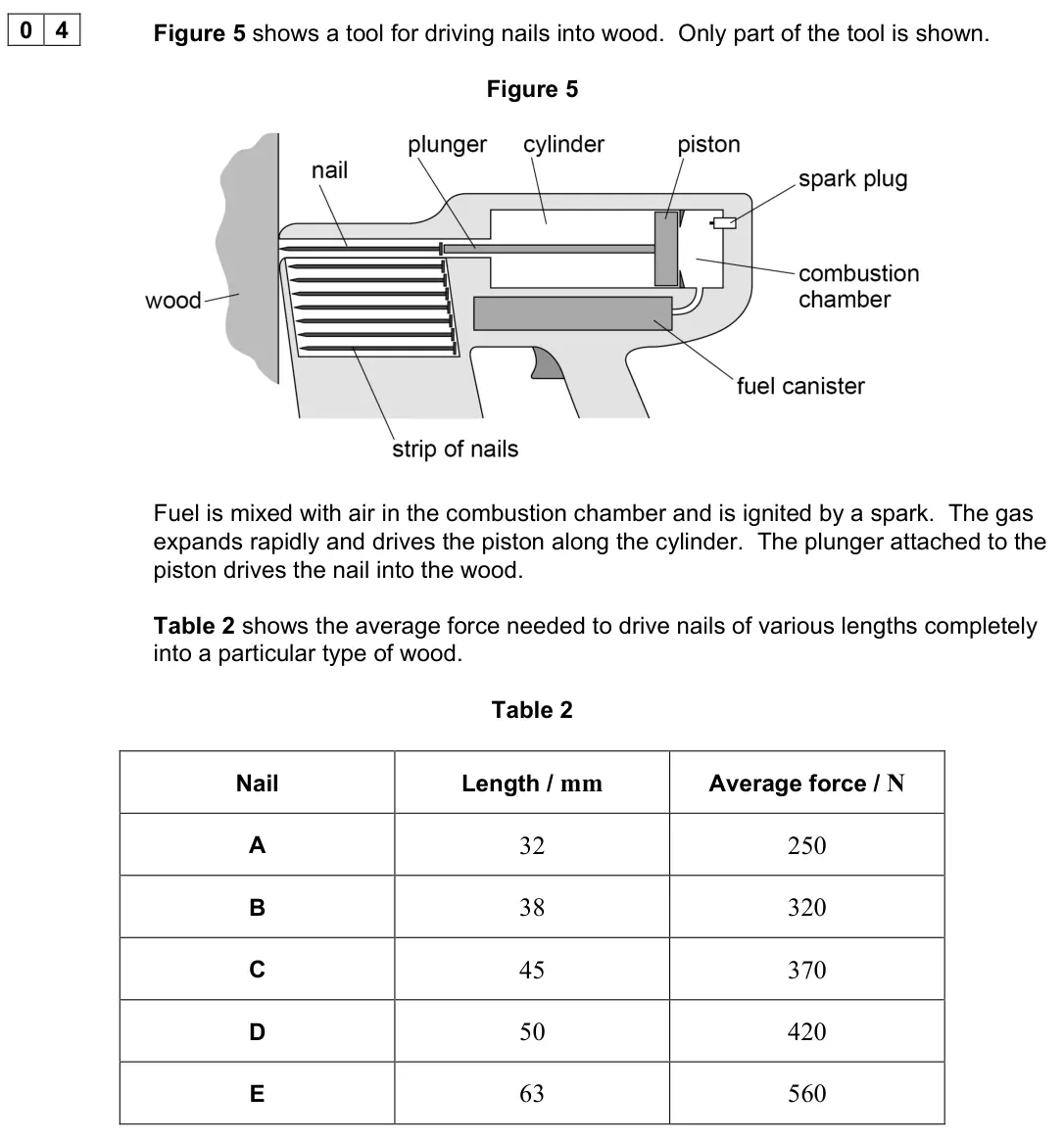
Q04.3
The whole paper ↗Q03.2
The whole paper ↗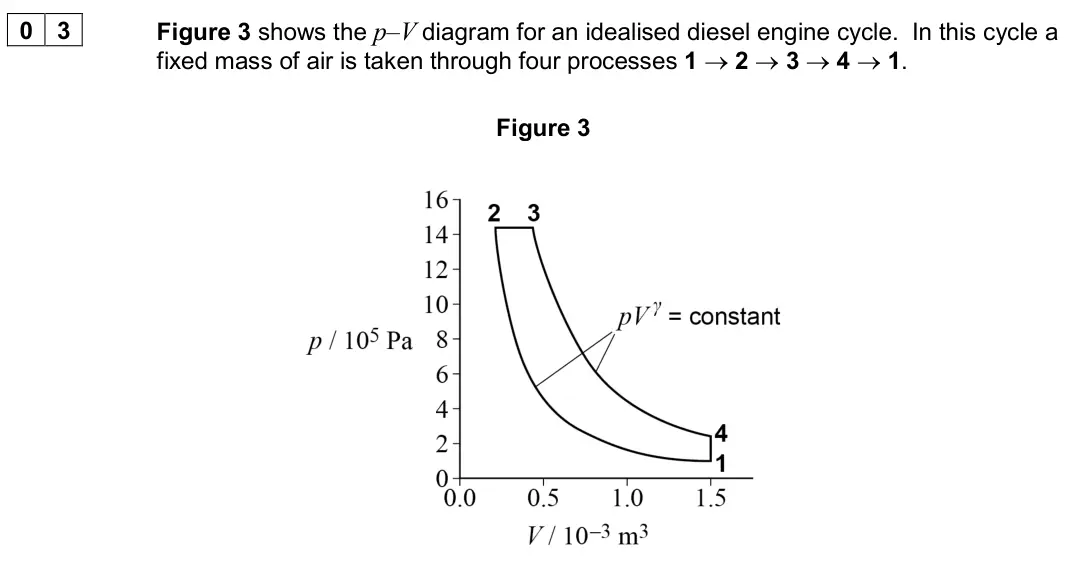
Q03.4
The whole paper ↗Q03.3
The whole paper ↗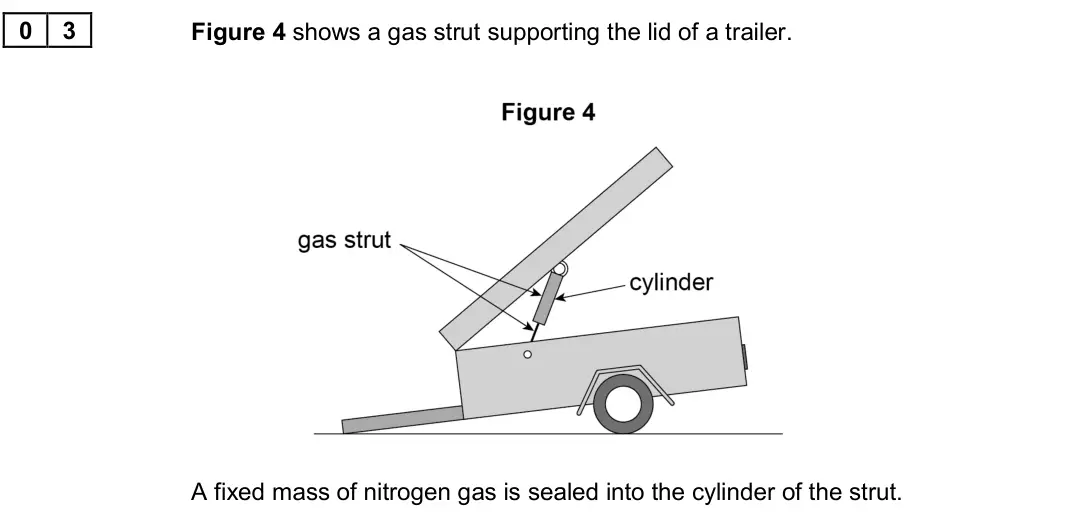
Q03.2
The whole paper ↗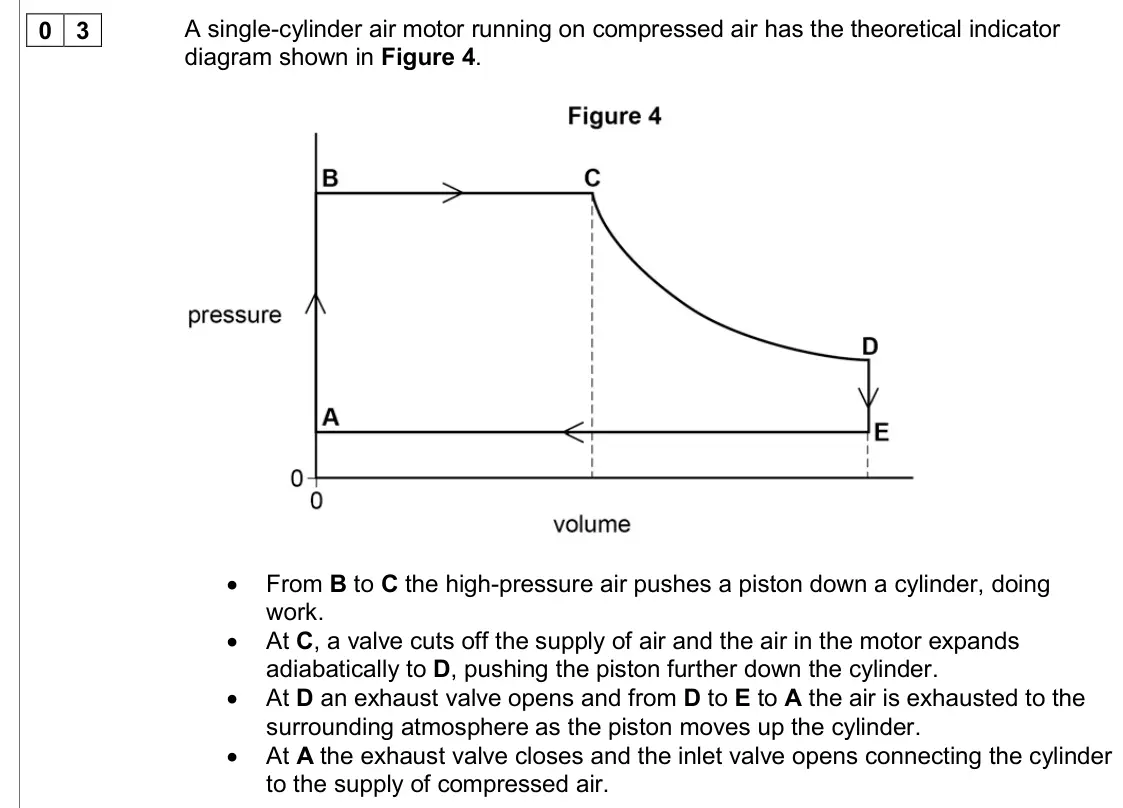
Q03.3
The whole paper ↗Q3(b)(ii)
The whole paper ↗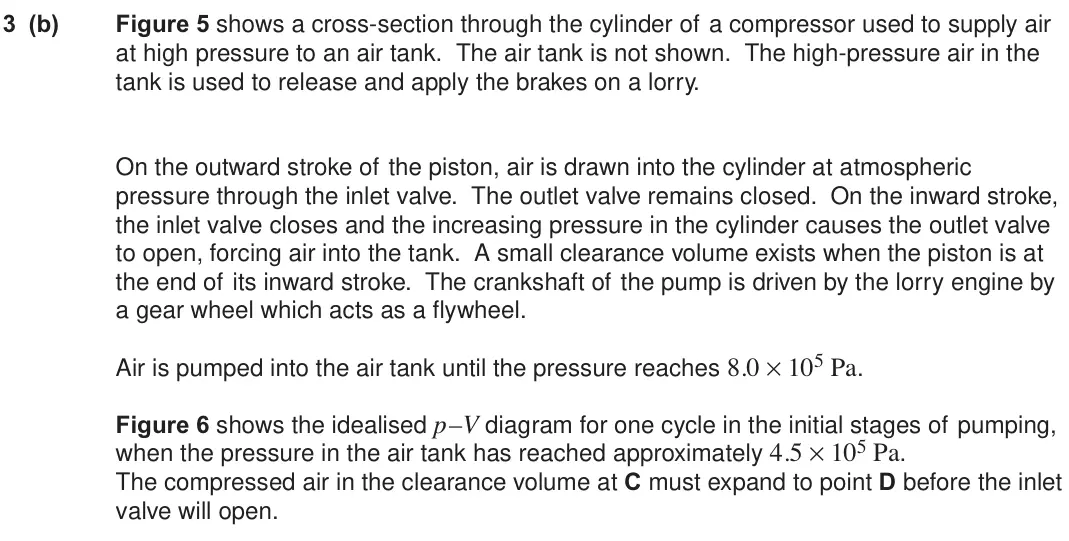
Q3(b)(iii)
The whole paper ↗Q3(b)(iv)
The whole paper ↗Q1(c)
The whole paper ↗
Q3(b)(i)
The whole paper ↗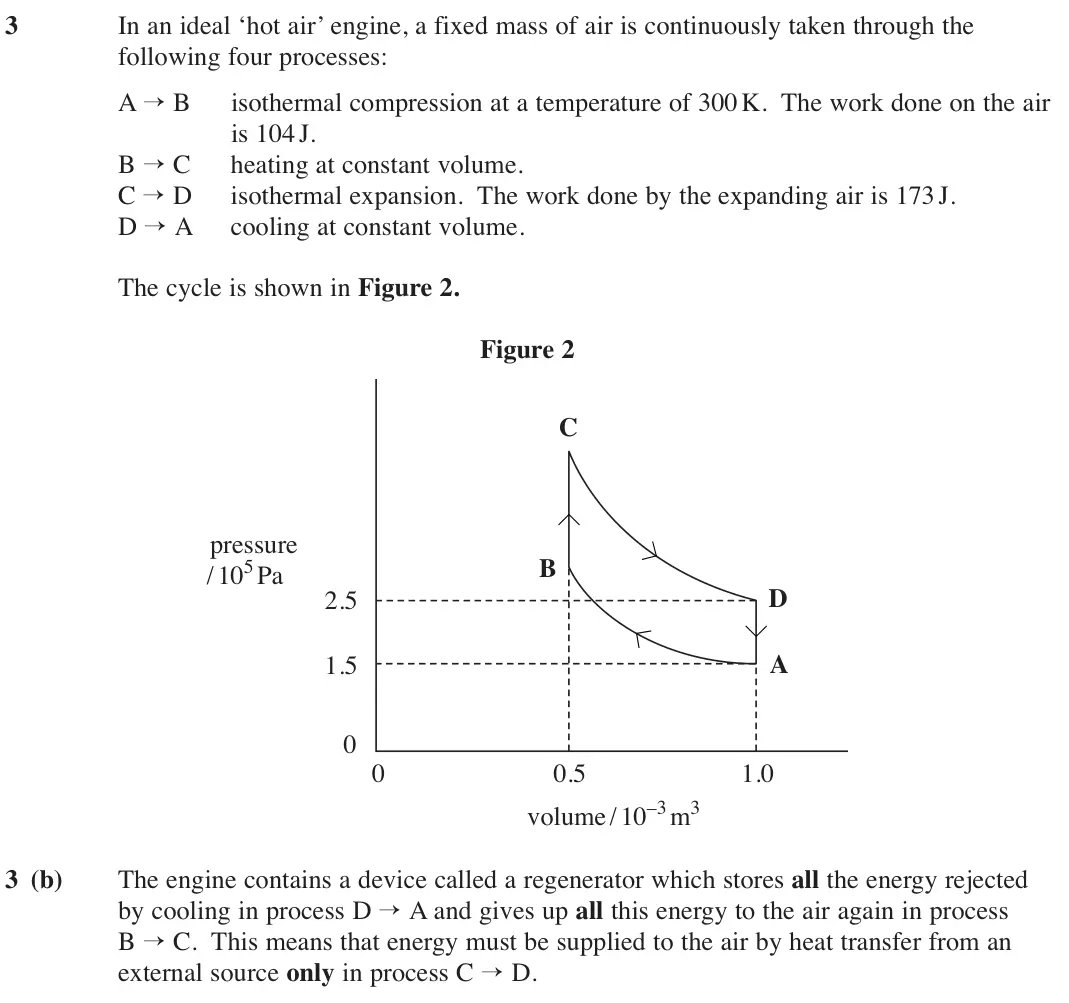
Q3(c)
The whole paper ↗
Q4(a)
The whole paper ↗
Q4(b)
The whole paper ↗Q5(a)
The whole paper ↗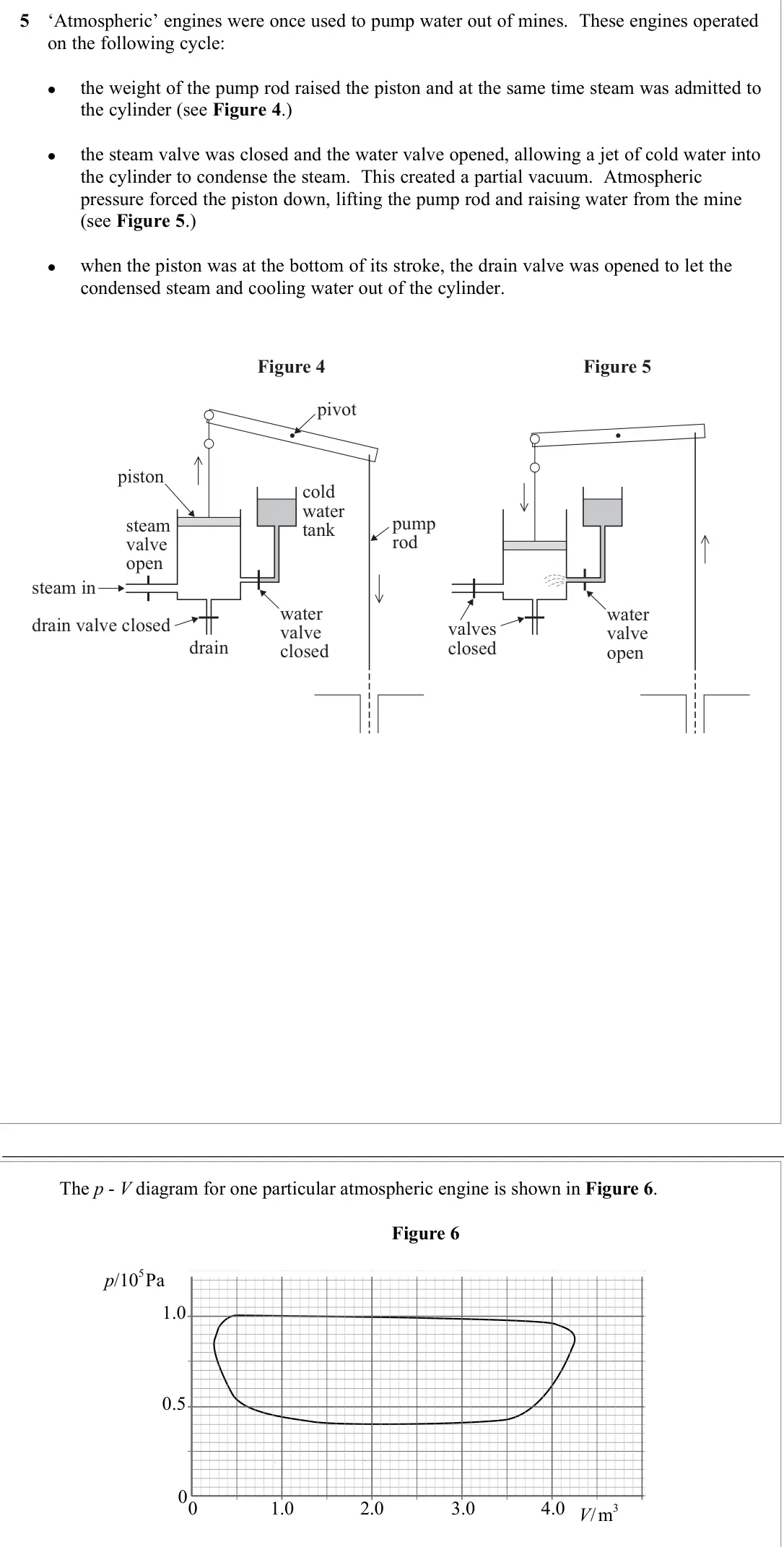
All 17 questions on The p–V diagram, as a list
- June 2025, Paper 3 Engineering physics, Q03.3 (1 mark): Show that the work done in process C → A is about 100 J. [1 mark]
- November 2021, Paper 3 Engineering physics, Q04.1 (5 marks): Figure 6 shows the variation of pressure p with volume V as the gas expands on the right-hand side of the piston when the correct nail is used. Figure 6 The com
- November 2020, Paper 3 Engineering physics, Q04.3 (2 marks): Sketch on Figure 6 the variation of pressure with volume when the plunger is pushed in fully very quickly and then left for several seconds. Assume no leakage p
- June 2018, Paper 3 Engineering physics, Q03.2 (5 marks): The cycle in Figure 3 may be modified by allowing the air to continue to expand adiabatically from state 4 until it is at atmospheric pressure at state 5. Figur
- June 2018, Paper 3 Engineering physics, Q03.4 (2 marks): For the air in process 5 → 1 in Figure 4, ΔU = –374 J Calculate the energy that must be removed by cooling for process 5 → 1. [2 marks] energy removed by coolin
- June 2017, Paper 3 Engineering physics, Q03.3 (3 marks): When the lid is closed slowly, the compression can be assumed to be isothermal. The gas can be compressed either isothermally or adiabatically from the same ini
- Specimen, Paper 3 Engineering physics, Q03.2 (6 marks): A single-cylinder air motor running on compressed air has the theoretical indicator diagram shown in Figure 4. • From B to C the high-pressure air pushes a pist
- Specimen, Paper 3 Engineering physics, Q03.3 (4 marks): A single-cylinder air motor running on compressed air has the theoretical indicator diagram shown in Figure 4. • From B to C the high-pressure air pushes a pist
- June 2015, PHYA5 Applied physics (old spec), Q3(b)(ii) (3 marks): Determine the net work done on the air during the cycle shown in Figure 6. [3 marks] work done J Figure 5 Figure 6 0 0 1.0 2.0 3.0 4.0 5.0 A 2.0 4.0 6.0 8.0 1.0
- June 2015, PHYA5 Applied physics (old spec), Q3(b)(iii) (1 mark): Determine the power input to the compressor when it runs at 420 revolutions per minute. [1 mark] power W
- June 2015, PHYA5 Applied physics (old spec), Q3(b)(iv) (6 marks): Explain how the performance of the air compressor changes as the pressure in the tank increases. Calculations are not expected. In your answer you should consid
- June 2012, PHYA5 Applied physics (old spec), Q1(c) (3 marks): Explain, giving your reasons, whether the volume of air in the barrel at the point when the cork leaves the gun would be less than, equal to, or greater than 1.
- June 2011, PHYA5 Applied physics (old spec), Q3(b)(i) (1 mark): Calculate the net work done during the cycle. answer = J (1 mark)
- June 2011, PHYA5 Applied physics (old spec), Q3(c) (2 marks): On the axes below, sketch the cycle on a graph of volume V against temperature T. Label the points A, B, C and D. (2 marks) 1.0 0.5 0 0 300 500 T/K V/10 –3 m3
- June 2010, PHYA5 Applied physics (old spec), Q4(a) (3 marks): Use the graph to estimate the work done by the air as it expands from a pressure of 3.6 × 10⁵Pa to atmospheric pressure. answer = J (3 marks)
- June 2010, PHYA5 Applied physics (old spec), Q4(b) (3 marks): With reference to the graph on page 6, state and explain whether the rocket would have reached the same height if the air had expanded isothermally. (3 marks)
- June 2008, PHA7W (2008 spec), Q5(a) (4 marks): 5 (a) (i) Use Figure 6 to determine the indicated work done by the engine in one cycle. 5 (a) (ii) It took 6.0 seconds for the engine to complete one cycle. Cal
Questions, mark schemes and examiner’s reports are © AQA, from their published past papers. Plumi isn’t affiliated with any exam board. Want whole papers? AQA A-Level Physics past papers.
The Plumi iPad app also offers exam-style questions with AI feedback on your handwritten working.