 plumi
Reversed heat engines: AQA A‑Level Physics questions
AQA A-Level Physics past-paper questions on 3.11.2.6 Reversed heat engines, 2008–2025, with mark schemes and examiner’s reports where available.
Paper
All papers
Exam
All years
Calculations
Q04.1
The whole paper ↗Q04.2
The whole paper ↗Q04.3
The whole paper ↗Q04.1
The whole paper ↗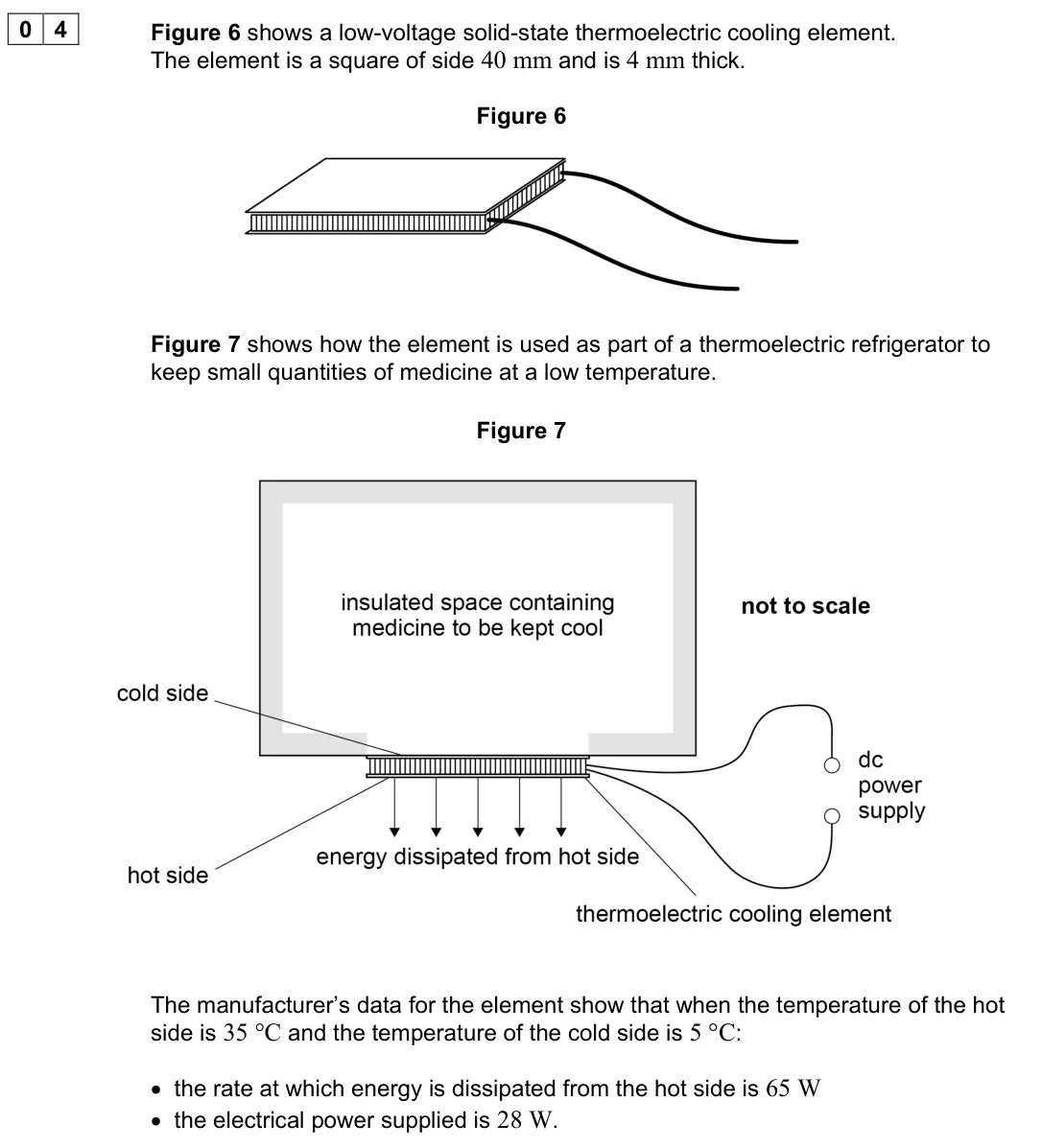
Q04.2
The whole paper ↗Q05.2
The whole paper ↗Q04.1
The whole paper ↗
Q04.2
The whole paper ↗Q05.1
The whole paper ↗Q05.2
The whole paper ↗Q4(a)
The whole paper ↗Q4(b)(i)
The whole paper ↗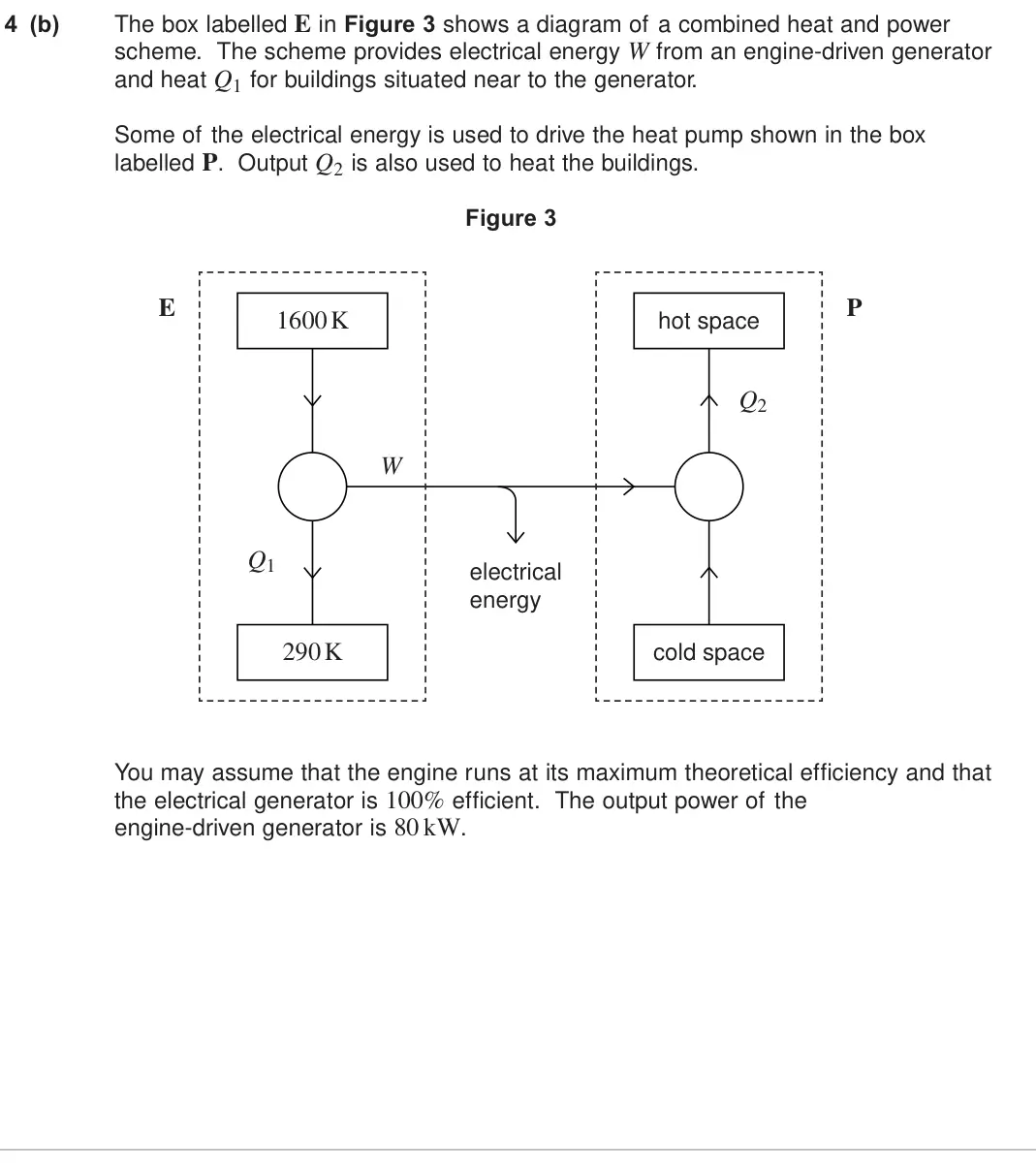
Q4(b)(ii)
The whole paper ↗Q4(b)(iii)
The whole paper ↗Q4(a)
The whole paper ↗Q4(b)
The whole paper ↗Q4(a)(i)
The whole paper ↗
Q4(a)(ii)
The whole paper ↗Q4(b)
The whole paper ↗Q3(a)
The whole paper ↗
All 22 questions on Reversed heat engines, as a list
- June 2025, Paper 3 Engineering physics, Q04.1 (1 mark): State what is meant by the coefficient of performance of a heat pump. [1 mark] A jeweller hopes to reduce workshop heating costs by replacing a gas-fired boiler
- June 2025, Paper 3 Engineering physics, Q04.2 (3 marks): Comment on the salesperson’s claims. [3 marks]
- June 2025, Paper 3 Engineering physics, Q04.3 (1 mark): A heat pump is installed. The average COPhp over the winter period is 7.5 In this period the heat pump delivers 2880 kW h of underfloor heating. What is the ele
- June 2022, Paper 3 Engineering physics, Q04.1 (4 marks): It is claimed that the coefficient of performance (COP) of a thermoelectric refrigerator is much less than the COP of an ideal refrigerator. Discuss whether the
- June 2022, Paper 3 Engineering physics, Q04.2 (2 marks): Suggest why a small value of the COP might be acceptable for this particular application of a thermoelectric cooling element. [2 marks]
- November 2021, Paper 3 Engineering physics, Q05.2 (2 marks): An ideal heat engine has an efficiency of 0.33 The same engine works in reverse as an ideal refrigerator between the same hot and cold spaces. Determine the coe
- June 2019, Paper 3 Engineering physics, Q04.1 (2 marks): A typical conventional tumble-dryer uses about 0.6 kW h per kg of clothes. A heat pump tumble-dryer uses about 0.25 kW h per kg. Explain why the heat pump tumbl
- June 2019, Paper 3 Engineering physics, Q04.2 (3 marks): The cold space of the heat pump is the room in which the tumble-dryer is placed. The hot space is the air in the tumble-dryer and is at a temperature of 160 °C.
- June 2017, Paper 3 Engineering physics, Q05.1 (1 mark): An ideal heat pump and an ideal refrigerator operate between the same hot and cold spaces. Which statement relating to the coefficient of performance (COP) is c
- June 2017, Paper 3 Engineering physics, Q05.2 (3 marks): An ideal refrigerator operates between a cold space at a temperature of ̶ 1 °C and a hot space at a temperature of 70 °C. Calculate the input power to the refri
- June 2014, PHYA5 Applied physics (old spec), Q4(a) (1 mark): Explain what is meant by the coefficient of performance of a heat pump. [1 mark]
- June 2014, PHYA5 Applied physics (old spec), Q4(b)(i) (4 marks): The fuel used in the engine (E) is propane of calorific value 49 MJ kg–1. Calculate the rate of flow of propane into the engine. State an appropriate unit. [4 m
- June 2014, PHYA5 Applied physics (old spec), Q4(b)(ii) (3 marks): The heat pump has a coefficient of performance of 2.6. The power supplied by the electrical generator to the heat pump (P) is 16 kW. Calculate the total rate at
- June 2014, PHYA5 Applied physics (old spec), Q4(b)(iii) (2 marks): The conversion of electrical energy to heat is nearly 100% efficient. Explain why the designer has proposed installing a heat pump rather than an electrical hea
- June 2013, PHYA5 Applied physics (old spec), Q4(a) (2 marks): Explain what is meant by a reversed heat engine. (2 marks)
- June 2013, PHYA5 Applied physics (old spec), Q4(b) (2 marks): Explain why the coefficient of performance of a reversed heat engine when operating as a heat pump is always greater than the coefficient of performance of the
- June 2011, PHYA5 Applied physics (old spec), Q4(a)(i) (1 mark): Calculate the rate at which energy is delivered to the workshop. answer = W (1 mark)
- June 2011, PHYA5 Applied physics (old spec), Q4(a)(ii) (1 mark): Calculate the rate at which energy is extracted from the ground. answer = W (1 mark)
- June 2011, PHYA5 Applied physics (old spec), Q4(b) (3 marks): A student claims: "A heat pump delivers more energy than is supplied to it". Discuss this statement and explain why a heat pump does not contradict the law of c
- June 2010, PHYA5 Applied physics (old spec), Q3(a) (2 marks): The coefficient of performance of a refrigerator is given by With reference to a refrigerator, explain the terms Qin and Qout. (2 marks) Qout COPref = ————– Qin
- June 2010, PHYA5 Applied physics (old spec), Q3(b)(i) (2 marks): Calculate the power input to the refrigerator if it is required to make 5.5kg of ice every hour. answer = W (2 marks)
- June 2010, PHYA5 Applied physics (old spec), Q3(b)(ii) (1 mark): Calculate the rate at which energy is delivered to the surroundings of the refrigerator. answer = W (1 mark)
Questions, mark schemes and examiner’s reports are © AQA, from their published past papers. Plumi isn’t affiliated with any exam board. Want whole papers? AQA A-Level Physics past papers.
The Plumi iPad app also offers exam-style questions with AI feedback on your handwritten working.