 plumi
Mineral resources: AQA A‑Level Environmental Science questions
AQA A-Level Environmental Science past-paper questions on 3.2.3 Mineral resources, 2020–2025, with mark schemes and examiner’s reports where available.
Getting your paper ready…
AQA A-Level Environmental ScienceMineral resources551 questions
Paper
All papers
Exam
All years
Calculations
Loading the full question list…


All 22 questions on Mineral resources, as a list
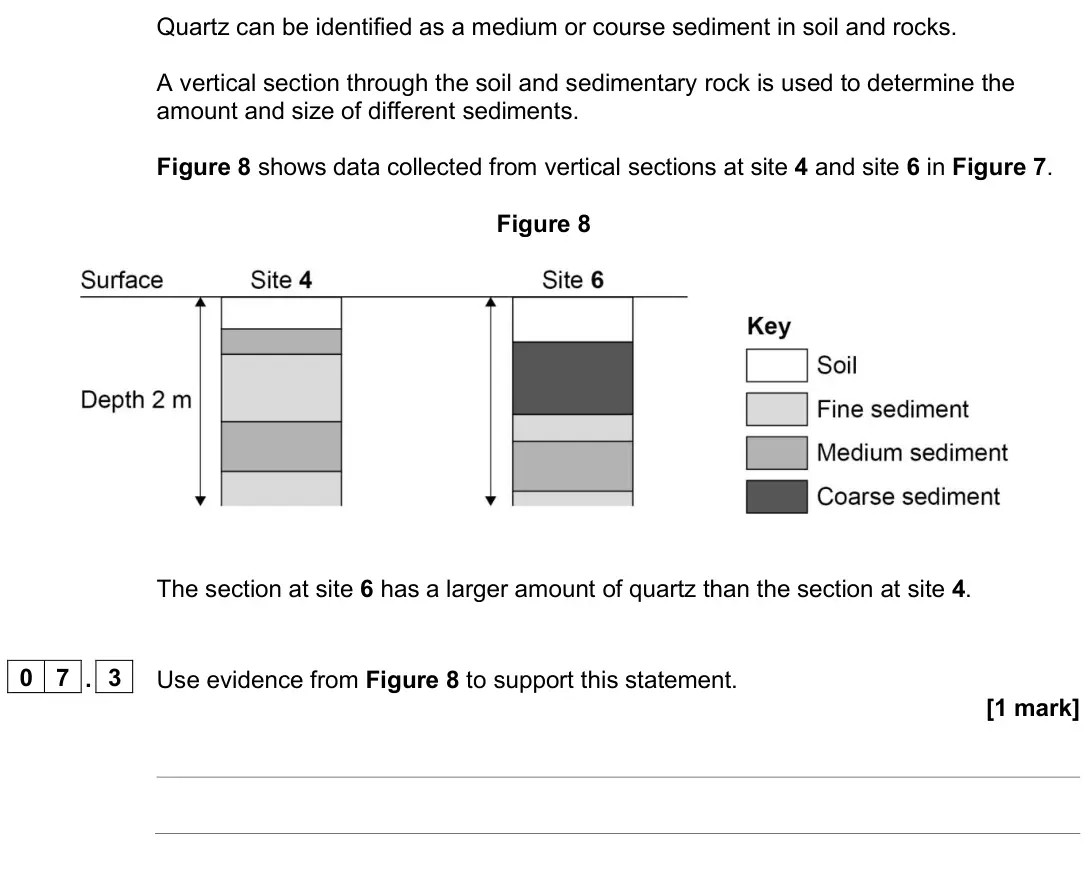
- June 2025, Paper 1, Q07.3 (1 mark): Use evidence from Figure 8 to support this statement. [1 mark]
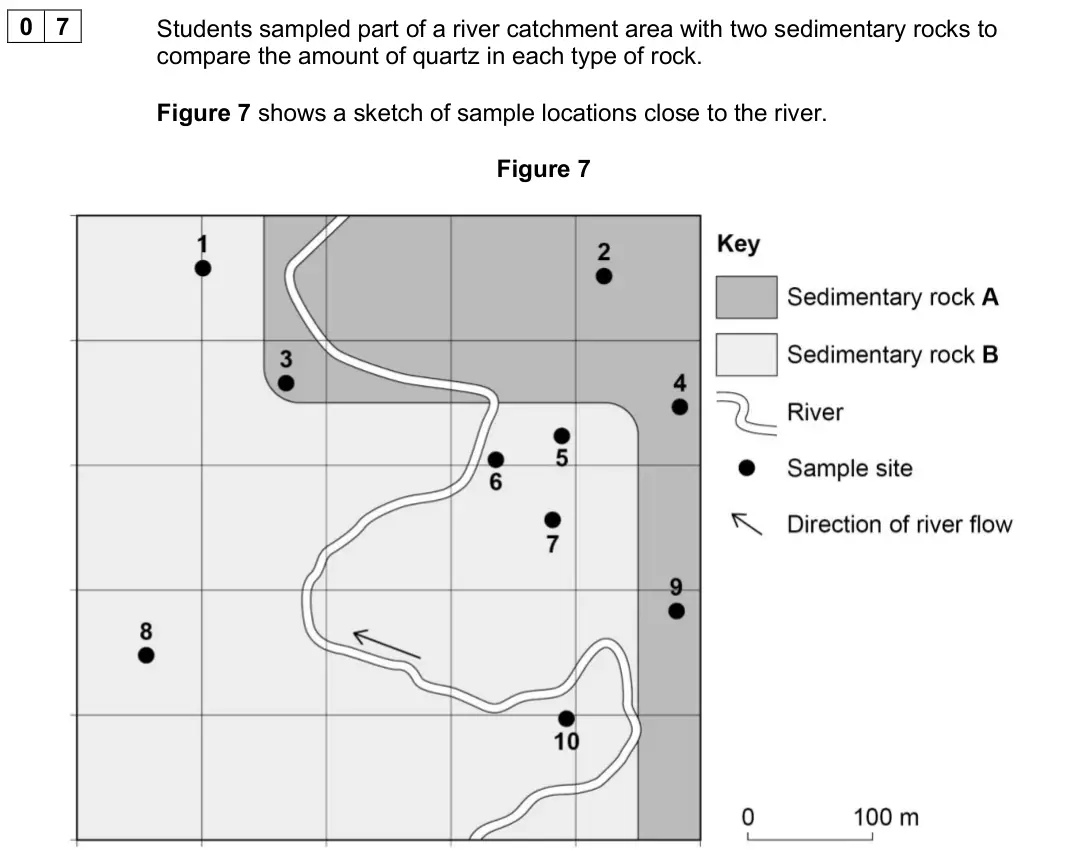
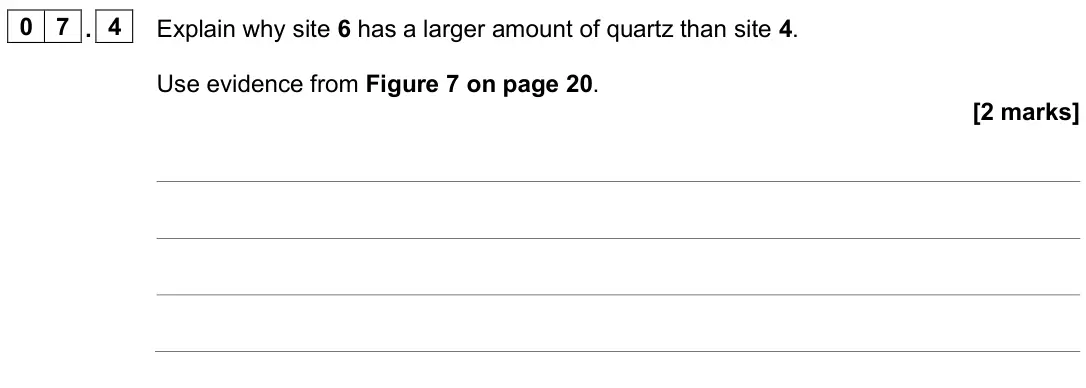
- June 2025, Paper 1, Q07.4 (2 marks): Explain why site 6 has a larger amount of quartz than site 4. Use evidence from Figure 7 on page 20. [2 marks]
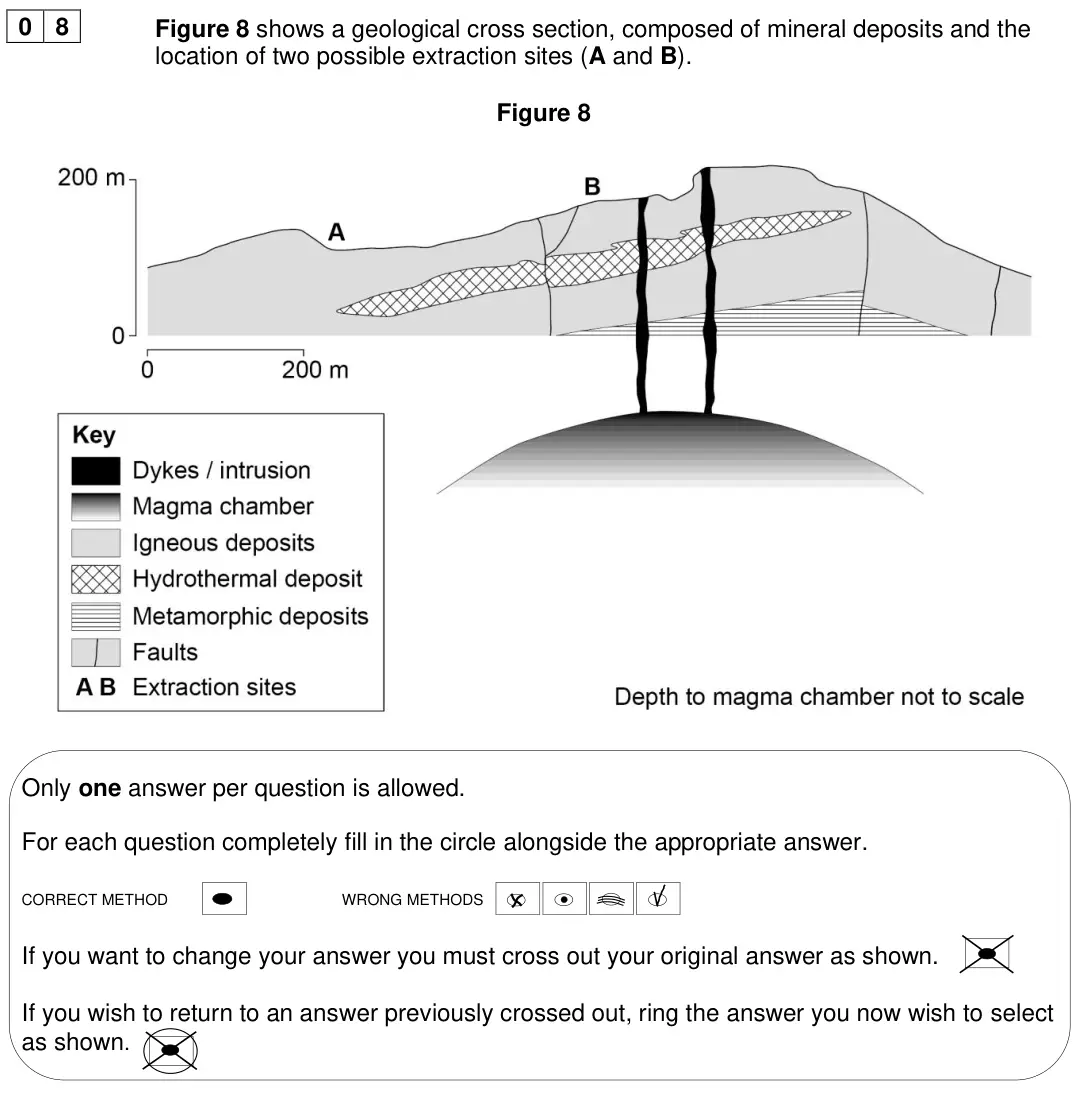
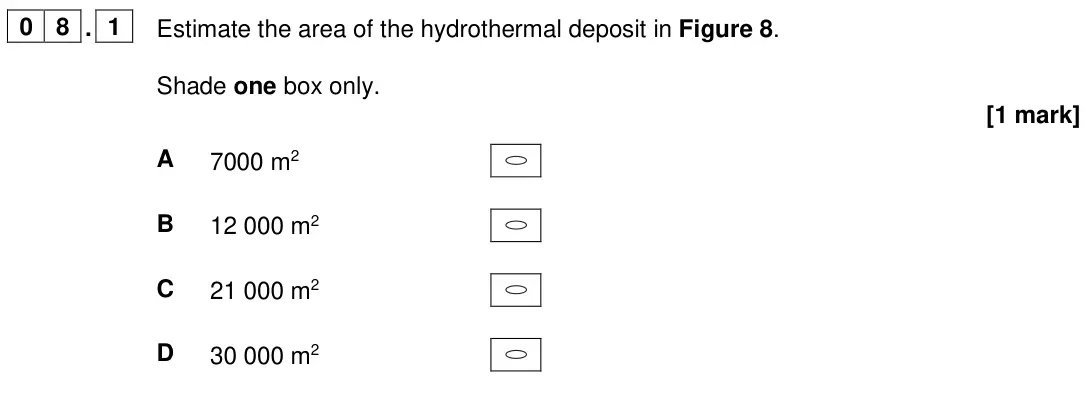
- June 2024, Paper 1, Q08.1 (1 mark): Estimate the area of the hydrothermal deposit in Figure 8. Shade one box only. [1 mark] A 7000 m2 B 12 000 m2 C 21 000 m2 D 30 000 m2
- June 2024, Paper 1, Q08.2 (1 mark): Other than trial drilling, state one exploration technique used to locate mineral deposits. [1 mark]
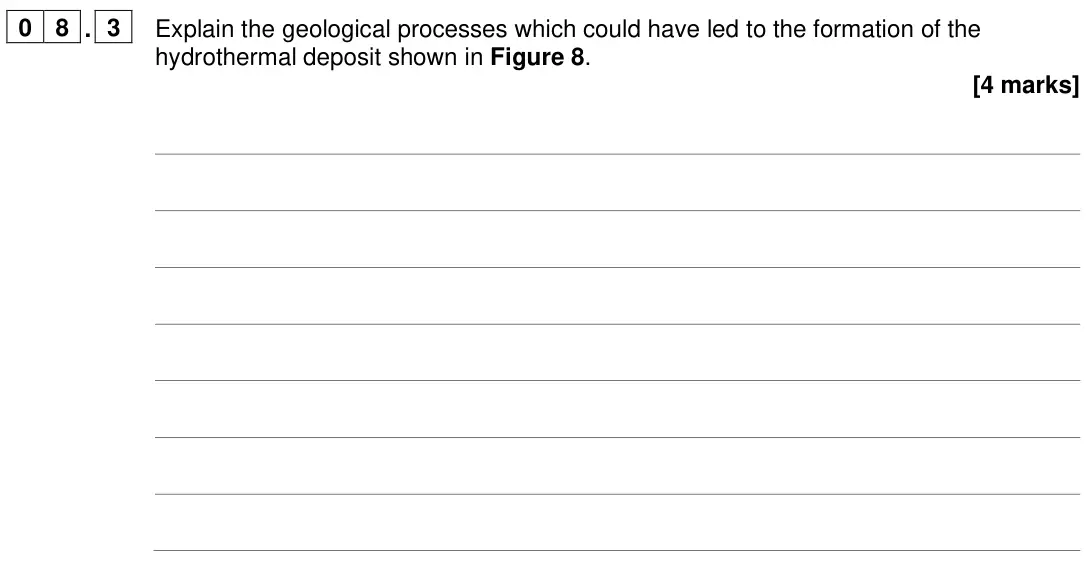
- June 2024, Paper 1, Q08.3 (4 marks): Explain the geological processes which could have led to the formation of the hydrothermal deposit shown in Figure 8. [4 marks]
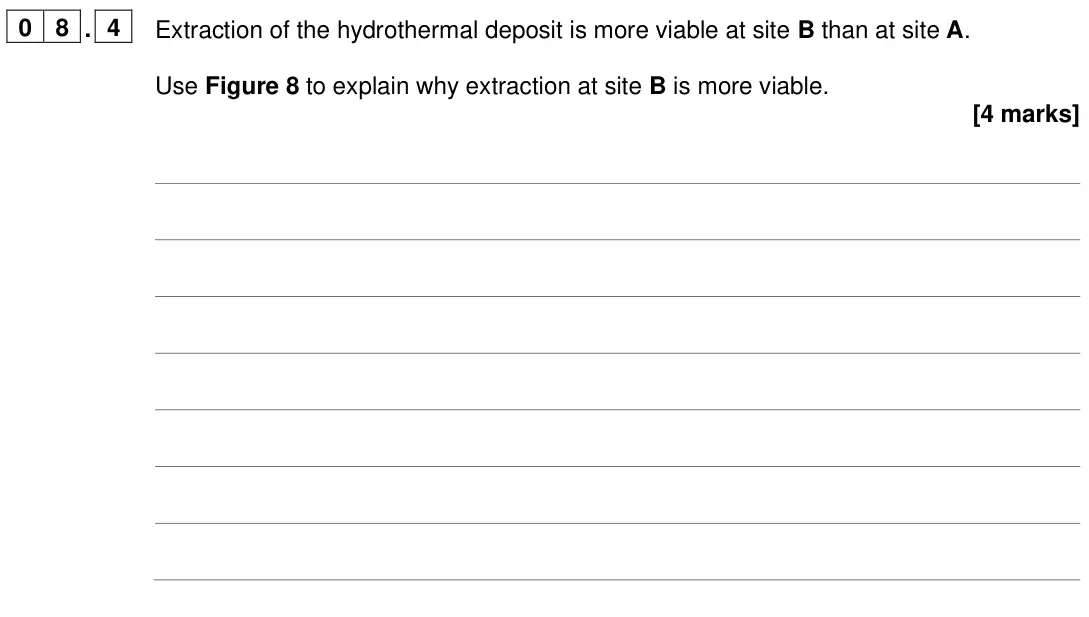
- June 2024, Paper 1, Q08.4 (4 marks): Extraction of the hydrothermal deposit is more viable at site B than at site A. Use Figure 8 to explain why extraction at site B is more viable. [4 marks]
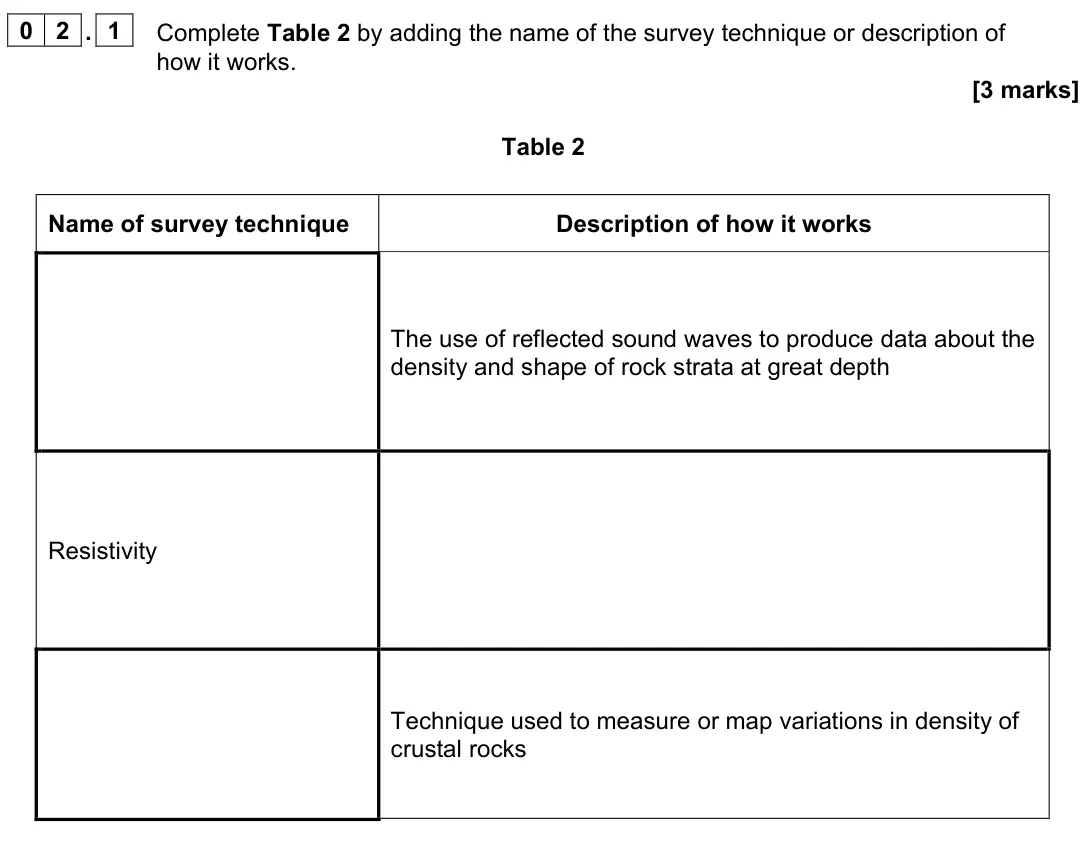
- June 2023, Paper 1, Q02.1 (3 marks): Complete Table 2 by adding the name of the survey technique or description of how it works. [3 marks] Table 2 Name of survey technique Description of how it wor
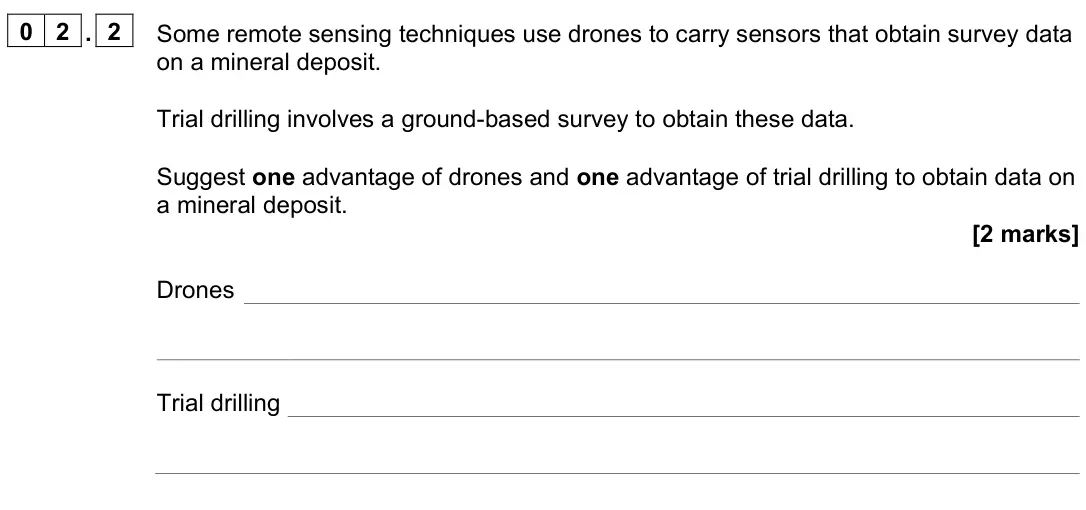
- June 2023, Paper 1, Q02.2 (2 marks): Some remote sensing techniques use drones to carry sensors that obtain survey data on a mineral deposit. Trial drilling involves a ground-based survey to obtain
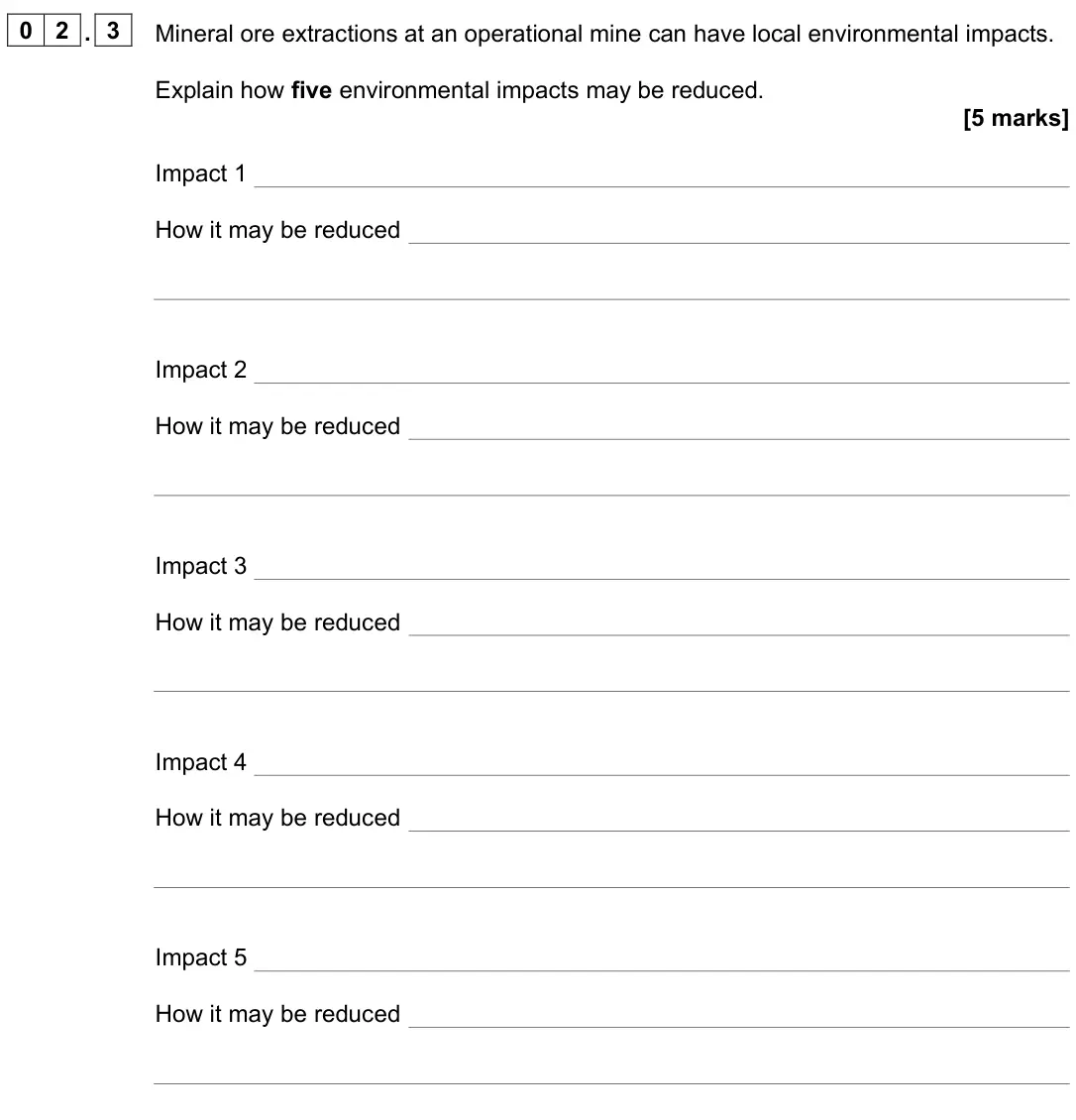
- June 2023, Paper 1, Q02.3 (5 marks): Mineral ore extractions at an operational mine can have local environmental impacts. Explain how five environmental impacts may be reduced. [5 marks] Impact 1 H
- June 2022, Paper 1, Q11.2 (25 marks): Discuss how mineral resources may be managed to meet the demands of society but minimise the impacts on the environment. [25 marks]
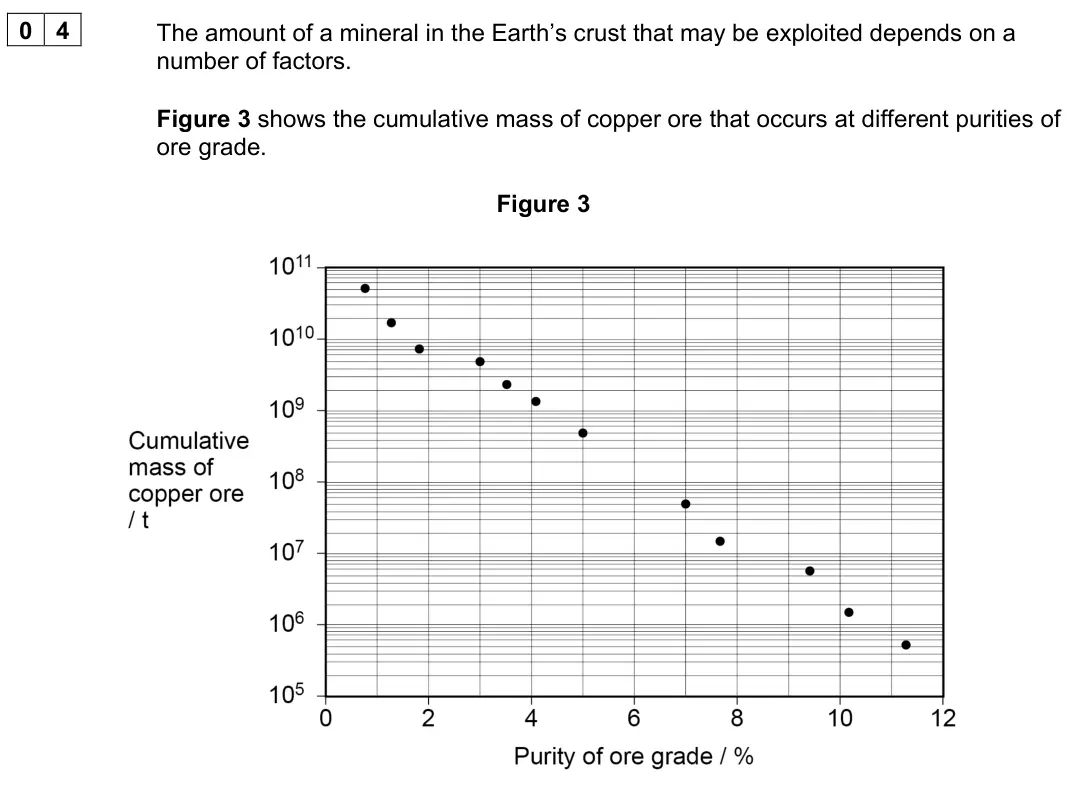
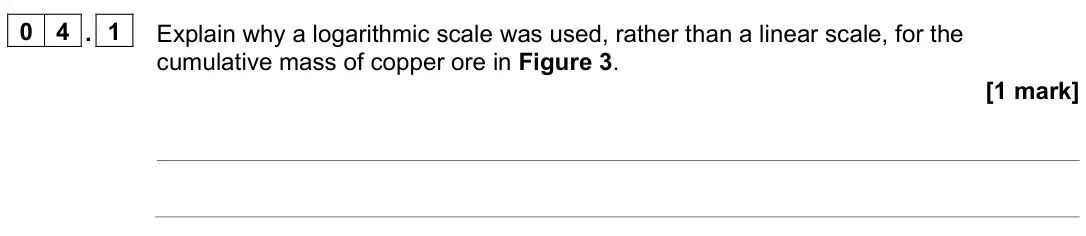
- November 2021, Paper 1, Q04.1 (1 mark): Explain why a logarithmic scale was used, rather than a linear scale, for the cumulative mass of copper ore in Figure 3. [1 mark]
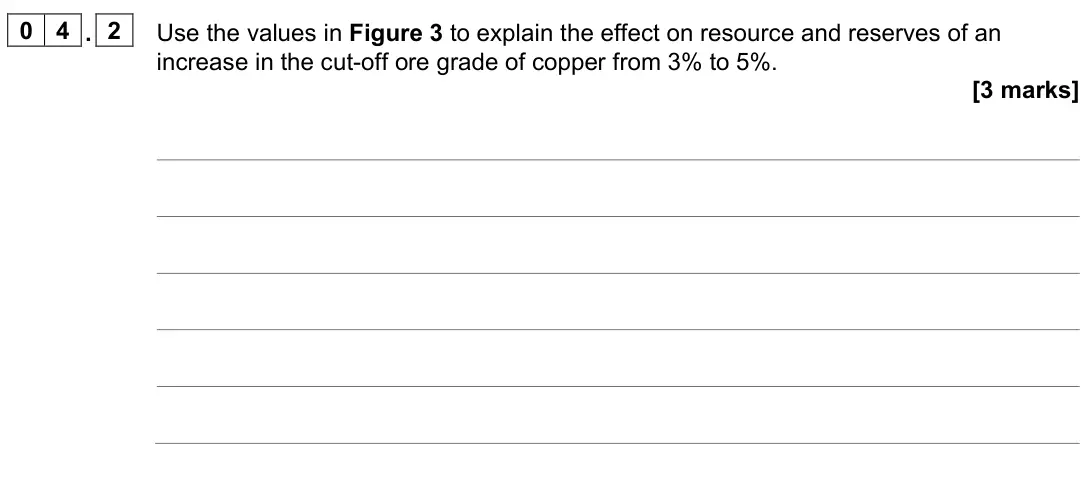
- November 2021, Paper 1, Q04.2 (3 marks): Use the values in Figure 3 to explain the effect on resource and reserves of an increase in the cut-off ore grade of copper from 3% to 5%. [3 marks]
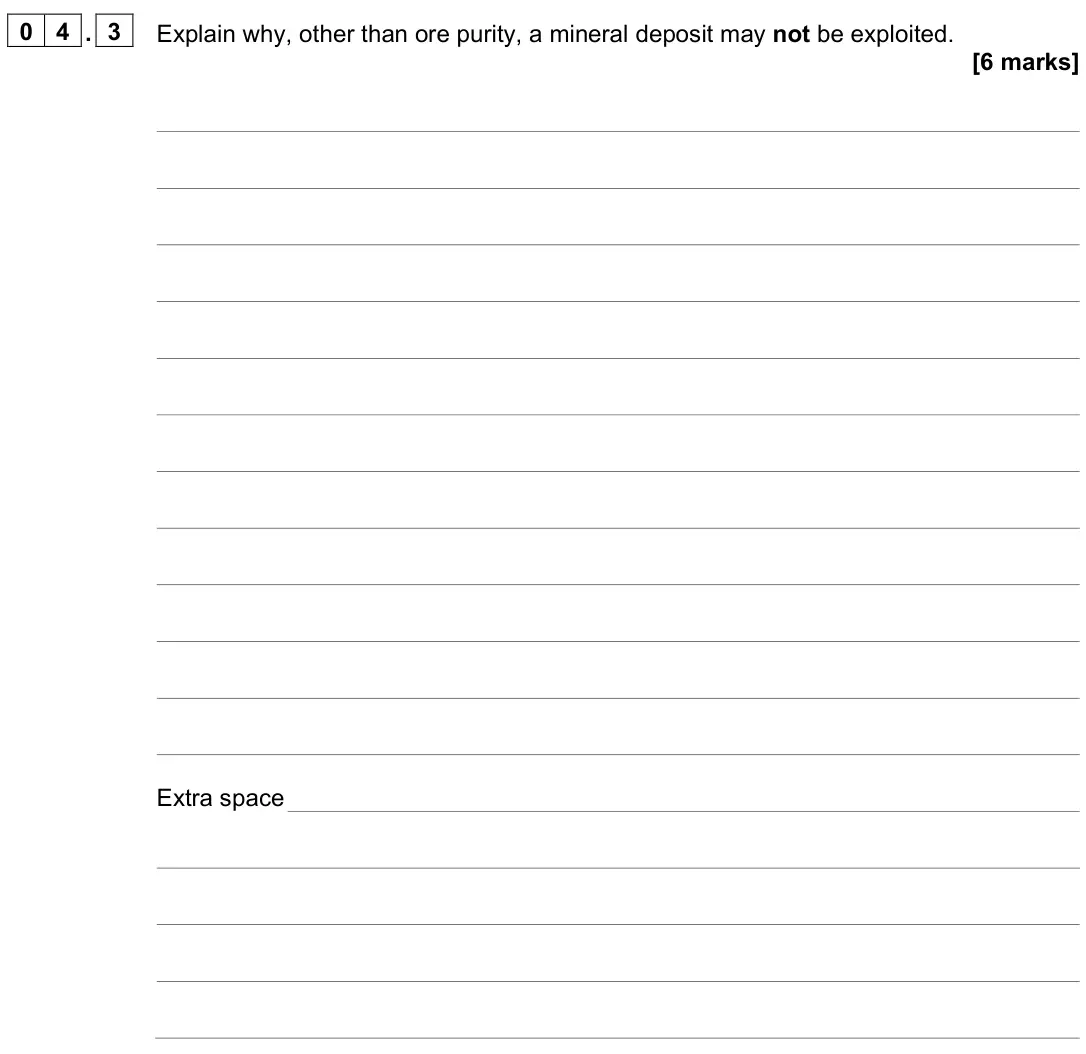
- November 2021, Paper 1, Q04.3 (6 marks): Explain why, other than ore purity, a mineral deposit may not be exploited. [6 marks]
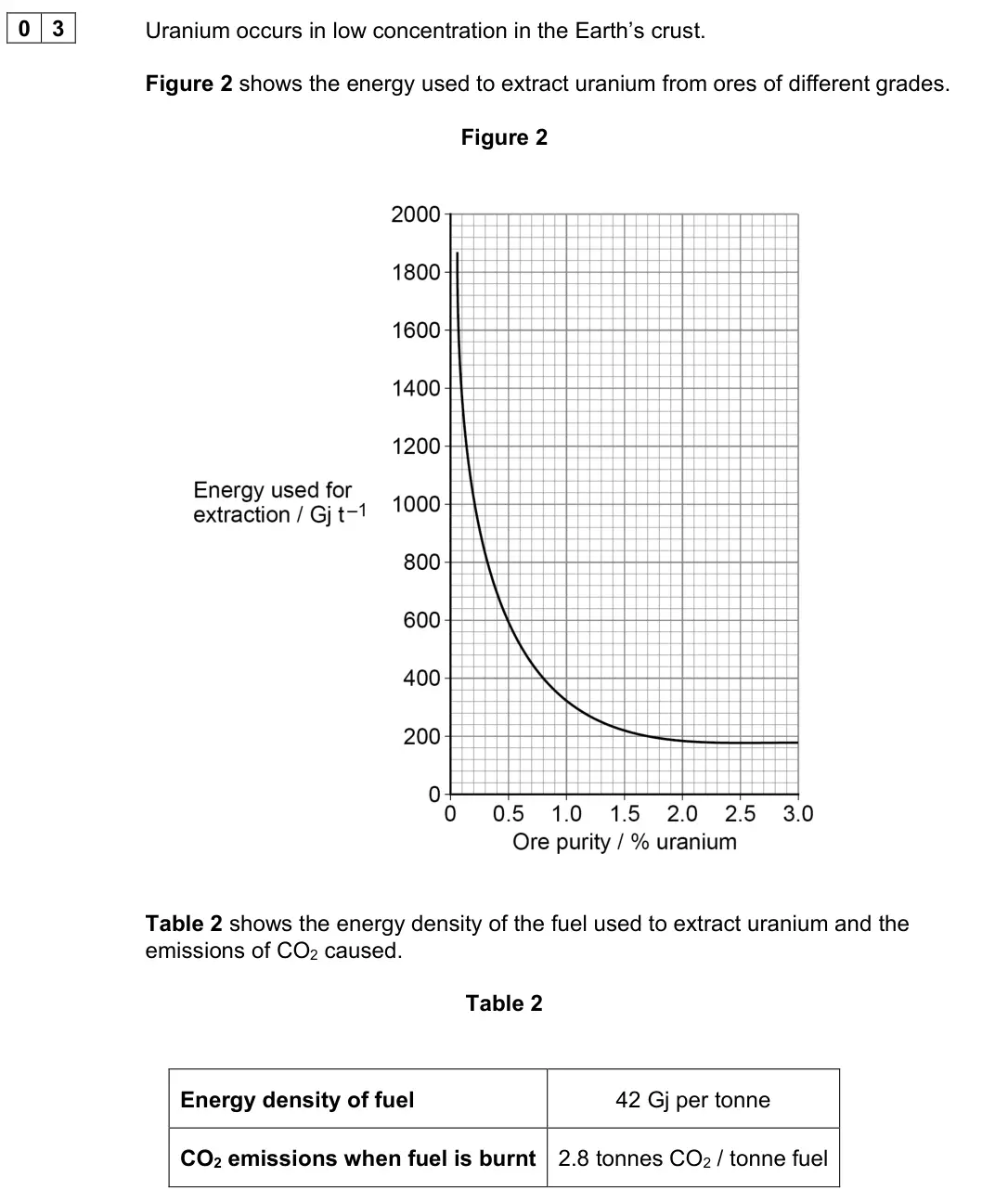
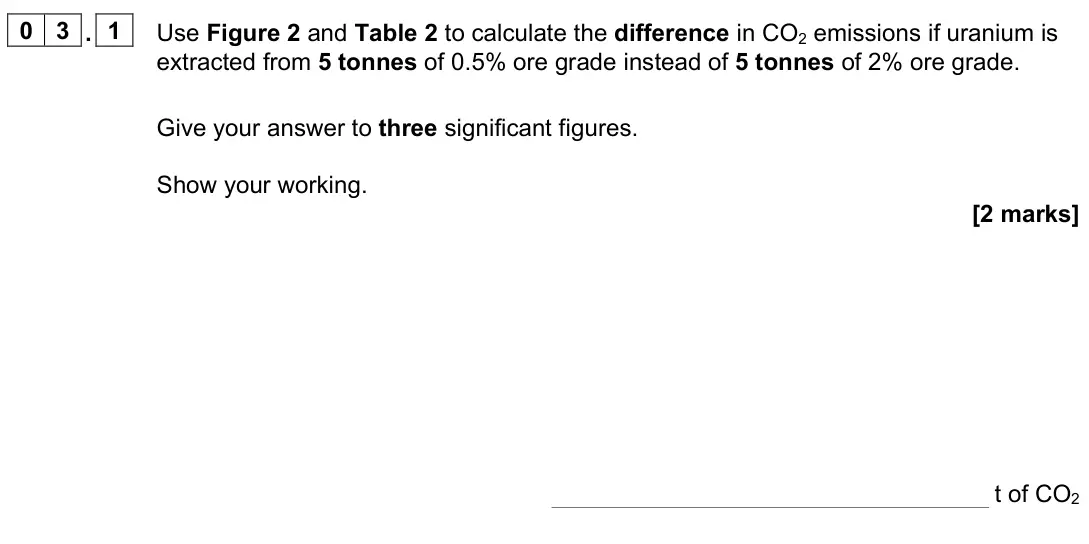
- November 2020, Paper 1, Q03.1 (2 marks): Use Figure 2 and Table 2 to calculate the difference in CO2 emissions if uranium is extracted from 5 tonnes of 0.5% ore grade instead of 5 tonnes of 2% ore grad
- November 2020, Paper 1, Q03.2 (2 marks): Describe one method that may be used to locate uranium ore deposits. [2 marks]
- November 2020, Paper 1, Q03.4 (9 marks): New technologies to extract metals from low-grade ore deposits and other sources are being developed. Explain how new technologies to extract metals from low-gr
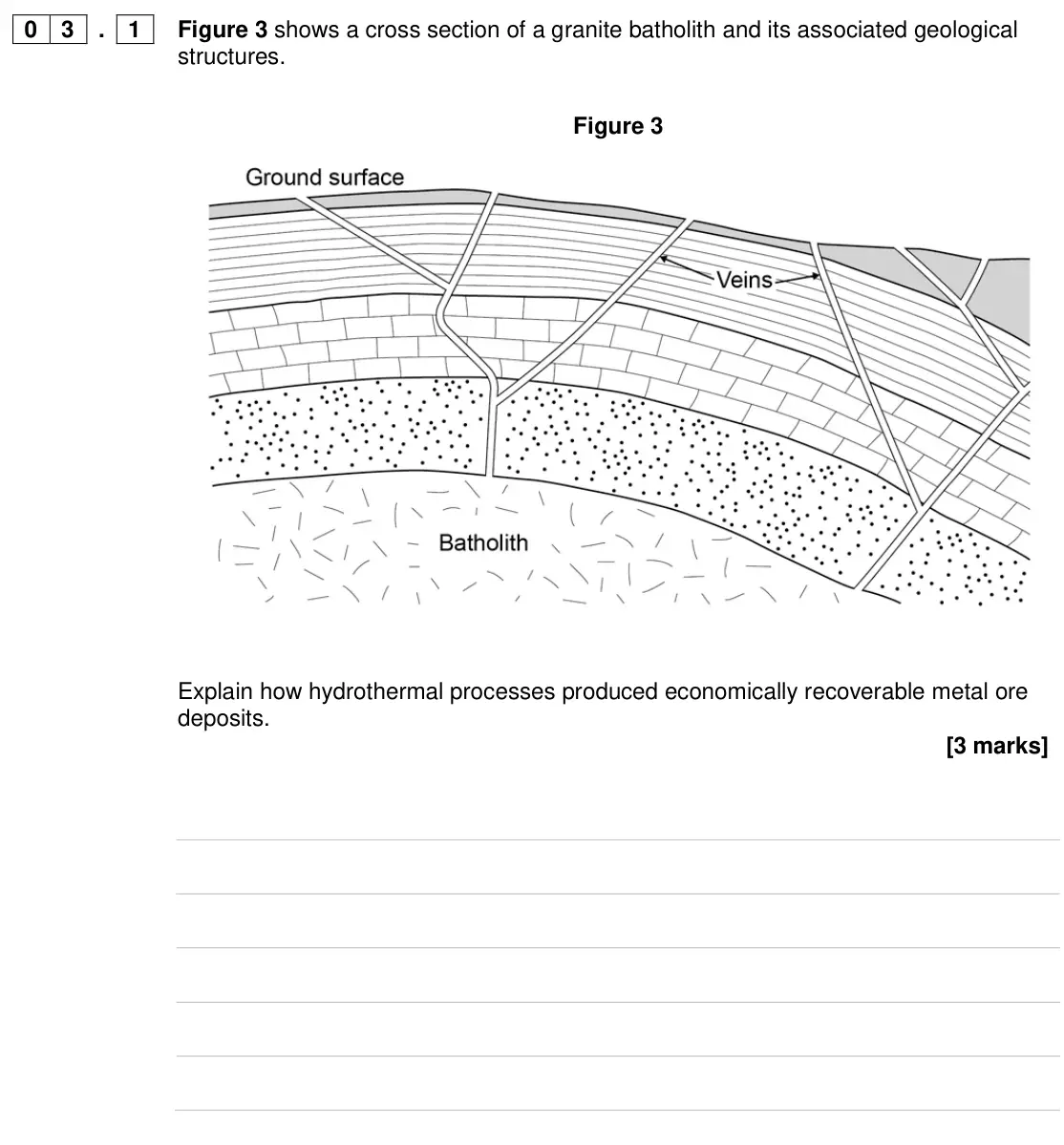
- Specimen, Paper 1, Q03.1 (3 marks): Figure 3 shows a cross section of a granite batholith and its associated geological structures. Figure 3 Explain how hydrothermal processes produced economicall
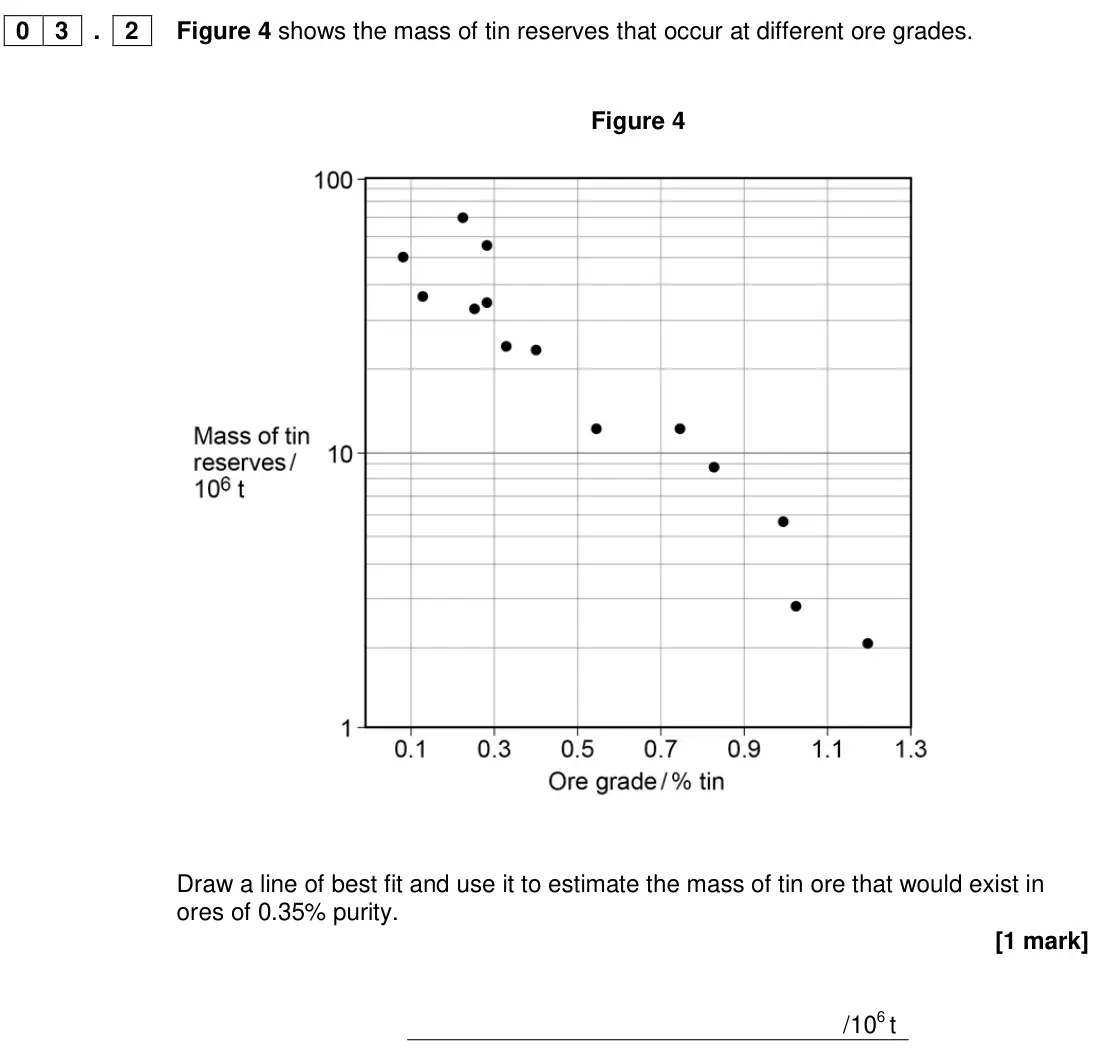
- Specimen, Paper 1, Q03.2 (1 mark): Figure 4 shows the mass of tin reserves that occur at different ore grades. Figure 4 Draw a line of best fit and use it to estimate the mass of tin ore that wou
- Specimen, Paper 1, Q03.3 (2 marks): Explain why a reduction in the market price for tin would change the ‘cut-off ore grade’. [2 marks] 8
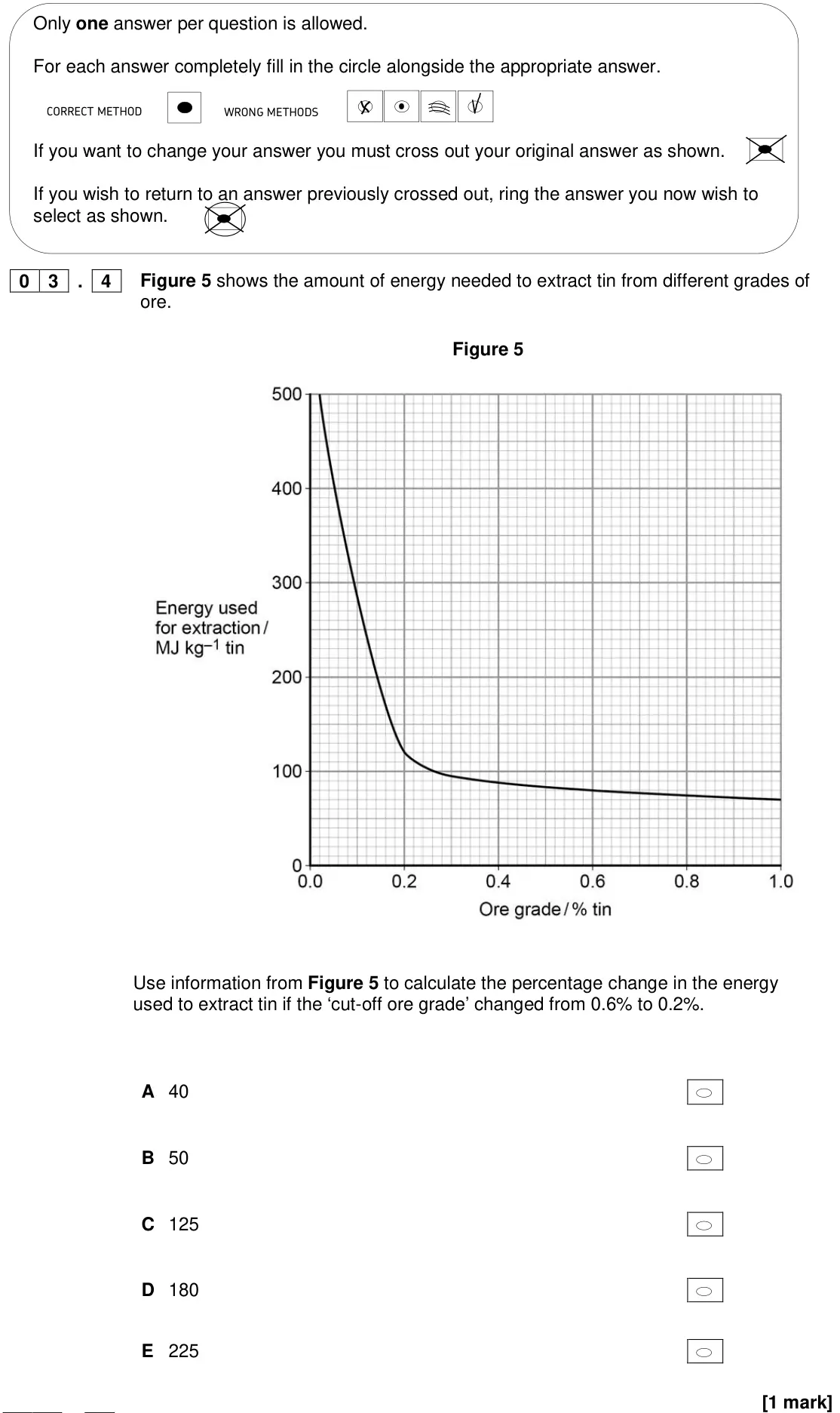
- Specimen, Paper 1, Q03.4 (1 mark): Figure 5 shows the amount of energy needed to extract tin from different grades of ore. Figure 5 Use information from Figure 5 to calculate the percentage chang
- Specimen, Paper 1, Q03.5 (1 mark): Give one reason why the energy required for extraction increases as the ore grade declines. [1 mark]
- Specimen, Paper 1, Q03.6 (2 marks): Explain how one property of a named mineral resource or mineral group may make it possible to detect its presence with a geophysical technique. [2 marks]
Questions, mark schemes and examiner’s reports are © AQA, from their published past papers. Plumi isn’t affiliated with any exam board. Want whole papers? AQA A-Level Environmental Science past papers.
The Plumi iPad app also offers exam-style questions with AI feedback on your handwritten working.