Skip to content
Try on iPad

Style

Get started

Soils: AQA A‑Level Environmental Science questions

AQA A-Level Environmental Science past-paper questions on 3.2.5 Soils, 2020–2025, with mark schemes and examiner’s reports where available.

Getting your paper ready…

AQA A-Level Environmental ScienceSoils551 questions

Paper
All papers
Exam
All years
Calculations

Loading the full question list…
551 questions

More options
  1. Q05.1June 2025 · Paper 11 mark

    3.2.5 Soils

    1
    Setup for original question 05.1

    Loading the question setup…

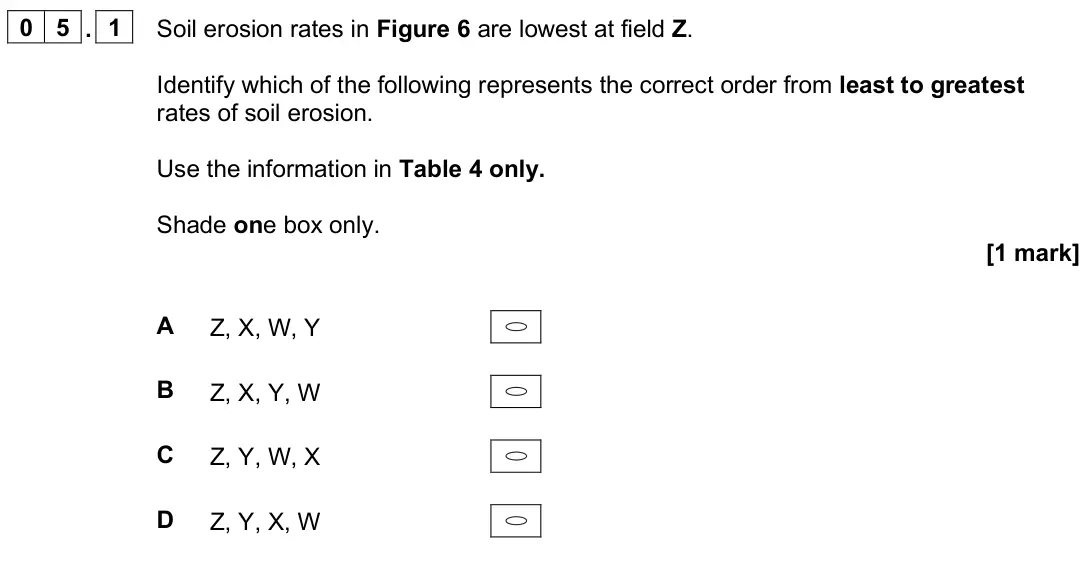
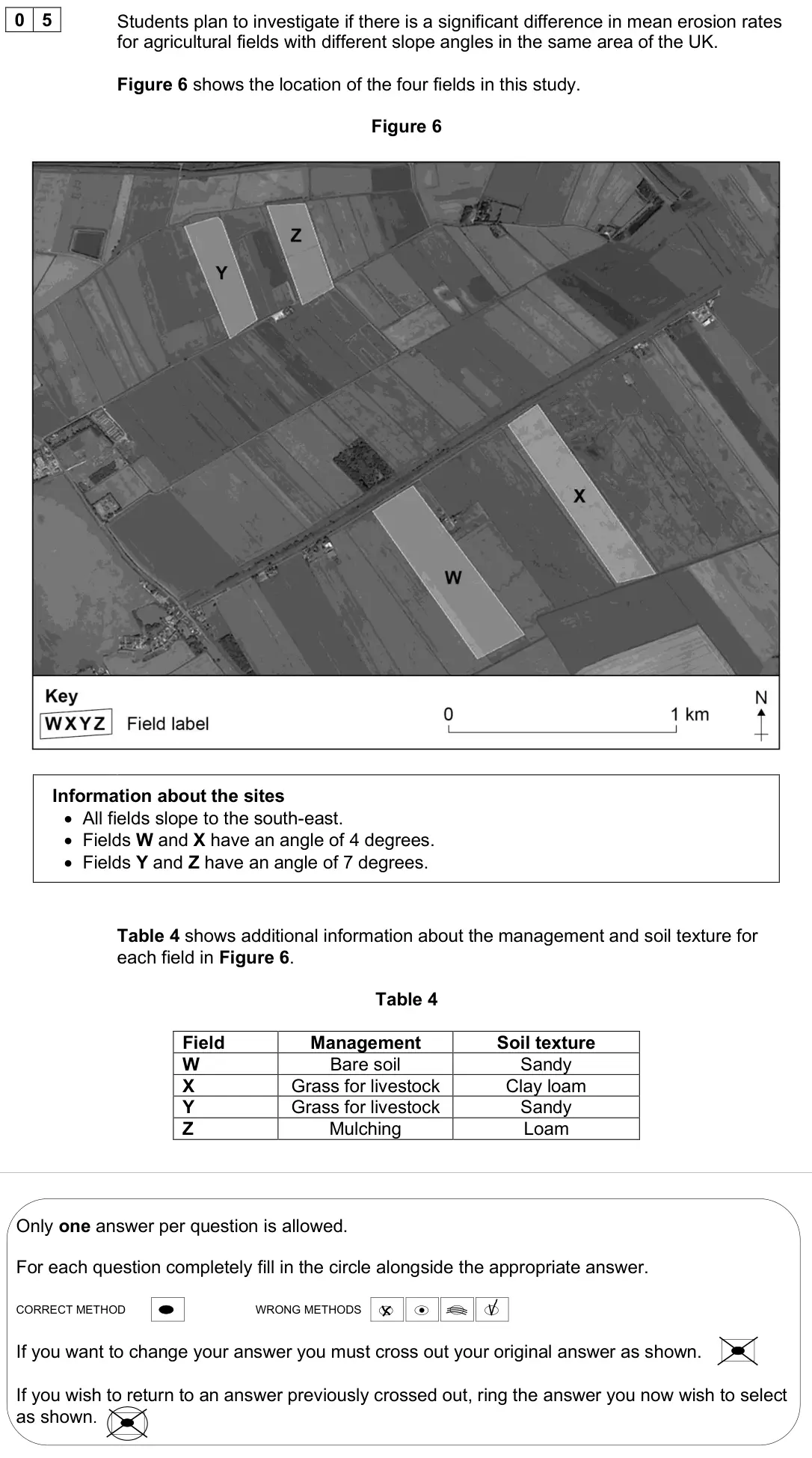
    Original question 05.1: Soil erosion rates in Figure 6 are lowest at field Z. Identify which of the following represents the correct order from least to greatest rates of soil erosion.

    Loading the question…

    The whole paper ↗
  2. Q05.2June 2025 · Paper 12 marks

    3.2.5 Soils

    2
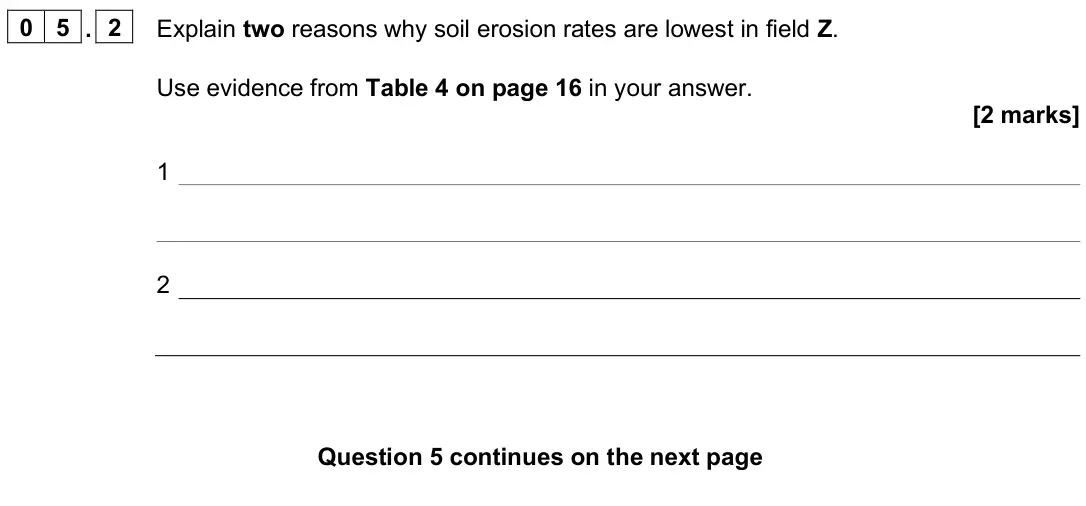
    Original question 05.2: Explain two reasons why soil erosion rates are lowest in field Z. Use evidence from Table 4 on page 16 in your answer. [2 marks] 1 2

    Loading the question…

    The whole paper ↗
  3. Q05.3June 2025 · Paper 15 marks

    3.2.5 Soils3.7.1 Scientific methodologies

    3
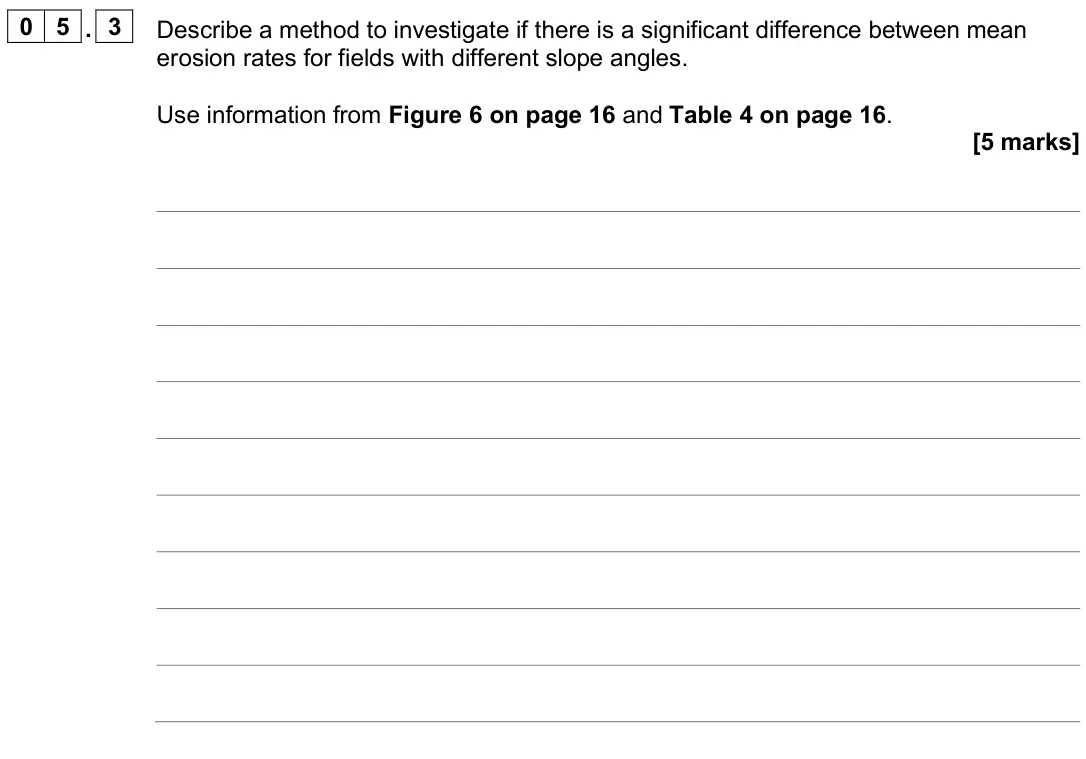
    Original question 05.3: Describe a method to investigate if there is a significant difference between mean erosion rates for fields with different slope angles. Use information from Fi

    Loading the question…

    The whole paper ↗
  4. Q05.4June 2025 · Paper 12 marks

    3.2.5 Soils

    4
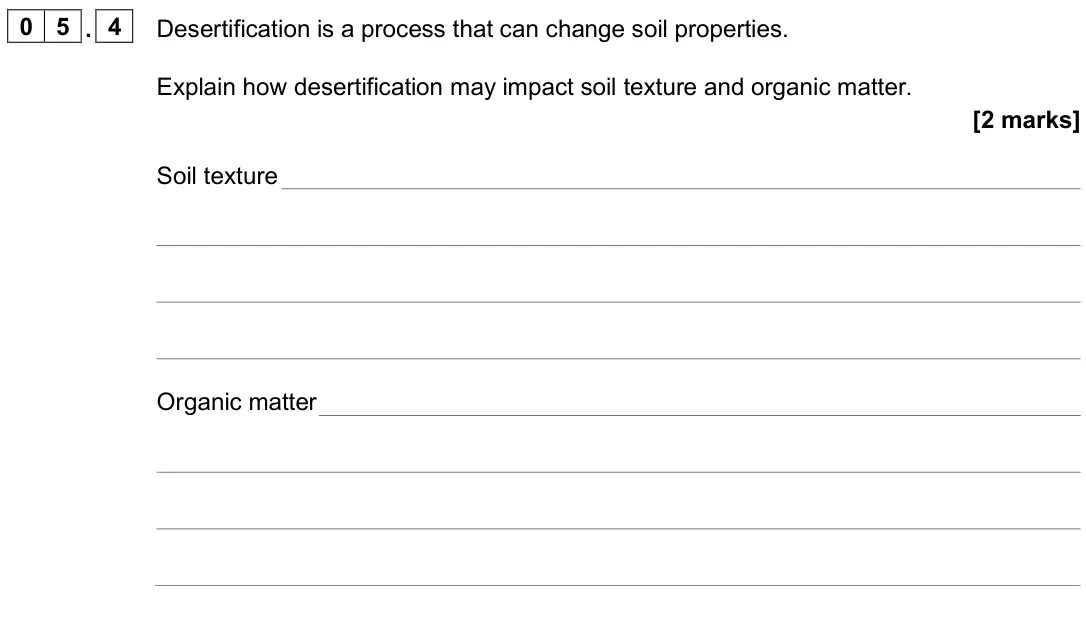
    Original question 05.4: Desertification is a process that can change soil properties. Explain how desertification may impact soil texture and organic matter. [2 marks] Soil texture Org

    Loading the question…

    The whole paper ↗
  5. Q07.5June 2025 · Paper 13 marks

    3.7.2 Sampling techniques3.2.5 Soils

    5
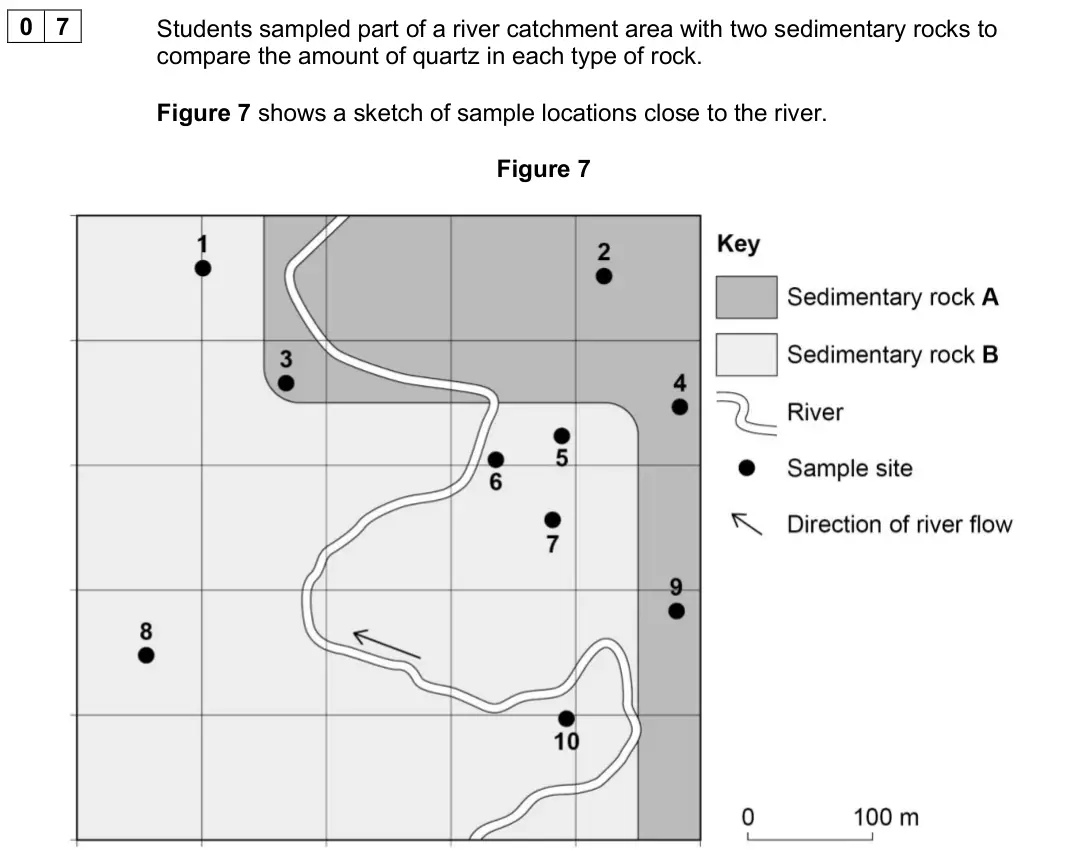
    Setup for original question 07.5

    Loading the question setup…

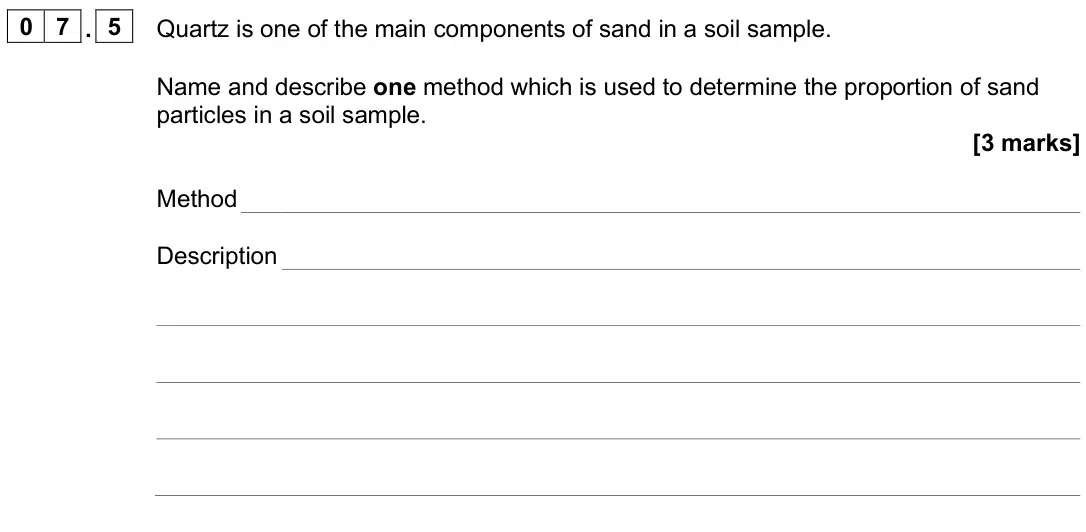
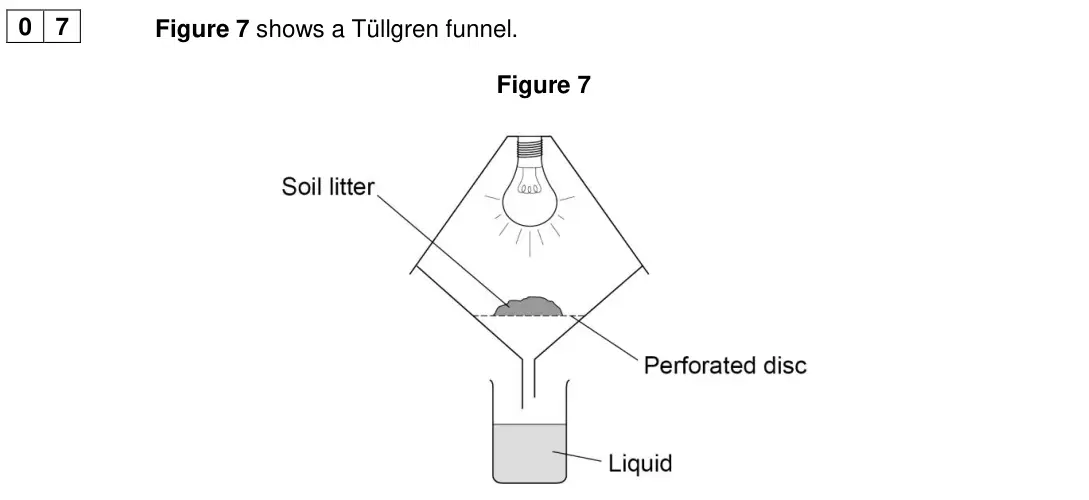
    Original question 07.5: Quartz is one of the main components of sand in a soil sample. Name and describe one method which is used to determine the proportion of sand particles in a soi

    Loading the question…

    The whole paper ↗
  6. Q03.1June 2024 · Paper 14 marks

    3.2.5 Soils

    6
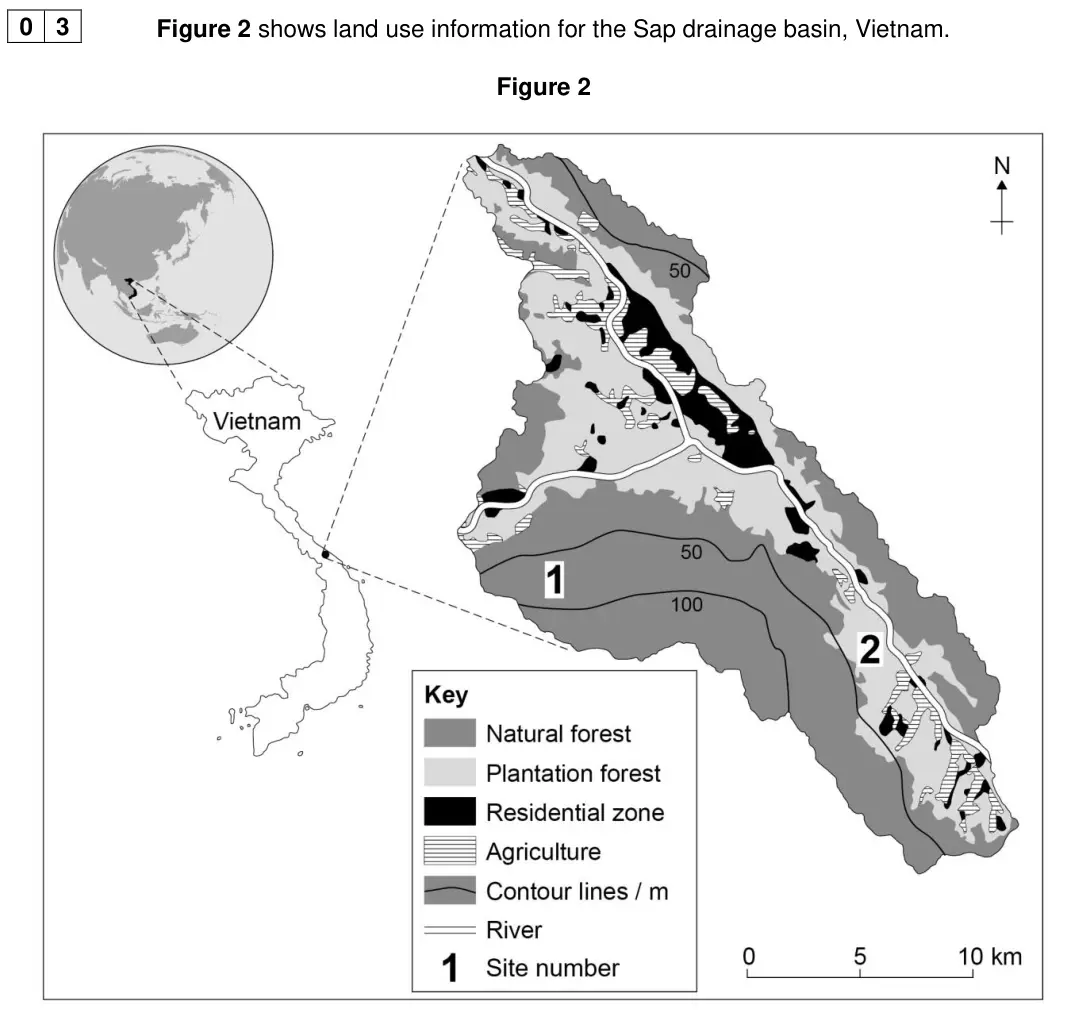
    Setup for original question 03.1

    Loading the question setup…

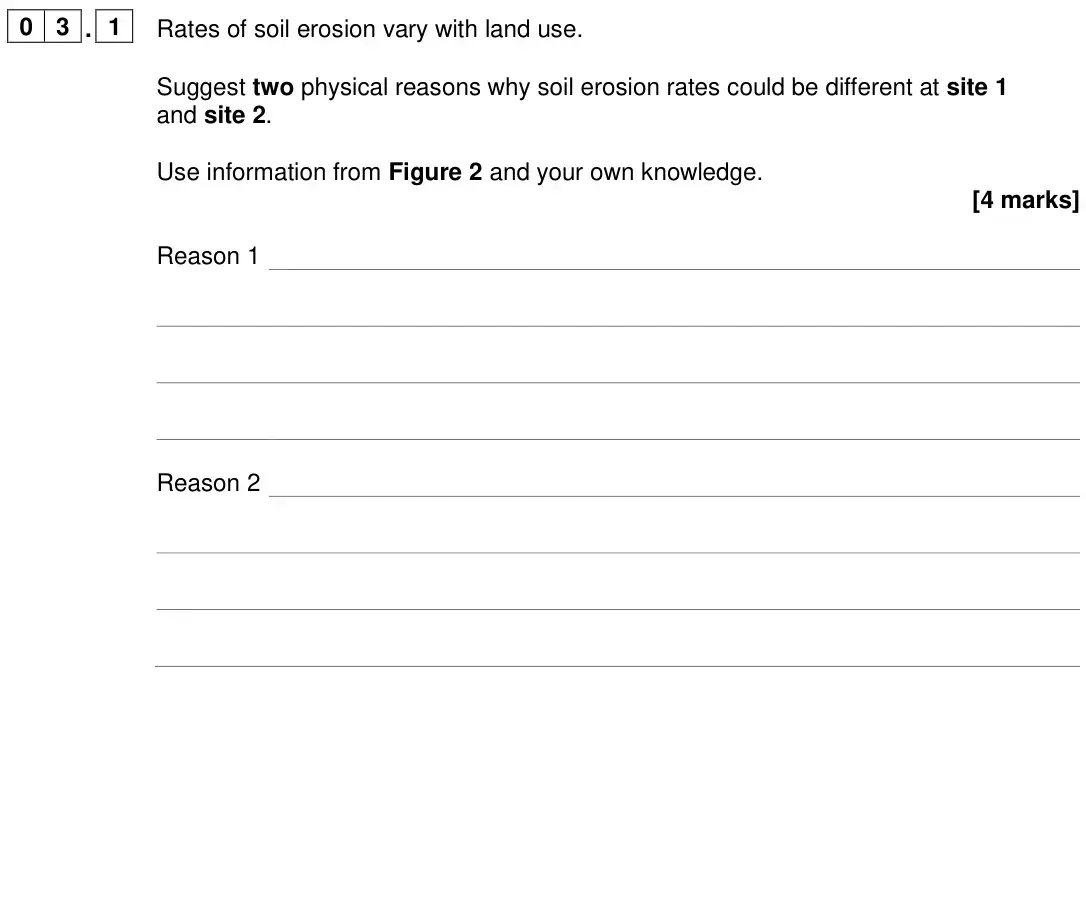
    Original question 03.1: Rates of soil erosion vary with land use. Suggest two physical reasons why soil erosion rates could be different at site 1 and site 2. Use information from Figu

    Loading the question…

    The whole paper ↗
  7. Q03.2June 2024 · Paper 12 marks

    3.2.5 Soils

    7
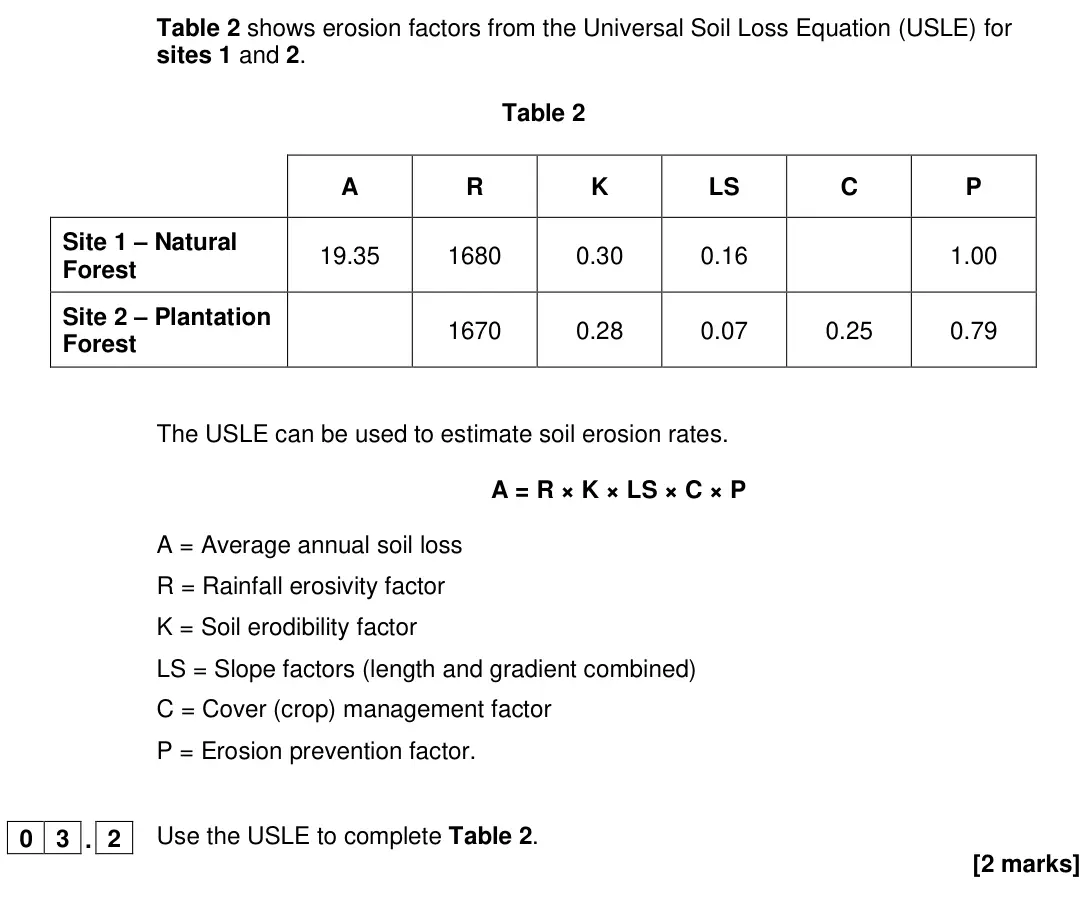
    Original question 03.2: Use the USLE to complete Table 2. [2 marks]

    Loading the question…

    The whole paper ↗
  8. Q03.3June 2024 · Paper 13 marks

    3.2.5 Soils

    8
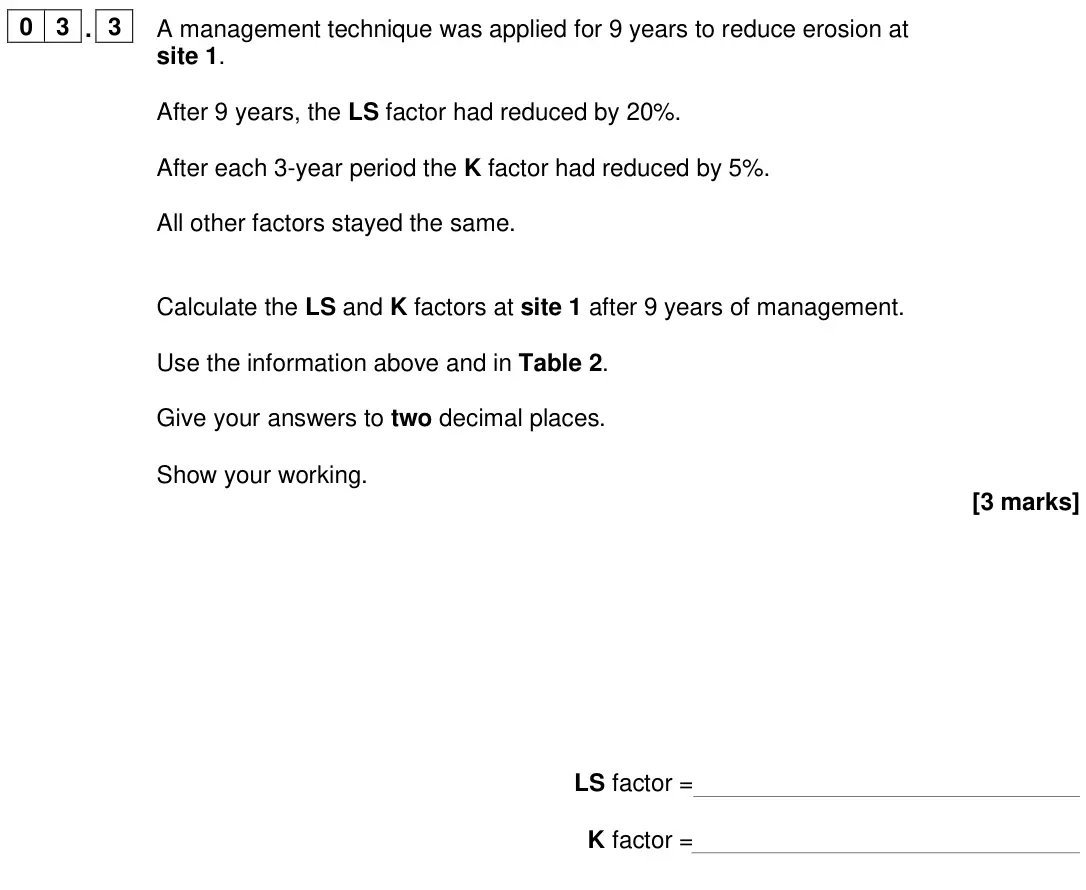
    Original question 03.3: A management technique was applied for 9 years to reduce erosion at site 1. After 9 years, the LS factor had reduced by 20%. After each 3-year period the K fact

    Loading the question…

    The whole paper ↗
  9. Q03.4June 2024 · Paper 11 mark

    3.2.5 Soils

    9
    Original question 03.4: Changes to soil management practices can lead to changes in the C factor. Suggest how a change in crop management practice could reduce the C factor value. [1 m

    Loading the question…

    The whole paper ↗
  10. Q07.2June 2024 · Paper 12 marks

    3.2.5 Soils

    10
    Setup for original question 07.2

    Loading the question setup…

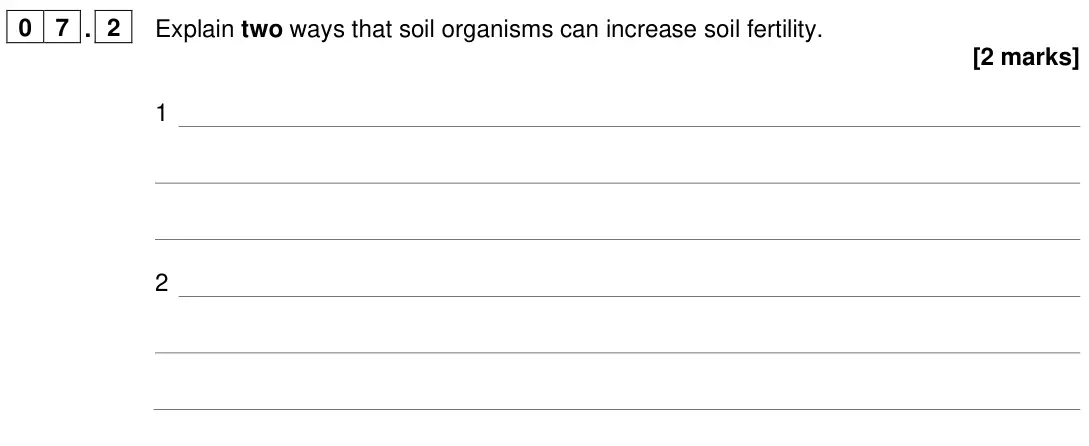
    Original question 07.2: Explain two ways that soil organisms can increase soil fertility. [2 marks] 1 2

    Loading the question…

    The whole paper ↗
  11. Q01.2June 2023 · Paper 11 mark

    3.2.4 Biogeochemical cycles3.2.5 Soils

    11
    Setup for original question 01.2

    Loading the question setup…

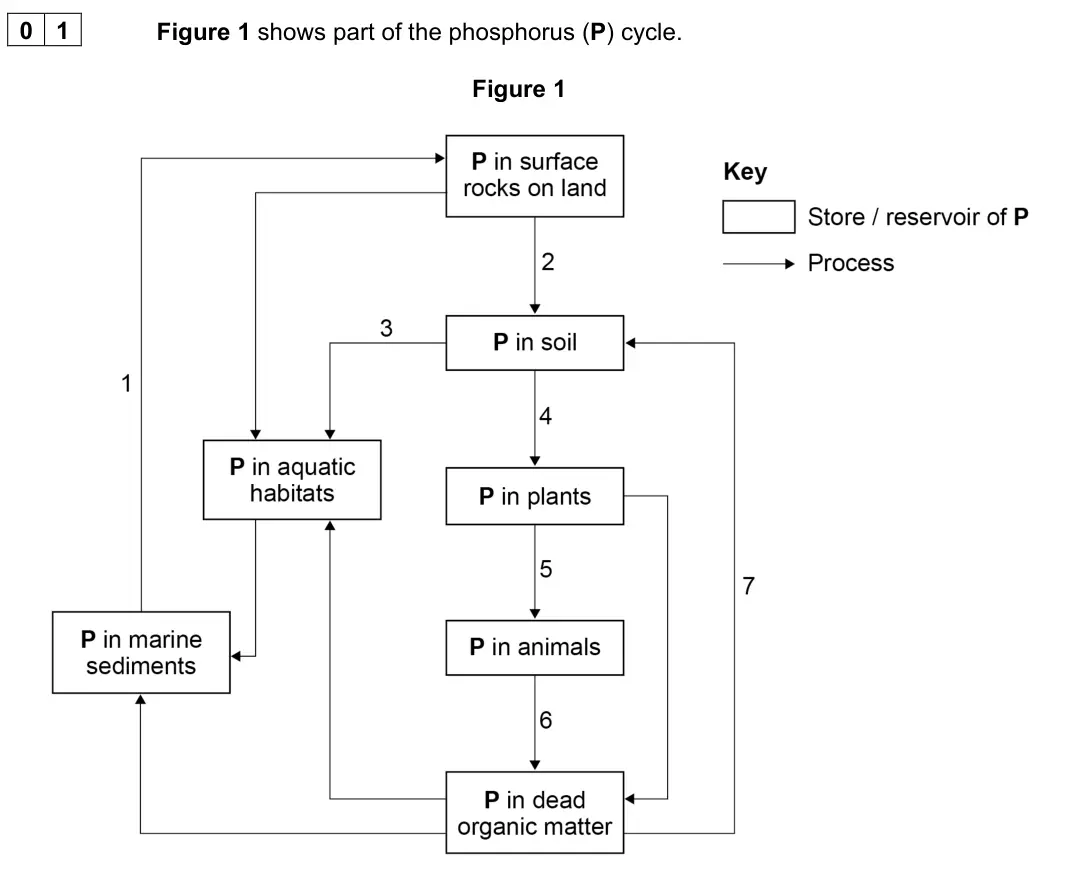
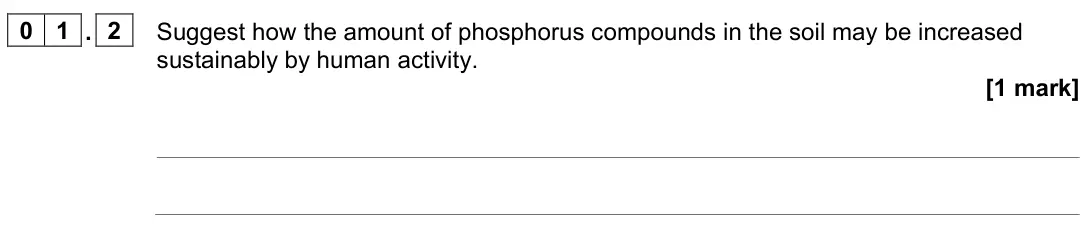
    Original question 01.2: Suggest how the amount of phosphorus compounds in the soil may be increased sustainably by human activity. [1 mark]

    Loading the question…

    The whole paper ↗
  12. Q03.1June 2023 · Paper 11 mark

    3.2.5 Soils3.7.2 Sampling techniques

    12
    Setup for original question 03.1

    Loading the question setup…

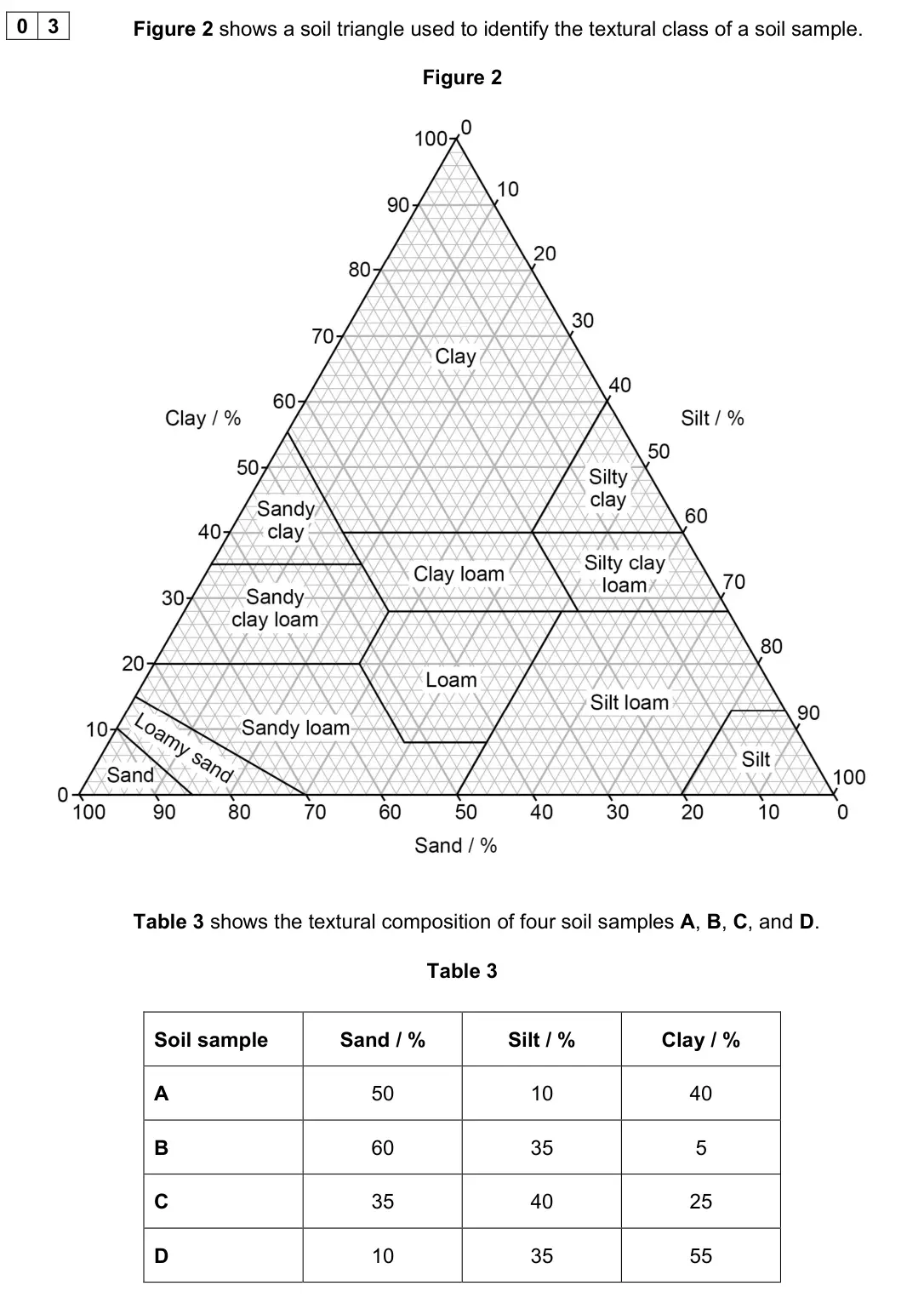
    Original question 03.1: Use Figure 2 to identify the textural class of soil sample A in Table 3. [1 mark]

    Loading the question…

    The whole paper ↗
  13. Q03.2June 2023 · Paper 12 marks

    3.2.5 Soils

    13
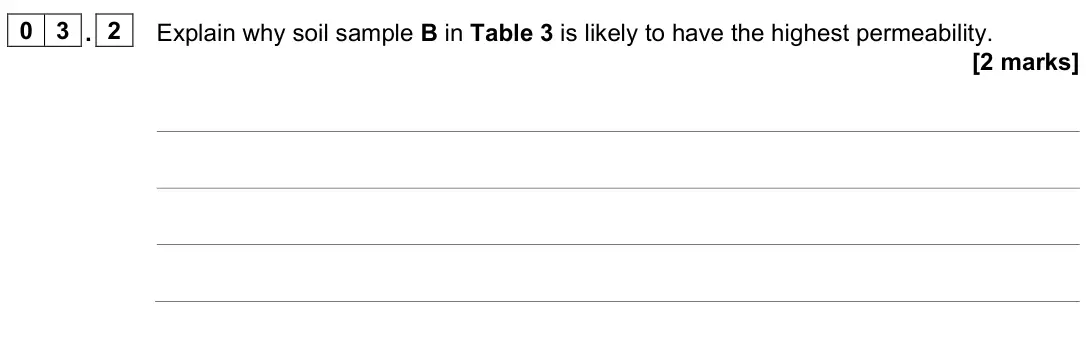
    Original question 03.2: Explain why soil sample B in Table 3 is likely to have the highest permeability. [2 marks]

    Loading the question…

    The whole paper ↗
  14. Q03.3June 2023 · Paper 14 marks

    3.2.5 Soils

    14
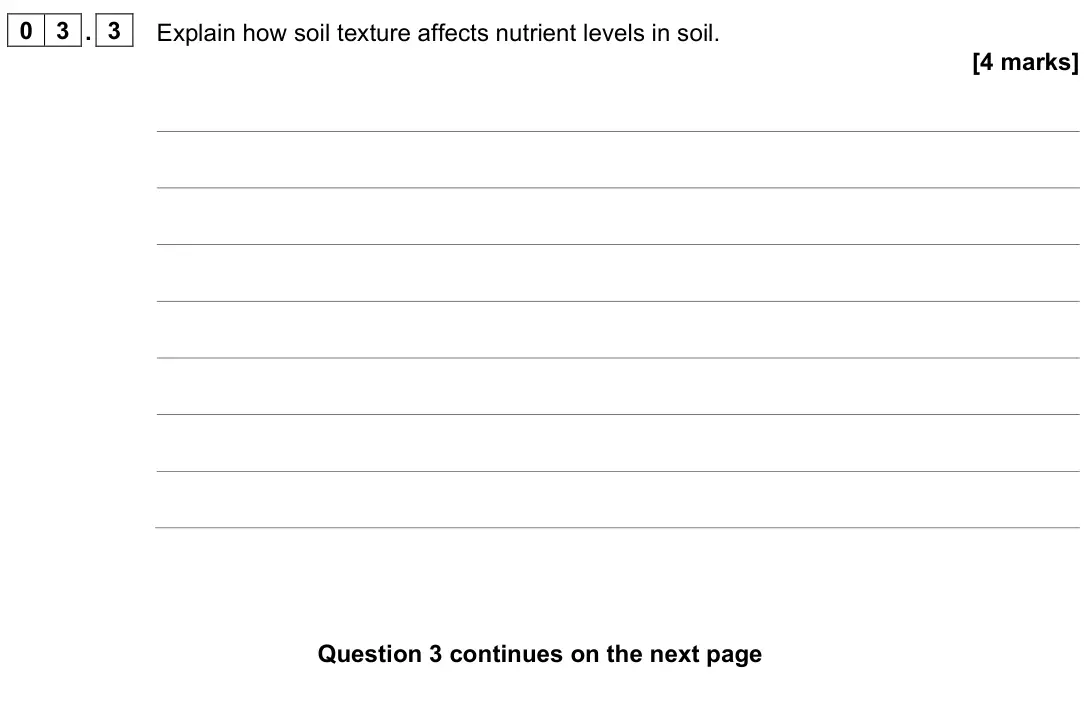
    Original question 03.3: Explain how soil texture affects nutrient levels in soil. [4 marks]

    Loading the question…

    The whole paper ↗
  15. Q03.4June 2023 · Paper 12 marks

    3.2.5 Soils3.7.2 Sampling techniques

    15
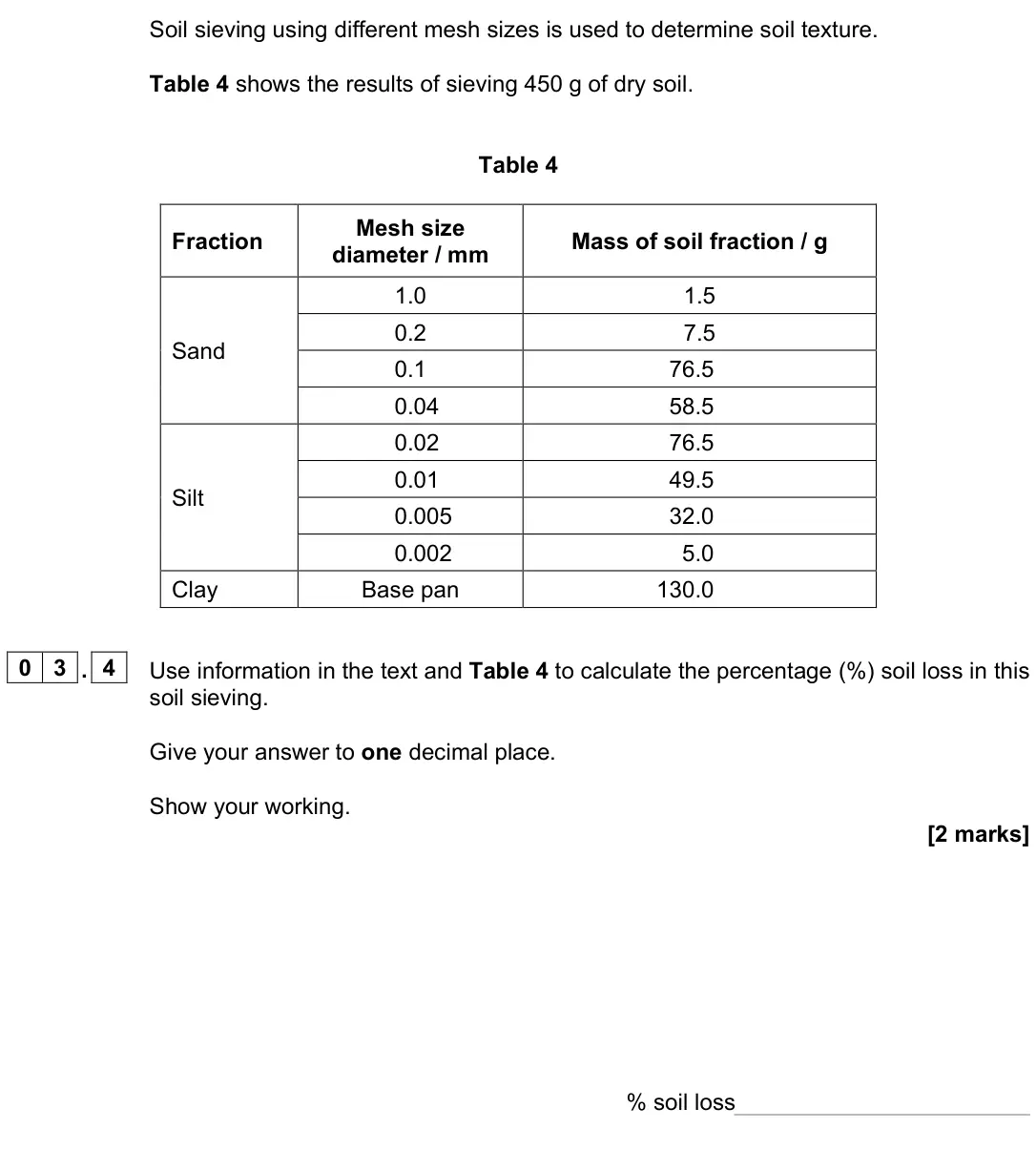
    Original question 03.4: Use information in the text and Table 4 to calculate the percentage (%) soil loss in this soil sieving. Give your answer to one decimal place. Show your working

    Loading the question…

    The whole paper ↗
  16. Q04.1June 2023 · Paper 14 marks

    3.2.5 Soils

    16
    Setup for original question 04.1

    Loading the question setup…

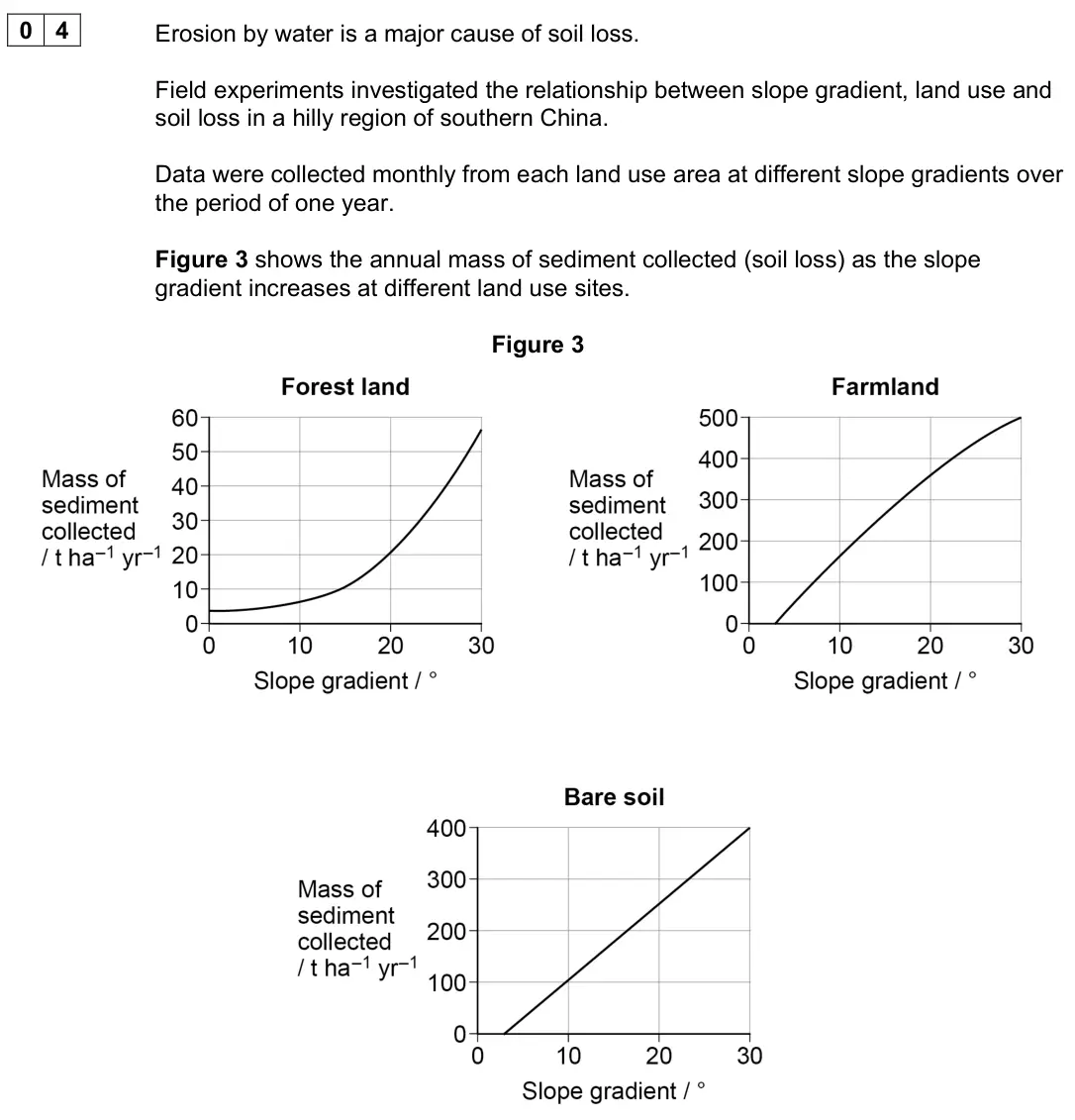
    Original question 04.1: Describe and explain two trends shown by the data in Figure 3. [4 marks] 1 2

    Loading the question…

    The whole paper ↗
  17. Q04.2June 2023 · Paper 14 marks

    3.2.5 Soils3.7.1 Scientific methodologies

    17
    Original question 04.2: Variables that could affect the validity of the results in the field experiments were investigated. The results from preliminary studies helped decide the locat

    Loading the question…

    The whole paper ↗
  18. Q04.3June 2023 · Paper 12 marks

    3.2.5 Soils

    18
    Original question 04.3: Outline two potential environmental impacts of eroded soil entering a nearby river. [2 marks] 1 2

    Loading the question…

    The whole paper ↗
  19. Q09.2June 2022 · Paper 14 marks

    3.7.2 Sampling techniques3.2.5 Soils

    19
    Setup for original question 09.2

    Loading the question setup…

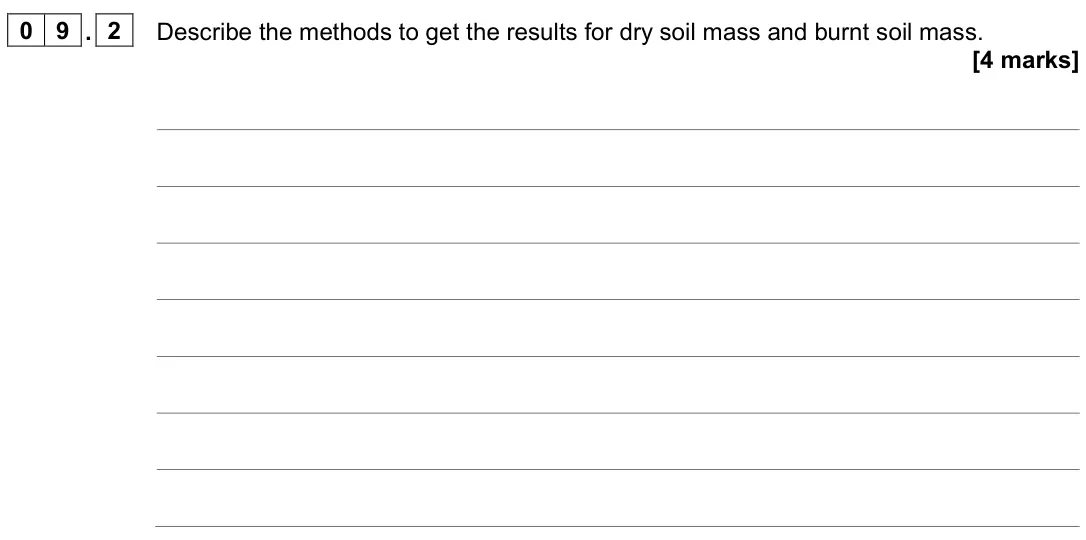
    Original question 09.2: Describe the methods to get the results for dry soil mass and burnt soil mass. [4 marks]

    Loading the question…

    The whole paper ↗
  20. Q09.3June 2022 · Paper 12 marks

    3.2.5 Soils

    20
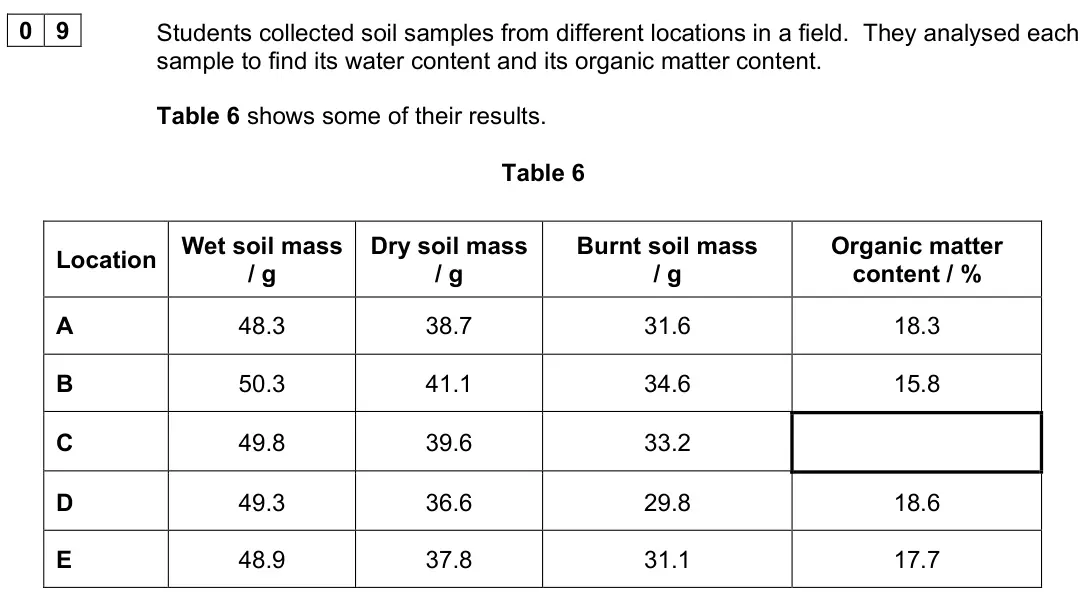
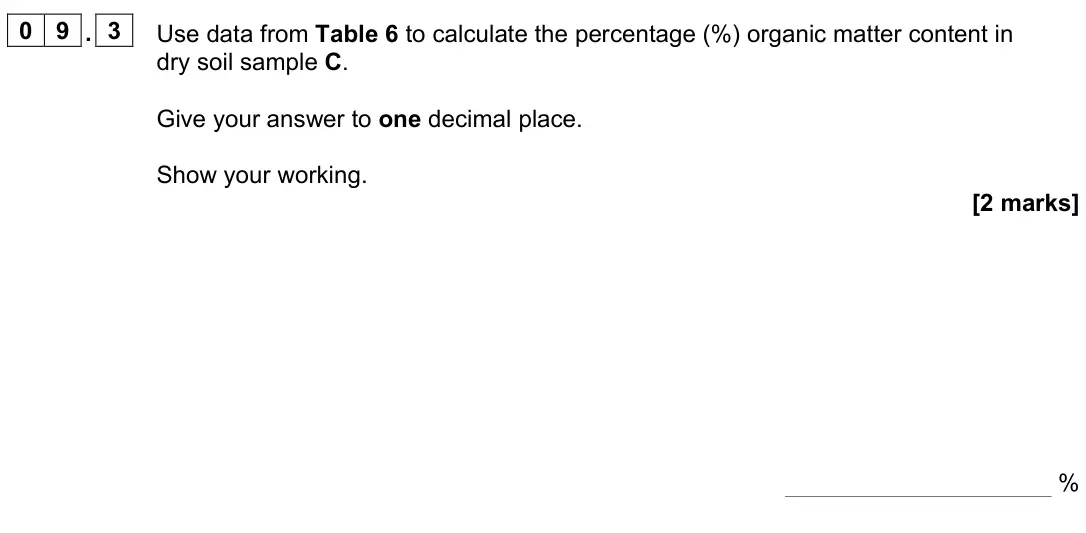
    Original question 09.3: Use data from Table 6 to calculate the percentage (%) organic matter content in dry soil sample C. Give your answer to one decimal place. Show your working. [2

    Loading the question…

    The whole paper ↗
All 32 questions on Soils, as a list
  1. June 2025, Paper 1, Q05.1 (1 mark): Soil erosion rates in Figure 6 are lowest at field Z. Identify which of the following represents the correct order from least to greatest rates of soil erosion.
  2. June 2025, Paper 1, Q05.2 (2 marks): Explain two reasons why soil erosion rates are lowest in field Z. Use evidence from Table 4 on page 16 in your answer. [2 marks] 1 2
  3. June 2025, Paper 1, Q05.3 (5 marks): Describe a method to investigate if there is a significant difference between mean erosion rates for fields with different slope angles. Use information from Fi
  4. June 2025, Paper 1, Q05.4 (2 marks): Desertification is a process that can change soil properties. Explain how desertification may impact soil texture and organic matter. [2 marks] Soil texture Org
  5. June 2025, Paper 1, Q07.5 (3 marks): Quartz is one of the main components of sand in a soil sample. Name and describe one method which is used to determine the proportion of sand particles in a soi
  6. June 2024, Paper 1, Q03.1 (4 marks): Rates of soil erosion vary with land use. Suggest two physical reasons why soil erosion rates could be different at site 1 and site 2. Use information from Figu
  7. June 2024, Paper 1, Q03.2 (2 marks): Use the USLE to complete Table 2. [2 marks]
  8. June 2024, Paper 1, Q03.3 (3 marks): A management technique was applied for 9 years to reduce erosion at site 1. After 9 years, the LS factor had reduced by 20%. After each 3-year period the K fact
  9. June 2024, Paper 1, Q03.4 (1 mark): Changes to soil management practices can lead to changes in the C factor. Suggest how a change in crop management practice could reduce the C factor value. [1 m
  10. June 2024, Paper 1, Q07.2 (2 marks): Explain two ways that soil organisms can increase soil fertility. [2 marks] 1 2
  11. June 2023, Paper 1, Q01.2 (1 mark): Suggest how the amount of phosphorus compounds in the soil may be increased sustainably by human activity. [1 mark]
  12. June 2023, Paper 1, Q03.1 (1 mark): Use Figure 2 to identify the textural class of soil sample A in Table 3. [1 mark]
  13. June 2023, Paper 1, Q03.2 (2 marks): Explain why soil sample B in Table 3 is likely to have the highest permeability. [2 marks]
  14. June 2023, Paper 1, Q03.3 (4 marks): Explain how soil texture affects nutrient levels in soil. [4 marks]
  15. June 2023, Paper 1, Q03.4 (2 marks): Use information in the text and Table 4 to calculate the percentage (%) soil loss in this soil sieving. Give your answer to one decimal place. Show your working
  16. June 2023, Paper 1, Q04.1 (4 marks): Describe and explain two trends shown by the data in Figure 3. [4 marks] 1 2
  17. June 2023, Paper 1, Q04.2 (4 marks): Variables that could affect the validity of the results in the field experiments were investigated. The results from preliminary studies helped decide the locat
  18. June 2023, Paper 1, Q04.3 (2 marks): Outline two potential environmental impacts of eroded soil entering a nearby river. [2 marks] 1 2
  19. June 2022, Paper 1, Q09.2 (4 marks): Describe the methods to get the results for dry soil mass and burnt soil mass. [4 marks]
  20. June 2022, Paper 1, Q09.3 (2 marks): Use data from Table 6 to calculate the percentage (%) organic matter content in dry soil sample C. Give your answer to one decimal place. Show your working. [2
  21. June 2022, Paper 2, Q08.2 (2 marks): Explain how one named biotic factor affects the soil characteristics in a temperate broadleaf forest. [2 marks]
  22. November 2021, Paper 1, Q07.1 (6 marks): Explain three ways in which named agricultural practices may increase soil erosion. [6 marks] 1 2 3
  23. November 2021, Paper 1, Q07.2 (4 marks): Outline a plan to investigate how wind speed changes with increasing distance from a stone wall. [4 marks]
  24. November 2021, Paper 2, Q06.2 (4 marks): Explain how the use of pesticides can reduce the availability of soil nutrients. [4 marks]
  25. November 2020, Paper 1, Q07.1 (3 marks): Suggest how soil samples may have been collected to ensure that the results represented the normal conditions in the field. [3 marks]
  26. November 2020, Paper 1, Q07.2 (2 marks): Describe one method that may be used to measure the bulk density of soil from the field. [2 marks]
  27. November 2020, Paper 1, Q11.2 (25 marks): Discuss the extent to which improvements in soil management may reduce damage to the environment on local, regional and global scales. [25 marks]
  28. Specimen, Paper 1, Q09.1 (2 marks): A salad crop field that was contour ploughed had an erosion rate of 4.67 t ha-1 yr-1. In an attempt to have a sustainable erosion rate, the farmer decided to ch
  29. Specimen, Paper 1, Q09.2 (2 marks): Explain why contour ploughing reduces soil erosion. [2 marks]
  30. Specimen, Paper 1, Q09.7 (3 marks): Explain how an increase in the turbidity of water in tropical rivers may affect the ecological process of coral reefs. [3 marks]
  31. Specimen, Paper 2, Q04.2 (2 marks): Explain why the water abstracted from the aquifer may be unsuitable for irrigation if the long term trend shown in Figure 2 continues. [2 marks]
  32. Specimen, Paper 2, Q07.5 (5 marks): Many soil organisms cannot survive in waterlogged, acidic soil. Explain why food yields may be reduced if soil has fewer microorganisms and invertebrates. [5 ma

Questions, mark schemes and examiner’s reports are © AQA, from their published past papers. Plumi isn’t affiliated with any exam board. Want whole papers? AQA A-Level Environmental Science past papers.

The Plumi iPad app also offers exam-style questions with AI feedback on your handwritten working.