 plumi
How does the particle model relate to pressures in fluids?: OCR GCSE Physics B questions
Every OCR GCSE Physics B exam question on P6.4 How does the particle model relate to pressures in fluids?, 2018–2025, with its mark scheme and examiner’s report.
Paper
All papers
Exam
All years
Calculations
Q8(a)
The whole paper ↗
Q8(b)
The whole paper ↗Q8(c)
The whole paper ↗Q8(a)
The whole paper ↗
Q8(b)(i)
The whole paper ↗Q8(b)(ii)
The whole paper ↗Q8(c)
The whole paper ↗Q8(e)(i)
The whole paper ↗Q7(a)
The whole paper ↗Q7(b)(i)
The whole paper ↗Q7(b)(ii)
The whole paper ↗Q4(b)
The whole paper ↗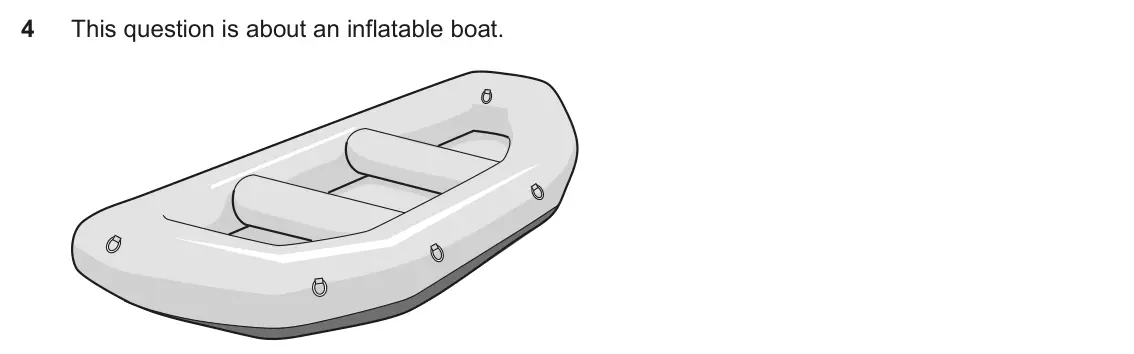
Q12(c)
The whole paper ↗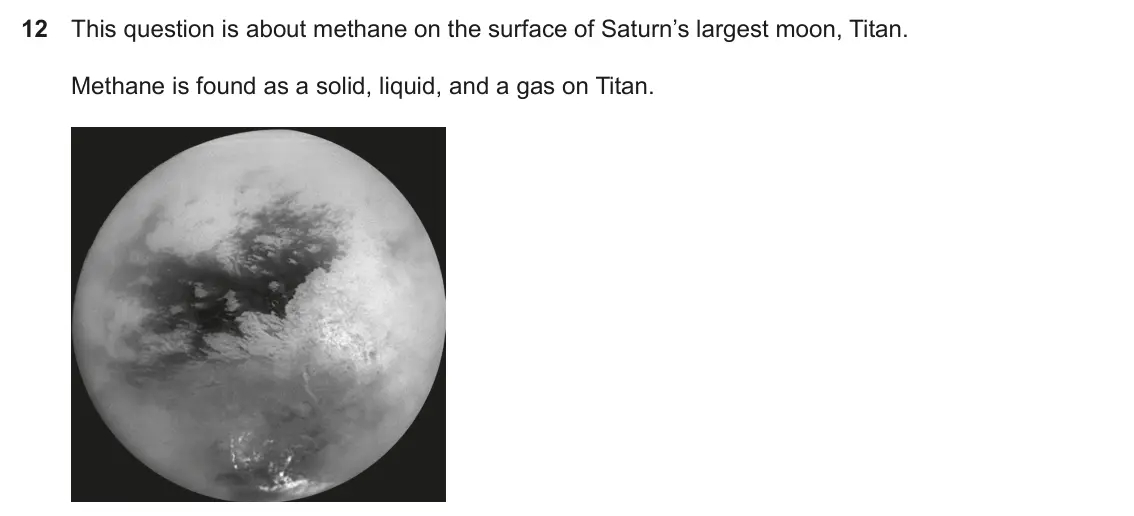
Q3(a)
The whole paper ↗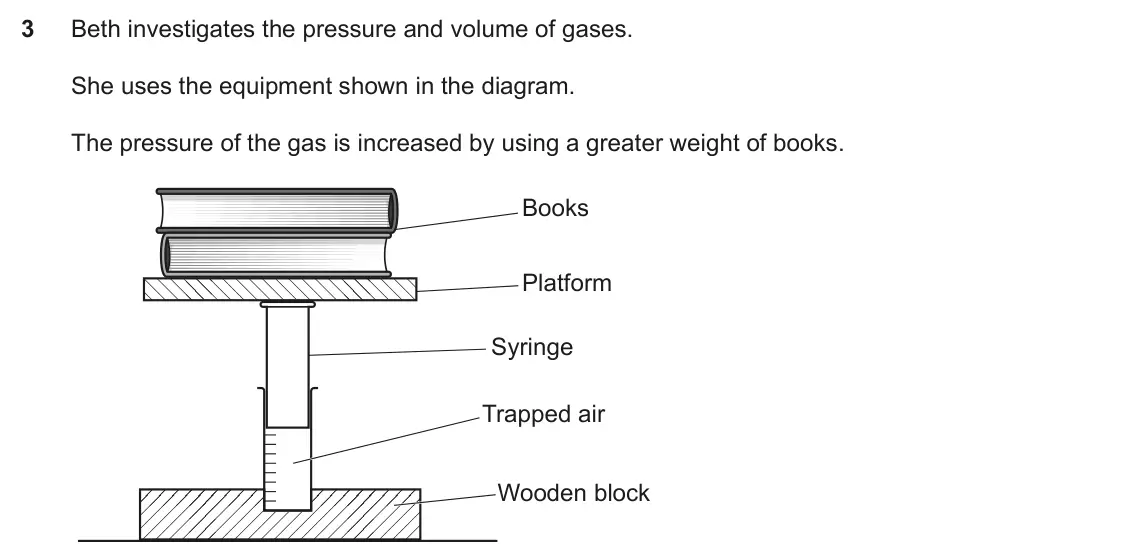
Q3(b)(ii)
The whole paper ↗Q3(c)
The whole paper ↗Q11(a)
The whole paper ↗
Q11(b)
The whole paper ↗Q11(c)(i)
The whole paper ↗Q11(c)(ii)
The whole paper ↗
All 58 questions on How does the particle model relate to pressures in fluids?, as a list
- June 2025, Paper 2 Foundation, Q8(a) (1 mark): The diagram below shows the path of a particle of air in the container. When the particle of air hits the wall of the container at X, a force acts on the wall.
- June 2025, Paper 2 Foundation, Q8(b) (4 marks): The volume of the container is decreased. The temperature and amount of air remain the same. The table shows information for three different volumes. Volume (m2
- June 2025, Paper 2 Foundation, Q8(c) (2 marks): Explain why the particles in the air hit the wall of the container more often when the volume of the container decreases. [2]
- June 2025, Paper 3 Higher, Q8(a) (2 marks): Explain why the pressure on an object increases as its depth in the sea increases. Use ideas about forces in your answer. [2]
- June 2025, Paper 3 Higher, Q8(b)(i) (4 marks): Calculate the pressure on the penguin. The approximate density of seawater is 1020 kg / m3. • • The gravitational field strength is 10 N / kg. Use the Equation
- June 2025, Paper 3 Higher, Q8(b)(ii) (2 marks): Colder water has a higher density. Explain the effect on your answer to (b)(i) if the penguin still dives to 400 m but the water is colder. [2]
- June 2025, Paper 3 Higher, Q8(c) (2 marks): Fig. 8.1 shows an emperor penguin partially submerged on the surface of the water. Fig. 8.1 Explain why the water exerts a net force upwards on the penguin. [2]
- June 2025, Paper 3 Higher, Q8(e)(i) (3 marks): Explain the trends in the data shown in the table. [3]
- June 2023, Paper 1 Foundation, Q7(a) (2 marks): A mountaineer has an empty plastic bottle at the top of a mountain. The lid is off. The arrows on Fig. 7.1 show the air pressure acting on the inside of the bot
- June 2023, Paper 1 Foundation, Q7(b)(i) (2 marks): Suggest why the bottle has a crushed shape at the bottom of the mountain. [2]
- June 2023, Paper 1 Foundation, Q7(b)(ii) (2 marks): Explain why air pressure varies with height above the surface of the Earth. [2]
- June 2023, Paper 3 Higher, Q4(b) (3 marks): The boat is inflated in the morning and then left out in the sun. The temperature of the air inside the boat rises to 50 °C. • The volume and mass of the air in
- June 2023, Paper 3 Higher, Q12(c) (2 marks): Explain how the volume and pressure of methane in a container changes when it has been compressed. The temperature of the methane remains constant. [2]
- June 2022, Paper 1 Foundation, Q3(a) (1 mark): The pressure of the gas causes forces against the inside surface of the syringe. Which statement correctly describes the direction of these forces? Tick (✓) one
- June 2022, Paper 1 Foundation, Q3(b)(ii) (2 marks): The surface area of the top of the syringe is 0.0012 m2. Beth adds a book with a weight of 24 N. Calculate the increase in pressure. Use the equation: pressure
- June 2022, Paper 1 Foundation, Q3(c) (2 marks): The temperature of the gas remains constant. Beth observes that as the pressure increases, volume decreases. Which statements correctly explain why this happens
- June 2022, Paper 2 Foundation, Q11(a) (2 marks): Explain why Layla needs to keep the temperature constant. Use ideas from the particle model in your answer. [2]
- June 2022, Paper 2 Foundation, Q11(b) (1 mark): Fig. 11.2 shows a close-up image of the gas syringe and the path of a gas particle hitting the piston. Gas particle Motion of gas particle Piston Gas syringe Fi
- June 2022, Paper 2 Foundation, Q11(c)(i) (3 marks): Calculate the total force acting on the area of the piston when the volume of the gas is 8.0 cm3. The cross sectional area of the piston is 4 cm2. Use informati
- June 2022, Paper 2 Foundation, Q11(c)(ii) (3 marks): Calculate the constant for this given mass of gas. Use the equation: pressure × volume = constant Give your answer to 2 significant figures. Constant = Ncm [3]
- June 2022, Paper 2 Foundation, Q11(c)(iii) (3 marks): Explain what conclusions Layla can make from the results in her table. Use data from the table to support your answer. [3]
- June 2022, Paper 3 Higher, Q7(a)(i) (3 marks): Calculate the surface area of the bottom of the block of wood. Use the Data Sheet. Surface area = m2 [3]
- June 2022, Paper 3 Higher, Q7(a)(ii) (3 marks): Calculate the depth d shown on Fig. 7.1. Use the Data Sheet. Depth d = m [3]
- June 2022, Paper 3 Higher, Q7(b) (3 marks): Kareem compares how the wooden block and a copper block behave in different liquids. Fig. 7.2 shows his results. wood wood copper copper pure salty water water
- June 2022, Paper 4 Higher, Q1(a) (2 marks): Explain why Layla needs to keep the temperature constant. Use ideas from the particle model in your answer. [2]
- June 2022, Paper 4 Higher, Q1(b) (1 mark): Fig. 1.2 shows a close-up image of the gas syringe and the path of a gas particle hitting the piston. Gas particle Motion of gas particle Piston Gas syringe Fig
- June 2022, Paper 4 Higher, Q1(c)(i) (3 marks): Calculate the total force acting on the area of the piston when the volume of the gas is 8.0 cm3. The cross sectional area of the piston is 4 cm2. Use informati
- June 2022, Paper 4 Higher, Q1(c)(ii) (3 marks): Calculate the constant for this given mass of gas. Use the equation: pressure × volume = constant Give your answer to 2 significant figures. Constant = Ncm [3]
- June 2022, Paper 4 Higher, Q1(c)(iii) (3 marks): Explain what conclusions Layla can make from the results in her table. Use data from the table to support your answer. [3]
- November 2021, Paper 1 Foundation, Q6(b) (3 marks): The total weight of the books on top of the syringe is 24 N. The surface area of the syringe in contact with the books is 0.0028 m2. Calculate the pressure on t
- November 2021, Paper 1 Foundation, Q6(c) (2 marks): Eve observes that as the pressure increases, the volume of the air in the syringe decreases. Explain this observation using ideas about particles. [2]
- November 2021, Paper 1 Foundation, Q6(d) (1 mark): Eve talks about the experiment. The experiment is not valid because I did not keep the temperature of the air in the syringe constant. How could Eve keep the te
- November 2021, Paper 2 Foundation, Q5 (6 marks): 5* Ben and Alex investigate the pressure that each of them exert on the floor, when standing on one foot. They write a hypothesis: We are approximately the same
- November 2021, Paper 4 Higher, Q6(a)(i) (2 marks): Nina makes a conclusion. Nina The results in the table show that the circumference is inversely proportional to the depth. 1 Circumference ∝ depth Is Nina corre
- November 2021, Paper 4 Higher, Q6(a)(ii) (2 marks): Nina and Mia’s measurements were not accurate as it was difficult to measure the circumference of the balloon under water. Suggest an alternative method to inve
- November 2021, Paper 4 Higher, Q6(b)(i) (2 marks): Calculate the pressure of water at a depth of 0.8 m. Use the equation: pressure = density × gravitational field strength × depth Density of water = 1000 kg / m3
- November 2021, Paper 4 Higher, Q6(b)(ii) (3 marks): Mia makes a conclusion about the volume of the balloon. Mia The volume of the balloon decreases with depth because there is more water above the balloon. Explai
- November 2021, Paper 4 Higher, Q6(c) (2 marks): Explain why the atmosphere of the Earth can be compared to a body of water. [2]
- November 2020, Paper 4 Higher, Q6(a) (3 marks): Explain, using forces, how the mini-submarine could sink. Use ideas about weight and upthrust in your answer. [3]
- November 2020, Paper 4 Higher, Q6(b) (4 marks): The Titanic is 3.8 km below the surface of the sea. Calculate the pressure on the submarine from the water, at the depth of the Titanic. Use the data sheet. Giv
- June 2019, Paper 1 Foundation, Q5(a) (3 marks): Cylinder A contains oxygen at a pressure of 23 000 kPa. The area of the base of cylinder A is 0.030 m2. Calculate the force exerted by the gas on the base of cy
- June 2019, Paper 1 Foundation, Q5(b)(i) (2 marks): Explain, using ideas about particles, why storing the same mass of gas in a larger volume produces a smaller pressure. [2]
- June 2019, Paper 1 Foundation, Q5(b)(ii) (2 marks): Both cylinders contain the same mass of gas and are at the same temperature. Pressure Volume (dm3) (kPa) Cylinder A 23 000 15 Cylinder B 10 000 Calculate the vo
- June 2019, Paper 3 Higher, Q13(a) (2 marks): Explain why the pressure changes with increasing depth in the ocean. [2]
- June 2019, Paper 3 Higher, Q13(b)(i) (1 mark): Determine the intercept of the graph. Intercept = kPa [1]
- June 2019, Paper 3 Higher, Q13(b)(ii) (2 marks): Explain the physical meaning of the value of the intercept. [2]
- June 2019, Paper 3 Higher, Q13(c)(i) (2 marks): Determine the gradient of the graph. Gradient = kPa / m [2]
- June 2019, Paper 3 Higher, Q13(c)(ii) (2 marks): Calculate the density of seawater. Use the equation: density = gradient of graph ÷ gravitational field strength Gravitational field strength = 10 N / kg Density
- June 2019, Paper 4 Higher, Q4(a)(i) (2 marks): Explain why the marshmallow increases in size when the volume of air inside the syringe is increased. [2]
- June 2019, Paper 4 Higher, Q4(a)(ii) (3 marks): Ling makes the following hypothesis. Ling The length of the marshmallow is directly proportional to the volume of the air in the syringe. Explain how Ling can t
- June 2019, Paper 4 Higher, Q4(b) (3 marks): Ling has a large fish tank. Bubbles of air rise through the water from the bottom of the tank, as shown in Fig. 4.2. The volume of a bubble of air increases as
- June 2018, Paper 2 Foundation, Q7(a)(iv) (1 mark): Which sample has the smallest pressure? [1]
- June 2018, Paper 2 Foundation, Q7(b) (2 marks): A tight-fitting moveable piston traps gas in a cylinder as shown in the diagram. The gas has volume 300 cm3 and pressure of 100 kilopascals (kPa). gas cylinder
- June 2018, Paper 2 Foundation, Q7(c) (3 marks): The piston is moved to a new position. The force with which the gas pushes out on the piston is now 300 N. The area of the piston is 0.002 m2. Calculate the pre
- June 2018, Paper 3 Higher, Q9(c)(i) (2 marks): Explain what causes the force of upthrust that acts on the tablet. [2]
- June 2018, Paper 3 Higher, Q9(c)(ii) (1 mark): The upthrust on the tablet is bigger than the upthrust on any one bubble. Give a reason for this. [1]
- June 2018, Paper 4 Higher, Q6(a) (3 marks): Explain, using ideas of momentum and force, how air molecules exert pressure on the wall. [3]
- June 2018, Paper 4 Higher, Q6(b) (3 marks): As you go further from the Earth’s surface, the atmospheric pressure gets smaller. Explain this in terms of the movement of the molecules at different heights.
Questions, mark schemes and examiner’s reports are © OCR, from their published past papers. Plumi isn’t affiliated with any exam board. Want whole papers? Every OCR GCSE Physics B paper.
Rather write your answers by hand on iPad? Plumi marks them against the same mark schemes.